Dispatch from Edinburgh #5–Around Town

Sometimes, you can smell the salt sea spray here in central-ish Edinburgh, a welcome respite from the car exhaust and cigarette smoke that can permeate the air as you walk along the streets. On fine, windy days, when the air is fresh, the salt might tang it, but there’s no guarantee. This past Friday, however, as I was walking home from the Omni movie theatre (where I saw the live-action Moana), I found a bench not far from my street (Annandale) where I could just breathe in the sea air for a little while, closing my eyes and imagining. Granted, the Port of Leith is only a mile north of here, and water surrounds Edinburgh to the north and the east, but it is unusual to smell the sea air inland. It made me long to be by the water, and I promised myself I’ll go to Portobello (“Porty”) beach before I leave.

All this by way of saying I’ve been sticking around town recently.  I love to take my trips to the Highlands and islands, but the driving and the sightseeing and the being managed become waring after a while, and then I get home exhausted (and my foot hurts more than usual).  Plus, I am the temporary co-director of the Scotland Summer Program, so I need to be in town in case there’s An Incident with a Student needing an adult to step in.  (*Crosses my fingers, no student has An Incident*).
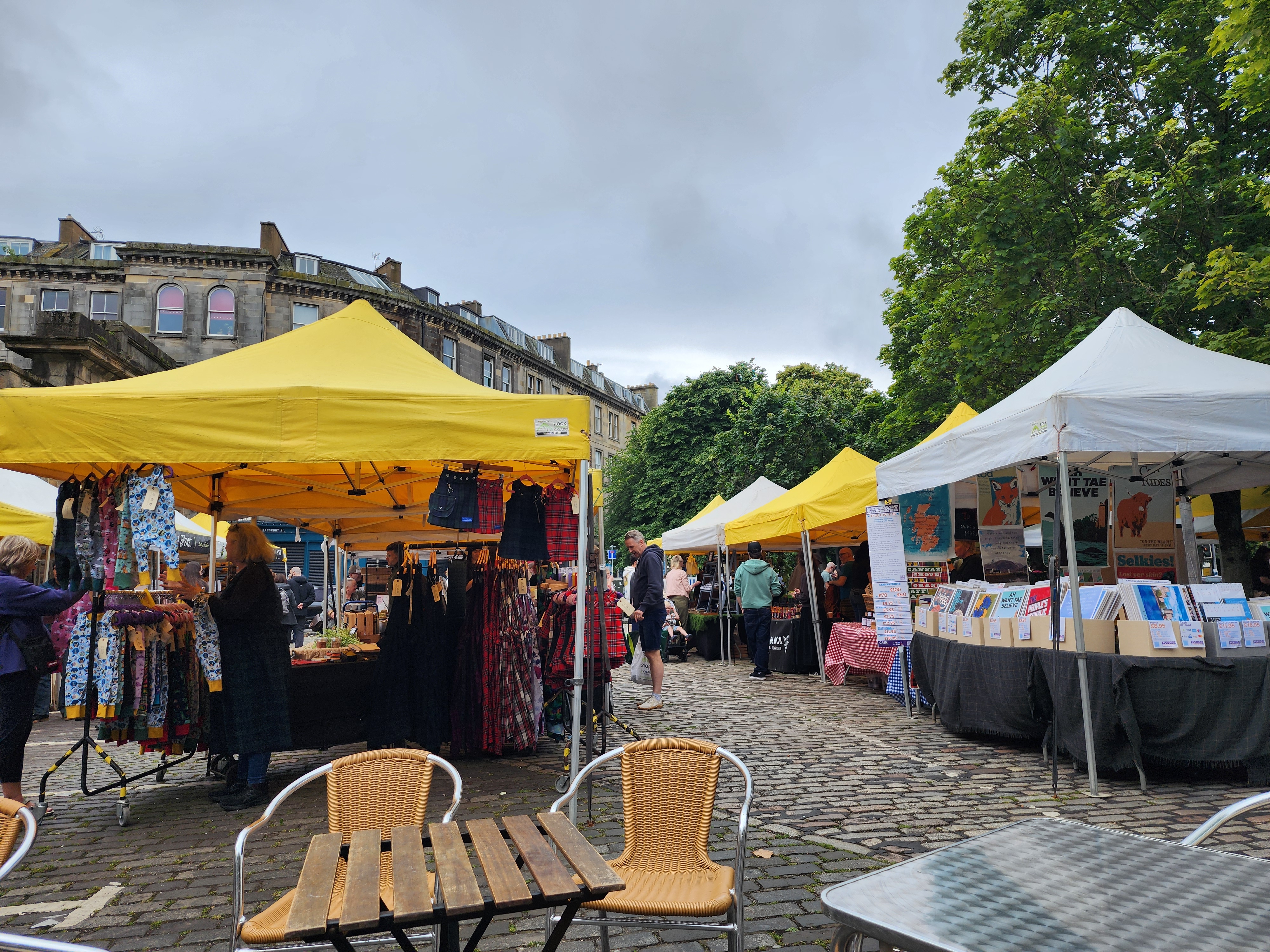
Two yellow tents and a white tent at the Leith Market

Leith Farmer’s Market

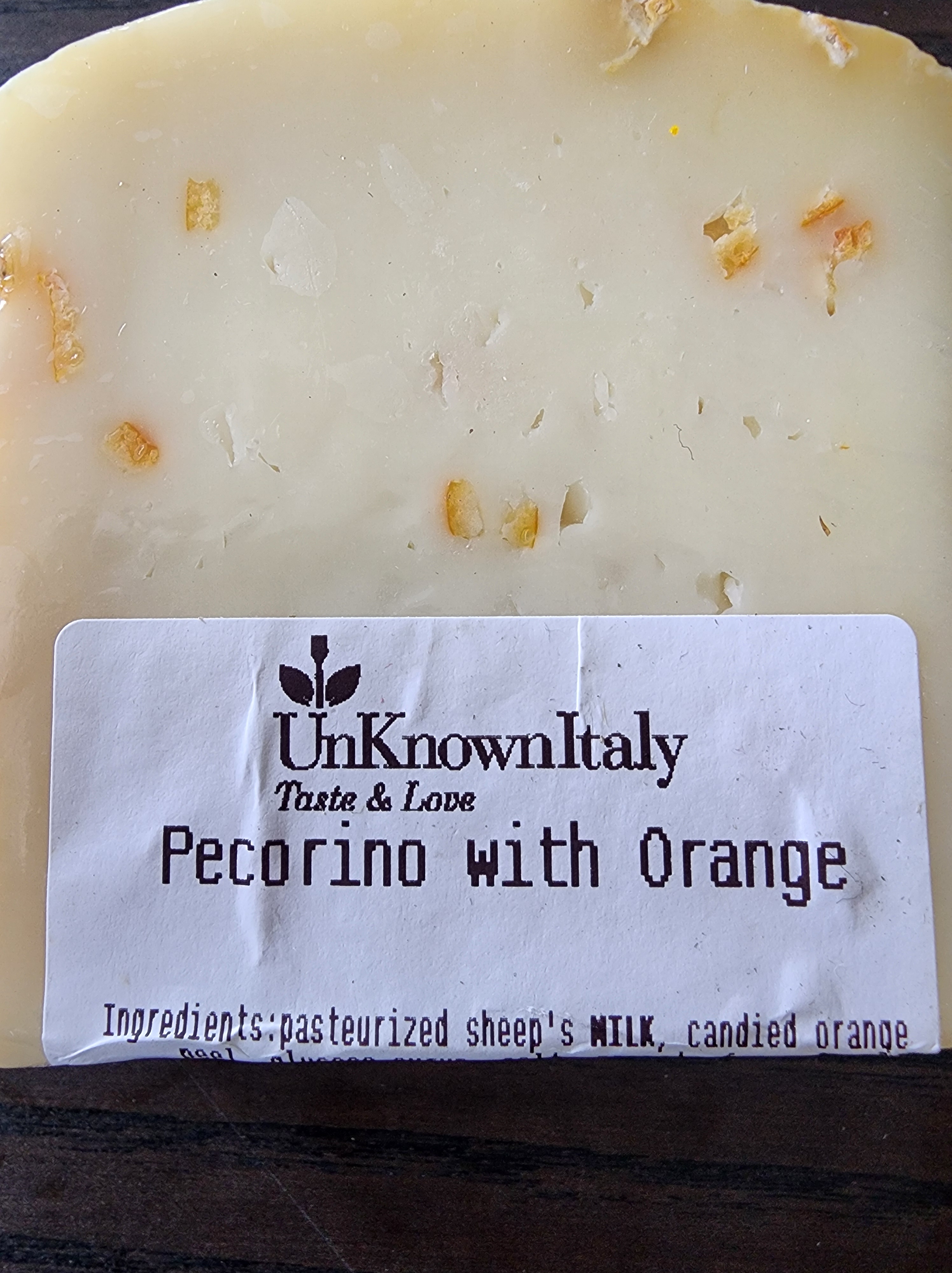
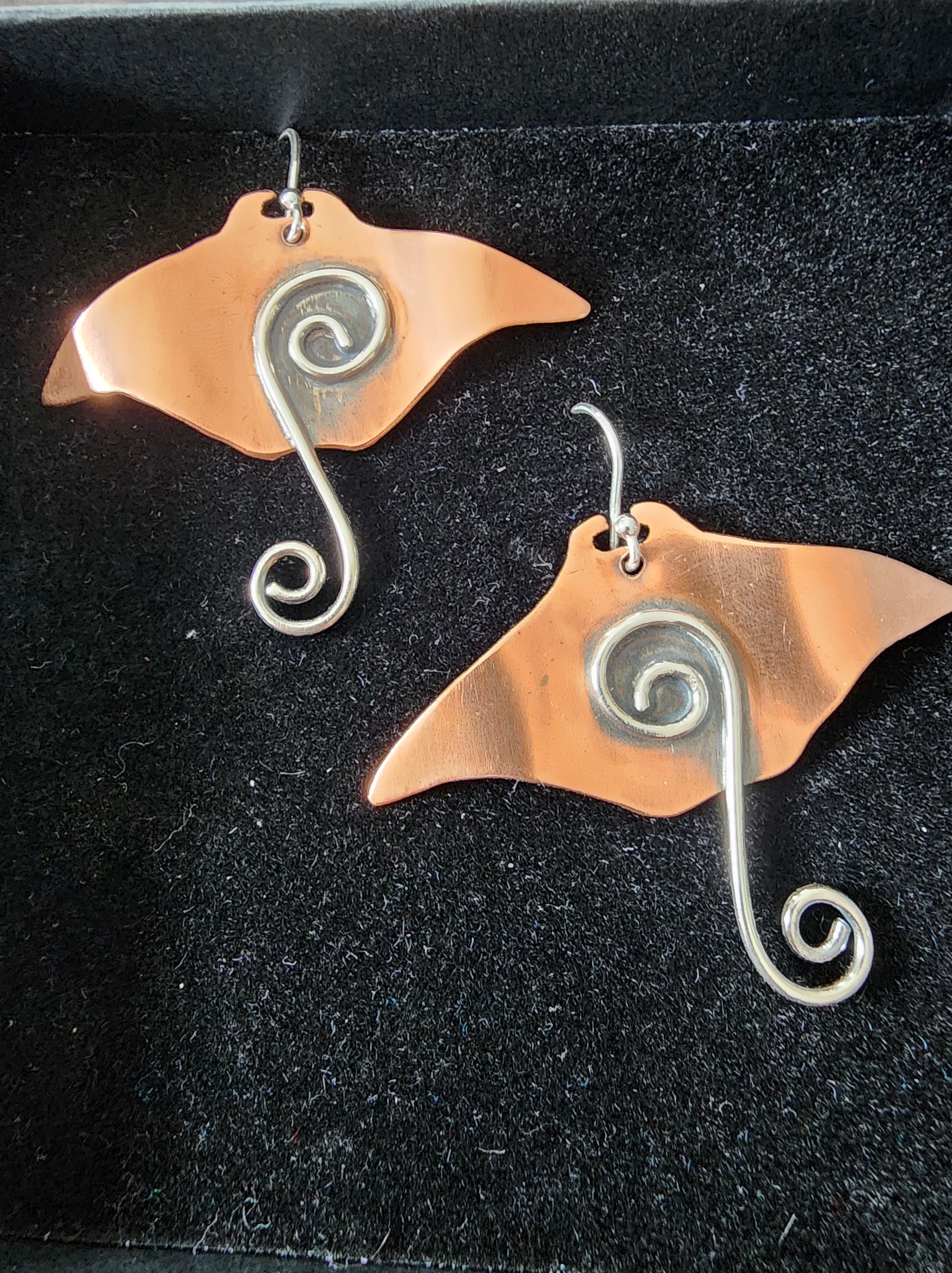
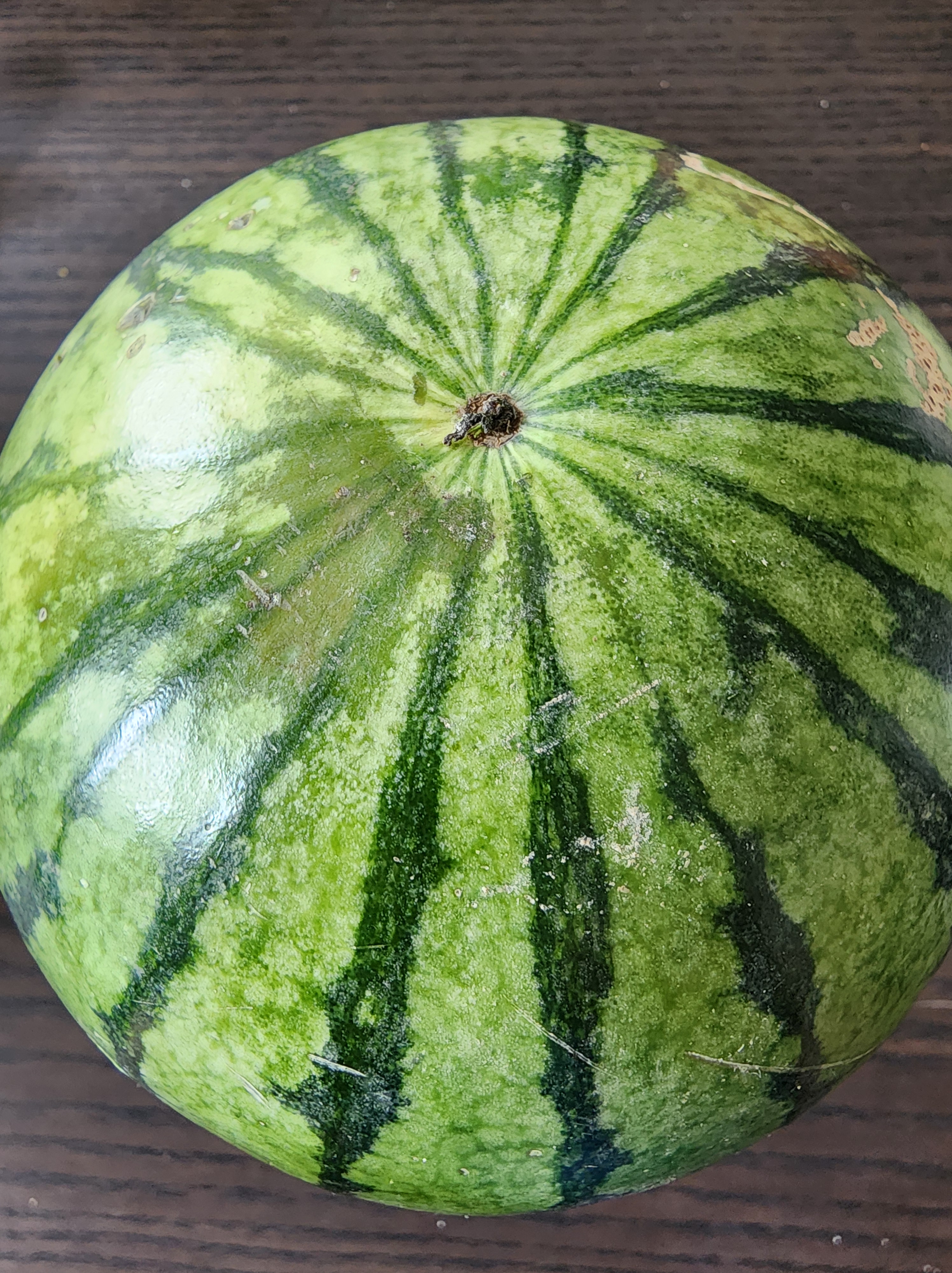
Edinburgh has so many sights to see and places to explore it’s easy to get overwhelmed.  For me, I try to see one or two things on a weekend so I feel like I’m still enjoying the town even though most of my time is taken up by teaching, grading, and doing homework for Happiness Studies. Last week, I went to the Leith Farmer’s Market (as I mentioned I might), and took a bracing walk from the tram to the market.  The space held maybe 20-25 stalls, including typical offerings such as fruit, bread, and fish, and other items like hot sauce, kombucha, prepared salads, and pastries. I chose two salads—one was quinoa, carrot, and potato; the other was pomegranate, sweet potato, and spinach. At the bread stall, I bought a pear tart/ frangipane (custard), and at the fruit stall, I found fresh Scottish strawberries and a personal-sized watermelon (delish!). At the cheese and meat stall, I bought a little pecorino cheese with orange (it sounded good at the time), although I was shocked to find out that this 3 oz cheese was £8.  (There I go again, complaining about the cost!  I’m such an old lady sometimes.) There was a stall dedicated to a graphic artist and his work, and I bought a small poster which I will frame and hang up when I get home, and I bought some copper and silver earrings in the shape of manta rays from Blue Kitty Creations.  Of course, I don’t think of manta rays and Edinburgh having any special connection, but they were lovely, and I couldn’t pass them by.
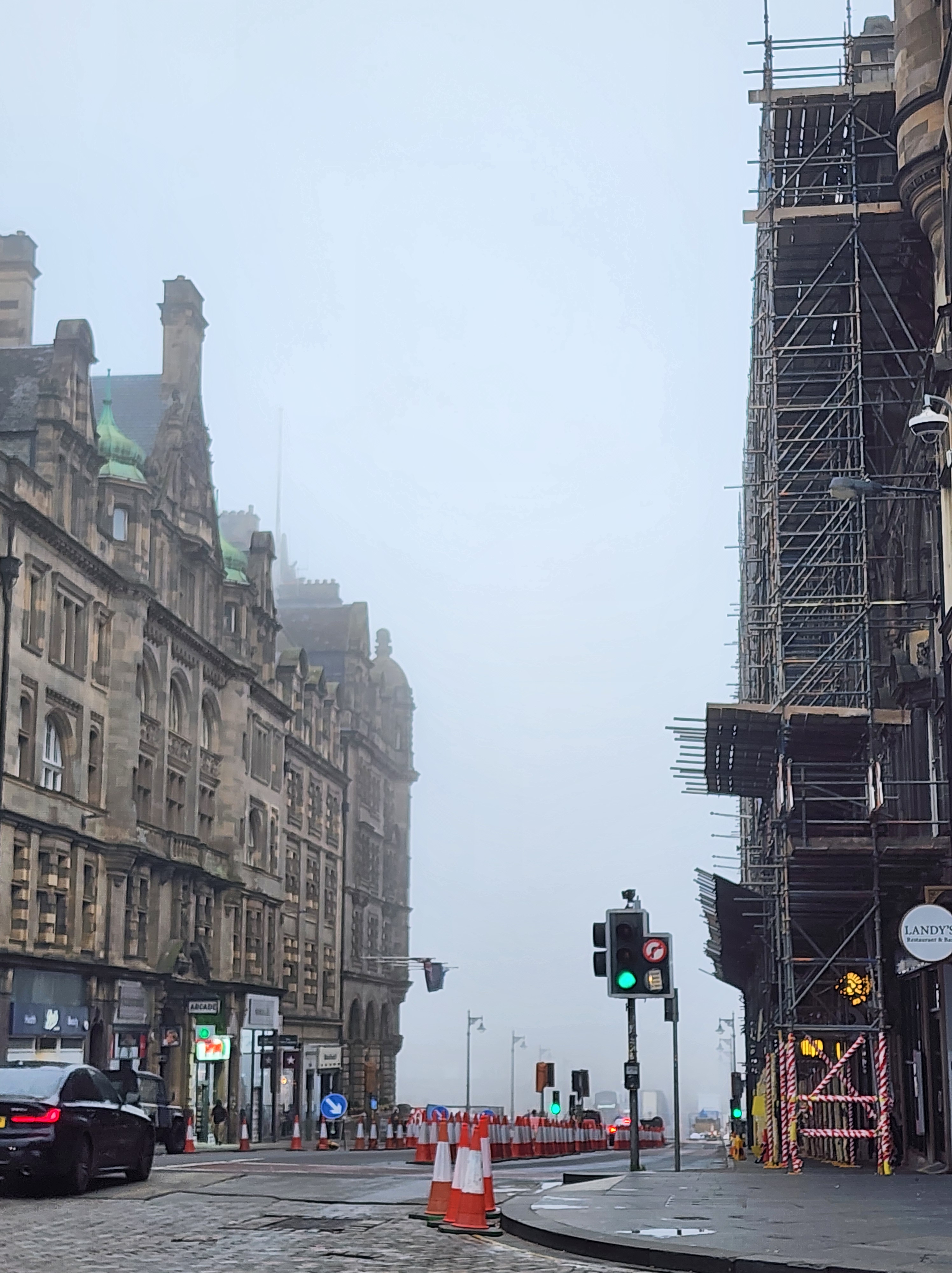
A view north towards New Town but there's so much mist you can't see it

The mist over the city obscures New Town

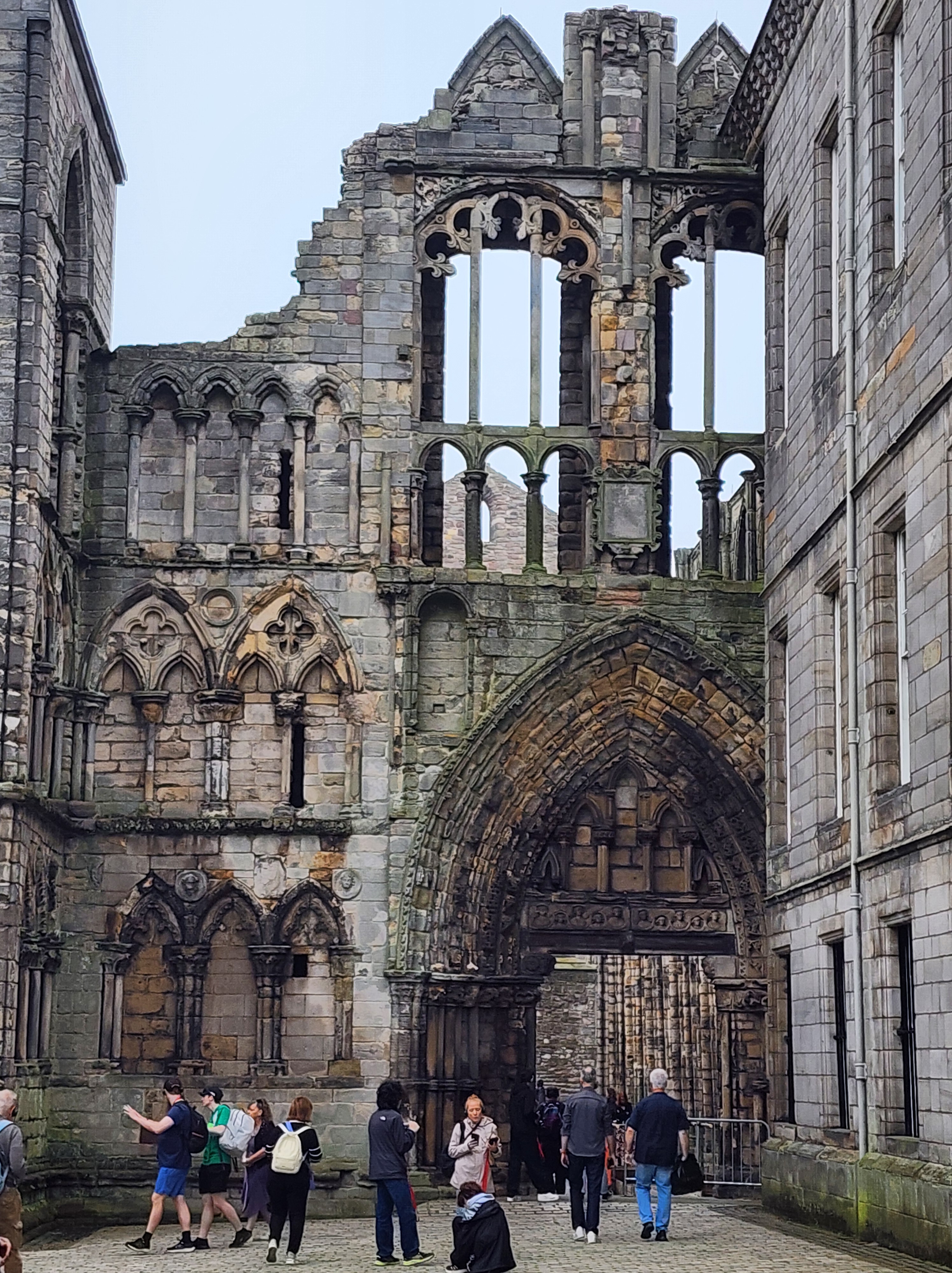
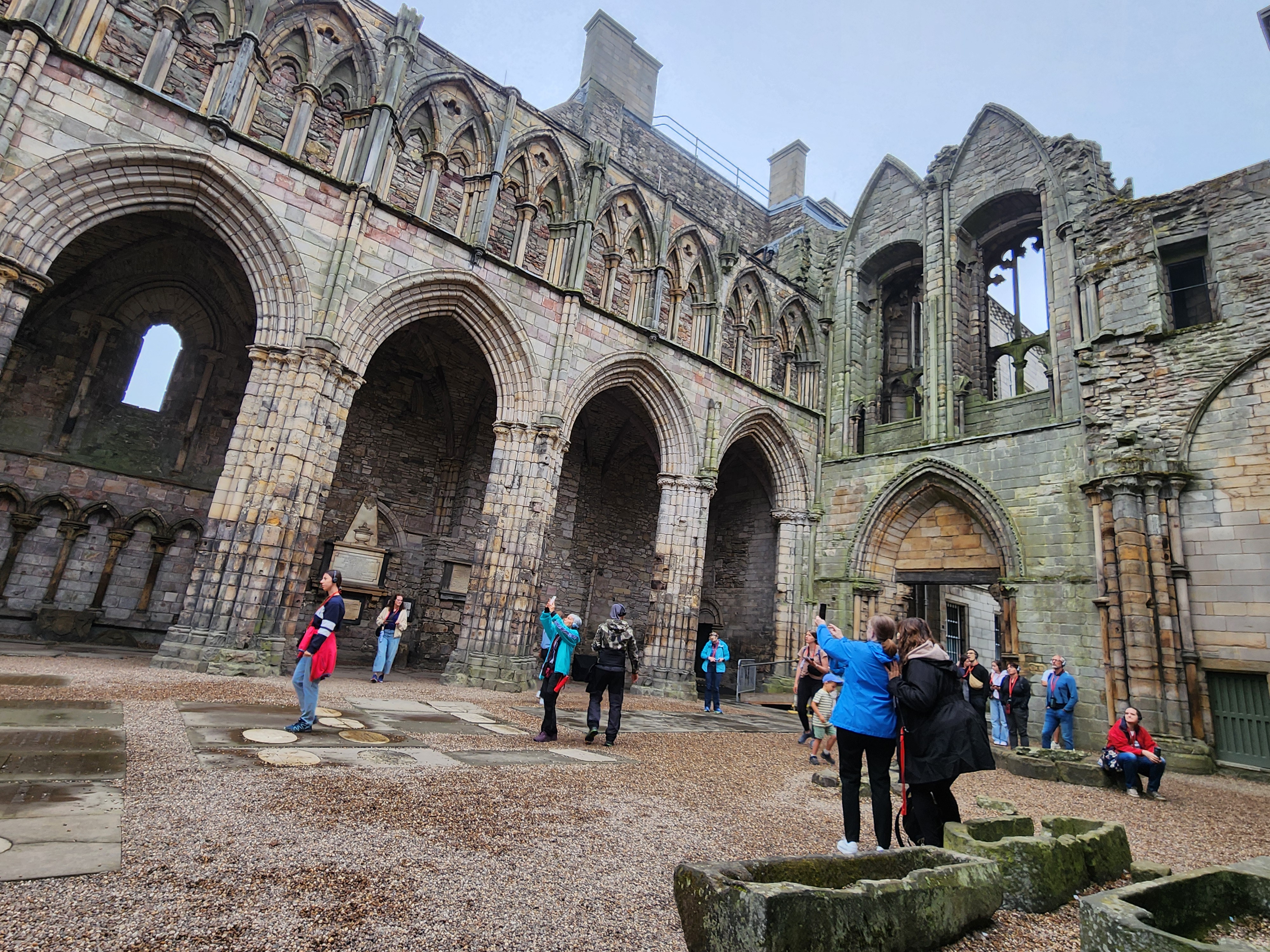
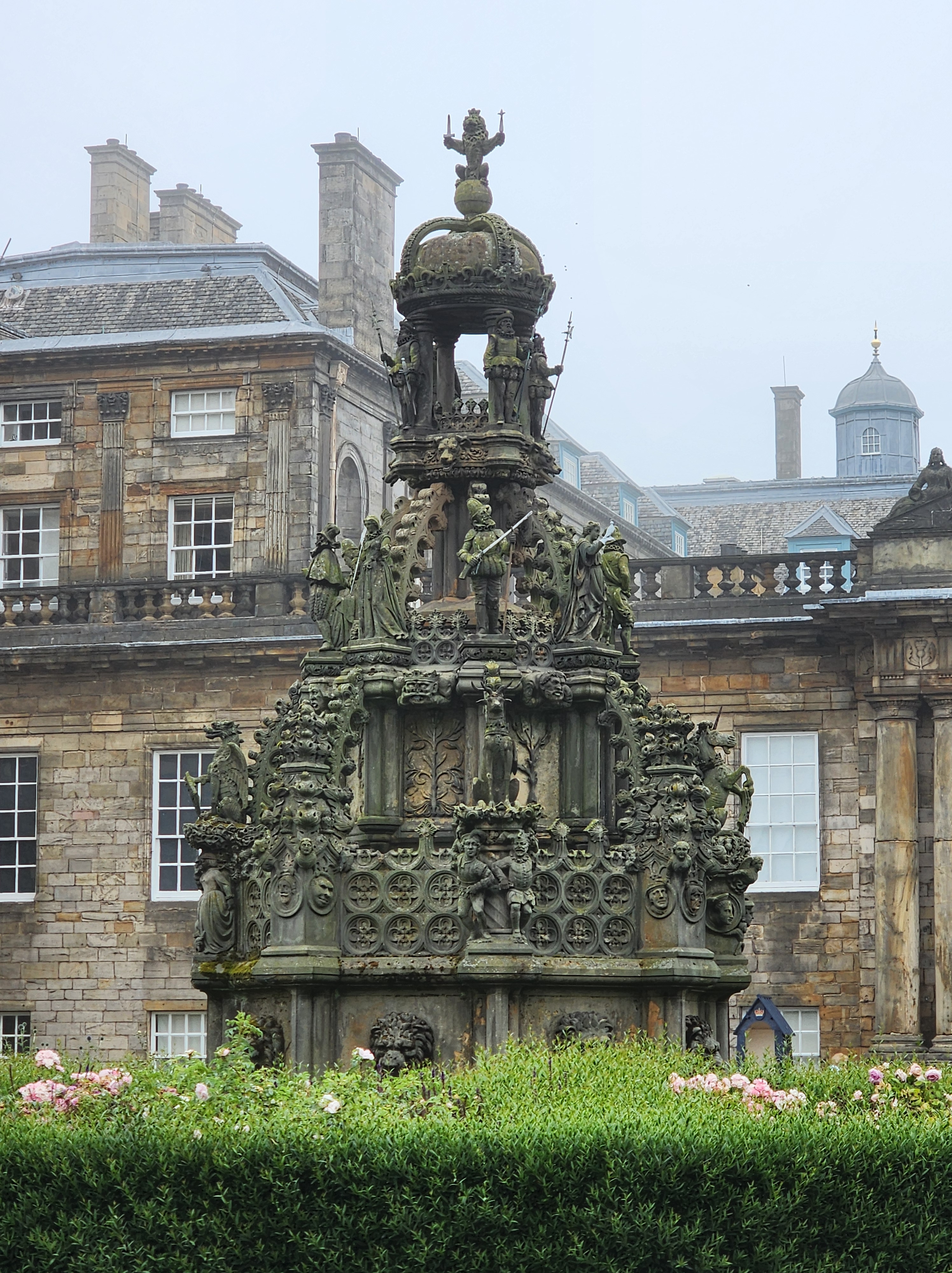
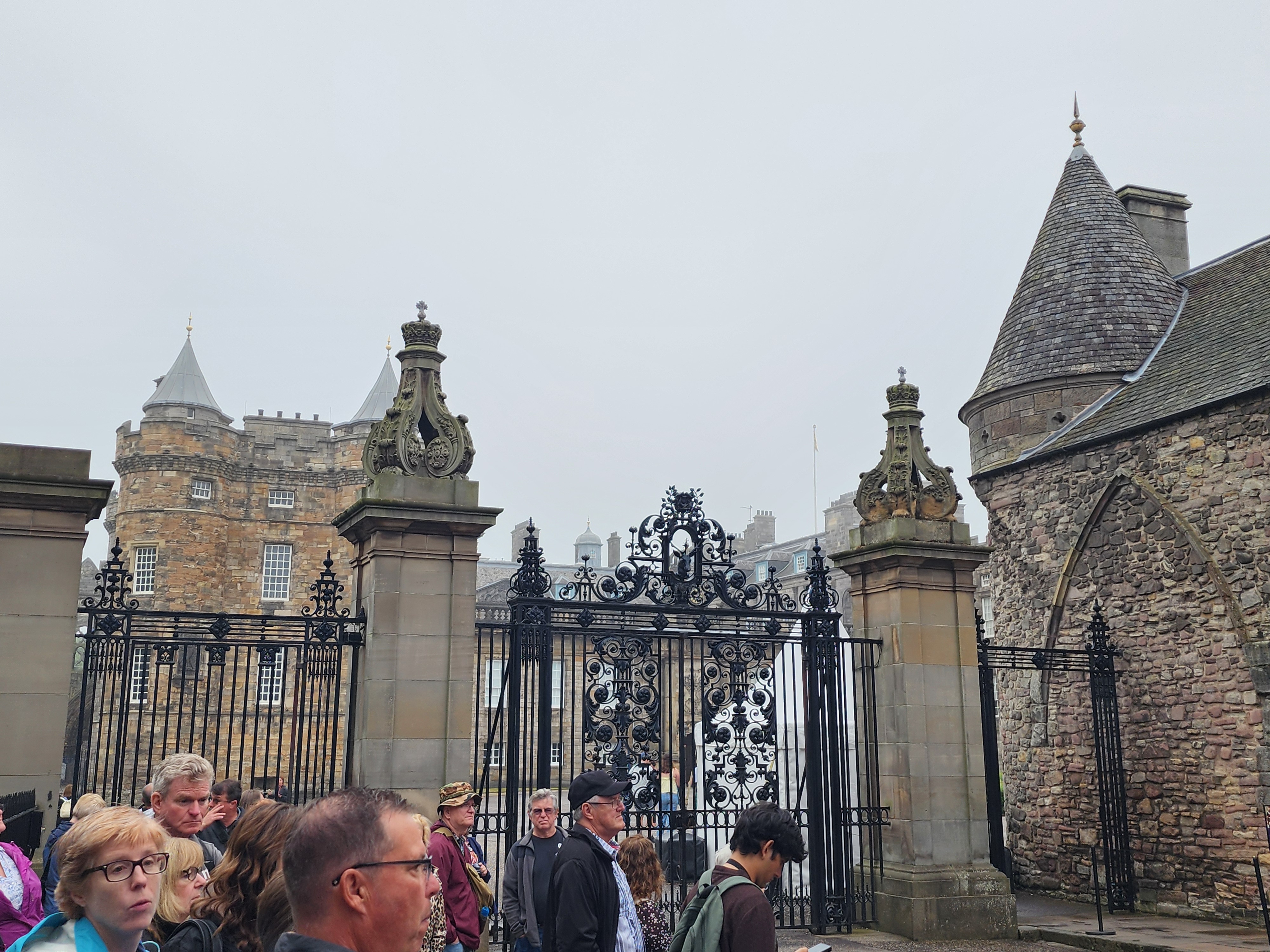
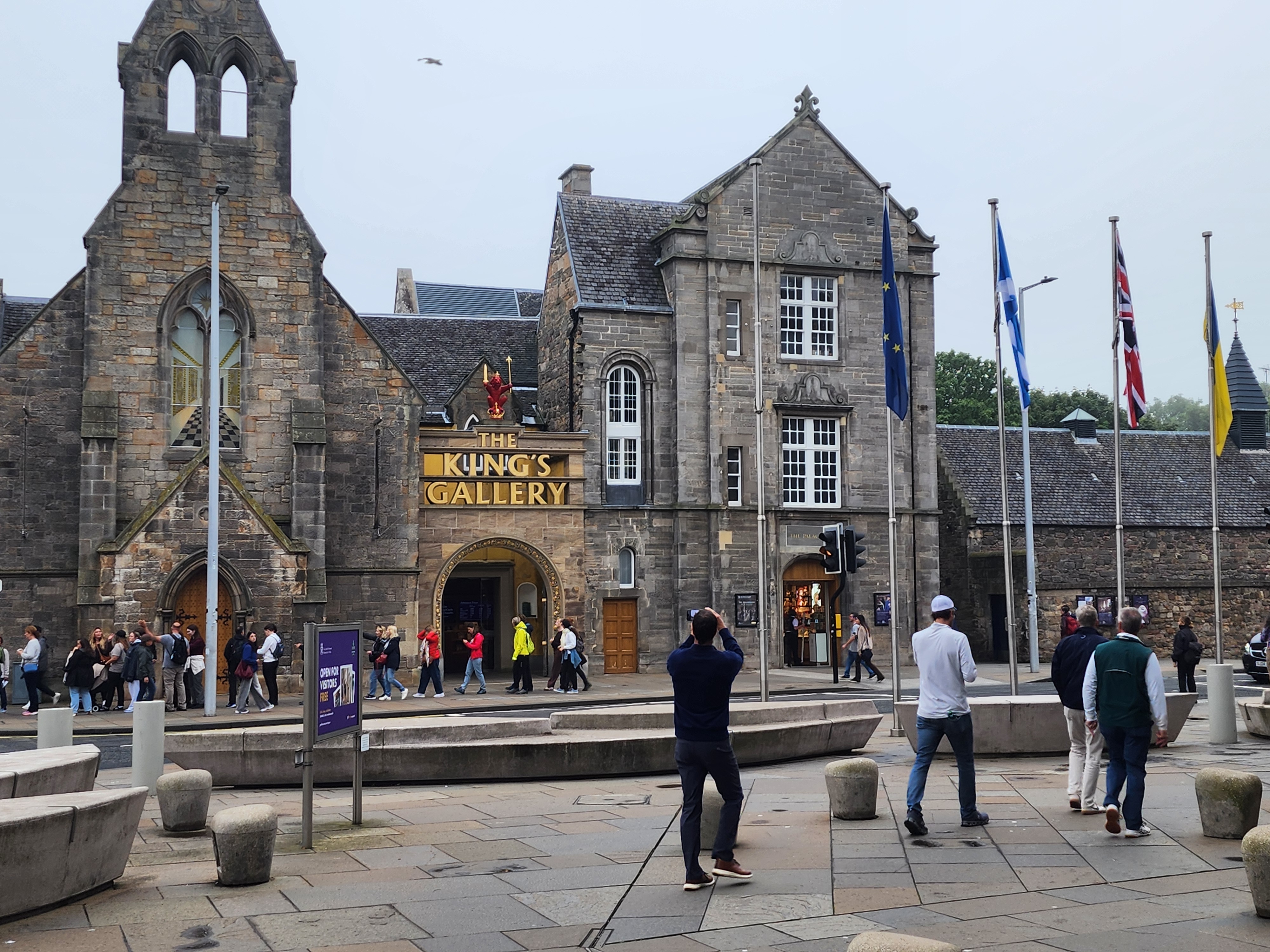
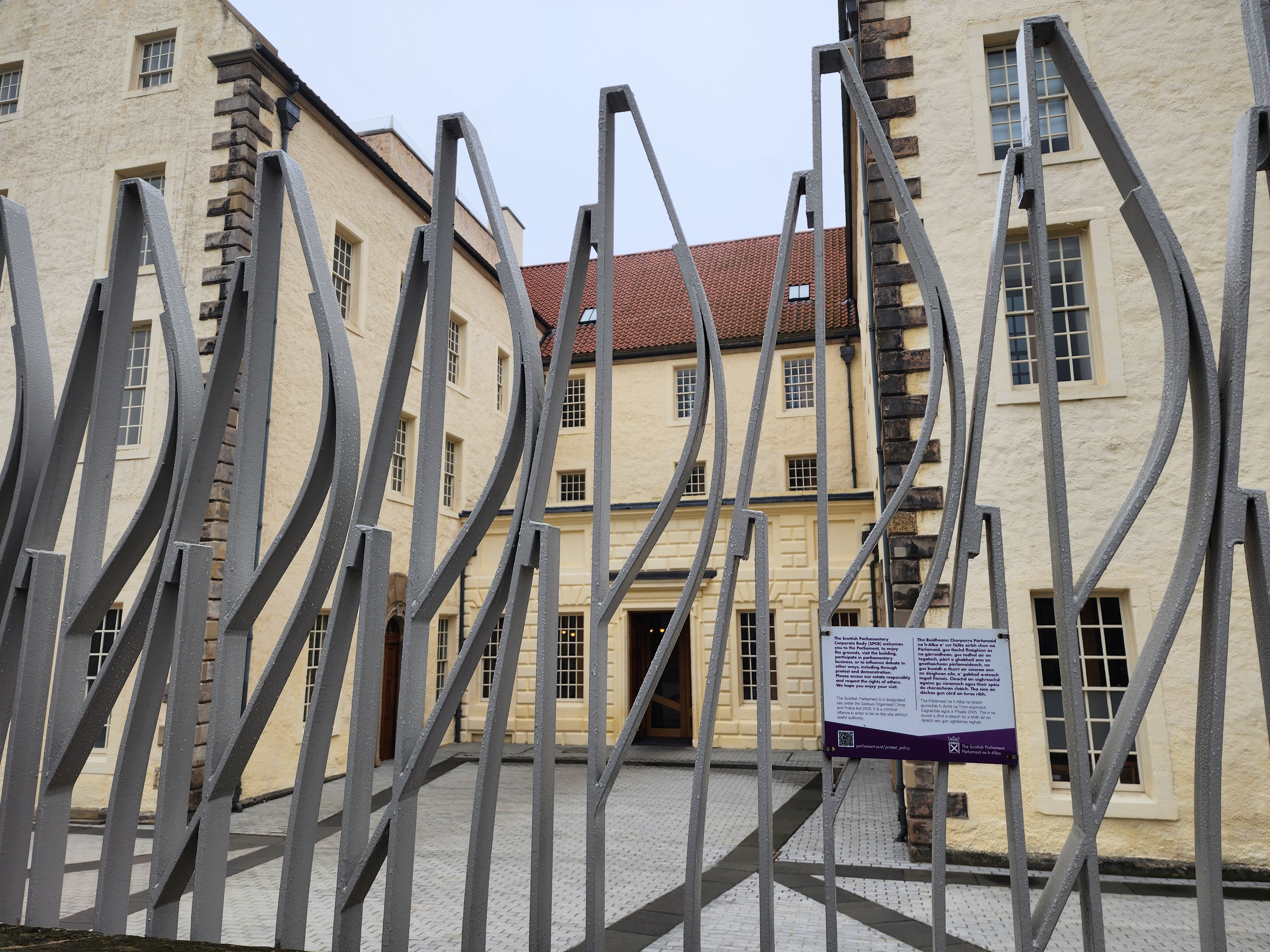
This past Saturday, I woke up to a town wreathed in mist that hung around all day long, obscuring the sky, obscuring the streets:  people and cars appearing suddenly in front of you when you least expected it. The spookiness thrilled me, actually, and I loved walking around Edinburgh in the smirr, as if the whole city were disguised.  I took the bus to Southbridge, then walked down the east side of the Royal Mile to get to Holyrood Palace—a place I’ve been meaning to visit these past four years but have only now gotten to. There were a few interesting signs on the walk, including one advertising the Scottish Poetry Library at Crichton’s Close, which I may have to investigate at some point.  And another one at St. John’s Pend which memorialized the knights of St. John, and “houses occupied by famous families and occasionally by Smollett.”  (I vaguely remember reading The Adventures of Peregrine Pickle in my 18th Century lit class many, many years ago.)  I also passed by the Scottish Parliament house, which apparently can be visited by the general public, but it was locked up tight on Saturday.  Even MPs need a day off, I guess.
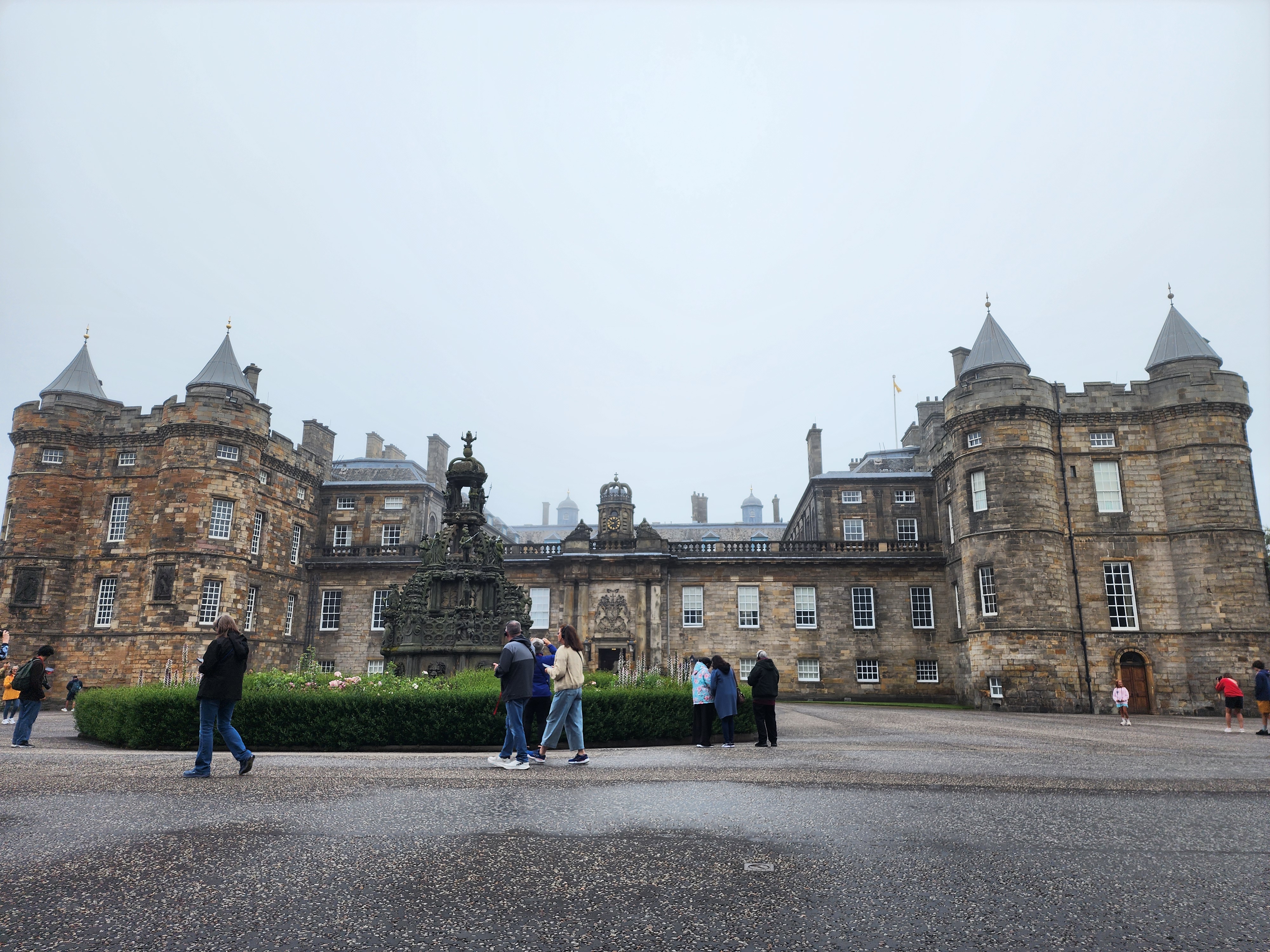
A full frontal view of Holyrood Palace with a statue in the front

Holyrood Palace

Holyrood Palace is a working palace, which means that Prince Charles (and Queen Camilla) conduct Scottish business here and stay in the palace when they are in town. It is more comfortable and more recently built than Edinburgh Castle (although “recent” is a misnomer, being as the palace was built up in the 16th Century but bits had been around earlier).  Dinners, meetings with dignitaries, and other formal events are held here. Pope Leo even met King Charles here.  I liked the palace very much, with its dark brocades and many tapestried rooms.  The wooden floors creaked, and the paintings were interesting, especially in the Great Hall, where artist Jacob de Wet had painted almost 120 portraits of royalty, real and imagined (although the Hall only featured about 97) at the request of Charles II.  de Wet painted one painting a week for two years.  In order to shore up Charles’ right to the throne, and to emphasize his ancestry, each of the paintings bore Charles’ nose—even the few women on display.  Once you know this fact, you can’t unsee the nose—it’s everywhere.  (I can’t imagine painting a new portrait each week—I can barely imagine writing a poem once a week, let alone create a whole painting!)

Off the Great Hall is Henry Stuart, Lord Darnley’s bed.  It’s walled off in glass so that it can’t be touched.  Perhaps the fabrics are too delicate.  But the bed was enormous.  Strangely, the bed is considered Darnley’s although if I understood the audio tour correctly, the bed dates from 100 years later.  Meanwhile, the upstairs rooms belonged to Mary Queen of Scots, and you have to climb this tiny, steep spiral staircase to access them. The dimmest lighting fills the larger of her rooms, with few sconces and spotlights on specific items, especially the jewels.  Darnley’s locket interested me the most—it’s in the shape of a heart with enamel cutouts, including a figure of a man (presumably Darnley) with a flower coming from his private parts to symbolize his son.  There were also other jewels, including a parure that Mary gave her favorite lady-in-waiting, who apparently lived with her in exile in Queen Elizabeth’s castle for most of the 19 years Mary was imprisoned.  Mary’s rooms highlight the tour of Holyrood, and apparently there is a bloodstain on the floor where Darnley killed Mary’s Italian secretary, David Rizzio in 1566, but I didn’t see it.  I’m glad I didn’t see it.  (By the way, I have no pictures of inside the palace because photographs aren’t allowed.)
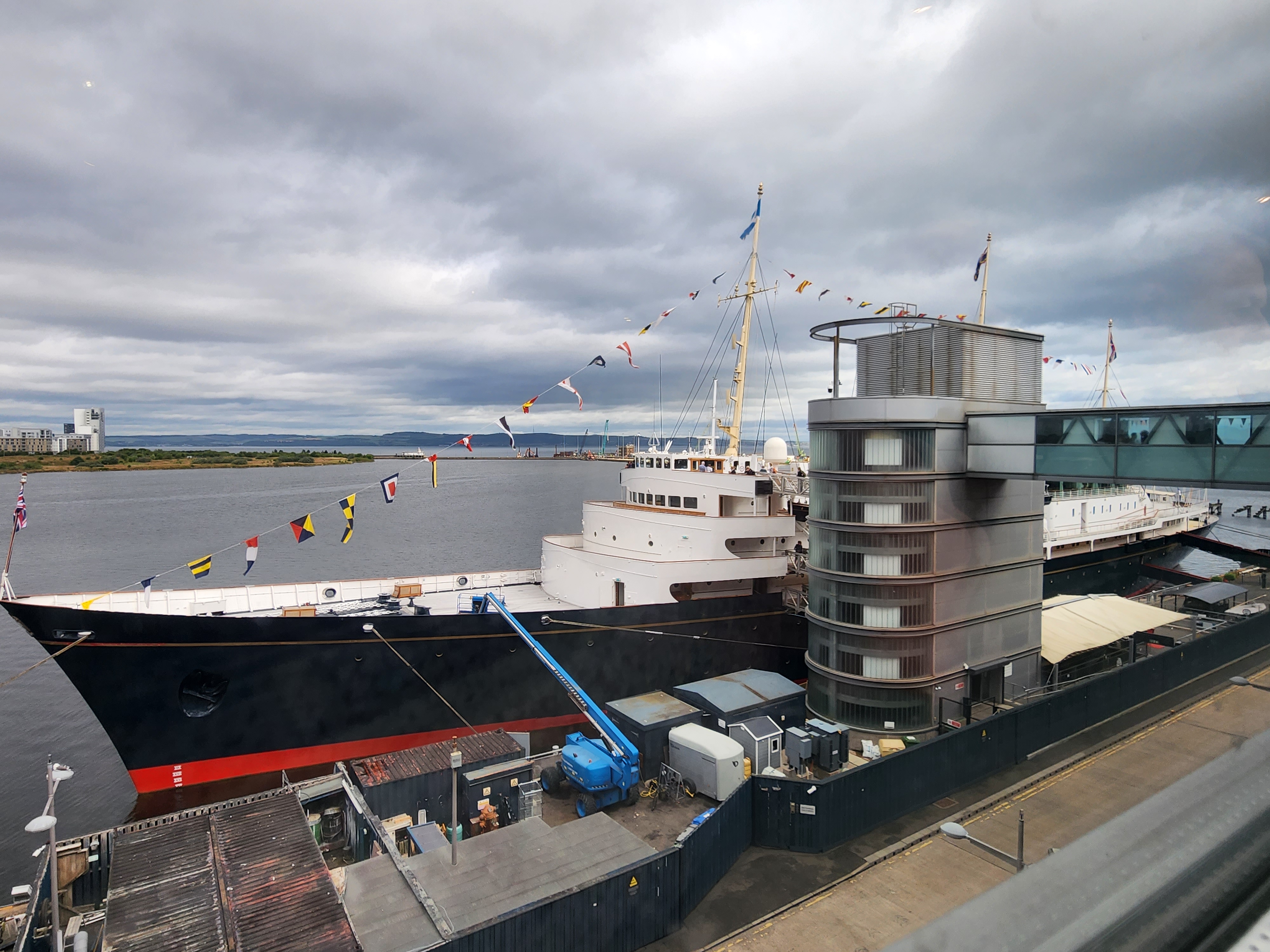
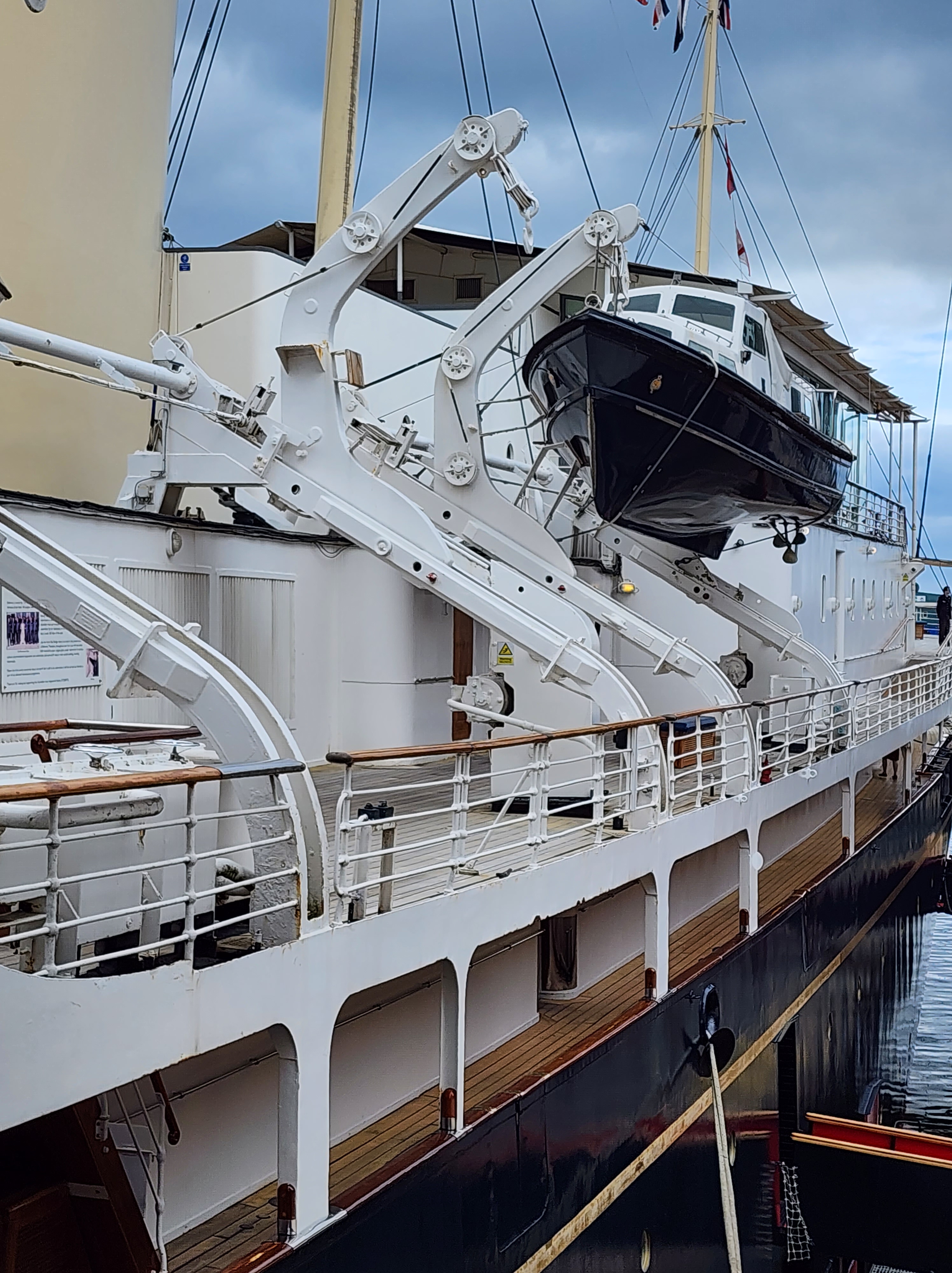
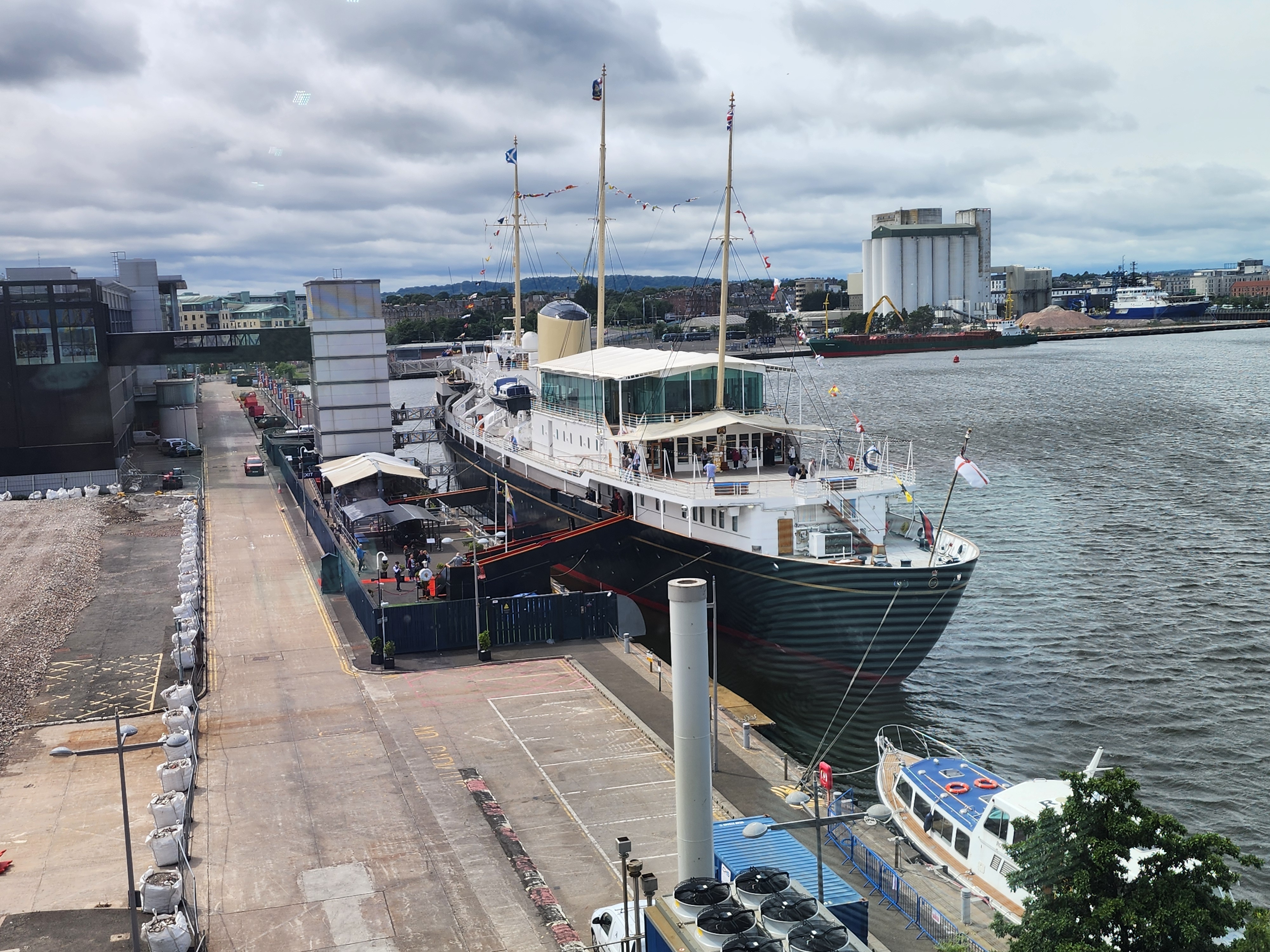
A far view of the Royal Yacht Britannia at dock

HMY Britannia

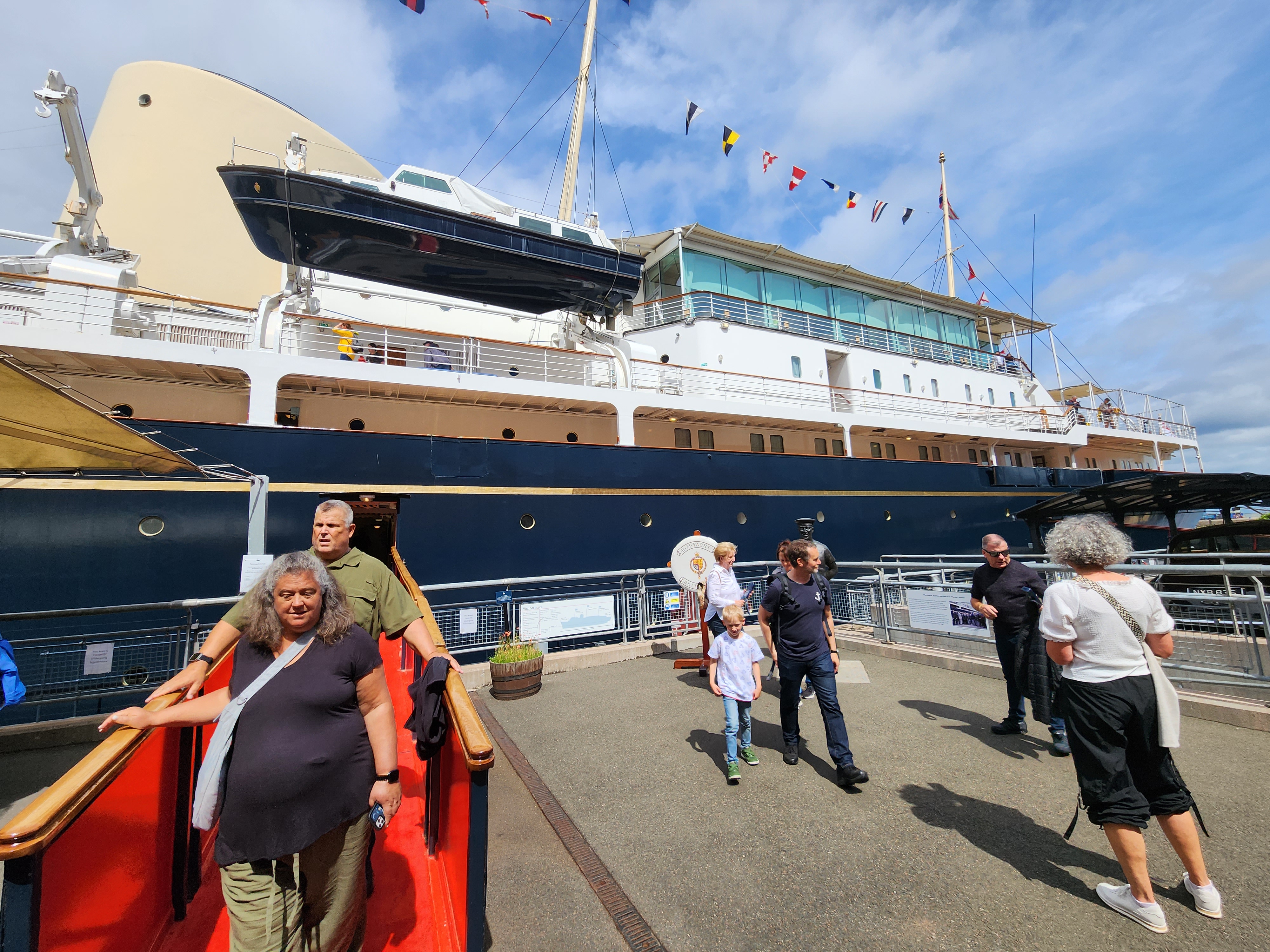
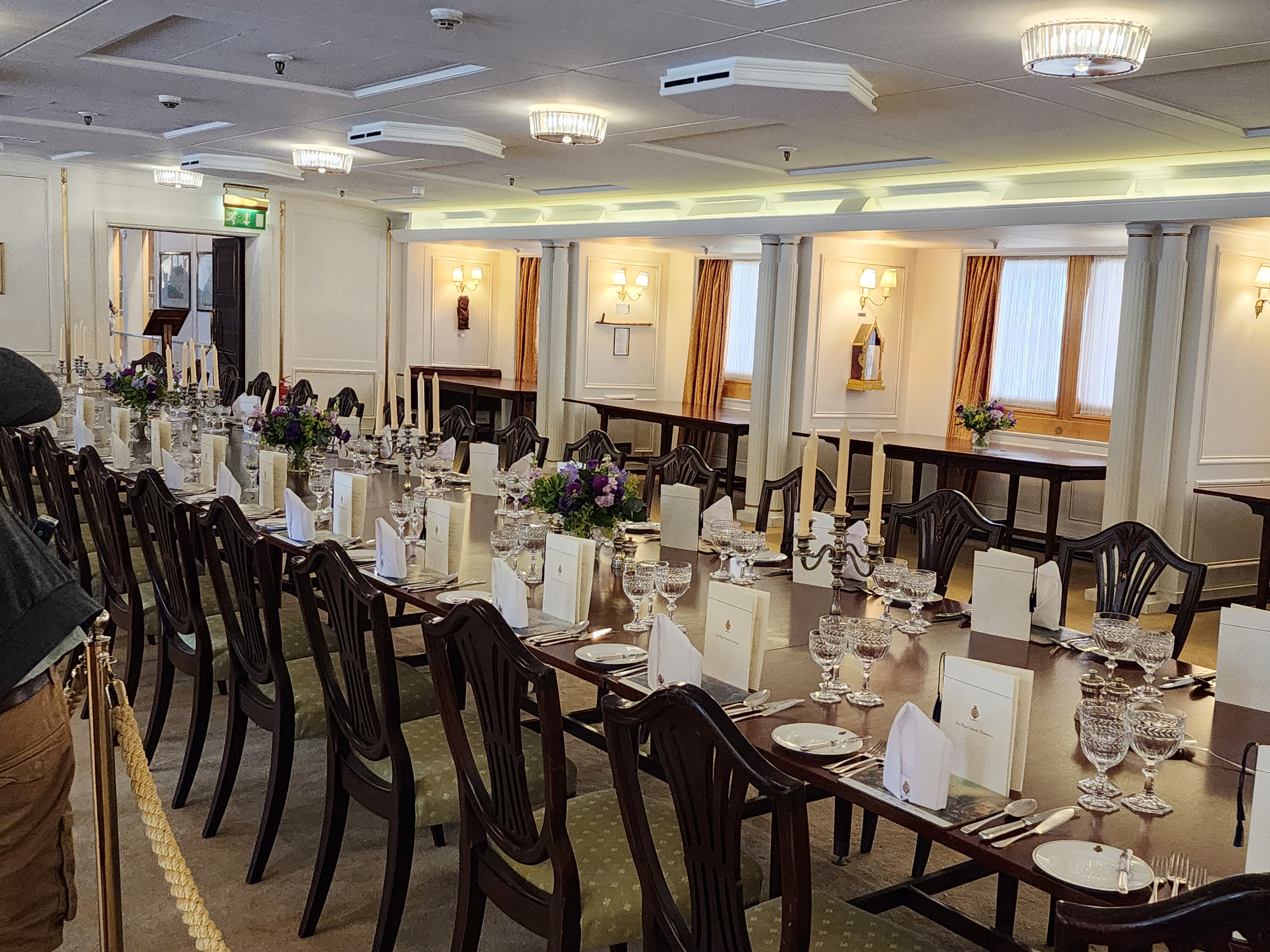
Another local sight of interest is the Royal Yacht Britannia.  This was the monarchy’s yacht, commissioned in 1954, a couple of years after Queen Elizabeth II became the Queen. It first sailed to Malta from Portsmouth allowing Prince Charles (then age 6) and Princess Anne (then age 4) to meet back up with their parents after their parents’ long tour of the Commonwealth. And what is interesting to me is that for all its luxury, the ship seems small.  Perhaps “intimate” would be a better word—although how intimate can it be with all its staterooms and a dining room, dripping in silver, that can seat over 20 people?
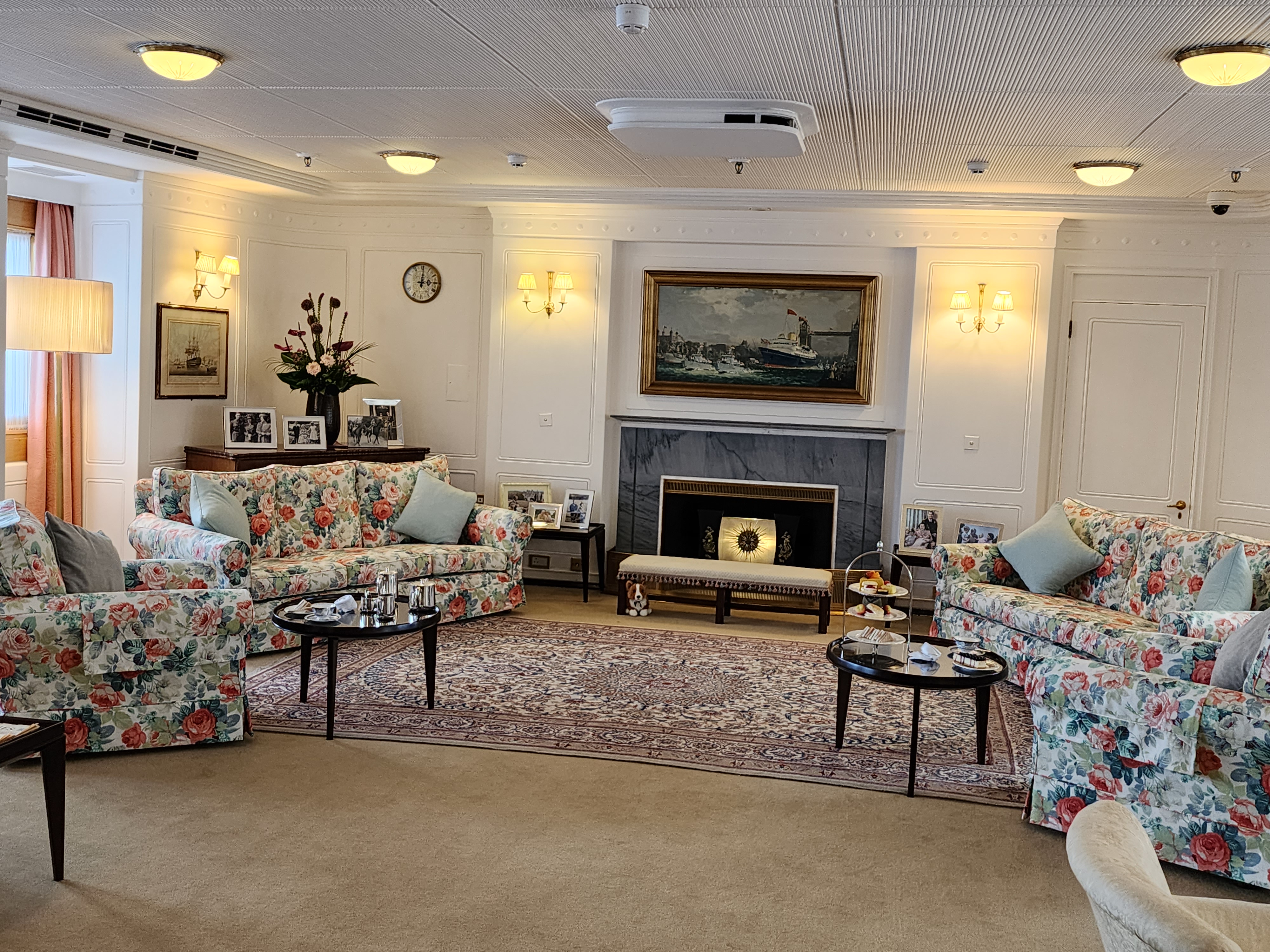
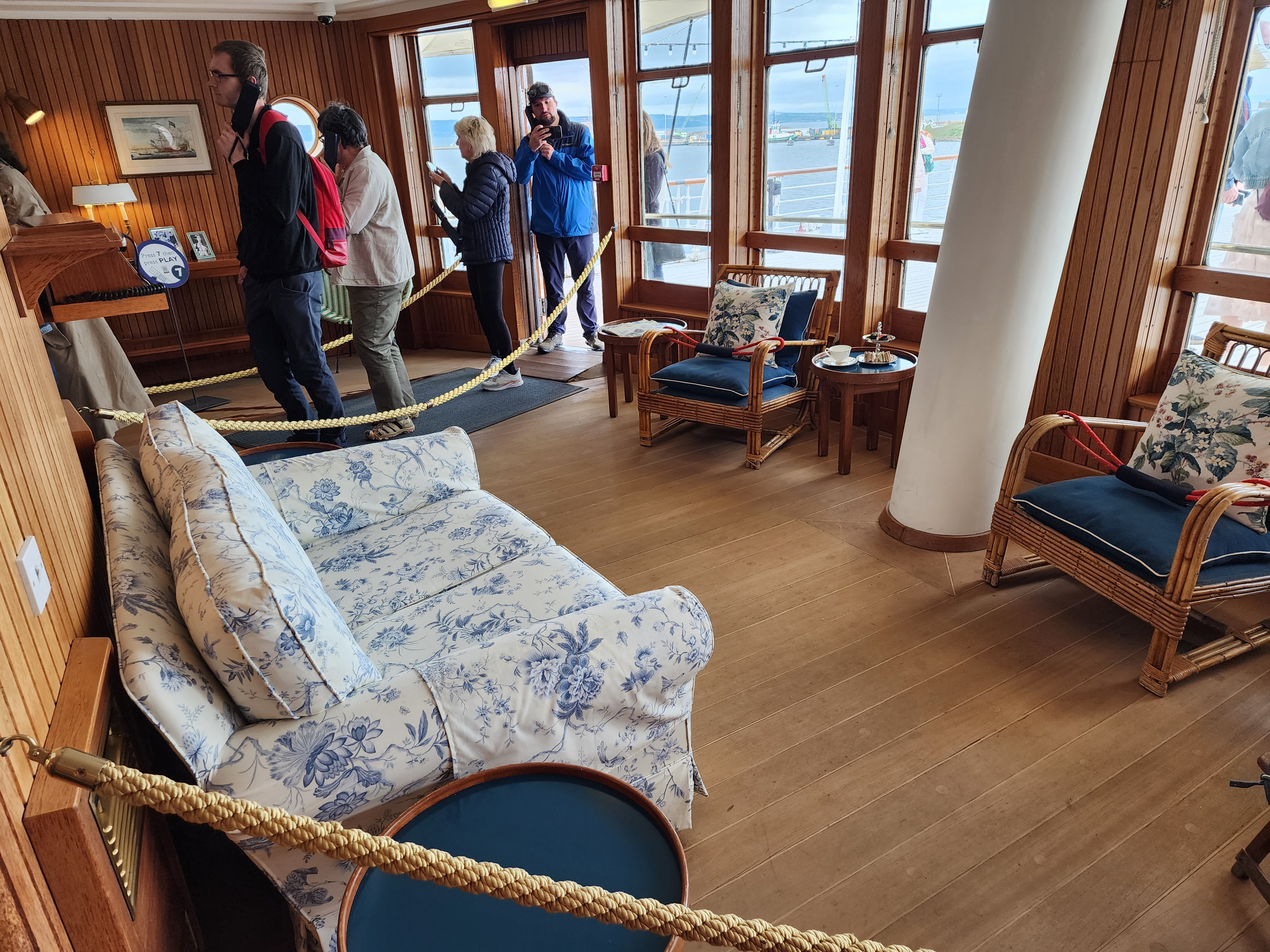
The royal sitting room with soft couches with a loud flower print on them

The drawing room

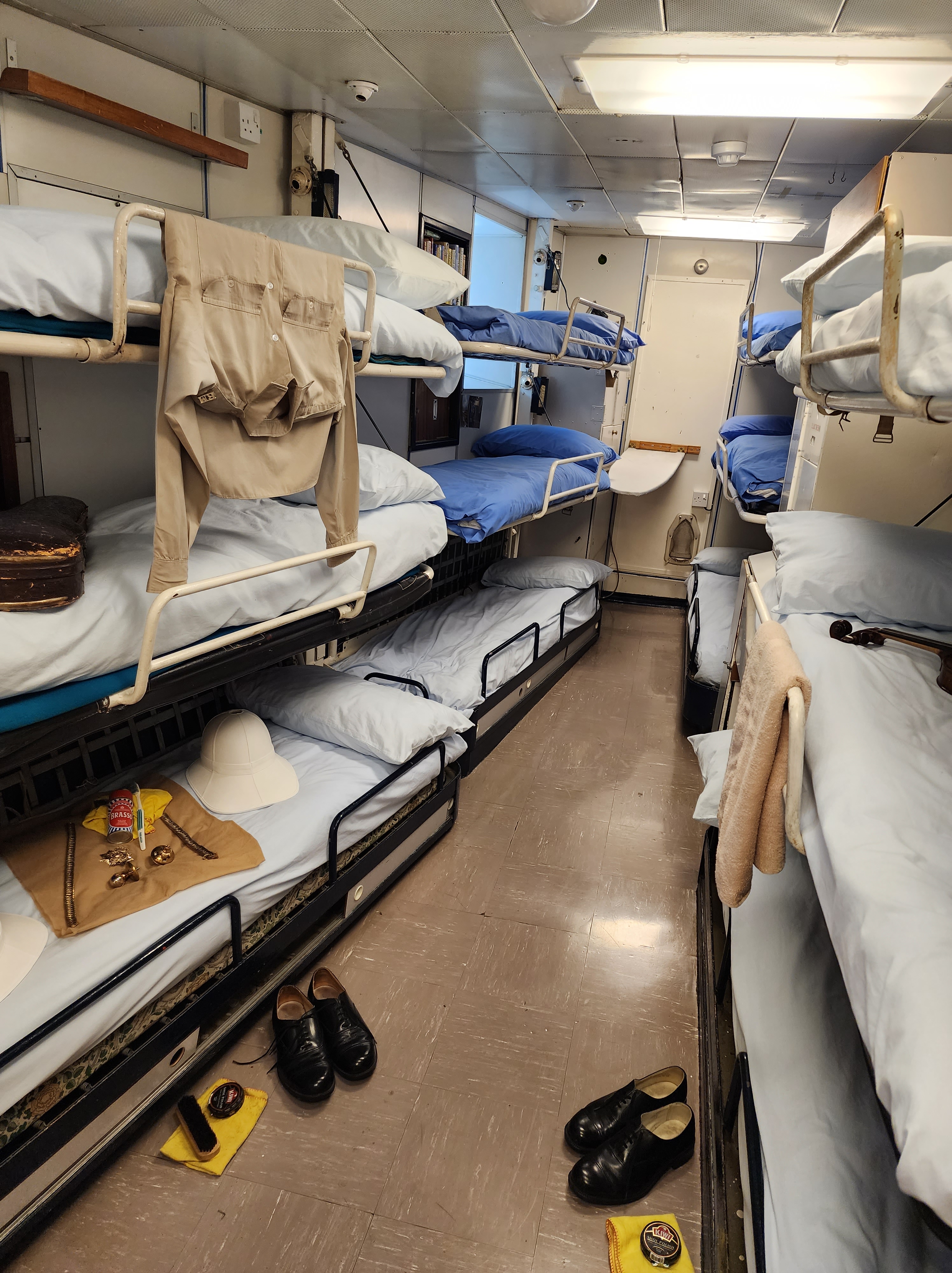
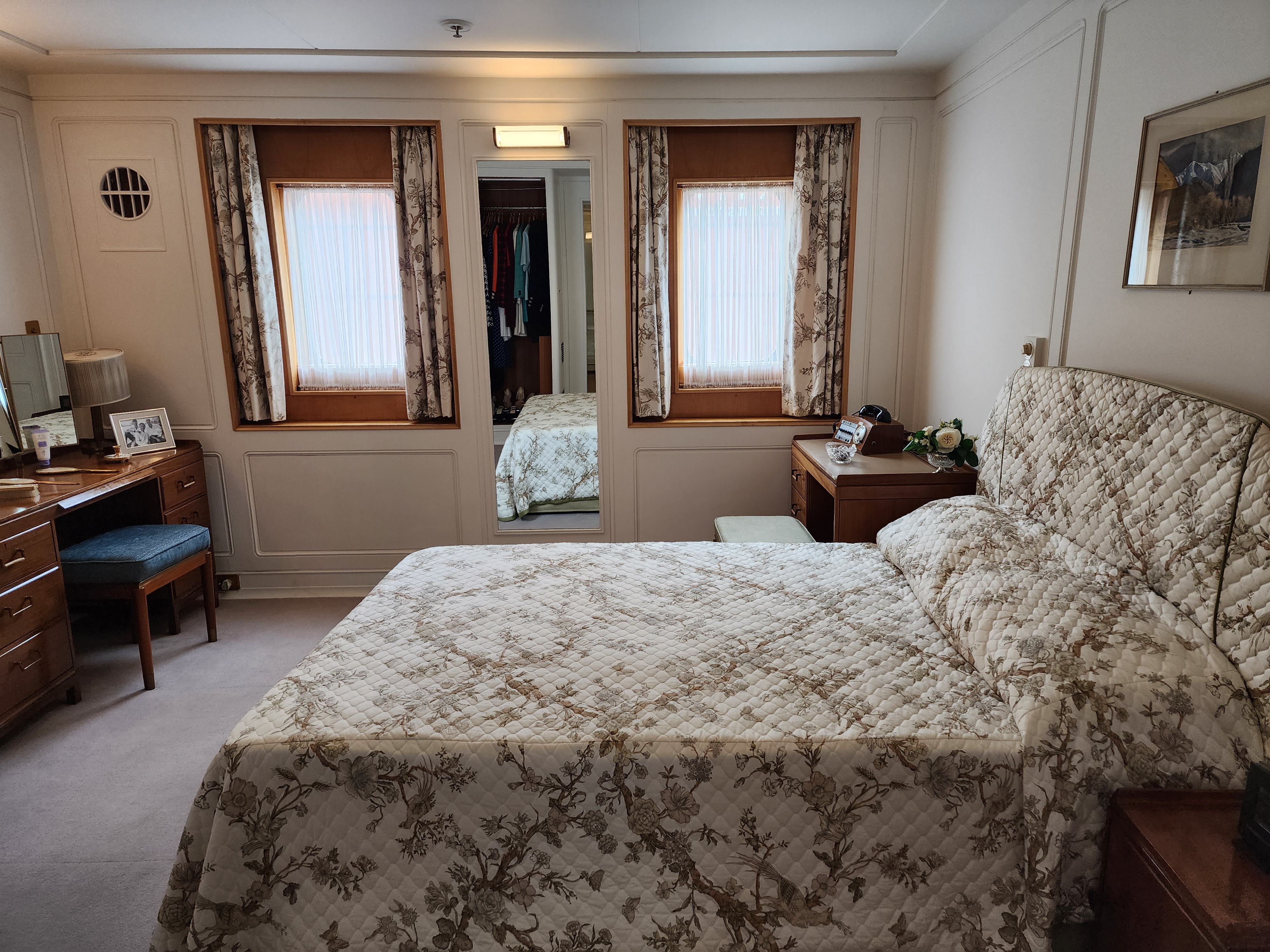
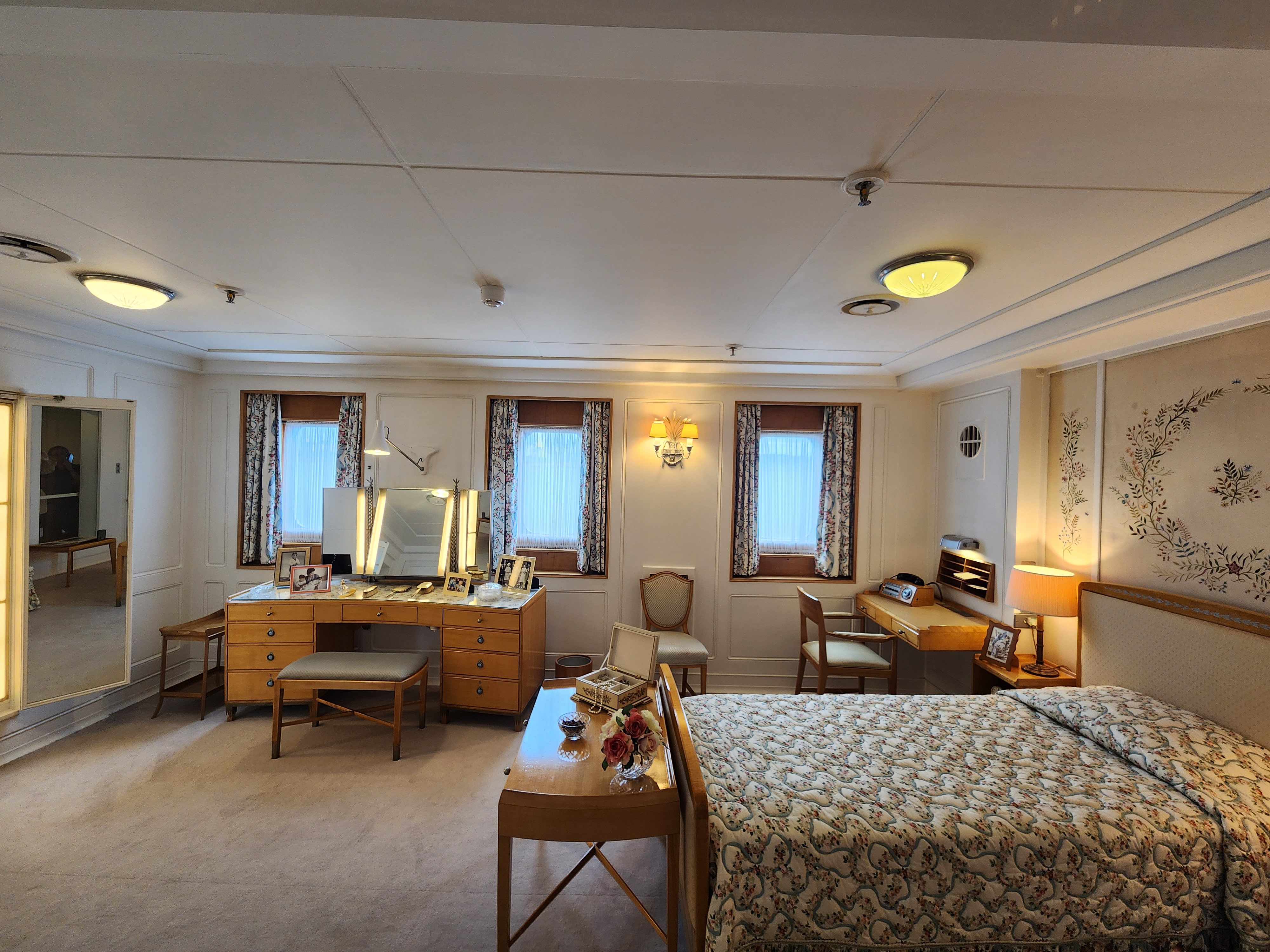
I like how comfortable the rooms are, with soft couches and chairs that invite a person (not a paying visitor, obvs.) to sit and take a moment to enjoy the space.  There are drawing rooms, and living rooms, and several nooks throughout the ship designed to take tea or breakfast or simply to sit at as well, and areas where the family could privately congregate, away from visitors.  As for bedrooms, I was surprised how small the beds are—they are only size double because they couldn’t bring any larger mattresses on board (something to do with the doors, I’d guess).  And both the Queen and Prince Philip had their own staterooms and dressing rooms. It seems a little strange to me, but I suppose each member of the royal family always enjoys their own room and space.  It is the privilege of the wealthy not to have to share. (Unlike the crew who crammed into their bunks by the dozen.)
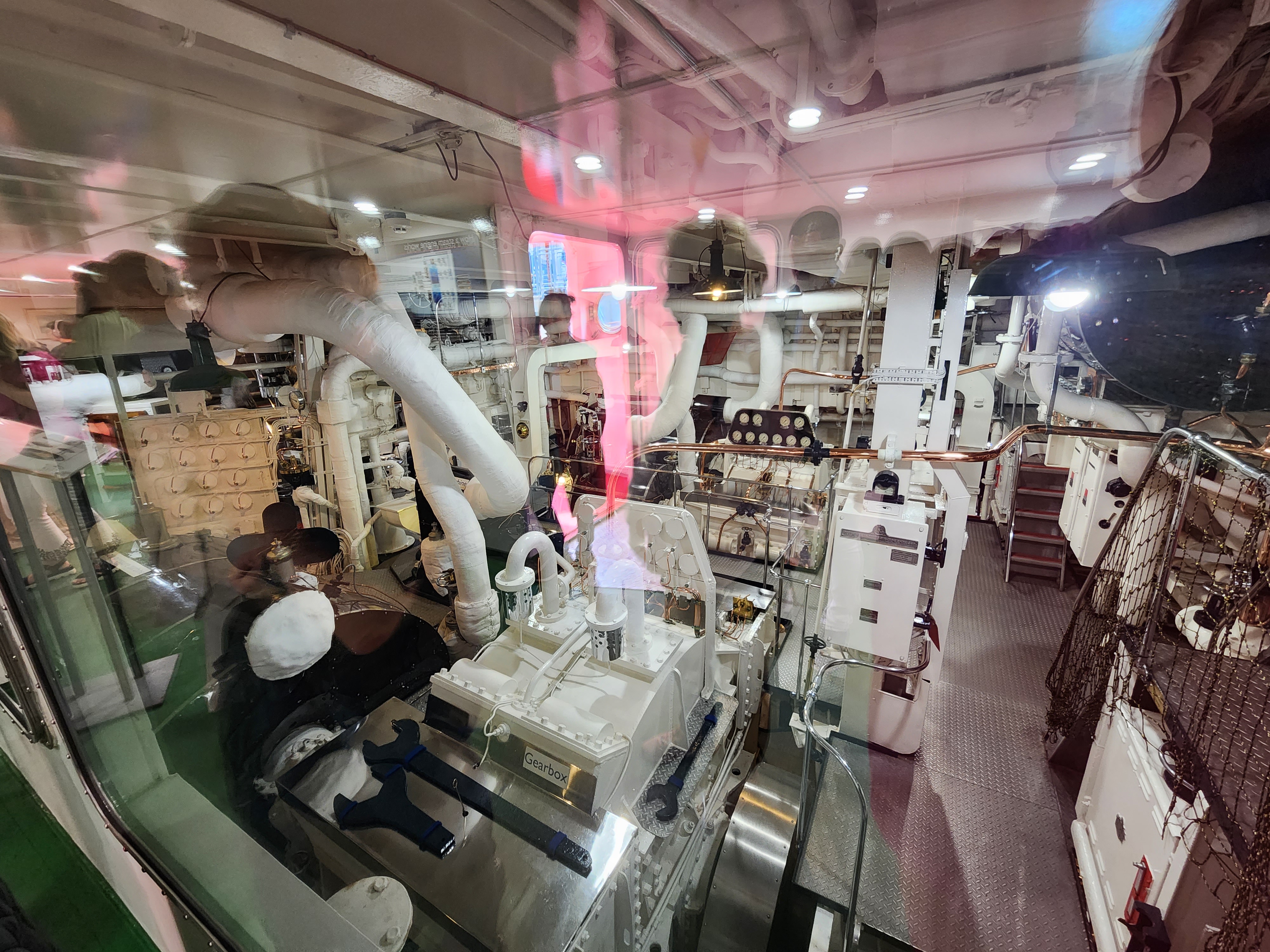
The engine room--basically a lot of machinery

The engine room

What was also kind of cool is that we could look down below and see the engines and machinery used to run the ship. The noise must have been phenomenal—and the heat!—when the ship was moving.  I can imagine it was terrible to be down there.  Also down below were a sick bay (the surgery) and hospital beds, in case anyone should come down ill. And on the sides of the ship, were a luxury speedboat and a sailboat. Overall, a floating palace, 412 feet from stem to stern.
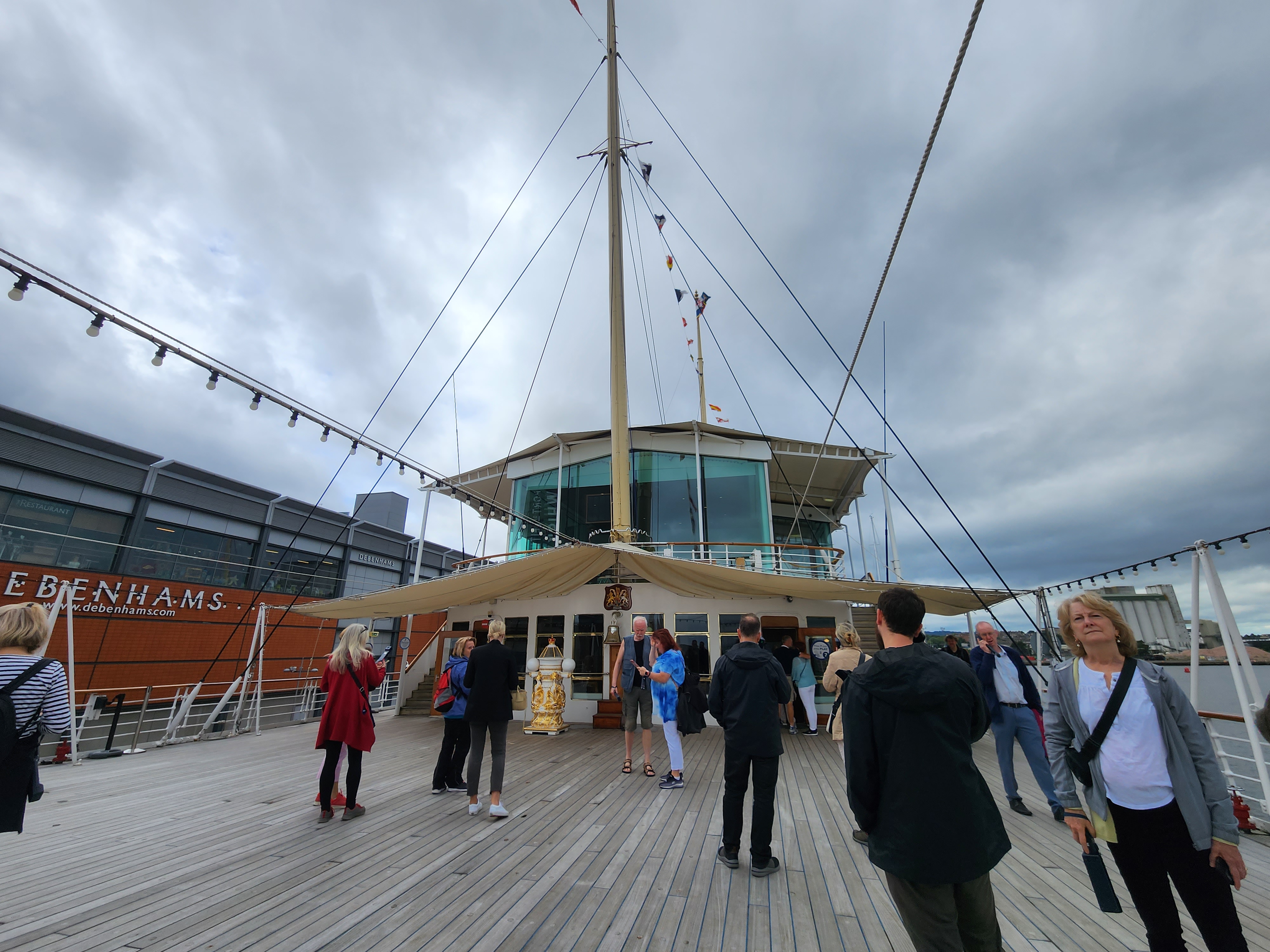
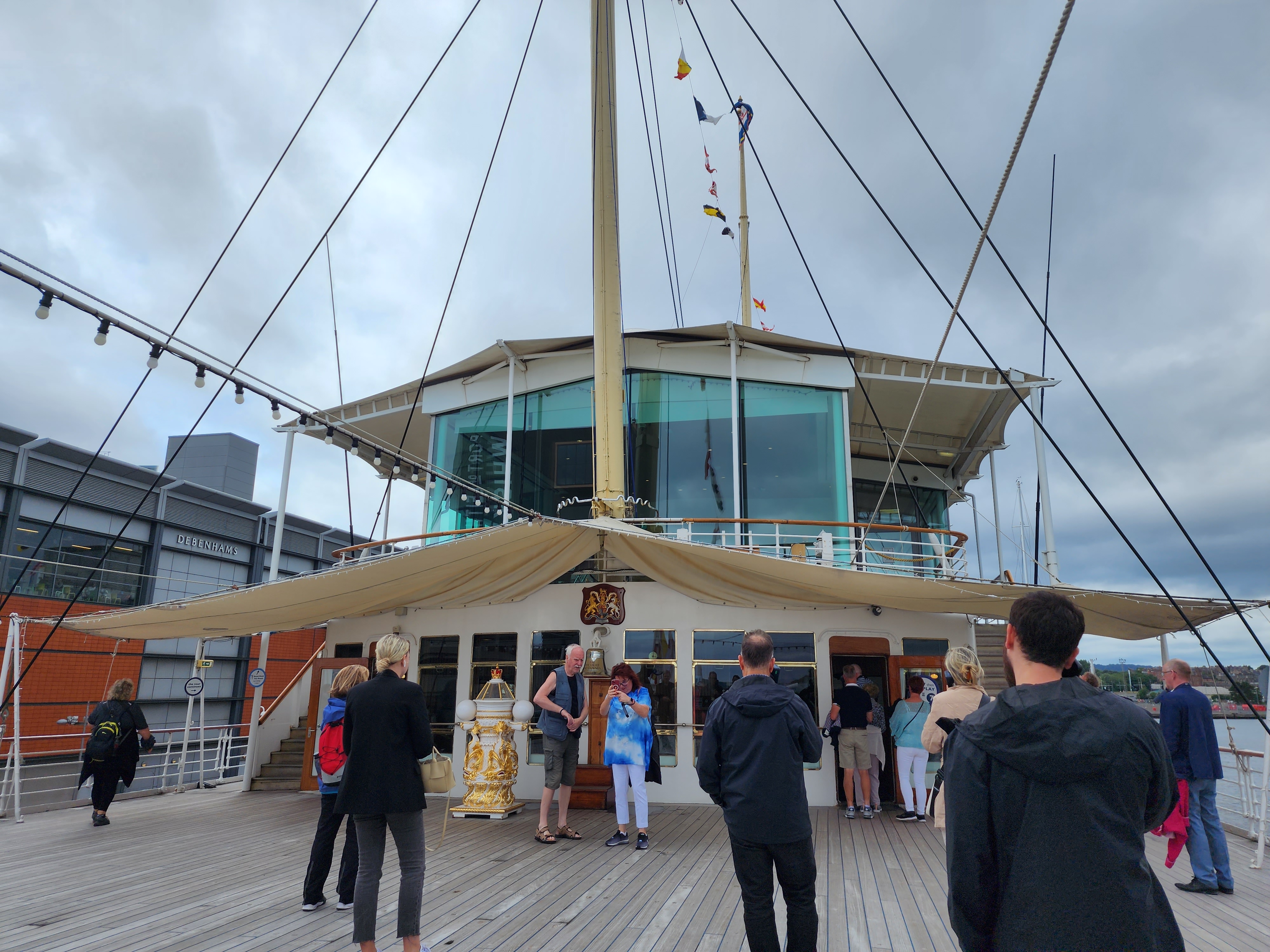
The foredeck of the Britannia. People are standing on it.

The foredeck

The Royal Yacht Britannia has five decks, and a lovely open space on the prow to sit and take the sun.  I can imagine that in summer the Queen and Philip lay out on chaises on the wood deck, her in a huge brimmed hat with sunglasses like a movie star and him wearing a button-down shirt and shorts. Perhaps their children played with a bouncy ball and tried very hard not to toss it overboard.  I was thinking this as I found a seat and enjoyed the sea air (which wasn’t as salty as I would have liked) and people-watched for a while. But eventually, I exited the ship and went into the Royal Deck Tearoom (which is on the tour) for a cream tea and a sparkling water. (A cream tea comes with a fruit (sultana) scone, a plain scone, butter, and clotted cream and jam, as well as tea and milk.) I sat in the very center of the room, jealous of the people to my right who got to look straight out onto the water. The tearoom was fancy, and the silverware sparkled.  And my scones were good, though , though they took a little while to come out.  (They were being baked.)

Next weekend, I’ll be taking a boat tour of the Firth of Forth (basically the Forth is a giant estuary) near the bridges, and I will see about heading to Portobello beach for a little sun.  (Of course, visiting the beach is weather-permitting, but I already bought my boat ticket, so I’ll go on that trip no matter the weather.) You can be sure I’ll be writing about those excursions too, so keep a lookout for another post.
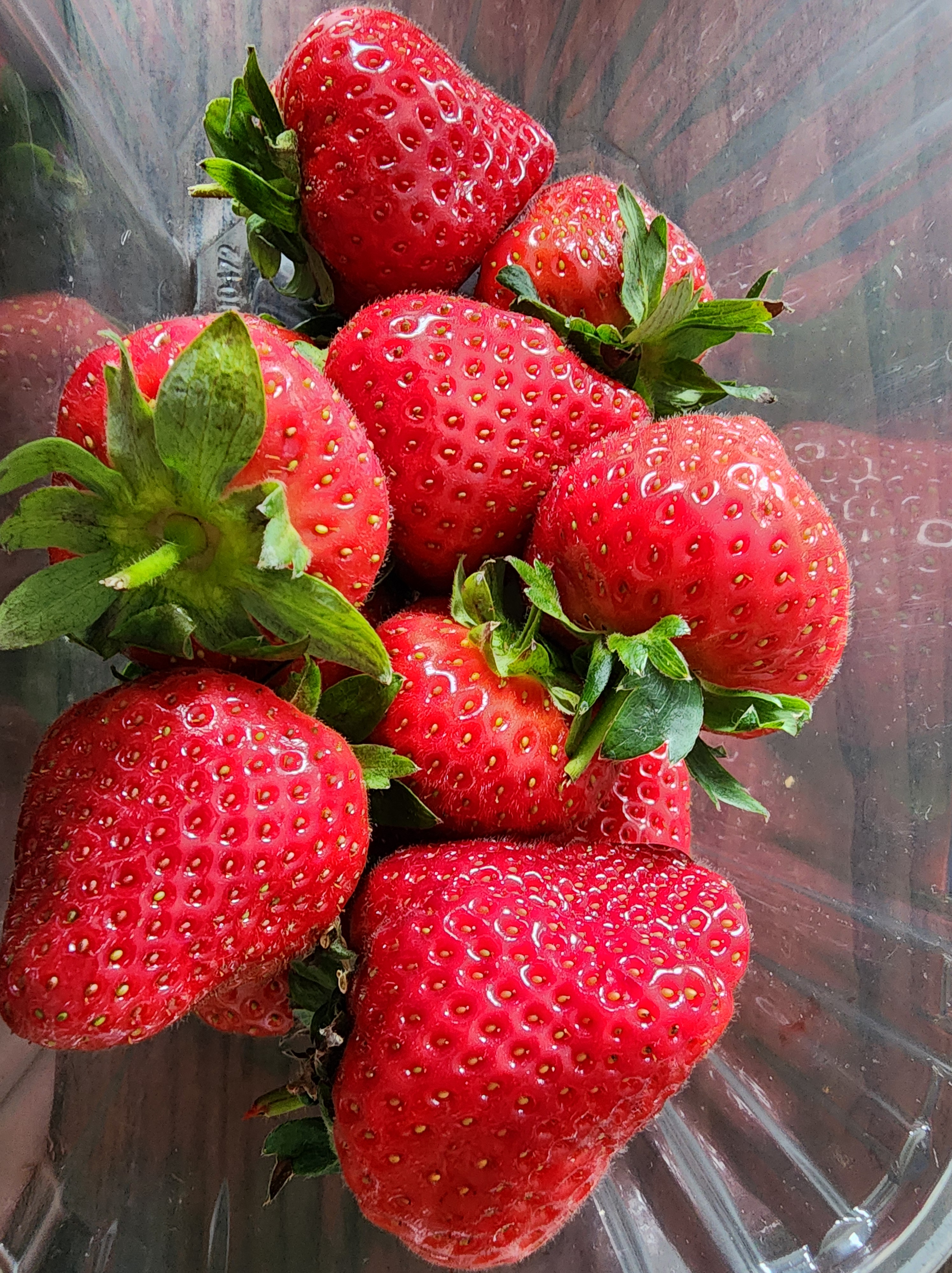
A pint of bright red strawberries

These tasted amazing!

A wedge of pecorino cheese "with orange."

Note to self: cheese and orange do not mix.
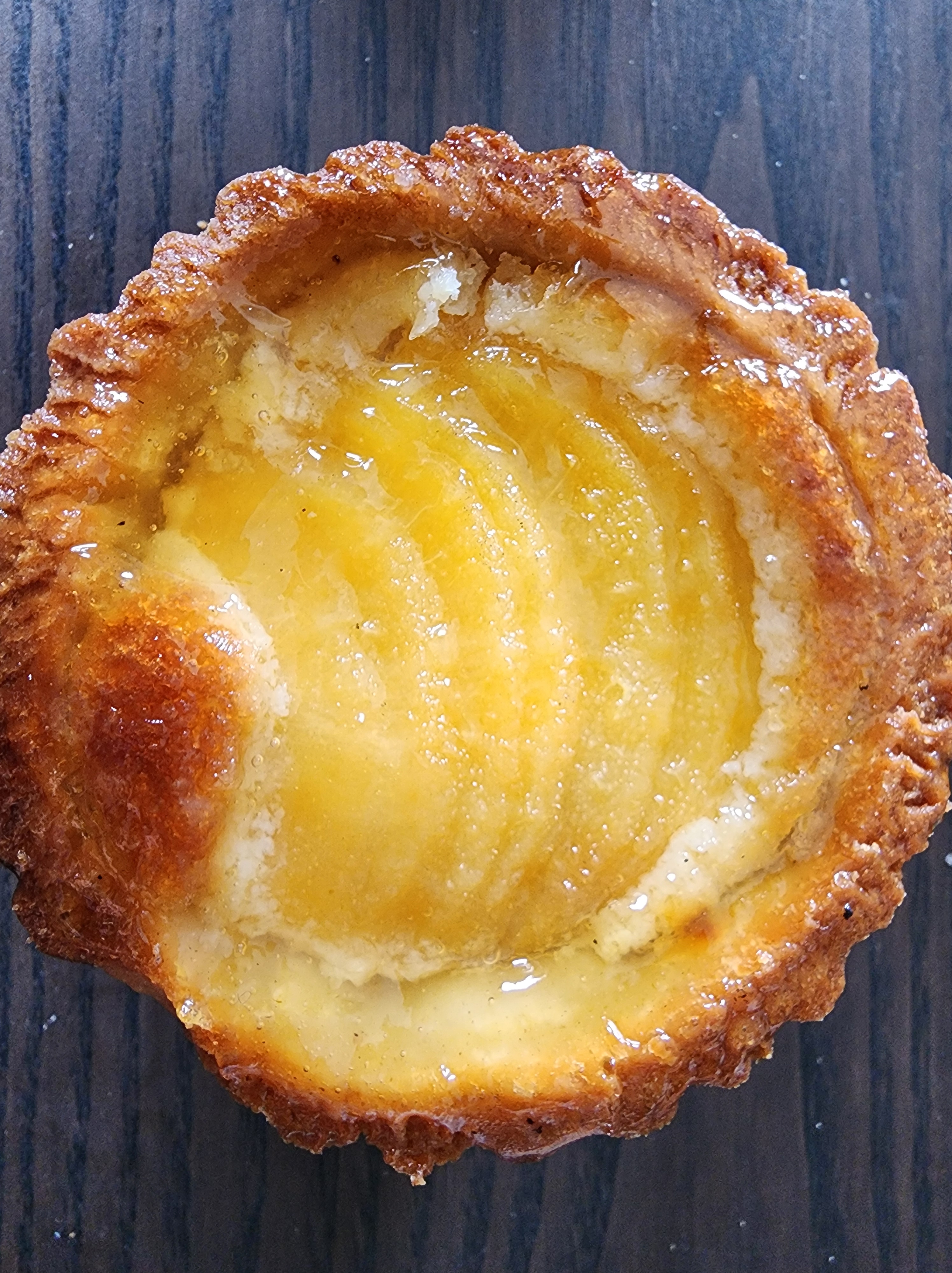
Image of small tart with pears

My pear frangipane


Two yellow tents and a white tent at the Leith Market

Leith Farmer’s Market

Manta ray earrings

My new earrings

A small watermelon with bright green rind

Everyone needs their own personal watermelon.
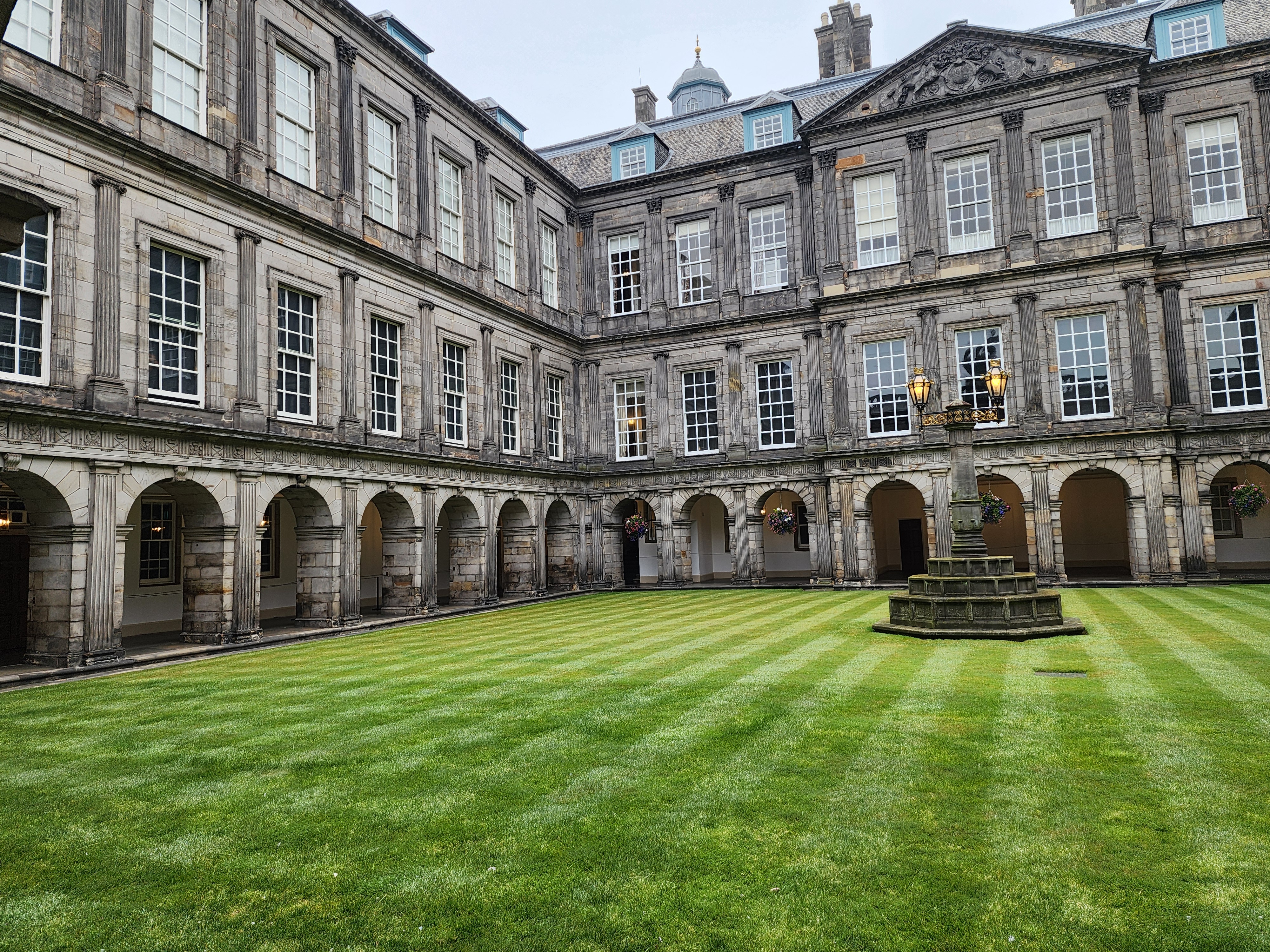
The inner courtyard at Holyrood, with a bright green lawn.

The inner courtyard at the Palace

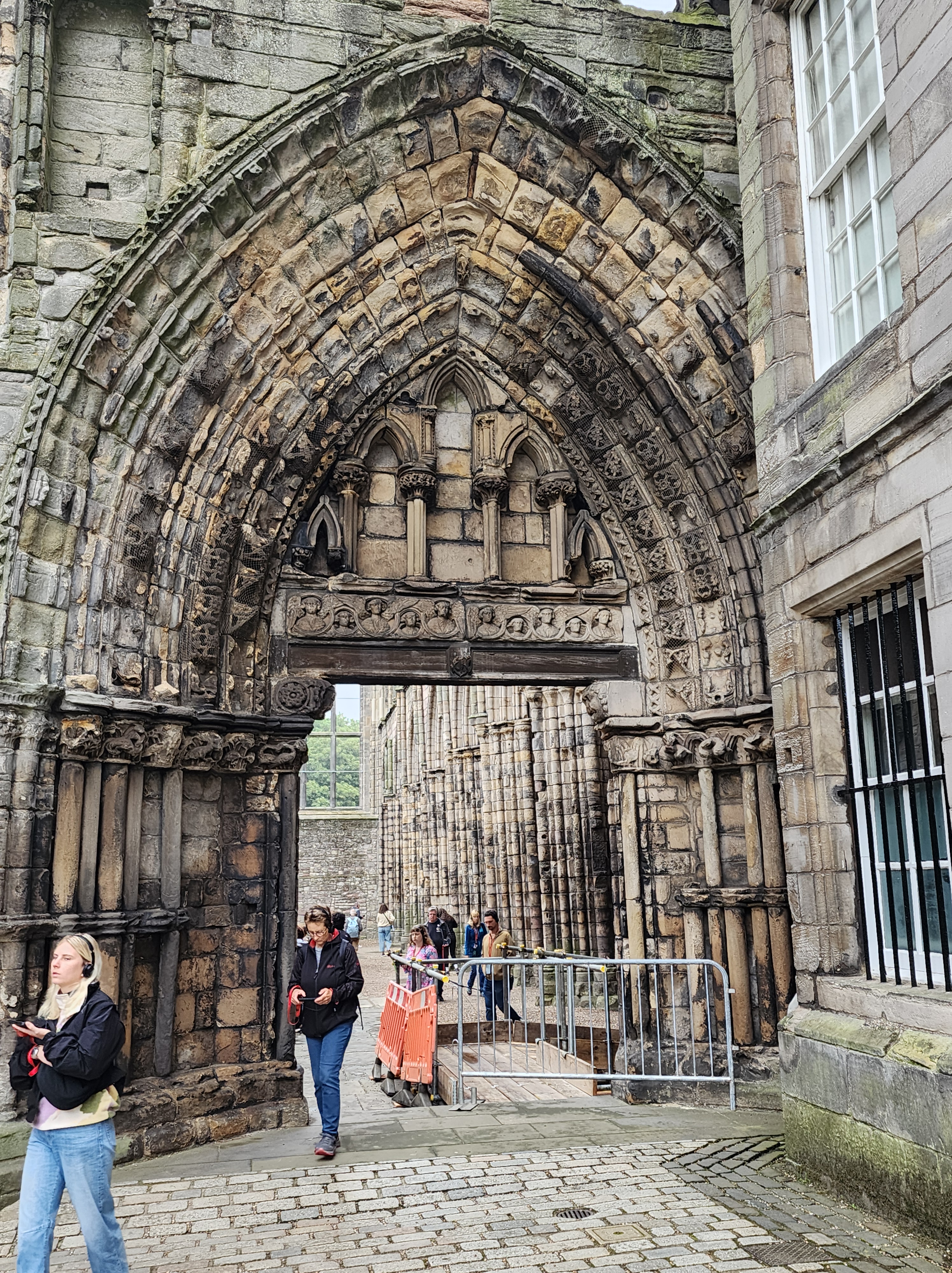
A large arch allowing entrance to the Holyrood Abbey ruins

Entrance to Holyrood Abbey ruins

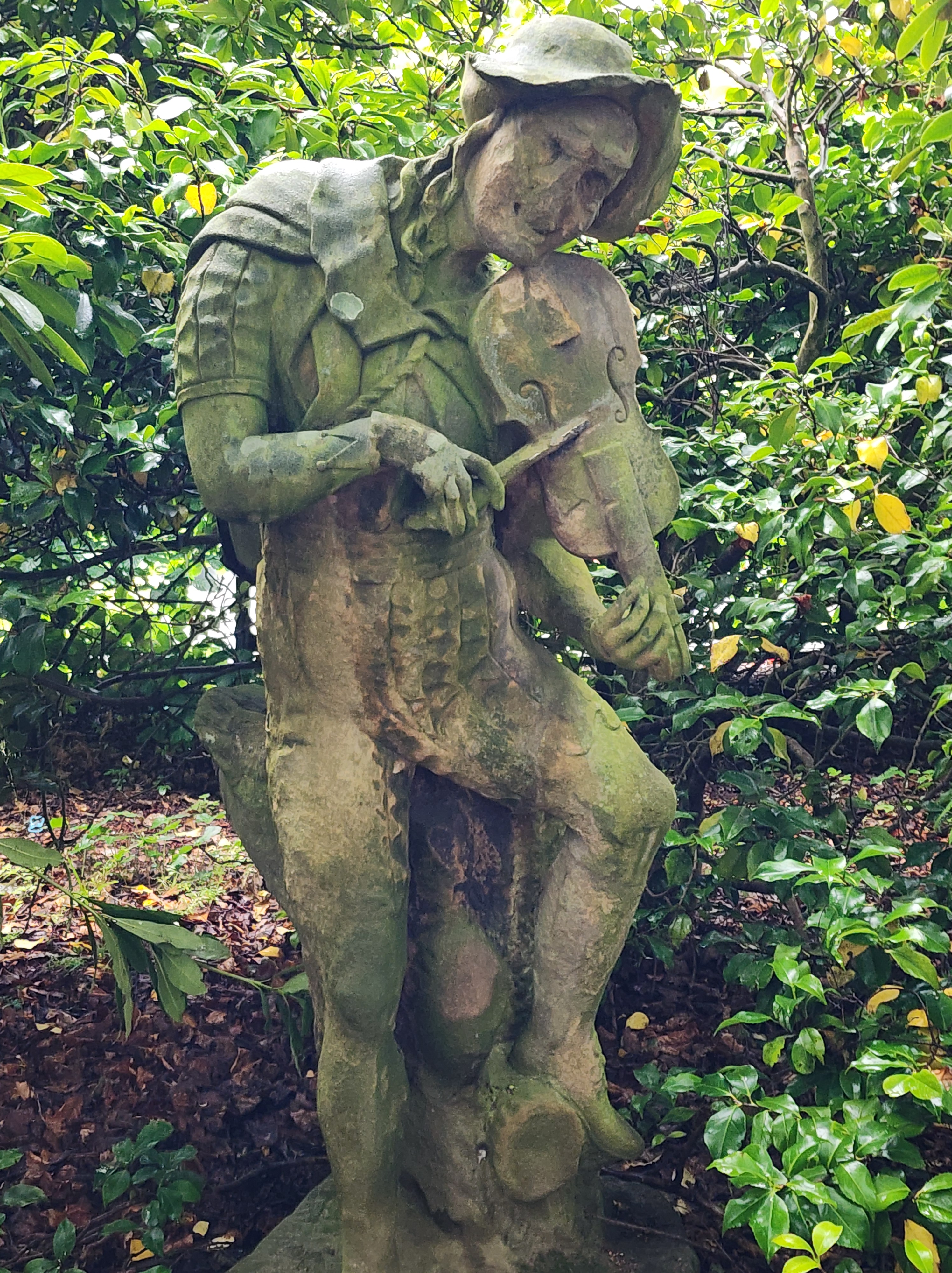
A statue of a man holding a fiddle in the Holyrood gardens

The Holyrood Fiddler

Side view of the Abbey ruins

The Abbey ruins

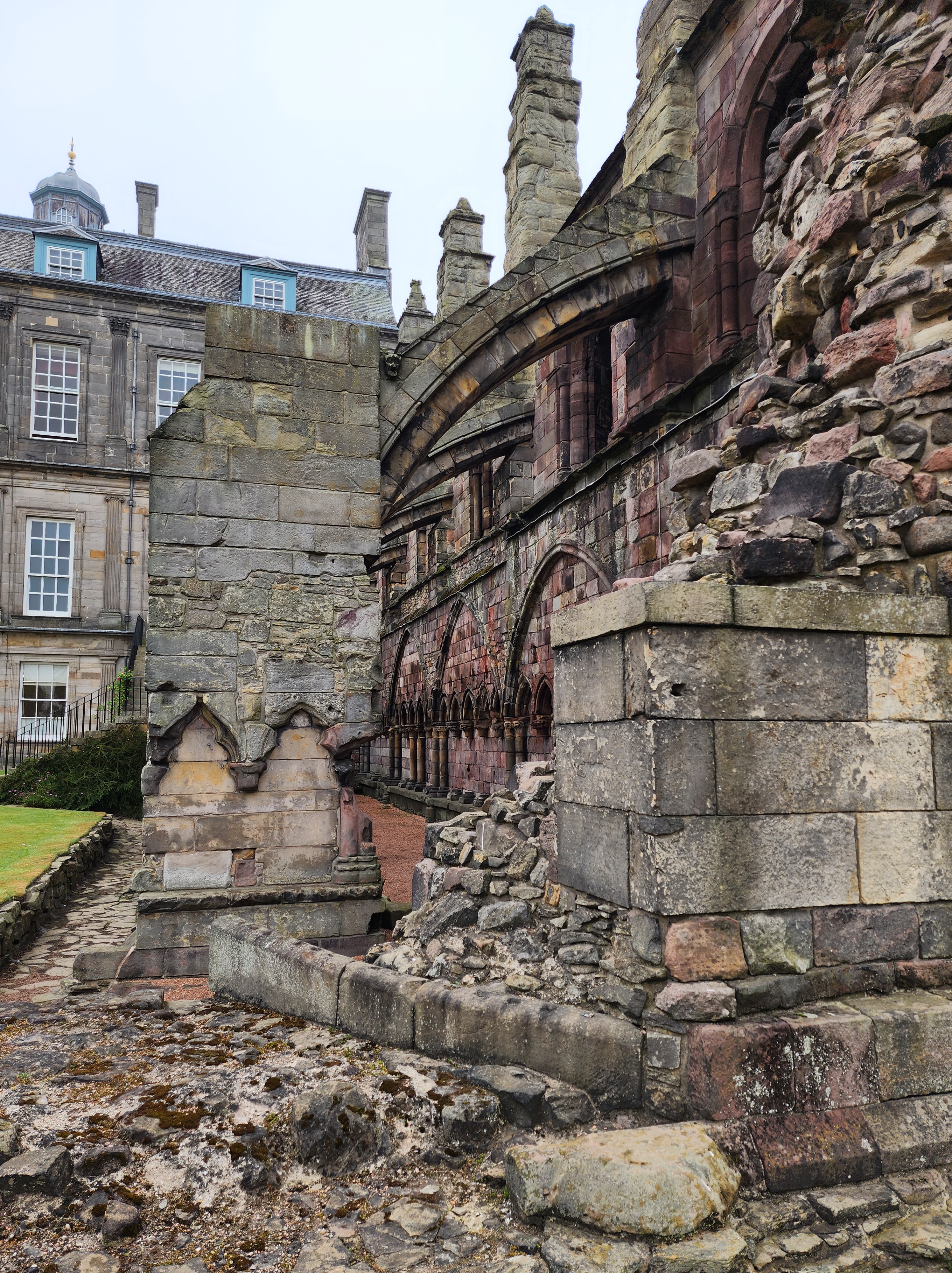
Outside the Abbey are some flying buttresses, but they are hard to see in this photo, so you're really not missing much

Outside the Abbey ruins, some flying buttresses
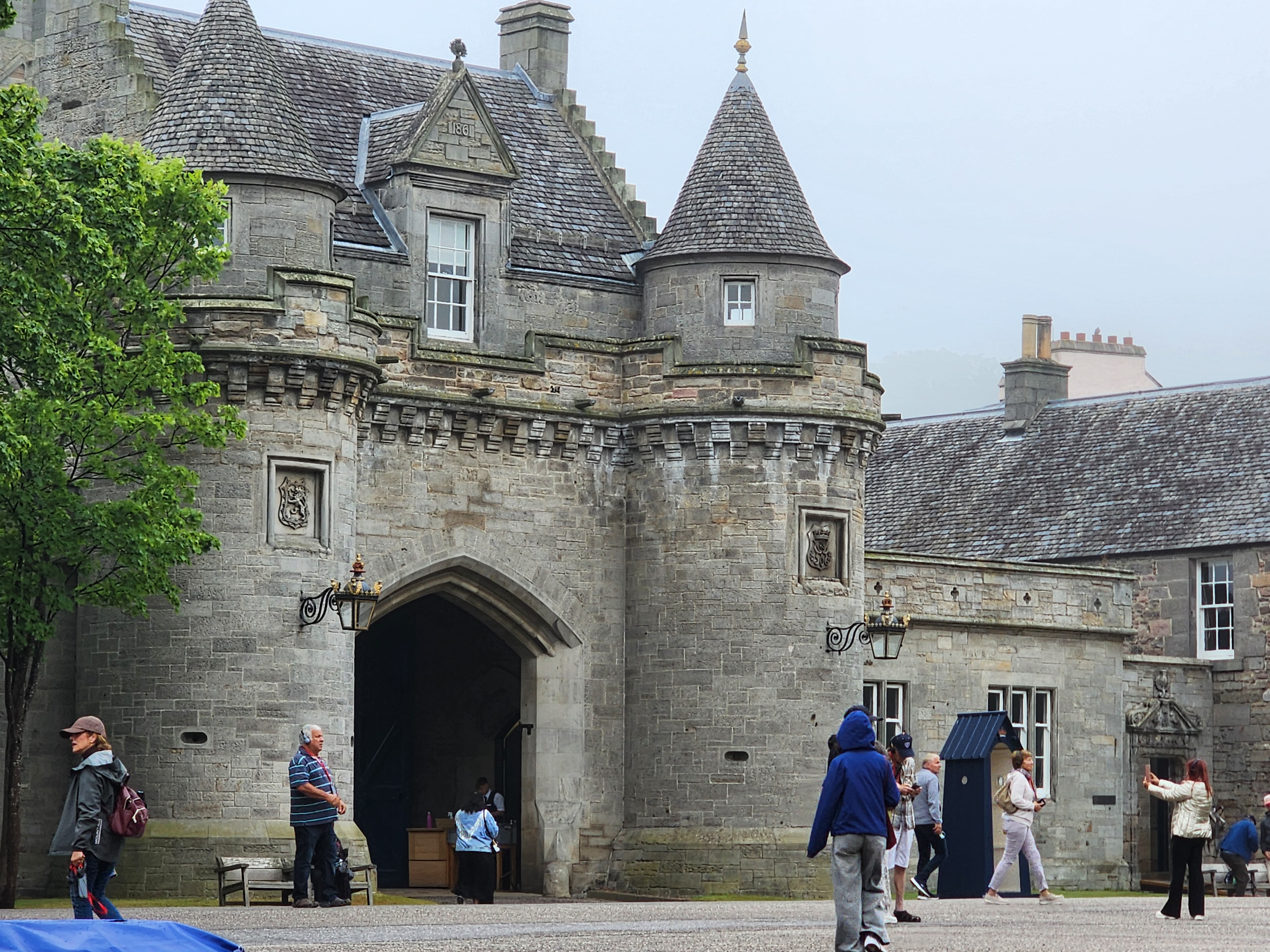
Image of the entrance to the outer courtyard of Holyrood Palace, with turrets and people walking
Entrance to the outer courtyard of Holyrood

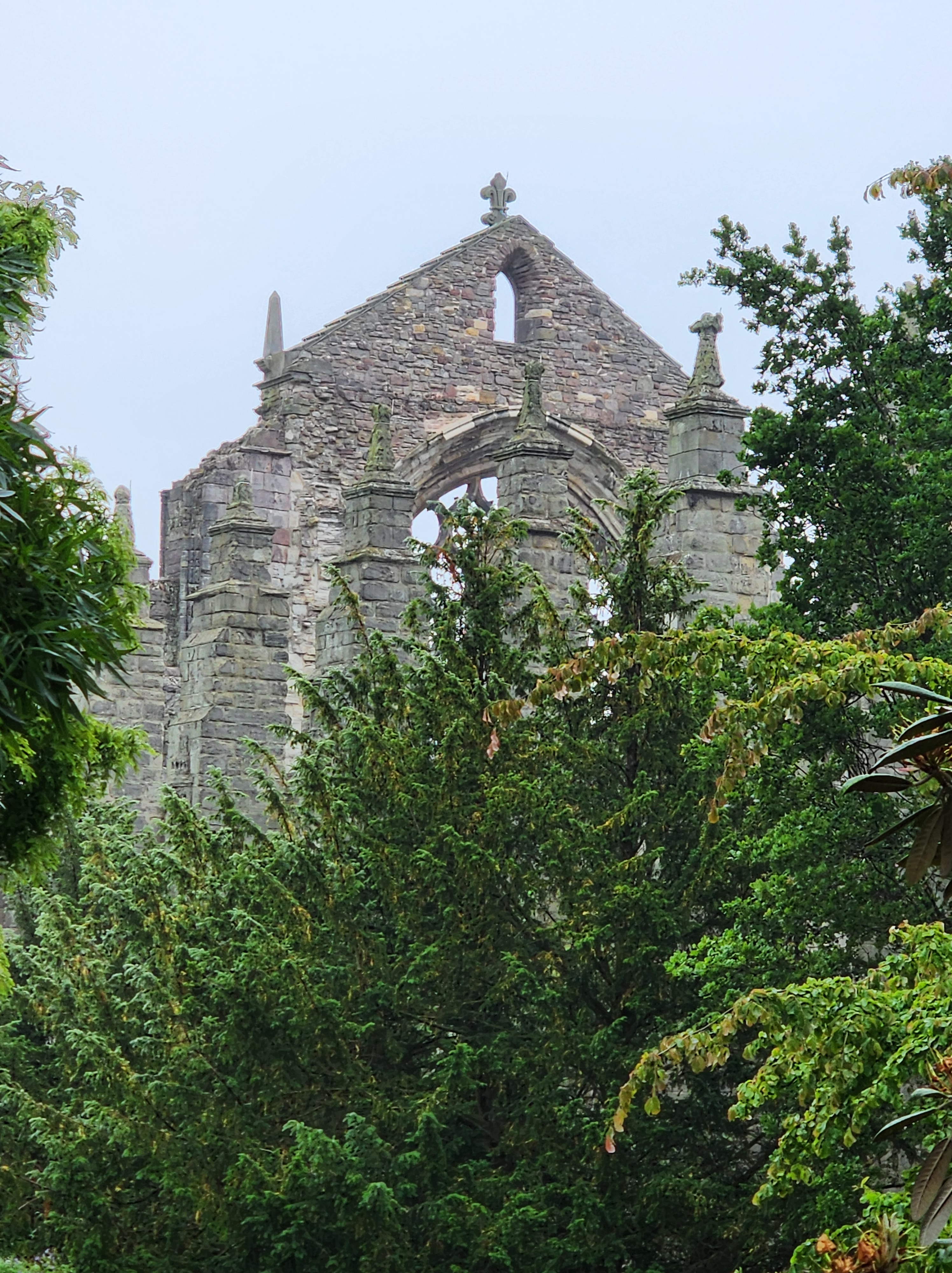
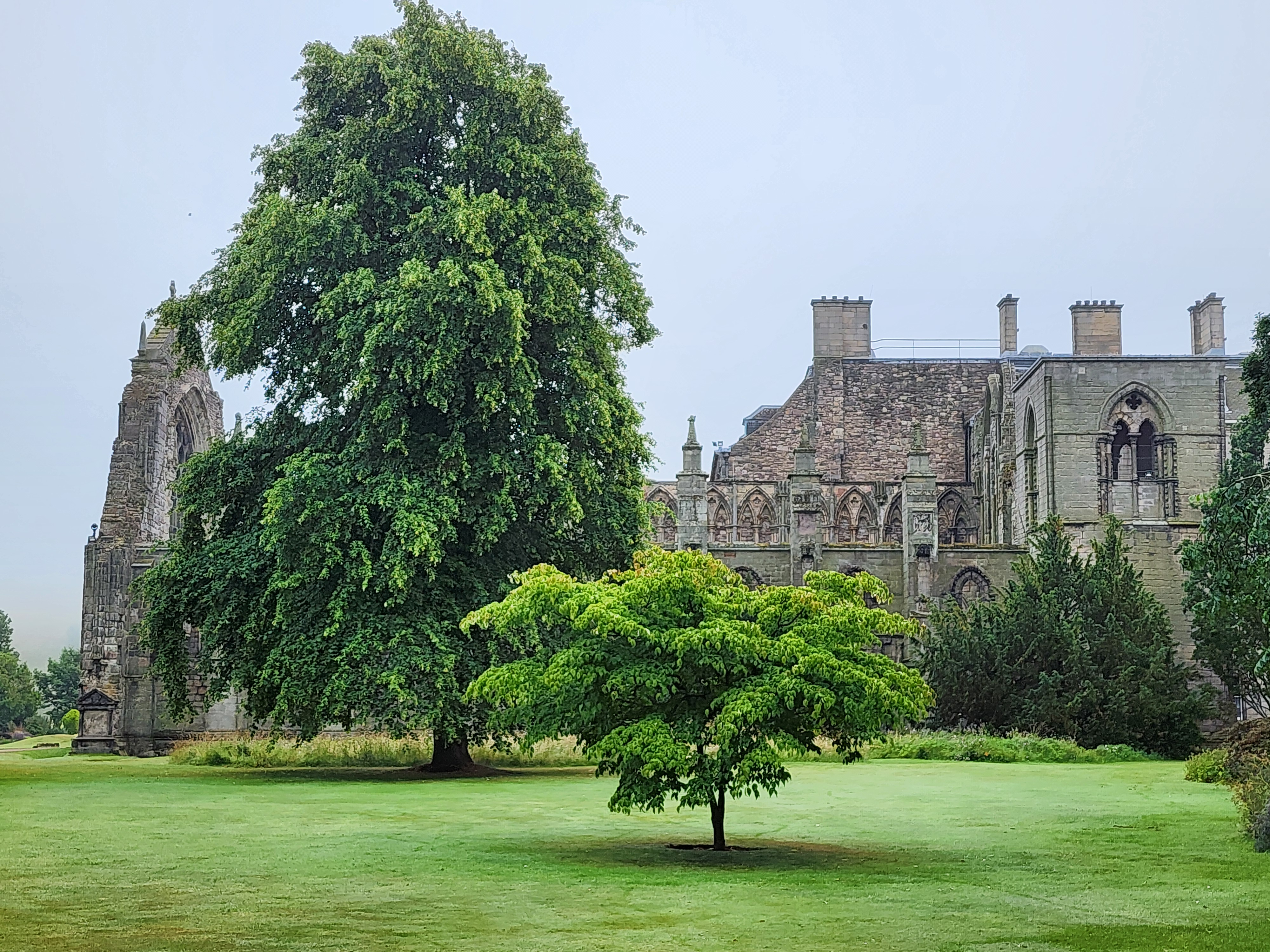
Image of the Abbey Ruins with a great big tree in the front

Abbey ruins

Abbey ruins again

Abbey ruins

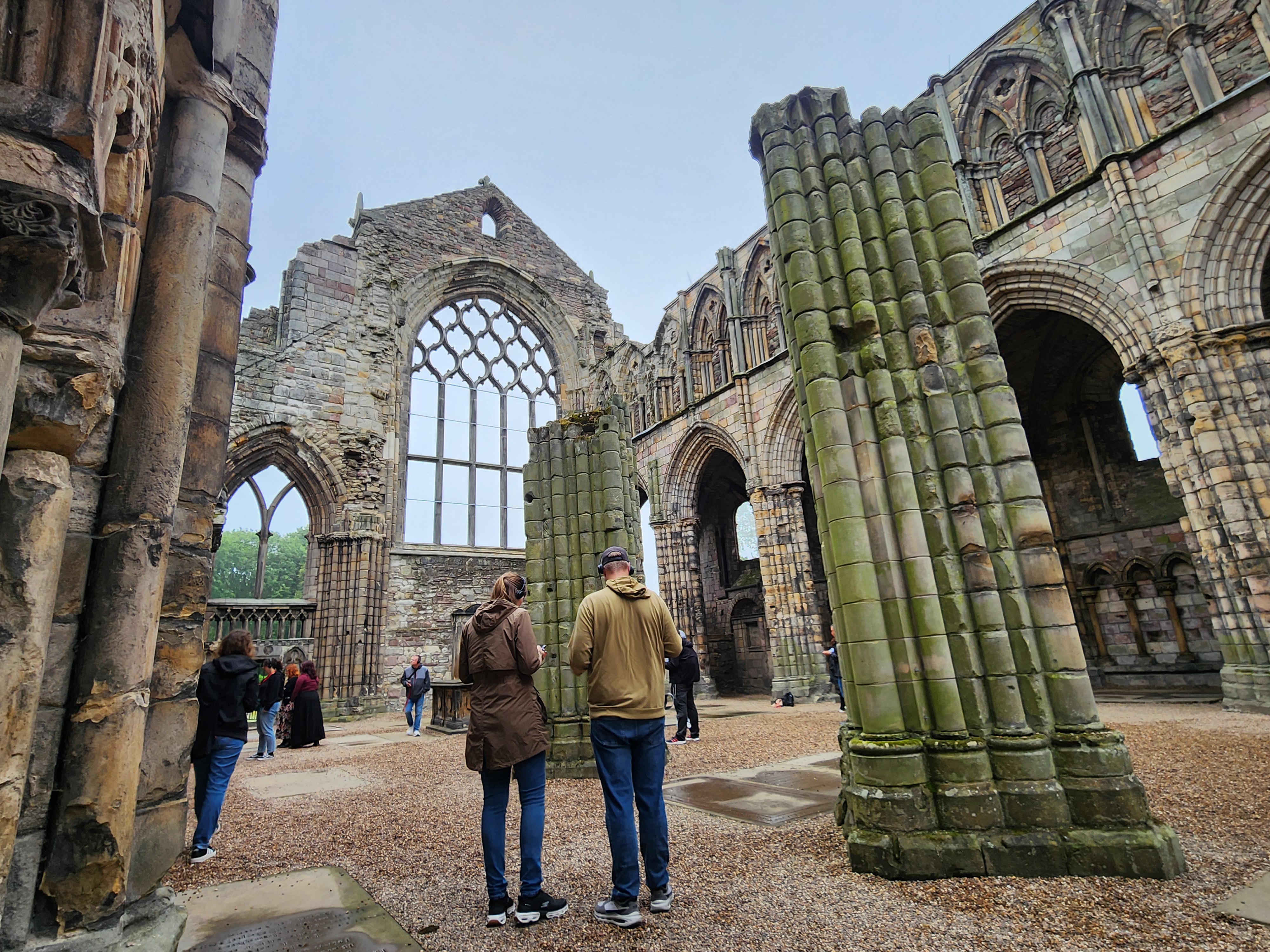
Inside the Abbey, there is open space and broken, but supporting pillars that must have helped hold up the roof.

Inside the Abbey

Another image of the entrance to the Abbey, this one from farther back

Entrance to the Abbey

A view of Holyrood Palace from outside the gates

A view outside the gates of Holyrood
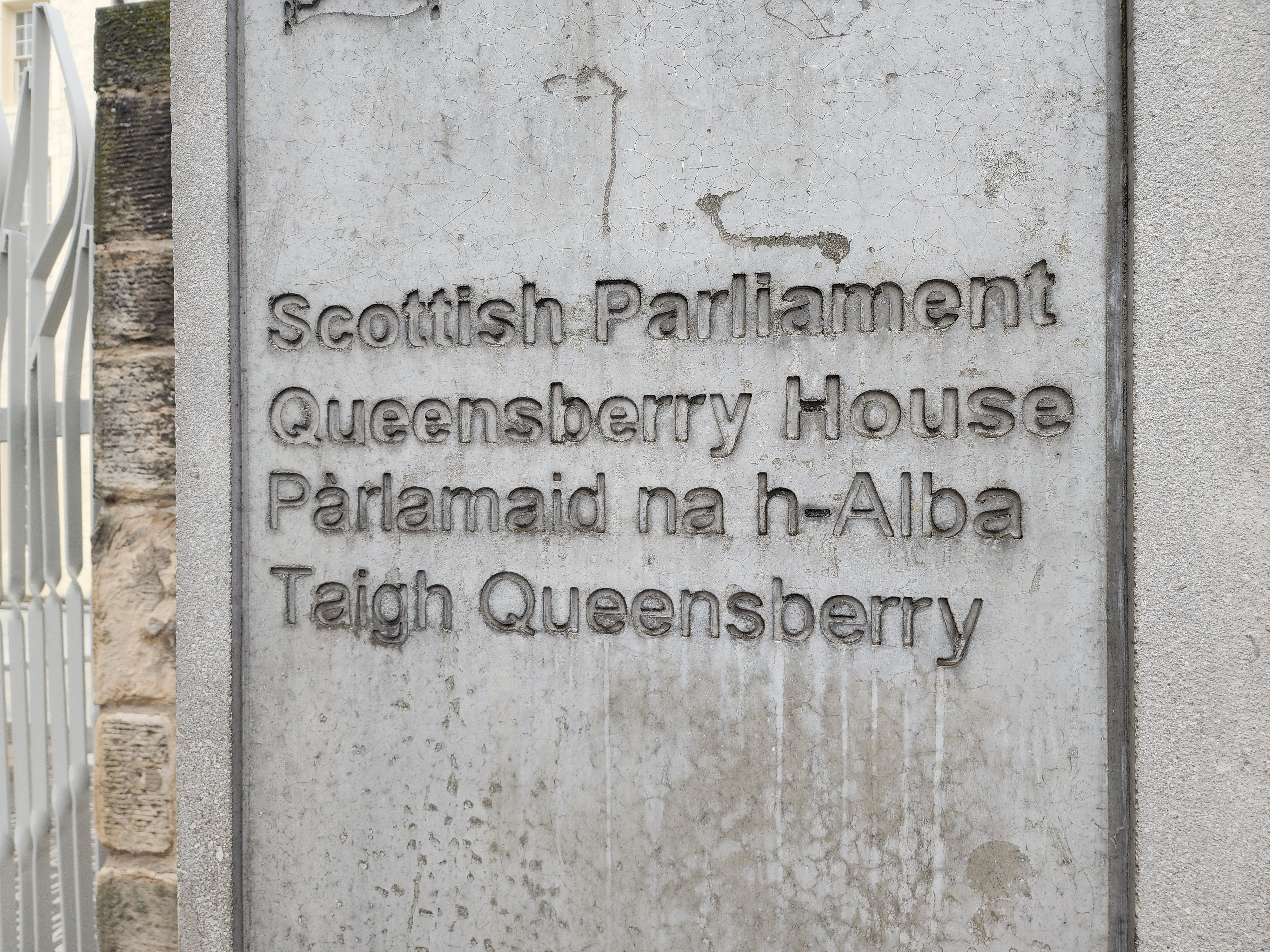
Sign in front of the Scottish Parliament that says Queesnberry House, Parlamaid na h'Albe Taigh Queensberry. (That second part is in Gaelic.)

Sign in front of the Parliament

Outside buildings to Holyrood Palace, including an entrance into the shop

Outside of Holyrood

A sign for Crichton's Close and the Scottish Poetry Library

I’m going to go here at some point.

A view of the Scottish Parliament from outside the tall gates

Scottish Parliament outside the gates
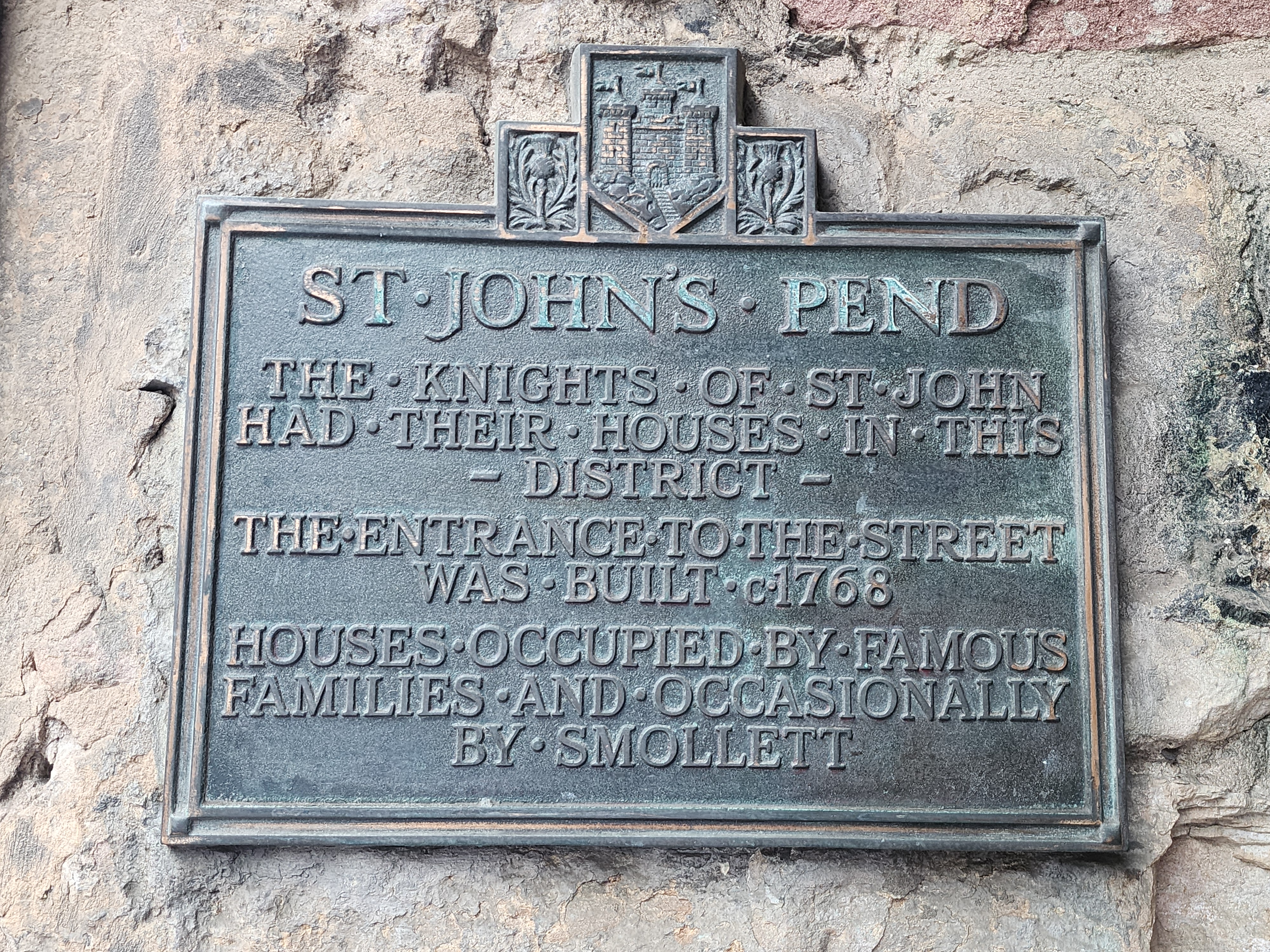
A sign mentioning St. John's Pend and Tobias Smollett

The sign that mentions Smollett

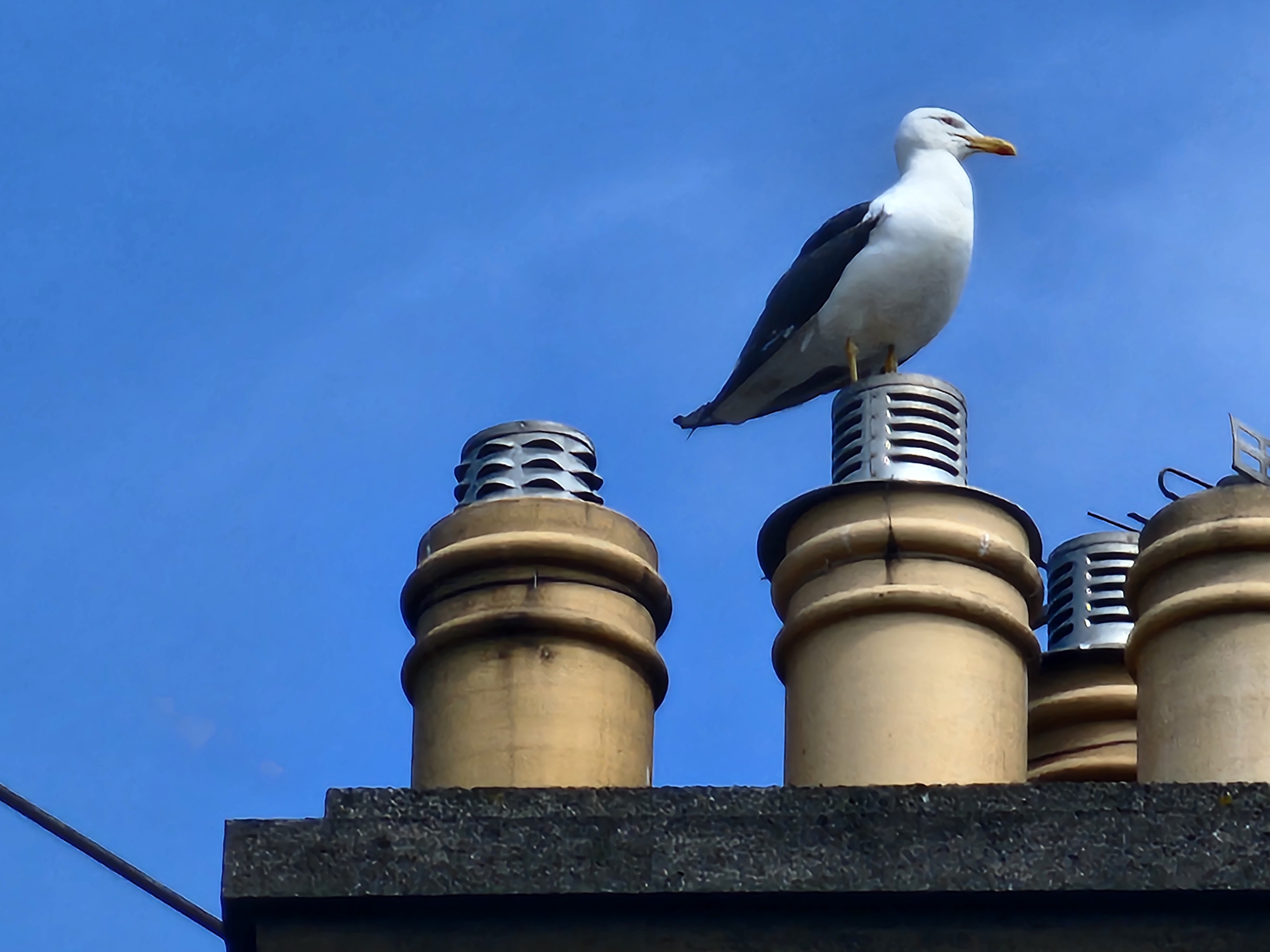
A proud seagull sits on top of a chimney against a blue sky

Look at this guy. He thinks he owns the world.
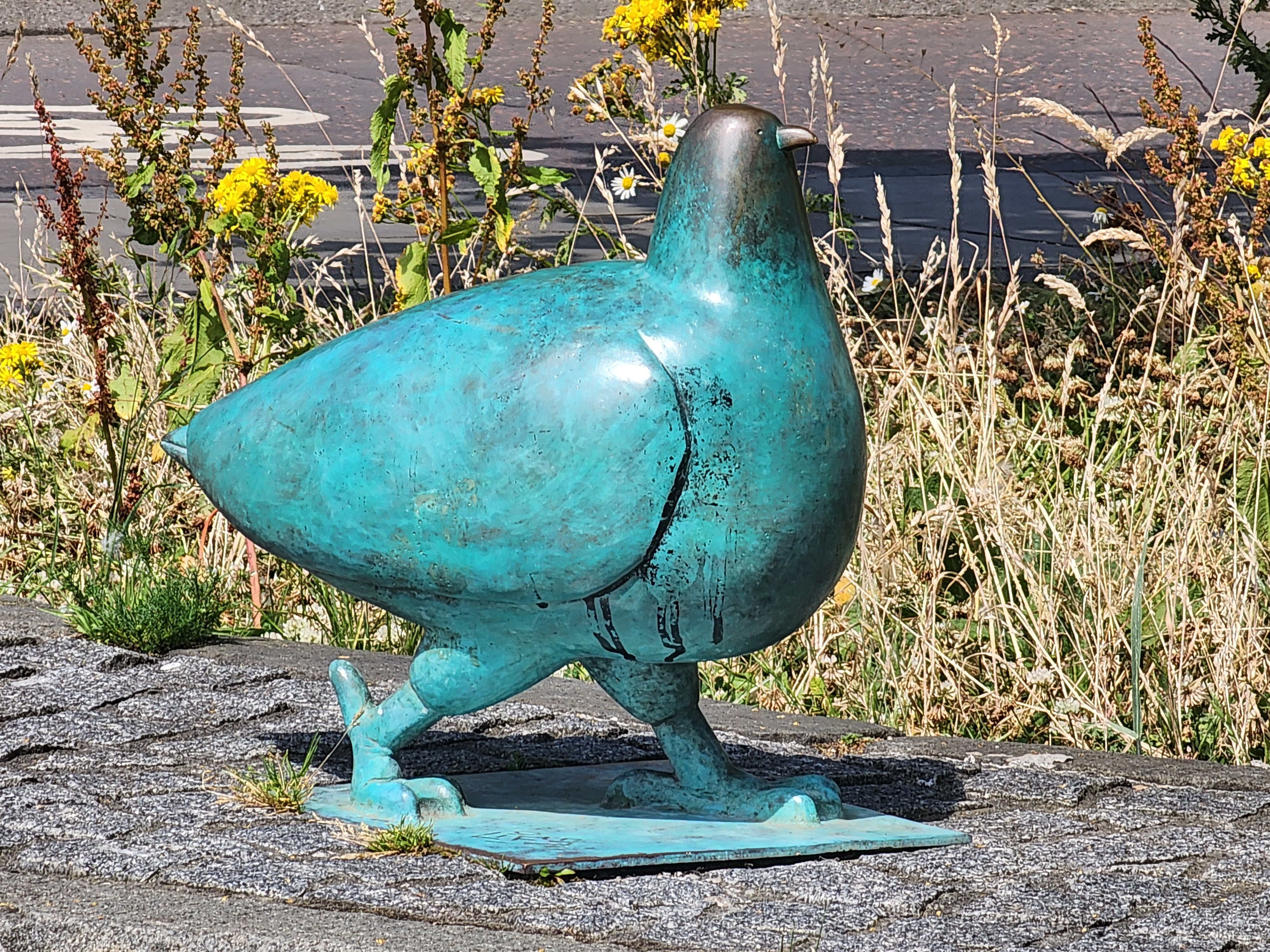
A large copper pigeon statue (maybe a foot and a half high). It's copper has turned green with patina.

A rando pigeon sculpture I found on Leith Street
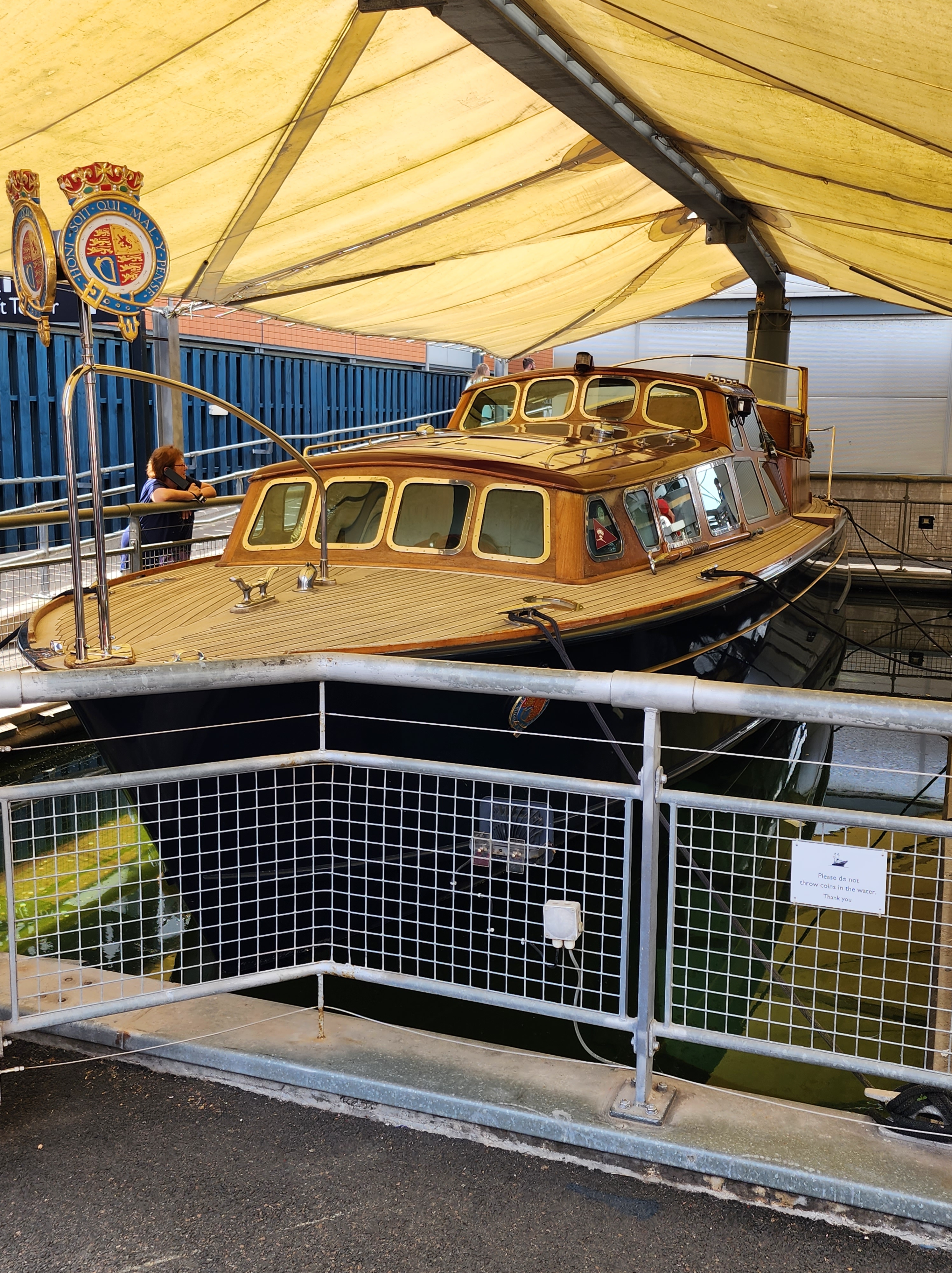
A speedboat sits under an awning

A fancy speedboat

Side view of the Britannia

The ship is so long, you can’t get a full picture of it.
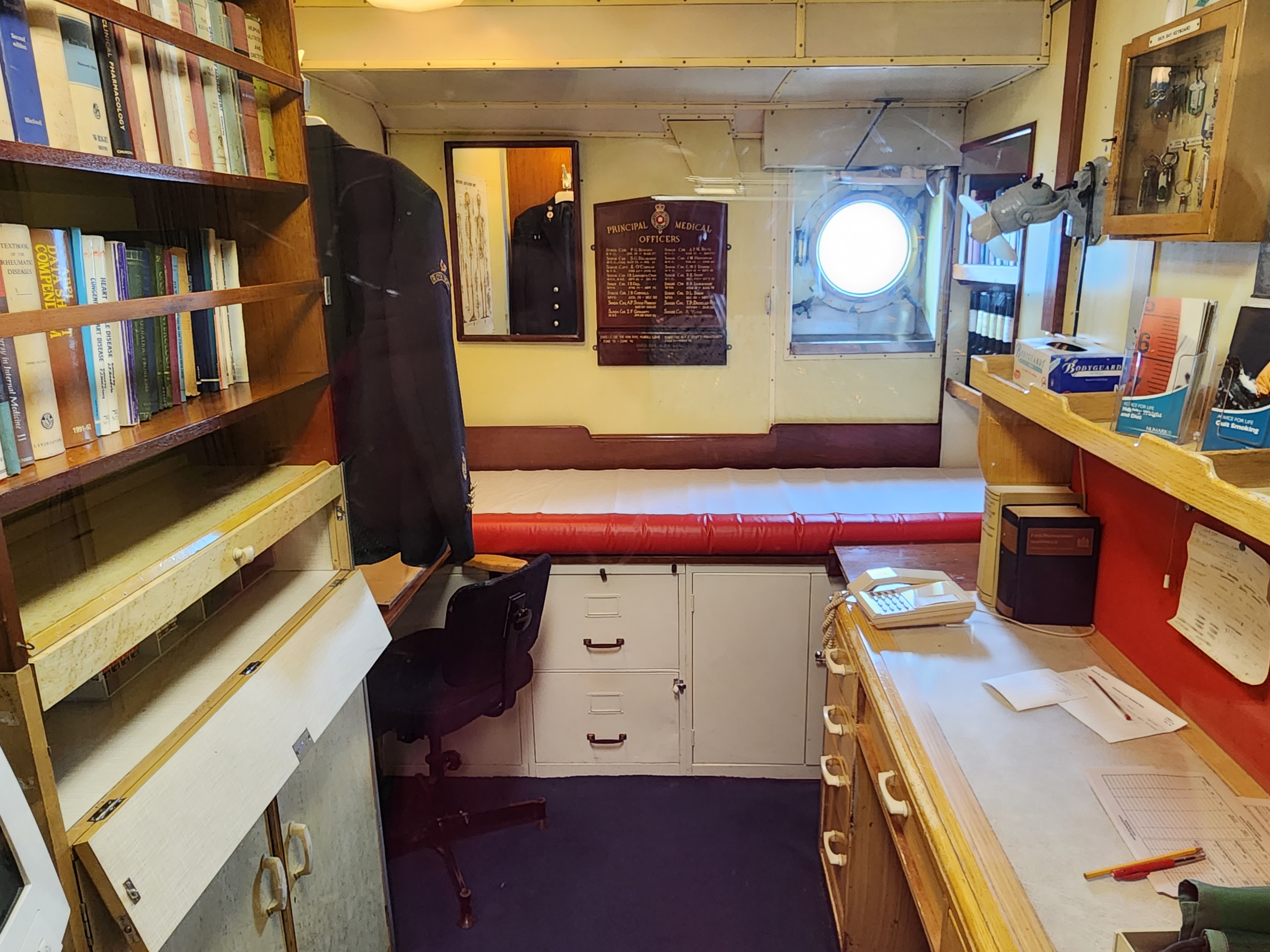
A small room with a desk that I believe belongs to the ship's doctor. (But I could be wrong.)

I think this is the ship’s doctor’s desk.
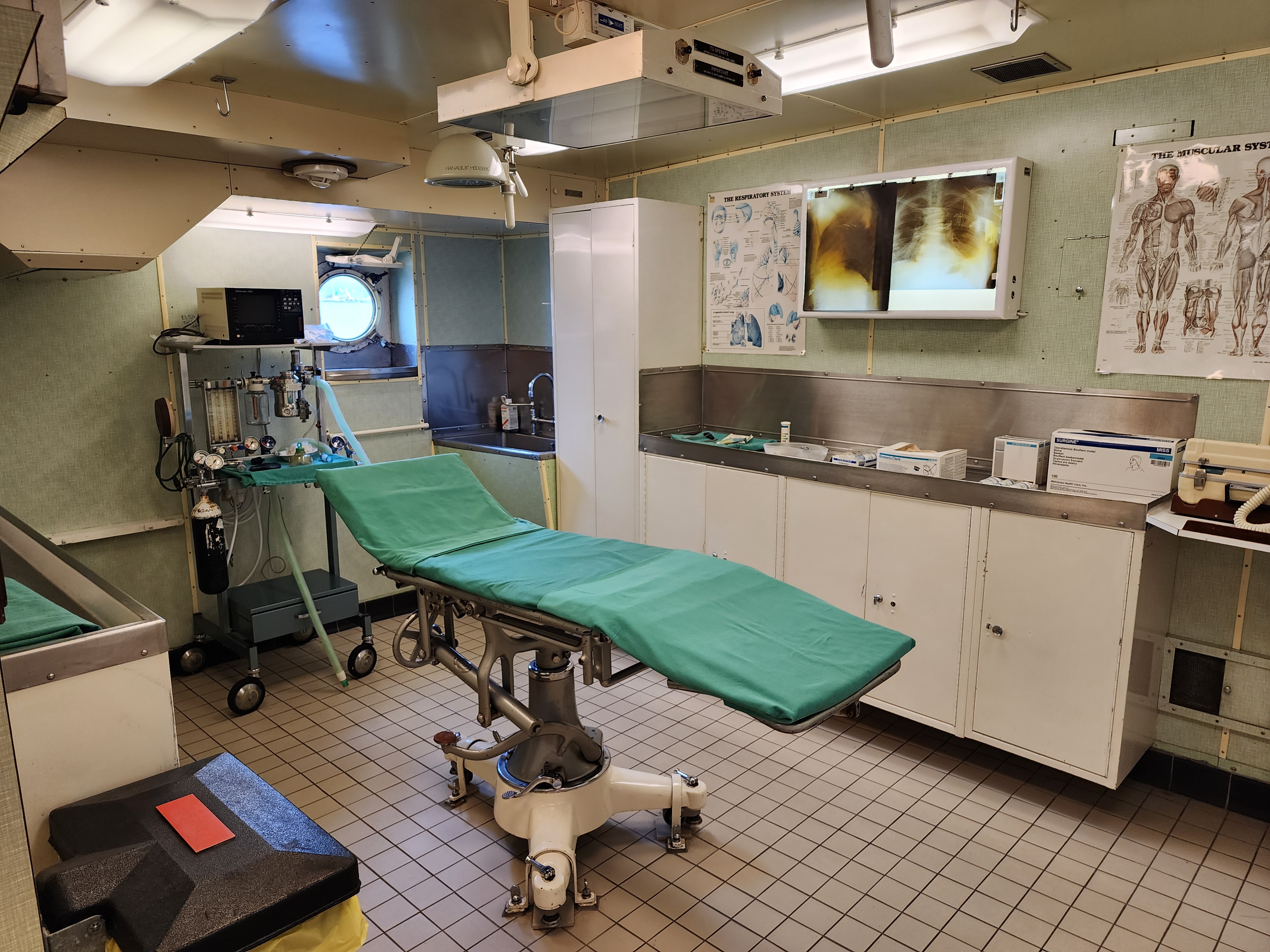
A green patient exam bed stands in the ship's surgery

The surgery

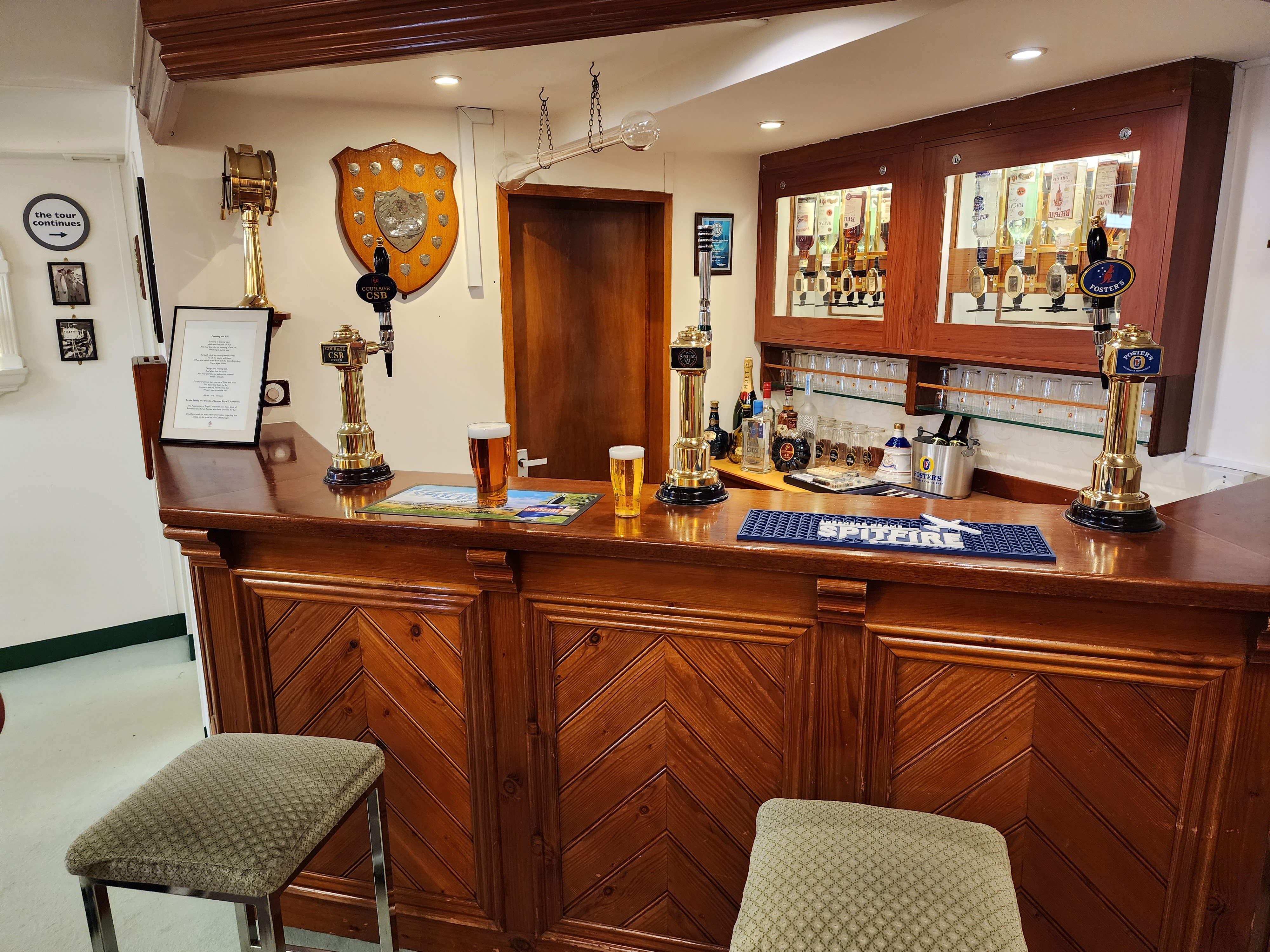
The Prince's bar

What’s on tap at the Prince’s personal bar?
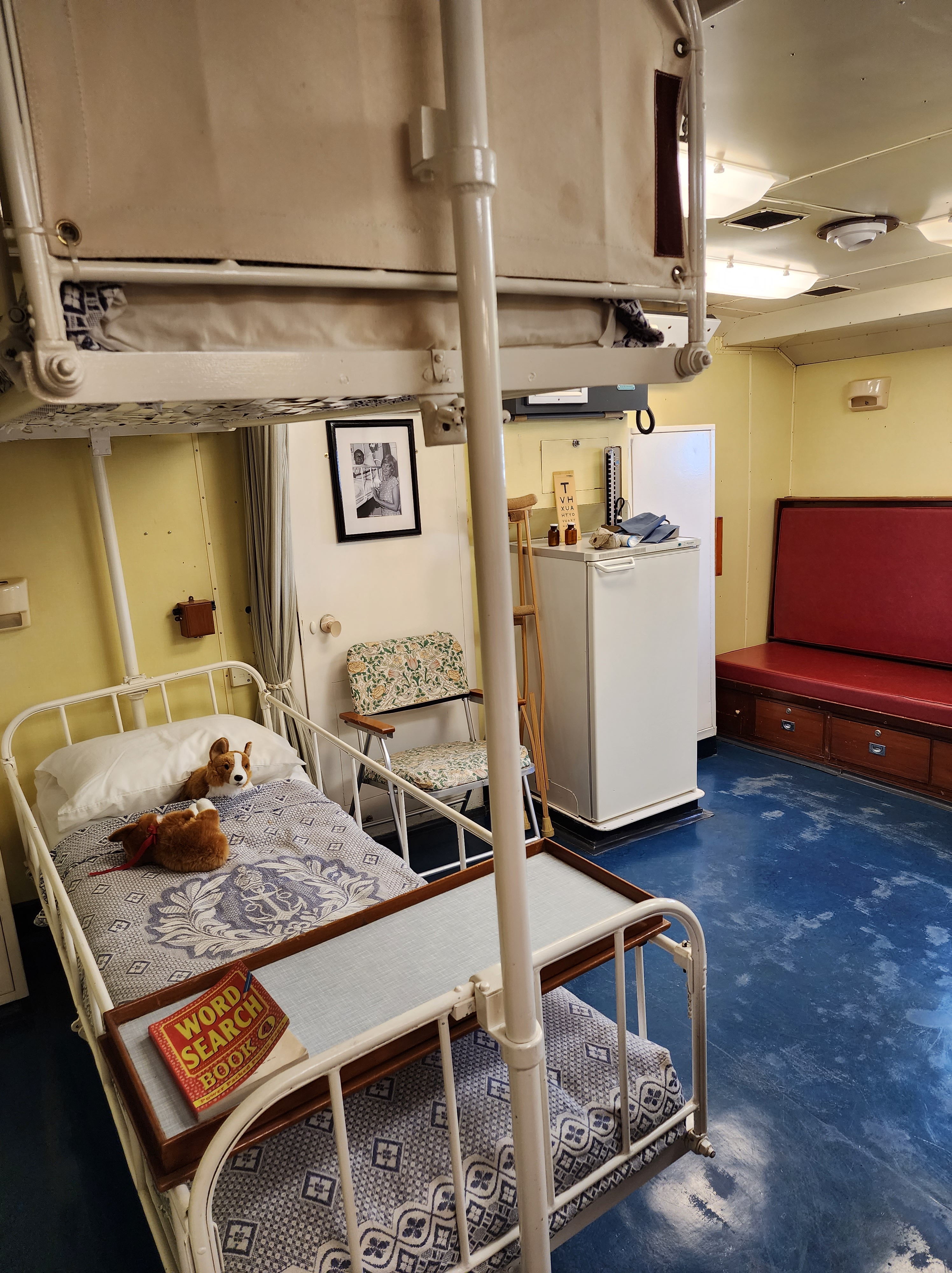
A bed for a sick patient in the ship's sickbay

Sick bed in the sickbay

A thin tiny room with twelve bunks for crew (6 on each side)

Imagine being a crewmember and having to sleep in those tiny bunks!
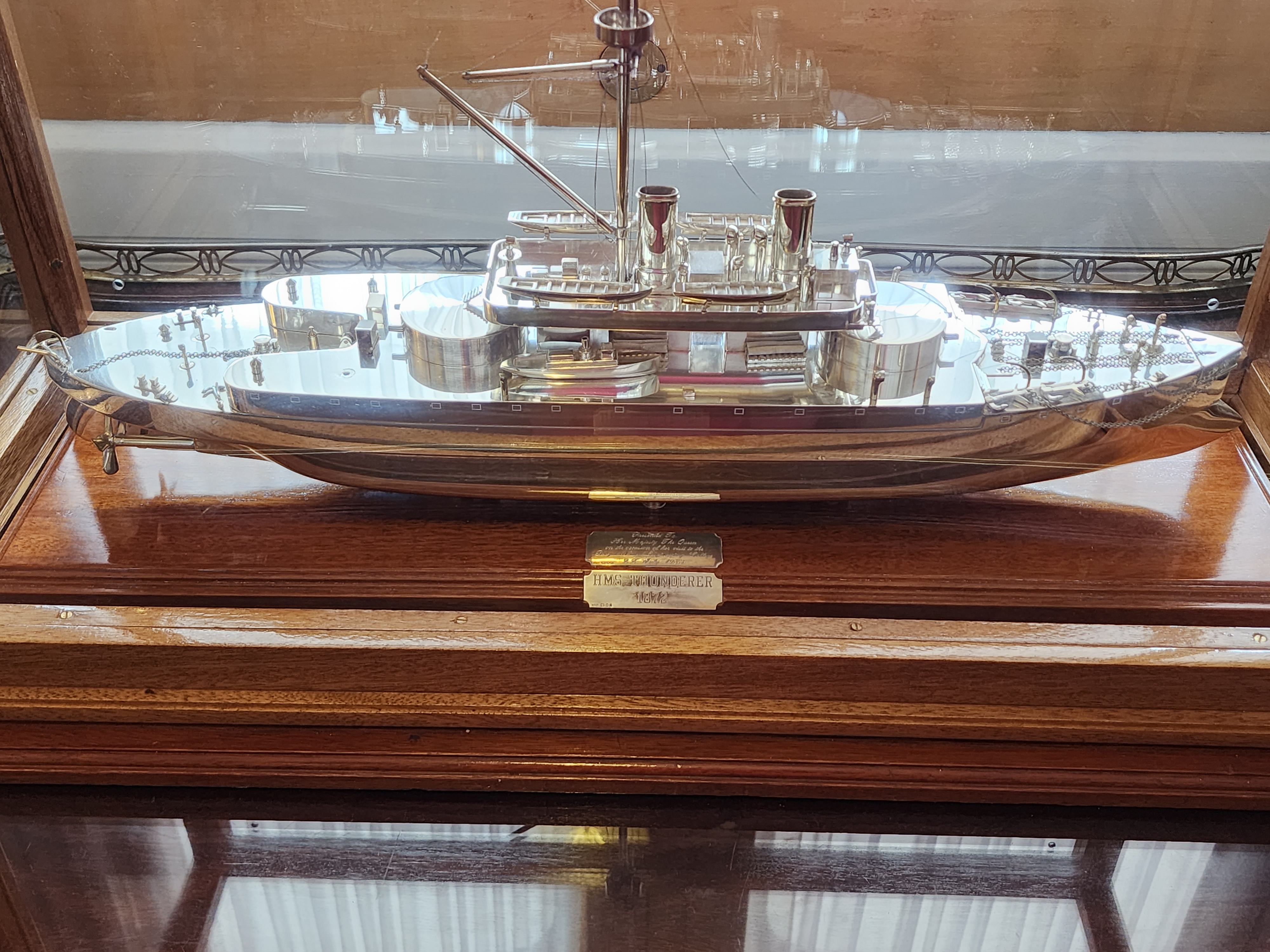
 

A small silver model of the HMS Thunderer (1872) behind glass
A small silver model of the HMS Thunderer (1872)

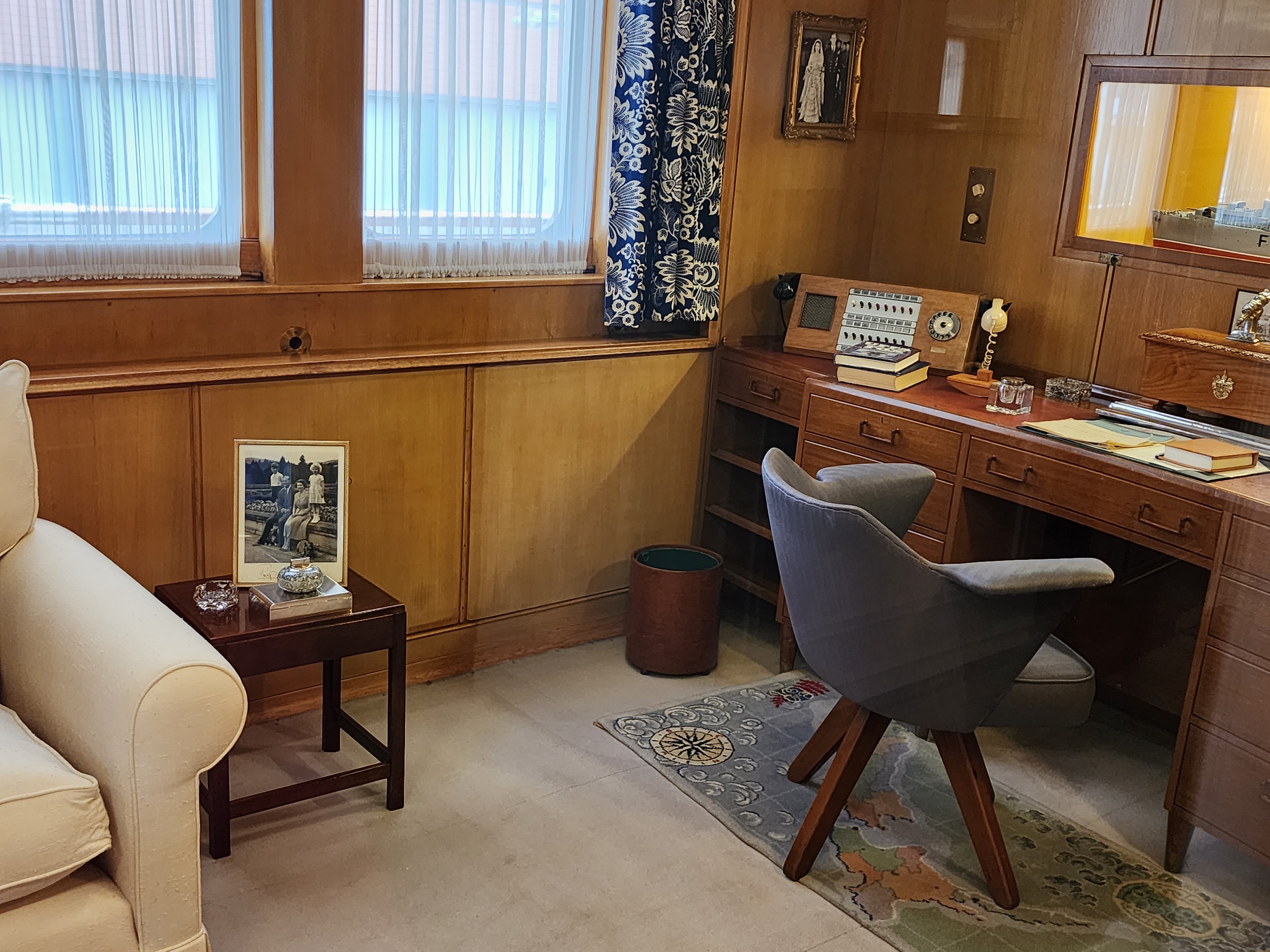
A room with brown paneling with a white easy chair, a gray desk chair and a desk. This was the Prince's office.

The Prince’s office

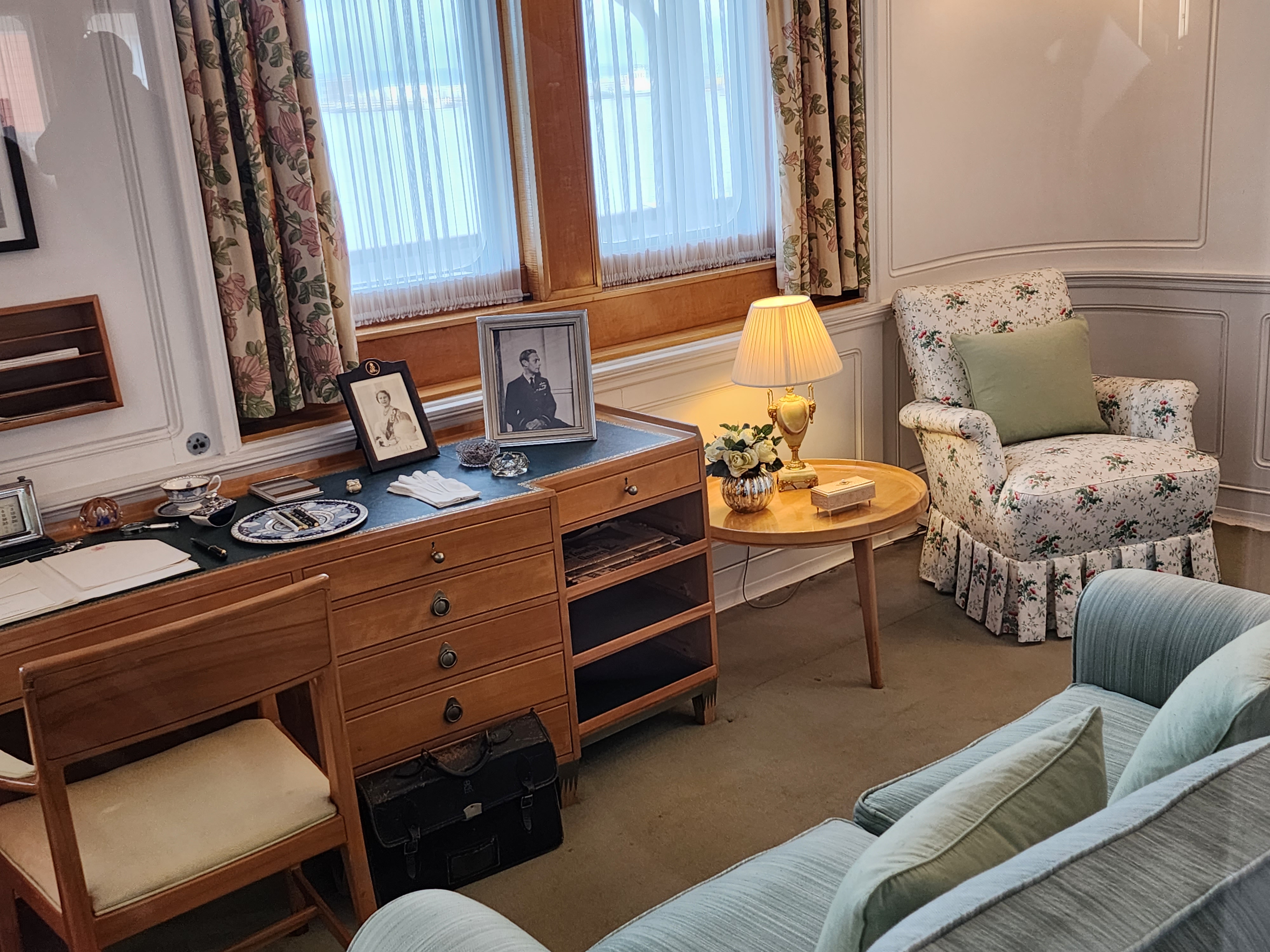
A room with a blue sofa and printed chair, as well as a desk; this is the Queen's office

The Queen’s office

The dining table in the great hall. It is set with lovely china and silverware.
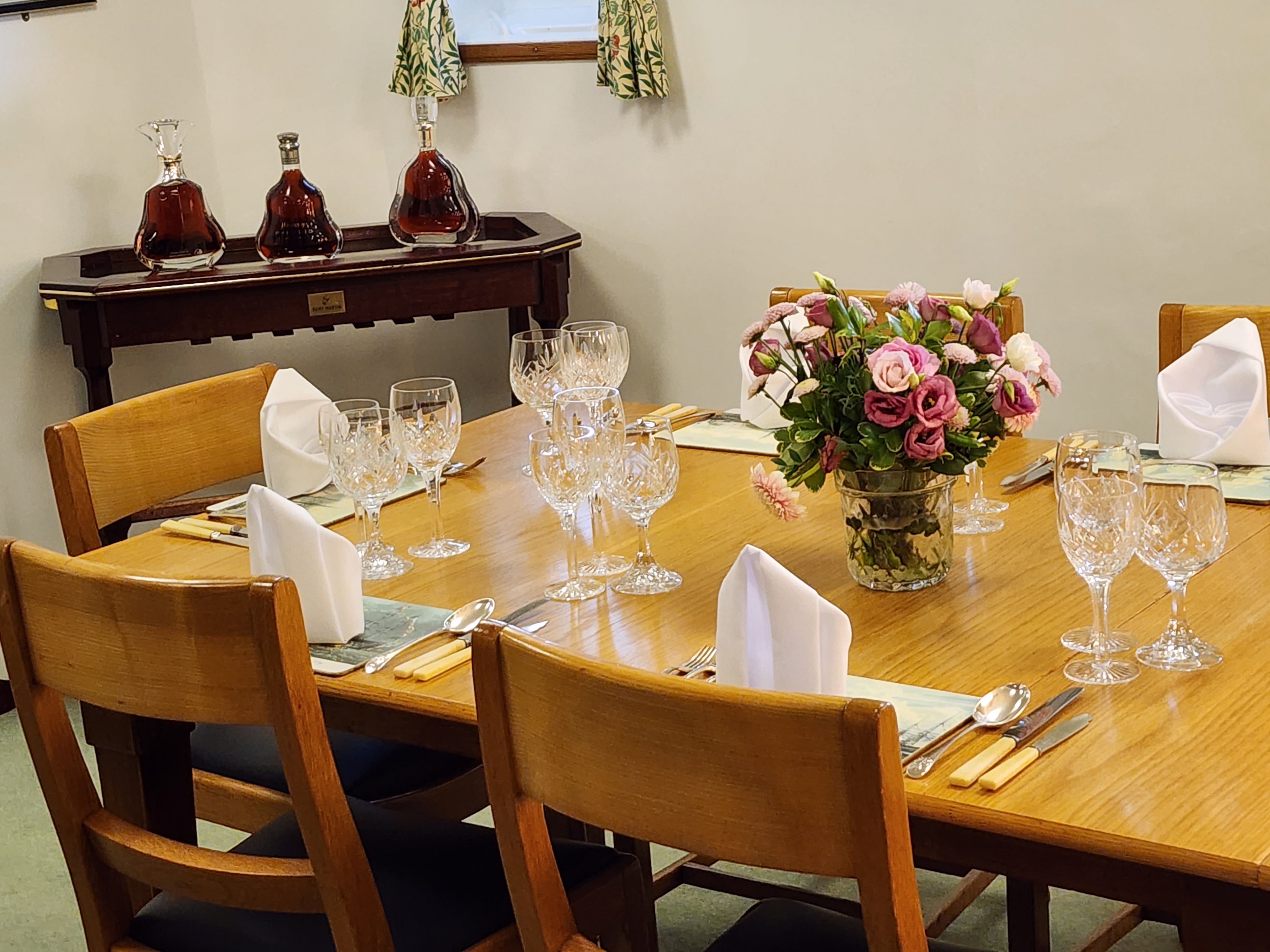
The dining table

A breakfast nook with folded napkins and crystal water glasses.

A breakfast nook

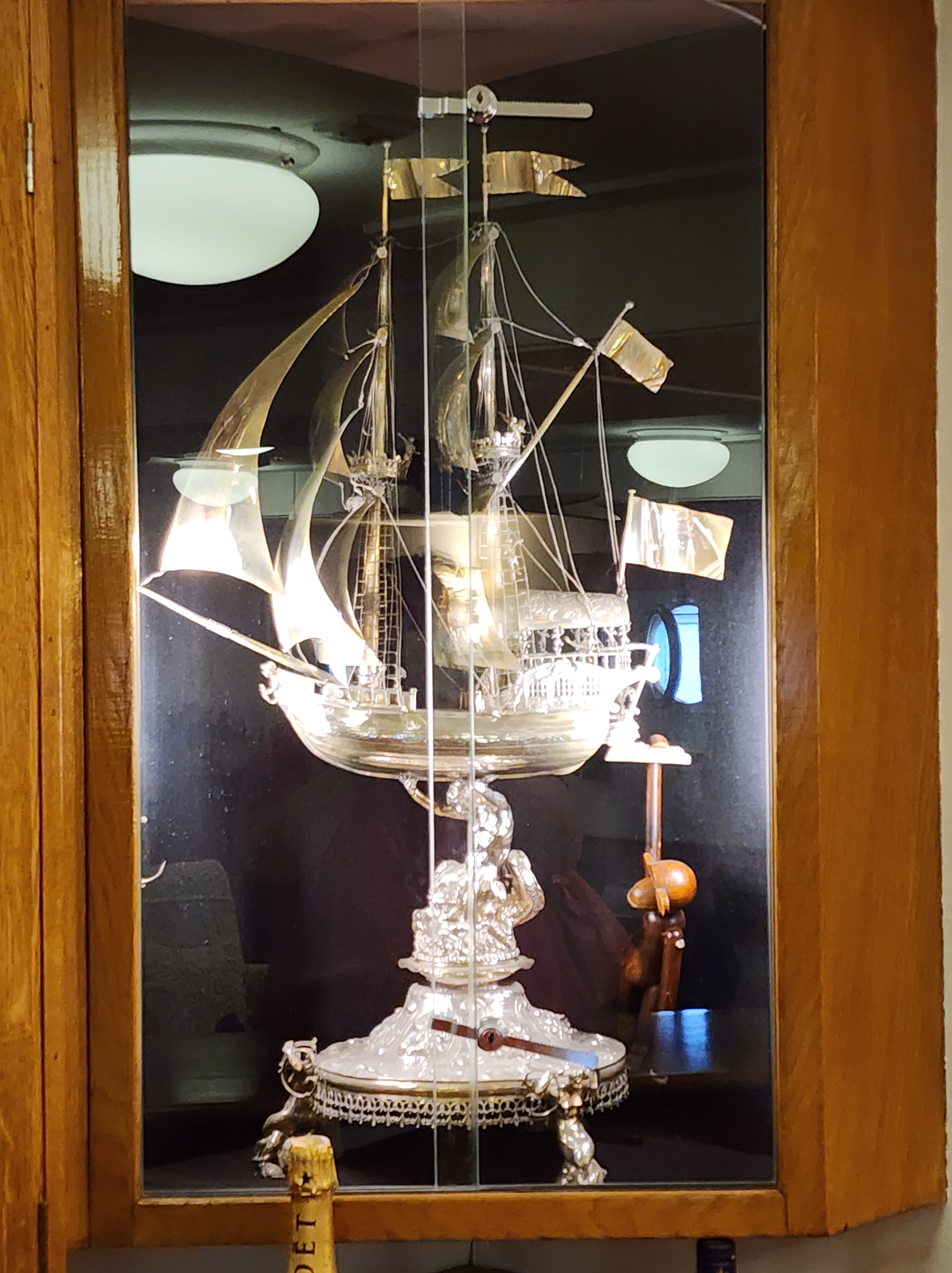
A silver statue of a ship, but it's behind glass so there's a lot of glare.

A small statue of a silver ship behind glass (so there’s a glare).
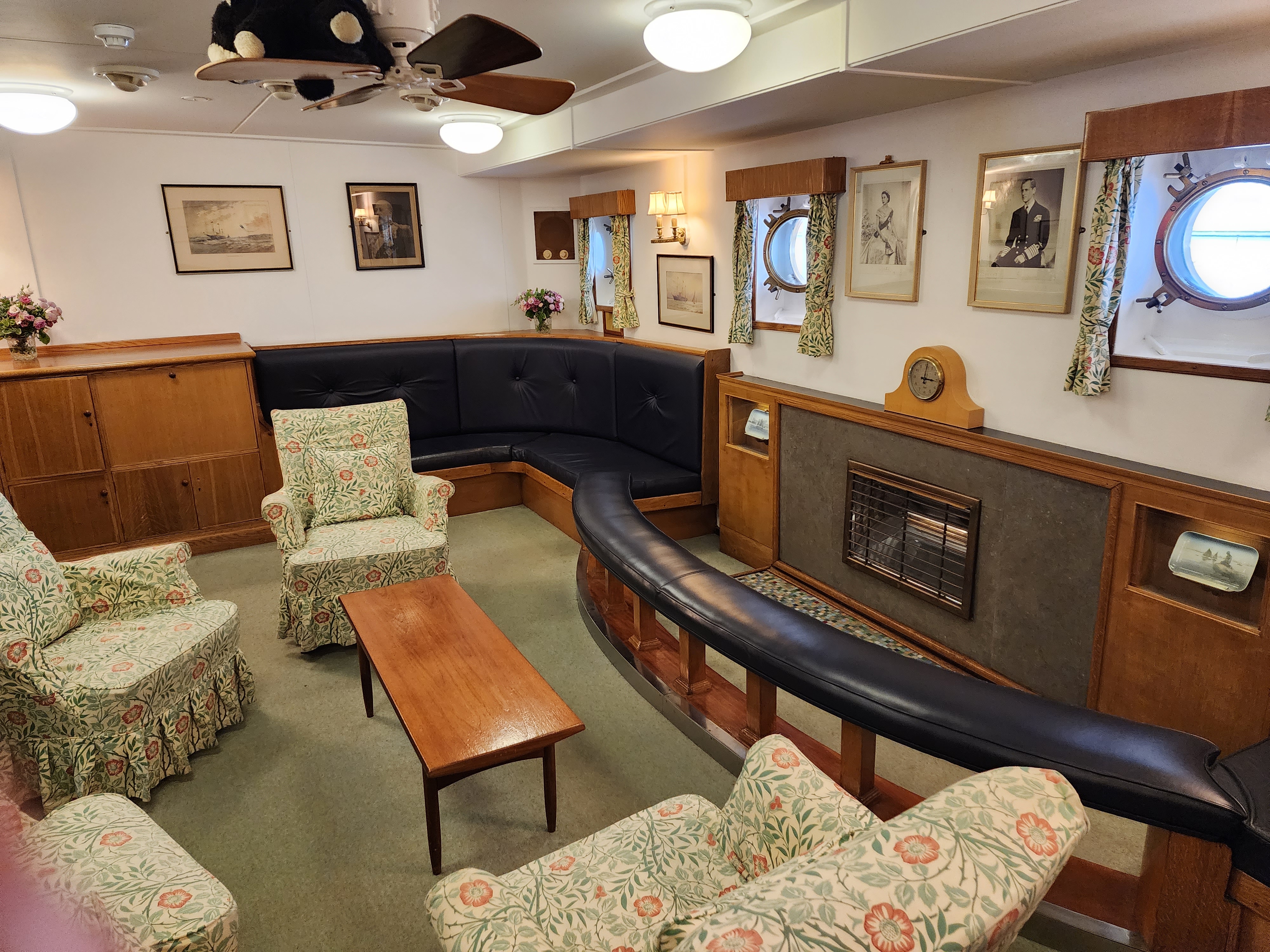
A room with several overstuffed chairs, a coffee table, and a fireplace.

The Queen’s cozy sitting room

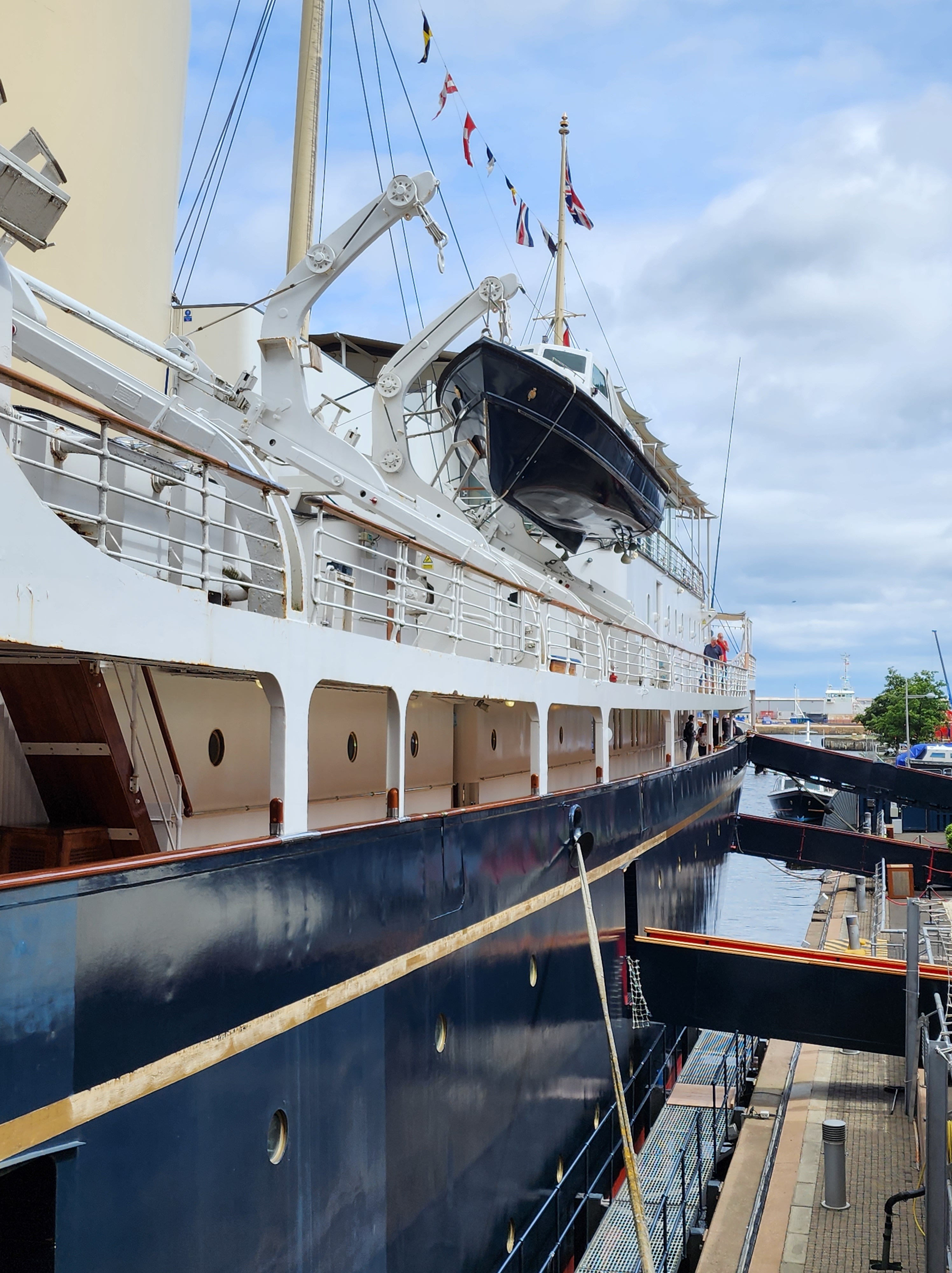
Closeup of the side of the ship, with entrance gangplanks

Closeup of the side of the ship

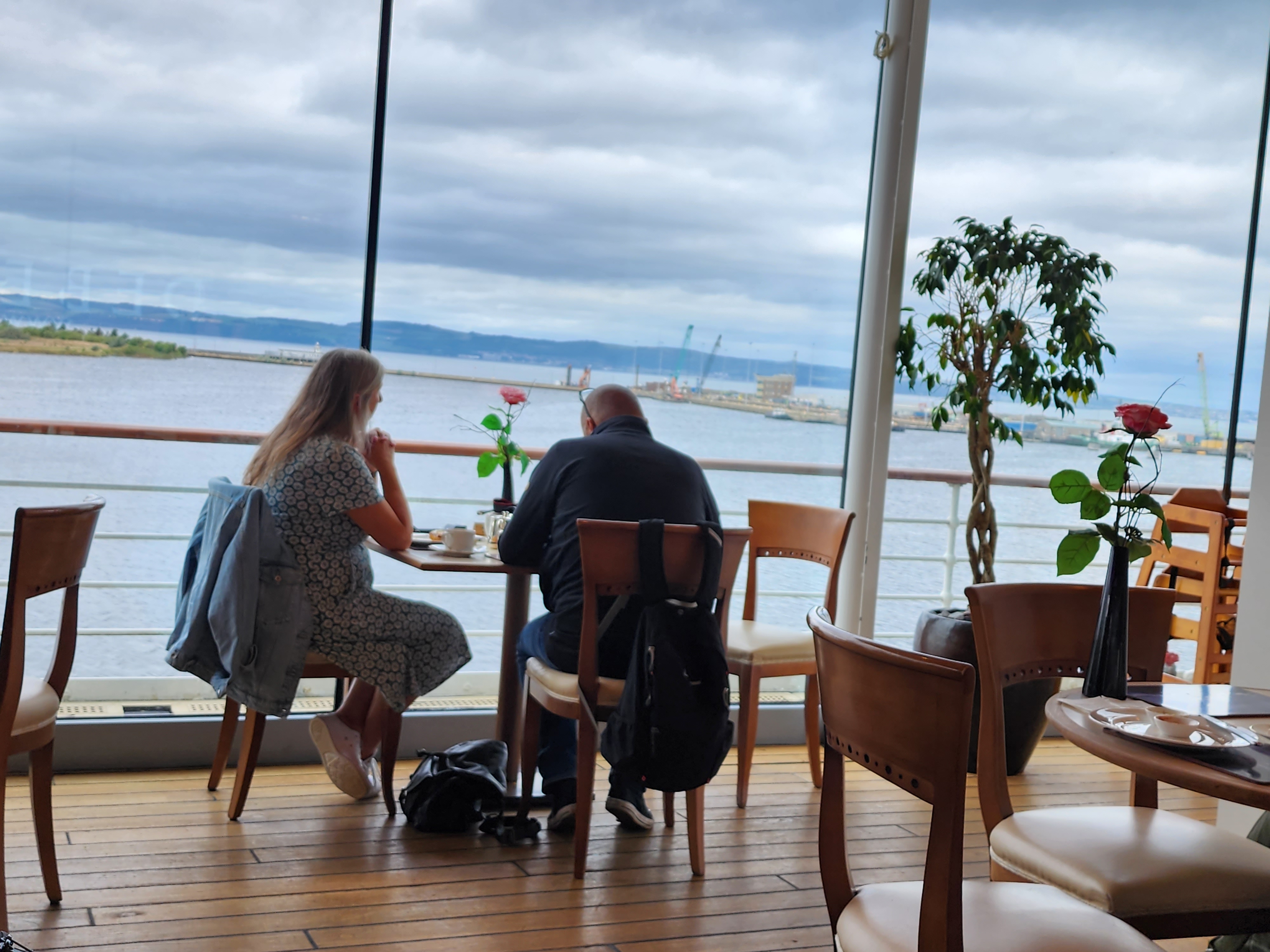
A couple sit at a table overlooking the water in the tearoom

They’re sitting where I’d like to sit!
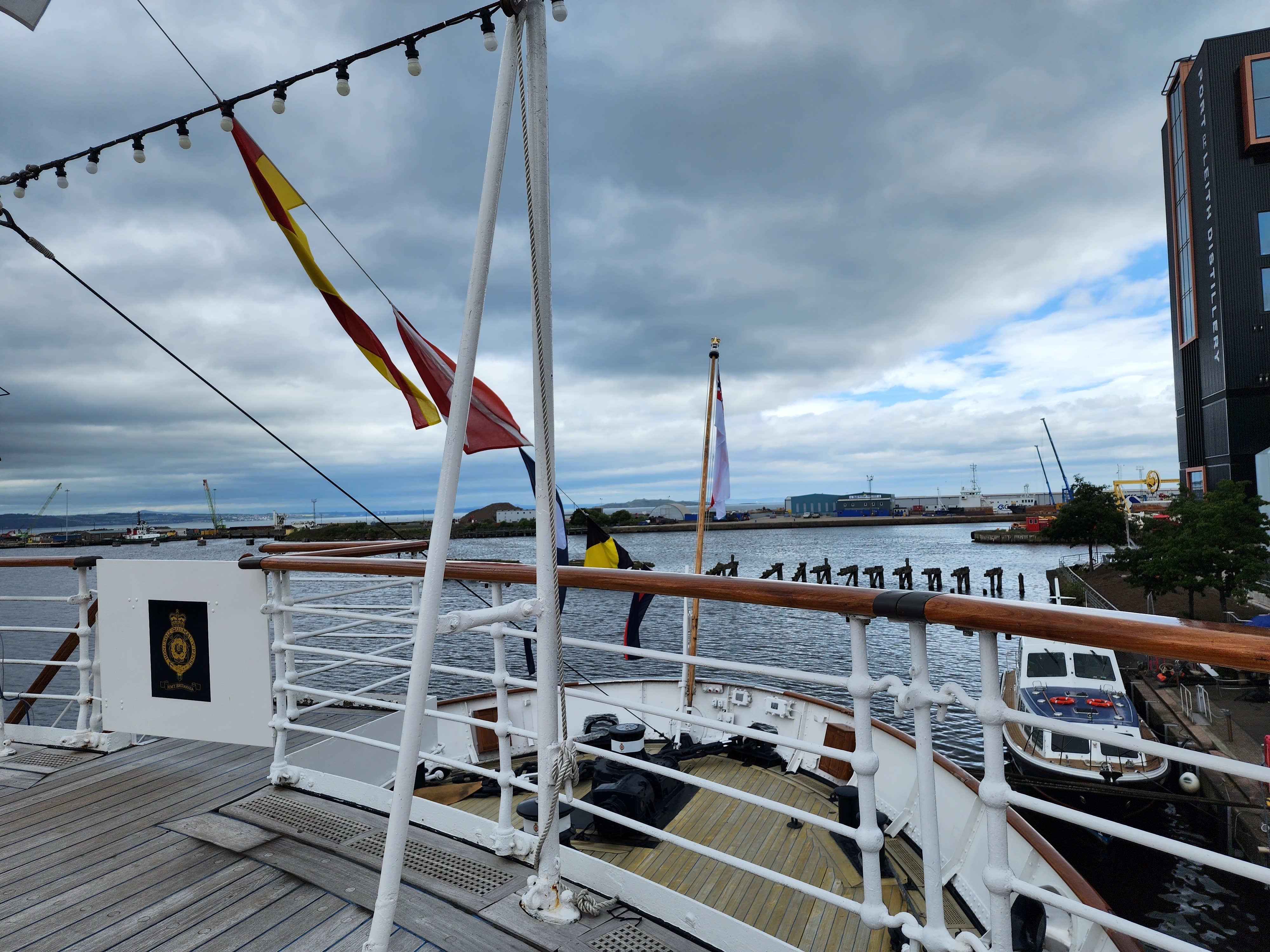
On the foredeck of the ship

The foredeck

A cozy couch and rocking chairs with blue print design on the entrance into the ship

A cozy couch beside big windows

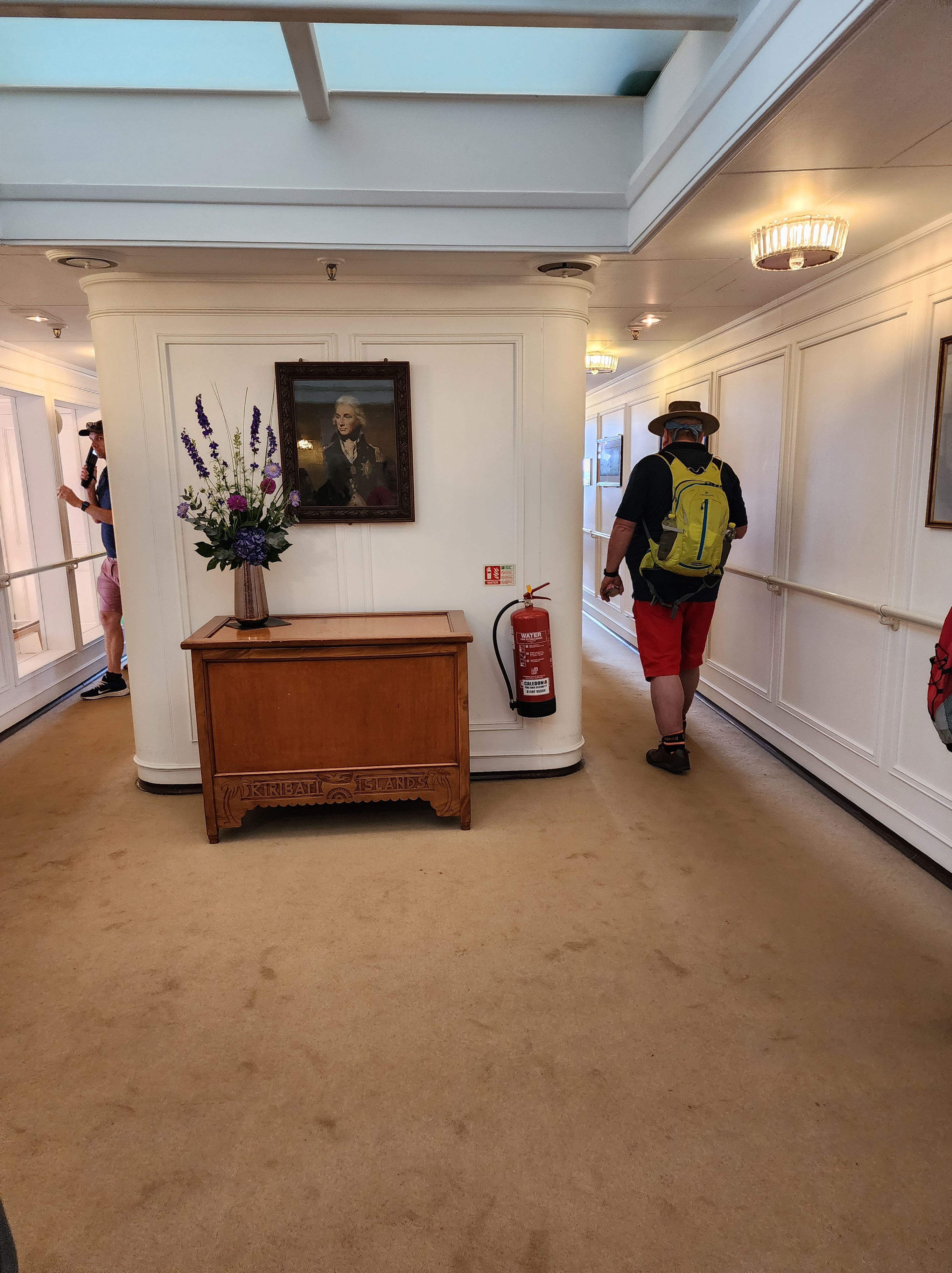
A boring hallway between staterooms on the ship. A man with a backpack is walking away from the camera.

The hallway between staterooms

In the foreground a bed with an ugly green print bedstead In the background 2 large windows. This is Prince Philip's stateroom.

Prince Philip’s stateroom

In the foreground a bed with another ugly print bedspread; in the background 3 windows and a fancy vanity.

The Queen’s Stateroom


The foredeck of the Britannia. People are standing on it.

The foredeck

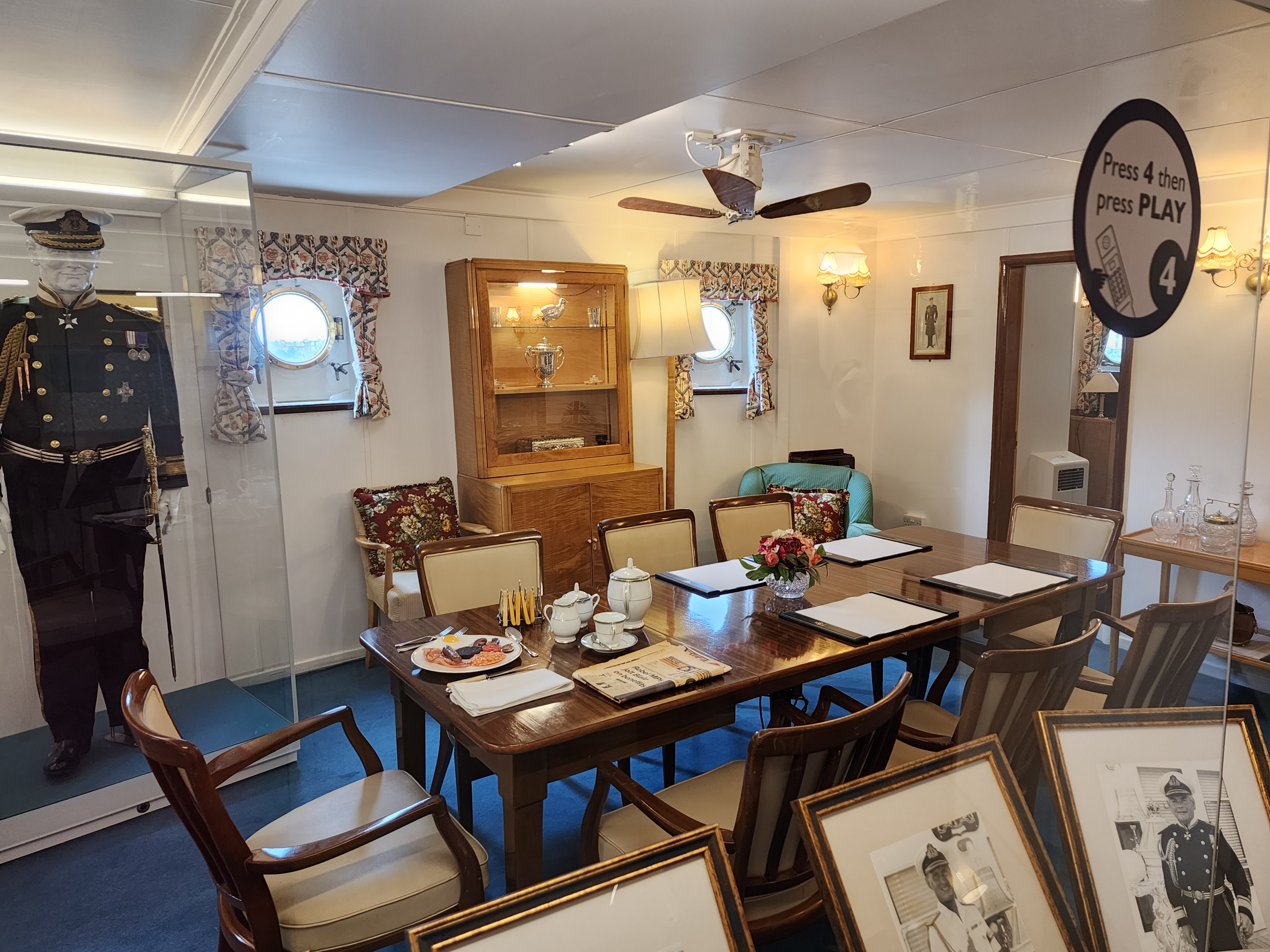
A small dining room with a captain's uniform behind glass hanging up behind it

The private dining room for the Captain of the ship
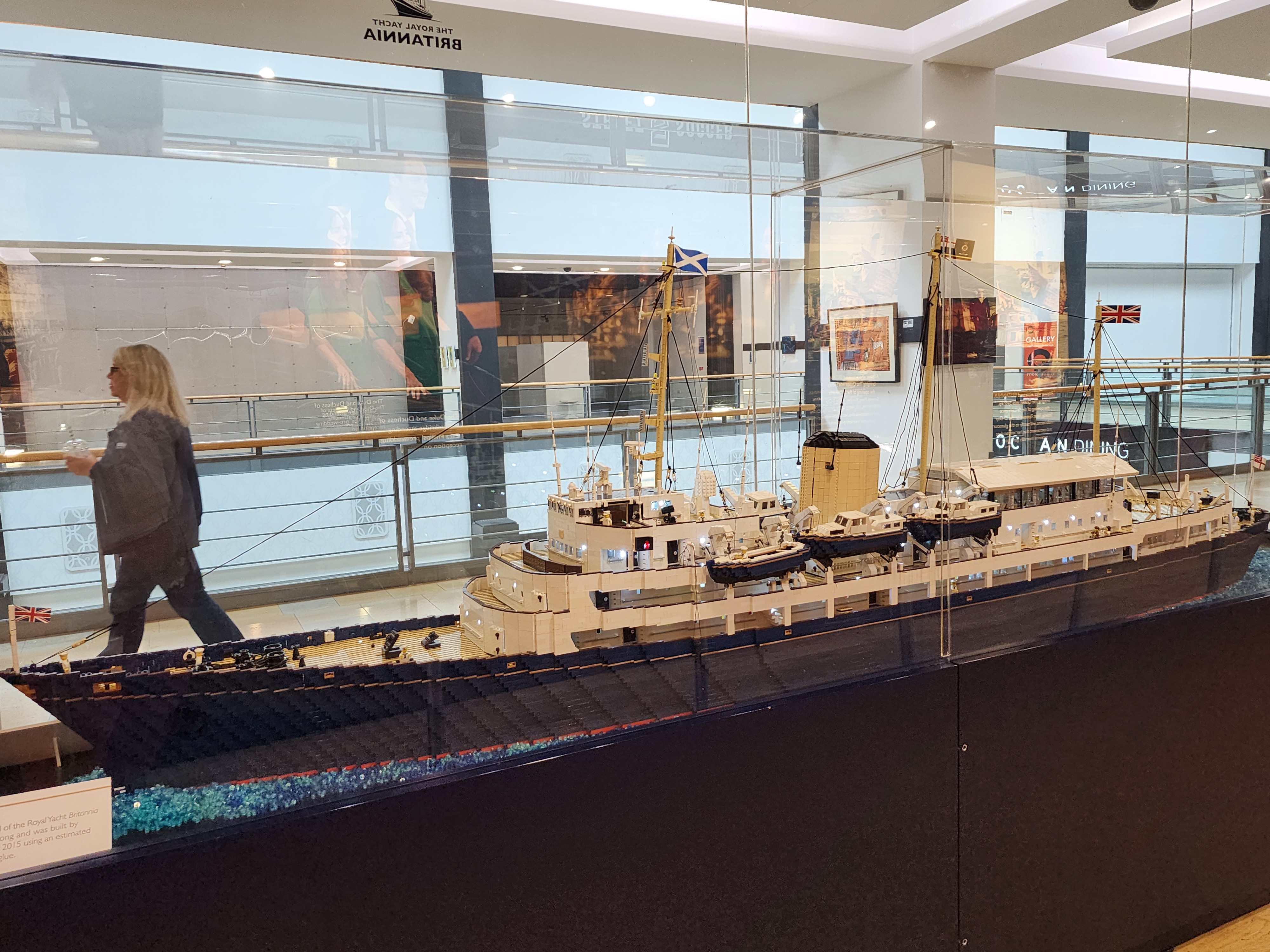
A scale model of the Britannia
A scale model of the Britannia
Dispatch from Edinburgh #4–Isle of Skye Redux

Occasionally, I think back to the trip I took to the Isle of Skye in 2023 and remember what a beautiful place it is, with its winding roads and green, green mountains spangled with purple foxglove (and sheep).  When I visited there before, I fell a little more in love with Scotland, and it’s said that if you’re not careful once you’ve been to Skye, the Faeries will get their hooks into you, and a part of you will stay there forever. It must be the case, for when I returned, I felt a little more whole.  Those rascally Faeries must have kept a little of my soul with them, and lent it back to me for the time I was there.  But I’m getting ahead of myself.

The morning I left, it was sunny in Edinburgh and not too cold.  I walked from my flat to the bus station, the streets empty, stopping periodically to rest my bad foot. I checked in with the Rabbie’s crew, then had the horrible realization that I forgot my charger for my phone.  Talk about bad luck! There was no way I could make it through the weekend on one charge (think of all the photos I would miss!), so the newspaper shop in the bus station extorted me to the tune of £40 to buy a plug and cable.  I suppose you could say I was lucky that they sold them, but I wince at the money I spent.  Then I went next door to the little café to buy a Coke Zero and a lovely carrot cake cupcake with inch thick cream cheese icing (remember, I like to eat my calories, not drink them).

I waited patiently for our bus to arrive, drank some Coke Zero, and shoved it in my backpack.  What I didn’t realize is that I hadn’t secured the cap very well, so soda went everywhere in my bag.  Fortunately, not all of it spilled, but it was enough that my hoodie (which I had shoved into my backpack) was soaked and it got all over my phone and wallet.  (My phone was fine, though.)  That was the second instance of bad luck of the day. But I wasn’t going to let something like that bother me.

By the time the bus pulled out of the station, it had started to rain. The third bit of bad luck. This was unfortunate, because I had forgotten to pack my raincoat, although I suspect that it was “forgotten” in the sense of not wanting to carry it around.  The waterproof (as they call it) is indeed a good rain jacket, but it is also hot and heavy (since it’s lined), and I didn’t really want to carry it. (Plus, I thought it was supposed to be sunny on Skye and that I would be ok with just my hoodie.)  That’s not to say I forgot it on purpose—I did really mean to take it, but I think subconsciously, I left it behind.  It was a choice I would come to regret.

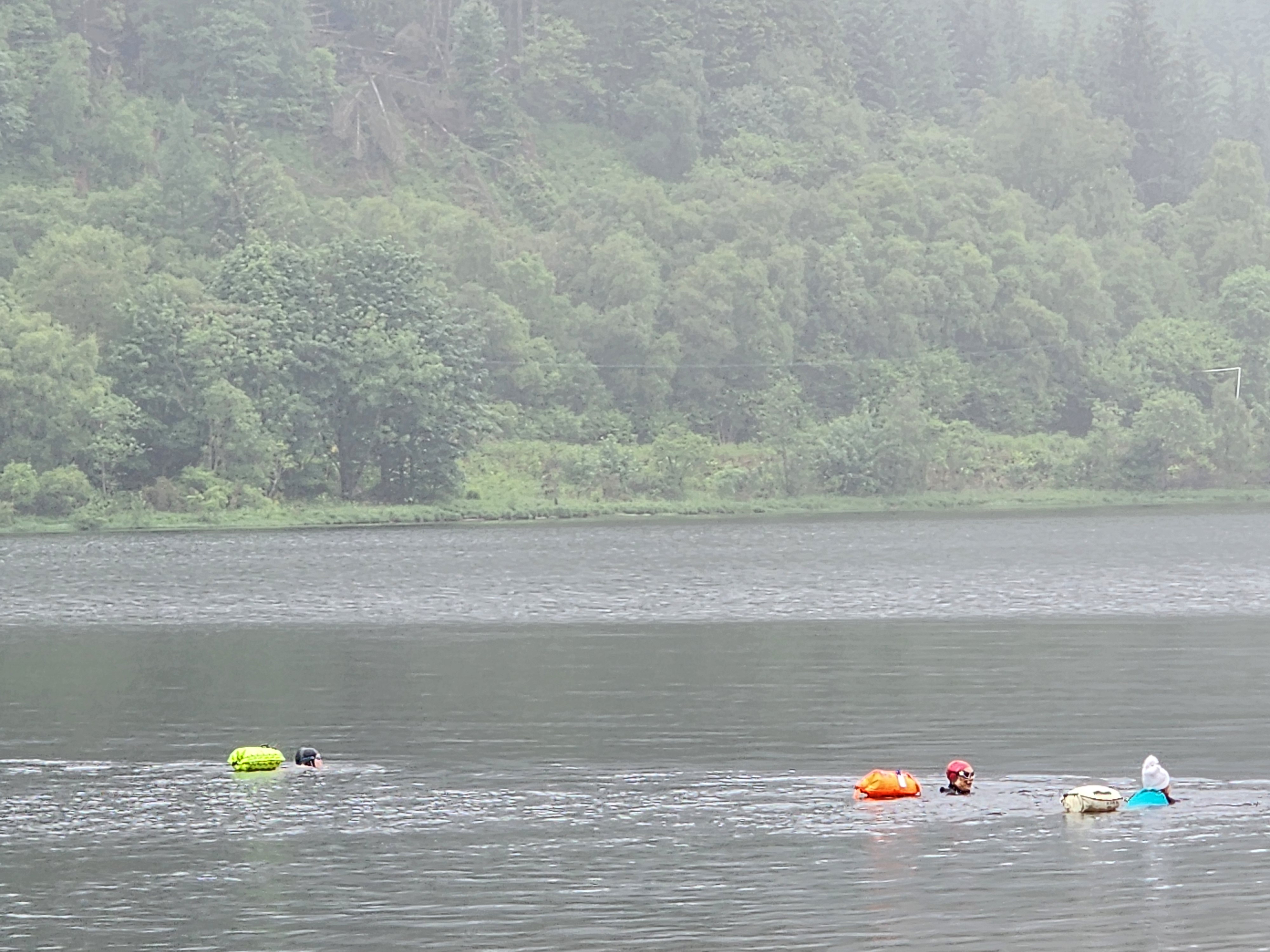
Swimmers on Loch Lubnaig with a mountain in the background

Cold water swimmers on Loch Lubnaig

On our trip west through the Trossachs, it rained.  Then we stopped at Loch Lubnaig (which lay between mountains Ben Vorlich and Ben Ledi) and the sky was low and moody, the rain having picked up even further.  Several swimmers were out in the loch, their neon-colored swim floaties adding a dash of color to the dreich day, and the temperature was clearly dropping, so I don’t know what they were thinking. But they seemed happy enough, even with the rain. If I had worn my raincoat, I would have been perfectly content with the weather as well. As it was, I was wearing my Coke Zeroed wet hoodie, which only got wetter the longer I studied the fools on the loch.  So I headed back inside the bus to wait for everyone else to arrive.

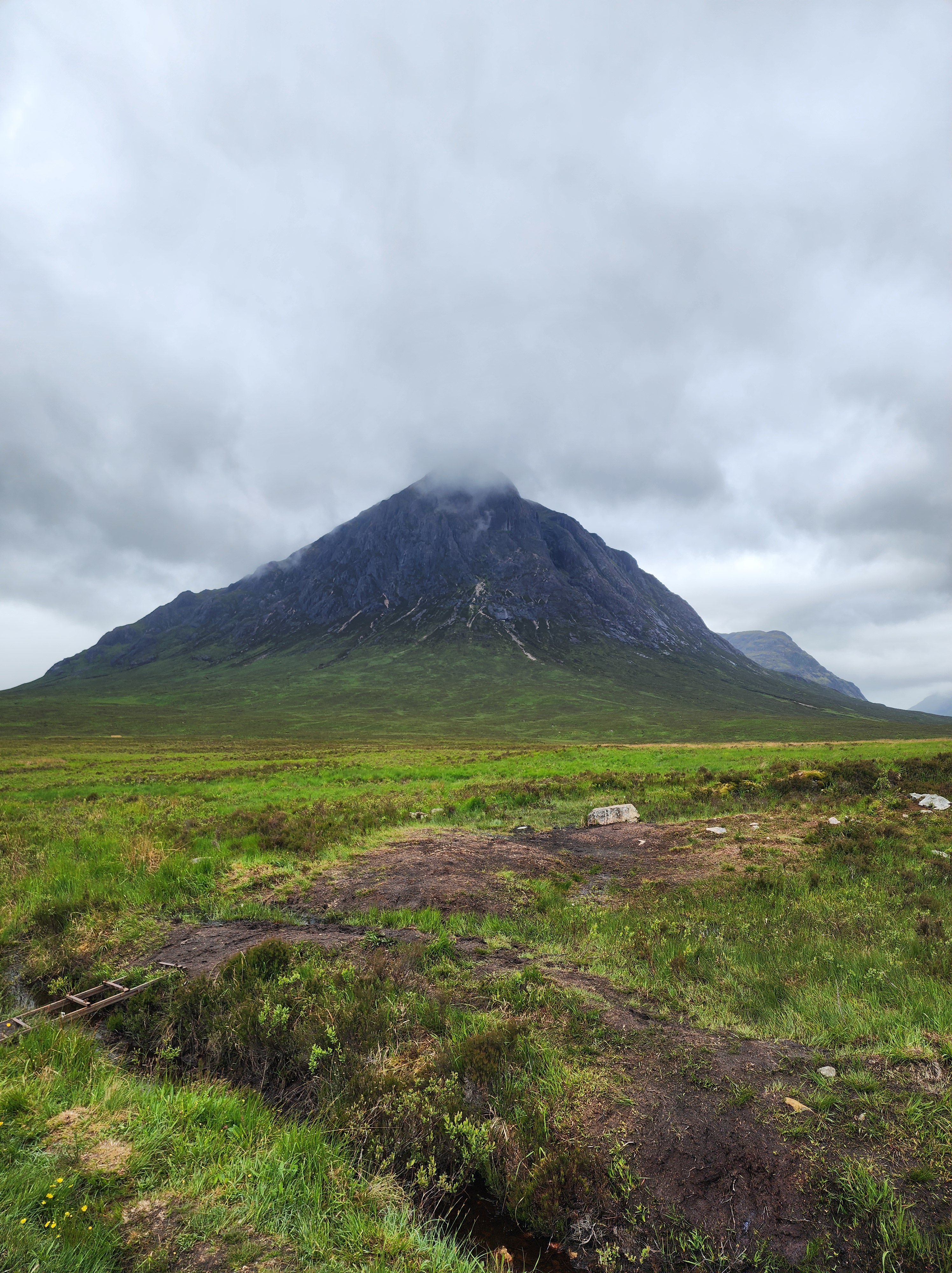
The most photographed mountain in the world, Etive Mor; the clouds are low and hiding the peak.

Etive Mor

The rain became hateful for a while, smearing across the windows of the bus as we drove so you could hardly see out, everything a dull gray smudge of landscape. But we drove to Etiv Mòr and I dutifully jumped out for a photo; the rain had tapered off a bit. And then off to the Three Sisters.  You may ask, don’t I get bored of seeing these mountains?  The answer is no, not really.  I think everyone on their way through the Highlands stops in these places, so you just get used to seeing them if you go to the Highlands.  But as for me, when it comes to the Three Sisters, I find them rather holy, and they show different moods, depending on the weather.  In the rain, they seem a little bewitching, a little shy, and the clouds are low over their peaks, as if they are three ladies standing together behind coquettish fans.

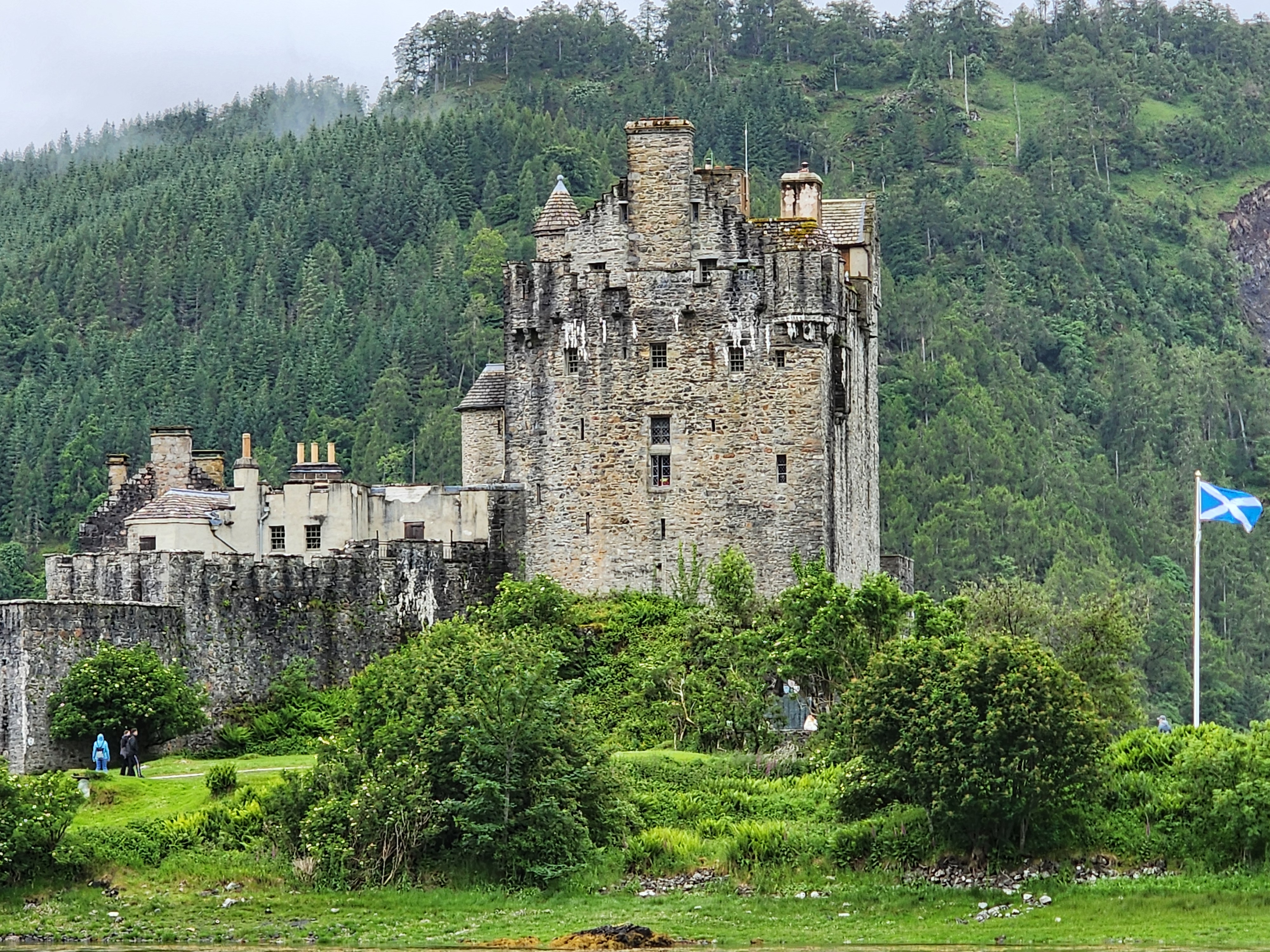
Eilean Donan castle from the mainland, with the Scottish Saltire flag (St. Andrew's blue and white cross) flying

Eilean Donan castle, with the Scottish Saltire flag flying

And then we were moving again up towards Skye for a stop at Eilean Donan castle.  The last time I stopped at the castle, it was also raining, but this time I was especially cold, so I passed through the giftshop to stop at the café and enjoyed a “deluxe grown-up hot chocolate.” I’m not sure what made it grown up—it had marshmallows (real marshmallows, not those preservative-laden monstrosities we have in the States) and whipped cream, and chocolate shavings.  It was so warming and cozy that I hated to go back out in the rain.  But out I went.

I thought about crossing the bridge to the castle—not that I wanted to go in the castle, but it’s nice the way the island juts out into the loch, and I thought I could get some good pictures.  But whereas a few years ago, crossing the bridge was only £1, now it was £3.50 which is ridiculous.  I know these castles need the money for upkeep, but really, to jump that much in cost in just a couple of years, and just for a walk over the loch?  I think not.  So, of course, I got back in the bus.

The trip over the Skye Bridge is a nice one.  It’s not long, but a bit of magic hangs on it, as if the Faeries are waiting for you to make your crossing.  As soon as you get on the island, you feel the difference—the mountains practically fluoresce green, and you almost catch a bit of language you can’t quite hear. In the rain and wind, the leaves rattle, but the soggy sheep don’t seem to mind the weather at all. The road is two-lane for a while, but then turns into a single lane with many passing places. You get used to pulling over to let oncoming traffic get by.  And suddenly, you just feel lighter, as if the island’s magic spreads its diaphanous wings over you.

When we arrived in Portree, David dropped us off at our hotel, a horrid little place called Tongadale, not even down on the harbor.  The room was bare, like a dorm before you decorate it, and the bathroom was tiny too. It was fabulously expensive pricewise for what I got. Meanwhile, outside my window the pigeons congregated, and I heard their cooing all night long. For dinner, I went to the Co-Op to get a few provisions (crisps, “egg mayo sandwich” [egg salad], and a Coke Zero.  I had wanted to go to a chippy that I had been to before, but it was closed although according to the hours on their sign, it should have been open. I could have walked down to the harbor to take pictures, but the rain started up again, and I didn’t want to be caught in a deluge.  In the hotel, I ate my paltry dinner and read a book.

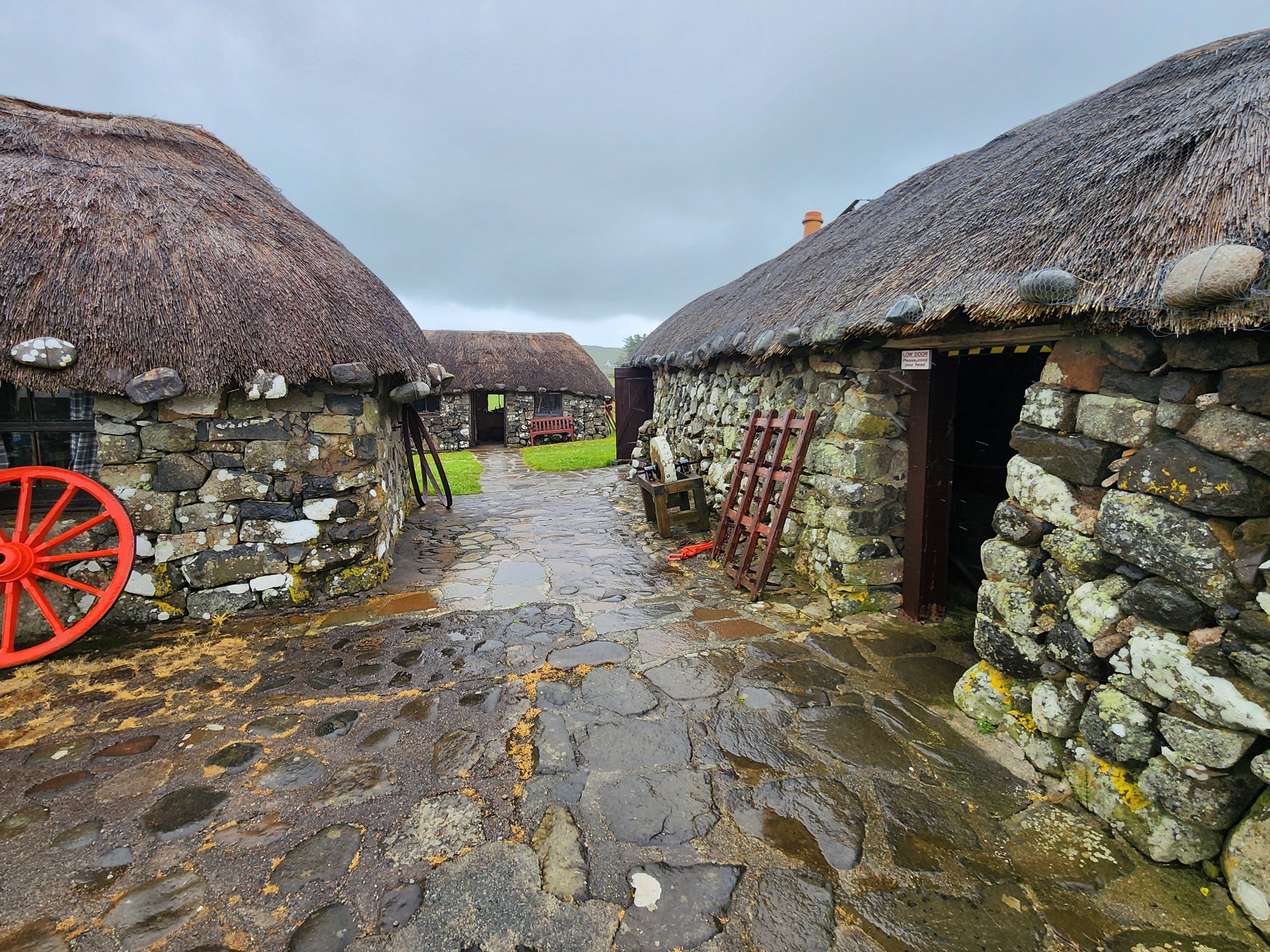
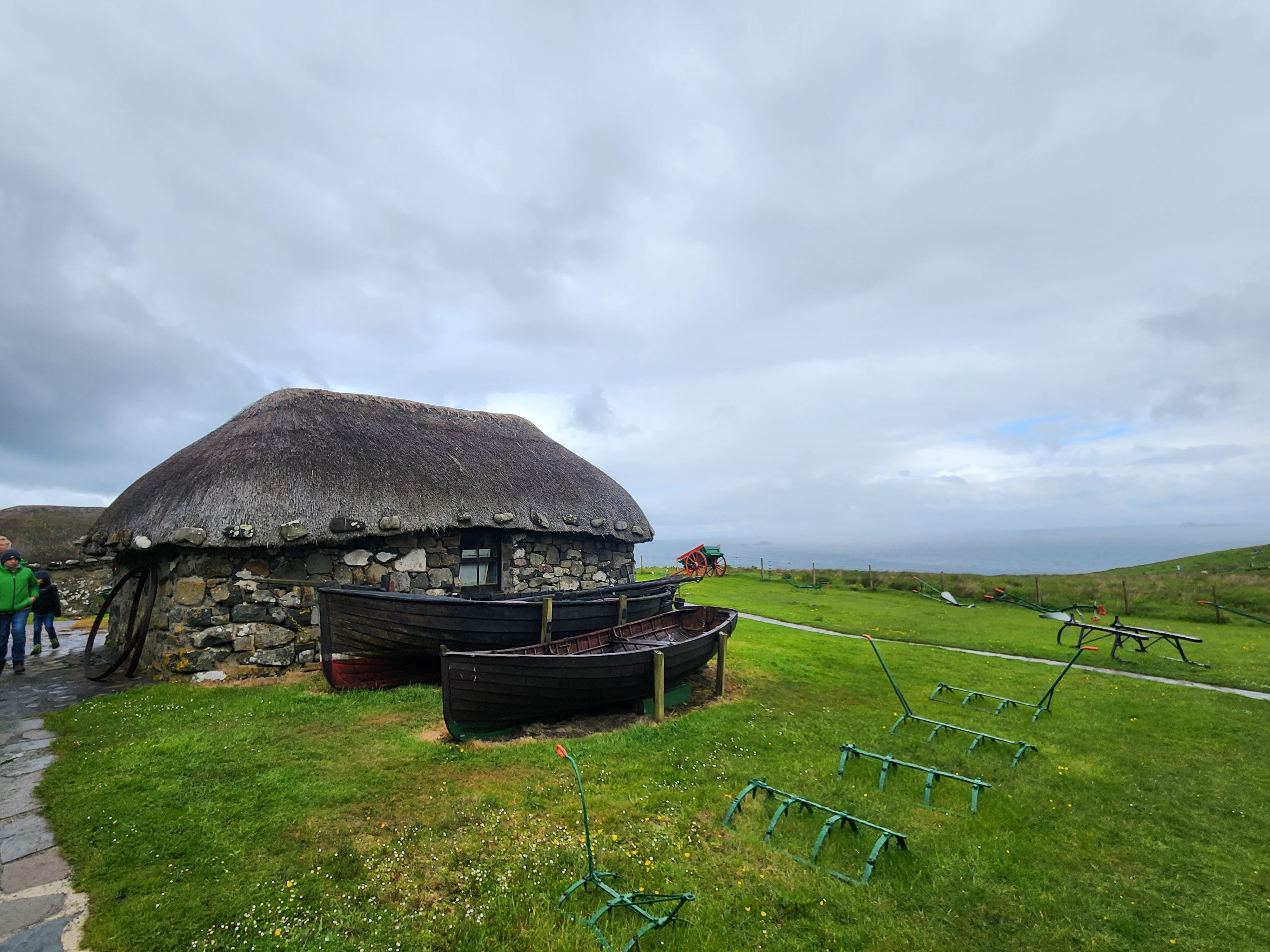
two thatched roof crofting buildings at the museum of Island Life on Isle of Skye

Crofting houses at the Museum of Island Life

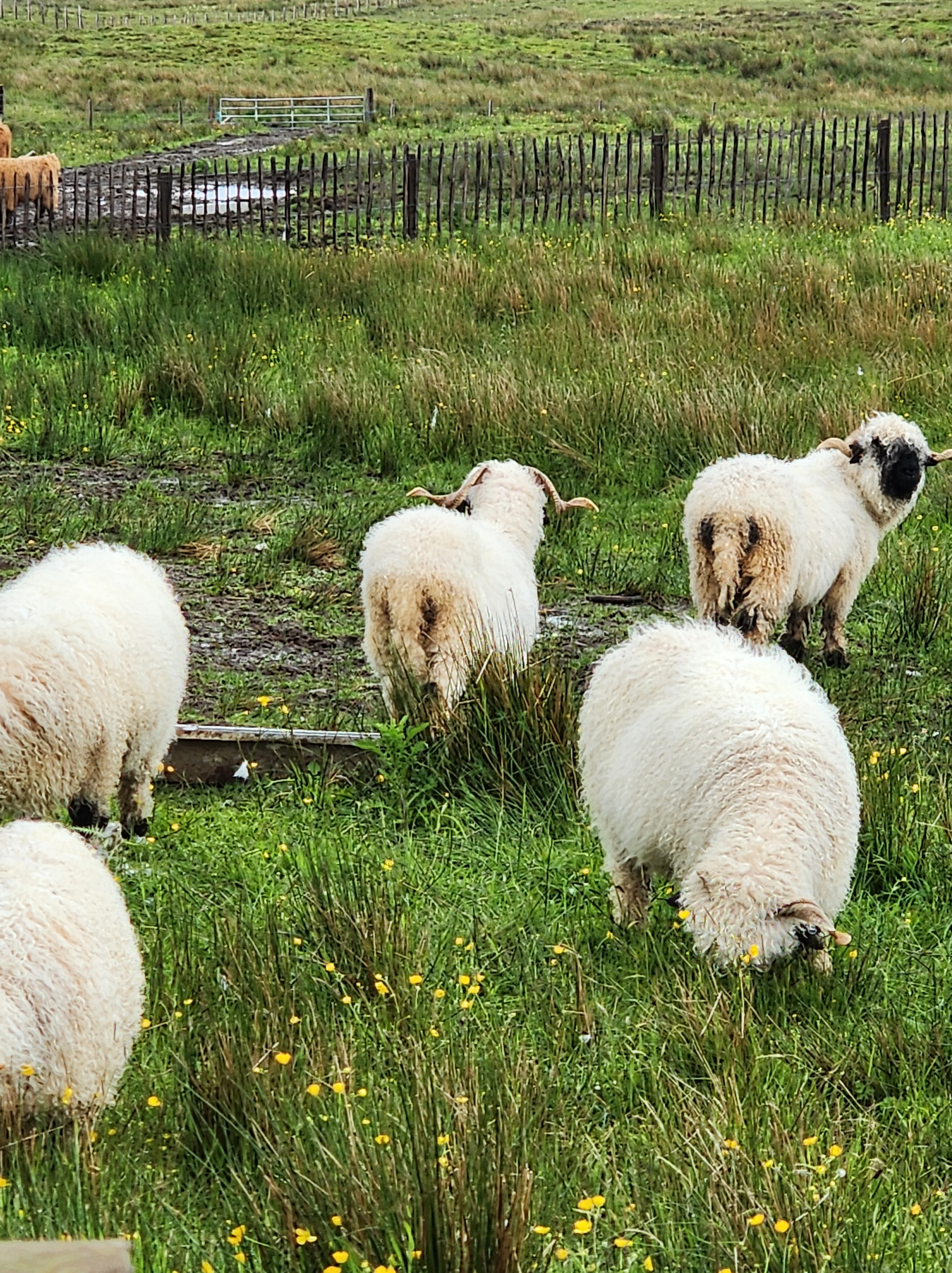
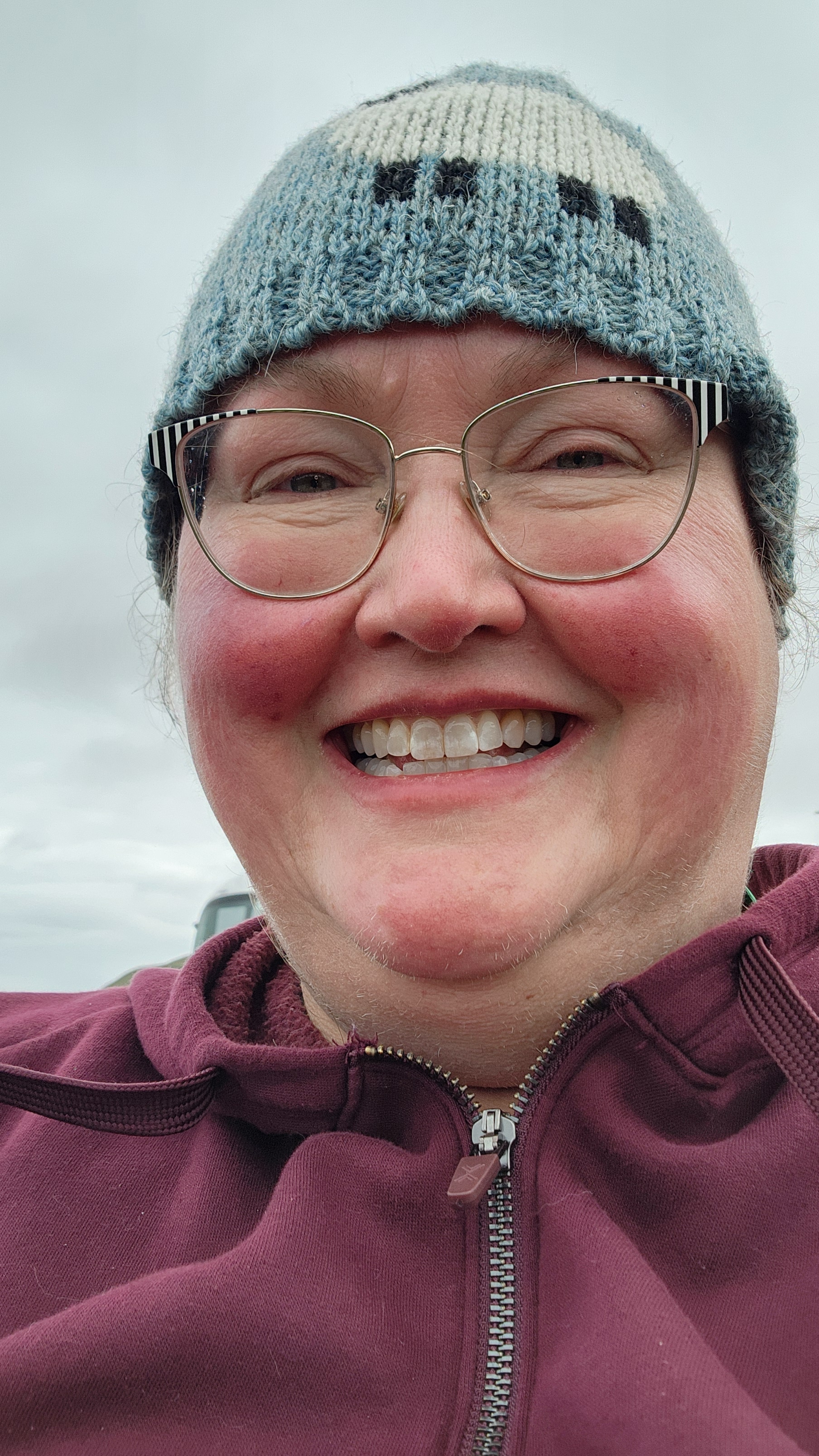
I’m not sure what we were meant to do on Saturday morning, but David decided that we should go to the Museum of Island Life since it was raining.  This was a series of croft houses with antiques inside to show people what island life was like 100 years ago. One of the crofts contained a huge loom, others held beds, one was a kitchen, another was full of tools.  Inside, the crofts were very dark, and with the rain outside, there was hardly enough light to see anything.  I didn’t take pictures inside, although I should have taken one of the loom because it was very interesting.  The gift shop was also interesting, and full of wool things.  This was important, because I had left my beanie in my suitcase, and had no access to it.  So I bought a blue wool hat to wear, hand-knitted, and only £16, and it kept my head toasty.  There were lots of other items I thought about buying—wool socks and scarves for instance—but I restrained myself. Of course, I underestimated how fierce the winds on Skye are; I really regretted not buying a scarf, especially when I went to hang out with some sheep on the moors, waiting for the other tour members, and nearly froze.

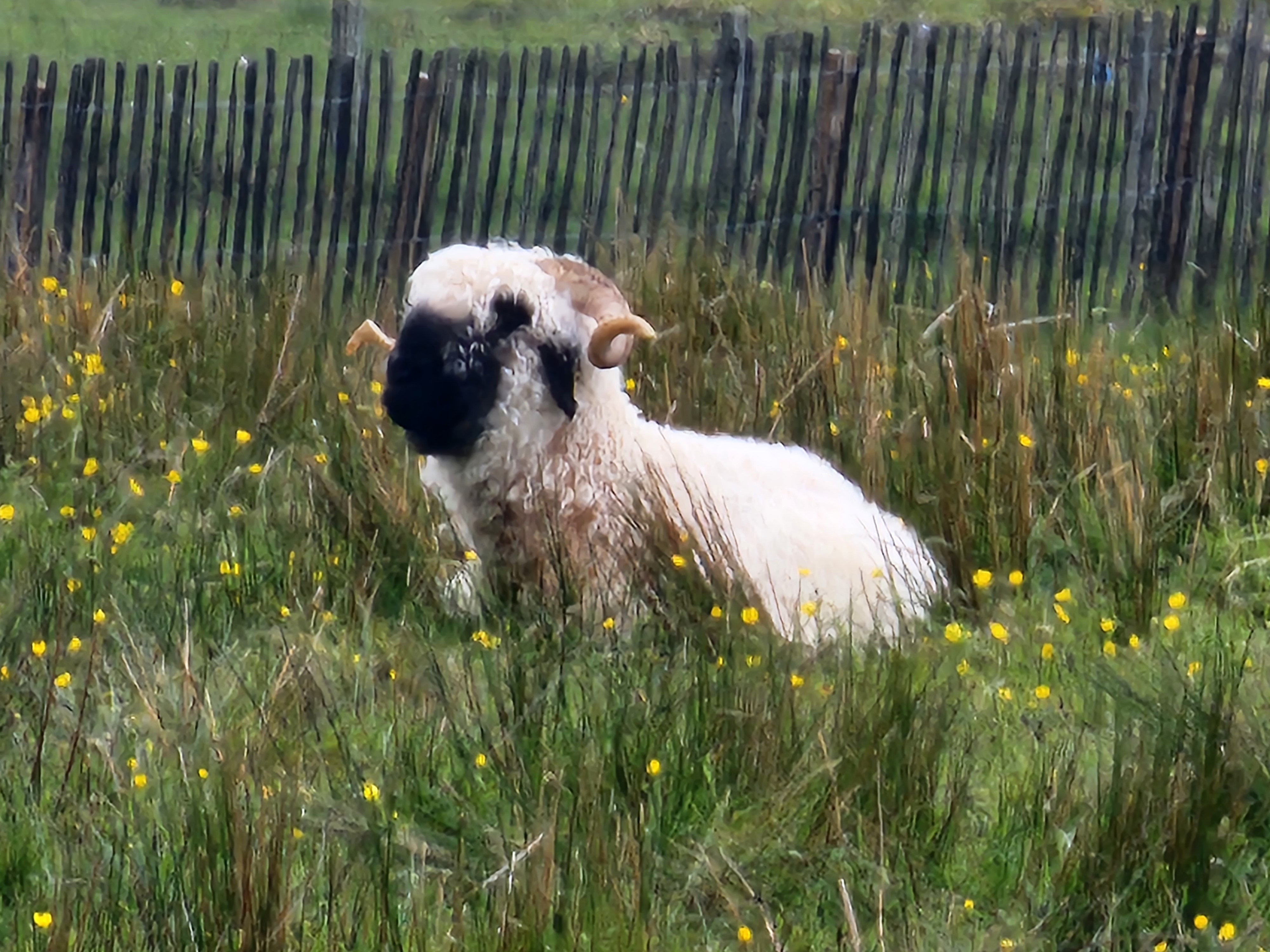
A black-faced sheep

A sheep on the moor

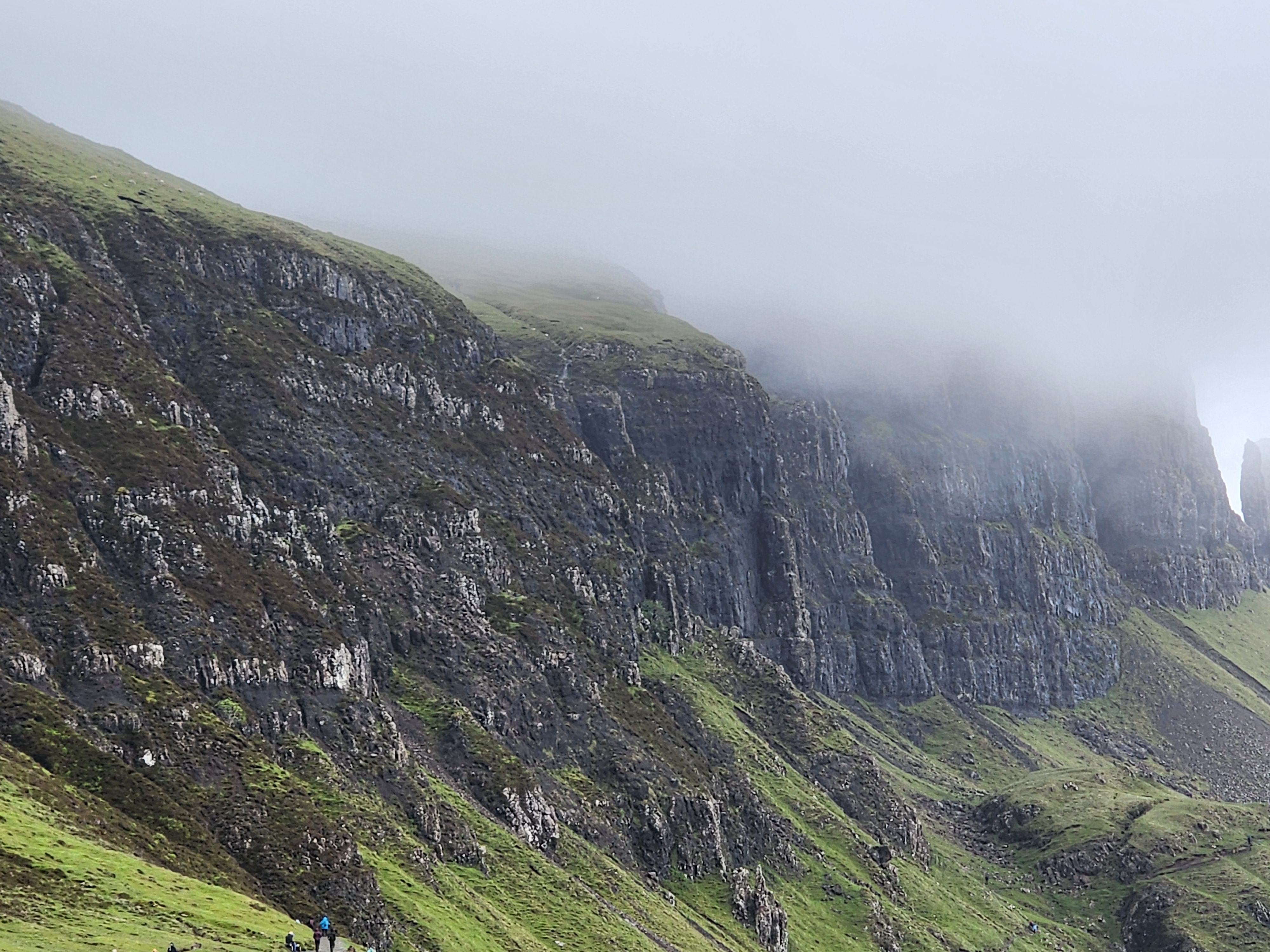
Afterwards, we stopped at the Old Man of Storr, which honestly, is just a big wedge of rock that absolutely looks nothing like a person, and then we went through to the Quiraing, on the east side of Skye.  It’s also basically just a bunch of rocks, but it’s very high up, and you can walk through the Quiraing on a path.  I only walked some of it—too worried that I’d get blown off the mountain.  The gale force winds found any hole in the stitches of my clothes and froze me.  Yet it was exhilarating to be up there—to be able to see everything, the lochs, the mountains, to be so close to the sky you could actually walk in the clouds—but just the same, I was glad when we gathered back at the bus; I was thoroughly soaked and ready for lunch.

We drove back into Portree, and I stopped at the Cuchullin Restaurant, hoping for fresh seafood.  They sat me at a table very close to two women in the corner, and we had a lovely blether as I waited for lunch. This is how the conversation went:

“Are you Canadian?  We’re Canadian.”

“Alas, I am American.”

“American?”

“Sadly.”

“Oh my dear!  Well, we’ll pretend you’re Canadian so we can talk to you.”

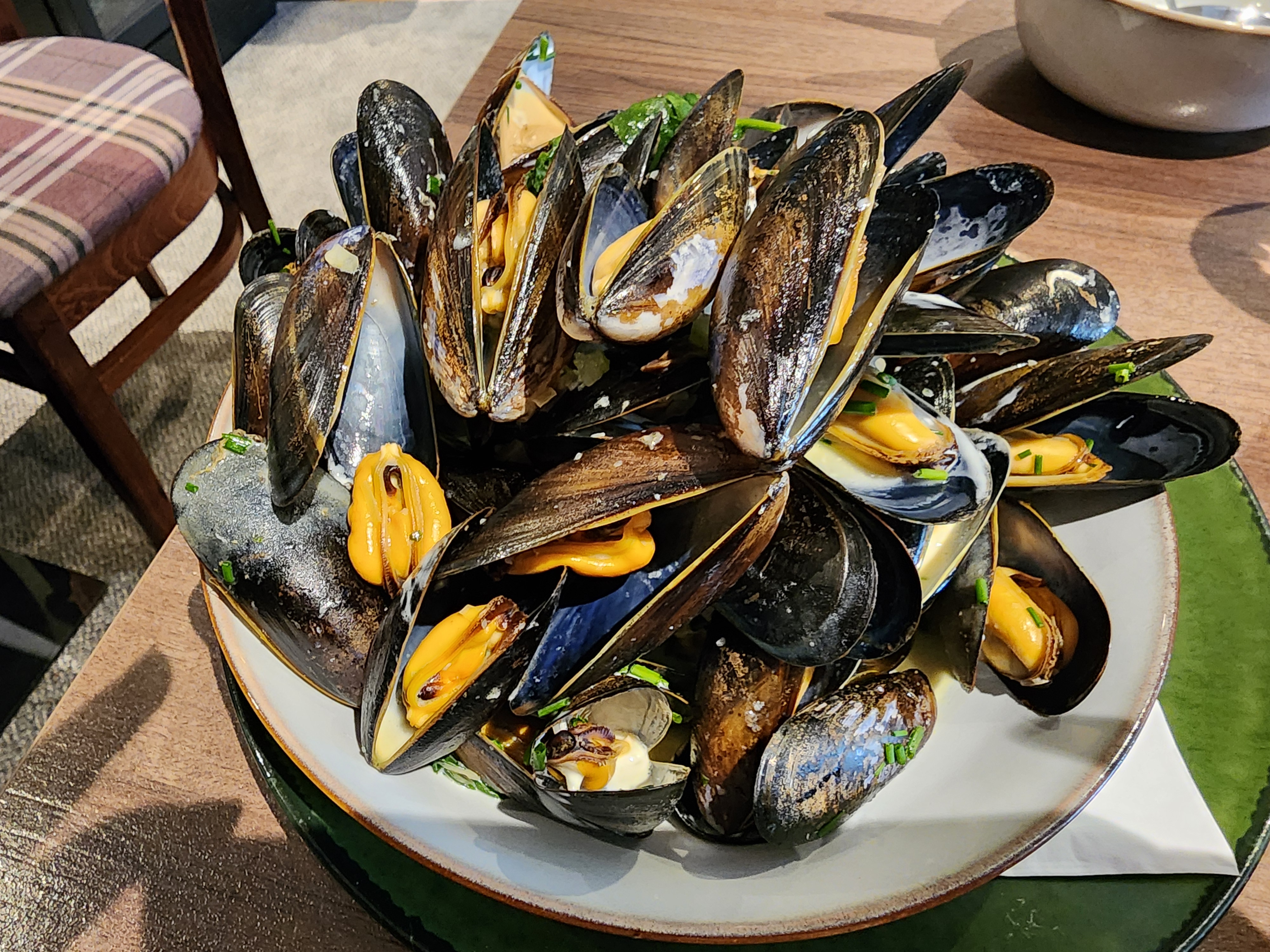
There was more to the chat, but it mainly had to do with “the maniac in the White House” (their words), how we all were enjoying Skye, as well as the fact that when the server brought my lunch, I had a giant bowl of mussels in front of me.  And I was completely mystified by it. “What am I looking at?” I asked no one in particular.

A plate of mussels

My unexpected lunch

Unfortunately, when I ordered the so-called “small plate” of mussels, I was thinking scallops. Bad luck strikes again—or so I thought. I have a fear of mussels—I think it’s because they look like weird, small ears.  I was also afraid they’d be hard to get out of the shell, but apparently with seafood fresh from the sea that morning, they came out no problem.  They were dripping in a sauce of butter, wine, and maybe cream, and they were delicious.  So now, I am over my mussels phobia—at least, on the Isle of Skye, I’m not afraid.

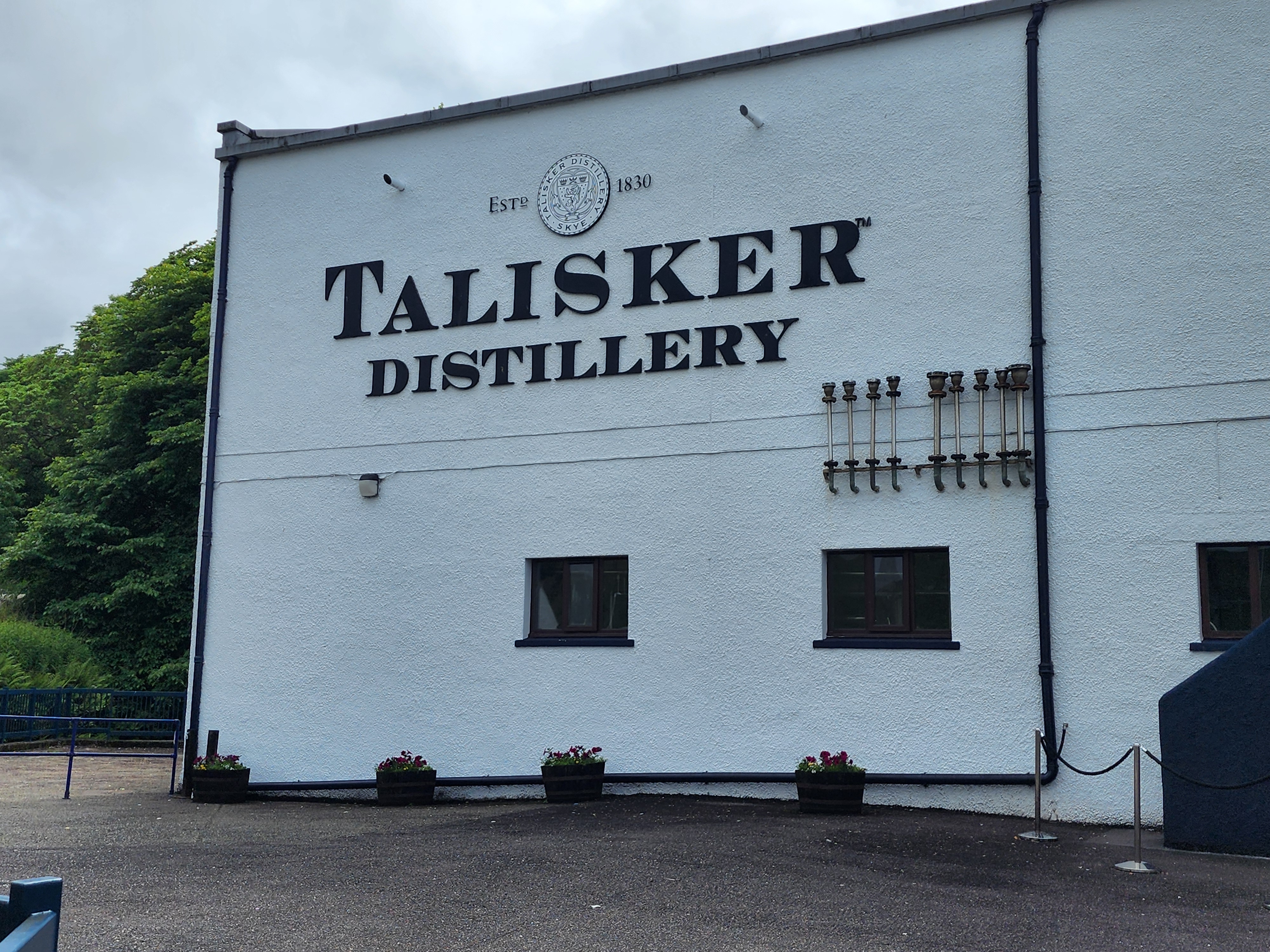
Sign on the side of the wall announcing Talisker Distillery

Talisker Distillery wall

That afternoon, the sun peeped out a bit, and we drove to Talisker Distillery on the Minginish peninsula.  I was really looking forward to this, because as you well know, I am becoming a whisky connoisseur.  I couldn’t wait to try a flight of Talisker.  And so imagine my surprise when a flight of 3 drams was £43!  For twice that, I could have bought a full bottle. Other distilleries that I’ve visited have offered whisky flights for about £23, and that was my price point. I noticed that none of the other people on the tour had ordered a flight either, and the bar was sparsely populated, although the gift shop/ reception area was crowded with folks. Maybe I should have splurged and tried a single wee dram, but even those were expensive. Anyway, booze-free, I meandered outside to watch the water of Loch Harport, where a few sailboats were bobbing.

From there we drove to the Faerie Pools (basically, pools filled by waterfalls) which were nestled between some tall mountains.  Another person on the tour had somehow injured his foot so the two of us stayed on the bus and went down into another glen full of campgrounds, while the hale and hearty of us took the path to the pools. I might have risked the walk except that the rain was persistent, and I was afraid of slipping on the stony path.  But David promised we’d go see the Faerie Bridge, so we didn’t feel cheated.  The campgrounds looked nice.

While I’m not much a fan of camping—it’s always too cold or too hot and the ground makes my back ache—I had the thought that camping in Scotland might be a fun thing to do—to be out in the fresh, damp air with the wind blowing through the glens. (Although it would be chilly at night, and probably wet.) Scotland has a right-to-roam law, enacted in 2003, which allows people to walk or camp on land freely, as long as the land is respected.  This doesn’t mean that you can camp in someone’s front yard—private property does exist—but it does mean that you can climb mountains and camp in tents or bothies or ride horses or bike pretty much where you like, especially on public lands, but some private lands too for recreational or educational purposes.  You could, probably, camp on farmland too, but really, with all the sheep droppings, it would be pretty messy.  Anyway, camping would be a new way to experience the Highlands.  Maybe some day I will try it.

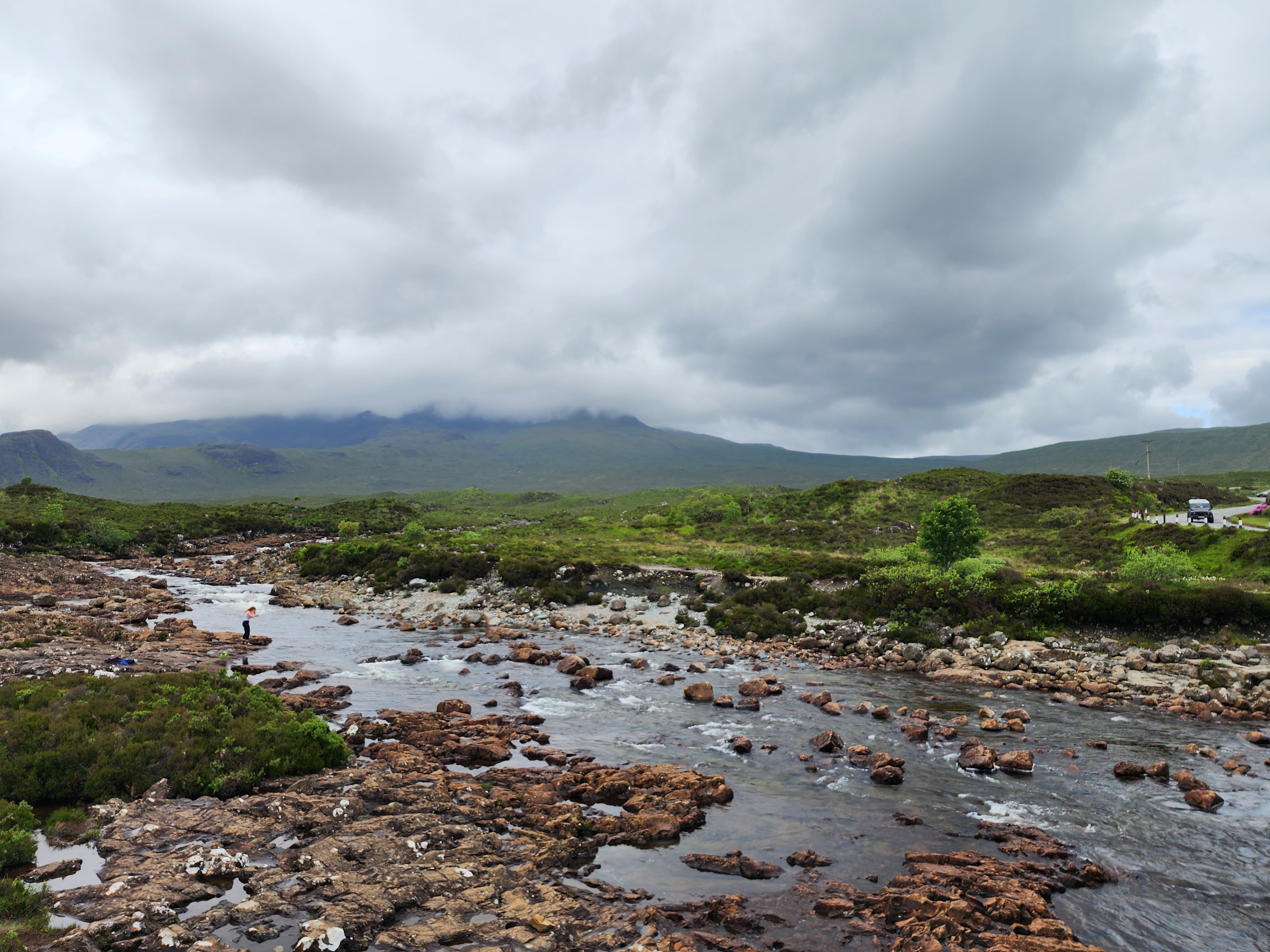
A landscape of a stream and mountains under a cloudy sky

The stream that runs under the Faery Bridge

On our last day on Skye we drove to the Faerie Bridge that David promised, and the clear water ran quickly over the stones in the stream.  Apparently, an old wives’ tale suggests that if you stick your head in the Faerie Pools or in the water under the bridge, it will make you feel ten years younger and your face look ten years younger.  One of the men on the tour, a guy from Vancouver, sure enough bent down and put his whole head in the stream, despite the fact that it was cold and rainy.  I imagine the water was invigorating… if not cold as hell. He impressed everyone.  And he might have worn a few fewer wrinkles on his face after his plunge.

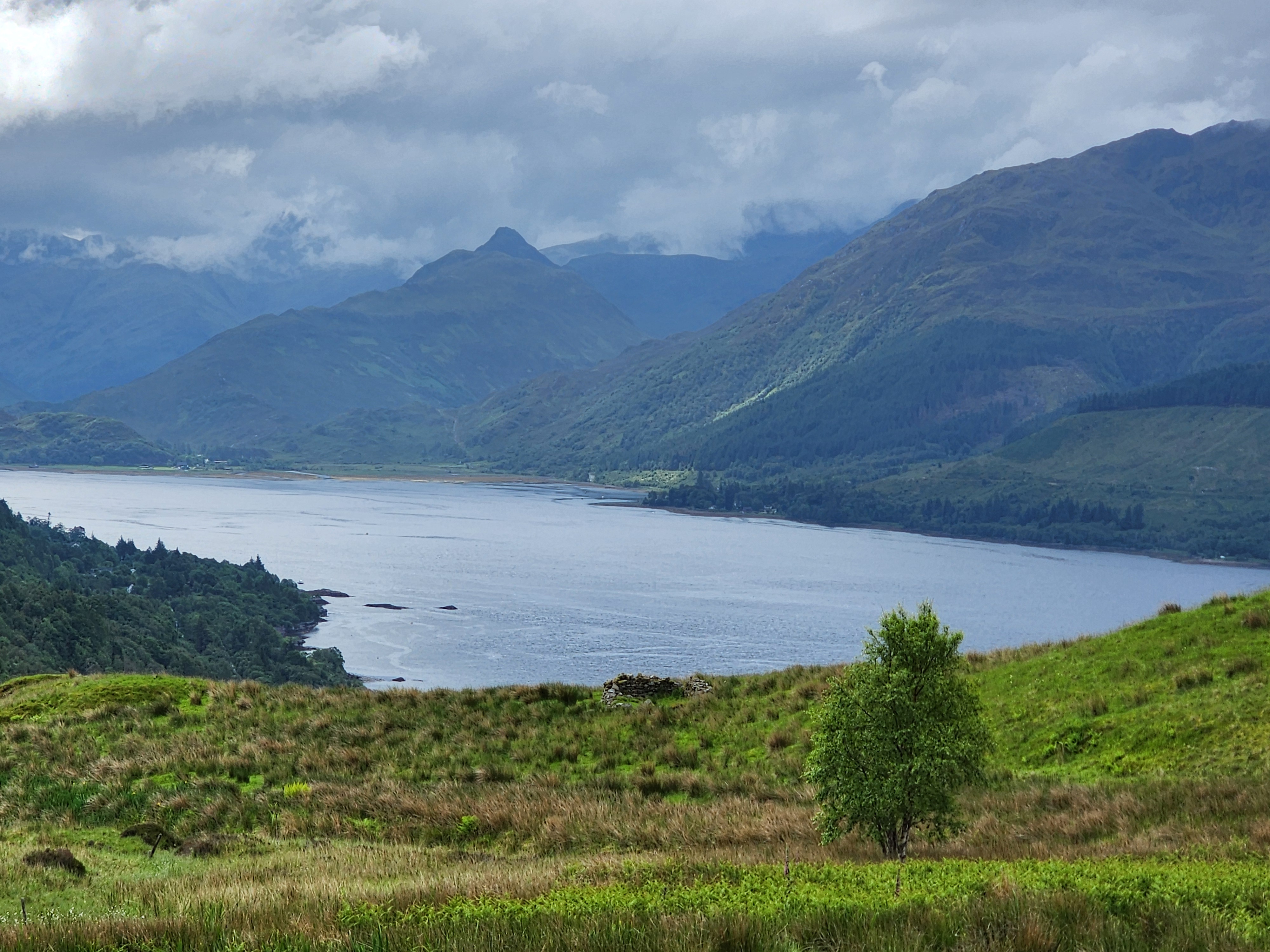
Landscape with a large loch in the foreground, and hazy mountains in the background.

Loch from high-up

Back on the mainland, we passed by Eilean Donan again, and drove up high to a viewpoint that looked down on the whole glen where the lochs looked lovely, and a pair of horses chewed grass in a paddock.

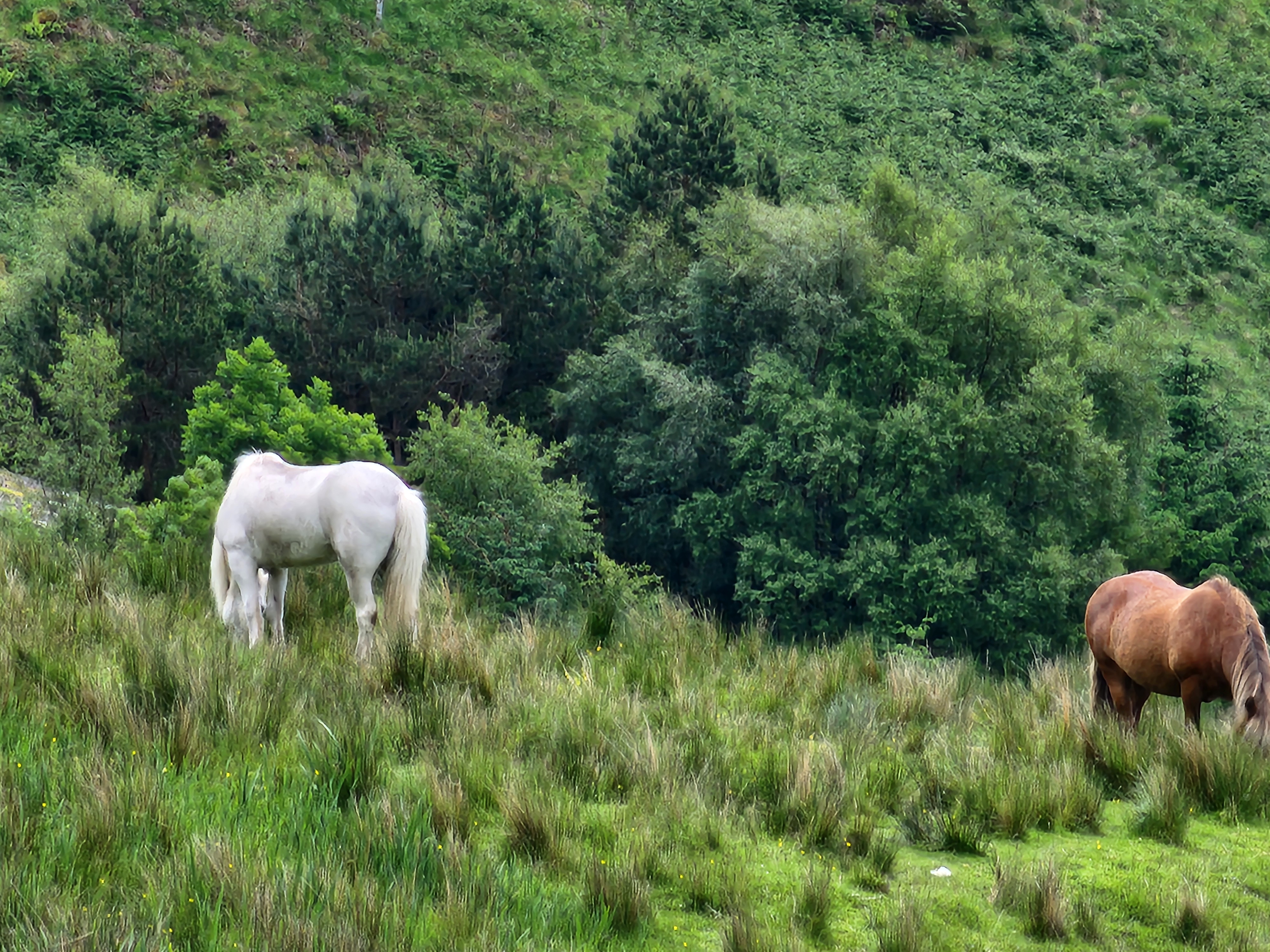
One of the horses, the white one, comes with some lovely folklore surrounding it.  In Scotland, white horses are magical.  They are either unicorns shielding their horns in invisibility when humans are around (unless the human be a virginal girl), or they are kelpies if they are near water.  Kelpies are demons that lure people to a watery death—if you see one, they usually walk by the shore, appearing tame and sweet.  But as soon as you reach out your hand to pet them, your hand gets stuck fast, and they drag you down to the bottom of the loch or ocean till you drown and then they eat you, bones and all.  This white horse in the paddock was appropriately distant from the loch, so I will guess it was a unicorn in disguise.  But you do see many white horses in Scotland—this is not surprising since the unicorn is Scotland’s national animal. But do be aware if the white horse appears near the water—they are just waiting to eat you.

A white horse and a brown horse on a green mountain background

Unicorn, or kelpie?

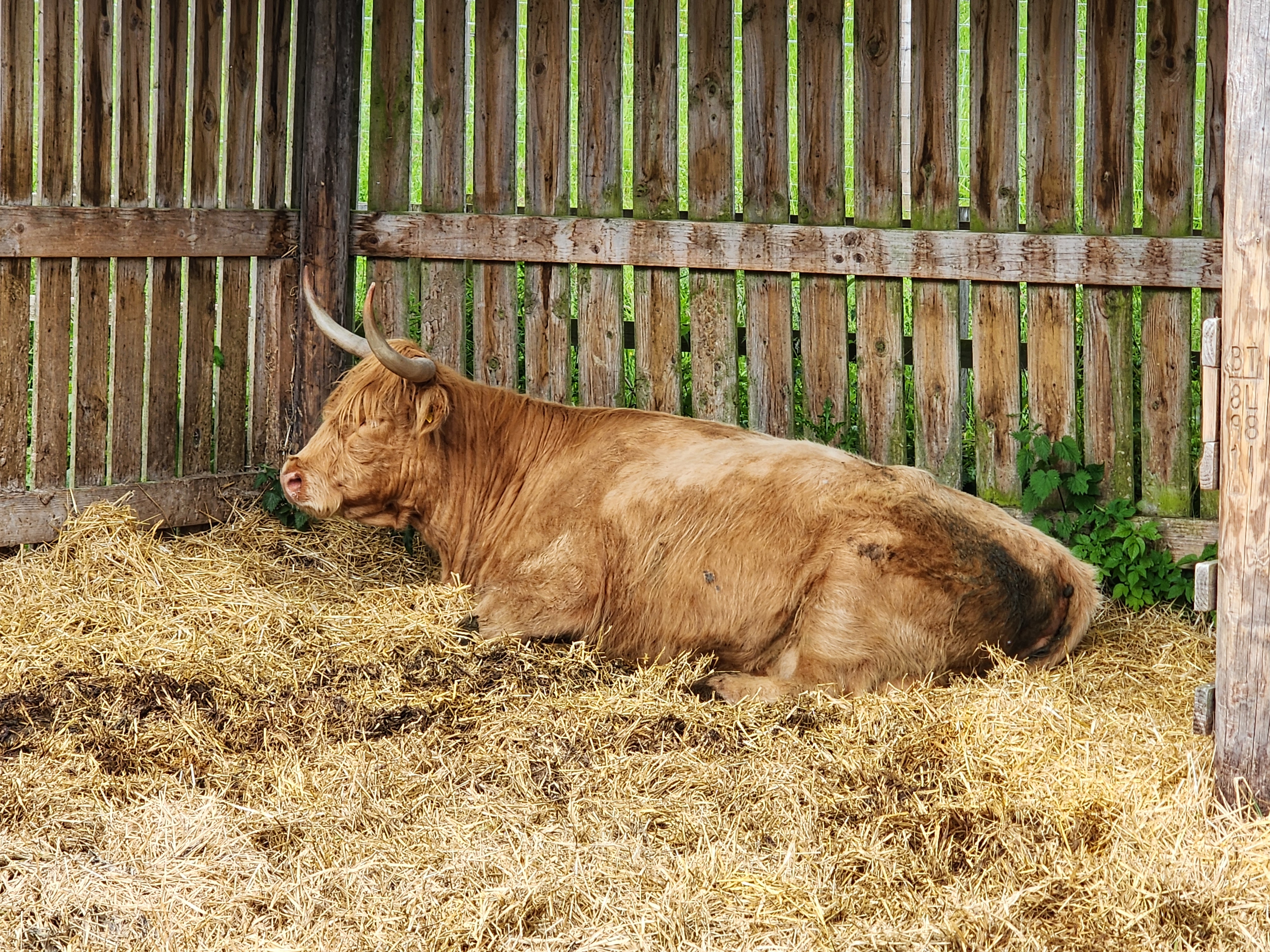
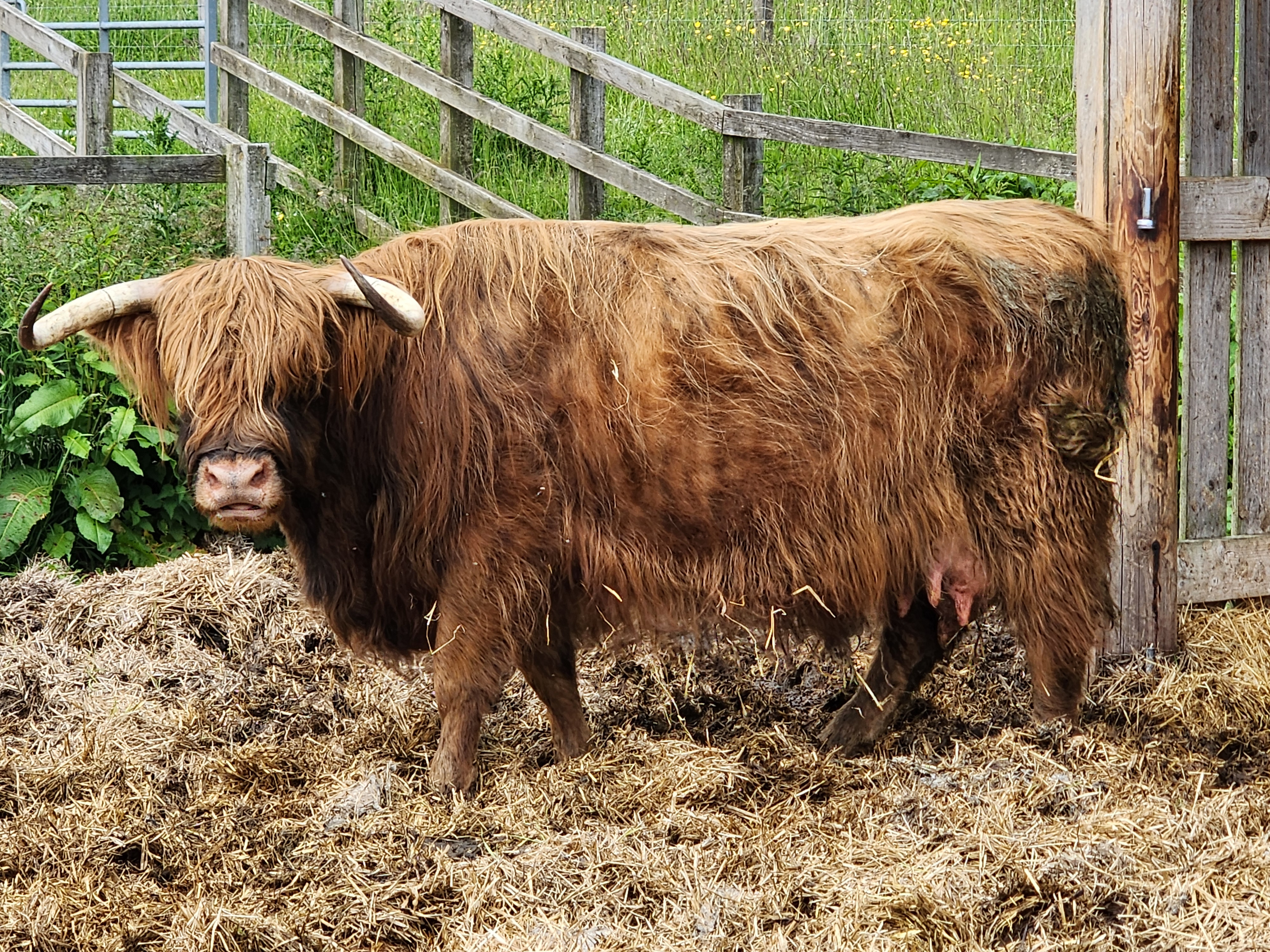
Our final stop before arriving back in Edinburgh had us visiting Taste Perthshire—I guess you could say it’s like Scotland’s version of a Buckee’s—a large gas station with a huge giftshop and restaurant attached.  It’s nothing like Buckee’s in the sense of marketing—there’s no beaver decorating anything—but you can find all sorts of Scottish paraphernalia, clothing, decorations, woolen goods, etc., and there is a lovely counter full of pies and pasties and a cheese refrigerator.  I bought a cheese and onion pasty, and a mushroom and cream filled Yorkshire pudding for my dinner.  But the main reason we stopped was to see the Heilan coos—which are always a big hit with people on a tour.  And they were indeed very cute.  Unlike previous times where we saw the coos and they lazed out in the pasture, these coos hung out under a small stable, making taking pictures of them easier.  They didn’t seem to mind the company, but they didn’t seem to want to be petted either.

I’m not sure what it is about Scotland’s islands that I love so much.  Perhaps it’s their novelty (in comparison to the urban nature of Edinburgh) or the fact that I respond to some bit of romanticism that surrounds them, but their remoteness attracts me.  In the case of Skye, the Skye Bridge ensures that those who live on the island can’t be cut off from the mainland—a much different scenario from some of the Outer Hebrides which are only accessible by ferry (like Mull or Rum).  While I do like the looks of Mull a bit more than Skye, if I had to live on the islands, I’d choose Skye.

The trip may have started with several instances of bad luck, but in the end, I think I lucked out: Skye is magical, and the Faeries have kept part of my soul yet again.


Landscape with a large loch in the foreground, and hazy mountains in the background.

Loch from high-up

A red Heilan coo in profile, lying down

This cow ain’t moooovin’.

A red heilan cool

I tried to get him to come to me, but he wasn’t interested

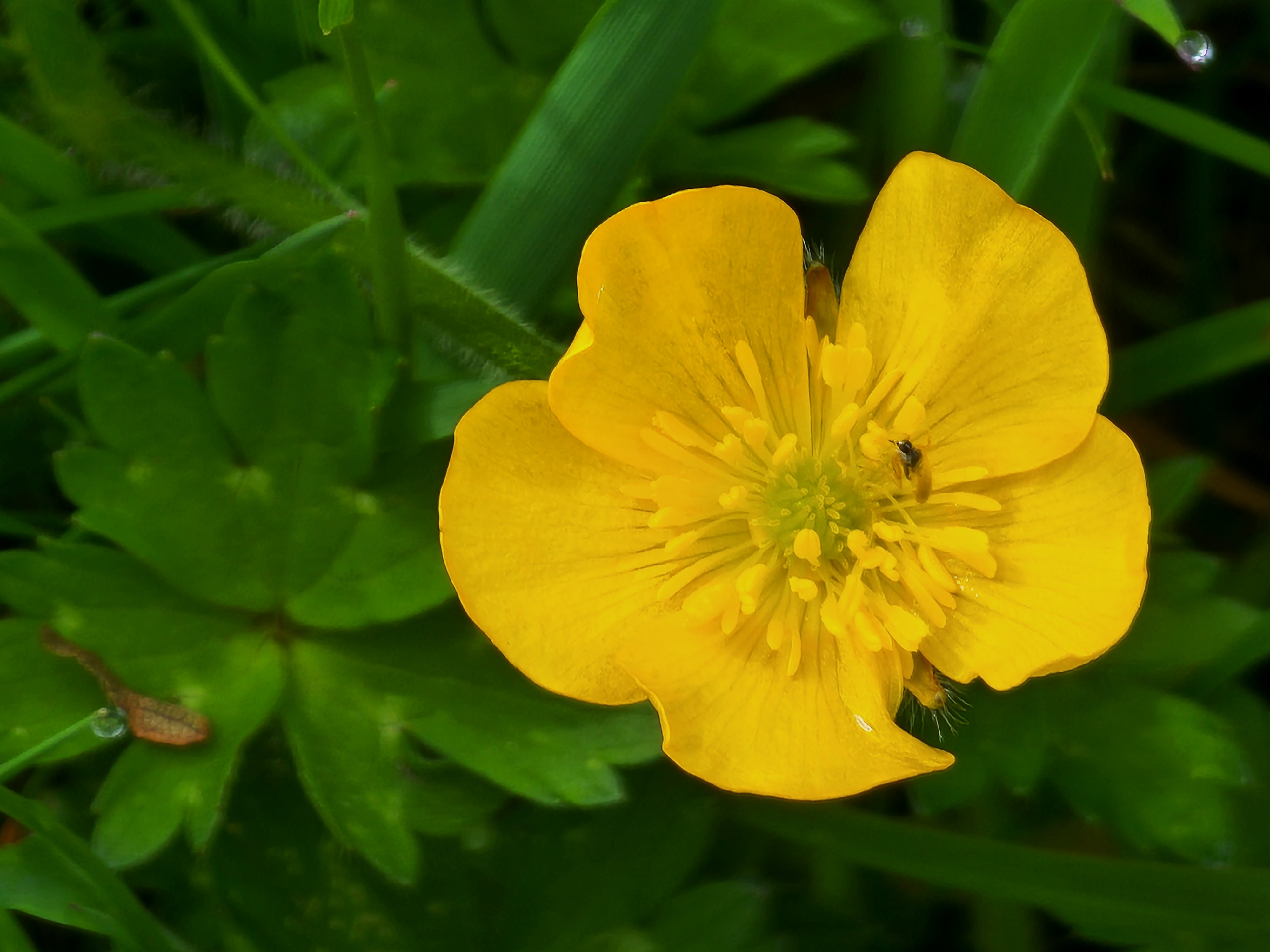
A close-up of a yellow buttercup flower, with a bug on it.

A buttercup… do you see the bug on it, close to the center?

A stream between two Faery bridges, laden with rocks

I would not stick my head in this.

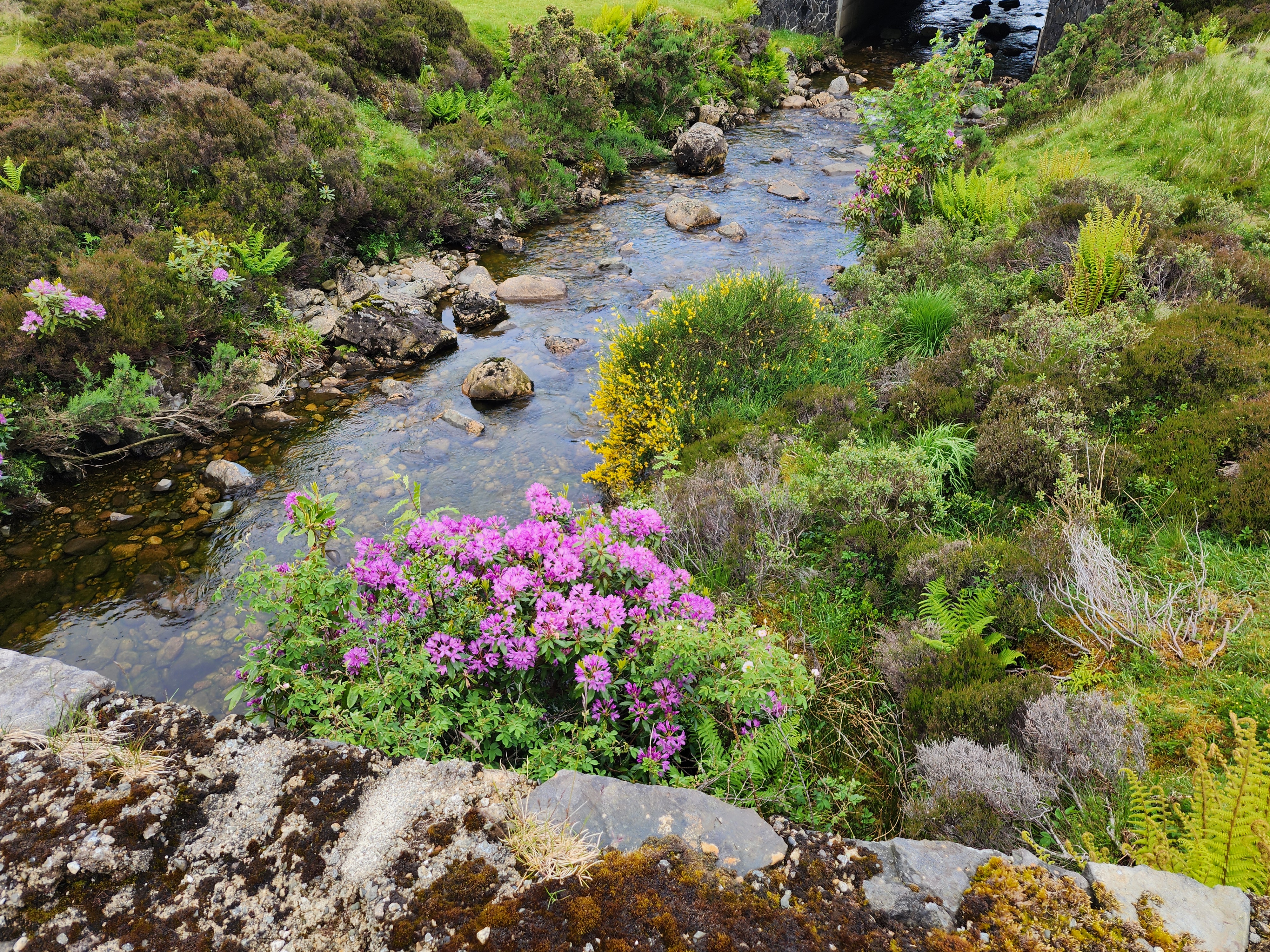
A stream with a bush of pink azaleas in the front

The Faerie stream, with azaleas

Image of mountains with low-lying clouds disguising the tops of them

The Quiraing

Five sheep on a green background with yellow flowers in front

More sheep

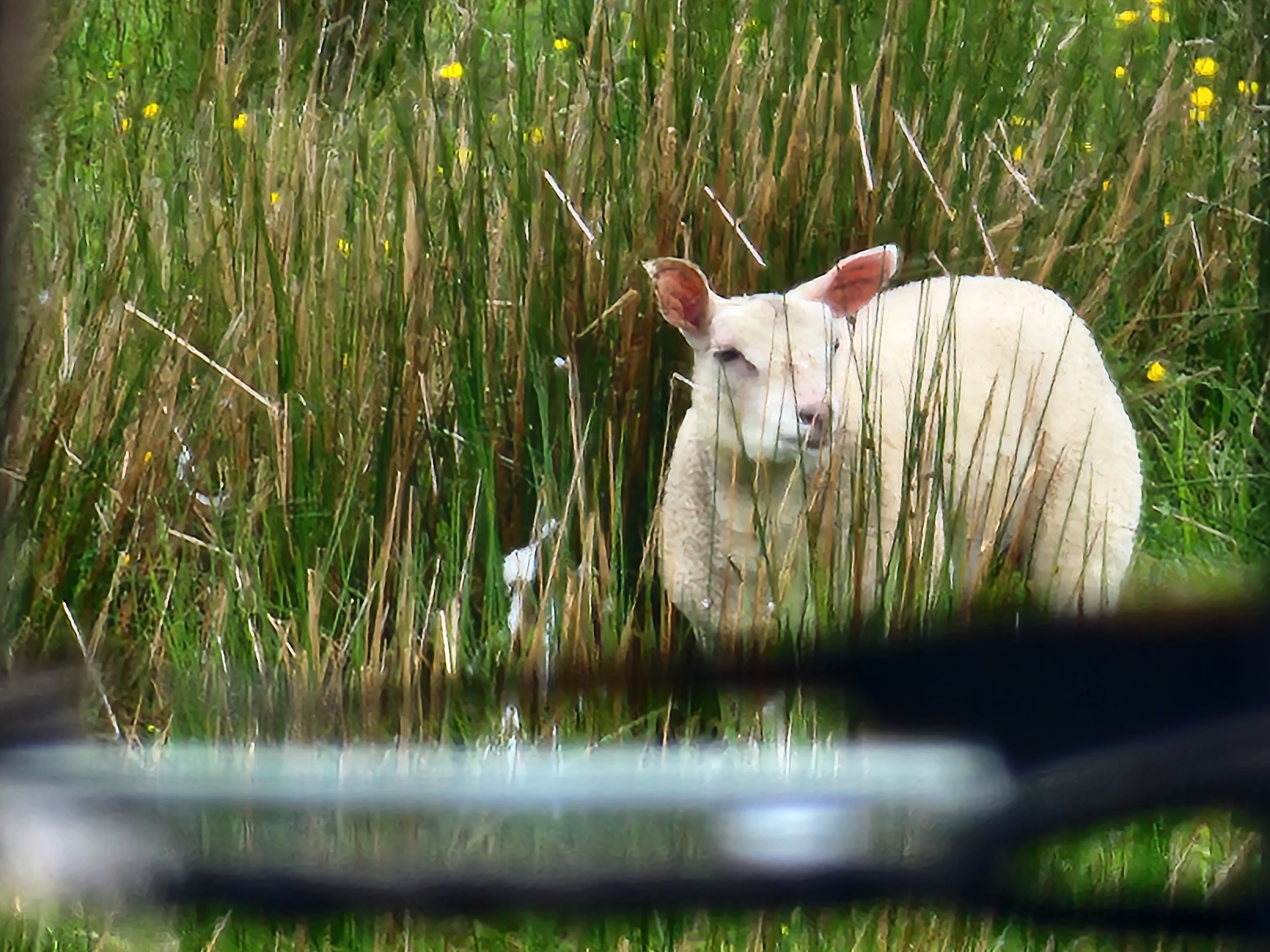
A cute lamb looks through the grass

An extreme zoom of a sheep far off in the moor, a barbed-wire fence is the blur in the front

A single croft house overlooking a moor

A croft house at the Museum of Island Life

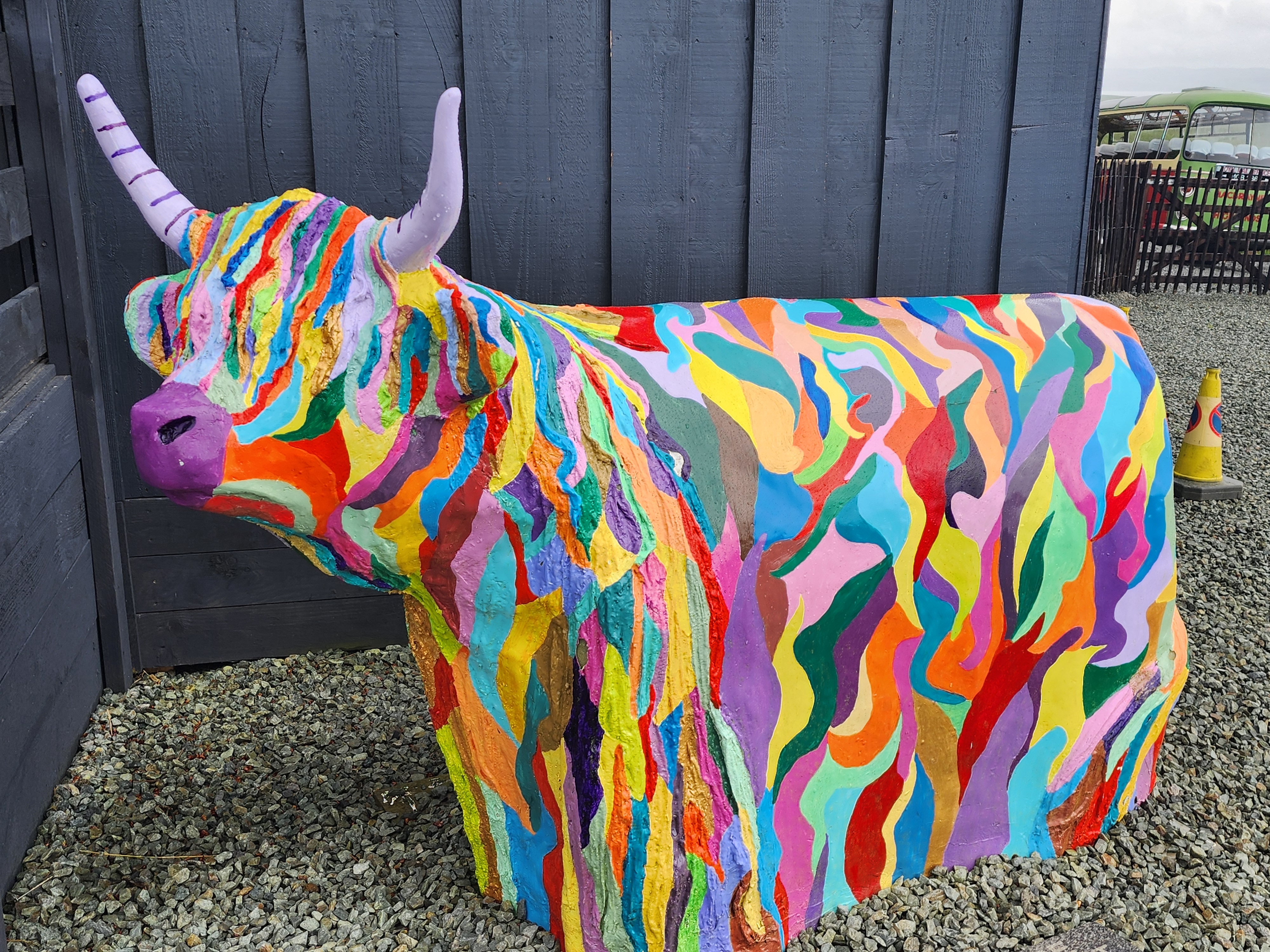
A multi-colored statue of a Heilan Coo

A disco statue across from the Museum of Island Life

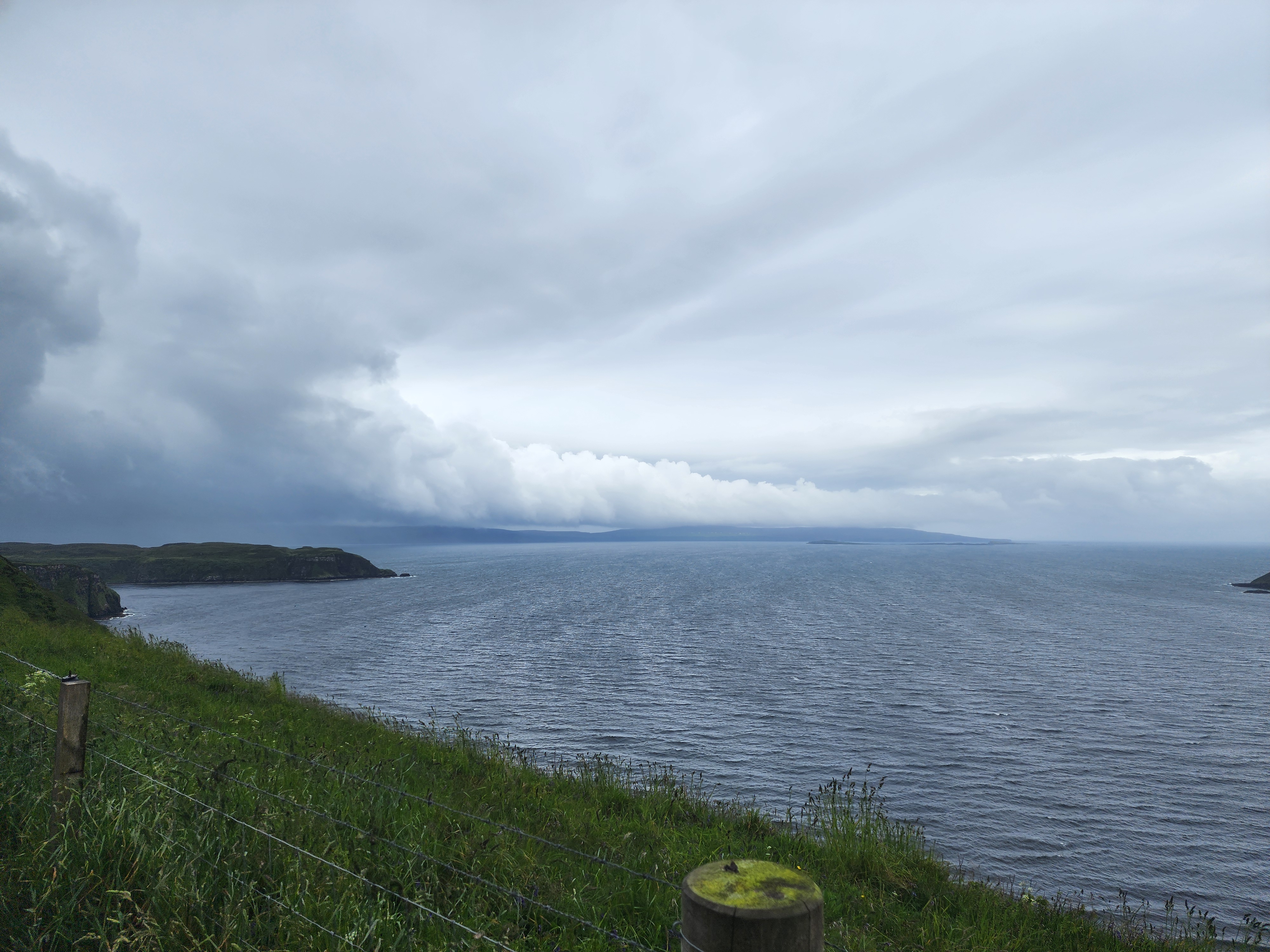
A moody loch with green grass on the left side and low clouds in the sky

A moody loch

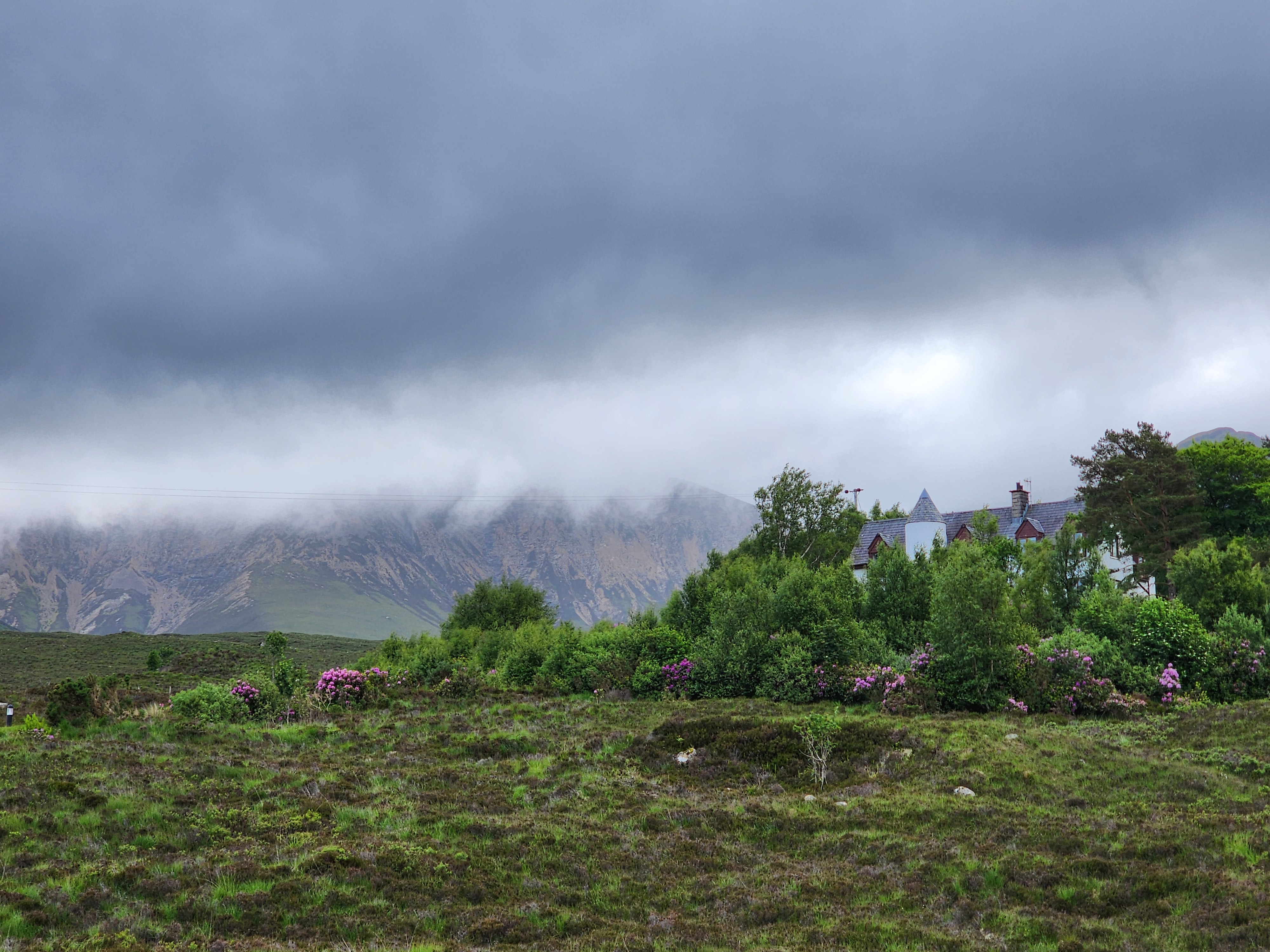
A more with a white house hidden behind trees; the mountains in the back are disguised with low-lying clouds

A moody moor

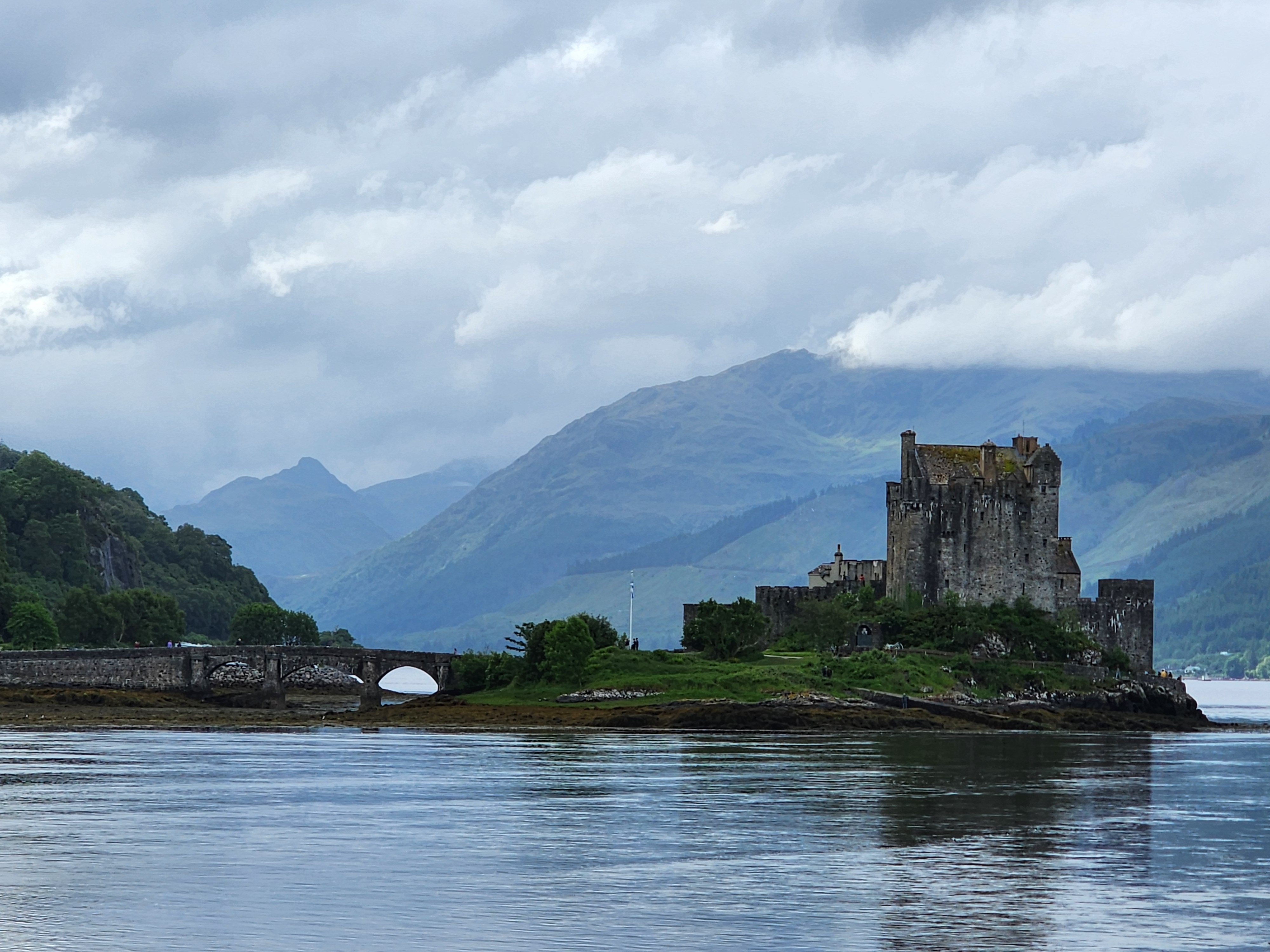
A distant shot of Eilean Donan castle; you can see the bridge that crosses over the loch to the island.  Low-lying clouds hang in the mountains.

Eilean Donan castle


A large woman wearing a blue knitted cap smiles into the camera.

Me wearing my wool knit beanie with a sheep design on it


Dispatch from Edinburgh #3–Port of Leith Distillery

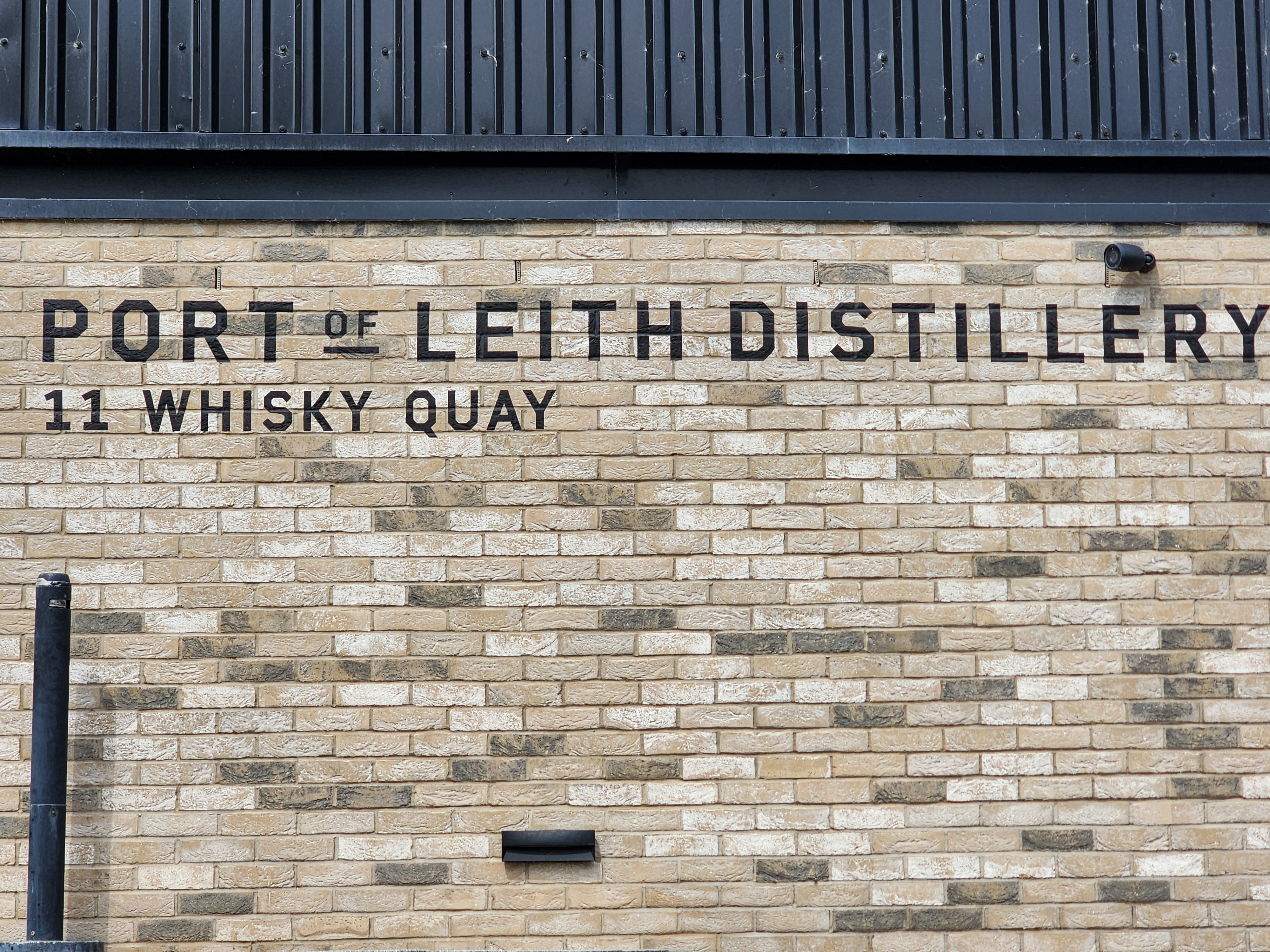
Today I took the Edinburgh tram into Leith so that I could go on a tour of the Port of Leith Distillery, across from the Royal Yacht Britannia at the Ocean Terminal. I’d been wanting to go to Leith because I wanted to see the water, so I just did a quick search of “things to do in Leith” and found the distillery.  It is the second only vertical distillery in the world.  (The other is in Sweden, I believe.)  What is a vertical distillery, you may ask?  It’s a 9-story hi-rise with the various parts of the distillery spread out over multiple floors—the grist mill being at the top and the stills at the bottom.
The Port of Leith Distillery was founded by two friends, Ian and Paddy, who had been BFFs since grade school, and became fans of whisky as they grew up.  They even started making early attempts at whisky with a copper pot still when they lived in London.  But they had big dreams. The distillery wasn’t meant to be vertically inclined however; they wanted to build a regular kind of distillery, but the land sale they had planned on fell through, but when the corner of Leith at 11 Whisky Quay opened up, they reconfigured the distillery and decided to go up rather than out.

Since whisky production takes a while, and they needed £14,000,000 to open the distillery, they decided to open a gin distillery while they waited. Unlike whisky, gin can be mass produced quickly; it can be distilled on Monday and on the shelves by Friday. Whereas whisky needs to be aged in barrels at least three years and one day before the spirit can be called whisky at all.  Ian and Paddy and their investors have yet to see a profit from the Port of Leith Distillery—but they are hoping to release their first bottles next year.  In the meantime, they also sell sherry, port, and table whisky, which is still whisky, just not particularly as fine as cask aged whisky.

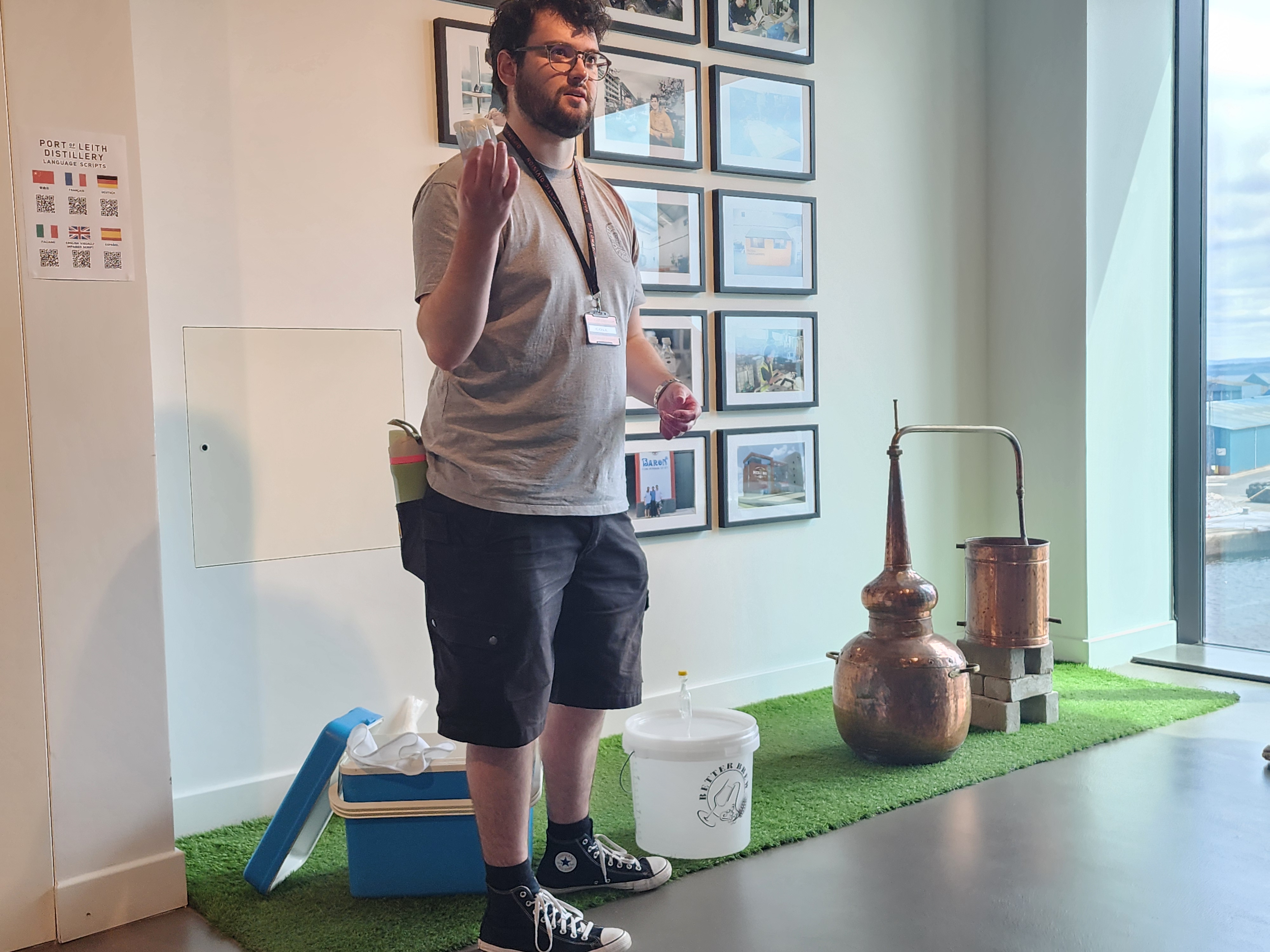
Everything in the distillery is new—new mash tuns, new wash containers, new gristmill, etc.—and because it’s only been open a few years, everything is shiny and new (with the exception of the stills—they seemed kind of dull).  Our tour guide, Coll, was interesting and answered many questions, and he really knew the whisky making process from start to finish.

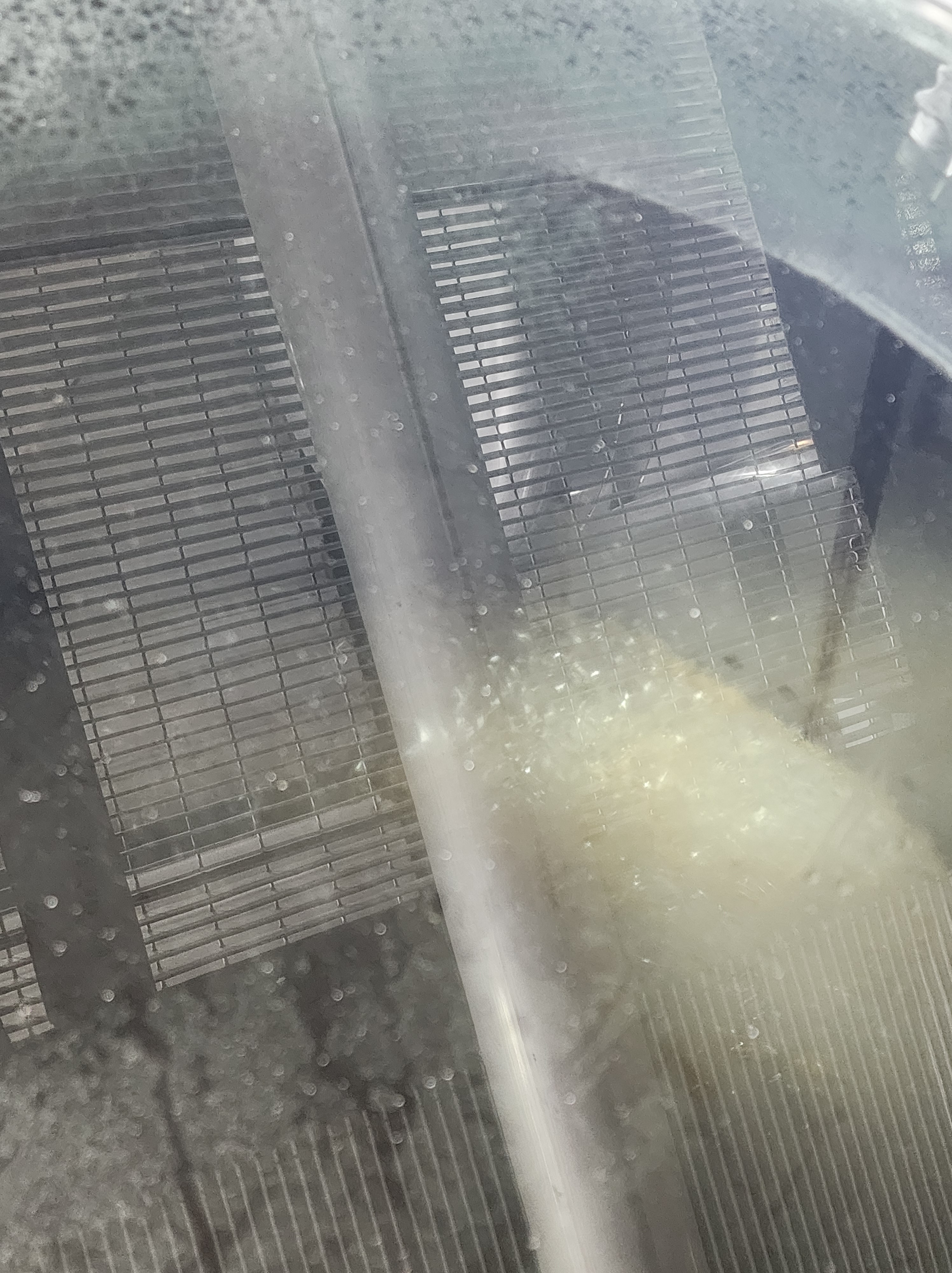
A very unclear image of fermentation in a whisky washback

Fermentation (on the middle right side of the photo)

I’ve been to a number of different distilleries, so the actual parts were known to me, but it was interesting to hear about the various kinds of yeast they use (a combination of three), the aquifer they drilled, the warehouse situation (the whisky is stored off-site), etc.  Every distillery is basically the same, so it’s the differences that contribute to the mix of water, barley, and yeast that help make a unique whisky. The thing that I was most excited about was the fermentation; there was a washback that was bubbling like crazy.  Unfortunately the window into the washback had collected a lot of steam so you can’t really see the bubbles in the photo I’m including.  But believe me, it looked really cool—some of the bubbles were big as fists.

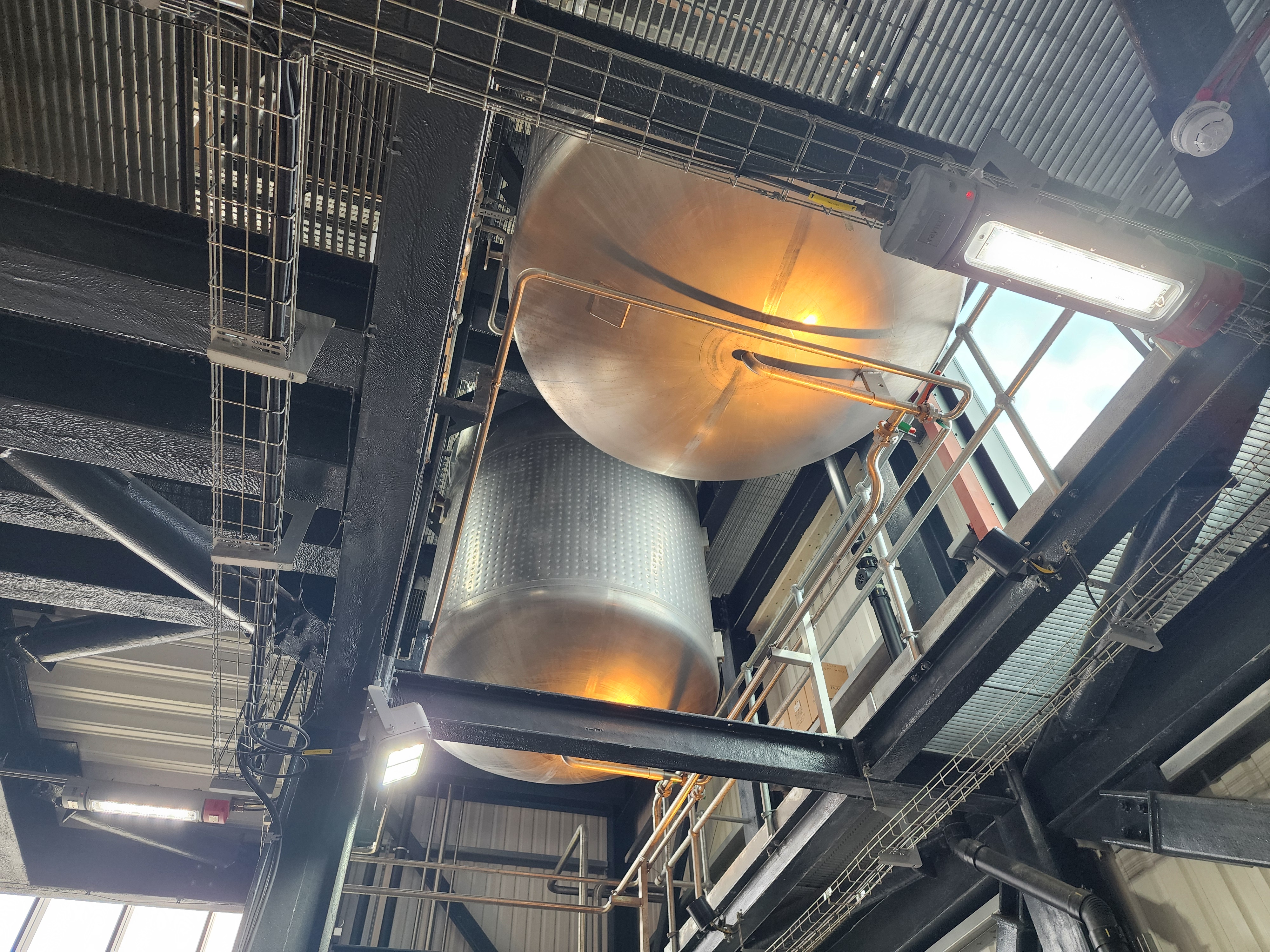
Two large drums as taken from below; they are whisky washbacks

Washbacks from below

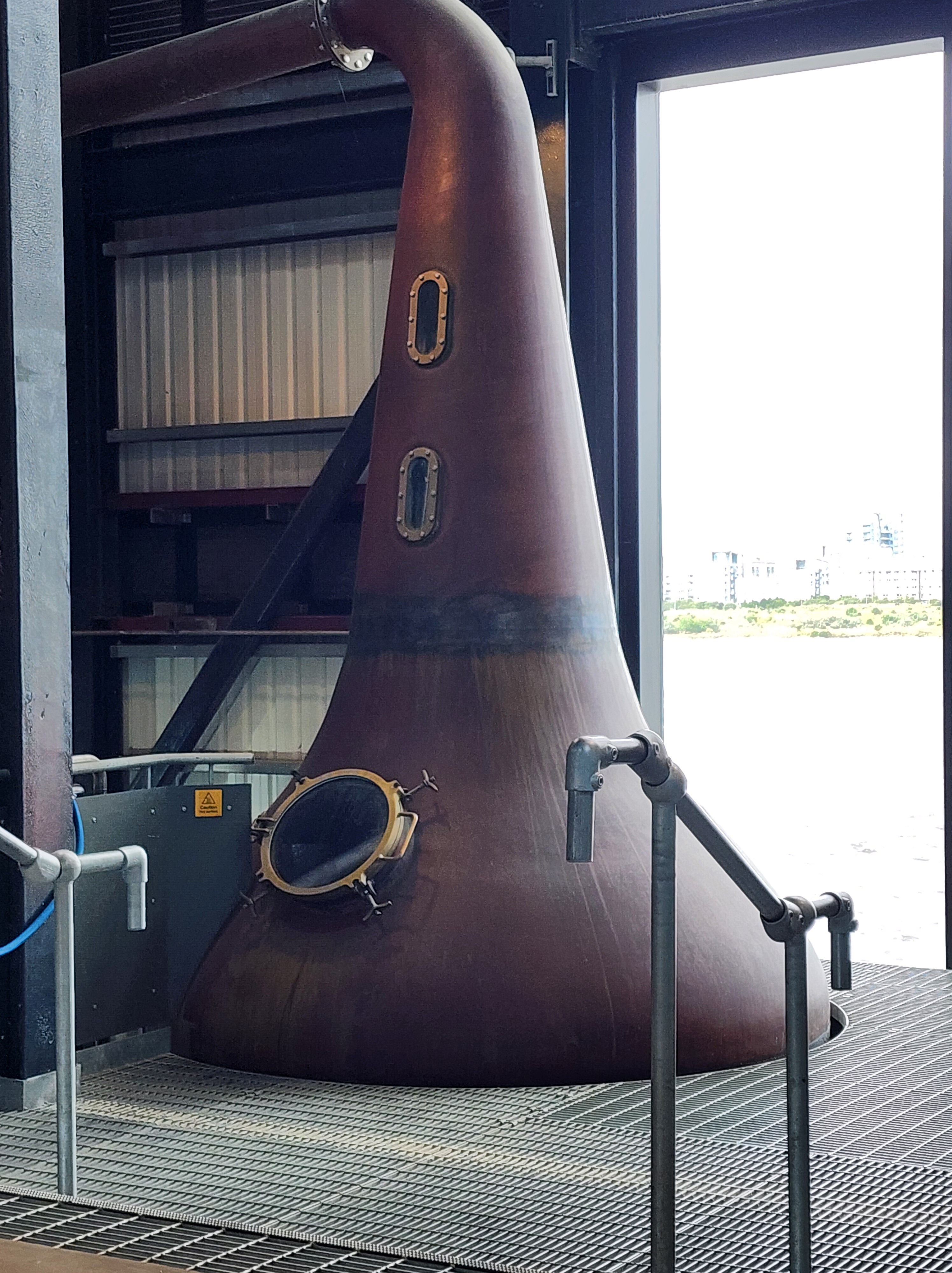
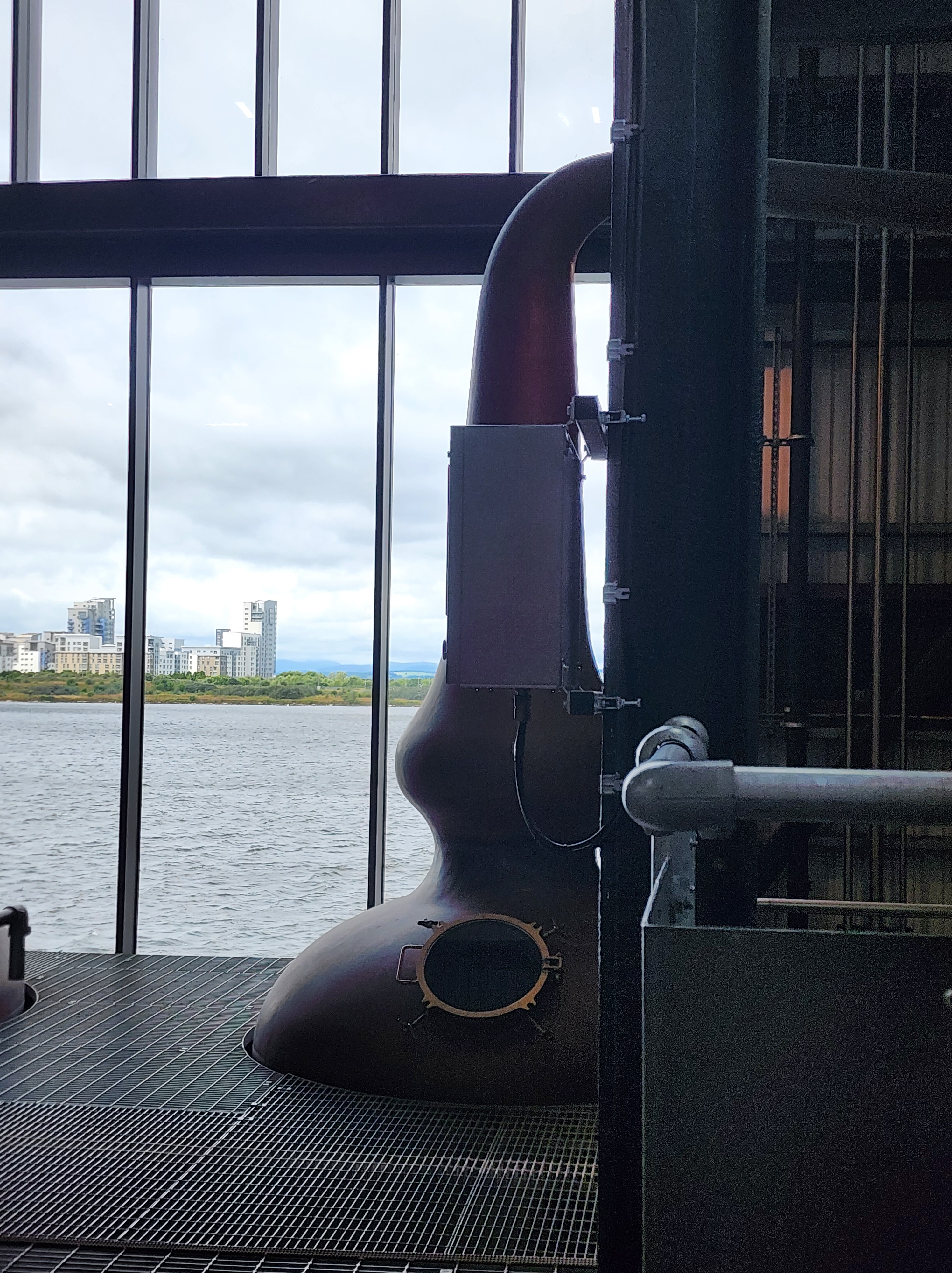
After we looked at fermentation, we went down to the still room—apparently it can be highly explosive.  So we were required to stand on the concrete platform overlooking the copper stills and told not to touch any metal. After I’d seen the beautiful polished copper stills a Cardhu, these dusty, dull-looking stills did not impress me, but I enjoyed looking at the spirit safe (basically a glass box with analyzing equipment), which is connected to the spirit still; this is where the “low wines” (alcohol spirit from the first distillation at the wash still) gets analyzed to check for quality and redistilled in the spirit still if necessary.  The alcohol level increases up to 65%, which comes out in three types:  the heads, the tails, and the heart.  The heads and tails spirit taste bad and are less desirable—they tend to smell sulphuric, and nobody wants to drink that.  The best part of the distilled spirit is the heart, and that’s what gets siphoned off to be barreled and developed into whisky.  There is only so much heart in a distilling process—the rest gets removed.

Dark copper still, lighted on the right from a big window

Still

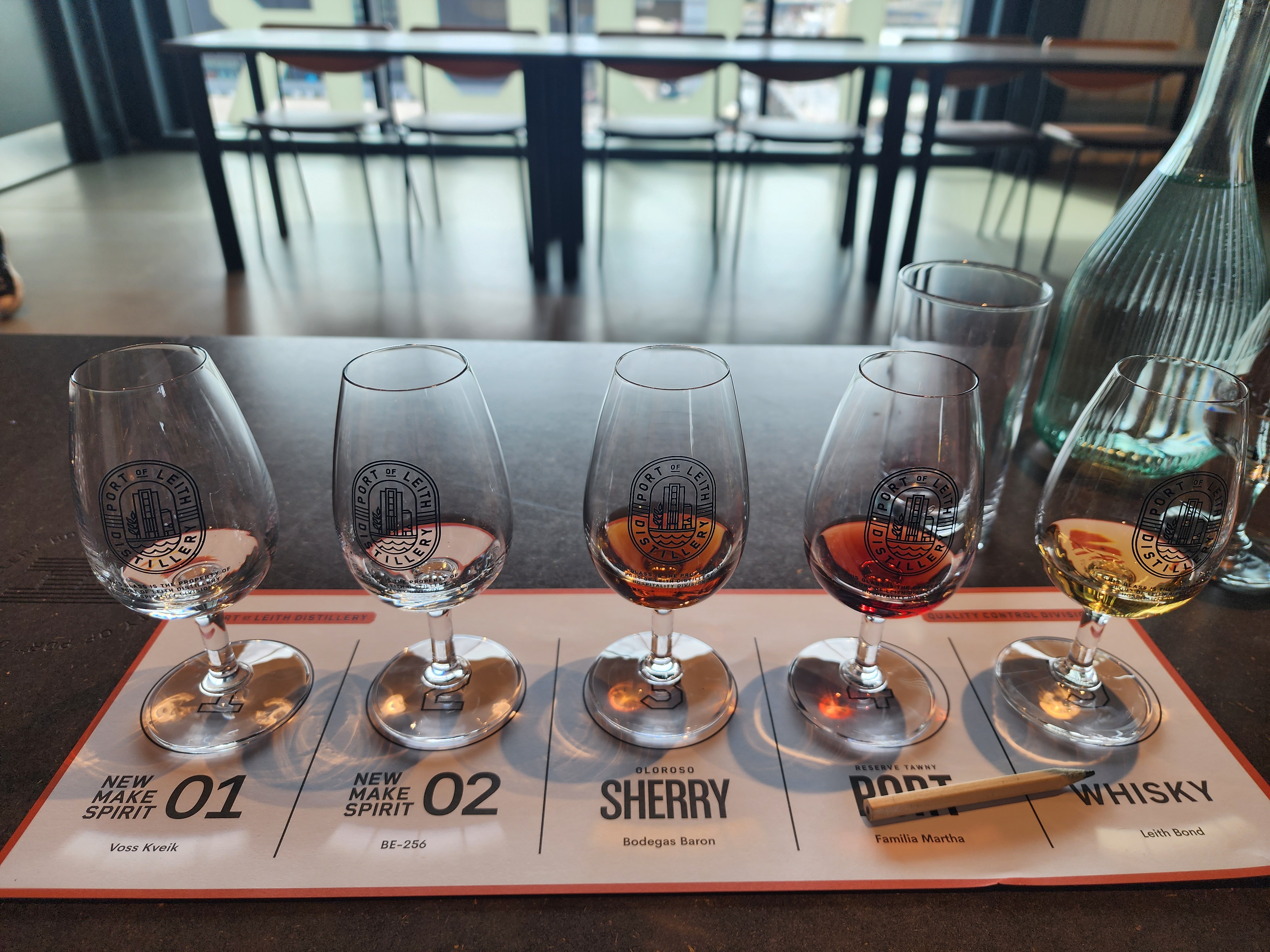
After our tour, we had a tasting of 5 drams of liquor—two of plain (unaged) spirit, and one each of sherry, port, and table whisky.  Both of the unaged spirits had a nice flavor, but not any of the tones and flavors that would develop over time in a cask.  I took a sniff of the rich, vanilla-y sherry aroma and thought it was going to be great. I took one sip of it and set it back down.  I thought sherry was sweet; our tour guide said that a lot of folks believe that because we are more familiar with the “old dears” who drink cream of sherry at Christmastime.  (I laughed when he said that.)  The next dram was port—it was sweet, a little too sweet, but I finished it.  The final dram was table whisky, which is whisky that is young, I think, and often aged in virgin casks so it tends to be a little woodsy.  I thought it was fine, though I’ve tasted better—it didn’t have quite the burn of the single malt scotches I’ve tried before.  But then the guide said that you could buy a bottle for £30 in Tesco, which is less than half the price of a decent bottle of single malt.  And after we finished that fifth dram, we went back upstairs to the gift shop where we had one more dram to taste—this was a white port and it was delicious.  It would have been marvelous with a bit of either seltzer or ginger ale.  But by itself it was very sweet and summery.  I would have liked to have bought the white port—but I am always confronted with the dilemma of how to get it back home.  You can’t bring it back in your carry-on, and I don’t want to put a glass bottle in my checked luggage because heaven only knows how our suitcases get banged around in the plane’s hold.  Needless to say, I didn’t buy it, though I would have very much liked to.

A flight of liquors: spirit, sherry, port, and table whisky in small whisky snifters

Flight of drams

Afterwards, I stopped in Tesco to get a few groceries, and then took the tram back home.  I might go to the Leith Farmers Market tomorrow.  I haven’t decided.  But if I do, I’m sure I’ll post about it.


A large still with an "onion" bulge at the middle. In the background is a large window.

Still with an “onion” bulge

The Royal Yacht Britannia, looking down from the 5th floor of the distillery

Royal Yacht Britannia
A man stands beside a model still
Our guide Coll

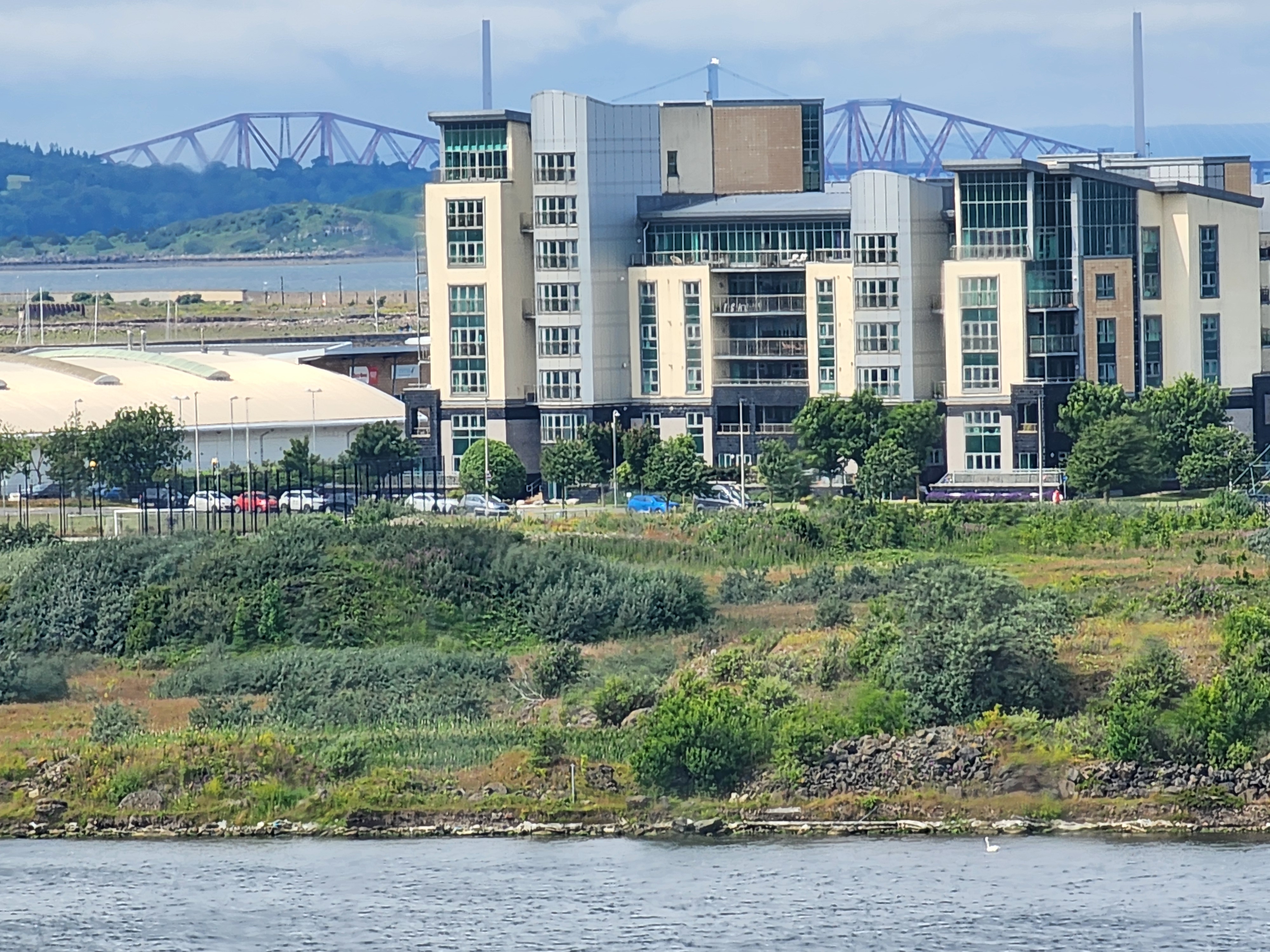
View of apartments in Leith, with the red Forth Bridge in the background

Apartments–if you look hard enough you can see the Forth Bridge in the background

A view of the water with white clouds in the background

Not sure what the yellow things are, but this was a view from the 6th floor.

Two large ships docked in Leith harbor

A couple of ships in Leith Harbor

Dispatch from Edinburgh #2–Return to Mull & Iona

I know I said I was going to write about the Isle of Skye next, but my trip to the Isle of Mull and Iona is on my mind, so I’ll come back to Skye.  (I will always come back to Skye—that place is amazing.)

For this trip, I took a train over to Glasgow to pick up the Rabbie’s tour which was leaving at 9.  But my train was at 6, which meant I left my flat at 5 and walked to Waverly Station at a slow pace to accommodate my dumb foot.  The 6 o’clock train was an “express” which meant it only made 5 stops, as opposed to later trains which would make more like 13 stops and would take up to an hour and a half to get to Glasgow.  The last time I took a regular train to Glasgow we had a 30-minute delay, and I didn’t want to take the chance that might happen again. I made it with no trouble to Glasgow, though, walked to the bus station and, like John Lennon, “[waited] for the van to come.” Fortunately, I got to the bus station before it decided to rain like hell.

When our tour guide arrived, he was great fun from the get-go.  He asked where people were from and did a find job of remembering everyone’s names.  And then he said something which totally surprised me.  He said, “I’m not going to say anything that JC Reilly doesn’t already know.”  I said, “What?”  He added, “She’s been on 50,000 Rabbie’s tours.”  And then of course he continued the joke to say that I had also been to Vegas, and what happened in Vegas, stayed in Vegas.  It got a good laugh from everyone, but I was mystified, because how could he have known that I’d been on so many Rabbie’s tours in the past?  I was determined to figure out this mystery. (Turns out, he looks people’s Rabbie’s records up before a tour and saw I had been on a ton—so he thought he would yank my chain a little.)

We made our first “comfort break” at Luss, which is on Loch Lomond, and it’s a card-only payment to get into the bathroom.  But the card-reader wasn’t working.  So I thought I would use the baby-change/ handicapped bathroom, but as I was about to put in my 50p, the woman who came out gave a scathing review of the bathroom—there was something foul all over the floor (the toilet was leaking).  She said, “It’s grim in there,” which was remarkably subdued for a Scot to describe something, and then she and I had a nice little blether right there in front of the bathroom. She said she thought I was Scottish but then picked up on my accent, and asked me about home.  She wandered off to get someone to clean up, and I decided the smart thing I would do on a full bladder was buy a 2 liter bottle of seltzer water.  Because that makes sense.  But I did eventually use the bathroom and it was fine. And you might ask, why did I share this?  It’s because talking with strangers would wind up being a theme for the weekend.

A landscape of a distant loch with mostly blue sky and some mountains

Loch Tulla

I’ve not mentioned this before, but the trip up North to the Highlands has two paths—either you go through Glen Coe (on the A82) or you go through the Cairngorms (on the A9), although it basically makes one big loop.  After Loch Lomond, we drove up to a viewpoint at Loch Tulla, and then through Rannoch Moor, where we stopped to see Etive Mòr.  Besides being the most photographed mountain in Scotland, as I mentioned in the previous blog, Etive Mòr has the distinction of being featured in Skyfall, the 2012 James Bond movie, and our guide, Nick, was very good with the tunage, because he played Adele’s song “Skyfall,” which I’d never heard before (because I live under a rock) and I liked it a lot (though it was a big repetitive)—very appropriately Bond-ish. I didn’t get out of the bus to take another picture, but I did enjoy seeing the mountain again.

Landscape with mountains in the background and Rannoch Moor in the foreground

Rannoch Moor

Then it was off to Glen Coe to see the Three Sisters.  By this time, the rain had burned off, and the Three Sisters stood in their majestic sunny glory.  What was unusual this time at the mountains was that a man in full kilt played the bagpipes—badly.  Nick, walked past me and said in a low voice, “It’d be guid if he could fookin’ play the bagpipes right.”  I had to smile—Nick was so vehement!  The poor playing did not, however, despoil the beauty of the Three Sisters, and actually, even though the piper wasn’t so great, I thought it was nice that he was out there piping away.  His collection plate was pretty bare—but that didn’t seem to stop him from doing his busking thing.

After I enjoyed (?) a plate of interesting Scottish nachos (fortunately haggis free) at the Glen Coe Visiting Center (sorry for no photo—I couldn’t find my phone, but the chips were like 1/2 inch triangles), we continued on our way, driving on the Ballachulish Bridge over the narrows of the saltwater Loch Linnhe (pron. linny) and Loch Leven, a bridge that I’ve been over before, but I hadn’t heard this story which I’m about to relate.

view of Loch Linnhe, with mostly clouds in the background

Loch Linnhe

Apparently, the residents of this area were very superstitious and never wanted a bridge, because it had been predicted that if a bridge was completed over the Loch, danger and heartbreak would befall the town. (Faeries might have been involved.) But with the closing of the Ballachulish ferry, people still needed to cross the water. So when the Cleveland Bridge & Engineering Company talked to the locals, they learned about this superstition, and honored it: when they built the bridge, they left the last bolt off, which meant the bridge was not complete, thus keeping the town safe.

We finally got to the ferry point; first, we took the 3-minute Corran ferry ride, then we drove a bit more to get to the second ferry, this one which dropped us off at Fishnish (?) on Mull. (It might have been the Lochalline-Fishnish ferry, but I’m iffy about the placenames.) Whatever ferry we sailed on, we got the chance to get out of the bus to sit in the lounge on the port side.  It was raining so hard by this point that you could not even see the horizon—it was just a wall of water.  But 20 minutes or so later, we were back on the bus and driving off the ferry to make the 17 mile trip to Tobermory where our accommodations were. Unfortunately, while my B&B was very nice, it was at least a 20-minute walk for a person with good feet down a steep, steep hill (meaning coming back up would be a nightmare) to get to the harbor at Tobermory, so I just decided I would do without dinner because I wasn’t going to be walking.

Another person on the tour staying at the B&B, Victoria, knocked on my door and asked me what my plans for dinner were, and I told her that with my foot, that I was just going to stay in for the night. She offered to get me something but I said thanks anyway, and she toddled off.  But much later I heard a tiny knock on my door, and she had shown up with a sandwich and “crisps” for me.  Her kindness floored me—and she wouldn’t take any money for her gift. I was so touched.  And believe me, it was the best “British Pork and Mature Cheddar” sandwich (minus the pork) I’d ever eaten.  After that, I slept.

At 8:40 the next morning, Nick picked us up and we went around Tobermory and gathered the other tour members. It was drizzly, although the sun peeked through here and there. Normally on this tour, we’d have taken a boat ride to the Isle of Staffa, and I was looking forward to going, because the last time I went, I didn’t feel well (and I neither climbed up the scary steps to get to the top of Staffa to see the puffins, nor did I risk the long but tiny path around the side of Staffa to explore Fingal’s cave). This time I had planned on being brave and trying to walk to the cave (even with the bad foot), but because of the unpredictable weather and choppiness of the sea, the voyage was canceled. Everyone on the tour was disappointed.  But Nick planned for us to visit Duart Castle instead.

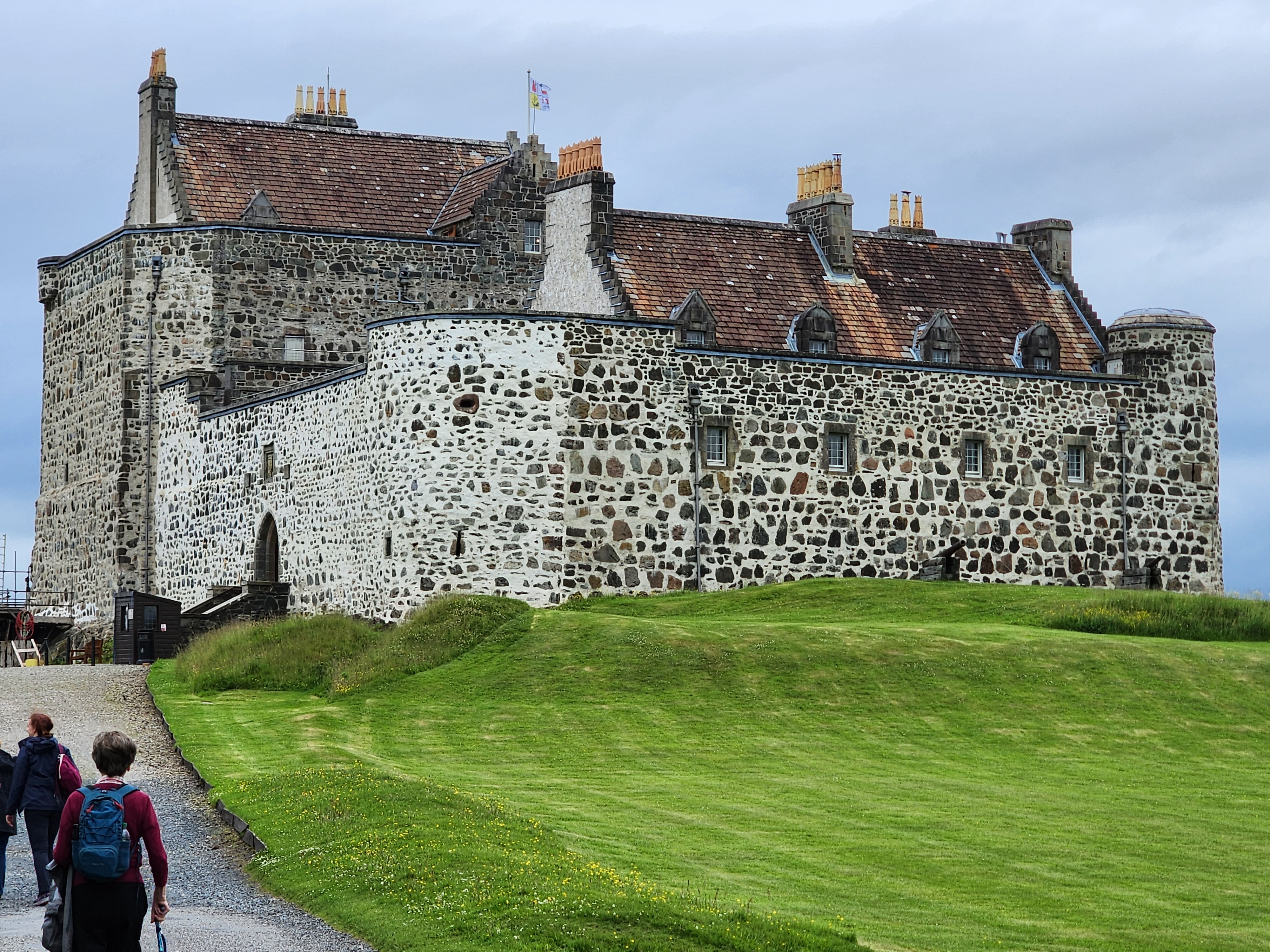
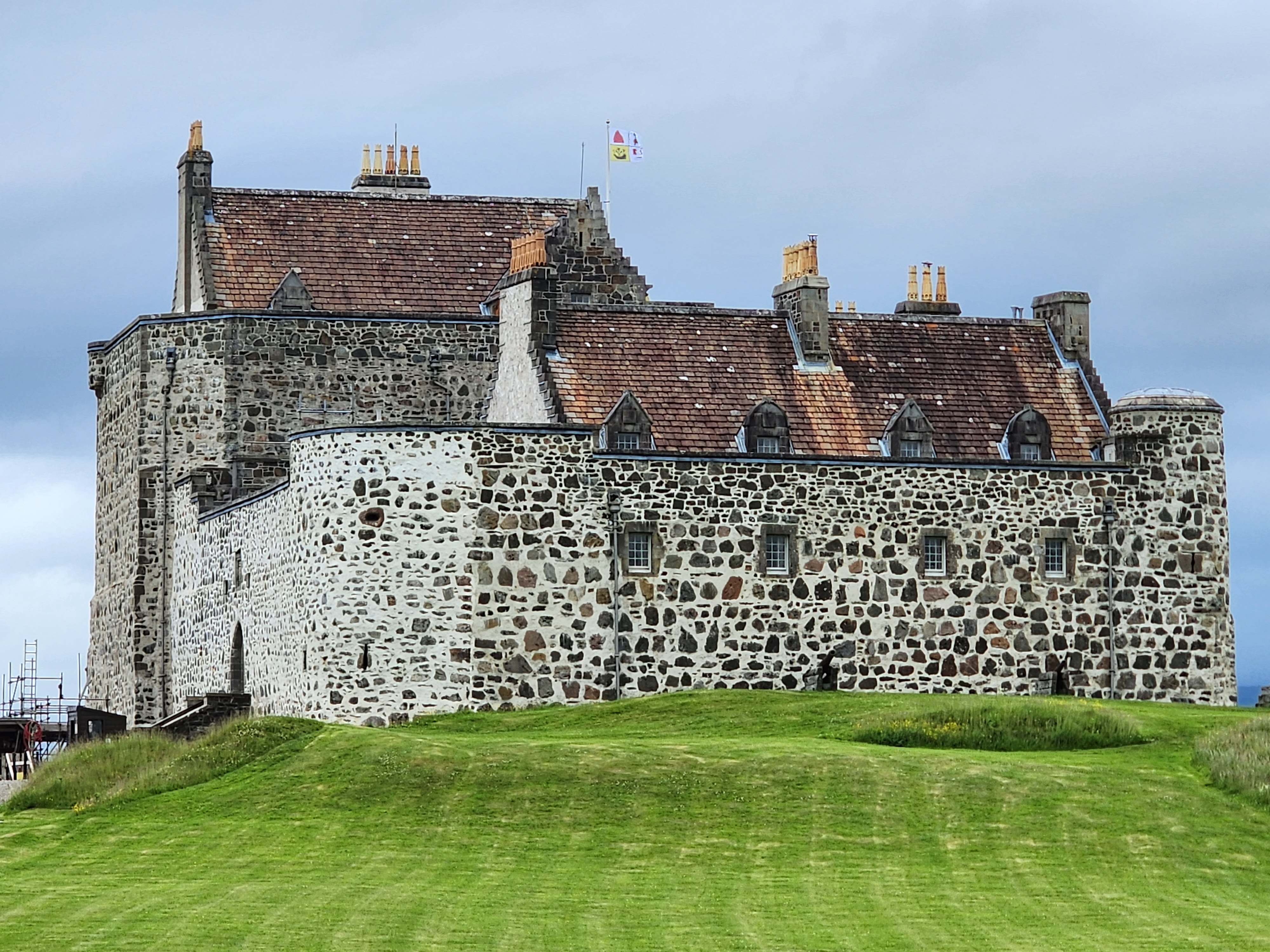
Southern view of Duart castle on a grassy lawn

Duart castle (south view)

Duart is, as castles go, a moderately-sized castle with some white-washed walls. It is the ancestral home of Clan MacLean (pron. Mac-layne) that dates from the 12th century and it sits on the tip of a peninsula that juts out in the Sound of Mull. It was used as a home well into the 20th century.  The first room you enter is a small kitchen with a coal hob, used up until 1960.  It’s hard to believe that a kitchen that small served a castle, and I read on one of the notes on the walls that by the time the food reached the dining room (which was another floor or two up), the food was often cold.  (So you can imagine that water for baths would also have been cold!) Living in a castle, while the dream of every young girl (and old girl like me) could not have been particularly comfortable or cozy. But early castles were built for defense, not luxury, after all.

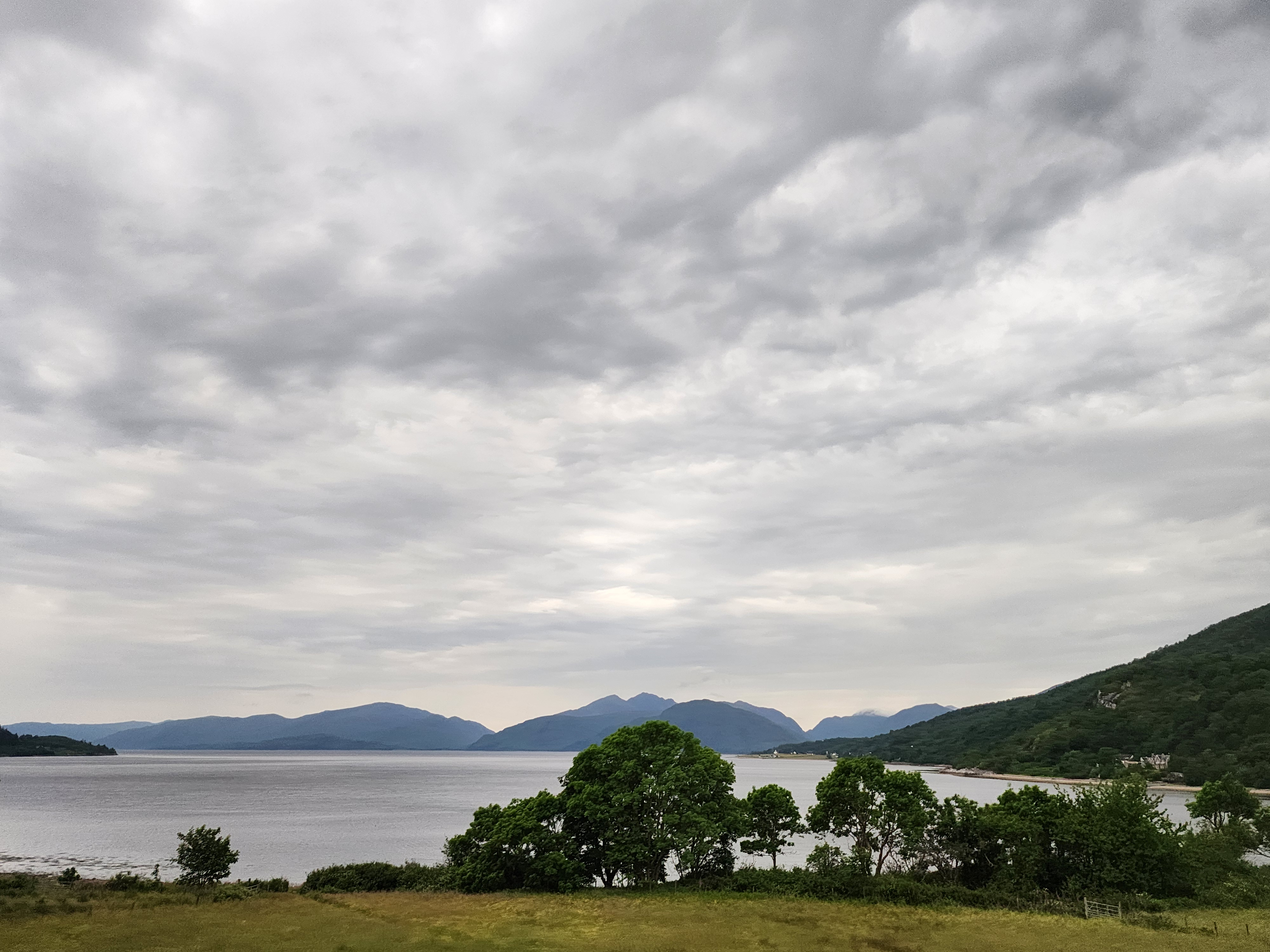
The ground floor also contains the dungeons and small jail cells that a person could barely sit in. But after you pass through the dark and dinge, you climb up the stairs into the Pantry and Sea Room, which was a later addition to the castle, allowing for a beautiful view of the Sound and Loch Linnhe. I sat there as the castle guide talked about the restorations of Duart Castle and looked north out into the Sound.  At the very far edge you can see Ben Nevis, and somehow the guide was quite pleased that we could see Scotland’s tallest mountain, despite the clouds.

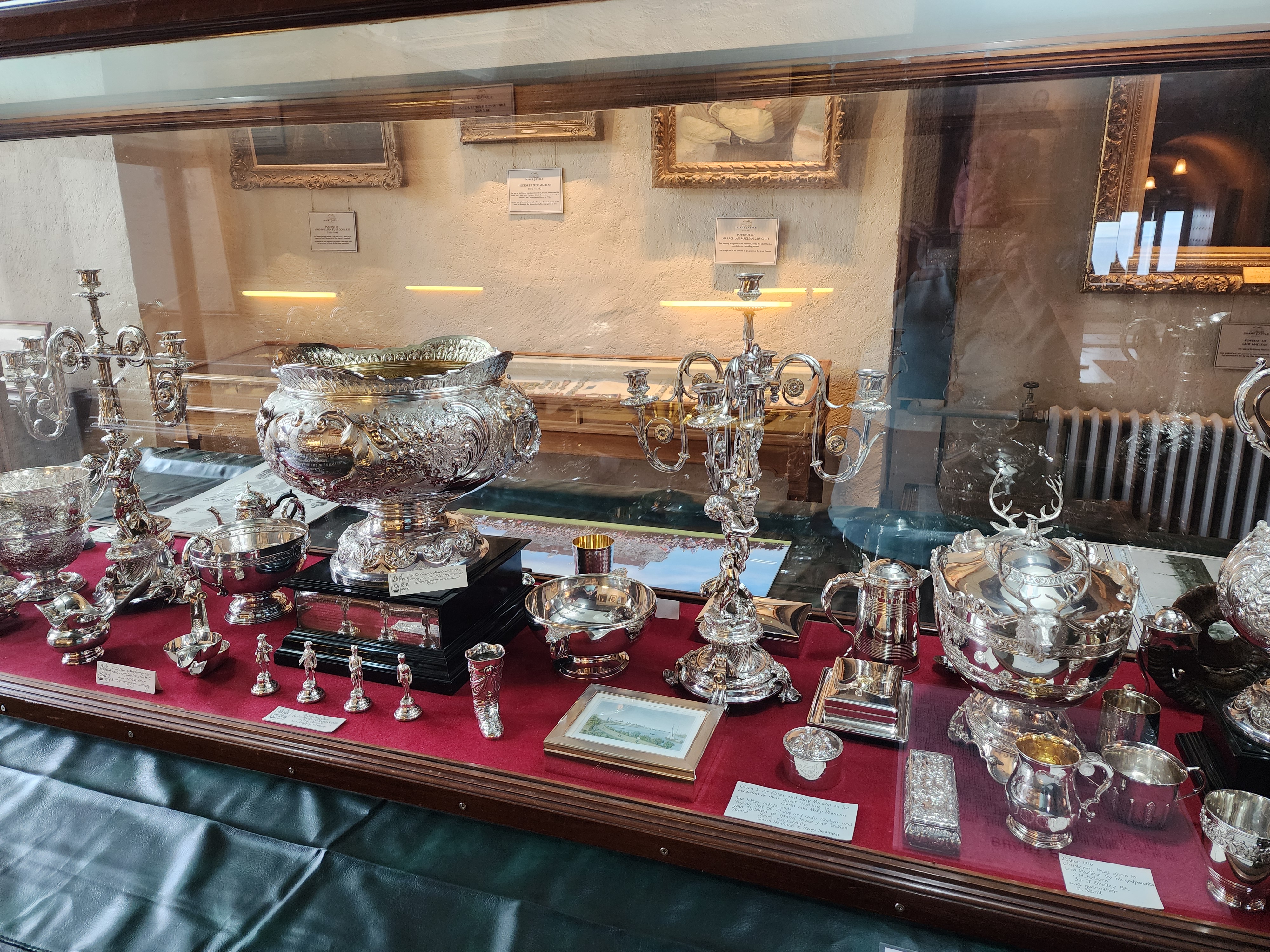
A glass case filled with silver soup tureens and pitchers at Duart Castle

Silver service at Duart Castle

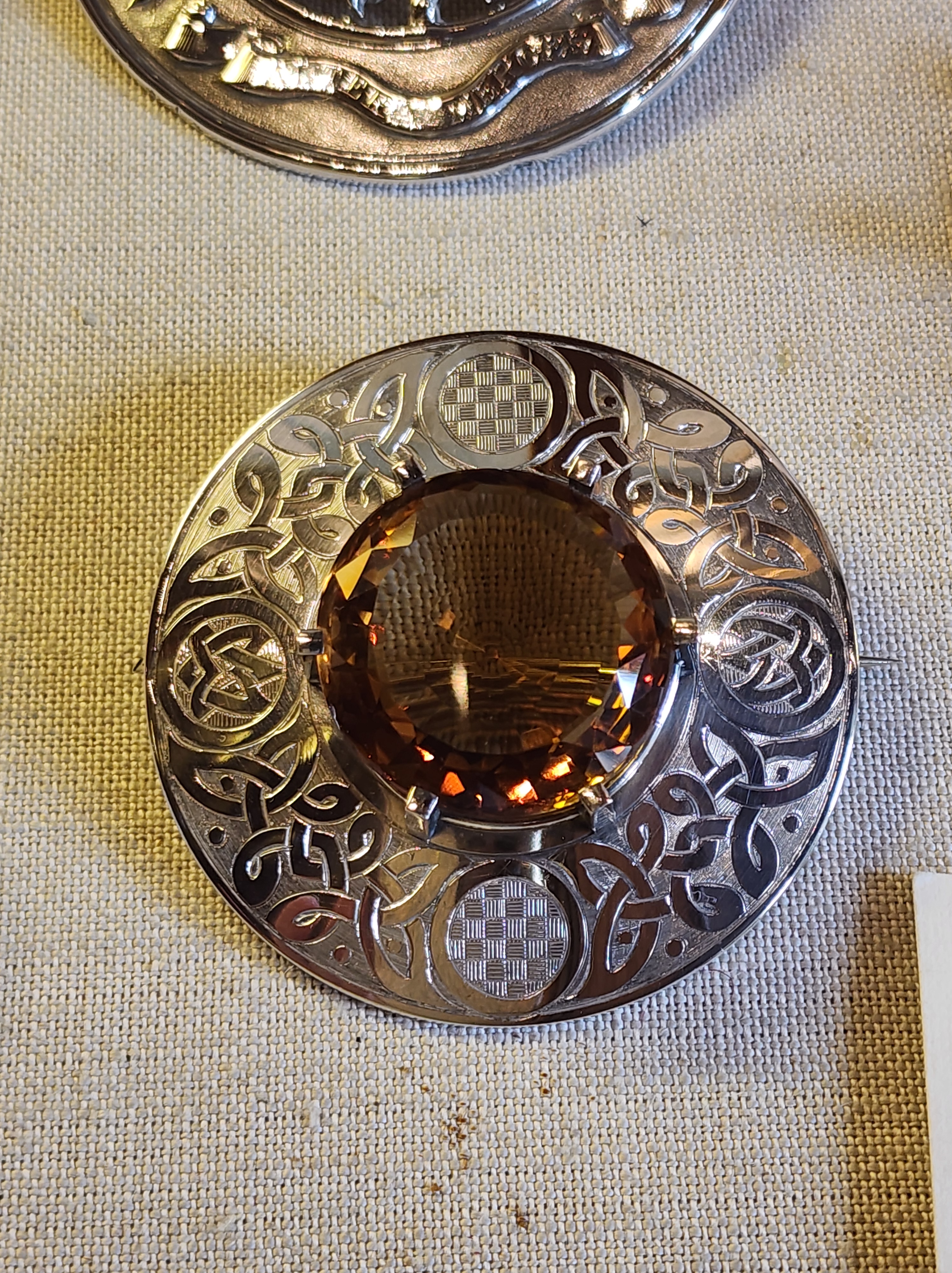
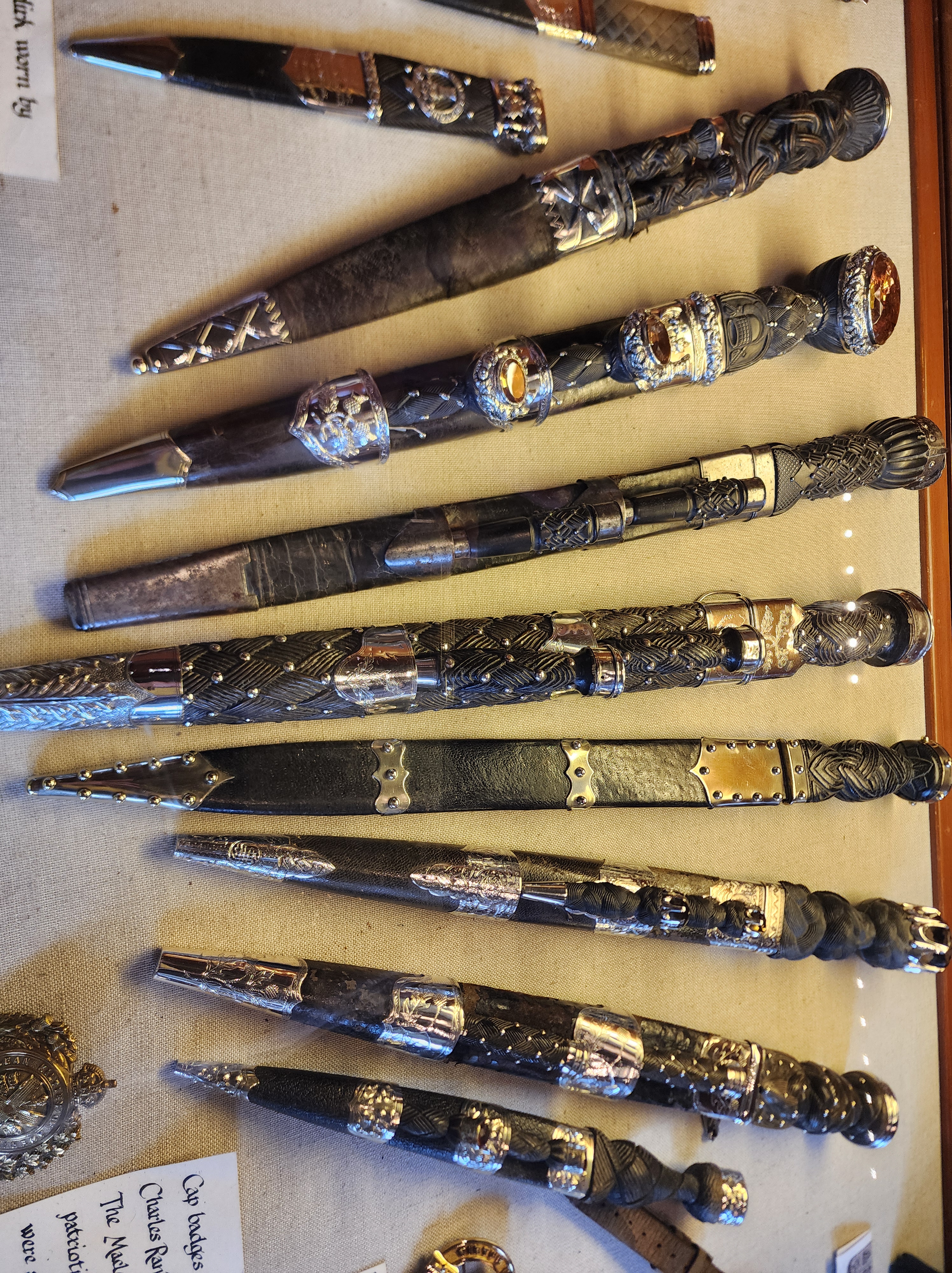
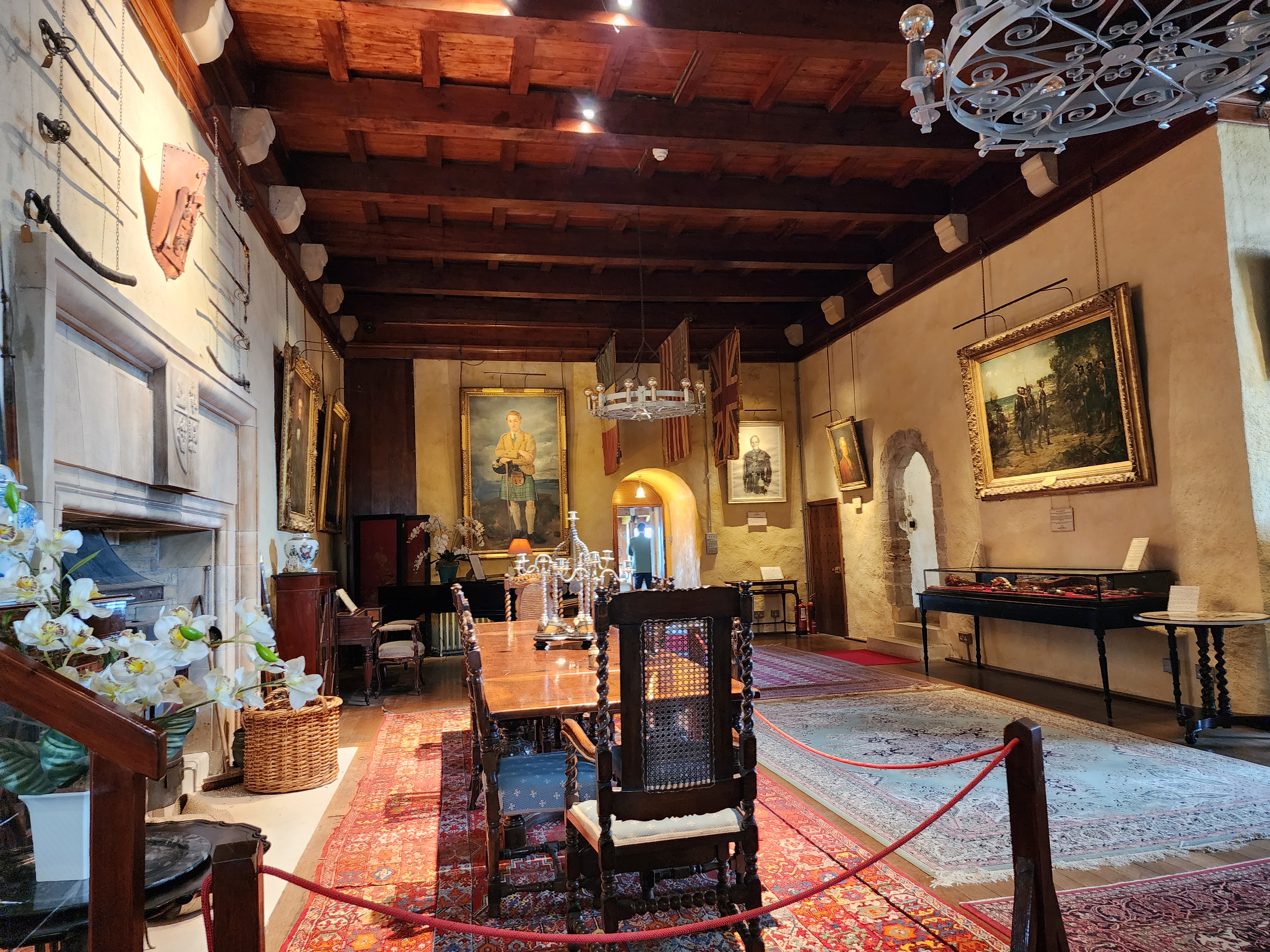
The Sea Room leads into the Great Hall (which included the dining room) which impressed with its antiques and silver, although it was not overly large.  There was a fire going in an iron stove and it smelled woodsy and wonderful, and helped chase the chill from the room.  In cases were jewelry and weapons and on the pool table was a glass case full of silver tureens, pitchers, bowls, and other table settings. But my favorite thing was a large smoky quartz brooch that a person would wear on their cloak.  They offered a replica of it in the gift shop, but it was a little out of my price range, especially because it wasn’t silver.

A large silver brooch with a huge smoky quartz jewel

Brooch

Upstairs were the bedrooms/ staterooms for guests, as well as the bathroom that still had the toilet, tub, and sink from the 1912 renovation by Sir Fitzroy, the 26th Chief.  I didn’t go upstairs to see them—I watched a video—because to get there you’d have to climb  a spiral staircase with a hand rope, and I didn’t think I could manage it.  After visiting the Great Hall, I left the castle and went to stand at the battlements and look out over the water for a bit before going into the café for a cheese scone.

And then we were off to Iona.  The CalMac ferry only took about 20 minutes to get there, and because we didn’t have a trip to Staffa in the offing, Nick gave us over 3 hours on the island.  This visit I was determined to see the Abbey—the last time I was there (2023?), we’d only been given an hour for lunch on the island because we needed the rest of the time to get to Staffa, and so I didn’t get a chance to walk there. This time, I was going. It had grown cold and windy though, so the walk to the Abbey was bracing. I found a bench across from the hotel gardens and enjoyed the many dogs that walked by, but eventually after resting my foot, I continued the walk and got to the Abbey itself.

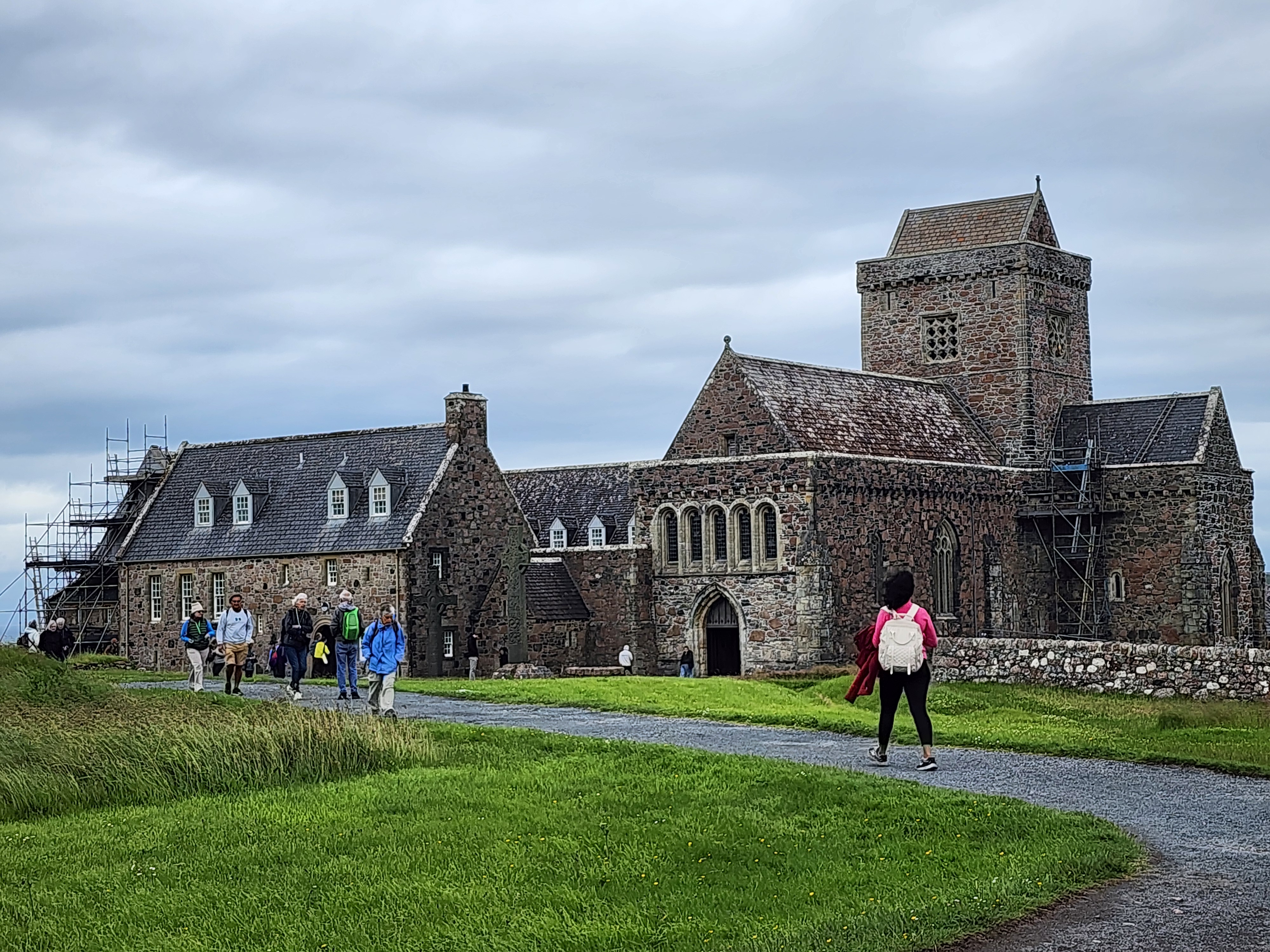
View of Iona Abbey in Scotland

Iona Abbey

Iona Abbey is smallish, but appropriately sized for being the first Christian site in Scotland.  Apparently, how the aristocratic St. Columba chose its spot had to do with his wanting a place from which he could not view Ireland anymore (he had been chased out of that country over a plagiarism dispute around 560). Unfortunately, he chose a site on a dark, dreary day; when the sun came back out, he could see Ireland after all, but he chose not to move his community.  The Abbey dates from around 1200, long after St. Columba’s time.

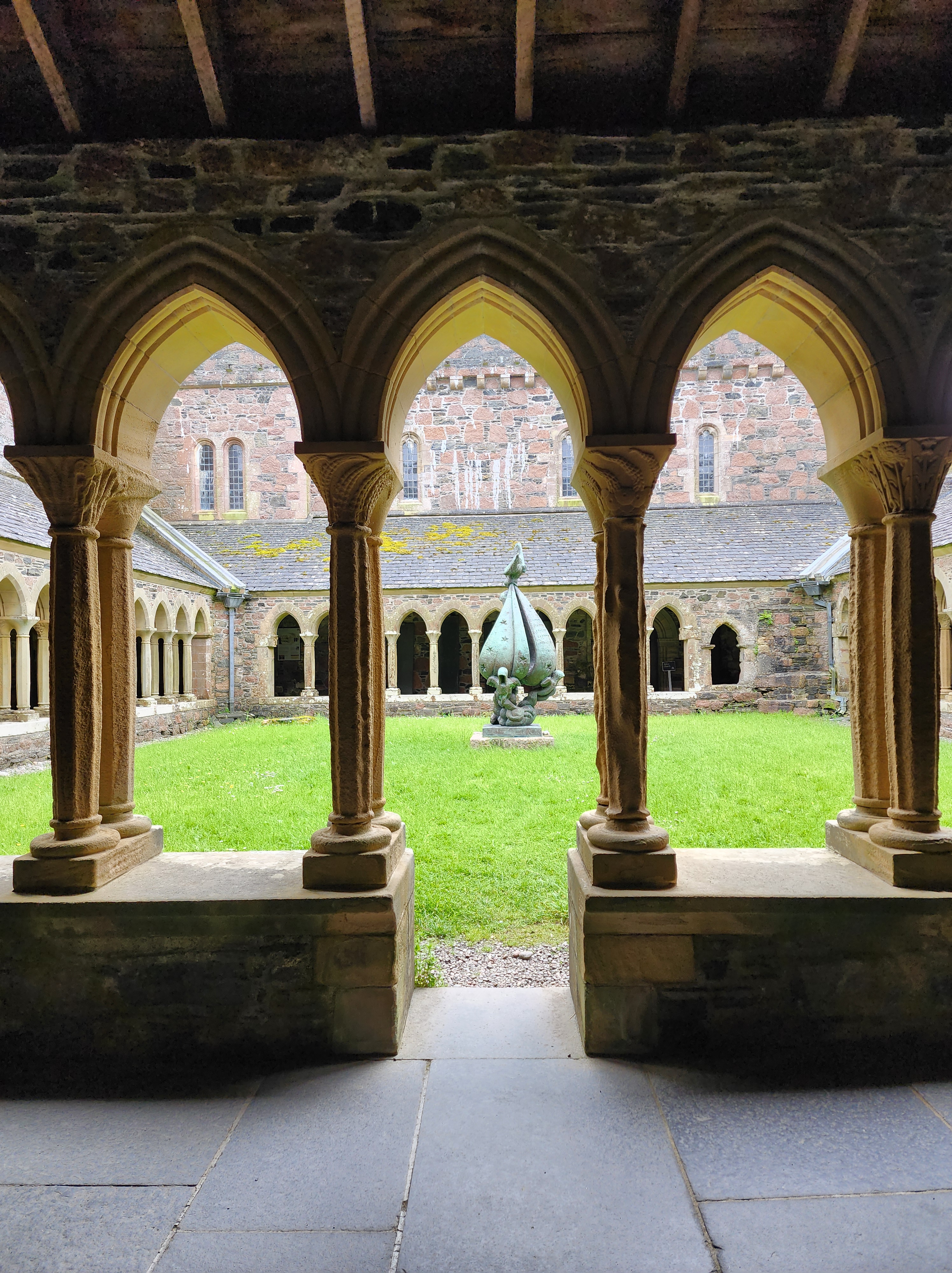
A view of a courtyard with arched entry ways in the foreground

Iona Abbey Cloisters

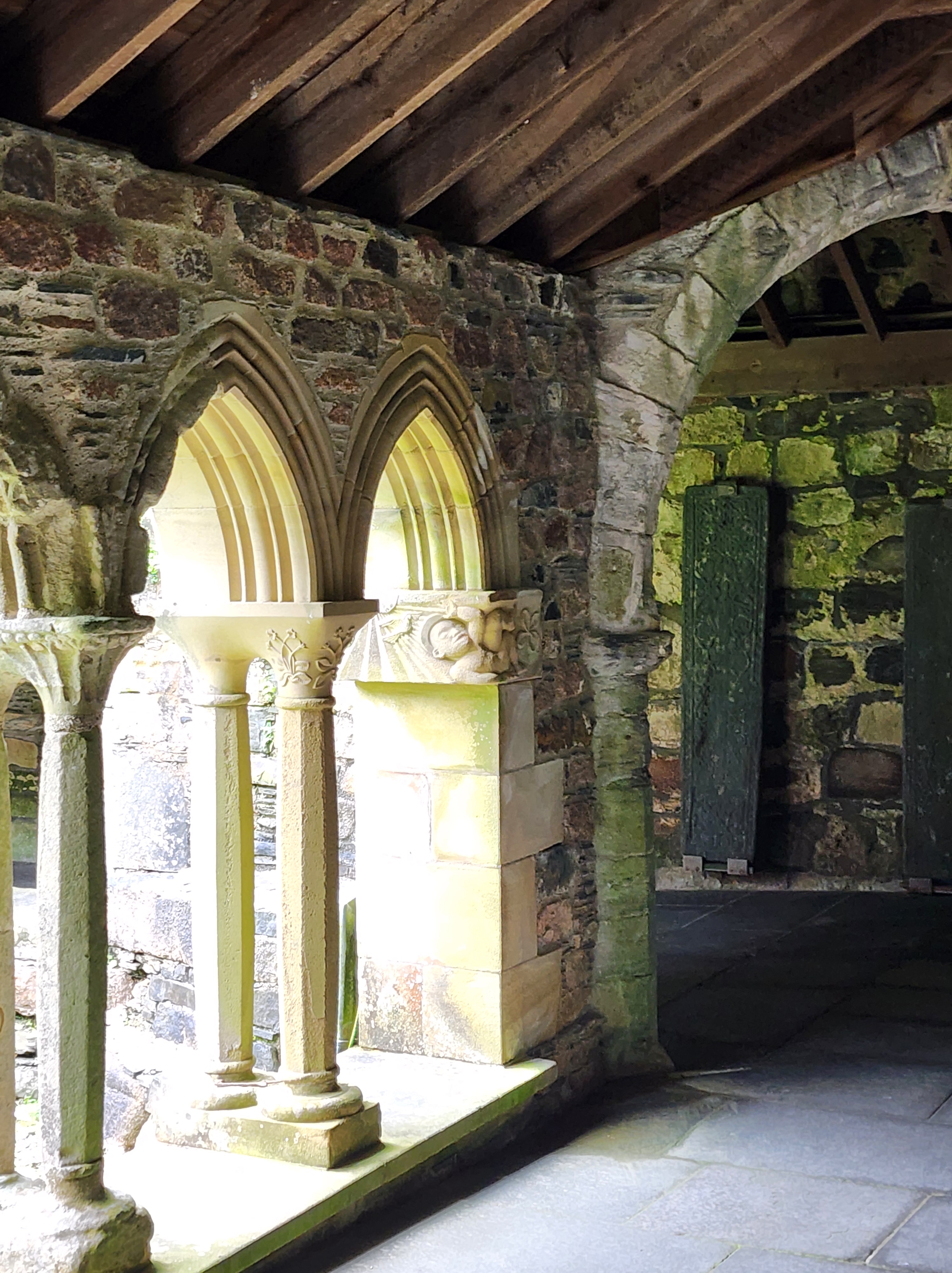
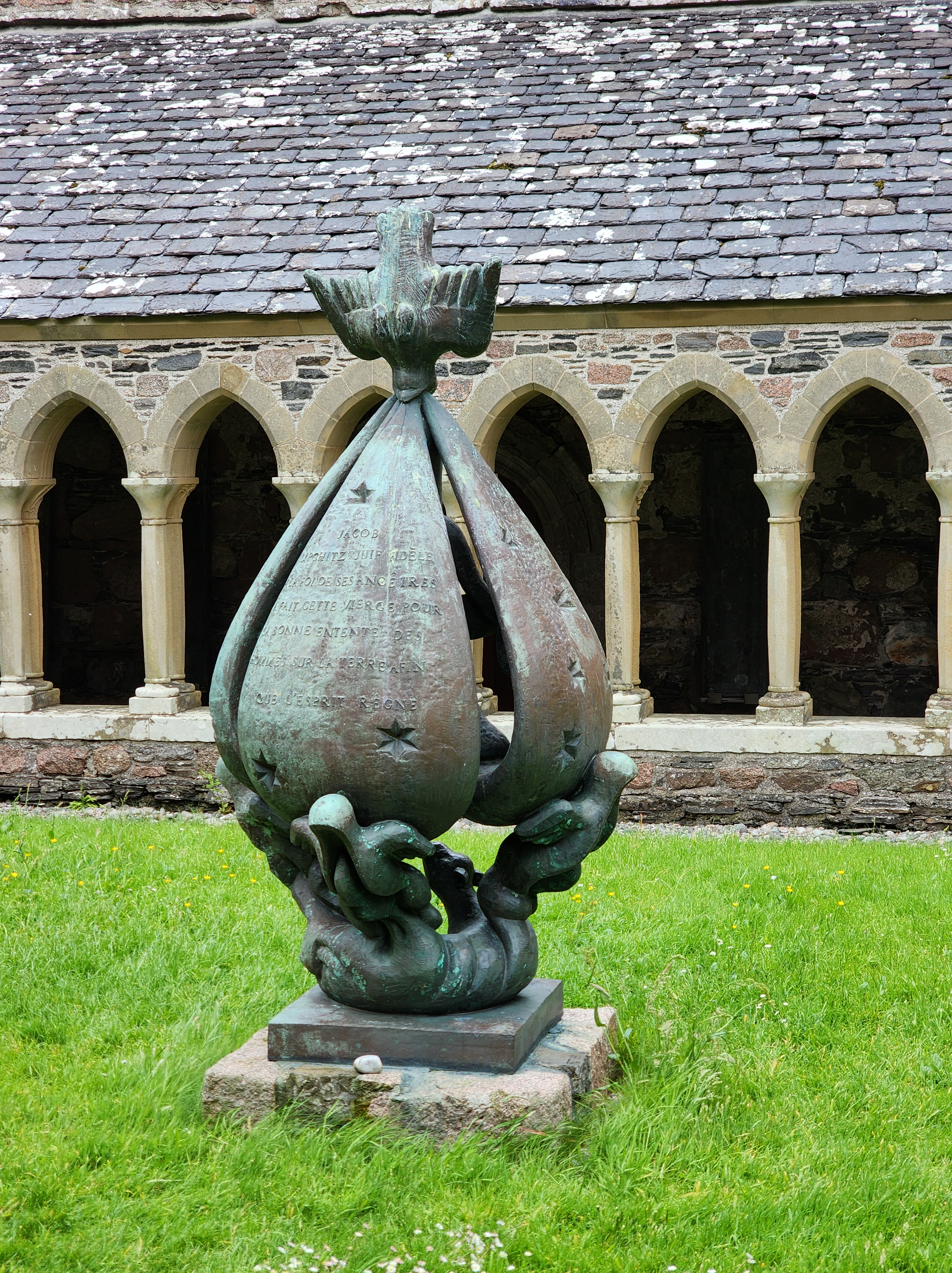
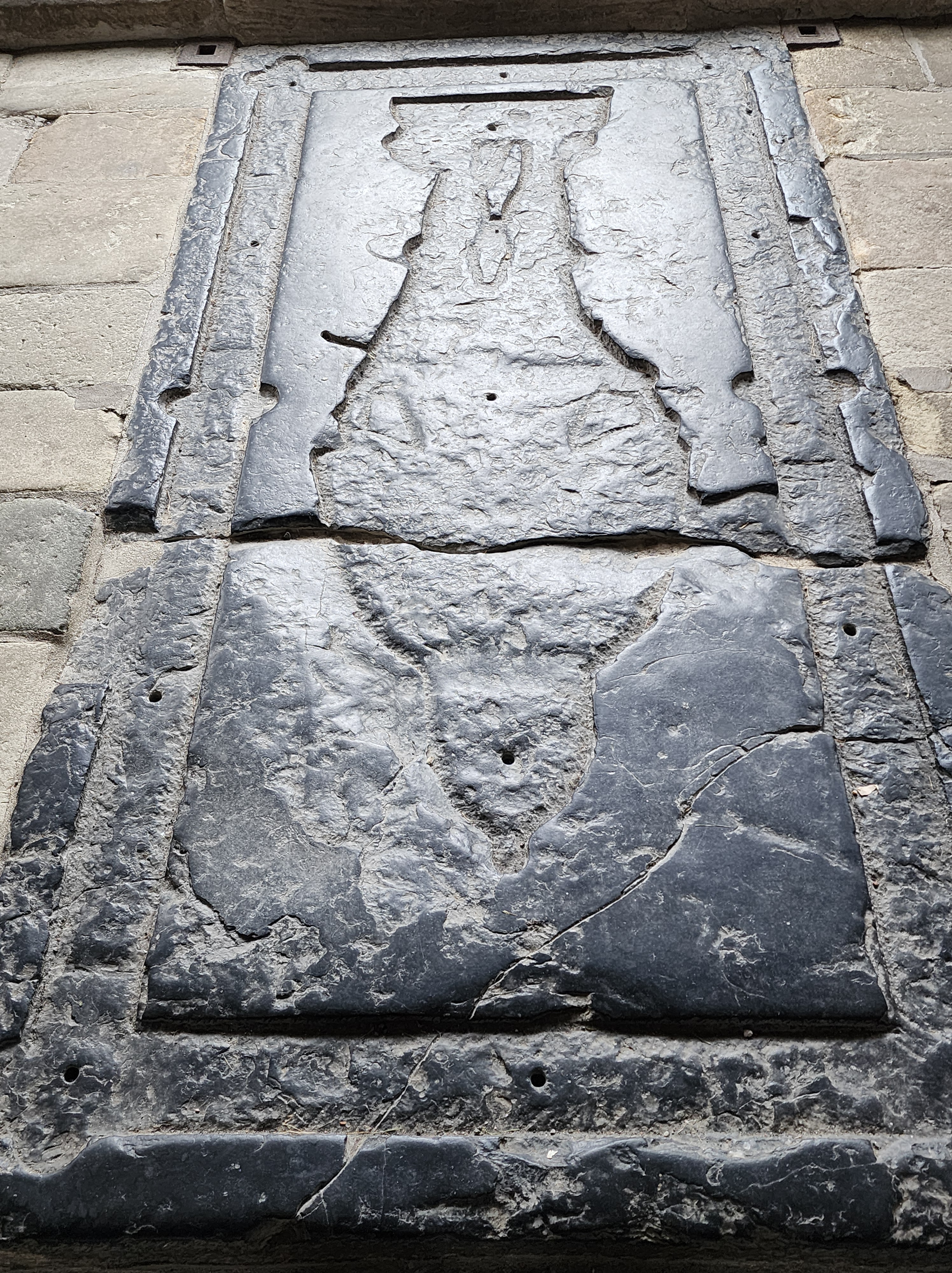
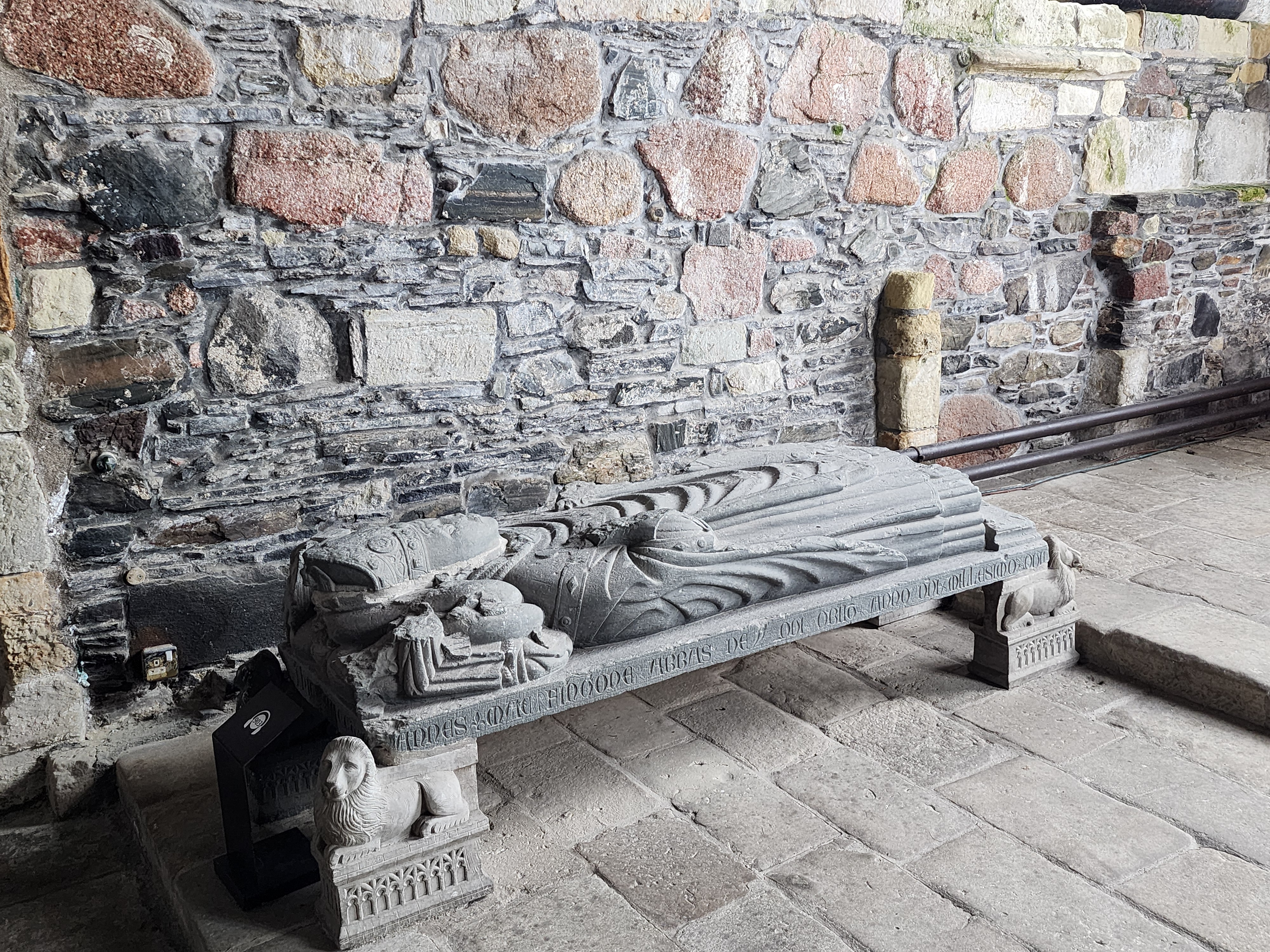
I walked around the cloister which faced a courtyard with a statue in it.  On the walls were gravestones, but they were mostly unreadable. The cloister connected the monks’ cells with the church and offered a space for prayer and quietude.  The gift shop was an offshoot of the cloister; you almost wouldn’t know it was there except that the door was open.  I poked around inside, and then wandered into the Church and said some prayers for my family, and my kitties, and the world at large.

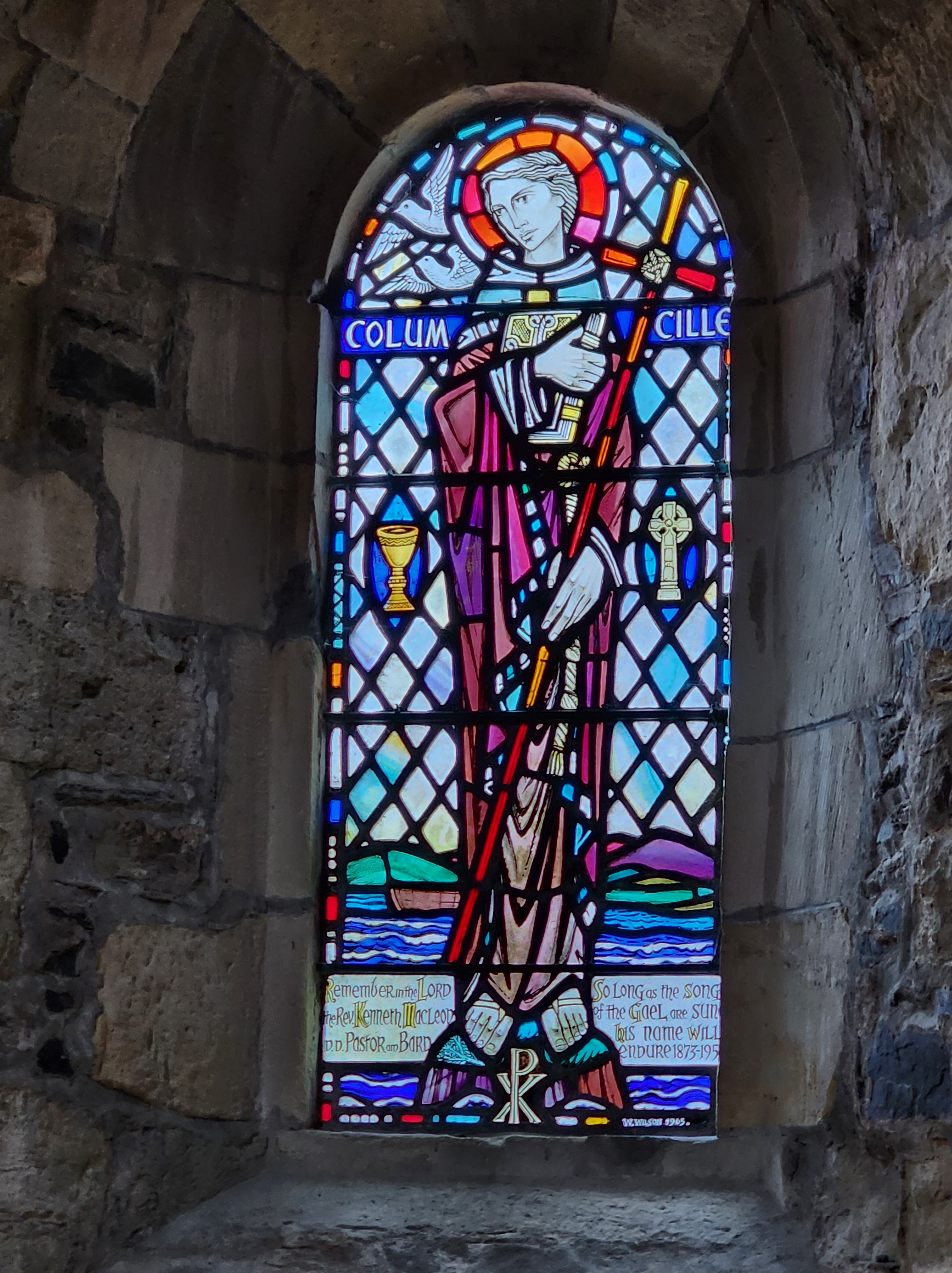
Stained glass window of the Holy Mother

Stained glass window of St. Columba


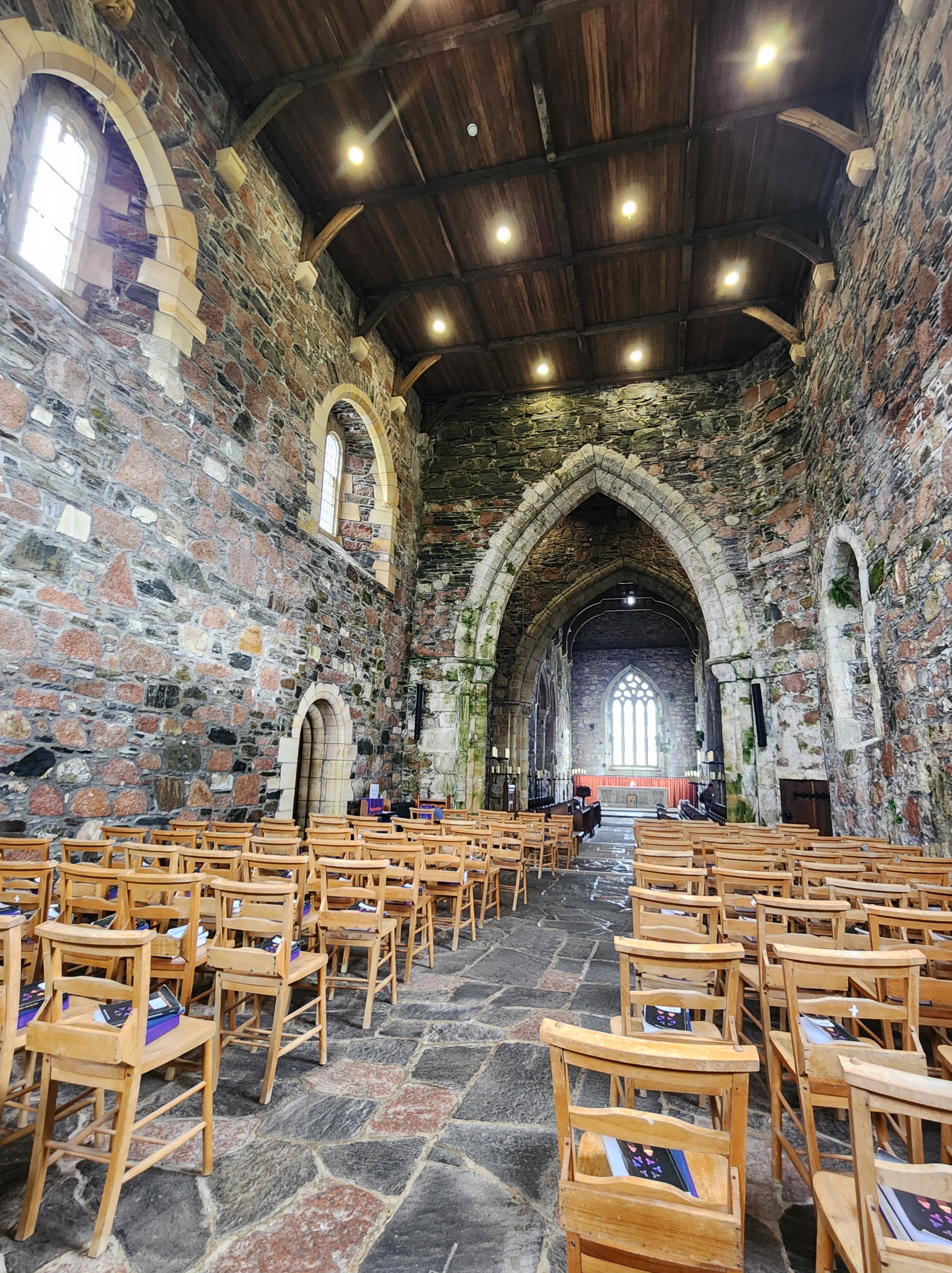
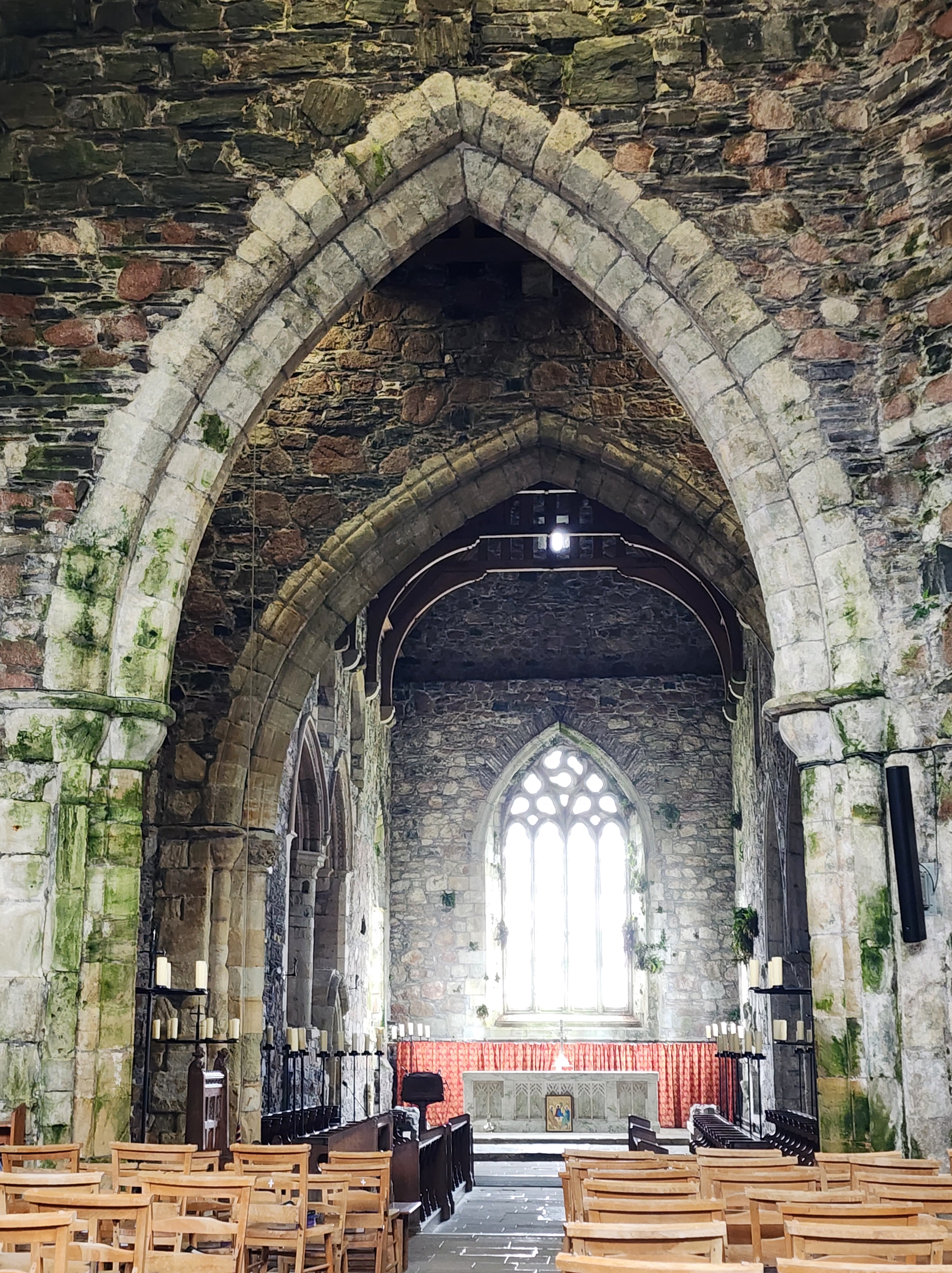
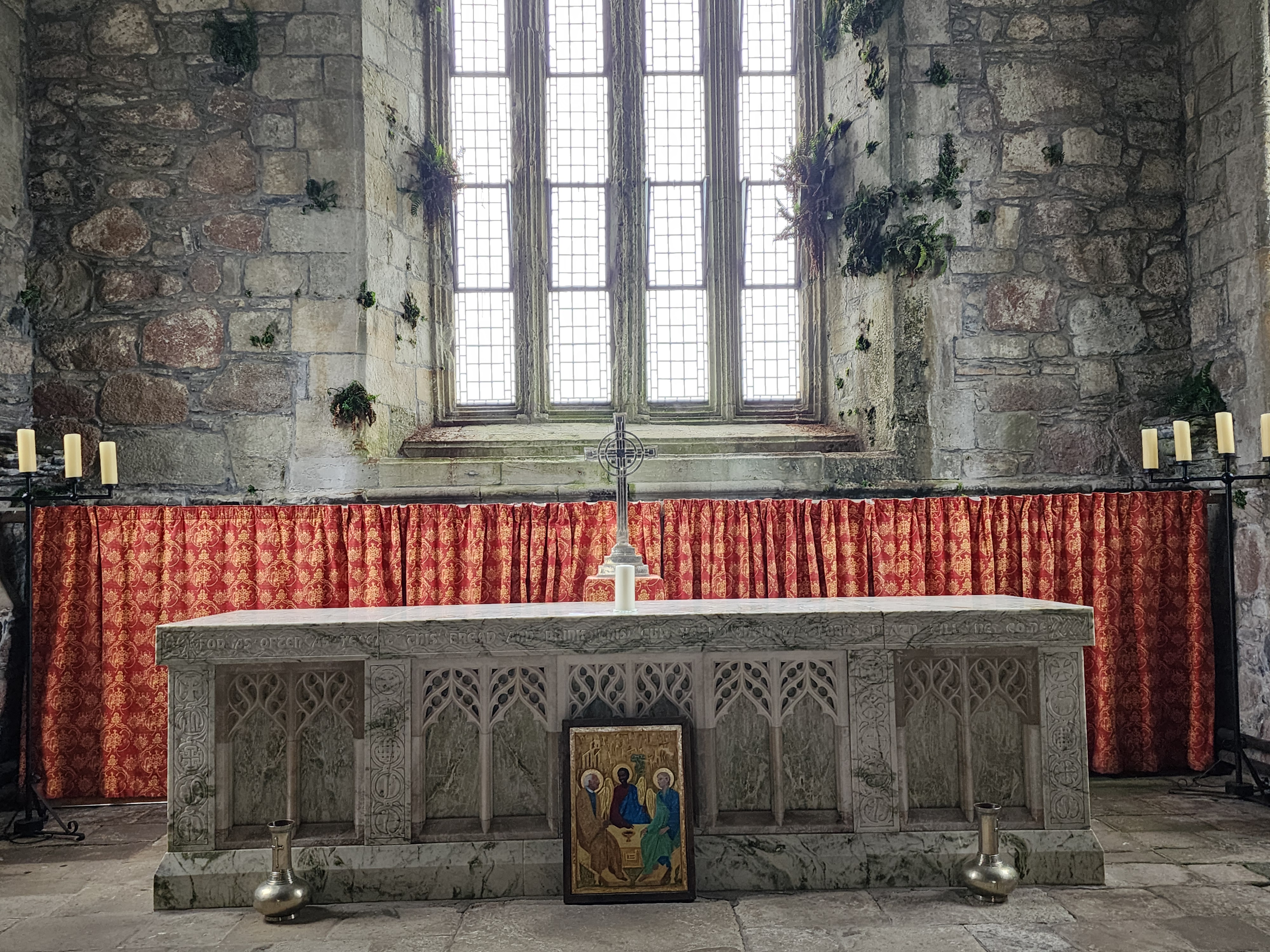
Surprisingly, the cloisters felt holier than the church did to me.  The church offered some beautiful arches and stonework, but not much more in the way of decoration.  And that could be because it’s not a Catholic Church anymore—or because the church had been raided by Vikings and the Protestant Reformation. Or, because, being on a remote island for a small Christian flock, maybe decoration wasn’t a big priority.  Anyway, it’s now the home of the Iona Community, an ecumenical church founded by George MacLeod in 1938, and made up of many religious denominations. This community sounds peaceful and good and believes in social justice matters.  In fact, there was a table full of dishes of ribbons for which you could donate coins for such causes as Black Lives Matter, the environment, AIDS/HIV, and others. (I had bought a little monk bear in the gift shop and gave some spare change for an environmental ribbon, which I pinned to his robe.) As for the altar, it was pretty plain and the stained glass windows  were small, but the church had a good vibe to it.

On the way back to the harbor, I stopped at the Larder to get some lunch and ate my cheese sandwich, crisps, and Coke Zero on a bench in front of the store.  A woman and her husband sat down beside me and we began a very interesting conversation about their visit to Iona. Apparently they are Scottish but have been living mostly in the United States for the last 20 years, although they have a flat that belonged to her mother somewhere in Scotland. Where in the U.S. did they live? I asked, and was surprised when they said, “Oh, Durham, North Carolina.”

So we talked about Durham and about Charlotte and Atlanta too.  I asked what they did with their flat outside of the 6 weeks that they stay there every year—did they AirBnB it?  This got a laugh.  It’s pretty difficult, they told me, to set up AirBnB’s—because of Scottish laws that allow people to stay beyond the time they’ve contracted to stay in a place. In other words, they don’t have to go, even if you want them to.  I thought that was amazing and weird.  But we had a good chat—it felt a little like I was home somehow, especially when we spoke of Charlotte and Atlanta. And it was nice not having to be embarrassed that I was American and to perform my embarrassment like I have been doing every time someone asks me where I’m from.

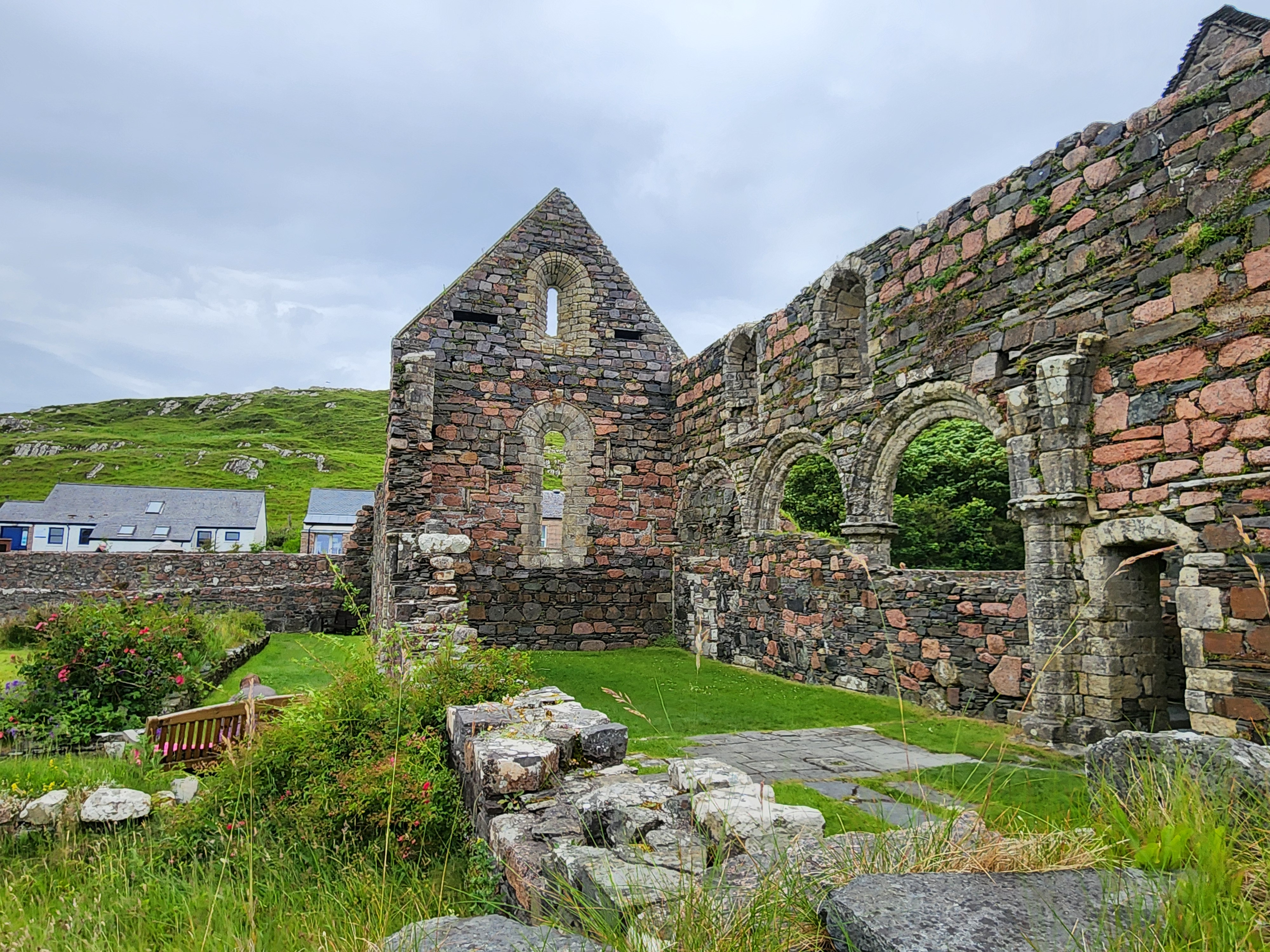
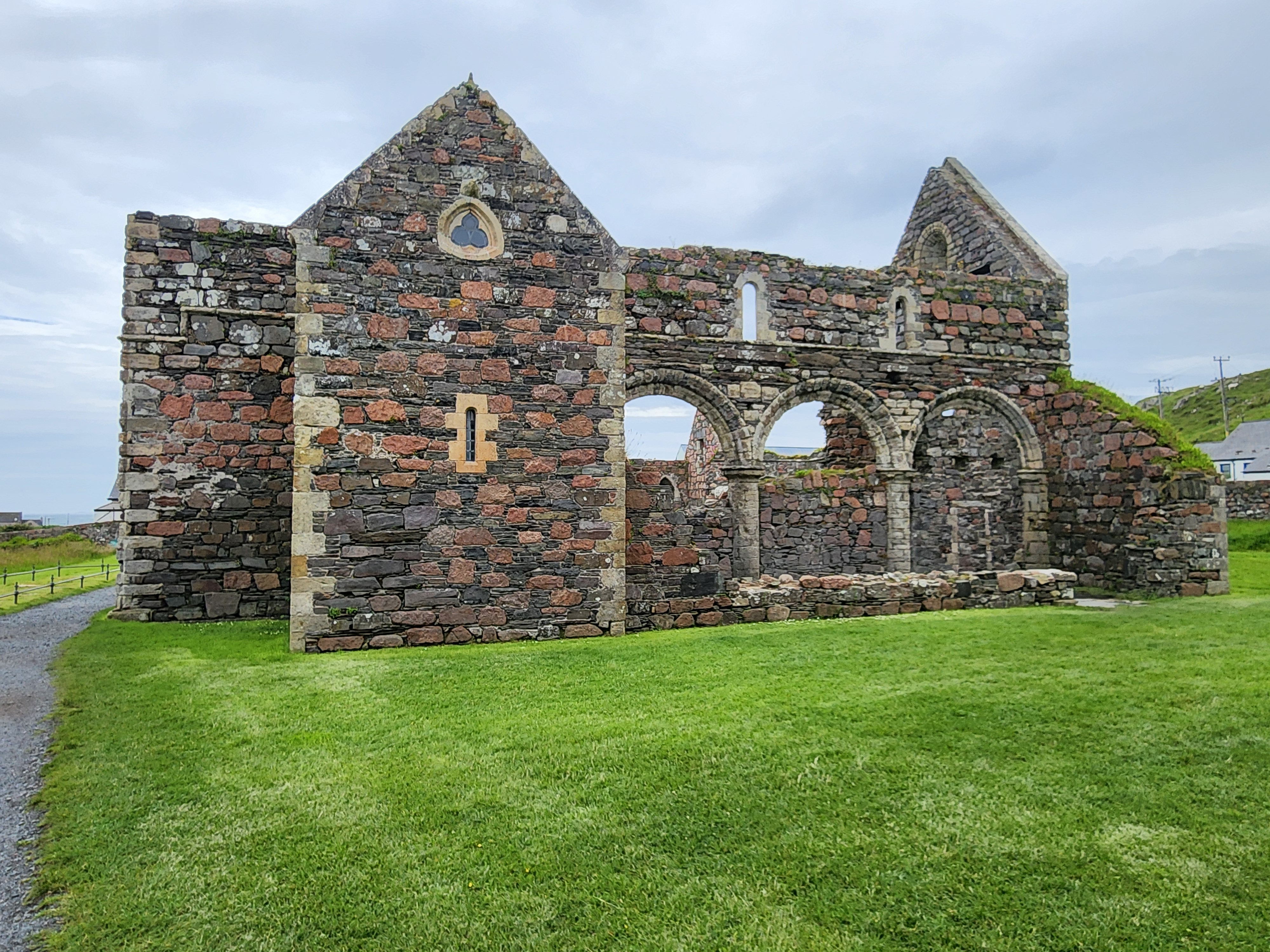
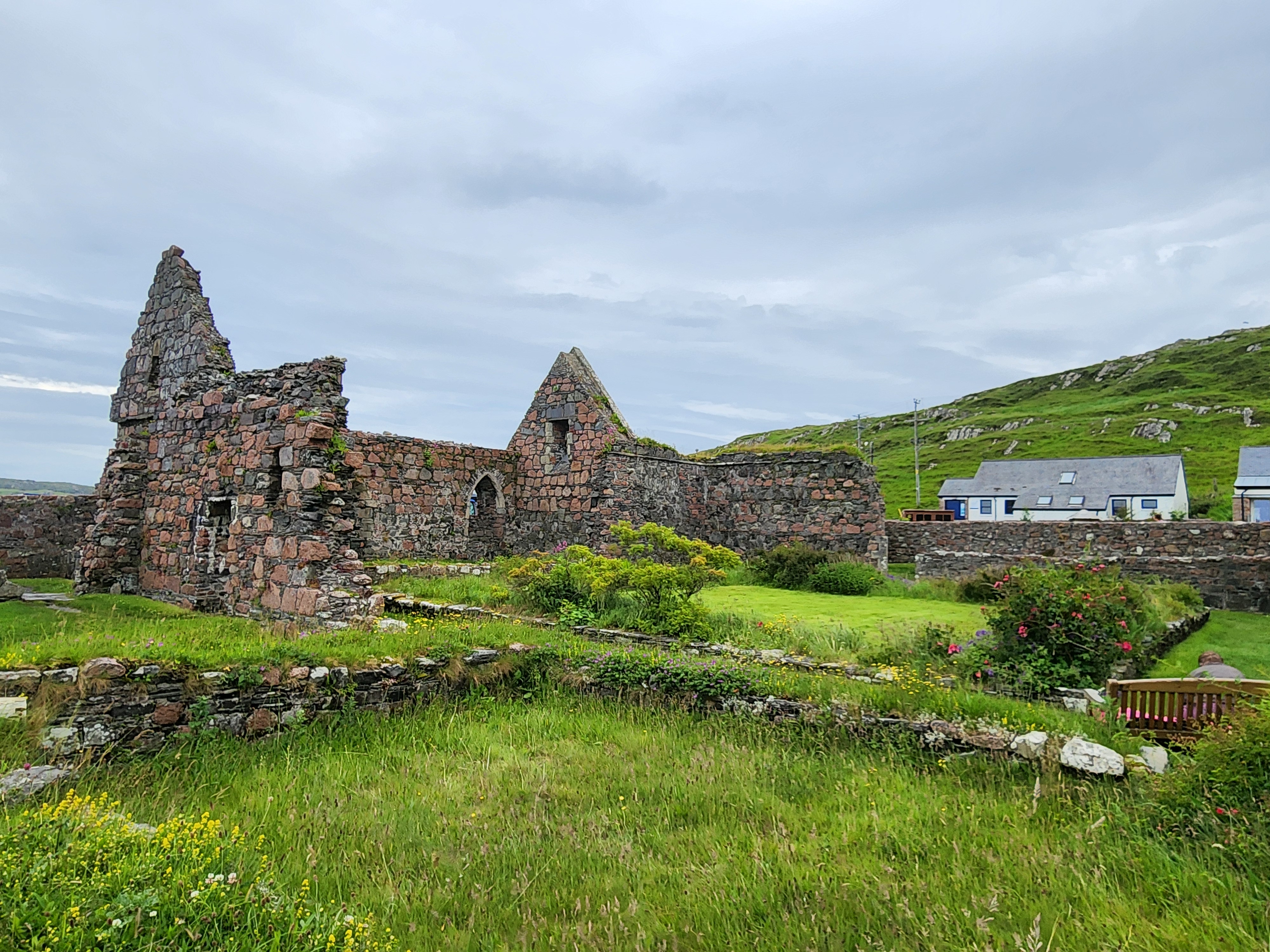
Ruins of the Iona Nunnery; a couple of stone walls and grass

Iona Nunnery

I finished my lunch, and they were going to continue to the Abbey so we said our goodbyes.  I stopped in a craft shop and then a Celtic jewelry store (Aosdàna) where I found delicate, silver handmade earrings.  I loved the jewelry there—although most of it was crazy expensive (several hundred pounds).  And I’ve been wanting to buy myself some jewelry from Scotland for years.  So I splurged and bought a pair of earrings.  They’re so delicate, though, I’m not sure I’ll ever wear them!

After passing through the Nunnery, I returned to the harbor where I found a bench to wait out the time before our ferry would return. And this man comes up to me and says,

“Are you someone important?”

“Me?”

“Yes.  You look very important.  Like you know things.”

“I’m not that important, but I am a published poet.”

“Really?  Have I read anything you’ve written?”

“I doubt it.”

“Oh.”

He seemed truly disappointed that I didn’t turn out to be a VIP—although, I doubt I looked like a VIP, windblown with my raincoat and beanie on.  He said goodbye and turned away, and I thought, I’ve missed an opportunity to brag on myself. And then I remembered, I’m no braggart, and nobody cares about poetry anyway.  So no big deal.  And then, one of the ladies on the tour sat down next to me and offered me the most delicious strawberries I’d ever eaten. So sweet and so red they make the strawberries we get back home look like anemic little ghosts.  And just as suddenly, it started to rain and she hurried off.

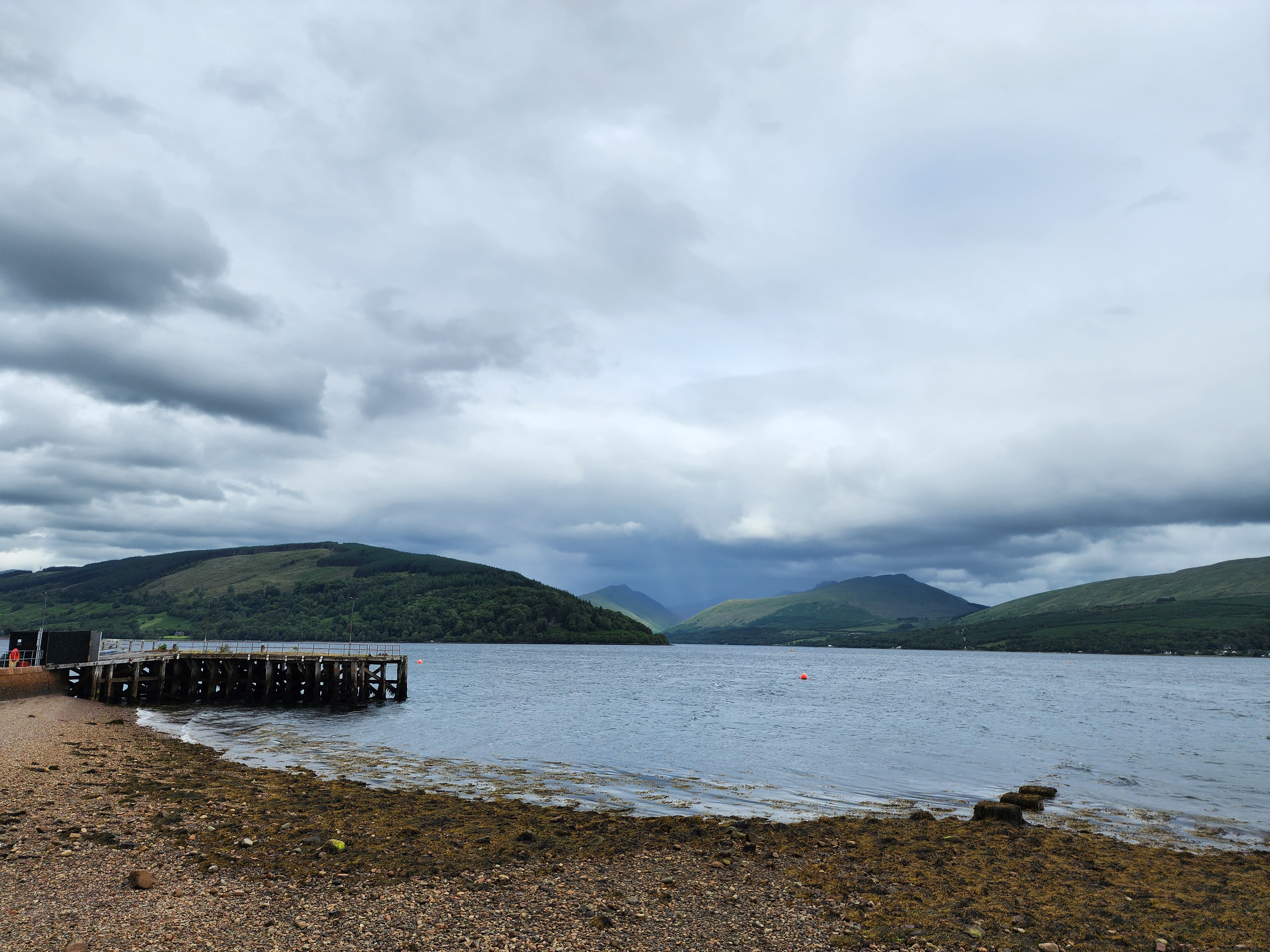
But by then the ferry had arrived and we all shuffled back on to Mull. I haven’t had a chance to say that here is true beauty to be found in the Isle of Mull—I know the name is rather dull (ha! dull Mull!), but if it’s possible, Mull is even greener than the Highlands, and the mountains seem steeper and more mysterious.  Driving around Mull, you tend to see a lot of red deer (as well as sheep and cows) just running along the hills; I think Nick said there’s some phenomenal number, maybe 6,000, that live on the island. (We only saw a few, and one of them, sadly, was dead by the side of the road.) But with the rain and dark clouds, the island was moody and bleak and lovely.  I kept thinking how much I would like to live here.

This time, when we drove back into Tobermory, Nick said he’d give us all 30 minutes if we wanted to find something to eat and then he’d drive us to our B&B’s.  This was a godsend, because by then it was raining like hell and there was no way I was going to walk into town from the B&B for dinner.  But since we were there, I went to Hook’d and got a beautiful piece of haddock and chips, and ate that in the B&B and went to bed early.

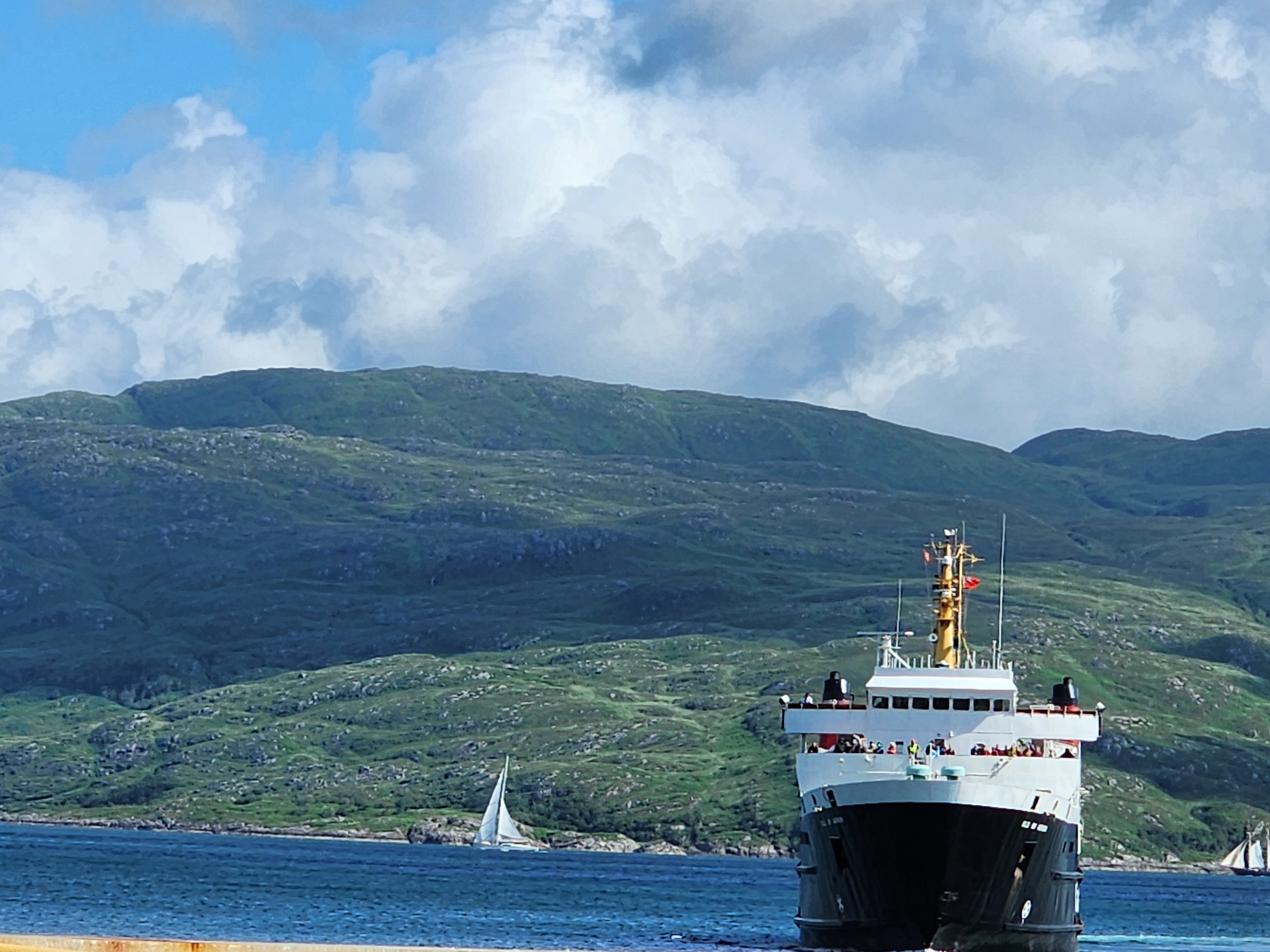
The CalMac ferry to Mull on a backdrop of Mull's mountains

CalMac Ferry to Oban

The next day, we took the ferry from Craignure to Oban.  Right as I left the ferry terminal, I smelled the most delicious garlic buttered seafood at a harbor kiosk but didn’t have enough cash to get some scallops for lunch—a true pity. I suspect everything they were selling came fresh from the sea that morning. I decided to skip touring Oban, even though I wanted to check out the Oban distillery for a dram, because of the dreaded foot.  So I hung out in a Costa coffee shop and read a book until Nick retrieved us.  The ride back to Glasgow seemed long.  We made a few too many stops for my liking, one at the Nether Largie Standing Stones (in Kilmartin), one in Inverary, one in Glen Crowe at the Rest and Be Thankful viewpoint, and one at Loch Lomond again (just a potty break).  I didn’t get back to my flat in Edinburgh till almost 9 p.m. And I pretty much fell into bed after a shower.

I recommend Mull and Iona—and Staffa, if the weather permits—because seeing these places is somehow holy and remarkable.  And if you want a good book that talks about these places, I really recommend Madeleine Bunting’s Love of Country; it’s replete with details about the history of the Hebrides.  And it’s wonderful.

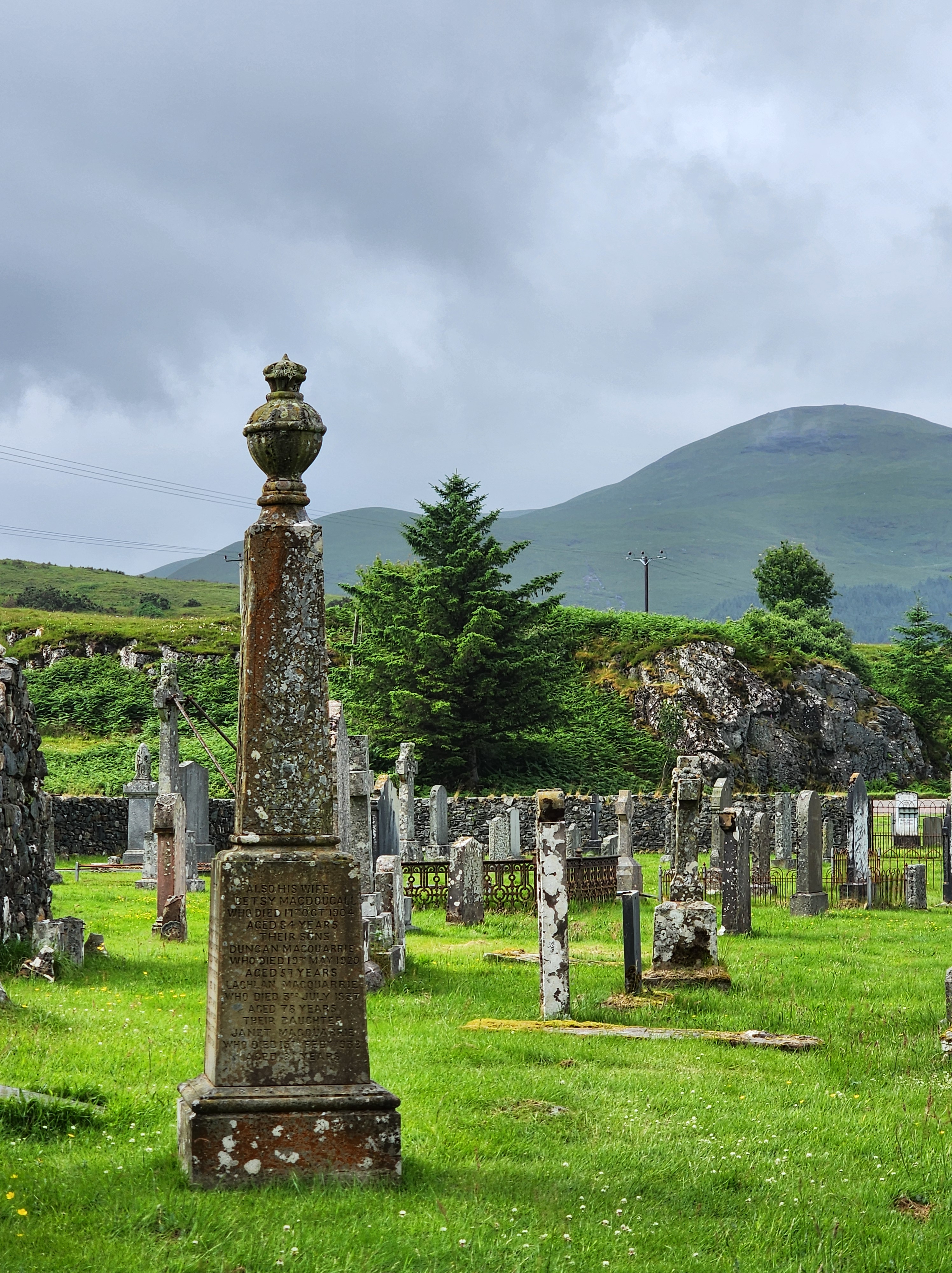
A grave yard at Pennygown

Pennygown graveyard

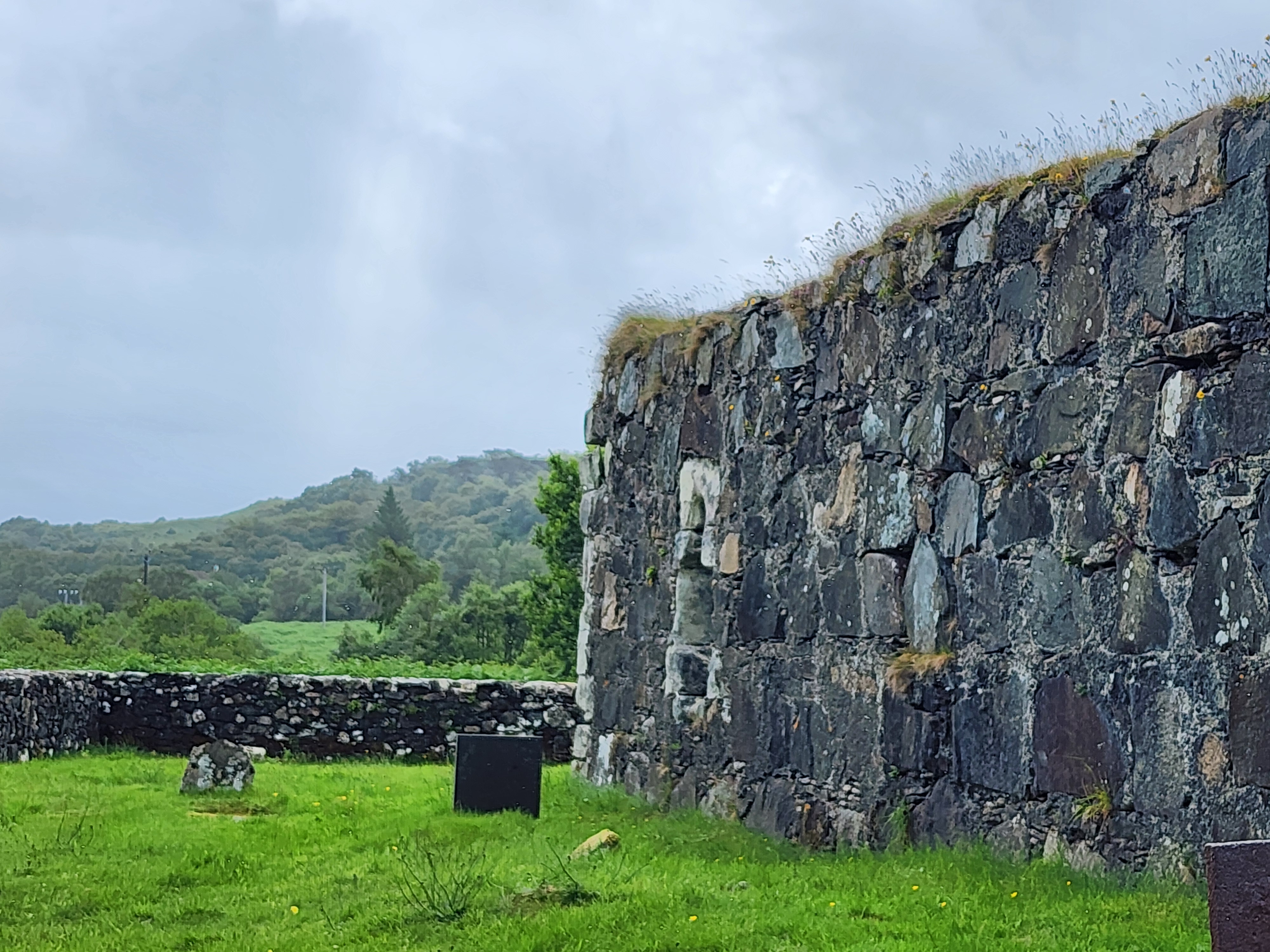
Old ruins of Pennygown church

Old ruins of Pennygown church

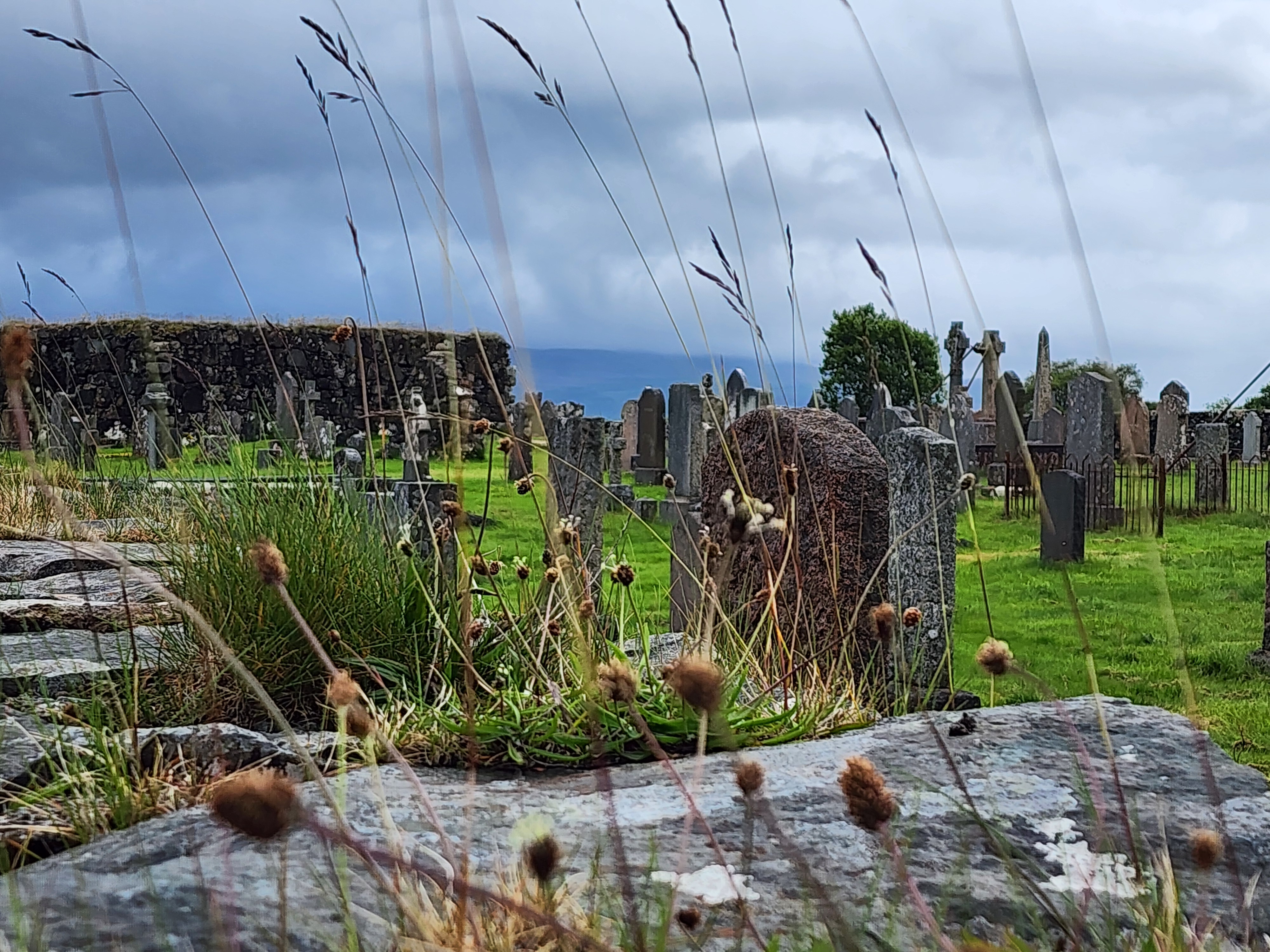
A picture of Pennygown graveyard through tall grasses

Pennygown graveyard, Mull

Duart Castle from a side view

Duart Castle

Three walls of Duart castle surround a grassy courtyard.

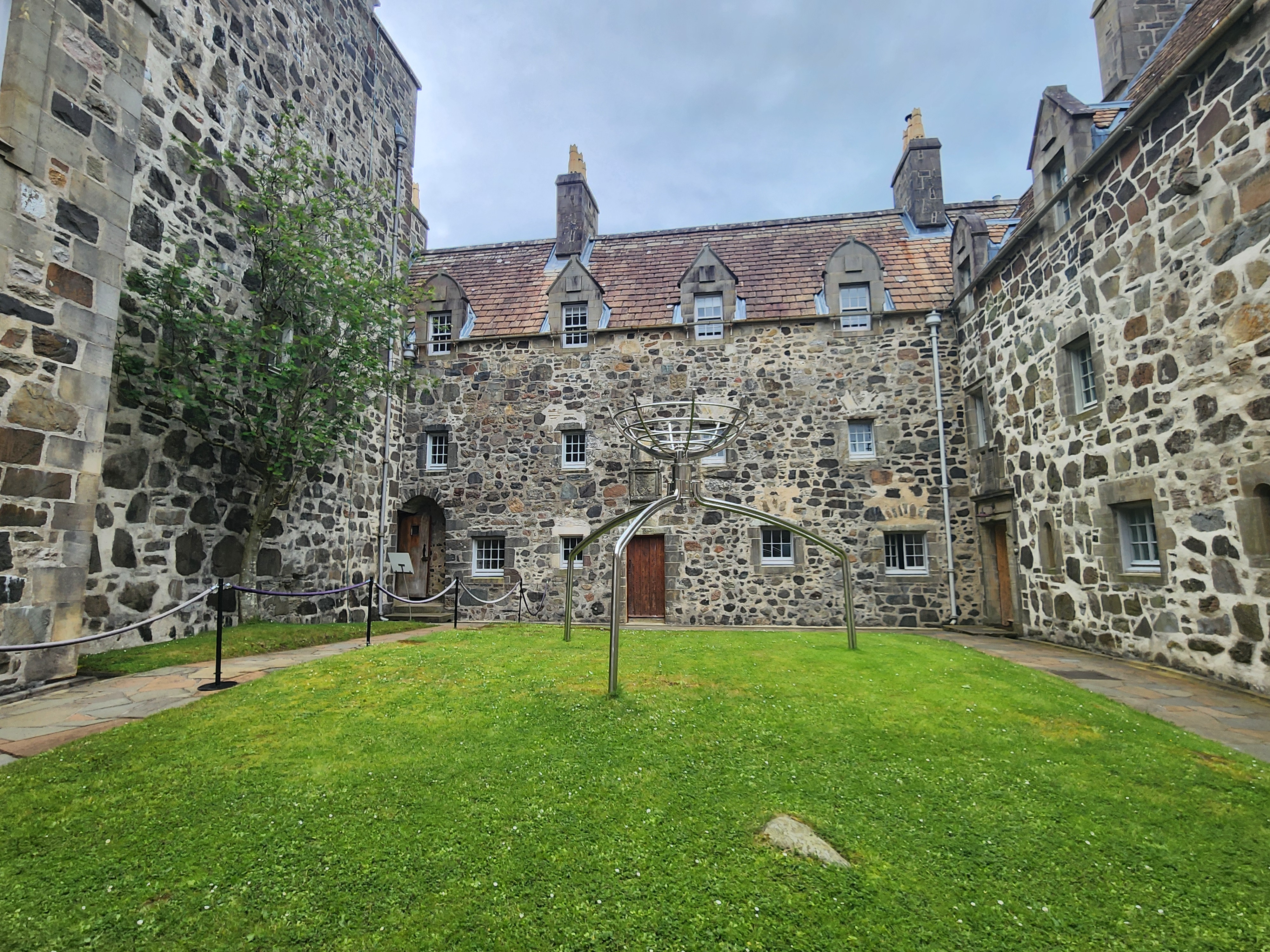
Inner courtyard of Duart Castle

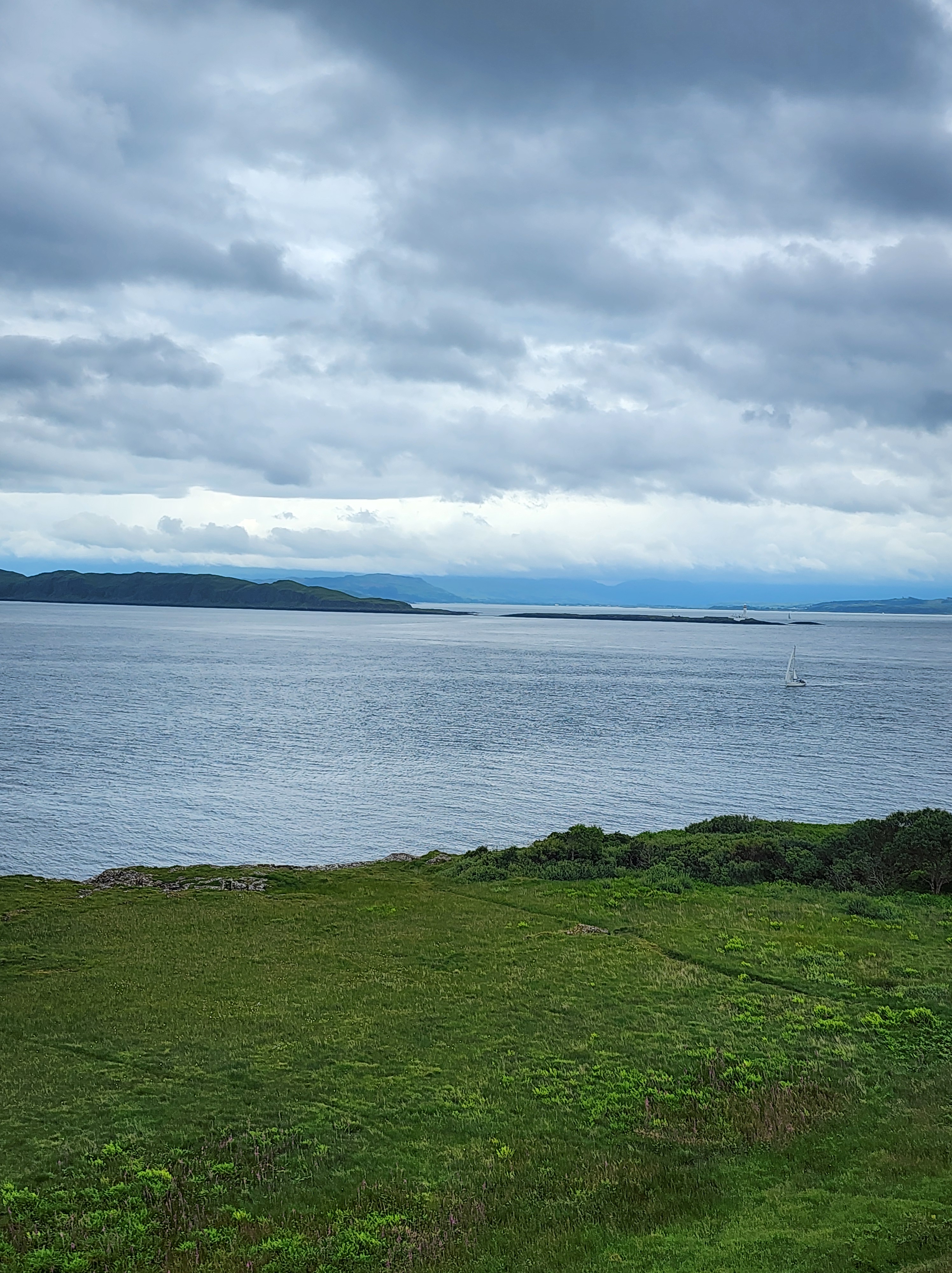
A view of the Sound of Mull, with grass in the foreground and clouds in the back

Sound of Mull (from the Duart battlements)

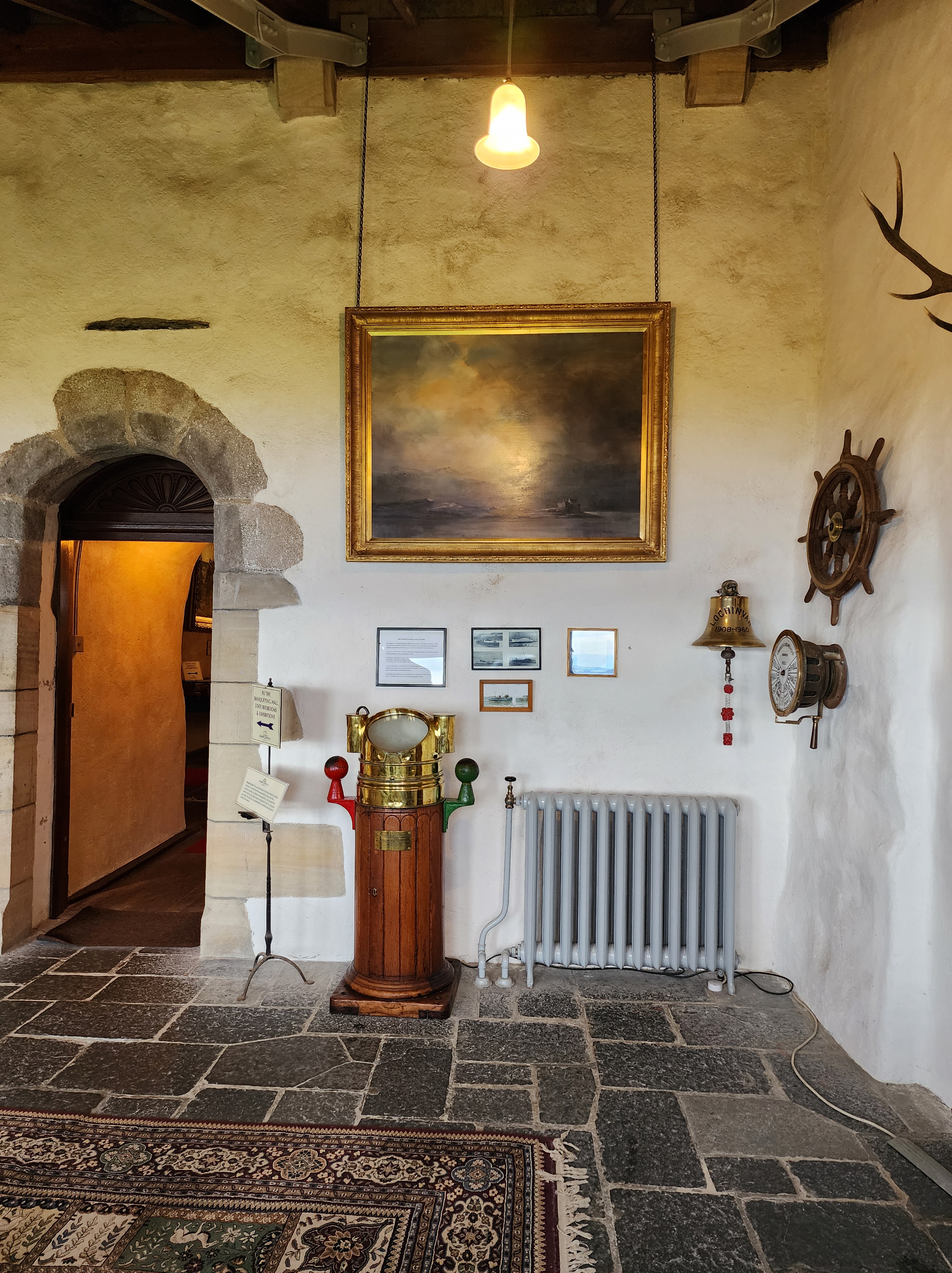
The Sea Room of Duart Castle, showing a large bell, wheel, and binnacle from the RMS Lochinvar ship. To the left is the entrance into the Great Hall.

The Sea Room

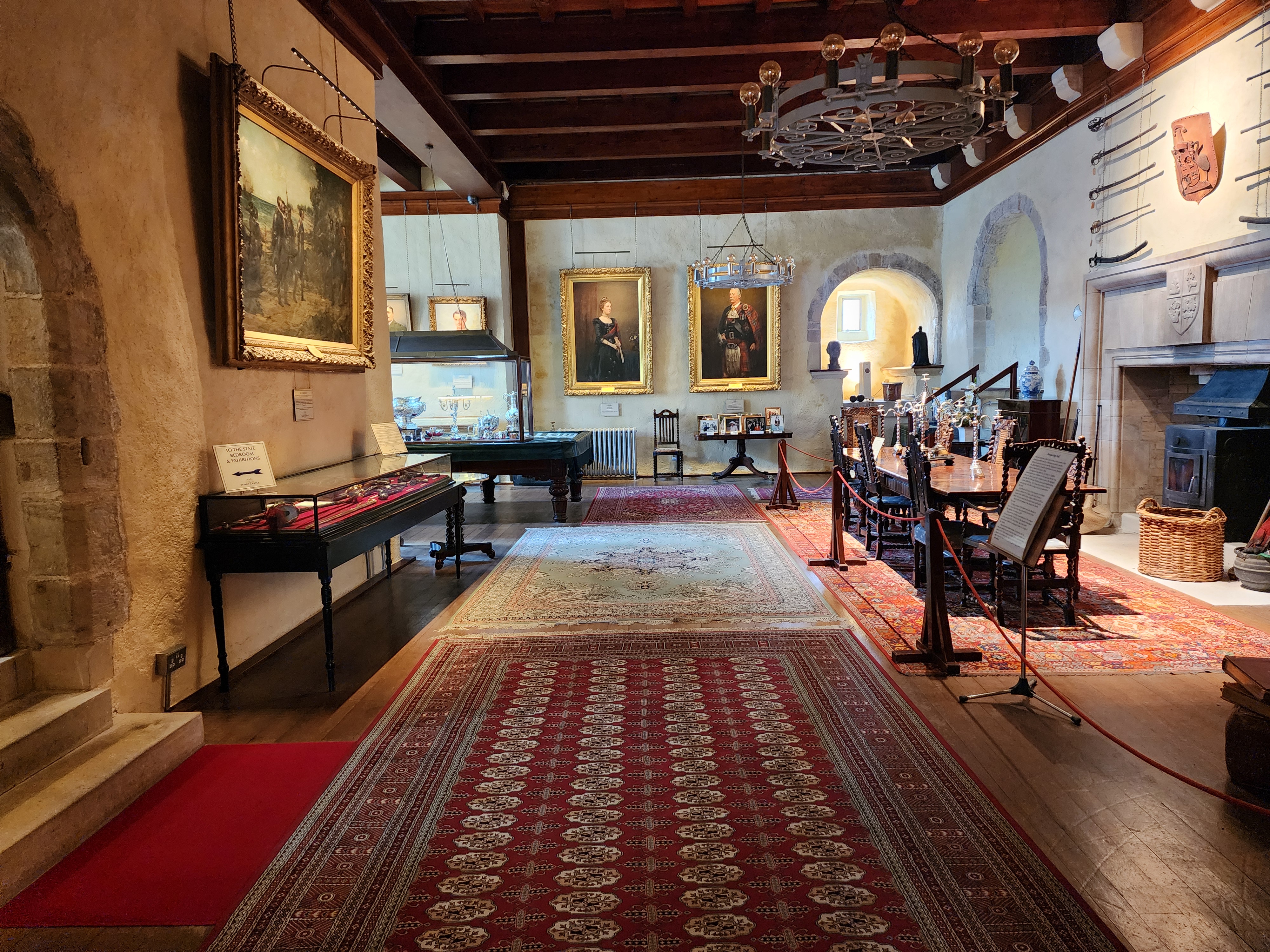
A long view of the Great Hall, with antiques and paintings.

View of the Great Hall from the entrance

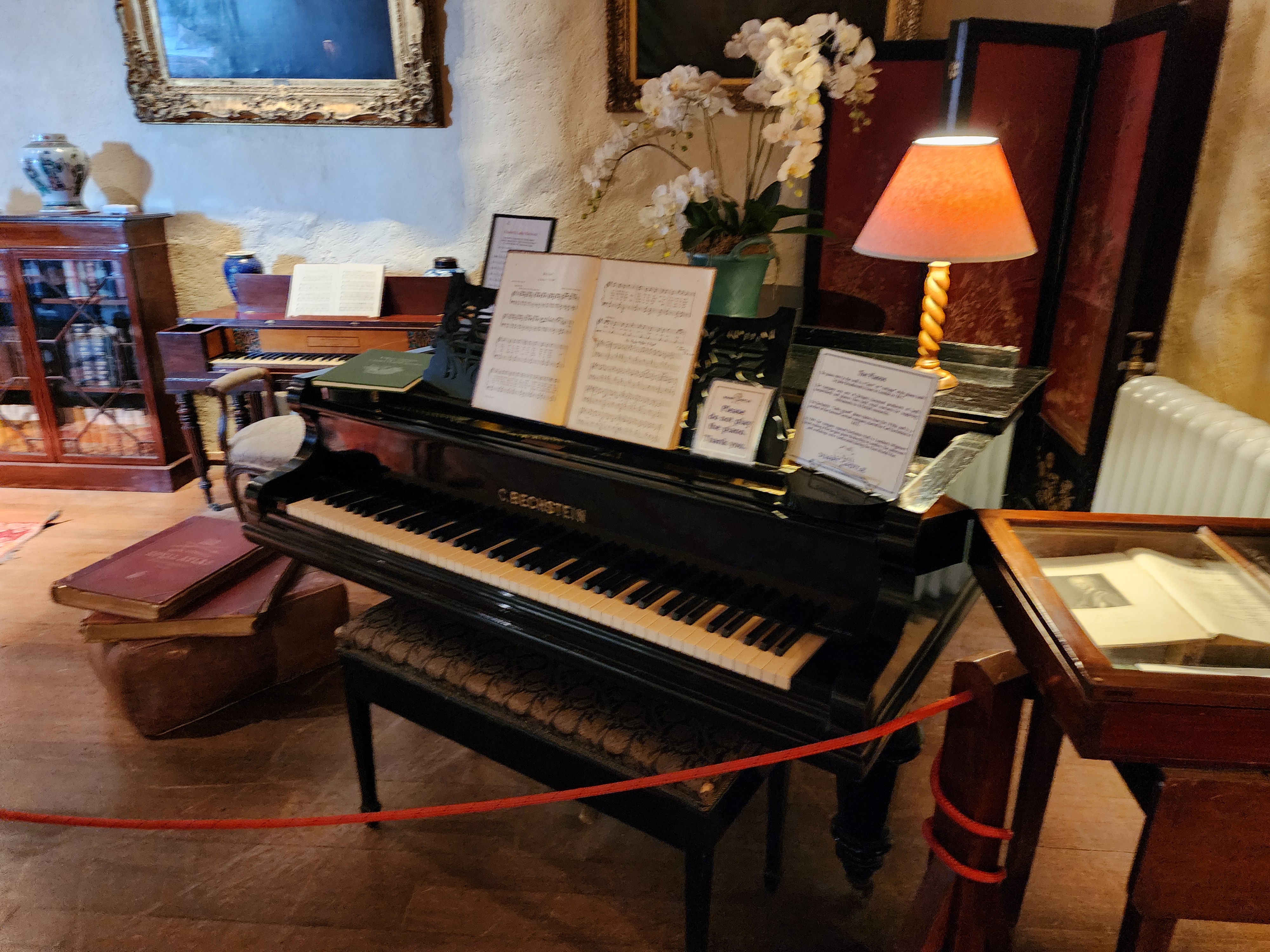
A piano in the Great Hall of Duart Castle, right as you go in

Piano at the entrance of the Great Hall

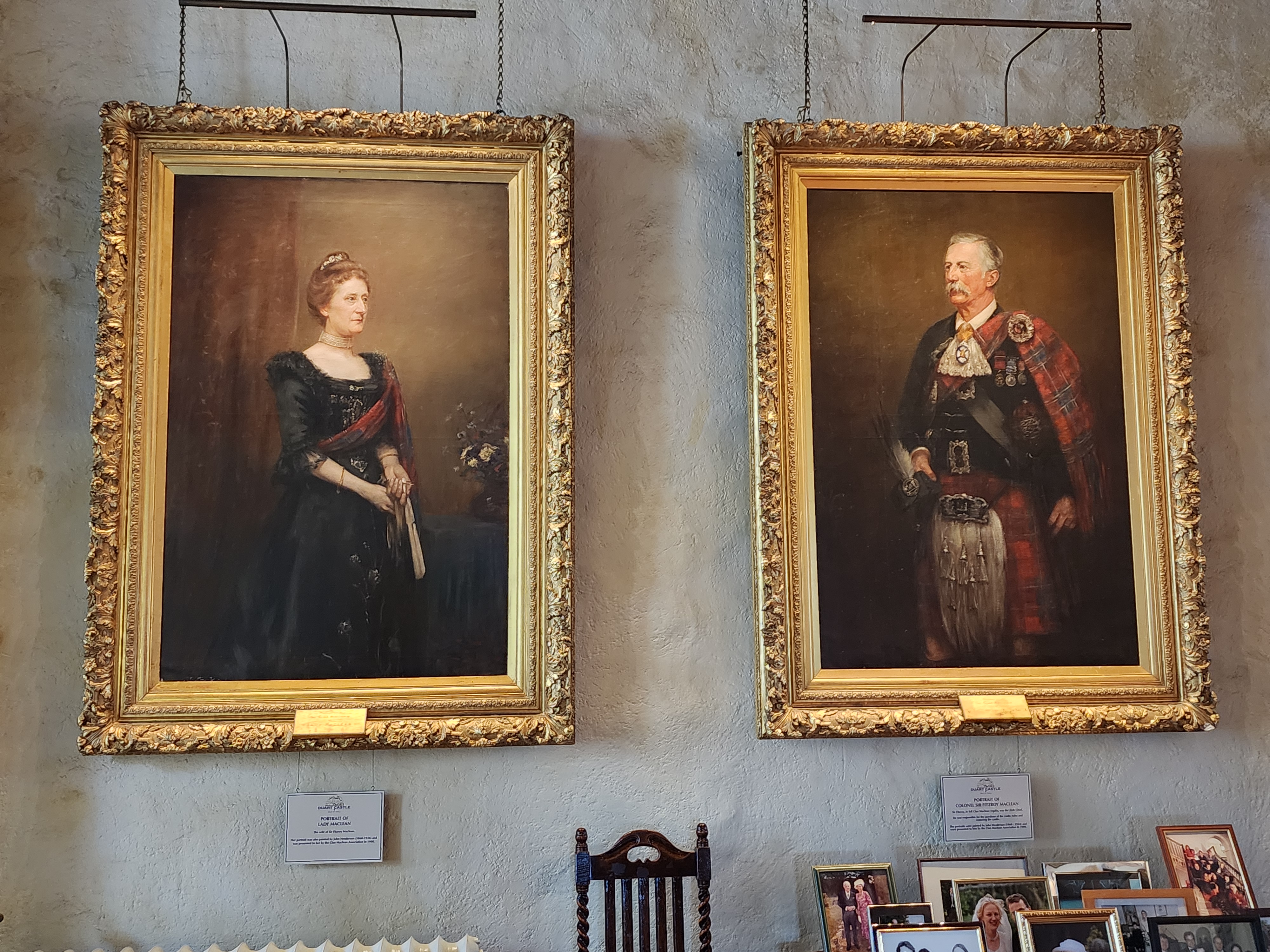
Portraits of Lady MacLean and Col. Fitzroy MacLean

Ten small, fancy daggers in their sheaths in a glass case in Duart Castle

Daggers in the weapons case at Duart Castle

Another view of the Great Hall from the opposite view.  In the foreground is the dining table and a chair.

Great Hall looking north toward the entrance

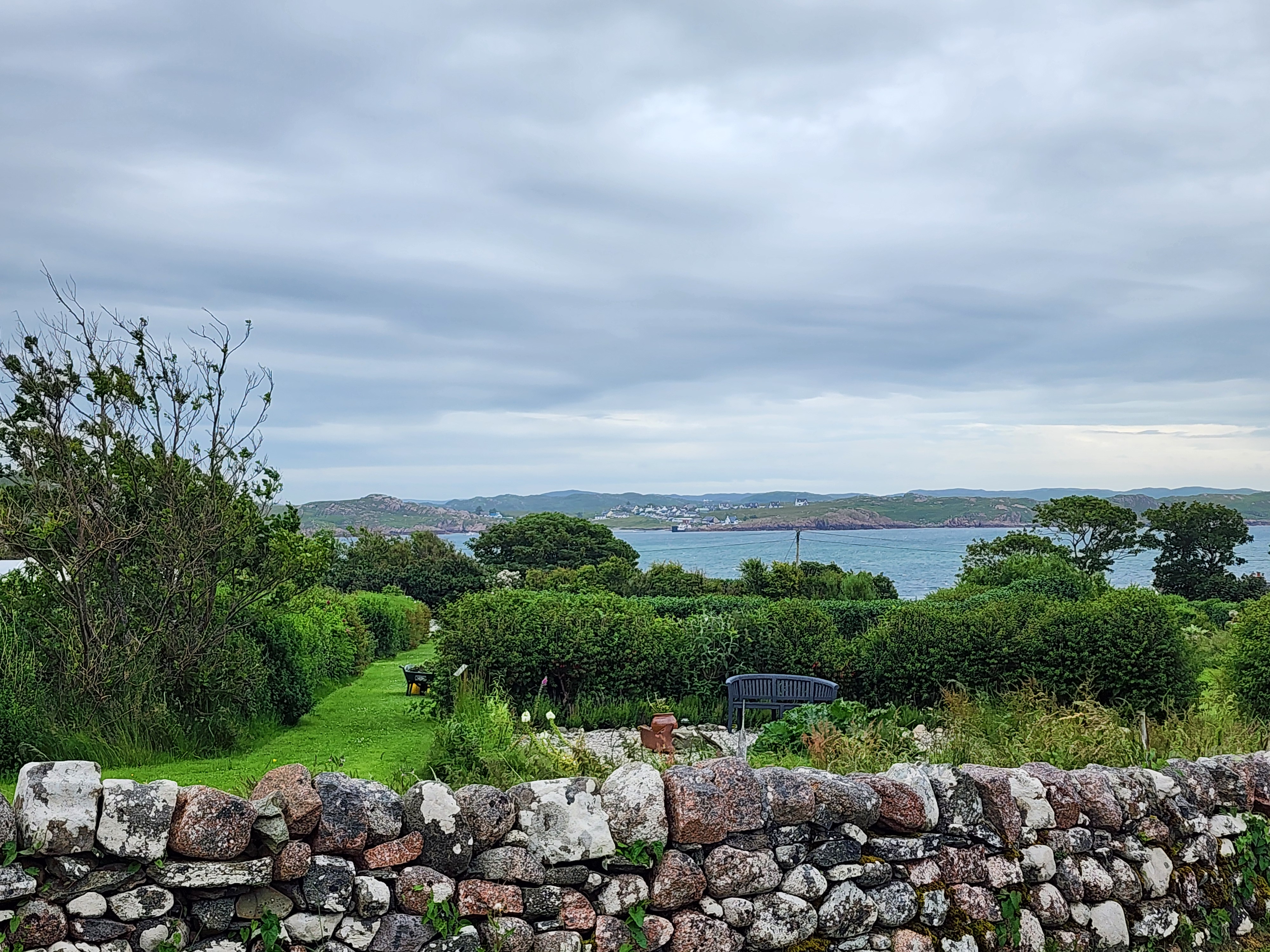
A view of herb gardens with the Sound of Mull in the background

Hotel gardens on Iona

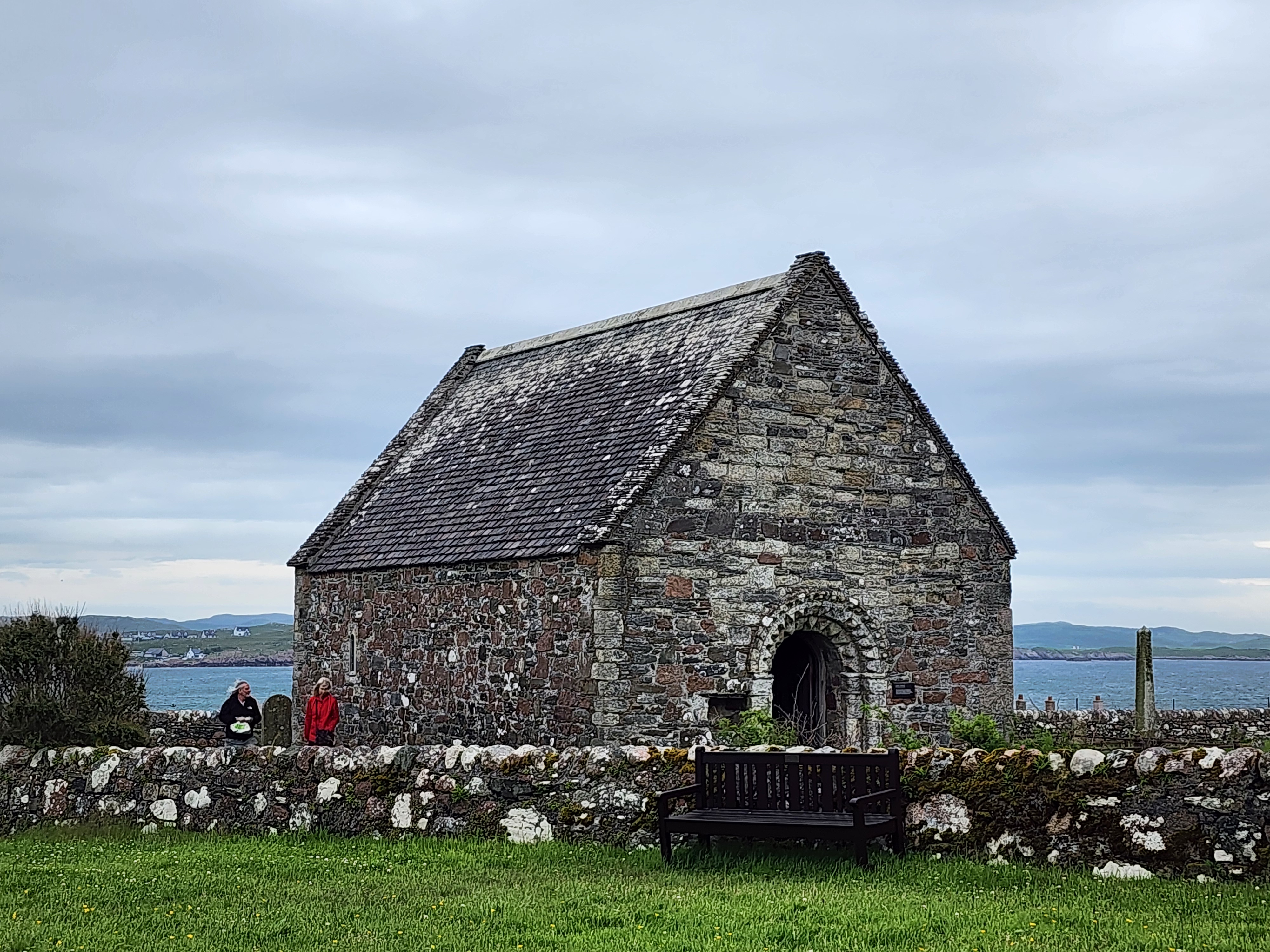
A small chapel with a stone wall in front of it.  This is St. Oran's chapel at Iona Abbey

St. Oran’s Chapel at Iona Abbey

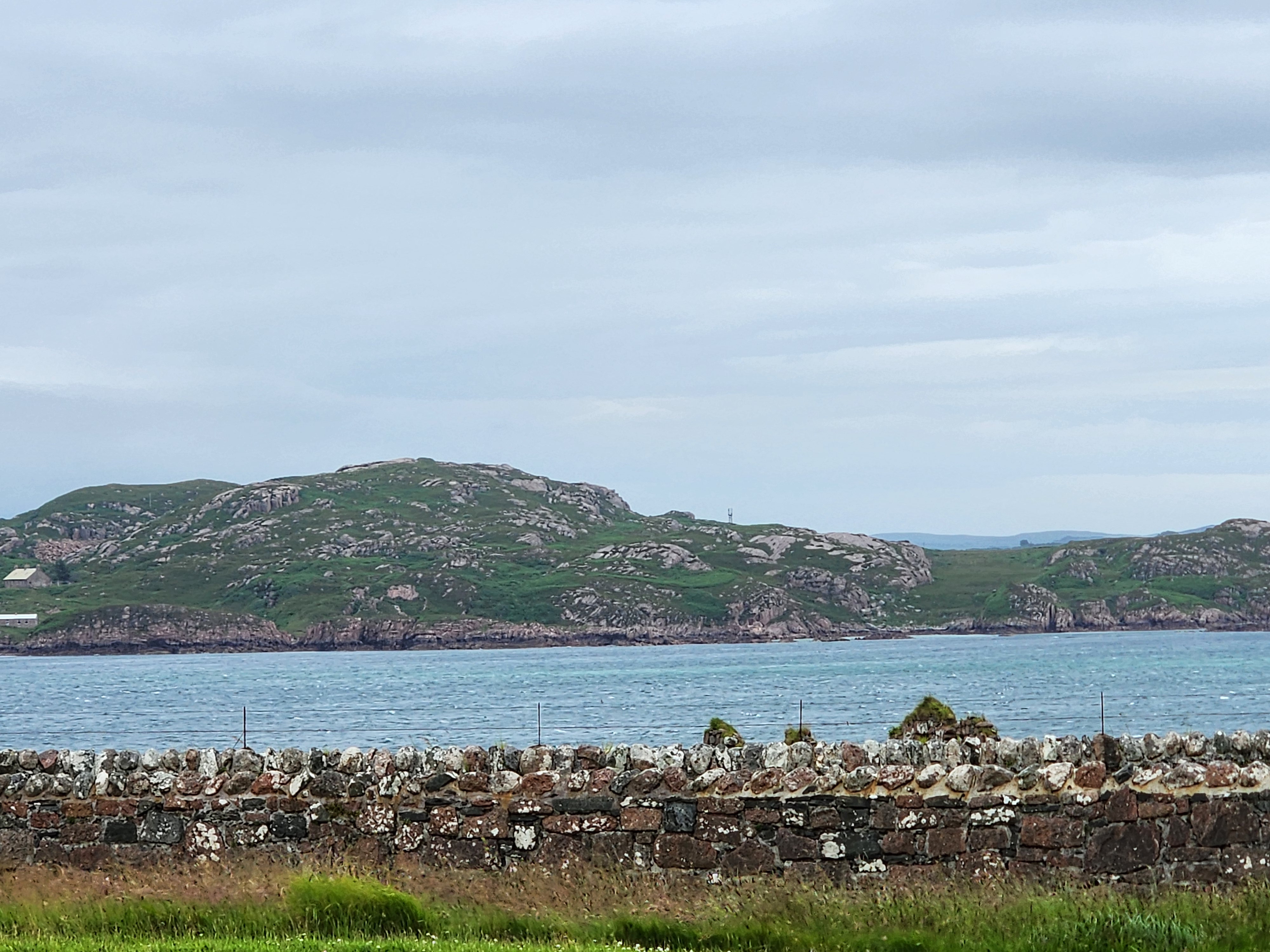
View of the Sound of Mull looking at Mull from Iona

View of the Sound of Mull

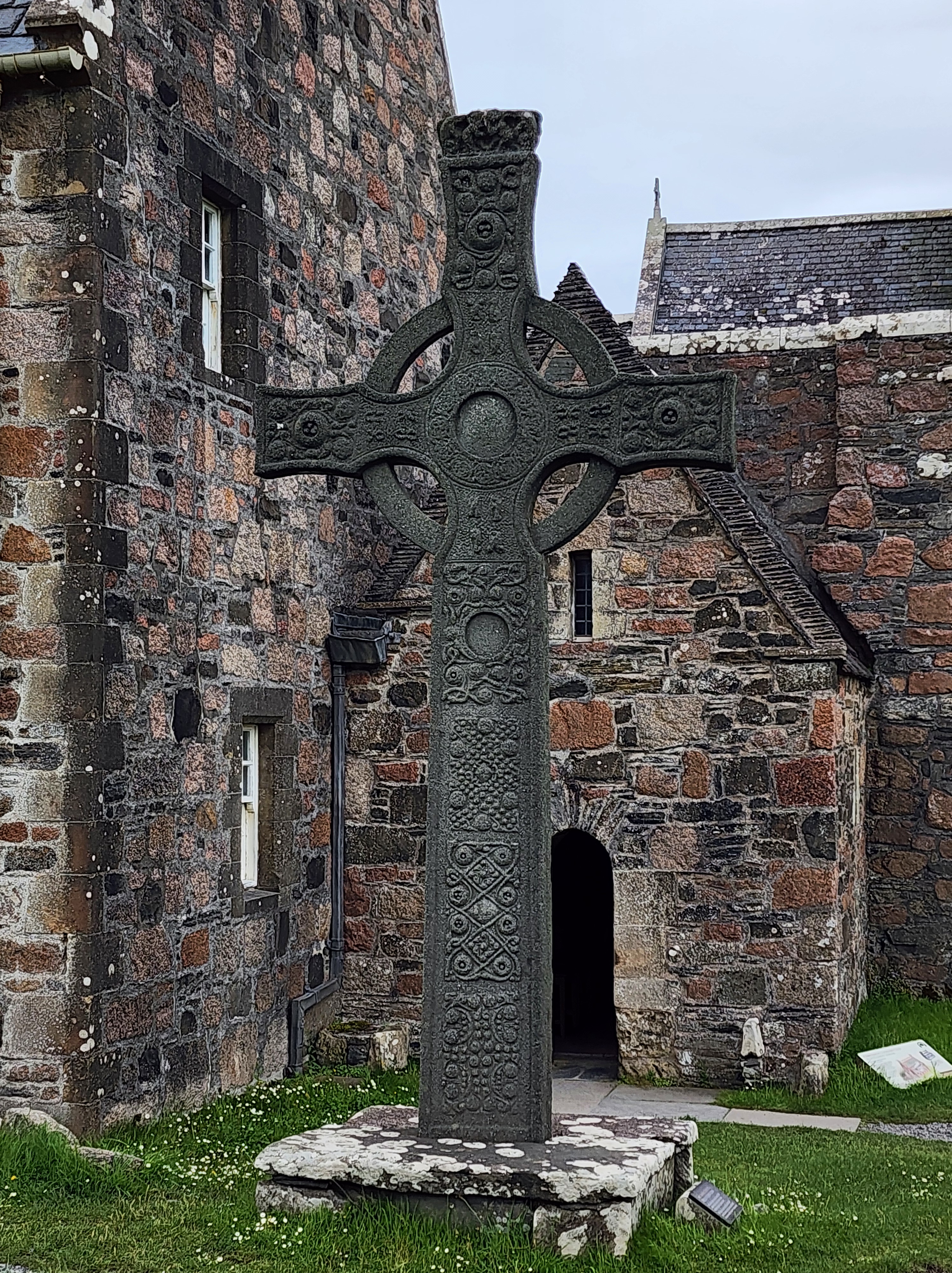
A tall Celtic stone cross in front of Iona Abbey.  This is MacLean's Cross.

MacLean’s Cross

A view of the cloisters, with light coming through the arches on the left side of the photo

Another view of the Cloisters at Iona Abbey

A large statute that looks something like a closed flower with a dove sitting on it.

Cloisters statue

A long view of the inside of the church, featuring wooden chairs in the foreground an a large stone arch in the back.

Inside the Iona Abbey church

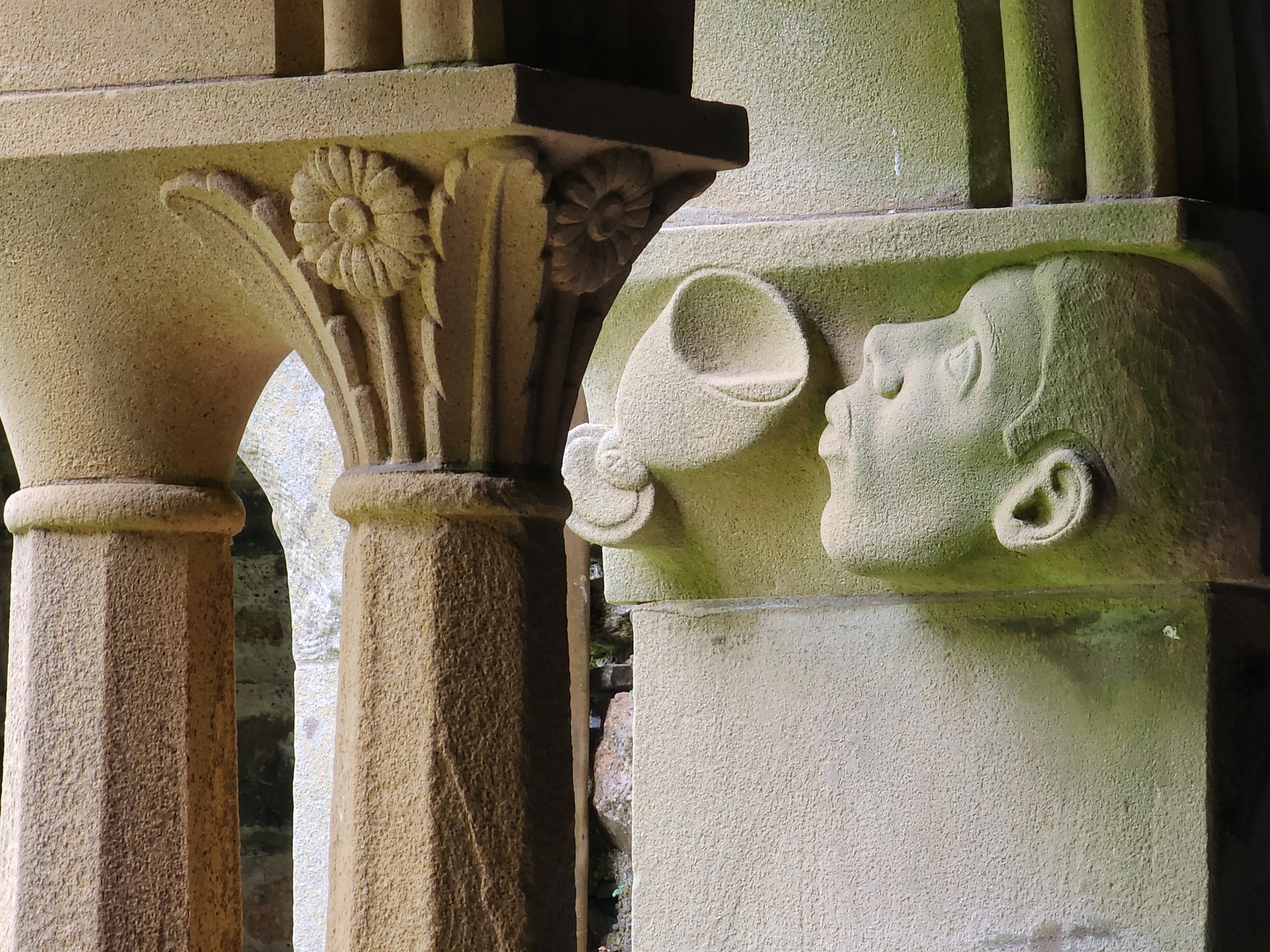
A detail from the cloisters of a man's head about to drink from Jesus's cup.

Detail of the Cloisters

The Iona Abbey great stone arch over the altar space.

The Arch above the altar space

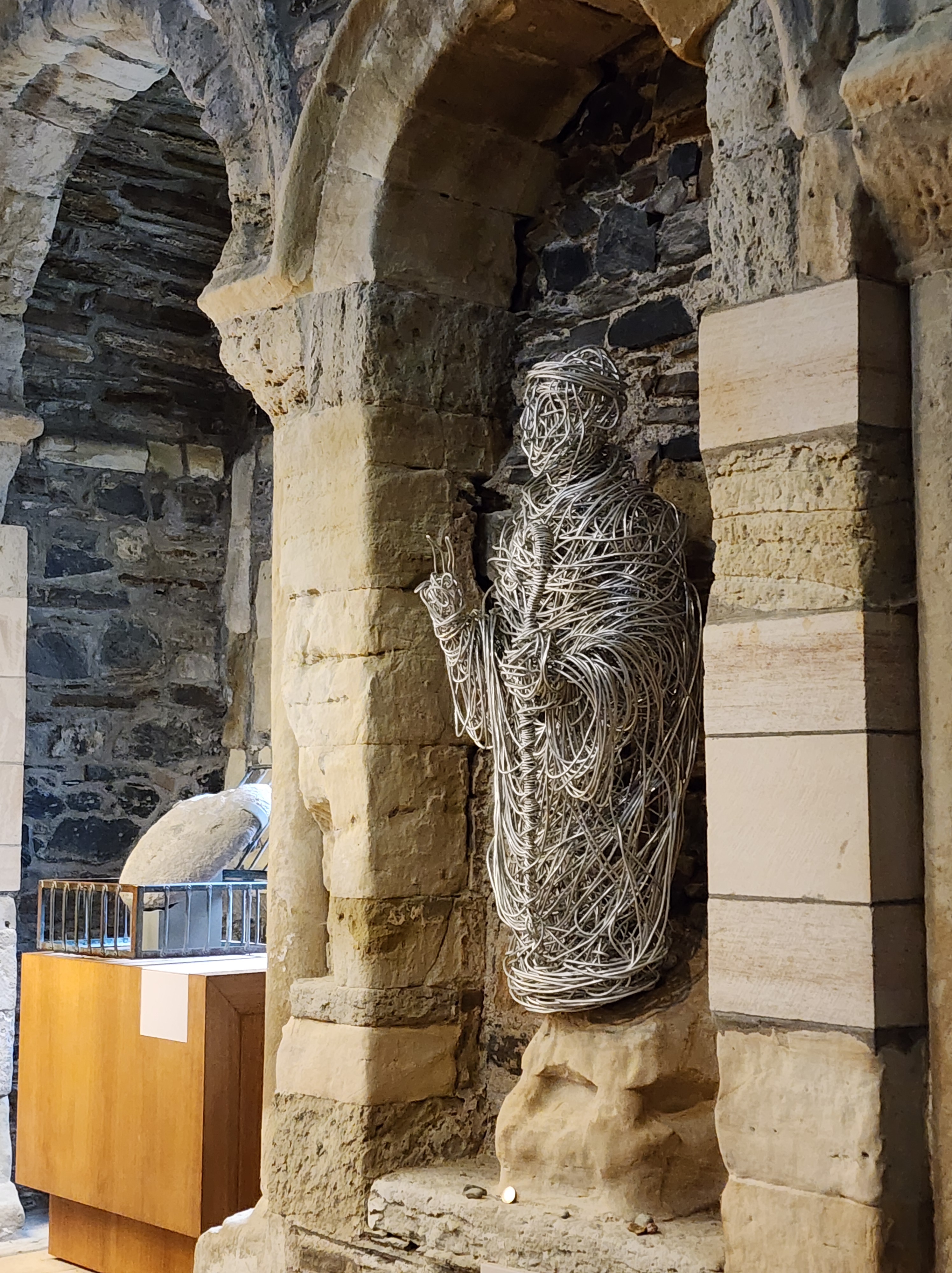
Statue of St. Columba beneath an arch at Iona Abbey

An altar statue at Iona Abbey church

On the floor of the Abbey, a gravestone that may contain the sepulchre of St. Columba

Sepulchre of St. Columba

An altar at Iona Abbey, with ivy growing on the walls

The altar at Iona Abbey

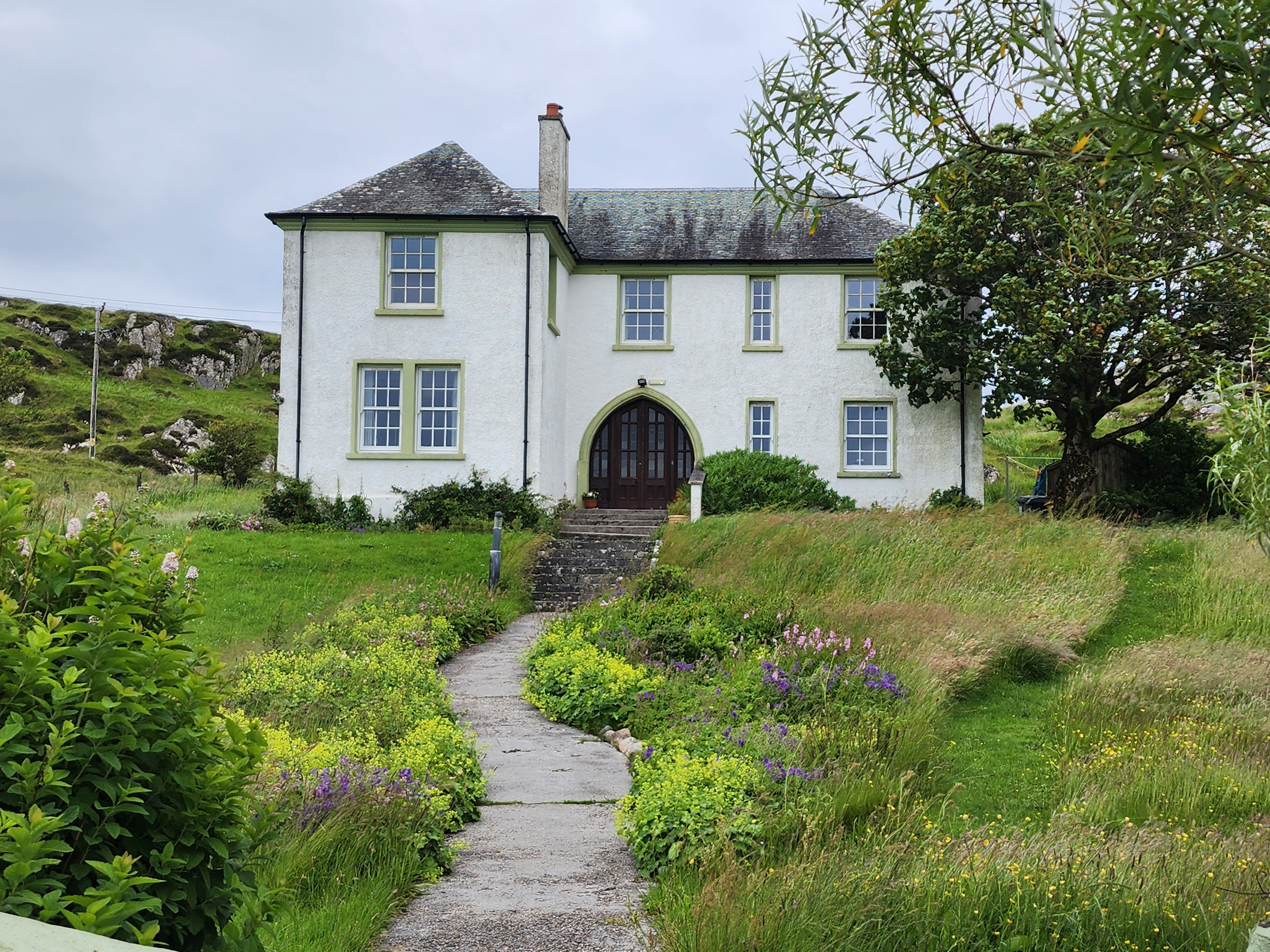
A big house with lush gardens in the foreground.  It is George MacLeod's summer home, near the Abbey

George MacLeod’s summer home, Dunsmeorach, near the Abbey

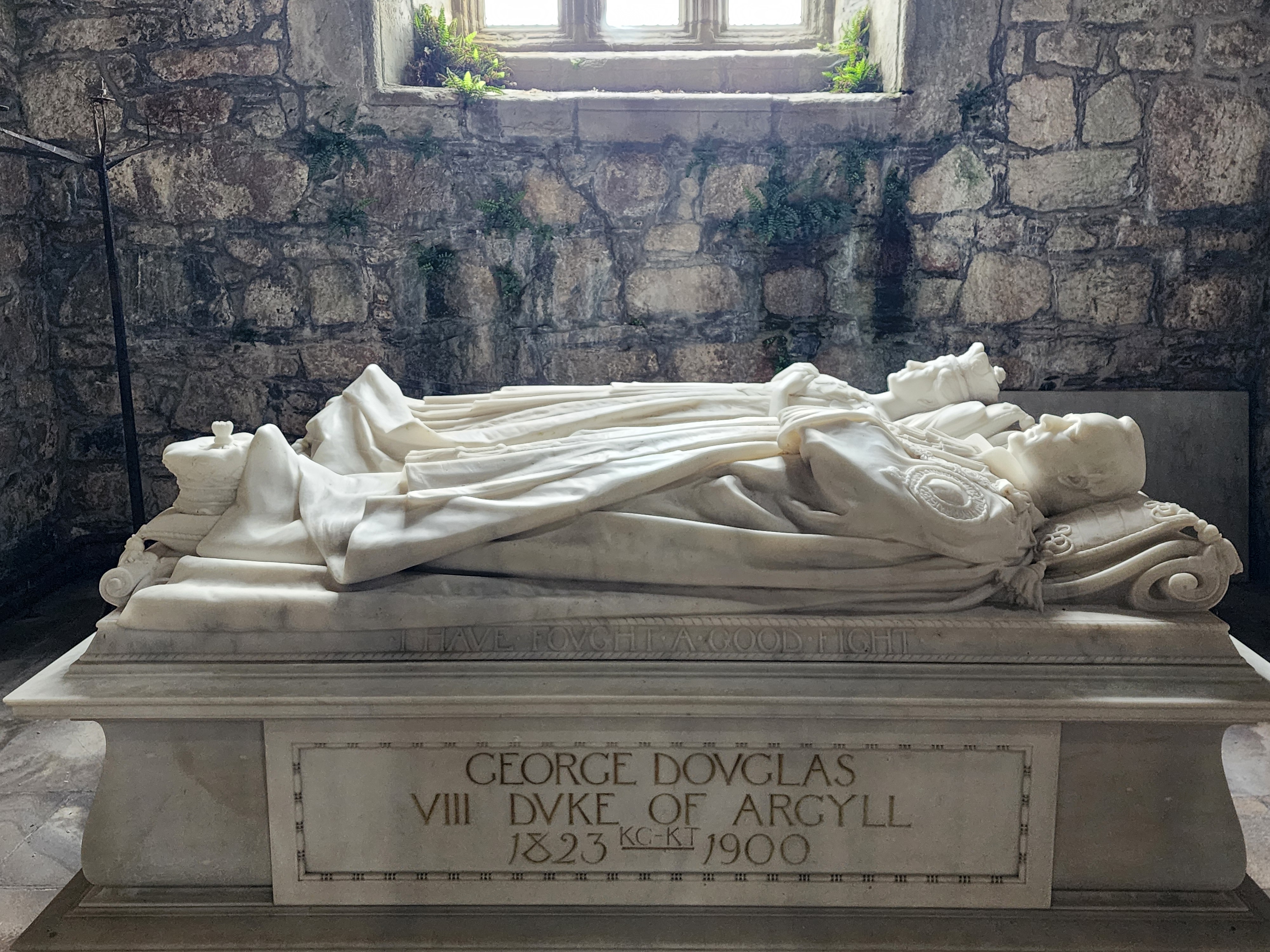
A stone burial crypt of the Duke and Duchess of Argyll

Duke and Duchess of Argyll’s crypt at Iona Abbey

Another view of the ruins of the Iona Nunnery

Iona Nunnery wall

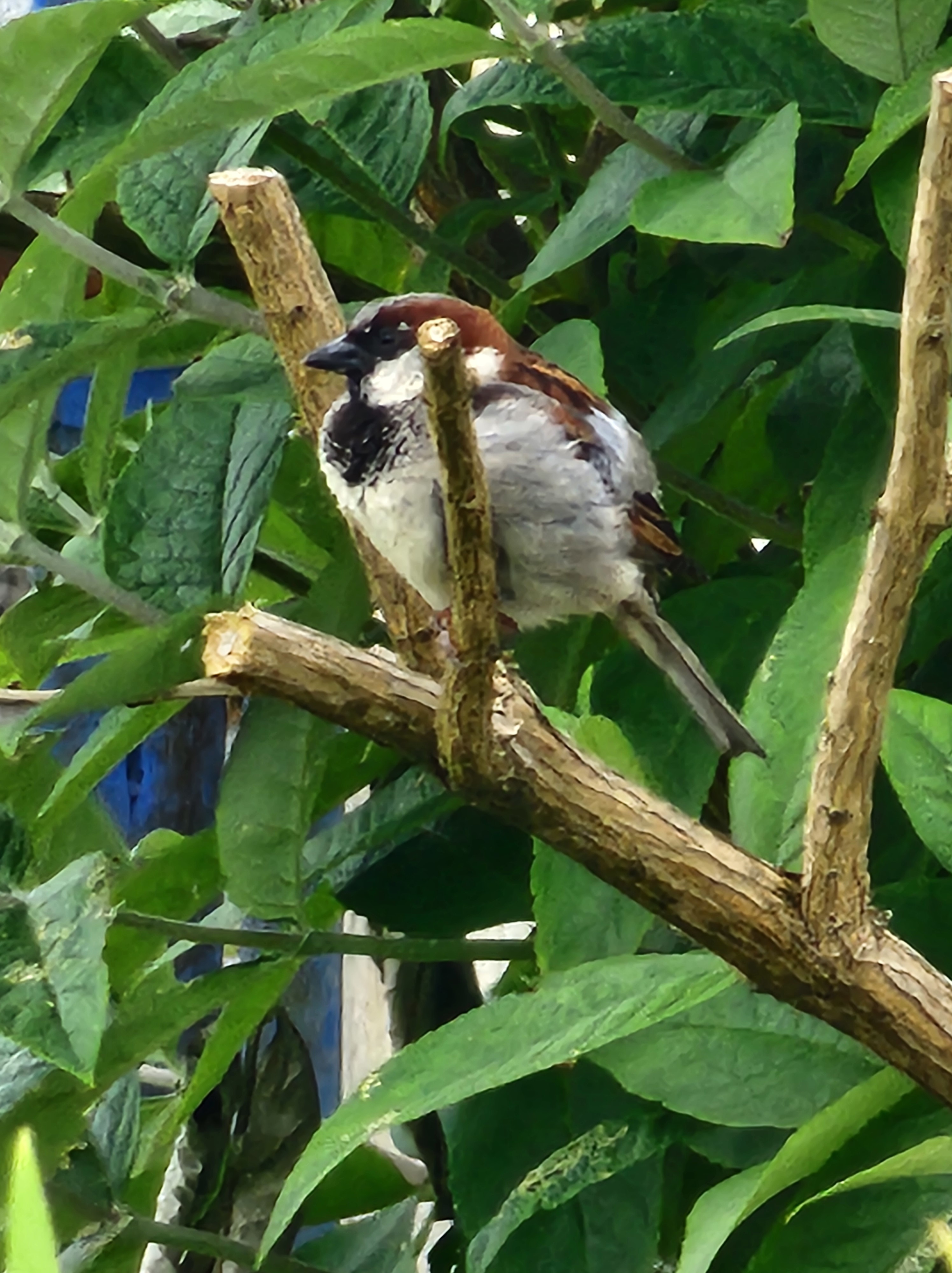
On a leafy background a fat little bird stands on a branch

This chubby guy was singing his heart out in Iona harbor.

More ruins of the Iona nunnery with mostly grass in the foreground.

Ruins of the Iona nunnery

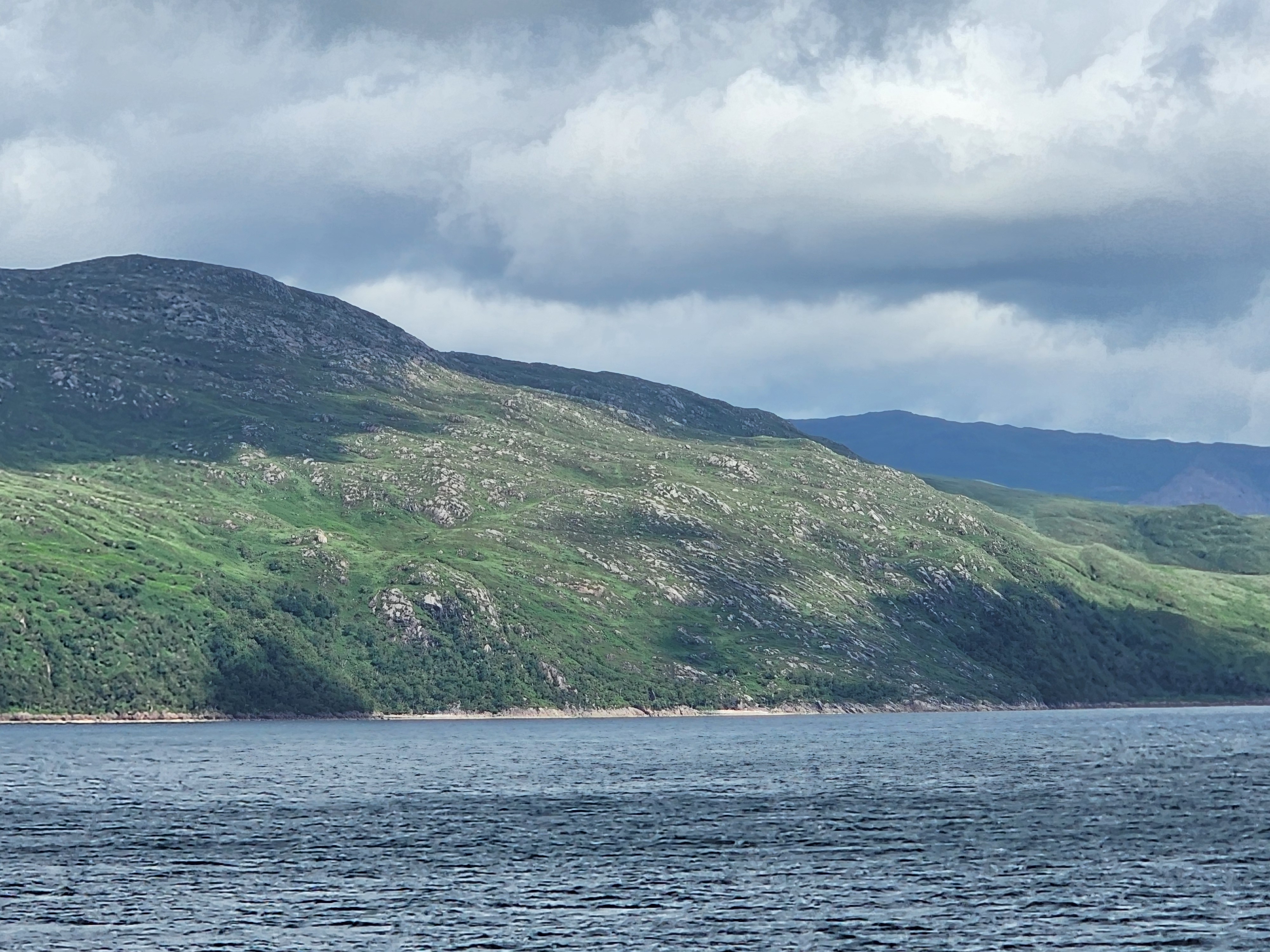
A sunny mountain view from the Craignure ferry depot

A sunny mountain view from the Craignure ferry depot

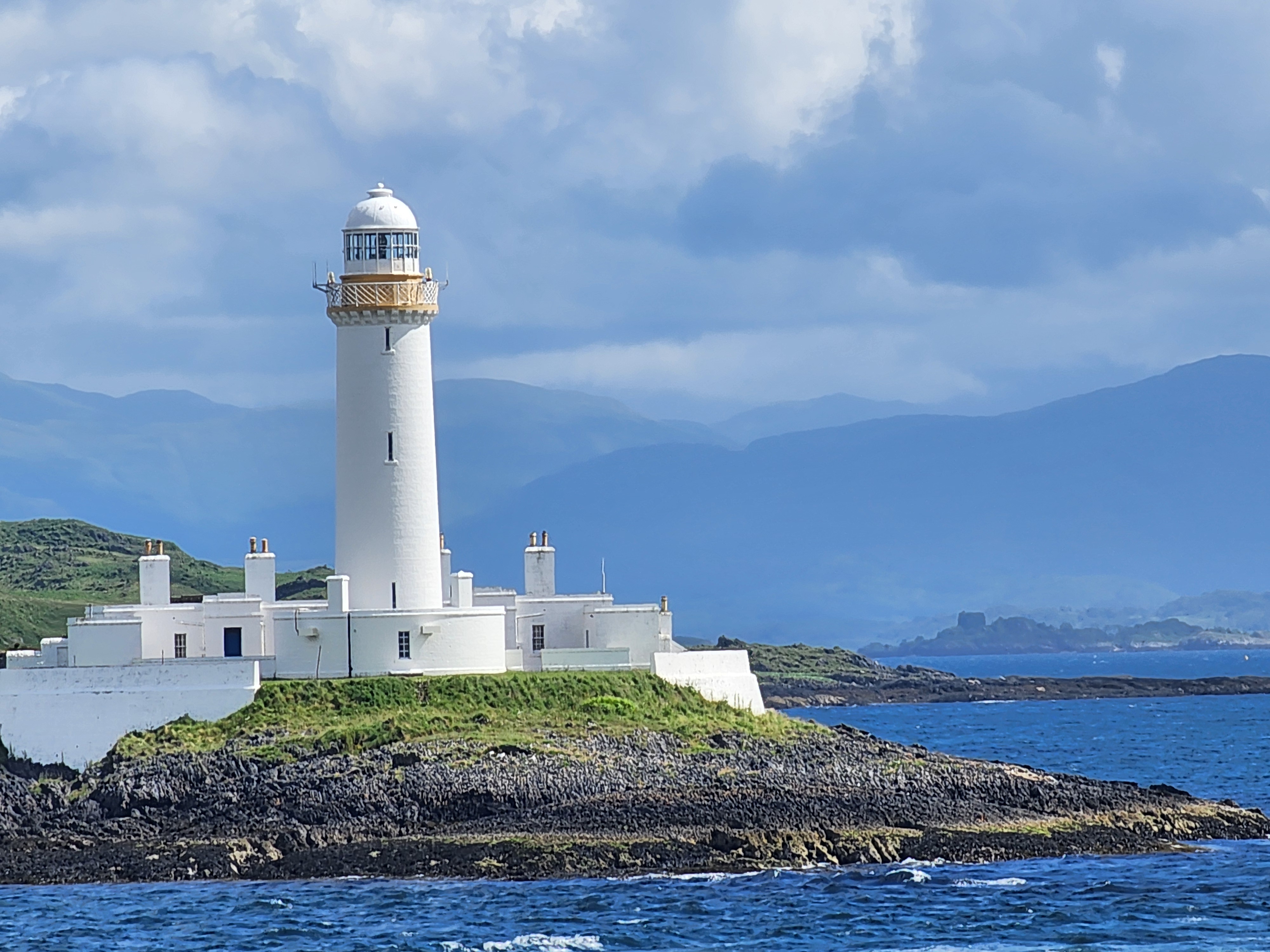
A tall, white lighthouse on the Sound of Mull

Lighthouse on the ferry ride from Craignure to Oban

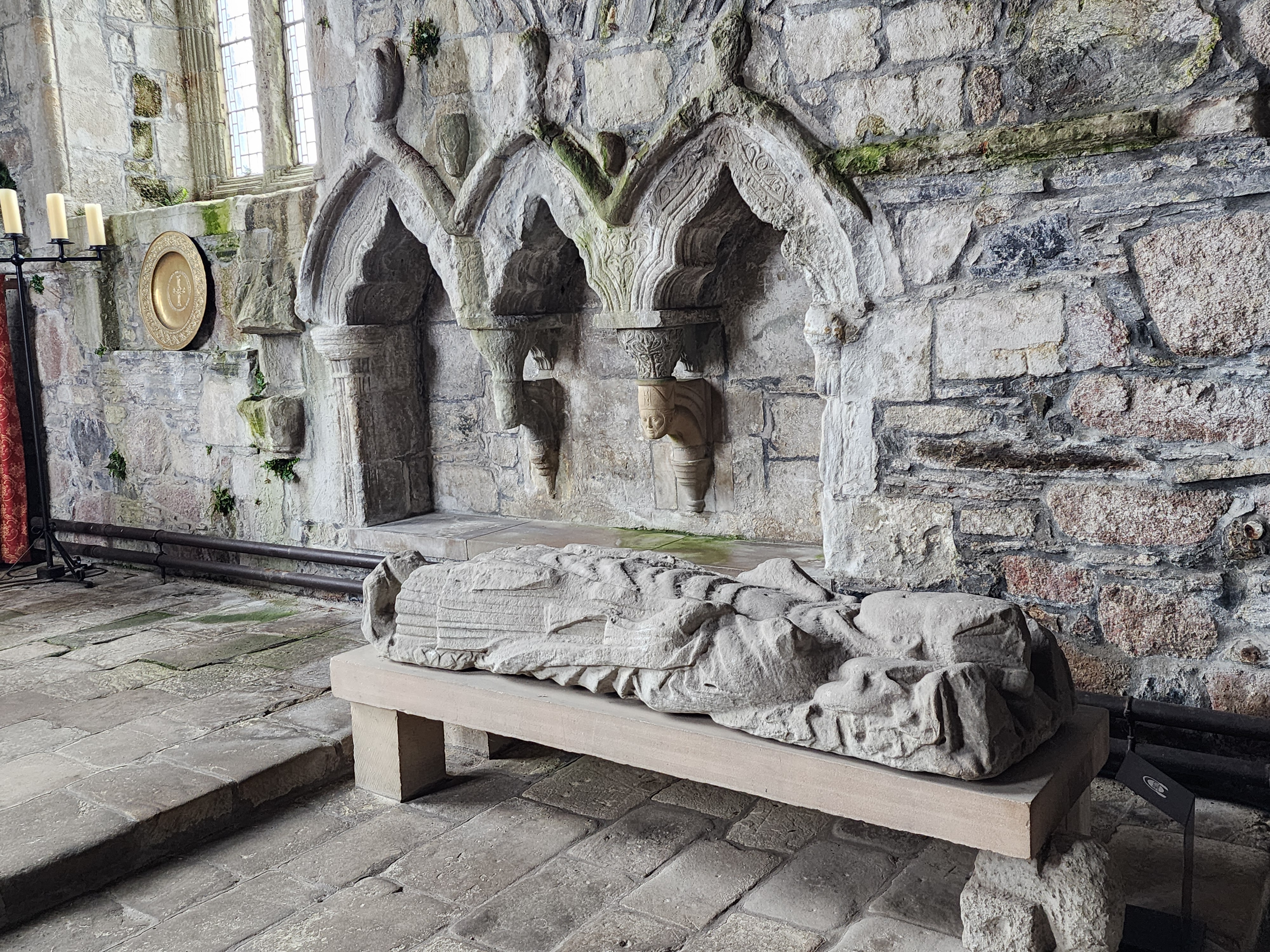
A statue lying down near the altar at the Iona Abbey

A statue near the altar at the Iona Abbey

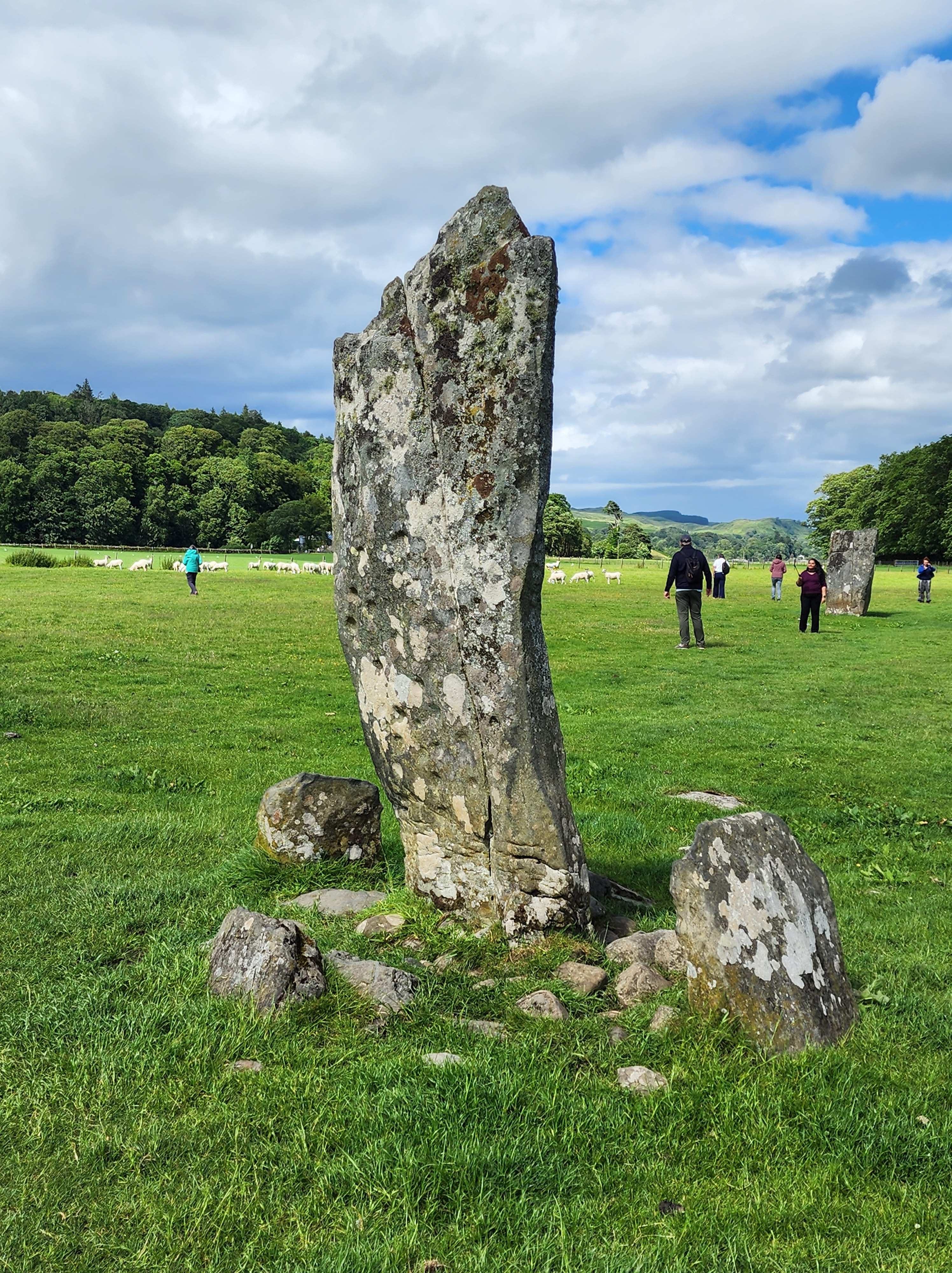
A large standing stone from the Kilmartin cairns

A standing stone at the Nether Largie standing stones

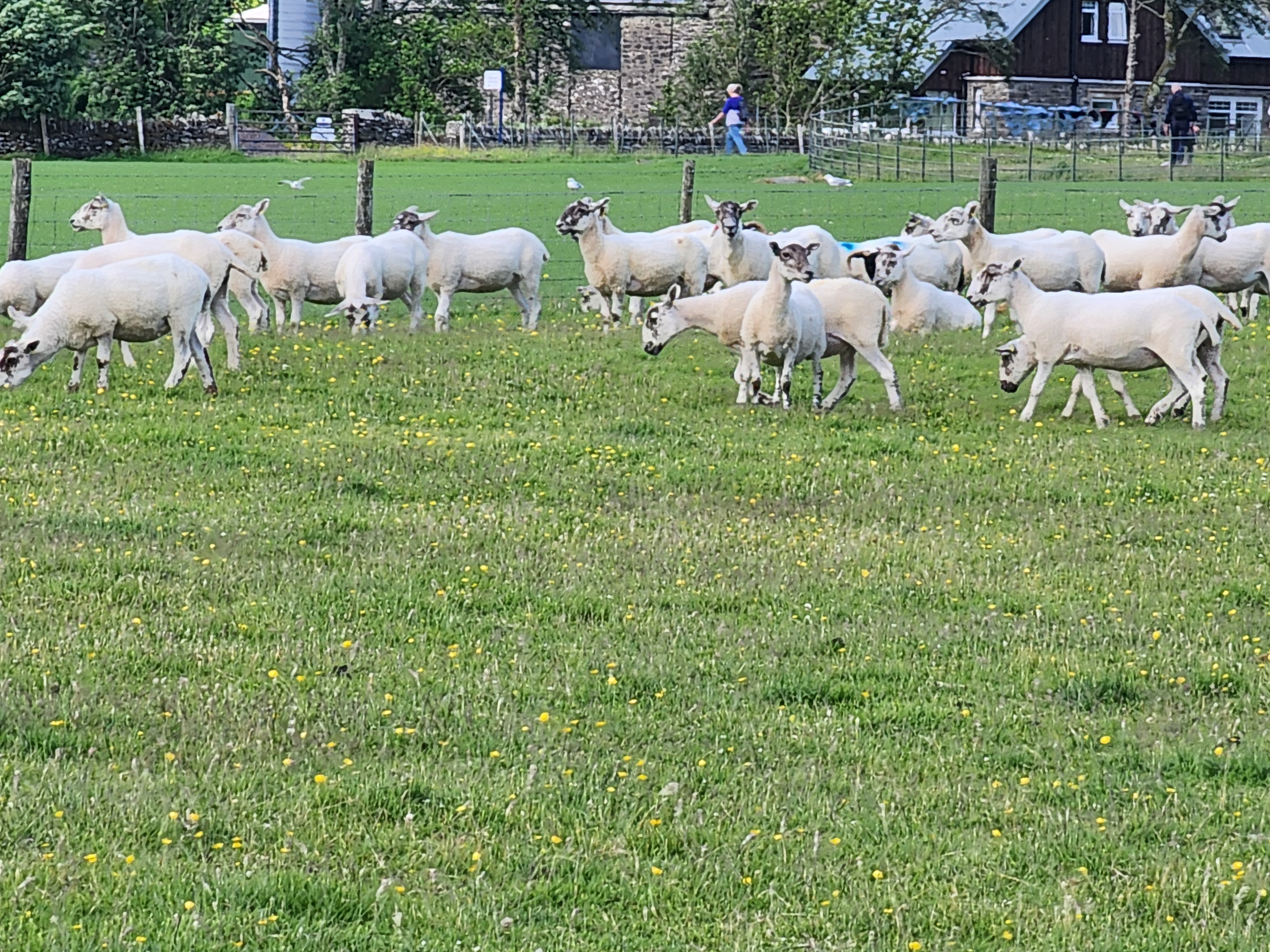
A flock of shee0

Sheepies running free

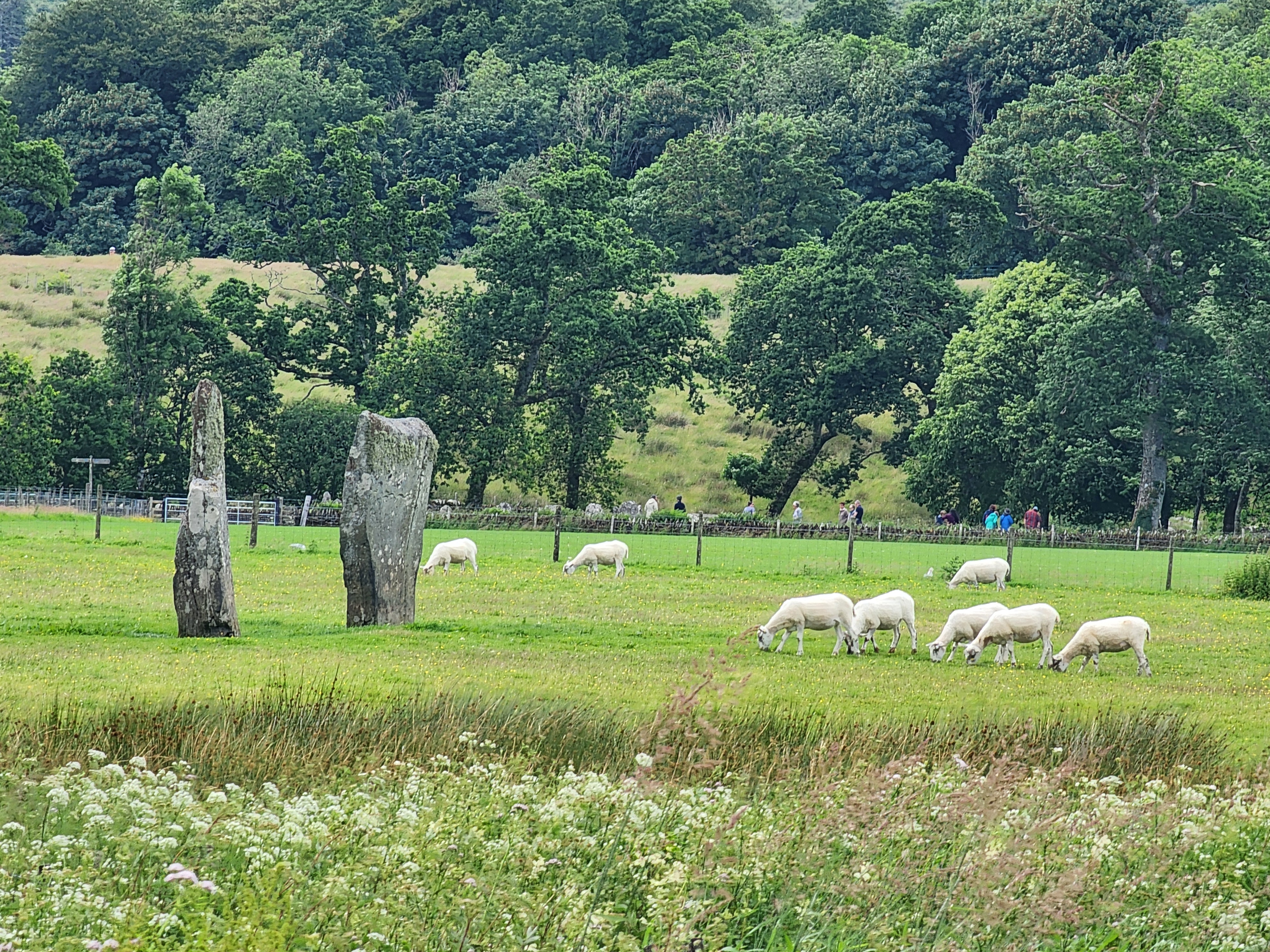
A flock of sheep behind standing stones at Kilmartin cairns

Nether Largie standing stones

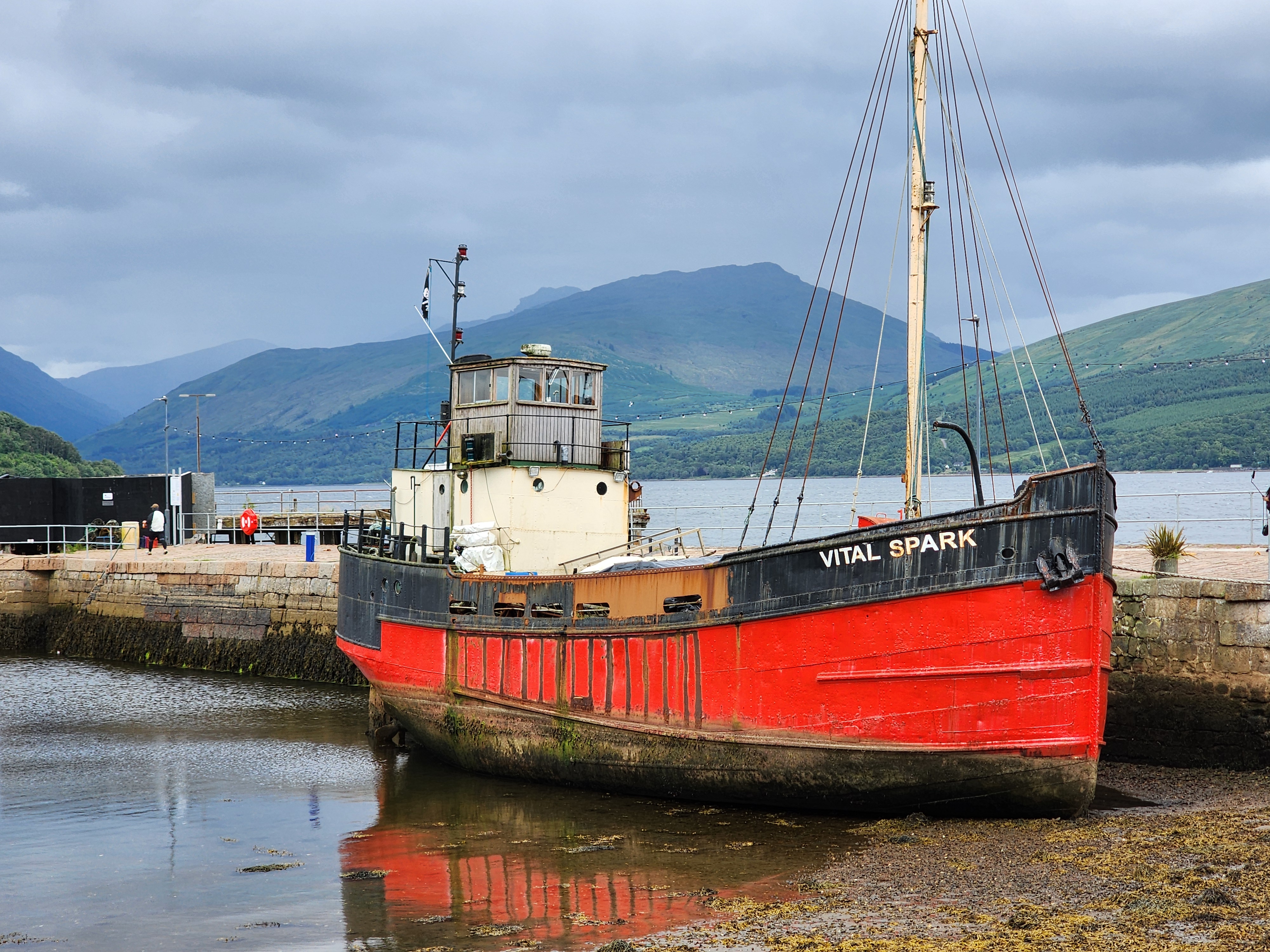
A large fishing trawler docked a Loch Fyne, called The Vital Spark

Fishing trawler at Inverary, on Loch Fyne

A view of Loch Fyne in the foreground with mountains and sky at the back.

Loch Fyne

Another lying-down statue at the altar at Iona Abbey

Another statue at the altar of Iona Abbey

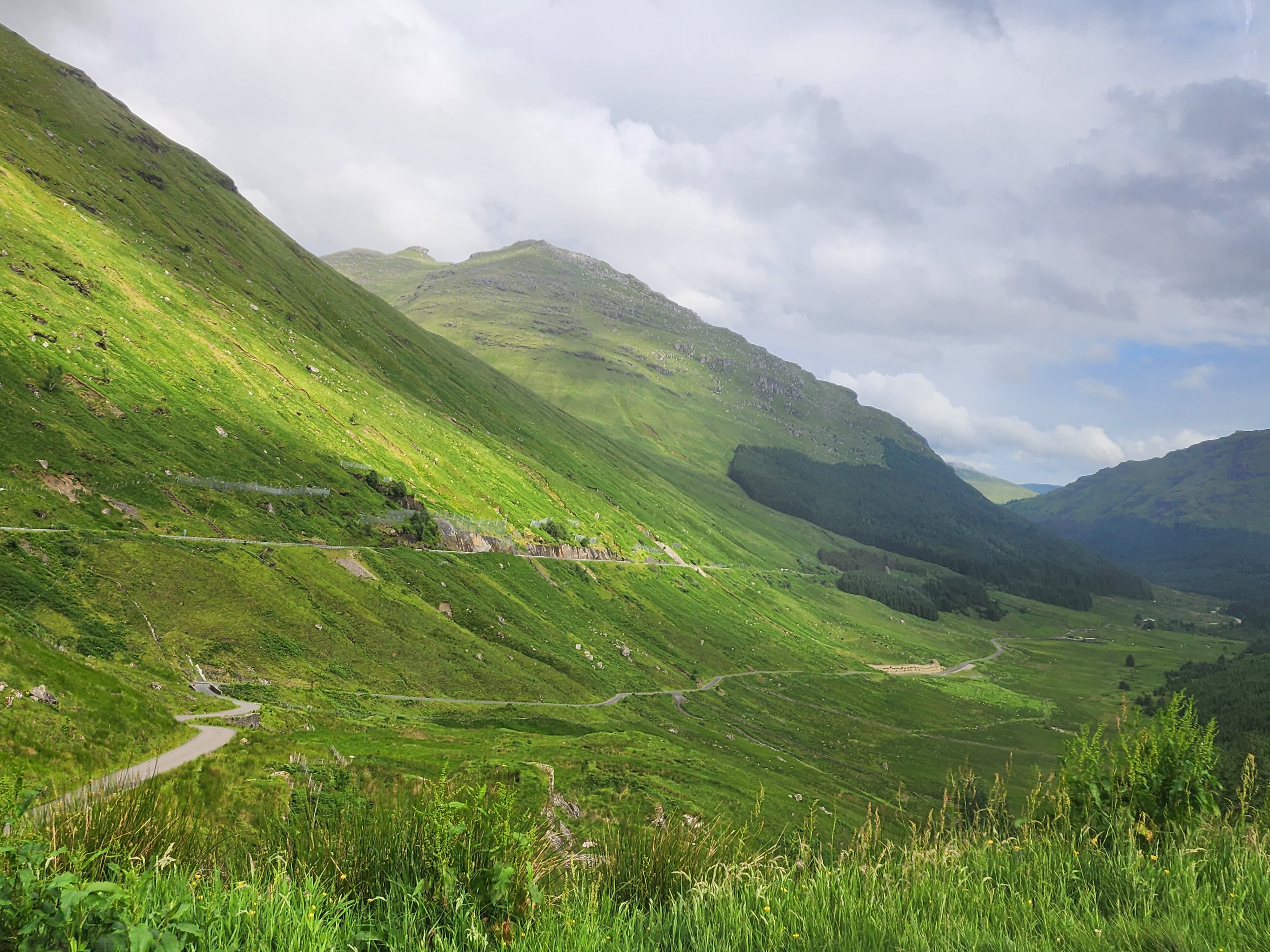
View of Glen Crowe, known as the Rest and Be Thankful viewpoint; basically a big valley with a road in it

View of Glen Crowe, known as the Rest and Be Thankful viewpoint

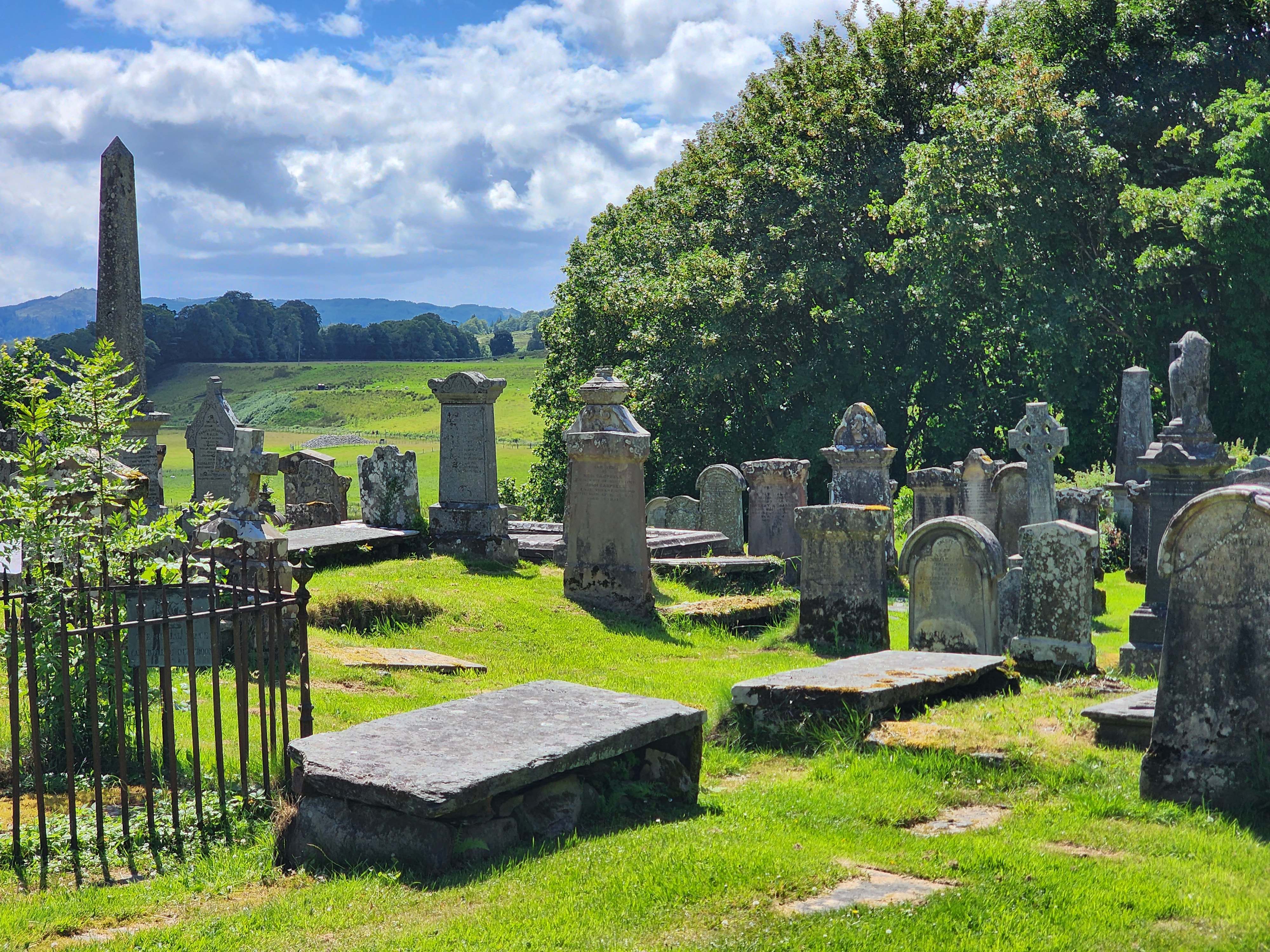
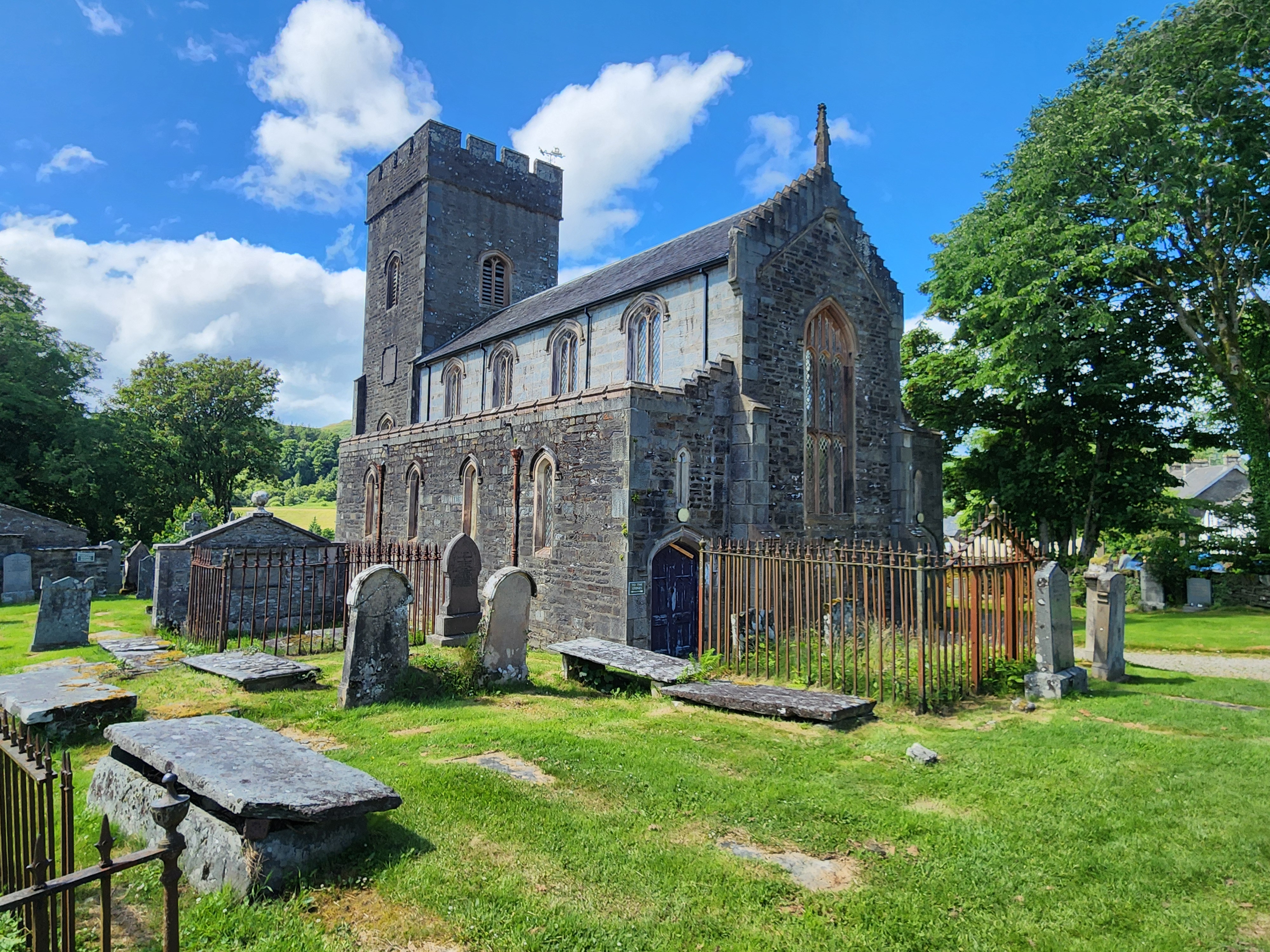
A sunny day in the churchyard at Kilmarten

Churchyard at Kilmartin

A tall, thin stone church next to some grave stones

Kilmartin Church (for sale)

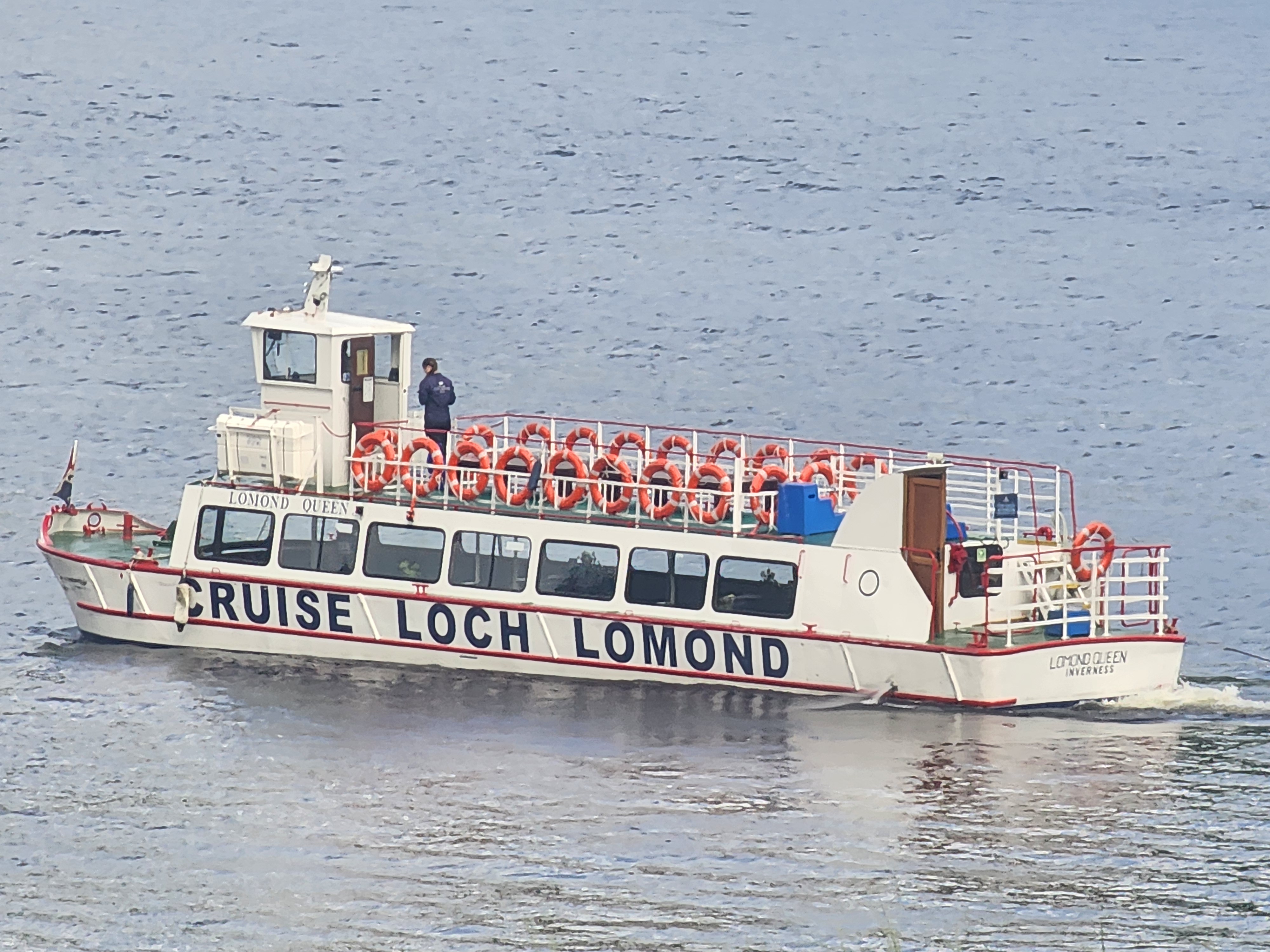
A small cruise ship on Loch Lomond

Last stop of the weekend… not that we went on the cruise

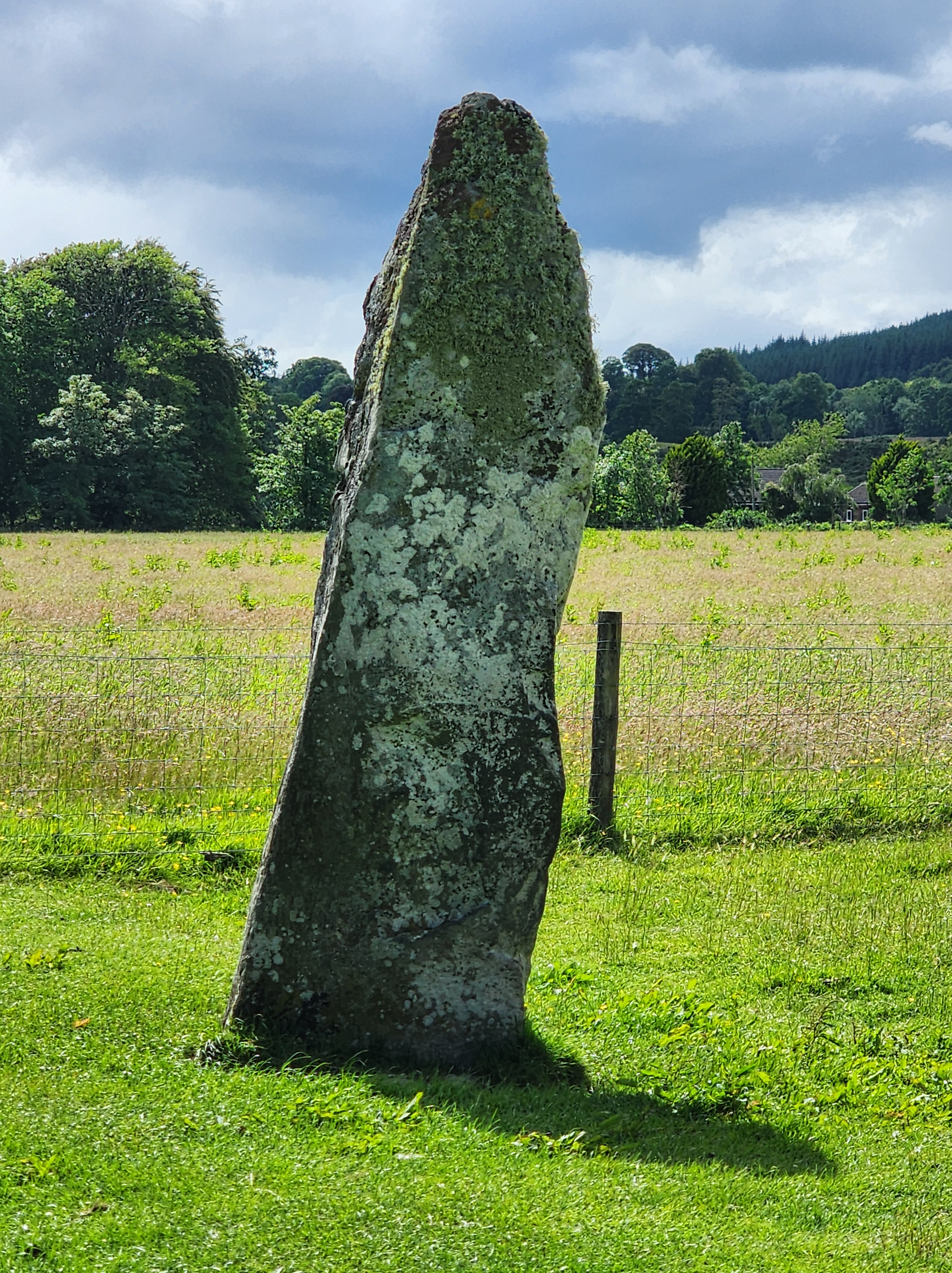
A standing stone

Another Nether Largie standing stone

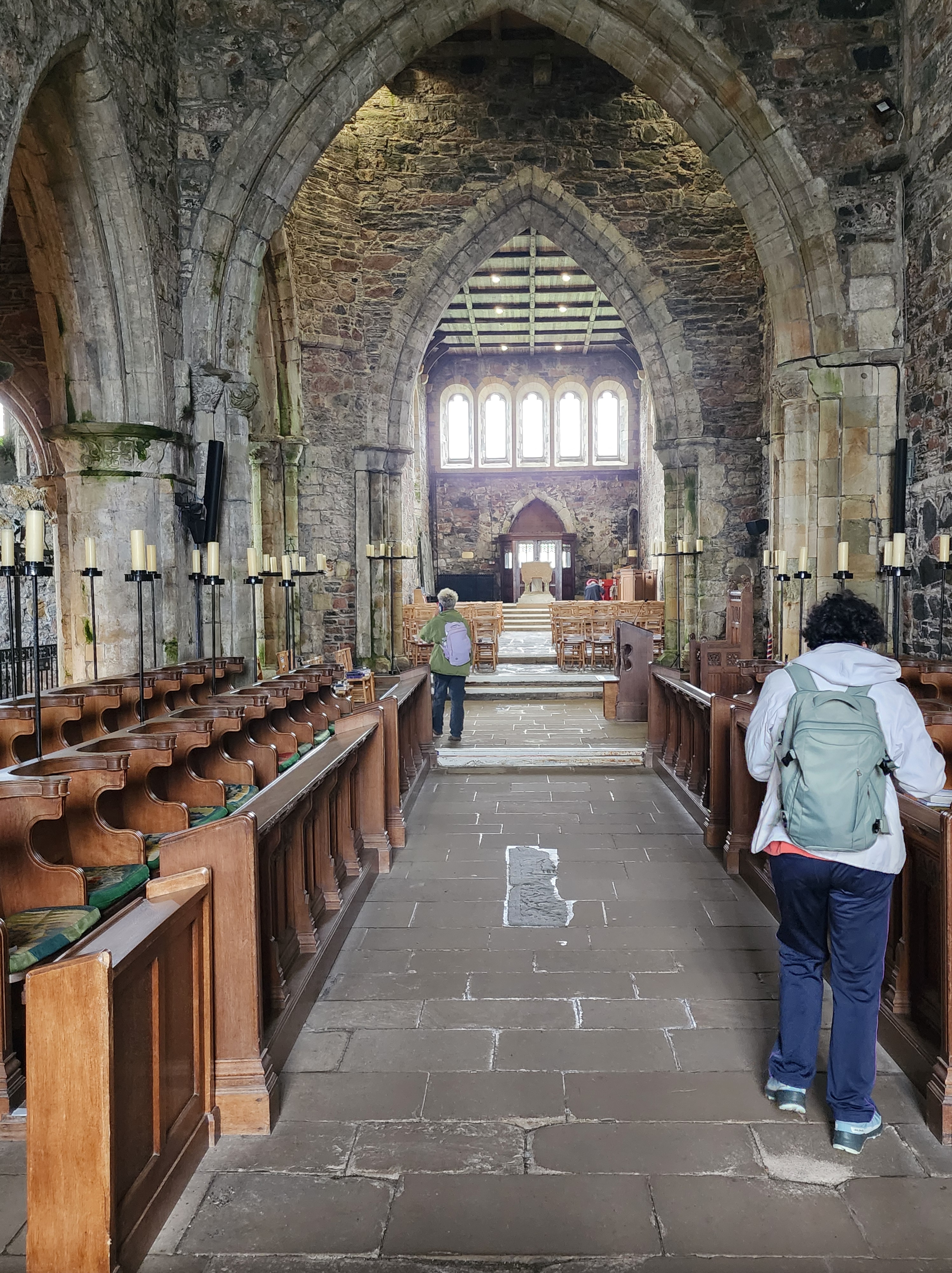
Another view of the inside of the Iona Abbey church, looking towards the altar

Another view of the altar

A grinning woman

Me, freezing my face off on the ferry to Oban