I know I said I was going to write about the Isle of Skye next, but my trip to the Isle of Mull and Iona is on my mind, so I’ll come back to Skye. (I will always come back to Skye—that place is amazing.)
For this trip, I took a train over to Glasgow to pick up the Rabbie’s tour which was leaving at 9. But my train was at 6, which meant I left my flat at 5 and walked to Waverly Station at a slow pace to accommodate my dumb foot. The 6 o’clock train was an “express” which meant it only made 5 stops, as opposed to later trains which would make more like 13 stops and would take up to an hour and a half to get to Glasgow. The last time I took a regular train to Glasgow we had a 30-minute delay, and I didn’t want to take the chance that might happen again. I made it with no trouble to Glasgow, though, walked to the bus station and, like John Lennon, “[waited] for the van to come.” Fortunately, I got to the bus station before it decided to rain like hell.
When our tour guide arrived, he was great fun from the get-go. He asked where people were from and did a find job of remembering everyone’s names. And then he said something which totally surprised me. He said, “I’m not going to say anything that JC Reilly doesn’t already know.” I said, “What?” He added, “She’s been on 50,000 Rabbie’s tours.” And then of course he continued the joke to say that I had also been to Vegas, and what happened in Vegas, stayed in Vegas. It got a good laugh from everyone, but I was mystified, because how could he have known that I’d been on so many Rabbie’s tours in the past? I was determined to figure out this mystery. (Turns out, he looks people’s Rabbie’s records up before a tour and saw I had been on a ton—so he thought he would yank my chain a little.)
We made our first “comfort break” at Luss, which is on Loch Lomond, and it’s a card-only payment to get into the bathroom. But the card-reader wasn’t working. So I thought I would use the baby-change/ handicapped bathroom, but as I was about to put in my 50p, the woman who came out gave a scathing review of the bathroom—there was something foul all over the floor (the toilet was leaking). She said, “It’s grim in there,” which was remarkably subdued for a Scot to describe something, and then she and I had a nice little blether right there in front of the bathroom. She said she thought I was Scottish but then picked up on my accent, and asked me about home. She wandered off to get someone to clean up, and I decided the smart thing I would do on a full bladder was buy a 2 liter bottle of seltzer water. Because that makes sense. But I did eventually use the bathroom and it was fine. And you might ask, why did I share this? It’s because talking with strangers would wind up being a theme for the weekend.
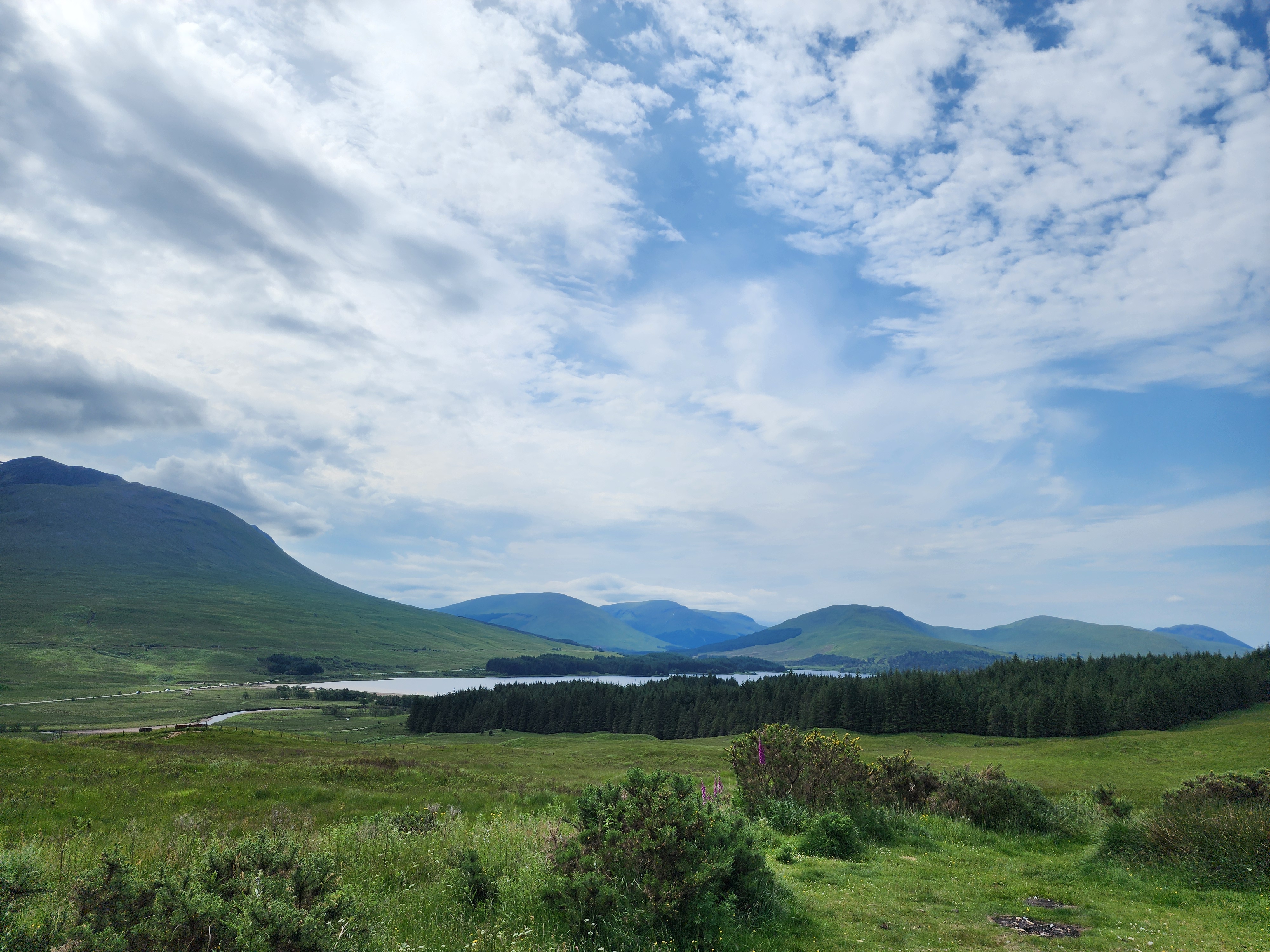
Loch Tulla
I’ve not mentioned this before, but the trip up North to the Highlands has two paths—either you go through Glen Coe (on the A82) or you go through the Cairngorms (on the A9), although it basically makes one big loop. After Loch Lomond, we drove up to a viewpoint at Loch Tulla, and then through Rannoch Moor, where we stopped to see Etive Mòr. Besides being the most photographed mountain in Scotland, as I mentioned in the previous blog, Etive Mòr has the distinction of being featured in Skyfall, the 2012 James Bond movie, and our guide, Nick, was very good with the tunage, because he played Adele’s song “Skyfall,” which I’d never heard before (because I live under a rock) and I liked it a lot (though it was a big repetitive)—very appropriately Bond-ish. I didn’t get out of the bus to take another picture, but I did enjoy seeing the mountain again.
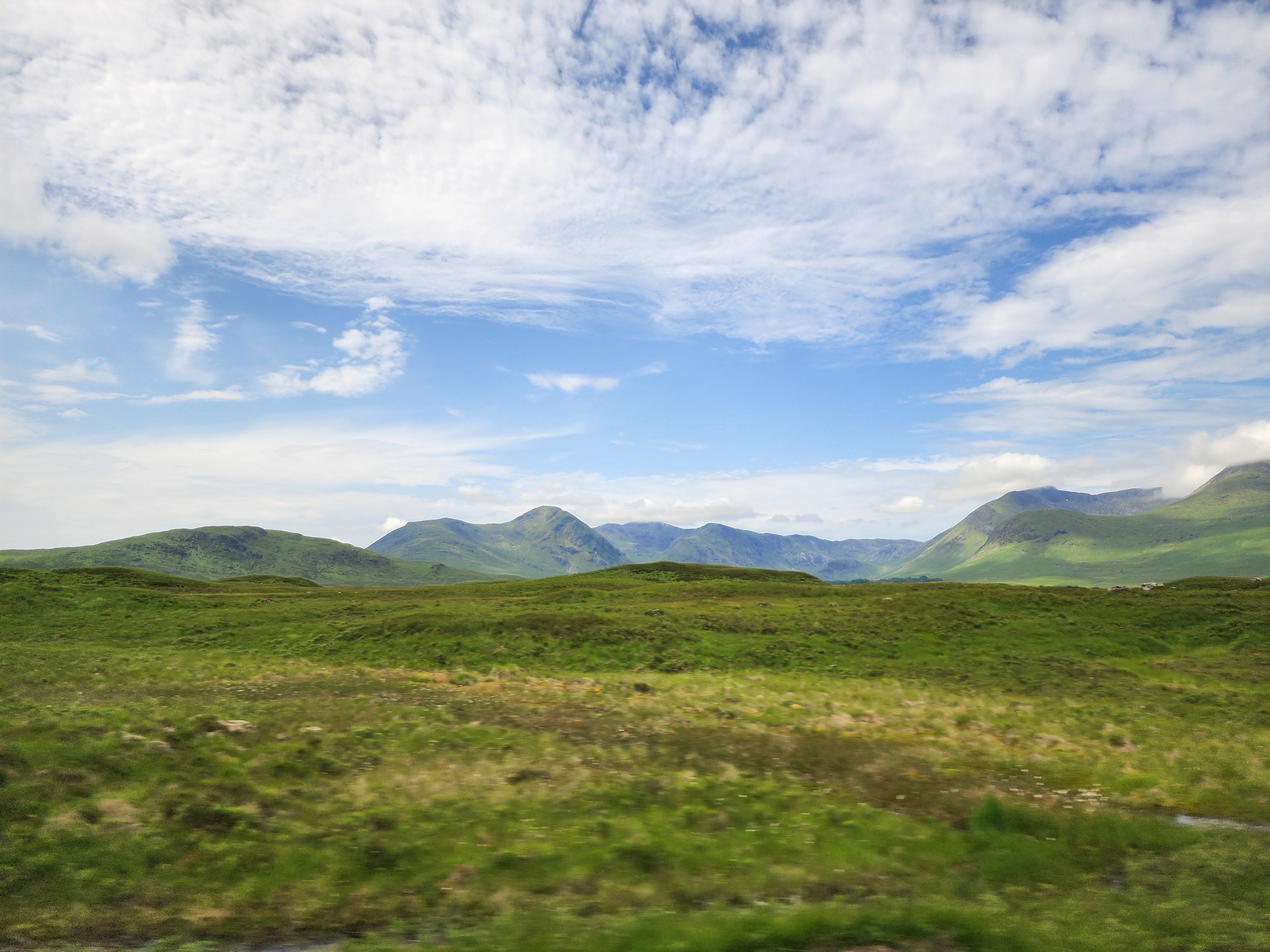
Rannoch Moor
Then it was off to Glen Coe to see the Three Sisters. By this time, the rain had burned off, and the Three Sisters stood in their majestic sunny glory. What was unusual this time at the mountains was that a man in full kilt played the bagpipes—badly. Nick, walked past me and said in a low voice, “It’d be guid if he could fookin’ play the bagpipes right.” I had to smile—Nick was so vehement! The poor playing did not, however, despoil the beauty of the Three Sisters, and actually, even though the piper wasn’t so great, I thought it was nice that he was out there piping away. His collection plate was pretty bare—but that didn’t seem to stop him from doing his busking thing.
After I enjoyed (?) a plate of interesting Scottish nachos (fortunately haggis free) at the Glen Coe Visiting Center (sorry for no photo—I couldn’t find my phone, but the chips were like 1/2 inch triangles), we continued on our way, driving on the Ballachulish Bridge over the narrows of the saltwater Loch Linnhe (pron. linny) and Loch Leven, a bridge that I’ve been over before, but I hadn’t heard this story which I’m about to relate.
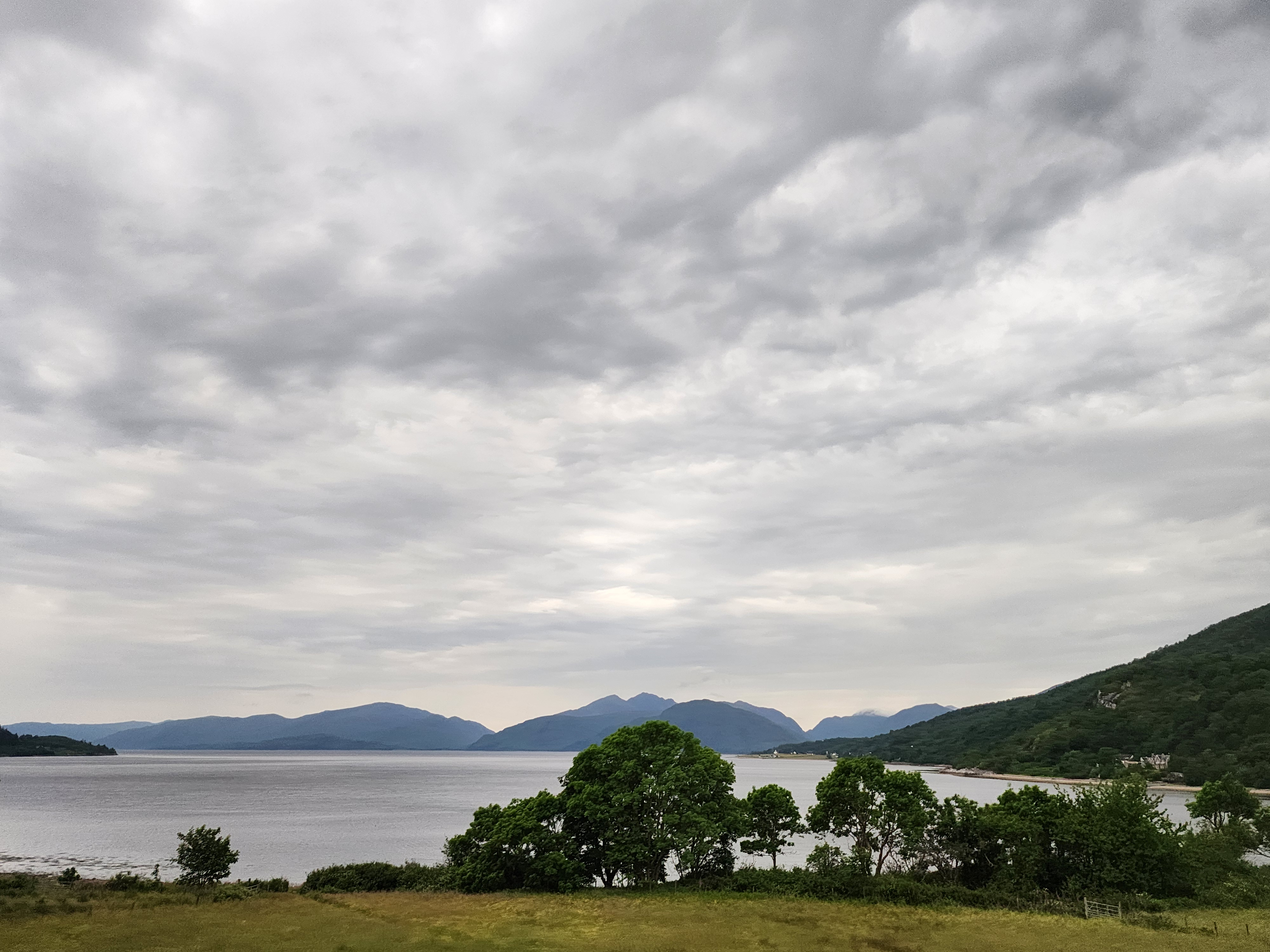
Loch Linnhe
Apparently, the residents of this area were very superstitious and never wanted a bridge, because it had been predicted that if a bridge was completed over the Loch, danger and heartbreak would befall the town. (Faeries might have been involved.) But with the closing of the Ballachulish ferry, people still needed to cross the water. So when the Cleveland Bridge & Engineering Company talked to the locals, they learned about this superstition, and honored it: when they built the bridge, they left the last bolt off, which meant the bridge was not complete, thus keeping the town safe.
We finally got to the ferry point; first, we took the 3-minute Corran ferry ride, then we drove a bit more to get to the second ferry, this one which dropped us off at Fishnish (?) on Mull. (It might have been the Lochalline-Fishnish ferry, but I’m iffy about the placenames.) Whatever ferry we sailed on, we got the chance to get out of the bus to sit in the lounge on the port side. It was raining so hard by this point that you could not even see the horizon—it was just a wall of water. But 20 minutes or so later, we were back on the bus and driving off the ferry to make the 17 mile trip to Tobermory where our accommodations were. Unfortunately, while my B&B was very nice, it was at least a 20-minute walk for a person with good feet down a steep, steep hill (meaning coming back up would be a nightmare) to get to the harbor at Tobermory, so I just decided I would do without dinner because I wasn’t going to be walking.
Another person on the tour staying at the B&B, Victoria, knocked on my door and asked me what my plans for dinner were, and I told her that with my foot, that I was just going to stay in for the night. She offered to get me something but I said thanks anyway, and she toddled off. But much later I heard a tiny knock on my door, and she had shown up with a sandwich and “crisps” for me. Her kindness floored me—and she wouldn’t take any money for her gift. I was so touched. And believe me, it was the best “British Pork and Mature Cheddar” sandwich (minus the pork) I’d ever eaten. After that, I slept.
At 8:40 the next morning, Nick picked us up and we went around Tobermory and gathered the other tour members. It was drizzly, although the sun peeked through here and there. Normally on this tour, we’d have taken a boat ride to the Isle of Staffa, and I was looking forward to going, because the last time I went, I didn’t feel well (and I neither climbed up the scary steps to get to the top of Staffa to see the puffins, nor did I risk the long but tiny path around the side of Staffa to explore Fingal’s cave). This time I had planned on being brave and trying to walk to the cave (even with the bad foot), but because of the unpredictable weather and choppiness of the sea, the voyage was canceled. Everyone on the tour was disappointed. But Nick planned for us to visit Duart Castle instead.
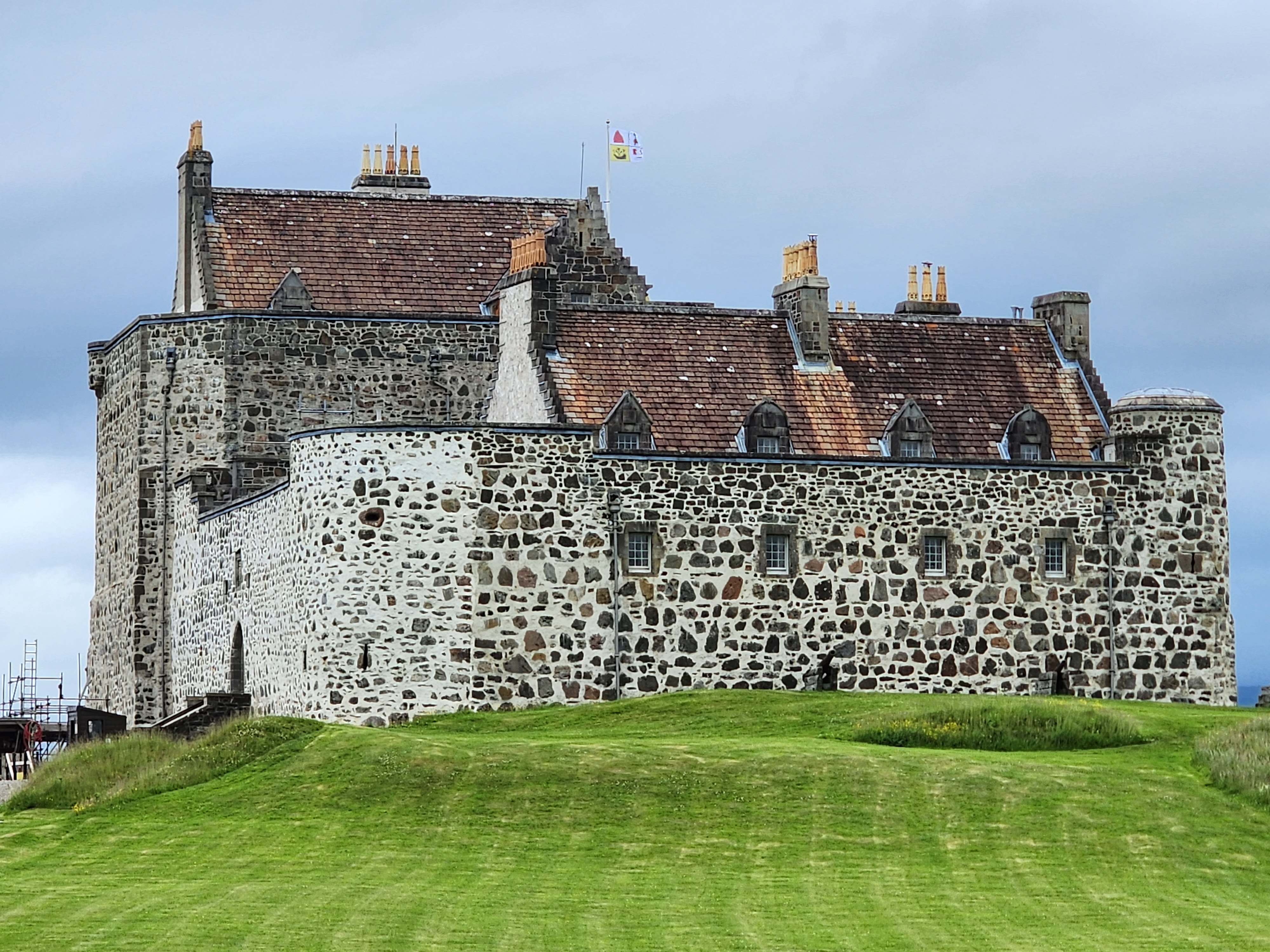
Duart castle (south view)
Duart is, as castles go, a moderately-sized castle with some white-washed walls. It is the ancestral home of Clan MacLean (pron. Mac-layne) that dates from the 12th century and it sits on the tip of a peninsula that juts out in the Sound of Mull. It was used as a home well into the 20th century. The first room you enter is a small kitchen with a coal hob, used up until 1960. It’s hard to believe that a kitchen that small served a castle, and I read on one of the notes on the walls that by the time the food reached the dining room (which was another floor or two up), the food was often cold. (So you can imagine that water for baths would also have been cold!) Living in a castle, while the dream of every young girl (and old girl like me) could not have been particularly comfortable or cozy. But early castles were built for defense, not luxury, after all.
The ground floor also contains the dungeons and small jail cells that a person could barely sit in. But after you pass through the dark and dinge, you climb up the stairs into the Pantry and Sea Room, which was a later addition to the castle, allowing for a beautiful view of the Sound and Loch Linnhe. I sat there as the castle guide talked about the restorations of Duart Castle and looked north out into the Sound. At the very far edge you can see Ben Nevis, and somehow the guide was quite pleased that we could see Scotland’s tallest mountain, despite the clouds.
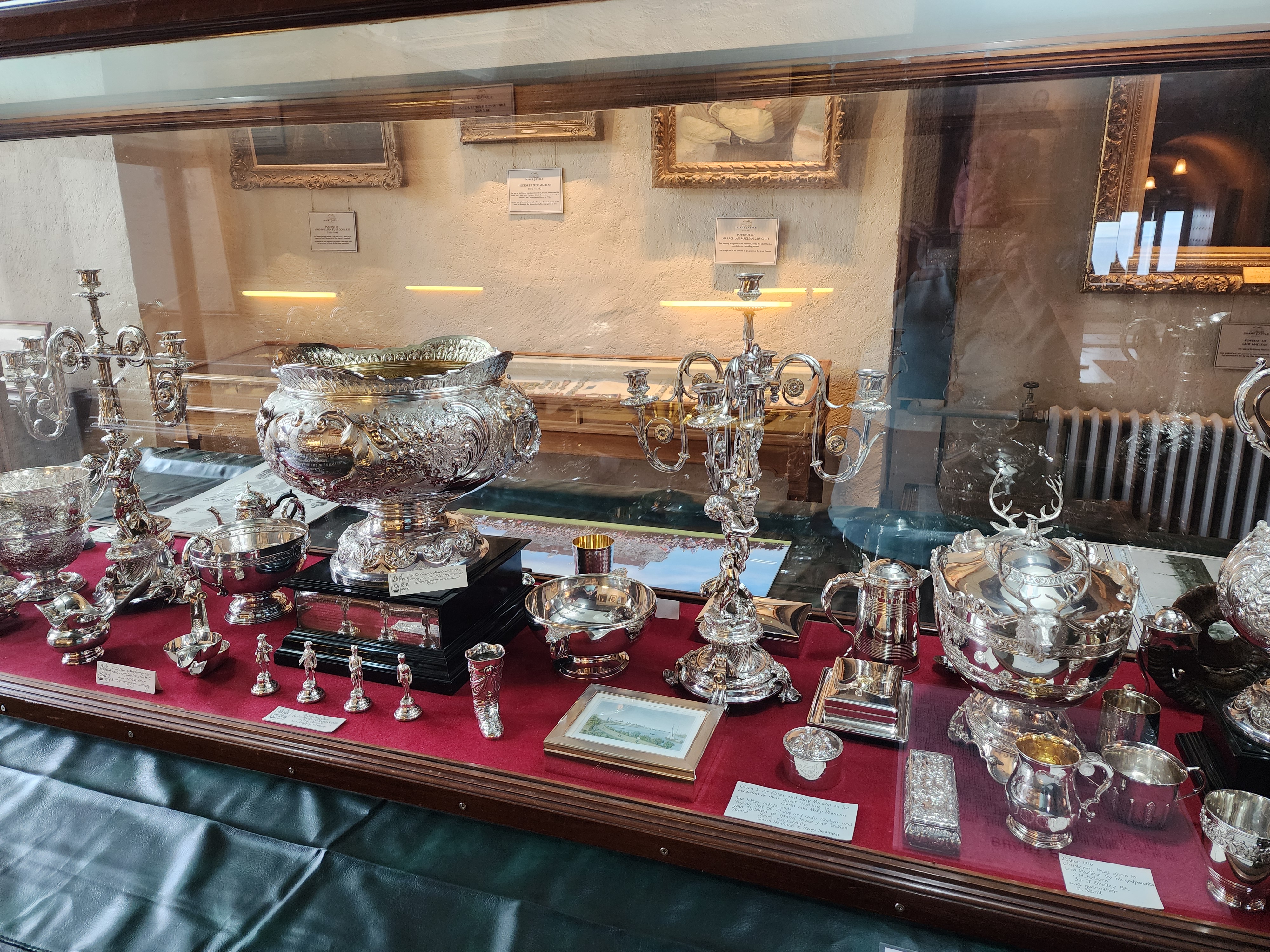
Silver service at Duart Castle
The Sea Room leads into the Great Hall (which included the dining room) which impressed with its antiques and silver, although it was not overly large. There was a fire going in an iron stove and it smelled woodsy and wonderful, and helped chase the chill from the room. In cases were jewelry and weapons and on the pool table was a glass case full of silver tureens, pitchers, bowls, and other table settings. But my favorite thing was a large smoky quartz brooch that a person would wear on their cloak. They offered a replica of it in the gift shop, but it was a little out of my price range, especially because it wasn’t silver.
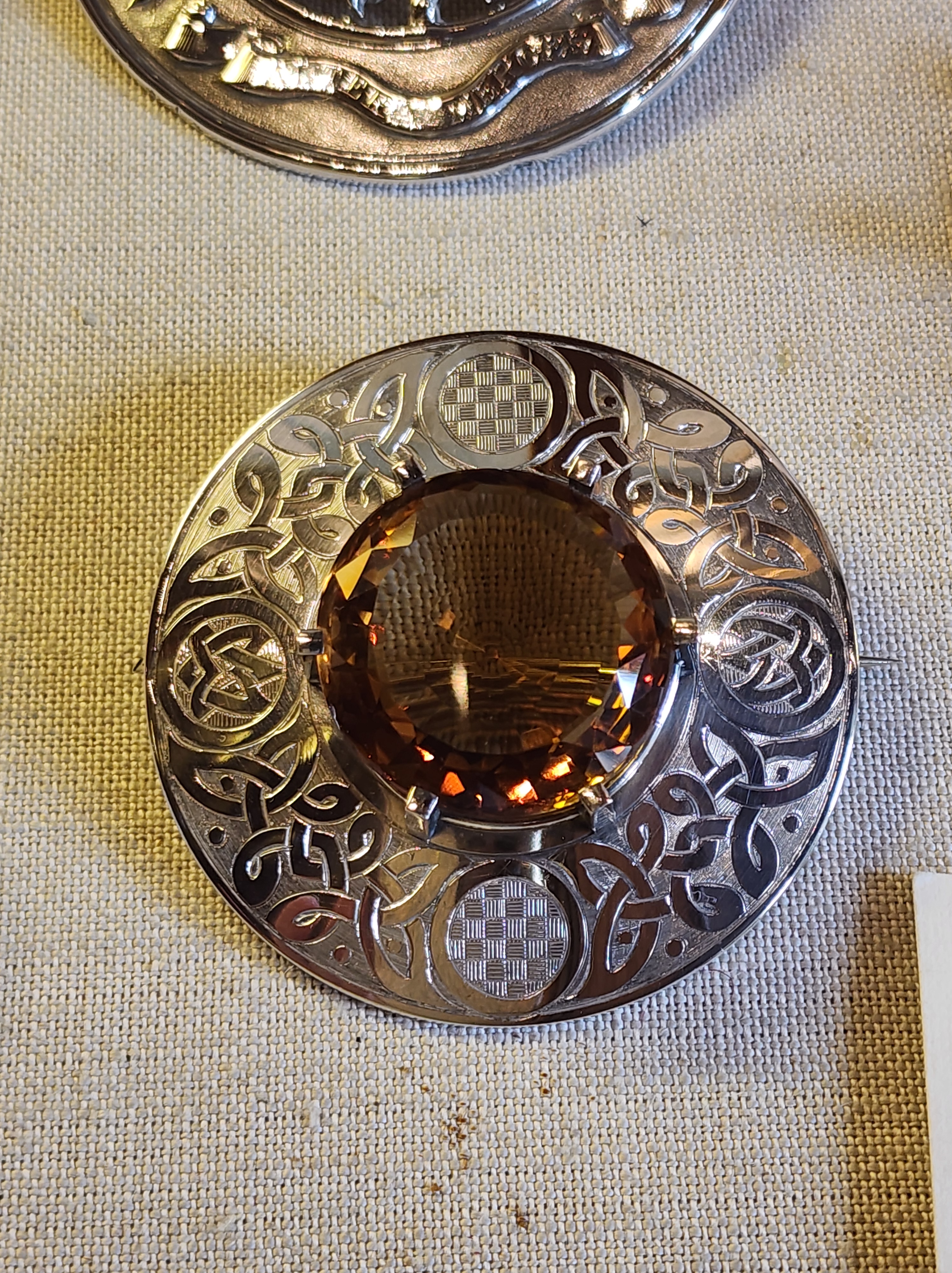
Brooch
Upstairs were the bedrooms/ staterooms for guests, as well as the bathroom that still had the toilet, tub, and sink from the 1912 renovation by Sir Fitzroy, the 26th Chief. I didn’t go upstairs to see them—I watched a video—because to get there you’d have to climb a spiral staircase with a hand rope, and I didn’t think I could manage it. After visiting the Great Hall, I left the castle and went to stand at the battlements and look out over the water for a bit before going into the café for a cheese scone.
And then we were off to Iona. The CalMac ferry only took about 20 minutes to get there, and because we didn’t have a trip to Staffa in the offing, Nick gave us over 3 hours on the island. This visit I was determined to see the Abbey—the last time I was there (2023?), we’d only been given an hour for lunch on the island because we needed the rest of the time to get to Staffa, and so I didn’t get a chance to walk there. This time, I was going. It had grown cold and windy though, so the walk to the Abbey was bracing. I found a bench across from the hotel gardens and enjoyed the many dogs that walked by, but eventually after resting my foot, I continued the walk and got to the Abbey itself.
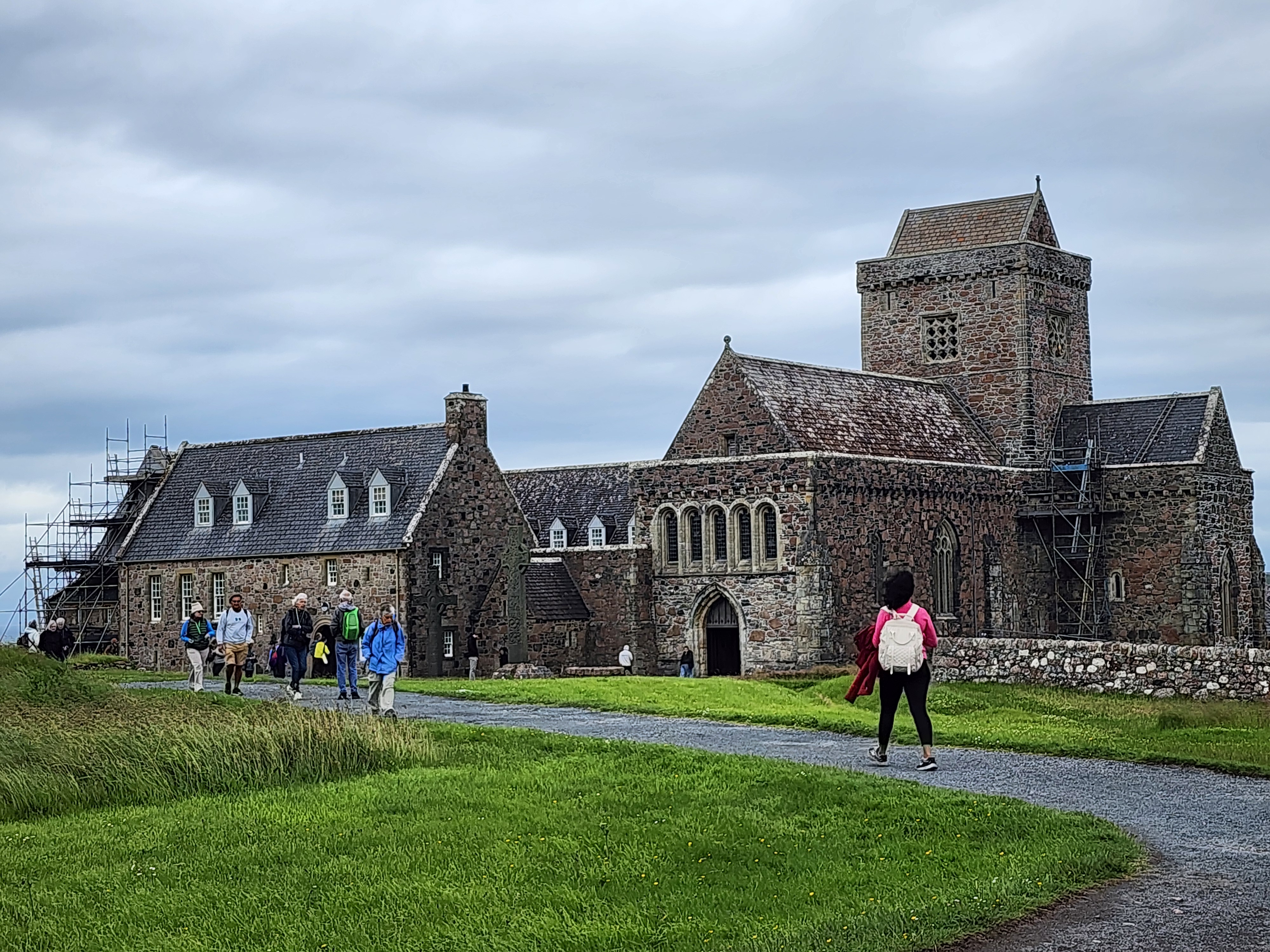
Iona Abbey
Iona Abbey is smallish, but appropriately sized for being the first Christian site in Scotland. Apparently, how the aristocratic St. Columba chose its spot had to do with his wanting a place from which he could not view Ireland anymore (he had been chased out of that country over a plagiarism dispute around 560). Unfortunately, he chose a site on a dark, dreary day; when the sun came back out, he could see Ireland after all, but he chose not to move his community. The Abbey dates from around 1200, long after St. Columba’s time.
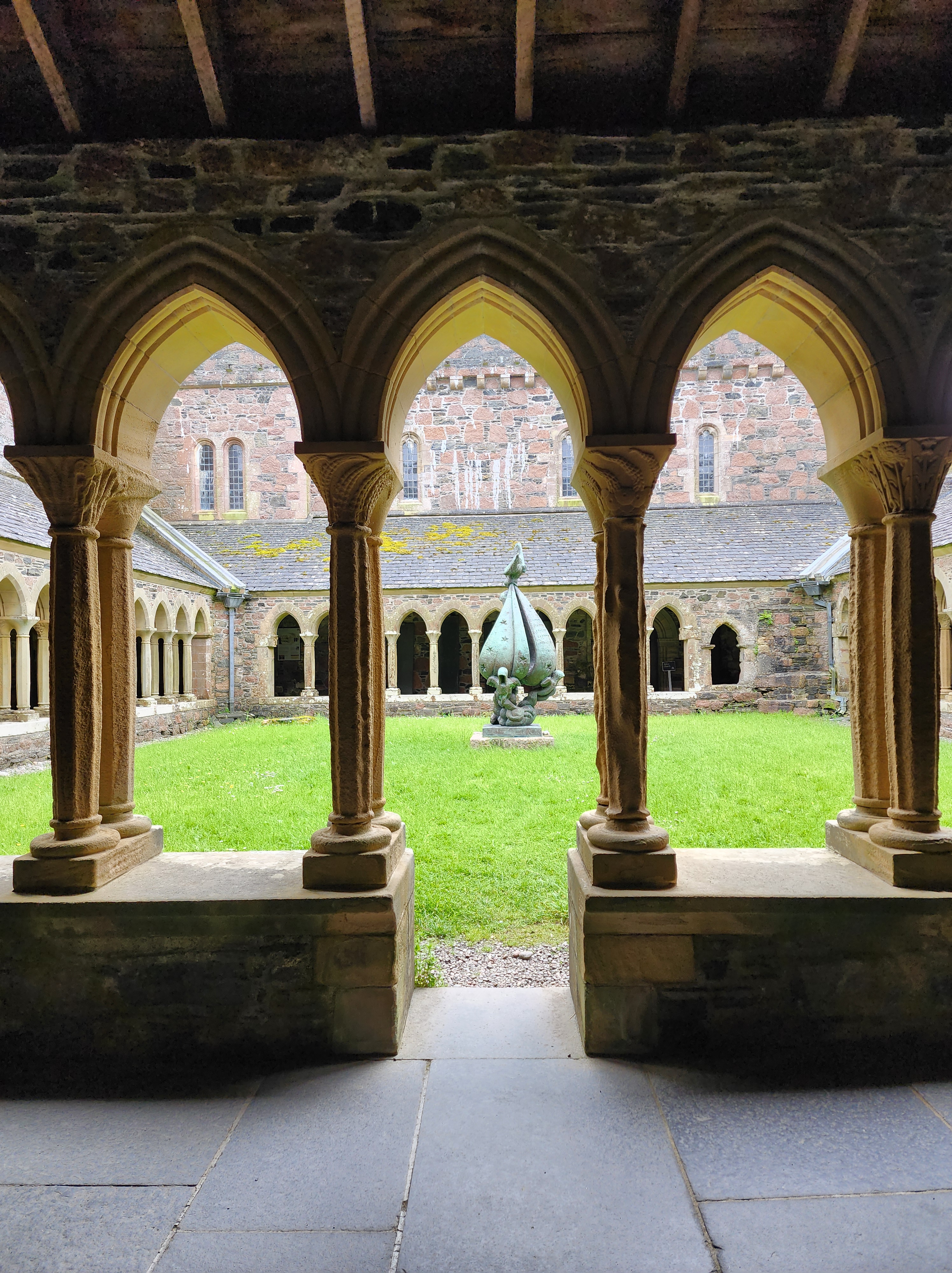
Iona Abbey Cloisters
I walked around the cloister which faced a courtyard with a statue in it. On the walls were gravestones, but they were mostly unreadable. The cloister connected the monks’ cells with the church and offered a space for prayer and quietude. The gift shop was an offshoot of the cloister; you almost wouldn’t know it was there except that the door was open. I poked around inside, and then wandered into the Church and said some prayers for my family, and my kitties, and the world at large.
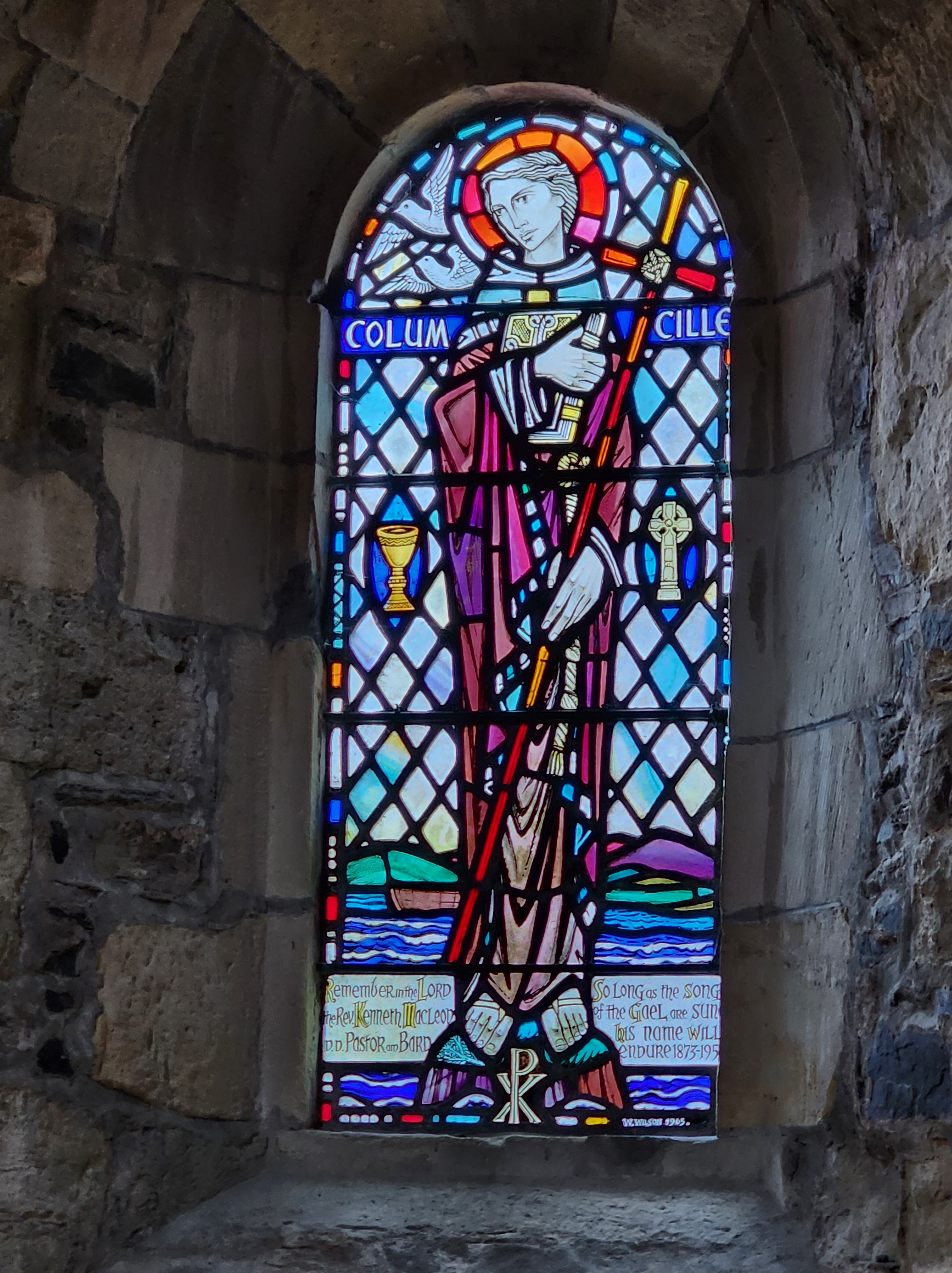
Stained glass window of St. Columba
Surprisingly, the cloisters felt holier than the church did to me. The church offered some beautiful arches and stonework, but not much more in the way of decoration. And that could be because it’s not a Catholic Church anymore—or because the church had been raided by Vikings and the Protestant Reformation. Or, because, being on a remote island for a small Christian flock, maybe decoration wasn’t a big priority. Anyway, it’s now the home of the Iona Community, an ecumenical church founded by George MacLeod in 1938, and made up of many religious denominations. This community sounds peaceful and good and believes in social justice matters. In fact, there was a table full of dishes of ribbons for which you could donate coins for such causes as Black Lives Matter, the environment, AIDS/HIV, and others. (I had bought a little monk bear in the gift shop and gave some spare change for an environmental ribbon, which I pinned to his robe.) As for the altar, it was pretty plain and the stained glass windows were small, but the church had a good vibe to it.
On the way back to the harbor, I stopped at the Larder to get some lunch and ate my cheese sandwich, crisps, and Coke Zero on a bench in front of the store. A woman and her husband sat down beside me and we began a very interesting conversation about their visit to Iona. Apparently they are Scottish but have been living mostly in the United States for the last 20 years, although they have a flat that belonged to her mother somewhere in Scotland. Where in the U.S. did they live? I asked, and was surprised when they said, “Oh, Durham, North Carolina.”
So we talked about Durham and about Charlotte and Atlanta too. I asked what they did with their flat outside of the 6 weeks that they stay there every year—did they AirBnB it? This got a laugh. It’s pretty difficult, they told me, to set up AirBnB’s—because of Scottish laws that allow people to stay beyond the time they’ve contracted to stay in a place. In other words, they don’t have to go, even if you want them to. I thought that was amazing and weird. But we had a good chat—it felt a little like I was home somehow, especially when we spoke of Charlotte and Atlanta. And it was nice not having to be embarrassed that I was American and to perform my embarrassment like I have been doing every time someone asks me where I’m from.
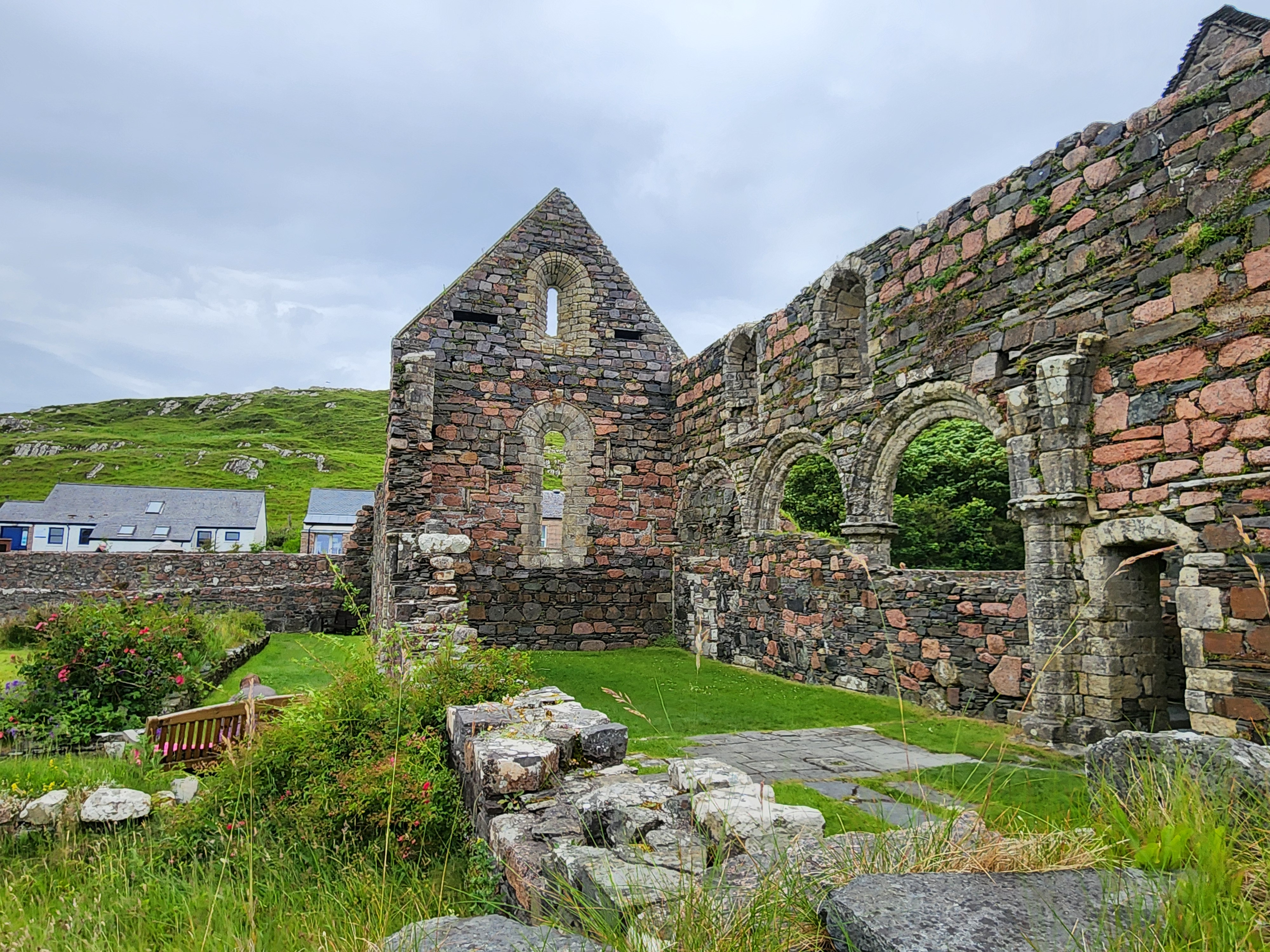
Iona Nunnery
I finished my lunch, and they were going to continue to the Abbey so we said our goodbyes. I stopped in a craft shop and then a Celtic jewelry store (Aosdàna) where I found delicate, silver handmade earrings. I loved the jewelry there—although most of it was crazy expensive (several hundred pounds). And I’ve been wanting to buy myself some jewelry from Scotland for years. So I splurged and bought a pair of earrings. They’re so delicate, though, I’m not sure I’ll ever wear them!
After passing through the Nunnery, I returned to the harbor where I found a bench to wait out the time before our ferry would return. And this man comes up to me and says,
“Are you someone important?”
“Me?”
“Yes. You look very important. Like you know things.”
“I’m not that important, but I am a published poet.”
“Really? Have I read anything you’ve written?”
“I doubt it.”
“Oh.”
He seemed truly disappointed that I didn’t turn out to be a VIP—although, I doubt I looked like a VIP, windblown with my raincoat and beanie on. He said goodbye and turned away, and I thought, I’ve missed an opportunity to brag on myself. And then I remembered, I’m no braggart, and nobody cares about poetry anyway. So no big deal. And then, one of the ladies on the tour sat down next to me and offered me the most delicious strawberries I’d ever eaten. So sweet and so red they make the strawberries we get back home look like anemic little ghosts. And just as suddenly, it started to rain and she hurried off.
But by then the ferry had arrived and we all shuffled back on to Mull. I haven’t had a chance to say that here is true beauty to be found in the Isle of Mull—I know the name is rather dull (ha! dull Mull!), but if it’s possible, Mull is even greener than the Highlands, and the mountains seem steeper and more mysterious. Driving around Mull, you tend to see a lot of red deer (as well as sheep and cows) just running along the hills; I think Nick said there’s some phenomenal number, maybe 6,000, that live on the island. (We only saw a few, and one of them, sadly, was dead by the side of the road.) But with the rain and dark clouds, the island was moody and bleak and lovely. I kept thinking how much I would like to live here.
This time, when we drove back into Tobermory, Nick said he’d give us all 30 minutes if we wanted to find something to eat and then he’d drive us to our B&B’s. This was a godsend, because by then it was raining like hell and there was no way I was going to walk into town from the B&B for dinner. But since we were there, I went to Hook’d and got a beautiful piece of haddock and chips, and ate that in the B&B and went to bed early.
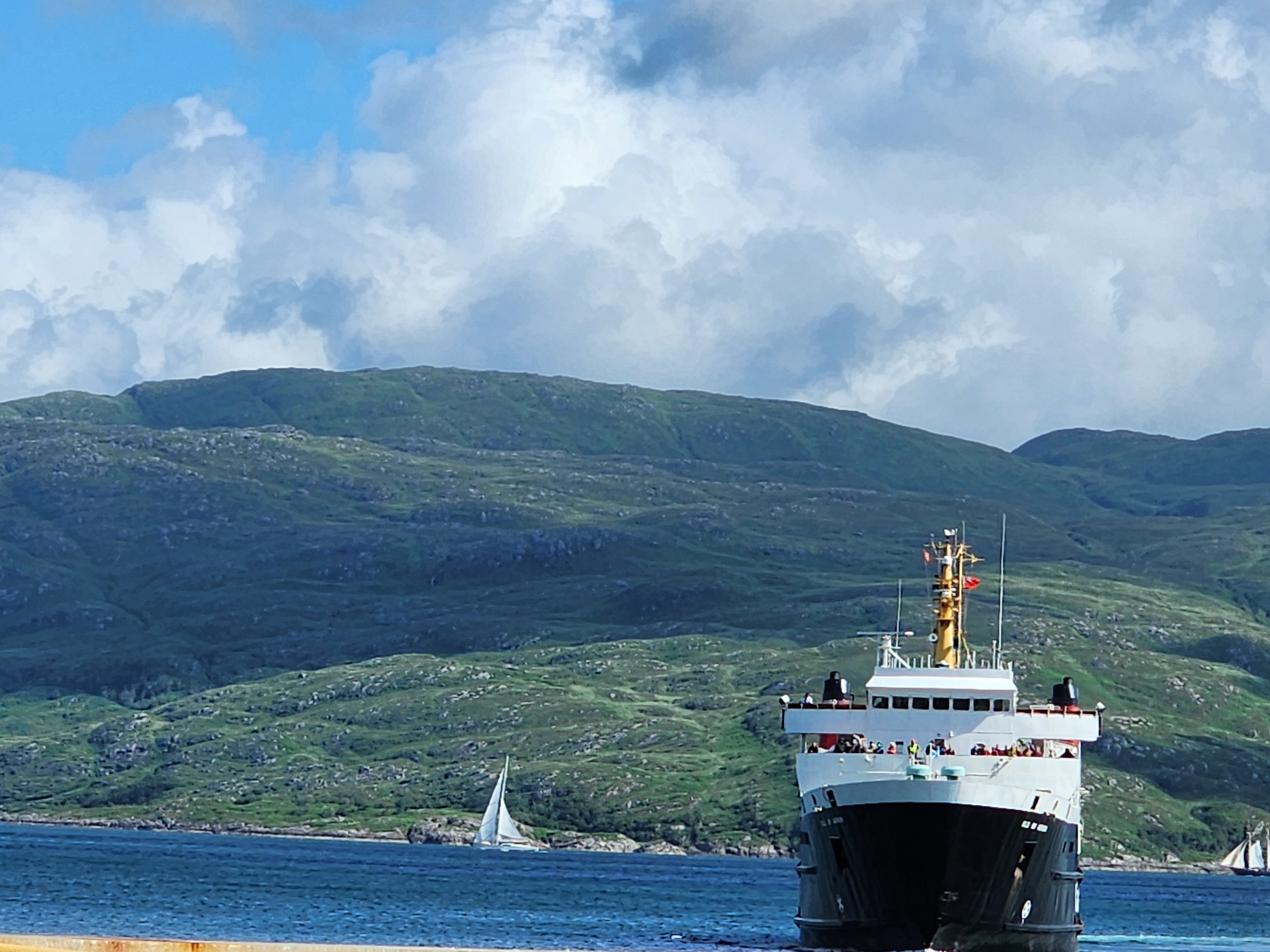
CalMac Ferry to Oban
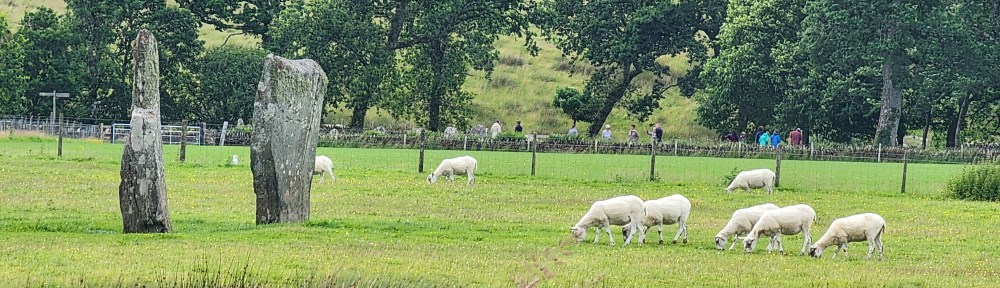
The next day, we took the ferry from Craignure to Oban. Right as I left the ferry terminal, I smelled the most delicious garlic buttered seafood at a harbor kiosk but didn’t have enough cash to get some scallops for lunch—a true pity. I suspect everything they were selling came fresh from the sea that morning. I decided to skip touring Oban, even though I wanted to check out the Oban distillery for a dram, because of the dreaded foot. So I hung out in a Costa coffee shop and read a book until Nick retrieved us. The ride back to Glasgow seemed long. We made a few too many stops for my liking, one at the Nether Largie Standing Stones (in Kilmartin), one in Inverary, one in Glen Crowe at the Rest and Be Thankful viewpoint, and one at Loch Lomond again (just a potty break). I didn’t get back to my flat in Edinburgh till almost 9 p.m. And I pretty much fell into bed after a shower.
I recommend Mull and Iona—and Staffa, if the weather permits—because seeing these places is somehow holy and remarkable. And if you want a good book that talks about these places, I really recommend Madeleine Bunting’s Love of Country; it’s replete with details about the history of the Hebrides. And it’s wonderful.
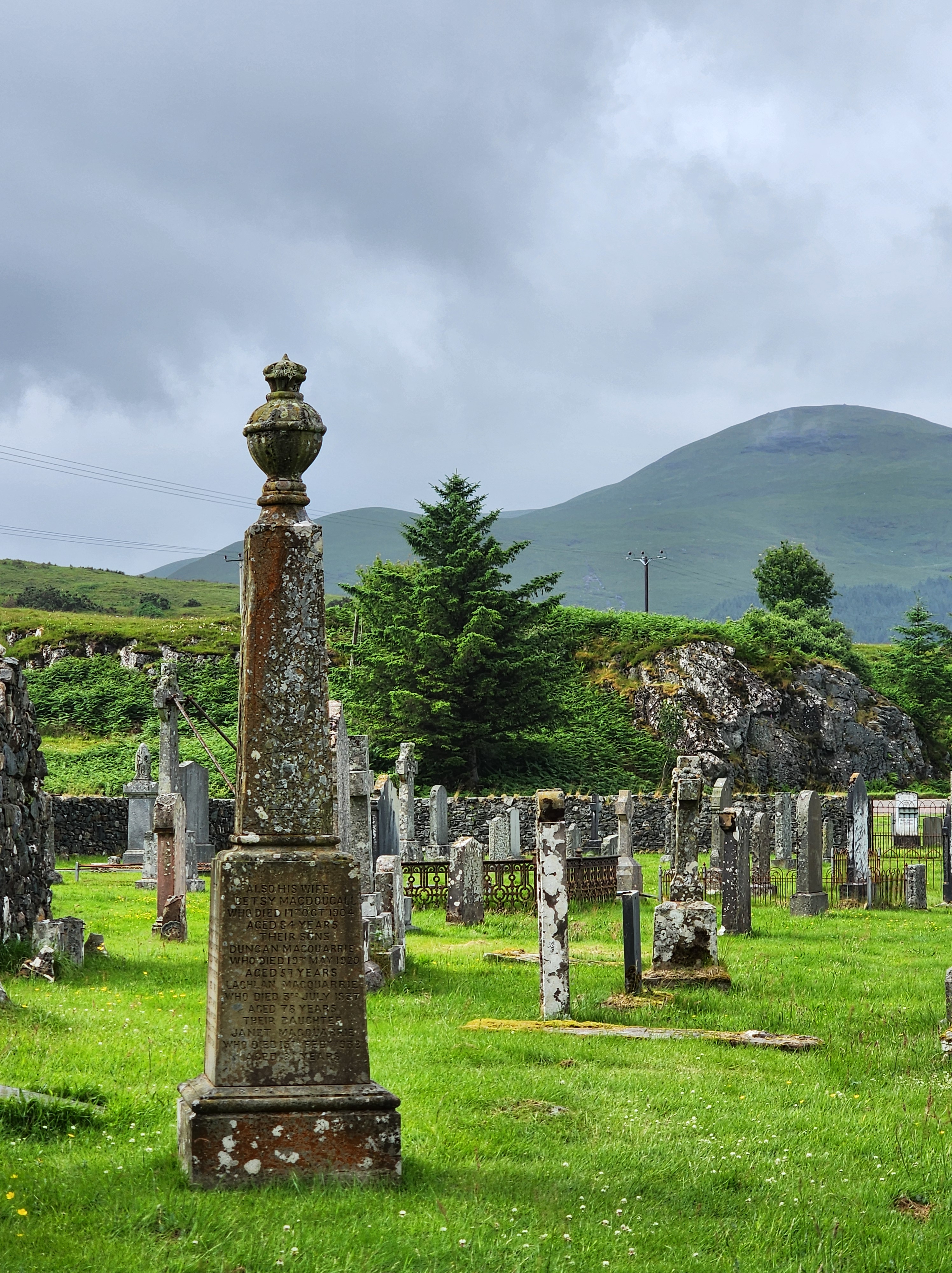
Pennygown graveyard
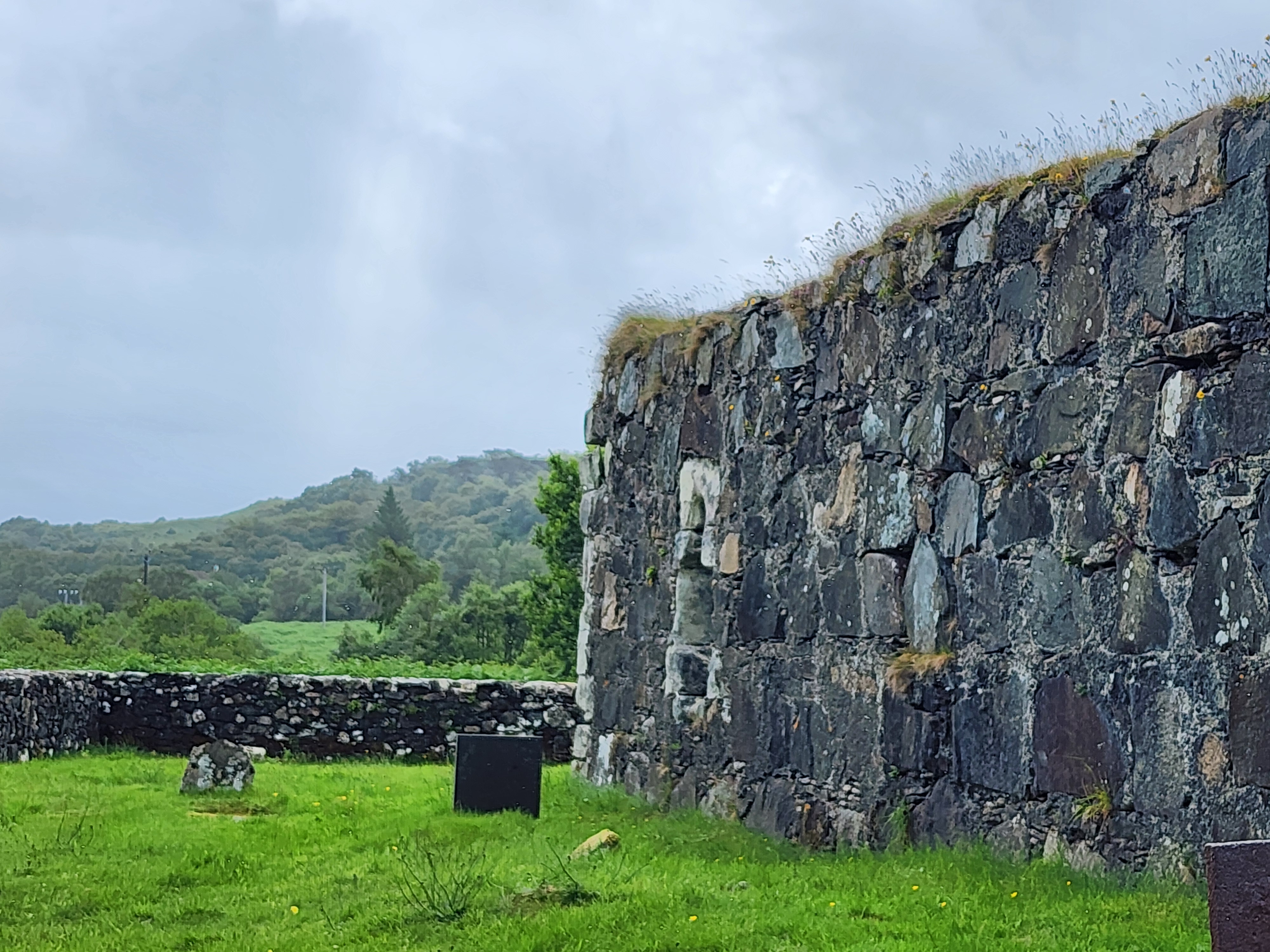
Old ruins of Pennygown church
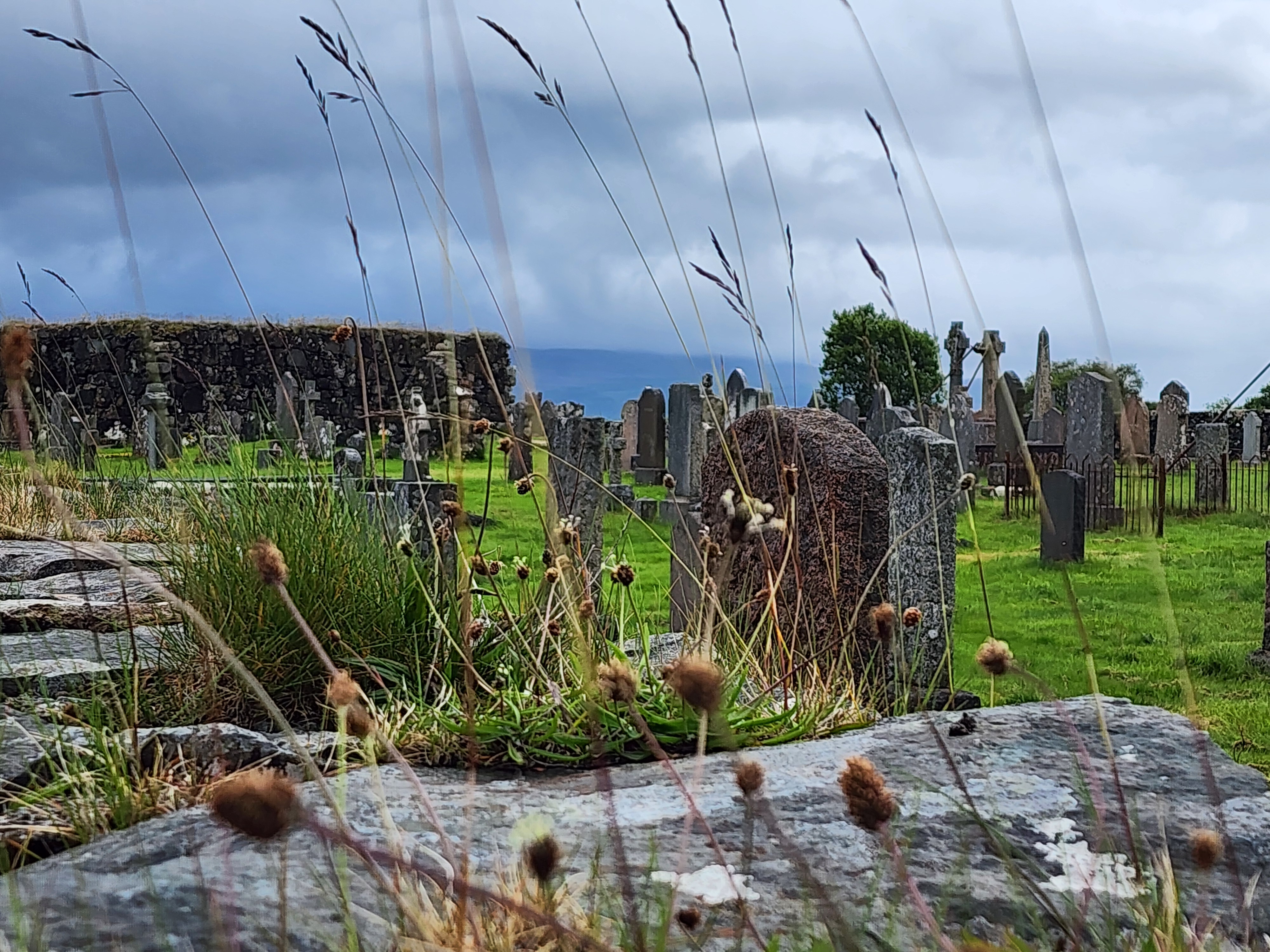
Pennygown graveyard, Mull
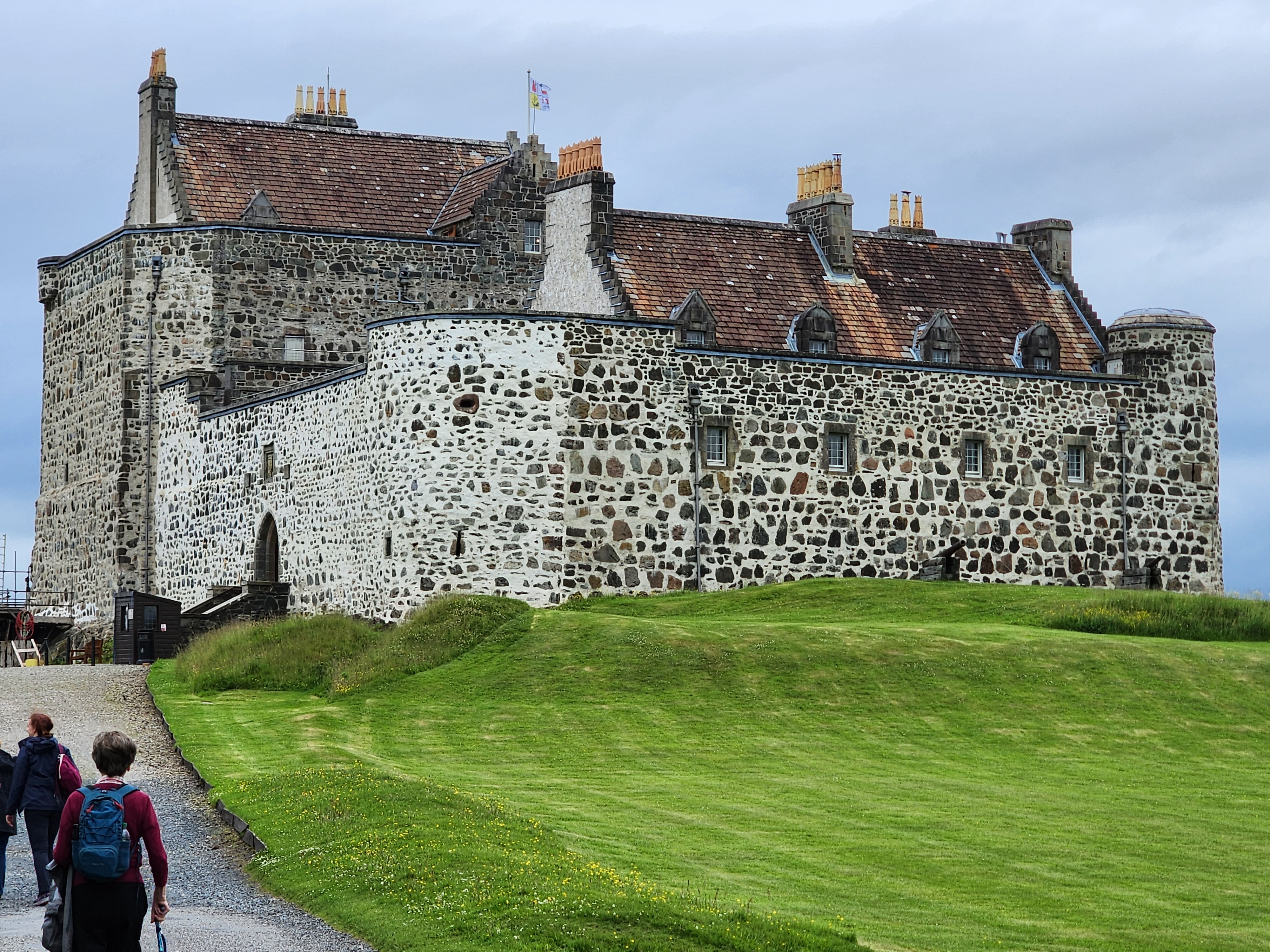
Duart Castle
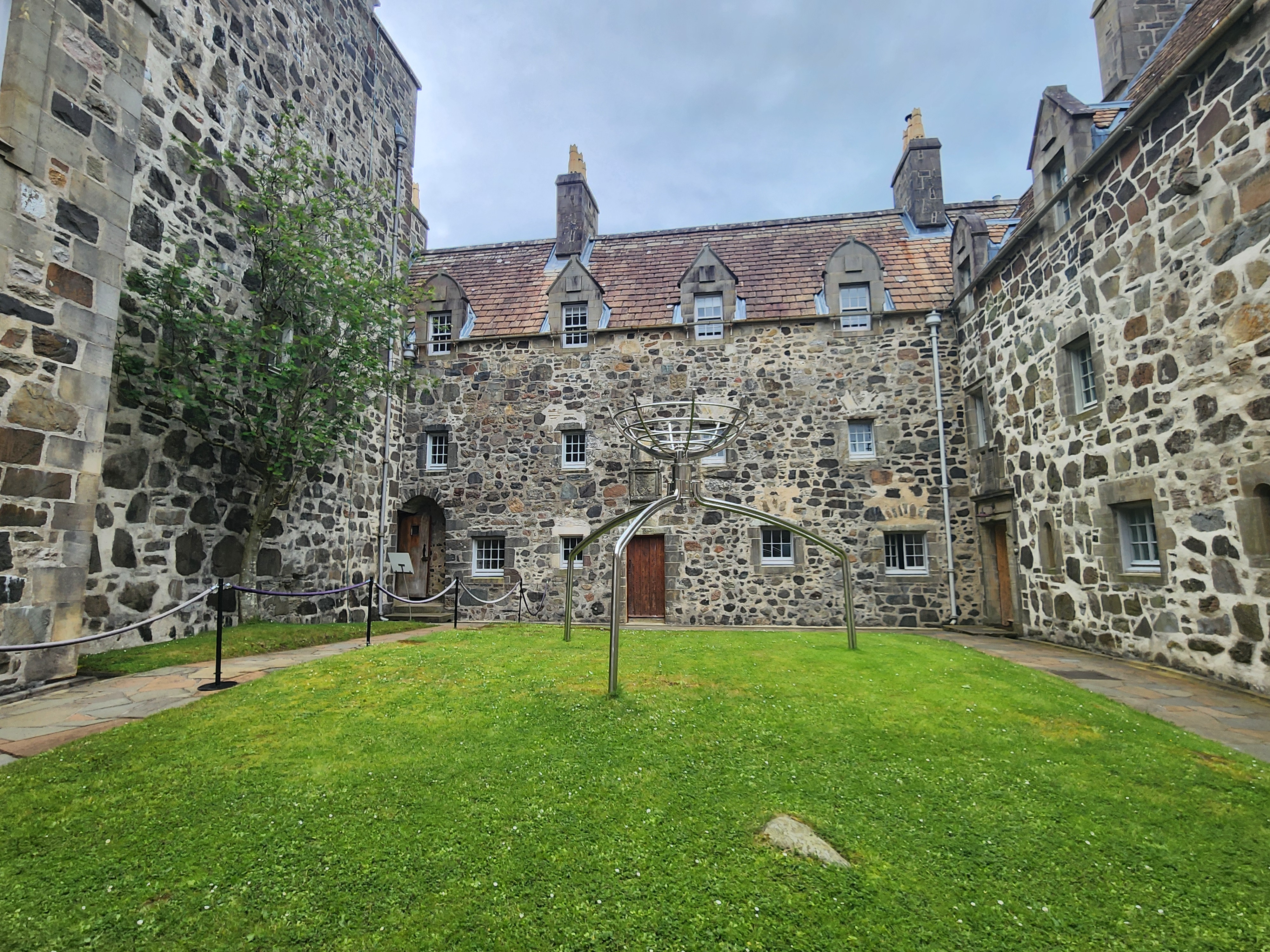
Inner courtyard of Duart Castle
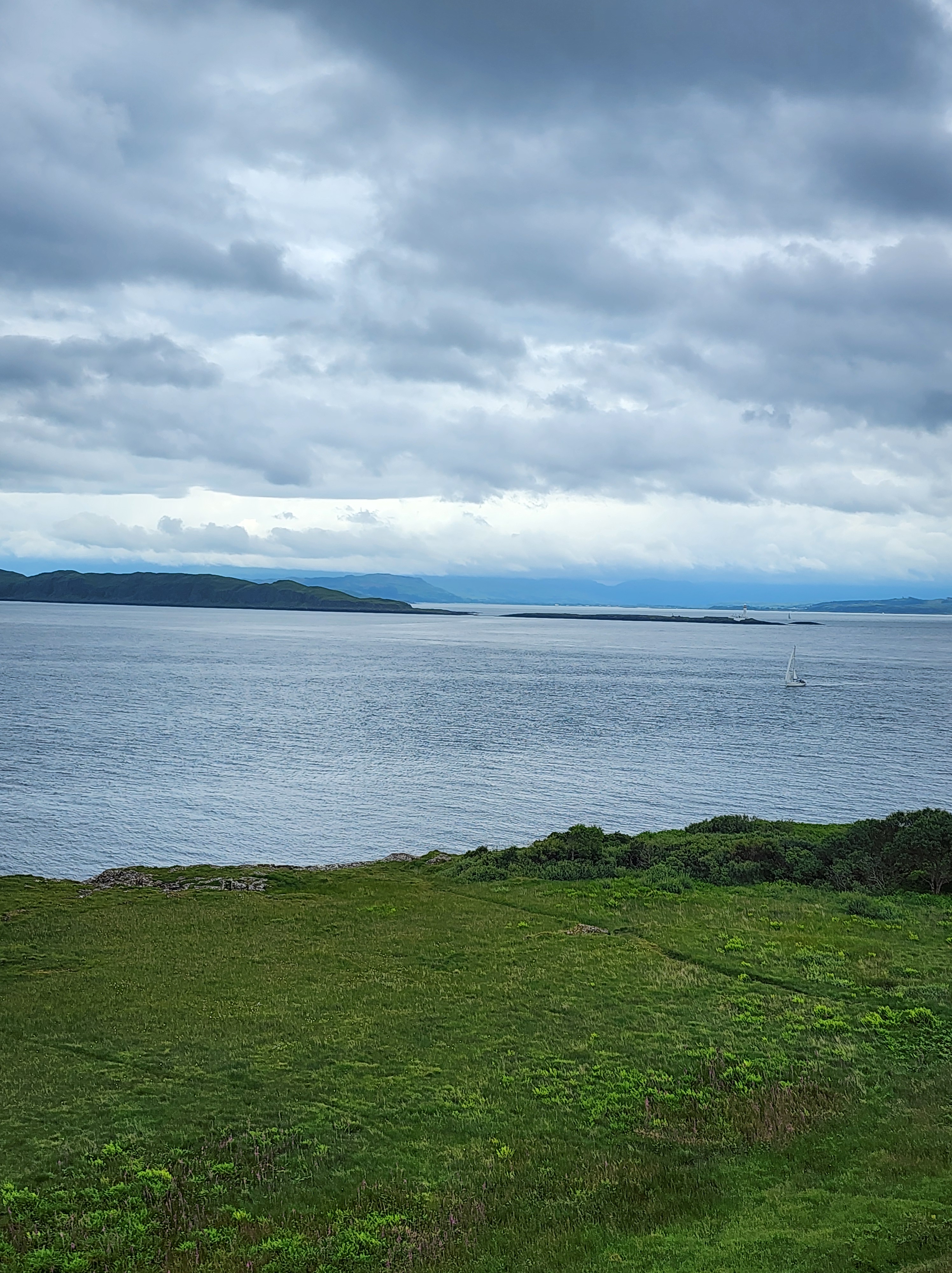
Sound of Mull (from the Duart battlements)
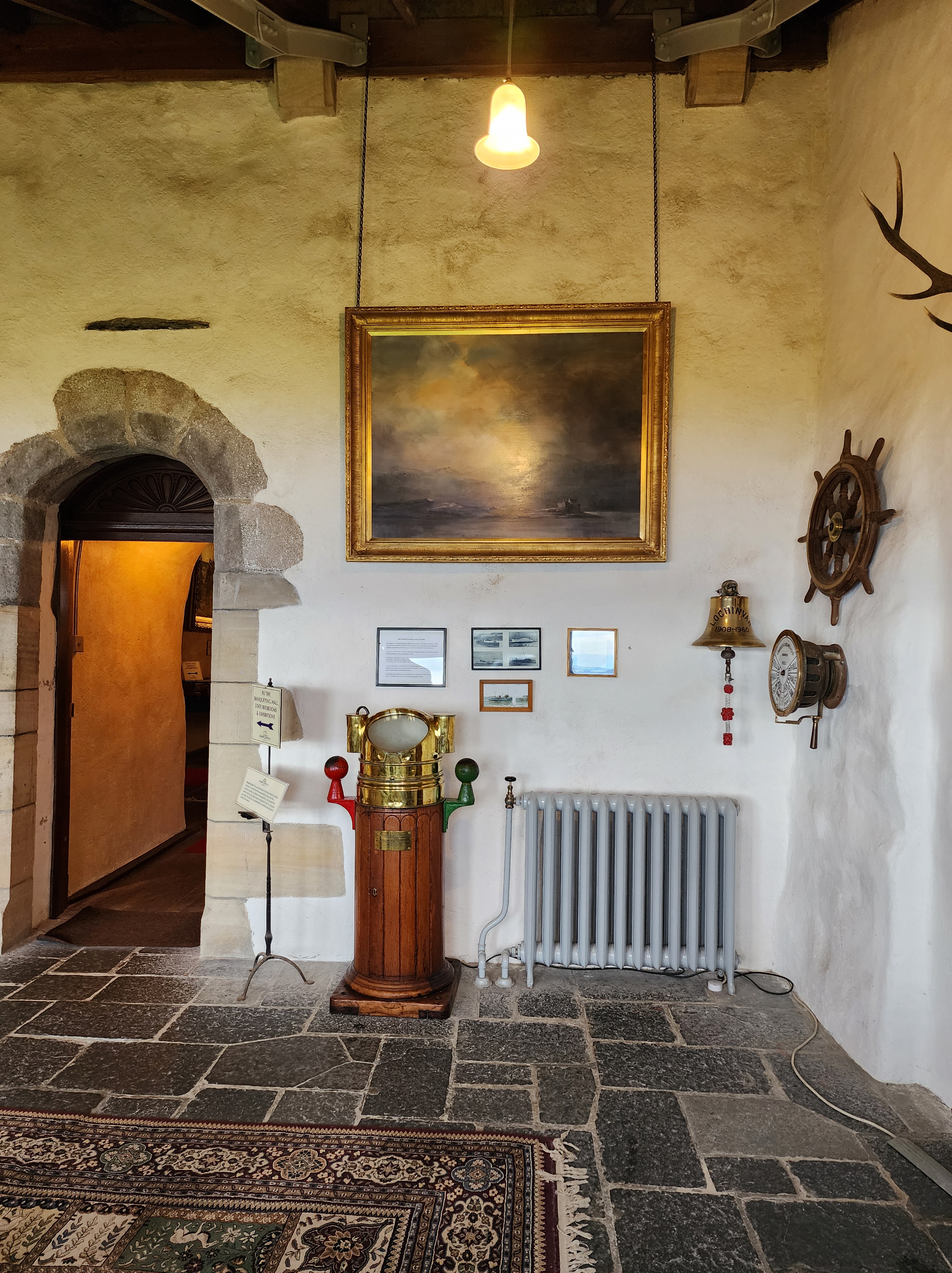
The Sea Room
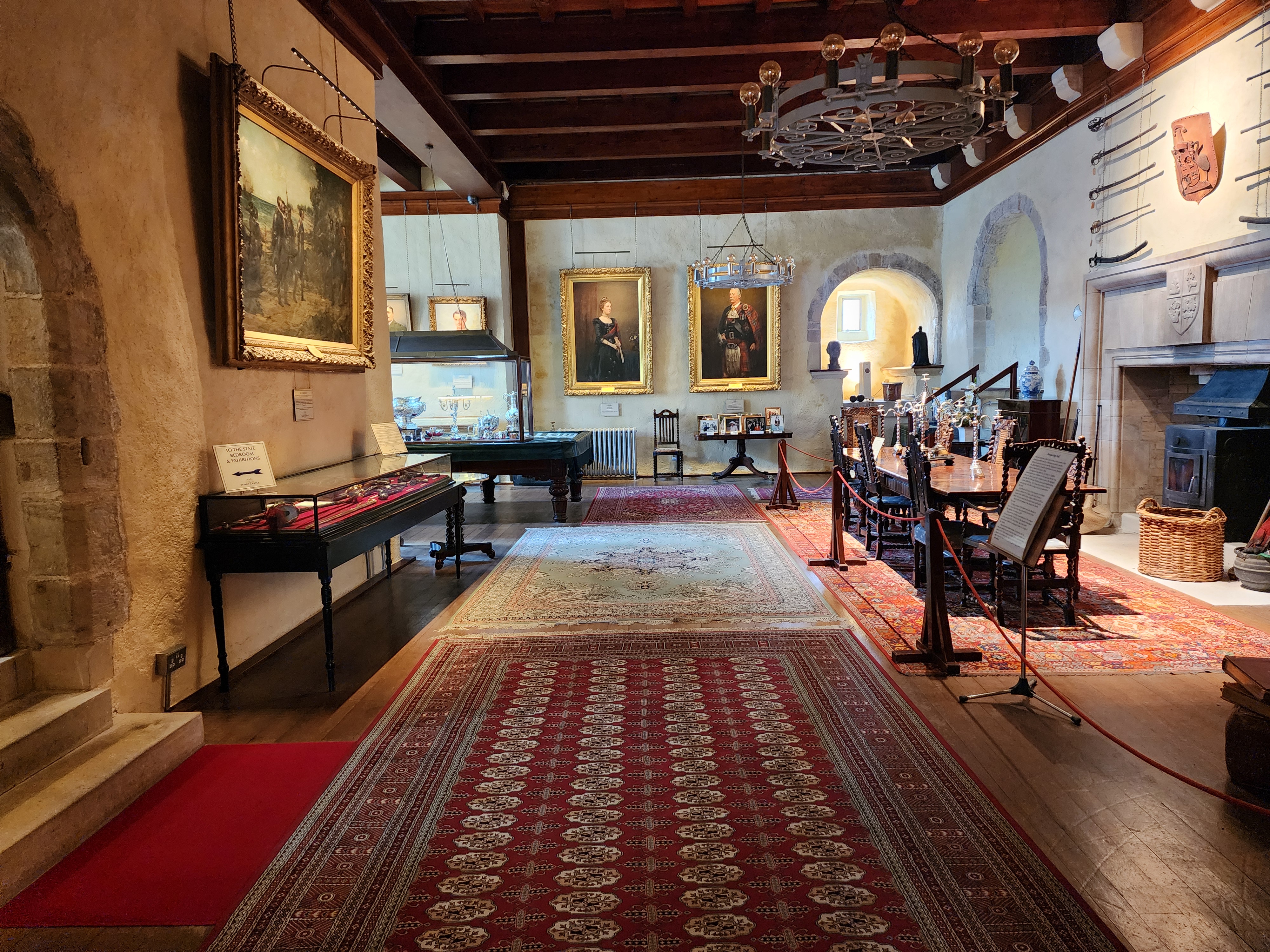
View of the Great Hall from the entrance
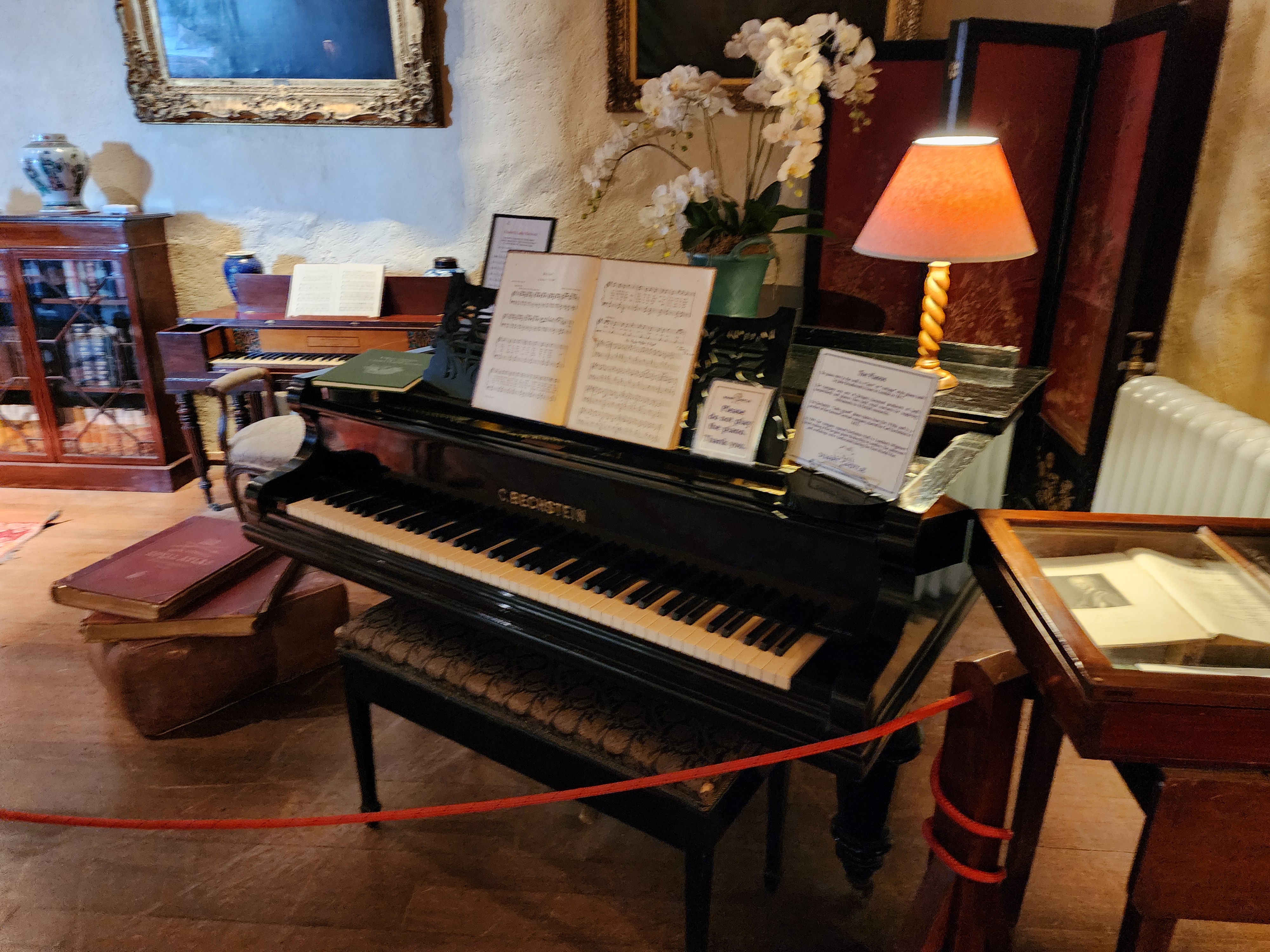
Piano at the entrance of the Great Hall
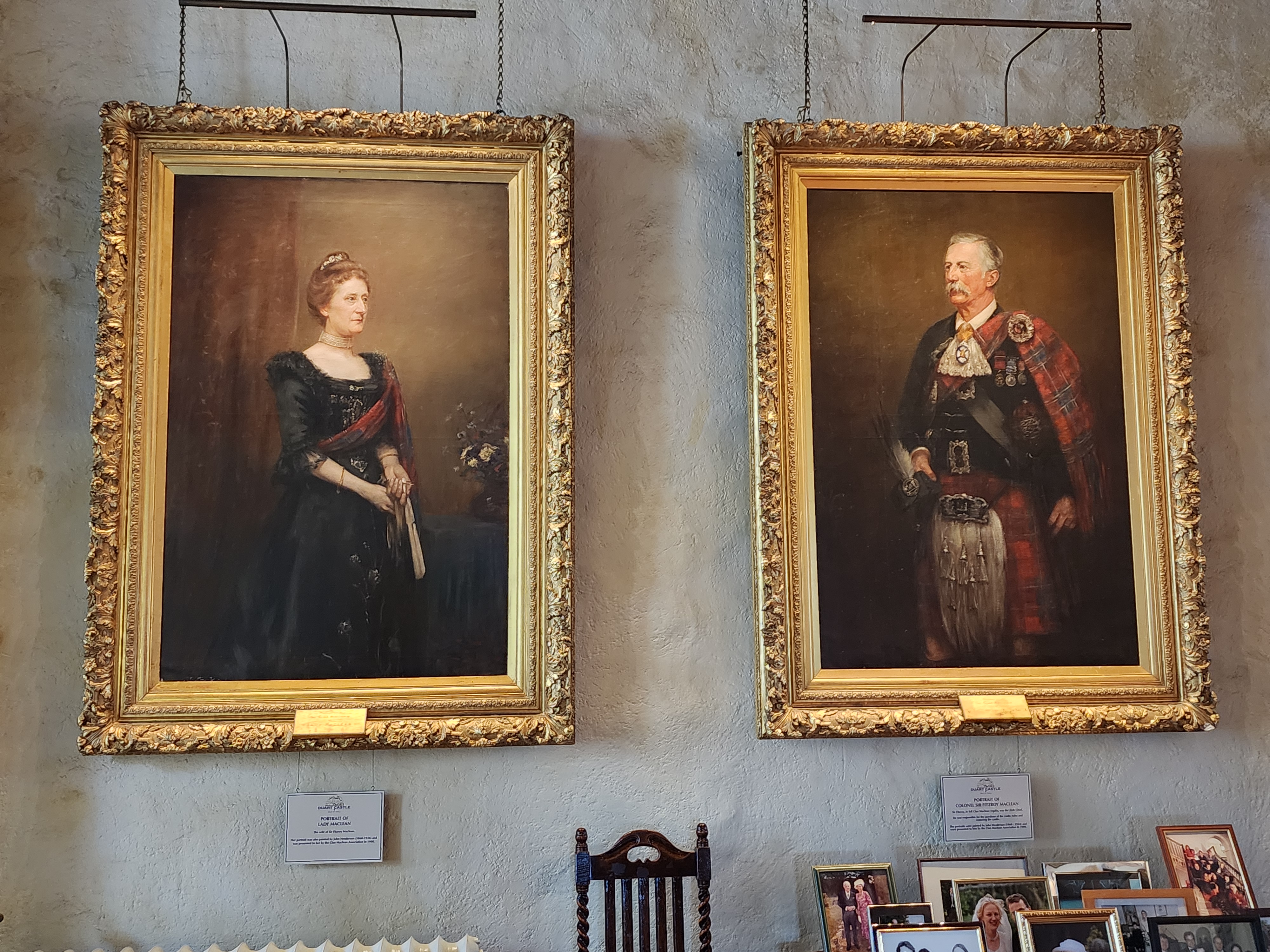
Portraits of Lady MacLean and Col. Fitzroy MacLean
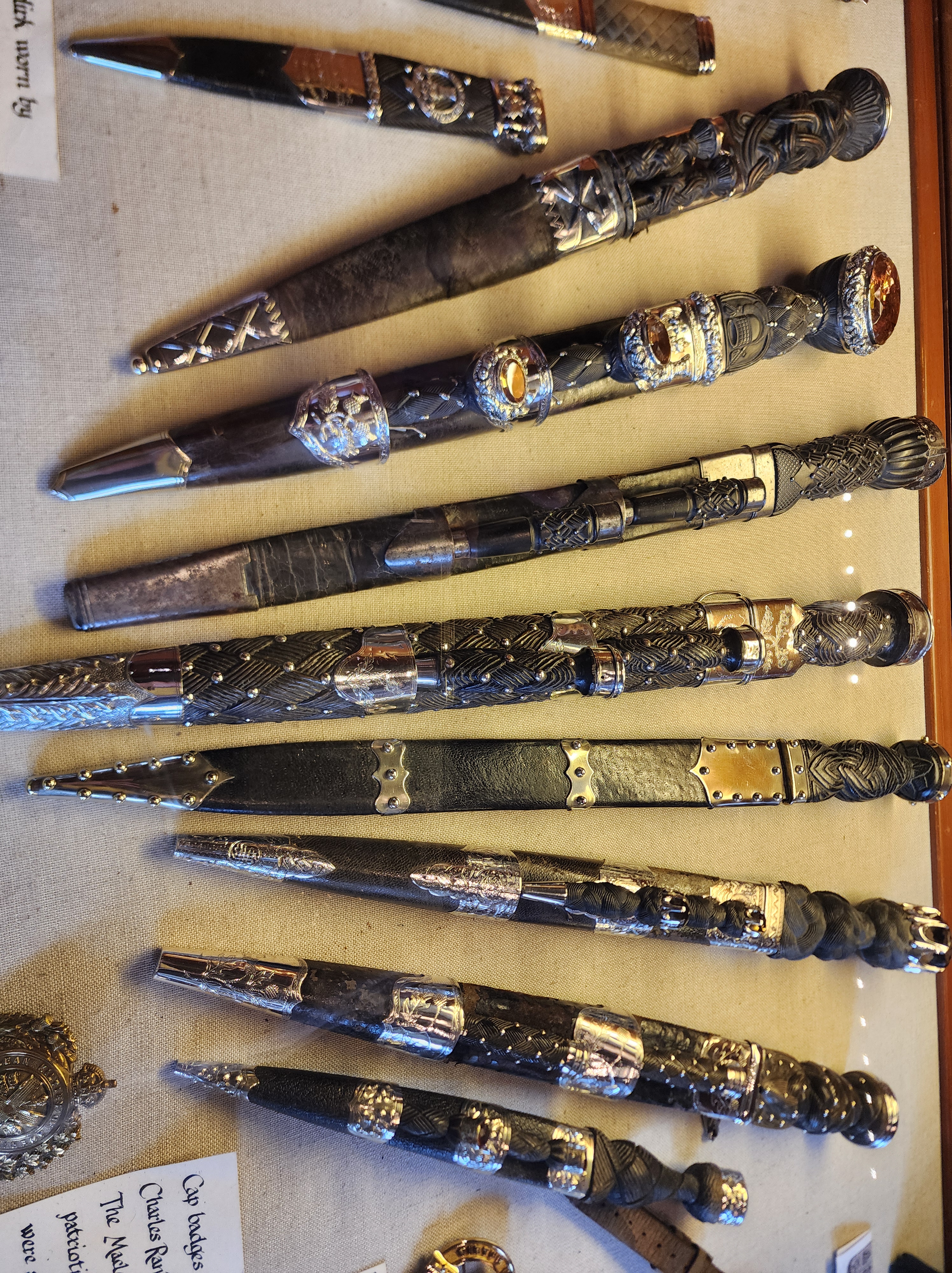
Daggers in the weapons case at Duart Castle
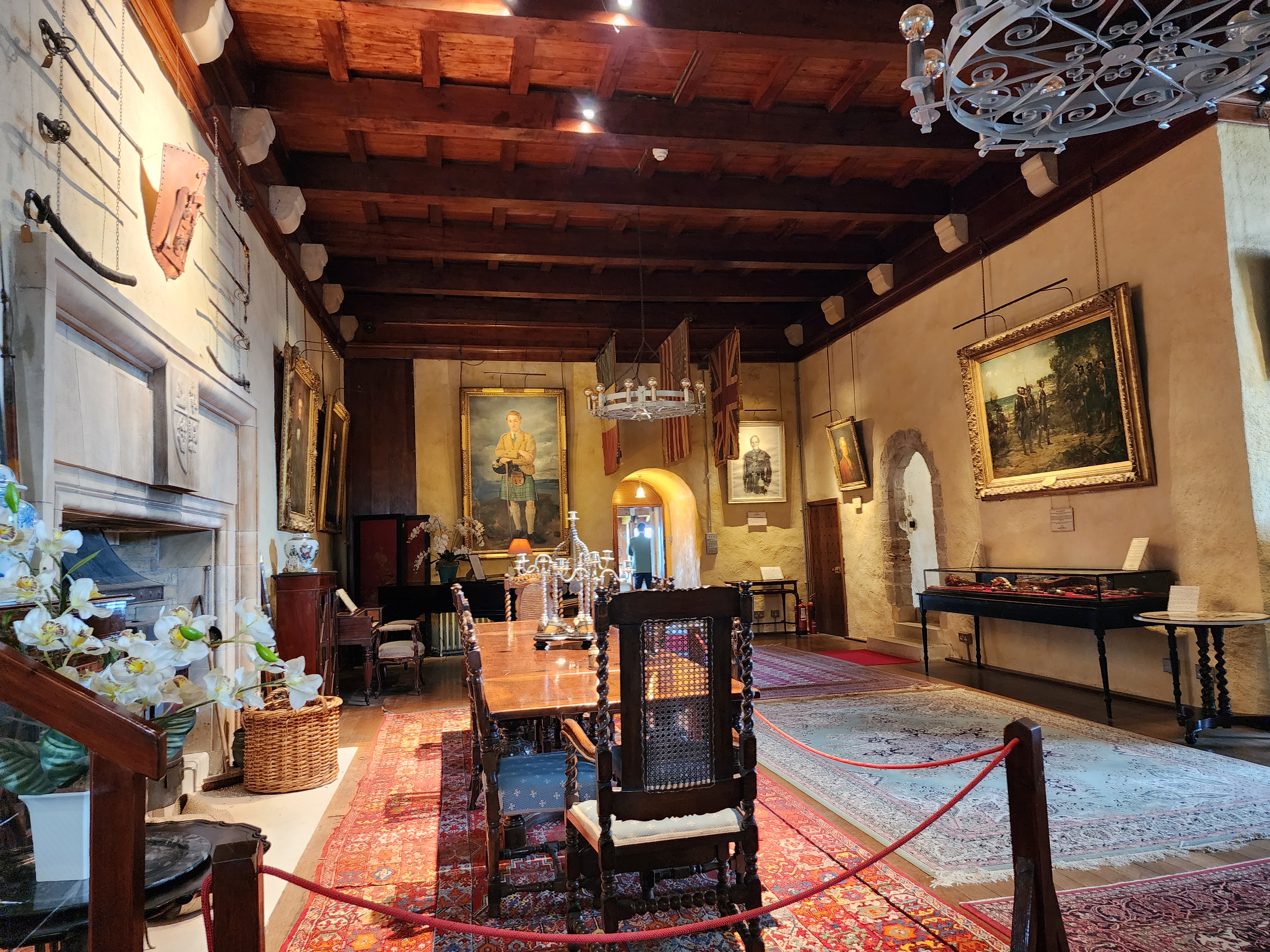
Great Hall looking north toward the entrance
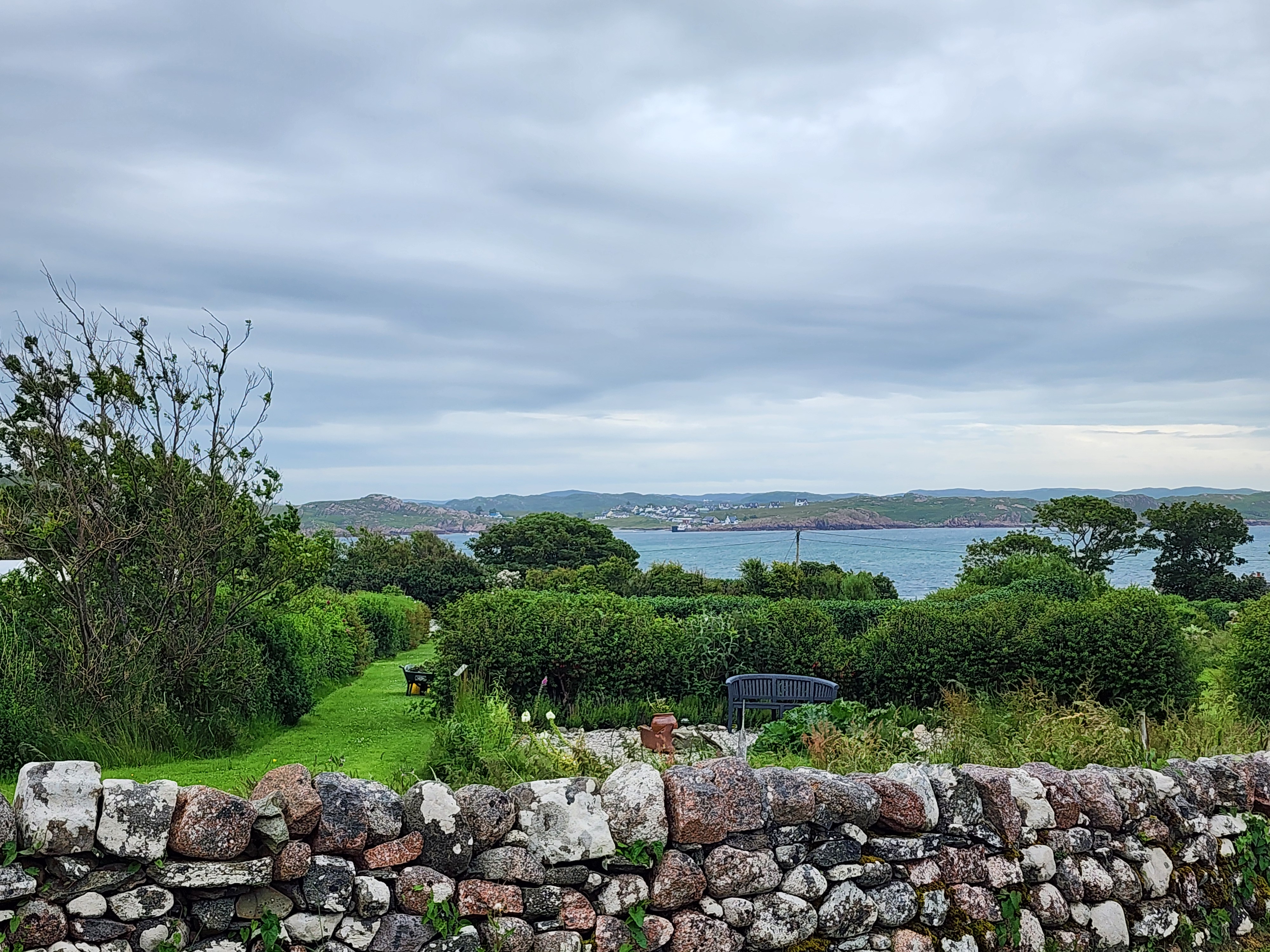
Hotel gardens on Iona
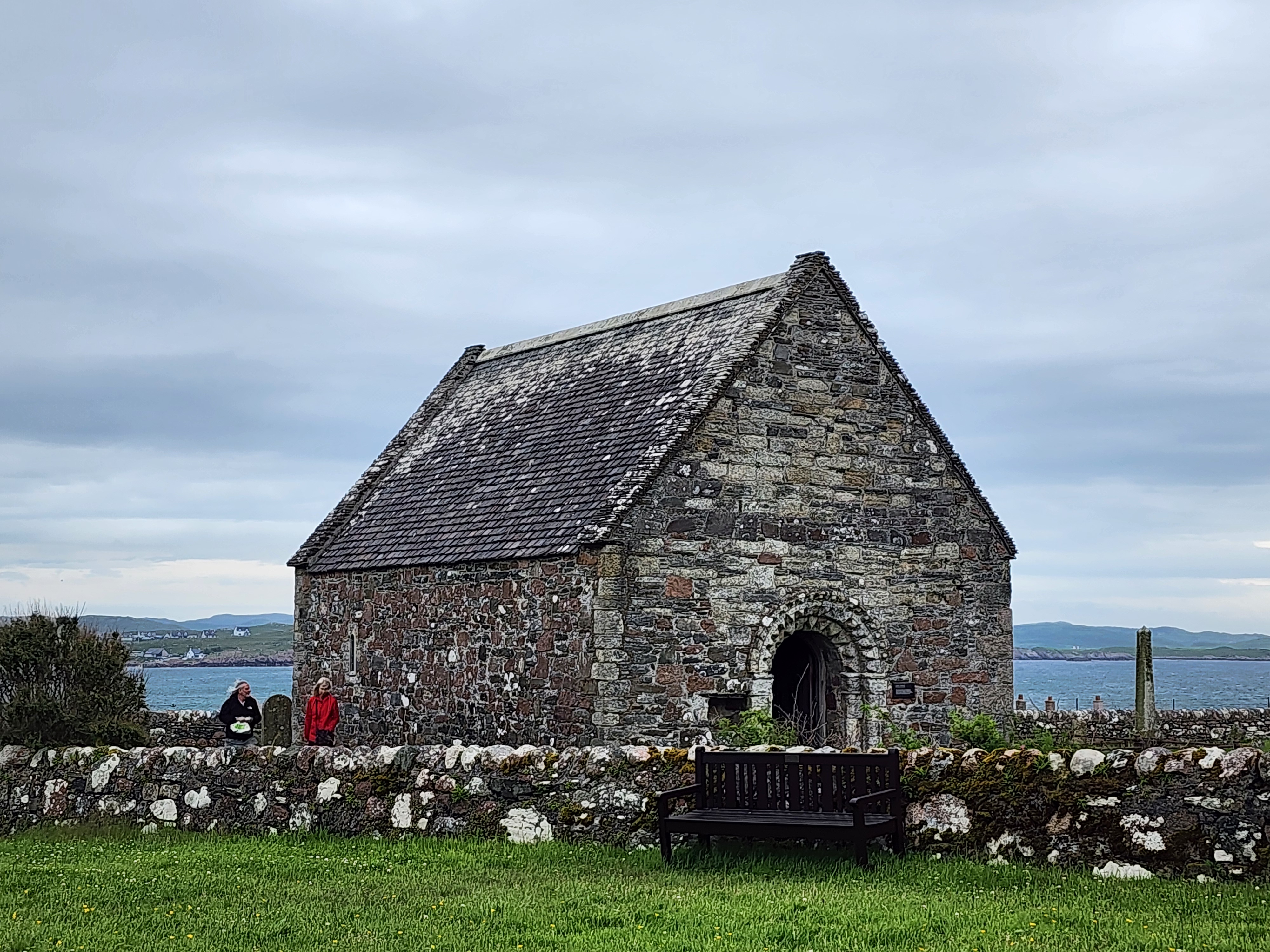
St. Oran’s Chapel at Iona Abbey
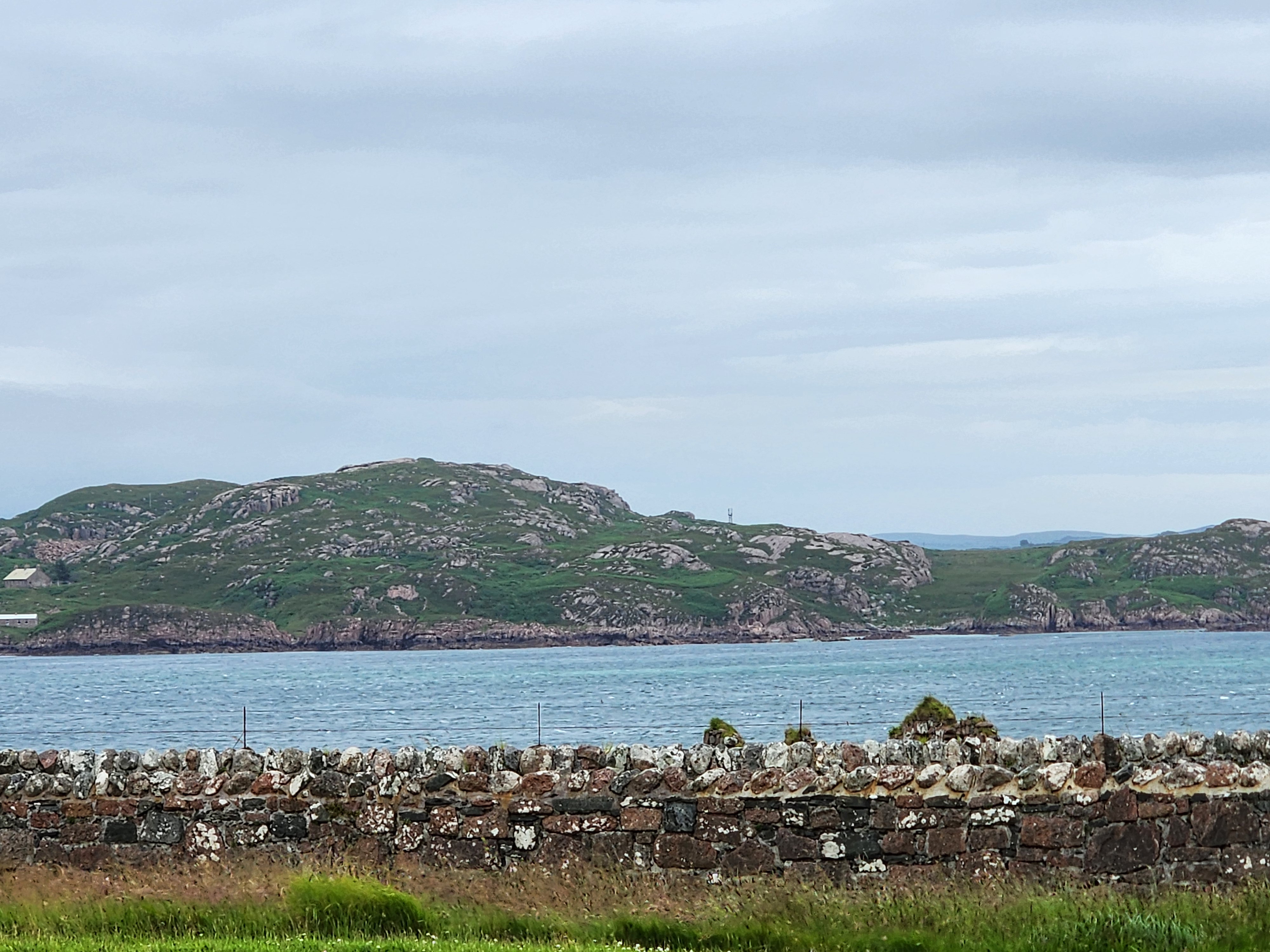
View of the Sound of Mull
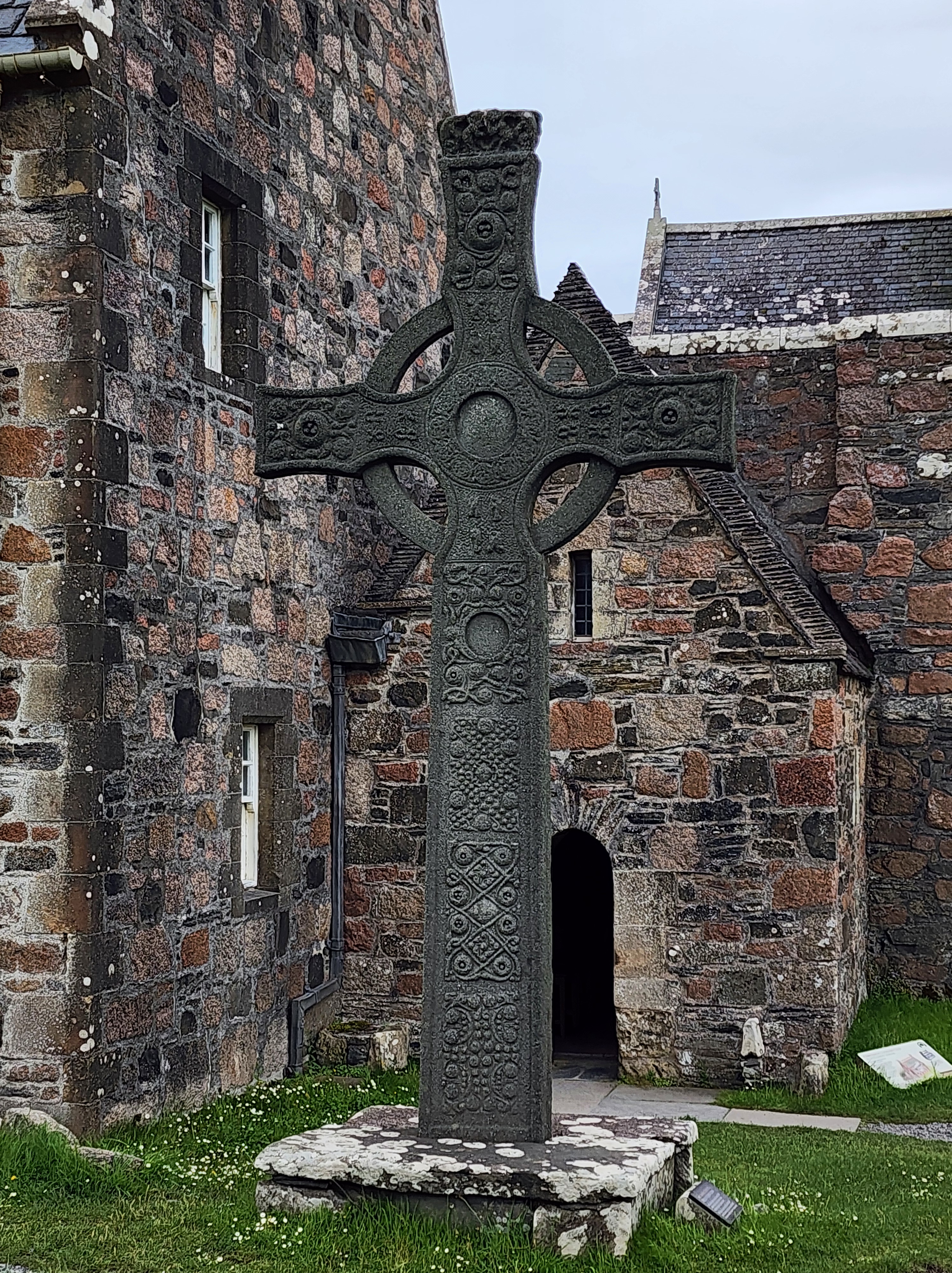
MacLean’s Cross
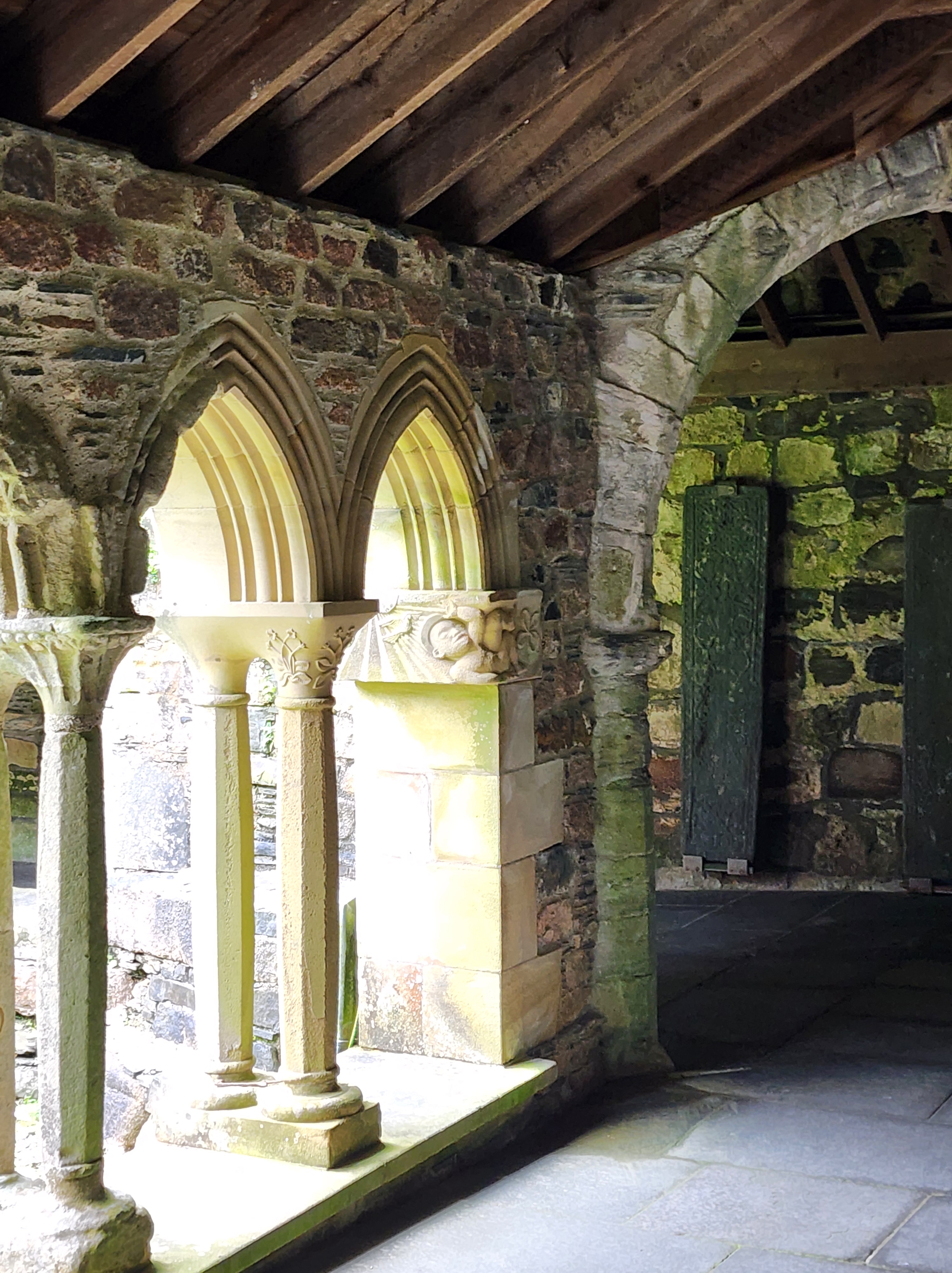
Another view of the Cloisters at Iona Abbey
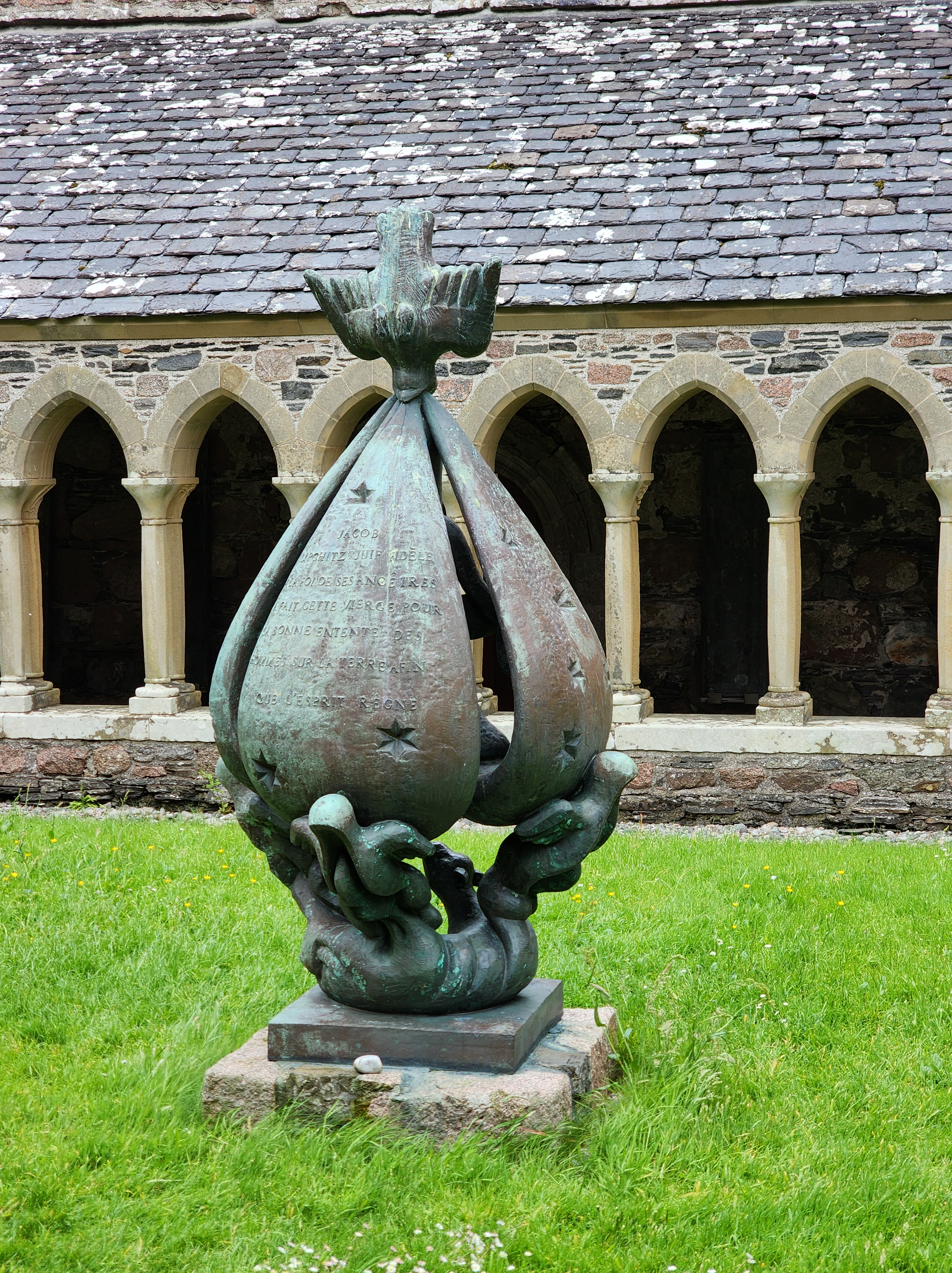
Cloisters statue
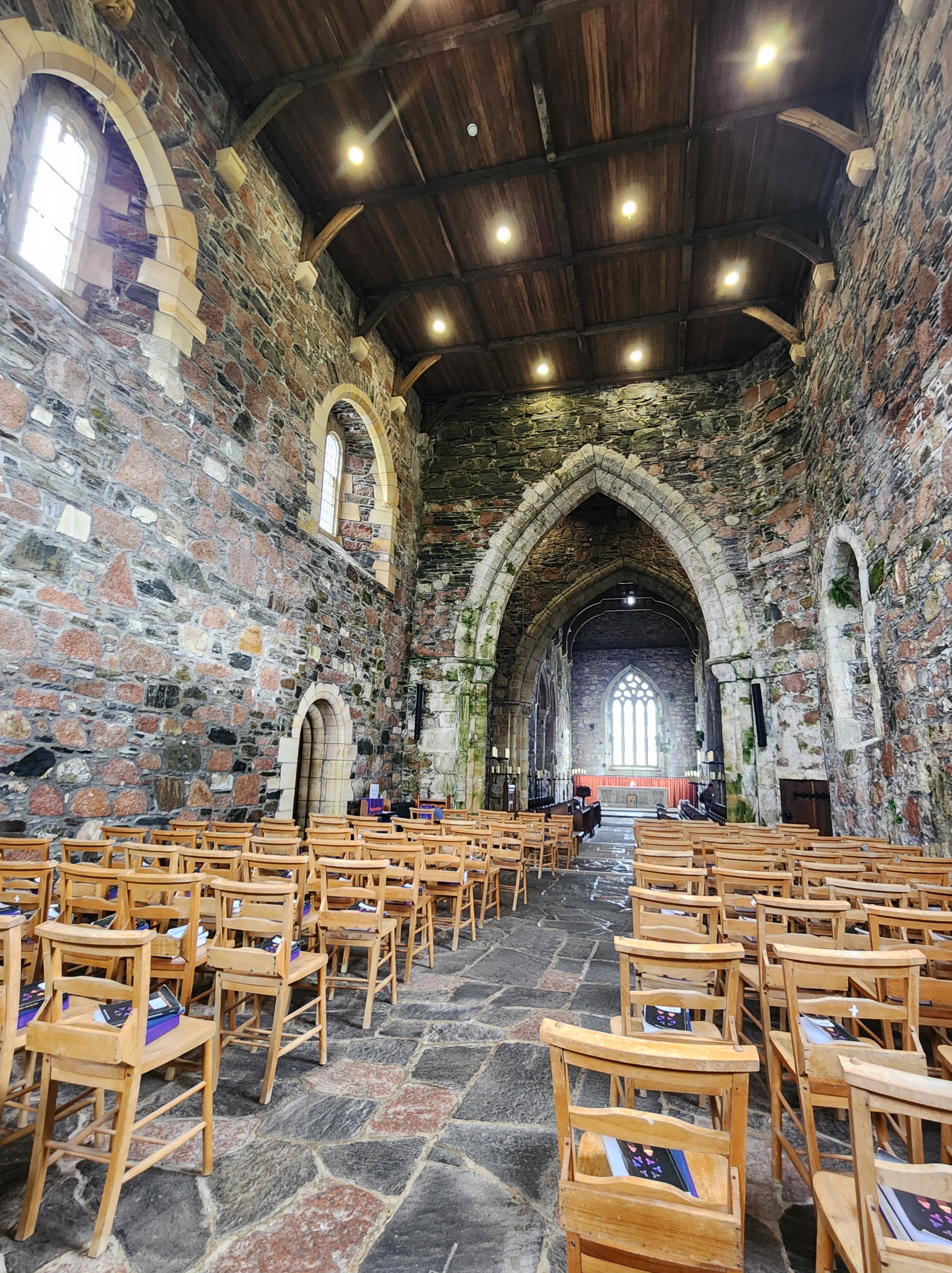
Inside the Iona Abbey church
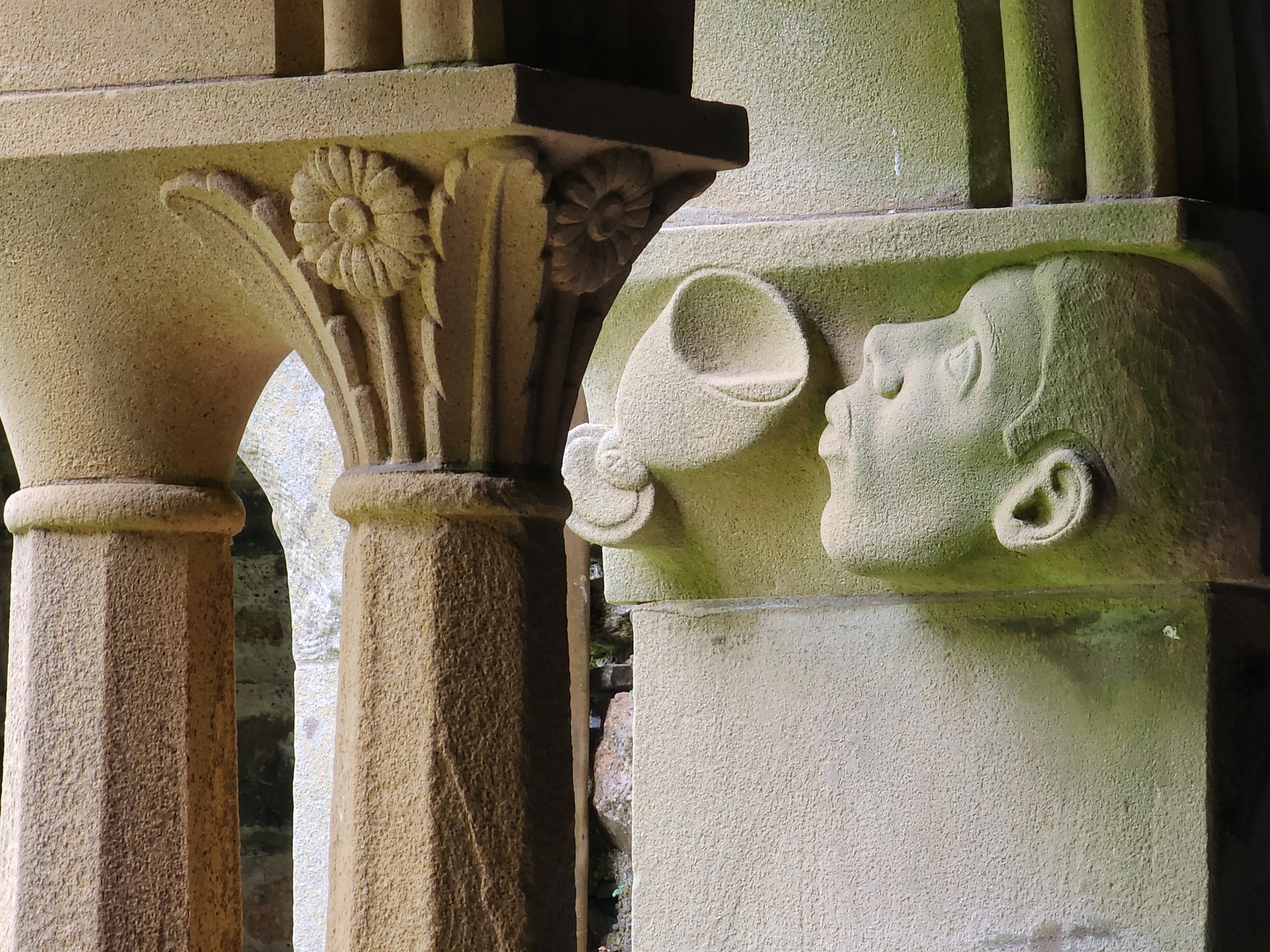
Detail of the Cloisters
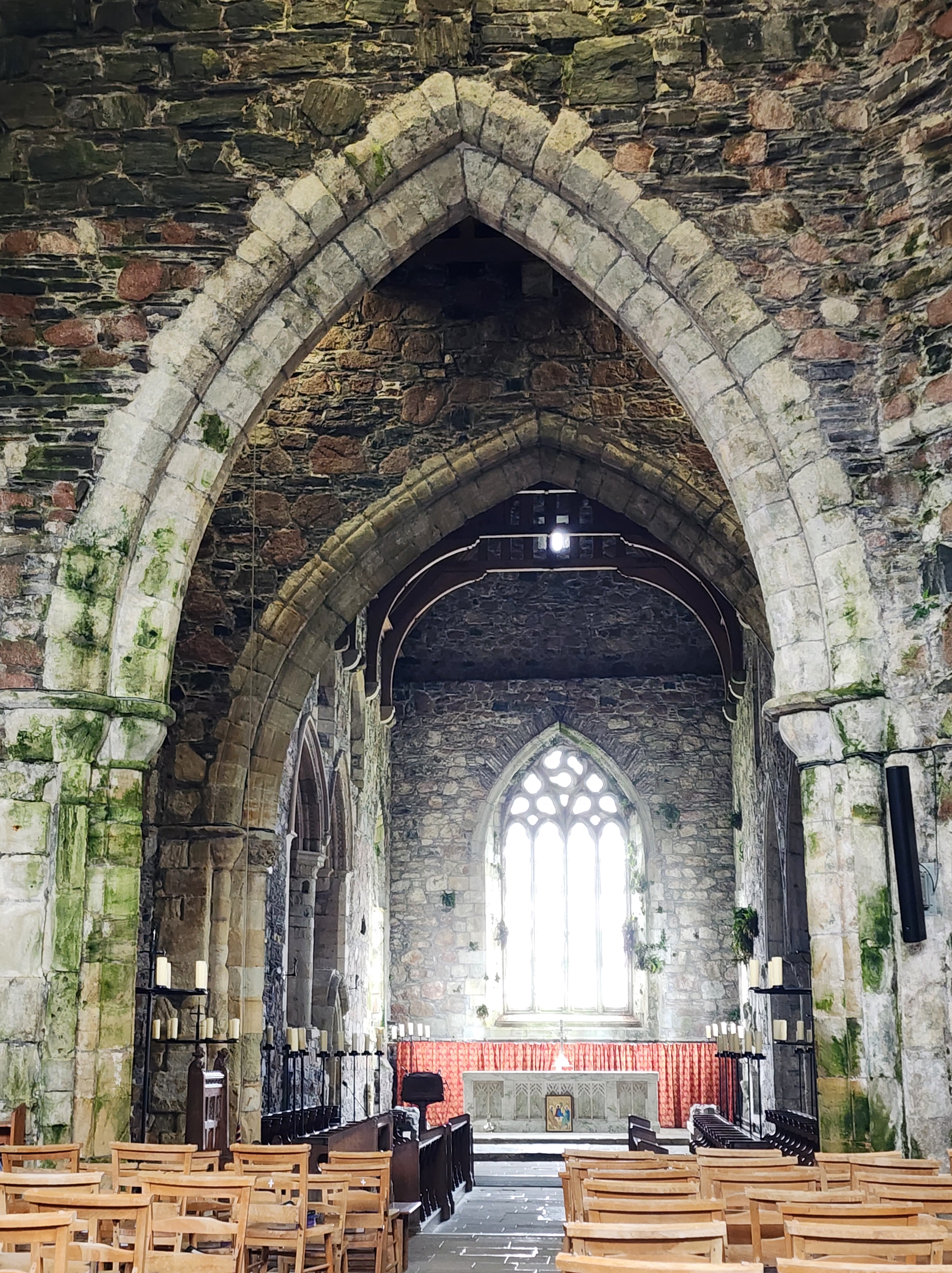
The Arch above the altar space
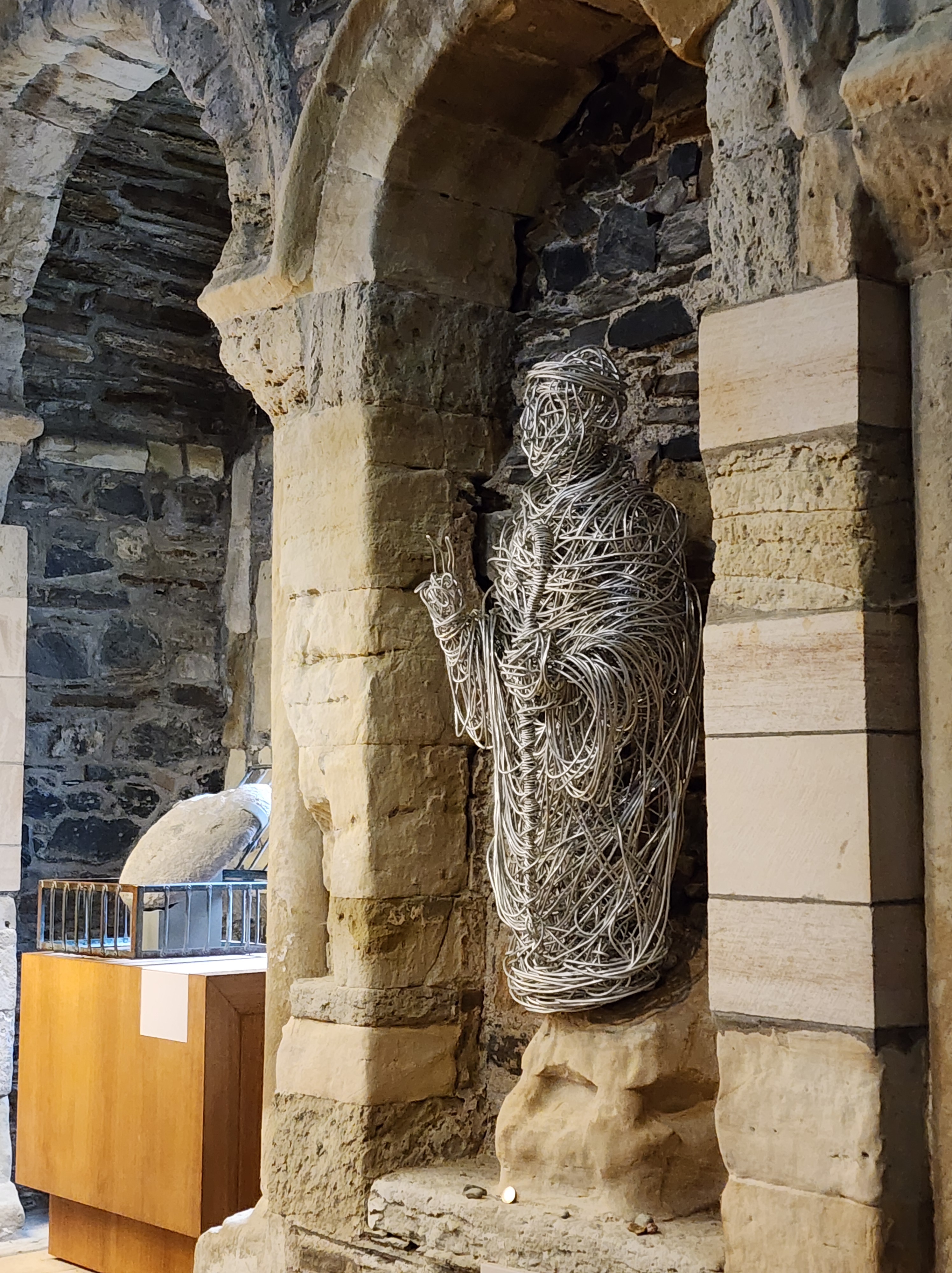
An altar statue at Iona Abbey church
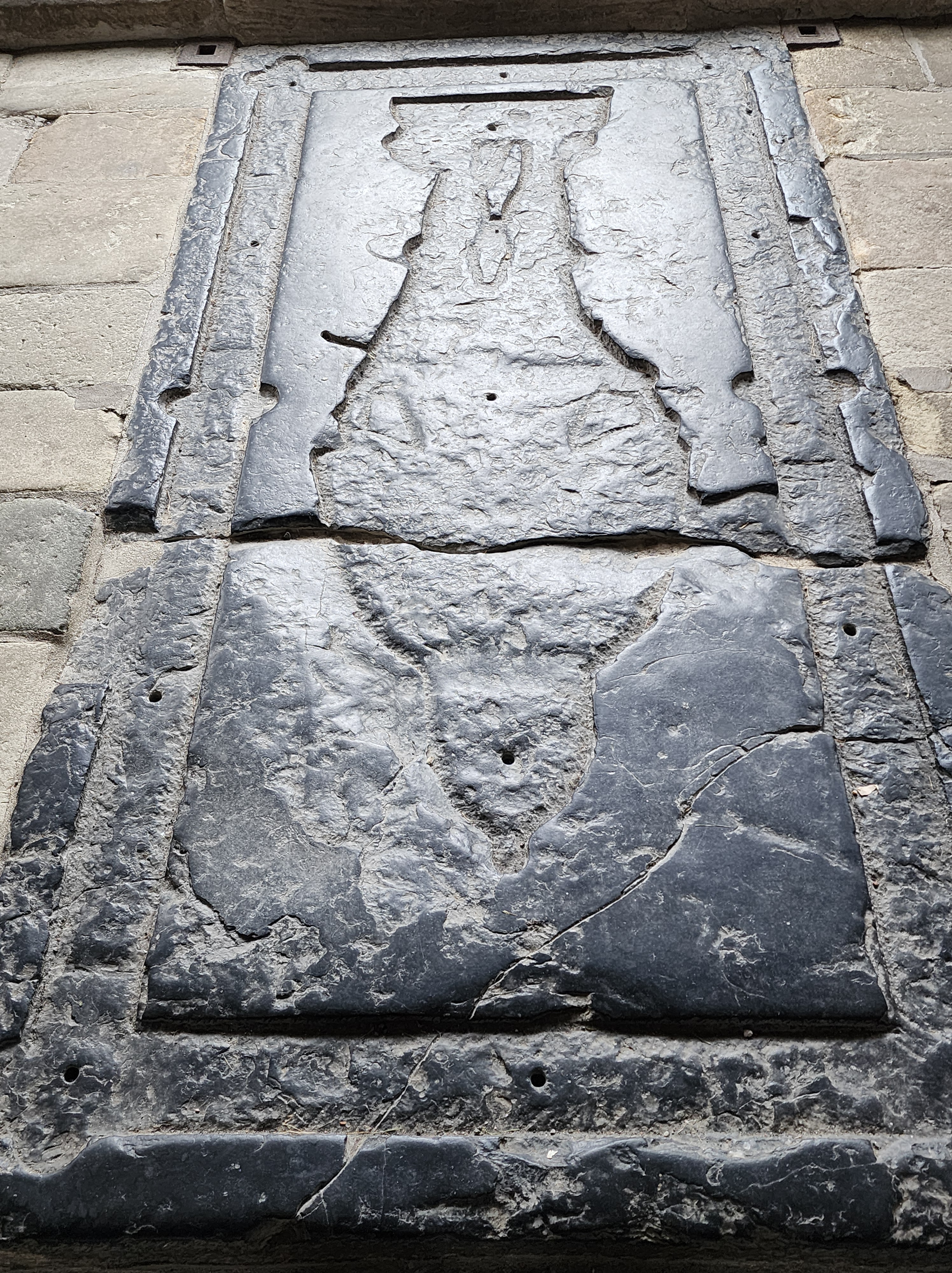
Sepulchre of St. Columba
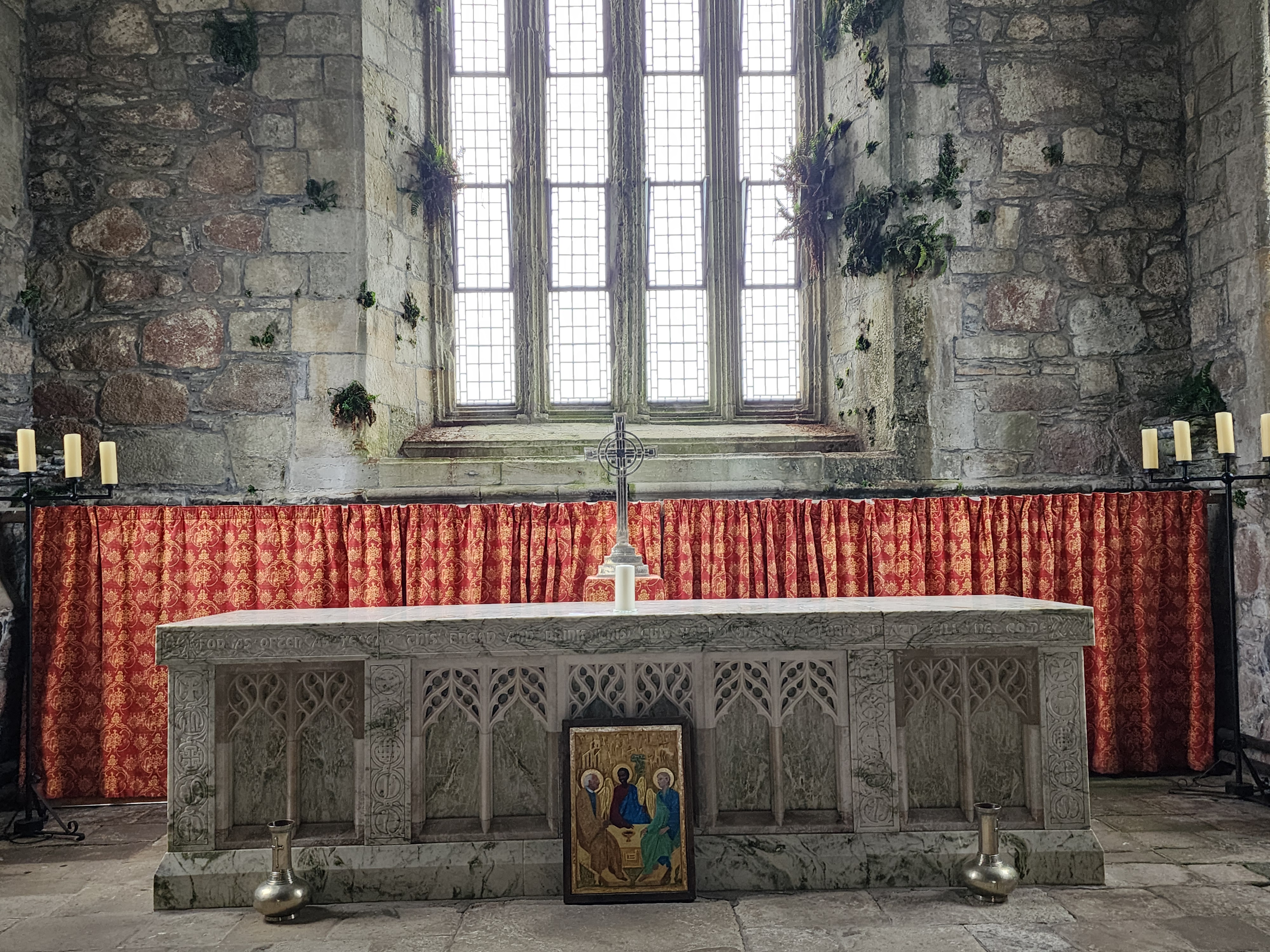
The altar at Iona Abbey
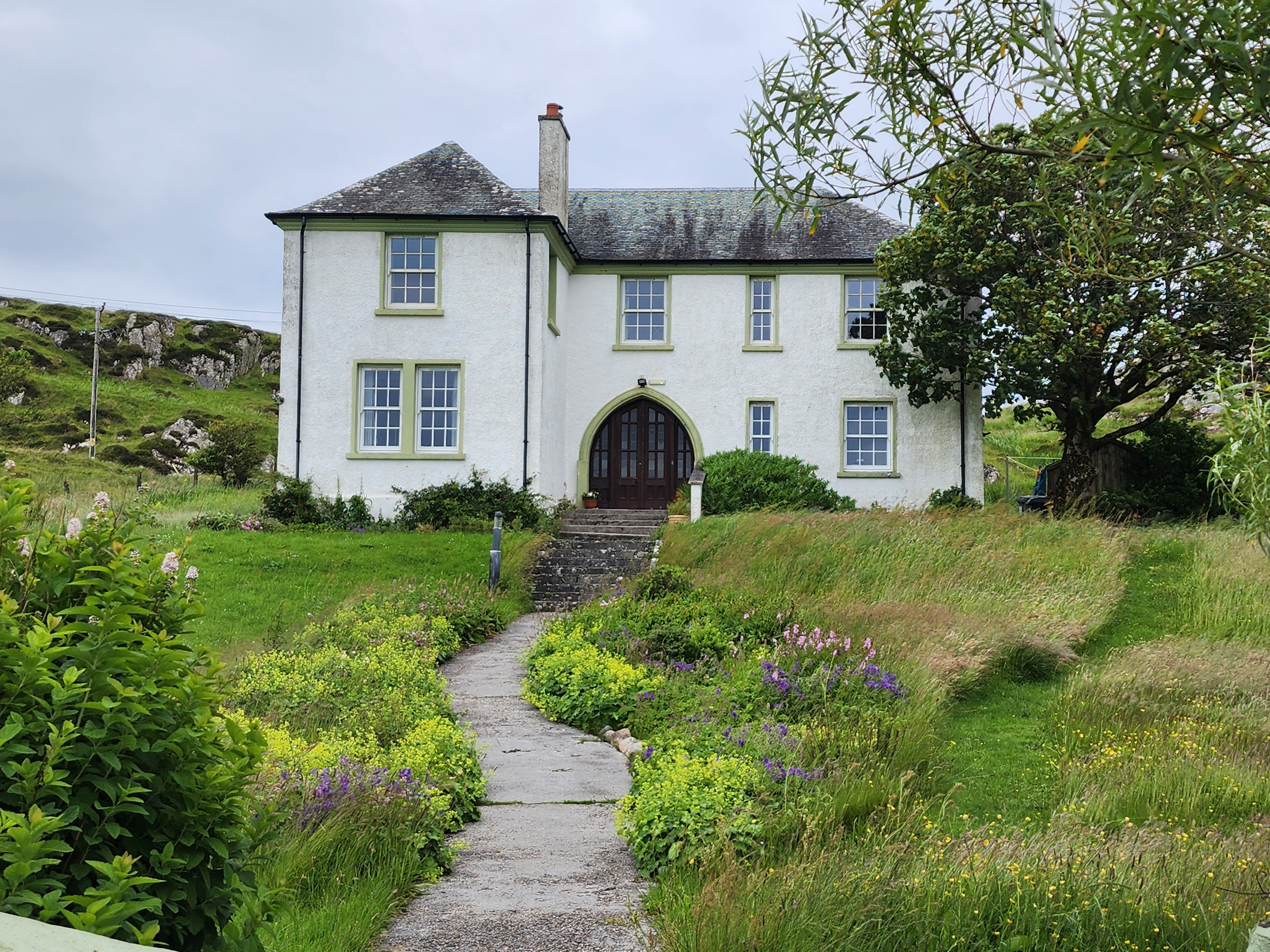
George MacLeod’s summer home, Dunsmeorach, near the Abbey
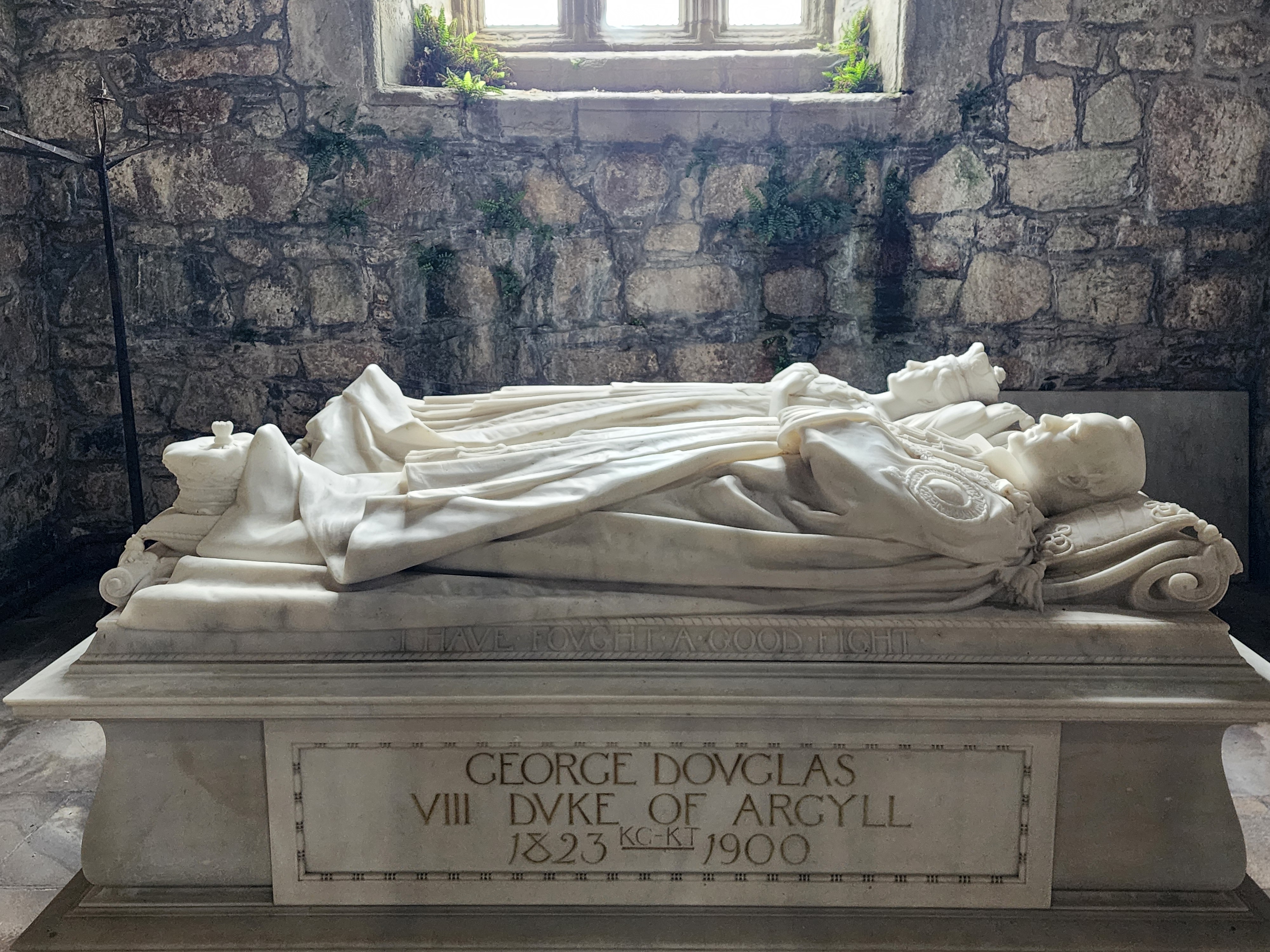
Duke and Duchess of Argyll’s crypt at Iona Abbey
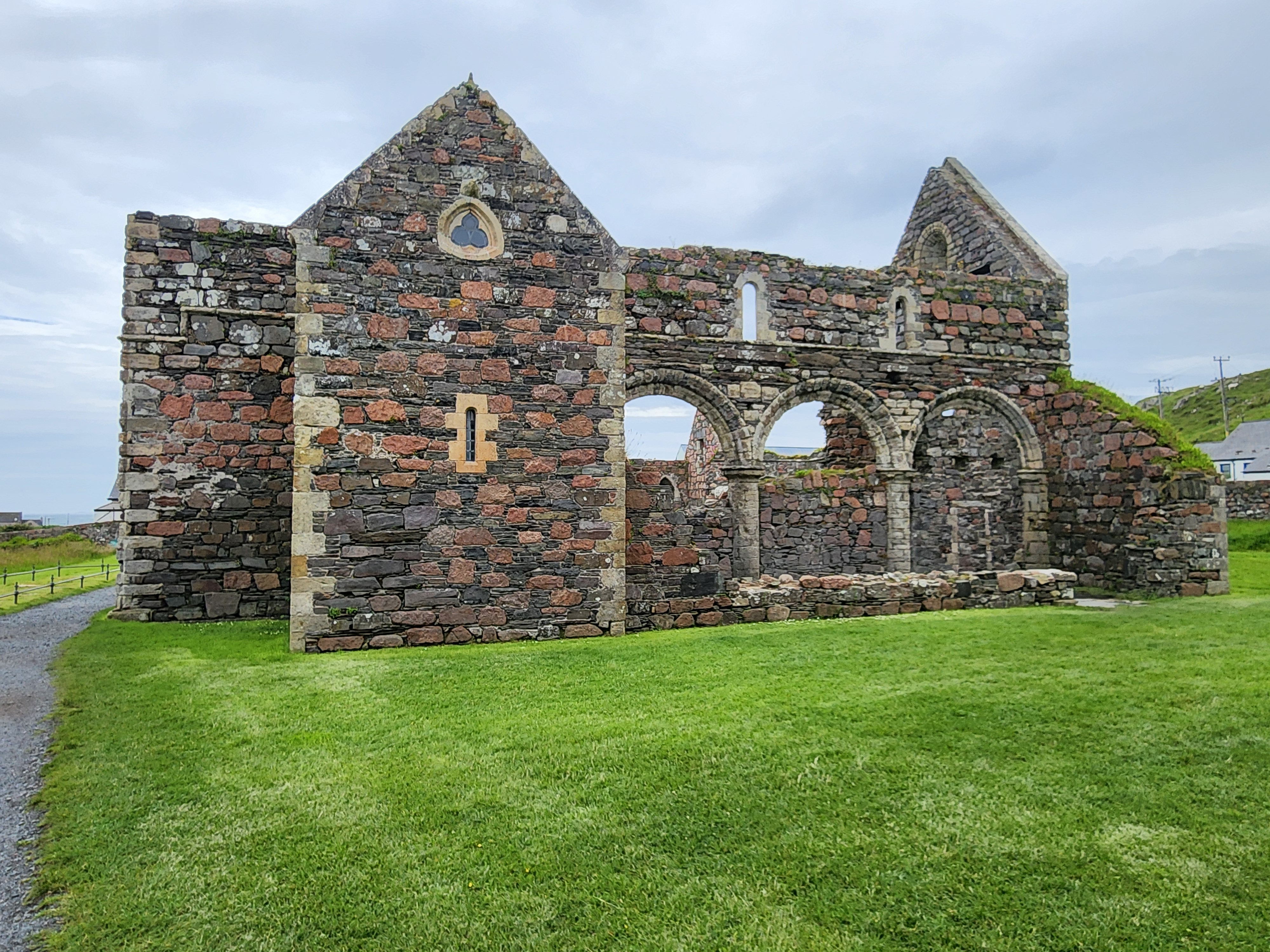
Iona Nunnery wall
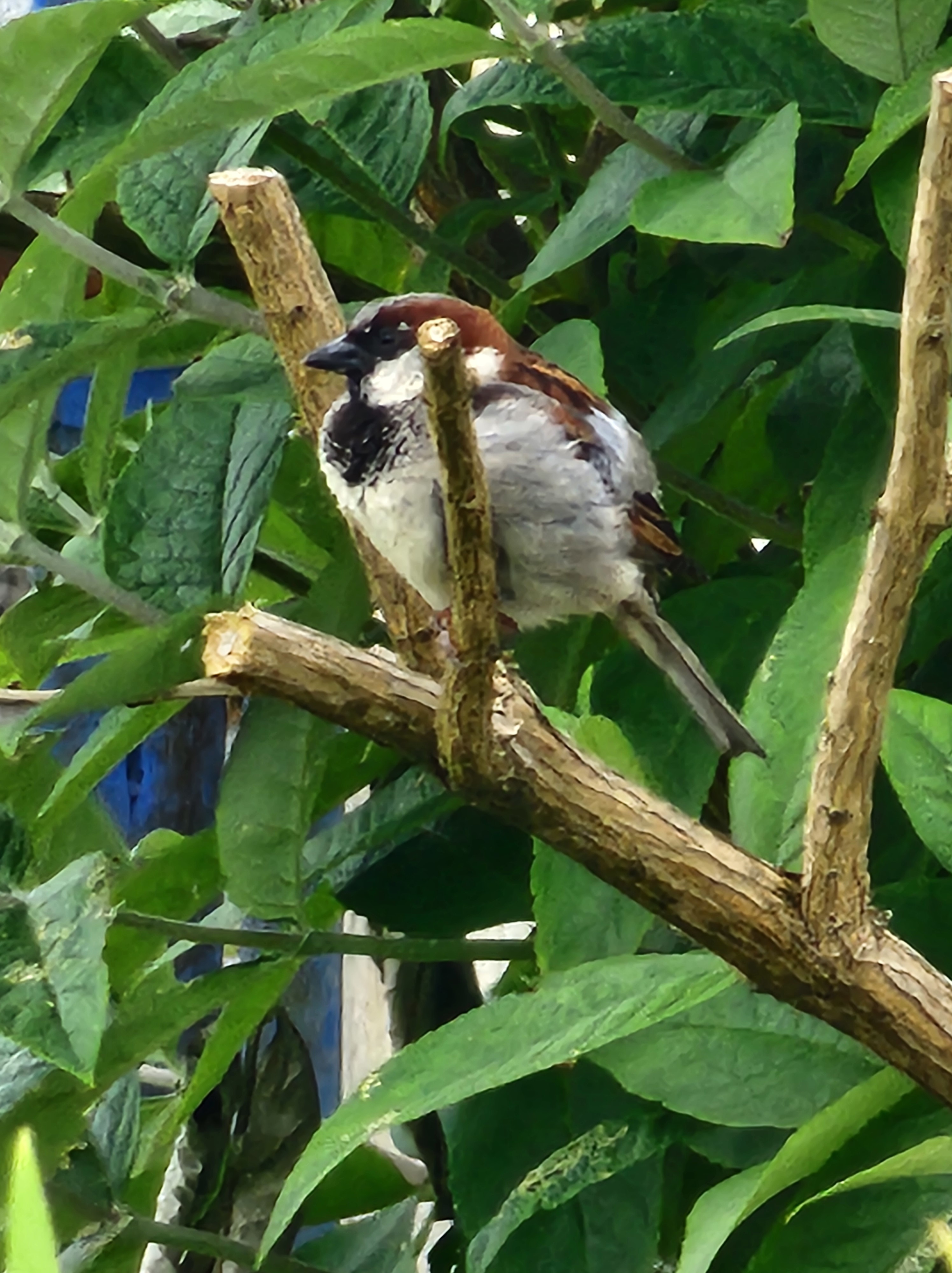
This chubby guy was singing his heart out in Iona harbor.
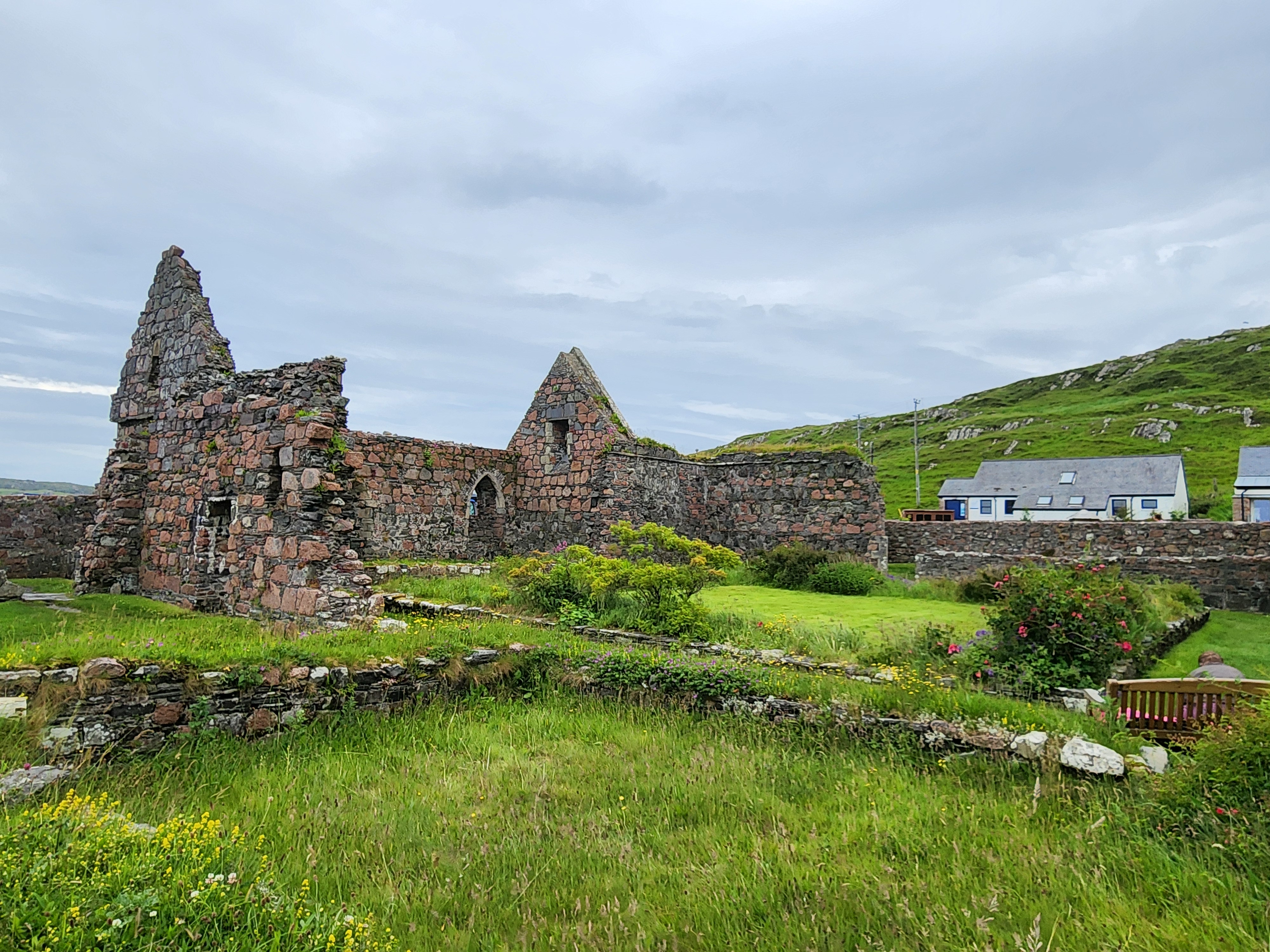
Ruins of the Iona nunnery
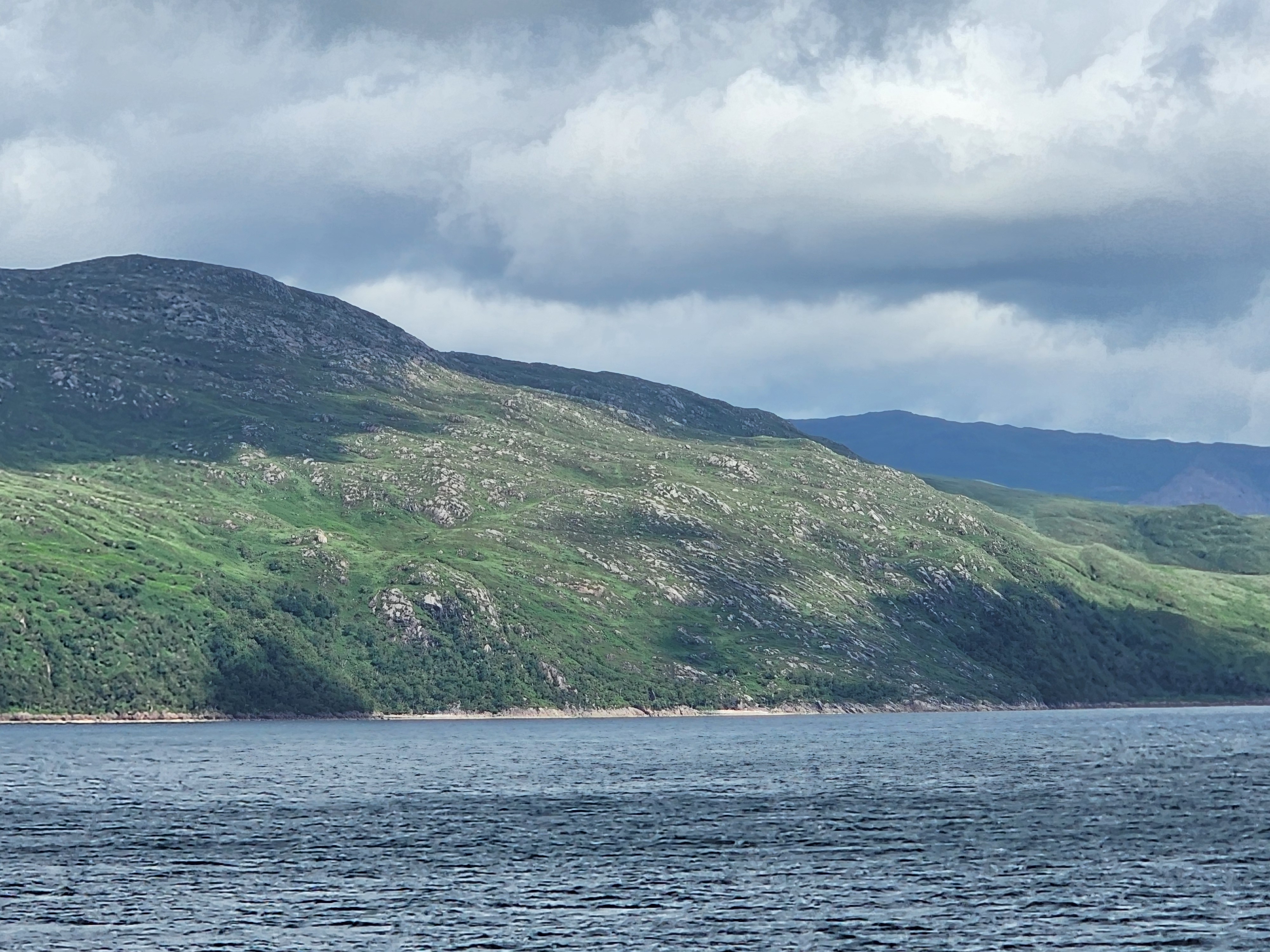
A sunny mountain view from the Craignure ferry depot
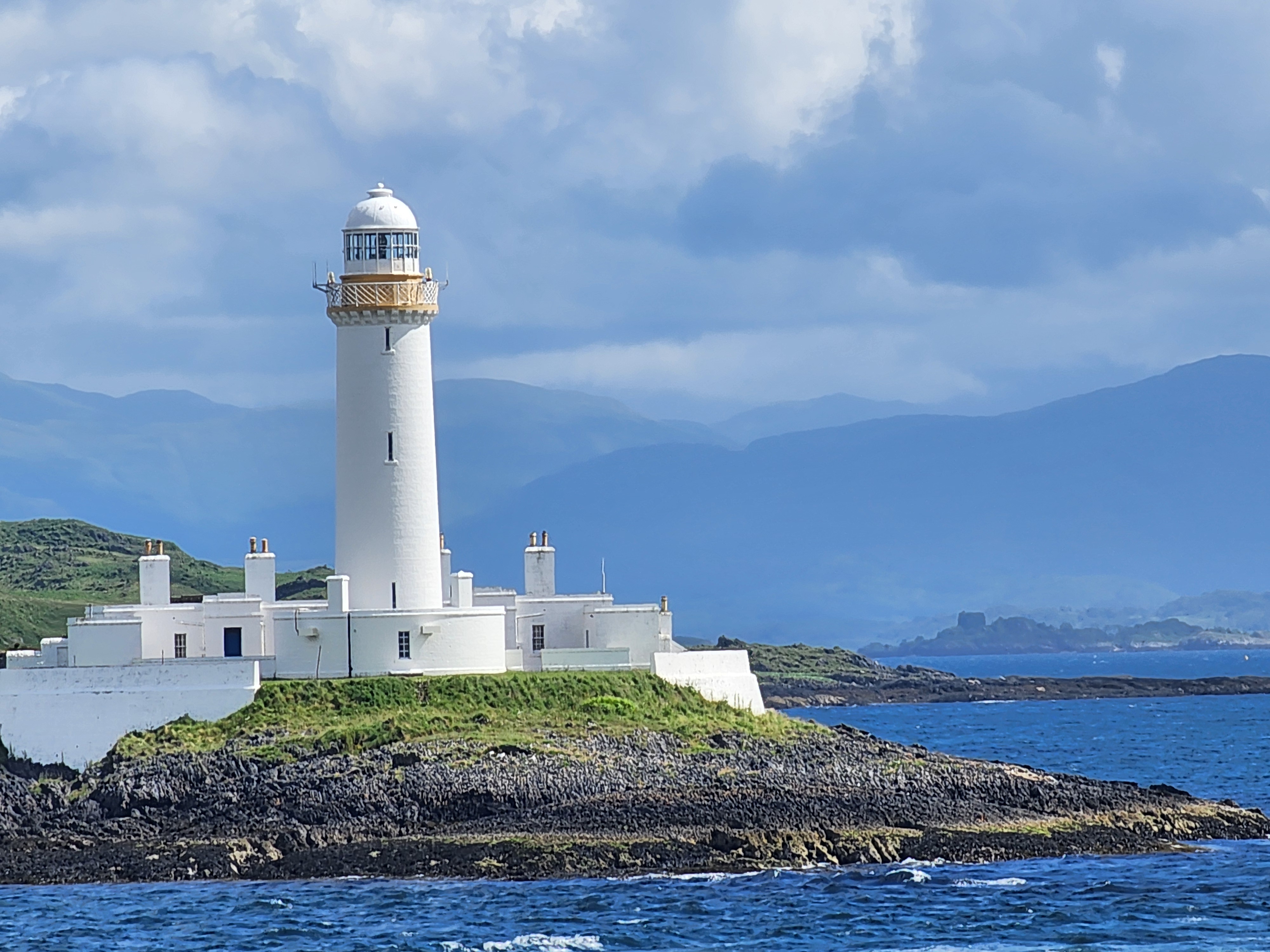
Lighthouse on the ferry ride from Craignure to Oban
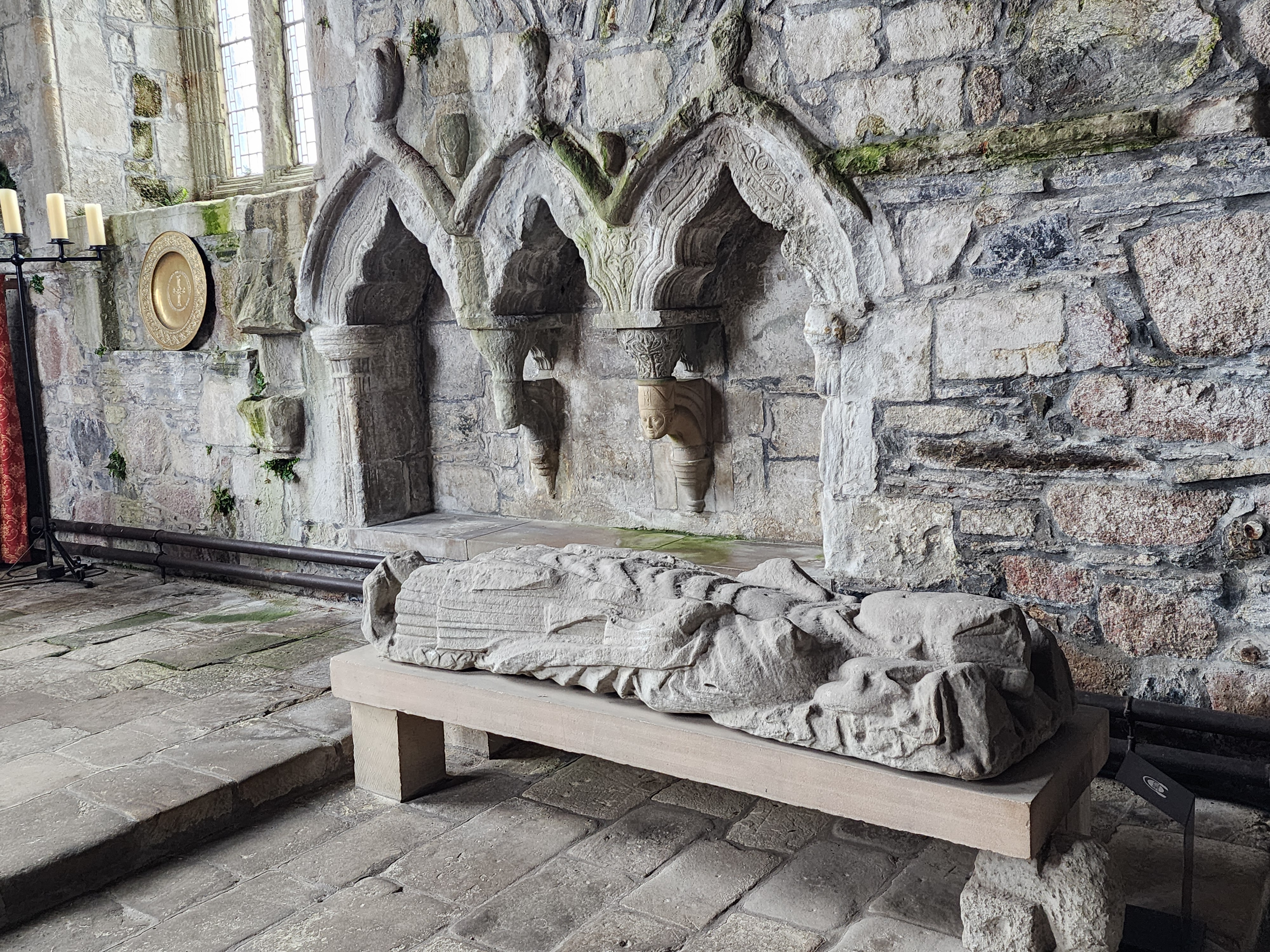
A statue near the altar at the Iona Abbey
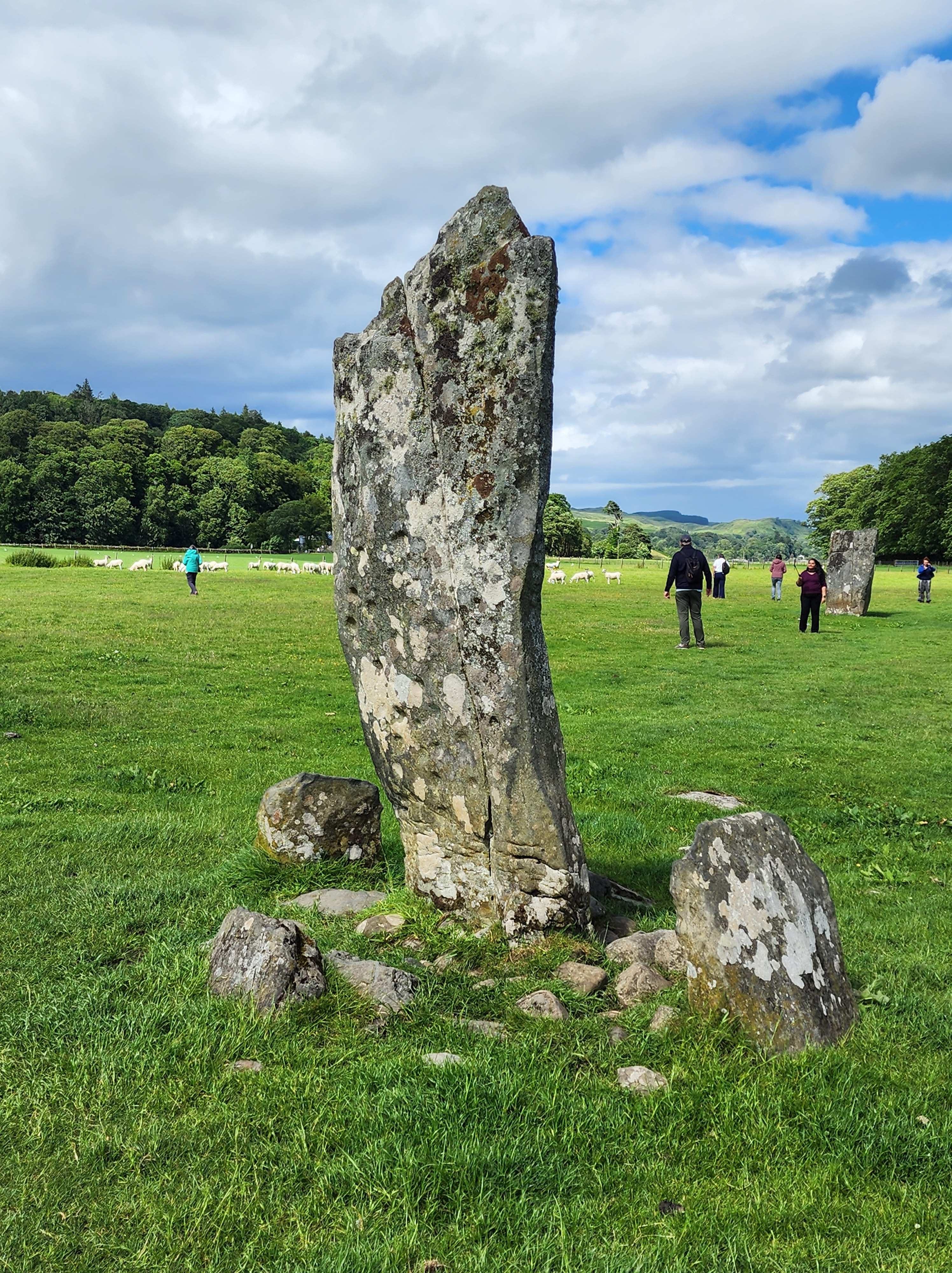
A standing stone at the Nether Largie standing stones
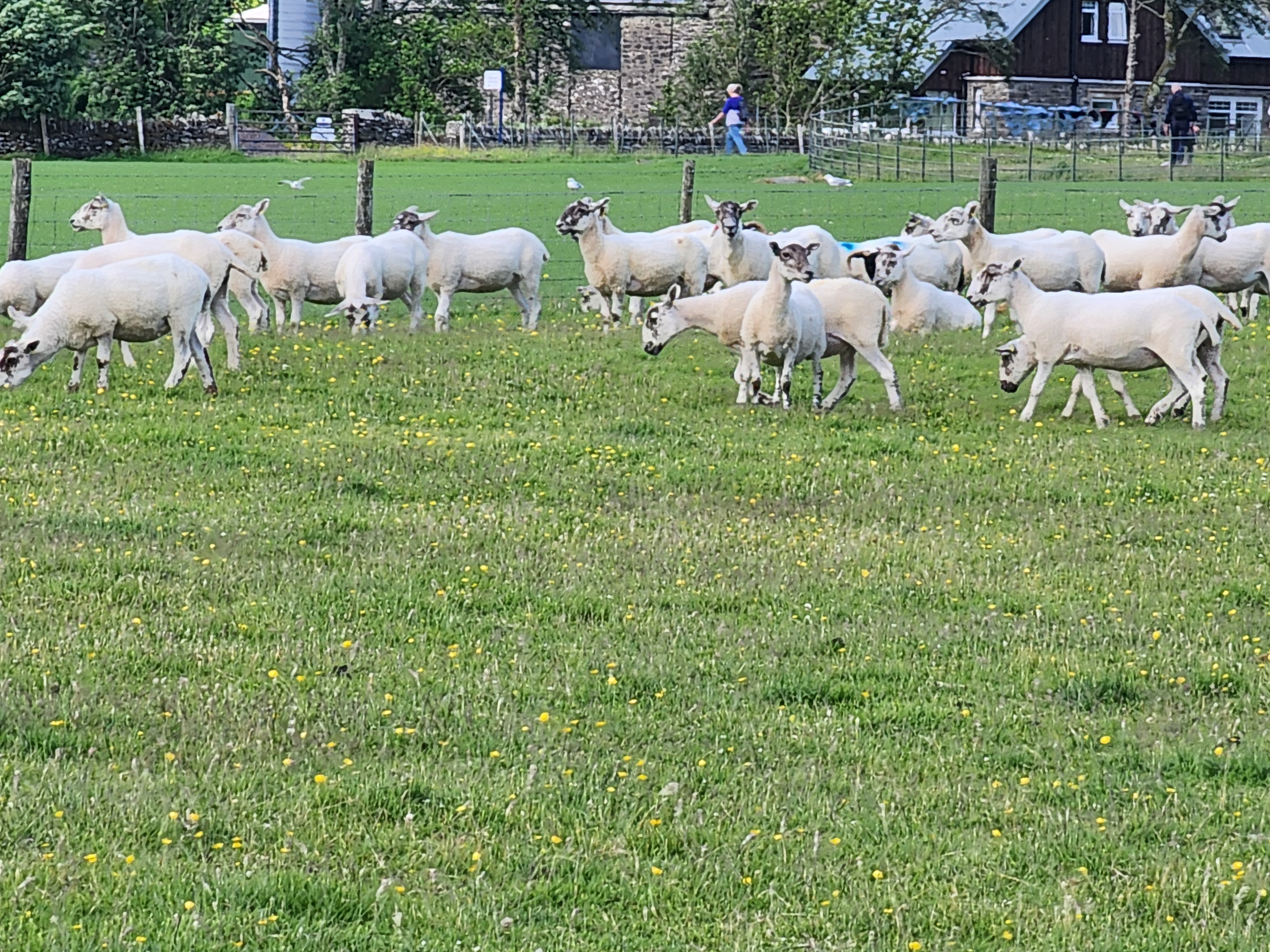
Sheepies running free
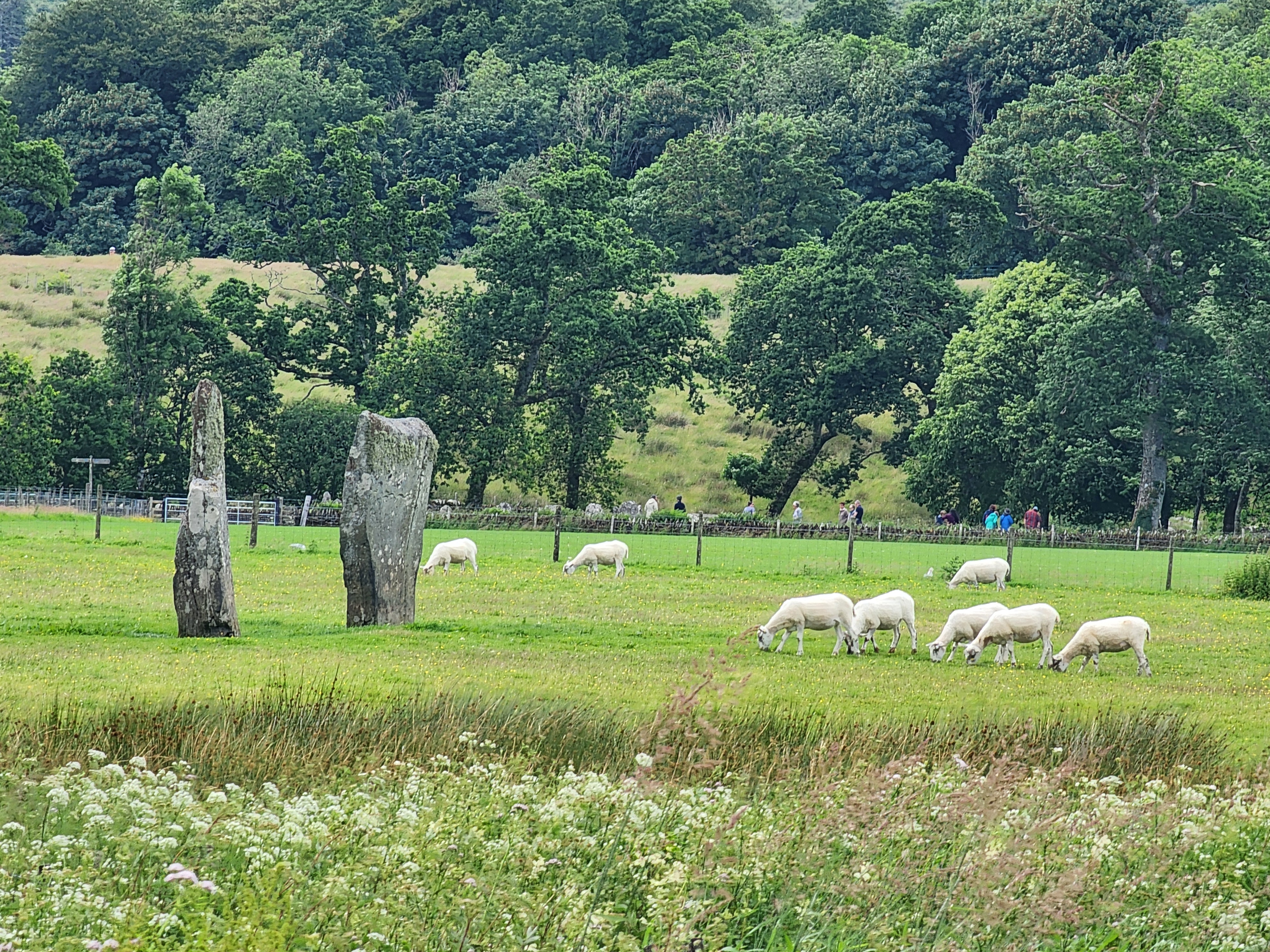
Nether Largie standing stones
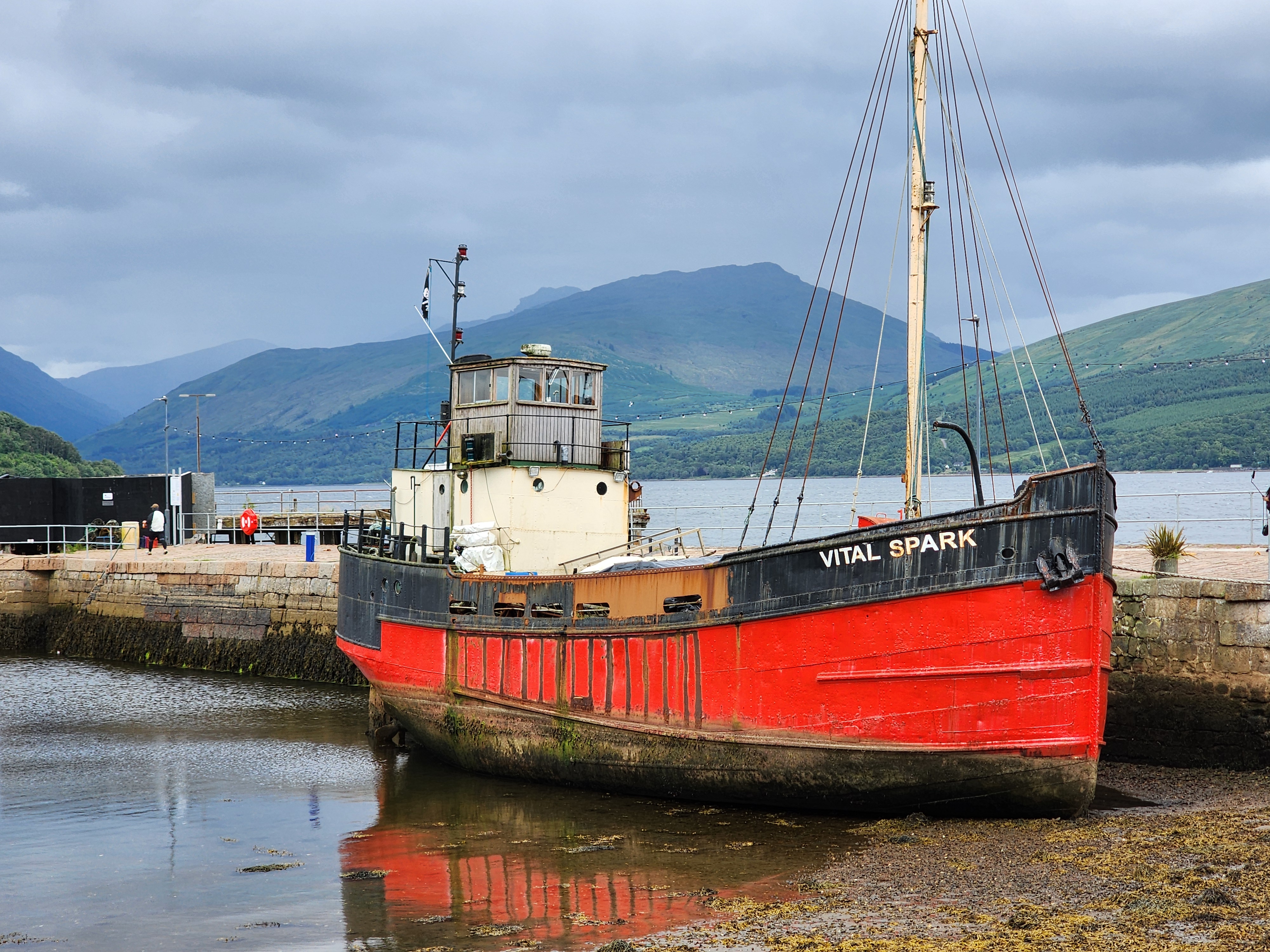
Fishing trawler at Inverary, on Loch Fyne
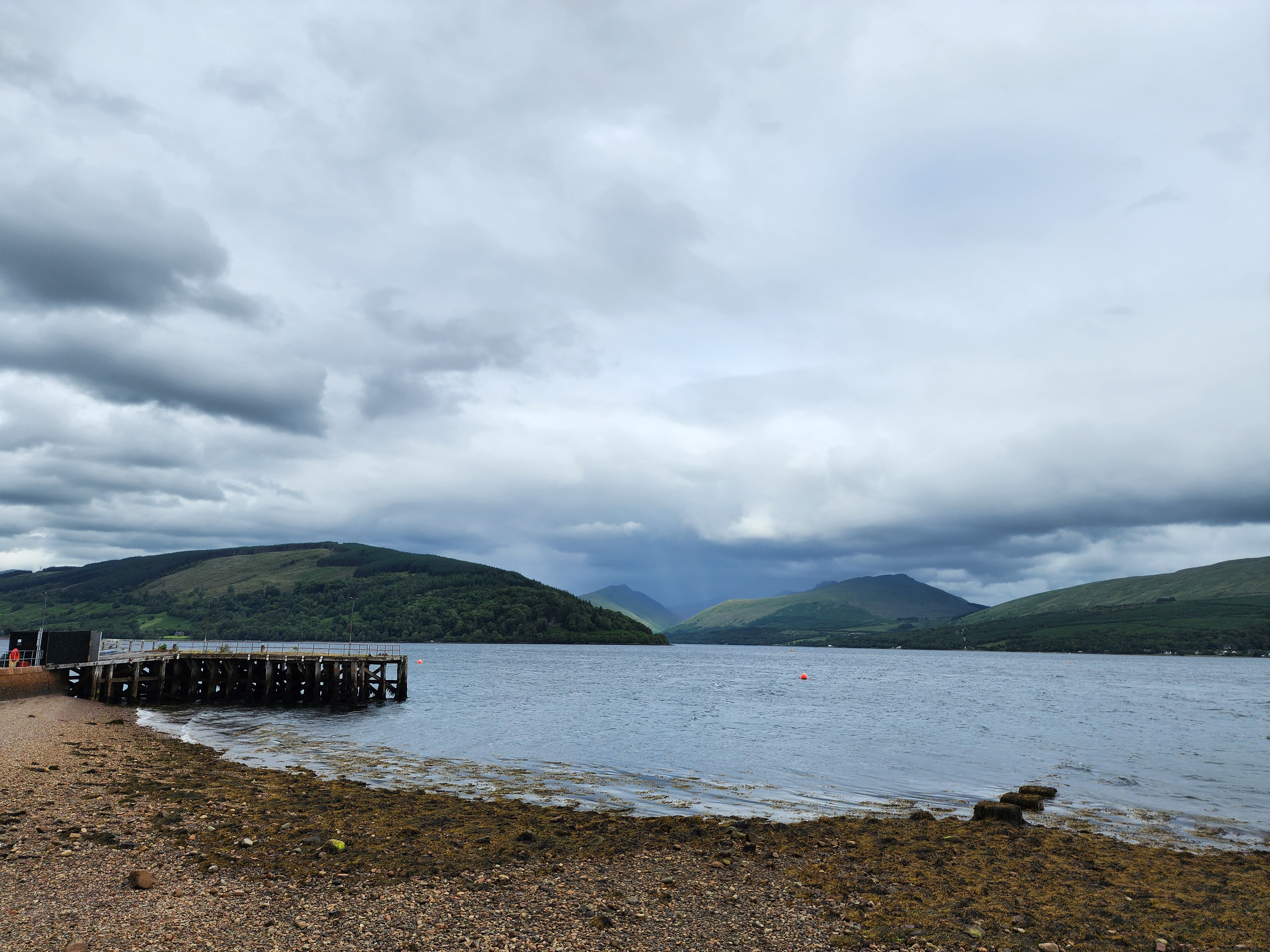
Loch Fyne
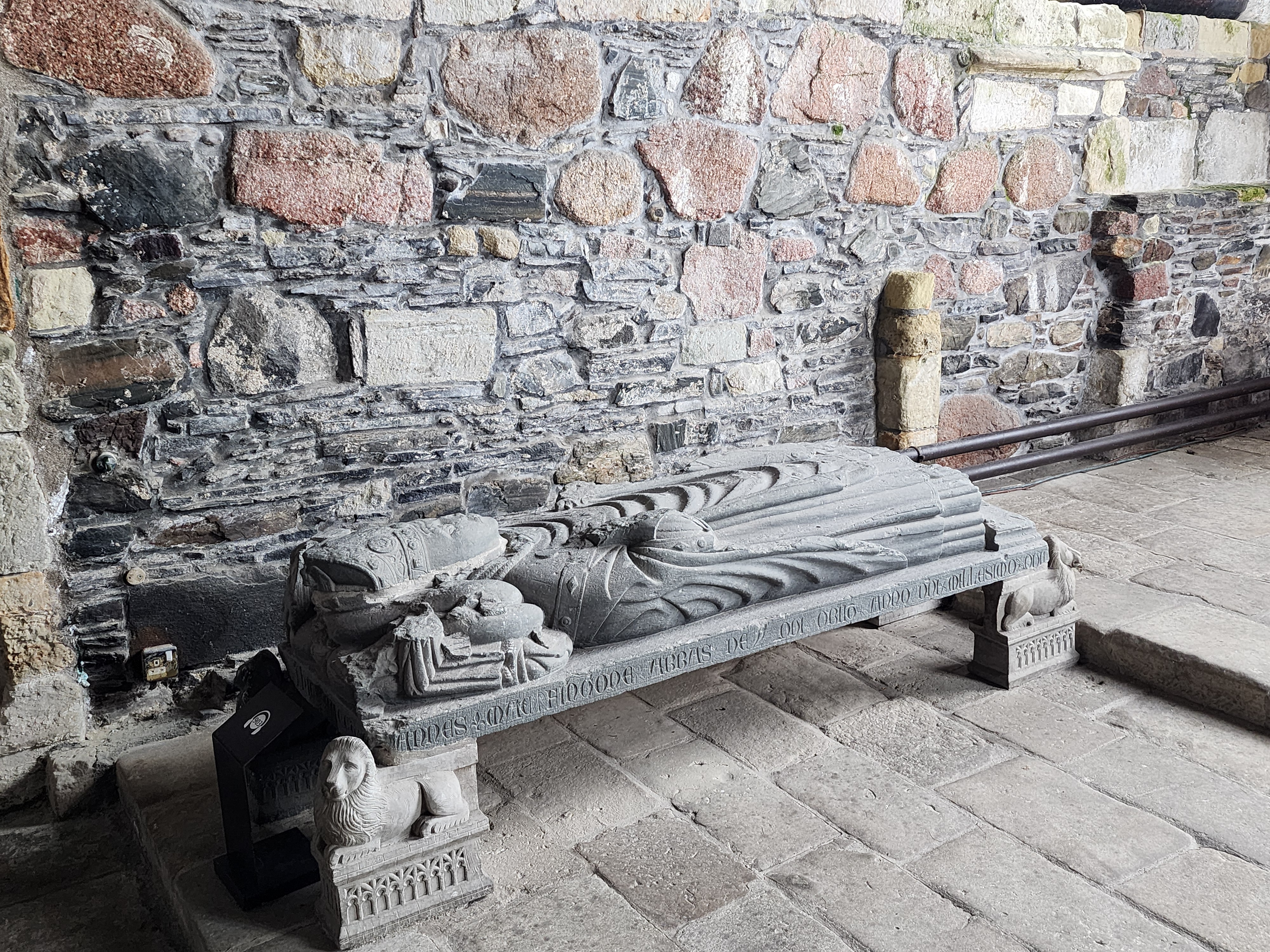
Another statue at the altar of Iona Abbey
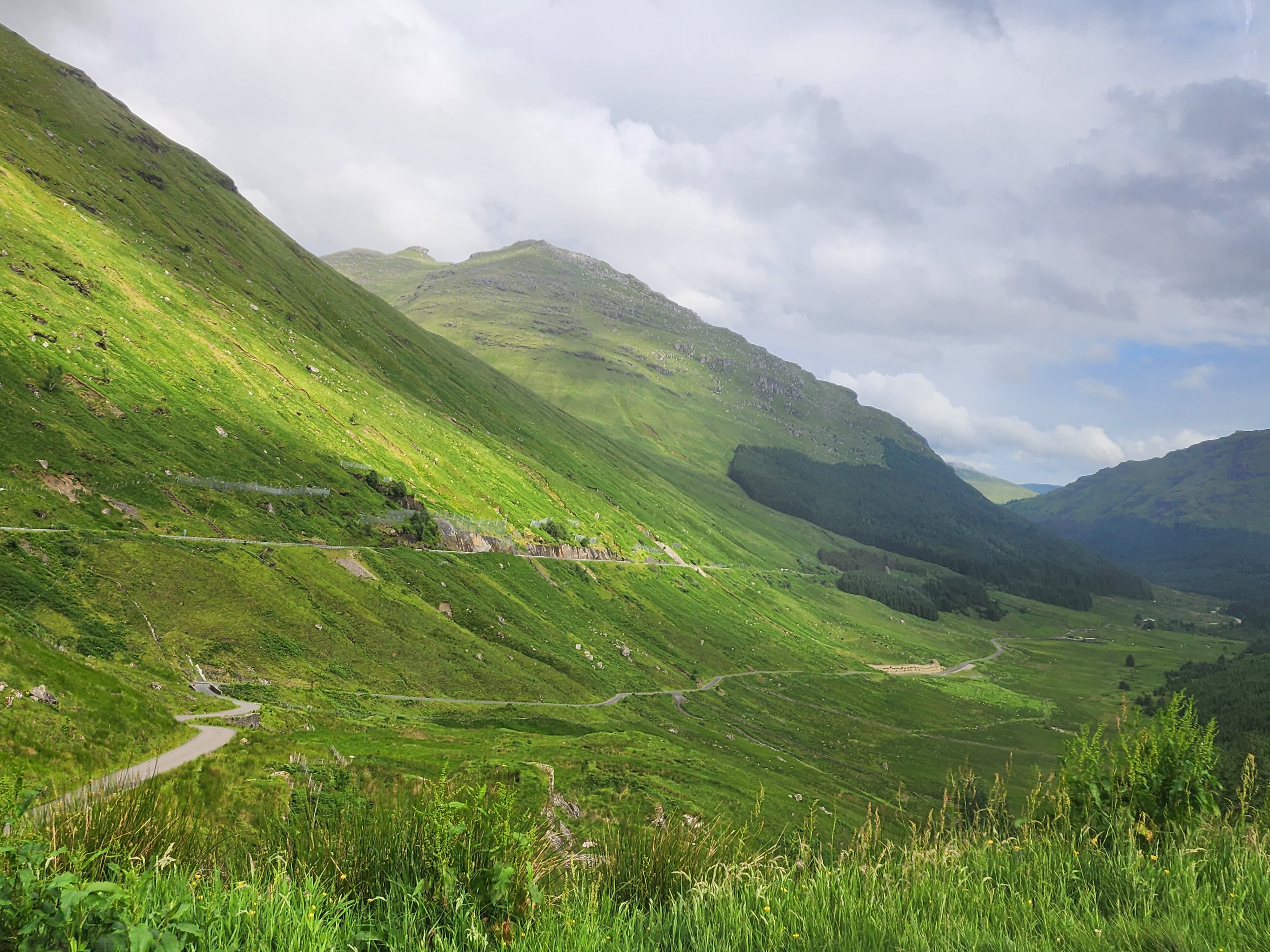
View of Glen Crowe, known as the Rest and Be Thankful viewpoint
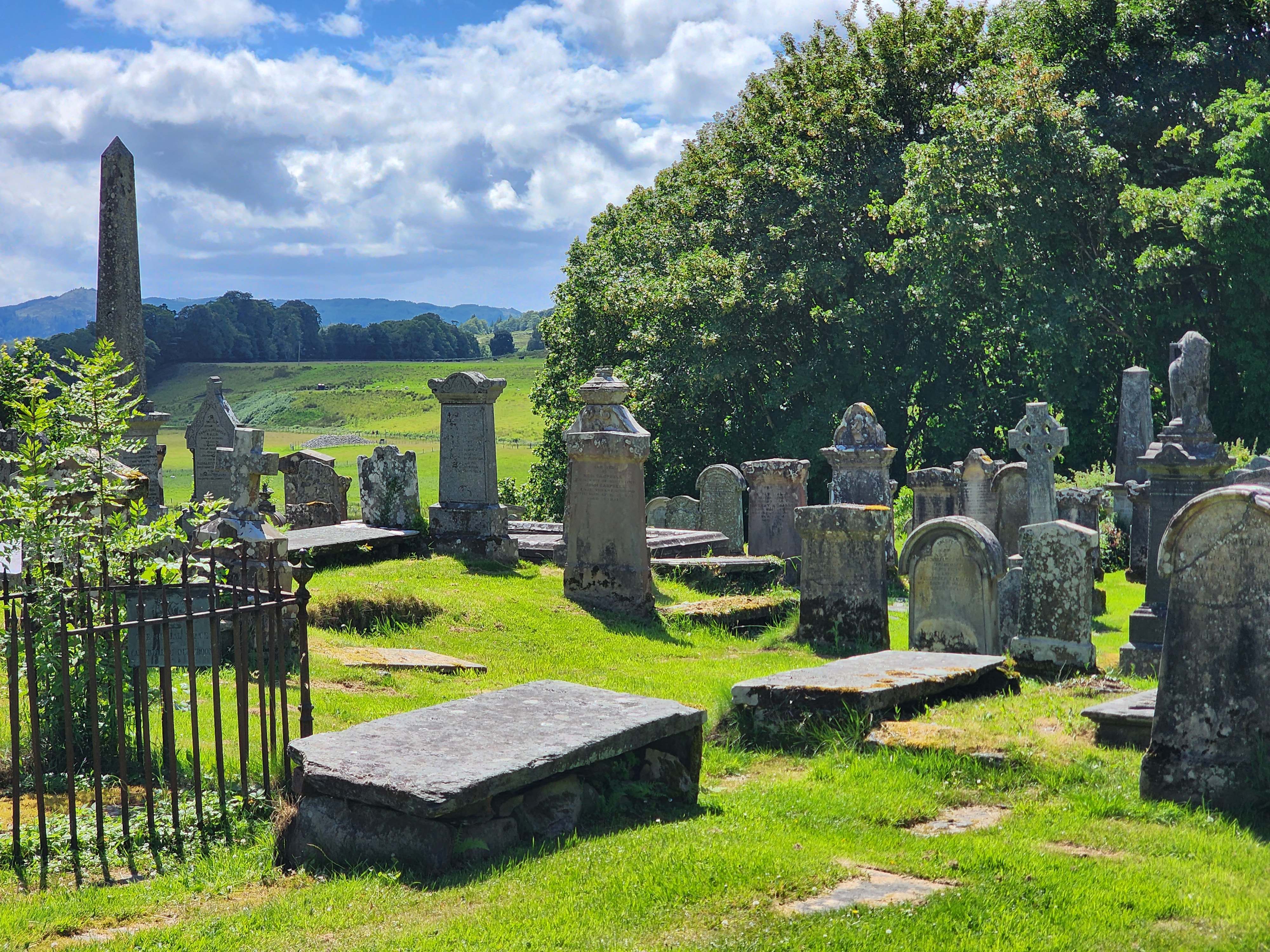
Churchyard at Kilmartin
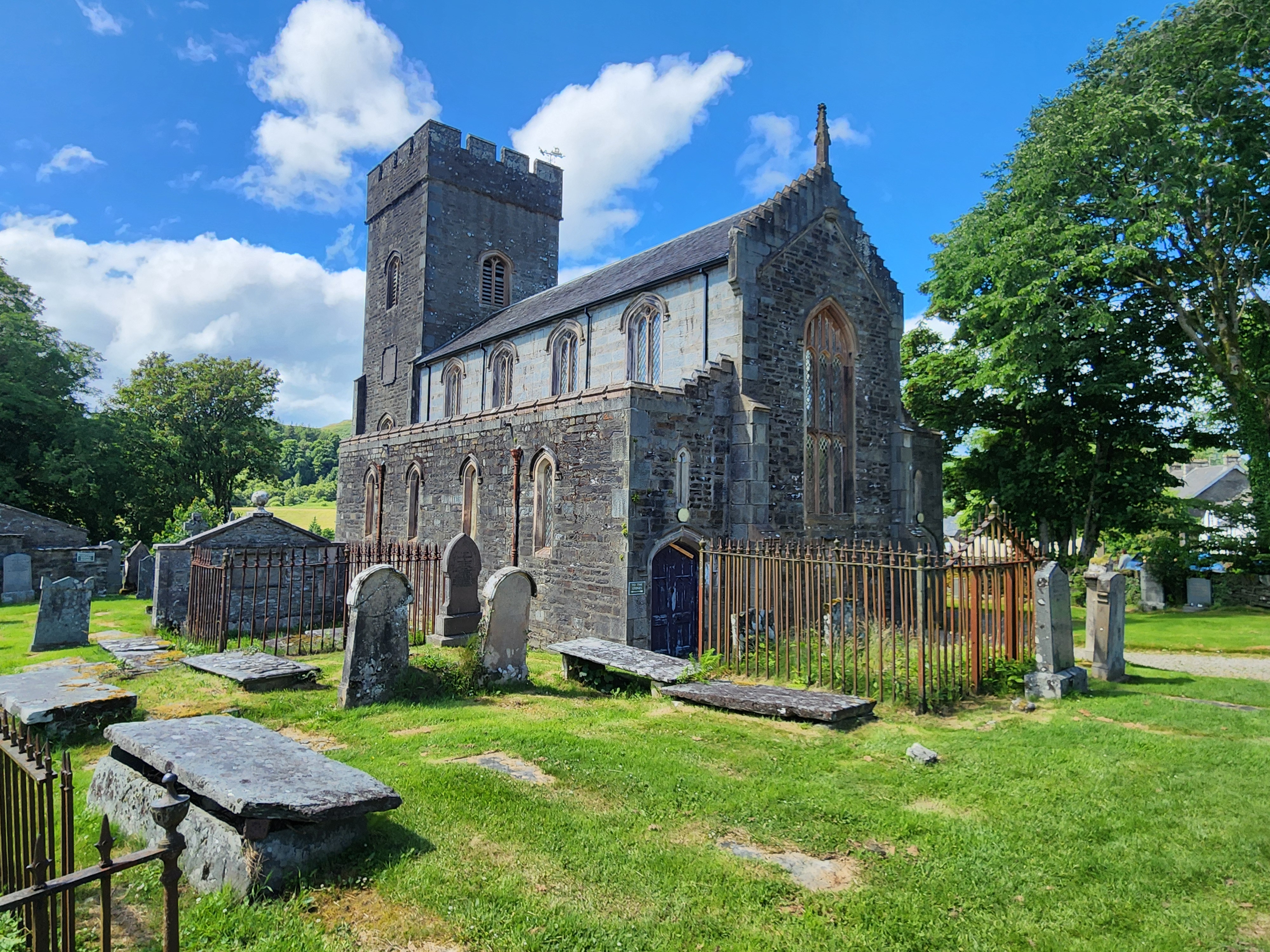
Kilmartin Church (for sale)
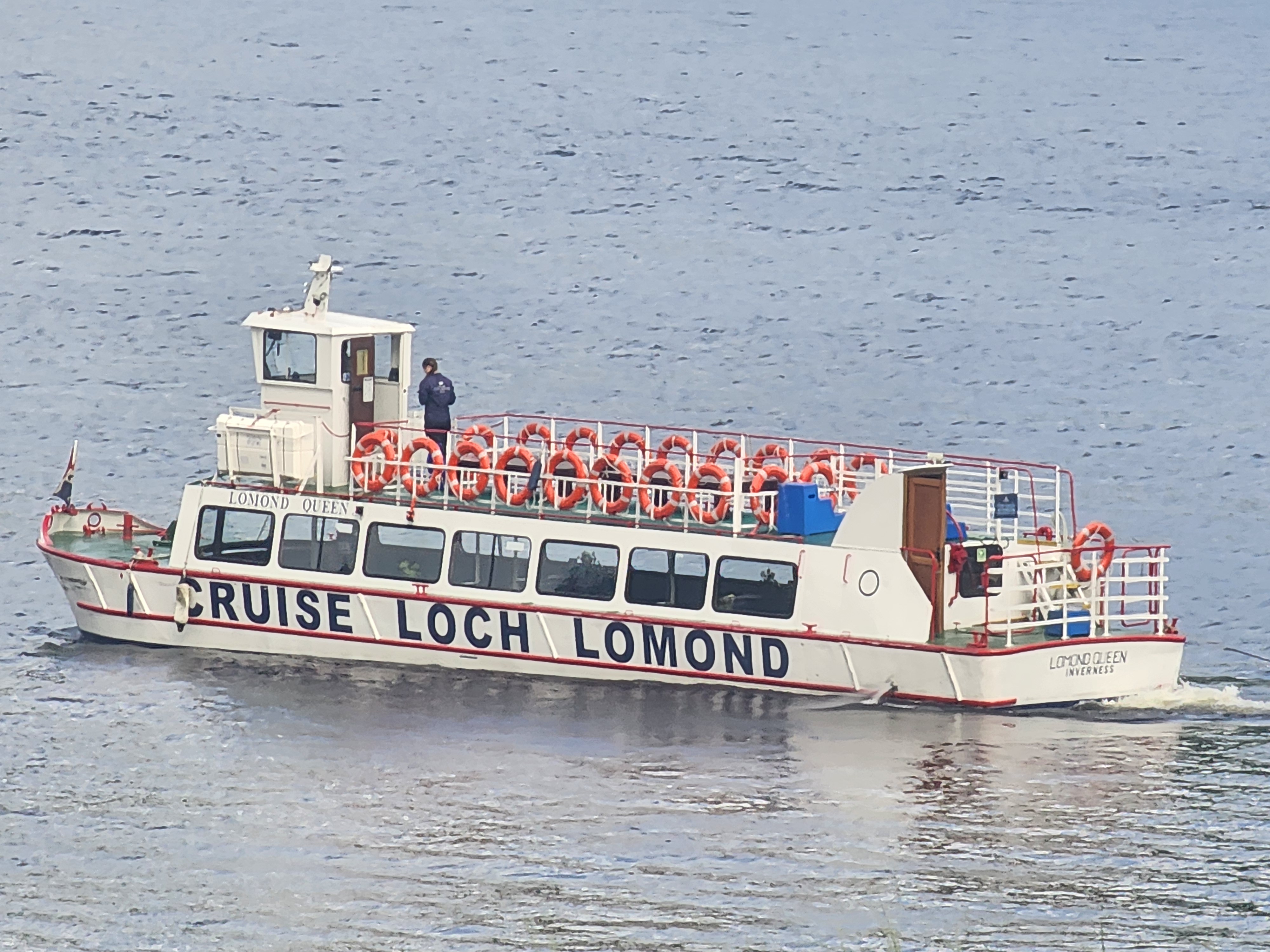
Last stop of the weekend… not that we went on the cruise
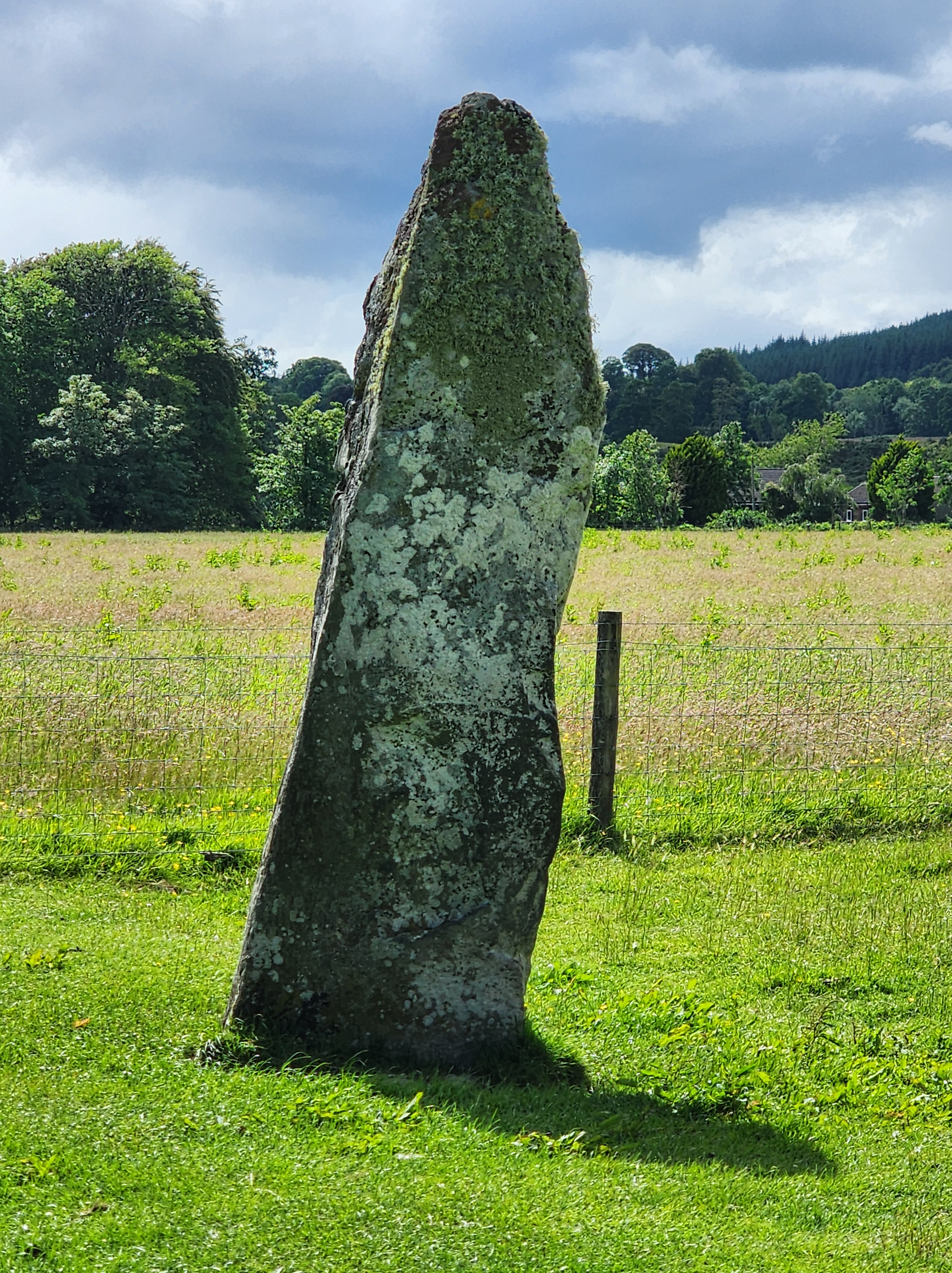
Another Nether Largie standing stone
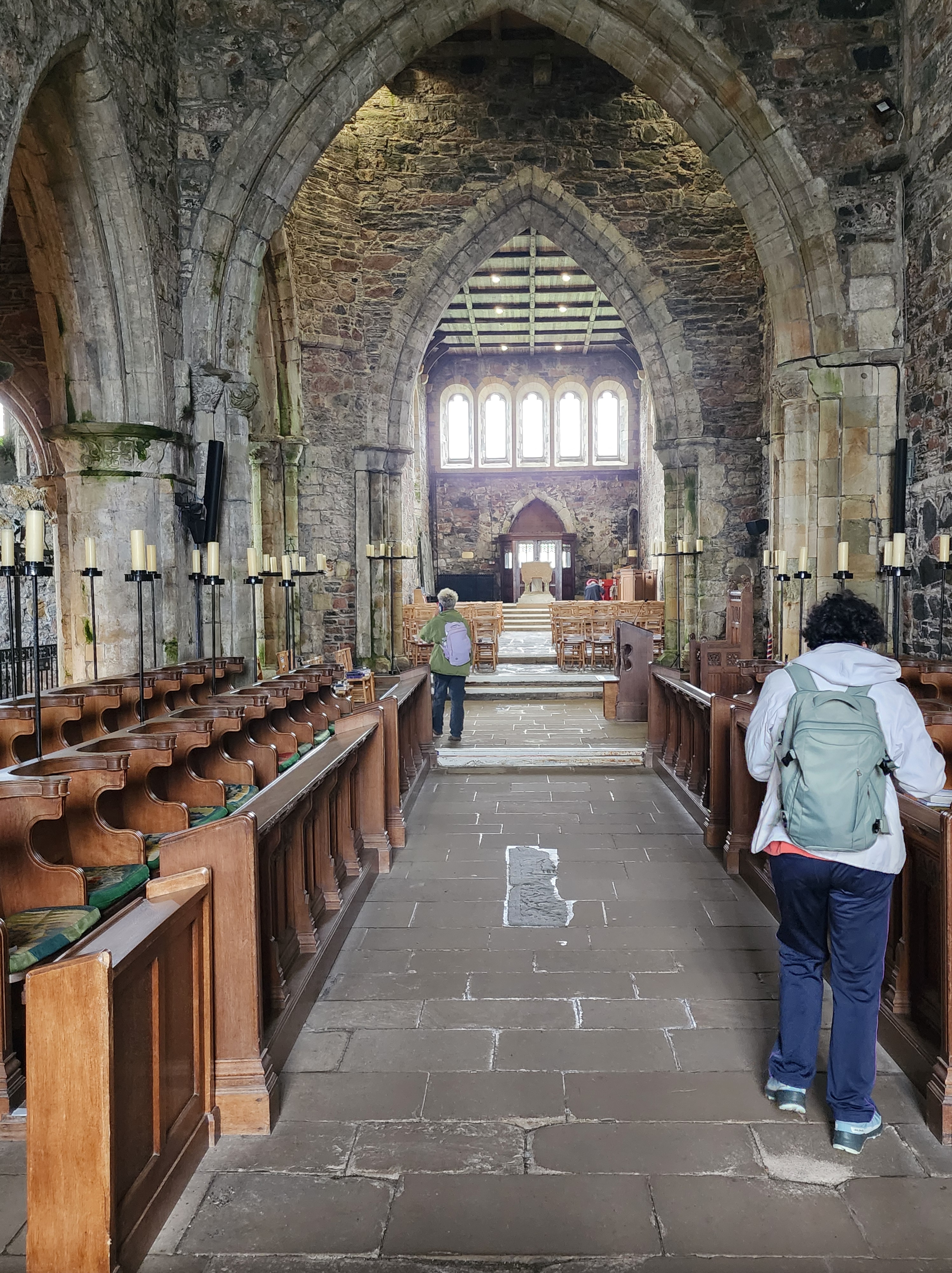
Another view of the altar
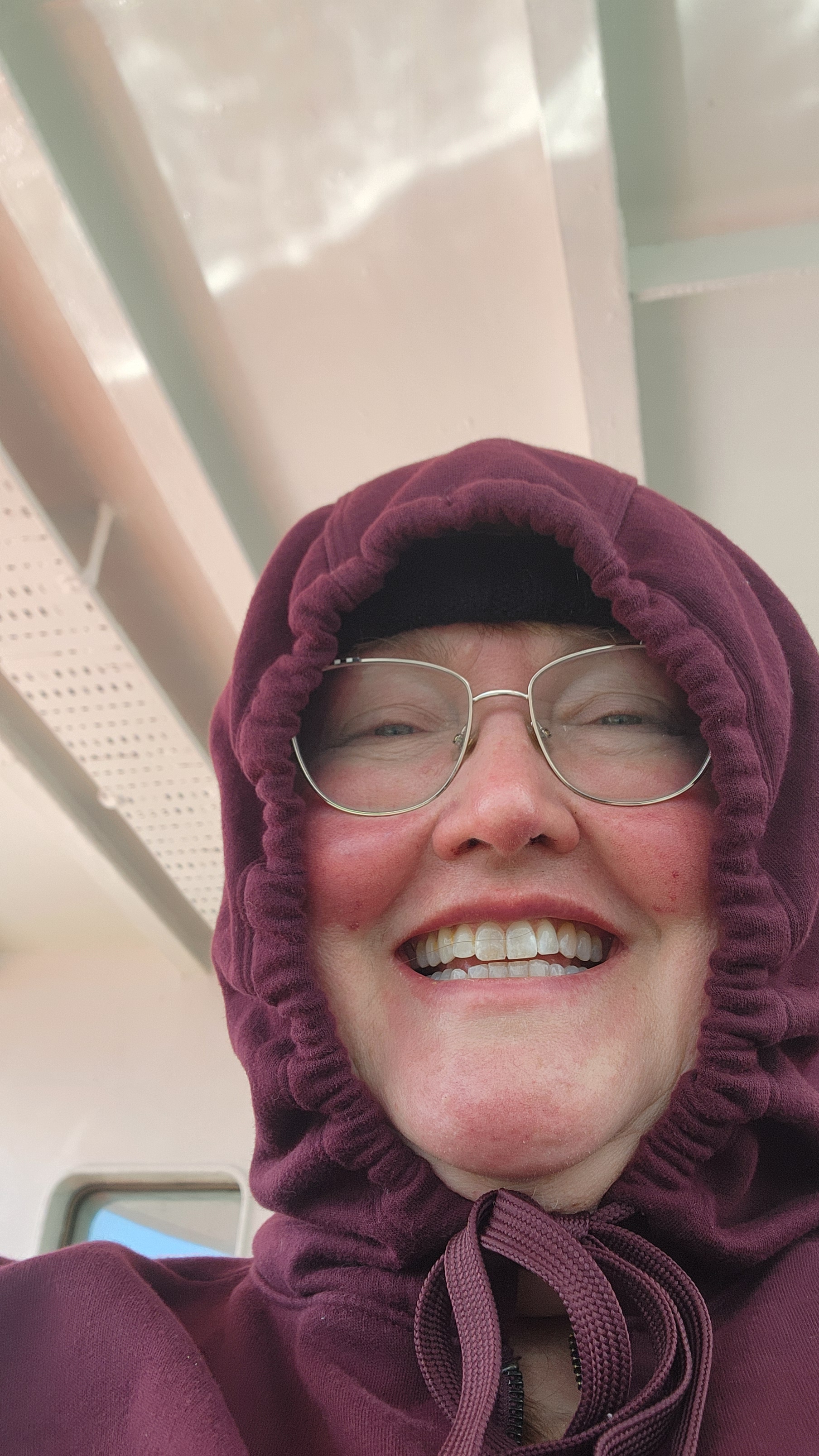
Me, freezing my face off on the ferry to Oban

