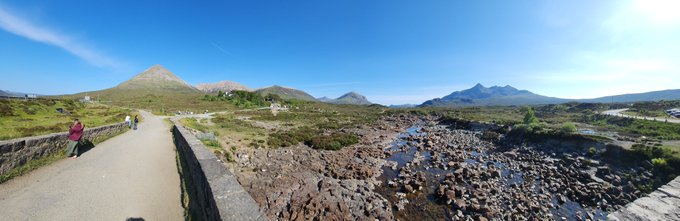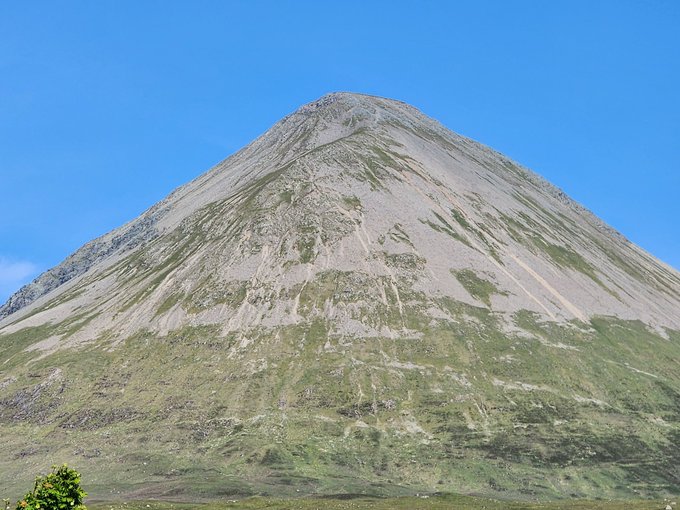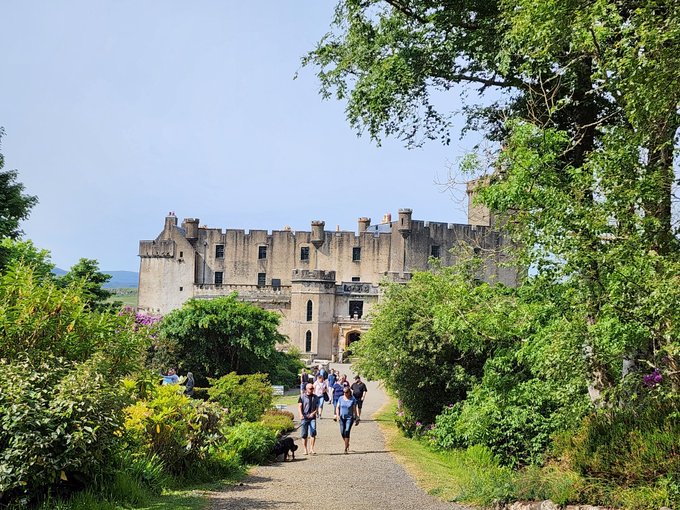
Occasionally, I think back to the trip I took to the Isle of Skye in 2023 and remember what a beautiful place it is, with its winding roads and green, green mountains spangled with purple foxglove (and sheep). When I visited there before, I fell a little more in love with Scotland, and it’s said that if you’re not careful once you’ve been to Skye, the Faeries will get their hooks into you, and a part of you will stay there forever. It must be the case, for when I returned, I felt a little more whole. Those rascally Faeries must have kept a little of my soul with them, and lent it back to me for the time I was there. But I’m getting ahead of myself.
The morning I left, it was sunny in Edinburgh and not too cold. I walked from my flat to the bus station, the streets empty, stopping periodically to rest my bad foot. I checked in with the Rabbie’s crew, then had the horrible realization that I forgot my charger for my phone. Talk about bad luck! There was no way I could make it through the weekend on one charge (think of all the photos I would miss!), so the newspaper shop in the bus station extorted me to the tune of £40 to buy a plug and cable. I suppose you could say I was lucky that they sold them, but I wince at the money I spent. Then I went next door to the little café to buy a Coke Zero and a lovely carrot cake cupcake with inch thick cream cheese icing (remember, I like to eat my calories, not drink them).
I waited patiently for our bus to arrive, drank some Coke Zero, and shoved it in my backpack. What I didn’t realize is that I hadn’t secured the cap very well, so soda went everywhere in my bag. Fortunately, not all of it spilled, but it was enough that my hoodie (which I had shoved into my backpack) was soaked and it got all over my phone and wallet. (My phone was fine, though.) That was the second instance of bad luck of the day. But I wasn’t going to let something like that bother me.
By the time the bus pulled out of the station, it had started to rain. The third bit of bad luck. This was unfortunate, because I had forgotten to pack my raincoat, although I suspect that it was “forgotten” in the sense of not wanting to carry it around. The waterproof (as they call it) is indeed a good rain jacket, but it is also hot and heavy (since it’s lined), and I didn’t really want to carry it. (Plus, I thought it was supposed to be sunny on Skye and that I would be ok with just my hoodie.) That’s not to say I forgot it on purpose—I did really mean to take it, but I think subconsciously, I left it behind. It was a choice I would come to regret.
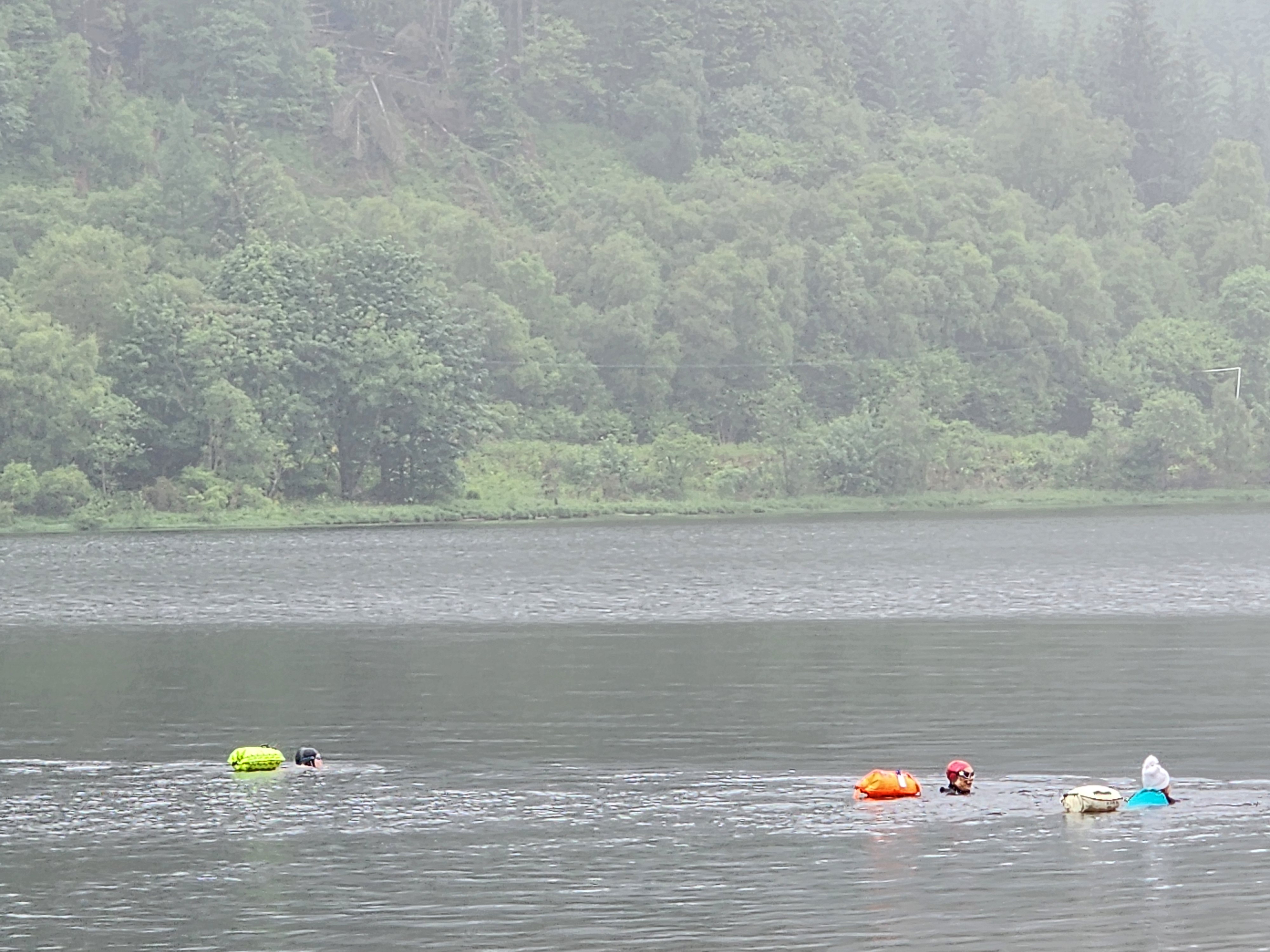
Cold water swimmers on Loch Lubnaig
On our trip west through the Trossachs, it rained. Then we stopped at Loch Lubnaig (which lay between mountains Ben Vorlich and Ben Ledi) and the sky was low and moody, the rain having picked up even further. Several swimmers were out in the loch, their neon-colored swim floaties adding a dash of color to the dreich day, and the temperature was clearly dropping, so I don’t know what they were thinking. But they seemed happy enough, even with the rain. If I had worn my raincoat, I would have been perfectly content with the weather as well. As it was, I was wearing my Coke Zeroed wet hoodie, which only got wetter the longer I studied the fools on the loch. So I headed back inside the bus to wait for everyone else to arrive.
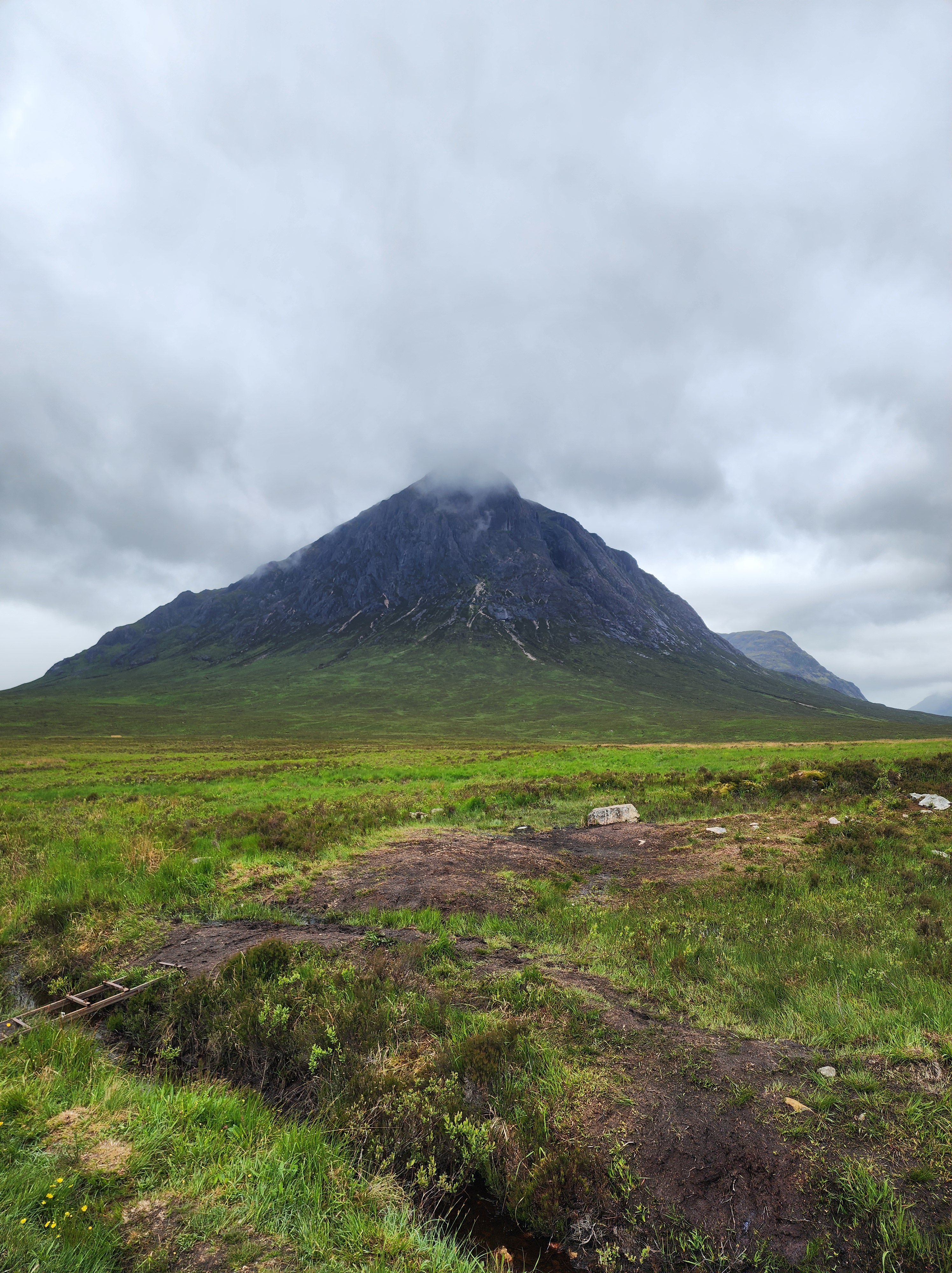
Etive Mor
The rain became hateful for a while, smearing across the windows of the bus as we drove so you could hardly see out, everything a dull gray smudge of landscape. But we drove to Etiv Mòr and I dutifully jumped out for a photo; the rain had tapered off a bit. And then off to the Three Sisters. You may ask, don’t I get bored of seeing these mountains? The answer is no, not really. I think everyone on their way through the Highlands stops in these places, so you just get used to seeing them if you go to the Highlands. But as for me, when it comes to the Three Sisters, I find them rather holy, and they show different moods, depending on the weather. In the rain, they seem a little bewitching, a little shy, and the clouds are low over their peaks, as if they are three ladies standing together behind coquettish fans.
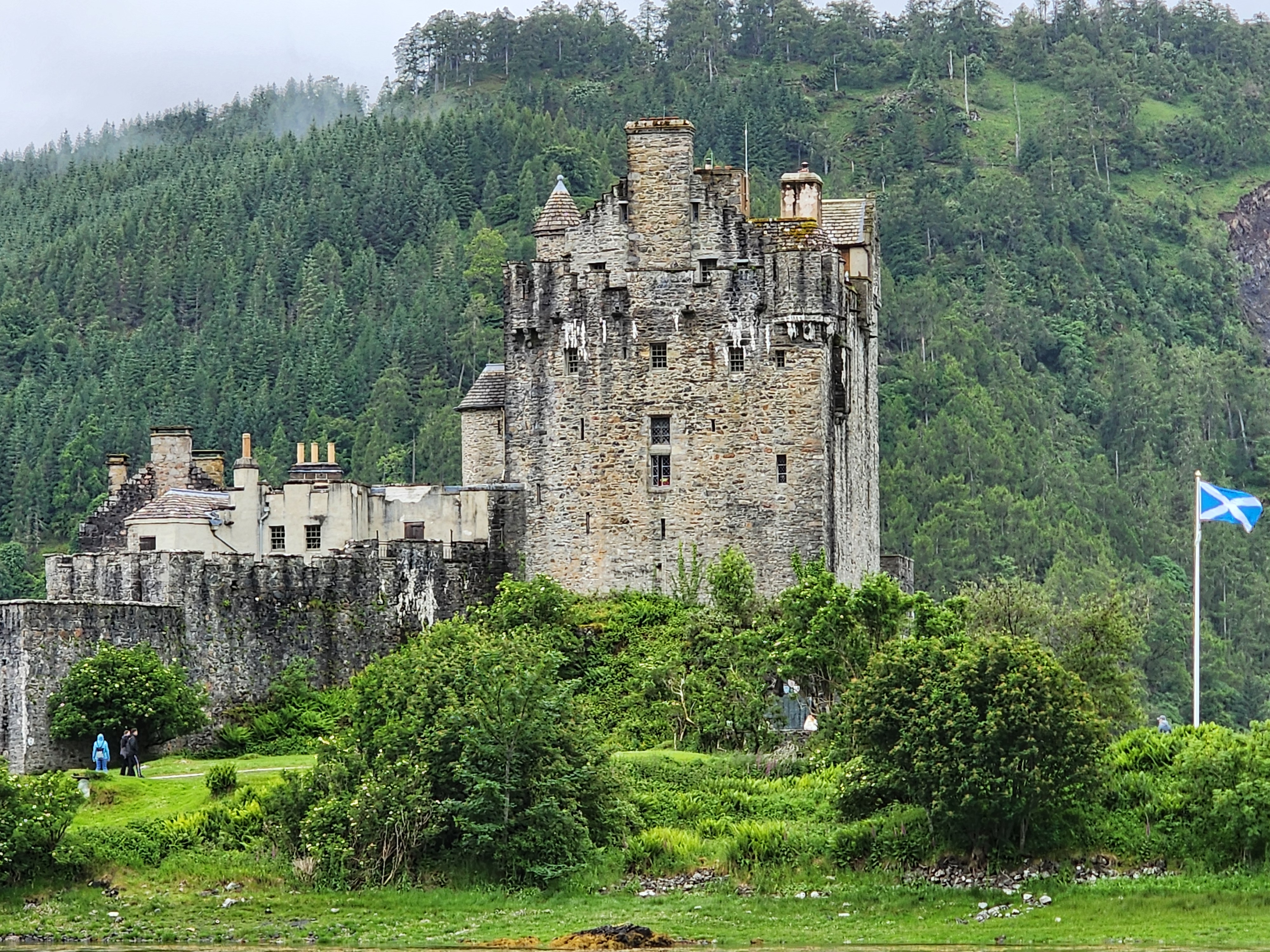
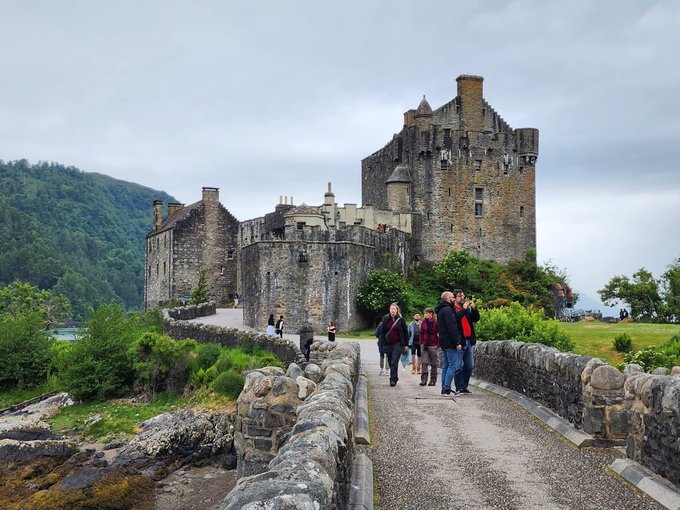
Eilean Donan castle, with the Scottish Saltire flag flying
And then we were moving again up towards Skye for a stop at Eilean Donan castle. The last time I stopped at the castle, it was also raining, but this time I was especially cold, so I passed through the giftshop to stop at the café and enjoyed a “deluxe grown-up hot chocolate.” I’m not sure what made it grown up—it had marshmallows (real marshmallows, not those preservative-laden monstrosities we have in the States) and whipped cream, and chocolate shavings. It was so warming and cozy that I hated to go back out in the rain. But out I went.
I thought about crossing the bridge to the castle—not that I wanted to go in the castle, but it’s nice the way the island juts out into the loch, and I thought I could get some good pictures. But whereas a few years ago, crossing the bridge was only £1, now it was £3.50 which is ridiculous. I know these castles need the money for upkeep, but really, to jump that much in cost in just a couple of years, and just for a walk over the loch? I think not. So, of course, I got back in the bus.
The trip over the Skye Bridge is a nice one. It’s not long, but a bit of magic hangs on it, as if the Faeries are waiting for you to make your crossing. As soon as you get on the island, you feel the difference—the mountains practically fluoresce green, and you almost catch a bit of language you can’t quite hear. In the rain and wind, the leaves rattle, but the soggy sheep don’t seem to mind the weather at all. The road is two-lane for a while, but then turns into a single lane with many passing places. You get used to pulling over to let oncoming traffic get by. And suddenly, you just feel lighter, as if the island’s magic spreads its diaphanous wings over you.
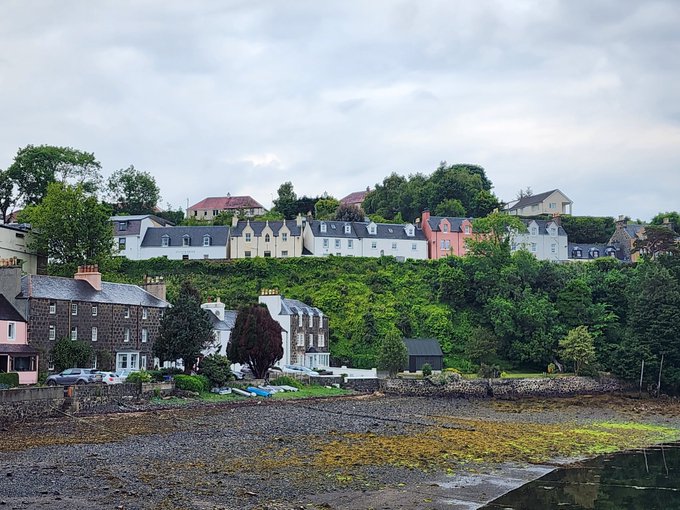
When we arrived in Portree, David dropped us off at our hotel, a horrid little place called Tongadale, not even down on the harbor. The room was bare, like a dorm before you decorate it, and the bathroom was tiny too. It was fabulously expensive pricewise for what I got. Meanwhile, outside my window the pigeons congregated, and I heard their cooing all night long. For dinner, I went to the Co-Op to get a few provisions (crisps, “egg mayo sandwich” [egg salad], and a Coke Zero. I had wanted to go to a chippy that I had been to before, but it was closed although according to the hours on their sign, it should have been open. I could have walked down to the harbor to take pictures, but the rain started up again, and I didn’t want to be caught in a deluge. In the hotel, I ate my paltry dinner and read a book.
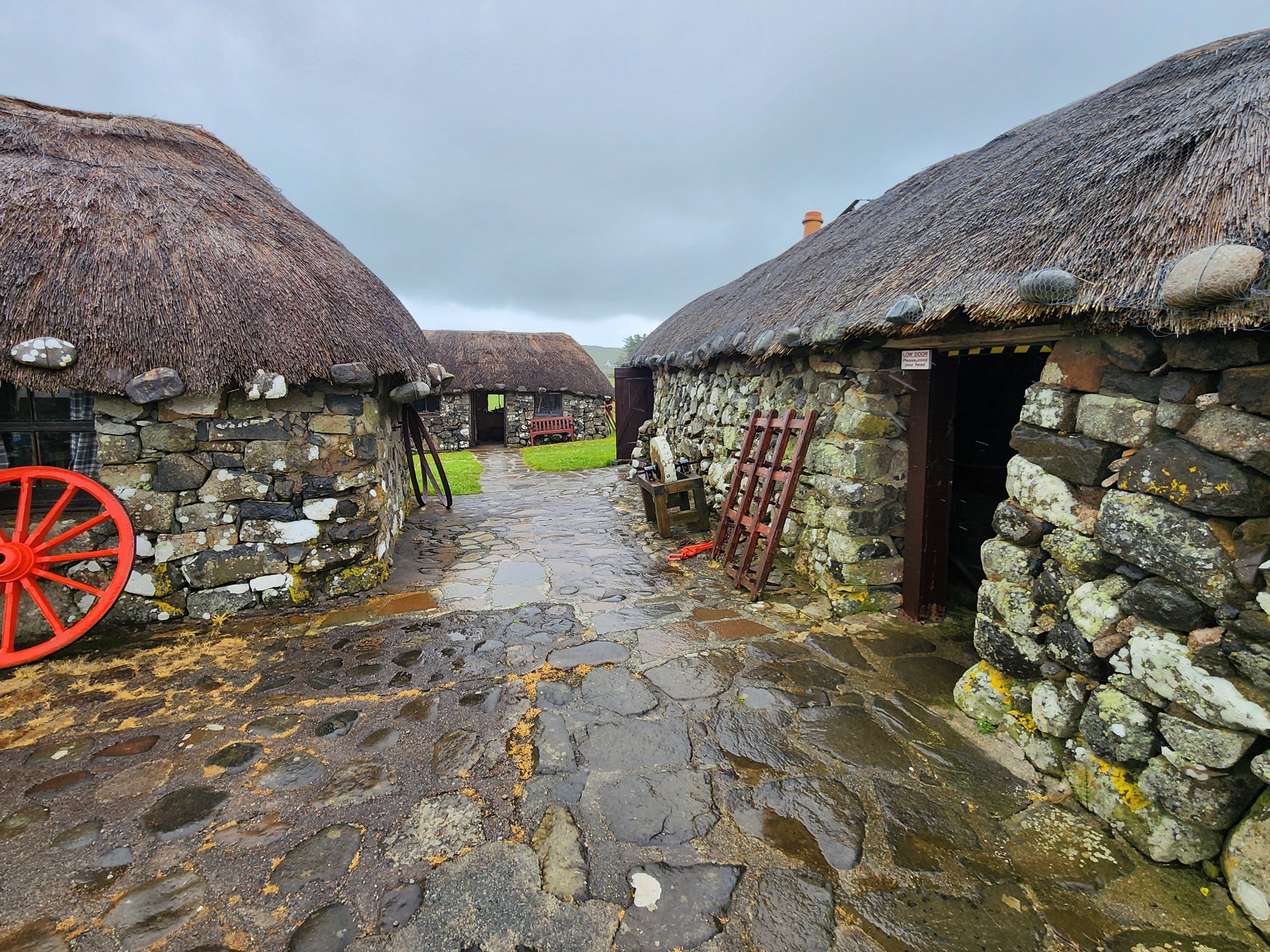
Crofting houses at the Museum of Island Life
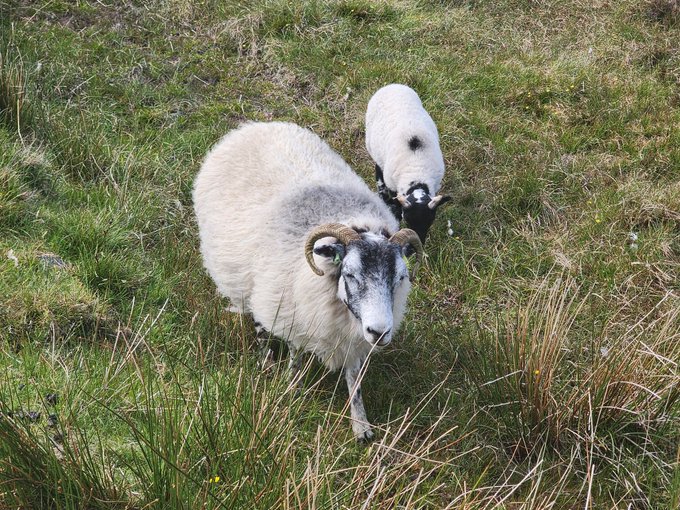
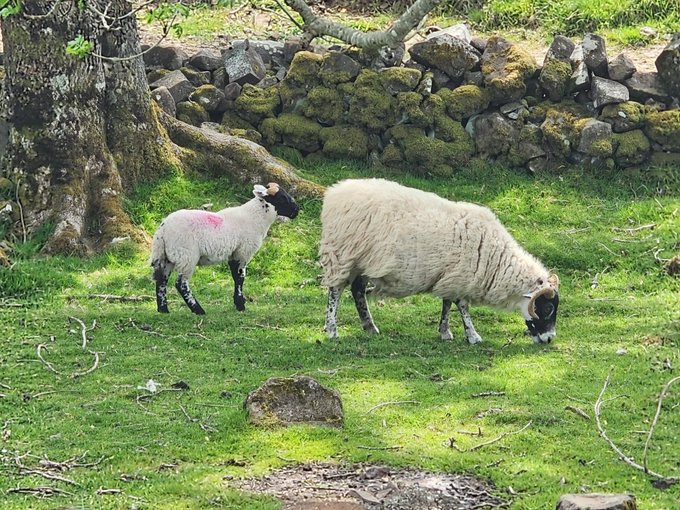
I’m not sure what we were meant to do on Saturday morning, but David decided that we should go to the Museum of Island Life since it was raining. This was a series of croft houses with antiques inside to show people what island life was like 100 years ago. One of the crofts contained a huge loom, others held beds, one was a kitchen, another was full of tools. Inside, the crofts were very dark, and with the rain outside, there was hardly enough light to see anything. I didn’t take pictures inside, although I should have taken one of the loom because it was very interesting. The gift shop was also interesting, and full of wool things. This was important, because I had left my beanie in my suitcase, and had no access to it. So I bought a blue wool hat to wear, hand-knitted, and only £16, and it kept my head toasty. There were lots of other items I thought about buying—wool socks and scarves for instance—but I restrained myself. Of course, I underestimated how fierce the winds on Skye are; I really regretted not buying a scarf, especially when I went to hang out with some sheep on the moors, waiting for the other tour members, and nearly froze.
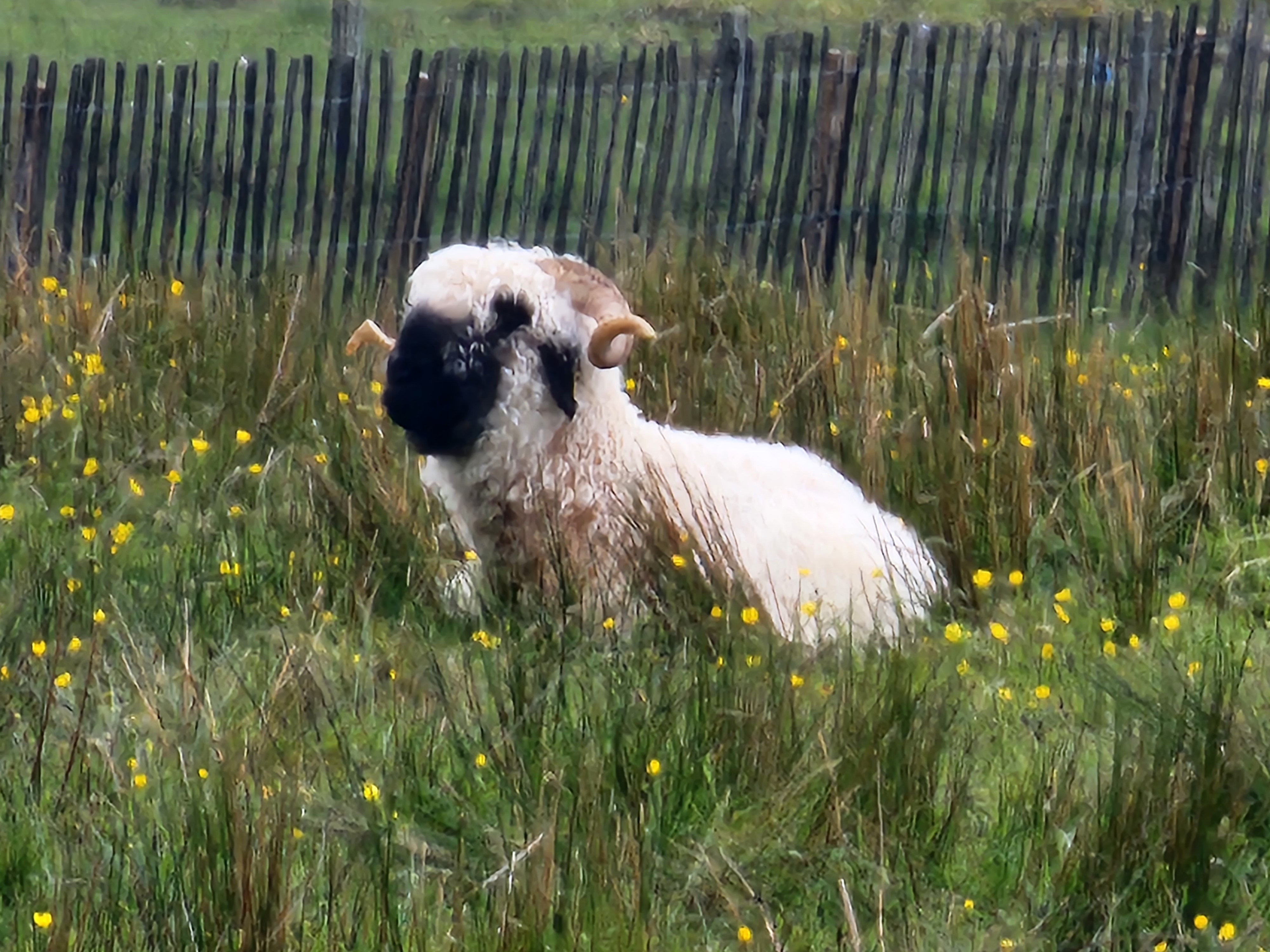
A sheep on the moor
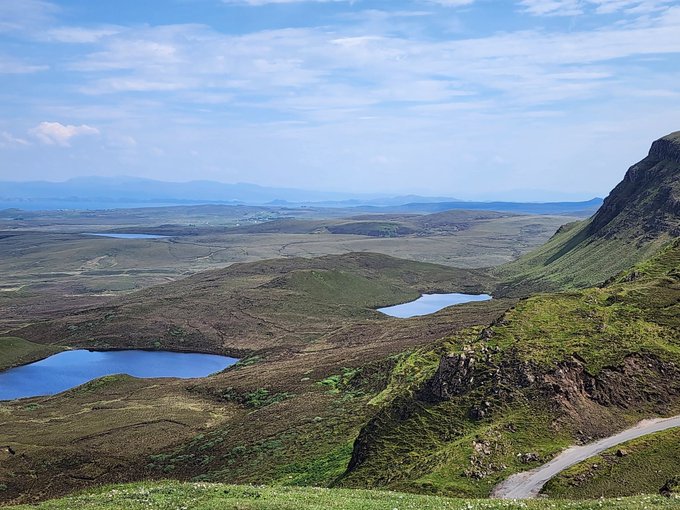
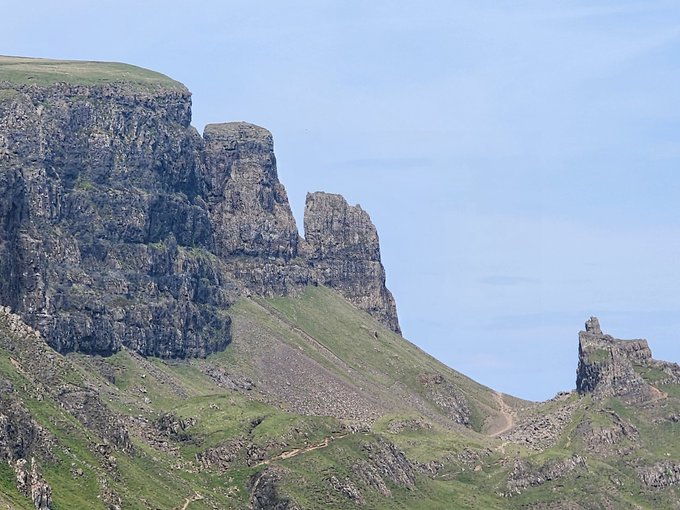
Afterwards, we stopped at the Old Man of Storr, which honestly, is just a big wedge of rock that absolutely looks nothing like a person, and then we went through to the Quiraing, on the east side of Skye. It’s also basically just a bunch of rocks, but it’s very high up, and you can walk through the Quiraing on a path. I only walked some of it—too worried that I’d get blown off the mountain. The gale force winds found any hole in the stitches of my clothes and froze me. Yet it was exhilarating to be up there—to be able to see everything, the lochs, the mountains, to be so close to the sky you could actually walk in the clouds—but just the same, I was glad when we gathered back at the bus; I was thoroughly soaked and ready for lunch.
We drove back into Portree, and I stopped at the Cuchullin Restaurant, hoping for fresh seafood. They sat me at a table very close to two women in the corner, and we had a lovely blether as I waited for lunch. This is how the conversation went:
“Are you Canadian? We’re Canadian.”
“Alas, I am American.”
“American?”
“Sadly.”
“Oh my dear! Well, we’ll pretend you’re Canadian so we can talk to you.”
There was more to the chat, but it mainly had to do with “the maniac in the White House” (their words), how we all were enjoying Skye, as well as the fact that when the server brought my lunch, I had a giant bowl of mussels in front of me. And I was completely mystified by it. “What am I looking at?” I asked no one in particular.
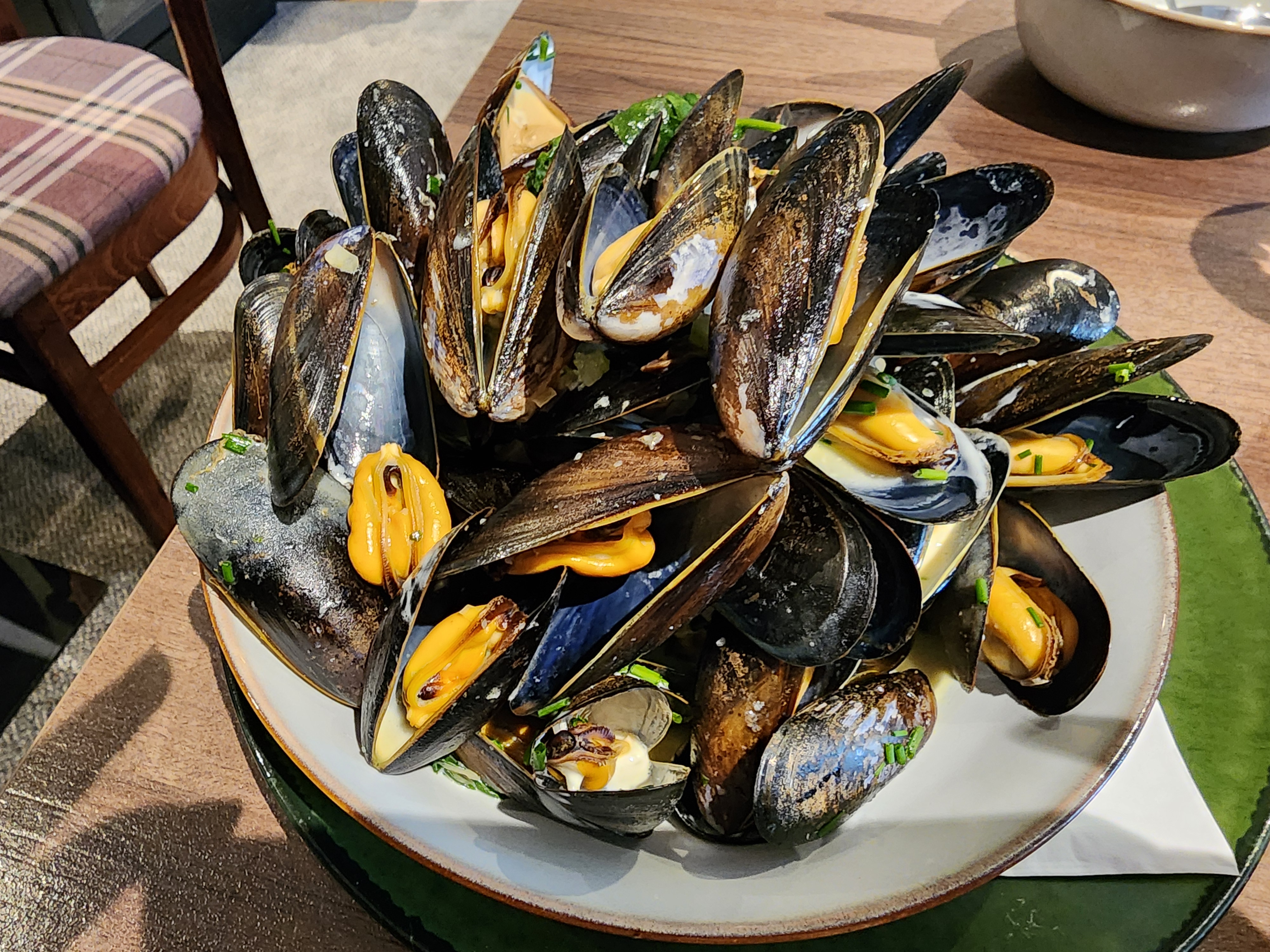
My unexpected lunch
Unfortunately, when I ordered the so-called “small plate” of mussels, I was thinking scallops. Bad luck strikes again—or so I thought. I have a fear of mussels—I think it’s because they look like weird, small ears. I was also afraid they’d be hard to get out of the shell, but apparently with seafood fresh from the sea that morning, they came out no problem. They were dripping in a sauce of butter, wine, and maybe cream, and they were delicious. So now, I am over my mussels phobia—at least, on the Isle of Skye, I’m not afraid.
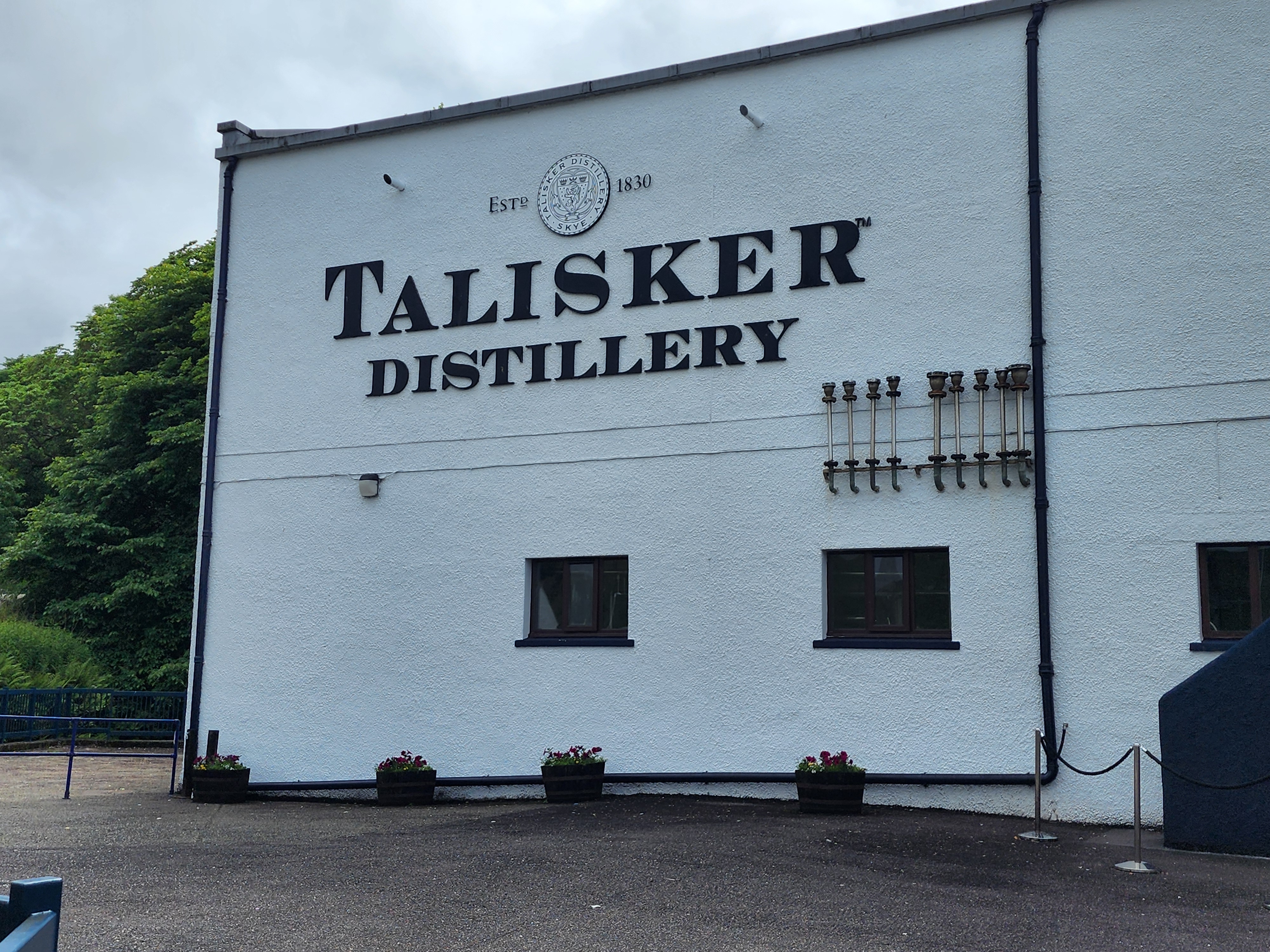
Talisker Distillery wall
That afternoon, the sun peeped out a bit, and we drove to Talisker Distillery on the Minginish peninsula. I was really looking forward to this, because as you well know, I am becoming a whisky connoisseur. I couldn’t wait to try a flight of Talisker. And so imagine my surprise when a flight of 3 drams was £43! For twice that, I could have bought a full bottle. Other distilleries that I’ve visited have offered whisky flights for about £23, and that was my price point. I noticed that none of the other people on the tour had ordered a flight either, and the bar was sparsely populated, although the gift shop/ reception area was crowded with folks. Maybe I should have splurged and tried a single wee dram, but even those were expensive. Anyway, booze-free, I meandered outside to watch the water of Loch Harport, where a few sailboats were bobbing.
From there we drove to the Faerie Pools (basically, pools filled by waterfalls) which were nestled between some tall mountains. Another person on the tour had somehow injured his foot so the two of us stayed on the bus and went down into another glen full of campgrounds, while the hale and hearty of us took the path to the pools. I might have risked the walk except that the rain was persistent, and I was afraid of slipping on the stony path. But David promised we’d go see the Faerie Bridge, so we didn’t feel cheated. The campgrounds looked nice.
While I’m not much a fan of camping—it’s always too cold or too hot and the ground makes my back ache—I had the thought that camping in Scotland might be a fun thing to do—to be out in the fresh, damp air with the wind blowing through the glens. (Although it would be chilly at night, and probably wet.) Scotland has a right-to-roam law, enacted in 2003, which allows people to walk or camp on land freely, as long as the land is respected. This doesn’t mean that you can camp in someone’s front yard—private property does exist—but it does mean that you can climb mountains and camp in tents or bothies or ride horses or bike pretty much where you like, especially on public lands, but some private lands too for recreational or educational purposes. You could, probably, camp on farmland too, but really, with all the sheep droppings, it would be pretty messy. Anyway, camping would be a new way to experience the Highlands. Maybe some day I will try it.
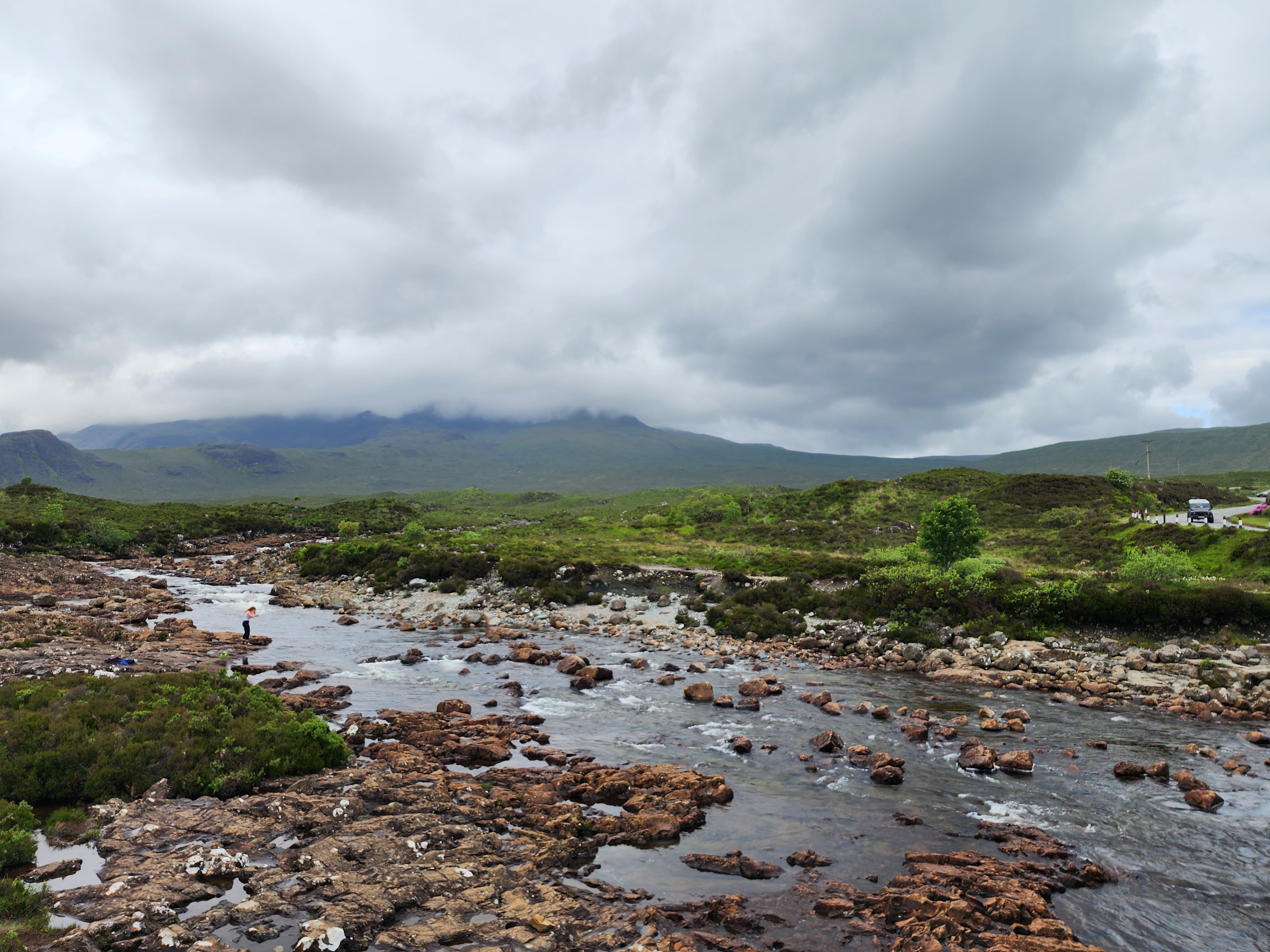
The stream that runs under the Faery Bridge
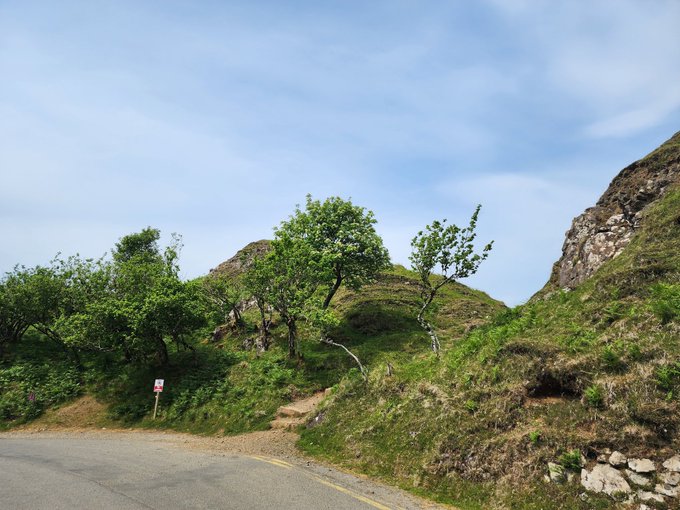
On our last day on Skye we drove to the Faerie Bridge that David promised, and the clear water ran quickly over the stones in the stream. Apparently, an old wives’ tale suggests that if you stick your head in the Faerie Pools or in the water under the bridge, it will make you feel ten years younger and your face look ten years younger. One of the men on the tour, a guy from Vancouver, sure enough bent down and put his whole head in the stream, despite the fact that it was cold and rainy. I imagine the water was invigorating… if not cold as hell. He impressed everyone. And he might have worn a few fewer wrinkles on his face after his plunge.
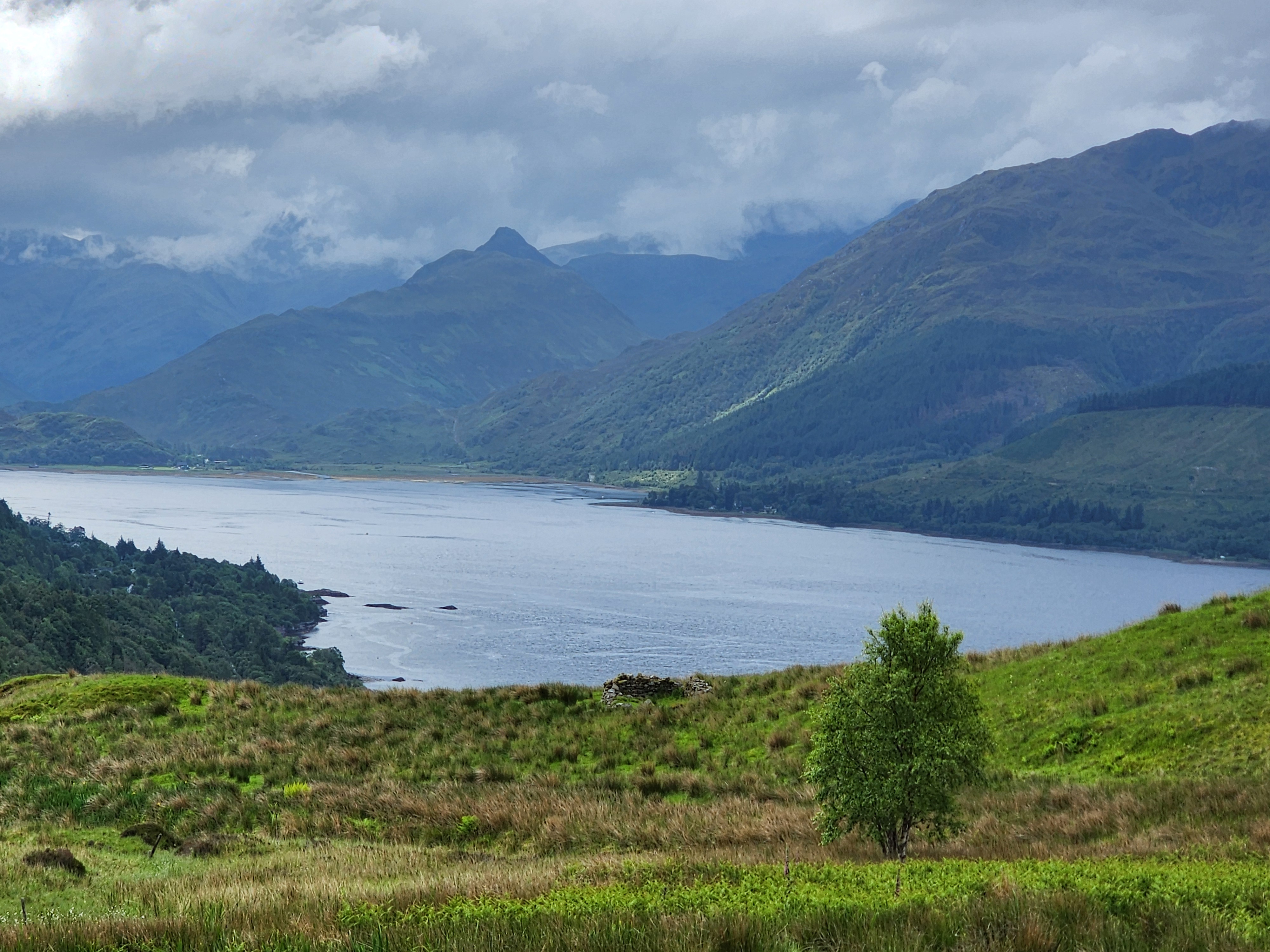
Loch from high-up
Back on the mainland, we passed by Eilean Donan again, and drove up high to a viewpoint that looked down on the whole glen where the lochs looked lovely, and a pair of horses chewed grass in a paddock.
One of the horses, the white one, comes with some lovely folklore surrounding it. In Scotland, white horses are magical. They are either unicorns shielding their horns in invisibility when humans are around (unless the human be a virginal girl), or they are kelpies if they are near water. Kelpies are demons that lure people to a watery death—if you see one, they usually walk by the shore, appearing tame and sweet. But as soon as you reach out your hand to pet them, your hand gets stuck fast, and they drag you down to the bottom of the loch or ocean till you drown and then they eat you, bones and all. This white horse in the paddock was appropriately distant from the loch, so I will guess it was a unicorn in disguise. But you do see many white horses in Scotland—this is not surprising since the unicorn is Scotland’s national animal. But do be aware if the white horse appears near the water—they are just waiting to eat you.
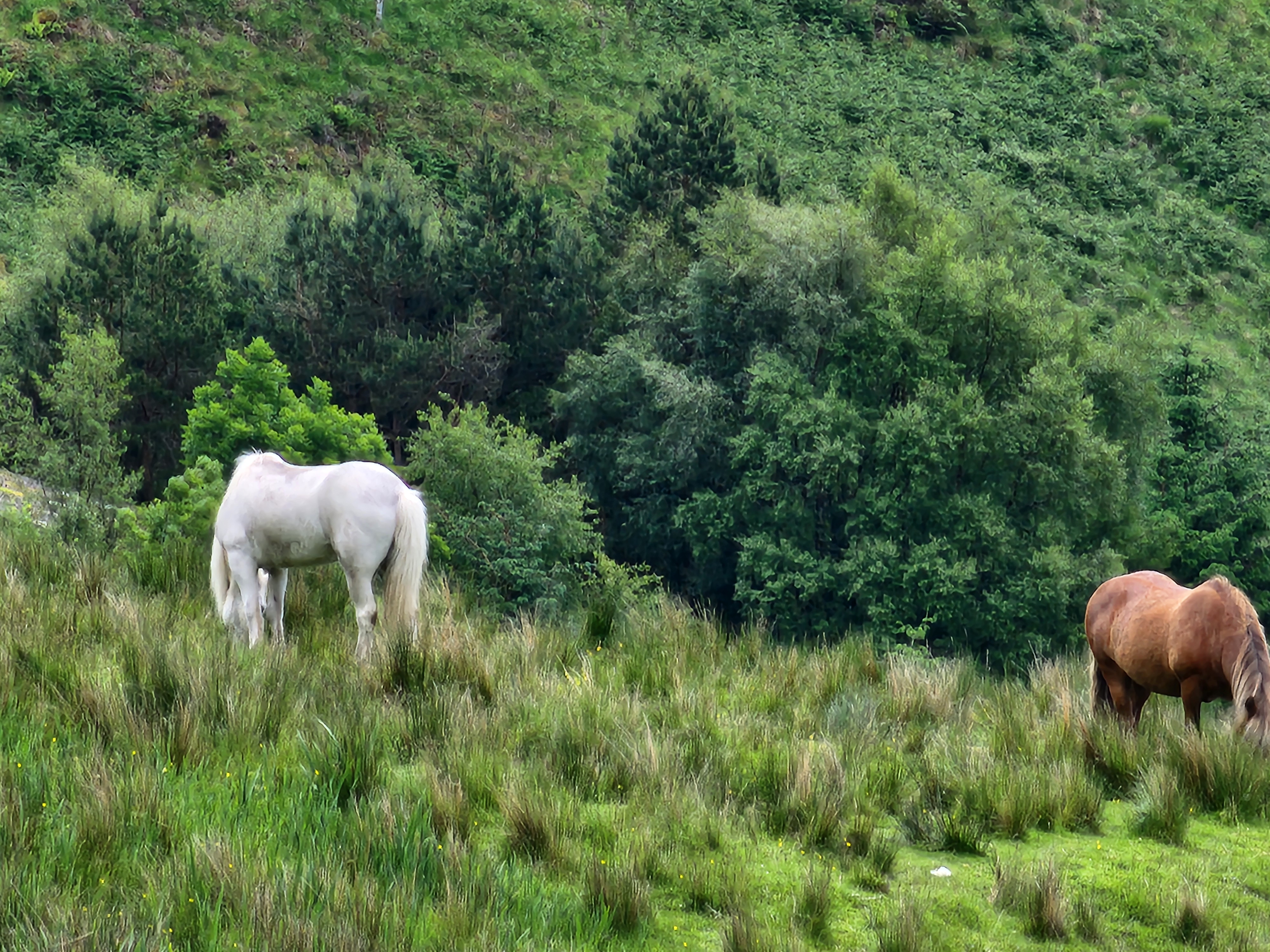
Unicorn, or kelpie?
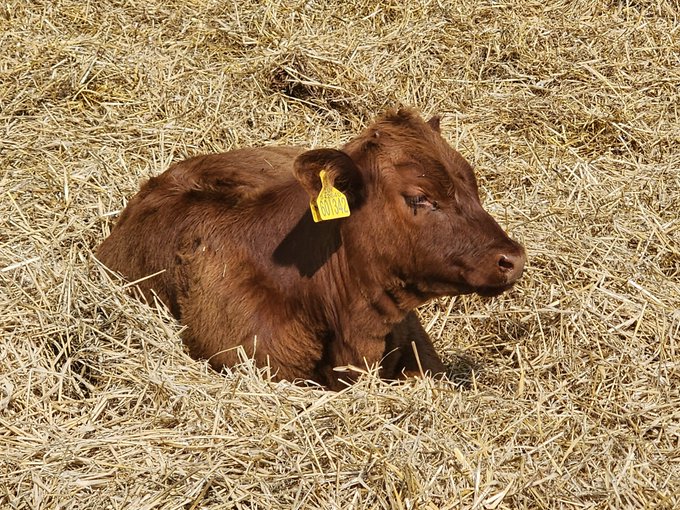
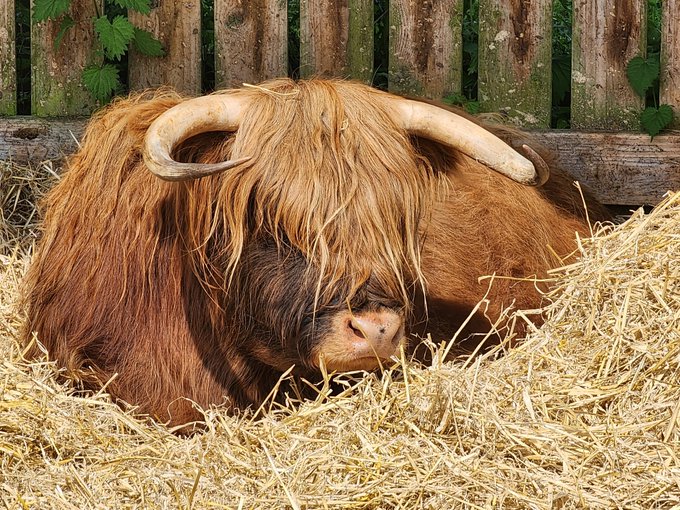
Our final stop before arriving back in Edinburgh had us visiting Taste Perthshire—I guess you could say it’s like Scotland’s version of a Buckee’s—a large gas station with a huge giftshop and restaurant attached. It’s nothing like Buckee’s in the sense of marketing—there’s no beaver decorating anything—but you can find all sorts of Scottish paraphernalia, clothing, decorations, woolen goods, etc., and there is a lovely counter full of pies and pasties and a cheese refrigerator. I bought a cheese and onion pasty, and a mushroom and cream filled Yorkshire pudding for my dinner. But the main reason we stopped was to see the Heilan coos—which are always a big hit with people on a tour. And they were indeed very cute. Unlike previous times where we saw the coos and they lazed out in the pasture, these coos hung out under a small stable, making taking pictures of them easier. They didn’t seem to mind the company, but they didn’t seem to want to be petted either.
I’m not sure what it is about Scotland’s islands that I love so much. Perhaps it’s their novelty (in comparison to the urban nature of Edinburgh) or the fact that I respond to some bit of romanticism that surrounds them, but their remoteness attracts me. In the case of Skye, the Skye Bridge ensures that those who live on the island can’t be cut off from the mainland—a much different scenario from some of the Outer Hebrides which are only accessible by ferry (like Mull or Rum). While I do like the looks of Mull a bit more than Skye, if I had to live on the islands, I’d choose Skye.
The trip may have started with several instances of bad luck, but in the end, I think I lucked out: Skye is magical, and the Faeries have kept part of my soul yet again.
Loch from high-up
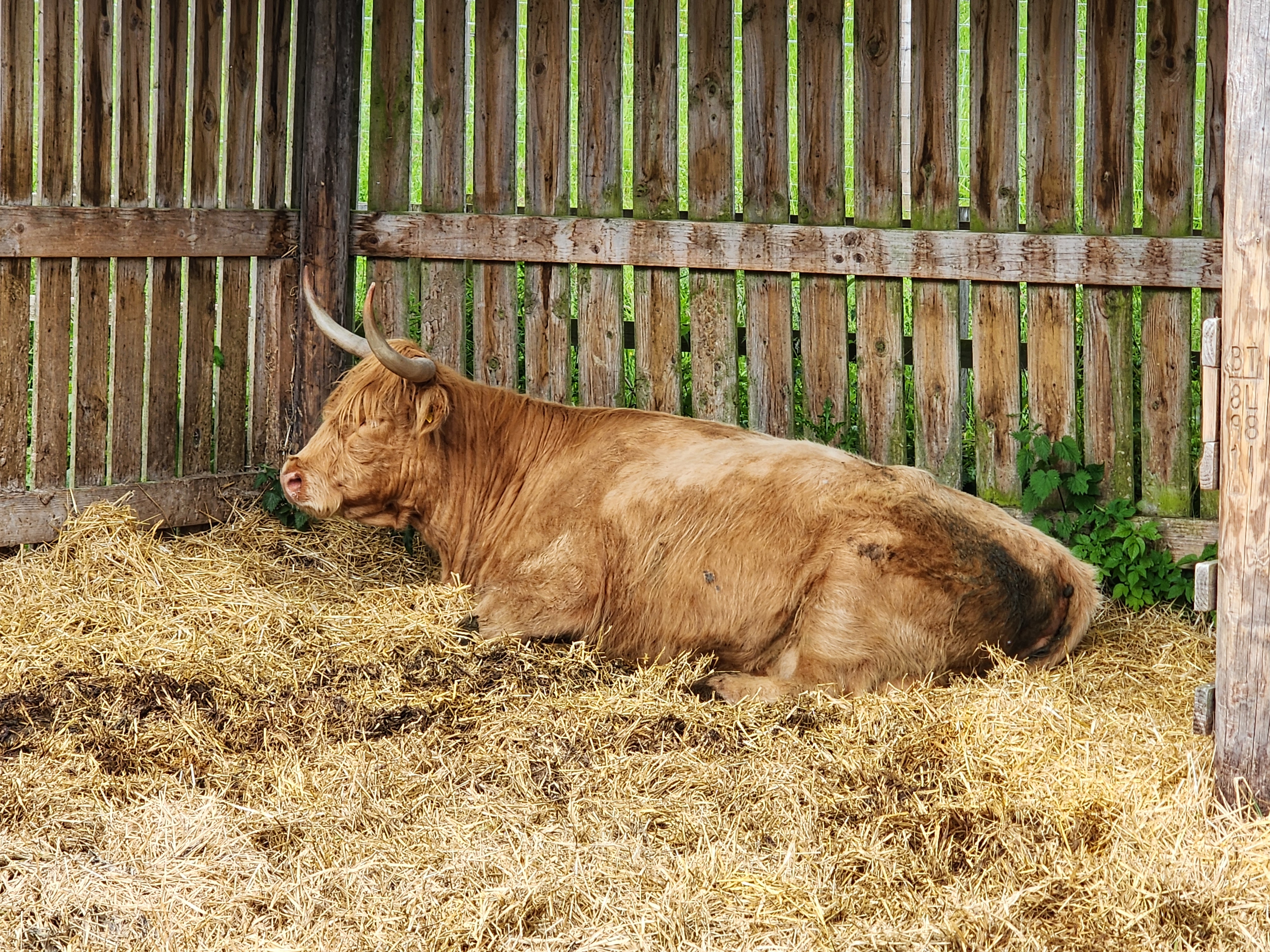
This cow ain’t moooovin’.
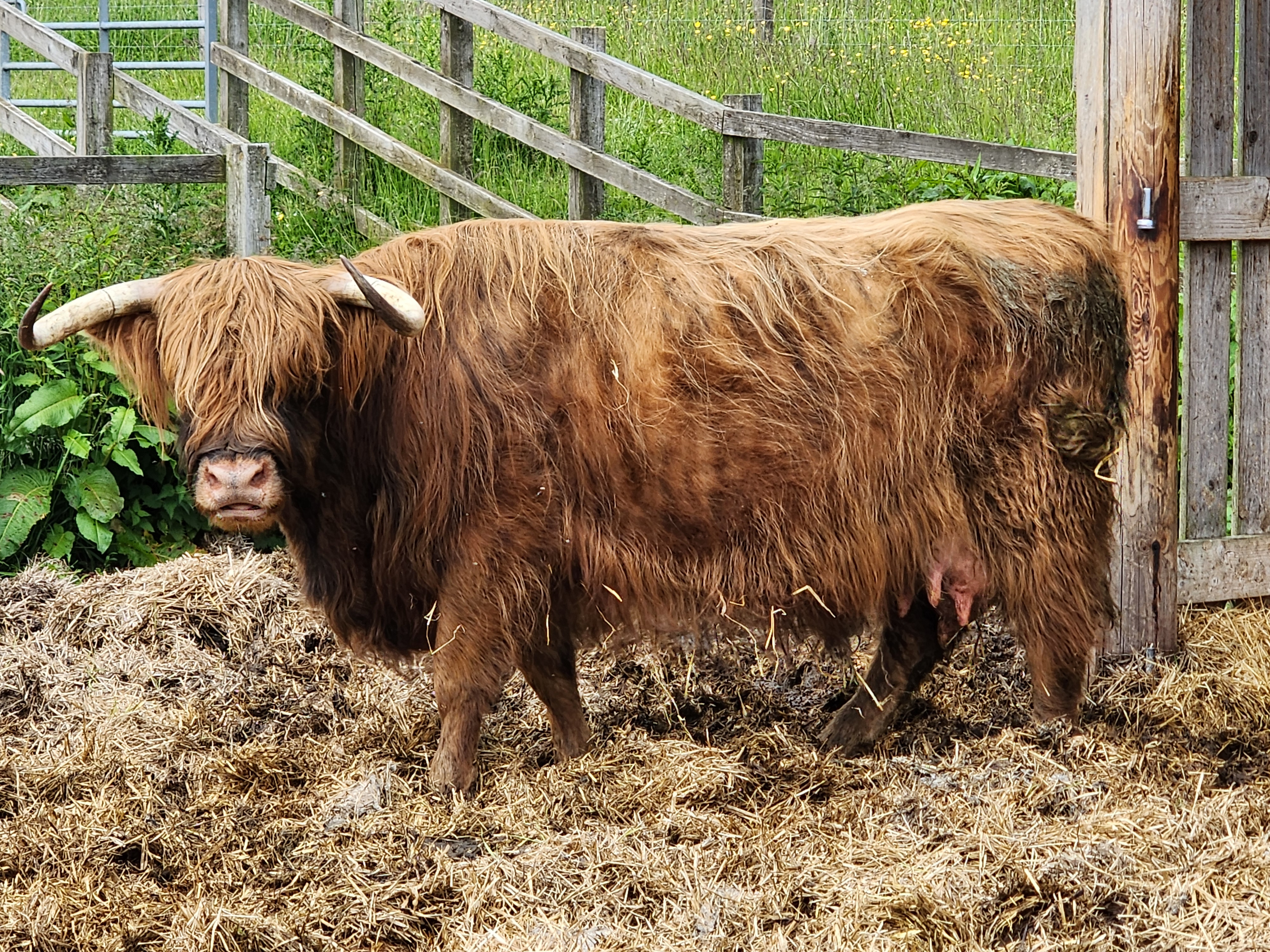
I tried to get him to come to me, but he wasn’t interested
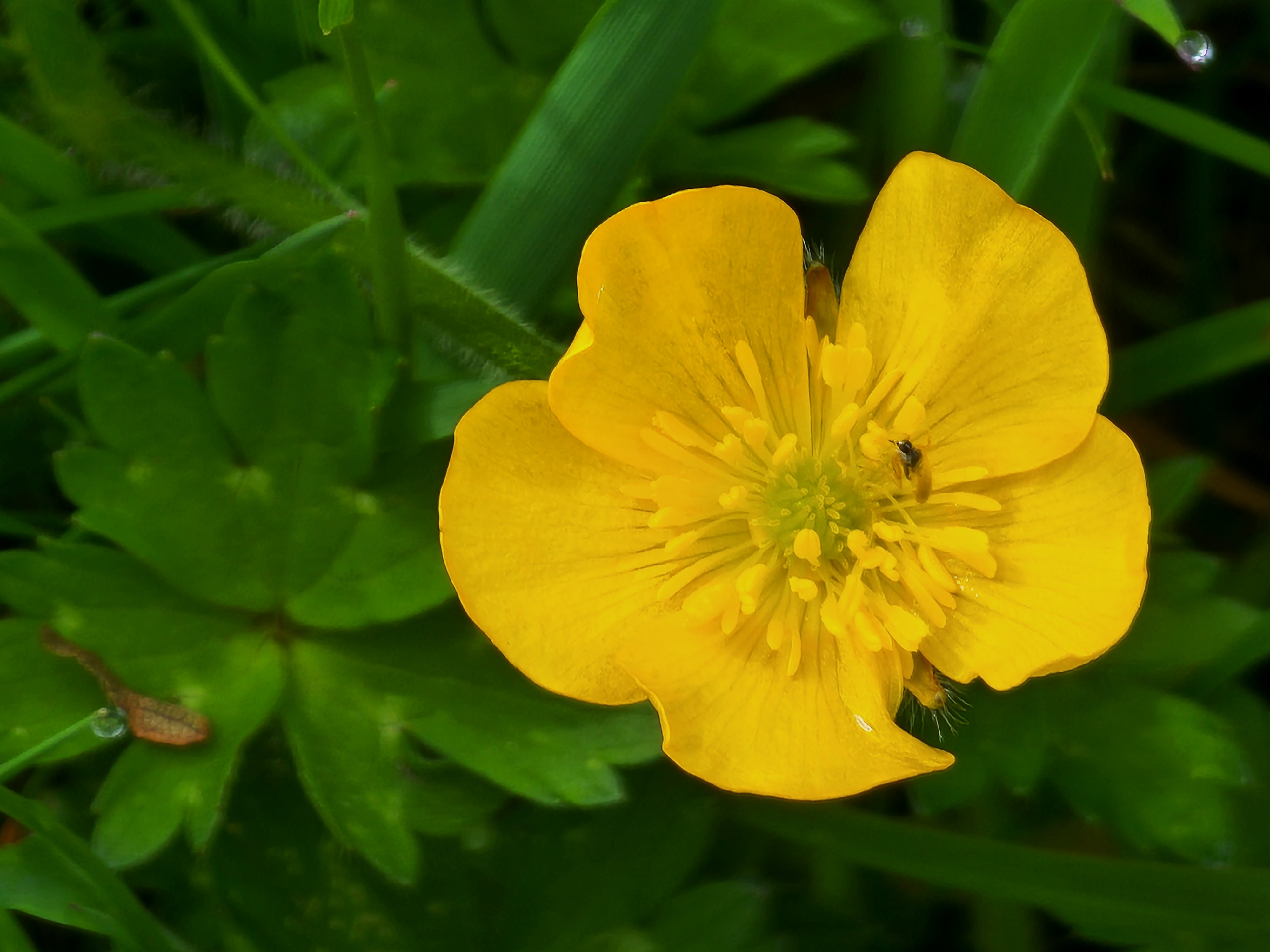
A buttercup… do you see the bug on it, close to the center?
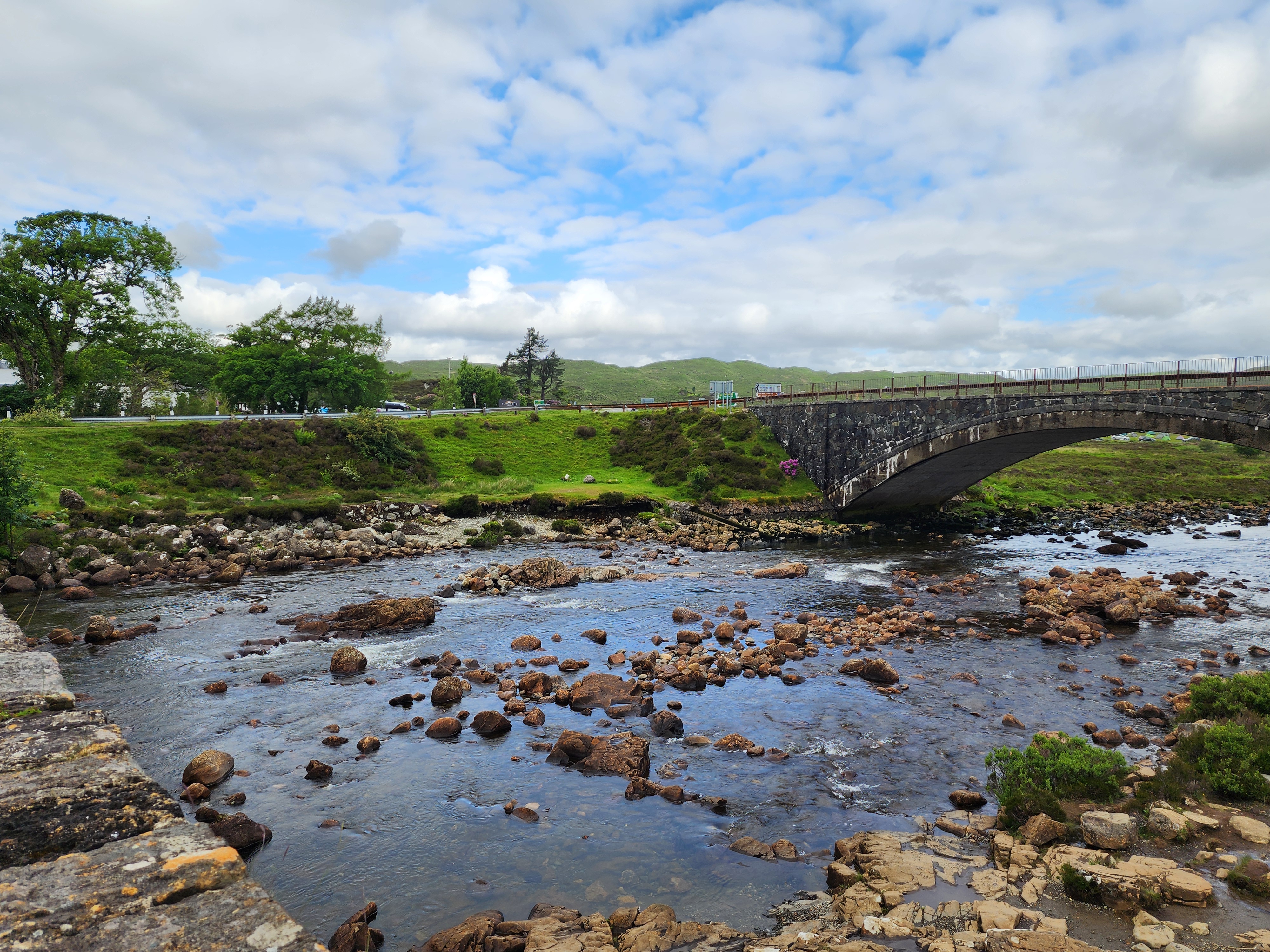
I would not stick my head in this.
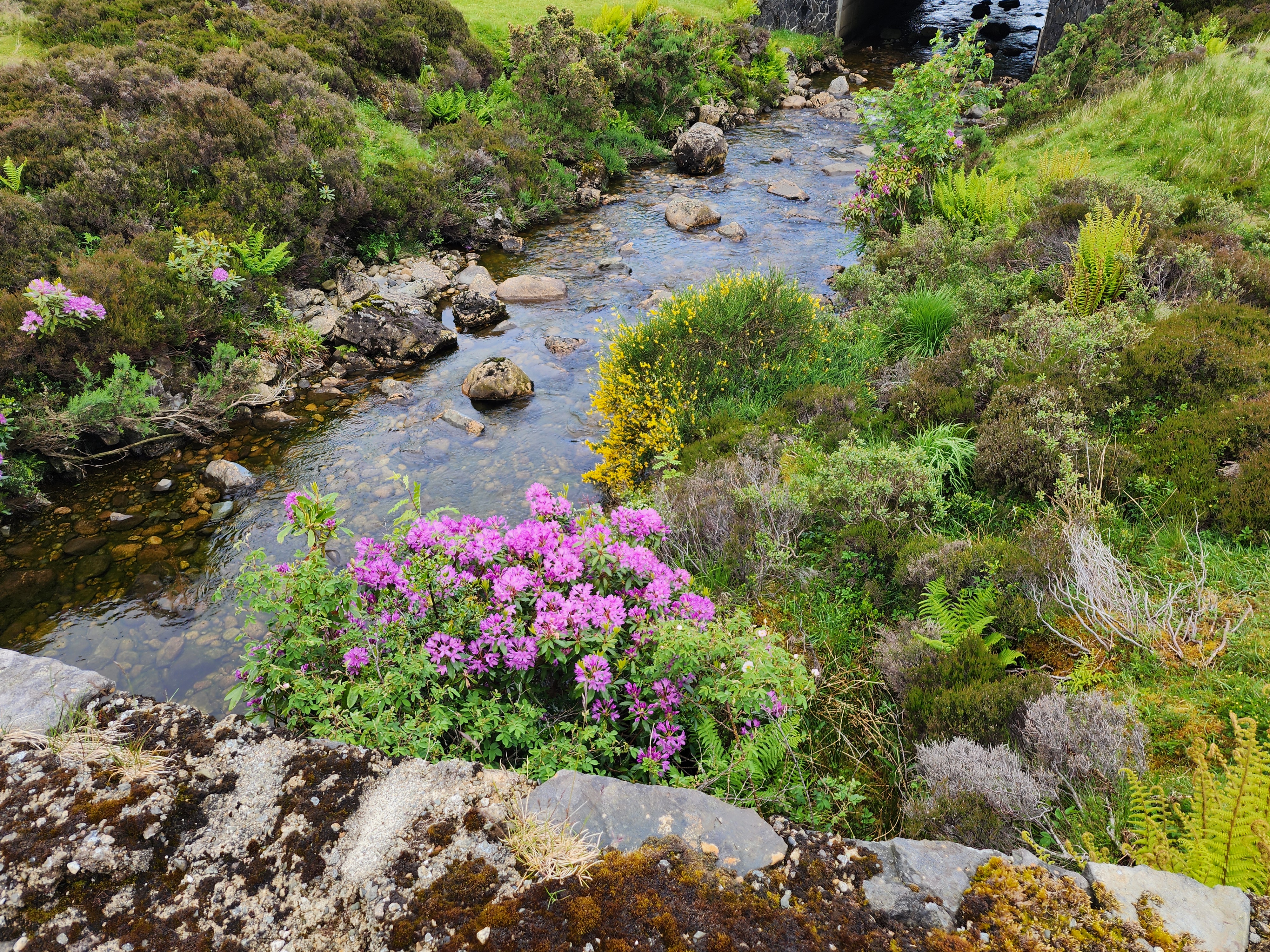
The Faerie stream, with azaleas
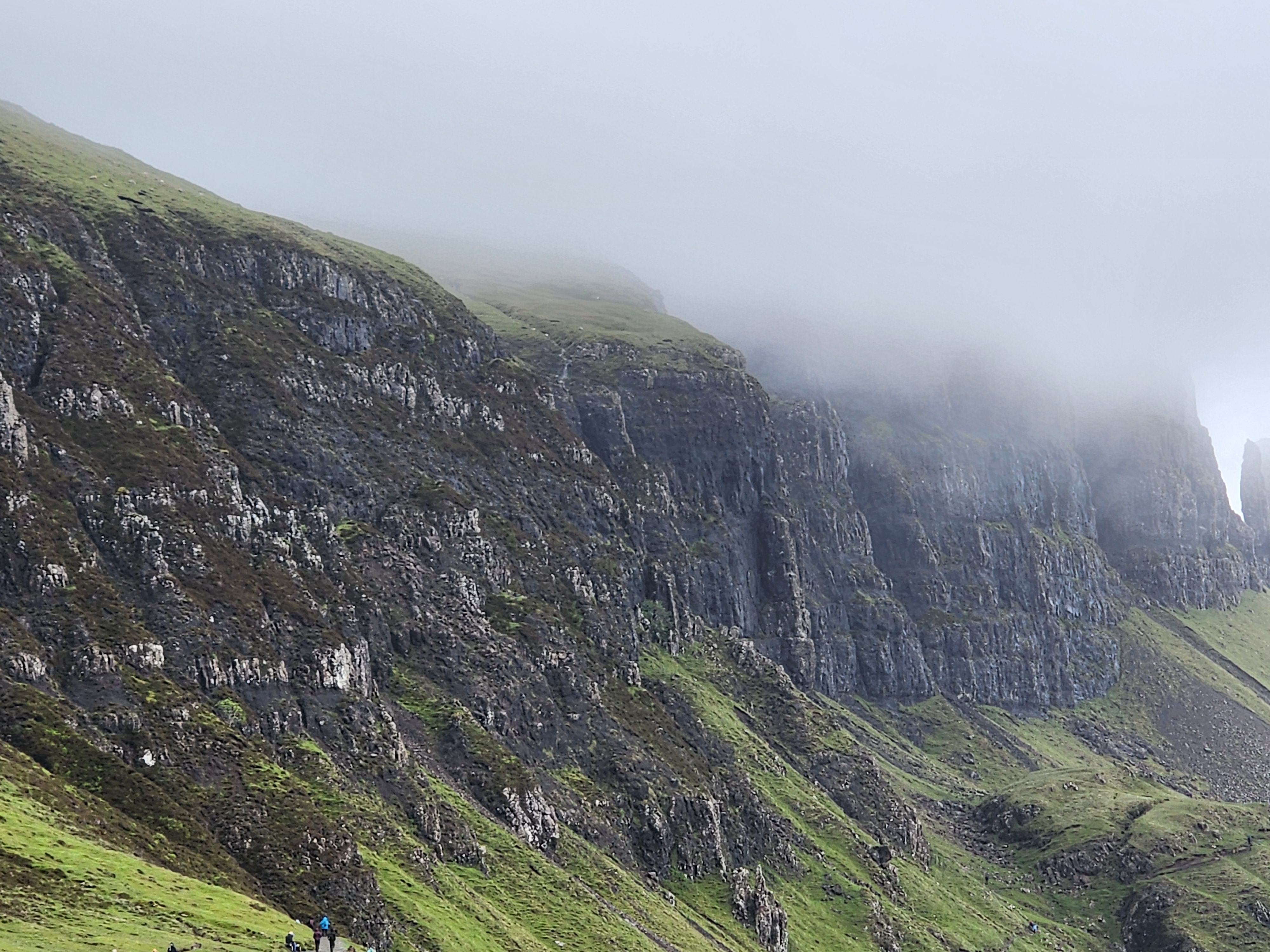
The Quiraing
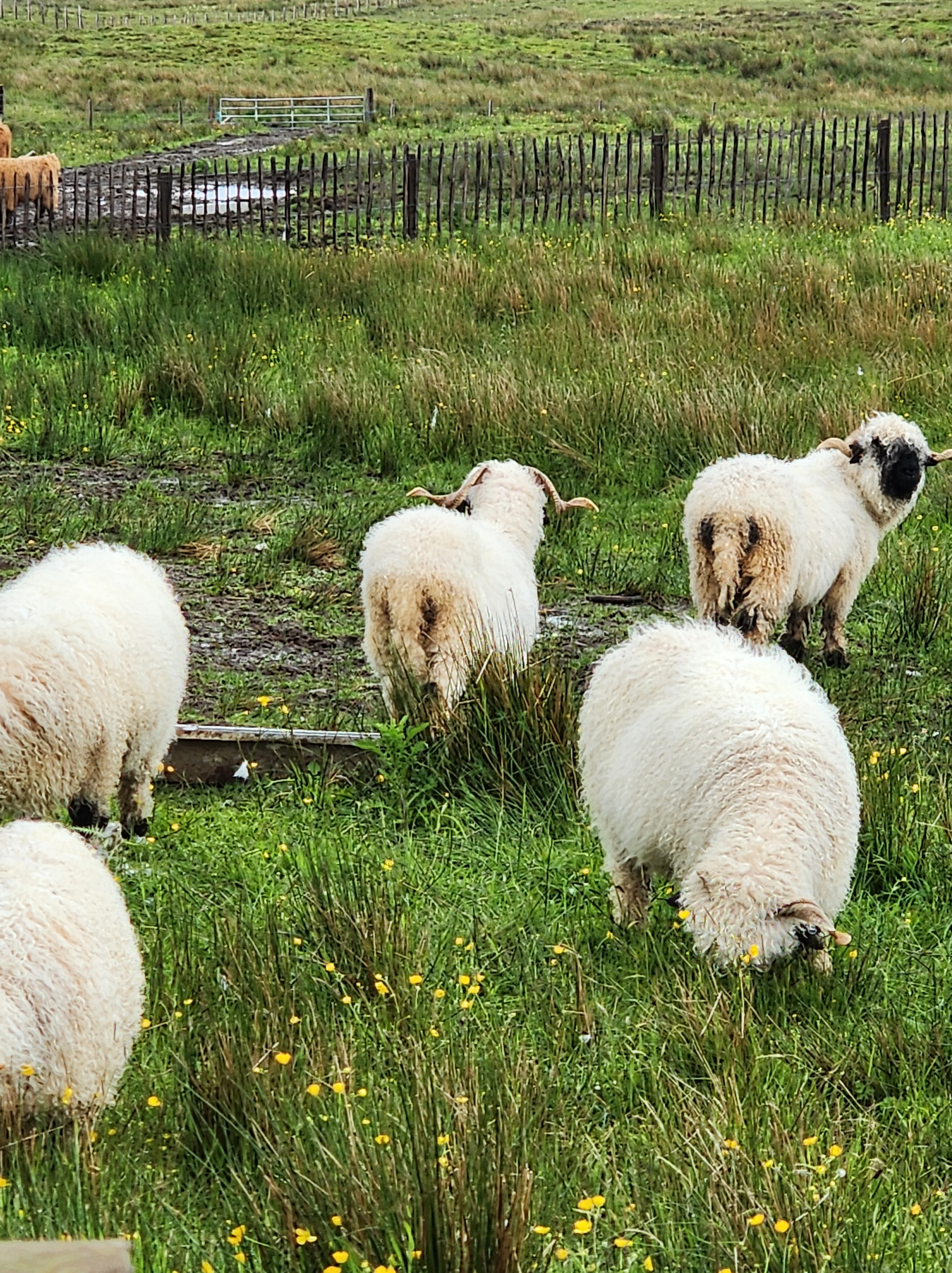
More sheep
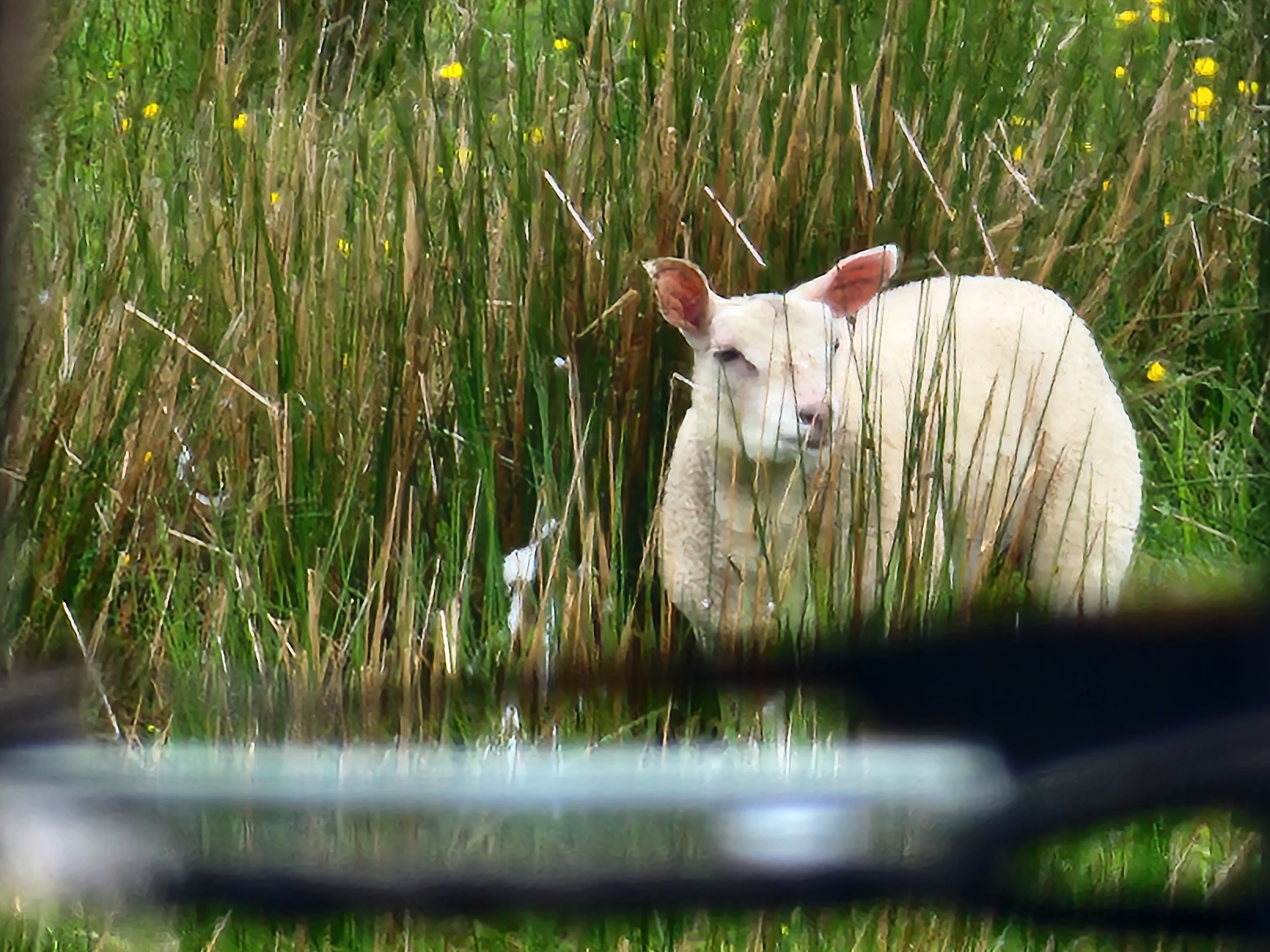
An extreme zoom of a sheep far off in the moor, a barbed-wire fence is the blur in the front
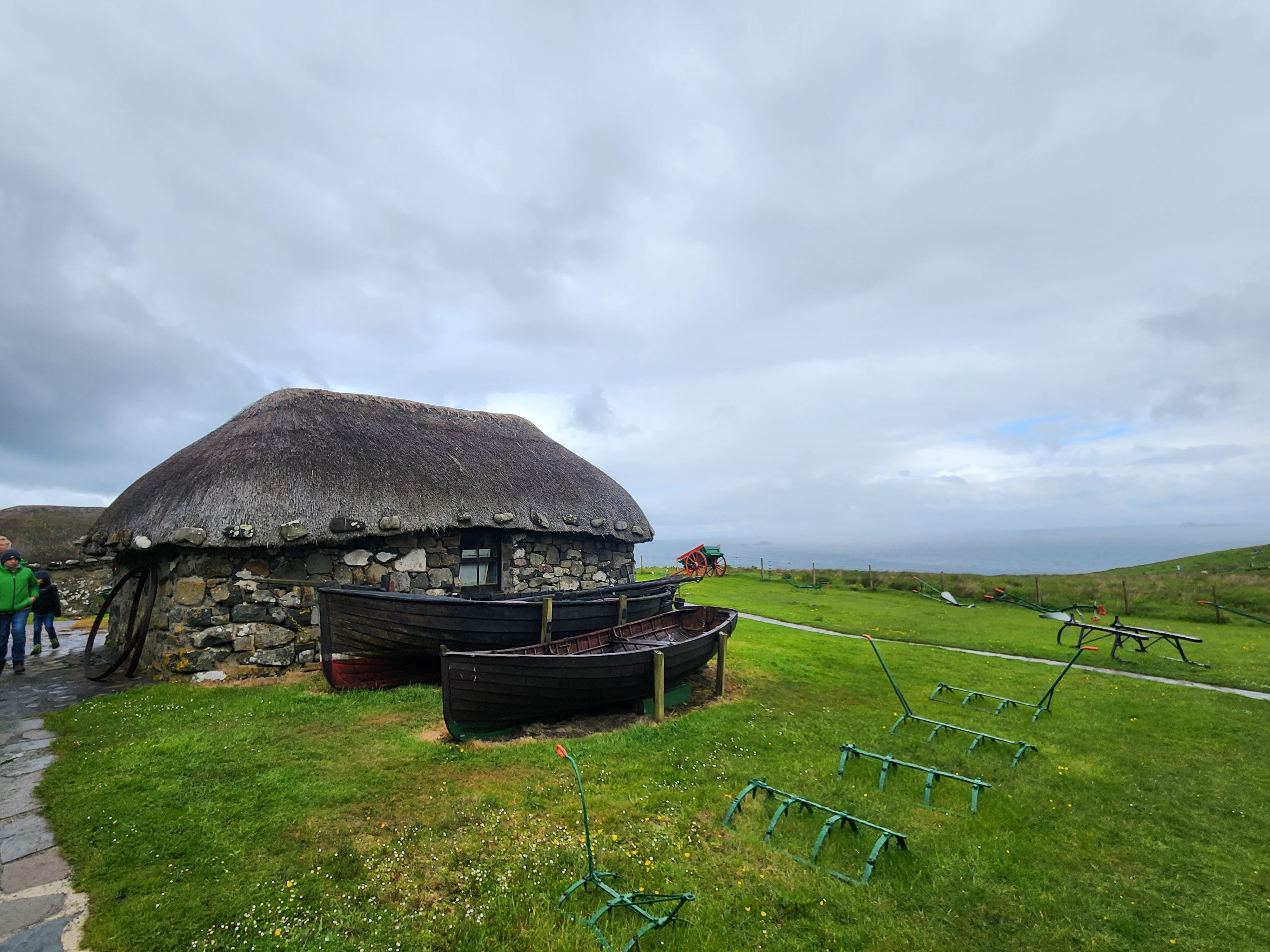
A croft house at the Museum of Island Life
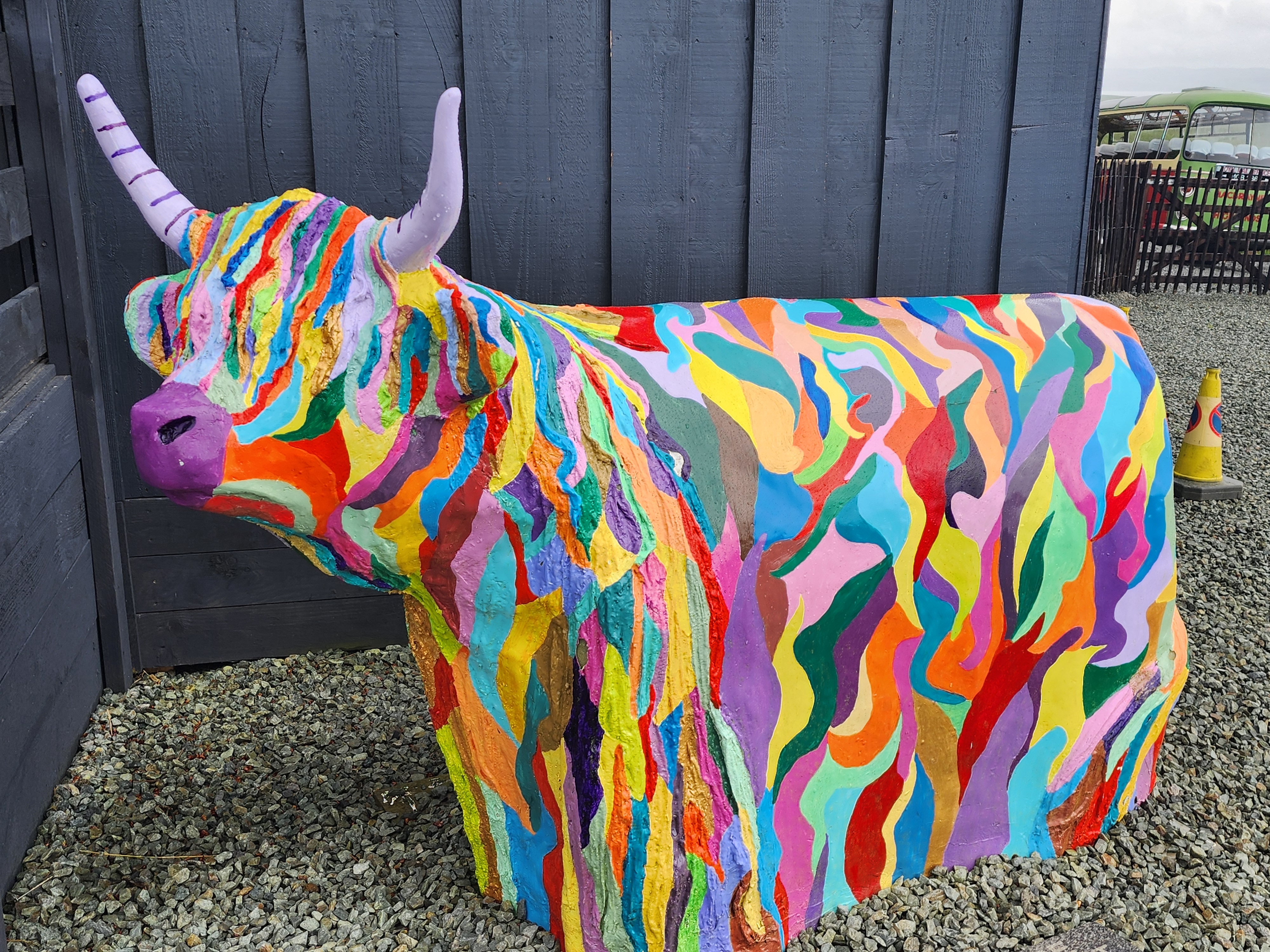
A disco statue across from the Museum of Island Life
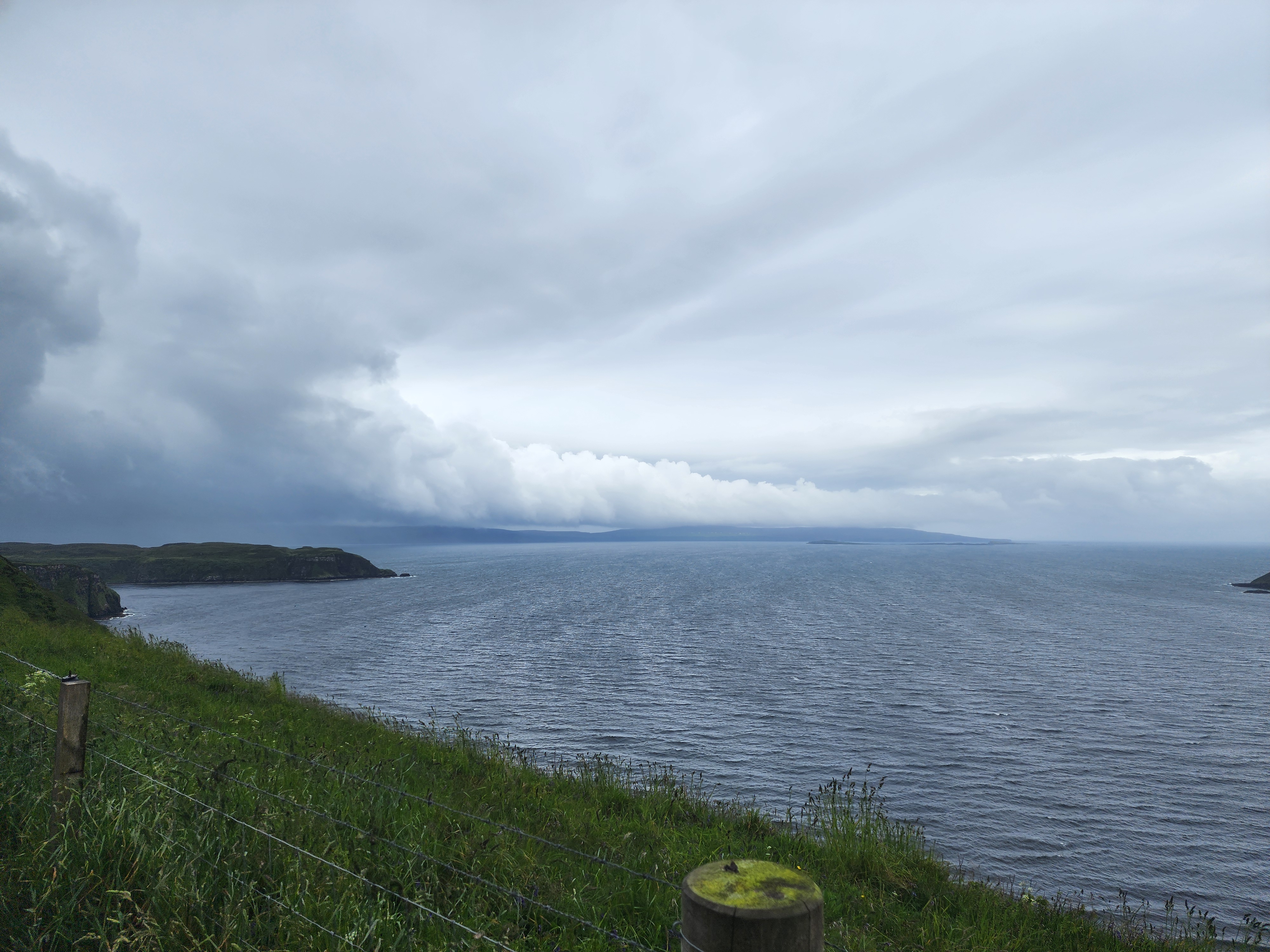
A moody loch
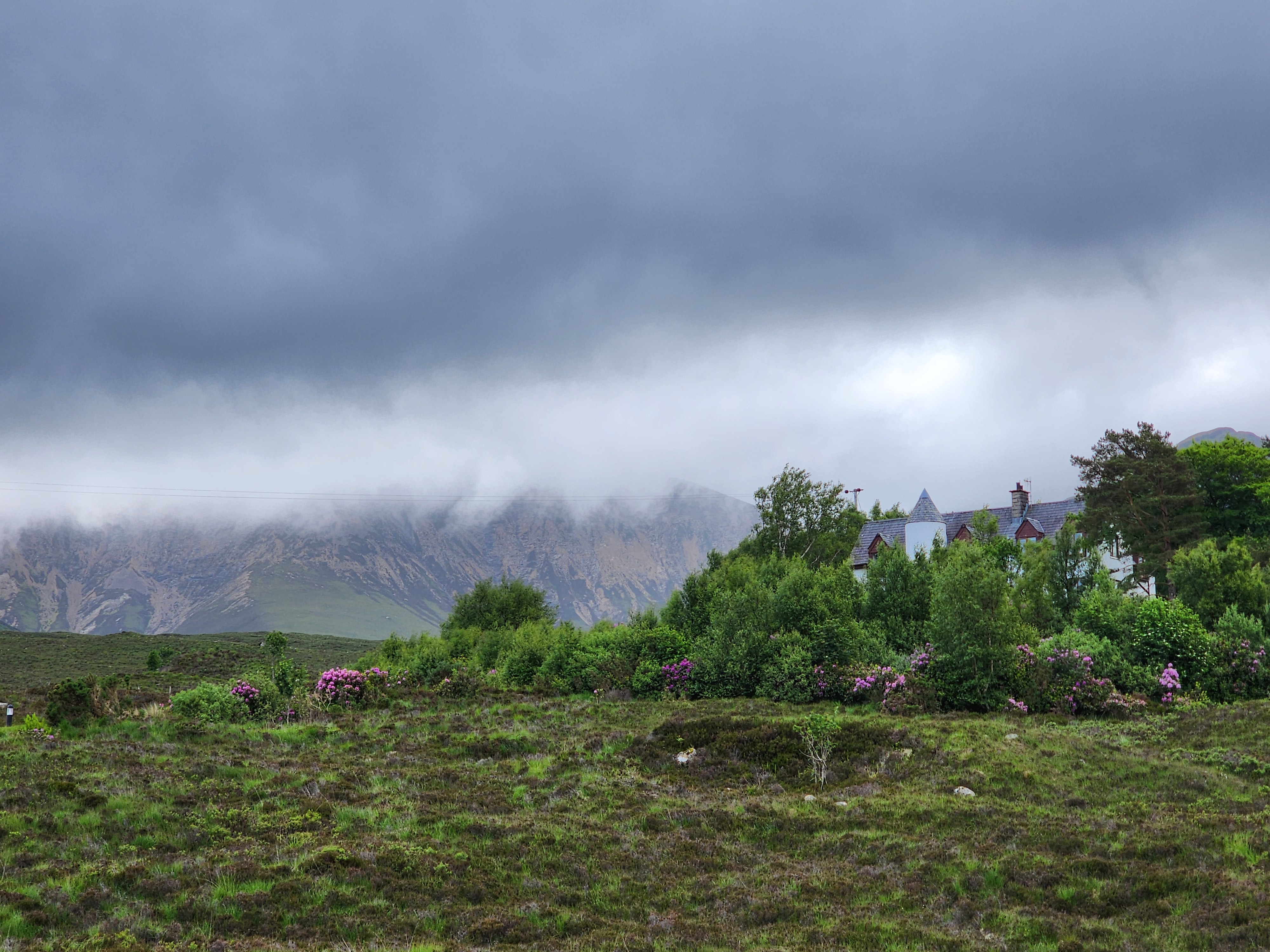
A moody moor
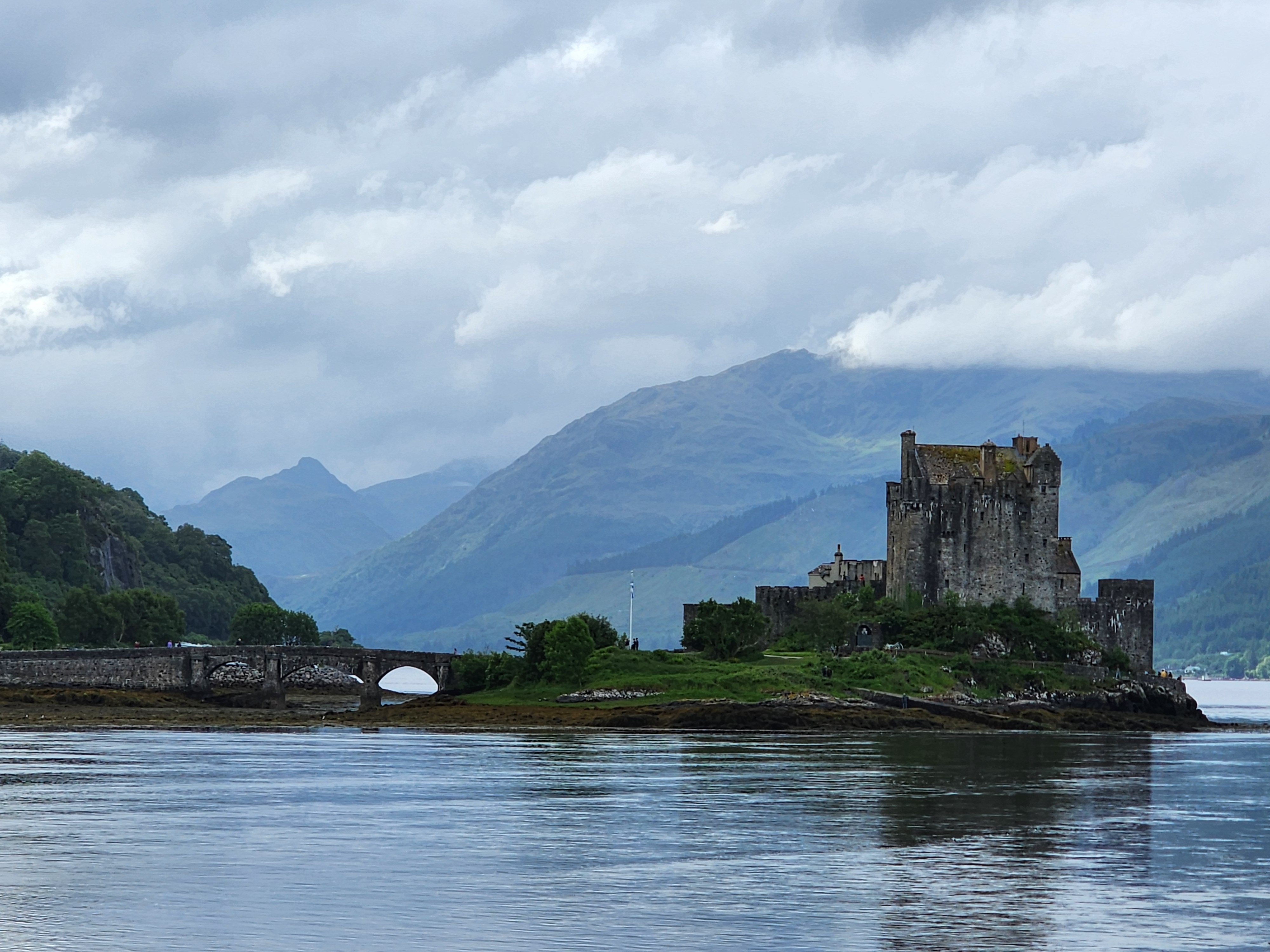
Eilean Donan castle
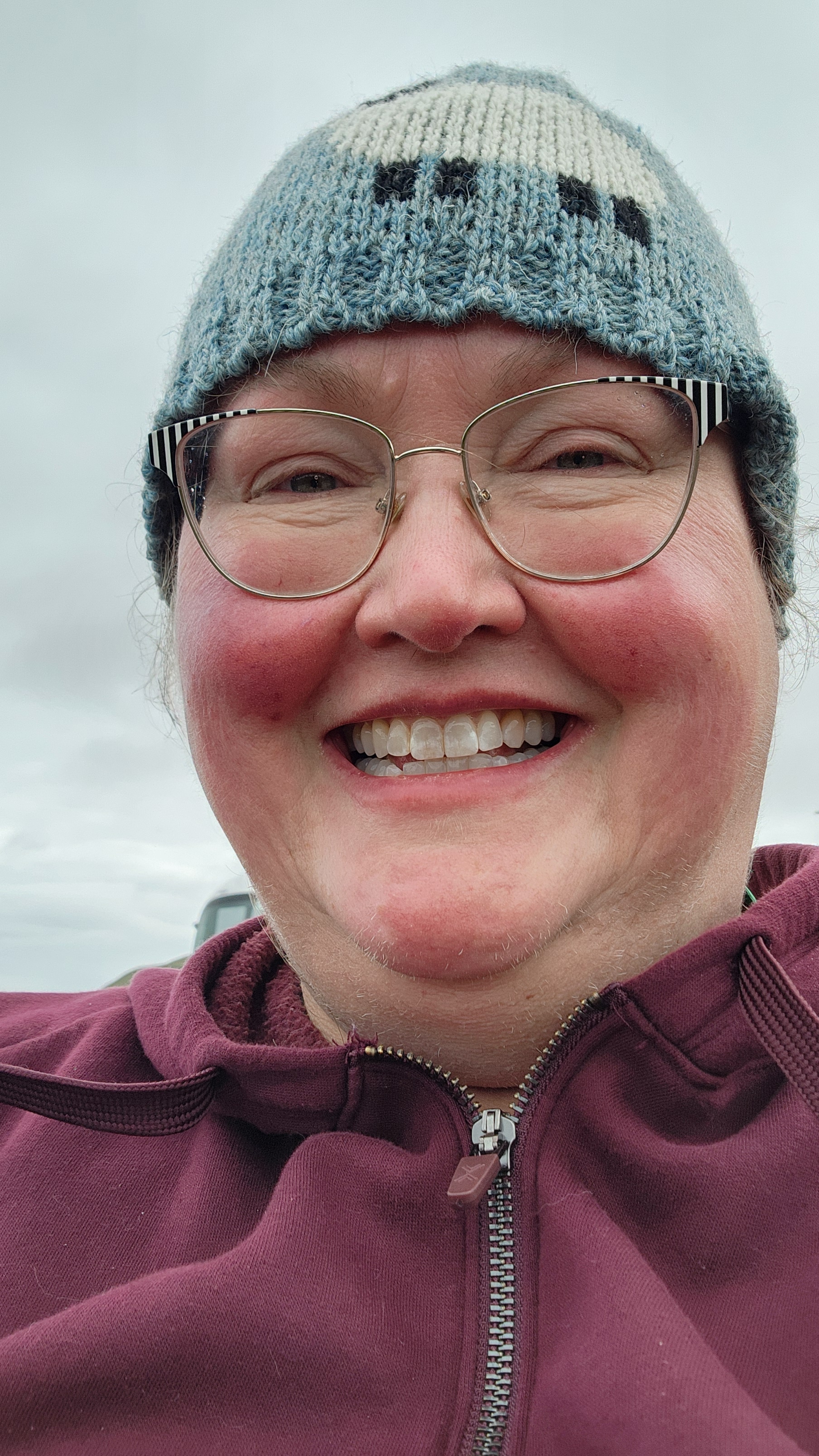
Me wearing my wool knit beanie with a sheep design on it