Unknown's avatar

About JC Reilly

JC Reilly writes across genre and has received Pushcart and Wigleaf nominations for her work. She is the Managing Editor of the Atlanta Review, and the author of What Magick May Not Alter (Madville Publishing), La Petite Mort (Finishing Line), Daughter of the Wheel and Moon (Red Mare) and Amo e Canto (Sow's Ear, forthcoming). Read her (sometimes updated) blog jcreilly.com, follow her @aishatonu, or follow her cats on Insta: @jc.reilly.

The Isle of Skye

Back in Scotland for another summer of teaching, I find I’ve settled in easily enough—I have a good sense of direction and I’m still on bus route 14 (though I’m further away from campus than I was last year), and every day I look out on the beauty that is Arthur’s Seat, a rock formation from an expired volcano.  I can’t complain too much, although my apartment is a bit of a disappointment, but I’m making do.

The Kelpies

A few weekends ago, I went on a tour of the Isle of Skye, which is the largest of the inner Hebrides islands.  What I didn’t know—and maybe, if I had bothered to look at a map I would have—is that Skye is basically part of the Highlands, but if possible, even more empty and scenic.  It took us all day to get there, and we made stops at Falkirk to see The Kelpies (I still love them!), then moved on to Loch Lubnaig, Glencoe, The Three Sisters (places I’d seen last year), a little chocolate shop in Glenshiel (I didn’t find anything I wanted to buy—mainly because I was too cheap), and a little bridge near the Red Cuillin and Black Cuillin (Munro mountains on the Isle of Skye).

The Three Sisters

Loch Lubnaig
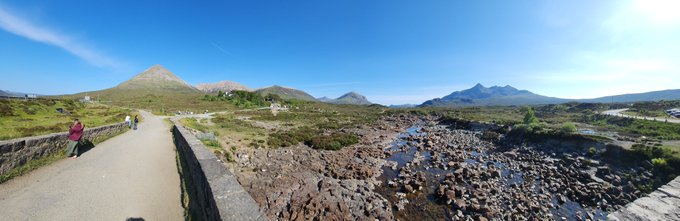
A panoramic view of the Cuillins

The Cuillins

Seeing the Highlands in the bright sunshine—as opposed to the mystique of clouds and mist—offers a surprisingly different insight into the view—you see all of the mountains, even to the very tops, and the sunlight brings out the details and relief of the mountain faces.  It’s a curious experience—because for instance, last year when I saw the Three Sisters, I saw them wreathed in mist and there was something gently oppressive about them.  In the sunlight they glow—the green so rich and thick upon them contrasting to the true azure of the sky.  It’s breathtaking.  It was warm, though the wind does blow fiercely through the glen.

Getting to the Isle of Skye (“Skye” means mist), you pass a few castles, including Eilean Donan (“the most beautiful castle in Scotland,” according to their guidebook), and go over a huge white bridge that was designed for the Royal Yacht Britannia to sail underneath.  Apparently, it only went underneath once, in 1995, and has since been retired as a tourist attraction in northeast Edinburgh. And once you’re actually on the island itself, you find the roads tend to be two-way, single lane roads, which is a bit hairy when your tour bus keeps pulling off at the “passing places” to let other cars go by, and there are huge drop-offs on either side of the roadways.  Our first stop on the island was to this bridge where we could stretch our legs and look at the Cuillins.

Black Cuillin
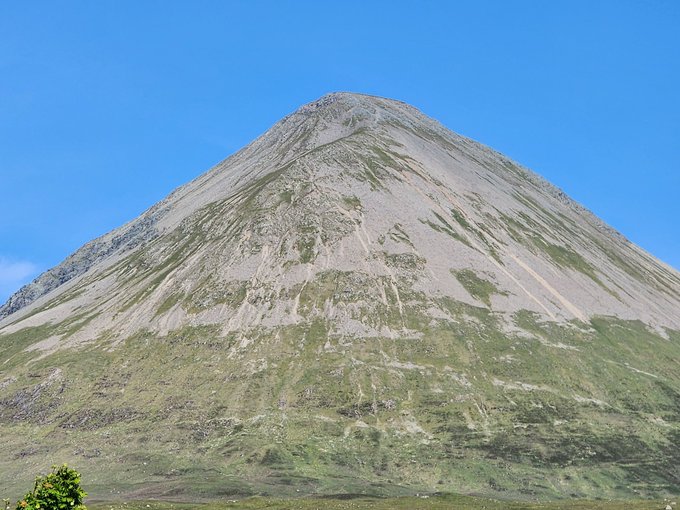
Red Cuillin

These mountains are Red or Black, depending on the kind of ash and lava the volcanos spewed millions of years ago. I liked the Red Cuillin because it looks really red (well, kind of rust red), but the Black Cuillin is dark and pointy and seems mysterious.  Both of these mountains are Munros, which means they’re Scottish mountains greater than 3,000 feet high.  (There are 282 such Munros in Scotland, and they get their name from the famous Scottish mountaineer, Sir Hugh Munro, who catalogued and climbed them. People who climb these Munros and “collect” them are called Munro-baggers.)  These Cuillins probably have an official name (Ben Something or Other), but I don’t know it, and a sign just referred to the Red Cuillin as Red Cuillin, and the Black Cuillin as The Cuillin.

We finally stopped for the night and I stayed at the Pier Hotel (a B&B) in the harbor, then got Fish and Chips at a chippy close-by.  I didn’t want to stink up my room with my dinner, so I sat out on a stone overlooking the harbor, feeding the gulls and a very annoying crow some chips, which they snagged in their beaks and flew off as if I were going to try to take them back.  I could have walked around the town of Portree but really I just wanted to get in bed and read.  So that’s what I did.
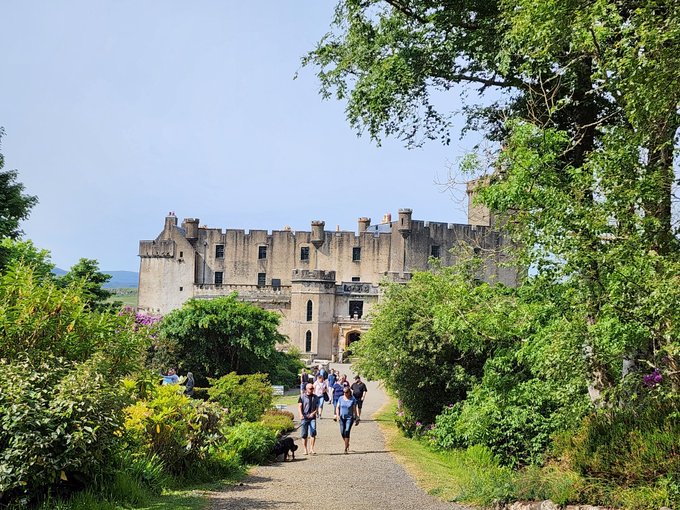
Dunvegan Castle

The next day we did a lot of driving around Skye on these tiny roads that jot across the glens and Highlands.  Some of us, including me, went to Dunvegan castle and gardens, whiles others went on a “difficult” hike.  Dunvegan is the clan seat of Clan MacLeod.  It dates from the 13th century but has been renovated and updated in the intervening years.  What we could walk through was limited—a bedroom, a parlor, a dining room, a library—but we weren’t allowed to take pictures of the inside.  There were lovely paintings on the wall of the various MacLeod families, as well as a painting of Samuel Johnson, the poet and playwright, who visited the castle at some point in his life.  The halls were crowded so I didn’t get as close to some things as I would have liked (for instance, the dinner ware and silver service), but what I saw of it was beautiful and tasteful.  Belowstairs, there were servants areas, like a sewing room, and a room where a video was running, telling about the history of the place, especially the Fairy Flag, which is this scrap of fabric said to be imbued with fairy magic.

The Fairy Flag, a prized possession of Clan MacLeod, with its lore centering on its being a gift to an infant clan chief, performed two miracles:  it saved the clan from starvation, making all the sick and thin cattle healthy and fat, and it helped during a military battle.  Apparently, the Fairy Flag has another miracle to perform, but Clan MacLeod has not needed to use it.  So instead it hangs proudly in place in the castle, though it’s not much to look at—a tattered thing of yellowed silk—that nevertheless is historic and interesting to see.

I wandered the gardens only a little—it was hot out and the midgies (irritating bugs, something like mosquitoes) were hungry.  But there were rhododendrons and irises aplenty and shaded walks throughout.  Mostly I wanted to look at the seals, but the seal boat wasn’t running.

Later, we took a ride down to the Fairy Glen, but I couldn’t seem to take very good pictures there, almost as if the glen did not want to be photographed.  The Fair Folk must have been protecting their lair.  I did get some close encounters with sheep, and the land itself gently rolled, the bushes and trees curling in on themselves, but the little mounds where the fairies lived only came out blurry, so I tossed those pictures.  It was a nice walk through the glen, and I found a big rock to sit on for a bit.
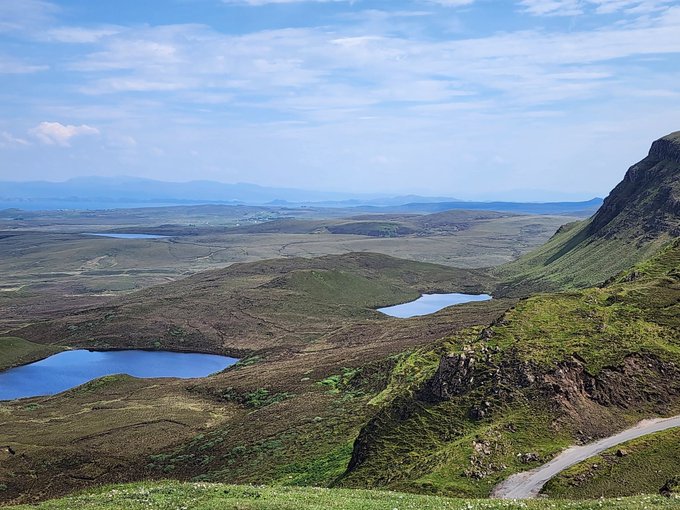
View from Cuith-Raing
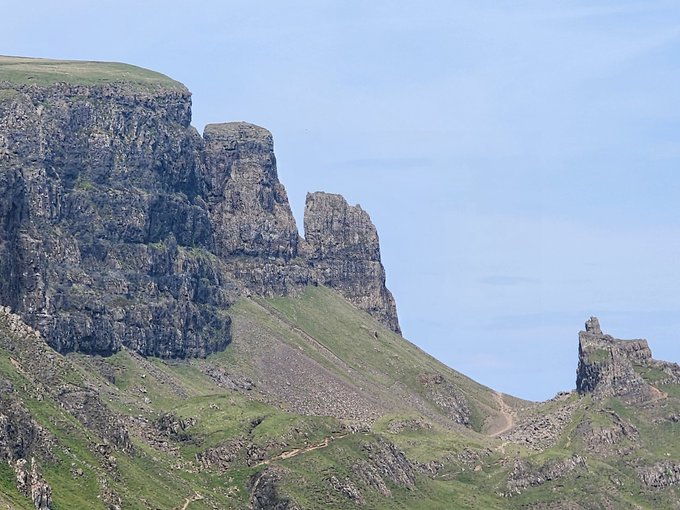
View from Cuith Raing

Then it was on to Cuith-Raing, up in the mountains, where you could look down on a town on the Isle of Skye from a great distance and the landscape is rocky and green, with fantastic views wherever you looked.  Of course, it was really high up, so I stayed well-away from the edges.  And I called Mom because I was getting good reception. I just wished she had WhatsApp so I could have shown her the view.  Afterward, we stopped at a beach at An Corran, famous for its 19 dinosaur fossils, and then we drove along to see the Old Man of Storr, a rock formation that can be seen for miles, on the Trotternish peninsula.  There is a walk to go up to it, but apparently it’s two hours long, and it was not on our itinerary.

Eilean Donan Castle

The last day was mostly dedicated tothe drive back to Edinburgh, but we did stop at Eilean Donan Castle, and you could cross to the island for £3, or you could go in for another £10 or so, so I just walked the grounds.  It was rainy and cold and gray—perfect weather in my opinion for poking around castle grounds and for imagining what it was like in its heyday. I suppose, that’s the kind of thing I—and everyone else—do whenever visiting Scottish castles—try to imagine what these behemoths were like when they first became inhabited.  And to wonder at the people who still own them and live there still. After a break for lunch in Loch Ness, and a stop to see some heilan coos at Taste of Perthshire, we made our way home.
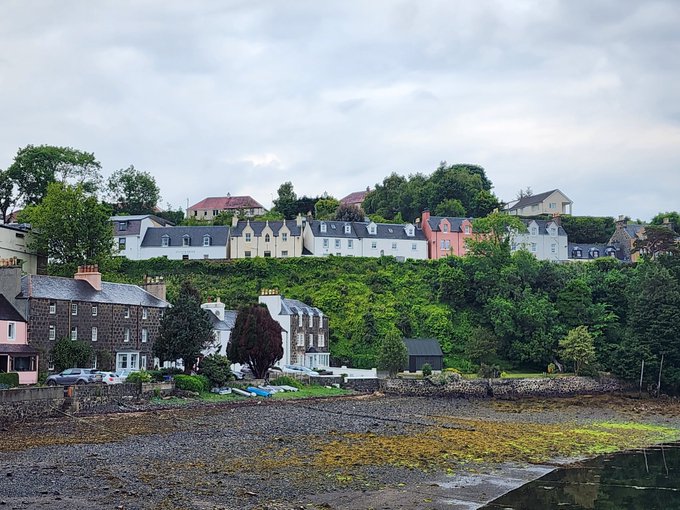
Harbor at Portree, Isle of Skye

Harbor at Portree

I liked the Isle of Skye but it’s fairly touristy and crowded—lots of shops which were closed by the time we got back to our respective hotels. The second night I stayed in Portree, I went to a different chippy shop for dinner (because I hadn’t made reservations anywhere and so there was no going to any of the fancy restaurants), and they were on a 40 minute wait (which I waited). But the town itself is pretty, with its brightly painted buildings surrounding the harbor, and lots of birds and boats wherever you look. I had always wanted to go to the Hebrides, and feel like the Isle of Skye is a good introduction to them.

Other photos
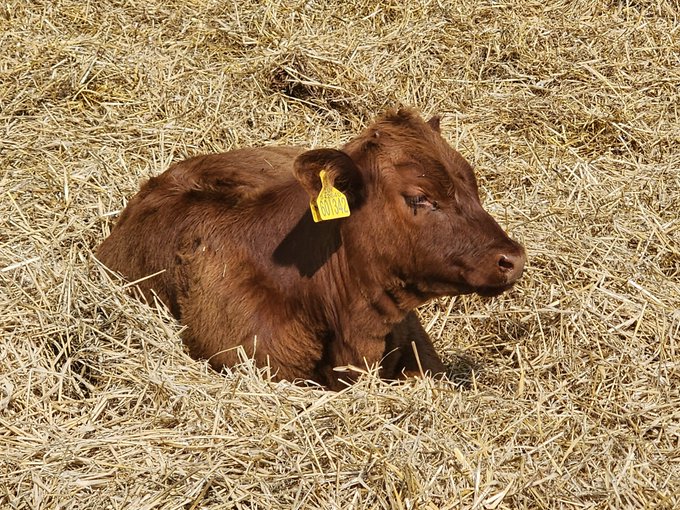
Baby Heilan coo
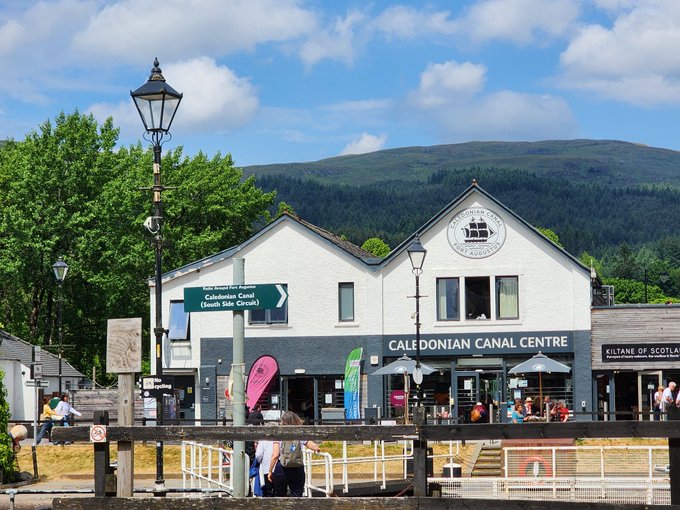
The canal that leads into Loch Ness
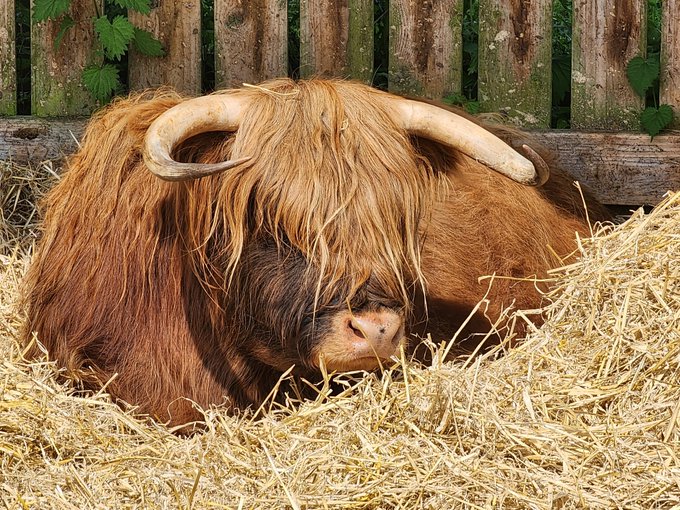
Heilin coo

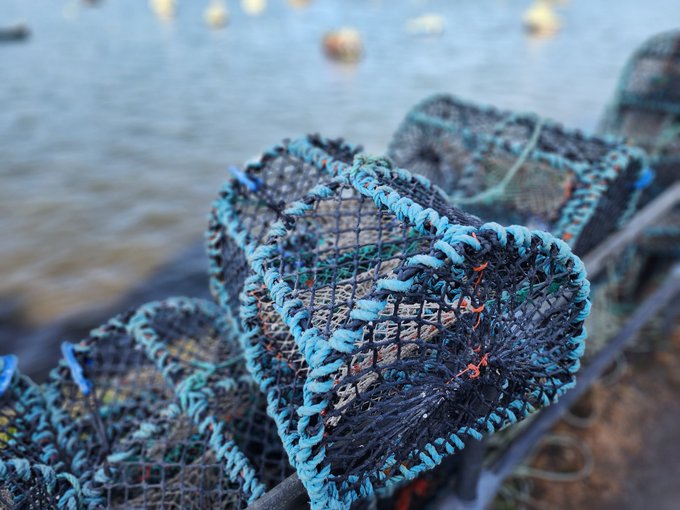
A lobster creel in Portree Harbor… I love the way the picture came out

A little bridge with Loch Ness in the background
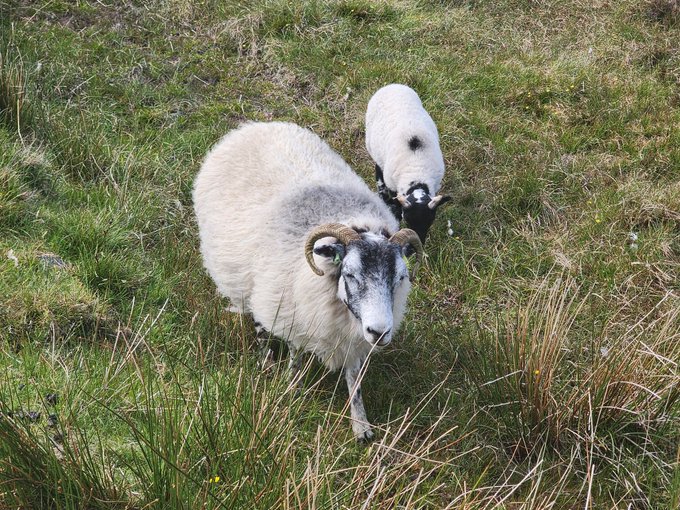
Some friendly sheep
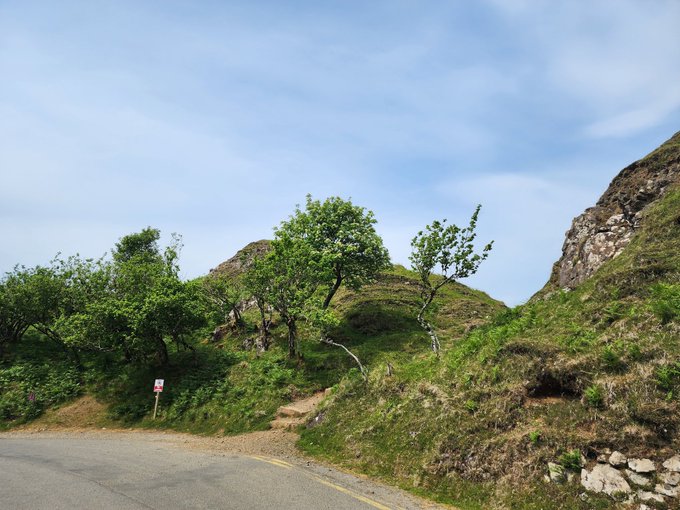
The Fairy Glen
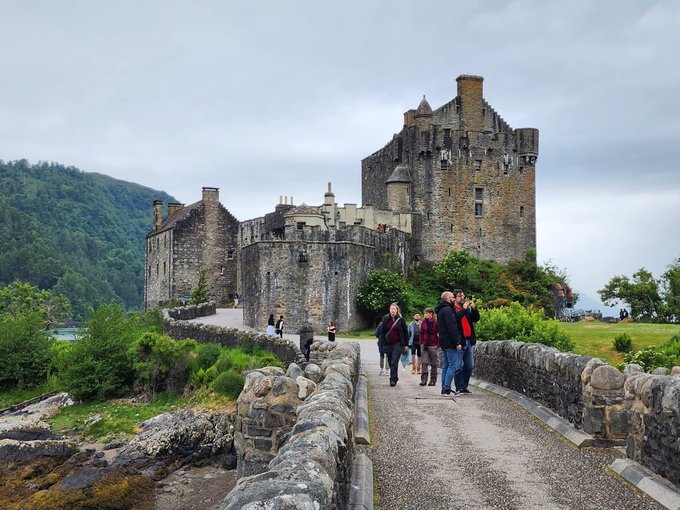
Eilean Donan

Flowers at Dunvegan

Eilean Donan Castle
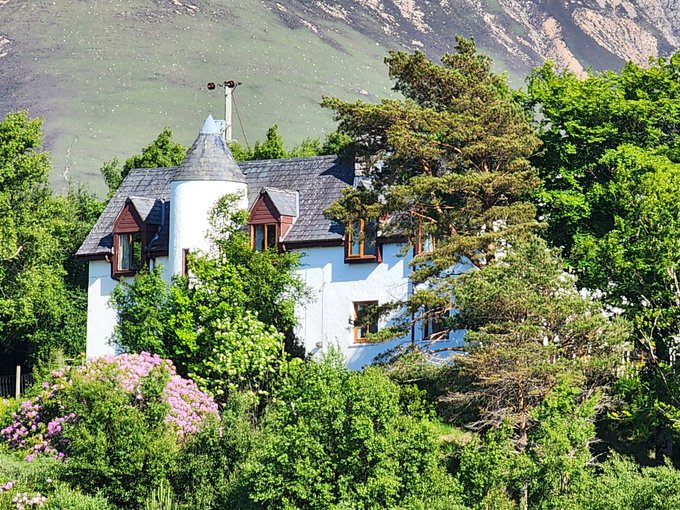
A house at Red Cuillin

Fairy Glen
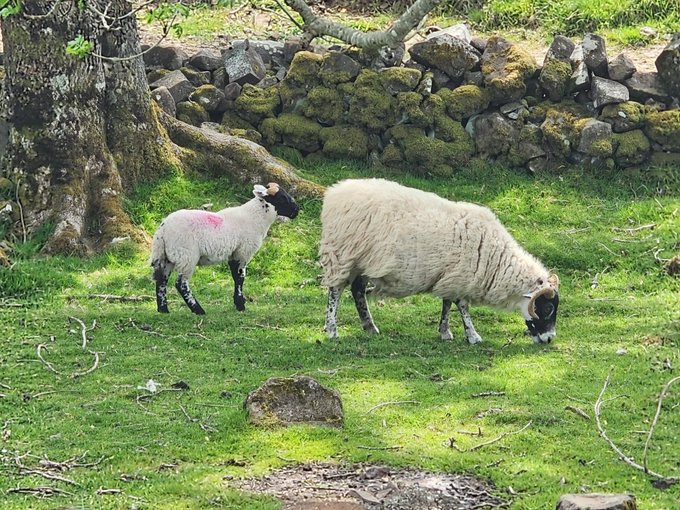
Sheep at Fairy Glen

Return to Rockvale Writers Colony

An antique brown wood secretary desk with a brown chair, lamp, and a window behind it.

My desk

I am at Rockvale Writers Colony again, working (as ever) on Medea on the Bayou.  I am in the Giles Hill room, which has a four poster bed with curtains, tasteful furnishings including a wonderful antique writing desk, and a huge bathroom and wardrobe. It has been a lovely quiet week, and I’ve gotten both writing and revising done.  Maybe not nearly as much as I would have liked (it always takes a little while to adjust to being in a “room of my own”) but I am pleased with my progress overall.  What I really need right now is a beta reader (or two!)—someone who can give me real, structural-level and poem-level critique.  I’m not sure what the book needs right now.  I have some thoughts about how to make it more Louisiana-ish, but it’s unclear what the book needs to actually be good.

Look, I know I have a confidence issue, but this isn’t that.  My concerns have more to do with how individual poems work as poems.  Sometimes it feels like they are really just prose in disguise.  And that’s problematic for a number of reasons:

  1. This is meant to be a novel-in-verse. Emphasis on verse.  I don’t want to write prose.
  2. Prose is fine as a thing, but the world doesn’t need a novelized version of Medea. (But to be honest, I’m not sure the world needs a book of poems about a play that was already written in verse.)
  3. If I’m not writing poetry, what the hell have I spent the last 3 years doing? (I guess it’s possible that I’ve written another hybrid piece… and we know how well loved those are (not).
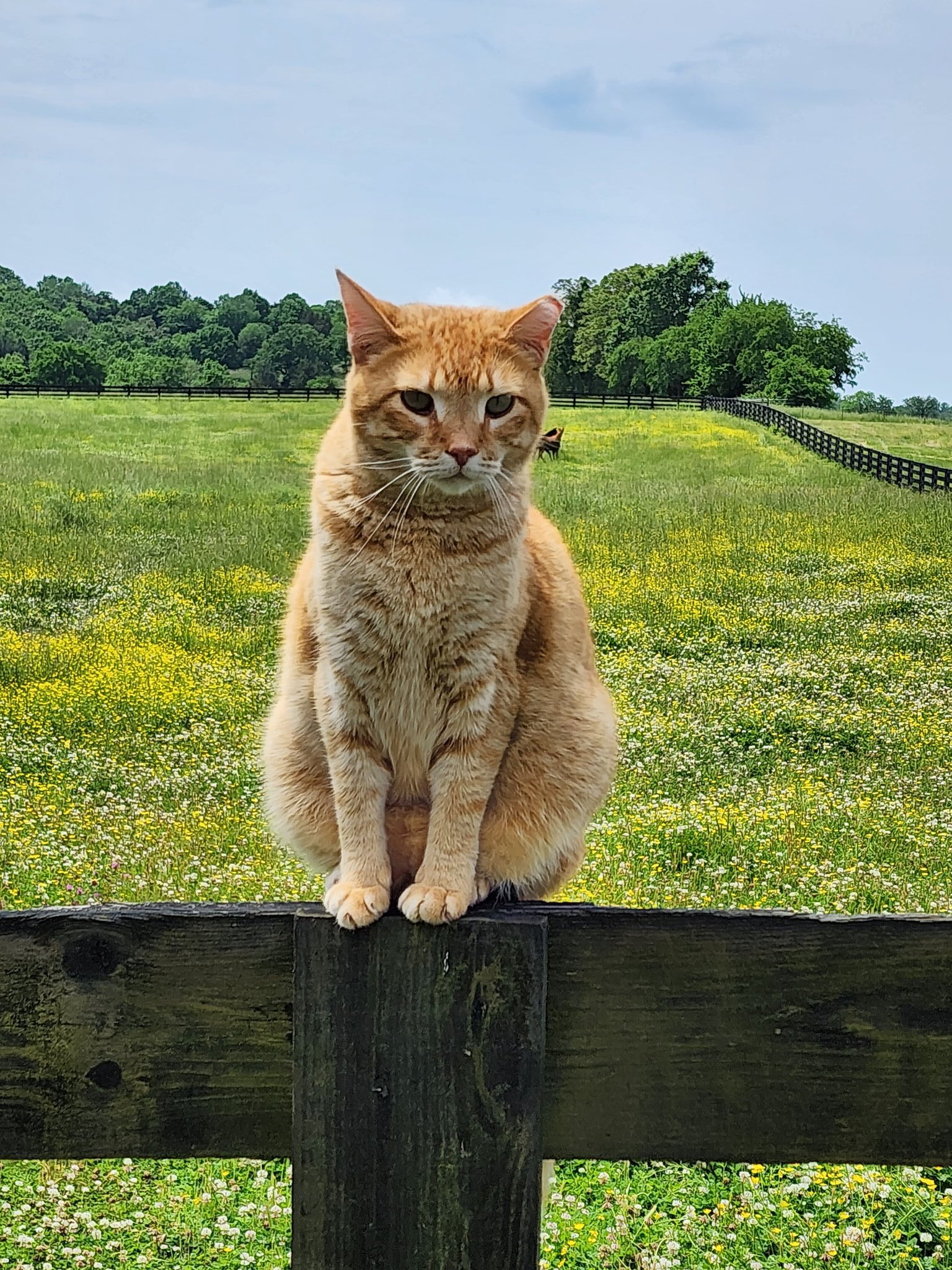
A chubby marmalade cat balances on a fence.

Oliver sits on the horse fence.

Anyway, you can see my dilemma.  For the most part, these poems haven’t seen the light of day (though I’ve sent many out, and even published a dozen of them) so I don’t know if they are working.  By the fact that so many of them have been rejected, one could say “they’re probably not working, JC.”  Or maybe they just don’t work as stand-alone poems.  Which is altogether another problem.  I want them to work as stand-alone poems, but sometimes you need exposition, and exposition isn’t very poetic.

The thing I tell my students about writing adaptations is that you have to honor the original source, but in the end the adaptation is a new piece of writing and it’s only about itself  I’m trying to do that; I honor Appolonius of Rhodes and Euripides by recreating scenes from The Argonautika and Medea, but I’m also adding new characters and new scenes and new information so that readers get a fuller image of Medea as a person. And I’m also trying to maintain a strong narrative voice.  How well I’m succeeding, I can’t be for sure.  But I’m trying.

An image of a lean and handsome black cat.

Pip the shy but sweet black cat.

One of the ladies I’ve met here at the colony (Jen Knox, check out her new book, We Arrive Uninvited, available as a signed copy here) read What Magick May Not Alter, which I had left a copy of the last time I was here.  She said she liked it (yay!) especially because of its strong narrative voice.  And I think that’s true about WMMNA—it does have a strong voice and it’s good with character development—but then it should be, because I invented everything.

Here with Medea, I’m not sure I’m delivering on the promise of creating something new and I’m not sure about the narrative voice.  She’s already a known quantity as a character—am I revealing something fresh about her by writing about the early part of her marriage (as well as the plot of the play), or am I just…wasting readers’ time?  I ask myself:  why should anyone read my Medea when Euripides’ play is so perfect?  My go-to answer—“Because I wrote it”—is not what you’d call a particularly compelling response.  Do I think that someday professors teaching a classics and adaptations class will teach my book (this is assuming it finds a publisher)?  Not particularly.  But it would be really cool if they did, right?  Who’s the audience?  People who like poetry and people who like Medea for sure…but is there a broader audience for it?  What if there isn’t?

A tortie cat (black and orange) standing on a wooden deck.

Lucy making a bee-line for my legs to wrap herself around.

I’m not sure what’s brought on this little crisis of faith.  I think it’s because I’m seeing the whole collection (it’s about 96% done) together finally and I’m worried that if it doesn’t work as a collection (or if it’s prose-in-disguise), then I will have wasted my precious writing time writing something that isn’t worth a damn.  Well, ok, it’s worth at least a single damn, but you know what I mean.

I am afraid I might have another albatross around my neck.  Last year, I didn’t sell one copy of WMMNA—not one single, solitary copy.  (In fact, Madville took a net loss of two copies, which were apparently returned.)  I don’t want Medea to be in the same situation. I want her to find an audience.  I want people to know her as someone besides a child-killer. I think my book shows her in a rich full way…I think.  (But what if it doesn’t?)

Anyway, that’s where I am with this project.  I say I’m 96% done because I have a few plot holes that need to be addressed, but I think the collection—whatever it is—is really coming along. (There’s still revising to do, which drops my percentage down to 46% done, but I’m working on that too.)

In other news, tomorrow is Mother’s Day (probably not Medea’s favorite holiday), so make sure that you tell your Moms how much you love them.  They do so much for us—mine is perfect—and they love us just as we are.  Even when what we are is a confidence-lacking, attention seeking, desperate-to-be-adored-by-the-masses writer of poetry.

P.S.  The cats are Rockvale’s super-sweet barn cats.  (Doesn’t it figure that’s what I’d take photos of?)

A large orange marmalade cat with piercing green eyes.

Oliver

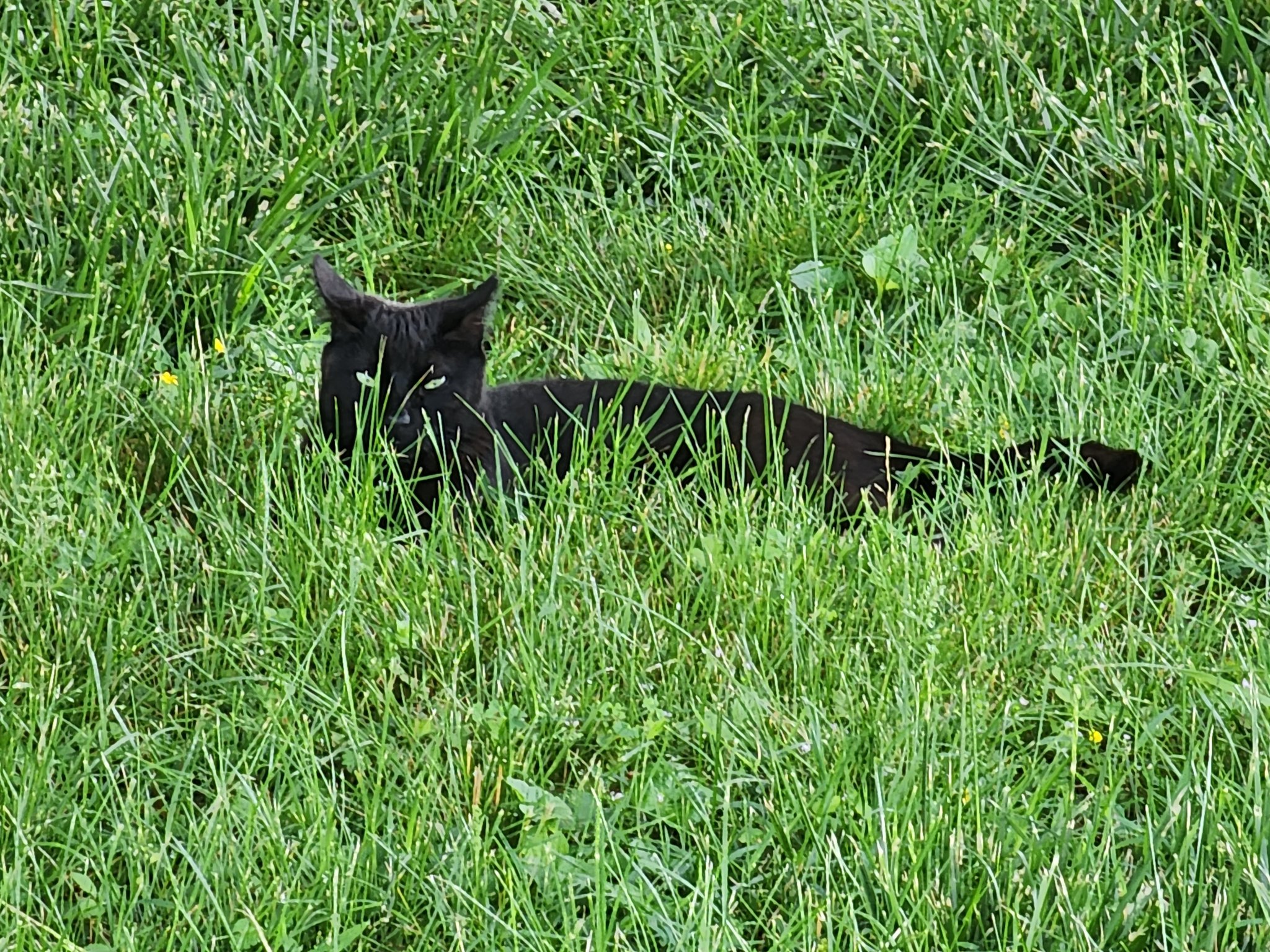
A sleek black cat sits in the middle of the grass.

Pip the Panfur in the grass

The Poetic Stylings of Chat-GPT

A newspaper drawing of a wild cat

Le Chat Sauvage, from NYPL Digital Collections

Goofing around with Chat-GPT (the chat sauvage?), I asked it to “Write a poem in the writing style of JC Reilly.” First, it didn’t know who I was (ugh), but when I gave it a link to one of my poems, this is what it came up with:

In this moment, I am but a flicker
A mere flame in the grander scheme
My life, a mere fragment in the picture
Of the endless and infinite dream

I am a creature of light and shadow
Walking the tightrope between day and night
With each step, I sow a seed to grow
Towards a future that’s ever so bright

I take comfort in the impermanence
Of all things that exist and persist
For I am but a brief remembrance
In the memory of what will persist

The sun rises and sets, the tide ebbs and flows
A rhythm of life that moves ever on
I embrace this dance, as the story goes
For in each moment, I am reborn

So let me be a spark in the darkness
A beacon of hope in a world of doubt
Let my light shine forth, with no less
Than the radiance that life is about

For in the end, all we can do
Is to live, to love, to dream, to be
And let our light shine, ever true
As a reminder of what it means to be free.

I think it goes without saying that I would never write such drivel. I might write some crap poems, but at least they are original crap. Among the things that bother me about this “poem” include the fact that it uses “persist” as a rhyme for…”persist.” Like, please try harder, Chat- GPT.  Also, the clear amount of cliches included strikes me as incredible.  You’d think a computer would have a lot more language to draw on, which could lessen the cliches.  That said, I do like the slant rhyme of “ever on” with “reborn.” I wouldn’t think to make that choice, and I kind of like it.  But the rest of the poem hurts my soul.

I also asked it to write a poem in the style of Ilya Kaminsky and honestly even if I had never read Deaf Republic or Dancing in Odessa, I can be sure it’s nothing like his writing.  Still, it’s a much better poem than what Chat-GPT wrote for me (and by “better” I mean “being incrementally not as bad”):

A poem in the style of Ilya Kaminsky:

The night sky is a canvas of stars
Each one a beacon, a guidepost
In this world of darkness and uncertainty
A reminder that there is light in the darkness

But what of those who cannot see the stars?
Whose eyes are shrouded by the fog of war
Or the darkness of the soul?
Do they too have a guidepost to follow?

Perhaps it is the sound of a loved one’s voice
Or the touch of a hand, warm and reassuring
Or the memory of a time when all was right
And hope burned bright, like a flame in the darkness

For even in the darkest of nights
There is a glimmer of hope, a spark of light
That can ignite a fire, a passion
And lead us out of the darkness, into the dawn

So let us hold onto that flame, that spark
And carry it with us, wherever we may go
For though the night may be long and cold
There is always the promise of a new day.

The second stanza is pretty decent (minus “the darkness of the soul”). Still, some achingly bad abstractions (“darkness and uncertainty”) and worse cliches (“the touch of a hand, warm and reassuring;” “lead us out of the darkness, into the dawn” “glimmer of hope”) doom this piece to the trash bin.

I’m not too worried that poetry is dead now that Chat GPT can write poems, because all it can write is really bad poems.  And I think most teachers are savvy enough to spot crap poetry when it’s presented to them.  Honestly I also think students wouldn’t want to turn poems like these in because they inherently know they’re bad as well.  If I were teaching poetry, and a student turned in some work like this, I wouldn’t get mad.  I’d just get really NITPICKY about their revision work, and they’d have to write a new poem because I’d mark all the places where the poem fails. (Which is about 95% of places.)

Here’s one more:

This one is supposed to be à la Billy Collins:

The world is full of mysteries, he said
As he looked out the window, lost in thought
Like the way a tree knows when to shed
Its leaves, or how a bird knows when to take flight

And there are secrets lurking in every corner
Like the way a cat curls up in a sunbeam
Or the way a flower turns to face the sun
Or the way the moon appears in the sky

And then there are the things we take for granted
The everyday wonders that we barely notice
Like the way a pen glides across paper
Or the sound of a kettle as it comes to a boil

But there are also the things we cannot explain
Like why some things are meant to be
Or why we find ourselves in certain places
Or why we feel a certain way at a certain time

And yet, even with all these mysteries
The world still manages to spin on its axis
And we still find moments of joy and wonder
As we journey through this ever-changing world.

This one at least has a few good images (“like the way a pen glides across paper/ or the sound of a kettle as it comes to boil”).  But it’s also not funny, and I think of humor as being a hallmark of Billy Collins.  Still, over all, the poem is kind of lifeless, and that last stanza is so leaden it may as well be made of concrete.

I think “lifeless” is the operating word here.  These are poems by something that clearly has no life of its own, and can only replicate what it thinks a poem is.  But it must have really bad models to produce examples such as these. This seems hard for me to believe when there are hundreds—maybe thousands—of years of poetry available online.

What is also surprising to me is that it doesn’t actually borrow lines from the poets—lines that must be floating around the internet.  That at least I could understand—a little plagiarism.  Maybe I’m even a little nostalgic for plagiarism—there is a certain art to doing it that is completely bereft in what Chat-GPT does.  Plagiarism at least requires the plagiarist to look things up to copy; Chat-GPT just makes it all up.

But I can’t be too hard on Chat-GPT.  It gave me this great recipe…which looks pretty legit:

Carrot cake is a delicious dessert that many people enjoy. Here’s a recipe for a classic carrot cake:

Ingredients:

      • 2 cups all-purpose flour
      • 2 teaspoons baking soda
      • 1 teaspoon baking powder
      • 1 teaspoon ground cinnamon
      • 1/2 teaspoon ground ginger
      • 1/2 teaspoon ground nutmeg
      • 1/2 teaspoon salt
      • 4 large eggs
      • 1 1/2 cups granulated sugar
      • 1 cup vegetable oil
      • 2 cups grated carrots
      • 1 cup chopped pecans
      • 1/2 cup raisins (optional)
      • Cream cheese frosting (recipe below)

Directions:

      1. Preheat the oven to 350°F. Grease and flour two 9-inch cake pans.
      2. In a medium bowl, whisk together the flour, baking soda, baking powder, cinnamon, ginger, nutmeg, and salt.
      3. In a large bowl, beat the eggs and sugar together until thick and pale yellow, about 2-3 minutes. Gradually add in the oil and mix until well combined.
      4. Add the dry ingredients to the wet mixture and stir until just combined. Stir in the grated carrots, pecans, and raisins (if using).
      5. Pour the batter into the prepared pans and smooth the tops with a spatula.
      6. Bake for 30-35 minutes, or until a toothpick inserted into the center of the cake comes out clean.
      7. Allow the cakes to cool completely in the pans before removing and frosting with cream cheese frosting.

Cream cheese frosting:

      • 8 oz cream cheese, softened
      • 1/4 cup unsalted butter, softened
      • 2 cups powdered sugar
      • 1 teaspoon vanilla extract
      1. In a medium bowl, beat the cream cheese and butter together until light and fluffy.
      2. Gradually add in the powdered sugar and vanilla, and beat until smooth and creamy.
      3. Use immediately to frost the carrot cake.

Enjoy your delicious homemade carrot cake!

Memoir, Poetry, and Why Can’t I Do Both?

Pastel image of a black woman wearing a blue dress and writing in a notebook.

from the NYPL Digital Collections

Yesterday I met up with a lovely colleague, Ida, to chitchat and catch up, and we spent a good amount of time discussing my writing.  I am in the middle of two projects right now, and one of them includes poems about my family or based on my family.  Ida and I had that age-old question about memoir and life writing:  what’s true, what’s what you remember, and do you dare to speak your truth?  I don’t think it’s any secret that the relationship I’ve had with my father has been fraught for most of my life, particularly late childhood and the teen years, and there are poems I want to write about certain times in my life with him, but I’m not sure I should/could.

Part of my concern about writing memoir in general (not just in relation to my father) is that I don’t feel like my life is particularly interesting (ergo, who would want to read about it?). Yes, I’ve dealt with trauma and abuse, but where most memoirists could find lots of fodder to write about on those subjects, I find that I have a very intellectualized perspective—which is not surprising, because as I’ve said other times in this blog, I live too much in my head—that resists doing the lyrical work that memoir is good at.  I also just don’t remember the feelings I had, beyond fear and anger, and even they have been dulled with time.  How can I reflect on memories I don’t really have anymore, except as brief snapshots from my life?  How can I delve into the specific details of a life which even to me are fuzzy at this point?  Where does that leave me?  Writing really banal poems, I guess.

(Hmm:  an aside. It just occurs to me that a few times I have written poems that didn’t work as poems, and I took out the line breaks and submitted them as flash memoir and they not only worked, they got published.  Hmm.  Need to think about that a bit more. I want to write poems, because poetry is where I live, but I wonder if my voice is too prosy for that—at least when it comes to writing about family.)

Back to Ida.  I was listening to her talk about her own creative writing, which focuses on Hawaii’s historic relationship with its Japanese settlers, and her own father’s participation in that system.  And I thought, she really gets how poetry collections can be about so much more than their individual lyrics—that they can tell a story that has panoramic scope.  And maybe it’s because she’s looking at a particular historic period as well as her relationship with family that the project comes across as so interesting to me.  Whereas my own life seems so whitebread and humdrum and disjointed that I can’t imagine anyone would find value in reading about it.  Hell, I’m pretty sure not even I would want to read about it.  (I’m only half-kidding.)

And yet, the desire to write poems about my life remains there, as a way to make sense of these experiences—and maybe not to lose them any further than I have.  I should have kept up with my journaling—then at least I’d have material to draw from.  But there was such darkness in my life in the terrible depression of my graduate school years that I just quit, because it was too painful to document. And then I had gotten out of the habit, even when times were better. The upshot? I’ve relinquished my past—which is a terrible thing, when you want to write about it, or need to write about it, or think you should.  And everyone knows a good journaler makes for a better writer.  But anyway.

Ida encouraged me to write a real article (like for a scholarly journal) about my process, and I can’t think of anything more gloomy and dull.  (And scary.) And to be fair, I wouldn’t know where to start.  It’s been so long since I had to do any writing that uses critical research, I’m not even sure I know how to do it—I think I’ve completely forgotten how to flex those critical muscles.  (I barely remember how to write poems, let’s be honest.). She says she would help me, but I hate to be a burden on someone who has her own important writing to do. But we’ll see.  Especially now that my job is in transition, it might make sense to try to write something real and get it published.  It could maybe help me down the line.

In other news, I’ve sent out a bunch of submissions lately… I hope I get lucky. I would love for you to read some of my new work (including this poem, How the Heart Works, which appeared recently in Third Wednesday.)

Thanks for reading this latest post, my lovies.  I hope your own writing is going well!

Love and Other Ironies

It’s February, and our attention turns naturally towards hearts and flowers.  At least, mine does.  Complain all you want about Valentine’s Day being a “Hallmark holiday,” but I have always been a fan—even when I didn’t have someone to dote upon or celebrate with.  This gets me to thinking about something I noticed when I sent off a submission today:  I write about love.  A lot.  (For instance, four of the six poems I sent out focus on love in a variety of ways. That poor first reader, when they open that submission.)

I find this surprising, because I wouldn’t consider myself a particularly achy heart stardusty lovey-dovey type person (although, I suppose I was once upon a time…late teens, early 20s, like everyone else).  And when I think of great love poems (“How do I love thee…” etc.), I for sure don’t think of my own work.  Yet I constantly write about the heart, and love, and the way these things interact with my very odd brain—it’s never truly “hearts and flowers”—there’s usually something rather off.

Here’s an example from my first book, La Petite Mort (arguably my favorite love poem that I’ve written):

Dystopic Love Poem
 

If I were to hand you my heart,
once you scraped away the fatty tissue,
arterial plaque, and congealing blood,
you’d find it’s really just a valentine
more Discovery Channel than Hallmark,
a bit ill-used, still serviceable,
and as full of love as it gets.  After
you got past the horror, you’d find
it has its uses:  keep it as a talisman
in your pocket, display it in a jelly jar
by the window—or add shallots and butter,
a hint of merlot.  Bon appetit.


It’s definitely heart-felt, but it’s also kind of gross.  Which, admittedly, is part of its charm. But also there’s a lot of irony there—and I think that’s what’s twisted my love poems.  They can never just be romantic—they have to be ironic.  And I wonder if that means that deep down, I’m just… damaged.  Or maybe it means my poetic voice won’t let me write something that’s too twee and sweet because I am, let’s face it, neither.

Here’s a more recent poem, still really drafty, this one about the end of love:

Paper Heart
 
On Valentine’s I cut a paper heart
and wrote the words I meant to share.
(In another year we’ll fall apart.)
 
Say what you will:  it was a start
on making amends. Don’t you care?
On Valentine’s I cut a paper heart
 
that I cut and cut and cut apart
until it fell like confetti in the air.
(In another year we’ll fall apart.)
 
So many strange days; I can chart
them all, caught as I was in your snare.
On Valentine’s I cut a paper heart:
 
a shabby thing, no piece of art,
it makes the abhorrent seem fair.
(In another year, we’ll fall apart.)
 
Where have we gone wrong, what part
of us shriveled, shed love so rare?
On Valentine’s I cut a paper heart.
Another year passed. We fell apart.


See what I mean?  Here the irony is in yo’ face:  (“what part/ of us shriveled, shed love so rare”)—that’s just… bald.  No subtlety, I guess, and that in itself is ironic (because poems should be subtle), especially if you know me (and my dear five readers, I know you do!).  My point is I can’t write love poems or out-of-love poems that don’t fundamentally out themselves as an exercise in “poetic praxis” (e.g. “Look at me, look at me, I’m a POEM!”)  This is not to say I wouldn’t like to write a real love poem (and by real, I mean “good”)—I would someday, but it might just not be in my nature/wheelhouse/skillset. I might just be doomed.

But as I was saying, love does figure prominently in my writing.  If I want to get psychological about things, I might say the reason I write about love is because I don’t really feel loved.  (I am not saying this for sympathy! Intellectually, I know I am loved.)  But writing about love is a way for me to try to connect with those feelings that I…er…don’t feel.  Maybe if I write about it enough, I can crack my ironic little heart wide open and begin to actually feel it.  (But I don’t know—years of therapy about this very issue has not cured it—I continue to live too much in my head and not in my heart.)

As I think about it…it’s kind of ironic to consider oneself very good at loving others (family and friends and all kind of creatures, especially kitties), but to feel a void when that love is returned. I don’t know…is that some kind of next level shit?  Probably.

Well, putting aside my very screwed up brain, let me say this:  I love you for reading my posts.  I love you for supporting me and cheering me on.  I love you for you.  I am hearts and flowers in love with (most of) the world.  And maybe that’s why I write love poems, flawed as they are.  Maybe that’s why we all write love poems now and then, to express the expansive love that resides in all of our collective hearts.

And on that note, I’ll leave you with this little haiku:

It’s Valentine’s Day
candy hearts speak sugar truths
Luv u 4 Ever

A Different Approach to My Writing Process

from the NYPL Digital Collections

After the revelry of December, January always shows up with austerity.  People make promises to get more healthy or to take hold of their budgets or to institute any number of changes to one’s life to ostensibly be “better.”  But habits in personal improvement take time to form, and what seems like a good idea on January 1st by January 20th seems like a pipe dream.  This year, I made no resolutions of austerity.  This year, I’m embracing abundance in creativity and experience.

It’s a different approach.  We are used to starting new years with denying ourselves what we want, but I feel last year was austere enough, especially when it came to creativity.  As you know, I had a huge bout of writer’s block and depression which made writing so difficult.  I can’t say that I’m over it—just because the calendar turns over doesn’t mean we turn over too—but I’m trying to be open to creativity and new experiences in a way that maybe I wasn’t so before.

What does that actually mean?  It means cultivating my poor stagnating heart, plucking off the dead leaves and twigs to allow new growth to happen.  It means letting go of negative self-talk (or trying to), and setting some realistic goals about writing.  It means living with wonder and courting coincidence and making time to be a creative person.  It means going back to making Friday a day designed solely for writing and reading, and foregoing meetings and interruptions as much as possible. And it means to relearn myself as a creative being—something I’ve not been in a long time.

That all sounds like a lot, doesn’t it?  It does to me too.  And I know it requires giving myself permission to be creative.  I think last year I let the fear of “forgetting how to write poems” become so much a part of me that I did, actually, forget how to write them. How can that be? you ask.  Well, to be a writer, you have to be willing to fail.  A lot.  And I think I let that fear rob me of any joy I could take in poetry.  So anytime I sat down to write a poem, all I could think of is how bad what I would write would be, so I just stopped writing.

I also plan to read more poetry this year—I sloughed off last year—and to try new forms. Most of the poetry I read last year was Atlanta Review submissions, and that’s not the same thing as reading whole, curated collections with literary arcs and motifs.  It’s good practice to be exposed to new poetry but a lot of the submissions are raw and not fully developed yet, whereas whole books of poetry are more thematically driven, vibrant, and polished. They speak as a collection.

I think I sort of forgot that.  Hence, more poetry reading in store for me.

Maybe this smacks too much of “resolution”—and we know what happens to most of those—but I think in my case I’m just going to try and see what happens when my approach to writing is different. I’ll let you know how it’s going. 😊

Climate Change & Christmas

Old-timey Santa carrying a Christmas tree and backpack of toys while two little girls look at him happily.

from the NYPL Digital Collections

Christmas carols may play on my Spotify playlist right now, but it’s 70+ degrees out which feels decidedly not Christmassy. (Maybe if I lived in Florida?)  Of course I know this is due to climate change, something we’re all culpable for.  But I remember cold Decembers, and having to wear snuggly coats and scarves.  I remember snow falling in December and having to defrost my car windows to crack the thick layer of ice. Today I’m wearing bare legs and Birkenstock sandals, and the flowers are coming back out.  It offends me.

We should all be offended by climate change.  Forty-odd years ago, during the energy crisis, President Carter was interested in moving the U.S. to renewable energies, and if he had succeeded in his plans, we could be like Scotland now, carbon neutral and getting most of our energy through wind and solar farms.  But Big Oil and the combustion-powered car industry made sure that the U.S. stayed addicted to oil, and now the entire Earth is warming and our politicians can’t seem to agree on what should be done—mainly because many of them are beholden to the status quo…and to Big Oil and Coal.  Forty years ago, we might have had a chance to change things—now we’re trying to play catch-up, and catastrophic global warming, like the Grim Reaper, is on our doorsteps.

Coral bleaching, whales not being able to spawn, extinctions, glaciers melting, shorelines being devoured by global sea rise, worsening wildfires in the West, more devastating hurricanes, flooding, droughts across the Southwest and South—everywhere we look we can see the effects of climate change, and we do nothing because we don’t want to be inconvenienced.  Because it will take money and cultural change and thinking to make the environment a priority—and frankly our capitalist system is designed to exploit the environment, not protect it.  And as I said before, we’re all culpable.  We participate in the system that will eventually kill us all and will decimate life as we know it for generations to come, if not forever.

But we’ll be dead by then, so why does it matter?  That’s a comment I’ve heard more than once, and I think about the inherent selfishness implied with such a remark.  Yes, we’ll be dead at some point, but shouldn’t we want something better for the folks who come after us? And not just folks, but all the animals in the world too. If I’m honest, I really worry about the animals most—people will be fine—but animals are losing their habitats and becoming extinct because of our selfish over consumption of natural resources and our careless stewardship of the Earth. Why are we like this?  And who benefits?  A handful of billionaires, that’s who.

Starting small isn’t ideal—we need grand gestures at this point—but even incremental changes can help. I’m only driving three days a week, so that’s something.  I try to turn off the lights when I leave a room. And this year, after much debate, we decided to get an artificial Christmas tree instead of a live one this year.

Of course, a lot of energy was expended to manufacture this tree—not just in the production process, but in materials use and shipping as well.  It’s not carbon neutral by a long shot.  But it’s also not cutting down a new tree every year just so we can have it six weeks in our house, only to dump it in the woods where it doesn’t really do anything.

Granted, live Christmas trees are raised to be cut down and Christmas tree farms provide jobs—a good thing.  And since Christmas trees grow for eight to ten years before they can be harvested, they give off a lot of oxygen during their growing seasons.  But in the end, the tree dies and no longer produces oxygen.  It doesn’t seem worth it.

Do I love a fake tree?  Not at all.  We’ve had fresh trees my whole life, and nothing beats the scent of balsam and fir floating in your living room.  But I just don’t see how cutting down a tree makes sense anymore, especially given the environmental crisis.  We need trees to eat carbon dioxide and give off oxygen.  Killing one so I can enjoy it in my living room seems antithetical to my concerns about climate change. Hence, the fake-a-roony.

It will take some time to get used to.  But really, this sacrifice is small.  If I wanted to make a real difference, I’d invest in a horse and buggy.  (As if that’s even a possibility!) But at least the artificial tree is reusable for as many years as planned obsolescence has in store for it.  And if it doesn’t look like a real tree, or smell like one, at least once it’s decorated it will look like all the trees we’ve had in the past, and that’s not nothing.

Saying Goodbye

2015

Nov. 2021

Dickens said that life is about meetings and partings; that is the way of it.  Or maybe it was Kermit the Frog.  But the point remains the same:  those who come in to our lives eventually must leave, and we are left behind to somehow muddle on without them.  This week, we said goodbye to our 20-year-old cat TimToms. He was part of our family the moment my Mom showed up with him at our house, back in 2008.

I had just lost Snorky, who had been hit by a car in my neighborhood, and I was distraught without a cat. I did find Jenny, who was maybe 6 months old, left alone in the rain to wander, and I took her in.  That was right around Thanksgiving.  Meanwhile, my Mom’s friend, who was a veterinarian, said she had a 6 year old cat who lived on her porch and was henpecked to death by her other cats.  Would I like him?  I would.

When Mom drove to Atlanta for Christmas that year, she brought this big, fluffy, growling hot mess of a cat with green, human eyes.  He lived under the bathroom sink about two or three months.  We didn’t see him often; we had his box and his food in the bathroom and left him pretty much alone.  Sometimes, I would peer under the sink to see how Thomas (as he was then known) was doing.  He would growl, and I’d leave him alone again.  Meanwhile, Jenny ruled the roost.  After some time, he moved into our bedroom closet and lived there for a few more months.  And then one day, he just decided he no longer wanted to live by himself and came out and joined us.  After that, he never left us alone. He was always out and about and underfoot, looking for anyone to love.

March 2022

TimToms was the kind of cat who never met a stranger.  Sure, he would growl a little (it was a “love growl,”) when my Mom or my sister would come to visit, but after a minute or two, he’d decide that he liked them, and he would jump in their laps and be ready for pets. The same with other guests.  He’d be momentarily shy, but as soon as they showed a modicum of interest, he had found a new friend.

He loved any love that was a love.  Even when you’d push him off of you, he’d come right back, and you’d find yourself petting him despite yourself.  He loved to lick—especially people’s heads. And his purr was loud as a lawnmower.  He could quite happily sit next to you (or on you) as long as you let him.

TimToms & Jenny, March 2020

Initially Jenny wasn’t too keen with him, but he won her over with his persistent good humor (he never fought or bit or engaged in any typical scrabbling for dominance, despite being more than twice her size); he would groom her, and they’d curl up together on the bed or the couch and sleep. She liked him, she decided, and the two became good friends.  (I can tell she misses him, because it seems like she’s looking for him.  She’s also meowing a lot, which isn’t typical for her.)

When Wrigley joined us in 2014 (?), he was thrilled to have someone new to hang with.  Wrigley didn’t take to him as Jenny had, but she also didn’t seem to mind him, and they lived together, if not as friends, at least cordially.

TimToms & Jenny, Aug. 2020

He was our darling boy for 14 years.  He loved nachos and watching football with his Daddy.  He liked to sit on my shoulder when I was crocheting—even when I didn’t want him there!  He made every day better with his joie de vivre and his loving, generous, and forgiving heart.

This last year was hard for him; he’d gone deaf, he pooped everywhere except his box, and he was hungry all the time but losing weight.  But no matter his physical frailties, he stayed full of love and loyalty.  I’m afraid that I wasn’t nearly as patient as I could have been with him this last year, but I know he forgave me, because he followed me everywhere and wanted to be with me as much as I’d let him.

June 2019

And I’ m so brokenhearted that he’s gone.  I know he’s crossed the Rainbow Bridge and he’s happy and whole again—playing with Thad and Baby and The Kins and Snorky and Chubu and all the cats we  loved who’ve crossed before him—and I’m happy that he’s free of pain and limitations.  But I miss his funny personality, and the way he was more doglike than catlike, and the way he bonked and purred and drank water out of the bathroom cup and took his paw and would flick the water on the bathroom mirror with the perfect Harry Potter “swish and flick.”  I miss how he loved to eat, and would get catfood on his nose.  I miss how he would eat plastic bags and bite and chase our toes.  I even miss how he would sleep on my head at night, or sit on my head in the daytime when I was reading.  I just miss him, and while I’m grateful for the 14 years we had him with us, I wish it could have been longer.  Fourteen years doesn’t seem nearly enough.

Rest in peace, sweet TimToms.  Know we’ll always love you.

Here’s a little video with mostly photos of TimToms (and a few with Jenny). (Don’t listen with the sound on though…the soundtrack is annoying.)

Here’s another video with TimToms battling the Christmas tree.

Struggling

CW:  Depression, navel-gazing

I’ve been thinking a lot lately about writer’s block.  It’s a subject I’ve addressed before in previous blog posts, but, as I’ve said numerous times (to myself anyway), writer’s block isn’t really a thing.  People either write, or they don’t. I mostly don’t these days.

I could blame my old BFF “Deppie” because depression is just a daily part of my life, and despite being managed, it doesn’t really get better.  But I’ve written through depression before.  I’m not sure what’s different this time.  Except I just feel like all my good ideas have dried up.  So it’s actually painful sitting in front of the computer (or in a notebook), trying to compose.

I should have a lot to write about—two months in Scotland for instance.  And I still have my Medea project and my Mary Magdalene project, both of which offer ample opportunities for expansion. They’re just not speaking to me.  In fact when I go back and read poems from those sequences (with a few exceptions), my response is invariably “bleah.”

So try writing something else you say.  Well, I’ve tried writing a little fiction, and writing letters, and writing a bit of prose, but I don’t know, my heart’s not in it. I feel like such a fraud too.  I always tell my students that the best way to avoid writer’s block is to just write something.  But when you hate everything you write, that’s kind of hard.

So do some reading you say.  That I am doing.  Just not poetry.  Talk about painful!  I know that writing is difficult for everyone, so when I see great poems in books, I just feel worse.  Very petty and jealous of me, I guess.  So I’m sticking to light novels, but that only puts off the inevitable.

What’s the solution?  I don’t know.  Not writing makes the depression worse, because if I’m not writing, what is my purpose in living?  I don’t mean to get existential, but it does feel that not writing is a threat to my existence.

Folks trying to be supportive have suggested that I just—for a while—not write and not stress over it.  How does that work?  Because the longer I don’t write a poem, the more it seems like I’m forgetting how to do it.  And I have been trying to engage different parts of my mind and body—I’m crocheting a shawl right now, and sewing, and playing tennis again after a Covid haitus.  I’ve even thought about getting out my paints and trying to be creative that way, with the thought that maybe I could “unlock the block.”  (But I haven’t done that yet.) Maybe I just need to try a different medium until writing wants to come back to me.  But that’s scary too… because what if writing doesn’t want to come back?

Oh well, I’m not really accomplishing anything with this blog post, except reiterating my basket case status.  So forgive me, my five dear readers, for my pity party.  I hope it doesn’t last too long.

A Wee Dram: Speyside Whisky Tour

I decided to take a whisky distillery tour, not because I’m a whisky drinker—I’m not really—but because I thought I should see how the national drink of Scotland is made.  I’ve spent my entire stay living next to the Holyrood gin distillery—somedays, you could really smell the mash—but I wasn’t that interested in visiting.  But whisky intrigued me, so I signed up for Rabbie’s three-day tour of the Speyside area.  Unlike the peated flavor of the Islay (pronounced “eye-la”) whiskies of the north-north of Scotland and the Hebrides, Speyside whiskies are more mellow, possibly sweeter, and lack any smokiness.  This is a good thing, because peated whisky reminds me of Lapsang souchong tea, which I just hate.

We left Friday morning, and I was thrilled when the tour guide, Stuart, told me that the tour only had five people registered.  This made so much of a difference to my enjoyment.  Suddenly, we could get to know each other intimately and really share in our whisky experience with each other.  Since I was a nearly virgin whisky drinker (with the visit to Dalwhinnie a few weeks previous being my only experience with the drink), I was really open to trying everything.  And the other members of the tour seemed really interested to know what I thought, just as I was interested in their thoughts too.  I loved this tour for its camaraderie, and I thought Stuart was a wonderful guide.  He is a true whisky afficionado, and everything he had to say I soaked up like a sponge.

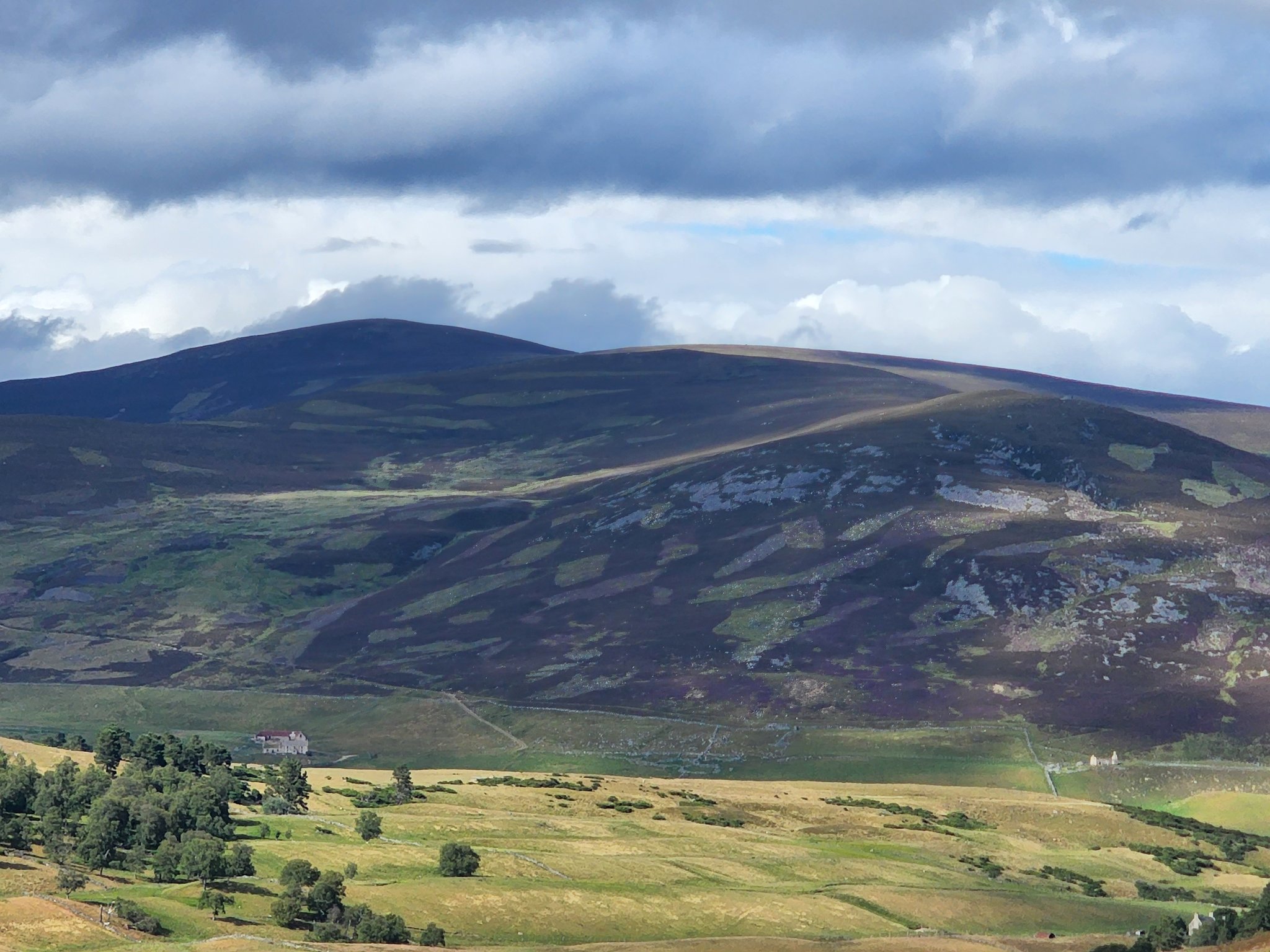
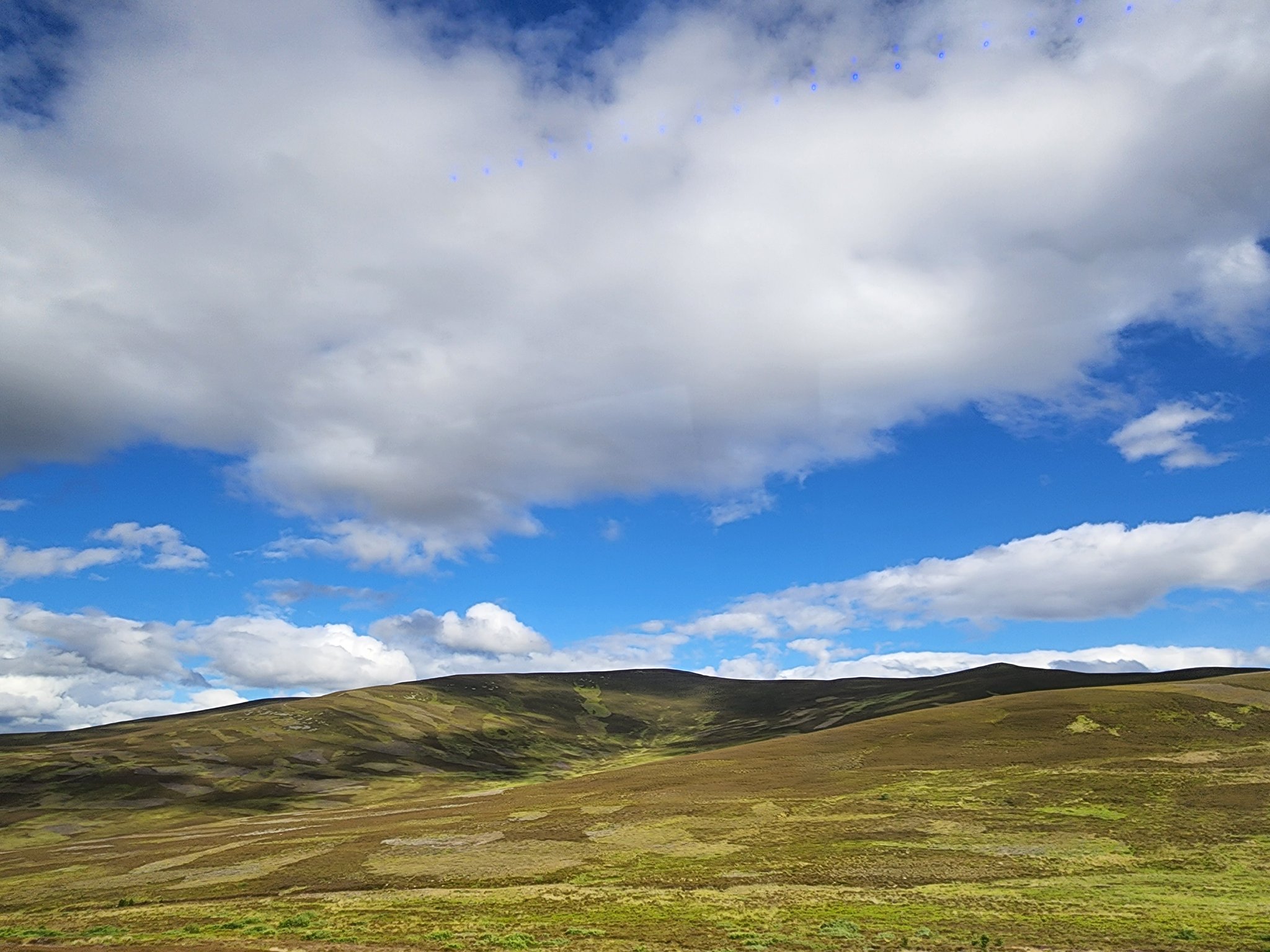
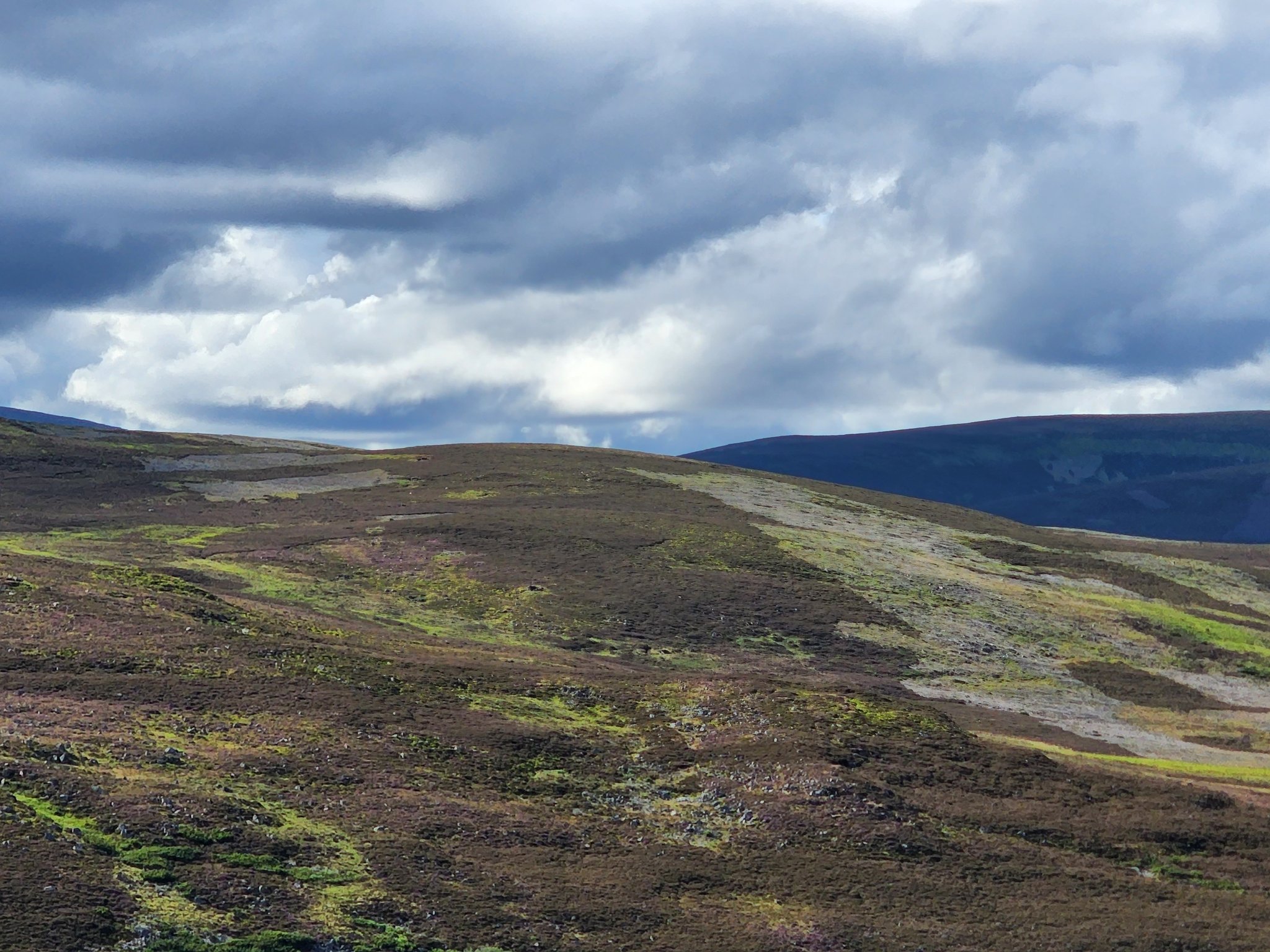
Friday was a beautiful day to drive through the Cairngorms (east Highlands), because it was ridiculously clear and windy.  Unlike the other visits I made to the Highlands to the west, full of mistiness and magic, the Cairngorms sat proudly to either side of us with nary a cloud rimming the top of the mountains to ruin the view.  (Don’t get me wrong, there were clouds, just not clinging to the mountain tops.)  The sun brought out the green of the Cairngorms and enlivened the purple of the newly-emerging heather, and the sheep we saw were like little clouds in the grass.  And everywhere we looked was a photo opportunity, so it was nice of Stuart to stop the bus for a little while so we could get some pictures.

Lindores’ aqua vitae, and 1494.

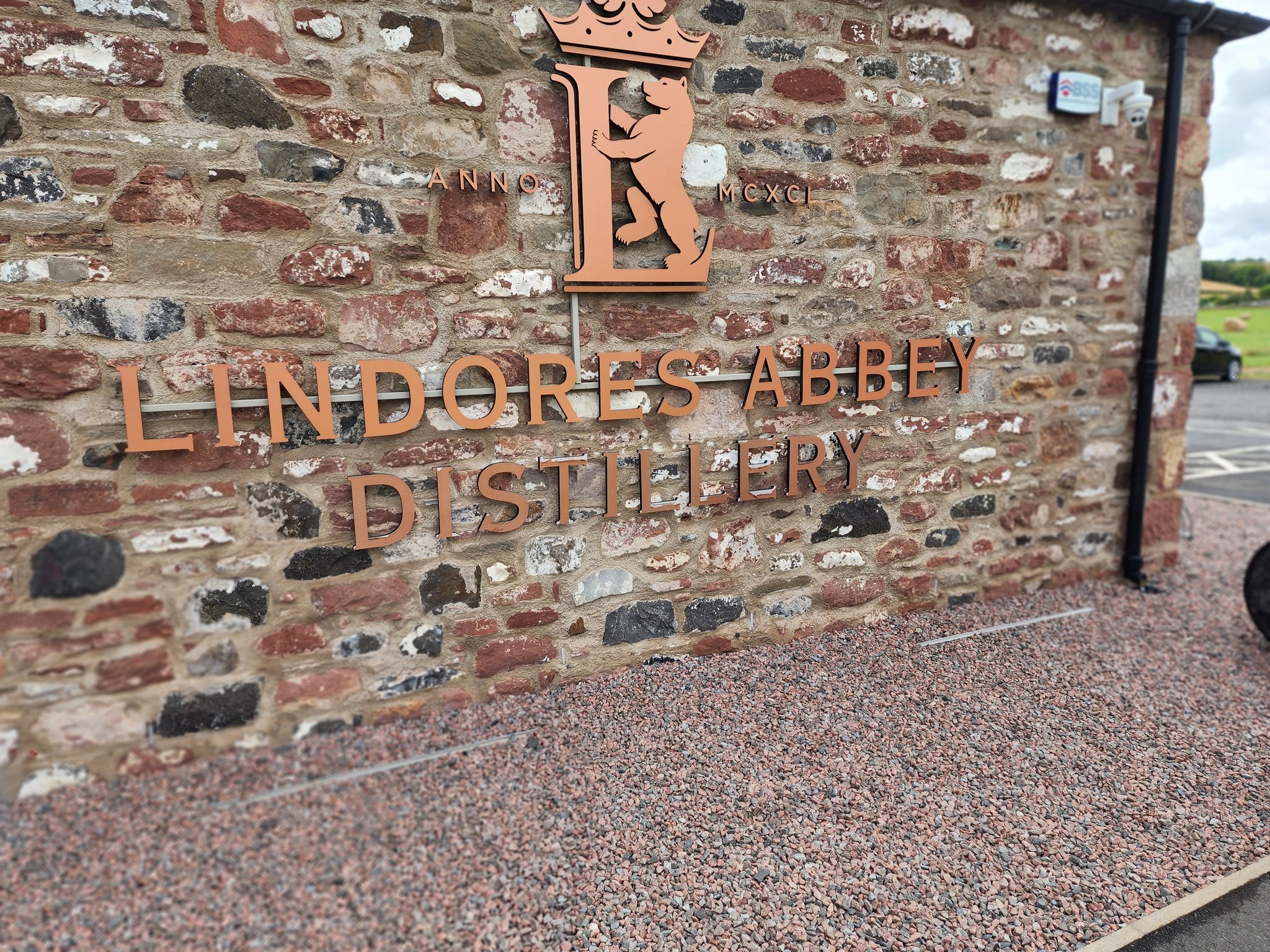
Our first whisky stop was the Lindores Abbey Distillery (lowland single malt), which had been around since the medieval times, though there was a 500-year gap between when the place was a thriving abbey making “aqua vitae” and whisky for kings and now.  It recently (say, the last 10 or so years) reopened, and our guide at the distillery took us through the process of making whisky in great detail.  By the end of the day, we understood the three ingredients of whisky (barley, water, and yeast), how whisky is collected in a curly copper still, how it is separated into the head, heart, and tail (different alcohol contents, with the heart being the perfect percentage, and the head and tail having to go back and be reprocessed), how it is stored in oak bourbon or sherry casks, and how long it has to age before it can be called whisky (three years and a day).  After our walk through the distillery, we tried some aqua vitae liqueur, which was a drink with many herbs and spicy flavors, although the main flavor I tasted was rosemary and juniper (though rosemary wasn’t in the mix, according to our guide; I didn’t care for it because it seemed medicinal), and their 1494 brand of whisky, which I really liked because it was smooth and didn’t burn your throat.  I wanted to buy some to bring home, except I didn’t know how I’d get it on the plane.  (And I had hopes I could buy from their website, but they don’t sell it in the U.S.)

Kindrochit Castle ruins

Braemar truffles

Our next stop was in Braemar, a lovely little hamlet, for lunch.  I didn’t find much to eat, but I did stop in the Braemar Chocolate Shop and bought a six-pack of gorgeous truffle “jewels.”  I accidentally threw out the list of candies I bought, but of the ones I remember, there were a mint truffle, a lemon truffle, a passionfruit truffle, and a weird blue cheese and chocolate flavor truffle that was really quite different. (The others might have been a strawberry and mixed berry.)  I didn’t wind up eating the candy until much later in the day, so it kind of wound up being my dinner when I got to the bed-and-breakfast.  😊  Also in Braemar were the ruins of Kindrochit Castle (from around 1390), which were mostly just low walls people could climb on at this point.  And there were children running and climbing all over it.

You can bottle your own… for 150 pounds!

Our next distillery stop was Royal Lochnagar Distillery, near the River Dee, which bordered Balmoral Castle, a Scottish royal home since Albert and Queen Victoria bought it in 1852.  I didn’t get to see Balmoral Castle because it was deep in the woods, and I was a little sorry about that, but the distillery was interesting.  We learned much the same as we had learned at Lindores Abbey, but it was nice to see another version of the same process, and to see the large bell stills.  Additionally, we spent a goodly amount of time in the cask room, smelling whisky through the bung holes (that sounds dirty, doesn’t it?) so we could determine what kind of cask the whisky was ageing in.  And we also got to see a cask of Diamond Jubilee whisky, and the tour guide had us guess how much a bottle of it cost. Pam (the other woman on our tour) guessed $3,000; I guessed $10,000.  But the true answer was $100,000 per bottle, and I think there were only 60 bottles made.  The money was raised for charity, so I guess that justifies the cost.  But still…that’s a ton of money for a blended (yuck) whisky.

At our tasting, we tried four different bottles:  Royal Lochnagar 12 year, the Exclusive Bottling, the Selected Reserve, and the 17 year.  Of course, I liked the 17 year best—and it figures that I would like the most expensive bottle, doesn’t it?  It had quite a burn and it definitely put hair on your chest, but I liked it because it felt full-bodied.  It helped that I added a few drops of water, which everyone said opens up the oils and make the whisky more florid.  We were having such a good time talking about our tasting with each other that we had to be reminded to leave since the distillery was closing.

Brooklynn Guest Hosue

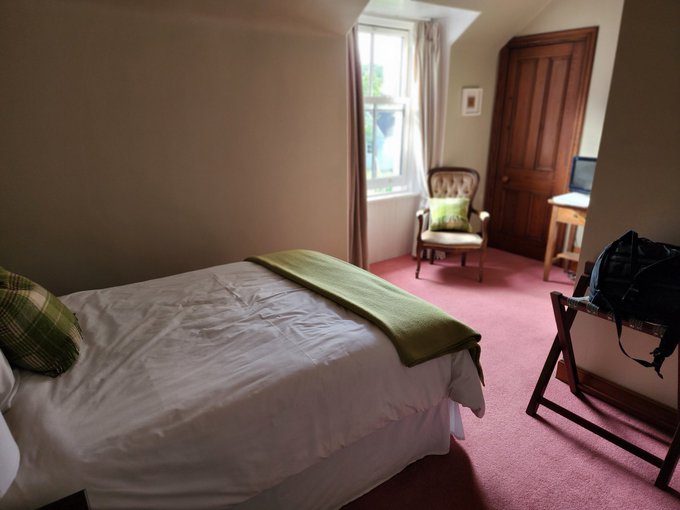
Then we drove to Grantown-on-Spey, where we were all staying for the night.  My bed-and-breakfast was the Brooklynn Guest House, although the other group members were staying at hotels.  My room offered a fancy bathroom and a comfortable double bed, a nice change from the single bed that I slept in in Inverness.  I could have gone walking into town to find some dinner, but I was tired, and after all I had my Braeburn chocolates to eat, and a Hercule Poirot novel to read (Murder on the Links).

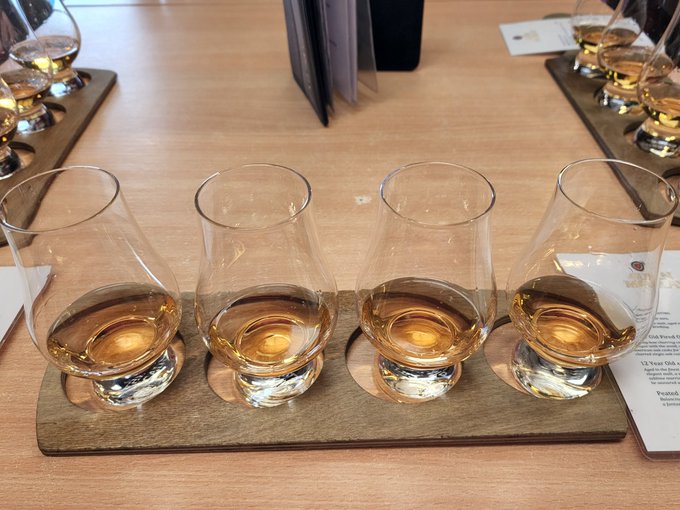
Glen Moray flight

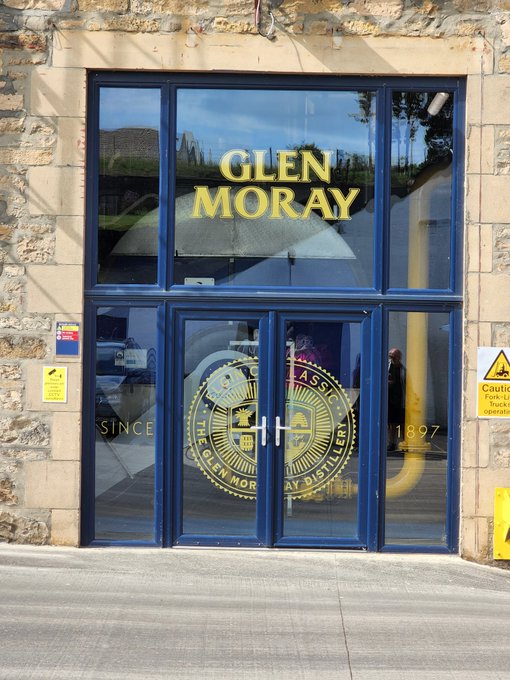
Saturday, I enjoyed a breakfast of fancy topped yogurt, full of granola and fruit, and eggs and toast and Scottish breakfast tea, and Stuart and the group picked me up for another day of touring.  This time, we just had a tasting at Glen Moray, in Elgin, with a Rabbie’s tour exclusive flight: the 10 year Fired Oak, the 12 year, and the Peated Classic.  I also bought a delicious shortbread to pair with the whisky, and the sweetness of the shortbread made the whisky taste better if you ask me.  Glen Moray is what you call a “supermarket whisky,” which means it’s good quality, but not as expensive as other brands—the kind you’d find for sale at a grocery store.  I liked the three whiskies offered, even the peated one, although I didn’t care for that as much as the 12 year, which had a bit of a honey flavor to it.  (Or that could have been the shortbread.)  I bought a couple of whisky glasses in their gift shop; they were only £3 each.  (They had some beautiful crystal whisky glasses, but they were £25 each, and I was afraid they might not make the trip home.  Also, hello, expensive!!!)
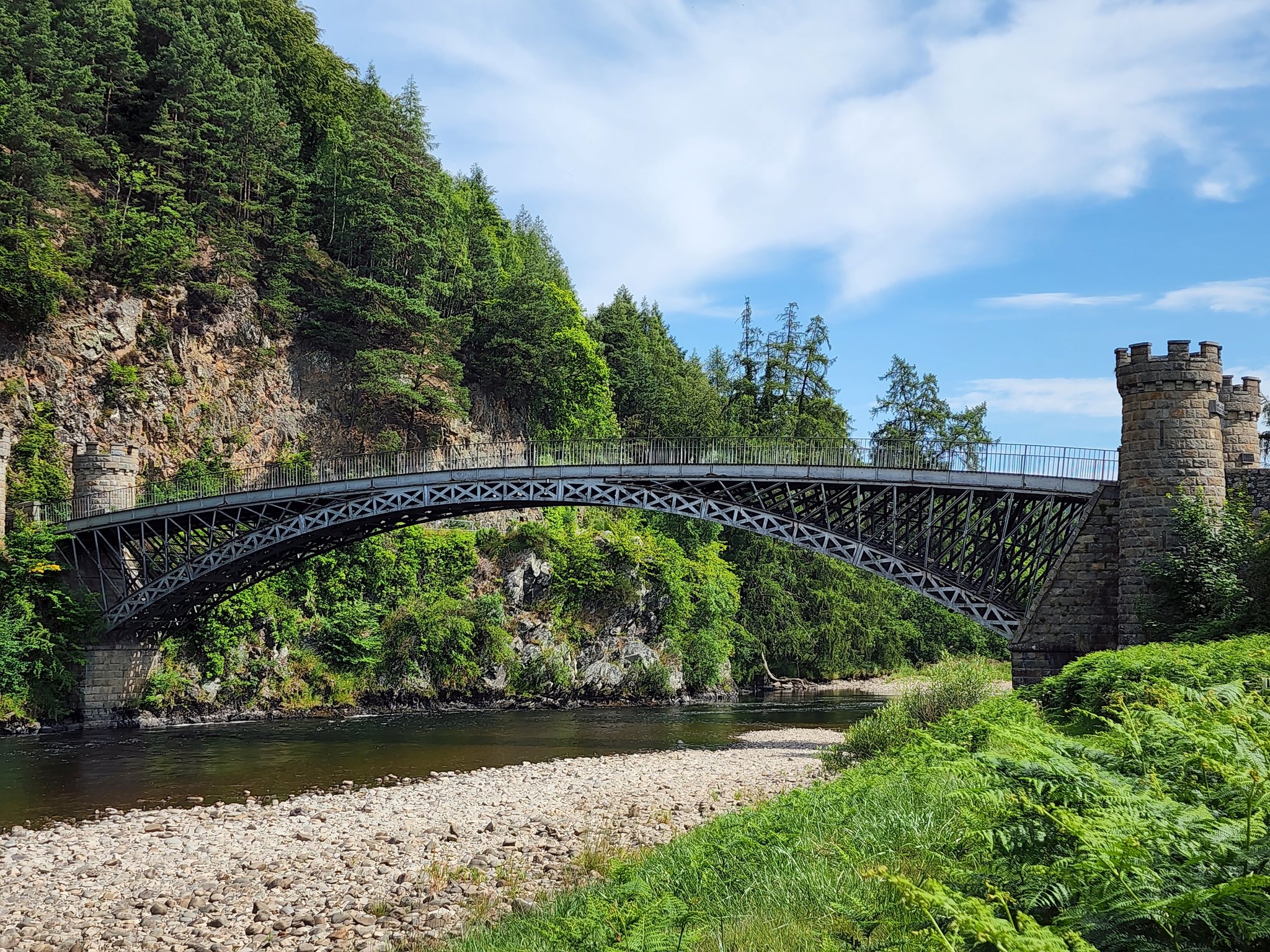
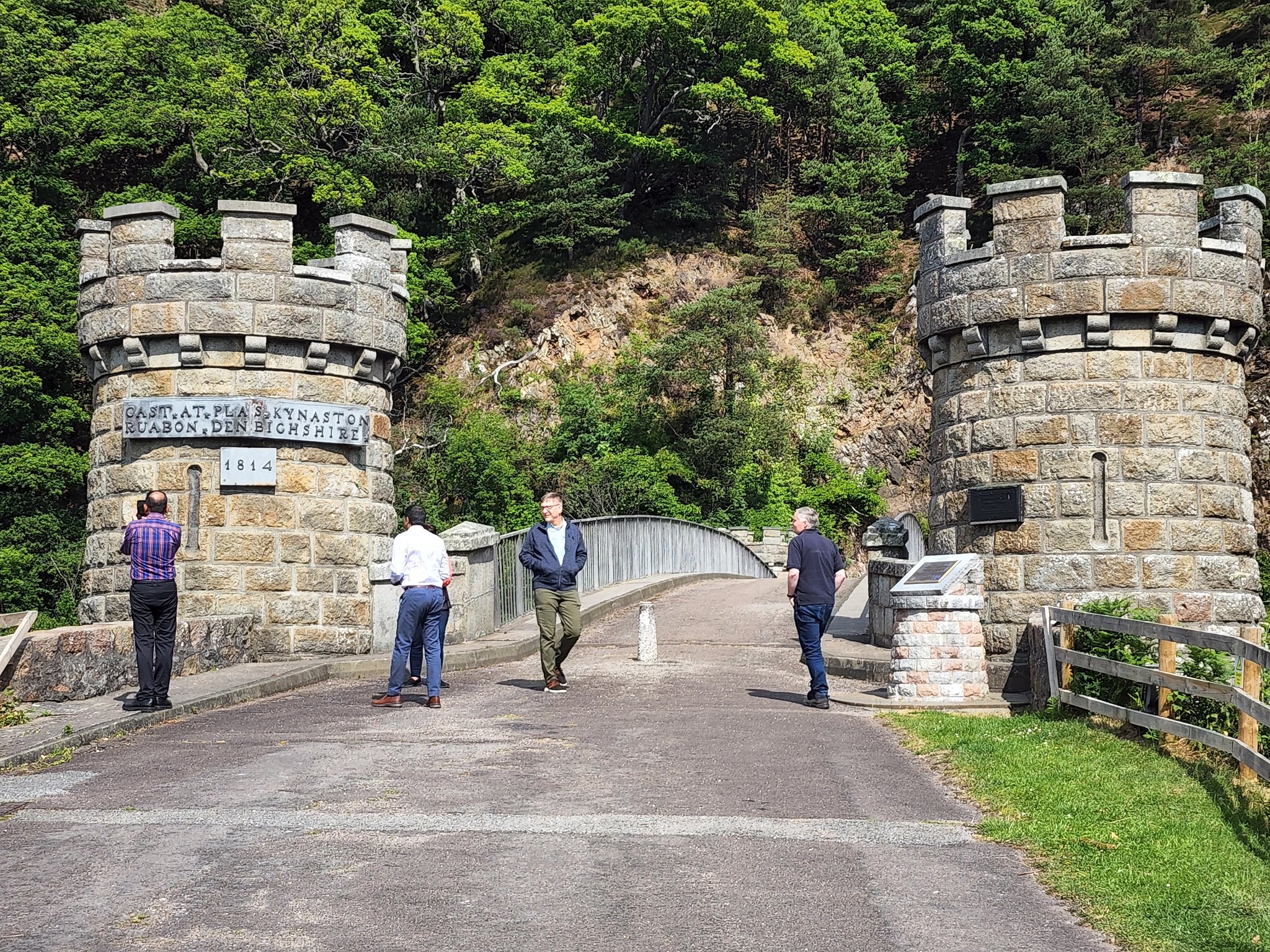
Craigellachie (Crag-uh-lacky) Bridge

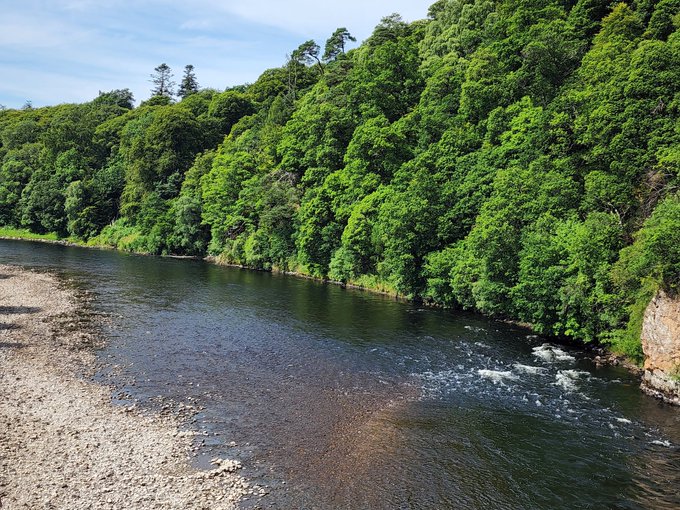
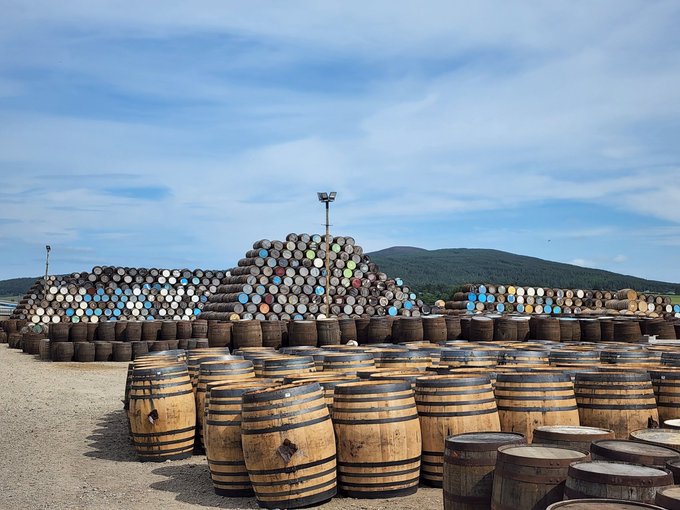
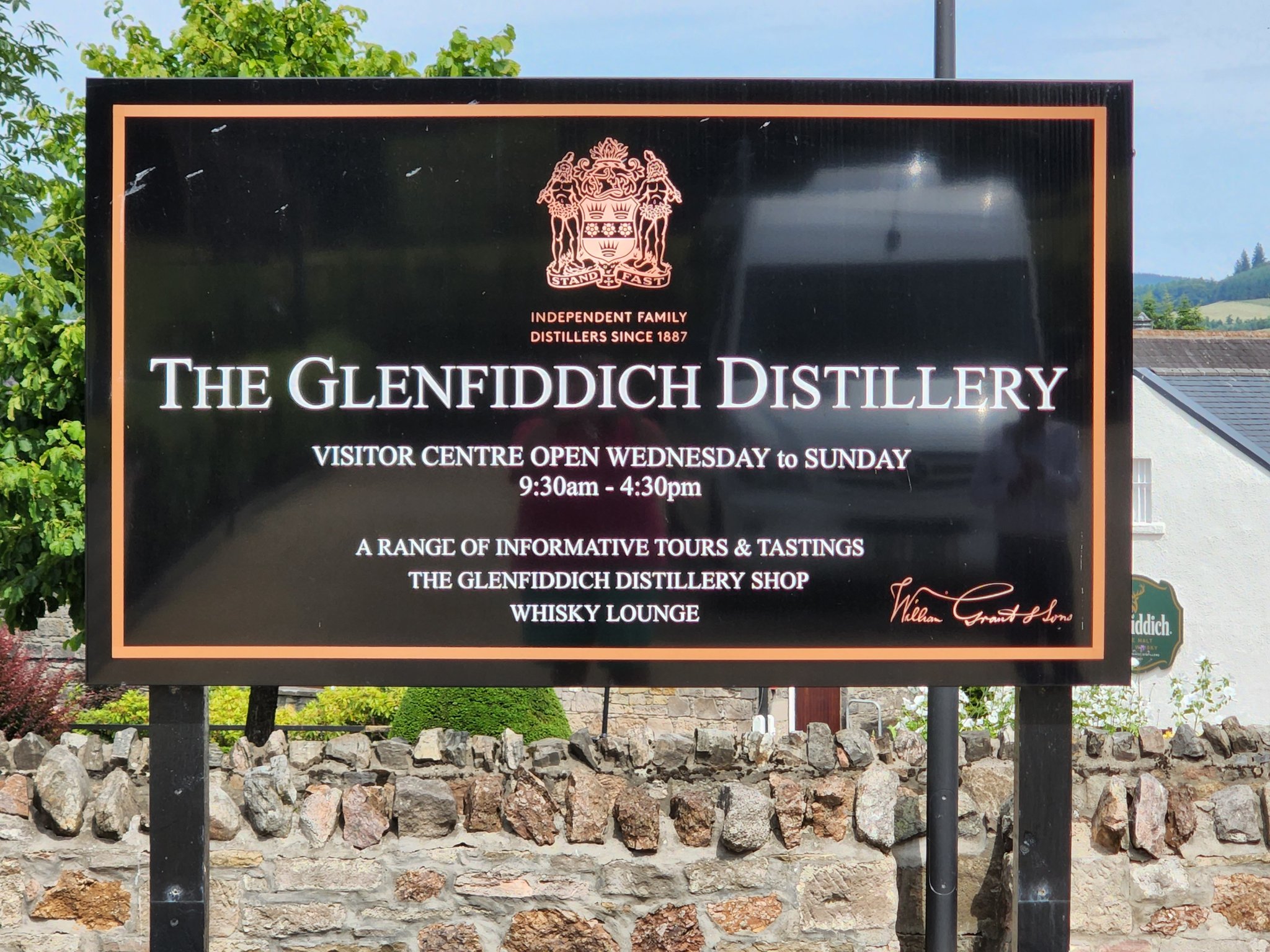
So after drinking whisky at 10 (!) a.m., Stuart drove us to Craigellachie Bridge (built in 1814 and restored in 1964), a lovely bridge that spans the River Spey.  I walked the bridge and got some photos and then joined Parag and his brother for a walk to go to the river’s edge.  They went on to get closer to the river, because Parag was all about making his TikTok videos, while I talked with Pam and her husband and found out that they live in Huntsville, AL, and she teaches nursing at the university.  (Her husband works in the defense industry.)  Then we all ambled back to the bus and drove to the Speyside Cooperage, which is where distilleries send barrels to be put together, refitted, or repaired.  The Speyside Cooperage is one of only two cooperages in Scotland, and there’s nothing but barrels as far as the eye can see.  Afterwards, we stopped at the Glenfiddich Distillery, more just to see it than anything, since it’s the biggest and most-recognized whisky brand, and then the Glen Allachie Distillery.  At neither place did we try any whisky, but it was good to stop and nose around the gift shops; the Glenfiddich gift shop was particularly high-end and fancy.  (They had shoehorns—which I actually am in need of—made of real horn… for £54 each!)

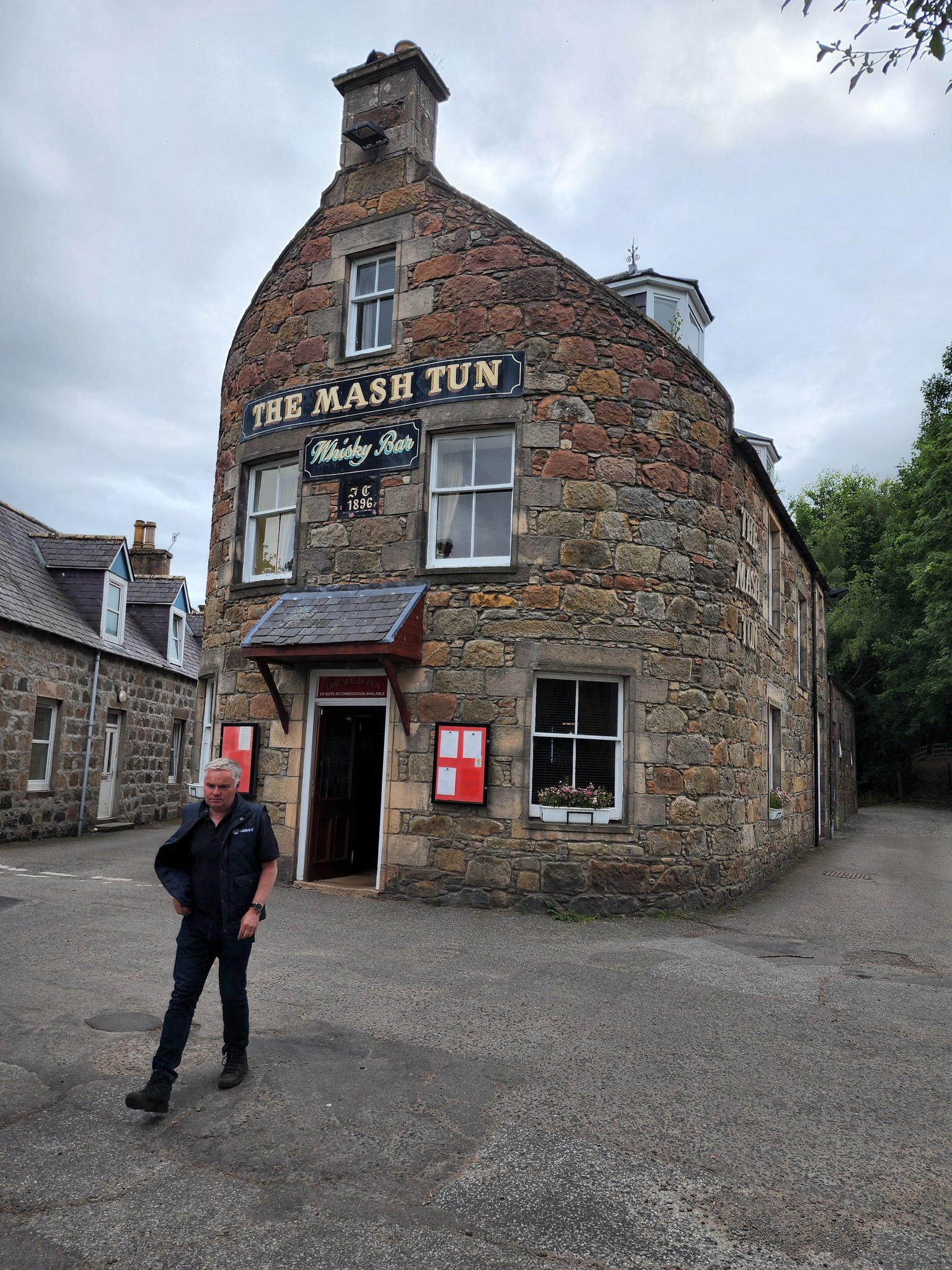
Our tour guide Stuart in front of the MT.

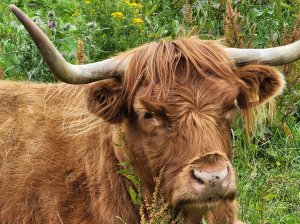
This Heilan Coo needs his bangs trimmed.

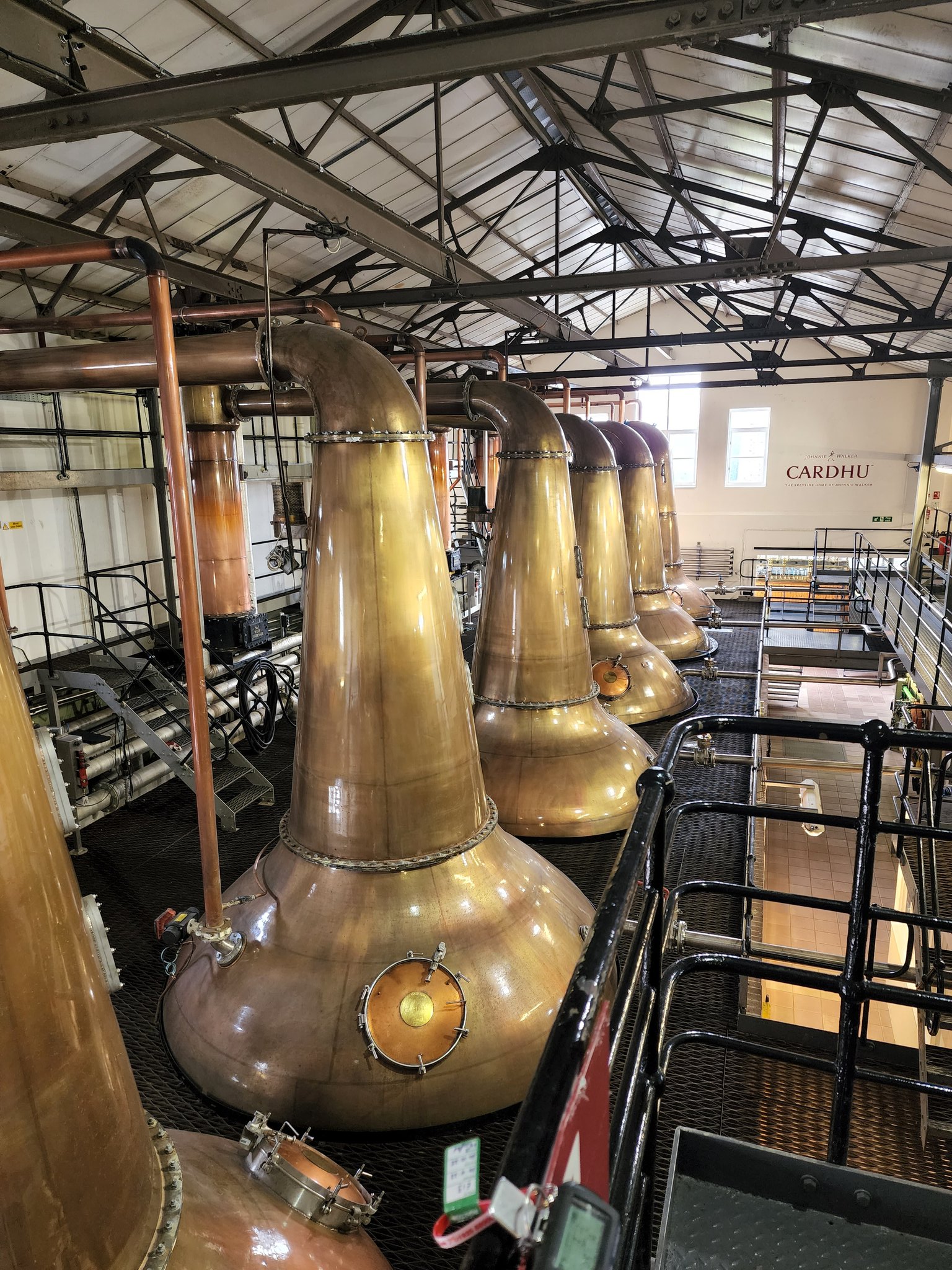
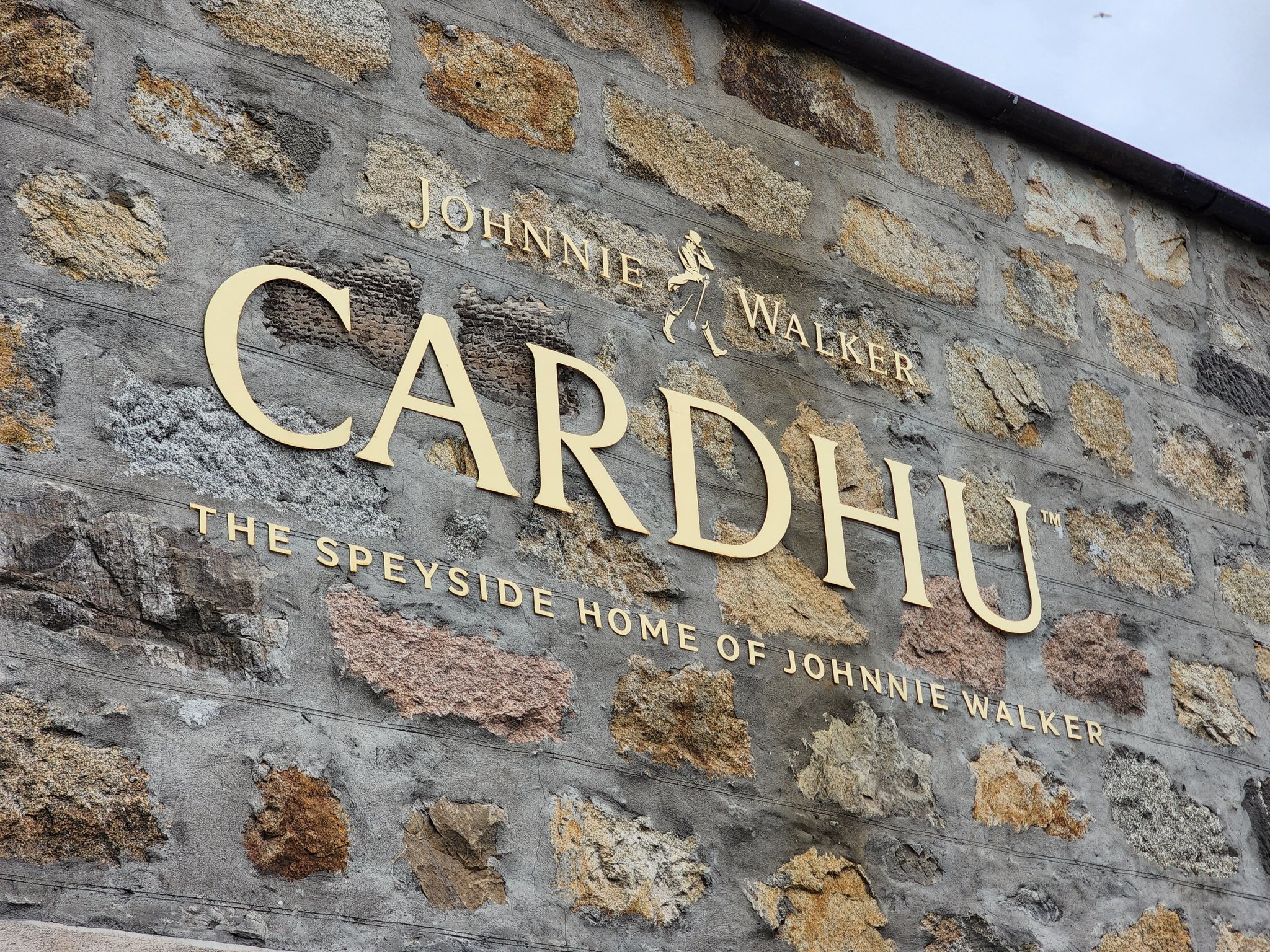
We had lunch at the Mash Tun bar and pub, and while I didn’t love my cranberry jelly and brie sandwich all that much, again it was nice to sit and dish with my fellow travelers in a “spirited” discussion. Plus I got to walk by the Spey and watch a fisherman not have much luck. After lunch, we headed to the Cardhu Distillery (“The Speyside Home of Johnny Walker”) in Archiestown, for another distillery tour, though first there was an informative video about the origins of  the distillery and the fact that it was founded by a woman, Helen Cumming, in 1824.  This time they were cooking so it was crazy hot in the distillation room.  But our guide was very nice and knowledgeable, and also let us smell some bung holes to determine what kind of casks

Look at that face!

The Cardhu flight choices

the whisky was being held in.  Our tasting included the Cardhu Gold Reserve, Amber Rock, and just plain Single Malt.  I thought the Cardhu whiskies were alright; I wasn’t bowled over, but the other folks seemed to like them.  I found I added a bit of water to each one, and that helped.  Cardhu whisky makes up a big part of Johnnie Walker blended whiskies, and even if I didn’t have a snobby bias against blended whiskies, I think I would not be interested in Johnnie Walker because I just didn’t love the Cardhu (even though Stuart likes it).  I do, however, love that a woman started the company (and the video does a great job of showing how influential Helen Cumming and her daughter-in-law were as they began their empire).  The other thing I liked about Cardhu were the “Hielan’ Coos” that lived in an adjacent paddock.  And you could buy oat cakes to give to them.  (I would have done this, but the flies were so bad out by the cows that I didn’t want to stay nearby after I took pictures.)

Sunday morning after breakfast, I opened the door to go out and wait for the bus to get me, and who should run in but a handsome black cat.  He ran into the dining room, and I was nervous that I had just let a strange cat in, but the server said that Louis belonged to the B-and-B.  I got to pet him, and would have snapped a photo except that the server shook his bag of crunchies, and Louis high-tailed it back into the kitchen to get his breakfast.  I said goodbye to the Brooklynn, and got picked up.  Our first stop was Dalwhinnie.

Dalwhinnie flight choices

While I had been here before and tried their flight of three whiskies, again, because I was with our group, I had a much better time.  The whiskies were paired with chocolates, as before, which brought a pleasant sweetness to the four drams:  the 15 year, the Winter’s Gold, the Distiller’s Edition, and the Distillery Exclusive Bottling.  I was still partial to the 15 year, but the Distillery Exclusive Bottling was also very nice (and only available for purchase at the distillery proper).  Additionally, because now I had more knowledge about whisky in general, I could appreciate them a little better then the first time I had tried them two weeks before.  The other group members were quite in love with the Winter’s Gold, but to me, that version had an unpleasant earthiness to it.  Not a peaty taste, but a heaviness that I guess might be nice in the middle of winter when you’re freezing your bezonkus off.  Still I didn’t care for it.

Edradour Distillery wasn’t open to the public.

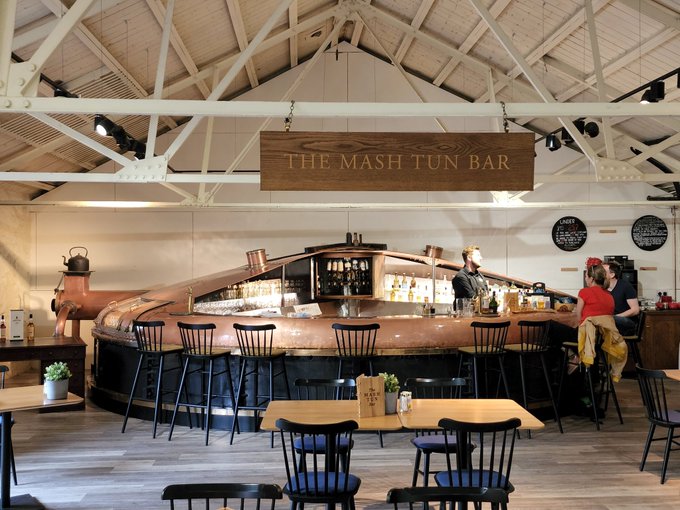
The Mash Tun bar inside Blair Athol.

We stopped in Pitlochry first to look at Edradour Distillery, “Scotland’s Little Gem,” which has been closed since Covid, but the grounds were lovely.  Then we drove back into town for lunch (the third time I had been there), and I went to McKay’s fish and chip house and drank a Lemon Fanta and enjoyed chocolate orange ice cream for dessert.  Pitlochry is apparently a bit of a retirement community; it has a busy high street with lots of tourists, but the town itself is sleepy and charming.  Before we left town, we stopped at the Blair Athol Distillery, which had a Mash Tun bar (I guess it’s a chain) inside, with the bar itself resembling a big mash container.  We all tried the “flavour flight,” which was composed of four whiskies, the Cragganmore Distillers (sweet), the Singleton 12 year (fruity), the Blair Athol 12 year (spicy), and the Caol Ila 12 (smokey).  I liked the Blair Athol the best, but the others were fine… maybe not the Caol Ila which was really peaty, but it wasn’t bad, just not to my taste.

The Blair Athol Distillery is overgrown with ivy

Blair Athol Distillery was our last stop before coming back to Edinburgh.  The ride home was pretty quiet—all of us whiskied out for sure—and I mostly chose to reflect on what a good time I had, even though I wasn’t expecting anything in particular.  Not being a practiced whisky drinker, with a special developed palate, I just tried everything with an open mind, learning what I could.  I can definitely see now how people collect whiskies—Stuart told us about his collection, for instance—because they are like wine in that each one is different and even among the same distillers, the whiskies are different depending on how long they’ve aged, and in what.  But unlike wine, you can open a whisky, and it won’t go bad in a few days—you can just have it until it’s gone. I asked Stuart how he decides which dram to drink on any given day, and he said it absolutely has to do with his mood (and how cold or hot it is).  That makes sense; but from what he told us, he has a number of bottles (maybe 30-50, I can’t quite recall), so that’s quite an arsenal to choose from.  I’m still wondering how he decides what to pick when he has all those choices.

As for myself, I will start my collection small, because I don’t imagine that I’ll be drinking too many drams any time soon:  I’ve gotten Glenmorangie, Grangestone, and if Total Wine ever gets it, I’ll get a Dalwhinnie 15 year, and be happy with those.  And I look forward to trying a flight of whiskies with C. and demonstrating all my new knowledge.

Of all the tours I took, this one was my favorite.  While I didn’t see as many beautiful places to take pictures of, I got something better:  the opportunity to hang with five other people all very present in the moment and all enjoying many wee drams of whisky.  It was definitely worth every penny I spent on the trip.

More pics!

The Cairngorms

The Cairngorms

The Cairngorms in panoramic view

My bedroom at the Brooklynn b-n-b

Parag, Parag’s brother whose name begins with a T, Pam’s Husband Jeff?, and Stuart in front of the Craigellachie Bridge

View of the Spey from the bridge

View from the bridge

Glenfiddich (Glen-fid-ick) Distillery

Speyside Cooperage barrels

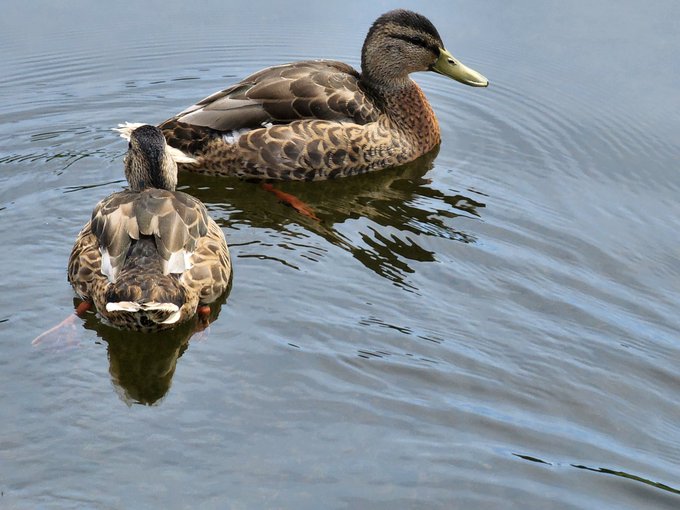
Glenfiddich ducks

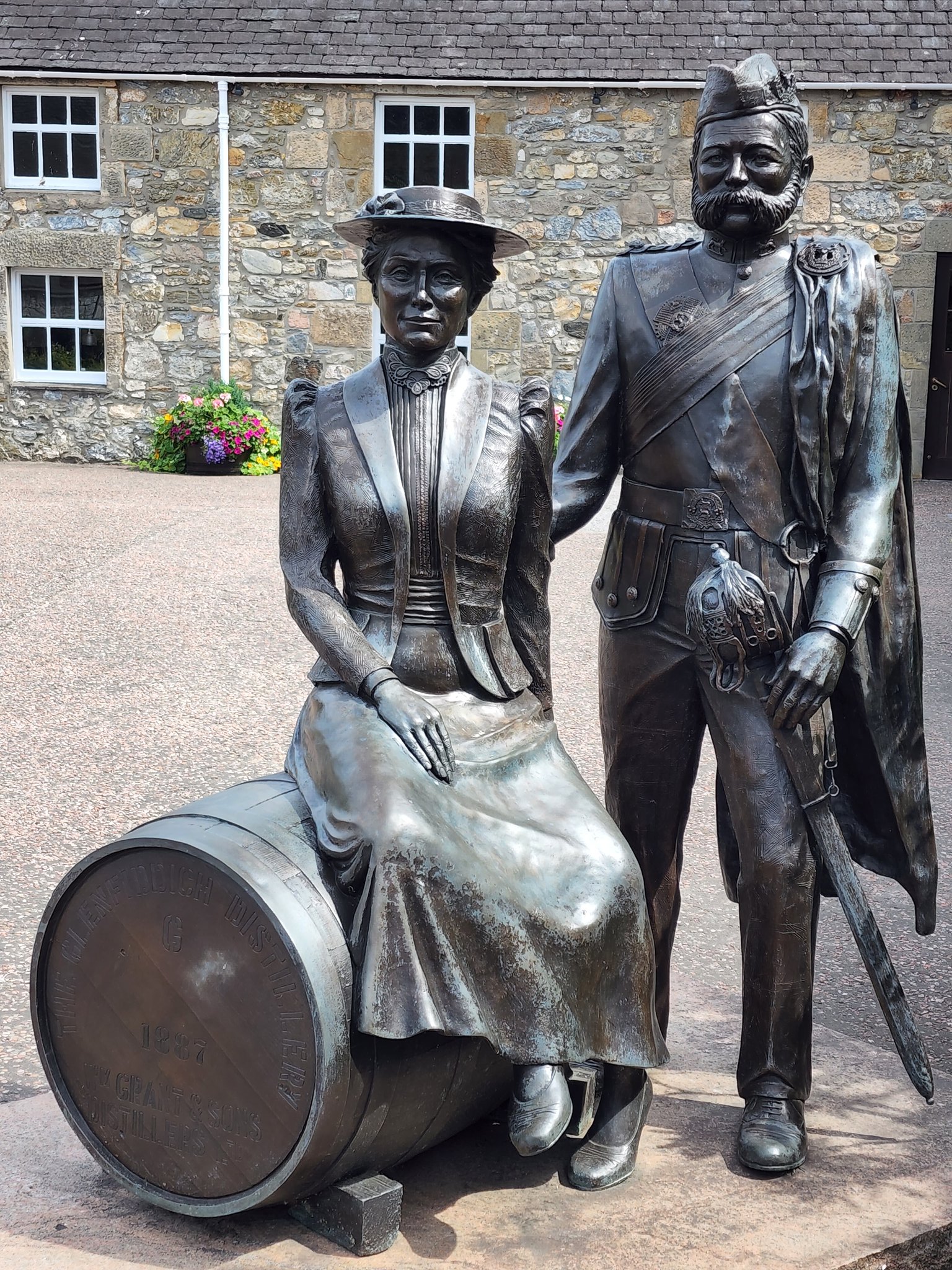
Glenfiddich’s founders

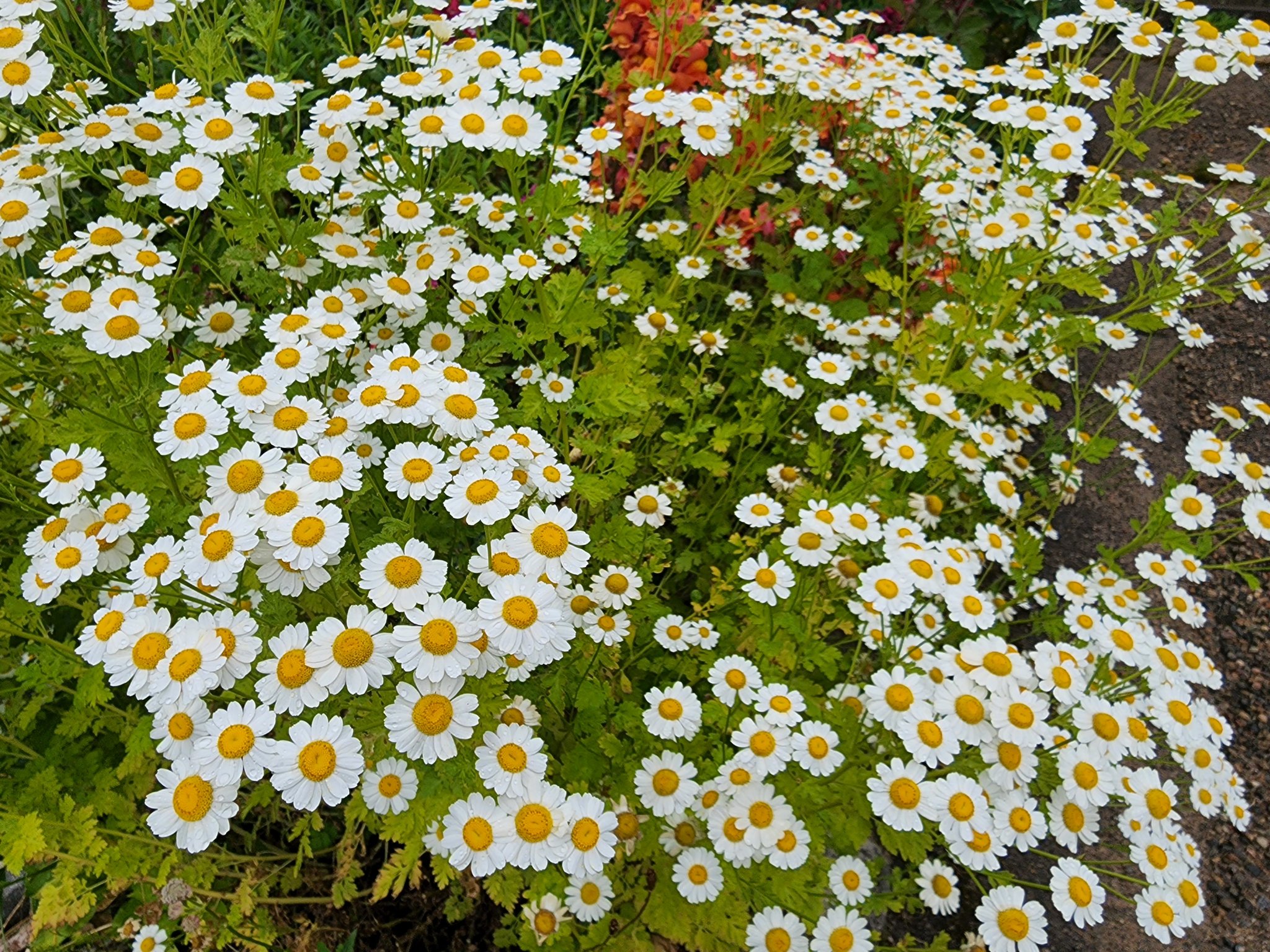
Daisies in front of the Brooklynn Guest House

Cardhu bell stills

A cemetery by the Spey

A wonderful dog on the High Street in Pitlochry

Hayfield above Pitlochry

Dalwhinnie flight paired with chocolates

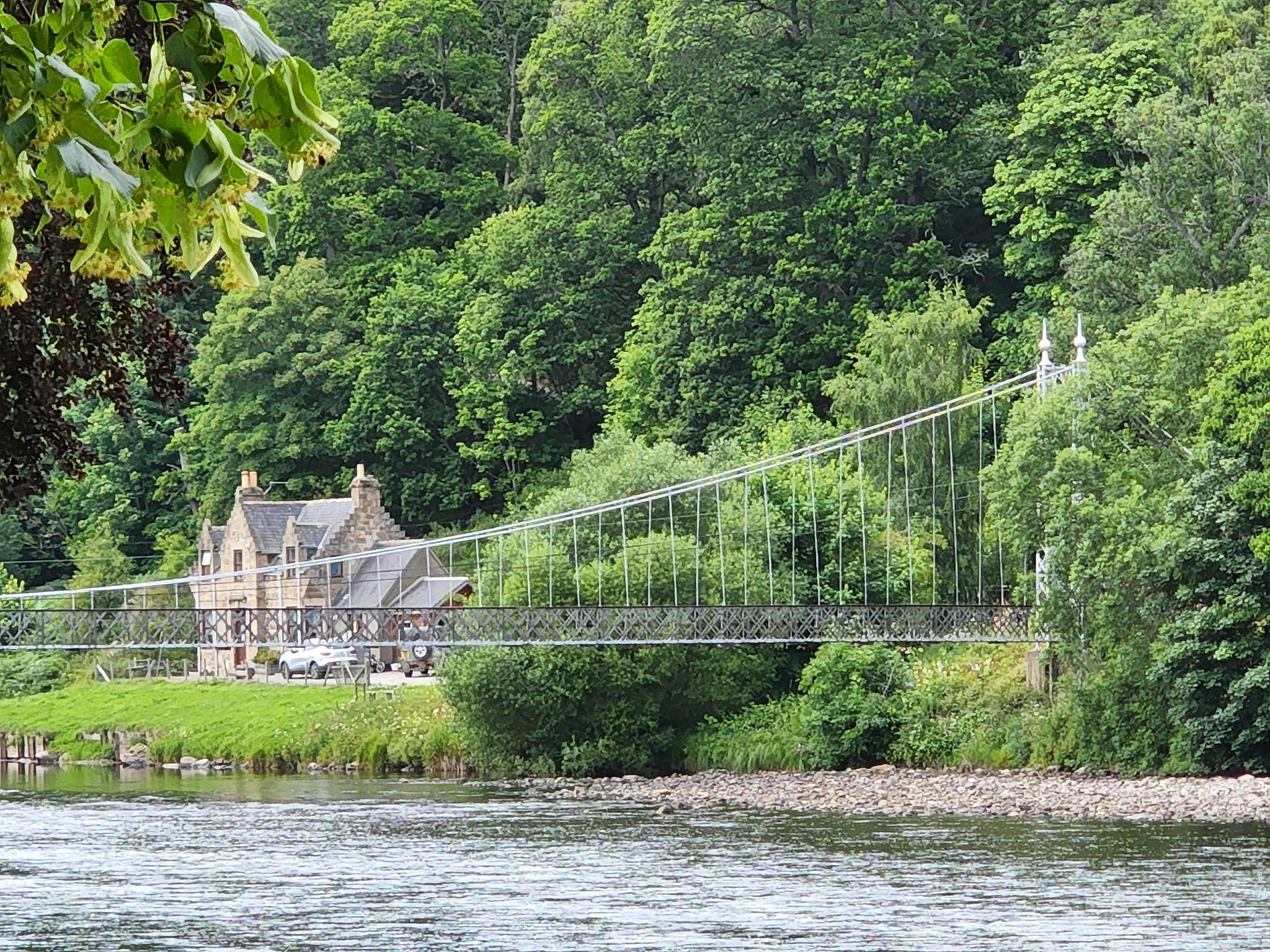
A footbridge above the Spey

An unlucky fisherman in the Spey

Entrance to Blair Athol Distillery

Cardhu wall sign

Brooklynn Guest House sign

Glen Allachie (Al-uh-kee)

The trees outside of Blair Athol Distillery were black from the barley smoking process (I think)

The Glenfiddich sign with our bus in the reflection

Glenfiddich’s family sign