Unknown's avatar

About JC Reilly

JC Reilly writes across genre and has received Pushcart and Wigleaf nominations for her work. She is the Managing Editor of the Atlanta Review, and the author of What Magick May Not Alter (Madville Publishing), La Petite Mort (Finishing Line), Daughter of the Wheel and Moon (Red Mare) and Amo e Canto (Sow's Ear, forthcoming). Read her (sometimes updated) blog jcreilly.com, follow her @aishatonu, or follow her cats on Insta: @jc.reilly.

Dispatch from Edinburgh #2–Wet and Wild

Saturday the 14th was a soggy mess.  All of Edinburgh had as many puddles as umbrellas and lots of damp, sour faces.  But not mine.  I thrive in the rain. I had lined up the Scottish Highlands Sail, Bike, or Trail Experience (all new for 2025), which would take me to see Loch Katrine, a place I have not been before. What?  A place in the Highlands I have not yet seen?  Could this be true? It was!

Surprisingly, I had the tour to myself.  There were two other folks registered, but they canceled—probably because of the weather.  That suited me just fine, because it gave me the chance to pick any seat on the bus I wanted, window or aisle.  Also it was nice not to have to wait on stragglers who come to the bus late from outings.  And also, I think it spoiled me a little, which was nice.

The Forth Rail Bridge in the rain

The tour began with a close-up of the red Forth Bridge that I had only seen from a distance before.  The misty, dreich weather only enhanced its beauty, making it easy to imagine that I’d gone back in time and was seeing the bridge for the first time. There used to be a ferry from this point in South Queensferry over to Fife, to allow the pilgrims in St. Margaret’s time to travel (early 11th century; in fact, St. Margaret was the one who made the ferry free).  But now there’s only this rail bridge, an icon of the late 19th century, considered one of Scotland’s greatest man-made wonders.  Of course there are other bridges nearby, the 1964 bridge and the 2017 suspension bridge, but it’s the 1890 Forth bridge that has the allure and history, and is a World Heritage site.

The beauty of having a tour to oneself is that the tour guide can dispense with some of the cheesy patter and really only tell you things you want to know.  I think it helped that I mentioned I’ve been on about a dozen Rabbie’s tours over the years and could practically tell all the Scottish jokes and history right along with the tour guide.  He appreciated this comment, because he told me more tailored stories and we could talk about the sights with more depth.  For instance, we talked about the making of the Kelpies and why they were situated on the little river where they stay (because that area was known for its iron works), and they were based on the Clydesdale horses that pulled the wagons that held the iron. He told me about the legend of the Kelpies too, but I already knew it.  (In case you don’t know the Kelpies legend, they were demon horses that came out of the sea, so beautiful that anyone on the beach would feel compelled to touch or ride the horse.  But, beware! As soon as one touched the horse, one would be stuck fast, and the horse would return to the water, dragging the hapless victim to his or her death.)
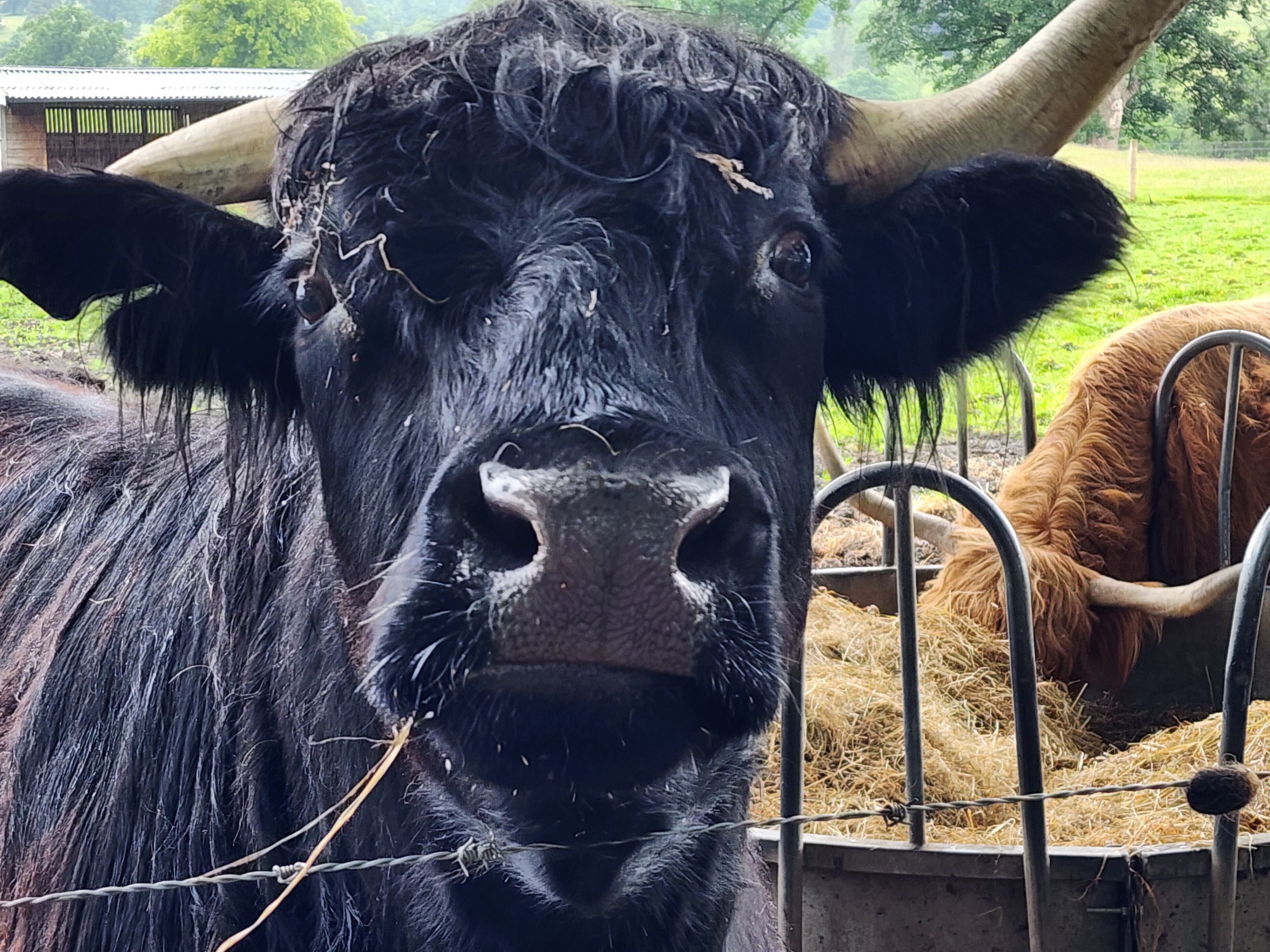
Gentle Heilan Coo!

We drove along the motor way, with yellow weather warnings periodically showing up on the signs alerting us to heavy rain (as if we couldn’t tell), but then we turned off onto two-lane roads and started our climb toward the mountains.  Because there was only me, he made a surprise extra stop at a woolen mill where some Heilan Coos waited patiently in the rain for photos and food.  For a £1 you could purchase a bag of carrots, raw potato, and other goodies for the cows, and they would take the food right from your hand with a wet sweep of their huge black tongues.  I am sure they are used to standing in the rain, bedraggled and sad-looking, but I felt a little bad for the cows.  They liked the veggies though and I was delighted to give them to the cows.
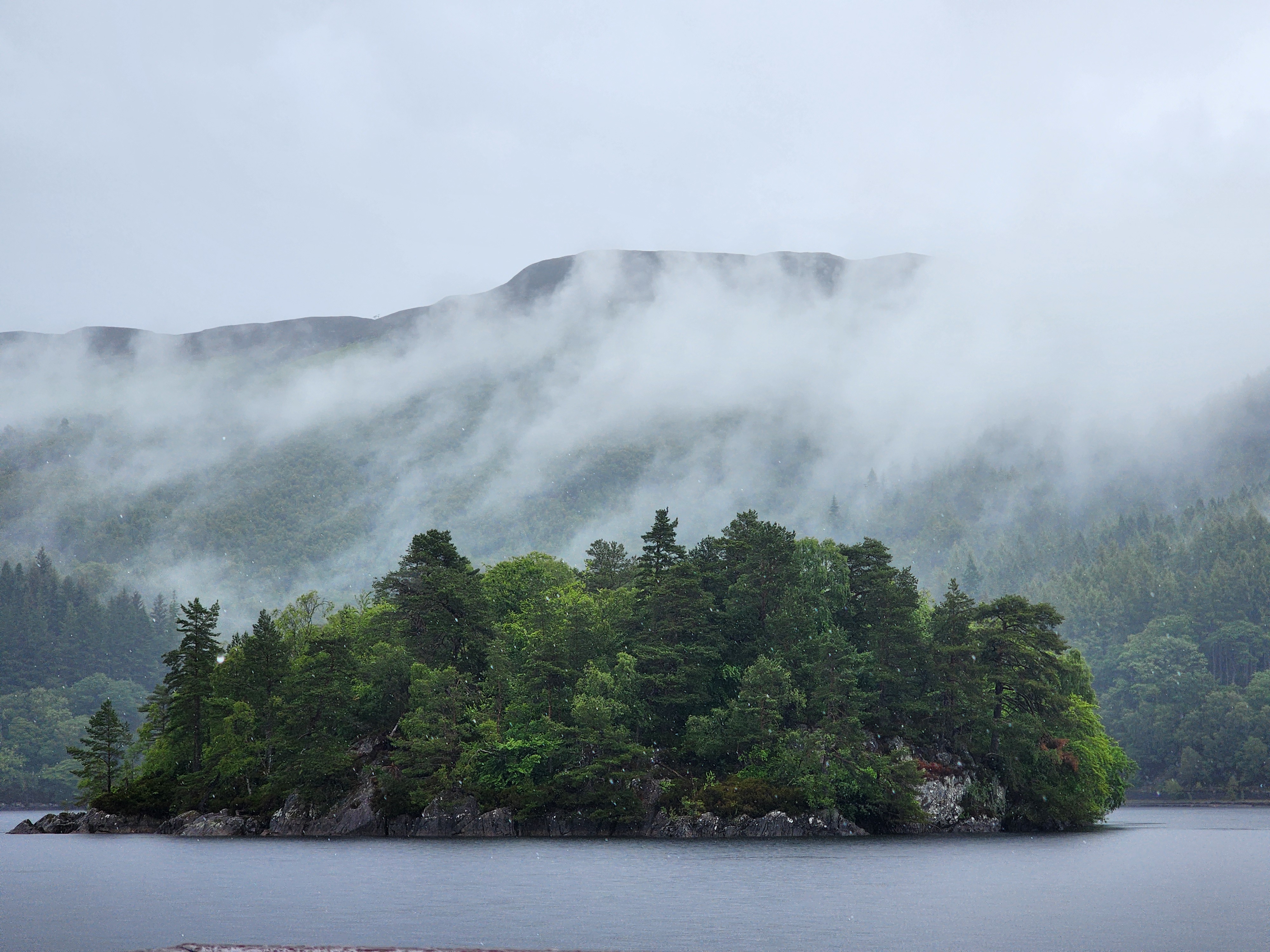
Misty Loch Katrine

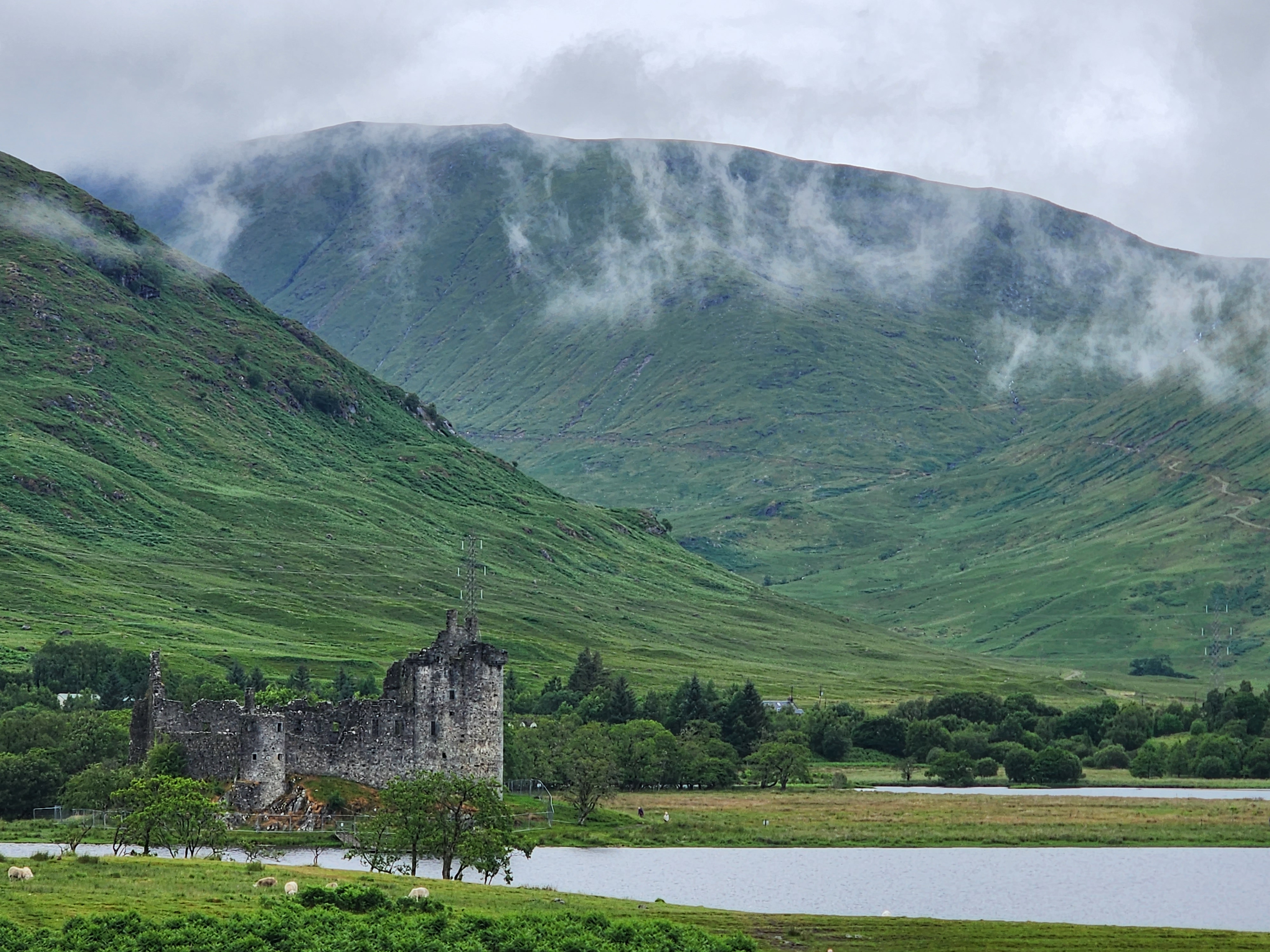
Our next stop was Loch Katrine, a huge reservoir that serves Glasgow for its water needs. The loch was deep in the Highlands somewhere, up a twisty, windy road that was so narrow the tour guide asked me not to speak to him so he could concentrate on the drive.  I was glad that I wasn’t the one driving—some of the turns were hairpin, and almost 90 degrees at points. Maybe on a day it wasn’t raining like hell, the road would be less treacherous, but it felt pretty scary and I thought he took the drive too quickly.  But we arrived more or less in one piece, though I was a bit frazzled.
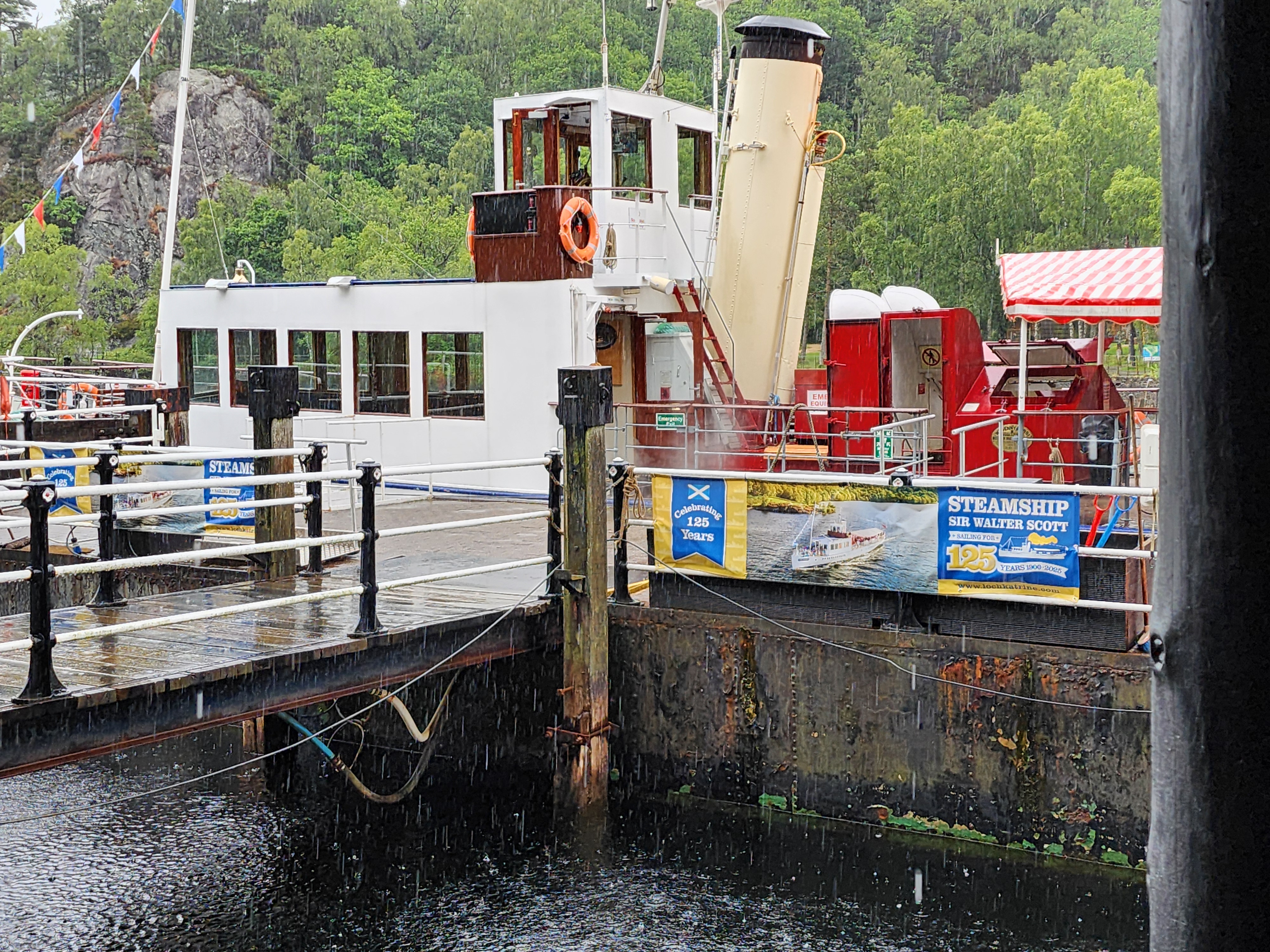
The Sir Walter Scott… if you look close you can see the rain

Had it not been raining, I might have done some walking along the trails that led away from the boat launch.  There was a walk that went past some yurts that I was interested in looking at, but I really just wanted to get out of the rain.  I got lunch in the little café—to-mah-to pepper soup and an egg salad sandwich on wheat, which was more lettuce than anything else. The boat ride wasn’t until one, so after lunch I called Mom on the area’s sketchy wifi to catch up with her. (She was fine.)  The boat ride was on the Sir Walter Scott, a steam engine boat celebrating its 125th anniversary.  There were 41 passengers for our boat ride, but I was amazed to hear that back in the day, even up to the 1950s, the ship carried up to 500 people.  I can’t imagine how 500 people could fit on the ship—we were cozy at 41.  The Captain made a joke that people are “wider” now and so it would be a lot harder to fit 500 on the deck. What he didn’t say was where the 500 people would be going.

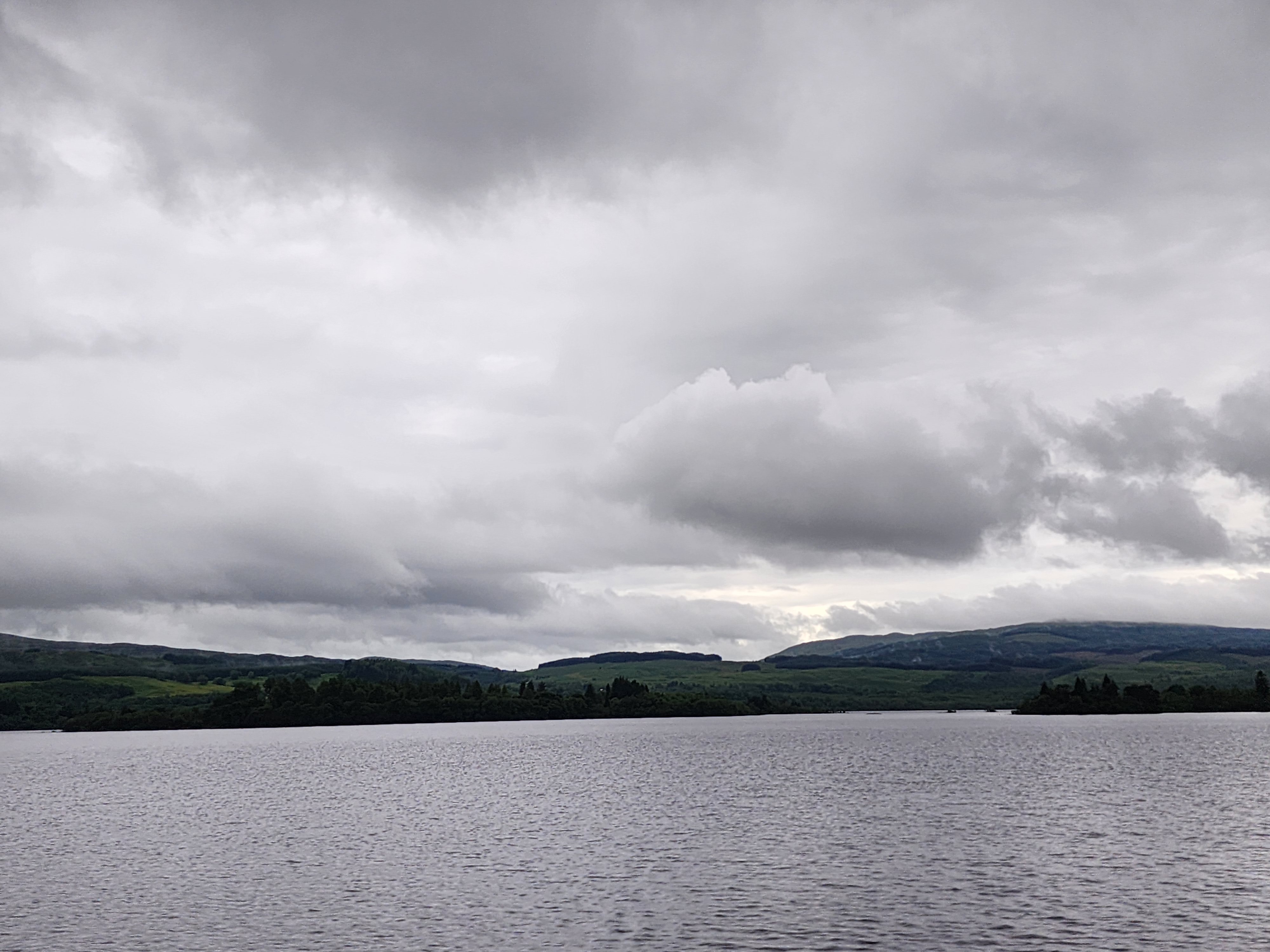
Another misty view of Loch Katrine

The rain pelted down and the deck was damp and cold but the ride itself was pleasant—the mountains were hiding in low clouds, and the loch splashed and wavered as the boat steamed its way through it. The Captain was full of cheery chat, among which included the fact that no sheep graze in the mountains surrounding the loch because diseased sheep made runoff into the loch, and poisoned the water…not so good for Glasgow.
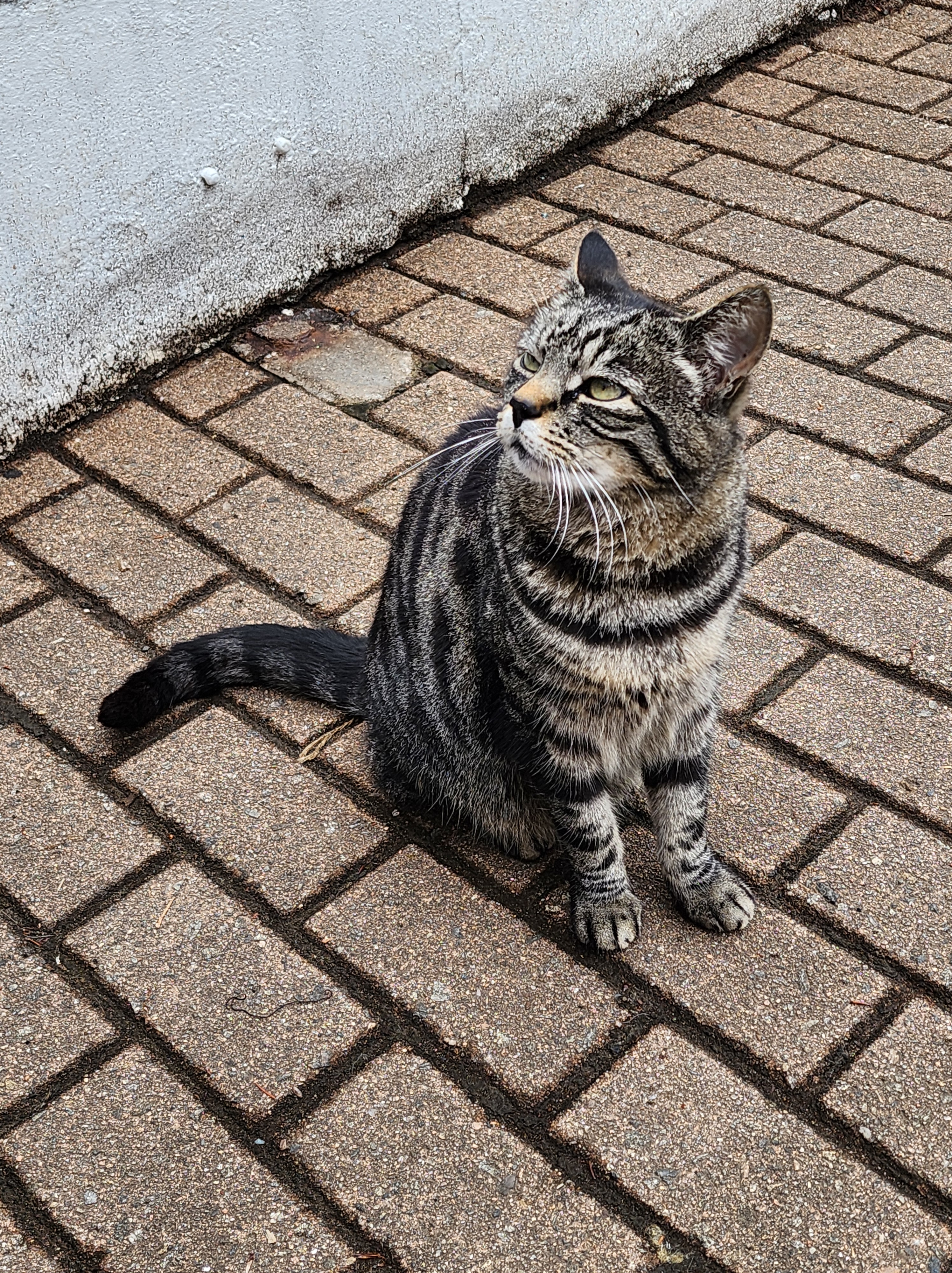
Turret the Cat

Towser the Mouser

Eventually the rain subsided somewhat as we turned around to get to the boat launch. I returned to the coach and we made our way to the last stop, Glenturret, apparently the oldest Scottish distillery, in Perthshire.  They don’t have an assured date, but they settled on 1763 based on archival research and a land deed.  Glenturret was unique because they have distillery cats, Glen (shy; I didn’t see him) and Turret (quite gregarious and affectionate).  A monument to Towser, the Guiness Book of World’s Record winning mouser, stands right as you are walking up a rise to go into the distillery.  Towser caught almost 29,000 mice in her lifetime.  Glenturret doesn’t have the mice problem it used to with the barley, so the cats are mainly decorative at this point, but I liked that they were there.

The smooth 7 Year

As for the whisky, I tried a dram of their Triple Wood whisky and their 7 year lightly peated whisky, which I liked very much, better than the Triple Wood, which I found a little harsh on the palate, even with its buttery notes.  The distillery tour guide told me that they are phasing out the peated whiskies because they were never but 10% of their business. I think part of that is the recognition that peat is a basically unrenewable resource—but sustainability aside, probably phasing out the peated whiskies mostly has to do with the fact that it doesn’t make money for Glenturret.  Another interesting thing about Glenturret is that it is half-owned by the Swiss company who also owns Lalique art glass.  I had noticed all the fancy glass bottles and the Lalique markers, and wondered.  The bottles are beautiful for sure. I would have liked to have checked out the Lalique Boutique but I didn’t have time.  Still, seeing the Lalique bottles for the special whiskies was impressive.  (So was the cost!)  Even though it wasn’t an arduous tour, I was tired by the time we came back to Edinburgh.  I think all the tramping in the rain did me in.
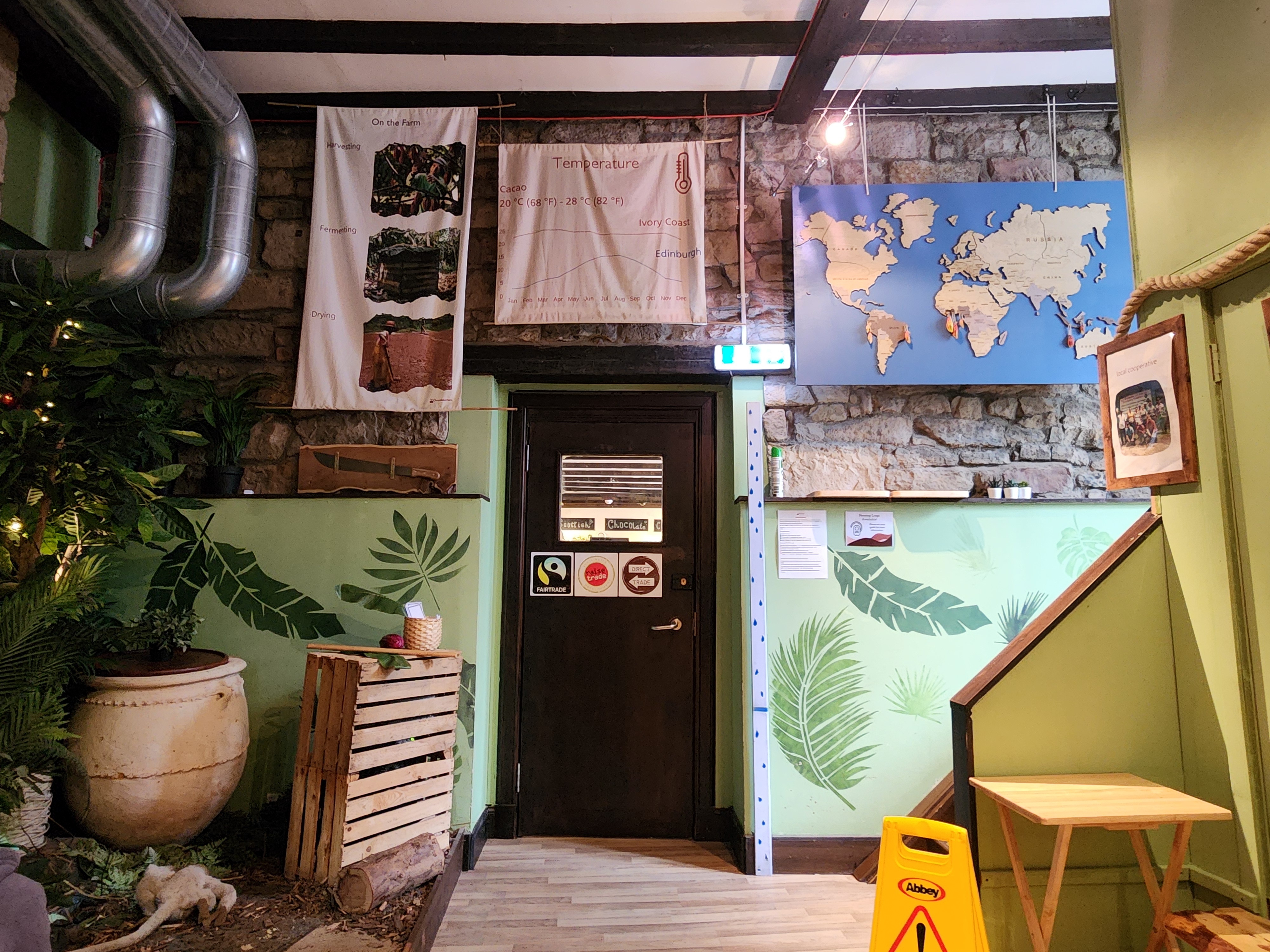
The Cacao Jungle Room at the Chocolatarium

The next day I went to the Edinburgh Chocolatarium, a little hidden hole-in-the-wall chocolate shop off the Royal Mile.  For £29, we could hear the history of cacao and chocolate making, taste several “flights” of chocolate from exotic places like Belize, San Tome, Colombia, and Ecuador, and make our own chocolate bar (mine was milk chocolate with candied ginger and candied orange rind). We drank a hot liquid chocolate made with oat milk that was so thick you could have spread it on a biscuit, as well as tried an Aztec chocolate drink that was made of cacao nibs (basically a macerated cacao bean), honey, water, and hot pepper.  It was as bad as you can imagine. Very gritty, and not very chocolatey.  And for this, they sacrificed 40 people a year to honor the gods who gave chocolate to the world—and 40 because there are an average of 40 beans inside a cacao pod, and 40 pods on a cacao tree.
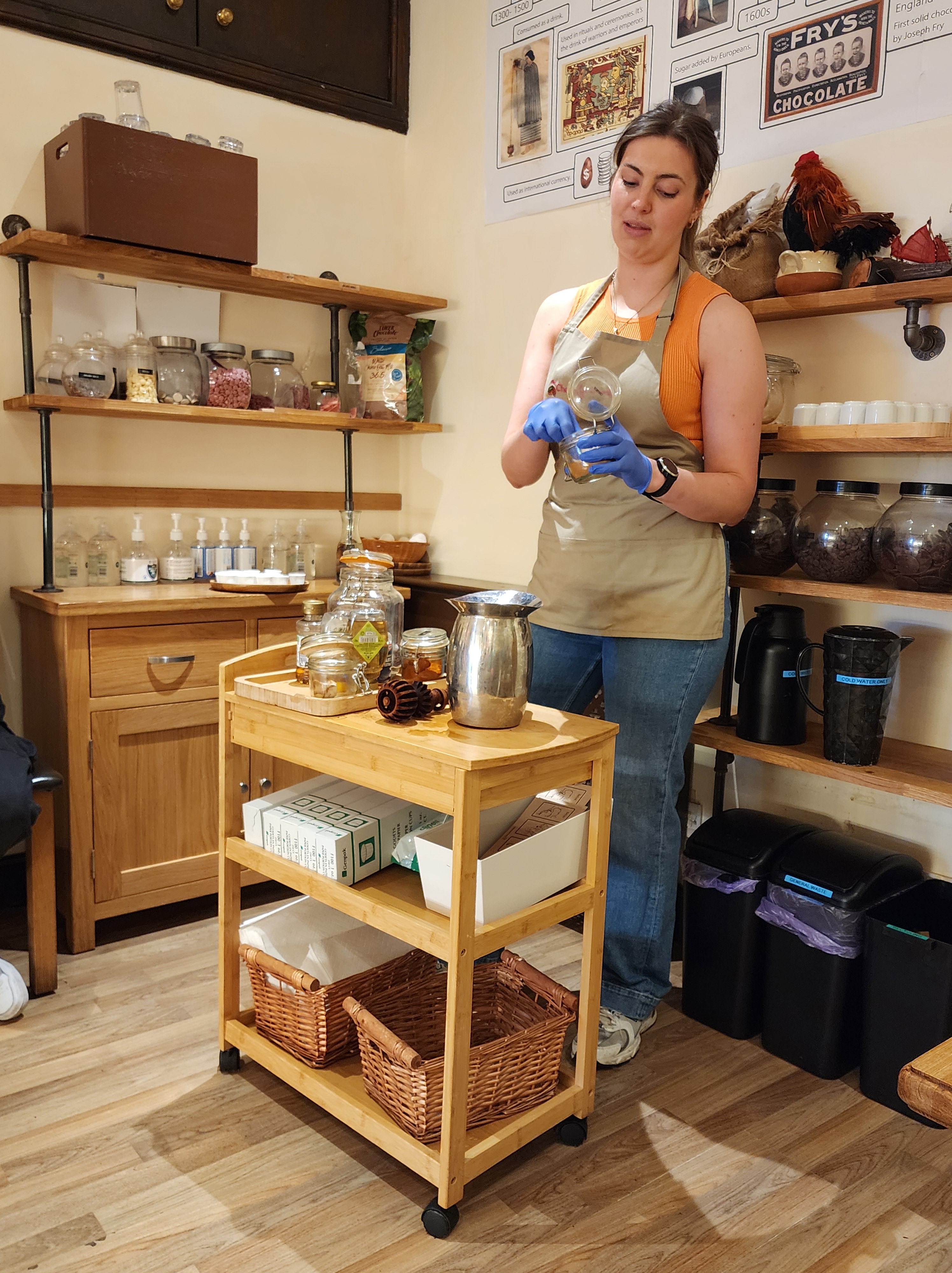
Our Chocolatarium tour guide making the heinous Aztec drink

After we drank the weird Aztec drink, we could try as many bits of chocolate as we wanted.  I had a flight of four—lemon poppyseed white chocolate, Vienna coffee chocolate, Cornish sea salt and lime, and Carrot Cake infused chocolate, and by then I was chocolated out.  A girl of maybe 11 or 12 tried over 20.  She never sat down.  (We were supposed to retrieve the chocolate from the jars, then bring four at a time to our seats.)  Not her though.  She just ate them straight out of the jars. She was a serious connoisseur—but I was surprised her mom didn’t tell her to quit grazing and settle down and let other people try some samples.  At the end, we picked up our chocolates and were led back into the store.  I would have been tempted to buy a bar of the lemon poppyseed, but the £6.50 pricetag stayed my hand.
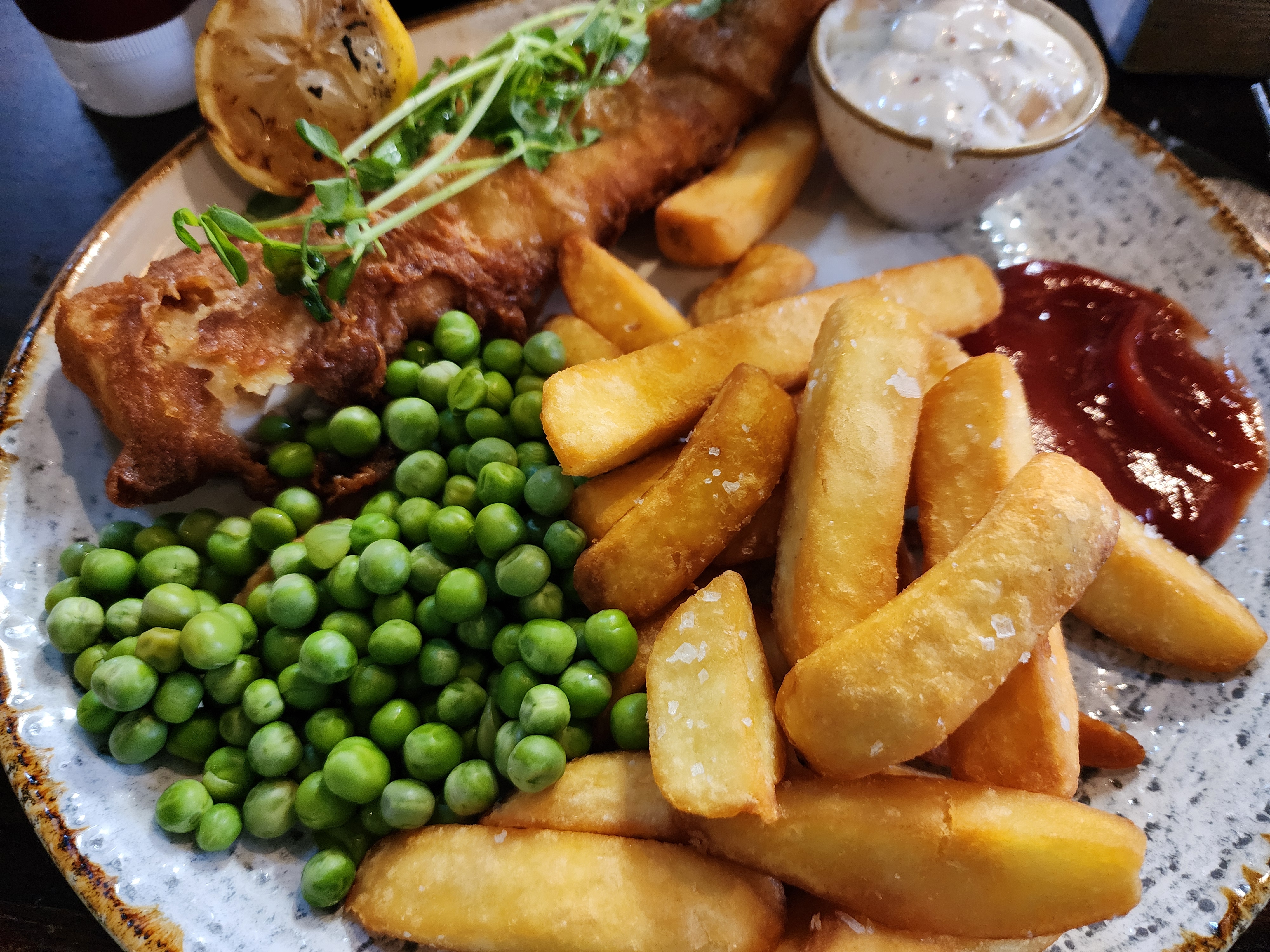
Lunch at the World’s End Pub

Then I somewhat enjoyed lunch at the World’s End Pub, which has been in business since the 1700s, when the wall to Edinburgh ended right beside the pub.  I had made a reservation reluctantly (because really, a reservation for a pub?), but I was glad I did, as they only have about 6 or 7 tables to dine at, and a steady clientele.  I tried their fish and chips, and while it looked very nice on the plate (accompanied by green peas, not at all mushy), it was surprisingly dry and tasteless.  The tartar sauce interested me because it wasn’t like tartar sauce at all—it was creamy like yogurt with something crunchy in it.  Maybe onions.  I am glad I actually went to the World’s End, since it is a tourist trap, but I wouldn’t go again.  The pursuit for Scotland’s best fish and chips continues.

At the end of the weekend I was bushed.  Still not over my cold, I rather wore myself out trying to squeeze all the goodness I could out of the days.  But it was a fun weekend.  I wish you had been there.
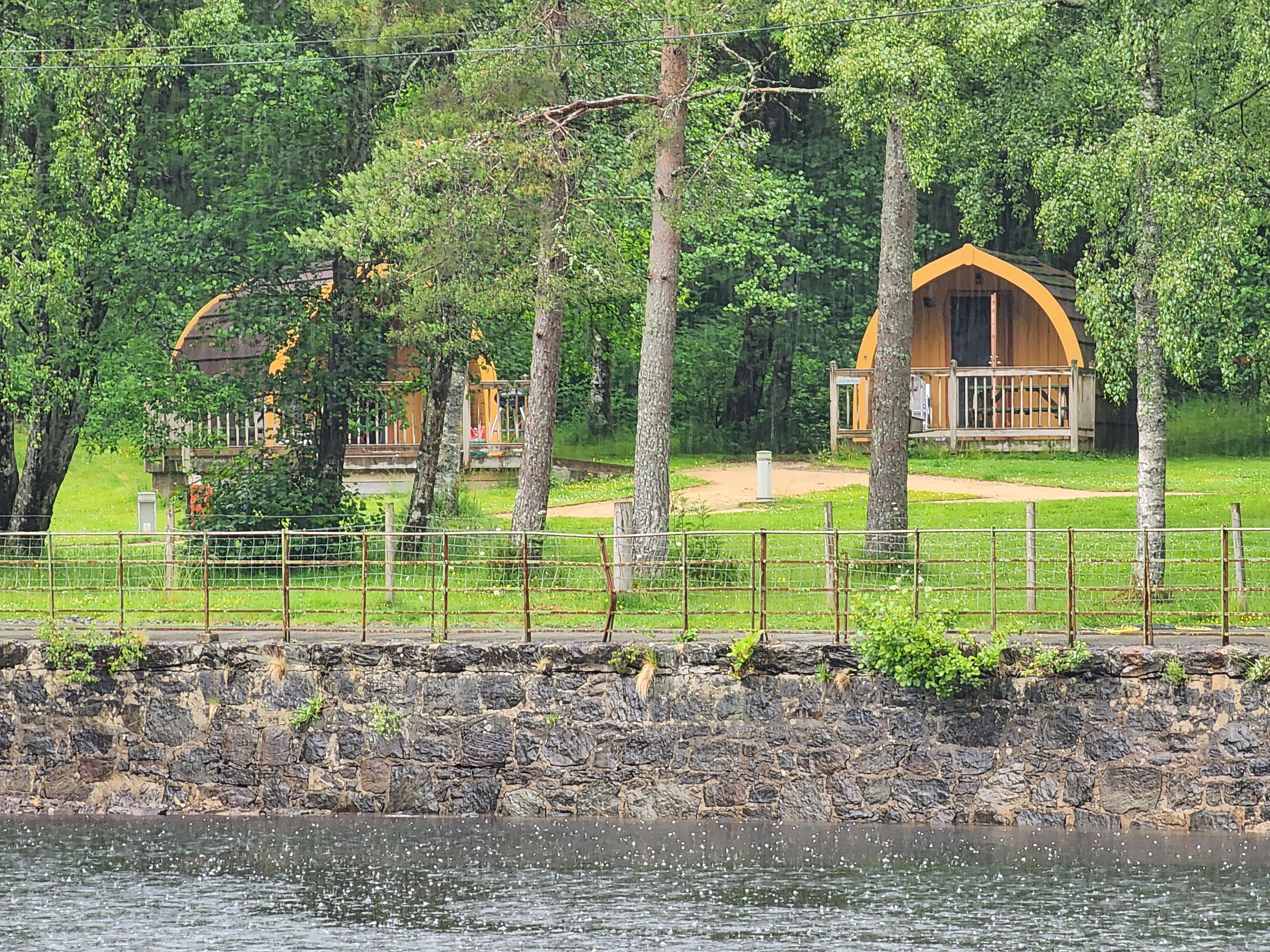
Yurts on Loch Katrine
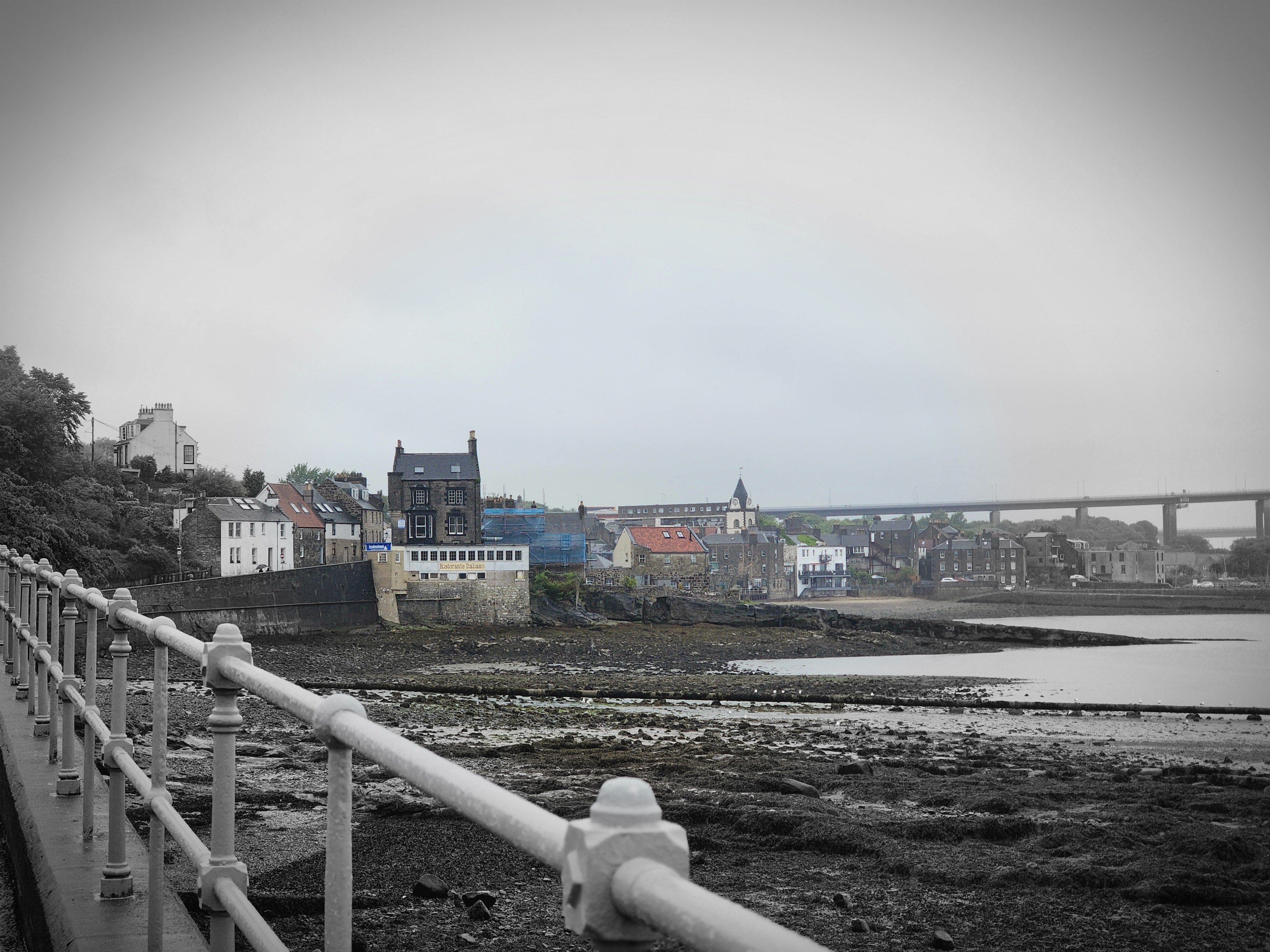
View from South Queensferry
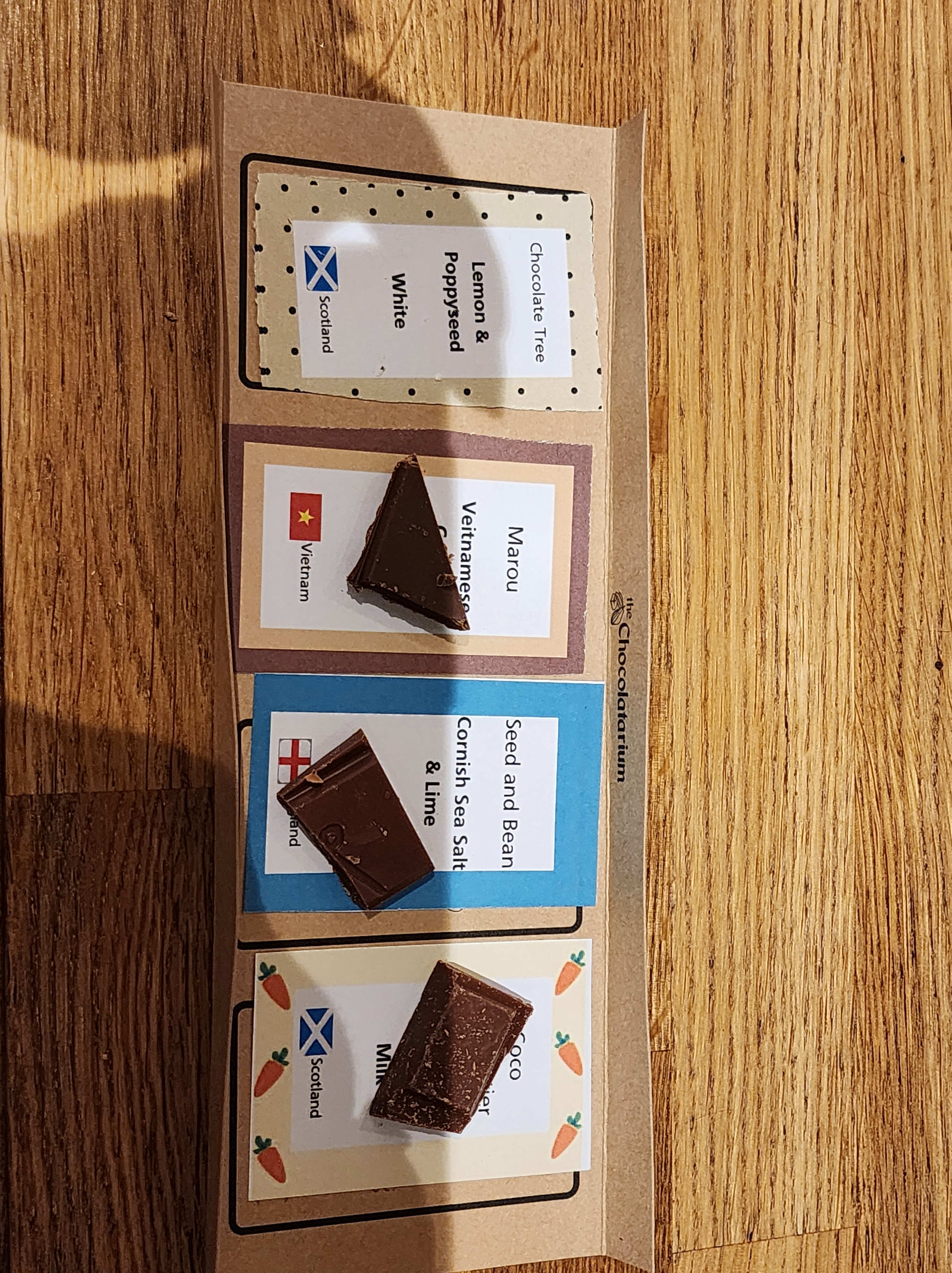
Chocolate flight

One of the toppings I thought about putting into my chocolate bar

A tube of liquid chocolate for the mold
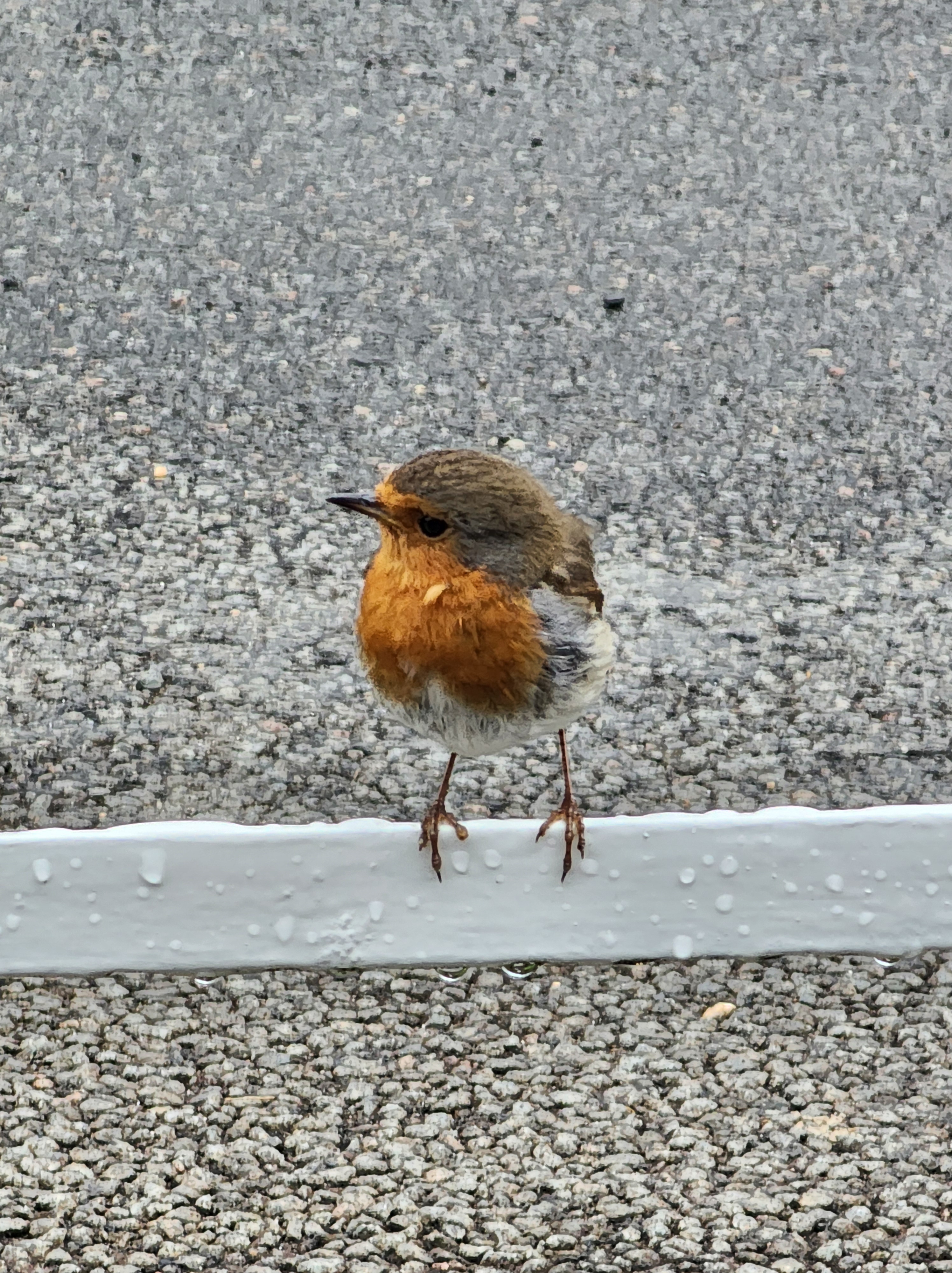
A wee sweet birdie

A view of Holyrood…do you see the plane?

Loch Katrine
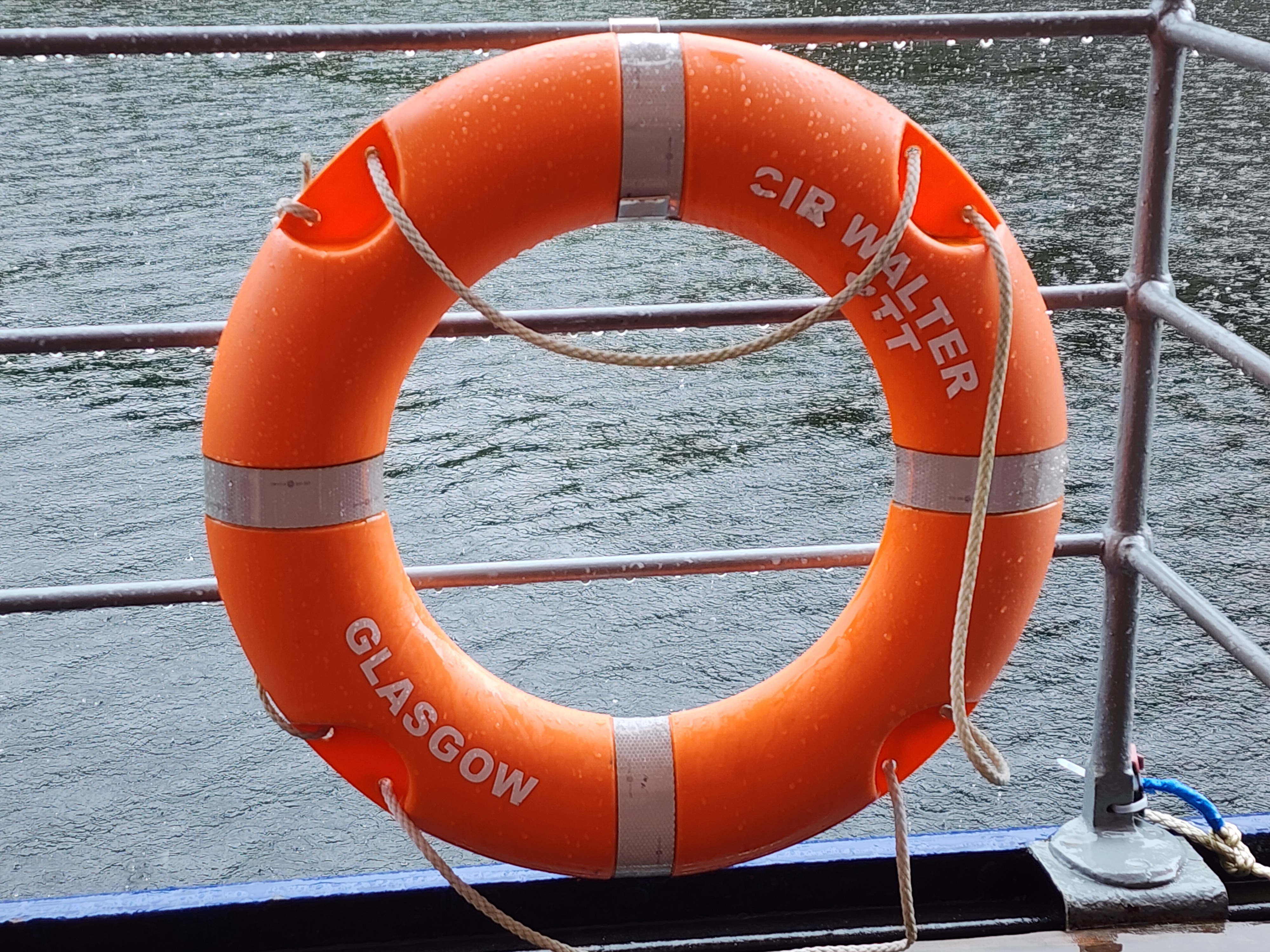
No one fell overboard, thank goodness

A pretty flower in the rain
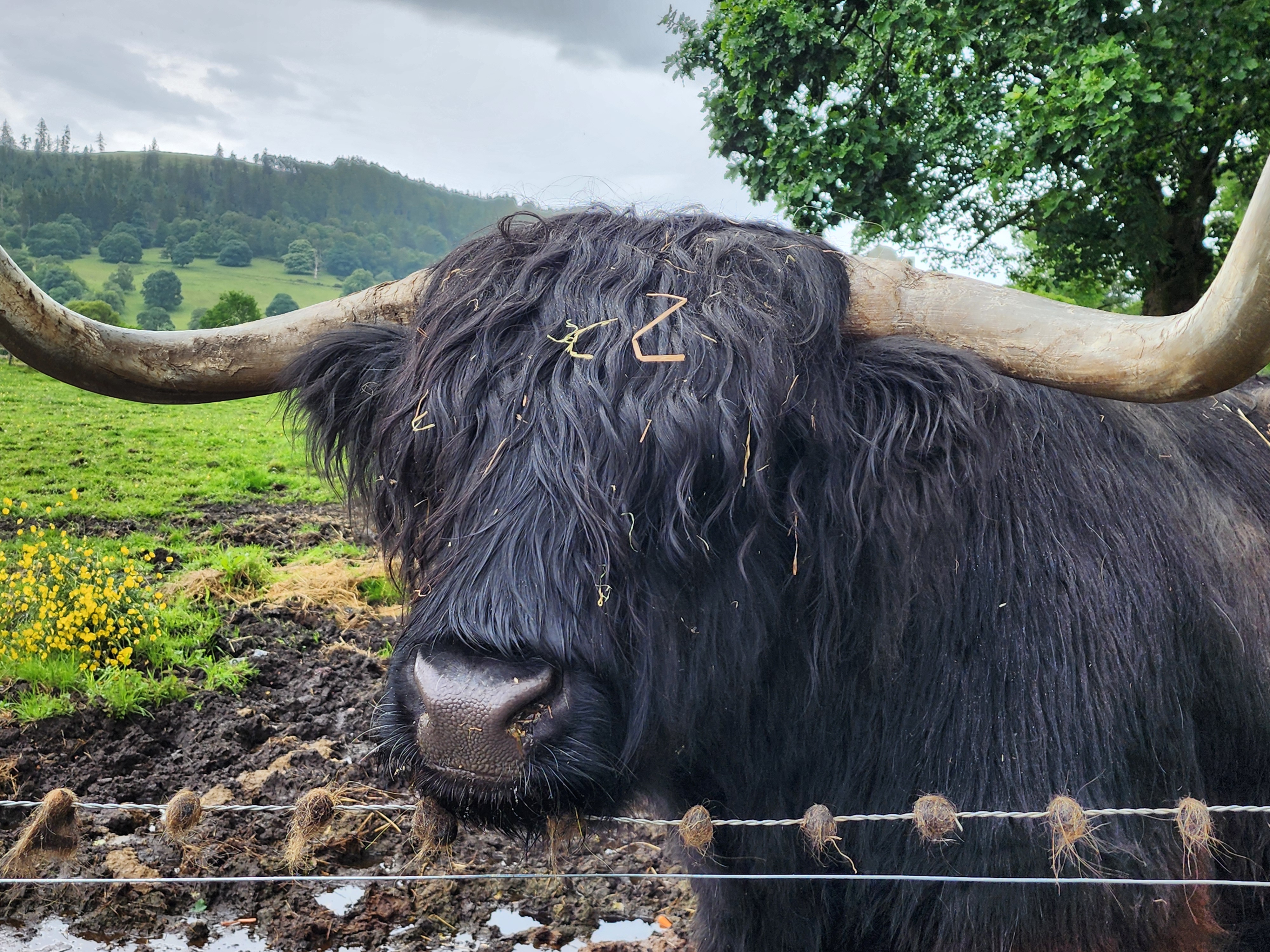
He looks sad, this sweet coo
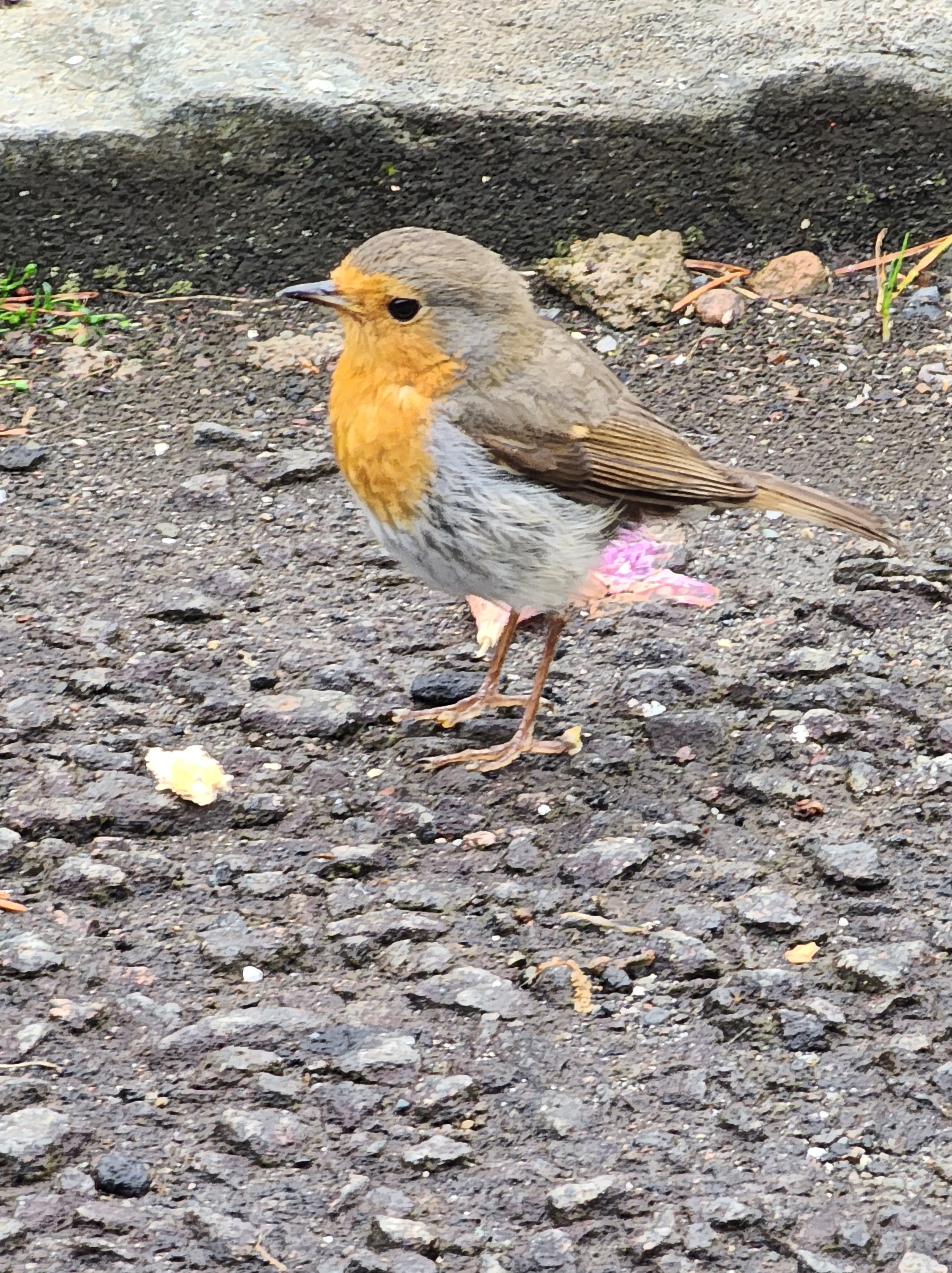
The wee bird again

The Glenturret mash tun

Boat launch
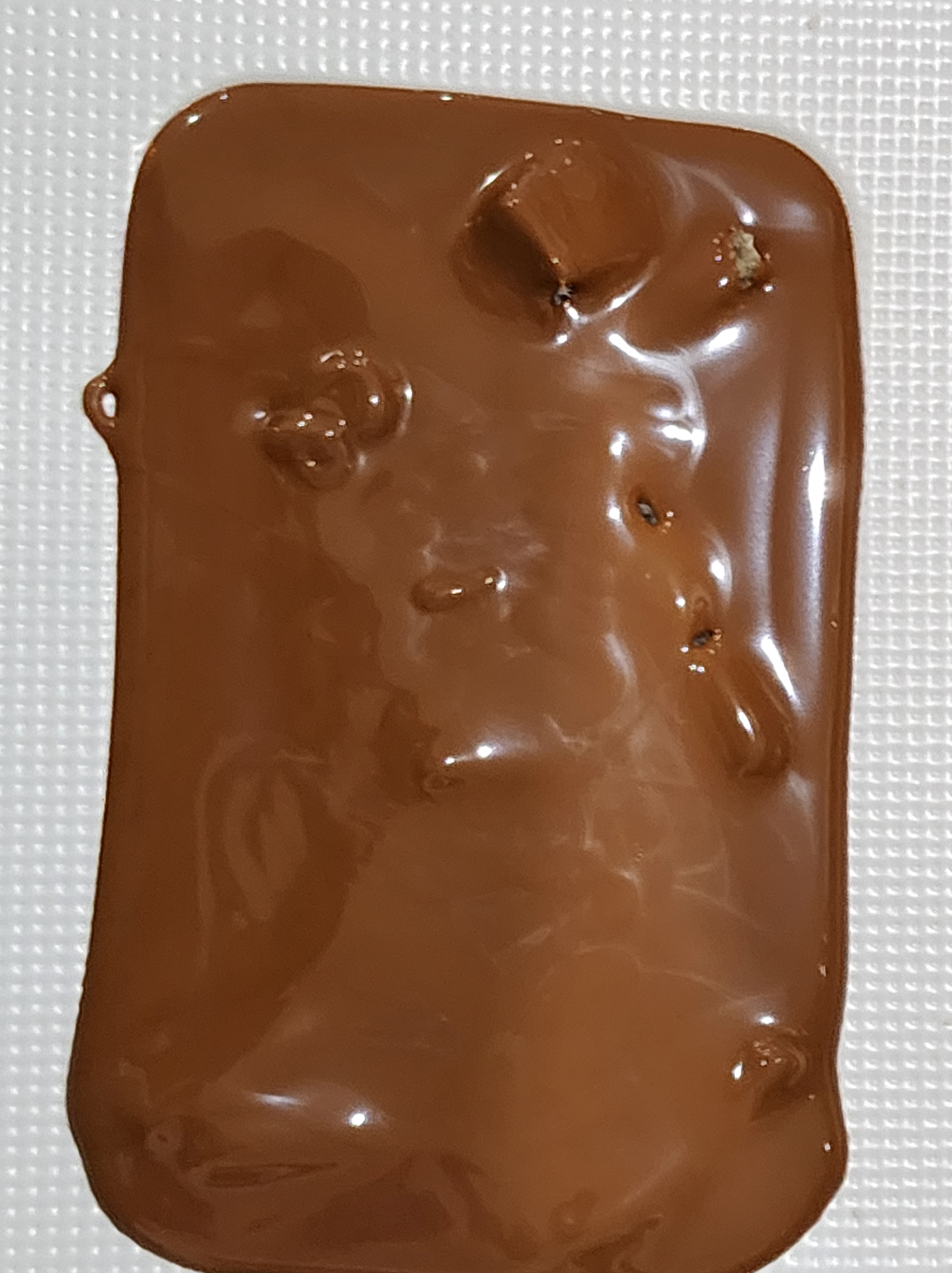
My candy bar cooling in the mold

Loch Katrine
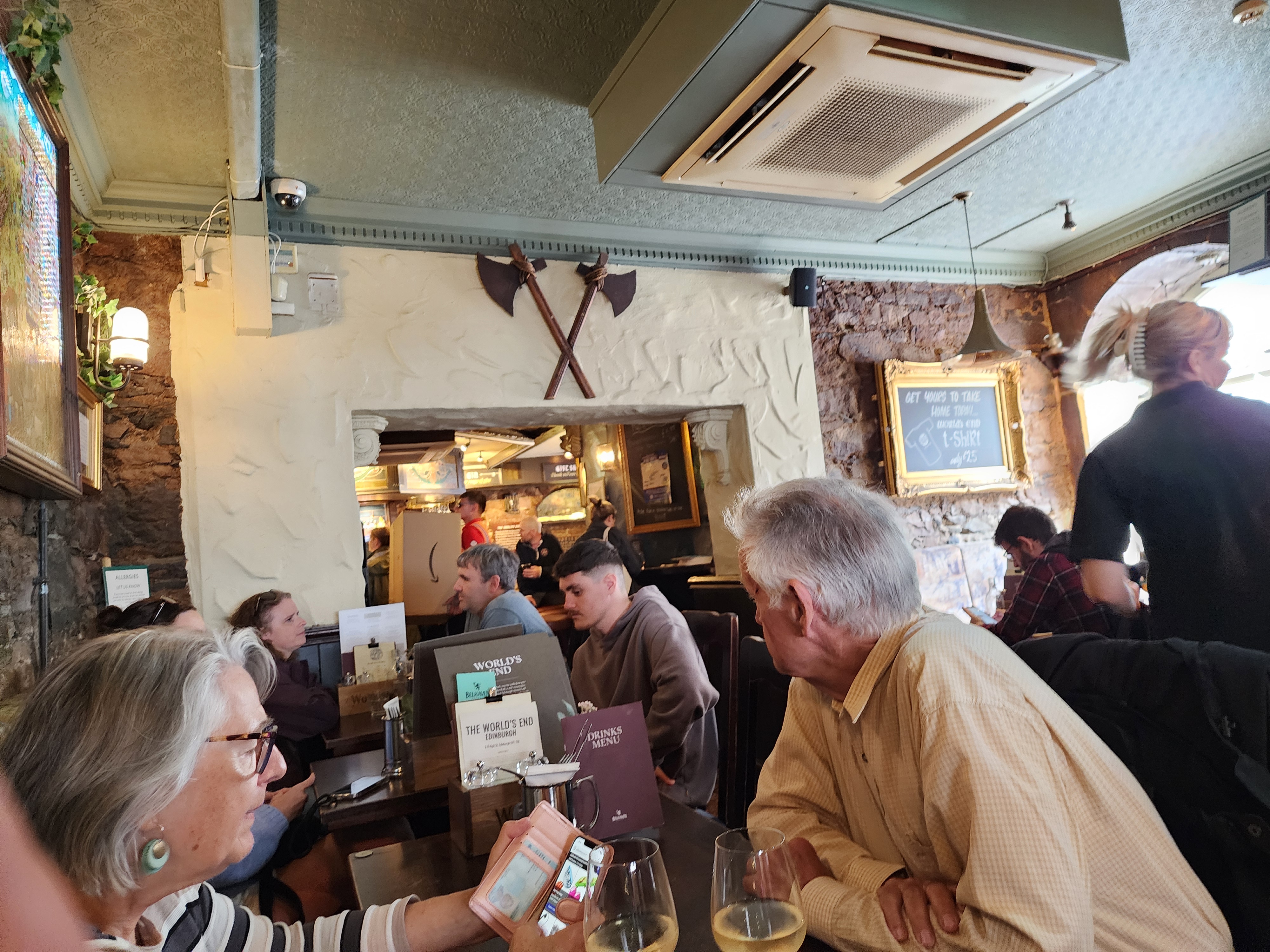
The two Aussies in the front of the picture talked to me all through lunch at the pub

On the deck of the Sir Walter Scott
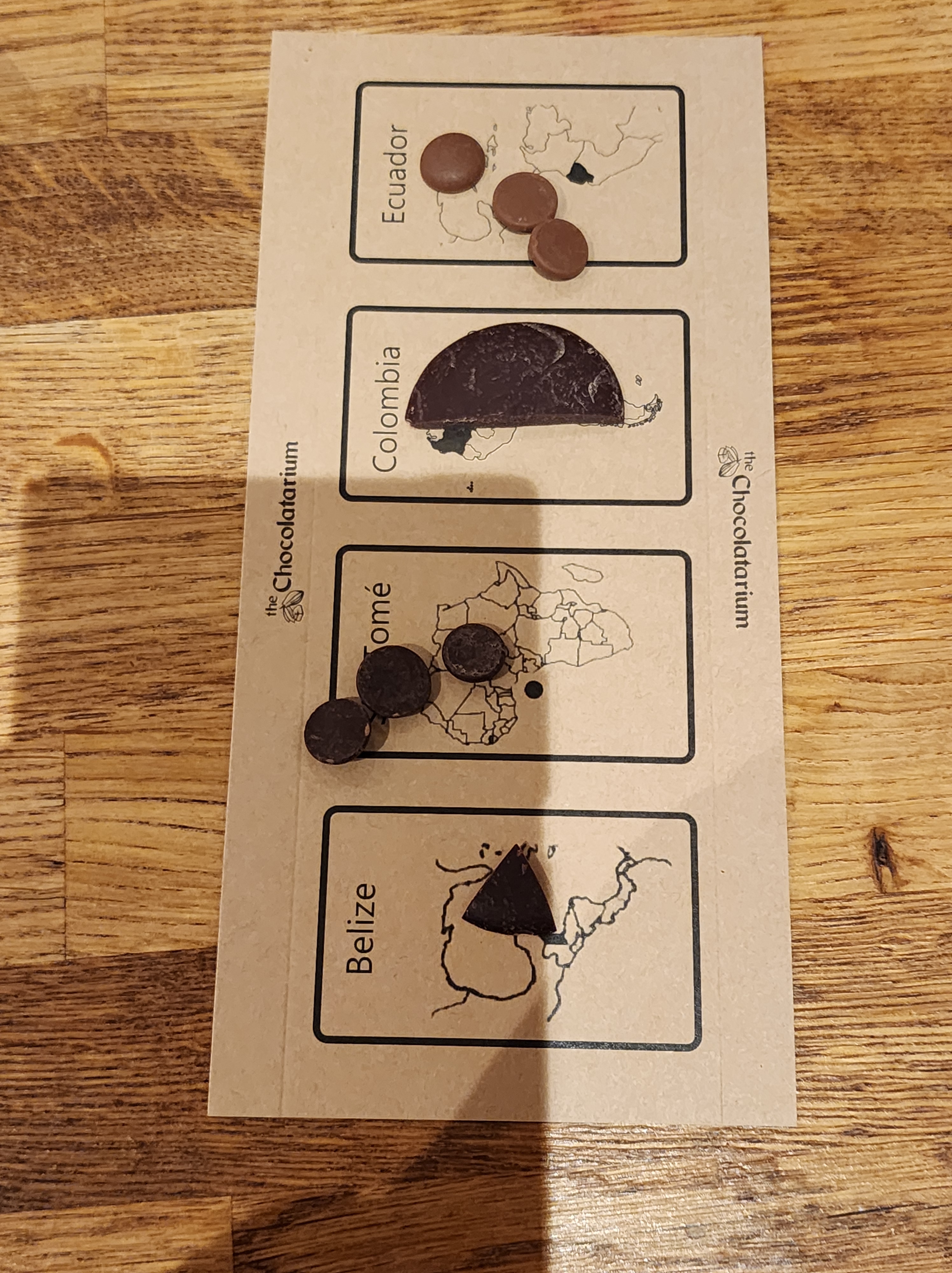
A second chocolate flight
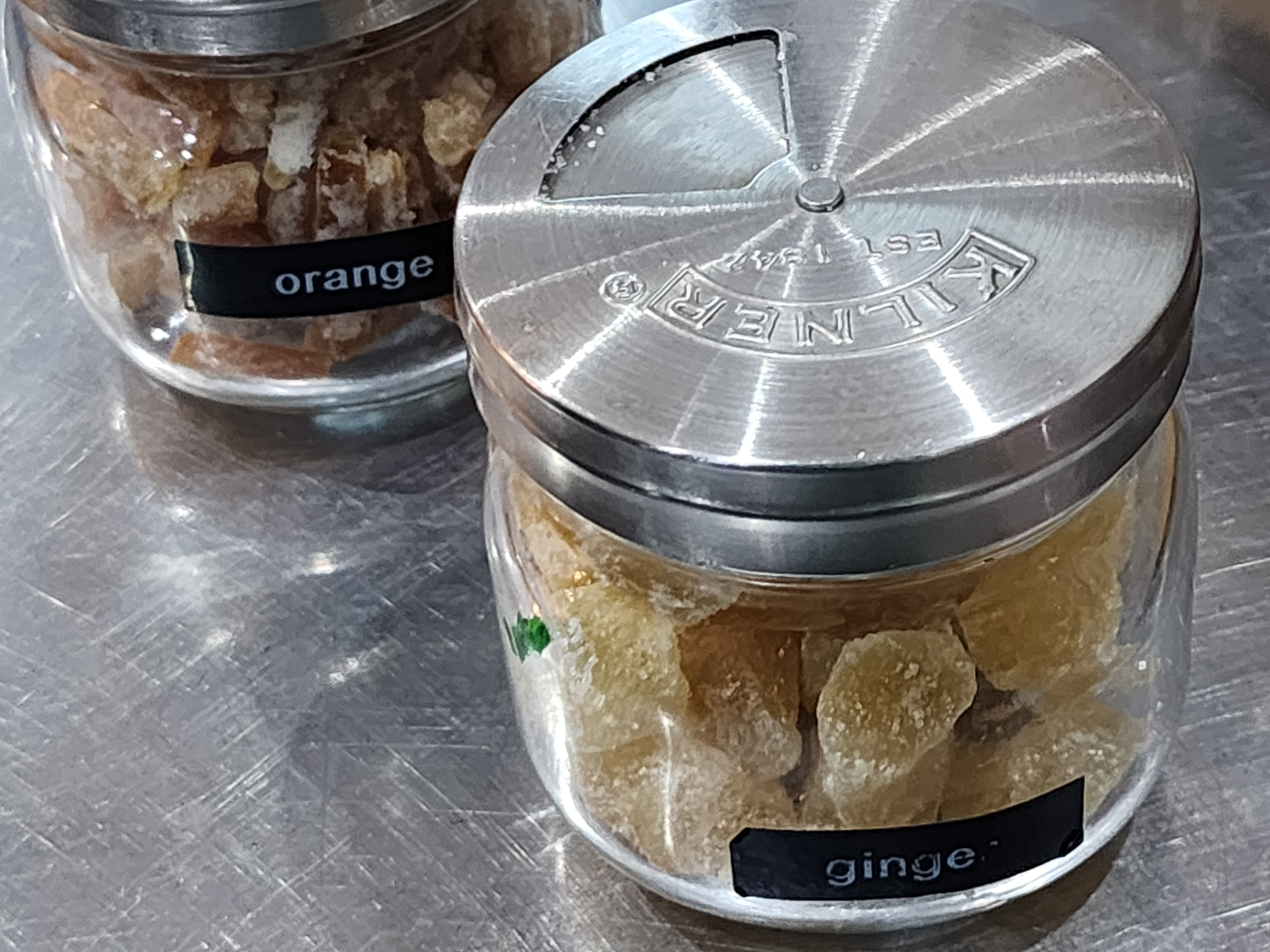
Orange rind and ginger for my candy bar
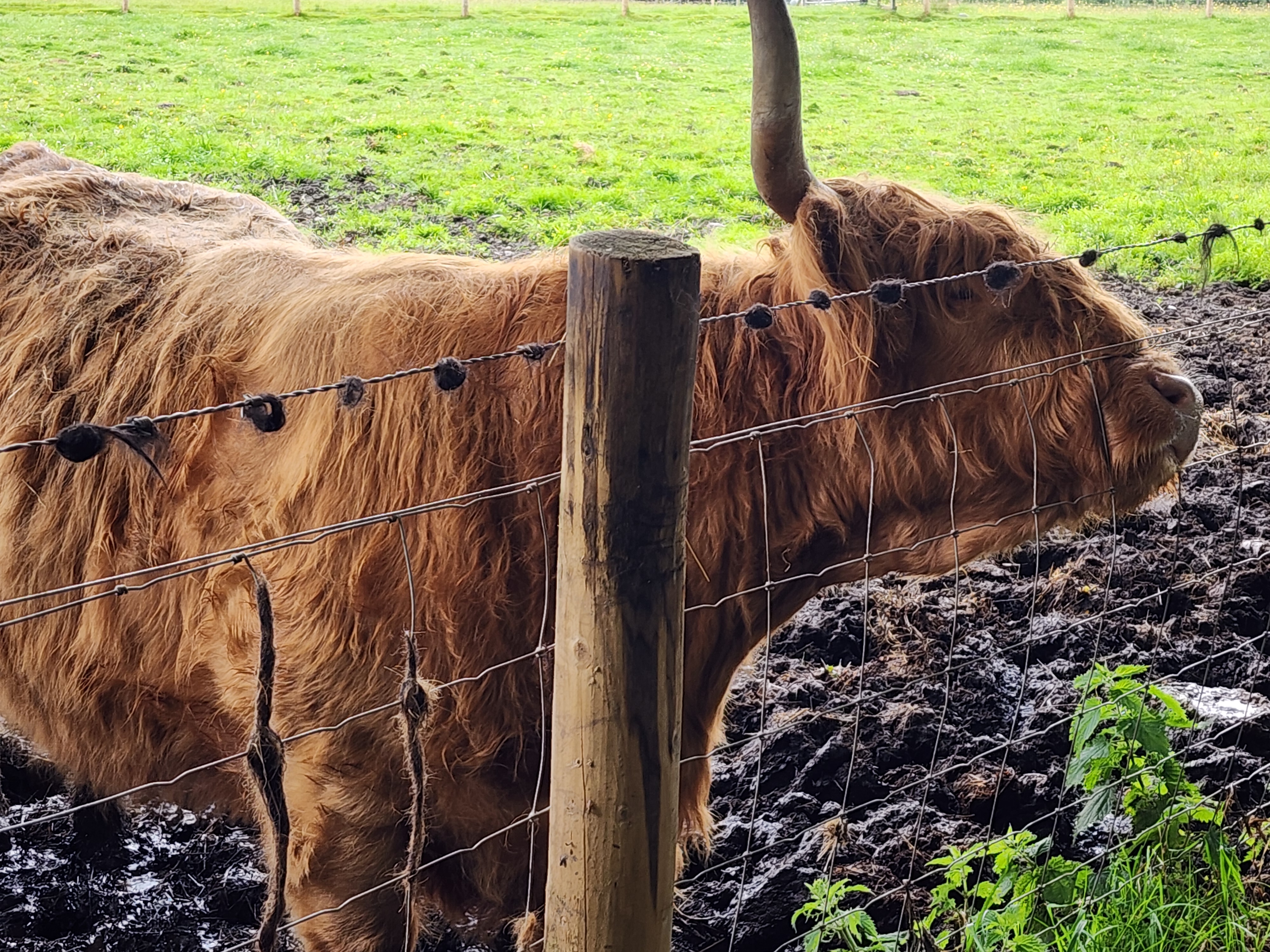
Another sweet coo
Dispatch from Edinburgh, #1

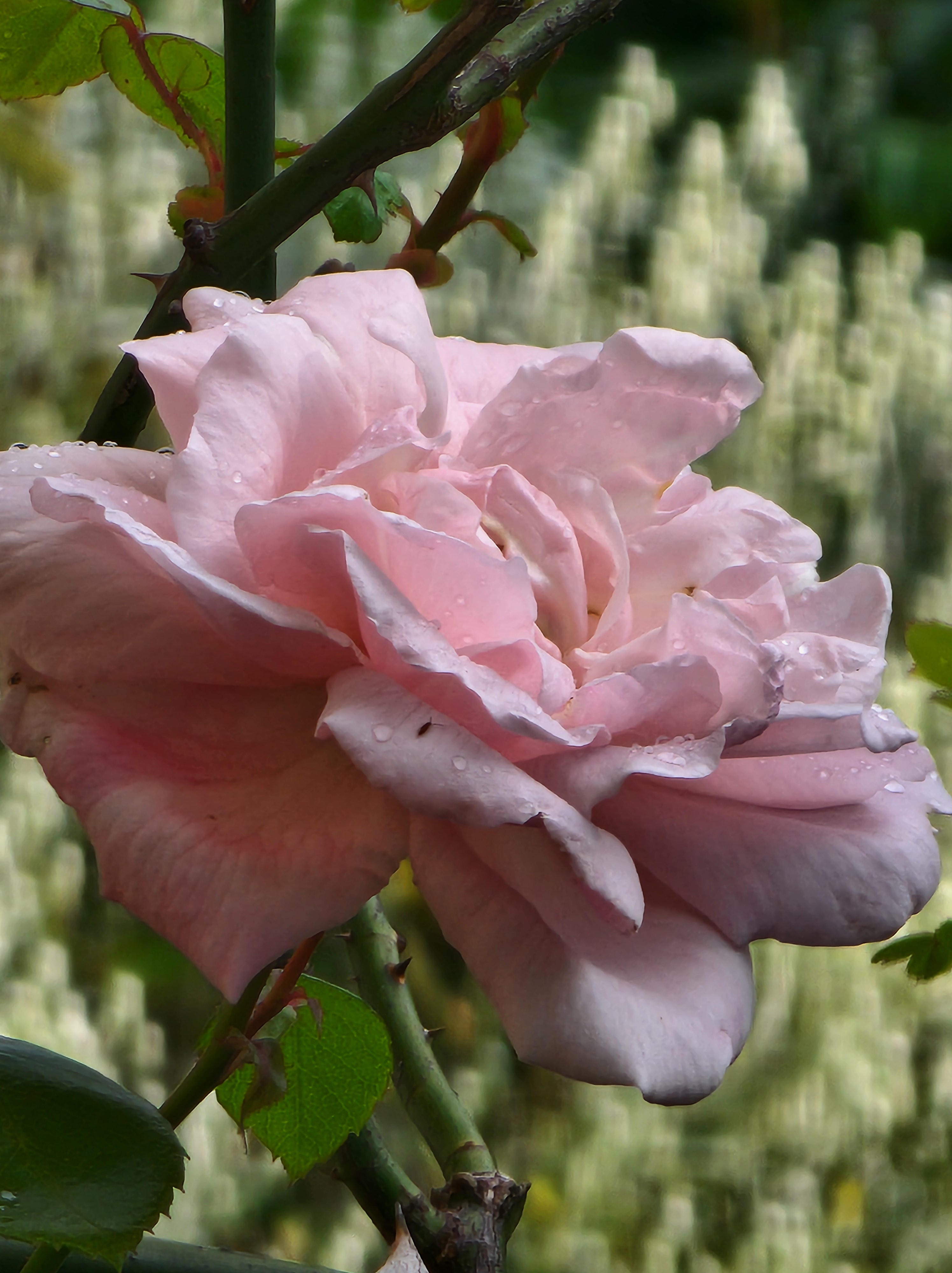
A large pink rose with water droplets on it against a green and white background

A fat rose outside my window

My First Week Back in Edinburgh

It is a truth universally acknowledged that a single woman on holiday in Scotland must be in want of a cold.  That’s right, I managed to get a cold and have been suffering with it for over a week. So I don’t have an amazing portfolio of pictures to show you, the way I normally do when I go to Edinburgh to teach.  Of course that will change because I have to get better soon (please God, I must get better), and I will make some trips and take lots of photos, so don’t worry.

My class, while small, seems good.  There are twelve women and two men, and they seem nice.  I’m looking forward to talking with them more about the readings, and hopefully we can have robust discussions.  They were a little shy this week, but it seemed like they did the reading and are engaged with the class, and that is all I could ask for.

Image of ornate crown molding at the ceiling, with poppies and tulips in white

Look at this crown molding in my apartment!

Tuesday, I found out that the GT professor teaching after me is teaching a class on mindfulness, so I asked him if it would be ok if I sat in on the class, and he welcomed me in.  Mindfulness is something that has been—well—on my mind since I started taking the Happiness Studies class I’m in.  I’ve been meditating and trying to regulate my breathing and just being really present with what’s going on in my life. (Granted, lately I’ve just been “present” with my cold, but you know what I mean.)

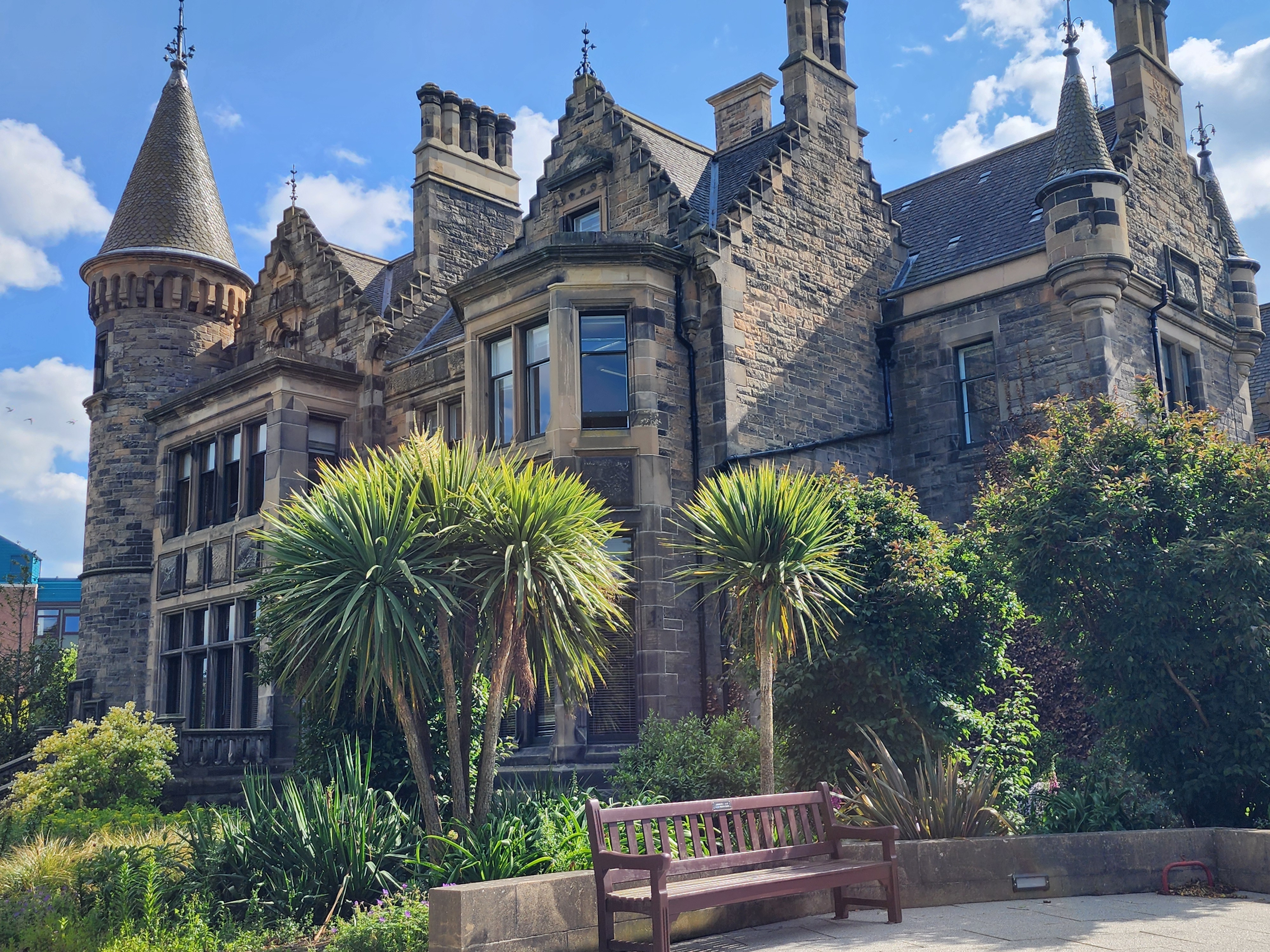
An image of an old building with a spire in the background and palm trees in the foreground.

A building near the Uni of Edinburgh’s Pollack Hall dorms

Yesterday in Dr. Verhaeghen’s class, we did a mindful eating exercise, and he gave us each a piece of chocolate from the Edinburgh Chocolatarium (which I’m going to tour on Sunday) and asked us to really look at it, notice its textures and appearance and color, then we were to smell it and notice any particular scents beside chocolate, and only then could we taste it.  But we couldn’t chew it.  We had to let it melt on our tongue first, and only at the very, very end could we swallow it.  It was a sensuous experience, and delightful.  The candy I had was a toffee with caramel (my favorite), and I had the most remarkable realization:  that after eating the candy, I didn’t want to eat any more.  It was as if the experience of noticing the chocolate with all the senses had given me a satiety—as if another piece would have just been too much.  So that was novel.  Now, when I go to the Chocolatarium, I’m sure I’ll be eating more than one piece.  (I am ok with this.)
A free Palestine flag hanging in a window

Free Palestine! A Palestinian flag in a window across from mine

Since I haven’t really gone anywhere since I’ve been here, I’ve spent a lot of time quietly observing out my window, watching the birds.  I’ve seen a number of seagulls, and a ridiculous crow determined to eat something he found in the road, only to have to fly off when the buses roll by.  There was a myna at my window ledge, but I couldn’t get my camera out in time.  But he seemed quite interested in looking in at me while I looked at him.  I’ve seen yellow finches, and sparrows and fat Scottish wood pigeons.  The other morning, the tree directly outside was full of mourning doves cooing. I’m no birder, like Kathleen Jamie in Findings is, but I enjoy birds in nature. There are a surprising variety of birds in Edinburgh—you wouldn’t think so, since it’s a city, but there really are. It’s one of the things I like about being here.

I know this wasn’t a particularly thrilling post, but it’s the best I can do being sick.  I will have more soon.

Scotland 3.0

Now that it’s past my birthday—in other words, half-way through May—I’m feeling the nervous energy of going back to Scotland this summer.  There’s so much to do to get ready—laundry, packing, teaching prep, laundry (did I mention that already?) and so much on my mind.  As much as I enjoy being in Scotland, which truly feels like a second home, there are adjustments to be made—in temperament, in expectations, even in time management—and it’s hard leaving my life in Georgia.  I’ll miss C, I’ll desperately miss my cats, and I’ll miss my very American creature comforts (like pizza and a king bed).  And while the compensations are many, it’s hard being absent from my everyday life for two months. I can hear some of you say, “Oh poor JC, how hard it is for you to live in a beautiful country full of culture and mystic mountains and men with sexy accents, you poor dear.” Well, I did say there are compensations, after all.

This time I’m teaching only memoirs/ nonfiction.  In the past, I’ve taught memoir, fiction, and poetry (to greater or lesser success) but I’ve revised what I want students to do for a big project this time around.  I want them to write their own travelogue, specifically about Scotland.  They will be reading Jackie Kay’s Red Dust Road, Kathleen Jamie’s Findings, Robert McWilliams The Kiss of Sweet Scottish Rain:  a Walk from Cape Wrath to the Solway Firth, and for a dash of fun, Sam Heughan’s and Graham McTavish’s Clanlands: Whisky, Warfare, and a Scottish Adventure Like No Other.  The authors are two actors in the Outlander show, and while it’s not AMAZING literature, it’s definitely charming and gives a different perspective on Scottish life. 

Hopefully my students will look past the fact there’s a lot of reading (though it’s not hard) and just allow themselves to get sucked into the stories that are being presented. I also thought only having them have to read 4 books instead of 6 or 7 as I have done previously might allow them to go deeper into the material. We’ll see.  (I am afraid they—and I!—might get bored droning on about the books for 5-6 days at a stretch, but hopefully we can co-create knowledge that we’re all interested in.)

I have been reading other books for insight.  I read (most of) Sally Huband’s Sea Bean:  a Beachcomber’s Search for a Magical Charm: a Memoir, which is about a woman who searches the beaches of the Shetland islands for useful detritus, specifically sea beans, which are seeds of large plants that have drifted across the ocean. Finding one is, apparently, quite a prize, especially if you can get it to grow. I’ve just gotten to the part where she starts discussing how much plastic washes up on shore, which breaks my heart to think about those relatively pristine islands being befouled by floating garbage/ plastic.  But I chose not to have the students read this book because it wasn’t—if you’ll forgive me—Scottish or memoirish enough.  And it’s also very slow.  But I’ve certainly enjoyed learning about the Shetlands, and I hope to finish the book soon. 

Another book I’ve been working my way through is Lochs & Legends:  A Scotsman’s Guide to the Heart of Scotland, by Andy the Highlander (Andrew McAlindon, with Lily Hurd) which is kind of an armchair history of Scoland.  It’s light but informative.  Finally, I picked up Scotland: The Story of a Nation by Magnus Magnusson, but let’s be honest, it’s thick and I’ve only been using it as a doorstop. I need to actually crack open the spine and read some of it.  (But it’s thicccc with four C’s!) I do like to give a mini lecture on Scottish history at the start of the class, and I got this book to help me do that.  I swear I’ll start reading it ASAP.  Maybe tomorrow, in other words.  (Haha.)  I do have other notes on Scotland prepared, but I did think this book would add some richness to my knowledge—of course, I should have been reading it all along.  Mea culpa.

Truly, I am looking forward to my third summer in Scotland, and I hope to do a few new-to-me activities, like go to the Writers’ Museum, visit St. Giles’ Cathedral (and this time actually going in instead of hemming and hawing about spending £5 for the entrance fee), maybe take a Ghost Tour, and finally, finally, finally take one of the double-decker tour buses around the city.  (I keep saying I’m going to do that, then I never do.) I also thought about going to Surgeon’s Hall, especially because Kathleen Jamie writes an essay about it in Findings, but honestly, I’m too afraid of being squicked out. (I do have a low tolerance for yuck… even if it would be intellectually interesting and teach me a lot about the history of medicine.)
Anyway, I promise you lots of pictures and lots of reporting on my visit… one more thing I have to add to my never-ending list of things to do in the coming weeks! (Oh dear!)

Leopard Aesthetics

I’ve been reading more poetry lately.  For a while it I read all Regencies, all the time, because I want to write more Regency novels, but the last one I read was really bad.  Like, I’ve been half-way through it for two months and am wondering if I—gasp—dare not finish.  Life is too short to read bad books, I believe, but I also hate to leave a book behind.  So instead of tossing it out altogether and starting a new one which will hopefully be more engaging, I’m reading poetry. It’s good to have a break anyway because even when poetry is “bad,” there’s always something to be learned from it—some new connections with language and thought and creativity to be made.

Last December I ran Atlanta Review’s first ever chapbook contest, and we received 115 chapbook submissions, all of which I read.  Some of the poems were wonderful, some were dreck, and some weren’t poems at all (at least, not what I’d call poems), but reading 115 chapbooks was quite the enterprise and it often entertained or moved me.  It certainly reinvigorated me as far as reading poetry goes—even though it was just part of my job.  And it reminded me that writing books of poetry really is something lots of people do—it’s not just the few of us living in our ivory towers, but it’s insurance salesmen, and accountants, machinists, nurses, software engineers, fast food workers, and teachers.  It’s not just MFA-ers trying to publish their theses, and that’s beautiful that the poetry community is so broad these days.

I don’t remember if I mentioned my friend Ed before, whom I met last year at the Tinker Mountain Writer’s Workshop, but he and I started a book club—Leopard Aesthetics Book Club to be exact—with the goal of reading contemporary books of poetry and spending 3 hours on a Saturday morning discussing it.  So far we’ve read We Contain Landscapes, by Patrycja Humienik, The Parachutist by Jose Hernandez Diaz, Happy Everything by Caitlyn Cowan, Nocturne in Joy by Tatiana Johnson-Boria, and Slaughterhouse for Old Wive’s Tales by Hannah V. Warren.  We may have read one or two others, but those are the ones that I’m remembering right offhand.  We meet at Marietta Coffee Company on Roswell Road and we just hang out and dish poetry. MCC has great iced caramel macchiatos which I syphon down in a snap as Ed and I go through the poems of the book, make incisive (or inane) comments about what we’ve read, and generally spend a lot of time laughing and talking. 

We get together about once a month and I become so energized by our discussion that it makes me hungry for the next time we visit.  I realize I don’t have a “poetry friend” group, not anymore, and so I feel really lucky to have met Ed and to have formed a great friendship with him.  He’s a neat person—generous, funny, and interesting—and we text  and share poems too.  It would be wonderful if Leopard Aesthetics would grow a community of poets and poetry readers around it, but so far neither Ed nor I have branched out like that. There’s still time, but for now, Leopard Aesthetics is just the two of us.

And if you’re wondering why “Leopard Aesthetics,” it has to do with a conversation we had where we were discussing different writing “schools” and the different aesthetics they espouse.  We couldn’t think what our aesthetic was, so we each came up with a list of names for our book club that somehow represented what we thought our aesthetic should be. Ed chose my top suggestion and we became Leopard Aesthetics.  We haven’t determined what that is exactly, but it’s becoming clearer the longer we hang out.

Anyway, our next book club selection is Real Phonies and Genuine Fakes by Nicky Beer. Dolly Parton graces the cover which I’m taking as a good sign.  I’m hoping Ed and I can meet soon.  I think this book is going to be great.

I know I took a year off from writing my blogs, but I promise it won’t be that long before I write again.  After all, I’m going to Scotland again this summer—and you know I’ll have plenty to say about that!

Romance, Research, and Writing a Summer Novel

ICYMI, I have spent the summer writing a Regency friends-to-lovers romance novel, called A Duke for Lady Ellen, which follows the adventures of poet Lady Ellen Brightly in her pursuit of an eligible husband in London. The story is set in 1816, after the wars on the Continent, so Society is celebrating the London Season in full force.  Lady Ellen, who initially isn’t too keen on getting married because of her tendency toward clumsiness which alienates potential suitors, meets up with the Duke of Danbury at a ball and interest blooms.  I don’t want to spoil the plot, but another suitor, the middle-aged Earl of Hambidge, comes on the scene and Ellen finds herself equally attracted to him. Hijinks ensue.

I’ve read a lot of Regency novels.  What I like about them is that they are total fantasies—women of privileged (alas, white) backgrounds whose sole life purpose is to secure a husband.  Money for them is rarely a concern, and they have loving parents and good breeding, and are basically set up to succeed. And if they are not of a privileged background, they usually have such a nobility of spirit, they can’t help but capture the eye of some obscenely wealthy titled rake (Cinderella stories of a sort).  So you can see the appeal as a reader—these novels completely take you out of your hum drum quotidian milieu.

Lots of harsh realities are glossed over in these novels, if they are mentioned at all.  If you’re a Marxist, you realize that these ladies searching for husbands are commodities themselves AND they get their privilege on the backs of tenant farmers whose rents support the titled gentry and on the backs of a servant class who make in one year probably less than the cost of a few of the heroine’s ball gowns. Less savory elements of London society (small “s”) exist, but for the most part, these women do not interact with people who are struggling to survive through crime or prostitution or begging. If poverty is mentioned at all, it tends to be in terms of the charity work that these Society women do to alleviate the problem.

Granted, the gentlemen that the women marry tend to be hedonistic rakes who only reform their wicked ways because they fall in love with the heroine. And sometimes, the men come from poor backgrounds and have “bootstrapped” their lives by becoming titans of industry. So they are rich and therefore “deserving “of the heroines’ love. But more often than not, the men are rich and titled from the get-go, and they are immediately captivated by the Lady at the heart of these stories.

Rarely—at least in all the novels I’ve read—is race even addressed. This might be my fault because I have not researched POC writing Regency novels like I should, so that’s on me, but when it is discussed, the issue of “race” is always framed in terms of a white person who will risk being ostracized from Society in order to be with their love.  I just read Cara Maxwell’s Jilted in January (part of The Rake Review series, #1), in which the hero, Edward Johns, is Chinese on his mother’s side, but he’s rich as Croesus, and that buys him (some) respectability, even if he’s considered the most “unmarriageable” man in England.  He does not want to marry Persephone Cuthbert—not because he doesn’t love and desire her—but because he’s afraid she will tumble down Society’s ladder for marrying him.  For her part, she seems fine with the fall—she maybe trips down one rung max, and when they marry, winds up living in perfect happiness the Limehouse district at the docks, also known for being a China Town. So race isn’t a barrier to happiness (as it shouldn’t be), even if it feels unrealistic for the age.

In Emma V. Leech’s To Break the Rules (part of the Girls Who Dare series, #4), the main character Senorita Lucia de Ferria is called “exotic” but her exoticism inflames the men of the ton. No blonde-haired, blue-eyed English rose, she nevertheless is passing as European, but it turns out she is actually Aashini, an Indian, trying to hide the reality of her background. The book gives her a very poor, traditional-seeming grandmother who may or may not be psychic, a woman who embraces Viscount Cavendish for her granddaughter. He loves Aashini and when she “comes out” as Indian at a big Society ‘do, he couldn’t be prouder. She also has nine other young women friends in the series who don’t seem to care about her race at all—which is loving and inclusive of them. But again, unrealistic.

Another book that (tangentially) deals with race is Elisa Braden’s Anything but a Gentleman (from the Rescued from Ruin series, #7).  This time the character of color, Shaw, is not the main character, but he is the assistant and manager of the hero’s club and is wealthy because of his position.  He is also a very dark South Asian and he’s very in love with the sister of the heroine.  The sister, Phoebe, is pregnant by Lord Glassington, who only comes to heal at the very end when he is tricked into re-proposing marriage to Phoebe.  But by then Shaw, who has nursed Phoebe back to health after an illness, declares himself to Phoebe, promises to love her child as his own, and tells Glassington to get lost and pay up the gambling debts he’s incurred.  Braden takes care to have Shaw explain how Phoebe’s marrying him will hurt her future prospects in Society and is very clear that he’s aware of the difference in their status.  But, as always, true love overcomes everything, even differences in race.  But of the three books I’ve mentioned, Braden seems the most aware of the transgressive nature of the interracial relationship within Regency S/society—yet, the transgression remains between minor characters.  The main characters are white and white hegemony is upheld.

Considering the bias that the white British had towards Indians, it seems like pure fantasy to imagine even minor characters of different cultural backgrounds getting together.  But this is romance, and love always triumphs, even if it’s unrealistic…Of course, I realize harping on a romance novel’s unreality is like saying water is wet—there’s nothing realistic about romance novels, so introducing diversity in these ways should be celebrated even if the color lines in Regency England were much more impermeable than they are now.  But then I’m speaking from a white point of view, and I don’t have a scholarly background in 19th century literature, so take my opinions with a pound of salt.

But back to discussing A Duke for Lady Ellen!

Writing a Regency romance was not hard, per se, probably because I’ve absorbed many of the tropes, expressions, and plotting elements just from the sheer number of Regencies I’ve read. I know my book does break some of those plotting elements—for instance, the big sex scene comes almost at the end of the book (Chapter 25), although there is a little pawing at each between main characters earlier on (Chapter 10).  And even in the point of view:  mine is third person limited, so we never get inside of the hero’s head because it’s told from Ellen’s POV.  At best, she supposes certain things about other characters and their motives, but she doesn’t know.  And using third person limited POV is probably a rookie mistake, and one I wouldn’t repeat. All of the Regencies I’ve read are third person omniscient, which allows readers to see other things than what the heroine directly experiences.

Writing a Regency should have been harder for me because of the research such work requires.  I did do some research, mostly about conveyances, money, the mail, and the peerage. But to write something well, especially in an era for which I don’t have a background, research should be front and center.  And for me on this novel, it was not.

Let me give you the biggest, most egregious example where research could have helped. I didn’t know it, but choosing 1816 in which to set A Duke for Lady Ellen was a Bad Idea—quite a problematic time for England (and the rest of the world). I only found out half-way through the writing that 1816 was considered “The Year Without a Summer” (and then, only because of an offhand comment that Chris made alerting me to the fact). Apparently, a volcanic eruption in Indonesia sent particulates in the air and decreased the world’s temperature by a degree or two, making crops fail and causing famines across England and world-wide.

So I had to retrofit my story with nods to the weather and crop conditions to bring a little more realism to the book. Not that anyone in my book seems to suffer for the most part about The Year Without a Summer… just another one of those glossed-over harsh realities I mentioned, I guess. (If I had done research earlier, then I could have incorporated the details more organically and “realistically” instead of ham-fisting them a bit.) But really, I should have done at least a cursory look into 1816, other than arbitrarily choosing a year just because the Napoleonic wars were over and I didn’t want to deal with military history. Next time, amirite?

Still, all things considered, I’m happy with the novel.  I’m sure, writing it as quickly as I did (in the span of several weeks), there are mistakes.  And I changed my mind about who the hero really was kind of half-way through because I fell in love with him, and dropped characters in and out of the story as needed for plot, but over all, I like it.  I’m proud of it. And I know that some people have read it:  at least two of my friends have, and Mom and Chris plan to read it too. I would love a wider audience than just folks I know, of course.  But I’ll take who I can get.

Read a little (or a lot!) and let me know what you think of it!  It’s free!


Writing and Summering at Home

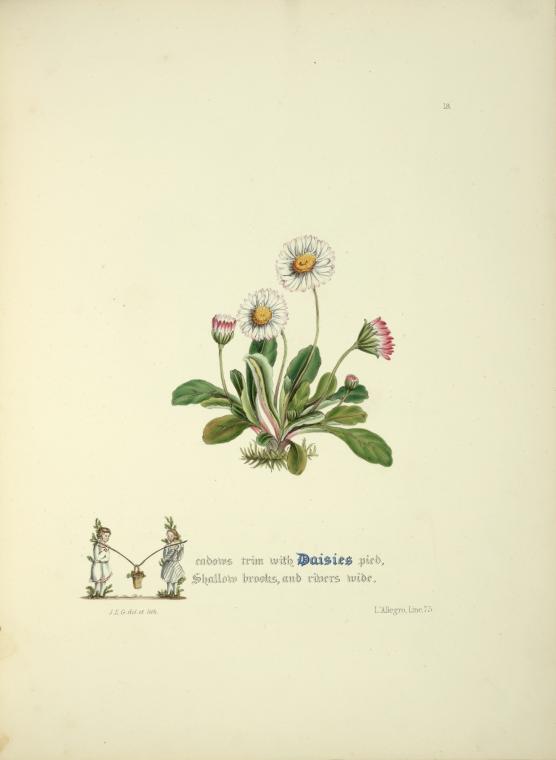
A water color picture of daisies

from the NY Public Library Digital Collections

I’m not in Scotland this summer for REASONS, and while I am sad about it, I’m dealing. Of course I think about Scotland all the time—last night I was dreaming of Outlander of all things, even though all I ever watched was the first season.  I really think it’s my spiritual homeland, like I am meant to live there some day.  I was even looking at real estate in Edinburgh and the rest of Scotland for a while, and found some places that didn’t look too expensive.  (Of course, they didn’t look too big either, but that is beside the point.)  Anyway, the point of telling you this is so you know not to expect a travelogue from me.  Of course, I haven’t written since last year, so you probably don’t expect anything from me!

Now for the update.  Writing and I had been at loggerheads for a while. I hadn’t really had a chance to write anything because of those same REASONS I mentioned a second ago.  (And I’m sorry to have to Vaguebook, but suffice it to say there are some real meanies out there who wish me ill.  But writing about that is for another day, if at all.) So of course, not writing poems was making it harder and harder for me to be ok. If I’m not writing, what am I even doing?

But the summer has been really productive for me, writing-wise.  I tasked myself with writing a villanelle every day for May (while I didn’t quite get 31, I got 26), so I worked on that project.  Some of the villanelles turned out better than others, but it felt really good to produce that work.  (Most still of course need to be revised, but there’s always time for that.) One of the ones that did turn out well got picked up by Midsummer Dream House, and you can read “Heart-bird” here.

And now I’m working on a Regency romance on Wattpad (currently #51 in Regency) called A Duke for Lady Ellen. I’ve published nine chapters so far, and am looking to publishing about 25.  This is my “gateway” novel—to see if I can start writing romance novels in earnest.  So I’m not worried about finding a “real” publisher or getting an agent or anything like that.  This book is an opportunity for me to try something new, to push myself in a new direction.  I’m enjoying it so far. Chris, for whatever reason, is really proud of me, although he has not read it so far.  (Well, I’d hardly expect him to read a romance novel, even if I wrote it!)  But it’s nice to have him cheering me on. I hope you’ll give A Duke for Lady Ellen a glance.  Even if you don’t like Regency romance novels, I’d appreciate any feedback you’d want to give it. I want to improve!  It will probably take the rest of summer to write it, but I will work on poems as well, so at least my writing “dance card” is full for the foreseeable future.

In other news, my friend Sarah Carey is coming out with her first full-length collection, The Grief Society Minutes, from St. Julian Press (sometime later this year, I believe) and I’ve got an ARC.  I’m so happy for her, and I’m looking forward to reading some quality poems!  I’m really surprised this collection has taken so long to find a publisher, especially because about 2/3 of the poems are published in quality journals—but finding a publisher is always a numbers game—you just gotta keep sending it out and sending it out.  I’m glad that she found a press for this book—now, onto the next one, Sarah! 😉

Other than all that, things in my life are ok. I’m glad it’s the summer, even if I don’t have Scotland.  At least I can write and feel happy about what I’m doing.

My Last Scottish Tour

I wanted to get in one last tour before I flew back to Atlanta, and had been eyeing the trip to the Ayrshire Coast, featuring Burns country and a trip to Culzean (pronounced “Cul-ayne”) Castle.  But it left from Glasgow, and that extra step—going to Glasgow—is what had prevented me from going on the tour any earlier. Did I really want to get up at the crack of dawn and catch a train?  But I put on my big girl panties and took the express to Glasgow for one last adventure.

I had picked up a sandwich and a pain au chocolat at Sainsbury’s for breakfast and walked to the Buchanan Bus Station and found a seat.  The pigeons were interested, and I can’t help it, I threw bread to them—they’re experts at looking so hungry.  But then they frenzied all around me, stepping on my shoes, flying onto my legs, flying to the garbage bin right at elbow level, trying to cadge some food.  One pigeon even perched on my index finger (until I shook it off) and another flew at my head!  The other people in the waiting area were as amazed (and frightened) as I was. What is it about pigeons that they attract as well as repel?  They are kind of charming, but maybe it’s the old idea that they carry disease. (Gross–I just Googled the diseases pigeons carry.  Why did I do this?)  But I kept feeding them as I waited for the bus to arrive.

And when it arrived, who should be our driver, but good ol’ Stewart! I was so happy to see him yet again, and the feeling was mutual.  The tour was small—there were only seven of us: four people from Australia (two were sisters, though one lives in Berlin), a couple from Aberdeen, and me. We bonded pretty quickly, but then Stewart is good about making everyone feel welcome and comfortable. I knew that it would be a wonderful day.

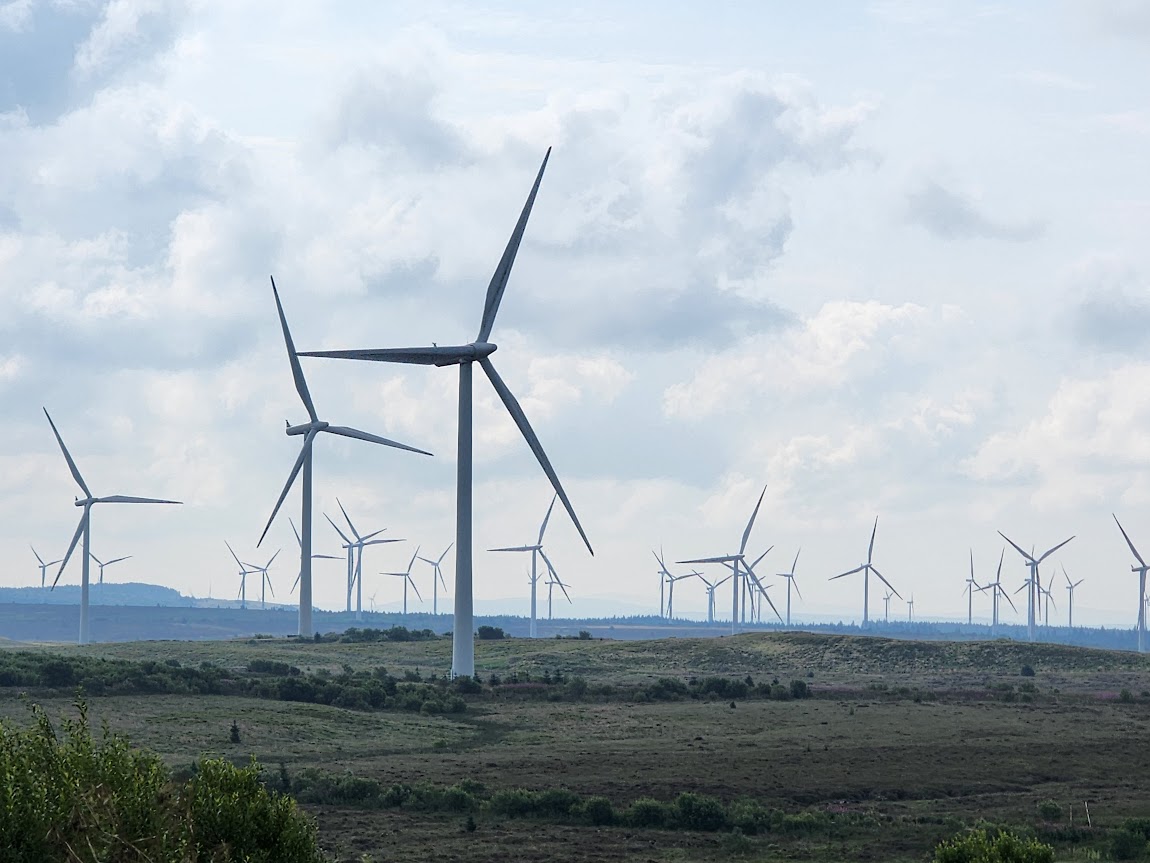
Whitelee Wind Farm

Our first leg of the journey saw us at the Whitelee Wind Farm, on the Eaglesham Moor, about 9 miles outside of Glasgow.  It was an unexpected stop, but something about all the wind turbines, with their graceful lines, and blowing blades, was compelling to watch.  The wind farm has 215 such turbines, with the capacity of 540 megawatts of power, and it’s the largest on-land wind farm in the UK.  It was a chilly and somewhat drizzly morning, so we all went inside to the coffee shop, and sat and chatted for half an hour over a cup of hot chocolate, until it was time to head out.  I would have liked a little time to visit the wind science museum, but it was also nice just to visit with the other people on the tour.  Sometimes it’s ok to forego museums.

Culzean Castle–I love how this picture came out.

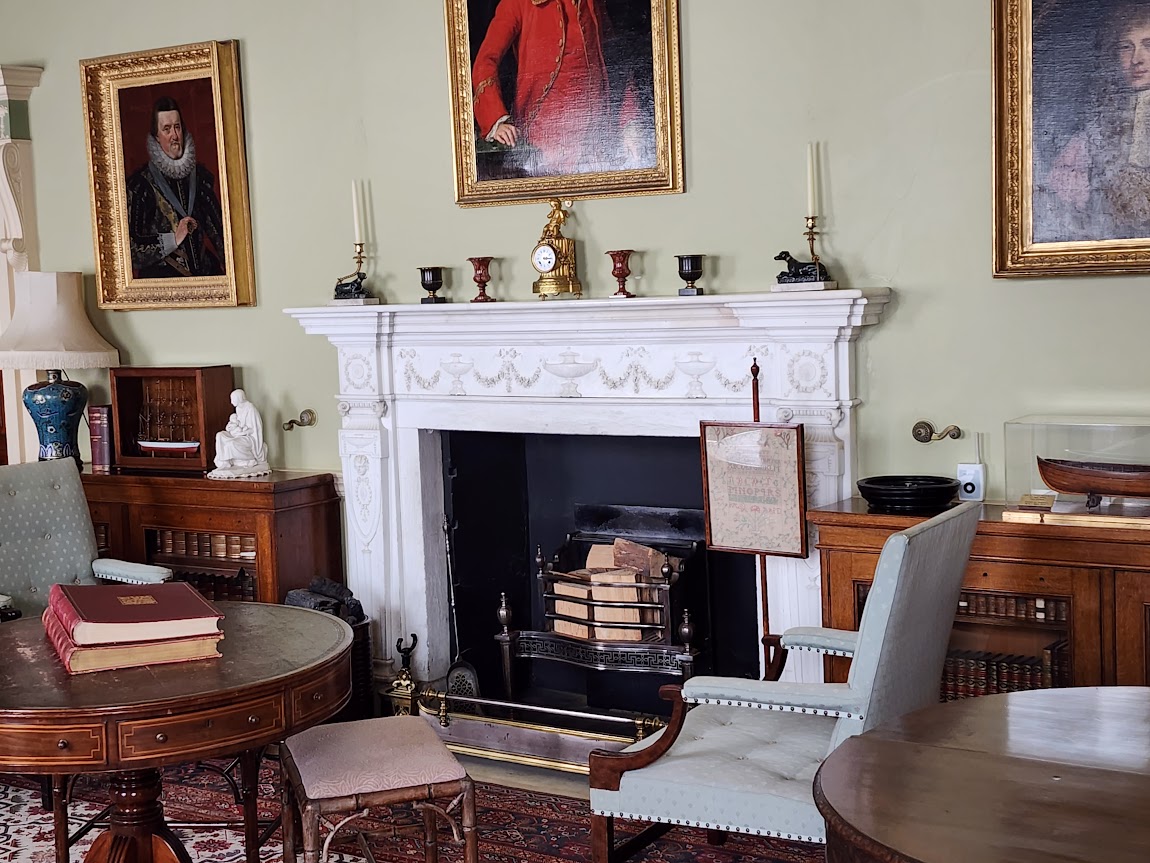
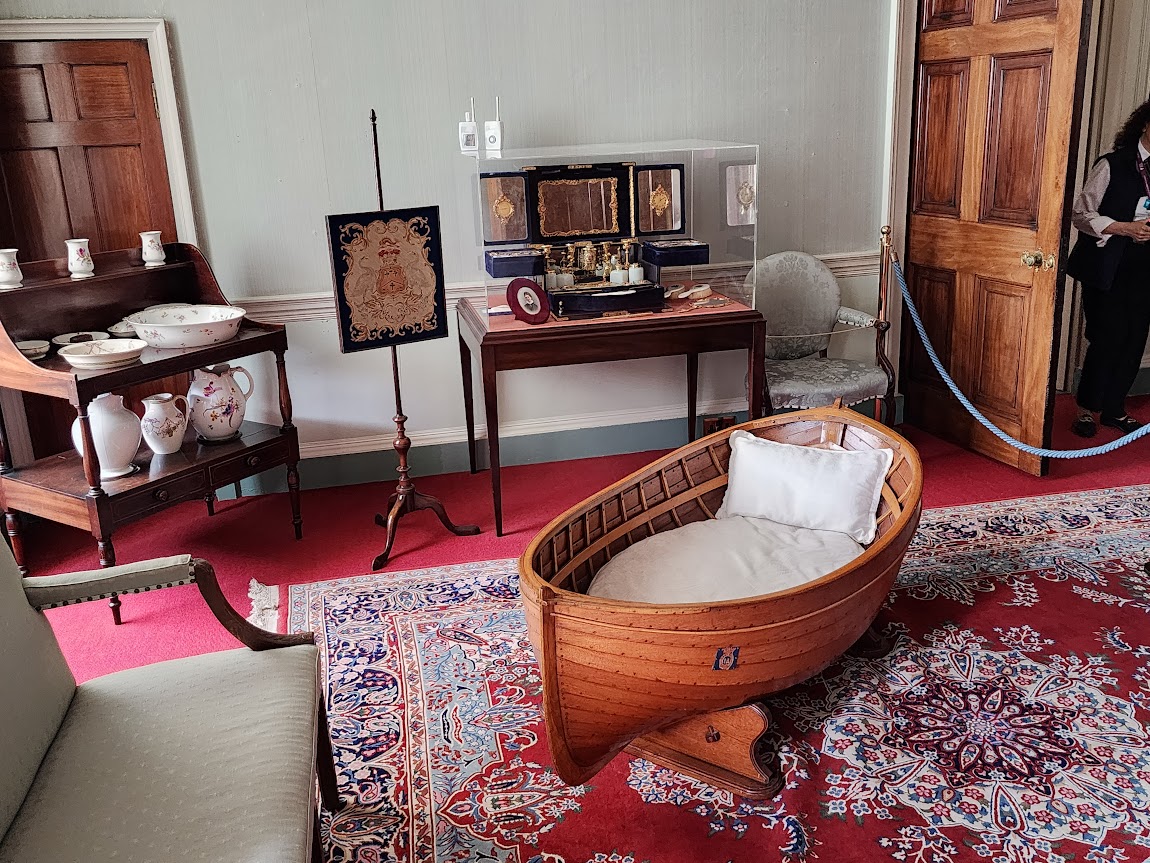
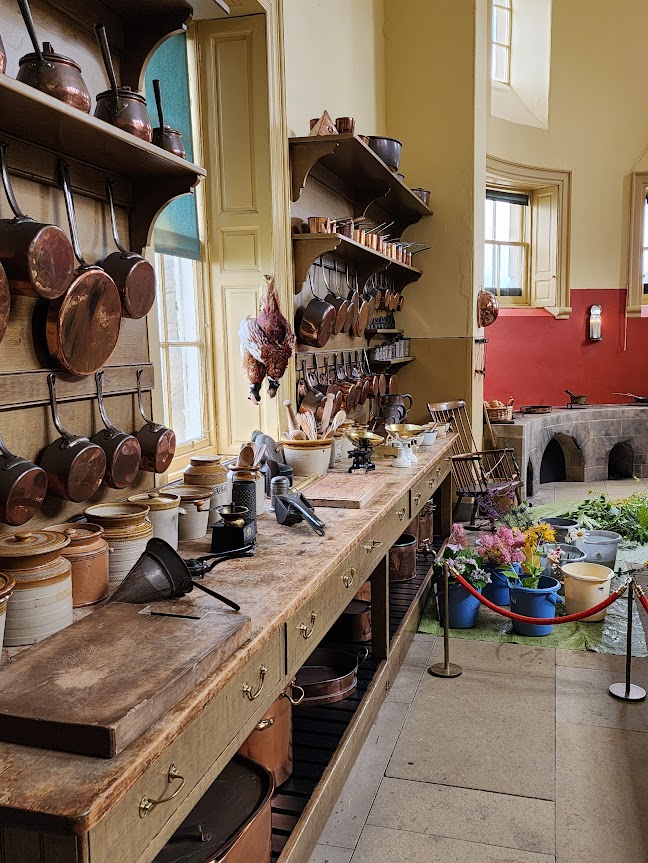
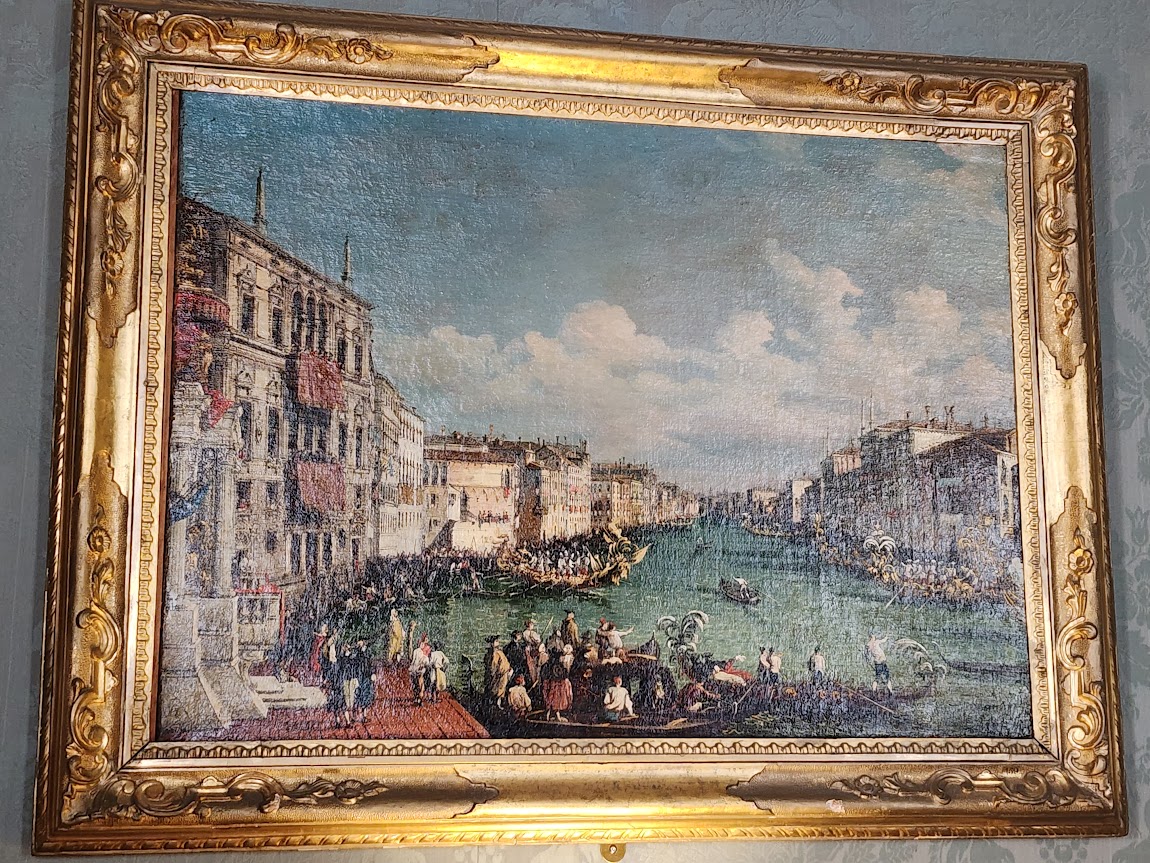
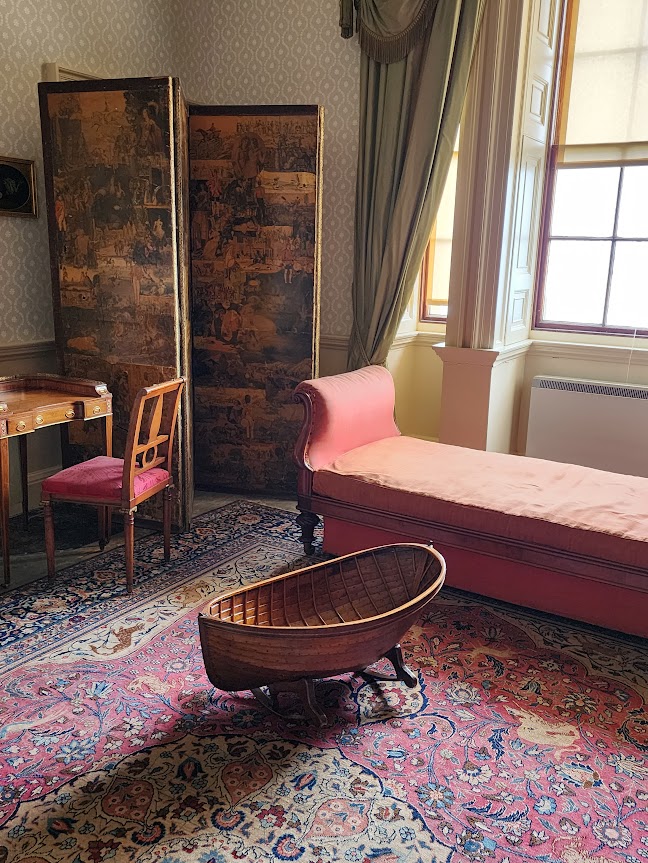
Our next stop was Culzean Castle, home of Clan Kennedy (and later President Eisenhower, who was gifted the top floor), and fortunately, the drizzle had stopped.  The sun even popped out a little, making the Firth of Clyde (which feeds into the Irish Sea and backs up to the castle) seem bluer.  There was a bit of a walk through the woods from where Stewart dropped us off but it was pleasant, and when I got to the castle itself, I took a few moments to look out on the Firth and admire the soft waves.  The castle, which dates from the late 1700s, had a proscribed path to follow for touring, which took us through dining rooms and bedrooms and sitting rooms and even a room decorated entirely with pistols and other weapons—like, thousands of them.  (Turns out it’s the armory.)  Of course, the rooms were finely-appointed, with rich red carpeting and bedspreads, and paintings everywhere, including what I’m sure is a Canaletto painting of Venice.  The castle also had a couple of bedrooms with cradles made to look like small boats.  The kitchen was a bright yellow, and led out to a tiny gift shop where (of course) I bought a guide to the castle.

Outside the castle, I walked through the gardens which were nice, but not overly impressive.  They had a great lawn though, and I could imagine someone setting up lawn tennis there.  People walked their dogs and one family seemed to be fighting and shouting at each other in Portuguese, I thought, never mind that I was sitting on a bench seat and couldn’t help but to listen in. I wondered what they could be arguing about.  It seemed like the father was impatient with his younger son, the same younger son that was being bullied by the elder son.  Their mother was shouting at her husband to quit shouting at the kids (I presumed).  But eventually, they slipped past the wall to the garden and I had peace again.  But I was getting hungry, so I made my way back to the main entrance, where there was a café.

My lunch was comprised of “creamy macaroni cheese” (they don’t say macaroni AND cheese in Scotland, I’ve noticed), chips (fries), and a little salad.  I don’t really understand why you’d serve a starch with a starch side, but the chips and entrée were tasty, and the salad was small but good.  Afterwards, I poked around the gift shop but didn’t see anything that spoke to me, and I met up with the Australian sisters and we chatted some more.  They were eating jellybeans.

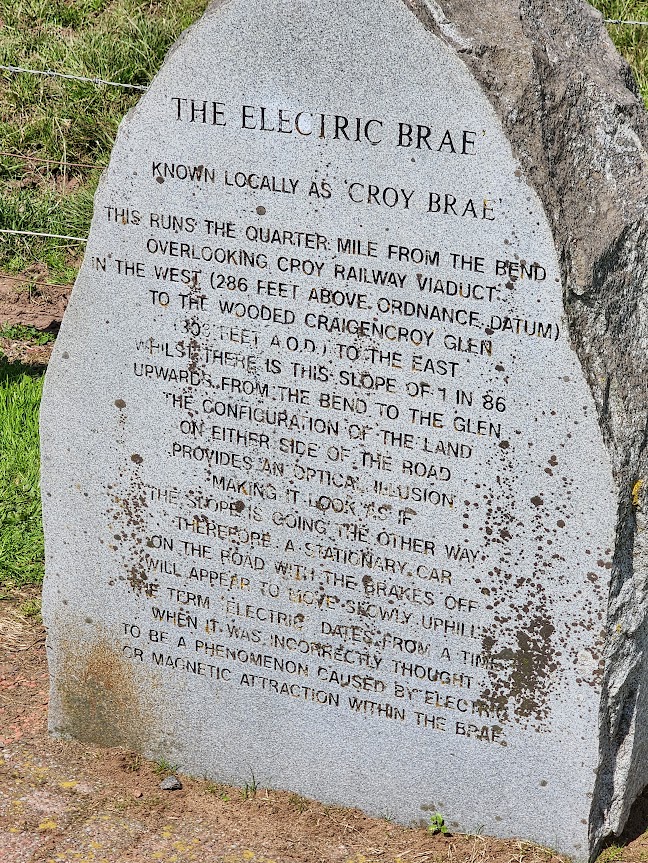
Stewart and the others arrived, and we got back on the bus and did a little touring.  We drove past Trump Turnberry Golf Course and gave it a universal Boo! And then we drove on something called the Electric Brae (known locally as “Croy Bray”), a stretch of road that appears to be going uphill, but is actually going downhill. (A “brae” is a slope, declivity, or hillside, according to the dictionary.) Stewart got out some water and demonstrated:  he poured the water on the ground, and it looked as if it were traveling upwards on the ground, instead of downwards. I took a picture of the sign, but for ease of reading, this is what it says (punctuation mine):

“This runs the quarter mile from the bend overlooking Croy Railway Viaduct.  In the west (286 feet above ordinance datum) to the wooded Craigencroy Glen (303 feet AOD) to the east whilst there is this slope of 1 in 86 upwards from the bend to the glen, the configuration of the land on either side of the road provides an optical illusion making it look as if the slope is going the other way.  Therefore, a stationary car on the road with the brakes off will appear to move slowly uphill.  The term “Electric” dates from a time when it was incorrectly thought to be a phenomenon caused by electric or magnetic attraction within the brae.”


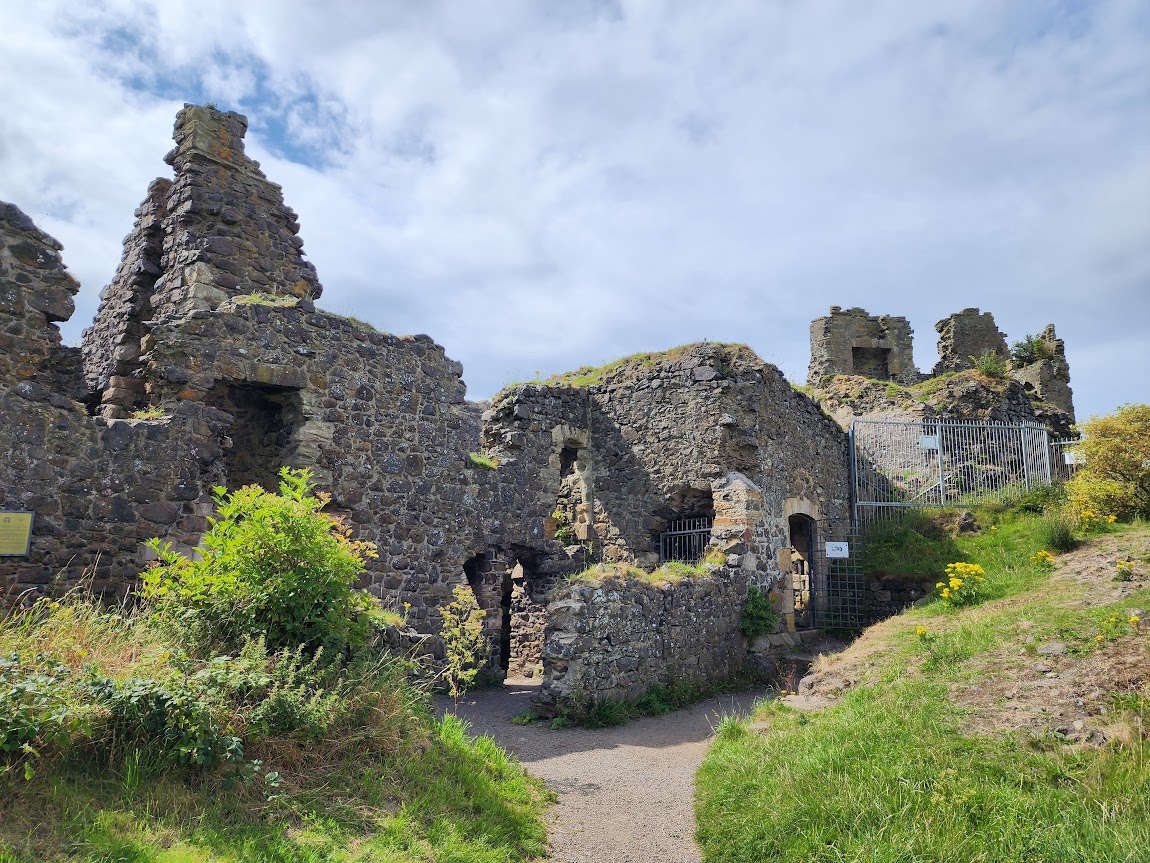
Dunure Castle

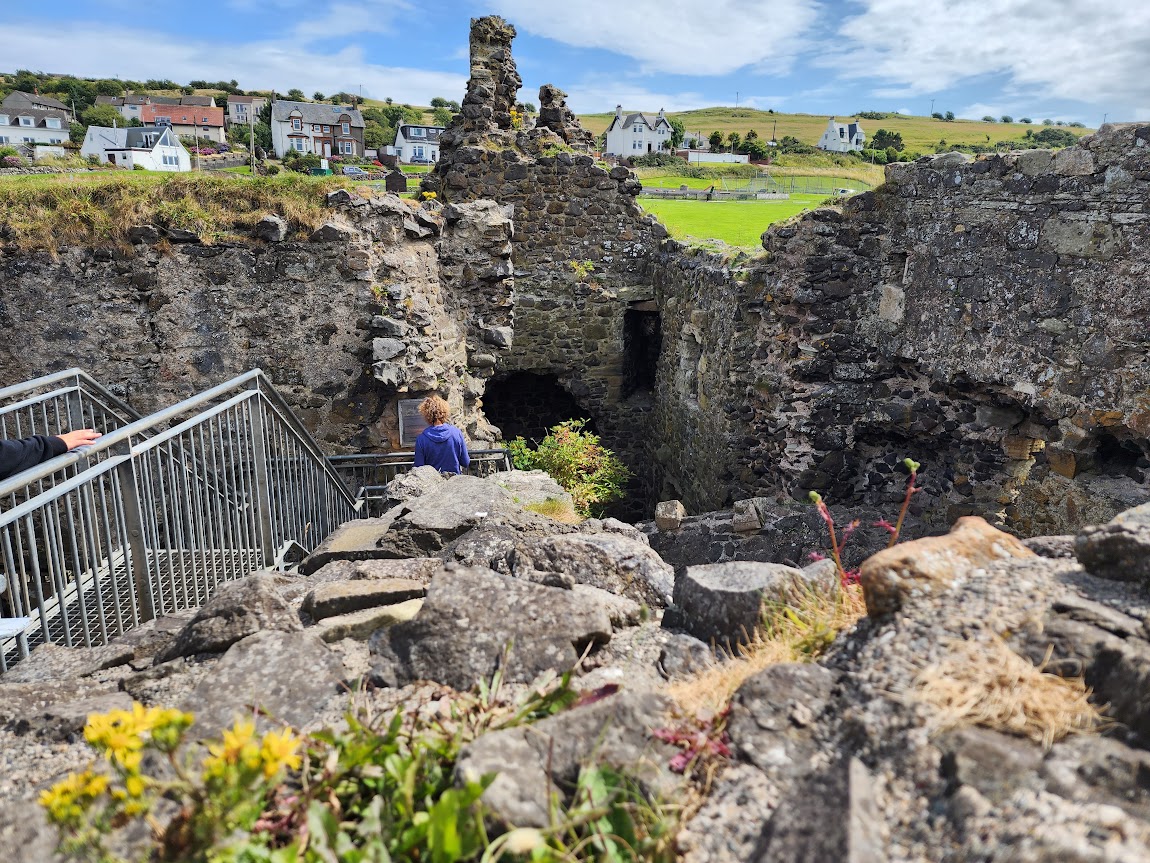
Then we made our way into the town of Dunure (which sort of rhymes with—ahem—manure), to poke around the ruins of Dunure Castle, which dates from the 13th century.  There’s not much left—a keep, some outer walls, and a beehive shaped dovecote (or “doocot”) which appears well-liked by pigeons and gulls.  I climbed the stairs to the top to look out on the sea, and passed a fenced-off part of the castle, where an empty whisky bottle lay in the dirt and rocks.

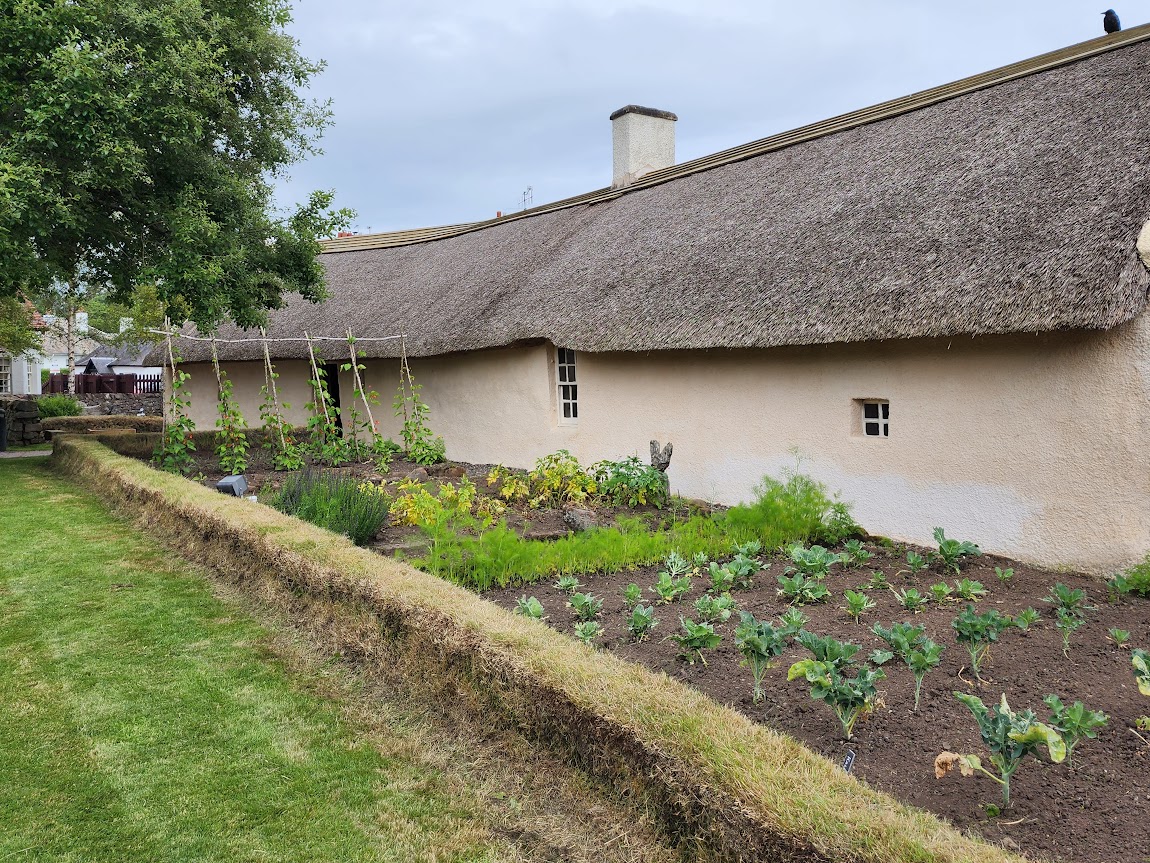
Burns Cottage with vegetable garden

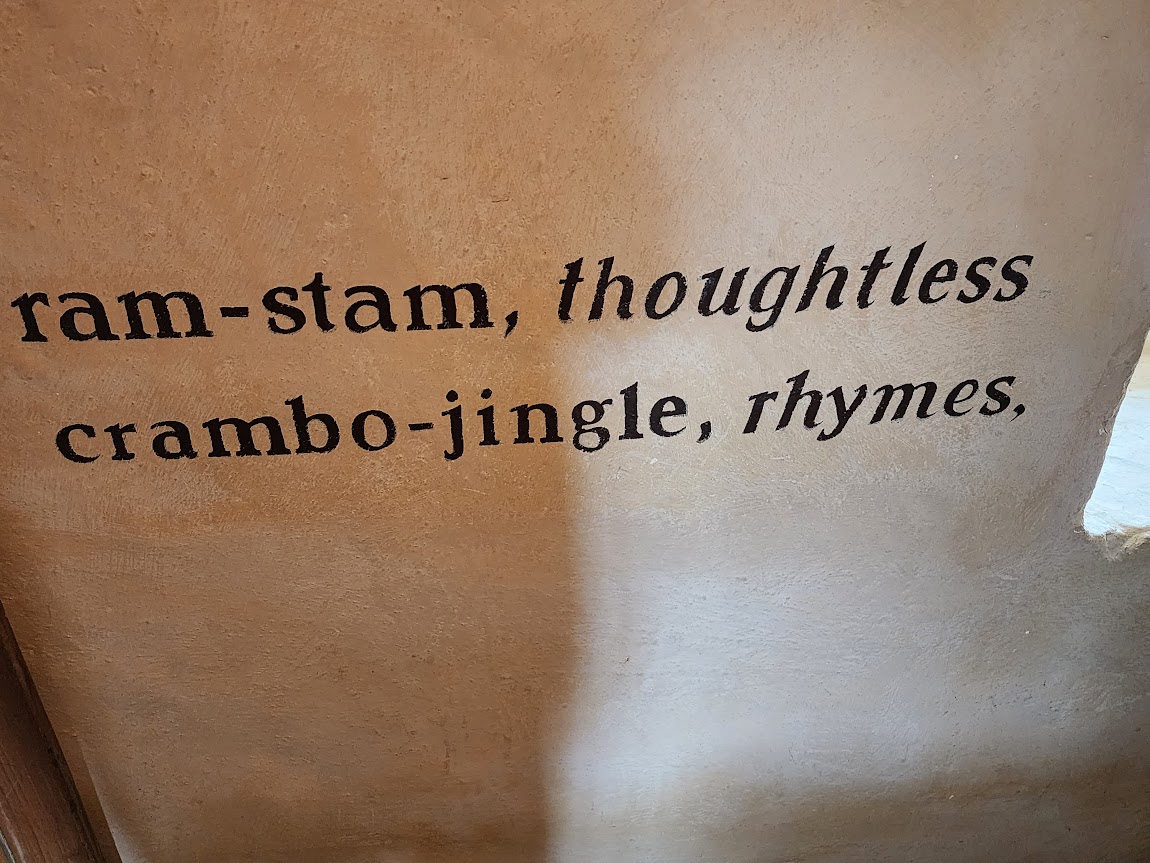
Afterwards, we were off to auld Rabbie Burns’ cottage and museum. We passed by Brig o’ Doon (the bridge over the river Doon), making me think of Brigadoon, the 1954 movie with Gene Kelly and Van Johnson). We listened to “Tam o’ Shanter” on the way—I think I understood maybe 20% of what was said!  The cottage was a long, cream-colored building with a thatched roof.  It was quite dark inside, but all around the walls were words that Burns had used (or made up?) in his poetry.  One wall reads, “This cultivated the latent seeds of Poesy” from a letter (I presume) from Burns to Dr. John Moore, in 1787. Part of the cottage would have housed smallish animals—goats and chickens, maybe sheep—part was an area for a butter churn and other household tasks.  There was also a kitchen with a tiny baby bed constructed into a wall.  I wasn’t sure where the adults slept.

On the Poet’s Path, a bronze mouse

The Robert Burns’ Birthplace Museum was a twelve-ish-minute walk away on the “Poet’s Path,” so after looking at everything in the cottage, I headed there. A few statues stood along the way, representing images from his poems, including a large mouse from “To a Mouse,” and a bench with “The Twa Dogs” (Caesar and Luath).  The museum, when I got there, was also decorated on the outside with Scottish language words that Burns had used.  Inside, again, the room was dark, to preserve the pages of books, ephemera, and portraits of Burns and his family.  To my mind, the room was too dark, so that you had to struggle to read the information cards on the wall, but it was kind of nice to see how appreciated Burns is, not just in Scotland but internationally (on display were copies of his work in Polish and Russian and maybe Chinese).  It does my poet-heart good to see another poet so beloved… even if that other poet writes in an almost unintelligible language (to English ears, anyway).

When I was finished with the museum I stopped in the giftshop and bought a couple of things, including a copy of “Tam o’Shanter,” thinking if I could see the words I could maybe figure out what is being said, a dictionary of Scottish words, and (of course) a museum guidebook.  Then I went to the café and drank a mint lemonade and ate a raisin shortbread (very tough).  And by then the museum was closing, and it was time to ride back to Glasgow.

Stewart very kindly dropped me off at the Queen Street station, and I promised that I would see him again next year (assuming I go back to Scotland to teach).  Then I caught my train and headed back to Edinburgh.  A delightful tour overall.

More photos

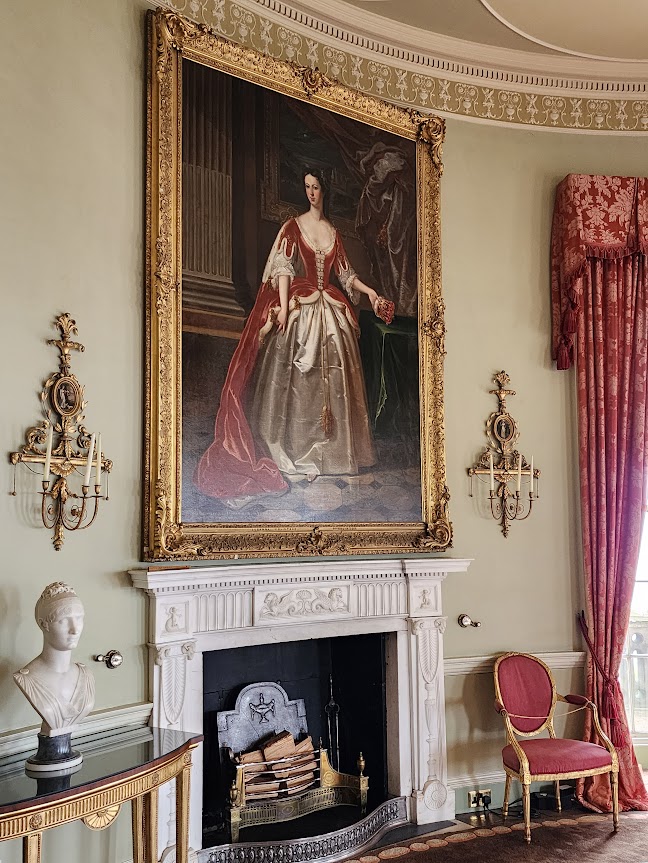
A graceful lady, Susanna, Countess of Eglington in the Culzean Castle Round Drawing Room

Twa Dogs 1–Caesar

Twa Dogs 2–Luath

The Meeting of Burns and Captain francis Gros, by Robert Scott Lauder (1789)

Twa Dogs bench

Culzean Castle Entrance and Armory

Painting of Culzean Castle, but no identification card

Scottish words in the Burns cottage

The Birth of Burns, by James Fillans (1836)

The Haggis Feast, by Alexander Fraser (ca. 1840)

Dunure castle from the inside, looking down on the kitchen?

Dunure Castle

Dunure Castle, closer up

Dunure Castle and walls

Culzean Castle up-close

The Electric Brae explanation stone

Culzean Castle LIbrary/reading room

Culzean Castle dressing room

Culzean Castle parlor

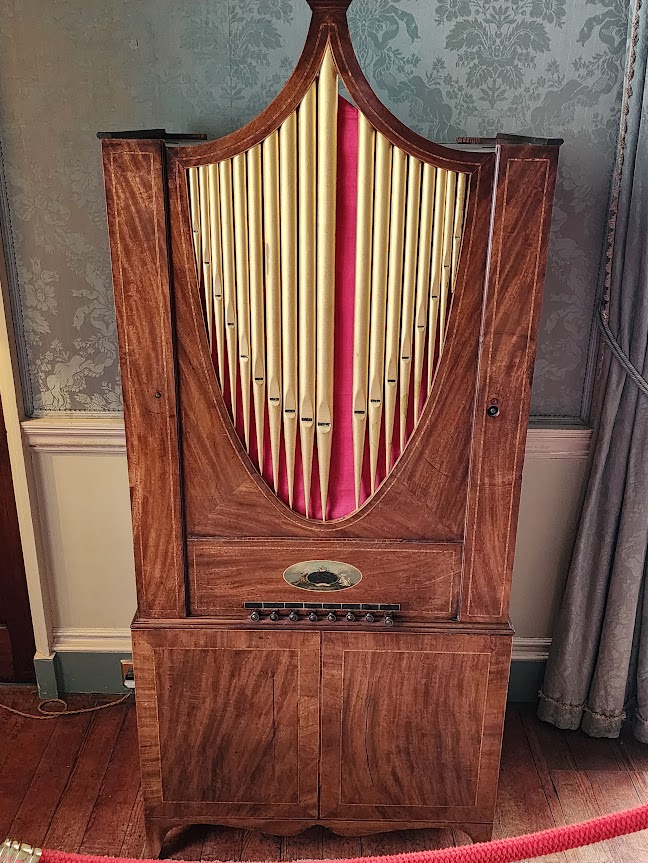
Culzean Castle pipe organ?

Culzean Castle Long Drawing room

Culzean Castle nursery

Culzean Castle kitchen

A Canaletto of Venice (I think) in the Blue Drawing Room

A purple flower in the garden at Culzean Castle

Culzean Castle grounds

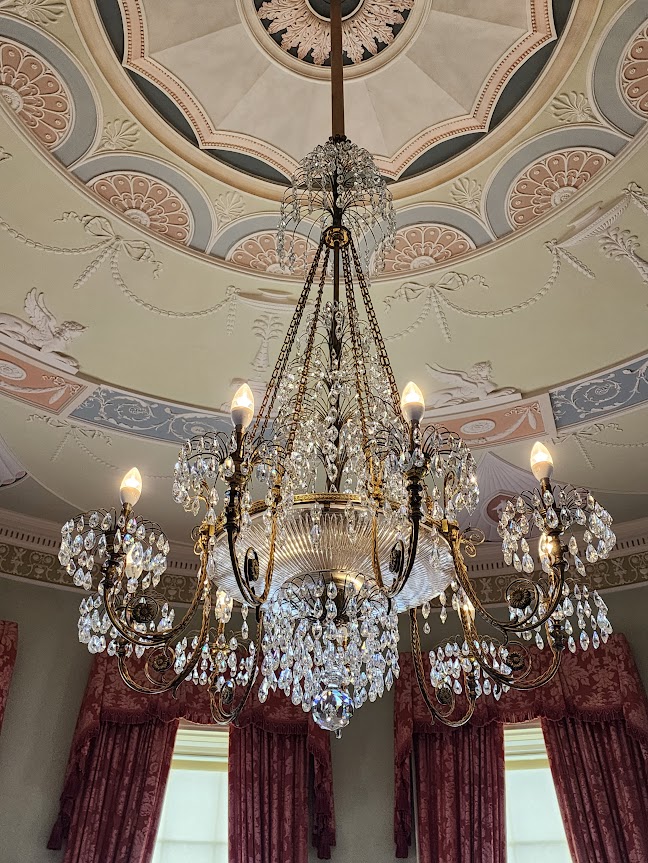
Culzean Castle chandelier in the round drawing room

Culzean Castle walls

Culzean Castle day room

Culzean Castle grounds–I can’t remember if this is the gardener’s shed or the smoke house. It sort of seems like it would be a smoke house.

Culzean Castle State Bedroom

Culzean Castle State Bedroom fireplace

Robert Burns’ cottage kitchen

Robert Burns cottage dining room

Auld Rabbie Burns statue

Robert Burns’ cottage wall

Robert Burns cottage household activities room

Entrance to all grounds of Culzean Castle

The Ruined Arch to the viaduct to Culzean Castle

Ayreshire Coast/ Irish Sea

The Christening dresses of the Burns’ family in the “bedroom”

Outside of the Burns cottage

Some bawdy fun advice for men

Silver Rain Was Falling Down Upon the Dirty Ground of London Town*

Virginia Woolf said, “The streets of London have their map, but our passions are uncharted.  What are you going to meet if you turn this corner?” I will tell you what I met:  a new friend.  What I mean is, I felt like I fit in right away. London may have been a city for 2000 years, but to me it was all brand new, and seeing it for the first time is like when you’re 16, and you see a handsome boy and know that you are intrigued.

London intrigued me as soon as I stepped off the train from Edinburgh into King’s Cross St. Pancras Station, where a woman was singing opera to the backdrop of a piano right there in the terminal.

I caught the Tube to Victoria Station.  It was hot, the air stale as bad breath, and so many bodies packed on the subway train I wondered how they could all fit.  A person tripped over my bag and then apologized to me with a very curt, British “Sorry!” and then ignored me as I mumbled “No worries!” I had about six stops to go, and enjoyed the voice-over announcements telling me to “mind the gap.”  A couple of stops after I got on, a middle-aged American couple boarded, the woman looking rather pained and nervous, and her husband a bit aggrieved.  She kept saying, “I don’t think this is the right train,” and he kept replying, “Maybe you’re right.”

So one ugly American to another, I said, “Where are you going?”

“We want to go to Victoria Station.”

“Oh, but you’re fine then.  This train goes to Victoria Station.”

“Are you sure?”

Reader, I wasn’t sure initially which is why I missed the first train that got to the track as I did, but there was a very convenient listing of the stops on the wall tile after the train departed, so I knew that the second train I boarded was going in the right direction.

“Oh, yes, quite sure.”

“Thank you so much. Everything is so confusing here.”

When we arrived at Victoria Station, everyone piled off the train and made their way out into the late afternoon.  Google’s map directions bewildered me a little bit, but I wandered the way it suggested, and I managed to get to my AirBnB, a single room in an apartment about 10 minutes away.  The room was nothing special, but the bed was so much better than where I was staying in Edinburgh, so I was perfectly comfortable.  I thought about going out for dinner, but the truth was, the first class coach on the train down from Scotland fed us a chalkwater trout supper with broccolini and couscous (free!), plus an apple tart, so I wasn’t overly hungry.  But I was tired after teaching and travel, so I settled down into my room and read for a few hours.

The next day, I had great plans to wake up early to go exploring, but instead I slept in. (Traveling always takes it out of me.)

I made my way to the Victoria Coach Station to catch a 1:00 bus tour around the city which would culminate in a cream tea service at Harrod’s.  I arrived at the station, and waited patiently to be called to my bus, but even though the sign said “Afternoon Tea Tour” the people managing the tour called it a “Vintage Tour” so I never got on and they left without me!  I had asked twice at the gate if this was the tea tour and was told, “No, you must be thinking of another company.”  But I insisted it was a Premier Tour (she was wearing a Premier Tours outfit) and she just blew me off—even though I saw an old-fashioned double-decker bus out in the lot.  What was I supposed to do?  I called the tour company and complained.

The lady on the other side of the phone was very British, efficient and helpful.  She put me on hold and I waited.  Eventually she told me that if I made my way to Buckingham Palace by 1:45, I could pick up the tour there.  It was 1:25.

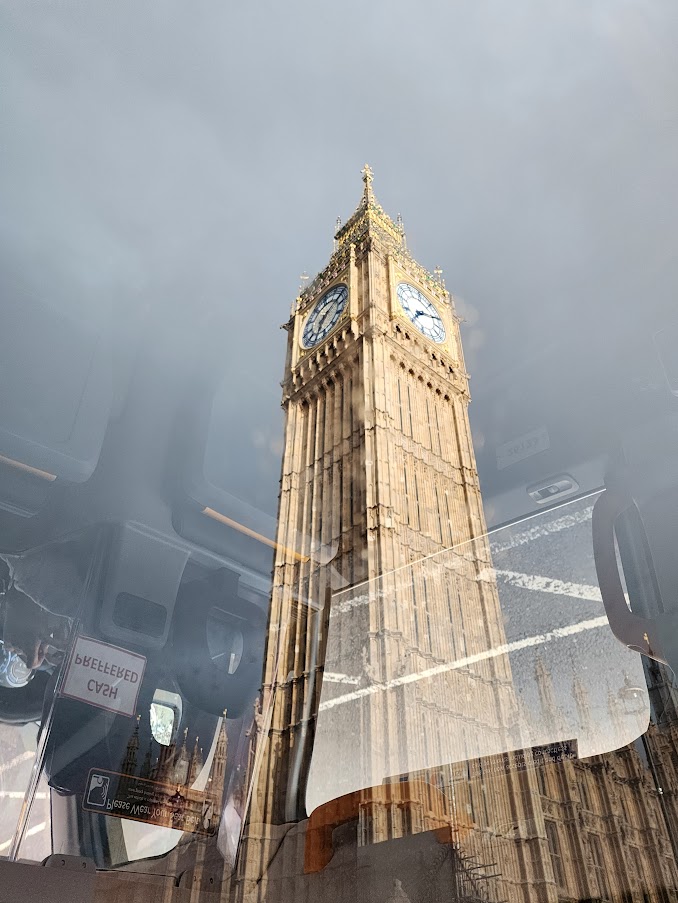
Big Ben from inside a taxi

I raced to Buckingham Palace, after walking three blocks the wrong way.  I saw the same bus parked at the curb, and some people I had seen at the bus station so I knew I was in the right place—but I was also annoyed that I had received bad information from the woman at the gate and had missed a good bit of the tour.  Still, once there, I happily climbed up to the top so I could see the sights a little better, even though it was drizzly.  (Of course I was wearing my “mac.”)

A lion at Trafalgar Square

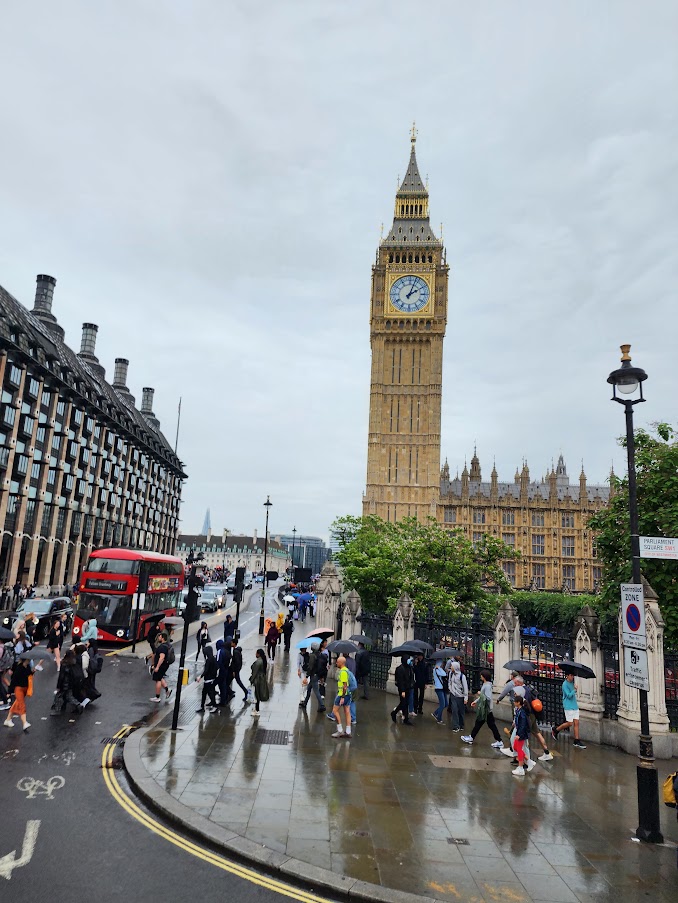
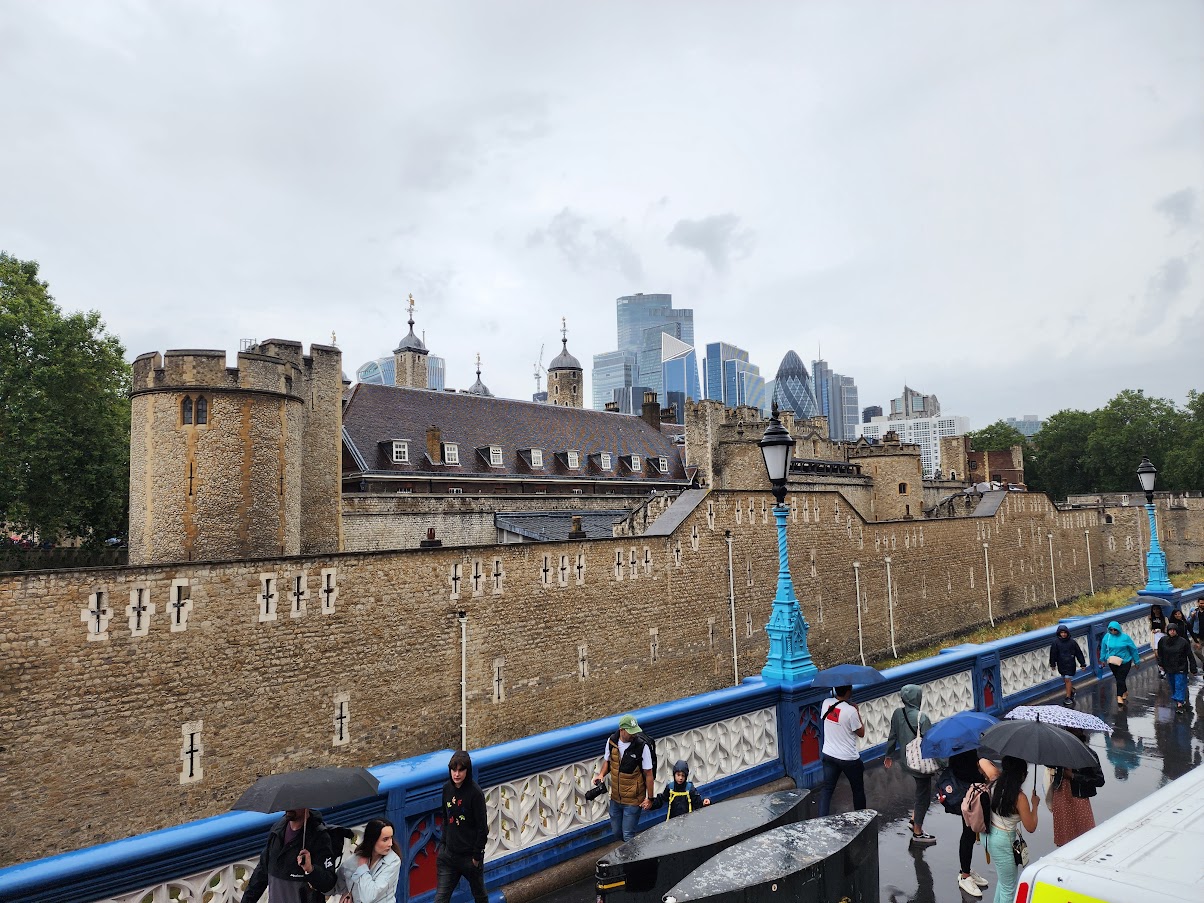
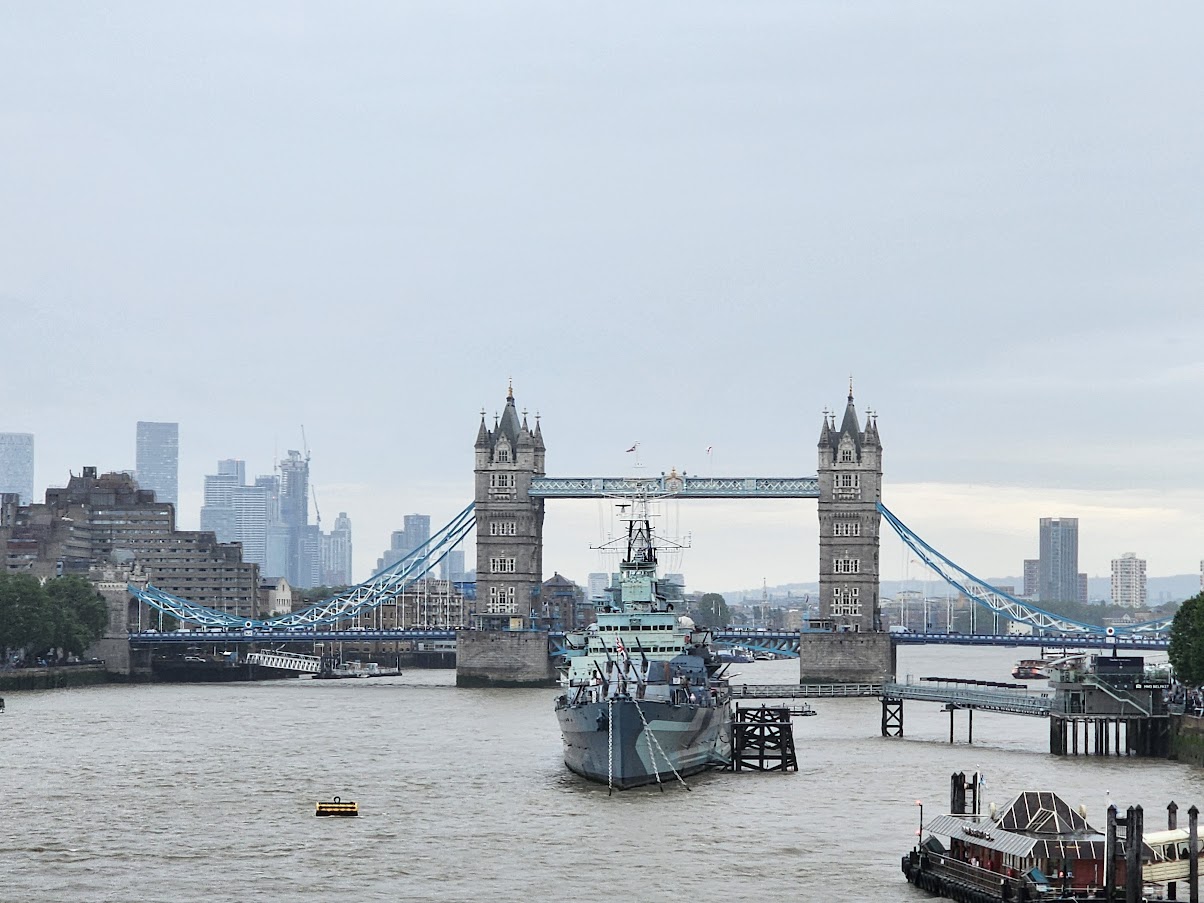
London did not disappoint, despite the rain.  I saw places that I’d only seen in films, but places I had always wanted to see in real life.  There was Trafalgar Square, and Piccadilly Circus, and the Houses of Parliament and Big Ben.  There was the Thames and London Bridge and the Tower Bridge and the Tower of London.  We got off our bus at the Tower of London, and by then I was soaked through because the rain had grown serious, but I did not mind.  I was in London!

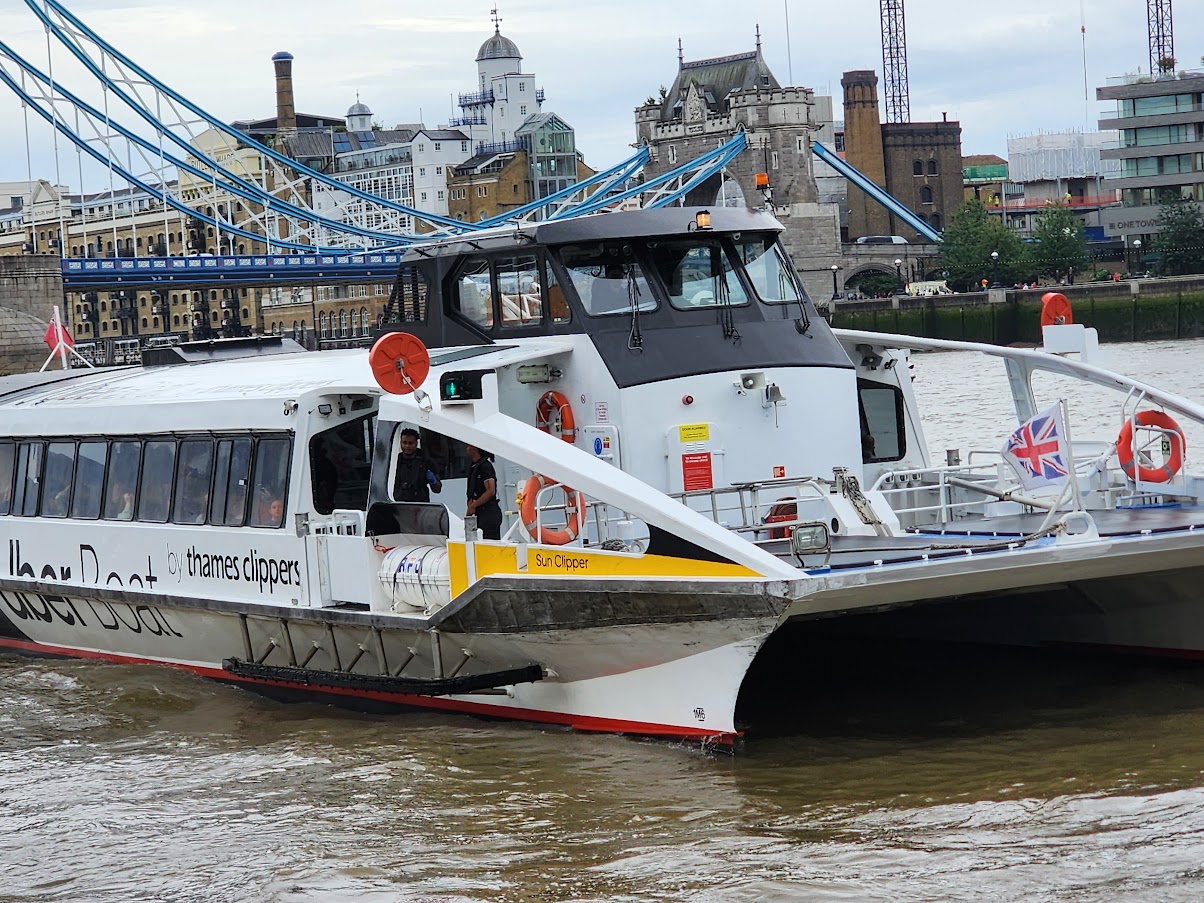
Our Thames river boat

The next part of the tour included a boat ride on the Thames for about 30 minutes, where we went under many of the cities bridges, including the Tower Bridge, the London Bridge, the Westminster Bridge, and the Millenium Bridge.  I enjoyed the boat ride a lot and the guide was very knowledgeable about various sights and offered suggestions of places to eat, and places to avoid because of pickpockets.  We all disembarked at the London Eye where several people were going, while a few of the rest of us waited again for the tour bus to pick us up to take us to Harrods.

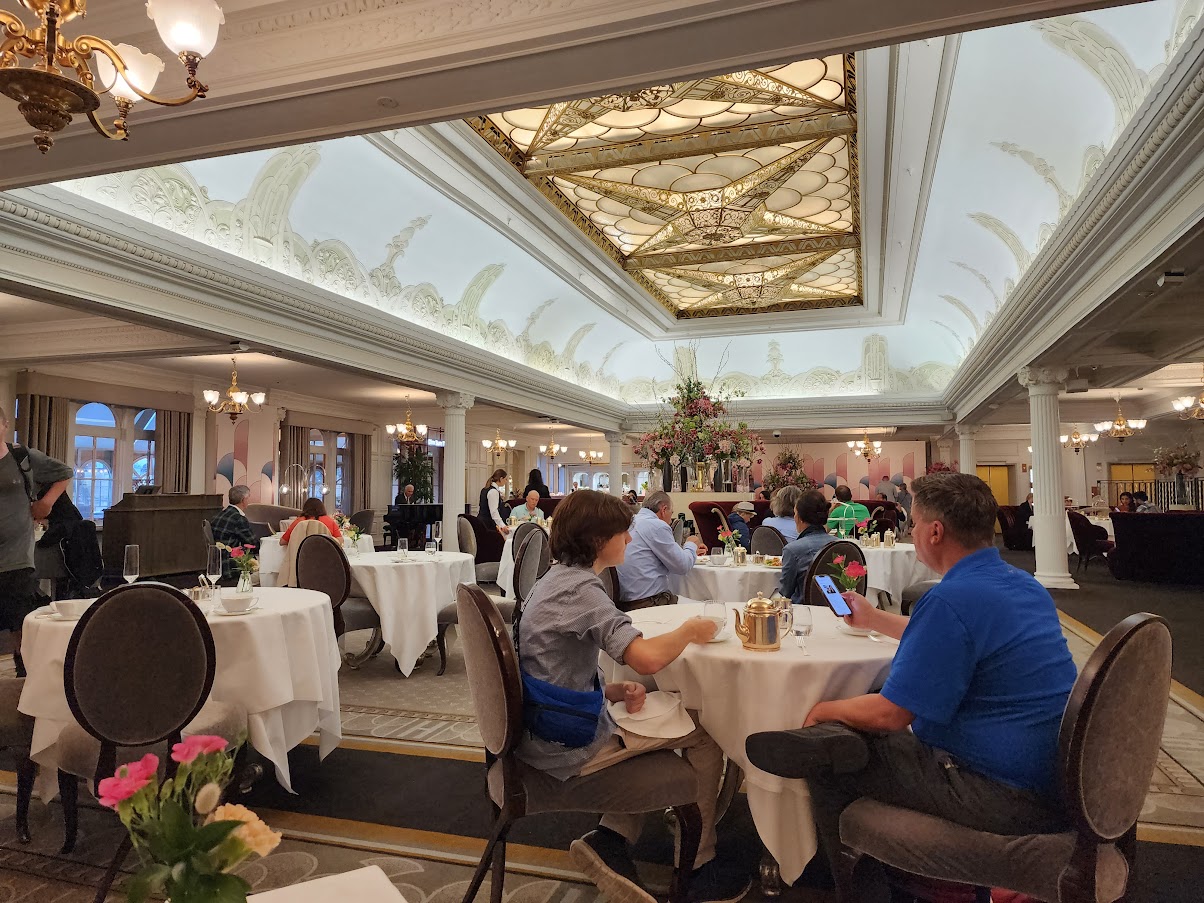
Harrods table service

Harrods Tea Room

Meanwhile, I kept glancing at my watch because the tour was only supposed to go to 4, and it was already 4:35, and I was worried that the cream tea at Harrods would make it difficult to get back to the room to change for the theater which I had plans for later that evening. Traffic was awful, with the rain, and had been so earlier, which is why we were running so late.  When we finally got to Harrods Tea Room, it was 5:20, and all I could think was “Curtain’s at 7:30!  Curtain’s at 7:30!”  But I knew that I had to adjust my plans, and enjoyed a beautiful afternoon tea of 2 scones (one fruit, one plain), and raspberry and cherry jam, and homemade butter (which may supposed to have been clotted cream but it had turned to butter), and tea with milk and sugar, and a glass of Prosecco.  I enjoyed every sip and bite in elegant surroundings, with heavy damask drapes and beautiful, heavy utensils and bright, shiny tea service.  The piano player played songs by Wham and Queen as I tucked into my tea.  And even though I was worried about being late to the theater, I decided to just savor my meal and not worry so much.

Wyndham’s Theatre featuring Oklahoma!

It was a little after 6 when I left the tea room and made my way back out to the street.  I would have loved to have looked around Harrods, and would have had the time had our tour not run so late, but I did get to pass through the jewelry department and was enchanted with all the ice.  And fortunately, there were taxis right outside.  I had to wait behind an entourage of  six beautiful Middle Eastern women, who looked as though they had bought out the store, but I caught a taxi to the Wyndham’s Theatre in the West End and we poked through traffic, finally arriving at 10 to 7.

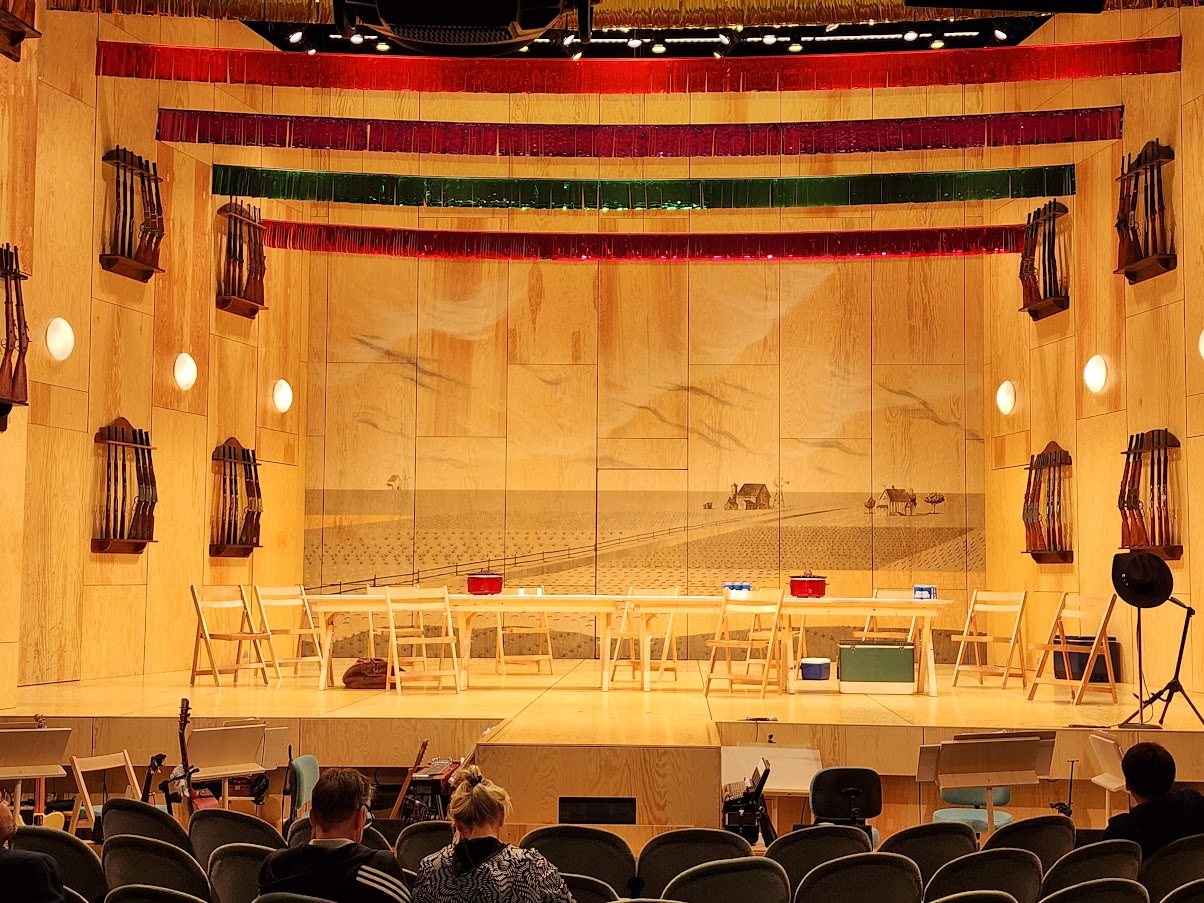
Wyndham’s Theatre stage

It was Oklahoma! like I’d never seen it. The reviews called it “sexy.” The theater itself was cozy and small, and the stage was a simple set up of chairs and tables and Curly began to sing “Oh! What a Beautiful Mornin’” on his own guitar.  He sang beautifully, even if his guitar playing was only so-so,  Of course, when I had bought the tickets back in April, I thought I was going to see Arthur Darvill play Curly—I had loved him on Legends of Tomorrow, and he was the only good thing about stinking Amy Pond on Doctor Who, so I was a little disappointed that the character had been recast, but the actor who played him, Sam Palladio, was great.  And Laurey was great.  But it was a weird staging, especially with the “Dream Ballet” which included a filmed section of the dancer’s face, I suppose imagining Laurey’s life if she were to be with Jud, and  the scene in the smokehouse, pitch black, and then a filmed section of Jud’s face, as “Pore Jud is Daid” is sung.  And then at the end, when Curly kills Jud, it’s not by stabbing but by gun, and I mean the stunt blood went everywhere, all over Curly’s suit and Laurey’s wedding dress.  It was a little gratuitous.  But overall, the songs were wonderful and I really had a good time. I had a really good seat too—row J, seat 14, right in the middle (but also, on the aisle, because there’s a break in the seating).

I caught a cab home (like the earlier cab to the theater, this one was pricey), and fell asleep almost right away.  I wanted to be refreshed for my plans for the next morning—the British Museum.

I trekked back over to Victoria Station, after getting an iced latte from Café Nero, taking a different walk from the one I had done previously, and caught the 18 bus to Museum Street.  A lady got on the bus after me and asked me if this was the bus to the museum, and I said yes.  (I must look approachable, since other people in London were asking me for directions!)  When we got off the bus, she got out Google maps and we walked together to the entrance to the museum—where the queue was huge but fast moving, especially because we both already had our tickets.  When I got inside, it was overwhelming.  And I was starving, not having had anything to eat since the cream tea the afternoon before.  I went to the British Museum’s pizzeria and got a pizza with mushrooms, artichoke hearts, and onions.  The bread was very good—chewy but well-baked.  The sauce and cheese disappointed me a bit but beggars can’t be choosers and all that.

The British Museum

When I was done, I walked through Ancient Greece and then Ancient Egypt, which is what I really wanted to see, because I love me some mummies, but the building became so crowded I started to get claustrophobic.  I found an upper gallery with new acquisitions and gazed at a map of Venice from 1500 for a while, then I wandered around and looked at the collection and then called Mom for half an hour.  By then I had calmed down a bit, and made my way through some of the China exhibit, and then I went to the gift shop and outside into the windy, sprinkly London air.  I could have looked at more art, but I really felt oppressed by all the bodies visiting the exhibits, so I figure if I go back to London some day, I will go see different rooms.  I took the 18 bus back to the station, and went to the room for a refreshing nap.

Inside the Barbican Theatre

Of course, I didn’t plan to nap as long as I did; I had intended on getting some dinner somewhere before I went to the Barbican Theatre to see A Strange Loop, but I overslept. Meanwhile, there were outages on the Tube; the Circle Line had seen some questionable behavior on the tracks (apparently, someone got down on the tracks for some reason?), and was running on a delay.  But “delay” is a polite word for “clusterfuck” because it got later and later and later, and no Circle line train ever appeared.  At 6:50, I left the Tube and went outside to find a cab, because it was clear that the train just wasn’t running, and I didn’t want to be late for curtain.  Fortunately, A Strange Loop started at 8.

£40 poorer, I arrived at the spectacular Barbican Centre.  I had seats up in one of the balconies, but ushers were trying to fill the orchestra seats, so I was given a “producer’s complimentary upgrade” to an orchestra seat.  Then I waited for the show to begin. Meanwhile they were playing terrific music on the overhead speakers, but Shazam couldn’t figure out any of the songs.  (Ugh.) I thought some of the songs might have been Liz Phair, but I wasn’t sure.  Anyway,  we were waiting and waiting and finally they announced there were technical difficulties, and the show would start late.  Like 8:30 late.  The show began with real energy and humor but in the end, it was not for me.  I found the singing wonderful, but what they were singing about was awful, hateful, depressing stuff, and the main character (who I also think was the writer?) was so degraded and humiliated as a plot device that the show was just painful to watch.  I kept waiting for intermission, because I was going to duck out and save myself, but there wasn’t any.  Also, I appeared to be the only person in the audience who hated the show—because everyone else gave it a standing O.  I wanted something light and happy and that was not was A Strange Loop was about.

When the show was over and I could make my escape, I looked for a taxi but unlike the night before, there weren’t any around.  I started walking, following the other theater-goers, feeling cold with the wind and a little sorry for myself, but remembering I had seen a Barbican Tube station, and hoping that if I went that way I could figure out how to get back to the apartment.  Fortunately, a taxi whipped by and stopped, and I was thrilled.

The driver, Johnnie, was curious about what I had seen, where I was from, and where I was going.  I told him about living in Atlanta and he butted in and said, “Pardon me, but I heard Atlanta was a shithole.”  I just laughed out loud because I did not expect such a comment.  I tried to enumerate some of Atlanta’s better qualities, but that’s hard to do when you live in a city you basically hate. (Sorry Atlantans!)  Anyway, the drive back was full of such pronouncements.  “Asshole tourists!” he cried when a bunch of drunks practically stepped out in front of him.  “Stupid maniac drivers!” he yelled when a bus dared get too close  “Get the fuck out of my way!” he yelled at a bicyclist. Then— “Ever been to San Francisco?”  “Yes,” I said.  He never stopped talking, and while I didn’t mind the “conversation,” I might have enjoyed the trip back a little more if I could just focus on the beautiful skyline, with the pinky-purple light of the London Eye at the center of it.

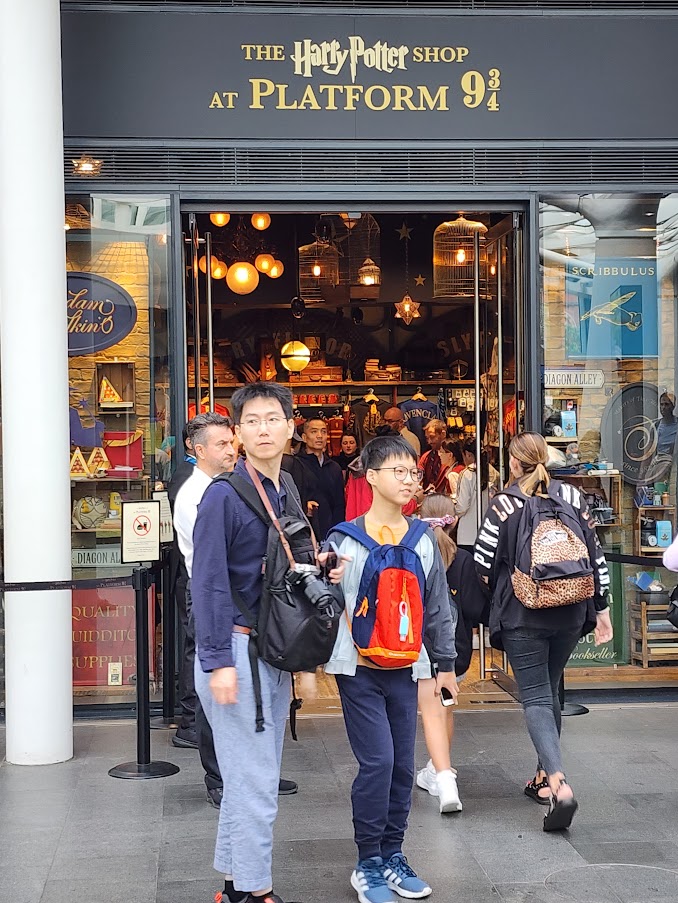
Harry Potter Store

The next morning I headed back to Edinburgh, but not before stopping for a falafel sandwich for breakfast and visiting the Harry Potter Store at Platform 9 ¾ which was right there in King’s Cross Station.  (Somehow I’d missed it when I was there before.)  There was a queue to get in, and the store, all things considered, was pretty small,  but there was some really cool stuff there.  If I had wanted to blow a lot of money, I could have, gearing myself up in Ravenclaw regalia.  But I satisfied myself with the one thing I wanted:  a Marauder’s Map scarf, which I can’t wait to wear when it’s scarf-weather again.  And then I got on my train (sadly, not a first class coach this time), and rode back to Edinburgh, with a golden retriever named Chilla in the seat across the aisle.

10/10 would definitely go again.

More Photos

Chilla the Doggo

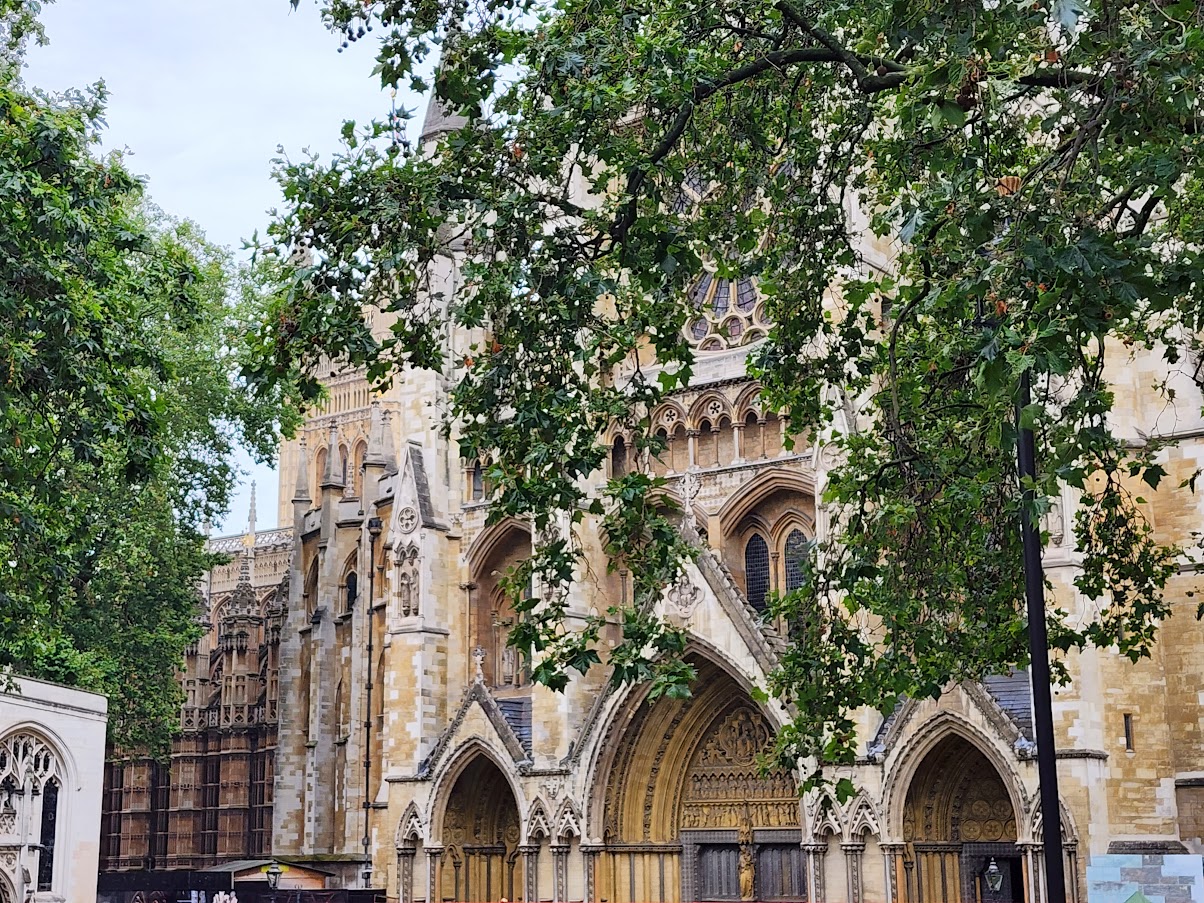
Westminster Abbey

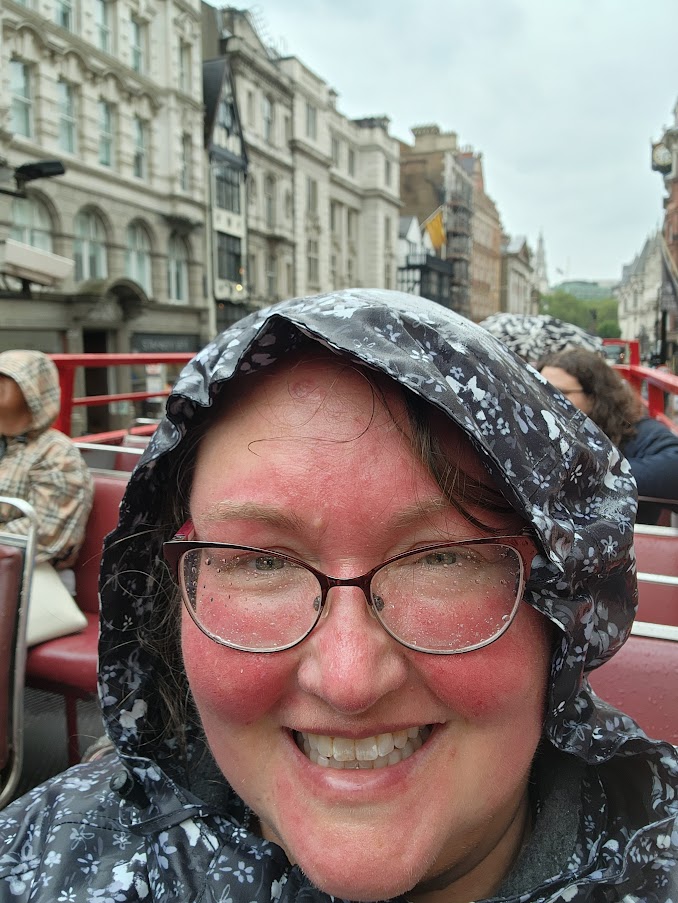
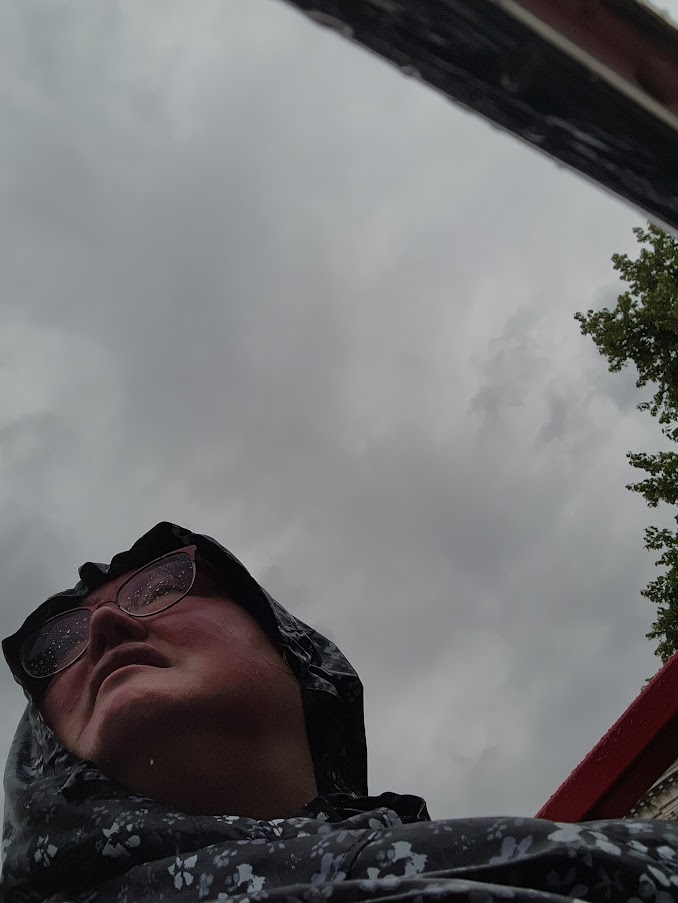
A very rained-on selfie

View of the Thames

Trafalgar Square

The Courts of Justice

Temple Inside the British Museum

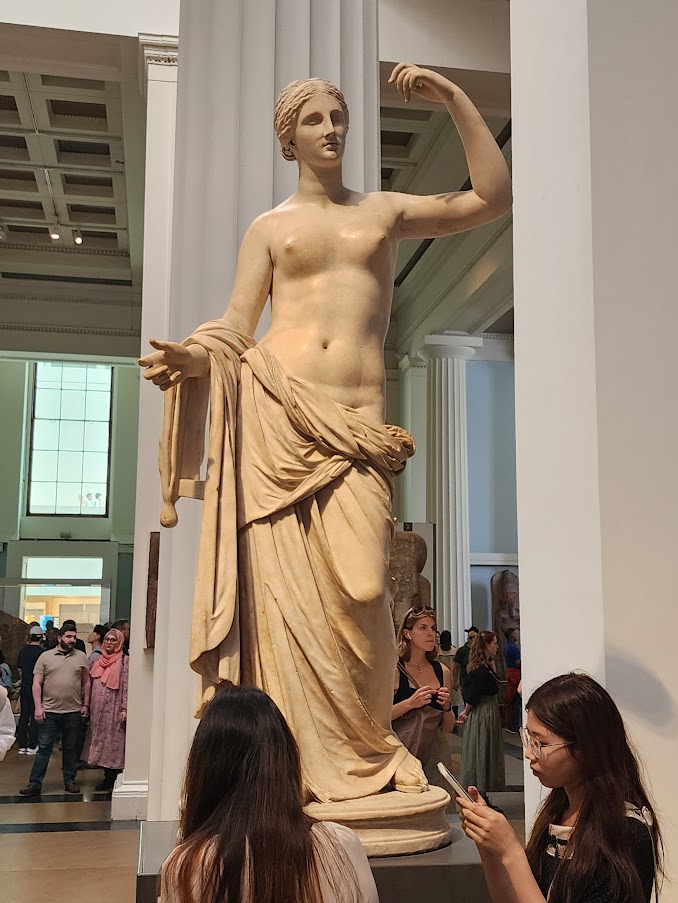
A random Greek lady

“Bohemian Rhapsody” on the piano is…interessting.

An Egyptian ram

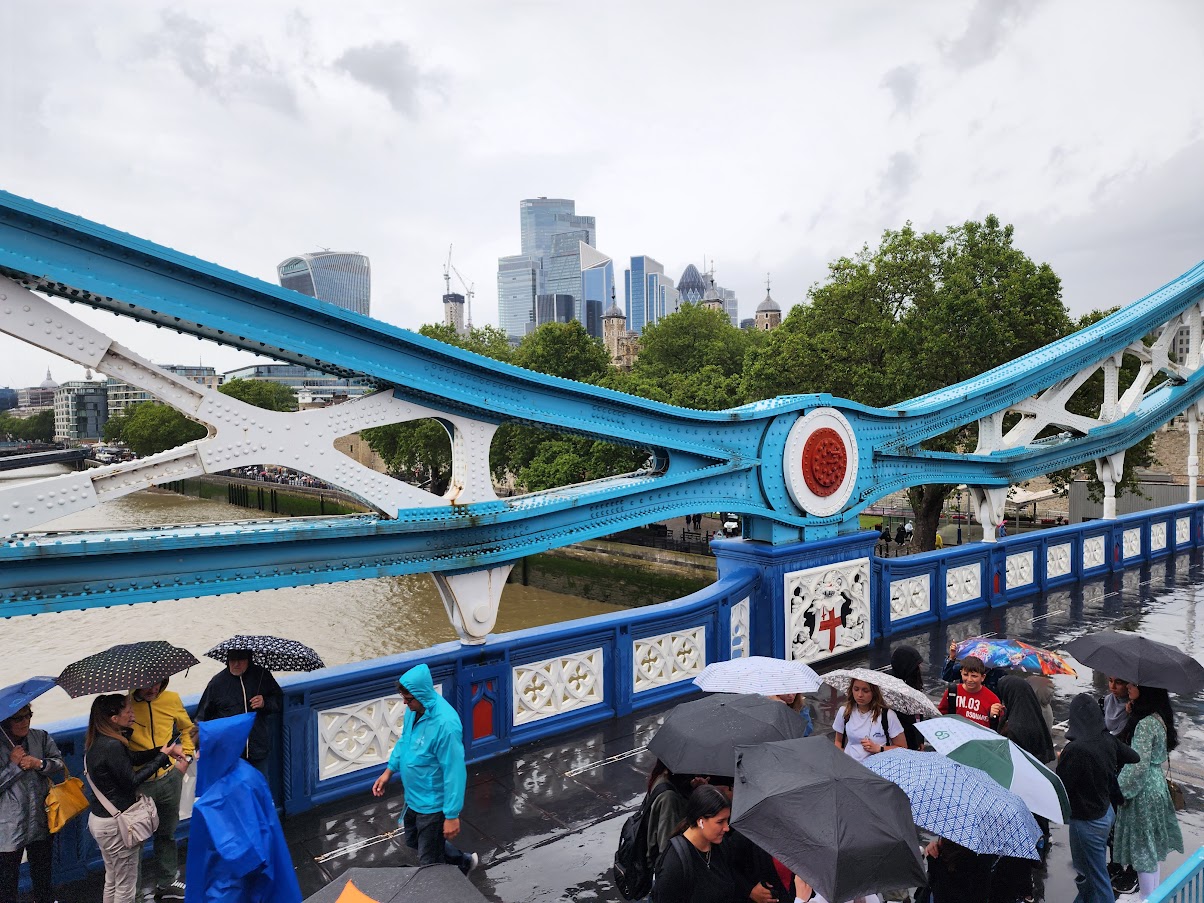
On the Tower Bridge

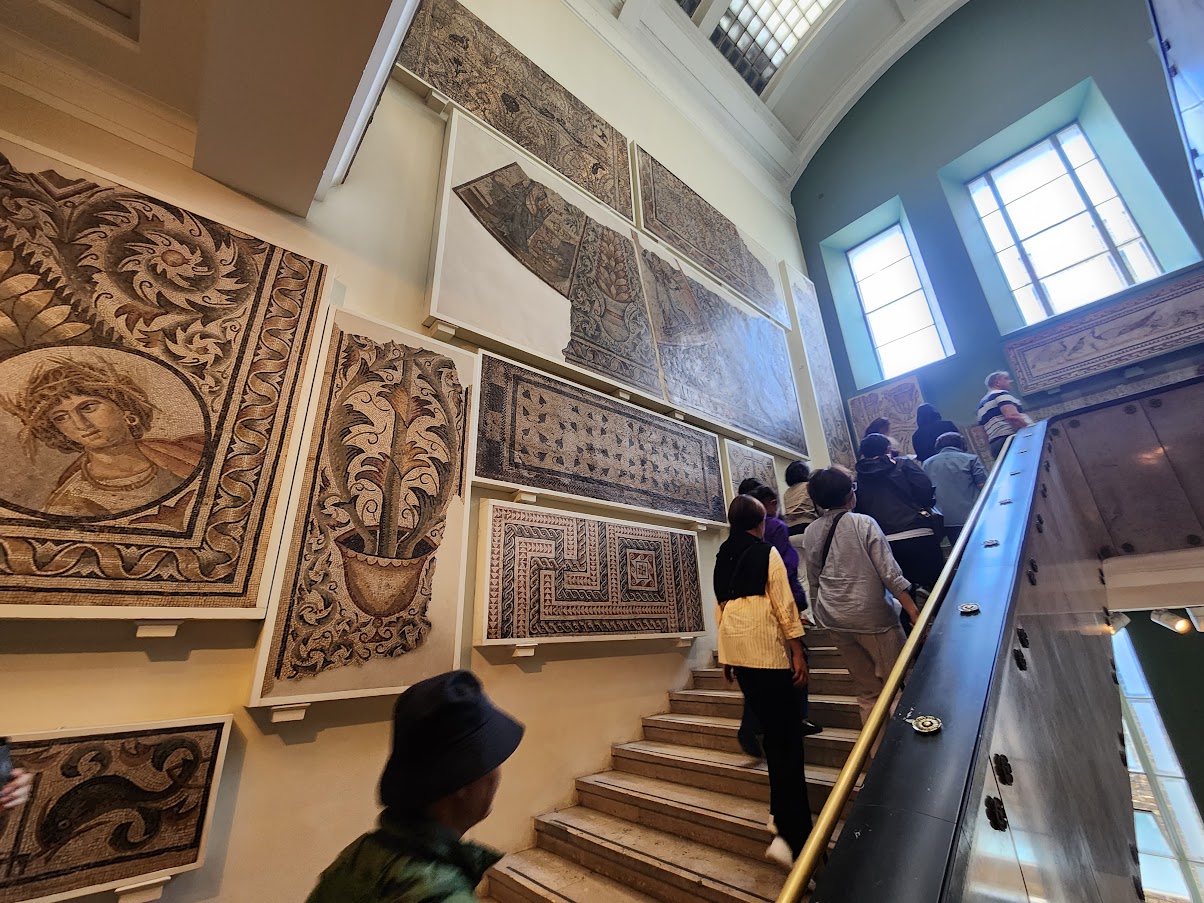
Mosaic wall in the British Museum

Going under London Bridge

London Bridge Hospital undergoing renovations

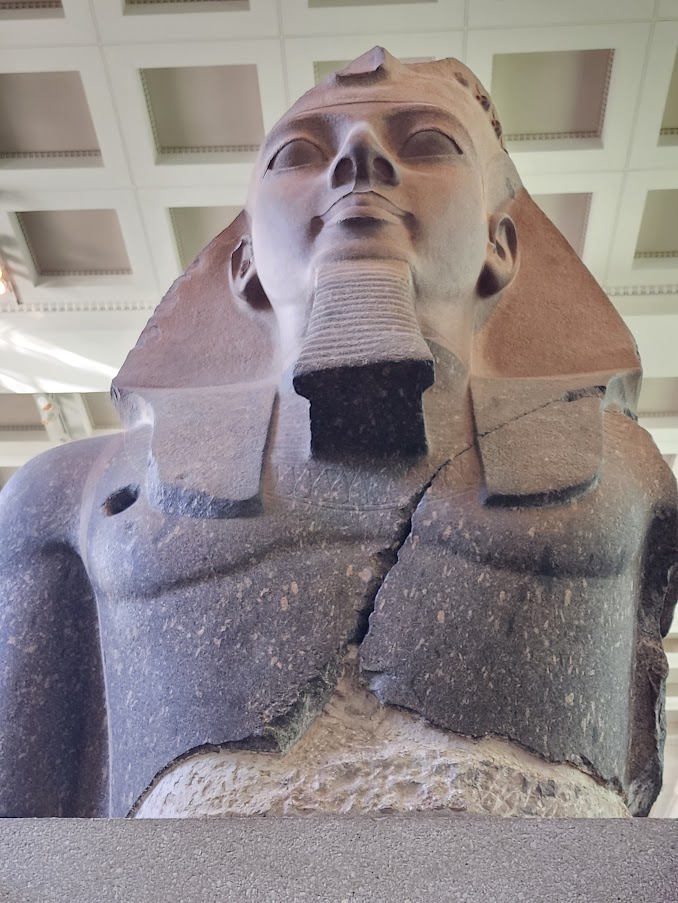
King Ramesses II

Large Chinese incense burner

View of the Globe Theatre from inside the boat

Big Ben

Inside the British Museum

Cat mummies at the British Museum

More cat mummies

British Museum courtyard

A Chinese decorated wall

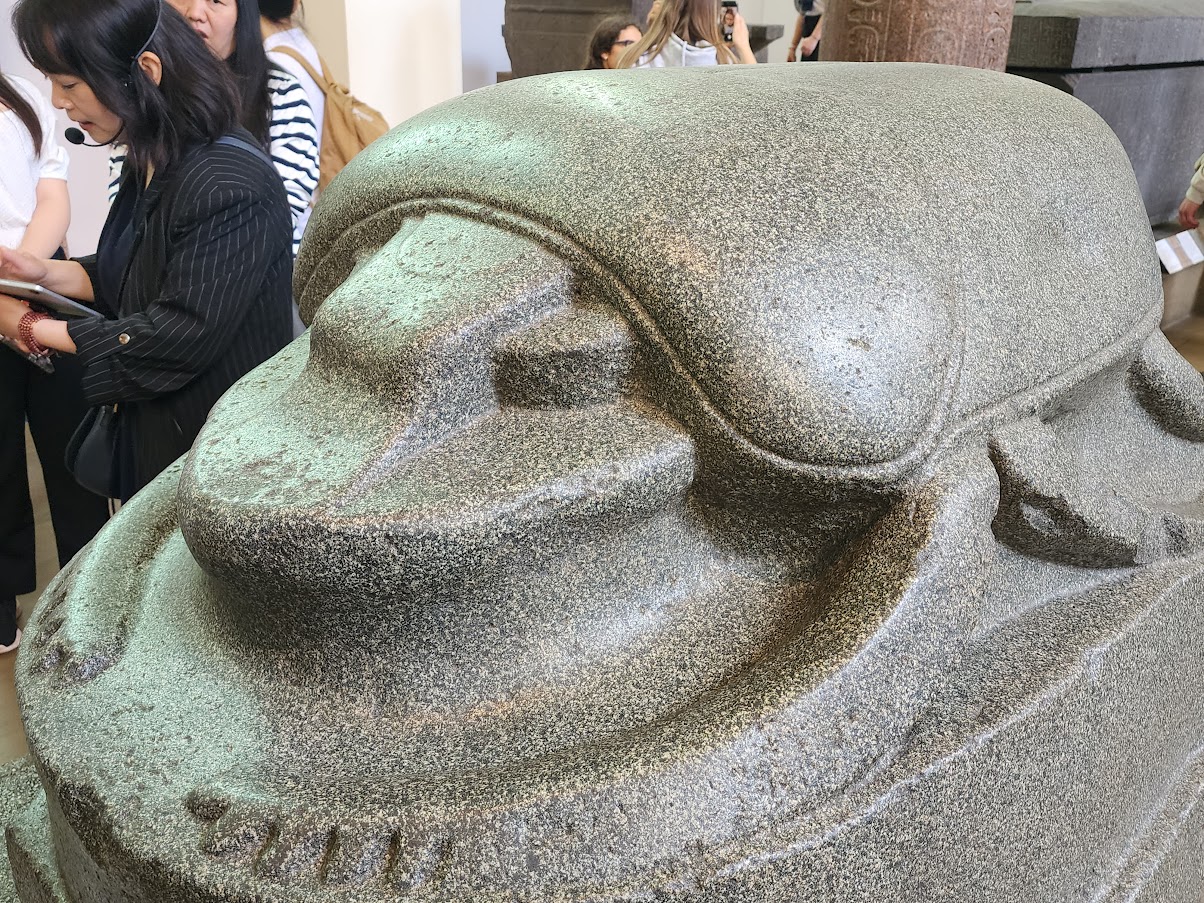
Colossal Scarab

Another view of the Colossal Scarab

Funerary statuettes

Greek redware urns

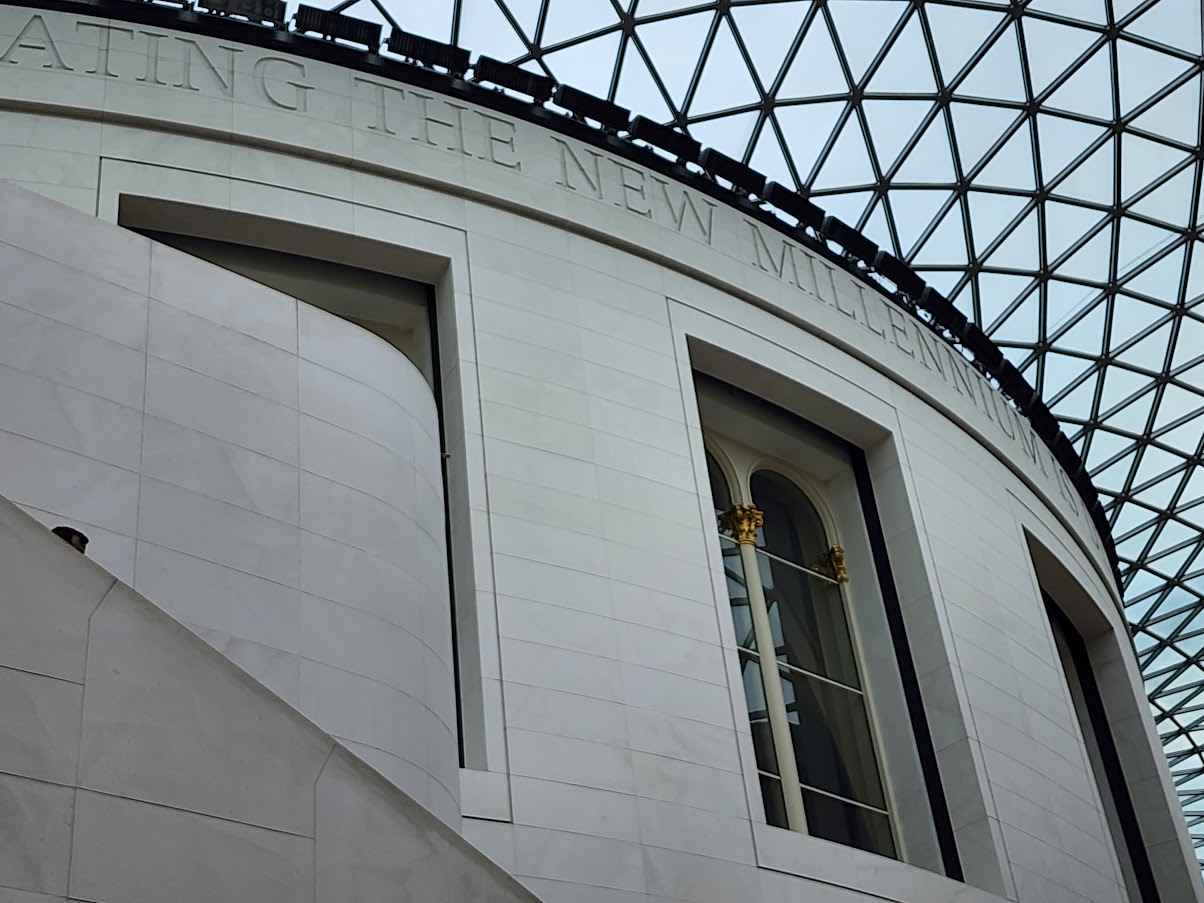
British Museum dome

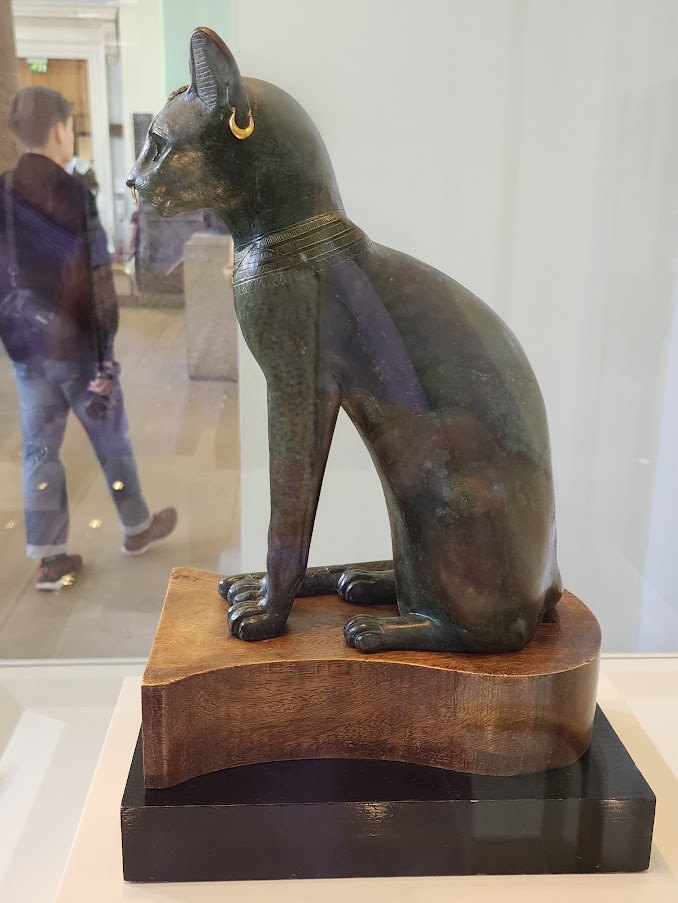
Egyptian cat figurine side view

Egyptian cat figurine front view

Egyptian statue

Egyptian statue

Across from the Tower of London

A cool clock I saw hanging off one of London’s buildings

Across from Wyndham’s Theatre

The Tower of London

The Tower of London

An accidental selfie

The Tower Bridge

The London Eye

The Tower Bridge

Queen Hathor

London’s Egg Building, aka “The Gherkin”

Amitabha Buddha

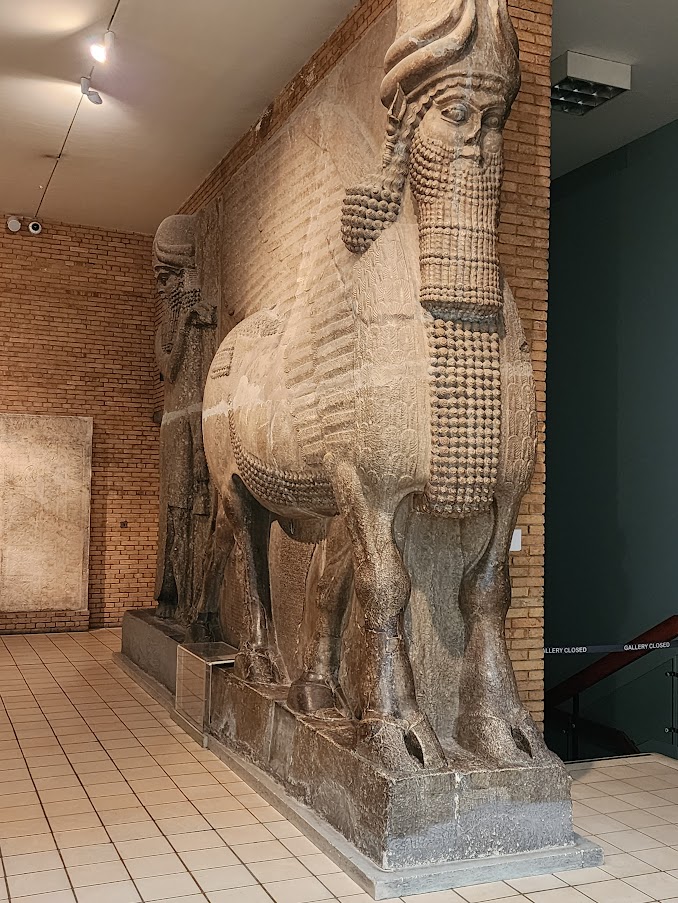
Khorsabad, the Palace of Sargon

Palm-leaf column of King Ramesses II

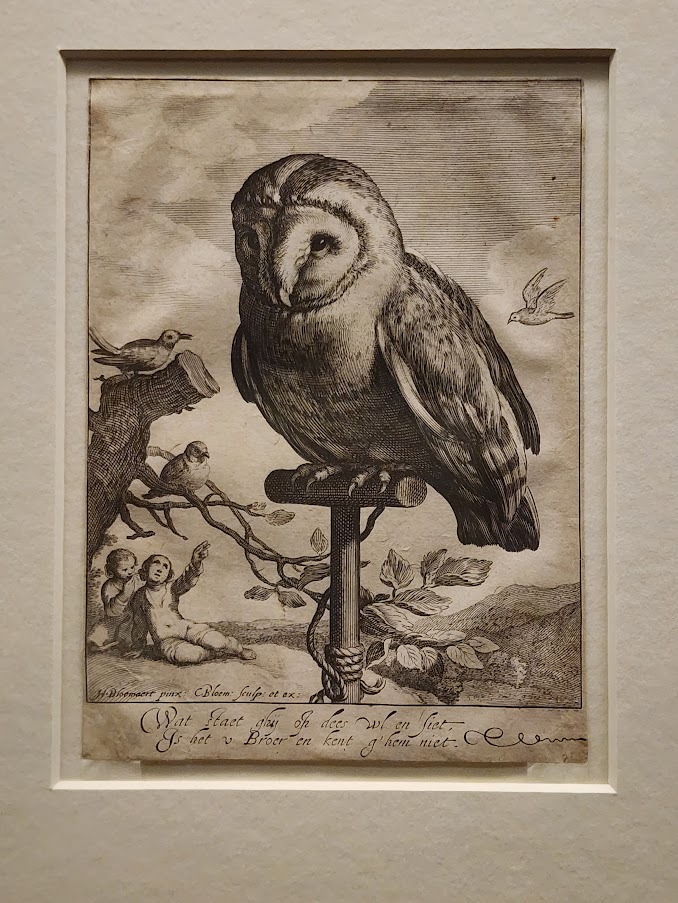
Cornelis Bloemaert, Owl on a Perch (1625)

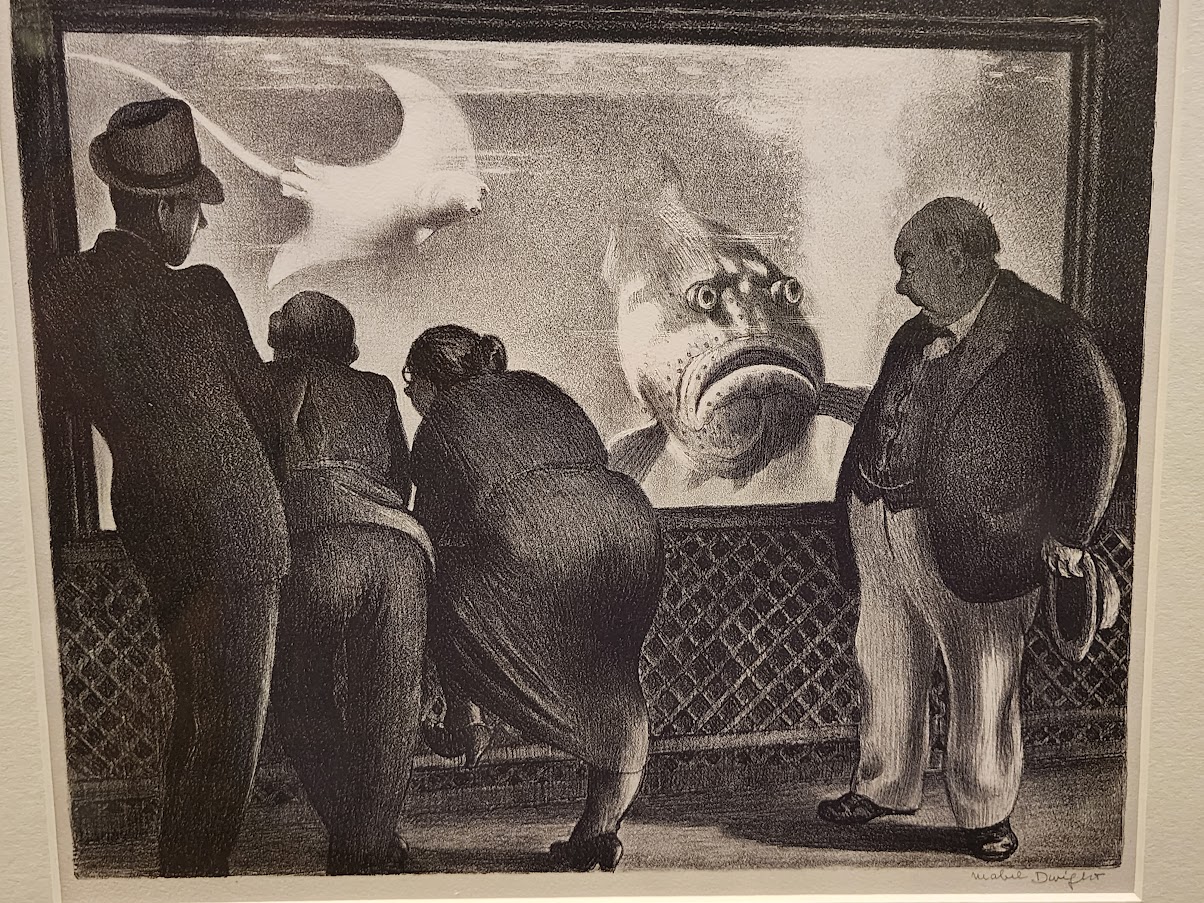
Mabel Dwight, Queer Fish (1936)

*Note:

The title of this blog post is a lyric from Paul McCartney & Wings’ song “London Town.”

The Isles of Mull, Iona, and Staffa

A long day lay ahead of me on the weekend I decided to go see the Islands of Mull and Iona.  For one thing, the tour left from Glasgow, so I had to take an impossibly early train, which meant I’d have to leave even earlier to walk the mile to the train station.  And when I got there, the ticket machine couldn’t locate my e-ticket, and the ticket counter was dark and closed.  So I wound up having to pay for another ticket, which really ticked me off.  But in for a penny, in for a pound (£27 to be exact).  I needed to make the 6:07 train so that I could get into Glasgow on time; the bus was leaving at 8:30.  Despite the drama with the tickets, the train ride itself was uneventful, and I arrived in Glasgow at 7:30.  I walked (in the rain) to Buchanan Bus Station, and waited for my tour bus to arrive.

When the bus showed up, and I saw the driver was Stewart, I was delighted.  Stewart, you may recall, was the driver for my Speyside Whisky tour I took last year, the one where there were only 5 of us on the tour.  There were a few more people on this tour (ten), but Stewart remembered me and seemed as happy to see me as I was to see him.  I was suitably complimentary about his tour guiding to the other people on the bus, and I think that eased everyone’s anxiety.  We knew we were in for a good time.

Loch Lomond in the rain

Because the Hebrides are islands off the coast of the Highlands, the first day of driving was mostly stopping to visit Highlands-related sights.  But I did like the way Glasgow looked as we drove through it (industrial, shiny, and large) to get to Loch Lomond and the Trossachs National Park, our first (rainy) stop.  It was really just a bathroom/coffee break, but Loch Lomond gleamed in the rain.  I sheltered under a ledge at the coffee shop, and discovered a nest of five baby birds, maybe magpies, though I’m no birder.  They seemed hungry, and a parental bird flew to the eaves on the other side of the coffee shop, but these little babies were left alone, tweeting their displeasure.

Birbs!!!

Stewart and I chatted about whiskies and places I’d visited since I’d gotten back to Scotland while we waited for the other passengers to get their caffeine. He was interested to hear when I had arrived, and whether I was teaching Scottish literature again (which I am).  And he asked if I’d be coming back next year.  “I hope so,” I told him, imagining for a moment the Scottish books I would teach.  But then the moment was over, and we all hustled back on the bus.

We stopped a number of places, including Glencoe and the Three Sisters, which never get old to me.  Especially in the rain, the Highlands reek of Scotlandness.  Glencoe was suitably misty and broody, and The Three Sisters disappeared into the low-hanging clouds. I felt that wild call again, that primal spirit of place that Scotland holds for me, though I don’t know why.  If any place (besides Louisiana or Venice) should capture me, you’d think it would be Ireland—being as I’m Irish, and yet, I don’t have a compelling desire to go there again.  (I mean, I wouldn’t say no, if someone invited me to go with them—I’m not a lunatic!) Maybe the difference depends on my staying in Scotland as long as I have been—my affinity for the place has grown.

Achnambeithach

At the bottom of the glen, we stopped in Achnambeithach, a National Trust for Scotland heritage place.  It’s really just a white cottage at the base of the ben (that’s Scottish for mountain!), and I’m not sure why it’s a heritage spot, but the views are spectacular. Now that I think about it, maybe it’s not the cottage that’s the historical site, maybe it’s the bridge…hmm.  Anyway, you can look back up into the whole glen and be inundated with beauty.  The rain had let up a little bit, and blue sky peeped through some of the heavy clouds, making the dull, rain-soaked green of the mountains flash veridian. The light gleamed off the loch, and the stream that fed it bubbled.

Returning to the road, we ate lunch at the Glencoe Visitor Center (I tried cock-a-lackie soup, which was not my favorite, not the least of which because it was a chicken soup, and I don’t eat chicken), then drove through more mountains until we got to our first ferry stop of the trip, the Lochaline Ferry Terminal which would bring us to Mull. The trip over the Sound of Mull to Fishnish took maybe 20 minutes, and Stewart encouraged us to get out of the bus if we wanted to, although it was raining and between rain and sea spray, I’d just as soon stay inside, cozy and dry.  But others got out and apparently gawped at the many jellyfish in the water, which they were only too excited to talk about.  For myself, I was eager to be going to an island less touristy than Skye had been two weeks before, and couldn’t wait to see what Mull would offer.

Seals that look like rocks to me

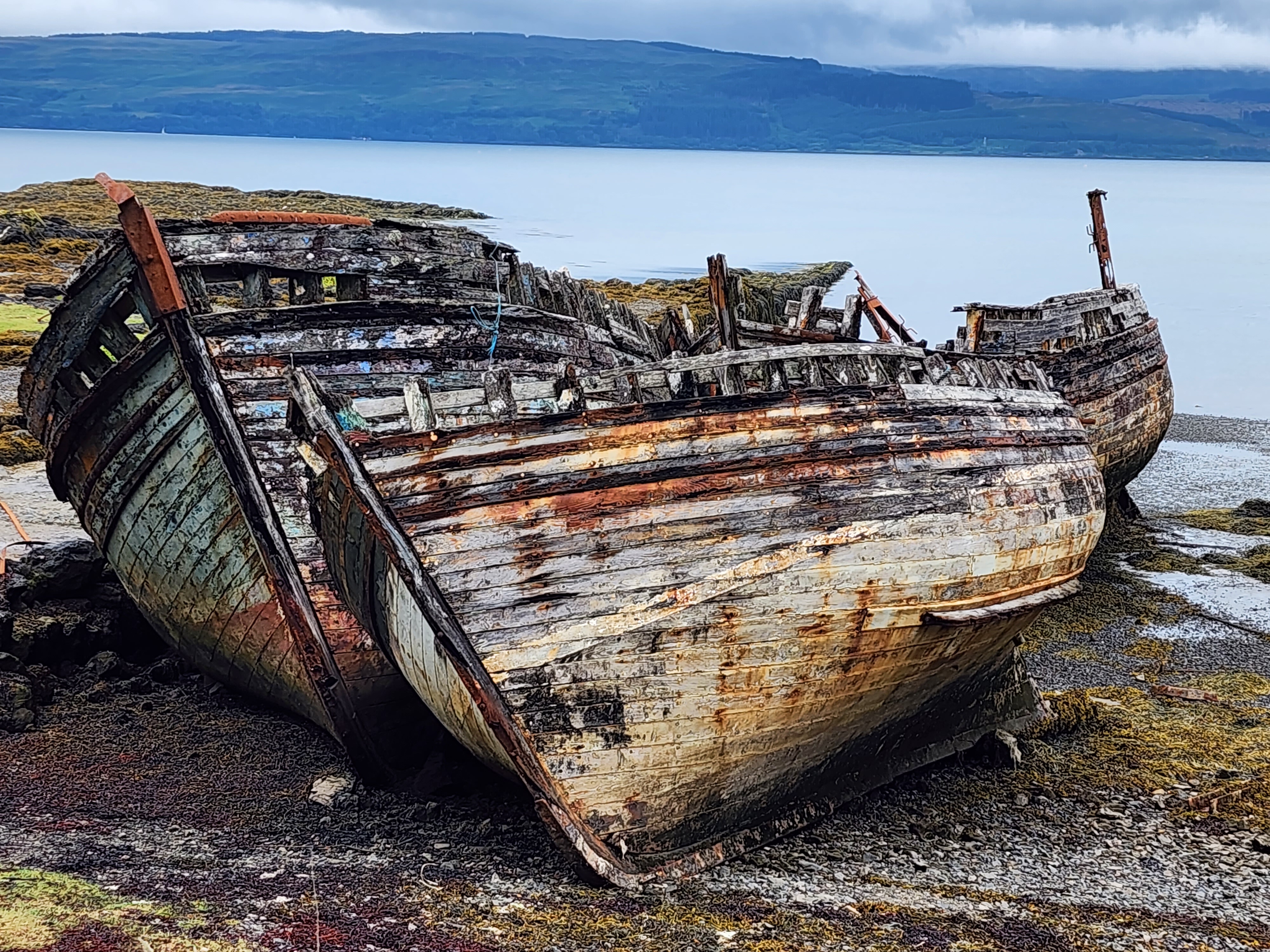
And Mull delivered!  First, we saw some seals—I’d say they were sunning themselves, but actually there was no sun to be found, so they were merely lazing on a little islet.  We stopped to take pictures, but the distance made the seals somewhat indistinguishable from the rocks.  We stopped again at the site of three old wrecks, apparently hired by some wealthy gent in the early 1900s to sail around the world but they never left Mull, just sat there in the water and decayed for 100 years. We stopped to look at some Heilan coos, and a scenic overlook at Lochan na Guailne Duibhe. Then we drove up to Tobermory, where we would all be staying for the night.


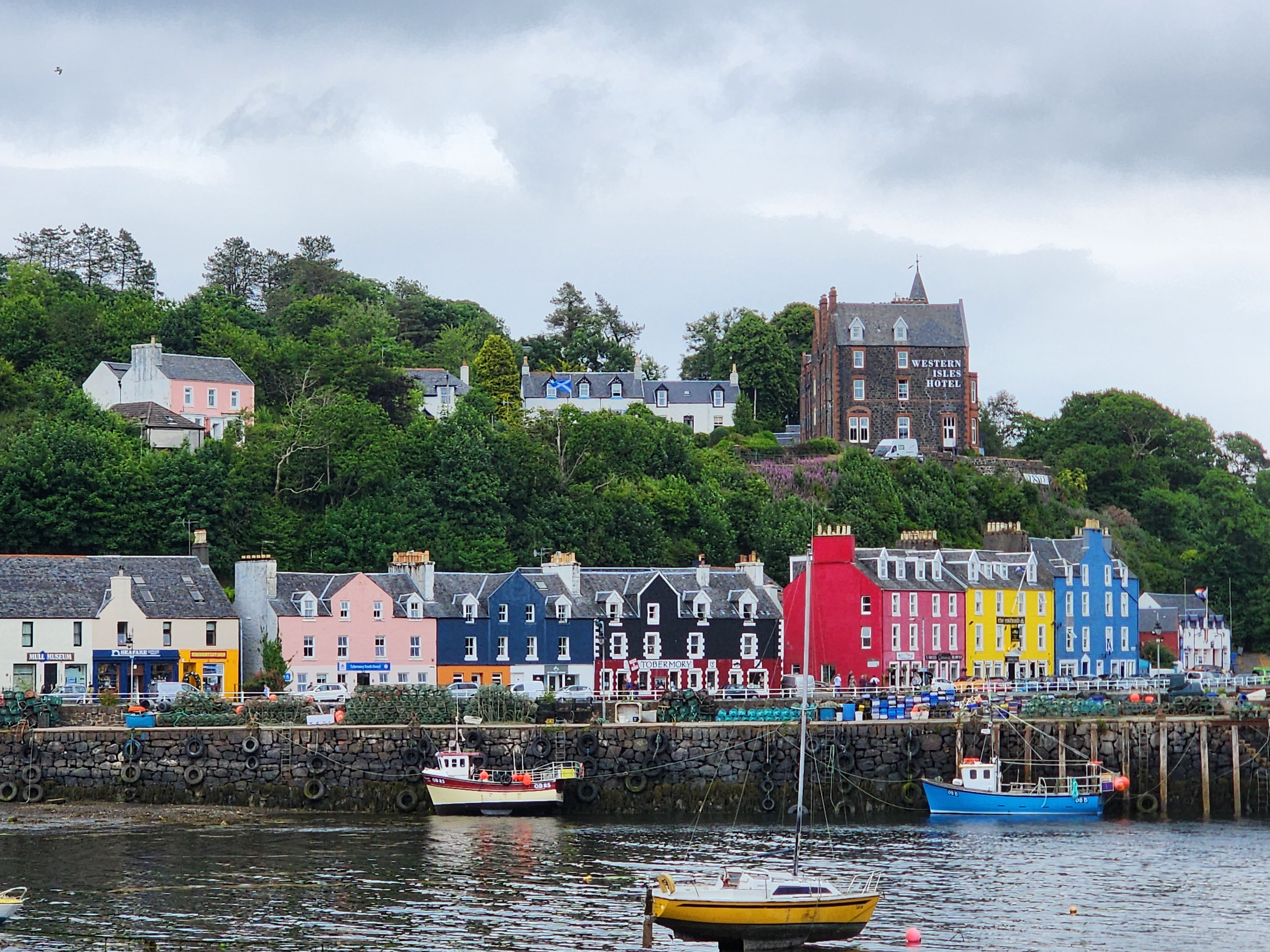
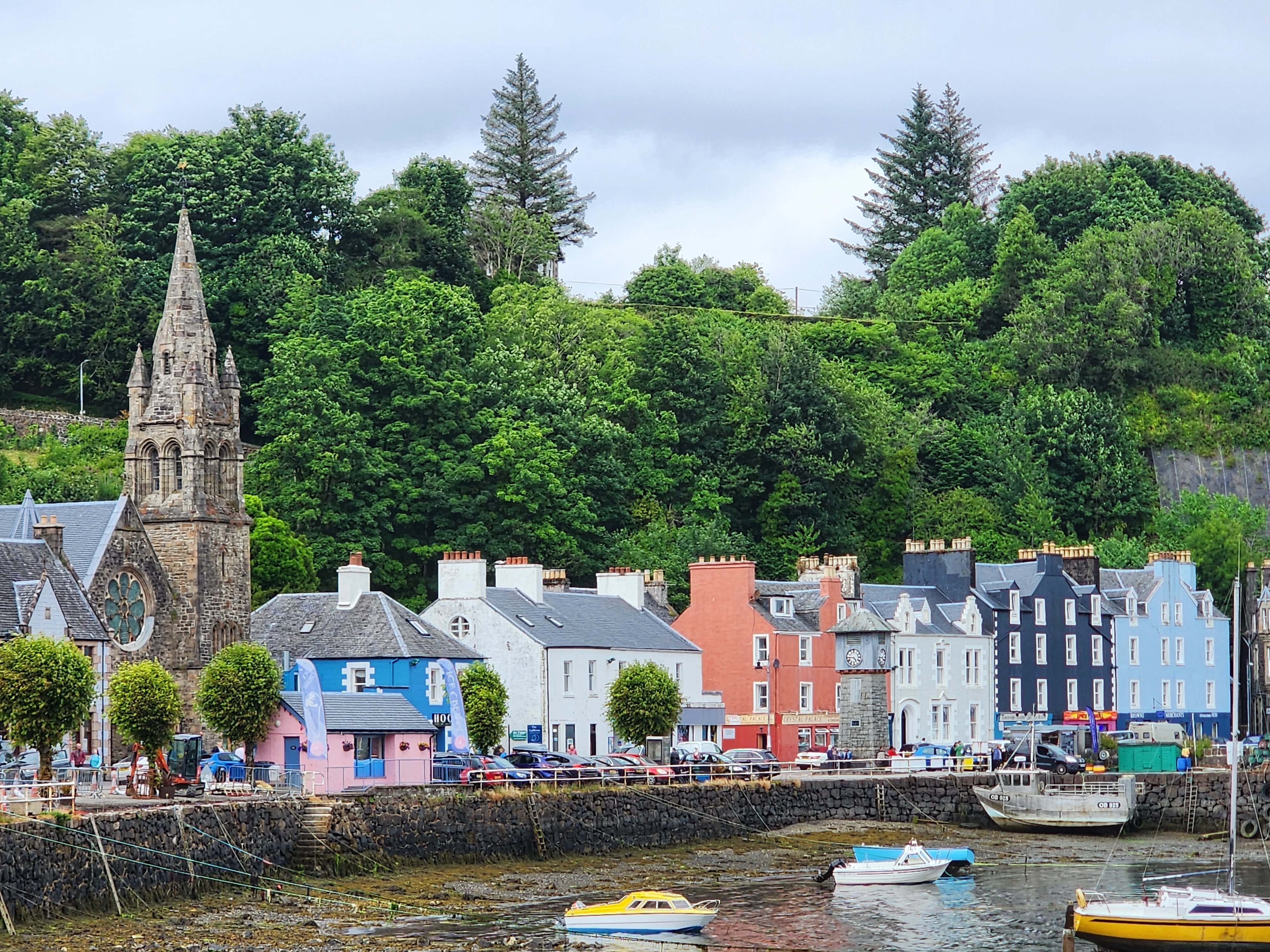
Tobermory

The wrecks

Tobermory is a lovely fishing village, where fresh fish is on the menu at all the local restaurants.  The buildings are each painted different colors, like Portree on Skye, and I was staying at the very end of the harbor, in a little red cottage apartment that was ghastly expensive. (Because Rabbies claimed they couldn’t find me a place to stay—even though I booked the tour two months in advance—I had to find my own accommodation, and this was what was available.)  It was clean, with a comfortable bed and wonderful black-out curtains.  The downside of Otter Apartment (besides the fee) was the doorlock situation—which is to say, I couldn’t figure out how to lock the door when I left the building.  But fortunately, no one felt inclined to enter the apartment while I was out.

I would have liked to have eaten at the Mishnish Restaurant (the yellow building in the photo above), first opened in 1869 and a Mull institution, but silly me, I hadn’t made reservations.  (I am not used to making reservations at restaurants, but that seems to be a thing you do here in Scotland.)  So after being turned away by a concierge with a pitying look, I got a few items at the local Co-op grocery instead, and made a passable dinner of mint-yogurt potato salad, Doritos, and a Coke Zero.  Then I crawled into bed, read a little, and went to sleep.

Old stone bridge

Stewart picked me up a little before 9 the next morning, the last person on the bus before another day of touring.  We drove along the single-lane roads of Mull, thousands of foxglove plants purpling the hillsides—so lovely, and so deadly, making a photo stop at an old stone bridge dating from the 1800s. All the burns and waterfalls collected in a river that ran beneath the bridge.  When we arrived in Fionnphort we took another Ferry to the Isle of Iona, but this time Stewart stayed behind with the bus, because only inhabitants of Iona can have vehicles on the island.

A nunnery window

Nunnery walls

I ate lunch at the Argyll Hotel, whose dining room was decorated in pleasant seascape blue and gray—another nondescript cheese and chutney sandwich and a bowl of soup.  But because I ate lunch instead of hot-footing it over to Iona Abbey (a poor choice, considering the quality of lunch), I didn’t get a chance to look at it, and I’m sorry about that, because it appeared lovely from the ferry, and it is a Christian pilgrimage site. Iona is where St. Columba established a monastery in the 6th Century, when he came over from Ireland, and it’s the place from where Christianity spread in Scotland. Since I missed the Abbey, I went to the ruins of the Nunnery, took photos, and then called Mom to catch up with her.  (She was fine.)

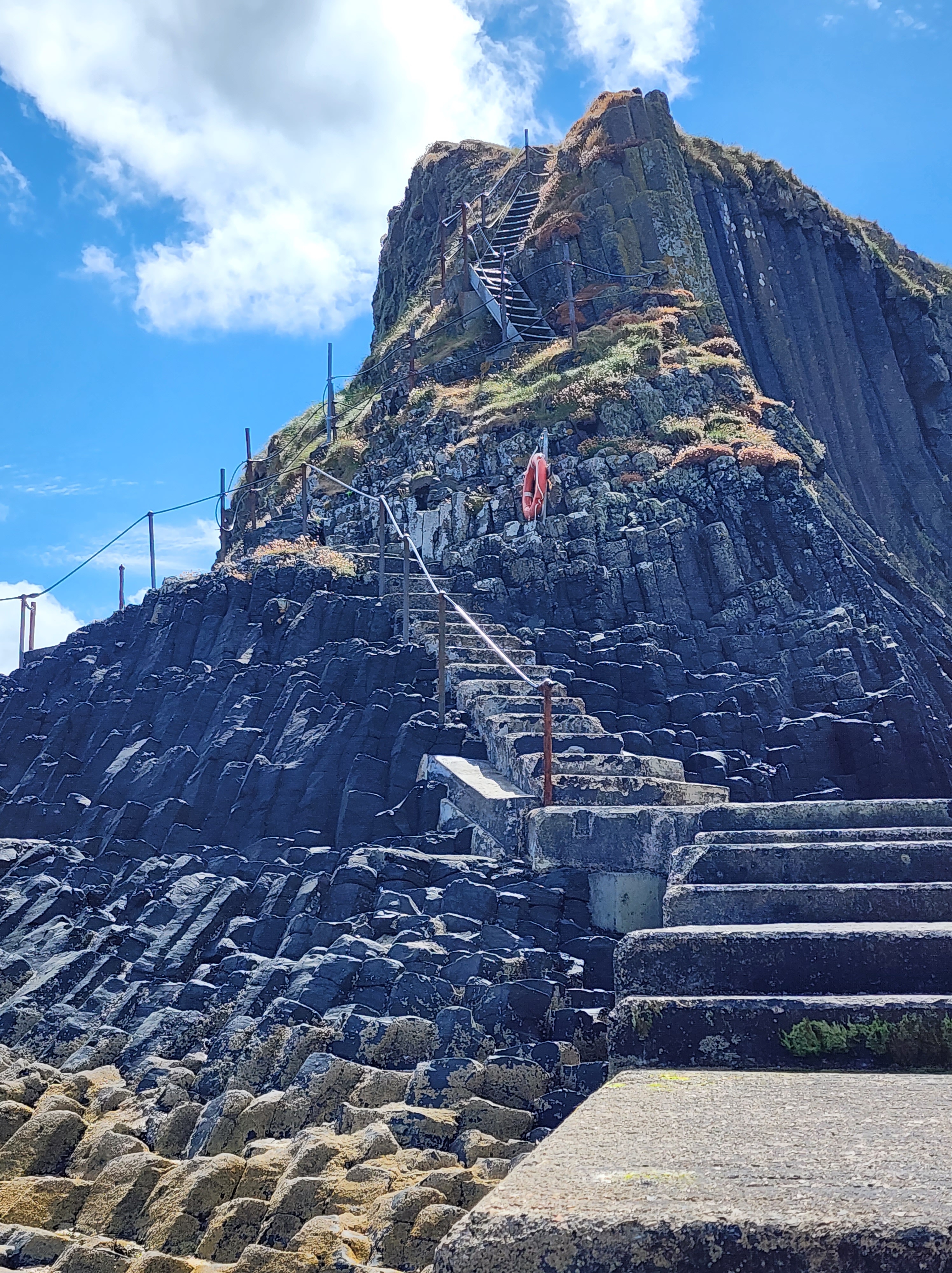
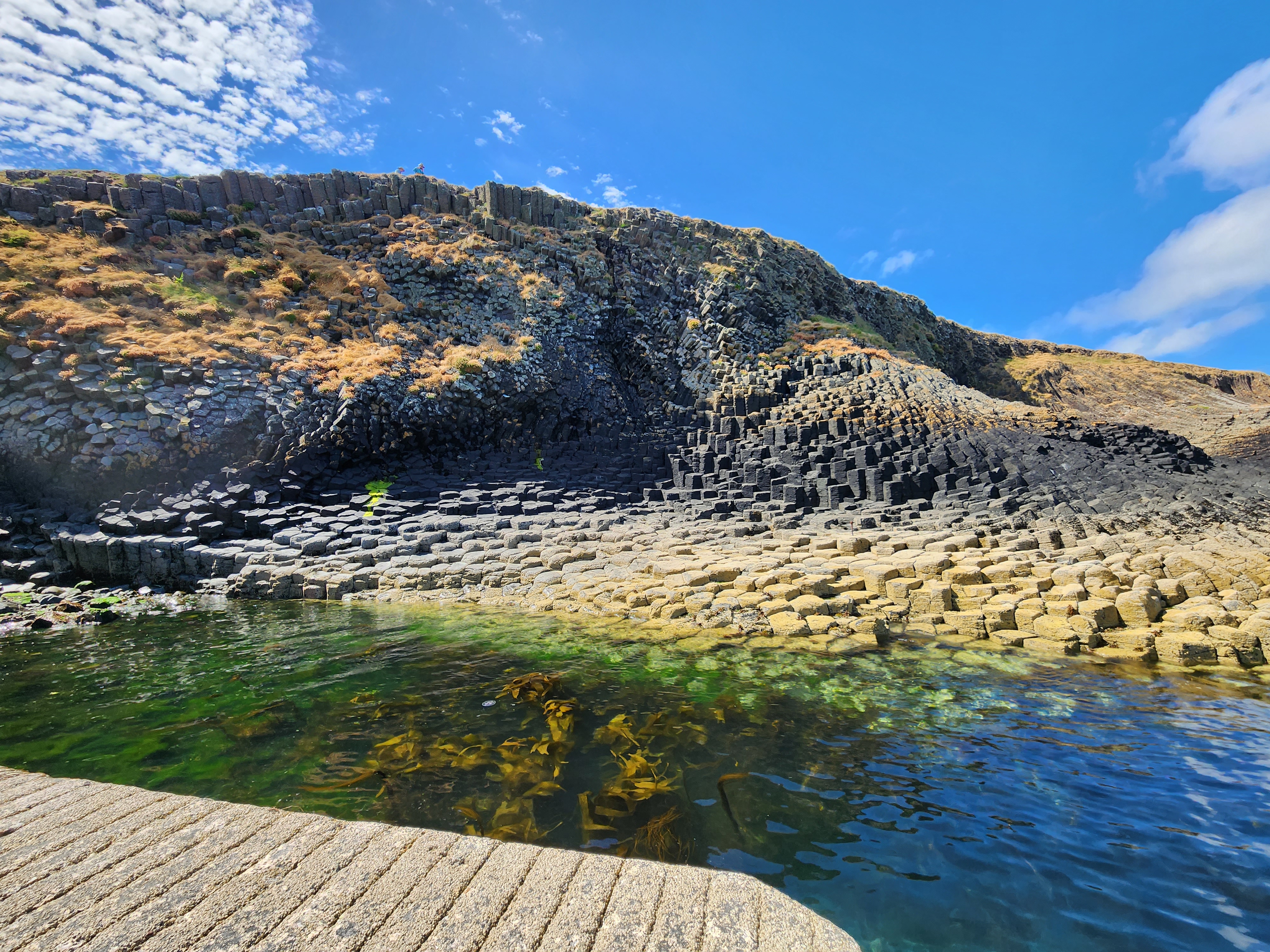
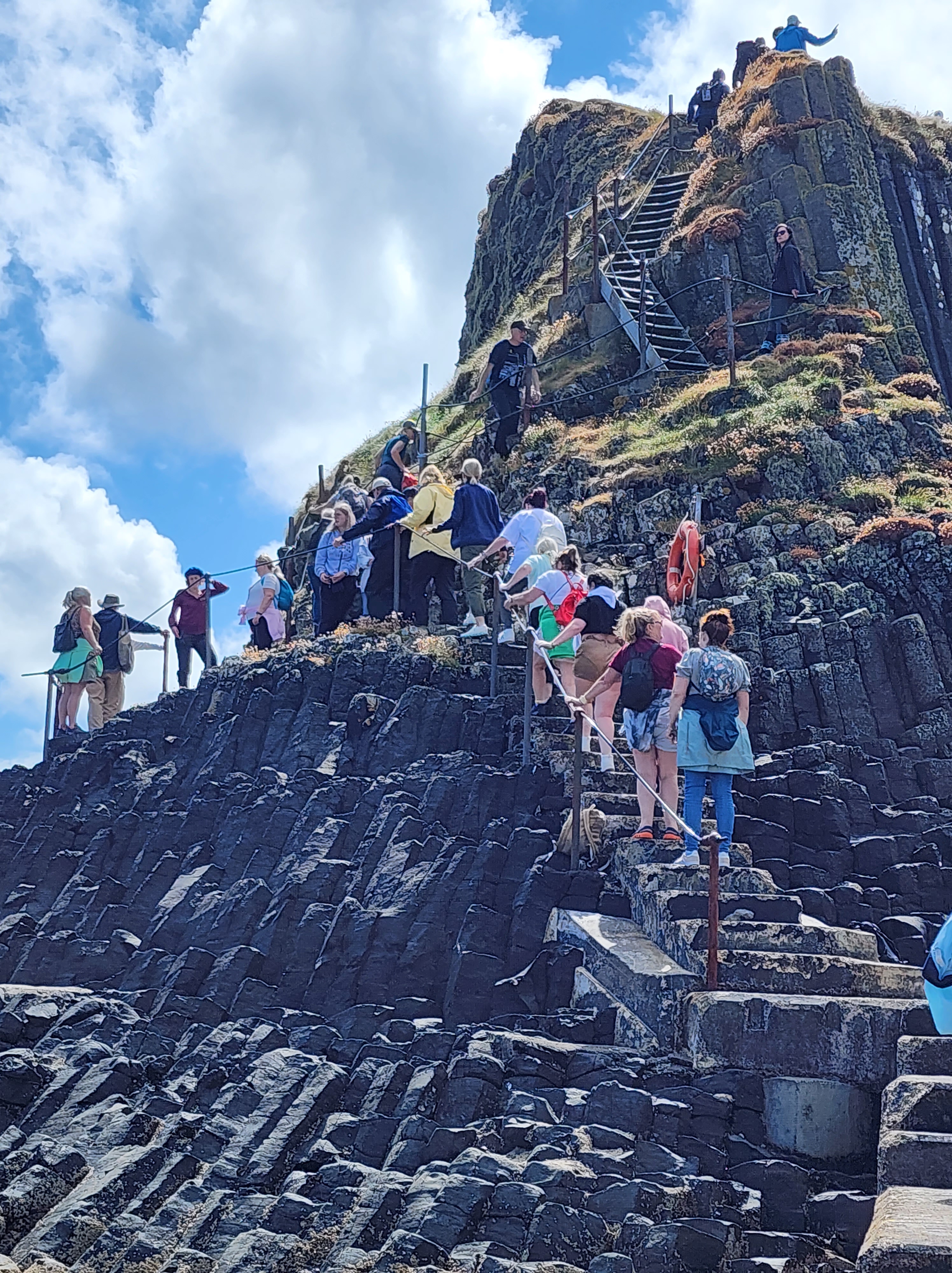
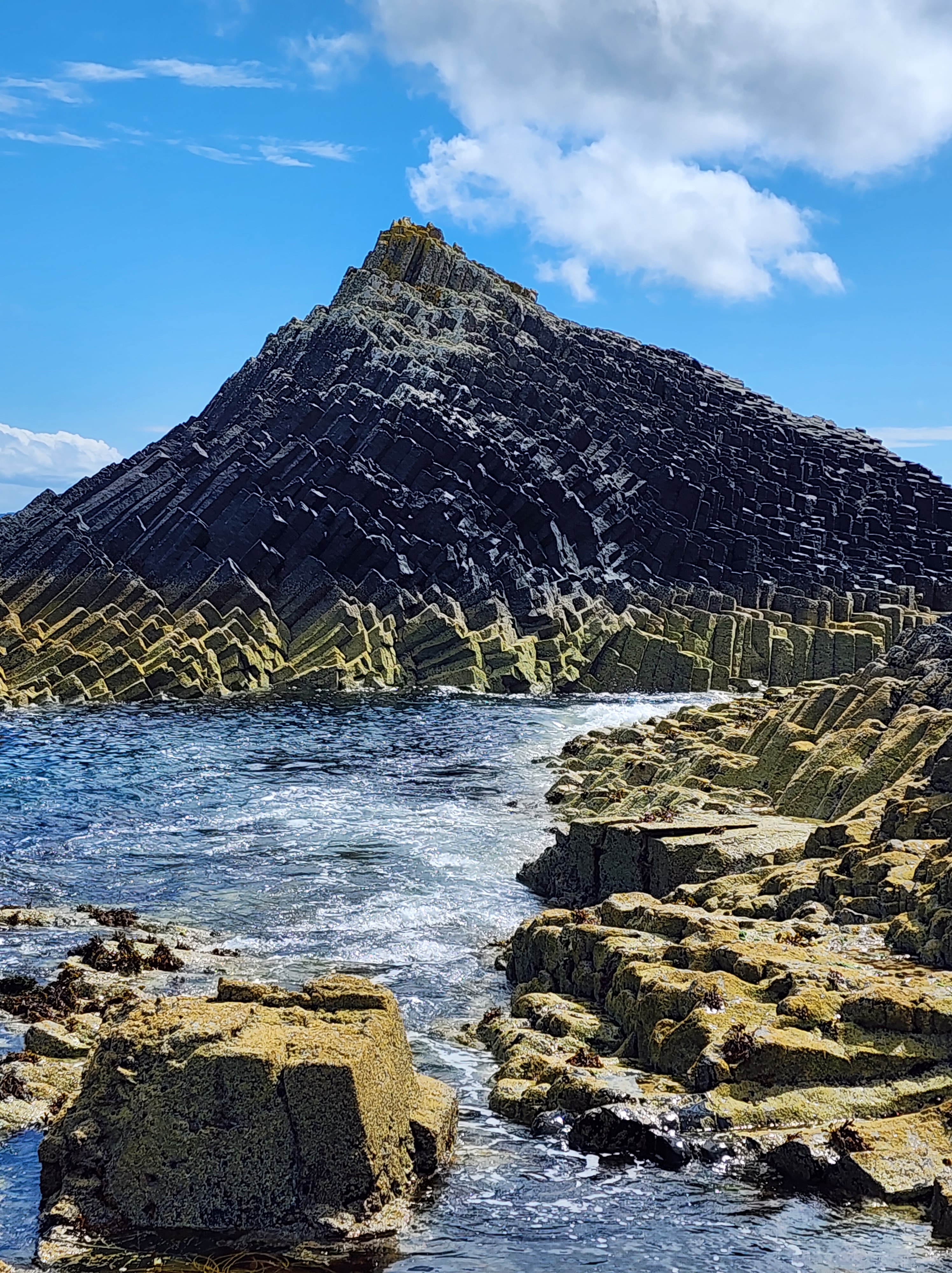
The big activity for the day was taking another ferry to the Isle of Staffa—really just a boatride in an old, dusty tub that took an hour.  The Atlantic swells impressed me, tall as they were, but I was seated inside, so I didn’t feel them as much as others who were sitting at the back of the boat did.  One guy mentioned to me that he loved the rolling so much, and the next time I looked at him, he was fast asleep. The ride was loud—the engines booming—but we saw some seals before we arrived at the Isle of Staffa, and it was beautiful.

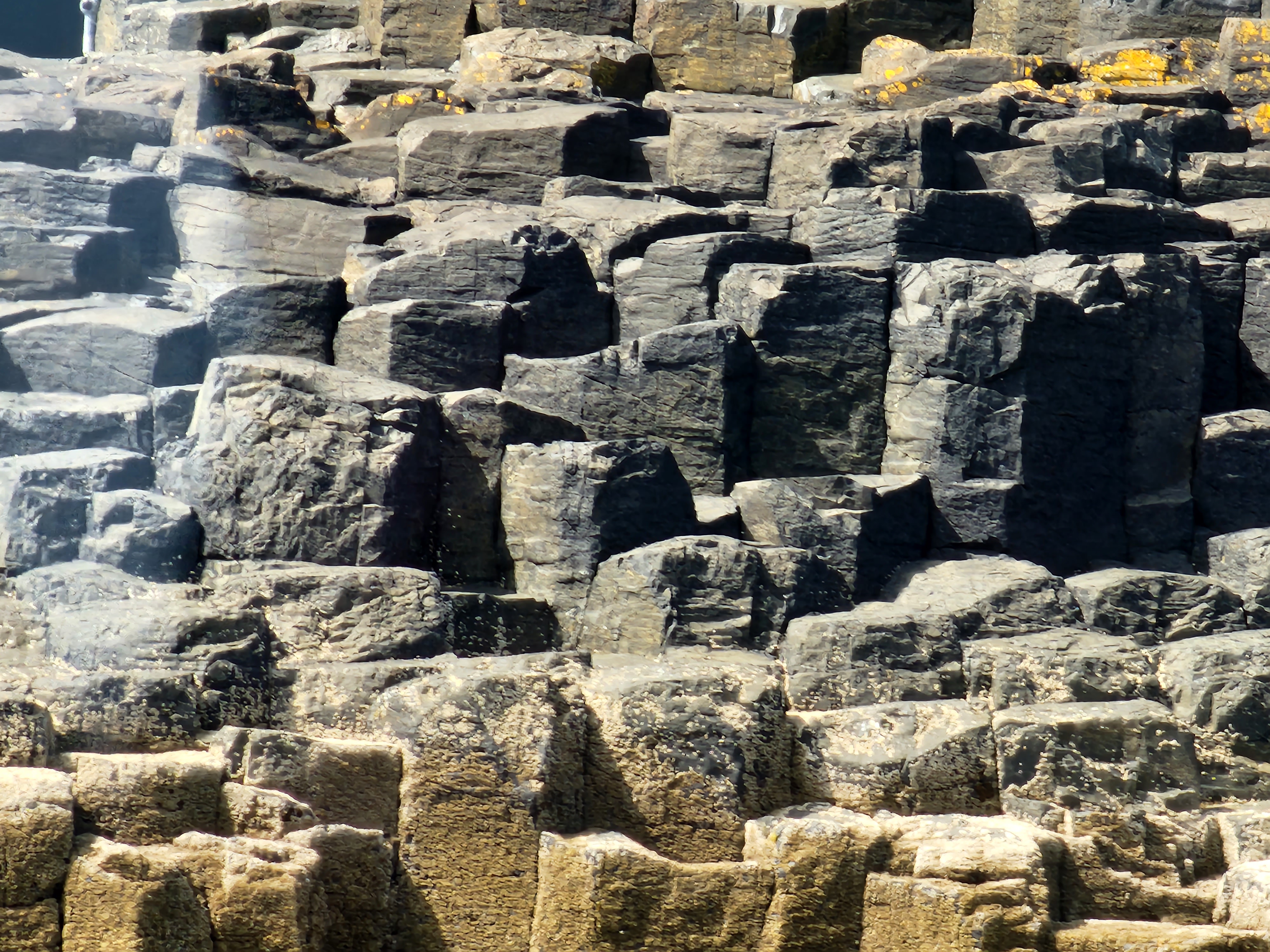
Cliffside, Isle of Staffa

The rocks form natural steps (not that you’d take these steps, because you’d take your life into your hands) and long columns, almost as if someone chiseled the side of the island to look this way. The island name of Staffa is from the Norse meaning “pillar” which makes sense. What I didn’t know was that in order to see the puffins, which apparently settle here in the summer, I’d have to climb up this itty bitty, windy but very scary tall stairway to get to the top of the island, and all I could think was I’d get halfway up there and have a panic attack because I do not do heights well at all.  So I stayed at the little boat launch and read or watched the tidal pools.  The air was seafresh and salty and I saw some jellyfish congregating in the tidal pools.  The wind was terrific, though (another reason I was scared to scale the wall), and so I pulled up my raincoat around me to keep the wind at bay.  The other option was to go to Fingal’s Cave (which everyone said was amazing) but that also required walking on a very narrow step path right above the water, and I just imagined I would slip.  (I had on my sneakers, but honestly, I am just clumsy, and I didn’t want to risk a fall.)

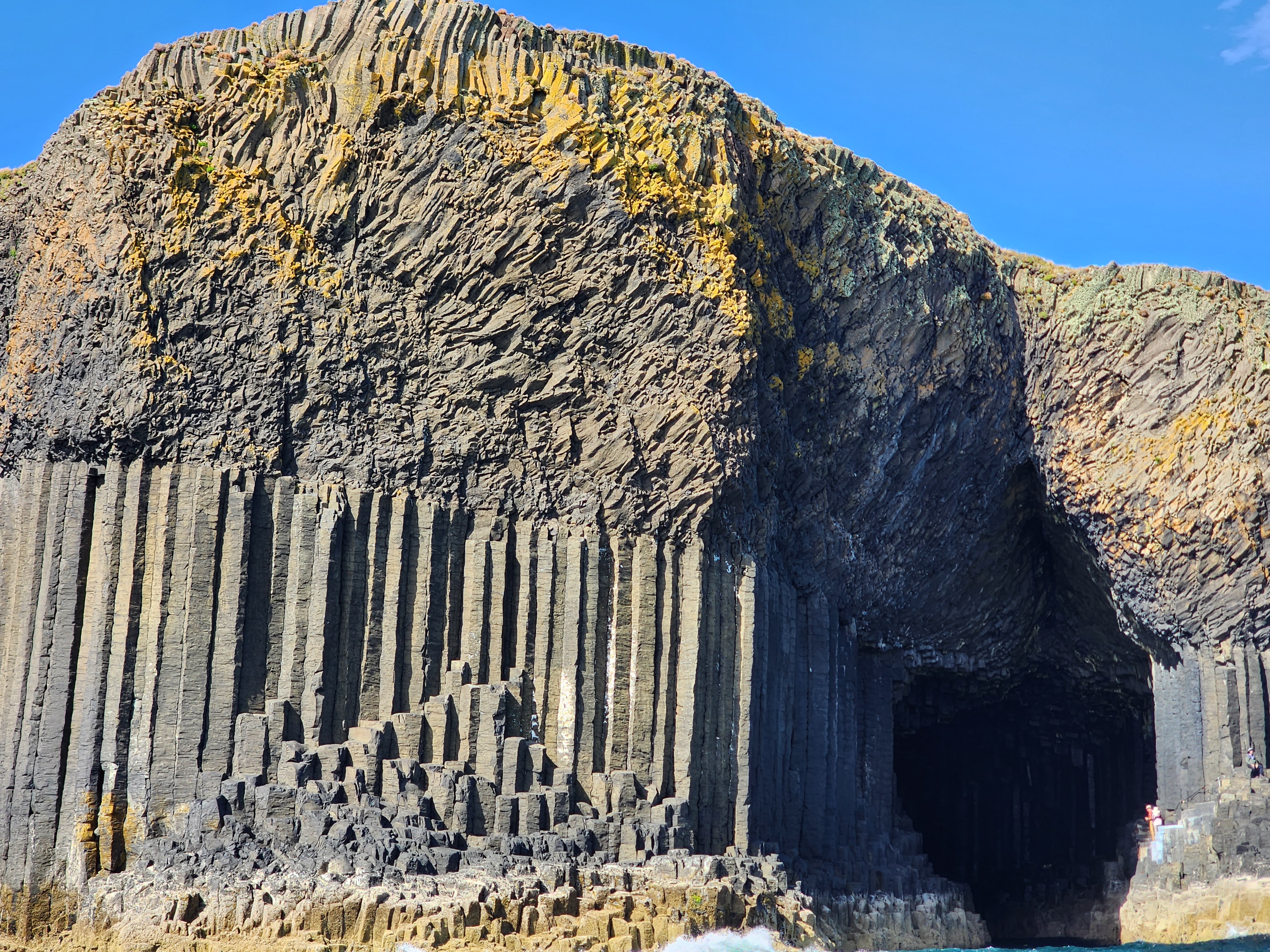
Fingal’s Cave

Our boat arrived after another hour, and I climbed onto a seat toward the back this time, where the Atlantic swells were huge. The ship bounced so much that sometimes it felt like I were on a rollercoaster, and the other passengers “whoooed” with every swell. But it was fun, and I saw several puffins flying in the air, so I didn’t feel too deprived about missing them on Staffa.  They flew so quickly they just looked like stripes of orange and black.

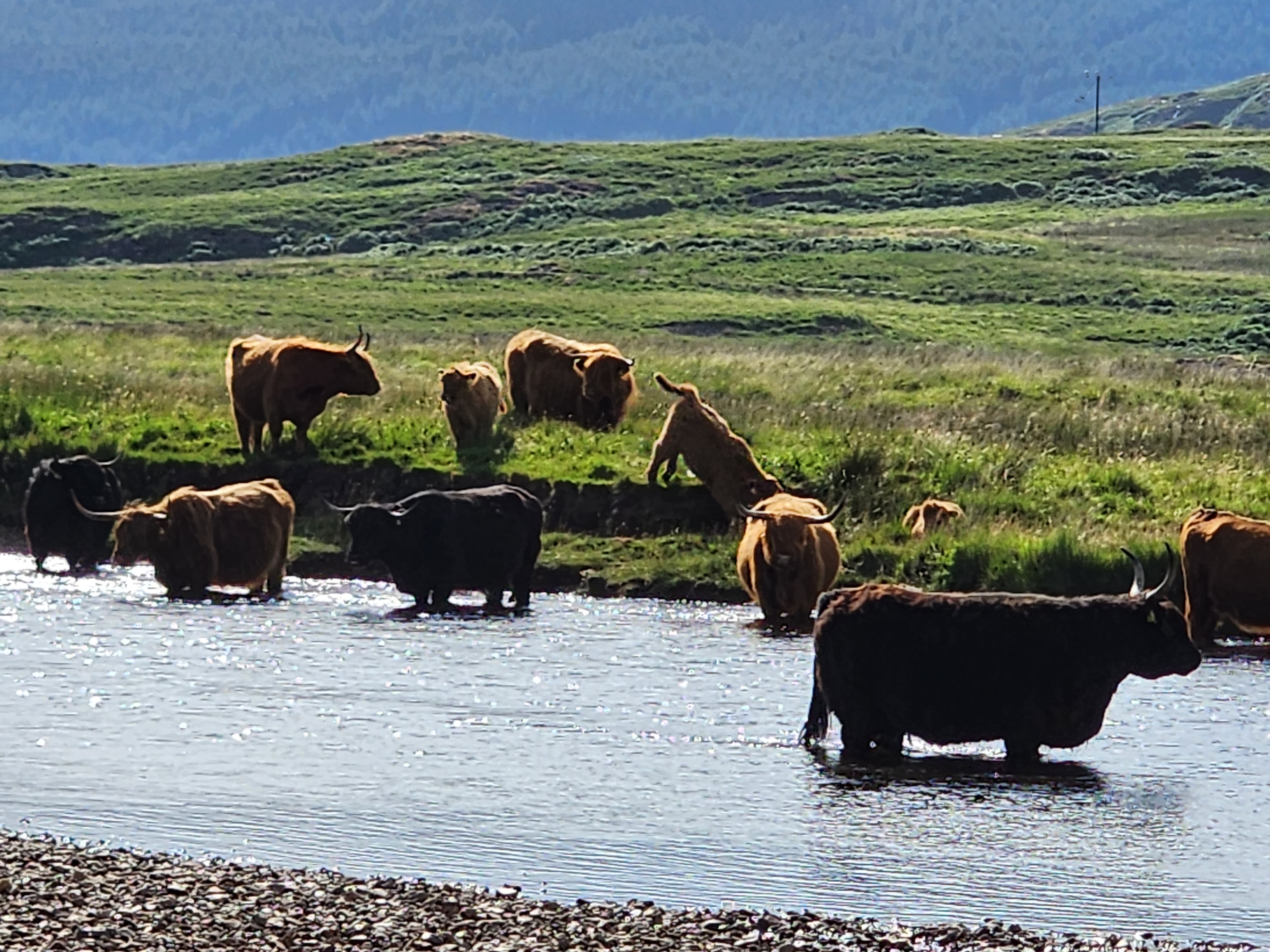
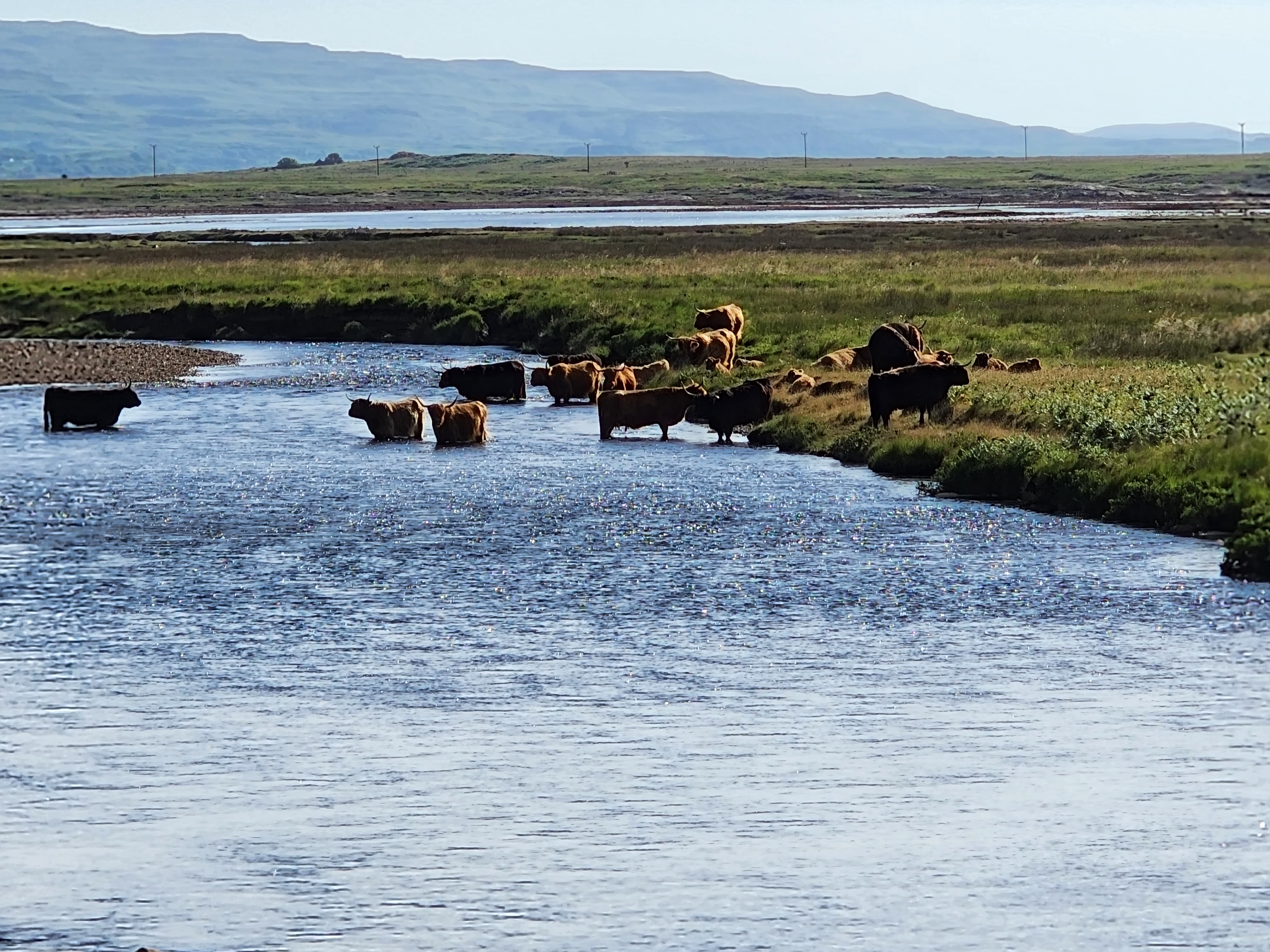
By then it was late in the day, when we got back to Mull, and we drove up to Tobermory, but not until after we’d stopped again at the stone bridge, where a herd of Heilan coos were congregating in and by the river.  With the sunlight hitting the water just so, the cows looked as if they had been painted there.  But the smell was realistic enough: the path that took us to the cows was awash in cow paddies, so I was extremely careful where I stepped.

The nice weather of the day gave way to more rain, so when I got back to my apartment, I zipped out to a food truck for fish and chips, and slinked back, a little damper, with dinner.

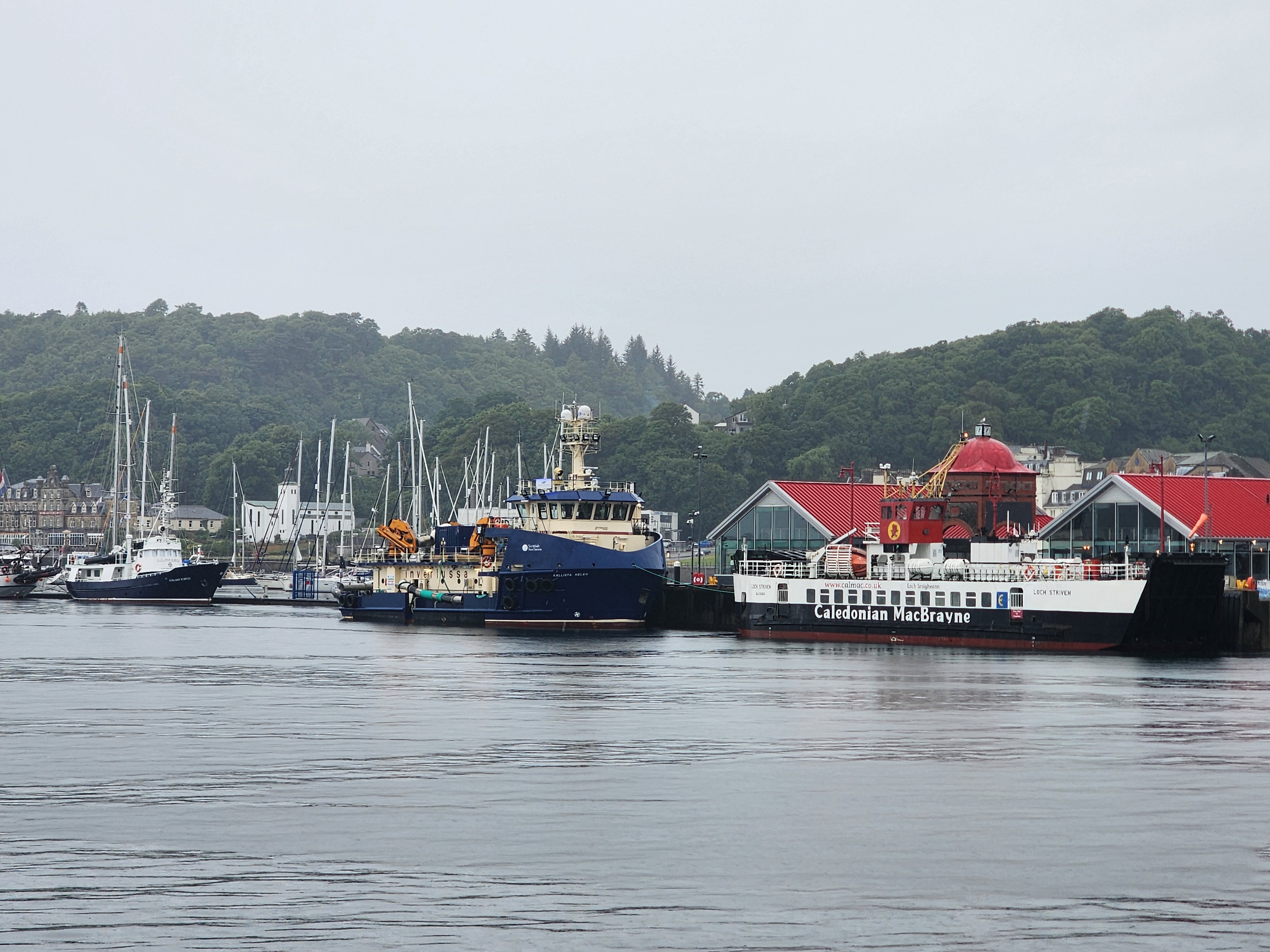
The last day of the trip began early enough, and we had to make our way to yet another ferry, this one from Craignure to Oban, another rainy passage.  Because the ferry had been overbooked the day before and was still backed up, Stewart couldn’t get our bus on the 11:00 ferry—he was shunted to th 2:00—but we went as passengers of the ferry.  It was a huge ship, ginormous.  I’m not sure I’ve ever been on a ship that big, with multiple decks, several coffee shops and a diner.  I thought about getting something from the diner, but I didn’t really see anything I wanted (and I did not fancy another drab cheese and chutney sandwich), so I wandered the decks and got an iced latte in one of the coffee shops in the stern of the ship.  Let’s be honest, this latte was basically a large glass of milk and a shot of espresso.  And it was delicious.  That’s the kind of latte I like—mostly milk!  Once I added sugar to it, I was hard-pressed not to suck it down in two sips. (I’m mostly kidding.) After I’d finished, I decided to head out on deck (even though it was raining) and watch the water.  I had hoped to see whales or dolphins, but I suspect they didn’t want to come out in the rain 😊.  I enjoyed the air, wet as it was, and stayed outside till I grew cold.

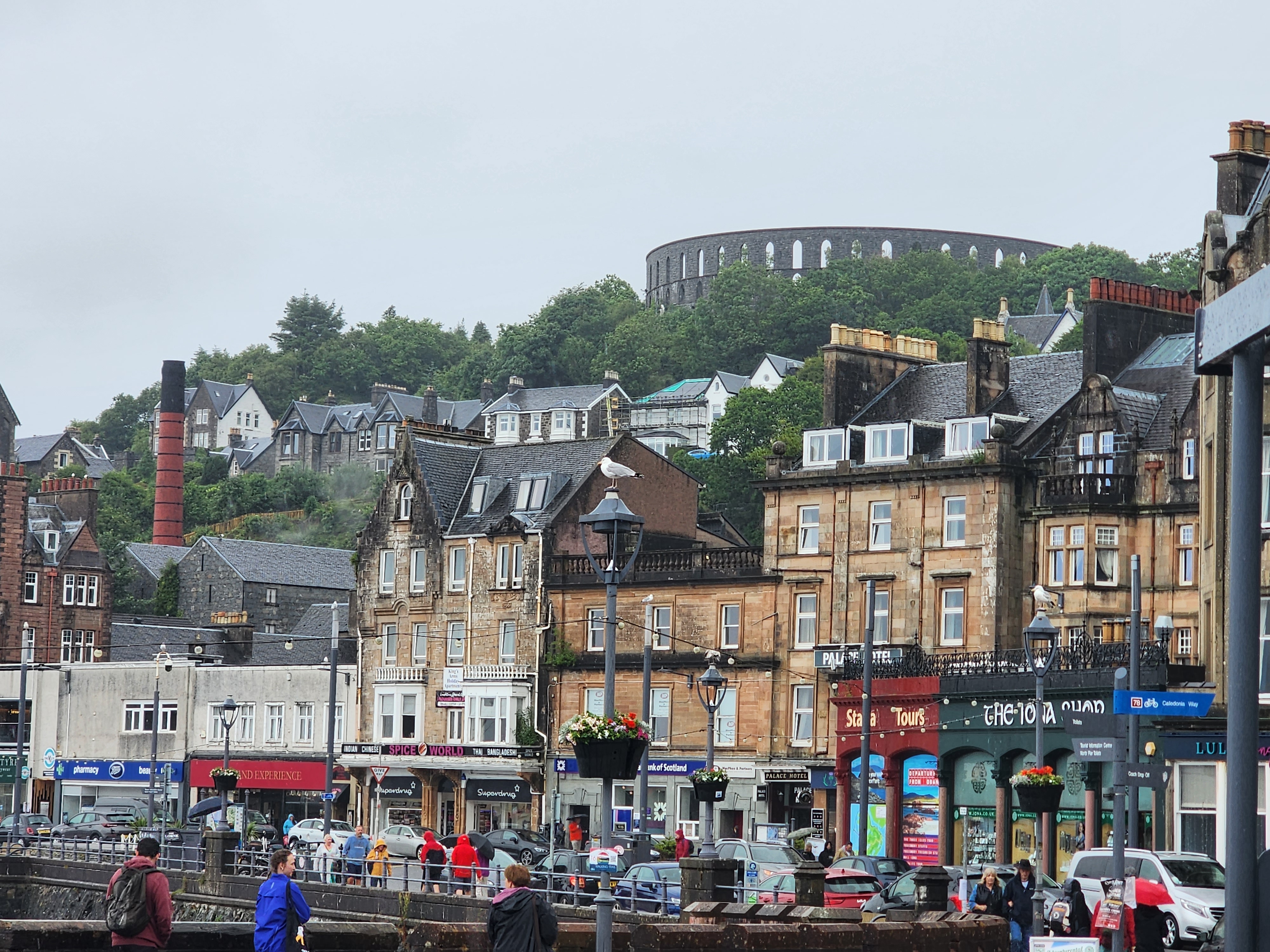
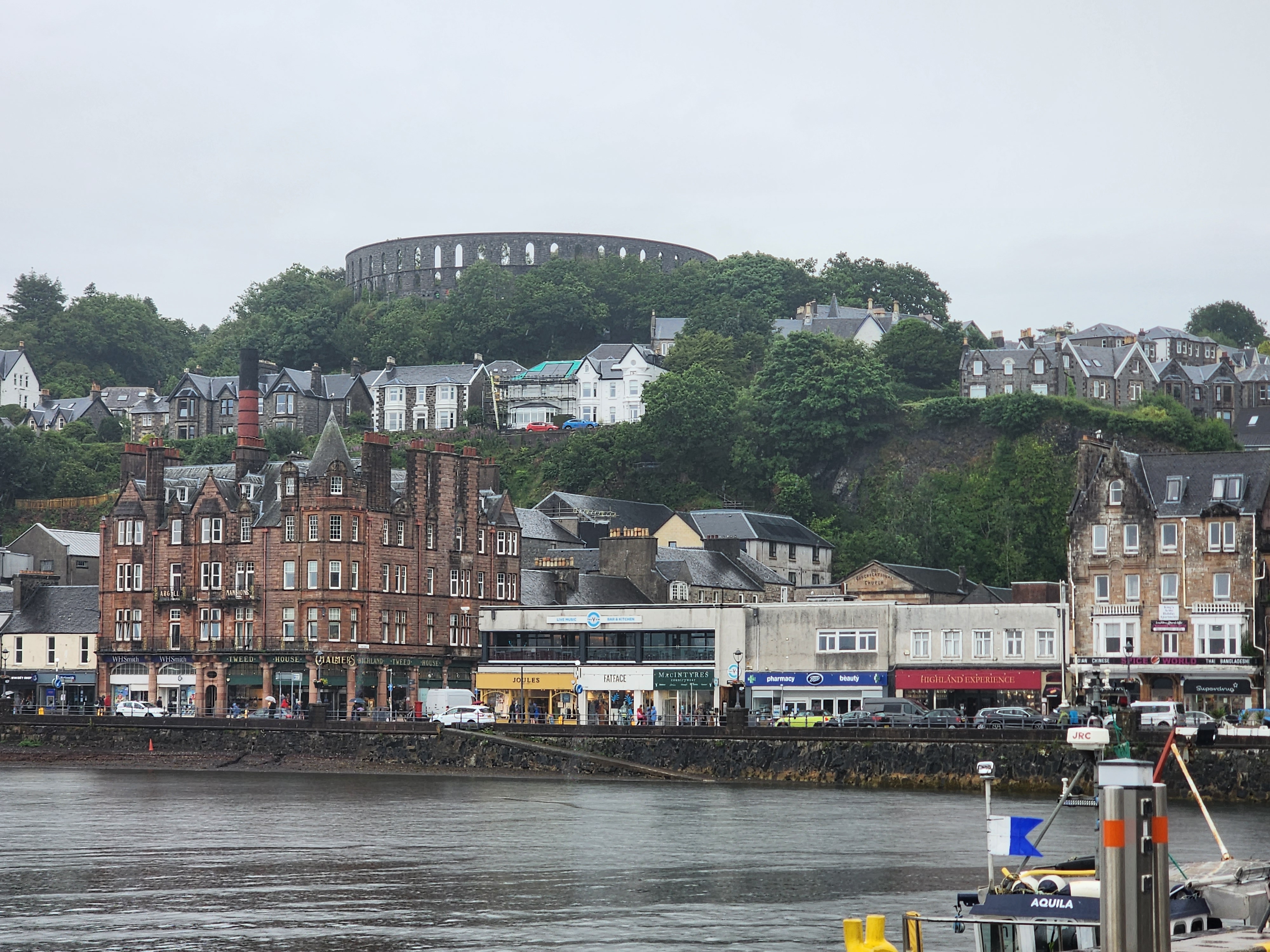
Oban, with McCaig’s Tower (the Colosseum-looking structure) in the background

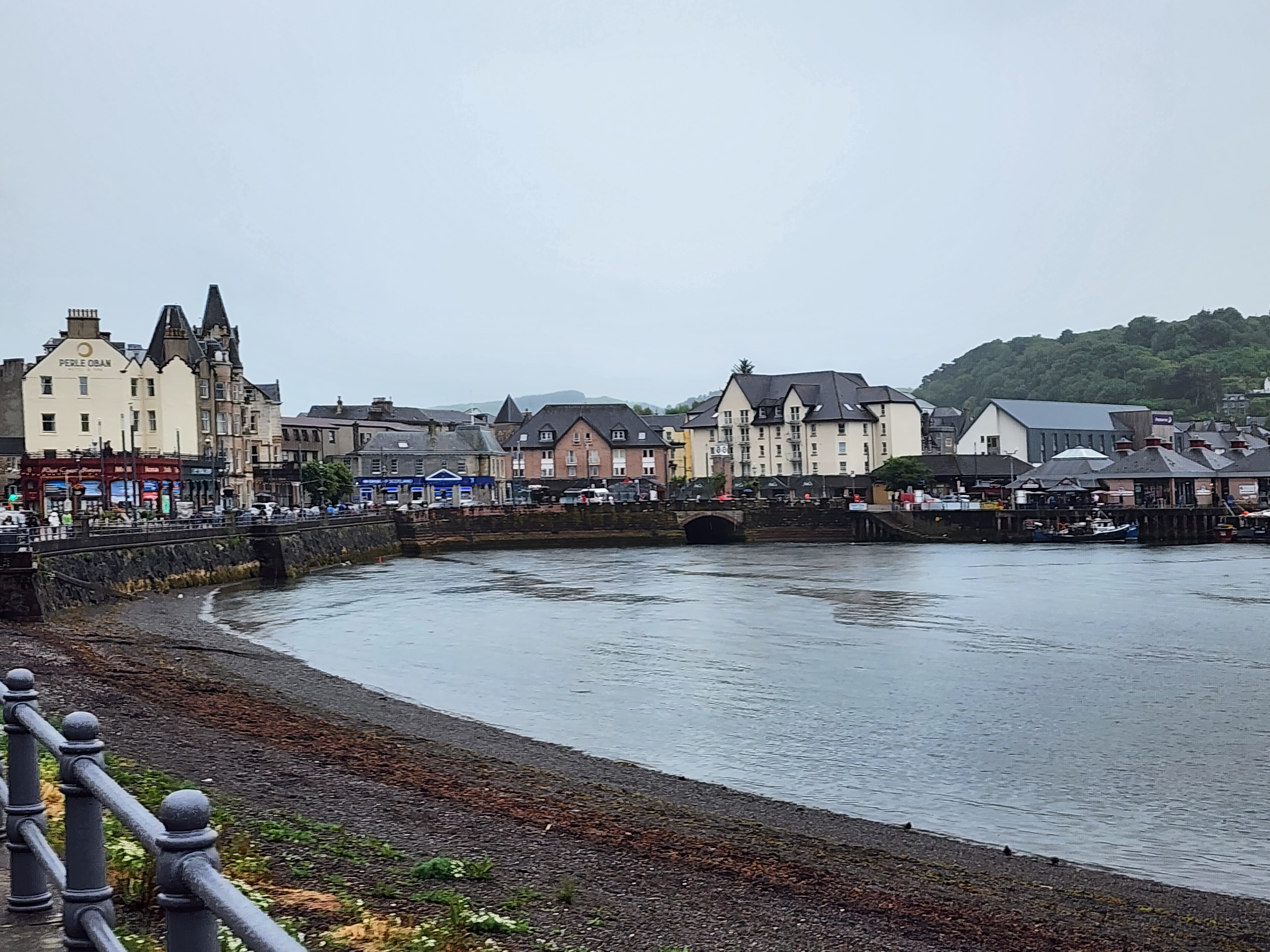
Oban, where we docked, was great.  Yeah, it was raining like hell, but I really enjoyed what I saw of it.  I walked the high street for quite a distance, and stopped into Oban distillery to see if I could take a distillery tour but the answer was no. (They only take 16 on a tour, and I was #17.) I ate at Nories Fish and Chips for lunch (established in the 1960s), and then wandered down toward the water where I found the Oban Chocolate Company.  Its reasonable prices encouraged me to buy a small bag of truffles, and a bag of white and milk chocolate cats.  I wandered some more and watched the harbor for a bit (hoping for dolphins, but alas), and got some icecream, then made my way to the other side of the harbor where I knew Stewart would pick us up.  There was still an hour to go, but the rain was relentless, so I holed up in Costa Coffee, and waited out the rain.

When Stewart arrived, I said, “I went to Oban distillery, but they wouldn’t let me on the tour.”

Stewart said, “That’s no’ right. D’you go to the tastin’ bar and have a flight?”

“I would have,” I said, “if I’d known about it.”

He shook his head, as disappointed as I was.

(I’ve yet to try a dram of Oban whisky, but then I haven’t really stopped in any bars.)

Kilchurn Castle on Loch Awe

Pretty much after that, all that was left of my Mull and Iona tour was a stop at Inveraray (where I called Mom again), a stop at Kilchurn Castle ruins, and then the ride back into Glasgow, although we made a picture stop in Glen Croe, near Loch Lomond.  At the base of the glen is an old military road, but we were on the “new” road at the side of the bens, where large metal nets ridge the mountains to catch boulders and falling objects.

As I was getting off the bus, Stewart told me that he hoped he’d see me next year, with my husband, on the Islay whisky tour, and I hope I can arrange that, because Stewart is a great tour guide, and even though I don’t like peated whiskies (which Islay is famous for), I’d be thrilled to get reintroduced to them with Stewart’s guidance.  I’ll have to see if I can contact Rabbies next year to find out when he leads the tour, assuming that a) I teach in Scotland again, and b) I can arrange it. Even if I don’t think I’d enjoy the whisky, I’d enjoy seeing Stewart again.  And if C could come with me, that would be even better. (Get your passport, C!!!)

More photos:

View from Nories Fish and Chips

Loch Fyne in Inveraray

Loch Fyne

Loch Fyne

The Vital Spark in Loch Fyne, Inveraray–I love the composition on this one.

Kilchurn Castle with lowhanging clouds

Sheep on Loch Awe

Loch Awe

A hotel on Loch Awe, to the left of the Kilchurn Castle ruins as you look at them

This looks like I took the picture in grayscale, but really, it was just how dark and dreich the day was.

Oban

The Inveraray Inn (could you guess?)

Oban

Oban

Oban

Oban

Oban

My fish & chips at Nories

Oban

Oban

The ferry to Oban

Me getting very wet on the ferry to Oban

A lighthouse on the ferry to Oban

Isle of Mull, when the sun came out for a bit

Funny clouds in Mull

Mull

View from the Stone bridge on Mull

View from the Stone Bridge

Heilan coos

View of the Stone bridge from cow-distance

A sudden squall over Mull

Heilan coos in the river

Coos!

Coo

Coos

The beach near the Lochline ferry stop

The beach near the Lochline ferry stop

Isle of Staffa

Staffa

This flight of stairs doesn’t look that tall, but the picture is deceptive.

Tidal pool at Staffa

Ospreys (?) on Staffa

A better glimpse of the staircase on Staffa

I have no idea where I took this. It’s pretty though, innit?

Tobermory

A little cottage by the ferry

Glencoe

The wrecks

Tobermory–my Dad said he was going to try to paint this in watercolors

Tobermory

Tobermory

Fife and St. Andrews

Fishing village in Fife

The trip up the northeast coast of Scotland was a new experience for me.  I’ve seen the west and the Highlands quite a bit, but the east hasn’t been on my itinerary.  That is, until I took a tour into the fishing village at Anstruther Harbour and then walked around the ruins of St. Andrews.


The sea wall

The fishing village was lovely, although I didn’t get a chance to wander it much because I wanted to walk the sea wall.  It reminded me so much of the way sea walls have figured in British television shows (like my favorite Vera) or any of a few Austen adaptations—their timelessness appeals me, as if I could be walking through the centuries as I walk the wall, the coast and waters unchanged.

The lighthouse at Anstruther Harbour

As I made my way back from the point across from the lighthouse, I passed a man with a very squat bulldog who tramped through a large puddle in the cobblestones and I laughed because the dog seemed so surprised and happy by the happenstance.  I said to the man, “A fine braw dog you have there!”

He said, “That’s no’ a Sco’ish accent. Where are yeh from?”

“Well, my family home is in Louisiana,” I answered, figuring to tell him I live in Atlanta would sound needlessly generic and uninteresting.

“Louisiana!  The States!” He claps his hands in delight, and the bulldog barks. “ I’ve no’ been there, but I hear Louisiana’s quite bonny.”

“Oh, yes,” I enthuse, “very bonny.”

“I shuid like to go there some day.”

“You would love New Orleans,” I told him, because that’s the only city anyone cares about in Louisiana. (Or possibly, the only city that anybody knows about.) “Everyone does.”

“Well, guid day to you, lass.”

“And you.”

He walked in the opposite direction with his dog, and I headed back to the village, stopping once in a while to see if I can see any fish in the harbor, the water being a beautiful clear emerald color even at the mouth of the harbor that leads out into the sea.  (Spoiler alert:  I saw no fish.)

St. Andrews and St. Rule Tower

Back on the bus, we drove a while longer to the town of St. Andrews which was celebrating graduation day.  Everyone was wearing regalia (if they were graduates) or big smiles (if they were parents).  The professors were wearing regalia too, which reminded me a little of my own Ph.D. regalia, mouldering in my chest of drawers back home (in Shreveport).  I never got to wear it because when I graduated with my Ph.D., I blew off graduation and hooding so that Kirsten and I could go to the British Virgin Islands because she had won a trip there on the radio. A fair trade, I have to be honest.  But I digress.

I wanted to go somewhere good to eat for lunch, having mostly eaten banal sandwiches in all the places I’ve visited, but with so many graduates and their families around, it was hard to find a place that wasn’t jam-packed.  Close to the ruins, though, there was a little café that I stopped in—I got the only table available.  My cheese and chutney sandwich was pretty nondescript, but the butternut squash soup was more or less tasty, though it clearly had too much chicken bullion in it. I also drank a bottle of fizzy, and enjoyed a “lemon ice tea” which I think was from a mix.  So when I say I enjoyed it, I mean quite the opposite.  It was weird-tasting.

After lunch, I continued my walk to St. Andrews Cathedral which, like so many of the medieval buildings in Scotland, is undergoing perpetual construction, so parts were walled off.  What a grand cathedral it must have been in the 13th and 14th centuries, with its sweeping arches and its many-stoned kirkyard!  The welcome sign says “Join the pilgrimage to the largest and most important church in medieval Scotland,” and this is true, since it was the seat of the medieval Catholic Church.  It fell into disrepair during the Reformation, and was burnt down a couple of times.  What is interesting about this too, is that when parts of the wall fell down, they were used for building purposes elsewhere in Fife.  Unfortunately, the church was abandoned until the 1800s, and by then it was crumbling mess.  But since then, the ruins have been granted protection and are cared for, available for everyone to enjoy (for free!).

After I poked around the ruins for a while (and bought a guidebook, of course—I’ve accumulated quite a number of these National Trust for Scotland books at this point), I found a nice spot to sit with the sea in the background. The sun was beating down, though the sky was blue as topaz.  An elderly couple were sitting on a bench nearby, ruminating on their grandson’s extremely busy graduation itinerary, and complaining it was too hot to walk.  (It was warm, for sure, but a breeze blew.) I thought about going for a walk out to a promontory overlooking the sea, but I couldn’t remember when we were supposed to be back at the bus rendezvous, so I got up and walked back to where I thought I had been dropped off.

But the thing is, I couldn’t remember where that was. This is very unlike me; I usually take careful account of my location especially when the possibility I could be left behind exists.  I thought the rendezvous was by the World Golf Museum (which was situated across from an open public golf course where it only costs £1 (!) to play), but it looked different from what I remembered.  To be honest, I got kind of panicky and worried that I was going to miss the bus, thinking I was in the wrong place altogether, and omg, what would I do if I were left alone in Fife? How would I get back? So I dug out a phone number for the Rabbie’s tour people and called them.  The lady assured me I was waiting in the right place, which took a huge burden off my mind.  And when the bus showed up, I got a chance to chat with the driver and we commiserated over the weather of the previous summer, and exclaimed how un-Scottishly-nice the weather was being for the trip today.

Inner wall of the King’s and Queen’s quarters, Falkland Palace

The last stop of the day was Falkland Palace, which was lovely and inexpensive (only £6 to enter), but unfortunately, we weren’t allowed to  take pictures inside—and there were watching eyes.  Falkland Palace was the “deer cottage,” where James V and his wife Marie de Guise (mother of Mary Queen of Scots) honeymooned during the construction of the palace, and was the place where James and his fellow courtiers would go hunting in the fall, especially once construction was completed.  What I liked about the palace was that it was relatively small, with a few rooms tastefully reproduced as they might have looked in earlier centuries.  What I was less keen on was the circular stairways with small, shallow steps that my foot didn’t even quite fit on.  At the end of the palace walk-through, we ended up in Falkland’s lovely gardens, which were peaceful, floral, and full of bees.  A nice way to end the day.

I liked this trip overall because it was low-key.  Some of the trips I’ve taken have been go-go-go, but this was more leisurely (my panic attack not withstanding), and I enjoyed it.

More photos:

St. Andrews

Anstruther Harbour boats

St. Rule Tower

Fishing village view

Outside St. Andrews’ walls…I really like the composition on this one.

Fishing village at Fife

Falkland Palace outer wall

Arches at St. Andrews

Roses in the garden of Falkland palace