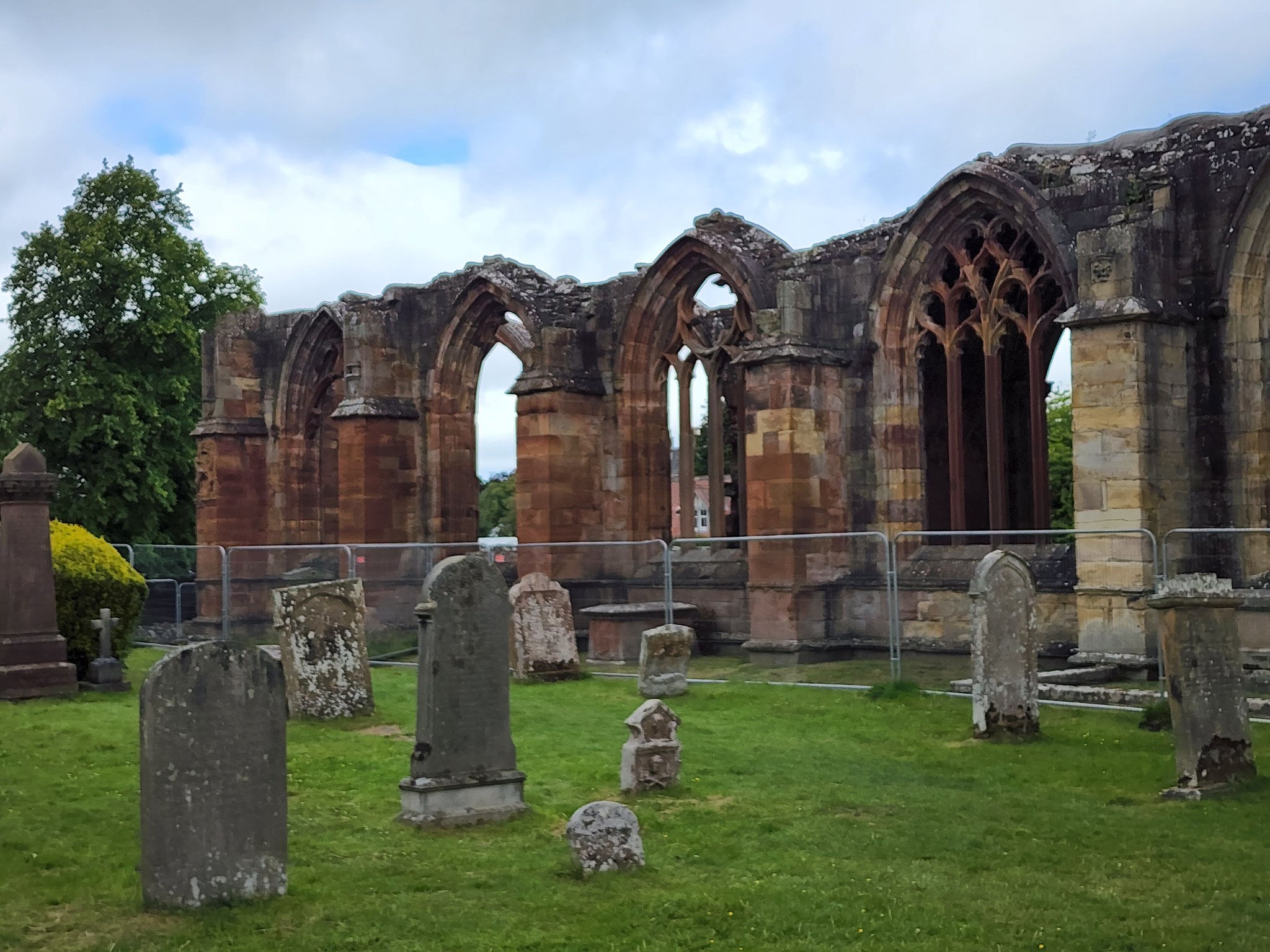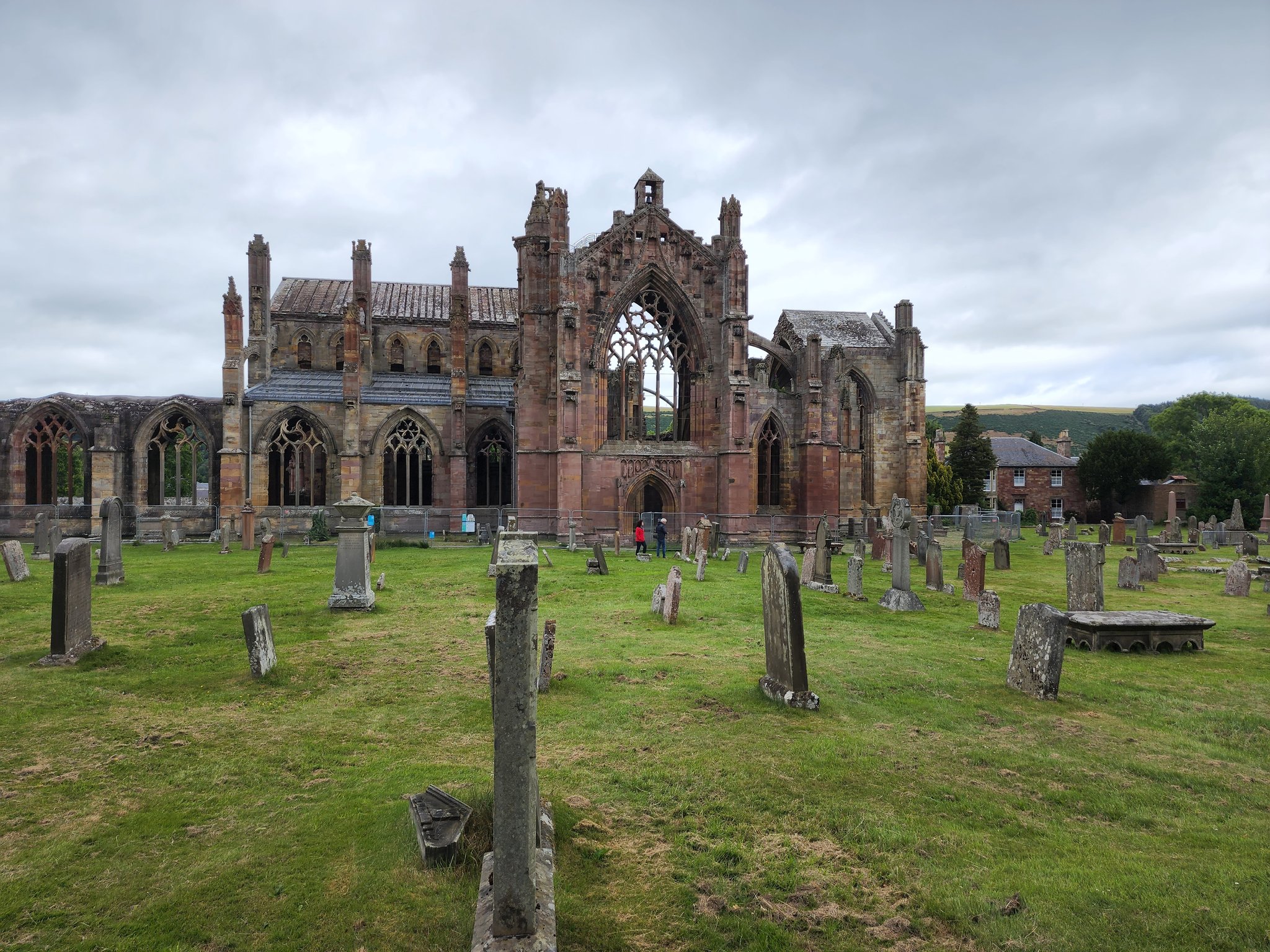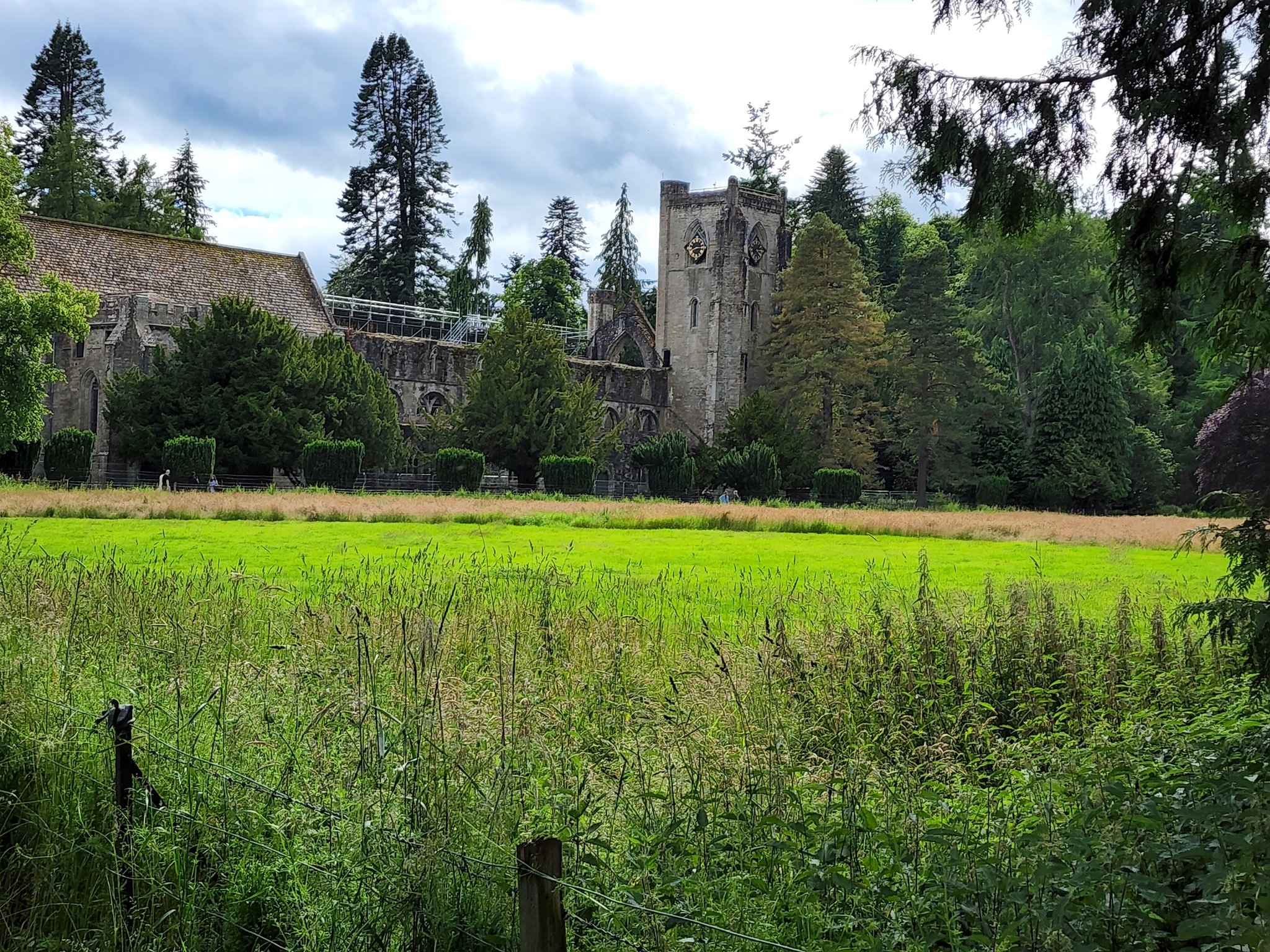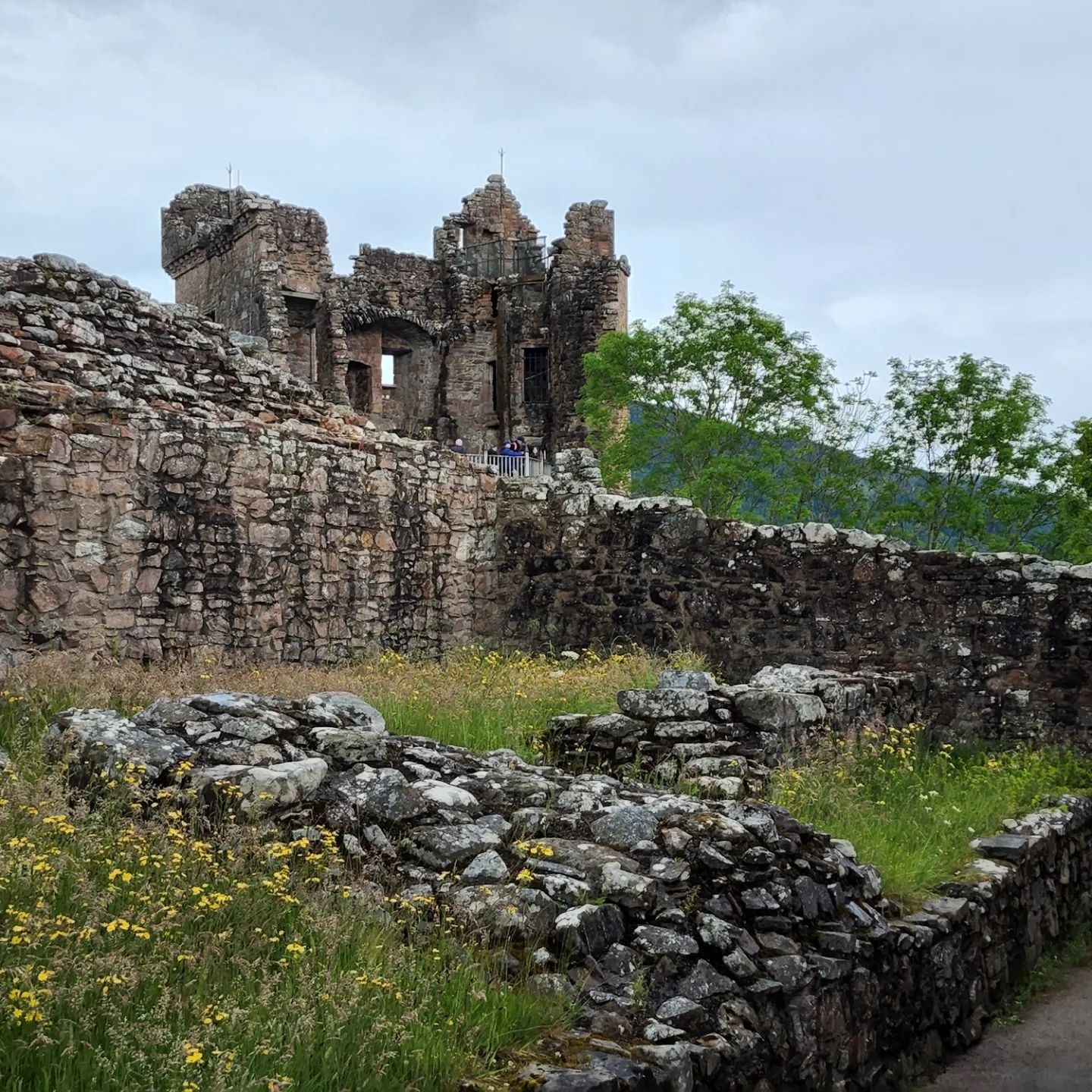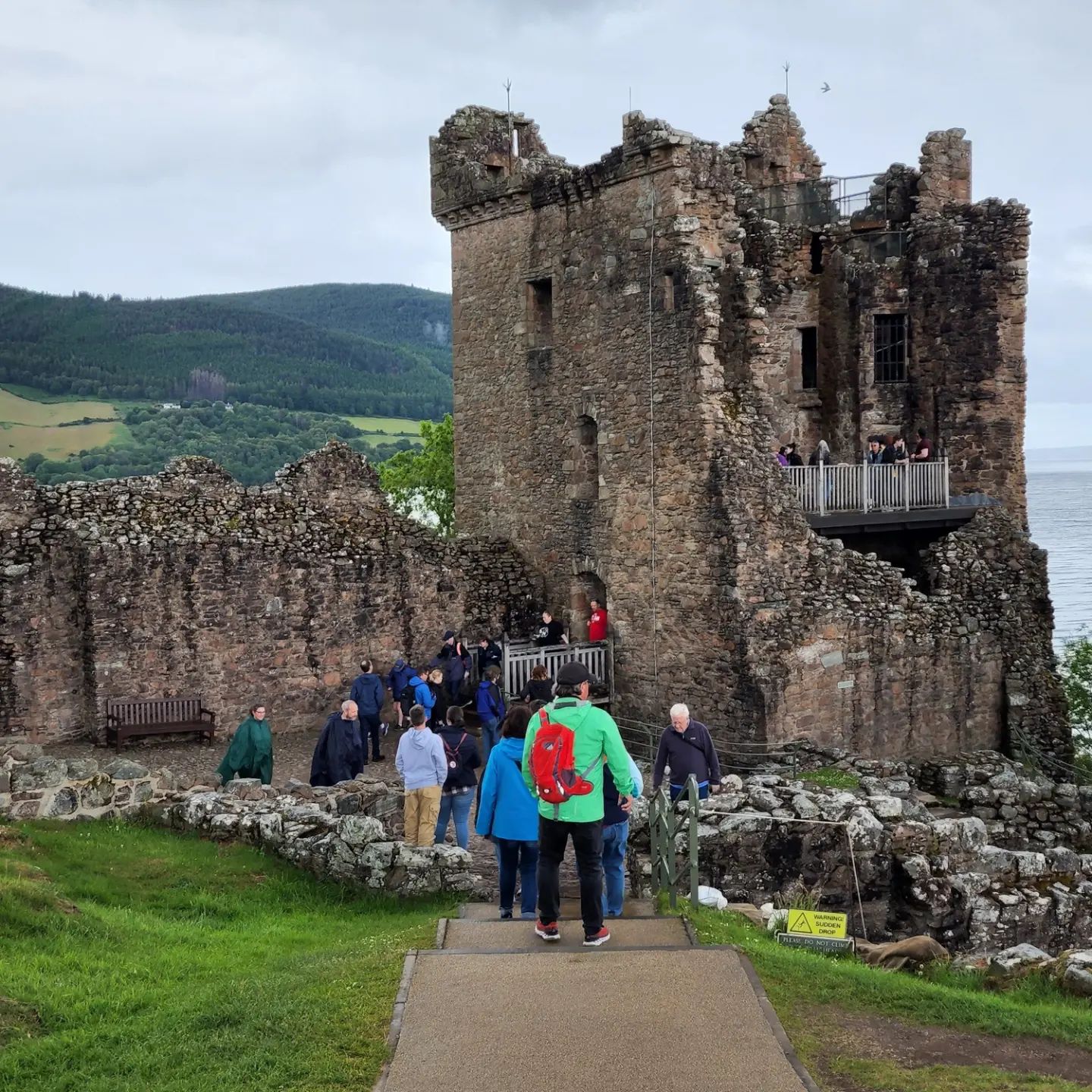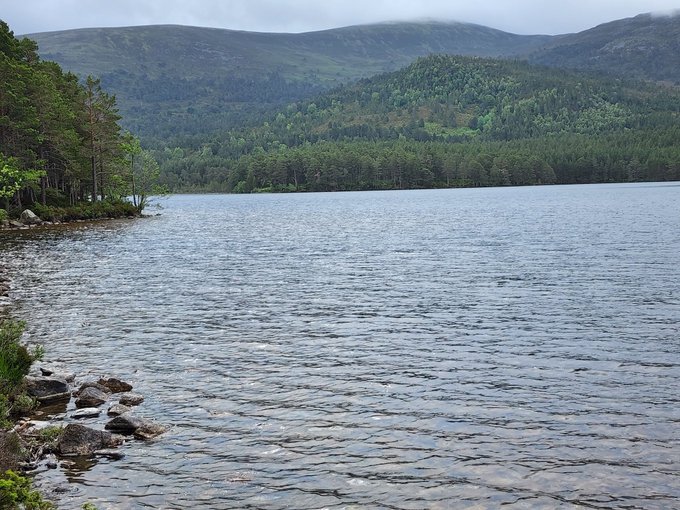
The Highlands & Loch Ness

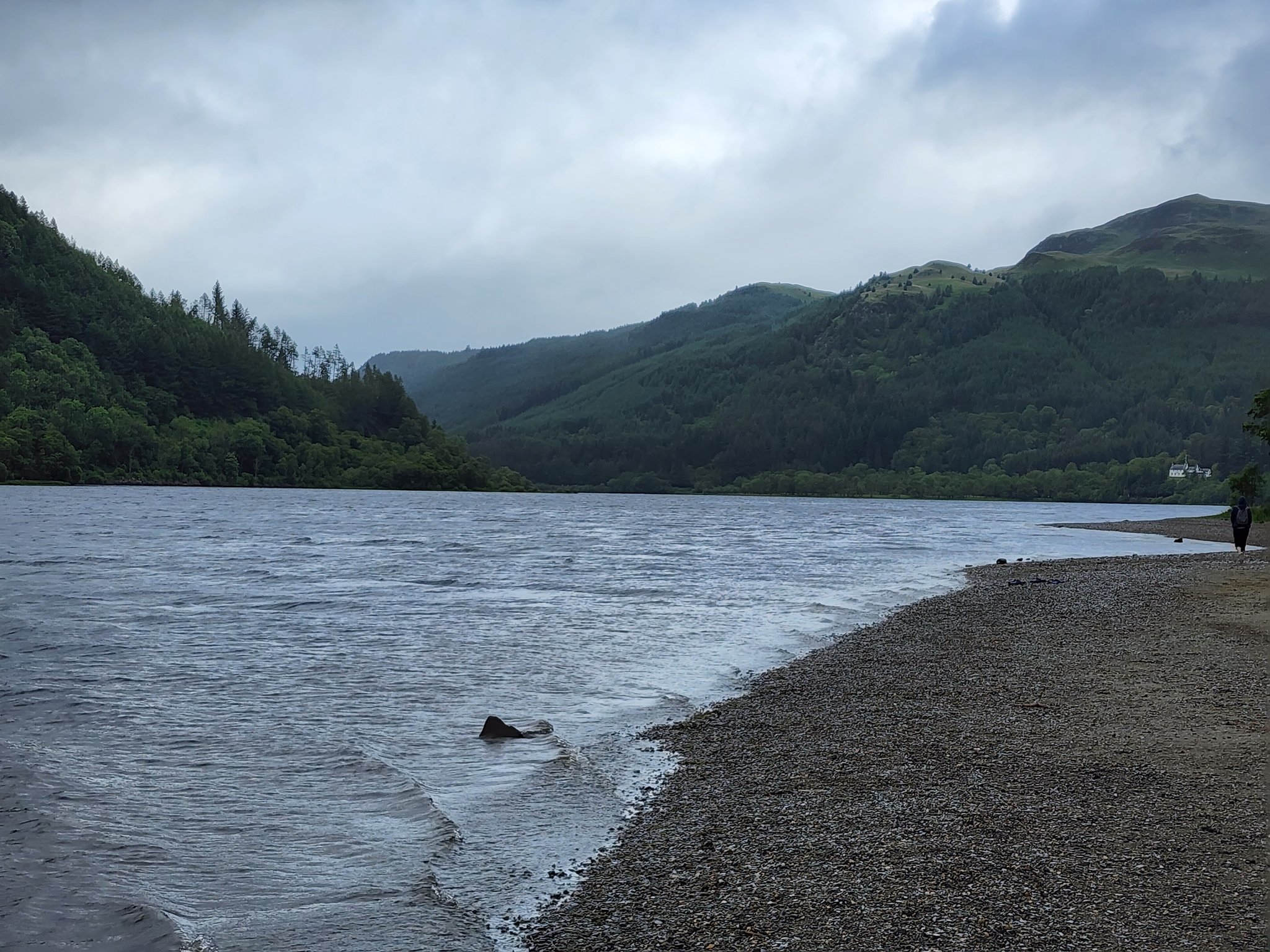
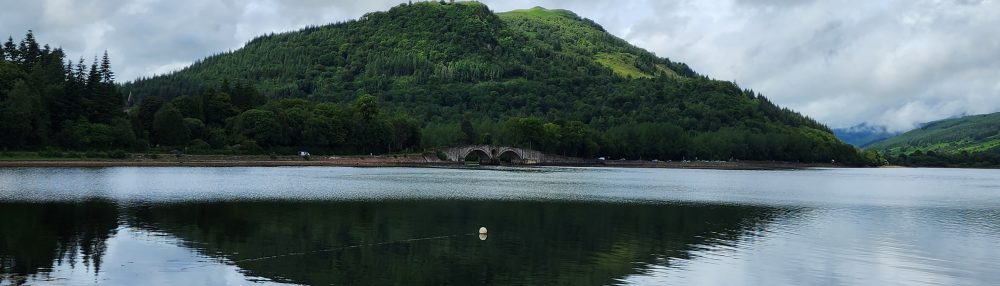
Loch Lubnaig

Loch Lubnaig

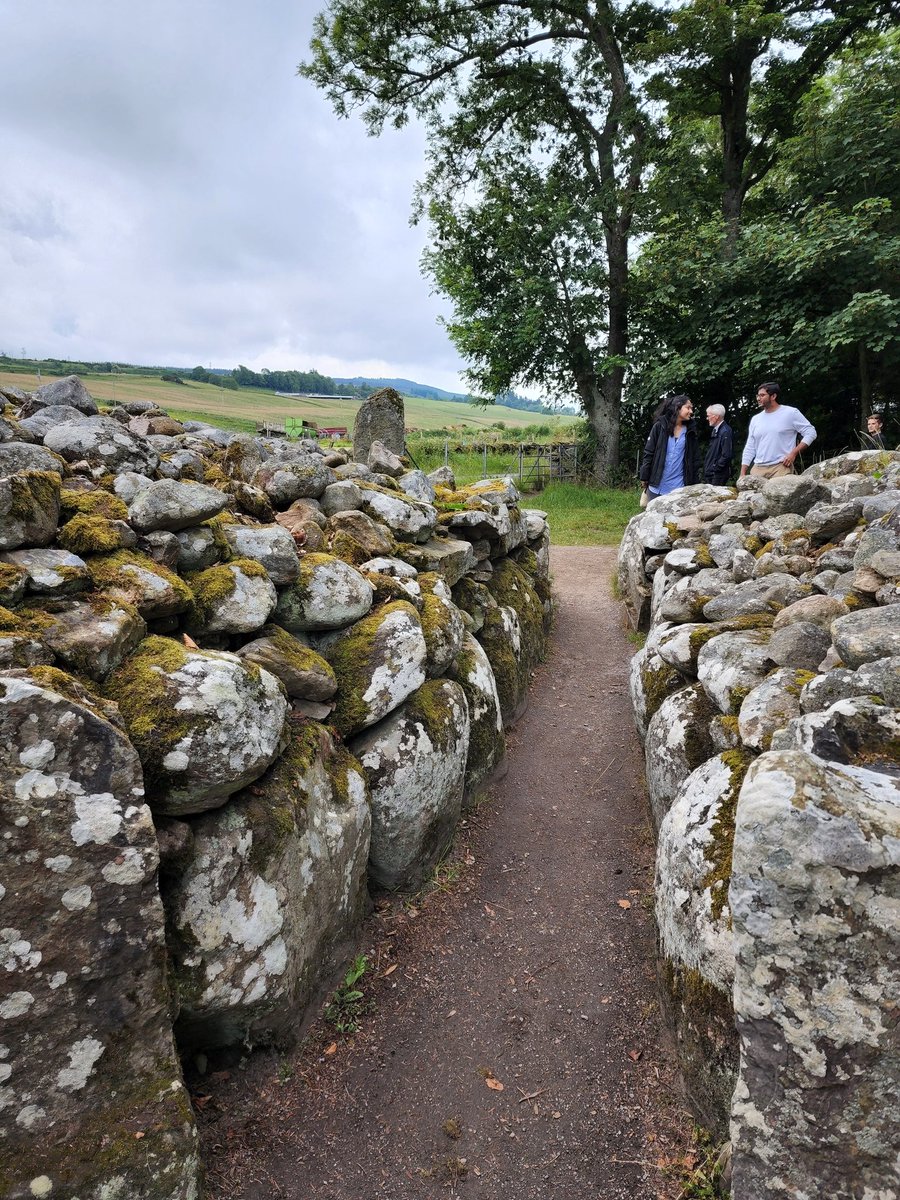
I felt the call of the Highlands this weekend—and suddenly I know why so many medieval romance novels are set there.  They are mystical and majestic, full of history, but more than that, they are primal.  They spoke to me on a profound level; as soon as I stepped foot in the mountains, I felt something—a pull from the Earth I’ve not felt before.  Of course they were already quite beautiful from what I saw on the drive, but once we stopped at Loch Lubnaig—and I touched the freezing water—some fairy magic was transferred. I got the Highlands.  I imagined stories I could tell; I saw characters coalesce in my mind almost instantly.  It felt like a writer’s high.

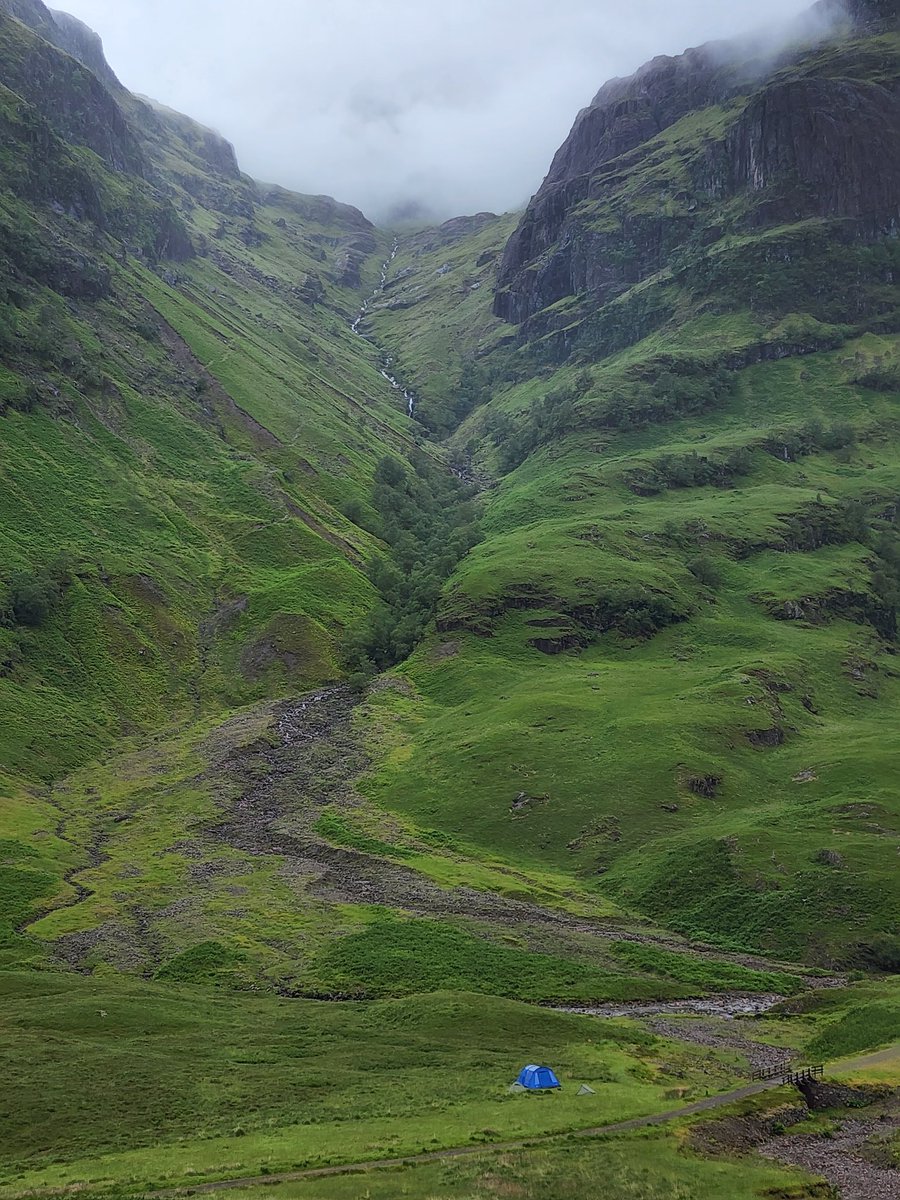
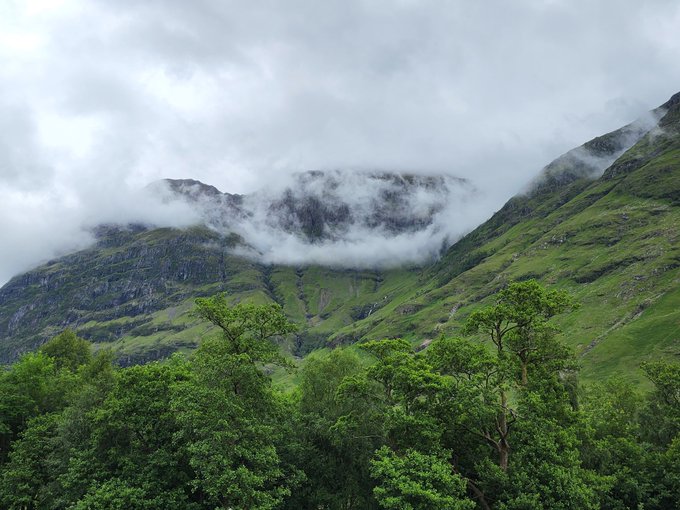
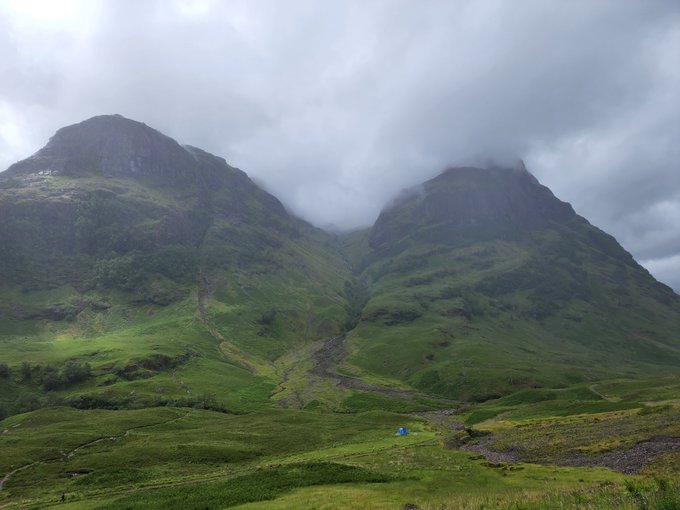
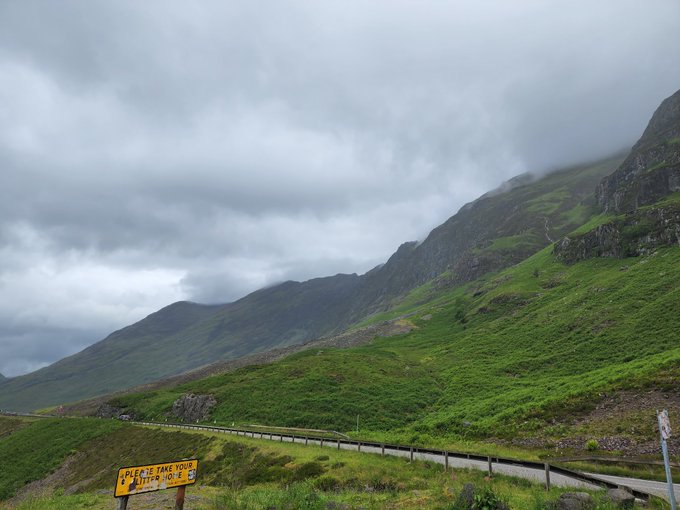
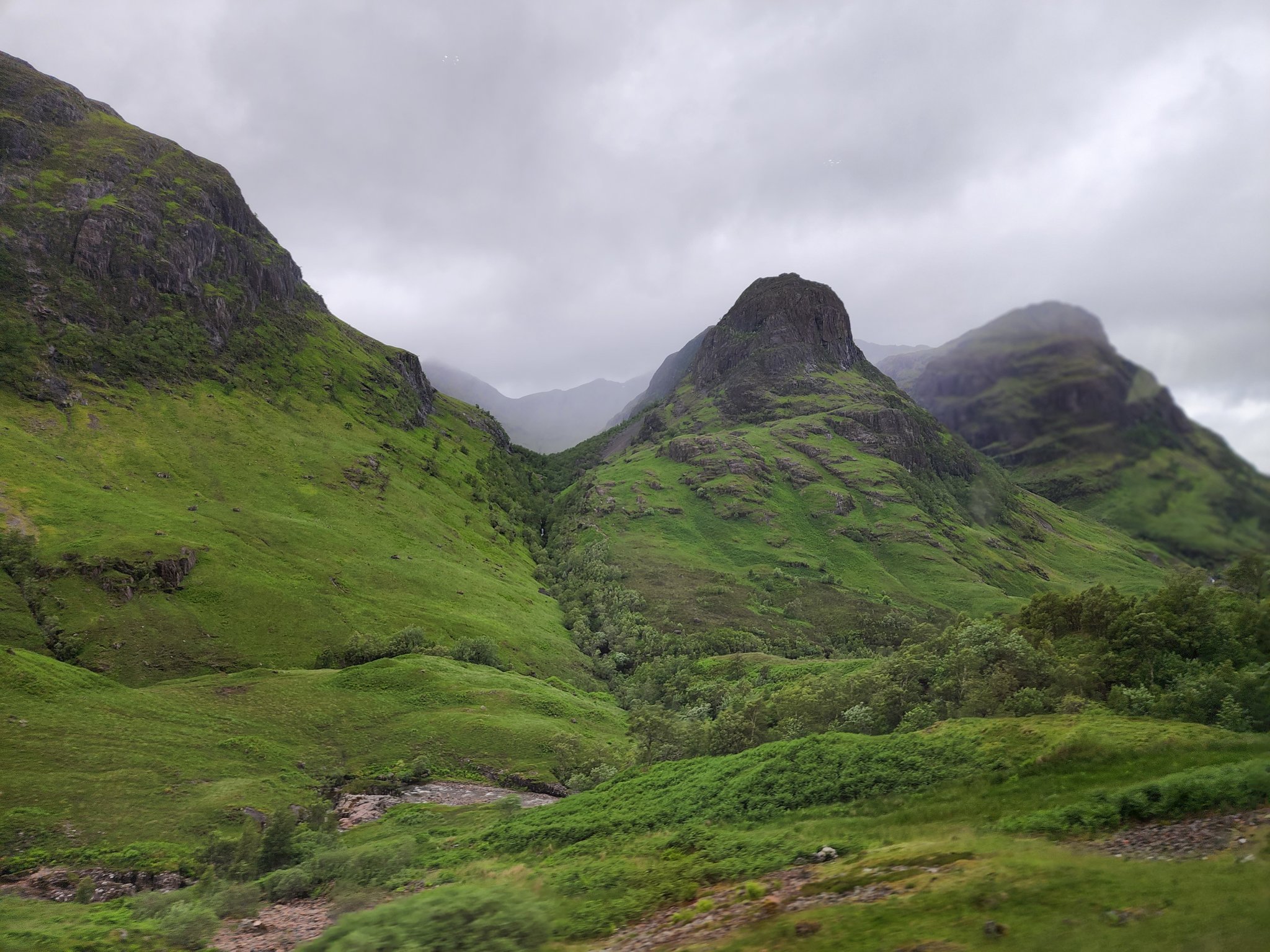
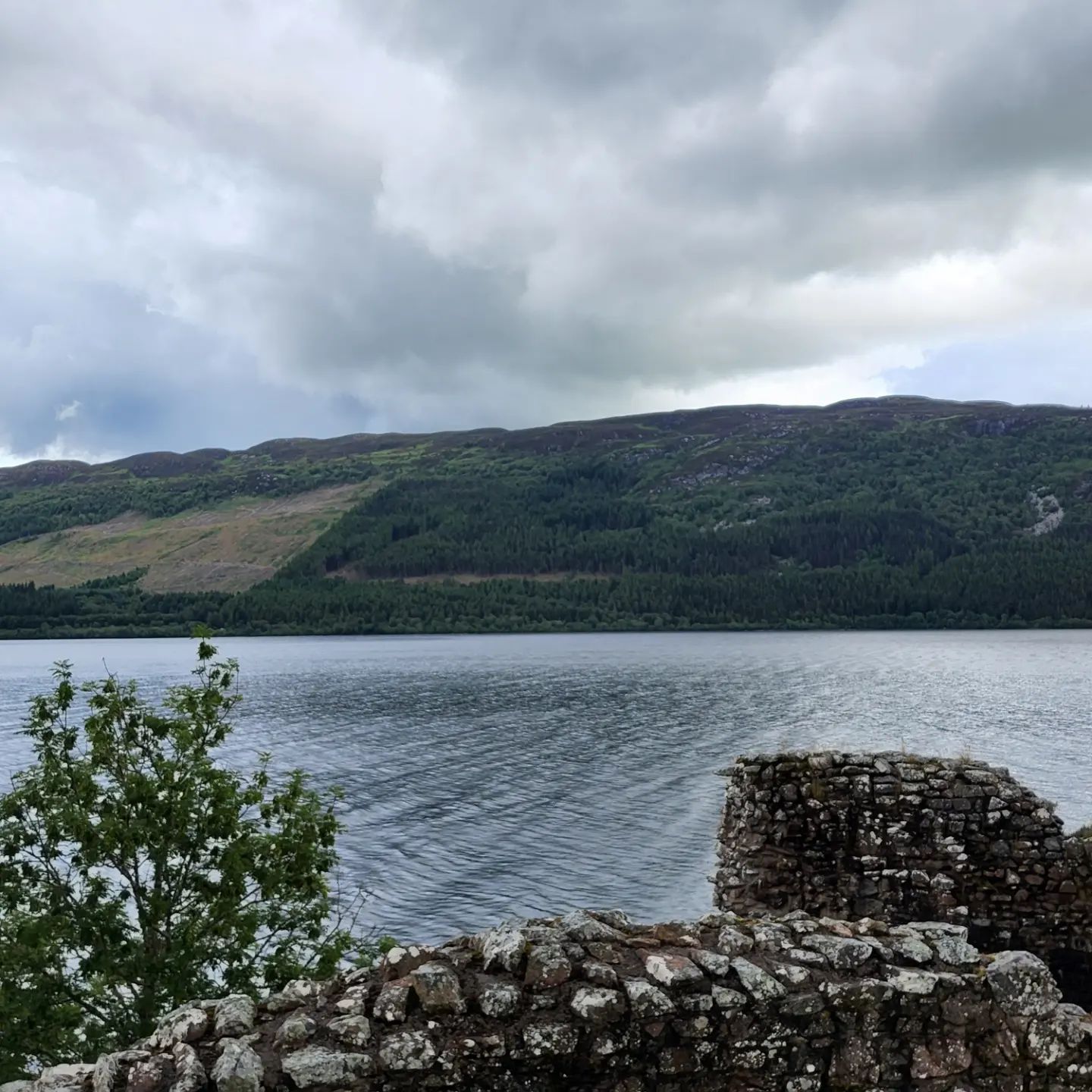
We stopped a number of places—Glen Coe (the “valley of tears”), where members of the Clan MacDonald defied the King and refused to pledge loyalty so they were all slain in their beds; the Three Sisters, a trinity of mountains also in Glen Coe (but a different part), that were wreathed in mist and rain; and of course Loch Ness.  I can’t be sure, but I saw a shadow which might have been Nessie.

Loch Ness

I loved Loch Ness.  I took a boat tour, and learned some fascinating facts about it, among which there is more fresh water in Loch Ness than all of the lakes in the Lake District in England, and the loch is so big you could fit all the people in the world in it.  (I don’t know how that would work, but I’ll take the tour guide’s word for it.)  Also, the loch is very deep and inky dark, so dark that you can’t see anything except by sonar after 25 meters, because there’s so much black peat in the water light can’t penetrate.  It’s basically like the loch version of a black hole. It was bracing and freezing to be on the water, and the wind actually buffeted people sideways on the top (open) deck of the ship.  I could have cheerfully stayed on the ship longer though, if that were an option, despite the wind and cold, because it felt right to be there—part of that magic I mentioned earlier.  Of all the things in Scotland I wanted to see, Loch Ness and the Highlands were the “Scotland-est.” (If you were to ask me before I left Atlanta what I think of when I think of Scotland, I’d answer “Loch Ness and the Highlands.”)  I’d always imagined going these places, and the reality did not disappoint.  I’m really glad I accidentally booked myself on another bus tour to see these places, because one time is not enough.

Entrance to Edinburgh Castle

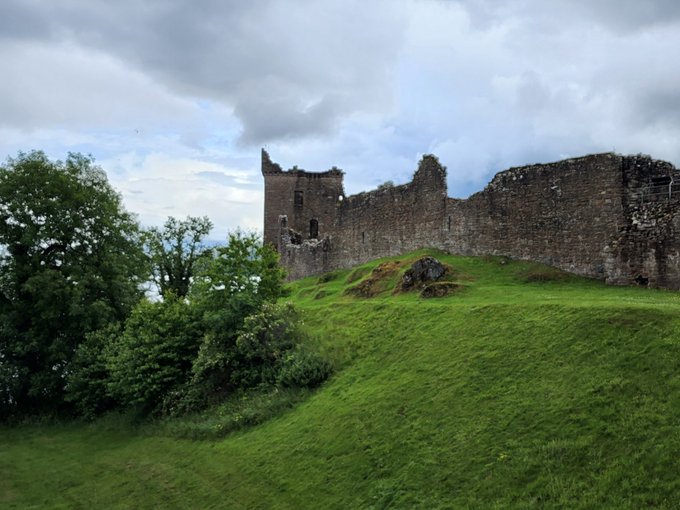
Yesterday I finally dragged myself to Edinburgh Castle. I say dragged because I really didn’t want to go—if you’ve seen one castle, you’ve seen them all, right?—but also I had to literally drag myself up this huge stairway—Peter Somebody’s Staircase—because I took a wrong turn down Victoria Street and landed at the foot of the castle, instead of just walking the Royal Mile like I meant to from the bus stop.  Ah well.  My

calves are still sending me hate mail.

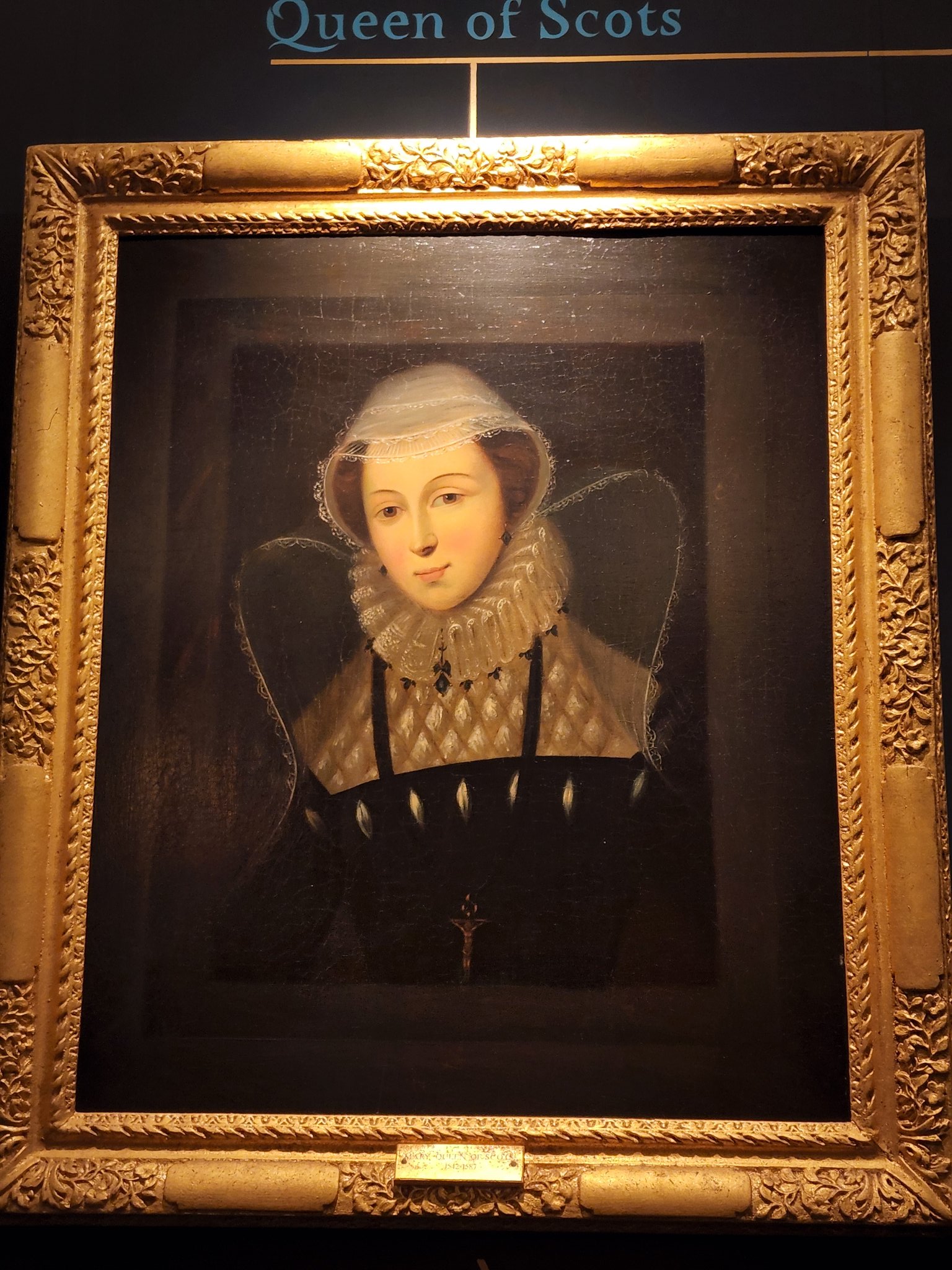
Mary Queen of Scotts

The castle was windy and cold—my favorite weather, especially in summer—and amazingly high above the city.  You could see all the way past the North Sea.  I liked seeing the Crown Jewels (a crown and a scepter, as well as the Stone of Scone [pronounced “skuun”] also known as the Stone of Destiny, the stone upon which monarchs are crowned which was stolen from Scotland by England’s King Edward in 1296).  Unfortunately, we weren’t allowed to take pictures of the jewels—I don’t know why—because they were kind of cool, though maybe not as ornate as I had expected.  Mary Queen of Scots was born at Edinburgh Castle, so after looking at the Crown Jewels, you got to walk through her rooms.  There was a room which had Mary’s family tree on it…it reminded me kind of like Sirius Black’s family tree mural from Harry Potter, adorned with beautiful and elegant portraits from her family.  You also could look into the birthing room, which frankly was literally the size of a closet.  There was also a lovely and ornate tapestry (and/or bedspread) she had made, but I didn’t get a picture of it because there were too many people in front of it and it was a dark room.  But the needlework impressed me.

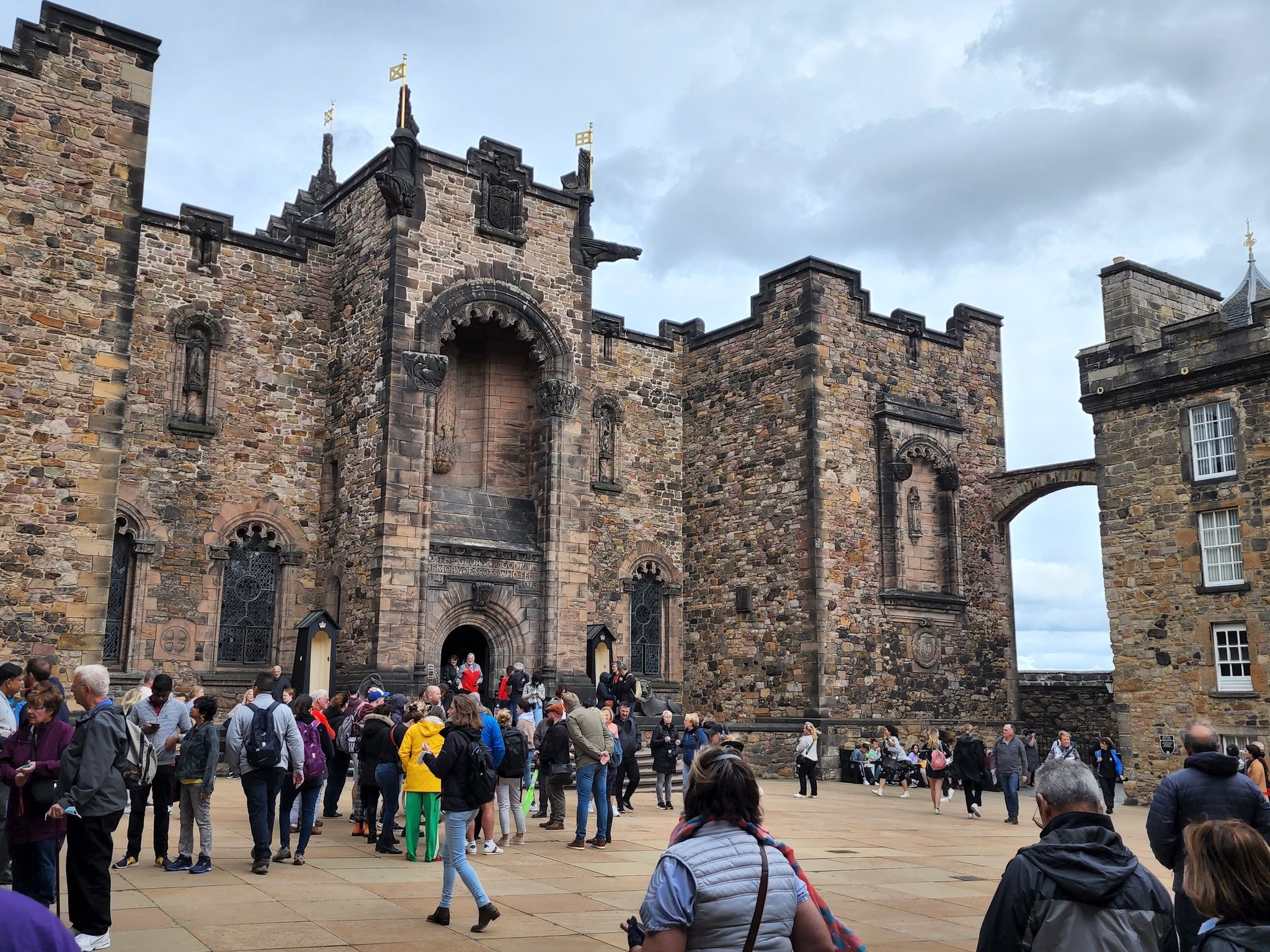
Scottish National War Memorial

I also scoped out the Scottish National War Memorial which was dedicated to the memory of the soldiers who died in WWI.  It looked like it should have been a chapel, not a war memorial.  Maybe it had been at some point?  But the sign said it was made in 1927 for the memorial’s purpose, which kind of amazes me because it looks like it was built part of the castle, if not originally, certainly more than 95 years ago.  I also peered in at the Great Hall, and perused the History of War Museum, and I can categorically state the only thing that interested me about the History of War was seeing the medals from the uniforms the men wore.  Some of it looks like jewelry.  And I love me some jewelry.  But the history of war leaves me cold—and with the exception of a brief nod to women as nurses, women’s role in the war(s) was ignored.  Overall, I’m not sorry I went to Edinburgh Castle, but between seeing it and Sterling Castle last week, I’m about castled out.  I appreciate their historical qualities, but they are surprisingly unromantic buildings (yes, yes, I know they are built for military purposes, not fairy tales), and seeing them in real life demystifies them in a sad kind of way.

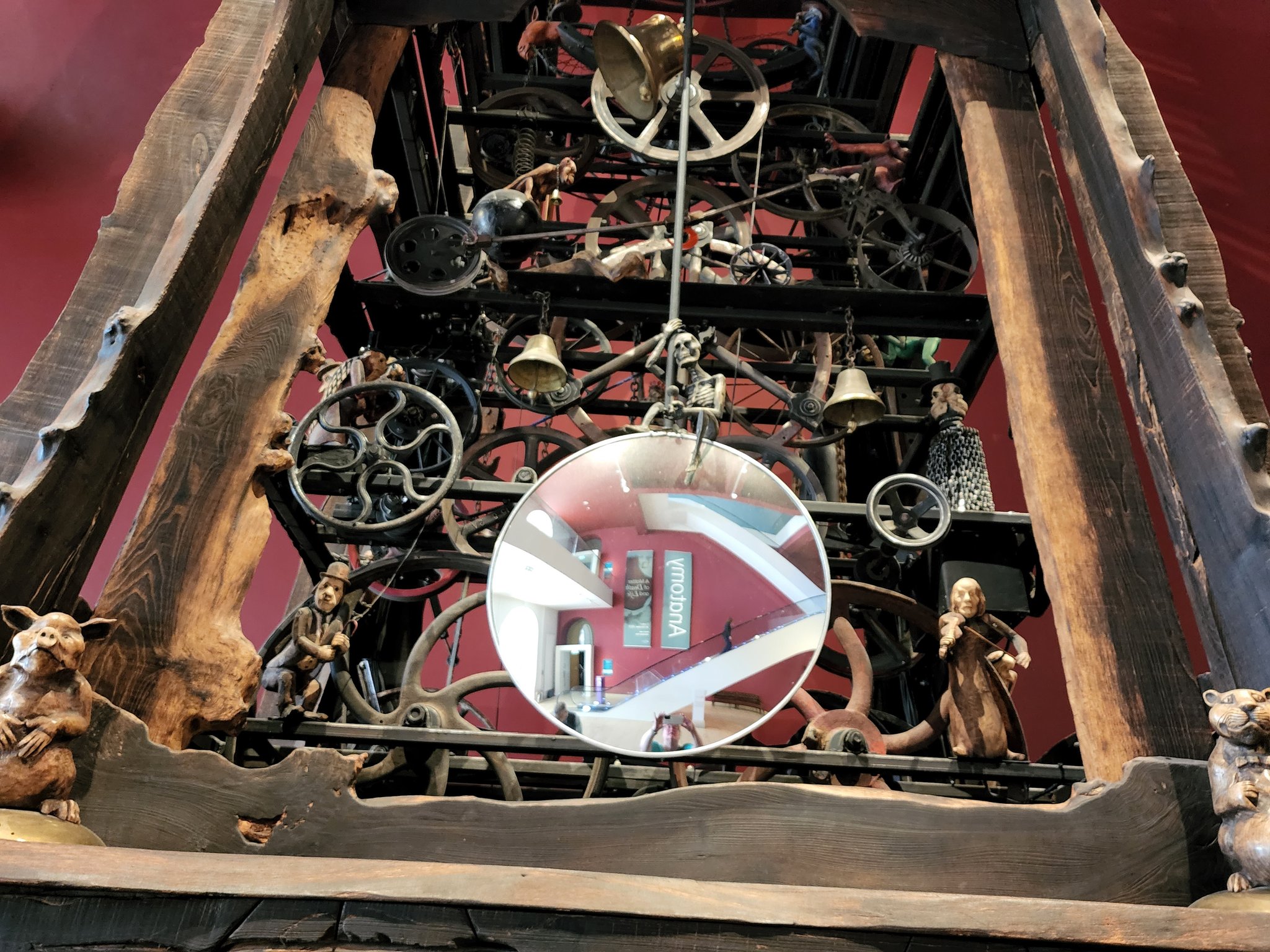
Millennium Clock Tower, National Museum

Backtracking a little bit, Friday I went back to the National Museum of Scotland.  I had intended on going to the Royal Scottish Academy of Art and Architecture instead, but when I got there, the guard told me it was closed because it wouldn’t have an exhibit until the end of July.  I was glad I went back to the National Museum—I got to see things I missed and enjoyed my leisurely walk through the collections.  Something I hadn’t seen the previous time I visited was the two-story Millennium Clock Tower.  If I had been on the first floor, I think I would have filmed it going through its various songs and chimes at 1 p.m., but I missed some of it and wasn’t at a good spot to film anyway.  It’s a wonderful clock though, with four levels—a Crypt, a Nave, a Belfry, and a Spire, to correspond to the way a medieval cathedral is constructed.  Apparently, it was built in 1999—but just like the War Memorial, it looks older than it is.  I really enjoyed looking at it, and seeing various parts lighting up as it rang.

Another thing I saw that was very interesting was their extinction/climate change exhibit.  You would never see such a indictment of things like oil and pollution in a governmentally-supported museum in the States.  Oh, it was critical of human destruction of the planet—and so bald about it.  I mean the exhibit just points out all over the place how human selfishness causes animal extinction events and how we are probably going to end up with a planet that is beyond saving.  Can you imagine if this were the Smithsonian?  Republicans would go bananas.  But I loved it.  It’s a devastating exhibit, of course, but I really appreciated its in-your-face predictions of climate doom. We need truth like that.

One thing doing so much on the weekends helps with is keeping my loneliness issues at bay—you can’t be too lonely when you’re tramping all over the wilds of Scotland as well as the less-wilds of the city of Edinburgh.  So I think I’m doing a little bit better with feeling disconnected and discouraged than I was earlier, which is a good thing, especially since I still have several more weeks to go before I return home.  I still miss folks, and the days are still too long.  But I’m coping.

Hope you like this latest batch of pictures.

A church in front of Edinburgh Castle. At the lower right you can just see a Fish and Chips seller.

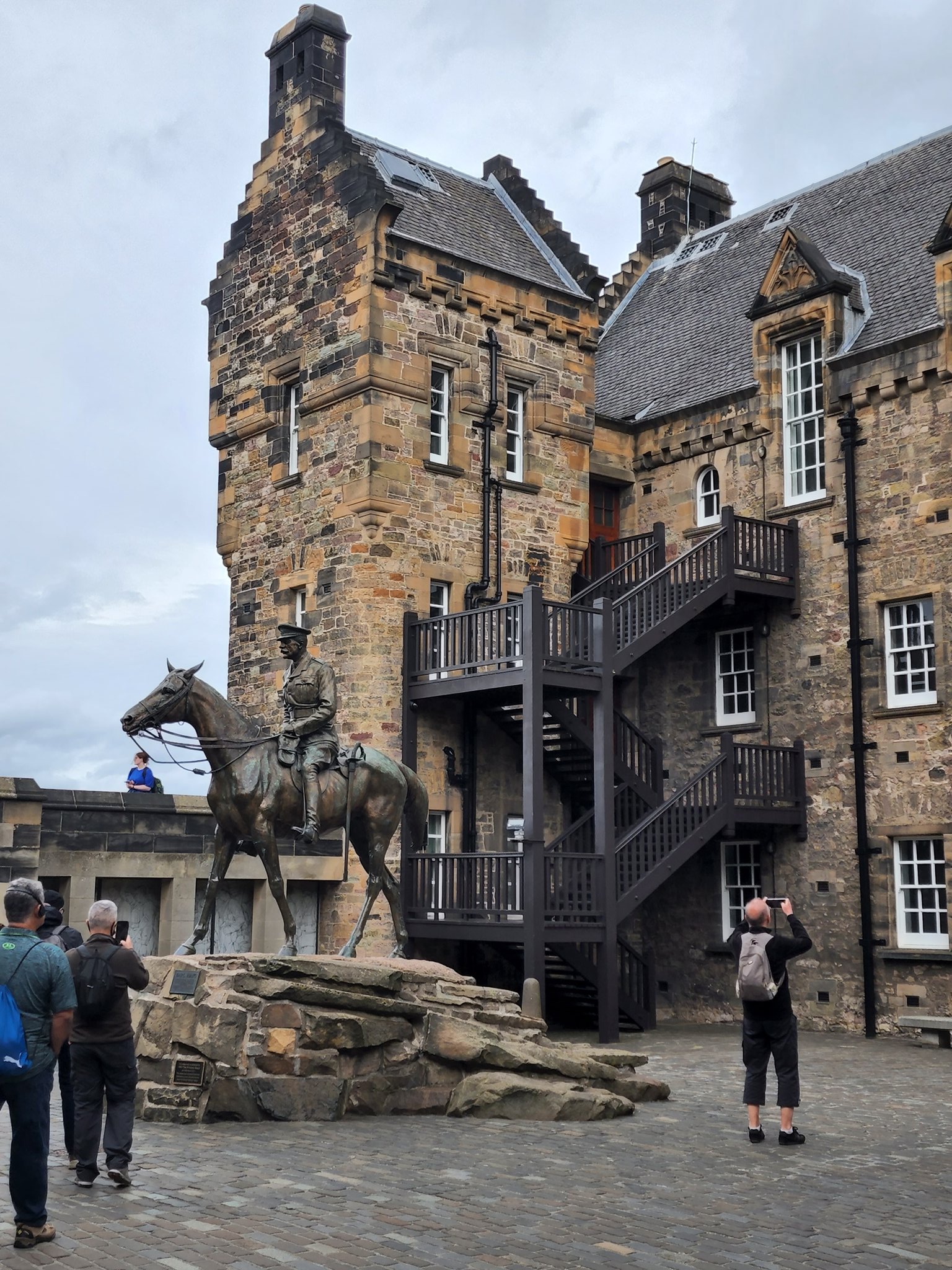
Field Marshal Earl Haig statue

View from the castle

I love the clouds in this picture. What you can’t see is just how steep this incline is.

The royal palace with clock tower

Upper ward courtyard

A handsome horse statue on the left side of the War Memorial

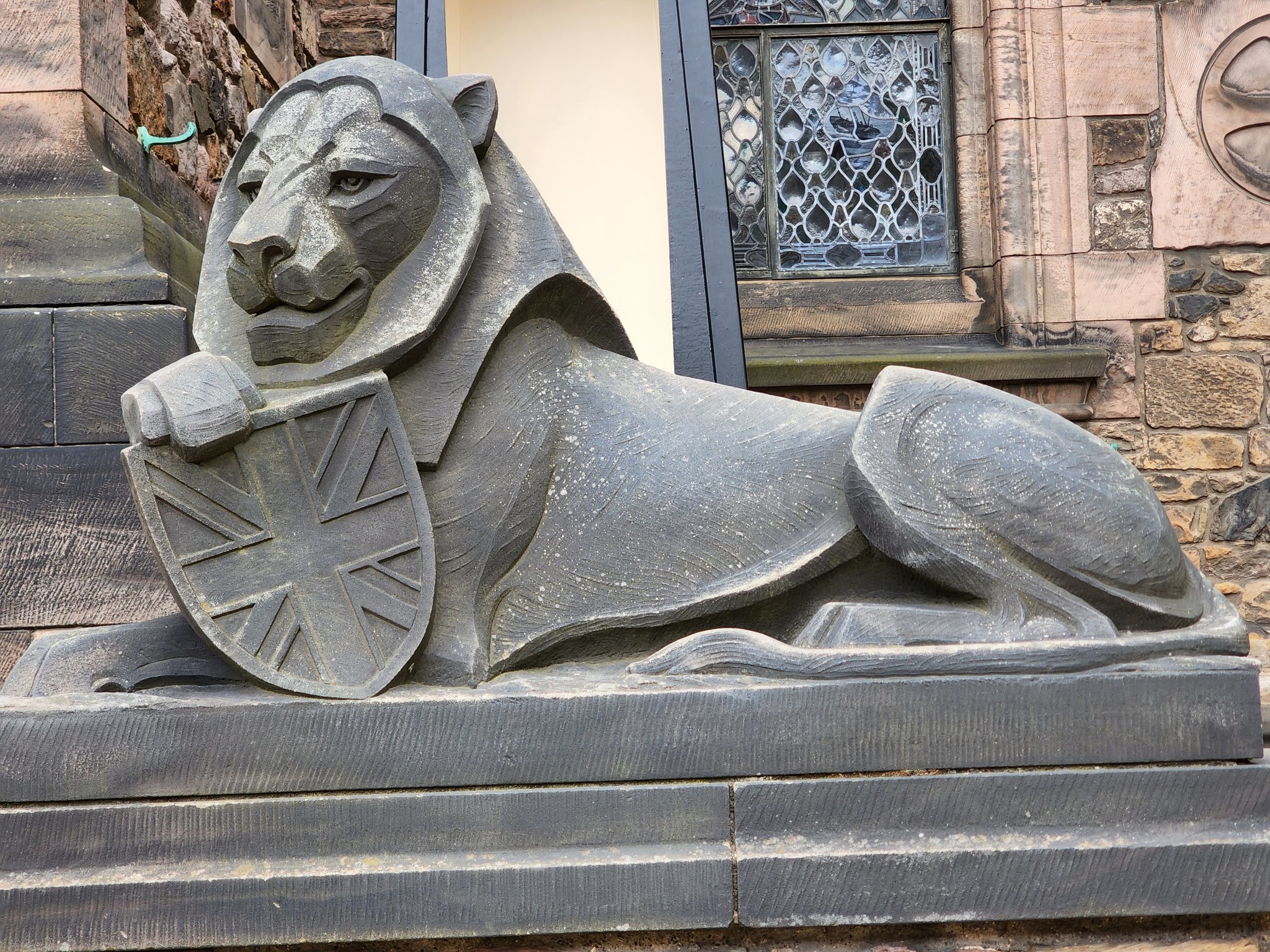
A debonair lion on the right side of the War Memorial

Ben Nevis, the highest point in Great Britain, with snow

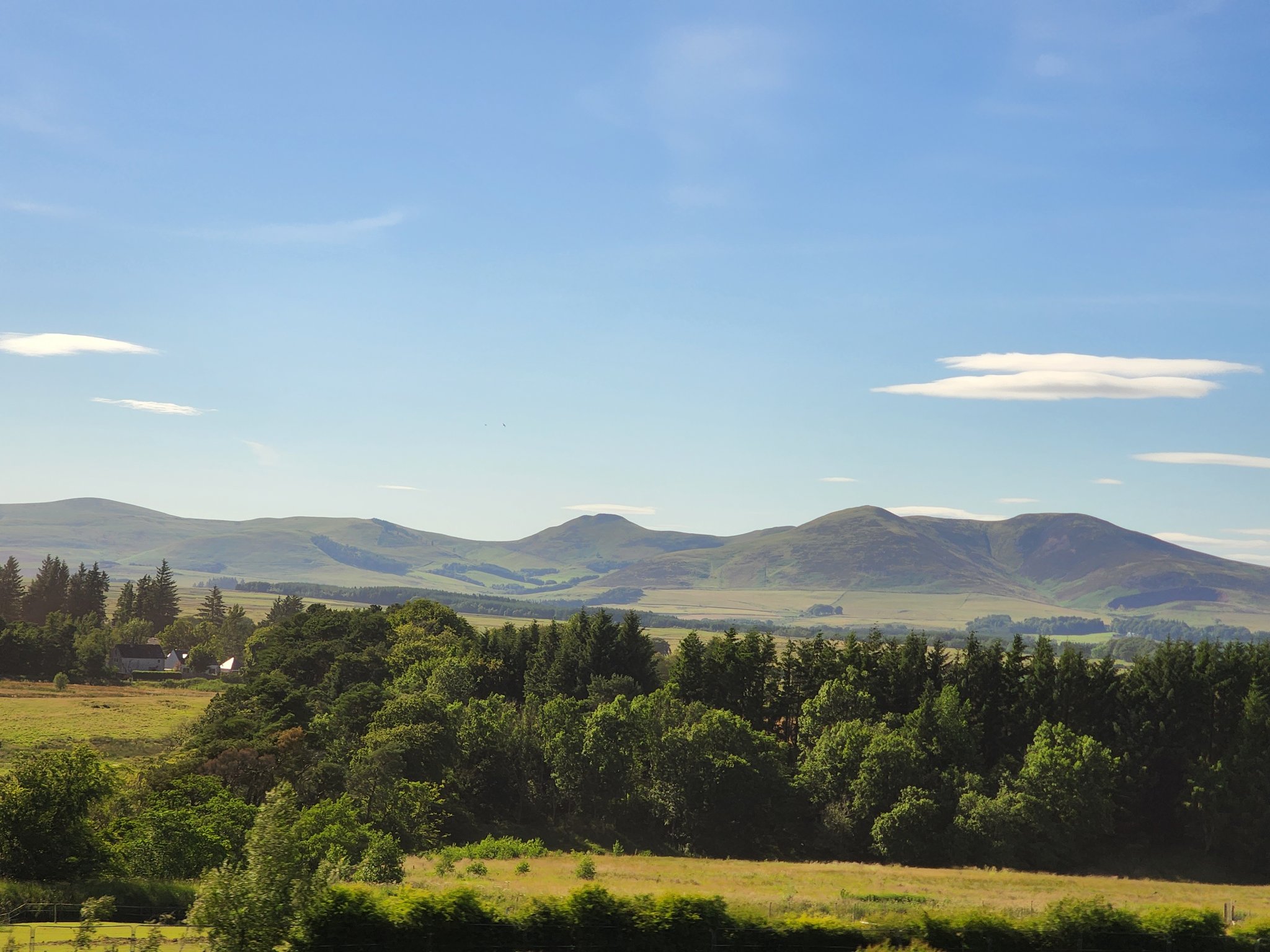
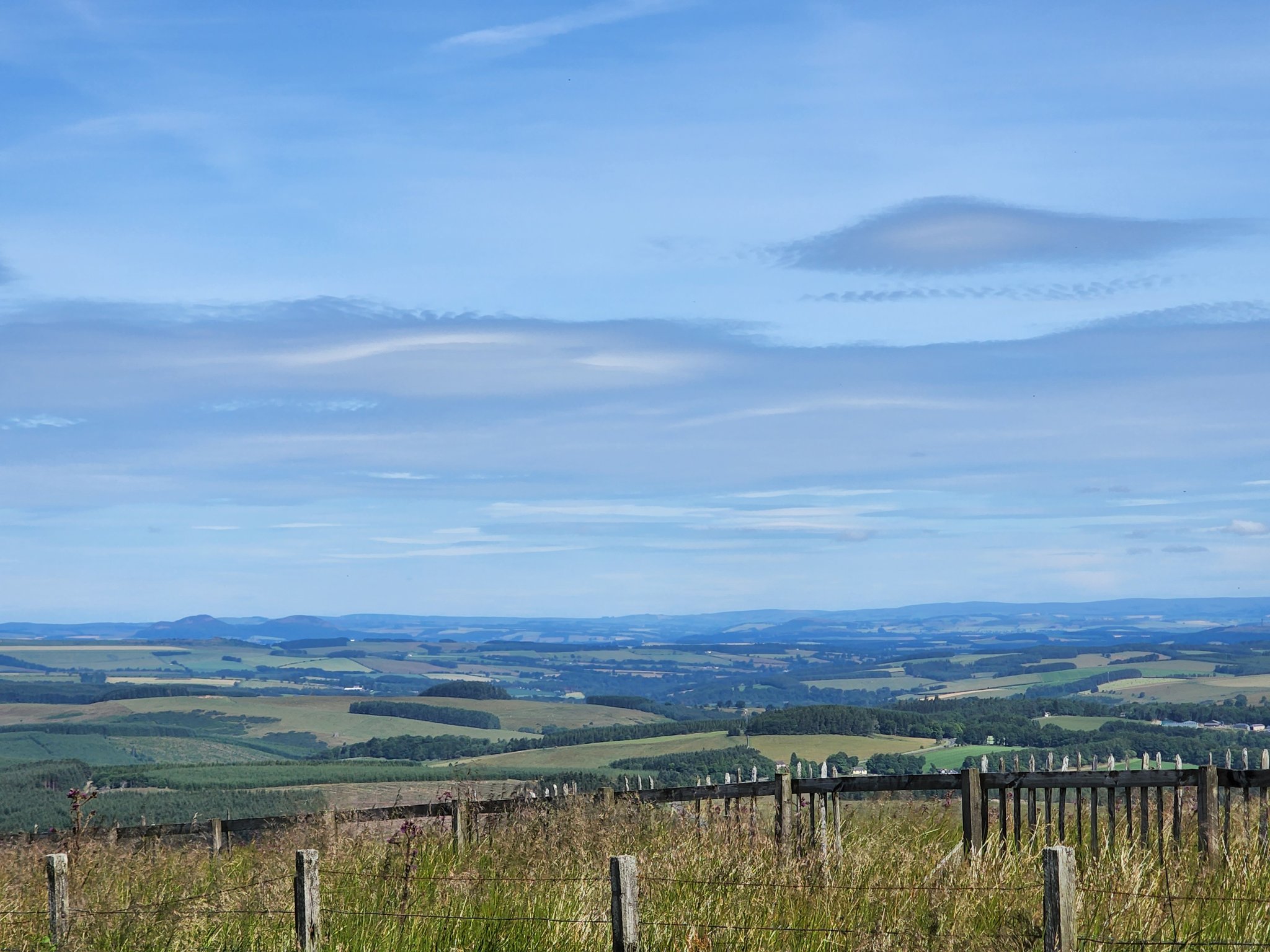
The beautiful Highlands

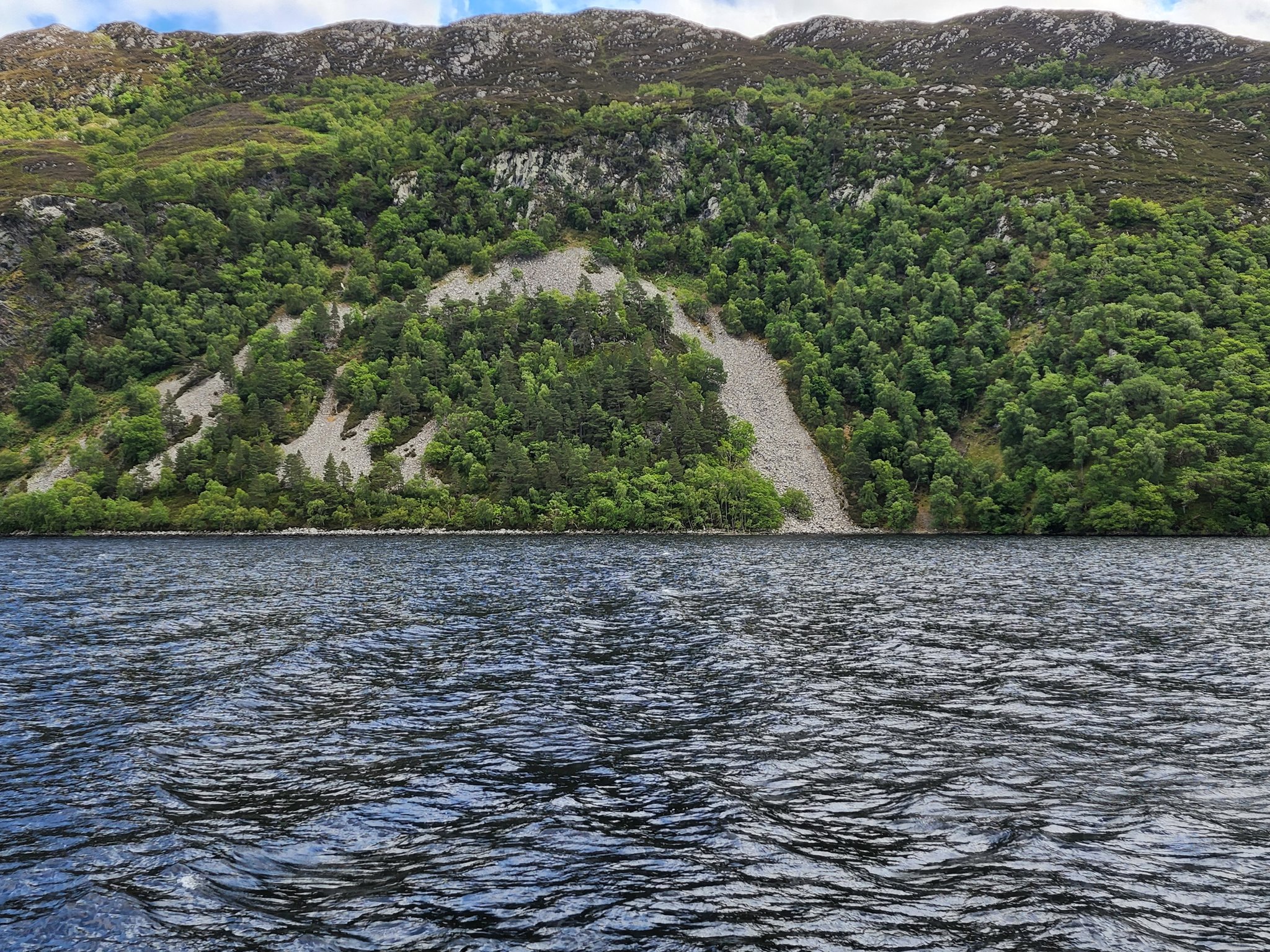
This scratched off part of the hill is where Nessie apparently tried to escape the Loch but unfortunatly slipped back into the water because the hill is so steep.

Loch Ness

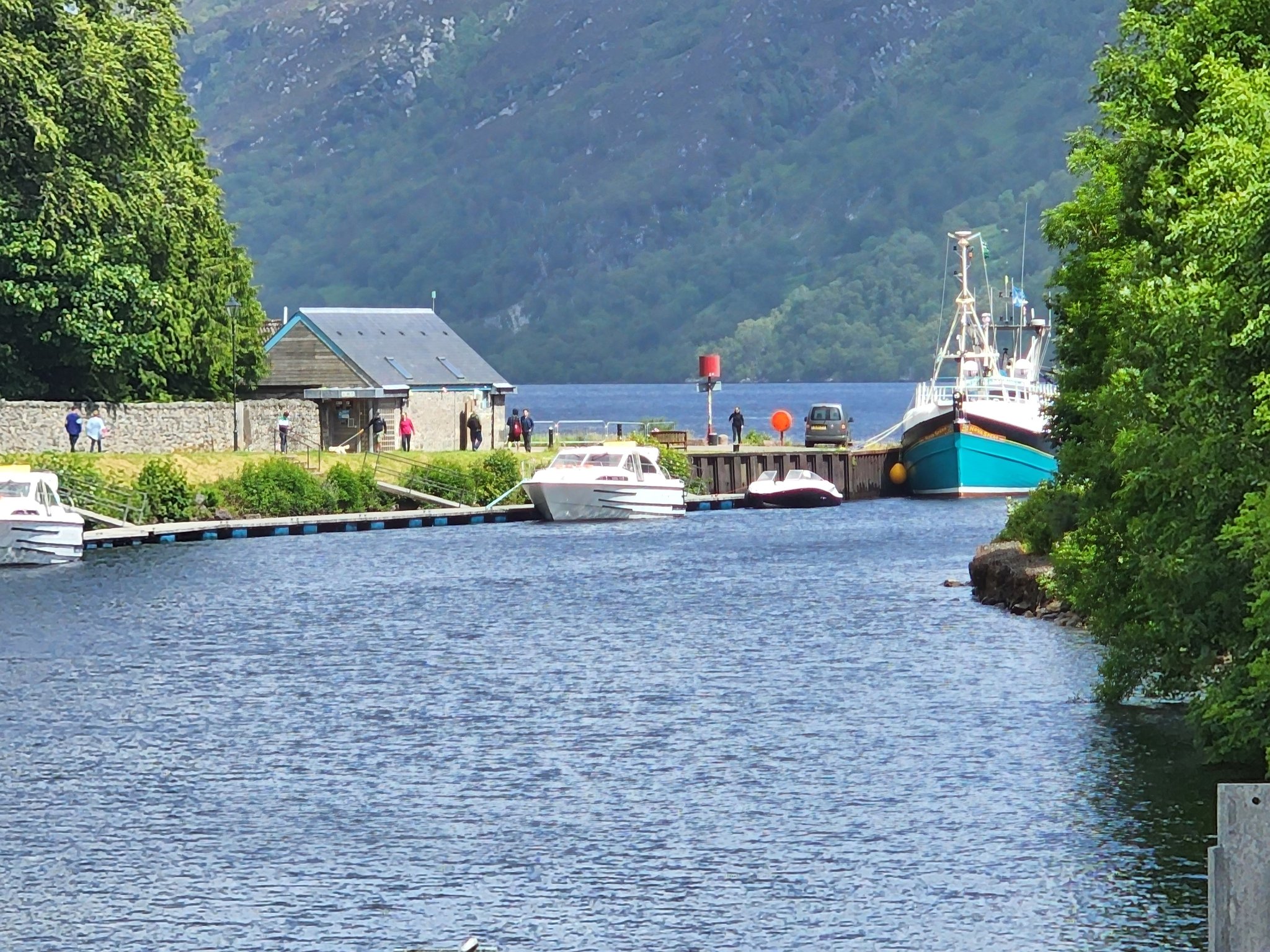
Loch Ness canal

Loch Ness (I think)

The Three Sisters, Glen Coe

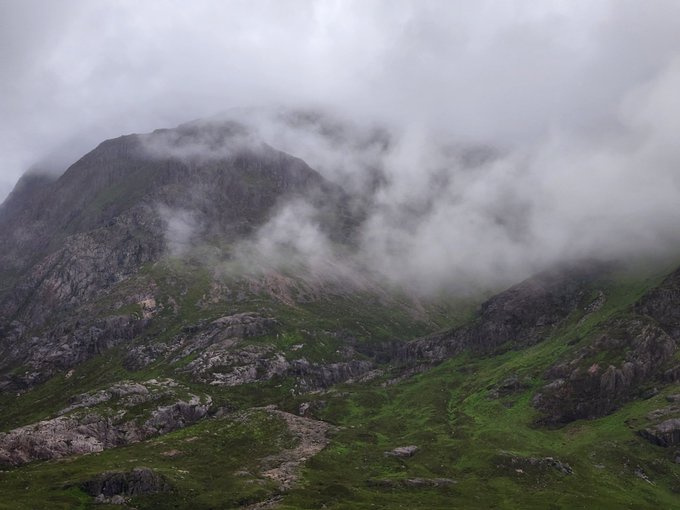
Mountain in Glen Coe… the tour guide said “Geroff, and getcher Instagram pic.”

More Edinburgh Castle

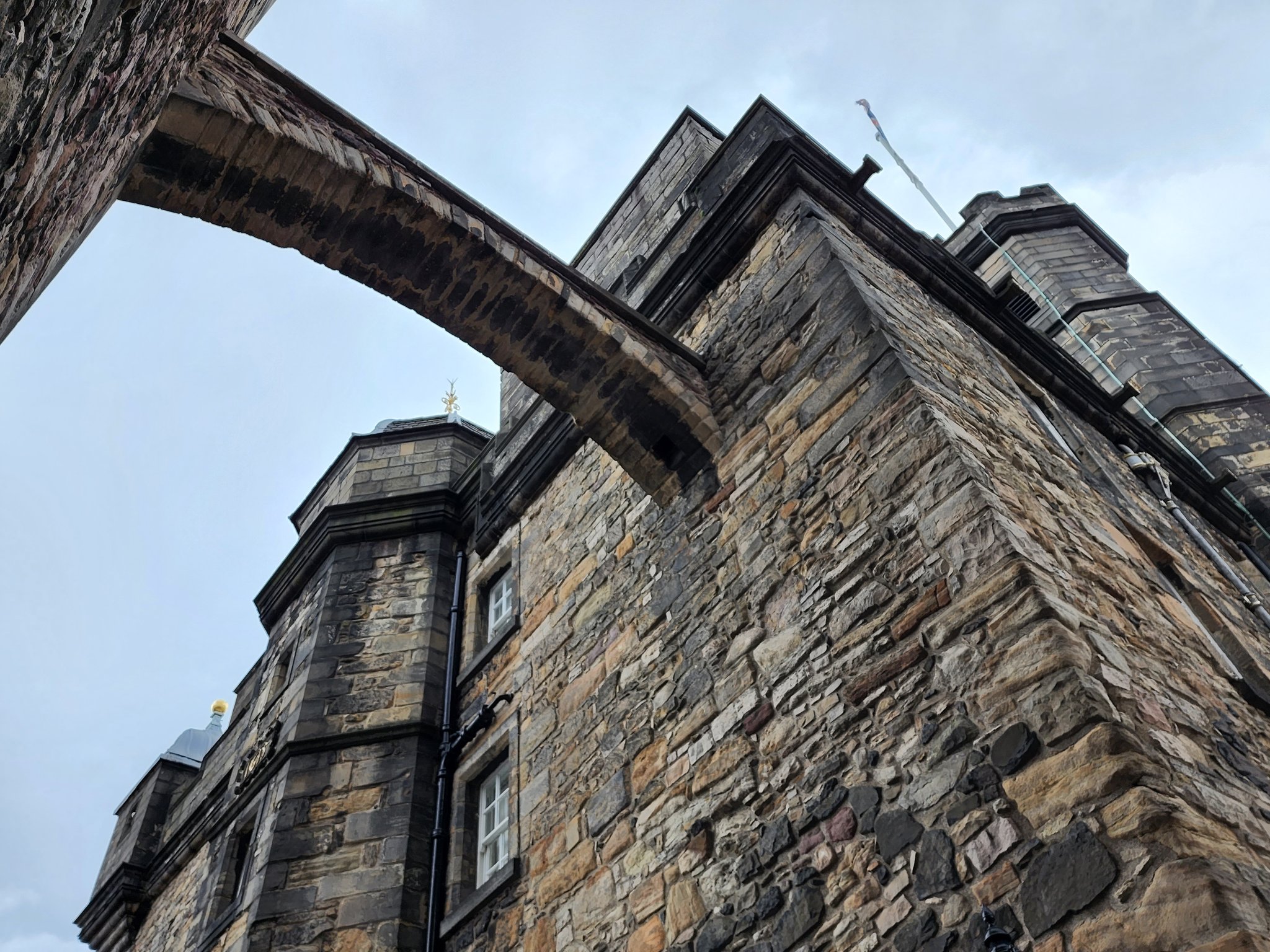
I like the angle I took this pic of the arch.

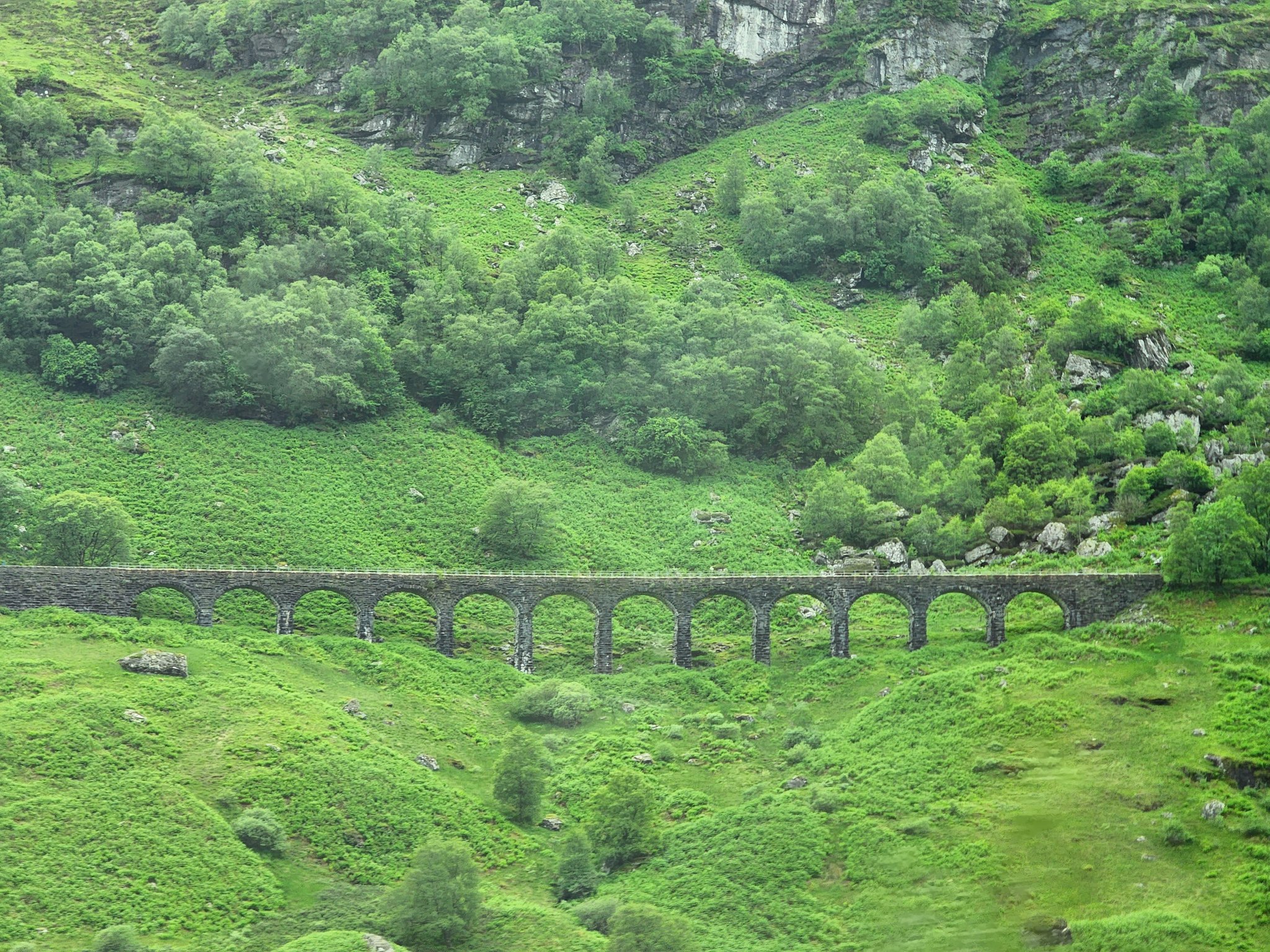
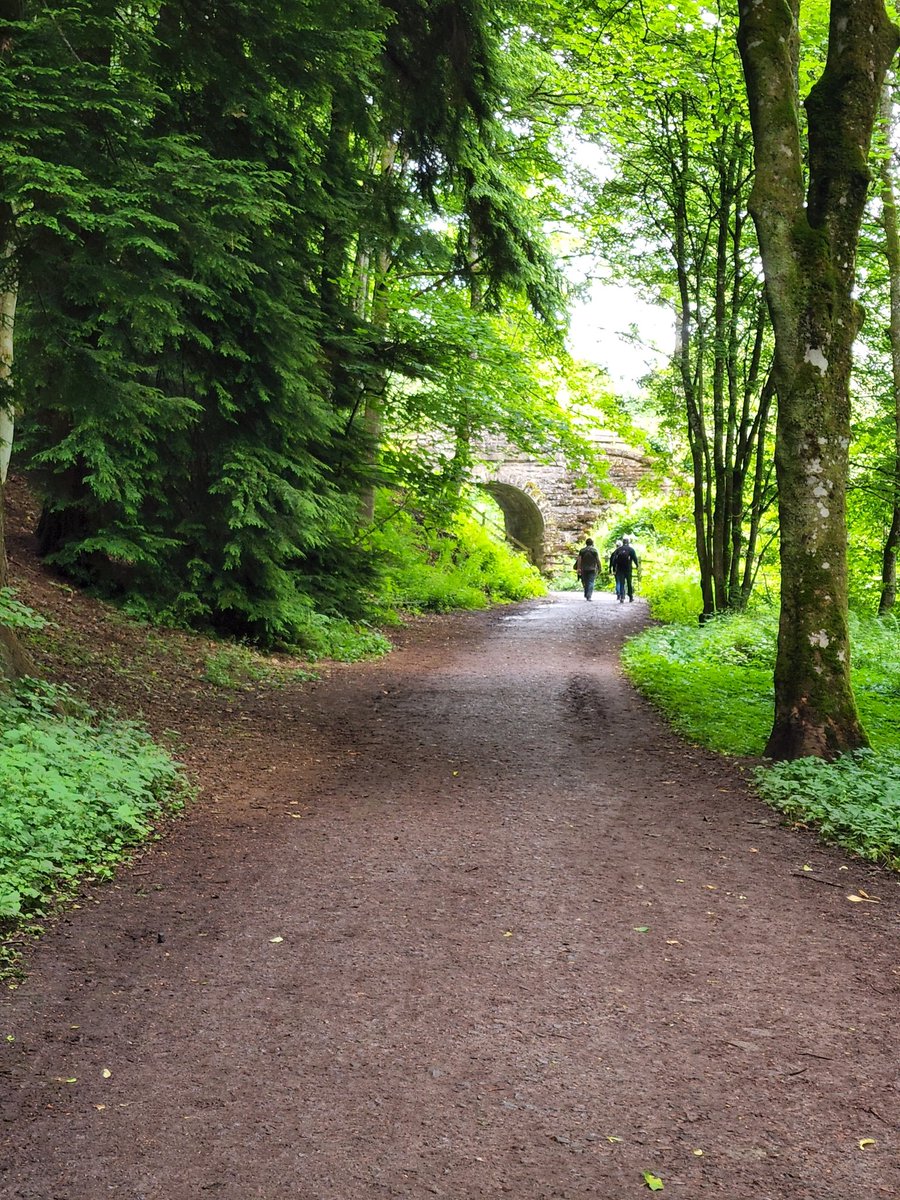
A Highland bridge, no longer used for trains

Edinburgh Castle

Edinburgh Castle

Loch Ness

Loch Ness

Loch Ness

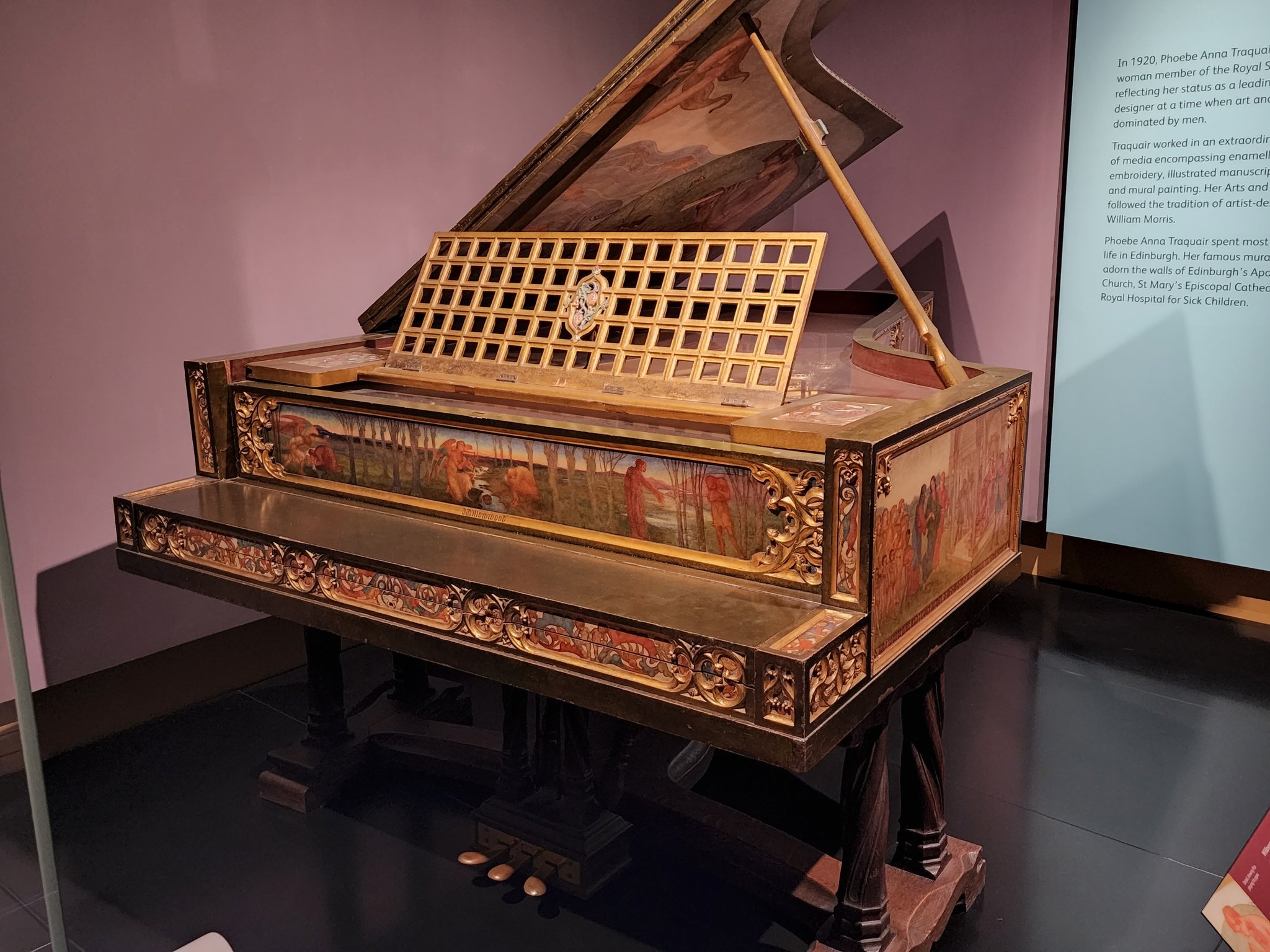
Piano painted by Phoebe Anna Traquair, National Museum of Scotland

Embroidered triptych by Phoebe Anna Traquair

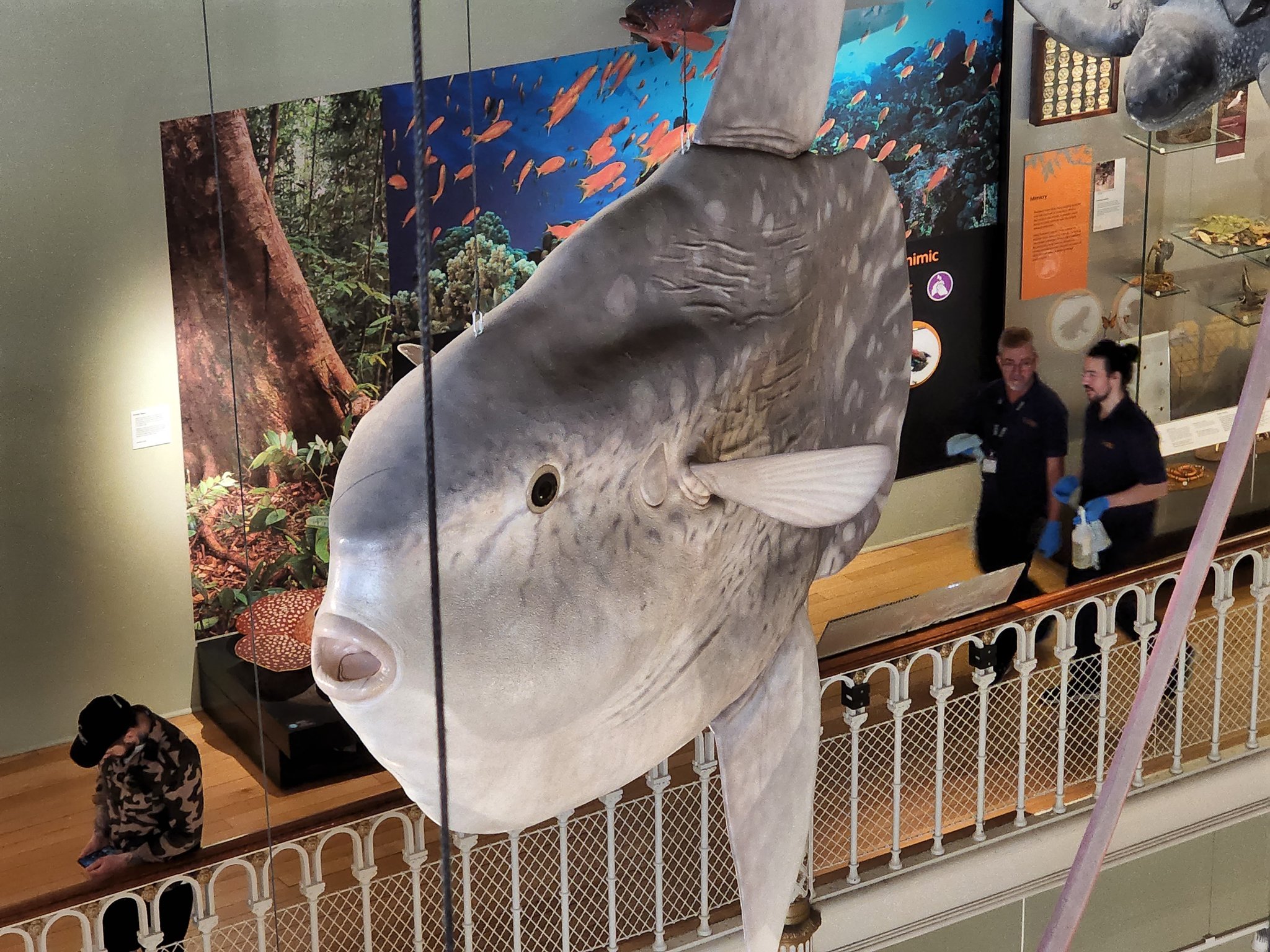
Big Ass Fish (Kirsten, it tried to bite me!), National Museum

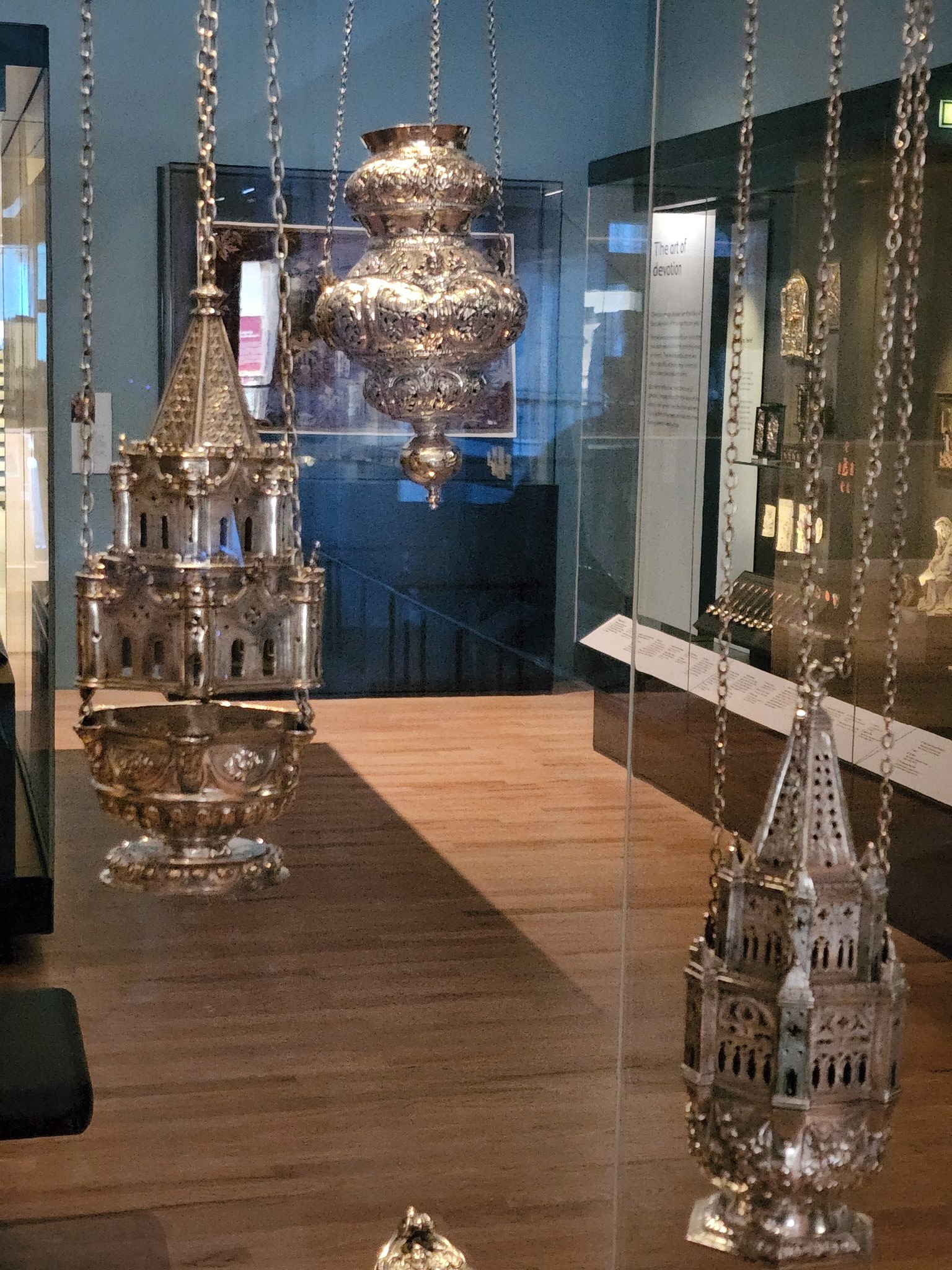
Mass censers, National Museum

Detail of Millennium Clocktower, with a tiny JC in the reflection, National Museum

Detail of the Millenium Clocktower, National Museum

Helen and Kate Storey dress, with X-ray of lung, 1997, National Museum

L: Plaque, the Virgin & Child, Italian,late 15th C., National Museum R: Plaque, the Virgin & Child, Italian, 17th C.

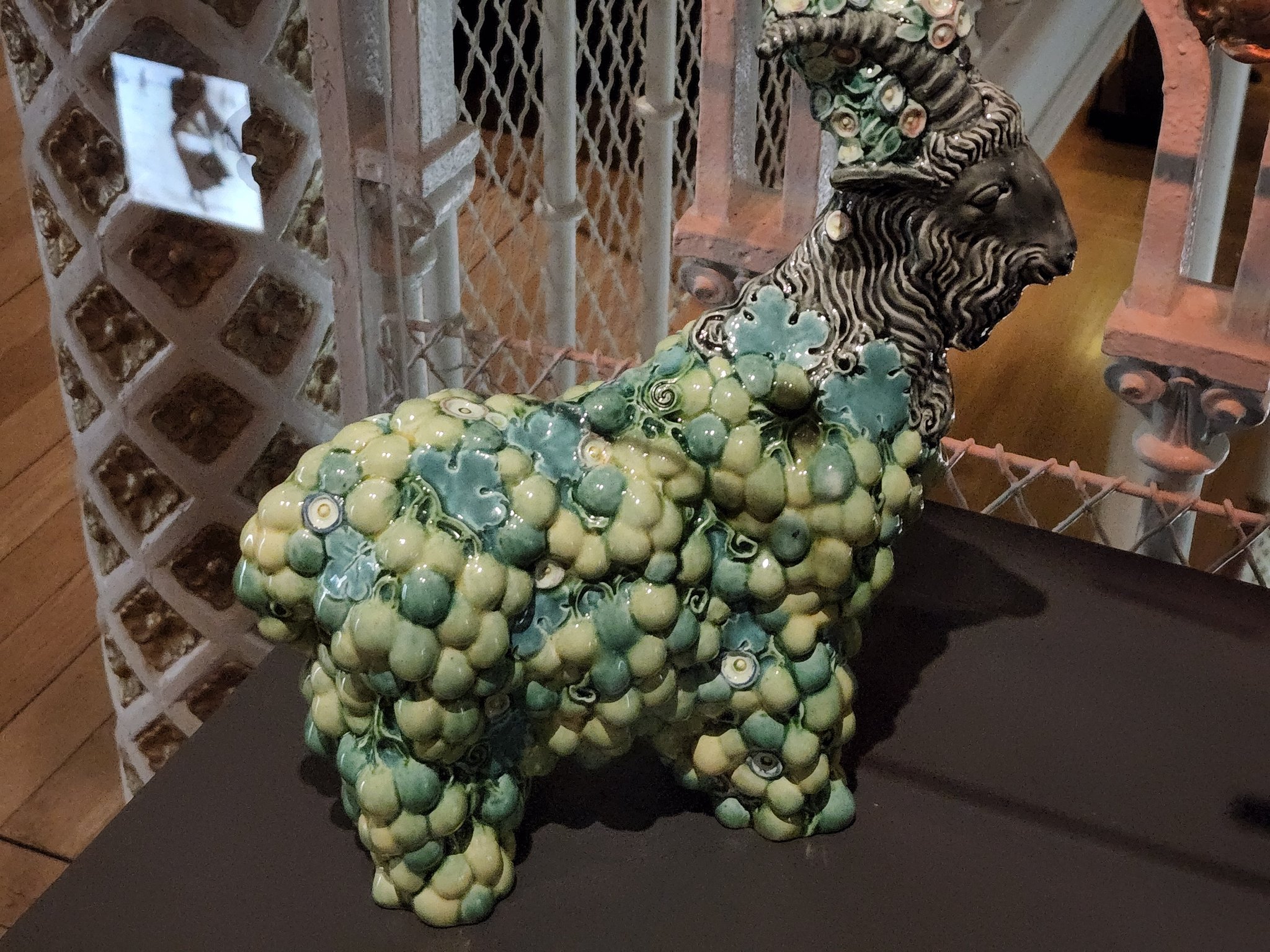
Grape goat, Michael Powolny, ca. 1907-1910, National Museum

The hall of animals, mostly extinct, National Museum

Giraffe head. I think he’s grinning.

Busts, National Museum. But I mostly like the atrium design apparent here.

Airplane in the Hall of Technology, National Museum

Another view of the atrium, National Museum

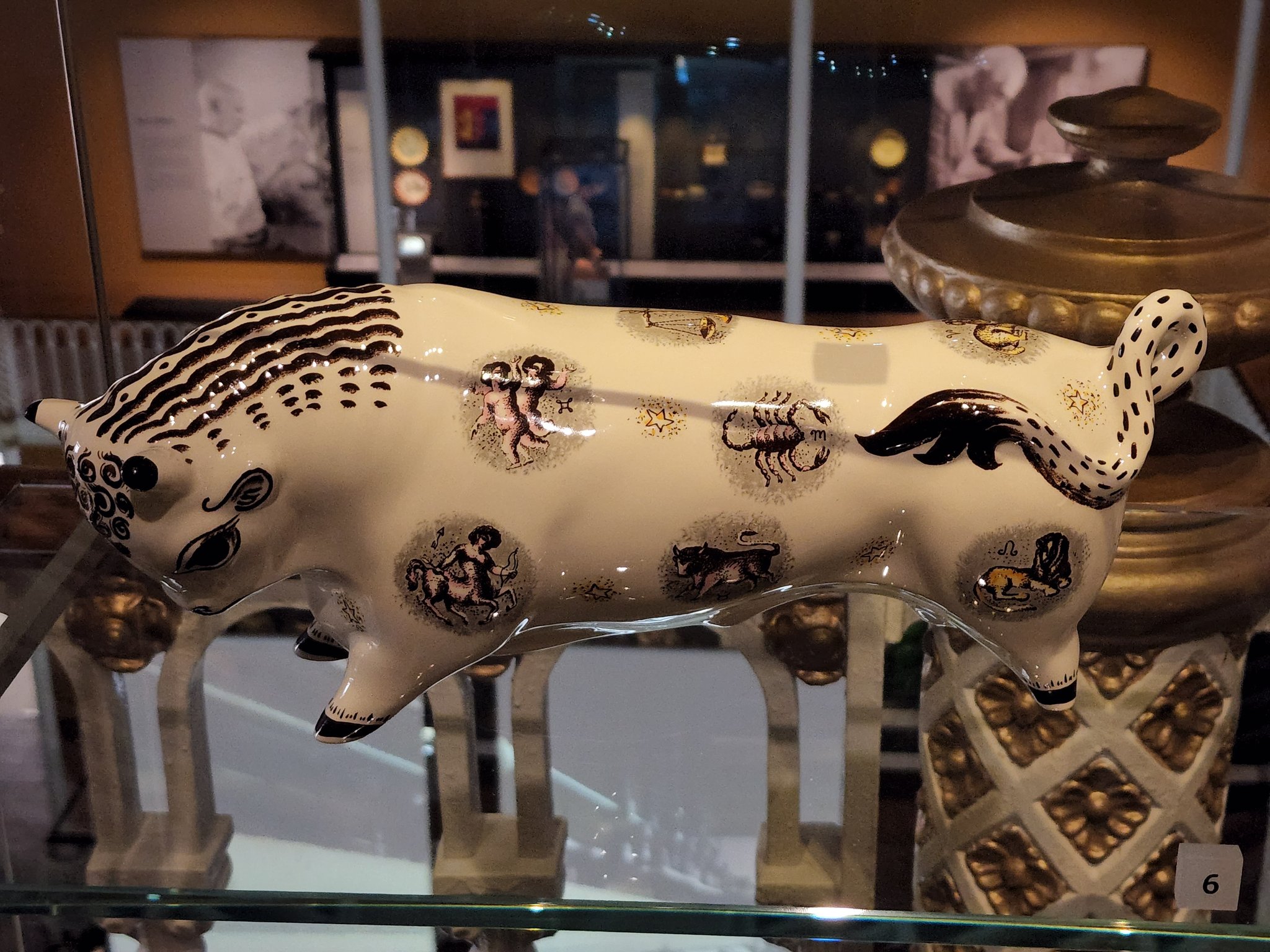
Bull figurine, National Museum

Cat figurine, National Museum


Morning Musing

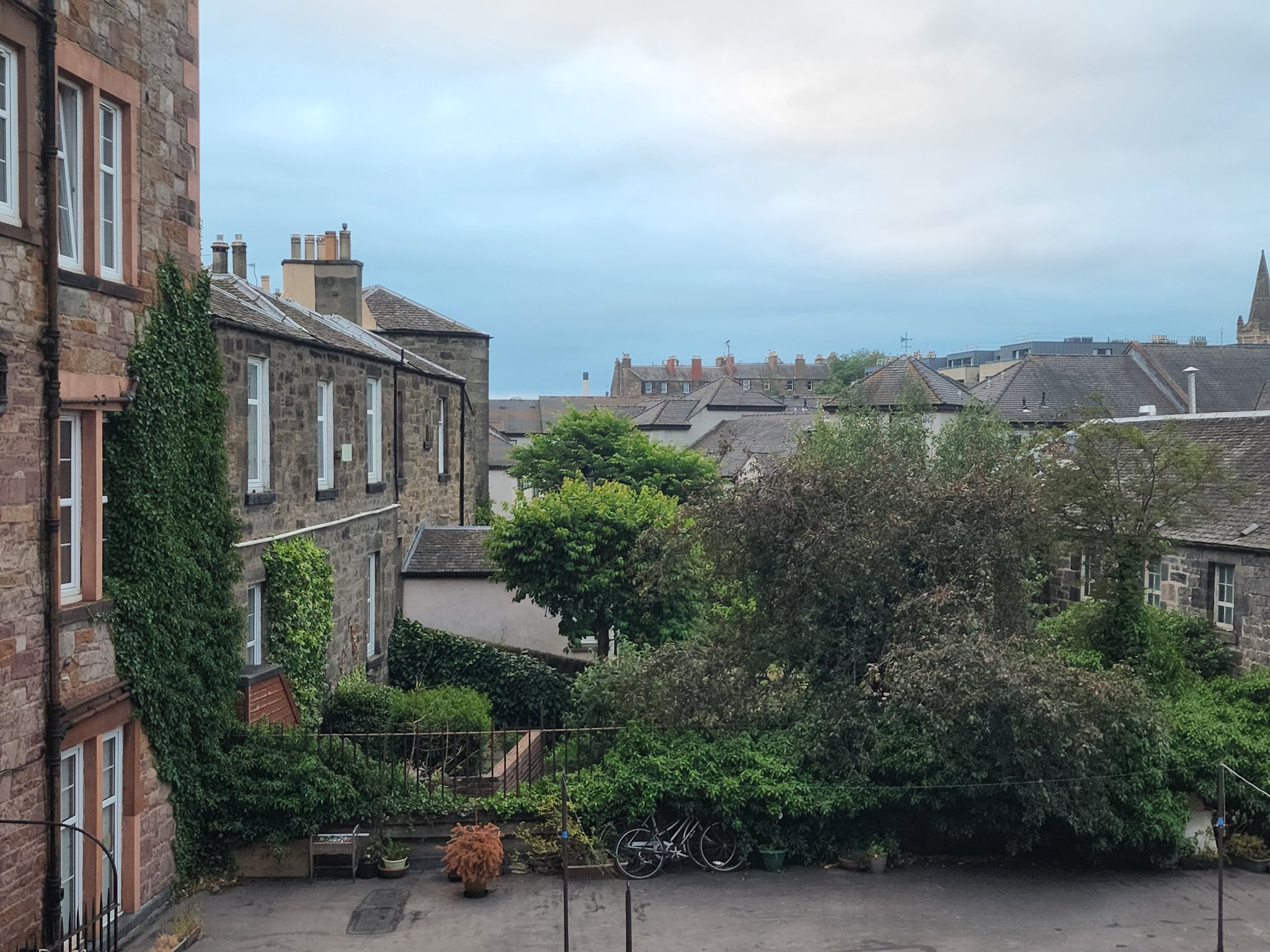
5 a.m. from my bedroom window. It ain’t what you call “dark.”

It’s 5 a.m.  I’ve been awake since 2:30, when the seagulls decided they wanted to hold a concert right outside my window. In case you haven’t heard a seagull lately, its cry falls somewhere between a half-cranked motor and a baby being stabbed to death.  Seagulls like to fly over the courtyard out back of my apartment, and I like to watch them…but not this early.

Since I’ve been in Edinburgh, my sleep patterns have been disrupted.  Partly that’s due to sleeping in a strange bed, one that lacks multiple blankets and too many pillows.  Partly it’s the light situation. I can tell you that around 3:30 the sky was definitely turning lighter, and I’m used to dark nights and black-out curtains back home, so that my bedroom is cave-like and no light enters in to bother me.  (Yes, yes, I could wear a sleepy mask here—and I have one—but I never can keep it on my face long enough to let it work.)  I also miss my cats, especially Jenny, who keeps me company at least for a little while as I sleep.  All of these things combined have contrived to keep me up later and to sleep less deeply when I finally go to bed.  Even my Fitbit has been giving me poor sleep marks since I’ve come to Scotland.

I’m not sure why I couldn’t just roll over at 2:30 and fall back asleep.  I guess I do have some weighty thoughts on my mind.  For one thing, I remembered I promised to write a blurb for a new poetry book, and I was suddenly panicked that I was late with it.  (Turns out I’m not; it’s due mid-July, not mid-June). For another I guess I’m worried about my class.  Discussion is going really well and what I’ve graded so far has been good, but teaching a new class is difficult and I worry my students may be disappointed with me.  (I’m so used to teaching creative writing these days, that teaching literature seems just so much harder than it used to be.)  And finally, as I mentioned before, I’m lonely, and also finding it hard to write.  My Dad asked me if I’d written a lot of poems since I’ve been here when we talked on Father’s Day, and I bashfully admitted I have not. (On the other hand, I didn’t write about Venice when I was in Venice, but when I did finally write about it, I came up with a book.  So perhaps a book of Scotland-related poems might be percolating in the back of my mind?)

I suppose I’ll wind up taking a nap at some point today—I suspect I’ll just crash.  (But hopefully not while I’m teaching. 😊)

Anyway, I just wanted to jot a quick blog for my five loyal readers, and to take a picture of 5 a.m. so you know what I’m dealing with.

Weekend Sightseeing (Is Exhausting)

Portobello Beach

This weekend was a busy one for me—I packed a lot of living into two days.  On Saturday, I took a bus out to the seaside, specifically the Portobello Beach Promenade.  It was cold and blustery, but there were plenty of people (and dogs!) playing in the sand and several people had their feet in the water.  There was even a couple of lunatics up to their waists in the North Sea.  The temperature wasn’t quite 60, so I can only imagine how cold the water was.  They didn’t stay in the sea long.  (Not surprising).

The truest ambrosia

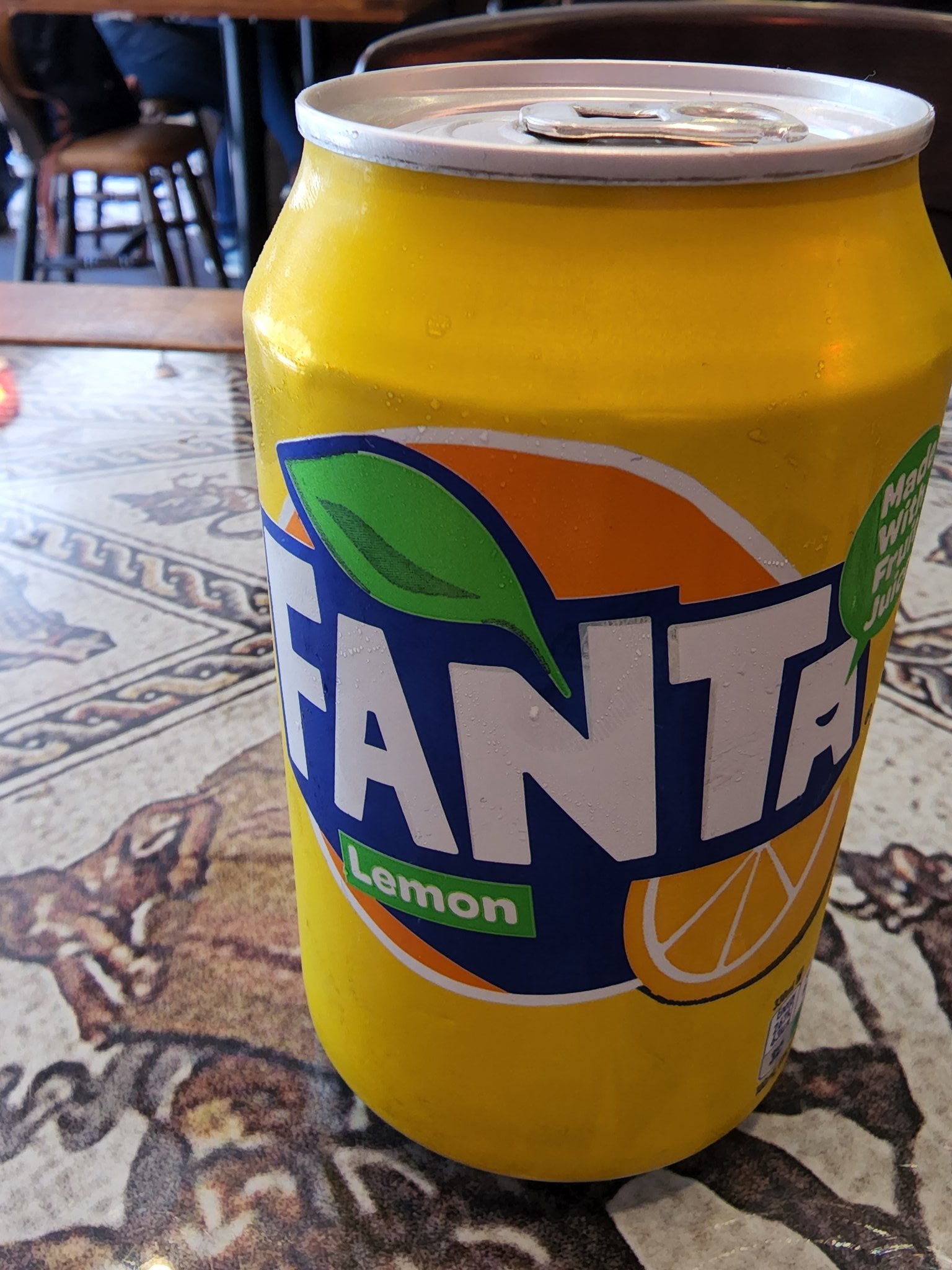
While I was there, I stopped at the Shrimpwreck for lunch, and tried a fish finger sandwich, made of battered fish, French fries (on the sandwich!), tartar sauce, and mushy peas (also on the sandwich!).  It was good.  And those of you who know me IRL will understand how thrilled I was to drink a Lemon Fanta, the drink I fell in love with when I went to Italy several years ago (and one that is not available Stateside).  It was a perfect lunch, accompanied by entertainment: the Portobello volunteer clean-up crew dancing to the B-52’s “Rock Lobster.”  One of them wore a crawfish “fancy dress” costume, with a placard that read “No Fear! Be queer!” on the back.  Another one of them wore striped pants, and had a red-painted face and dreadlocks.  Not exactly the colorful characters of a Venice Beach scene, but they definitely had a boardwalk vibe going on.

Altar at St. Mary’s Cathedral

Afterwards, I came back to the apartment for a few hours and rested.  (I don’t know about you, but every time I go to the beach—in any capacity—I get tired.  I wonder if it has something to do with the sea air.)  Then I took another bus ride to the vigil Mass at St. Mary’s Cathedral (since I knew I would be out all day Sunday, and I didn’t want to miss church). It is lovely inside, but not what I think of when I think of a cathedral—it was certainly more elaborately decorated than St. Columba’s from last week, but it isn’t stately in the way cathedrals usually are.  It’s like, if a typical cathedral is a thoroughbred, then St. Mary’s is a workhorse.  It gets the job done, but isn’t magnificent to look at.  It’s just a nice, big church.

The Kelpies, by artist Andy Scott

Sunday I walked down to Waterloo Place (just over the bridge from the Royal Mile) to take a sightseeing tour outside of the city.  The first—and best—thing we saw was The Kelpies monument, outside of Falkirk.  You can’t imagine the scale of these horse heads—they are massive, about 100 feet high, and made from steel.  I would have liked to have longer than 25 minutes to visit them, though, because that was hardly enough time to go to the bathroom, see The Kelpies and then duck into the gift shop.  I loved them at first sight.  Of course, folktale kelpies are horrible creatures who lure unsuspecting people to get on their backs and ride them into the ocean where the horses drown them and feast on their bones.  But these kelpies were certainly wonderful to look at.

Loch Lomond marina

The next thing we did was visit Loch Lomond, of the eponymous famous folksong, and the surrounding farmland was green and lush and dotted with white sheep like confetti.  I could have wished that the tour drove around the perimeter of Loch Lomond, but we were confined to a little bit of shore where the boats were tied up.  There was a path around the marina, which I walked some. Mostly I watched the ducks who were sunning themselves on the banks.  The loch was as picturesque as you can imagine—the beginnings of the Highlands in the background, the sun glinting off the water in golden waves, the boats floating gently around their anchors.  And the air was so fresh!

A mama sheep. Very ewe-nique.

Our next stop was for lunch in a little hamlet called Aberfoyle. At the café I ordered a cheese toastie (kind of like a grilled cheese but not exactly) and a bowl of carrot and lentil soup, heavy on the carrots. I chose to sit outside and people watch, although the people weren’t all that interesting. Their dogs were, though.

There was a sweet shop next door, and I bought a package of homemade butter shortbread that literally, deliciously disintegrated on your tongue.  And then I headed over to the big wool shop, and figured there would be too many things I’d want to buy inside (like yarn, which I have no room in my suitcase to take home), so I skipped it, and went around back where they kept some sheep. Their pens stank (as you might expect), but the sheep themselves looked so cute.  They got into a bleating contest—it reminded me of a sheep opera (because you know, that’s a thing) (it’s not really) (but it should be), as they each tried to outdo the other in their “singing.”  I really wanted to put my hand out to pet them—which we were allowed to do—but the caveat that “These animals bite” kept my hands firmly on my side of the fence.

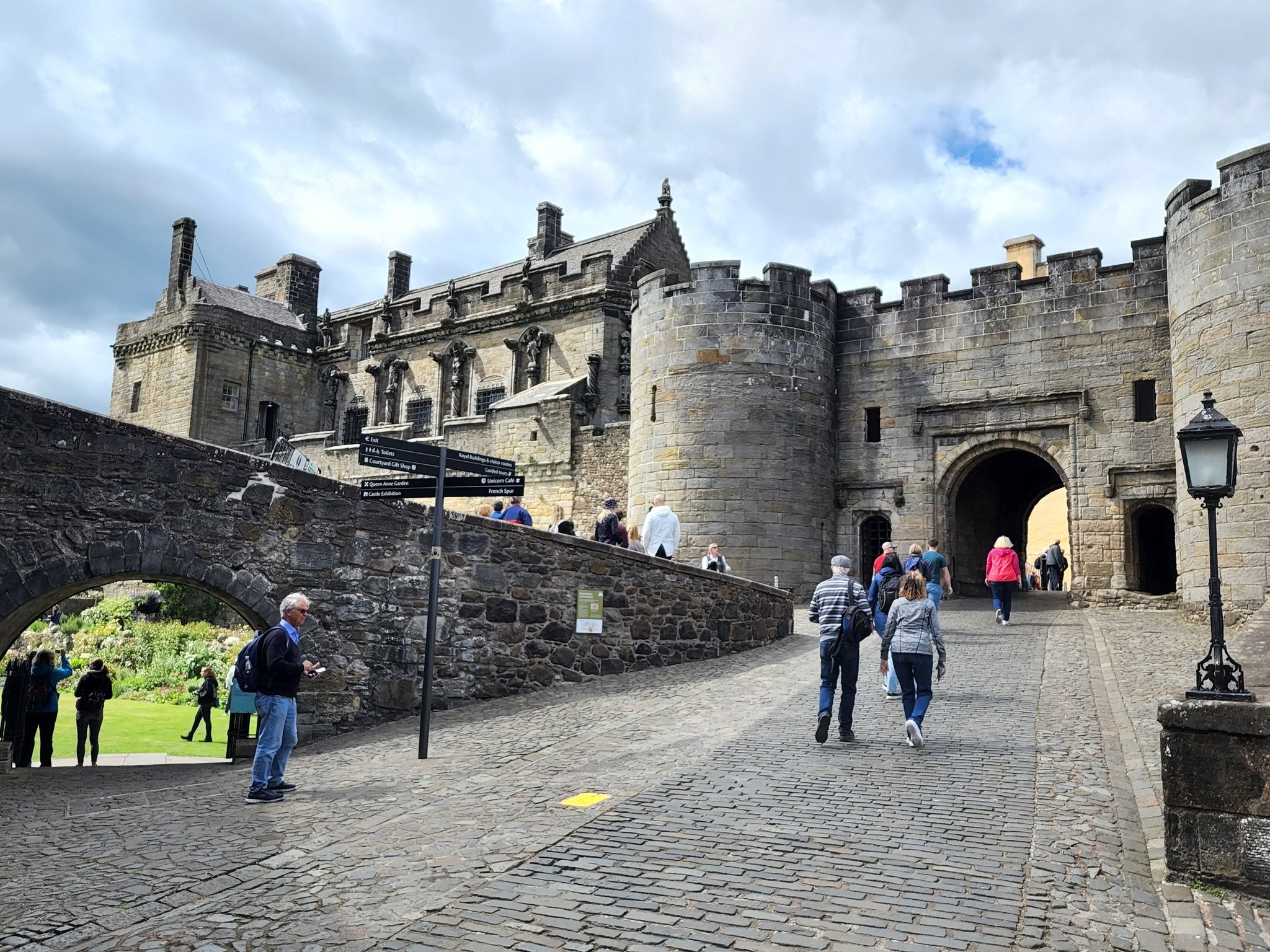
Stirling Castle

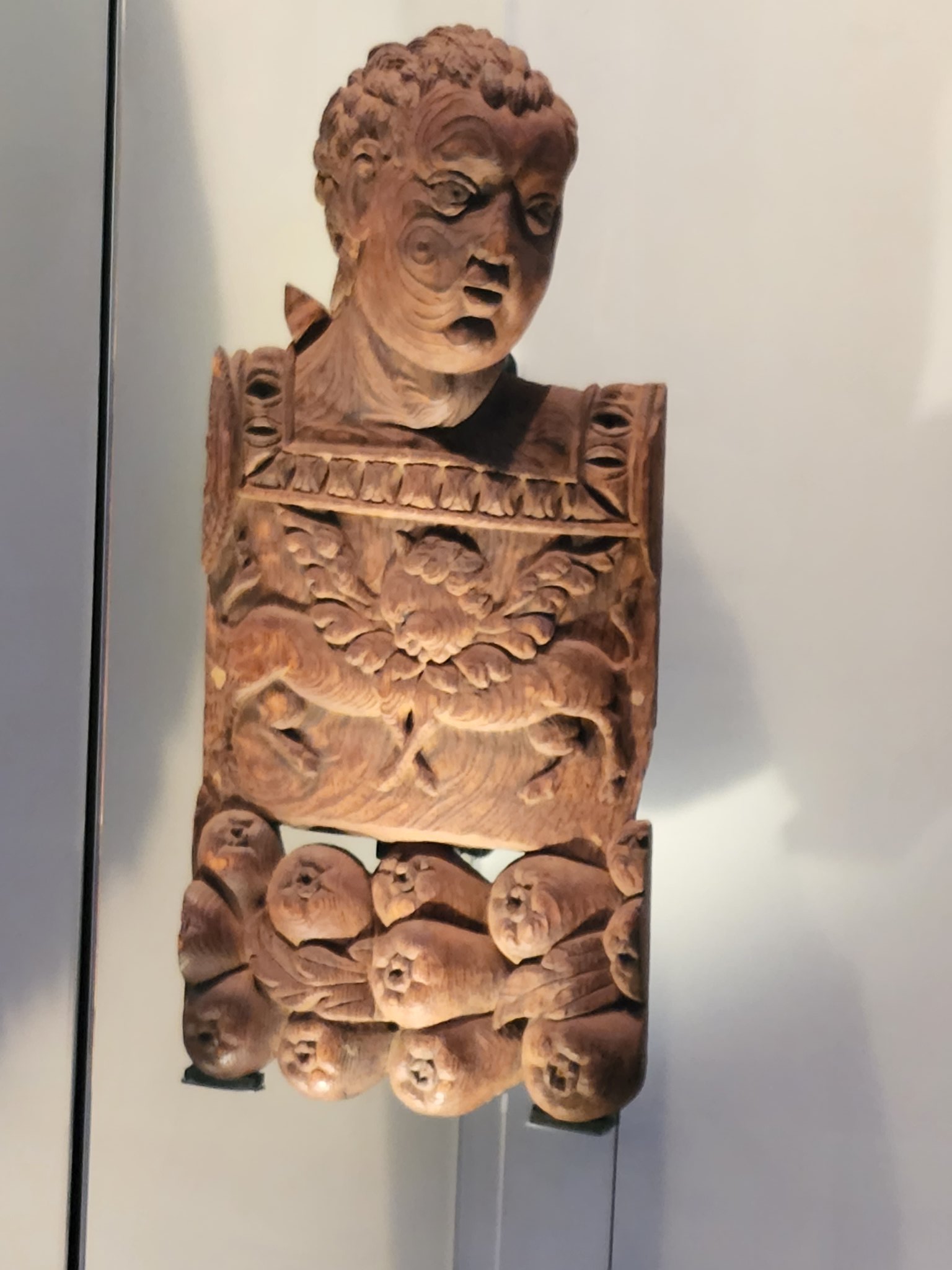
The awful Stirling Heads

Stirling Head art close up (yuck)

After lunch we headed to Stirling to visit Stirling Castle, the birthplace and home of King James VI.  I didn’t actually get to see the palace itself—I couldn’t figure out where it was—but I walked around the castle battlements, the dungeon, the chapel, the Great Hall, and the hall of the Stirling Heads, which are these large, wooden, medallion bust images of various people James wanted to commemorate.  And they were just horrible, creepy, weird pieces of décor, probably about 2-2.5 feet in diameter, and several inches thick. I know they served a purpose, but I really couldn’t get over how ugly they were.  I am probably revealing myself to be a philistine, but they were nothing like I was expecting. (They had really been talked up by a tour guide.) In my head I was imagining something magnificent; the reality was quite something else. But the castle itself was impressive with amazing views of the countryside from its sheer drops.  What was coolest about the castle was that Mary Queen of Scots was crowned there.  And, I think no matter who you are, Mary’s tragic life resonates.  At least, I always found her life story to be compelling, if sad. (I might actually have read her biography at some point, because I seem to remember a whole lot about her.)  Still, I didn’t need two hours at the castle, and wandered back to the garden to wait until it was time to get back on the bus and return to Edinburgh.

Castle gardens

I finally got home around 7 and I was exhausted.  The tour was longer than I was expecting.  I thought we’d be back by 5, but it was closer to 6:30; I should have taken a little nap on the bus (I usually take naps on Sunday), but I didn’t want to miss seeing any of the countryside. Just in case there was something amazing.  (I did get to see a glimpse of The Kelpies on the way back, so I count that as a win.)

I enjoyed the tour over all, but I was the only single traveler.  Everyone else had family or friends to visit things with, so I was kind of lonely.

Actually, if I were to complain about visiting Edinburgh at all, it would be because of how lonely I am.  Maybe I should pretend I am Mary Queen of Scotts in her prison cell; perhaps that would make the loneliness a little more bearable.  But even Mary had her little terrier dog for company.  I have no one.  (Weep, weep, sob, sob.)

Anyway, I hope you enjoyed all the pictures.

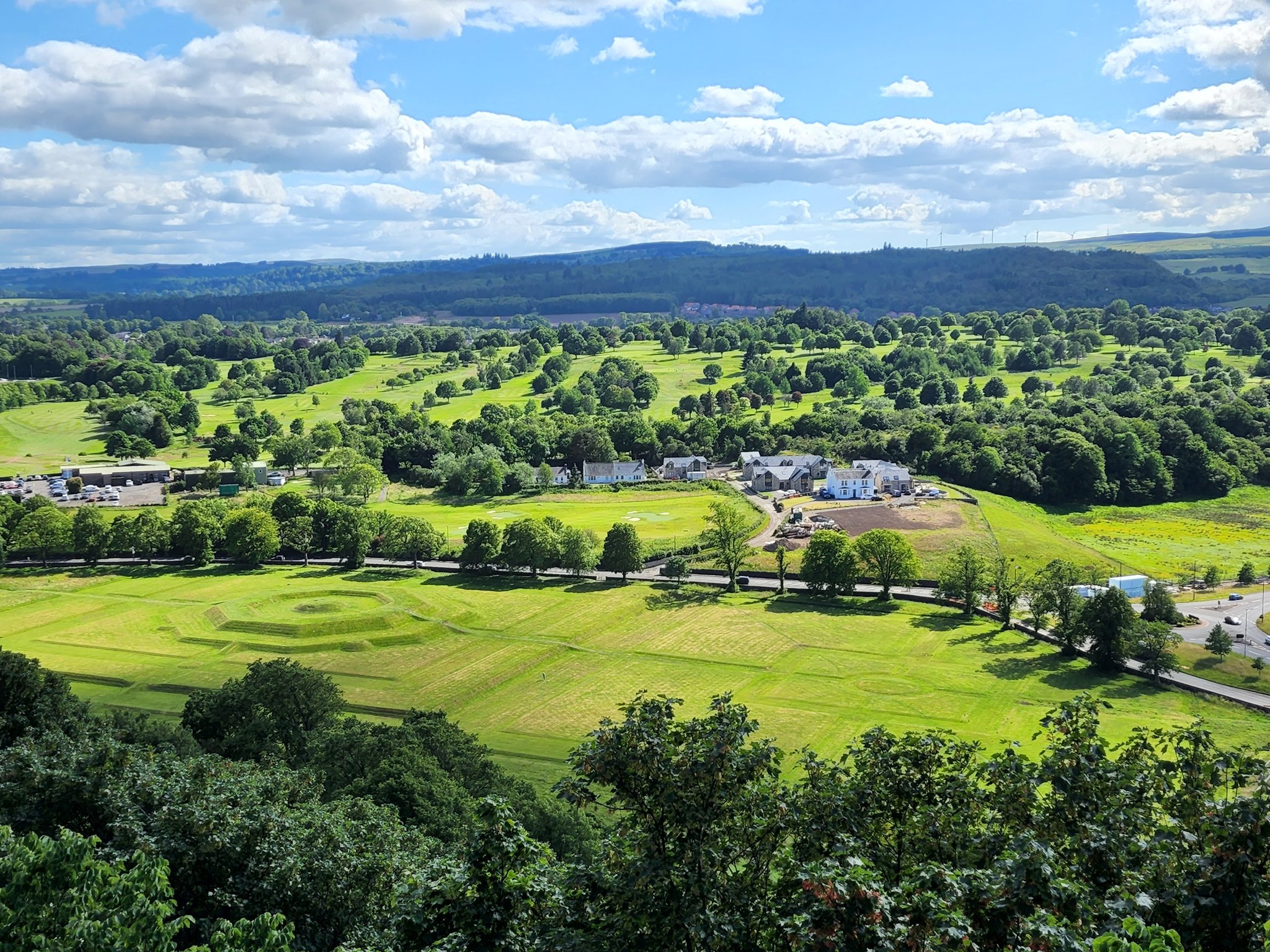
A view from Stirling Castle

Another view from the Castle

A Visit to the National Gallery

View of Old Town, with the National Gallery on the right.

Today after class I went to the National Gallery of Scotland.  It’s undergoing big-time renovation, so only a small amount of the collection was available for visitors to see.  Initially I was a little disappointed, because I was expecting to be blown away with breadth and volume, but then it occurred to me that it was kind of nice in its coziness.

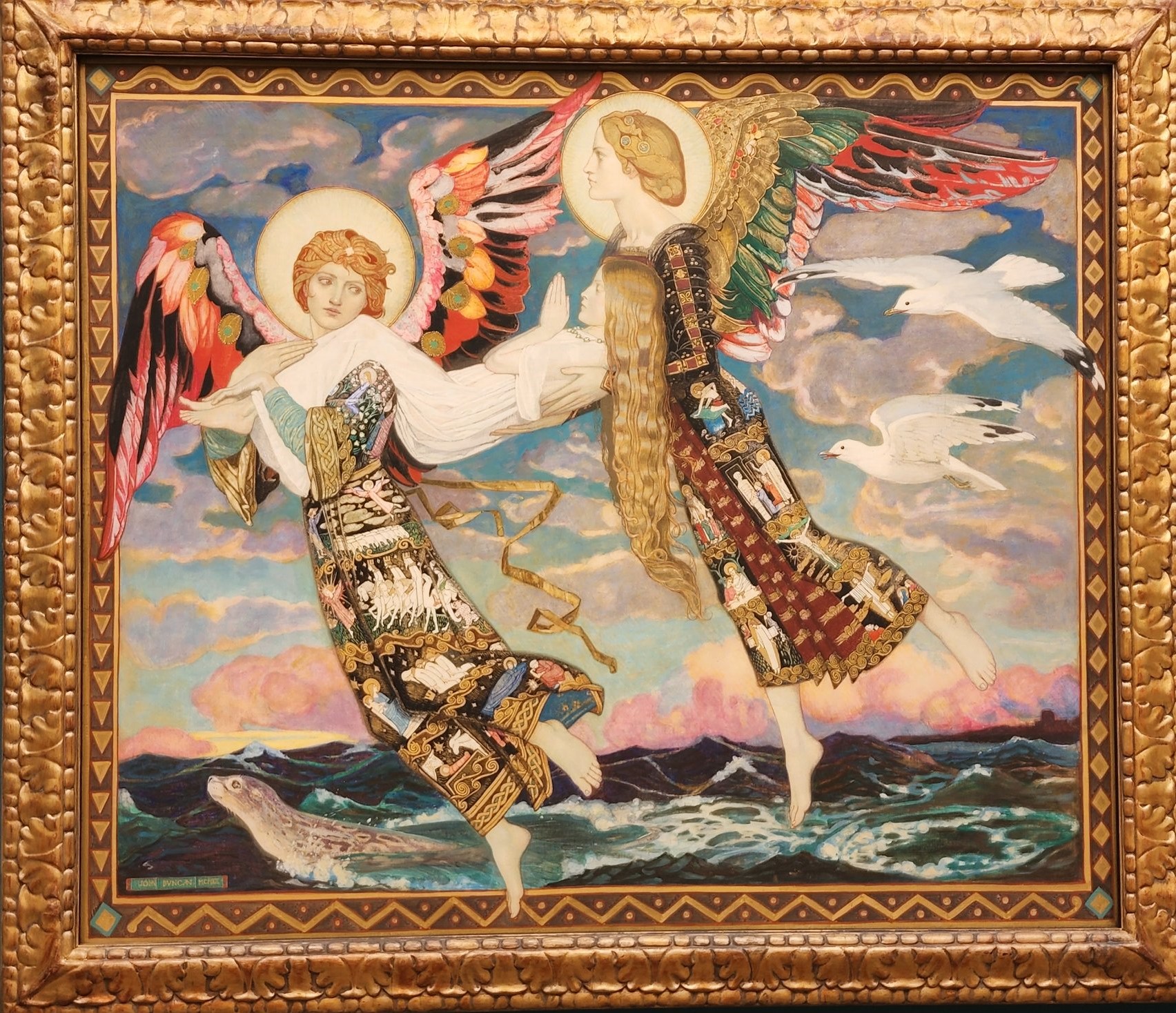
This was my favorite picture, John Duncan’s Saint Bride (1913)

There were maybe 14 or so individual galleries to peruse, starting with Medieval religious icons, some Titians and Canallettos and other Italians, a great Vermeer of Martha, Mary, and Jesus (I should have taken a photo—apparently, it’s the only religious picture in his 36 surviving works), some Dutch masters including a very small Rembrandt, Scottish pieces (portraits and landscapes), and then upstairs were the Impressionists and a few early 1900s works.

Because the space was so confined, big walls bore a picture high up as well as eye-level and that was a little annoying, because it seemed a little cluttered, but of course they want to showcase as much art as possible in the few rooms they had to show it.  I went through the exhibits twice, although I lingered on the Impressionists out of habit more than any other reason.

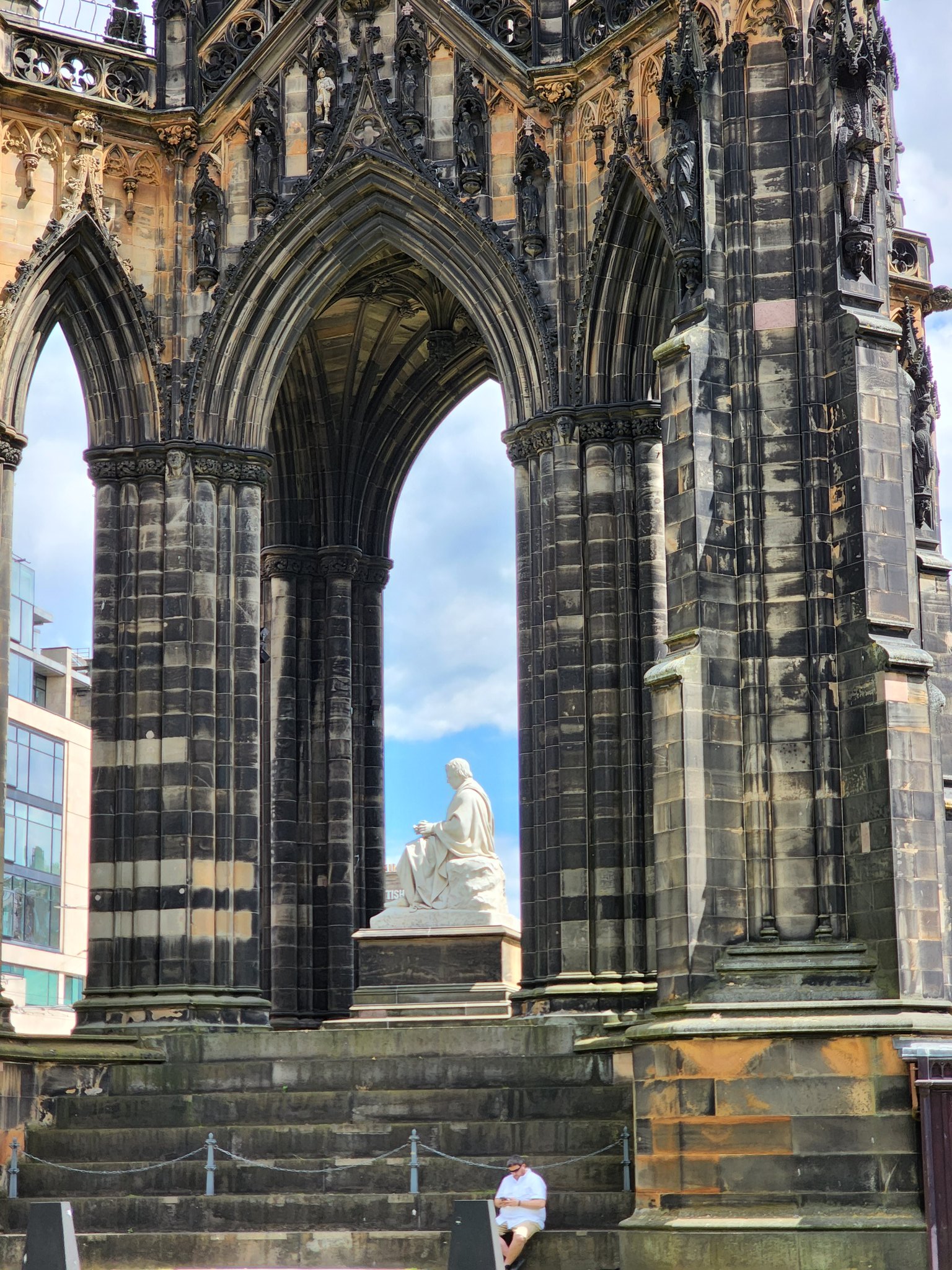
Walter Scott Memorial close up (see human for scale)

Afterwards I walked to the Walter Scott Memorial, which is huge—200 feet tall at least.  It wasn’t open for visiting, but you couldn’t miss it.  It sits right at the edge of a park on Princes Street.  I’m amazed that I missed seeing it when I rode in on the tram from the airport last week—although I was so zonked out from traveling that I guess I wasn’t paying attention.

I’m not sure where I’ll head to next.  Maybe Edinburgh Castle.  Maybe Holyrood Castle.  Looking forward to the weekend to get in more sightseeing.  (Where do you think I should go next?)

Walter Scott Memorial from a distance

My First Week in Edinburgh

I was reminded yesterday that when you’re in a new country, everything is interesting. Based on my experiences so far, I don’t know about that.  For me, I have mainly spent the first week in Edinburgh adjusting to the crazy amounts of daylight (4:30 a.m. to 10:30 p.m.) and the daily wind and rain.  (I’m so happy I brought a lined raincoat, and I Amazoned a new umbrella since I forgot to bring one.)  I have spent a good amount of time locked up in my flat, preparing for my class, but I’ve also taken some long walks, trying to get the lay of the land.  And I have drunk a metric butt ton of Scottish Breakfast Tea.  Which is like English Breakfast Tea, only it uses a really complicated dialect. 😊

Friday, I did a cursory visit to the National Museum of Scotland, which is a fantastic natural history museum with a huge atrium and tons of natural light.  I will go back and do a “deeper dive” in the exhibits, but I mainly looked at the science/technology hall, the hall of design, and the world cultures hall.  I visited the museum with the coordinator of the Scotland Study Abroad program, and we didn’t have a lot of time there because he also wanted to go to Clarinda’s Tea Room, on the Royal Mile, which was fussy and frilly (in the best way) and full of tea-related décor.  I had a scone with butter and preserves.  I was expecting more of a biscuit, but this scone was sweeter than that, but very crumbly.  Afterwards, we walked back past some bagpipers and drummers and Richard went his way, and I went mine…right into a freak storm.  Imagine a day where it’s bright and windy and gorgeous.  And then come the clouds like a galloping herd of gazelles.  That storm soaked me to the core, and of course I wasn’t wearing my raincoat.

In the rain, a man with a large backpack bumped into me (don’t worry, he wasn’t a pickpocket), and then as I passed the Museum again, he put his hand out for me to shake it and asked who I was.  I was so shocked, I told him.  He said his name was Sam and he was looking for a Tesco (a grocery store).  There was one right around the corner, and I thought he was going to go toward it but he went the opposite way.  It was a little strange.

Saturday, I tried doing laundry and found the washer to be beyond my intellect level.  Then I went for a walk in Holyrood Park.  There’s an entrance close bywhere I’m staying, so I walked over to it, and it turned out the entrance was a steep set of stairs down to the street (Queen’s Drive), and about 10 steps down it, I said to myself, “Self, if you go down these stairs you’ll have to come back up,” and while I was debating this shaggy sheep dog came out of nowhere.  He looked pretty good so I wasn’t worried he was lost, and then as if from mist, his owner appeared.

“Rolo,” he said, “quit botherin’ th’ lass.”

“Oh, he’s not bothering me,” I said, putting my hand out to pet Rolo.

“In tha’ case, quit botherin’ me dog.”

With that, the man and Rolo passed me going down the stairs, and after being flummoxed for a little bit at the surprising turn of events, I followed at a discreet distance.  I walked up the hill a ways (not the big hill, the one that puts you on top of Arthur’s Seat), and then down a grassy knoll.  I tried taking some selfies, but it was so windy my face was all scrunched up and my hair had its own postal code.  I sat on a convenient rock until I was ready to face the 400 steps back up to the park entrance.  I’ll have you know I died about 6 times on the hike back up the stairs.

Yesterday, I spent the day reading for class, but all day I wanted to go to church.  I just couldn’t get motivated for the 9:30 Mass.  Fortunately, St. Columba’s church had a service at 6:30, so I walked south till I got there.  It was definitely a no-frills service… no music and a homily that contrasted our relationship with God and the Trinity to this kid at his grammar school selling stick insects (don’t ask). It was a tenuous connection at best.  I was glad I went—it let me see a different part of town.  Next week I think I’ll try St. Patrick’s.

So, that kind of catches you up on my visit so far.  Not overly exciting, but I’ll have more exciting plans in my future I’m sure.

April’s None So Cruel

Earlier in the month, my Mom asked me if I had ever heard the expression “April is the cruellest month” and of course I had to laugh.  Any poet (or student of poetry) worth her salt recognizes that is the first line of T.S. Eliot’s The Wasteland, and it’s the first thing I think of when it turns April.

I’ve also been thinking it every day, since this is the first Poetry Month that I’ve chosen to participate in National Poetry Writing Month (NaPoWriMo).  I’ve been struggling to write a new poem every day—some days it’s been easier, and I’ve even written one or two poems that I think are pretty good.  The majority of them though are, at best, exercises in the practice of writing poetry.  Which is to say, they are poems, but not very good ones!

Still, having the discipline to write every day (or nearly every day…I missed a few days which I swear I went back and made them up!) has been illuminating.  For one thing, even if the quality of the output has not impressed me much, the habit of writing has been a kind of comfort to me.  It’s as if I can’t say I’ve forgotten how to write a poem (which sometimes I think when it’s been a while between poems), because this time I know I wrote a poem the day before.  For another thing, I’ll have 30 poems on the 30th that I can maybe go back to and work on revising.  That feels like an accomplishment.  Whether some of them are worth going back to is debatable, but the opportunity is there, should I choose to take it.

A few times I have stared at the computer and written “I have nothing I want to say.”  Then I write something down anyway, and remove that line.  It’s been liberating, especially the last few days which have been hard for me to come up with something new.  A few people on Twitter suggested I write poems about not knowing what to write, and so I sort of amended that idea to admit on the page that I didn’t have anything to say—then forced myself to write something anyway.  Again, not great art for sure, but I satisfied the NaPoWriMo requirement of a written poem.

You would think with all that’s going on right now—the continuation of Covid, the horrible and escalating war in Ukraine, the worsening climate change, I’d have a lot to write about.  But it’s hard to write good political poetry.  I can’t do it well, because such writing should be subtle so it remains art.  When I write on such things it comes out screed-like and dismal—too tell-y and not show-y enough.  It’s something I’d like to get better at though—and I suppose to get better at it, you have to practice.  And you need to read political poets.  I should do an investigation and find some contemporary political poets to read.

For the time being though, I will continue writing poems for April, just so I can say I did it. And at some point I’ll have fresh eyes to look at the work and see if some of these “exercises” are better than I remember.  Revising can be a fun part of writing, although as we all know, it’s hard work.

Anyway, all this is by way of saying April isn’t that cruel at all—at least not in my little corner of it.  I’m writing poems, looking forward to the end of the semester, and maybe even have a trip to Scotland in the offing.

And I still have plenty of copies of Amo e Canto which I’d love to sell you and donate the proceeds to the Ukraine war effort.  CashApp:  $Aishatonu or PayPal:  paypal.me/aishatonu.

Help Ukraine–And Get My Book for Free!

As I mentioned several days ago, my new chapbook Amo e Canto was released. I posted about it on Twitter, Facebook, and Linked In, thinking that I could encourage some sales and share this book I’m so proud of with friends and peers.  (And I was going to pay the postage for anyone who purchased a copy.)  And like the last two “pandemic books” I published (What Magick May Not Alter and Daughter of the Wheel and Moon), nothing but crickets.  (That was my little pity party moment.)

Then I thought, I know what I’ll do:  I will give the proceeds from book sales to Ukrainian charities to help citizens fight the Russian invasion.  Surely that will drum up sales. (It didn’t.) Still when the world is burning, that’s when we need poetry the most—because it offers solace and empathy, and the world is sadly missing those things.

Right now Ukraine needs our empathy, and it needs our help.

So if you don’t want to buy my book, that’s fine!  I know there are more important things going on than my chapbook release at this moment.  But  please give all you can to these legitimate charities which you can read about on the USA Today website (along with several more charities than are listed here):

Please help.  And you know what?  If you give at least $20 to any of these charities and email a copy of your receipt and your address to aishatonu[at]gmail[dot]com, I’ll even send you a copy of Amo e Canto for free!

Amo e Canto is Out in the World!

Nearly two years after the announcement that it had won the 2020 Sow’s Ear Poetry Chapbook Prize, my collection Amo e Canto (Italian for I Love and I Sing) has been released.  Because it came out as Issue 30.1 of the Sow’s Ear Poetry Review (and was sent to all subscribers of the Review), it’s not conventionally available for purchase.  However, I am selling extra copies, postage paid, for $13.50 via my CashApp, $Aishatonu.  Hit me up if you would like to buy a copy.  (Put your address in the “For” line so I’ll know where to send your book!)

Amo e Canto is a collection of “poemoirs”—half poems, half memoirs about a trip I took to Venice in 2014. The poemoirs focus on typical Venetian sights, like churches, canals, pigeons, and art, and tangentially examine a relationship with a missing love.  It’s a really different kind of writing from what I normally do (which tends to be mostly narrative, women-centered writing), so if you’re interested in Italy and hybrid forms (or you just love me), this collection is for you.

I’m really proud of this work, and it’s a beautiful collection.  The cover includes an absolutely lovely painting by Alex Ghizea-Ciobanu called I Will Take Venice with Me that as soon as I saw it, I wanted it for the cover.  (Actually, I’d love to own the actual painting!)  The ecru paper is smooth and silky and not insubstantial.
It may have taken longer than I hoped for Amo e Canto to manifest, but it’s wonderful that it exists now. (Patience is a virtue, and all of that.)  I’m so grateful to Sarah Kohrs and Kristen Zimet at Sow’s Ear Poetry Review for all they’ve done to bring this collection into being, and I’m grateful to Sam Rasnake for choosing it as the winner.  I’m also thankful to the journals who originally published some of these poems, especially Rowan Glassworks, which nominated five of them for Pushcart Prize in 2015.

I have many to sell and would love to get one into your hands!

The Submission Game

from NYPL Digital Collections

I’ve been getting many rejections lately.  Last week alone I had 8.  This week it’s a “measly” 2.  And 2 of those 10 weren’t even at the journals I sent them to for longer than a day.

Rejections don’t get me down, per se (well, not usually), but they do always make me question if I’m still a good writer, or if I was ever a good writer (were all those other acceptances over the years flukes?).  We shouldn’t estimate our worth based on the capricious nature of the Submission Game—that goes without saying.  And yet. It’s hard not to equate acceptances (either to journals or residencies) with JC = GOOD, and rejections with JC = BAD.  As writers, we all probably think that to some extent some of the time.

I belong to a Facebook (pardon me, Meta) group that advocates trying to get 100 rejections in a year.  On the plus side, if you get 100 rejections, it means you spent the time to send out at least 100 submissions—which is a laudable pursuit, because it demonstrates that you take your writing seriously enough to inflict it share it with 100 journals.
But I wonder if that scattershot goal isn’t a bit misguided. If you just send work to lot of places, that doesn’t mean you’re actually reading the journals you’re sending work to, and so you might be wasting your time.  I know Poetry will never, ever, ever (EVER) accept anything I send them.  So if I send them work again, well, great, I can make a notch on my rejection list, but perhaps my time is better spent researching journals that are more inclined to like the kind of work that I write.

On the other hand, gamifying rejections does remove some of the sting.  After 100 rejections you’ll probably anesthetize yourself almost completely from the disappointment.  And, the rationale goes, statistically there’s no way all of your submissions are going to be rejections.  So, the more you send work out, the more you increase your chances of someone liking and wanting to publish it.  It does make sense, totally.

For me, it’s really hard to send out 100 submissions in a year.  A few years ago, I think I got to 70, and believe me, I was impressed with myself.  So far this year, I’ve sent out 21 subs.  You may say, “Hey, that’s pretty good for it only being February!”  But one always has enthusiasm for a project at the beginning of the year.  I doubt I’ll be sending out 10 a month by the time we hit July.  I mean, it could happen.  I could be a submitting machine this year.  I just know myself a little better than that.

***

A friend called me on Wednesday, just to check up on me because she thought the number of rejections I’ve received lately was getting me down (based on the fact that every time I get one I announce it on Twitter—it’s like a weird and obsessive confession thing).  She wanted to assure me that my writing is “special” because it’s woman-centered a lot of the time, and many publishers who are men are easily turned off by that.  She has a point—I really don’t write typically lyric work at all and narrative is not many people’s favorite mode.  I do appreciate her support—she has been amazing to me (and in an aside, she’s one of the best letter-writers I know) and her words certainly buoyed my spirits.

But worse than people of any persuasion not understanding (and publishing) my work is just my constant inner critic who secretly can’t help worrying that the reason I’m not getting published is because I’m a lousy poet. Or I don’t “have it” like I used to. (Whatever “it” is.)  What would it be like, if I could bind, gag, and toss that inner critic bitch right over the cliff?  What would it be like not to constantly doubt myself?  For all of us, what would that be like?  What could we do if we didn’t have an inner voice sabotaging us all the damn time?

***

Do you play the Submission Game, or some version of it with your writing and submission process?  If you (my five dear readers) do, let me know.  I’m curious about your approach.

Writing the Red Flags

from dreamstime.com

This past weekend at Tybee Island was the first time I’ve set foot on the beach since I was caught in the rip current in Southampton, NY in 2018.  I thought I would feel fear, but when my sister and I went out last Friday night, it was low tide, the water warm, and the waves almost gentle.  In other words, the ocean felt safe to me.  It was a different story the following morning—the wind was crazy, the waves at high tide so rough that I just couldn’t make myself go in.  There was also a red flag warning—and can you get any more obvious than a red flag literally warning you there’s danger?  Three years ago I ignored the warning, and we all know how that turned out. I learned my lesson.

I think writing is the same way—there are times when writing feels easy and safe (and of course we love those times!), but there’s also those red flags that tell us that maybe we need to reconsider, or even back away.  That’s not to say we shouldn’t “write what we’re afraid to write”—we should, absolutely, write our lives, our stories, our poems that challenge us to be our most authentic selves.  Sometimes that means we write about difficult or painful memories.  Sometimes that means we share what we’re afraid will make us look ridiculous, or damaged, or imperfect.  Some danger is good.  Too much danger and we risk losing ourselves.

What do I mean?  I think there’s a chance that we can give too much of ourselves away when we write.  After all, we are “baring our souls” in one way or another—and when we write about unprocessed trauma that’s when the red flags go up.  We can unintentionally re-traumatize ourselves when we really mean to heal.  Of course, writing about the things that have shaped us is necessary, but I wonder how much good we accomplish if writing about an experience that was painful, terrifying, or devastating makes us revisit those dark places?

What boundaries do we have in place that will protect us?  Have we gone through counseling to process our trauma?  How do we know that what we write won’t revisit trauma on someone else?  If we don’t have boundaries, and we haven’t had the benefit of therapy, we are putting ourselves in danger of revealing too much and re-opening old wounds.

That’s always a danger with writing, I suppose, because to write and share something means you risk exposure—you invite the audience in, and once an audience is involved, you’re not entirely in charge of your work or the interpretation of experience anymore. There’s danger to the writer in the act of audience consumption of work.  How will the audience react?  Will they judge the person you were when you experienced what you experienced?  Will they discount your interpretation of events?  Will they harass you?  Will they reject you?

I think about my own experience trying to publish poems about past trauma in my life.  It never goes well.  I’m not afraid so much about sharing my life—I’ve had plenty of therapy, so I’m well and truly “processed.”  I just think I’m really bad at it.  (And honestly, does the world need more poems or a memoir about child abuse?  I doubt it.)

Not every experience that’s happened to us (or we were involved in) needs to be written about and shared.  Maybe that’s the difference.  Maybe, now that I think about it, we should always write the red flags—what scares us, what seems dangerous.  That’s what journaling is for—it’s a controlled environment:  we are both writer and audience, and there’s little chance of discovery and judgment.

But sharing traumatic experiences in published writing can be as dangerous as a rip current, where even the strongest swimmers can drown.  Are we prepared for the fall-out, to ourselves and to others?  If we’re not ready, then the work should probably stay private.  At least for now.  When the waves are less rough, we can always venture back out.