The Isles of Mull, Iona, and Staffa

A long day lay ahead of me on the weekend I decided to go see the Islands of Mull and Iona.  For one thing, the tour left from Glasgow, so I had to take an impossibly early train, which meant I’d have to leave even earlier to walk the mile to the train station.  And when I got there, the ticket machine couldn’t locate my e-ticket, and the ticket counter was dark and closed.  So I wound up having to pay for another ticket, which really ticked me off.  But in for a penny, in for a pound (£27 to be exact).  I needed to make the 6:07 train so that I could get into Glasgow on time; the bus was leaving at 8:30.  Despite the drama with the tickets, the train ride itself was uneventful, and I arrived in Glasgow at 7:30.  I walked (in the rain) to Buchanan Bus Station, and waited for my tour bus to arrive.

When the bus showed up, and I saw the driver was Stewart, I was delighted.  Stewart, you may recall, was the driver for my Speyside Whisky tour I took last year, the one where there were only 5 of us on the tour.  There were a few more people on this tour (ten), but Stewart remembered me and seemed as happy to see me as I was to see him.  I was suitably complimentary about his tour guiding to the other people on the bus, and I think that eased everyone’s anxiety.  We knew we were in for a good time.

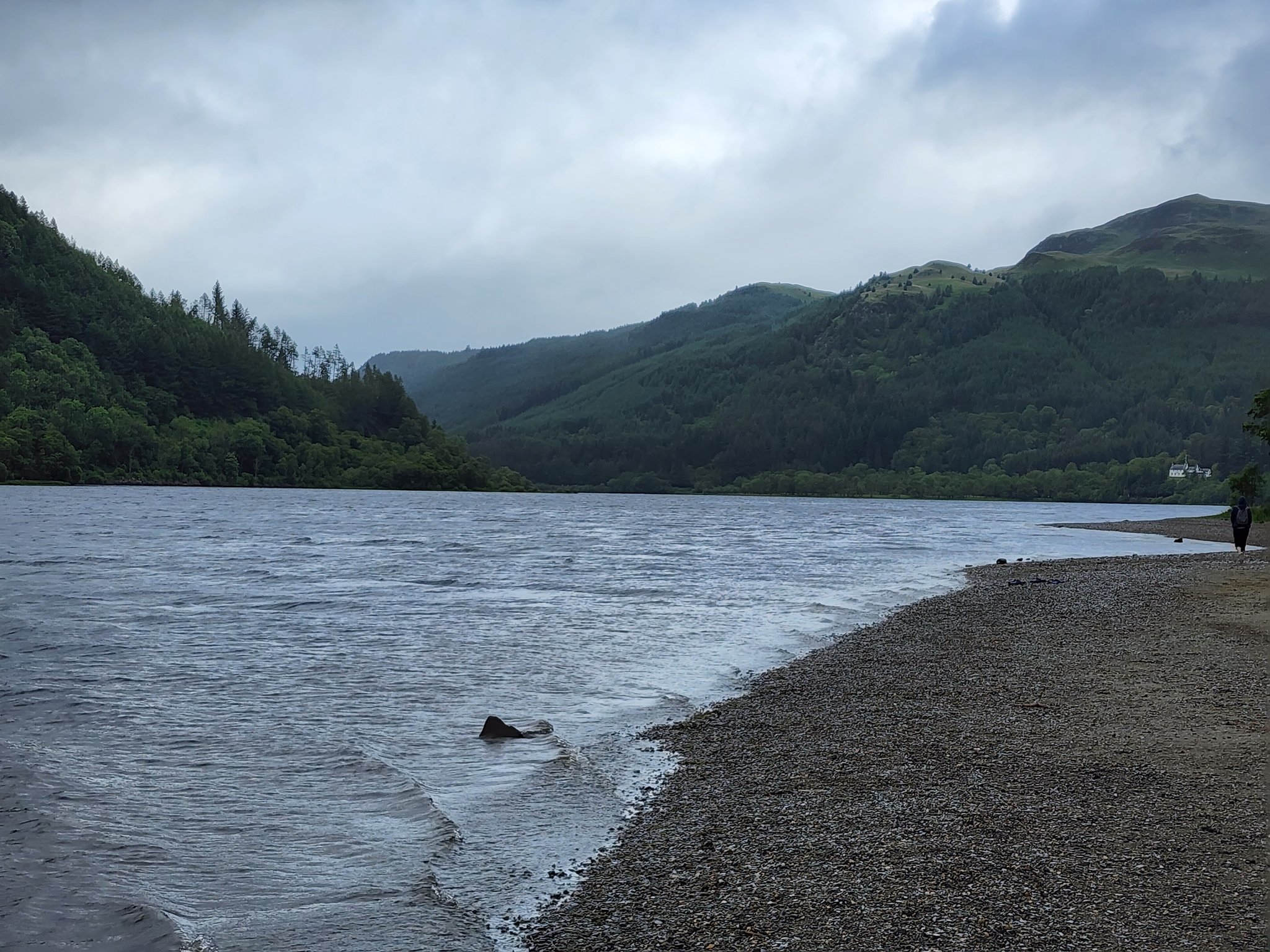
Loch Lomond in the rain

Because the Hebrides are islands off the coast of the Highlands, the first day of driving was mostly stopping to visit Highlands-related sights.  But I did like the way Glasgow looked as we drove through it (industrial, shiny, and large) to get to Loch Lomond and the Trossachs National Park, our first (rainy) stop.  It was really just a bathroom/coffee break, but Loch Lomond gleamed in the rain.  I sheltered under a ledge at the coffee shop, and discovered a nest of five baby birds, maybe magpies, though I’m no birder.  They seemed hungry, and a parental bird flew to the eaves on the other side of the coffee shop, but these little babies were left alone, tweeting their displeasure.

Birbs!!!

Stewart and I chatted about whiskies and places I’d visited since I’d gotten back to Scotland while we waited for the other passengers to get their caffeine. He was interested to hear when I had arrived, and whether I was teaching Scottish literature again (which I am).  And he asked if I’d be coming back next year.  “I hope so,” I told him, imagining for a moment the Scottish books I would teach.  But then the moment was over, and we all hustled back on the bus.

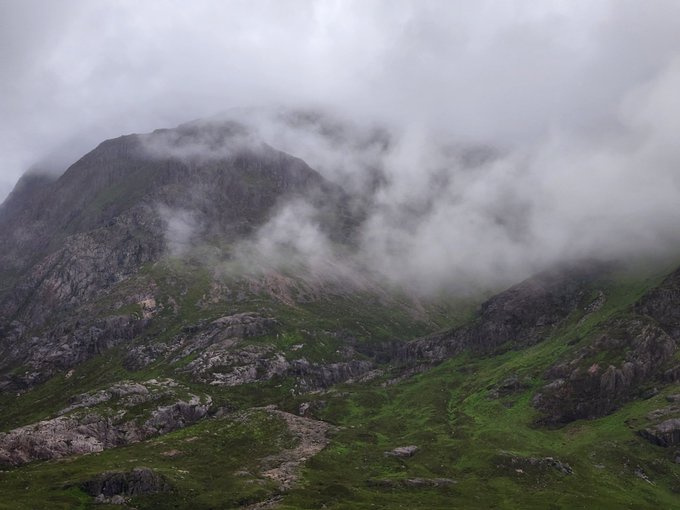
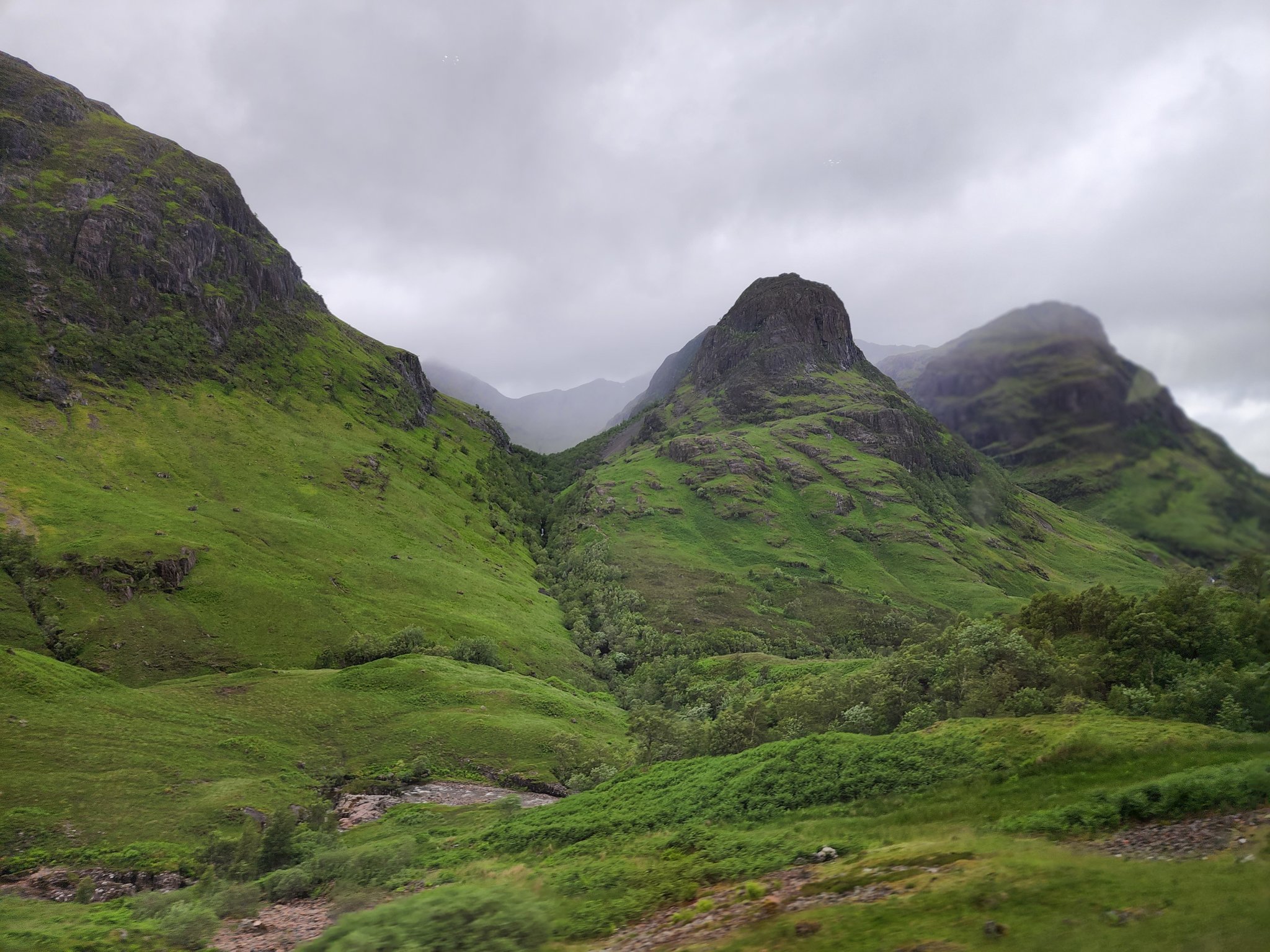
We stopped a number of places, including Glencoe and the Three Sisters, which never get old to me.  Especially in the rain, the Highlands reek of Scotlandness.  Glencoe was suitably misty and broody, and The Three Sisters disappeared into the low-hanging clouds. I felt that wild call again, that primal spirit of place that Scotland holds for me, though I don’t know why.  If any place (besides Louisiana or Venice) should capture me, you’d think it would be Ireland—being as I’m Irish, and yet, I don’t have a compelling desire to go there again.  (I mean, I wouldn’t say no, if someone invited me to go with them—I’m not a lunatic!) Maybe the difference depends on my staying in Scotland as long as I have been—my affinity for the place has grown.

Achnambeithach

At the bottom of the glen, we stopped in Achnambeithach, a National Trust for Scotland heritage place.  It’s really just a white cottage at the base of the ben (that’s Scottish for mountain!), and I’m not sure why it’s a heritage spot, but the views are spectacular. Now that I think about it, maybe it’s not the cottage that’s the historical site, maybe it’s the bridge…hmm.  Anyway, you can look back up into the whole glen and be inundated with beauty.  The rain had let up a little bit, and blue sky peeped through some of the heavy clouds, making the dull, rain-soaked green of the mountains flash veridian. The light gleamed off the loch, and the stream that fed it bubbled.

Returning to the road, we ate lunch at the Glencoe Visitor Center (I tried cock-a-lackie soup, which was not my favorite, not the least of which because it was a chicken soup, and I don’t eat chicken), then drove through more mountains until we got to our first ferry stop of the trip, the Lochaline Ferry Terminal which would bring us to Mull. The trip over the Sound of Mull to Fishnish took maybe 20 minutes, and Stewart encouraged us to get out of the bus if we wanted to, although it was raining and between rain and sea spray, I’d just as soon stay inside, cozy and dry.  But others got out and apparently gawped at the many jellyfish in the water, which they were only too excited to talk about.  For myself, I was eager to be going to an island less touristy than Skye had been two weeks before, and couldn’t wait to see what Mull would offer.

Seals that look like rocks to me

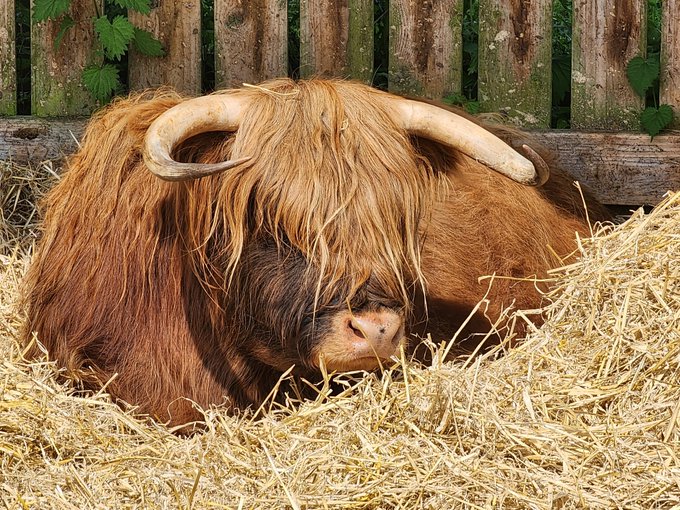
And Mull delivered!  First, we saw some seals—I’d say they were sunning themselves, but actually there was no sun to be found, so they were merely lazing on a little islet.  We stopped to take pictures, but the distance made the seals somewhat indistinguishable from the rocks.  We stopped again at the site of three old wrecks, apparently hired by some wealthy gent in the early 1900s to sail around the world but they never left Mull, just sat there in the water and decayed for 100 years. We stopped to look at some Heilan coos, and a scenic overlook at Lochan na Guailne Duibhe. Then we drove up to Tobermory, where we would all be staying for the night.
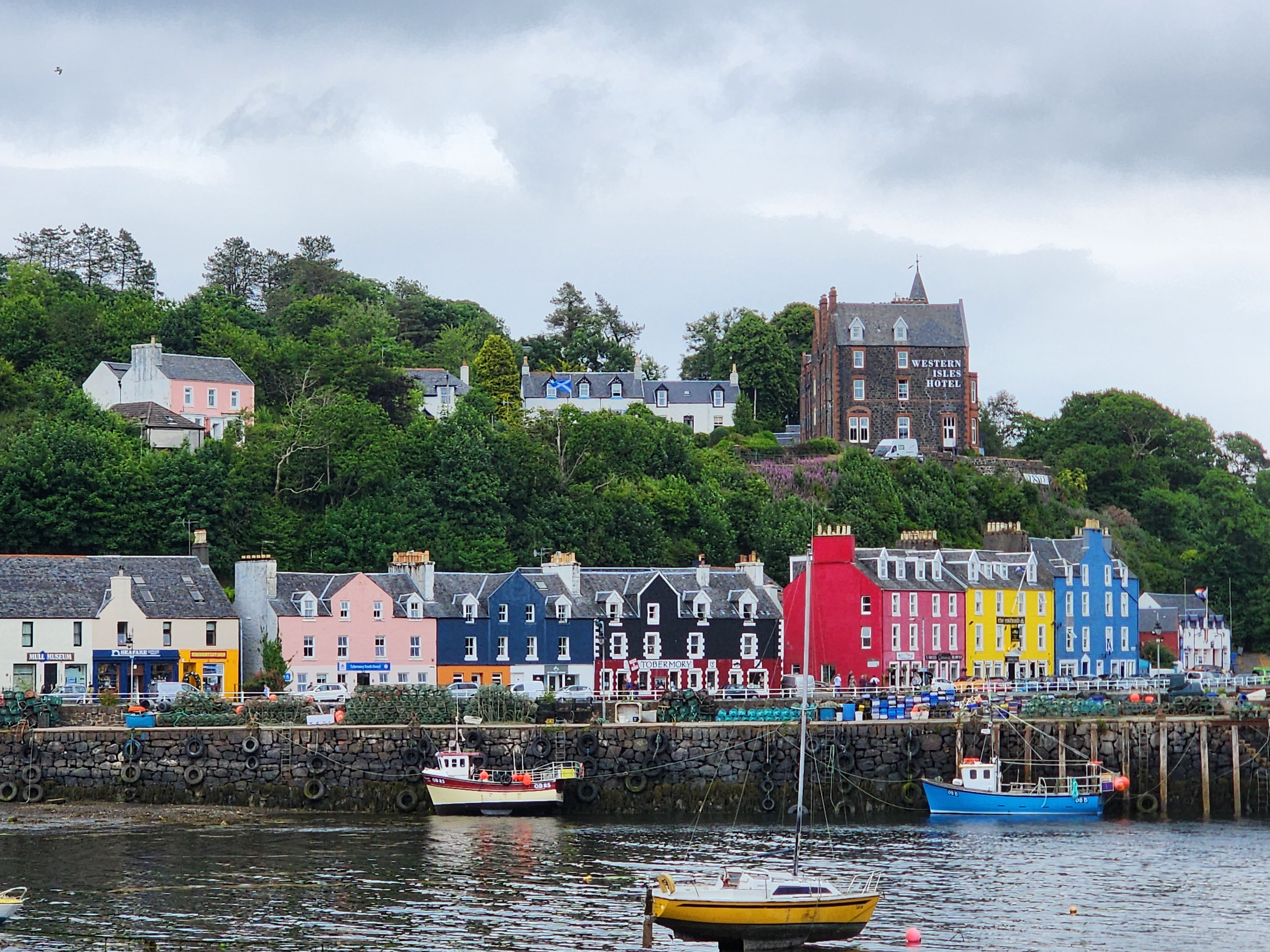
 

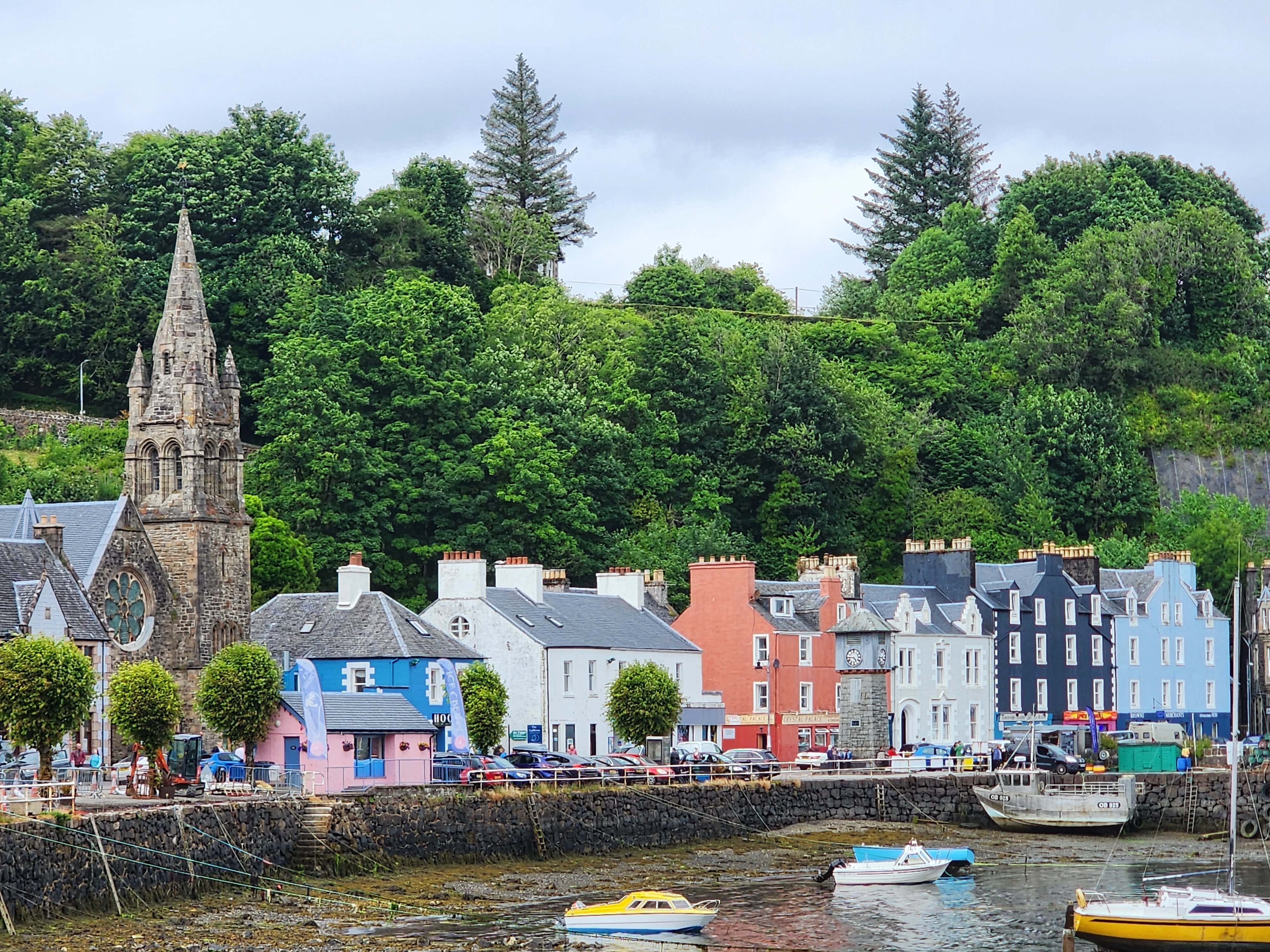
Tobermory
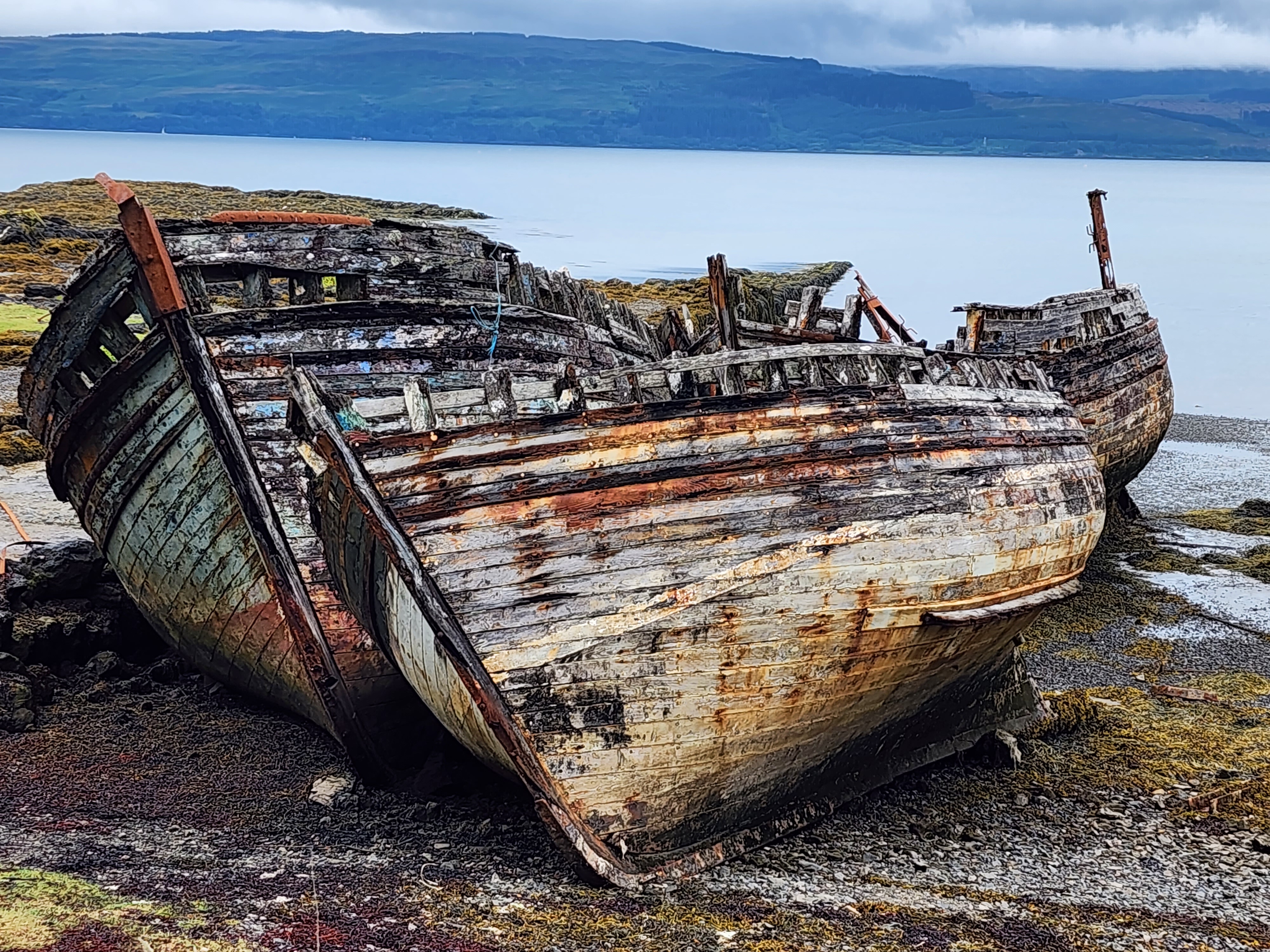
The wrecks

Tobermory is a lovely fishing village, where fresh fish is on the menu at all the local restaurants.  The buildings are each painted different colors, like Portree on Skye, and I was staying at the very end of the harbor, in a little red cottage apartment that was ghastly expensive. (Because Rabbies claimed they couldn’t find me a place to stay—even though I booked the tour two months in advance—I had to find my own accommodation, and this was what was available.)  It was clean, with a comfortable bed and wonderful black-out curtains.  The downside of Otter Apartment (besides the fee) was the doorlock situation—which is to say, I couldn’t figure out how to lock the door when I left the building.  But fortunately, no one felt inclined to enter the apartment while I was out.

I would have liked to have eaten at the Mishnish Restaurant (the yellow building in the photo above), first opened in 1869 and a Mull institution, but silly me, I hadn’t made reservations.  (I am not used to making reservations at restaurants, but that seems to be a thing you do here in Scotland.)  So after being turned away by a concierge with a pitying look, I got a few items at the local Co-op grocery instead, and made a passable dinner of mint-yogurt potato salad, Doritos, and a Coke Zero.  Then I crawled into bed, read a little, and went to sleep.

Old stone bridge

Stewart picked me up a little before 9 the next morning, the last person on the bus before another day of touring.  We drove along the single-lane roads of Mull, thousands of foxglove plants purpling the hillsides—so lovely, and so deadly, making a photo stop at an old stone bridge dating from the 1800s. All the burns and waterfalls collected in a river that ran beneath the bridge.  When we arrived in Fionnphort we took another Ferry to the Isle of Iona, but this time Stewart stayed behind with the bus, because only inhabitants of Iona can have vehicles on the island.

A nunnery window

Nunnery walls

I ate lunch at the Argyll Hotel, whose dining room was decorated in pleasant seascape blue and gray—another nondescript cheese and chutney sandwich and a bowl of soup.  But because I ate lunch instead of hot-footing it over to Iona Abbey (a poor choice, considering the quality of lunch), I didn’t get a chance to look at it, and I’m sorry about that, because it appeared lovely from the ferry, and it is a Christian pilgrimage site. Iona is where St. Columba established a monastery in the 6th Century, when he came over from Ireland, and it’s the place from where Christianity spread in Scotland. Since I missed the Abbey, I went to the ruins of the Nunnery, took photos, and then called Mom to catch up with her.  (She was fine.)

The big activity for the day was taking another ferry to the Isle of Staffa—really just a boatride in an old, dusty tub that took an hour.  The Atlantic swells impressed me, tall as they were, but I was seated inside, so I didn’t feel them as much as others who were sitting at the back of the boat did.  One guy mentioned to me that he loved the rolling so much, and the next time I looked at him, he was fast asleep. The ride was loud—the engines booming—but we saw some seals before we arrived at the Isle of Staffa, and it was beautiful.
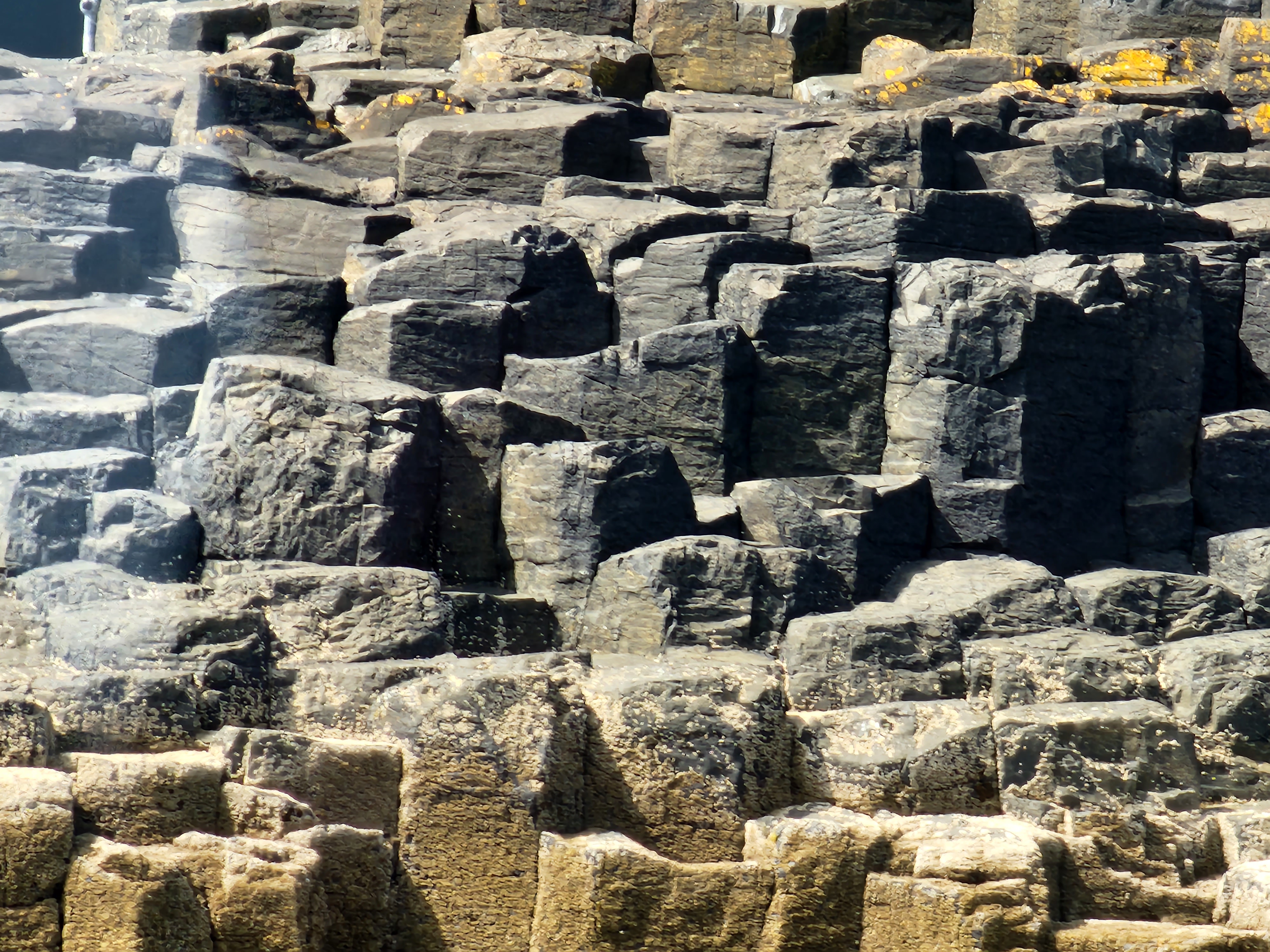
Cliffside, Isle of Staffa

The rocks form natural steps (not that you’d take these steps, because you’d take your life into your hands) and long columns, almost as if someone chiseled the side of the island to look this way. The island name of Staffa is from the Norse meaning “pillar” which makes sense. What I didn’t know was that in order to see the puffins, which apparently settle here in the summer, I’d have to climb up this itty bitty, windy but very scary tall stairway to get to the top of the island, and all I could think was I’d get halfway up there and have a panic attack because I do not do heights well at all.  So I stayed at the little boat launch and read or watched the tidal pools.  The air was seafresh and salty and I saw some jellyfish congregating in the tidal pools.  The wind was terrific, though (another reason I was scared to scale the wall), and so I pulled up my raincoat around me to keep the wind at bay.  The other option was to go to Fingal’s Cave (which everyone said was amazing) but that also required walking on a very narrow step path right above the water, and I just imagined I would slip.  (I had on my sneakers, but honestly, I am just clumsy, and I didn’t want to risk a fall.)

Fingal’s Cave

Our boat arrived after another hour, and I climbed onto a seat toward the back this time, where the Atlantic swells were huge. The ship bounced so much that sometimes it felt like I were on a rollercoaster, and the other passengers “whoooed” with every swell. But it was fun, and I saw several puffins flying in the air, so I didn’t feel too deprived about missing them on Staffa.  They flew so quickly they just looked like stripes of orange and black.
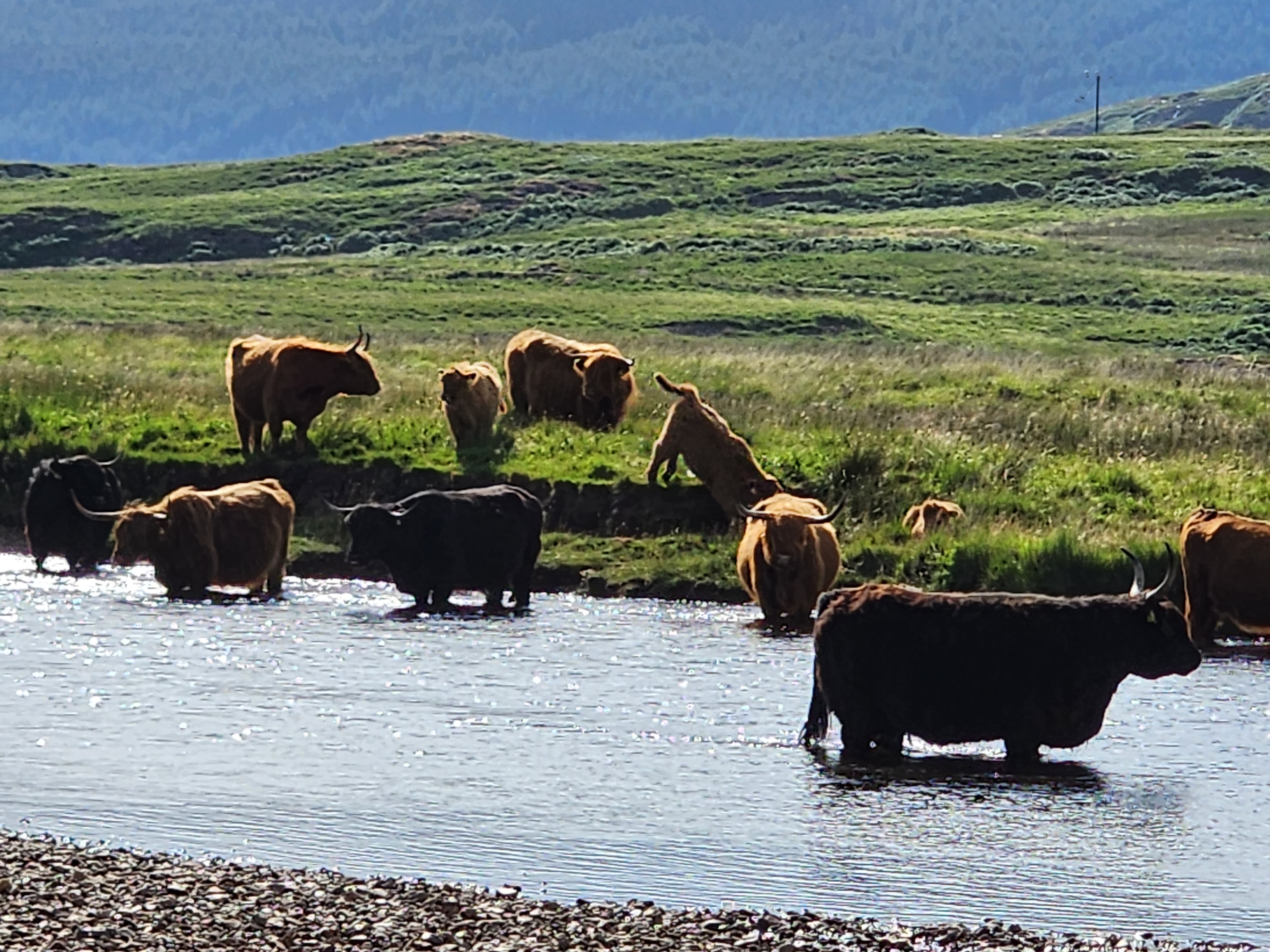
By then it was late in the day, when we got back to Mull, and we drove up to Tobermory, but not until after we’d stopped again at the stone bridge, where a herd of Heilan coos were congregating in and by the river.  With the sunlight hitting the water just so, the cows looked as if they had been painted there.  But the smell was realistic enough: the path that took us to the cows was awash in cow paddies, so I was extremely careful where I stepped.

The nice weather of the day gave way to more rain, so when I got back to my apartment, I zipped out to a food truck for fish and chips, and slinked back, a little damper, with dinner.
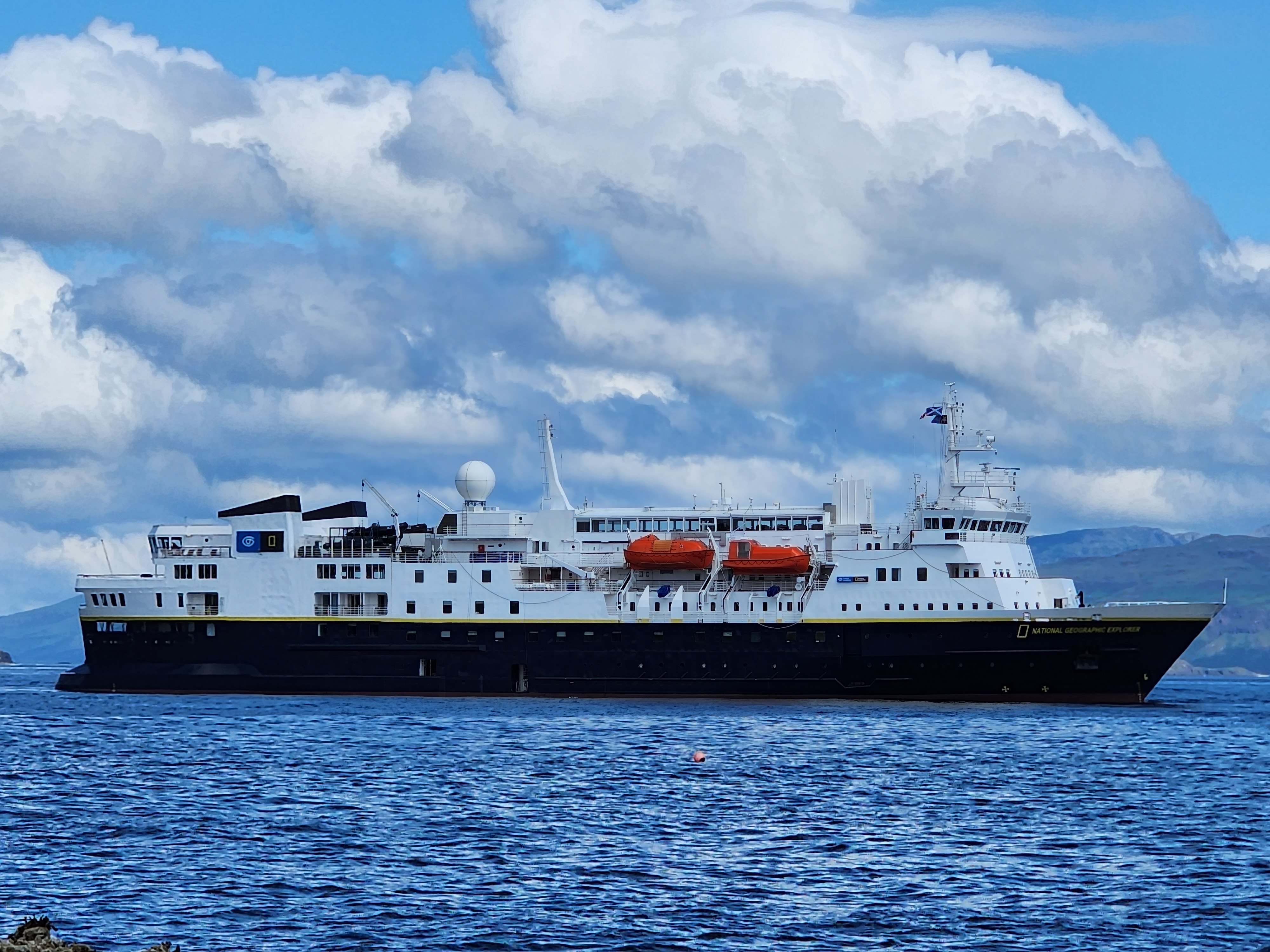
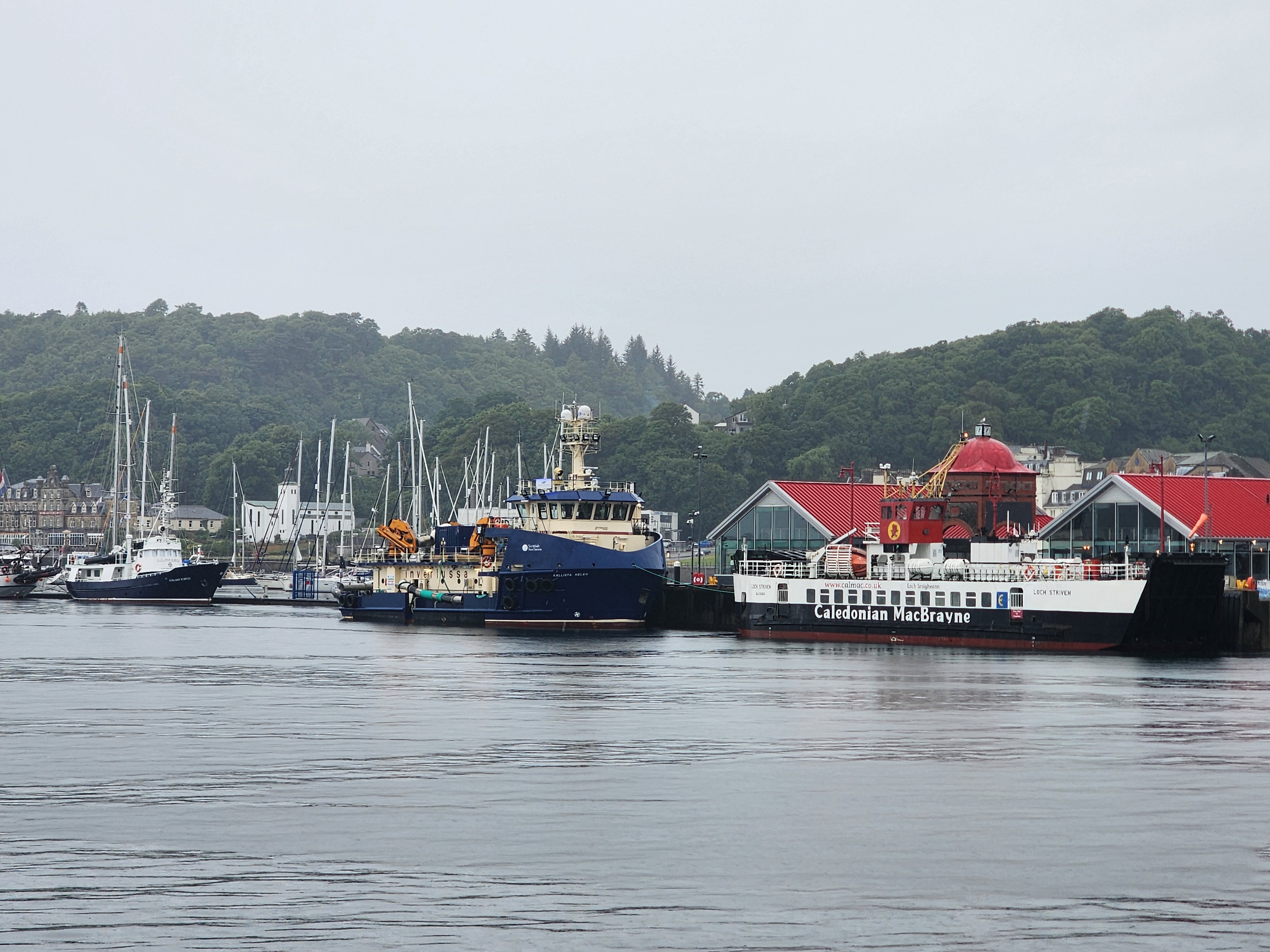
The last day of the trip began early enough, and we had to make our way to yet another ferry, this one from Craignure to Oban, another rainy passage.  Because the ferry had been overbooked the day before and was still backed up, Stewart couldn’t get our bus on the 11:00 ferry—he was shunted to th 2:00—but we went as passengers of the ferry.  It was a huge ship, ginormous.  I’m not sure I’ve ever been on a ship that big, with multiple decks, several coffee shops and a diner.  I thought about getting something from the diner, but I didn’t really see anything I wanted (and I did not fancy another drab cheese and chutney sandwich), so I wandered the decks and got an iced latte in one of the coffee shops in the stern of the ship.  Let’s be honest, this latte was basically a large glass of milk and a shot of espresso.  And it was delicious.  That’s the kind of latte I like—mostly milk!  Once I added sugar to it, I was hard-pressed not to suck it down in two sips. (I’m mostly kidding.) After I’d finished, I decided to head out on deck (even though it was raining) and watch the water.  I had hoped to see whales or dolphins, but I suspect they didn’t want to come out in the rain 😊.  I enjoyed the air, wet as it was, and stayed outside till I grew cold.
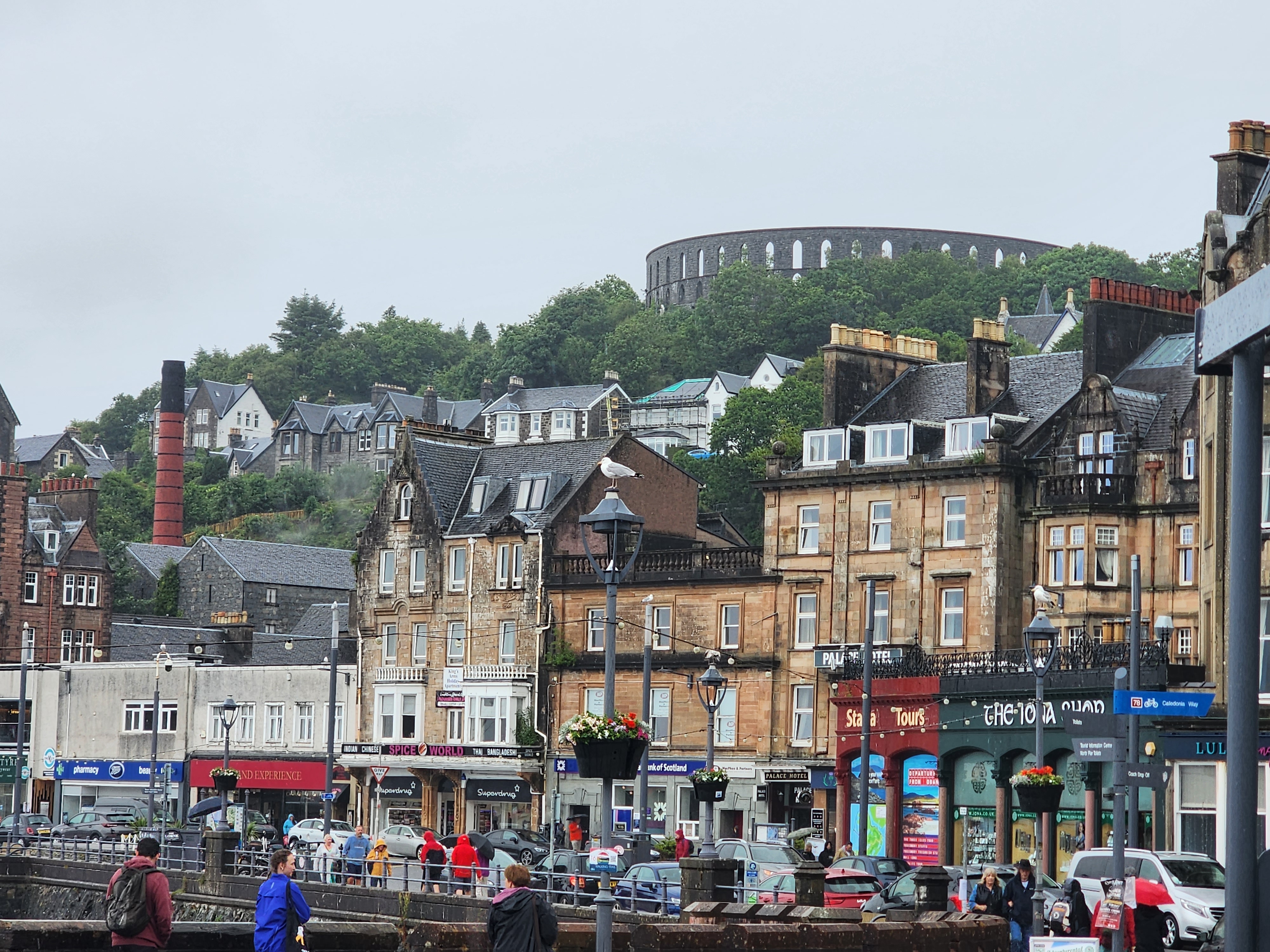
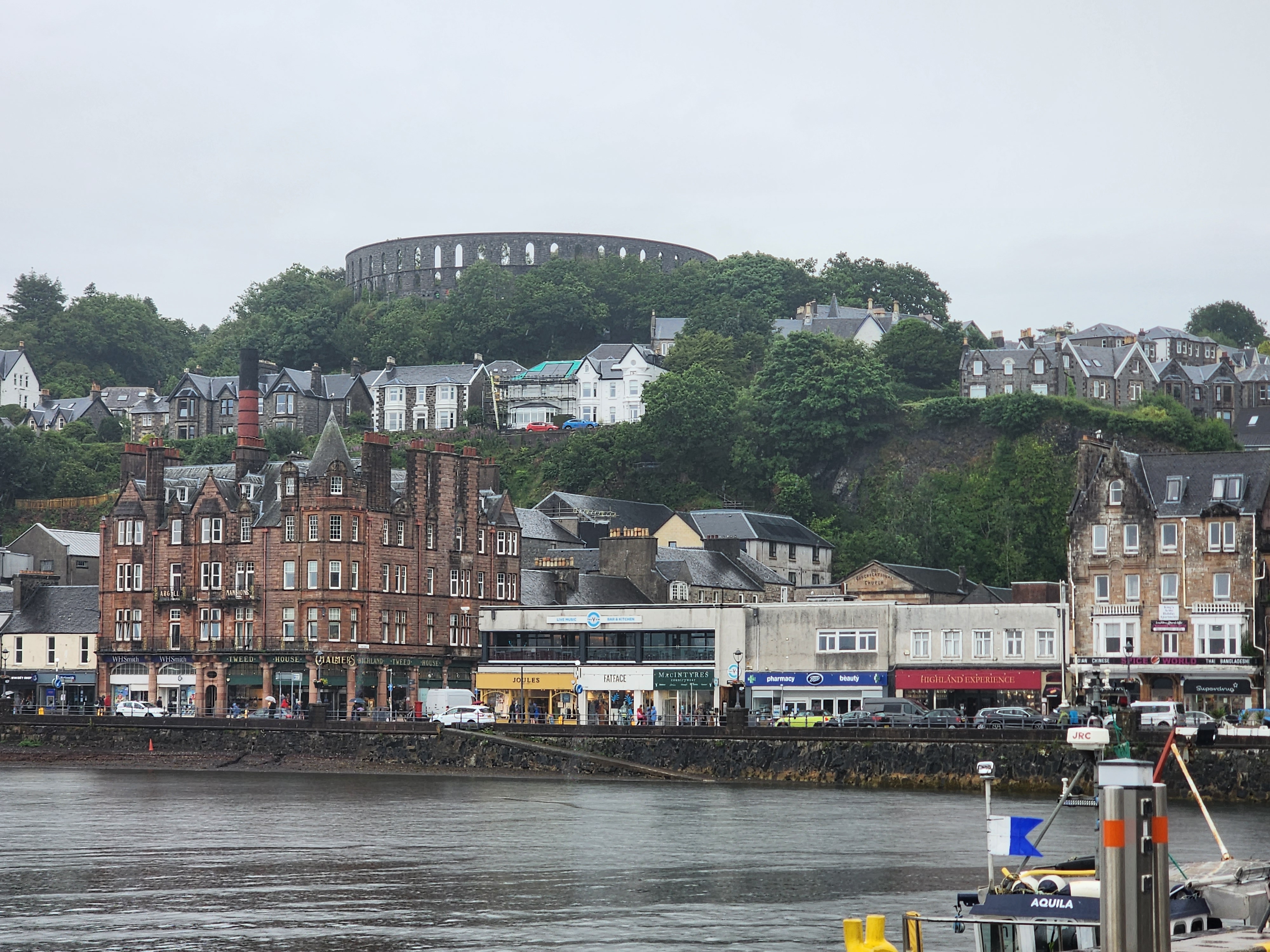
Oban, with McCaig’s Tower (the Colosseum-looking structure) in the background

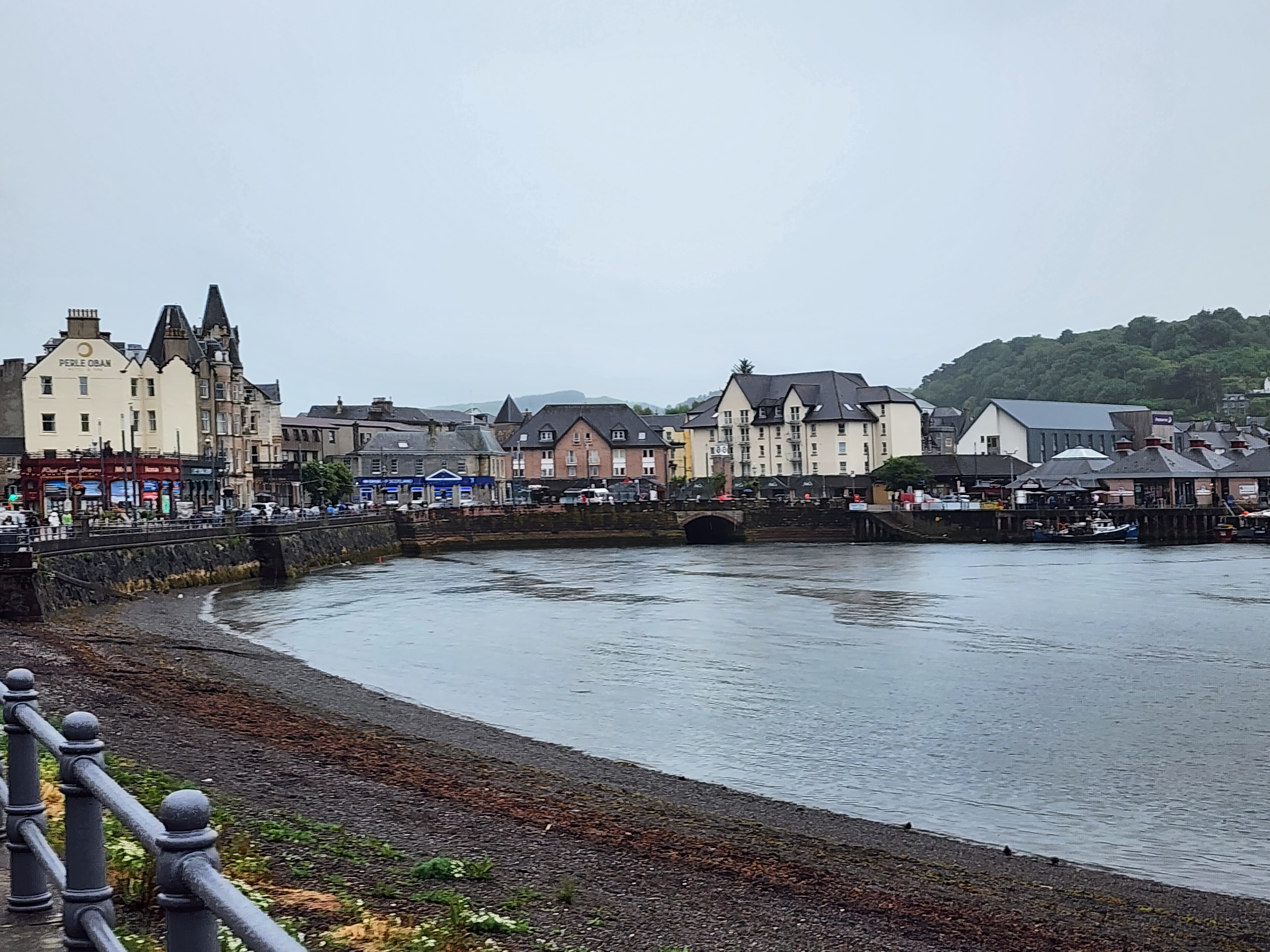
Oban, where we docked, was great.  Yeah, it was raining like hell, but I really enjoyed what I saw of it.  I walked the high street for quite a distance, and stopped into Oban distillery to see if I could take a distillery tour but the answer was no. (They only take 16 on a tour, and I was #17.) I ate at Nories Fish and Chips for lunch (established in the 1960s), and then wandered down toward the water where I found the Oban Chocolate Company.  Its reasonable prices encouraged me to buy a small bag of truffles, and a bag of white and milk chocolate cats.  I wandered some more and watched the harbor for a bit (hoping for dolphins, but alas), and got some icecream, then made my way to the other side of the harbor where I knew Stewart would pick us up.  There was still an hour to go, but the rain was relentless, so I holed up in Costa Coffee, and waited out the rain.

When Stewart arrived, I said, “I went to Oban distillery, but they wouldn’t let me on the tour.”

Stewart said, “That’s no’ right. D’you go to the tastin’ bar and have a flight?”

“I would have,” I said, “if I’d known about it.”

He shook his head, as disappointed as I was.

(I’ve yet to try a dram of Oban whisky, but then I haven’t really stopped in any bars.)
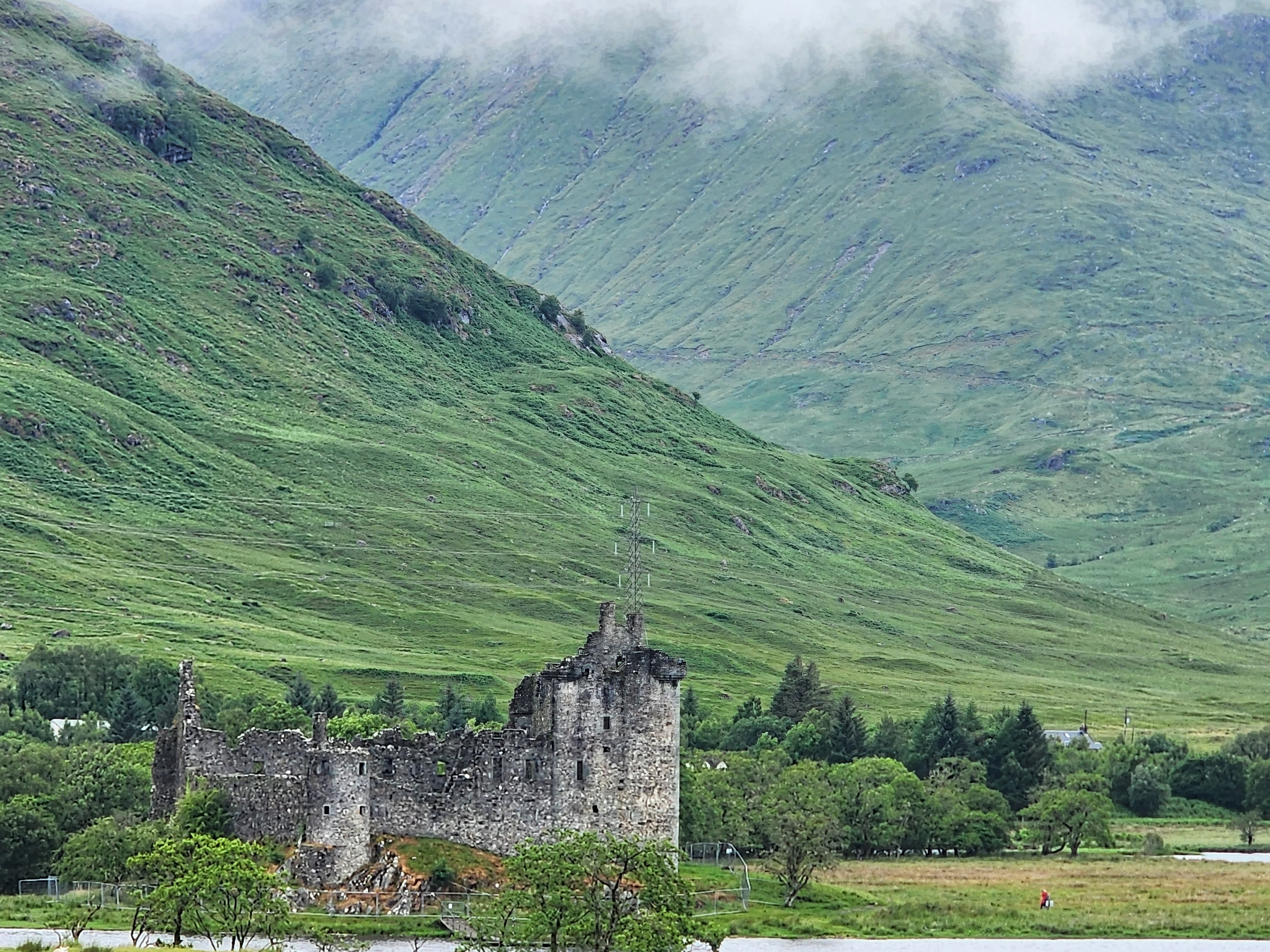
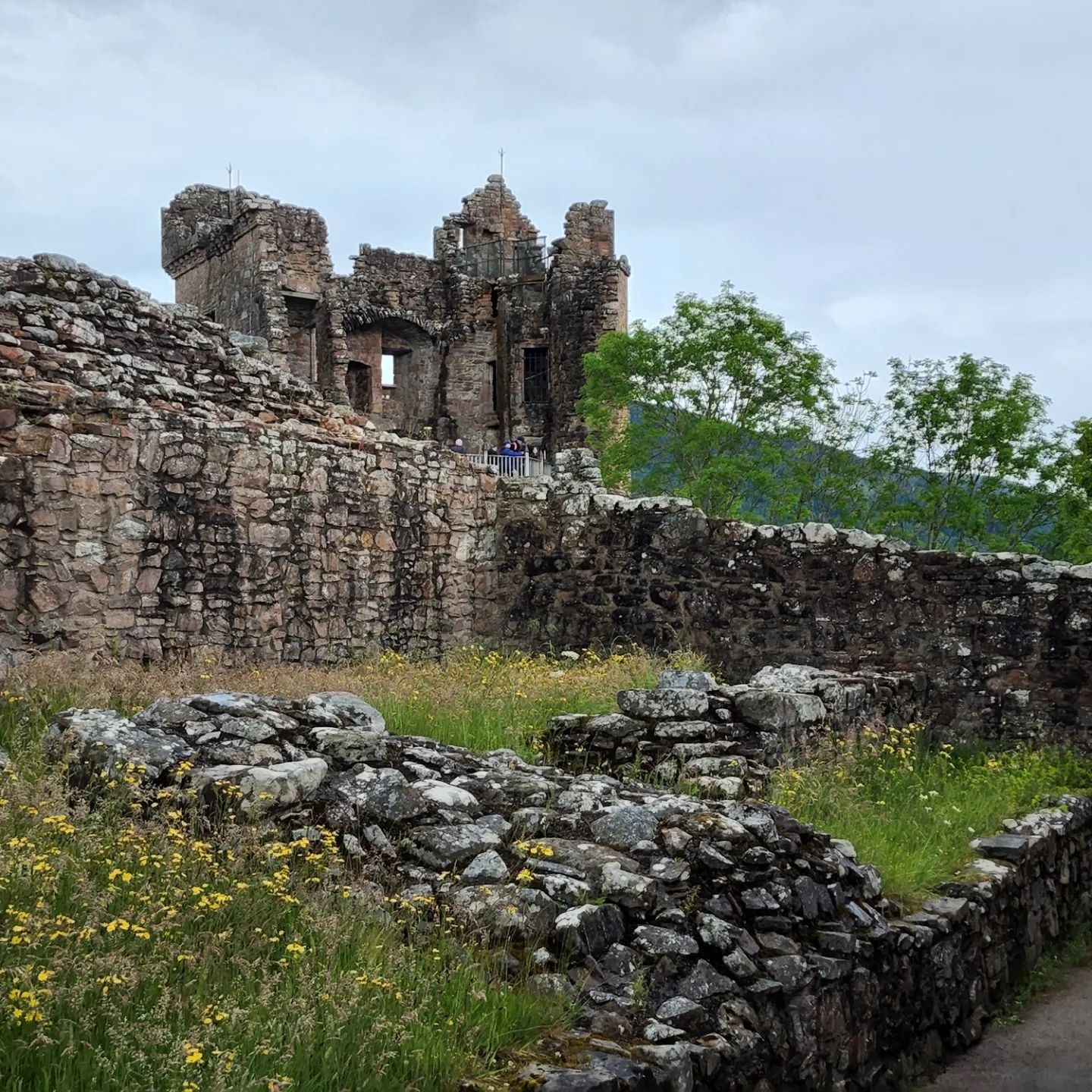
Kilchurn Castle on Loch Awe

Pretty much after that, all that was left of my Mull and Iona tour was a stop at Inveraray (where I called Mom again), a stop at Kilchurn Castle ruins, and then the ride back into Glasgow, although we made a picture stop in Glen Croe, near Loch Lomond.  At the base of the glen is an old military road, but we were on the “new” road at the side of the bens, where large metal nets ridge the mountains to catch boulders and falling objects.

As I was getting off the bus, Stewart told me that he hoped he’d see me next year, with my husband, on the Islay whisky tour, and I hope I can arrange that, because Stewart is a great tour guide, and even though I don’t like peated whiskies (which Islay is famous for), I’d be thrilled to get reintroduced to them with Stewart’s guidance.  I’ll have to see if I can contact Rabbies next year to find out when he leads the tour, assuming that a) I teach in Scotland again, and b) I can arrange it. Even if I don’t think I’d enjoy the whisky, I’d enjoy seeing Stewart again.  And if C could come with me, that would be even better. (Get your passport, C!!!)

More photos:

View from Nories Fish and Chips

Loch Fyne in Inveraray

Loch Fyne

Loch Fyne
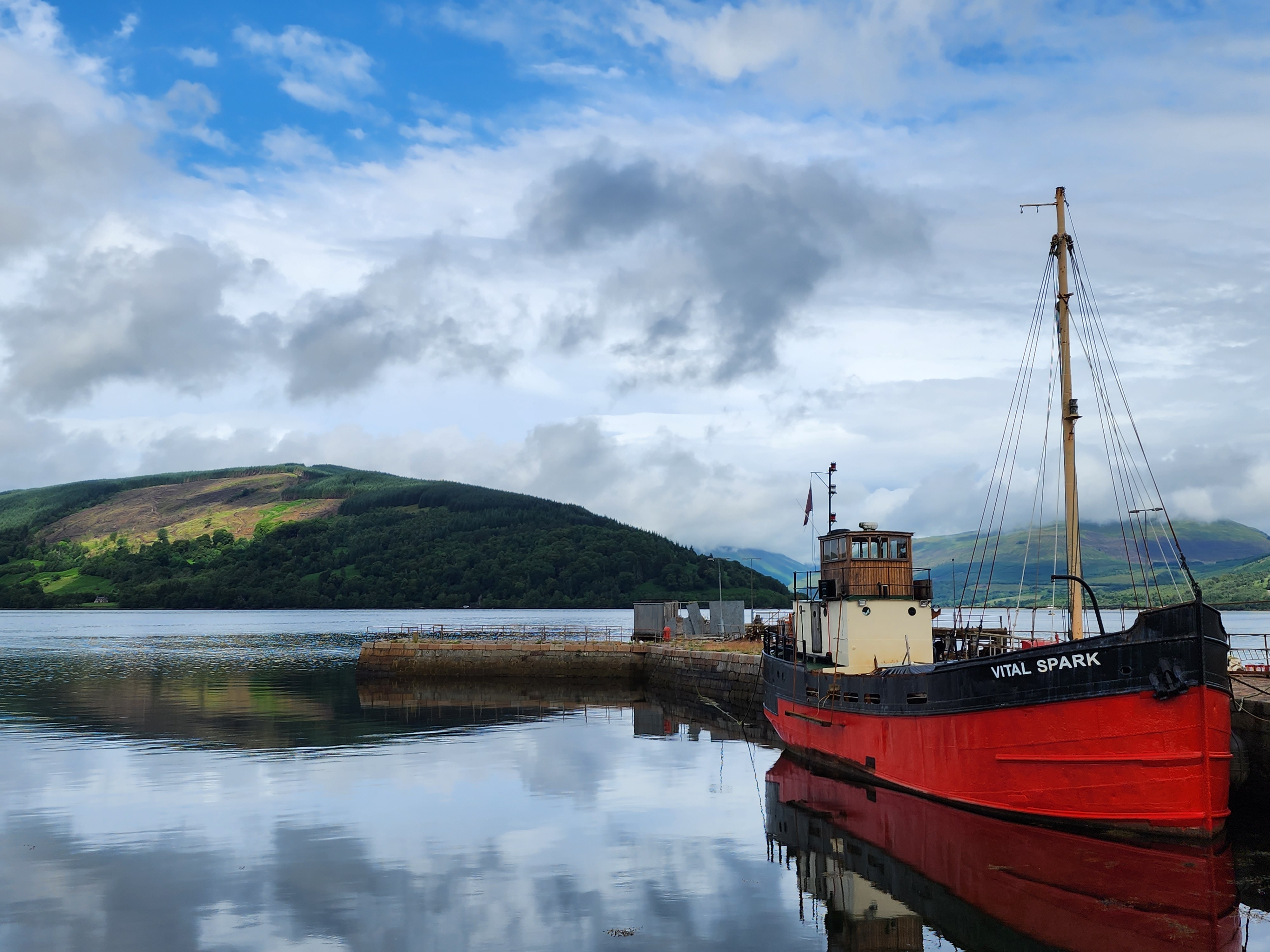
The Vital Spark in Loch Fyne, Inveraray–I love the composition on this one.
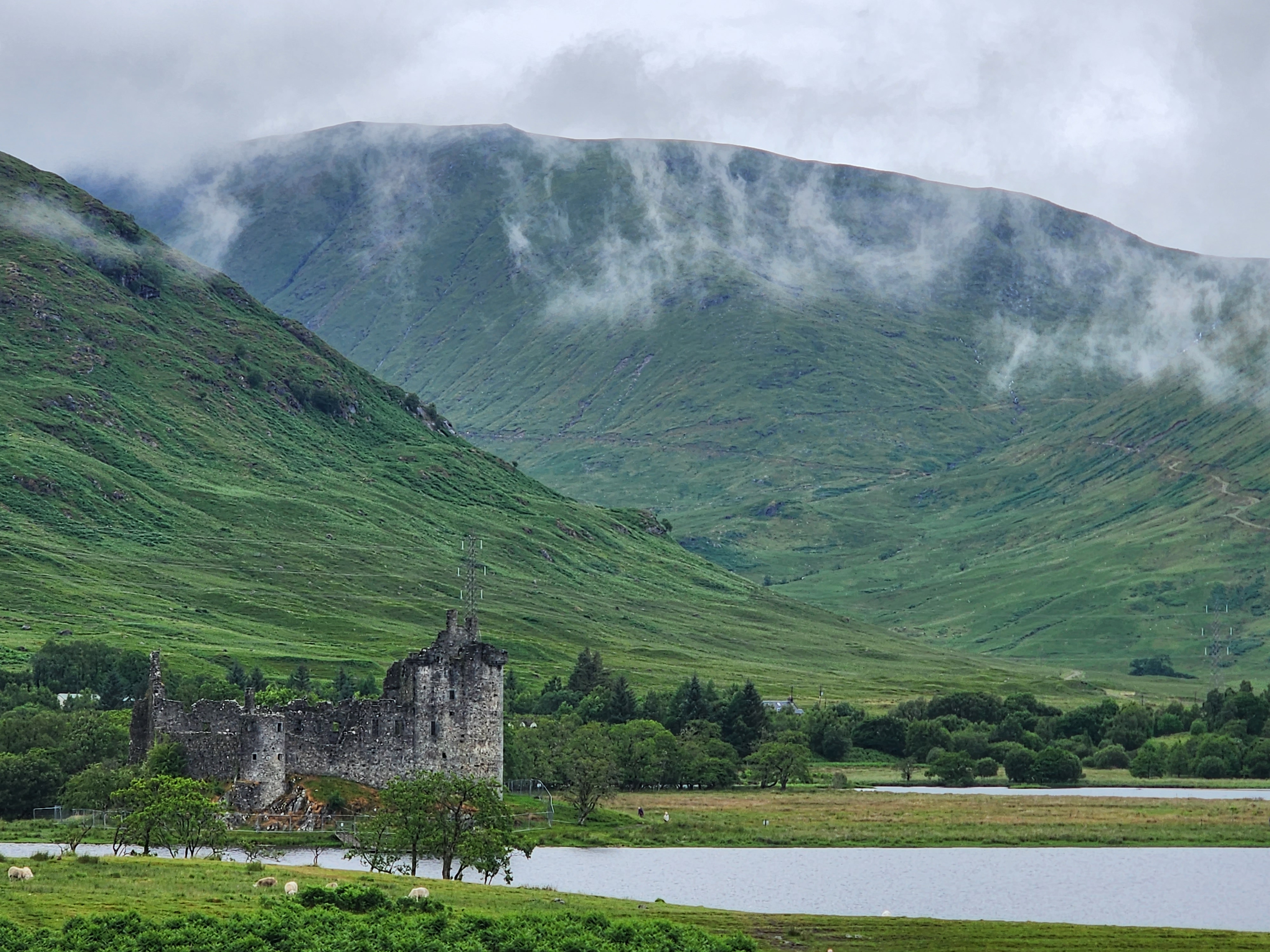
Kilchurn Castle with lowhanging clouds

Sheep on Loch Awe

Loch Awe
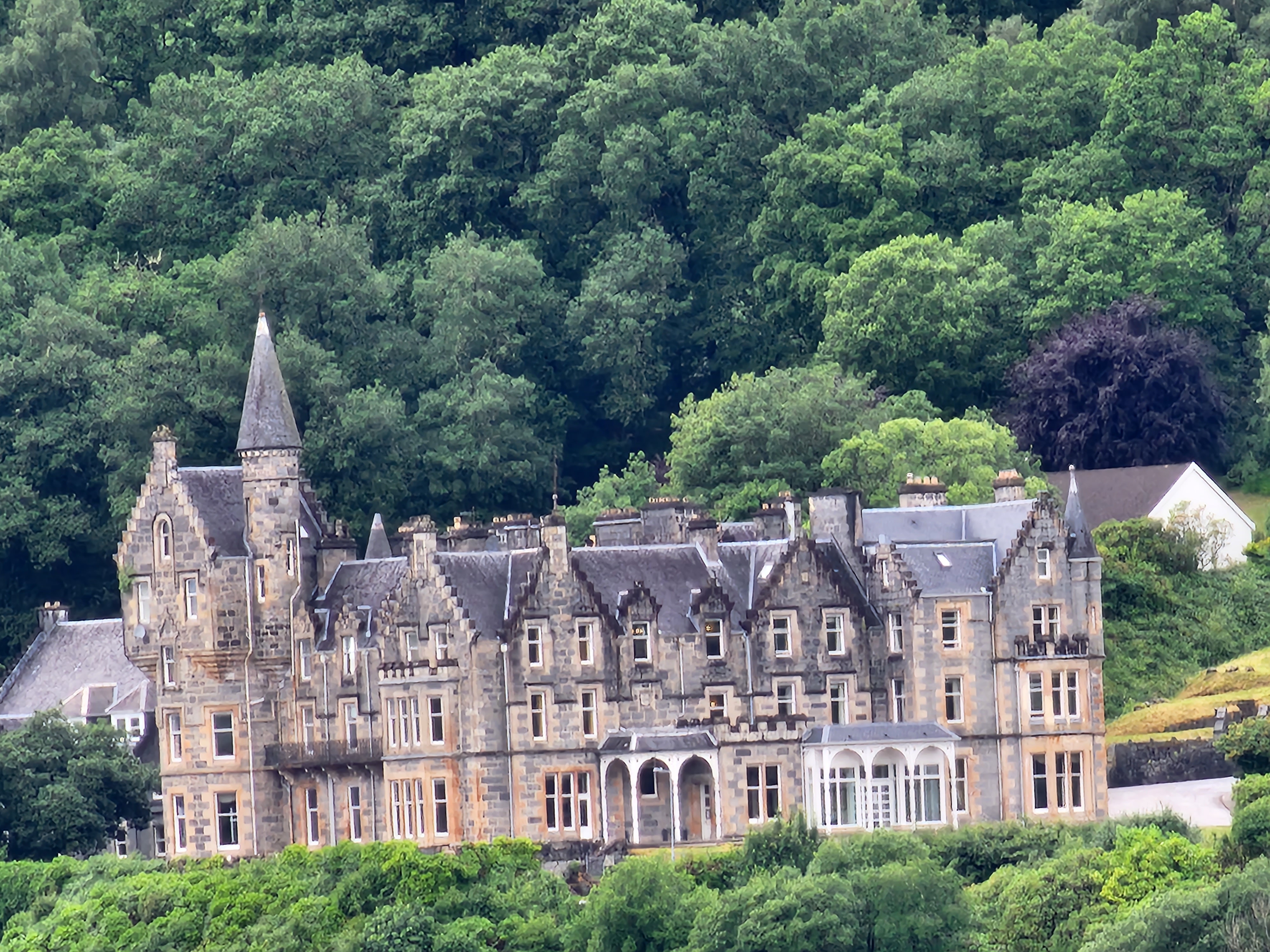
A hotel on Loch Awe, to the left of the Kilchurn Castle ruins as you look at them
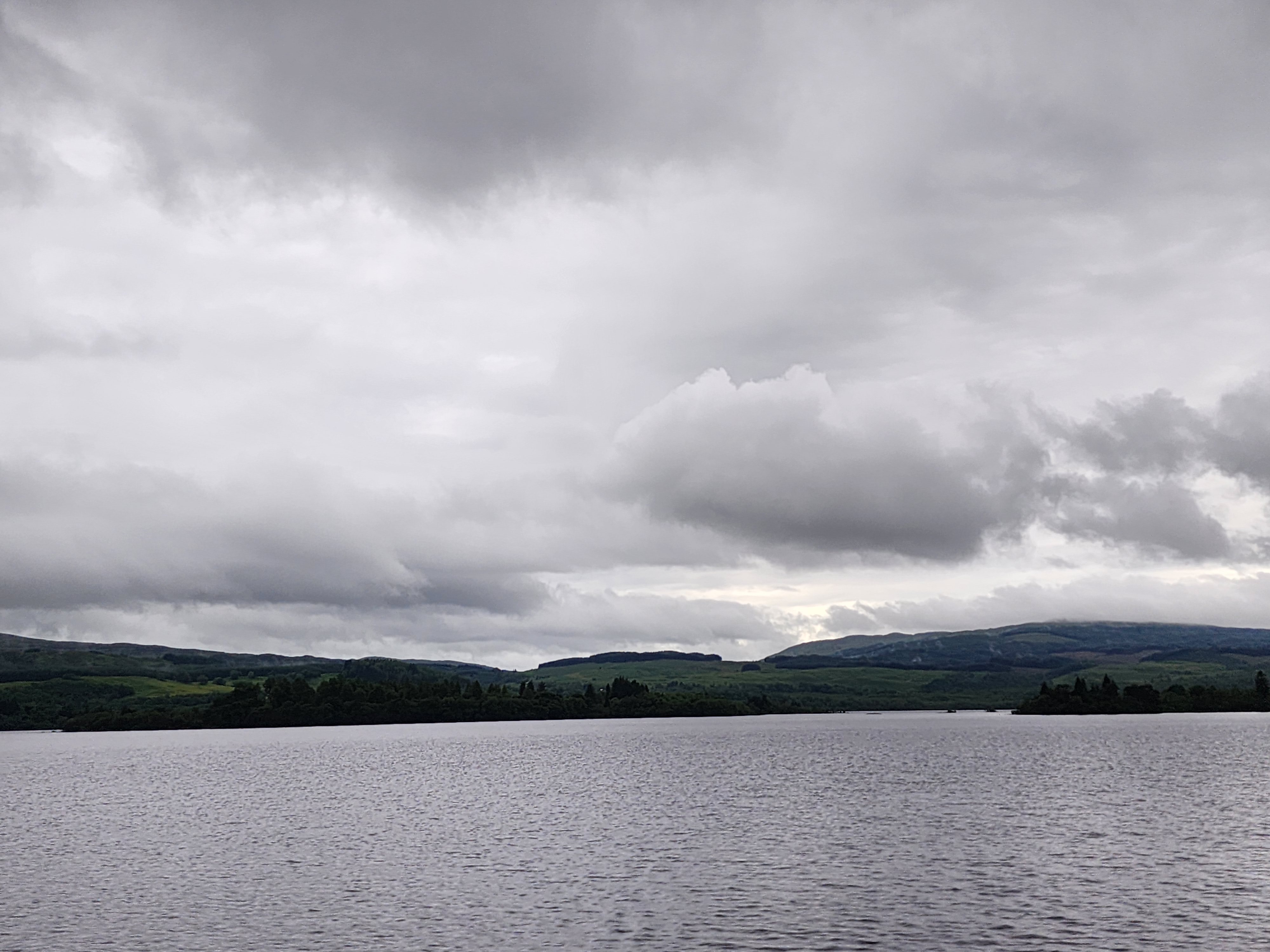
This looks like I took the picture in grayscale, but really, it was just how dark and dreich the day was.
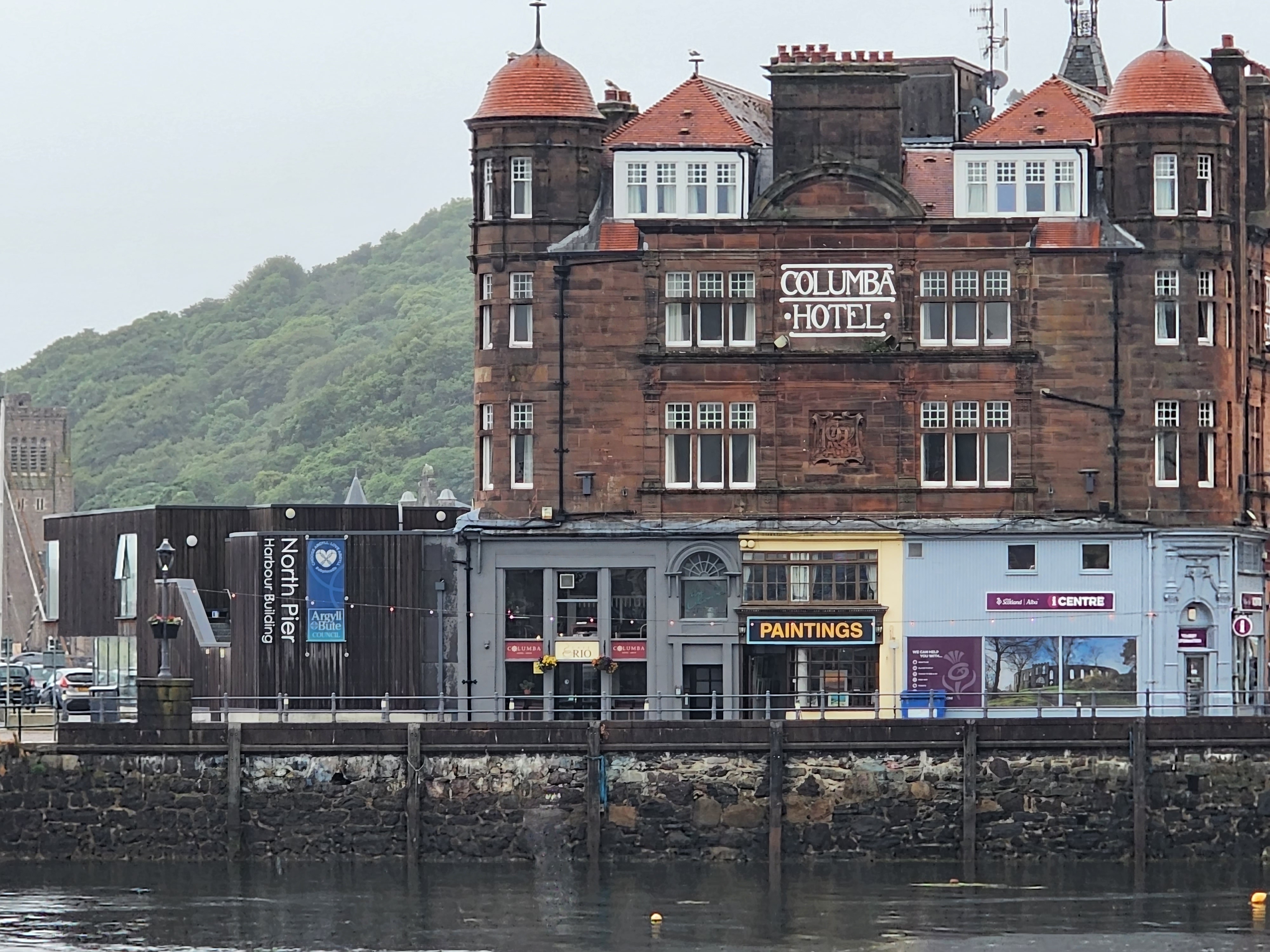
Oban

The Inveraray Inn (could you guess?)

Oban
Oban

Oban

Oban

Oban

My fish & chips at Nories
Oban
Oban

The ferry to Oban

Me getting very wet on the ferry to Oban

A lighthouse on the ferry to Oban

Isle of Mull, when the sun came out for a bit
Funny clouds in Mull
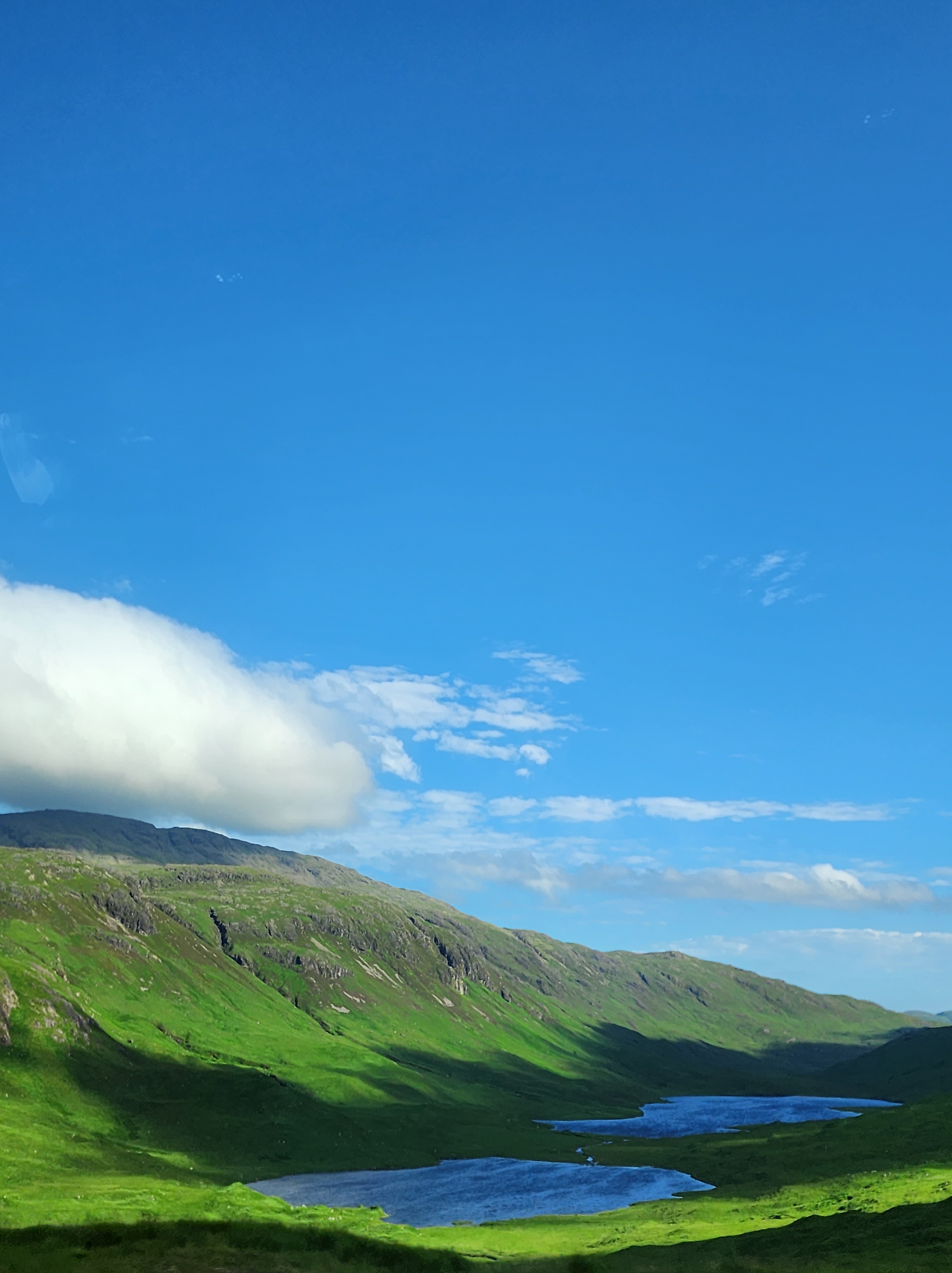
Mull

View from the Stone bridge on Mull

View from the Stone Bridge
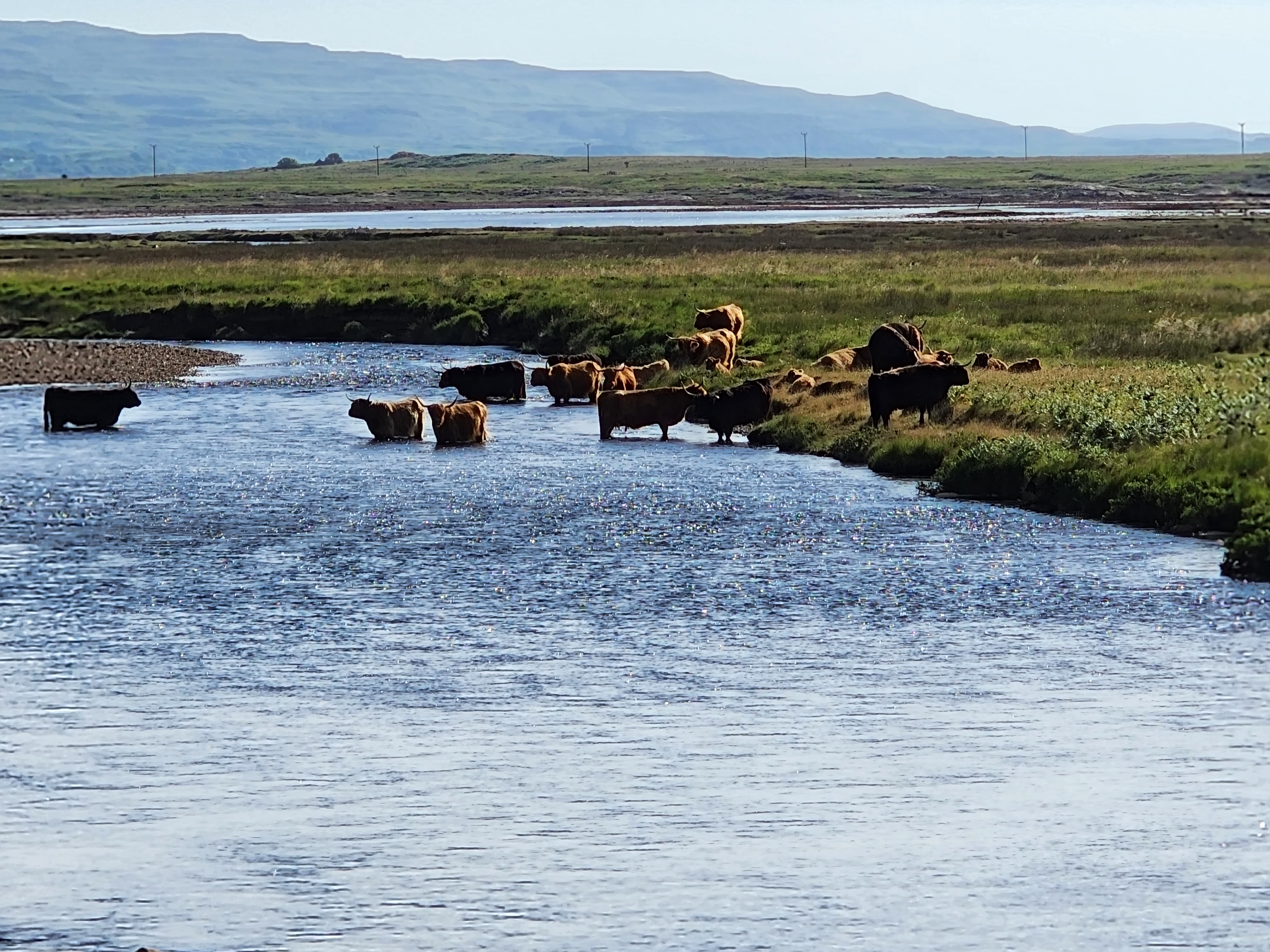
Heilan coos

View of the Stone bridge from cow-distance

A sudden squall over Mull

Heilan coos in the river

Coos!

Coo

Coos

The beach near the Lochline ferry stop
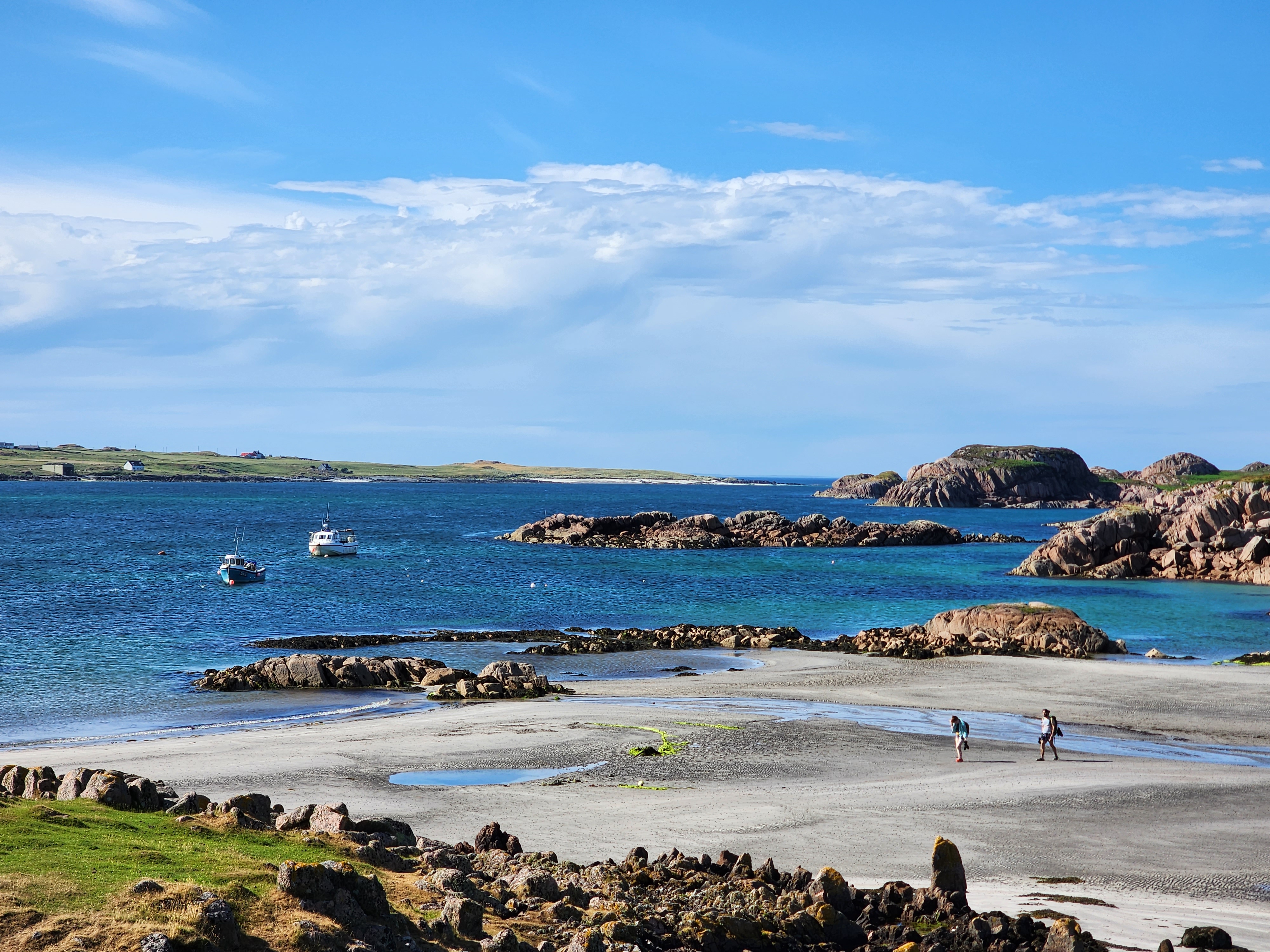
The beach near the Lochline ferry stop
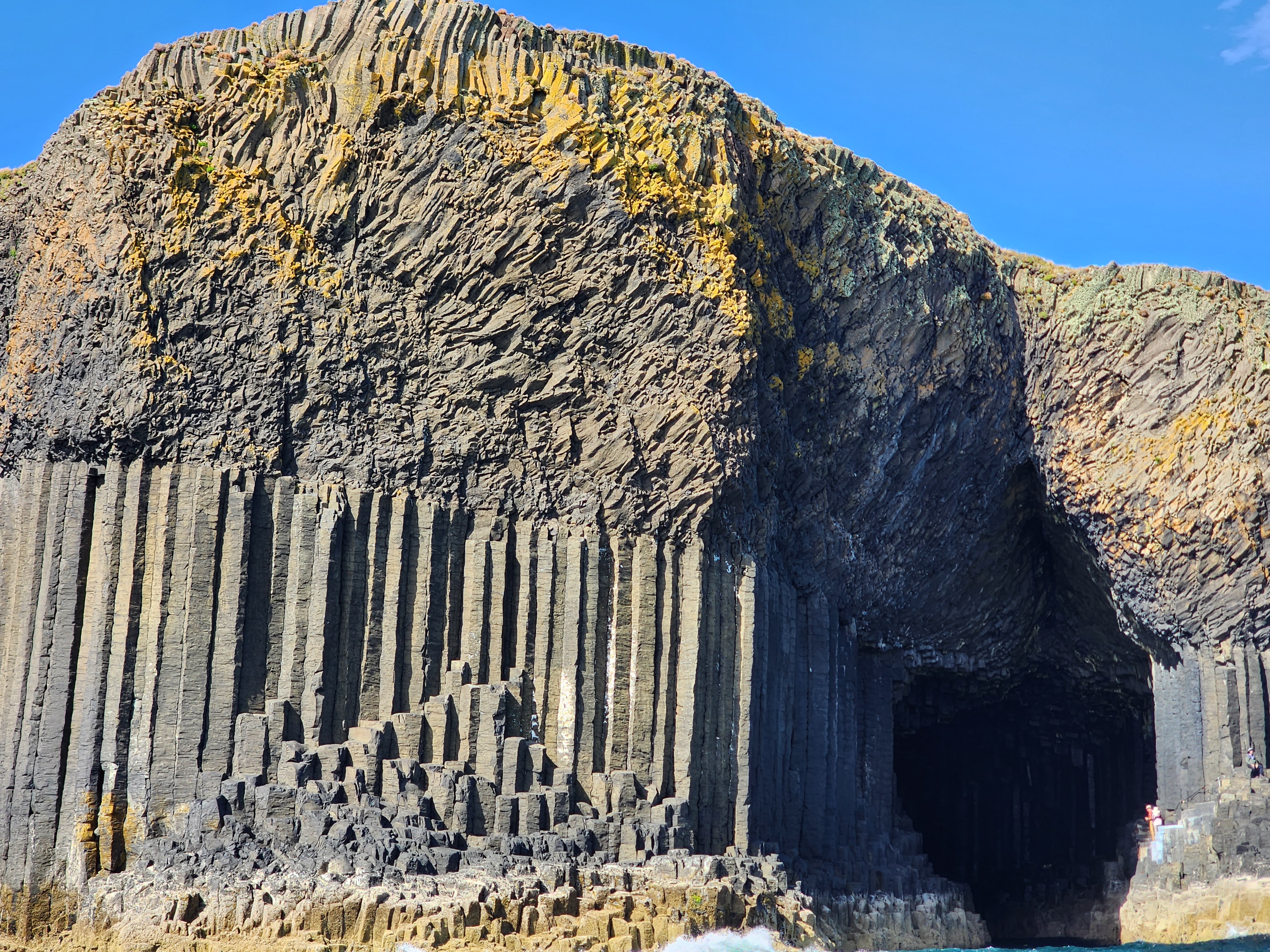
Isle of Staffa

Staffa
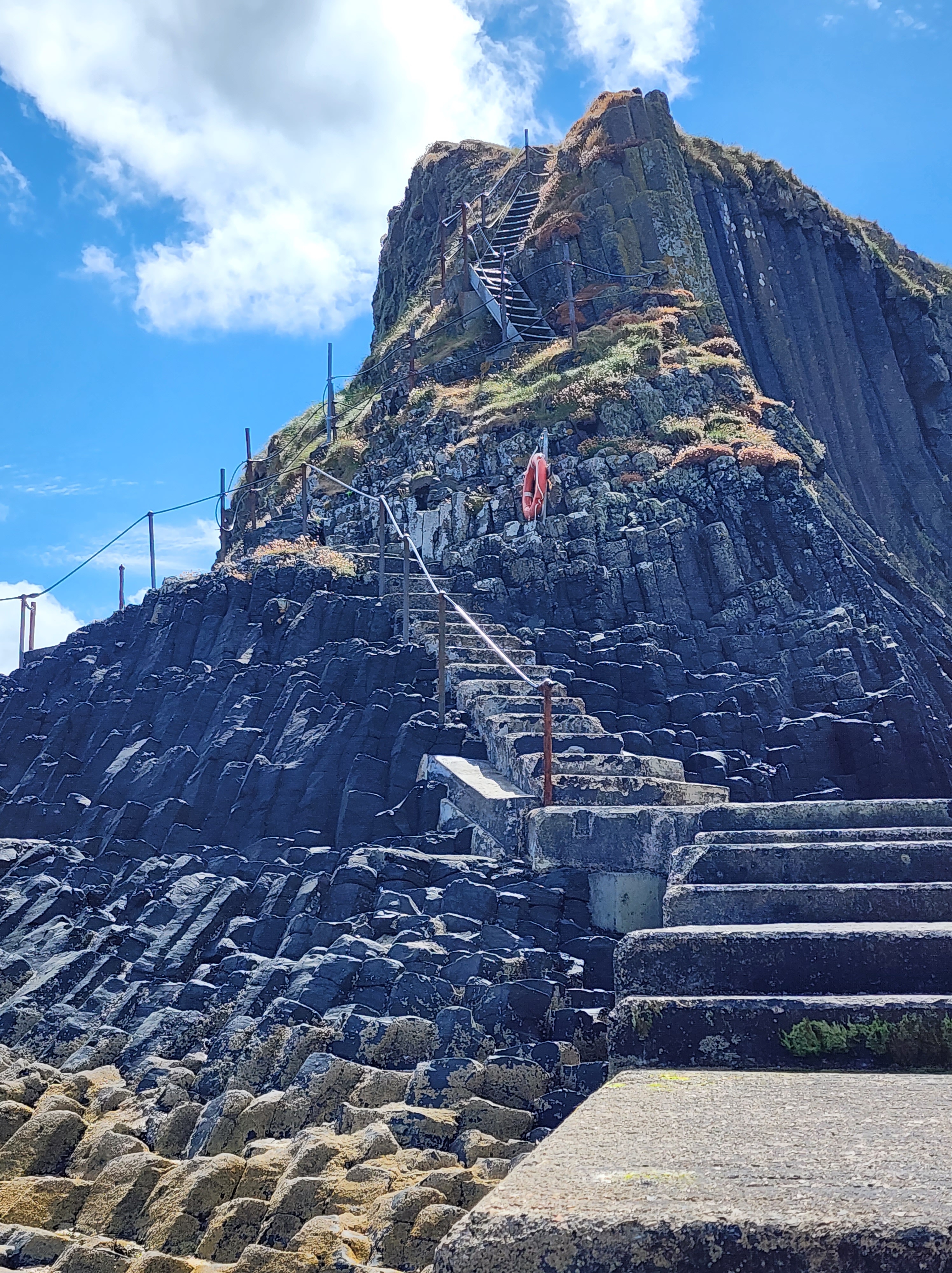
This flight of stairs doesn’t look that tall, but the picture is deceptive.
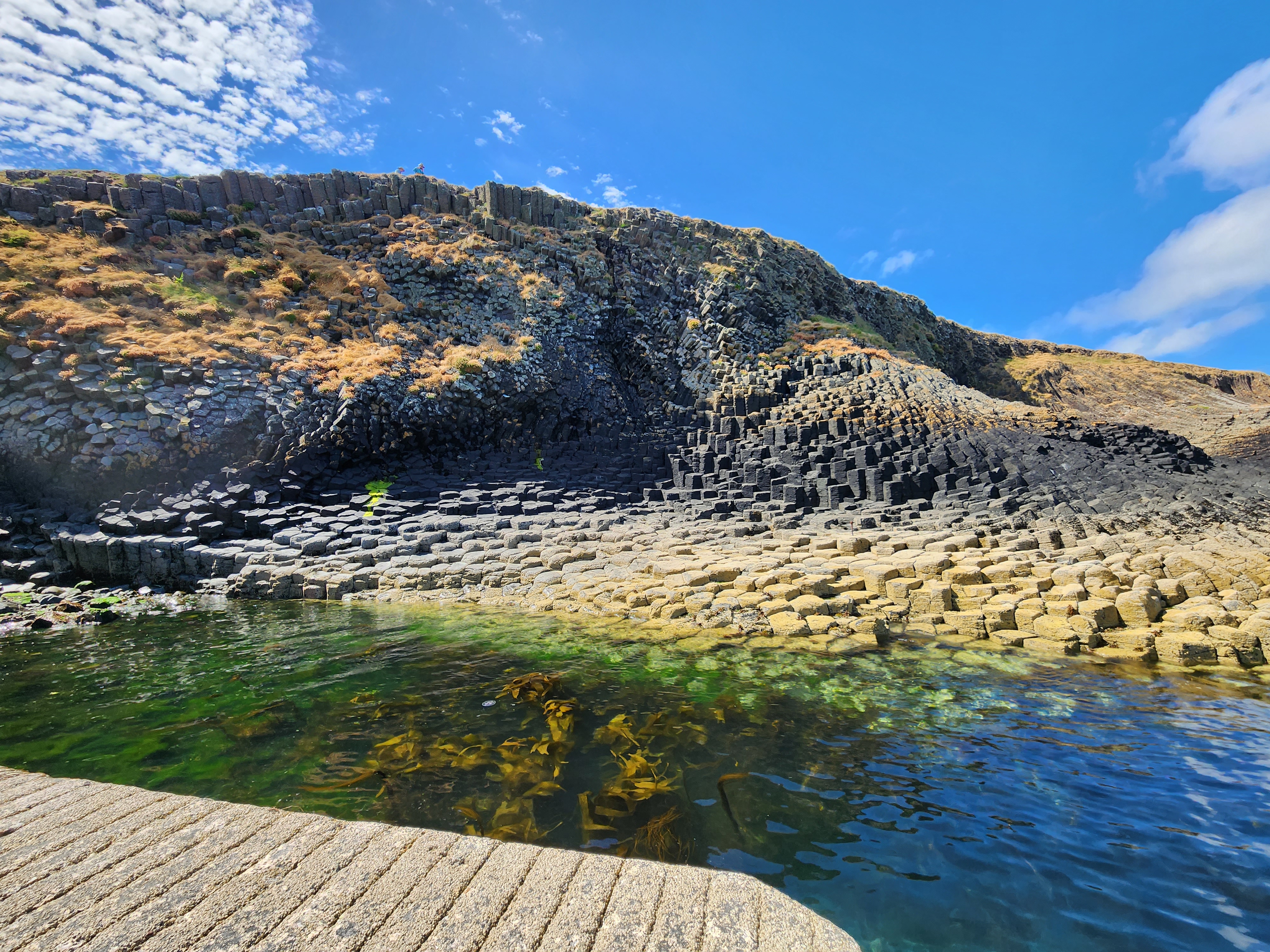
Tidal pool at Staffa

Ospreys (?) on Staffa
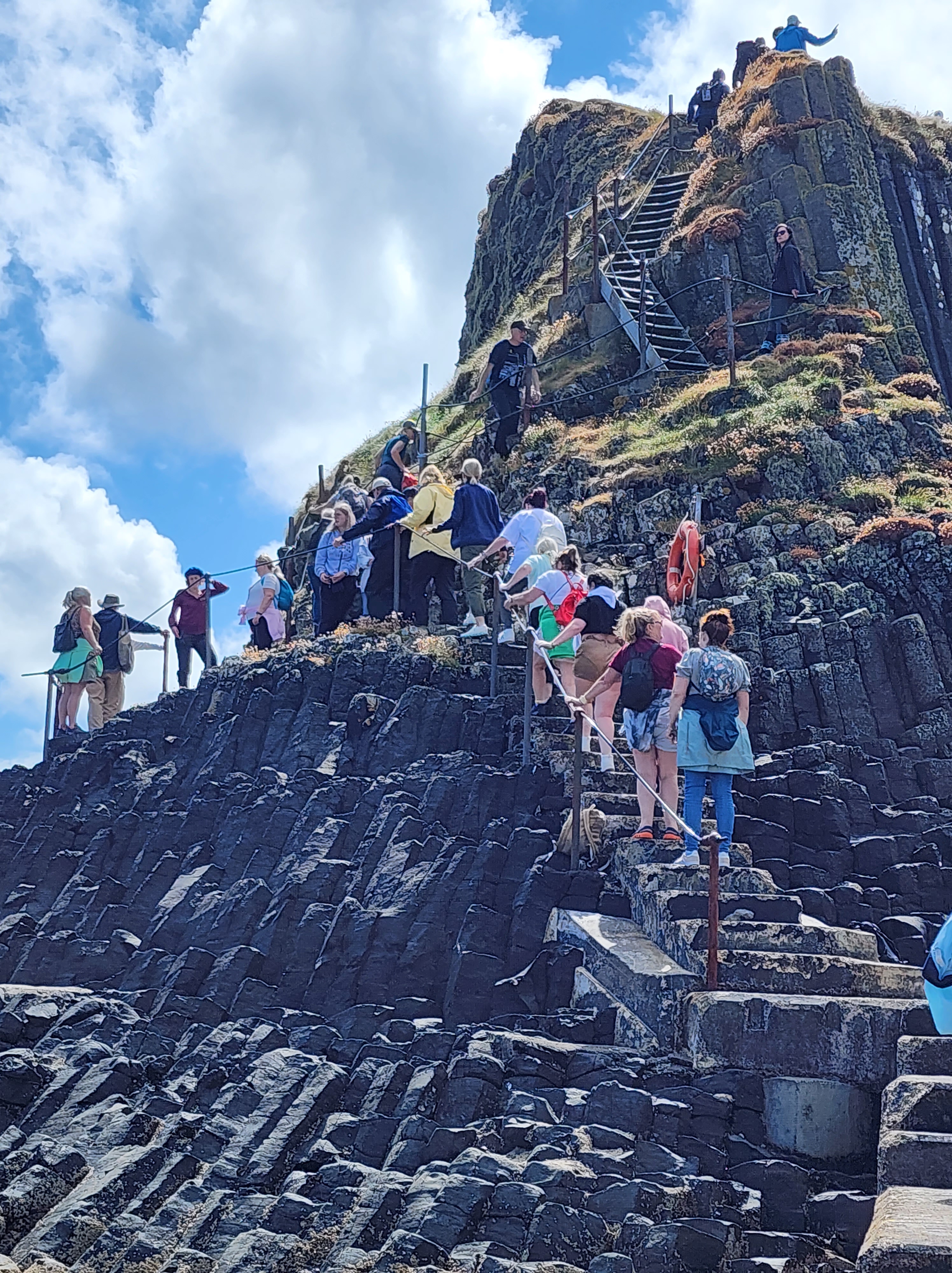
A better glimpse of the staircase on Staffa
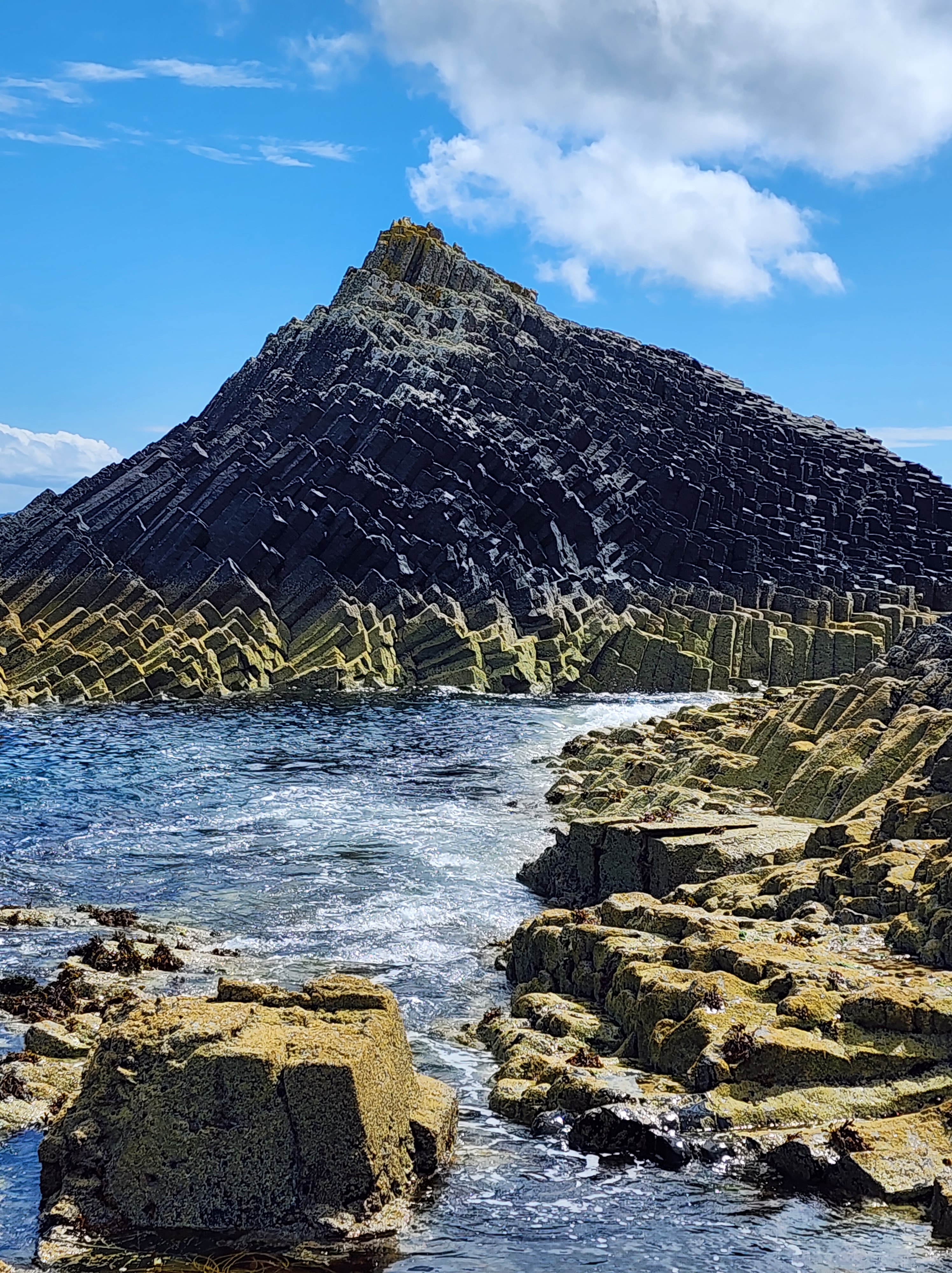
I have no idea where I took this. It’s pretty though, innit?

Tobermory

A little cottage by the ferry

Glencoe

The wrecks

Tobermory–my Dad said he was going to try to paint this in watercolors

Tobermory
Tobermory

The Isle of Skye

Back in Scotland for another summer of teaching, I find I’ve settled in easily enough—I have a good sense of direction and I’m still on bus route 14 (though I’m further away from campus than I was last year), and every day I look out on the beauty that is Arthur’s Seat, a rock formation from an expired volcano.  I can’t complain too much, although my apartment is a bit of a disappointment, but I’m making do.

The Kelpies

A few weekends ago, I went on a tour of the Isle of Skye, which is the largest of the inner Hebrides islands.  What I didn’t know—and maybe, if I had bothered to look at a map I would have—is that Skye is basically part of the Highlands, but if possible, even more empty and scenic.  It took us all day to get there, and we made stops at Falkirk to see The Kelpies (I still love them!), then moved on to Loch Lubnaig, Glencoe, The Three Sisters (places I’d seen last year), a little chocolate shop in Glenshiel (I didn’t find anything I wanted to buy—mainly because I was too cheap), and a little bridge near the Red Cuillin and Black Cuillin (Munro mountains on the Isle of Skye).

The Three Sisters

Loch Lubnaig

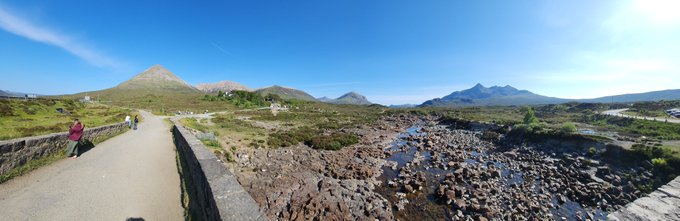
A panoramic view of the Cuillins

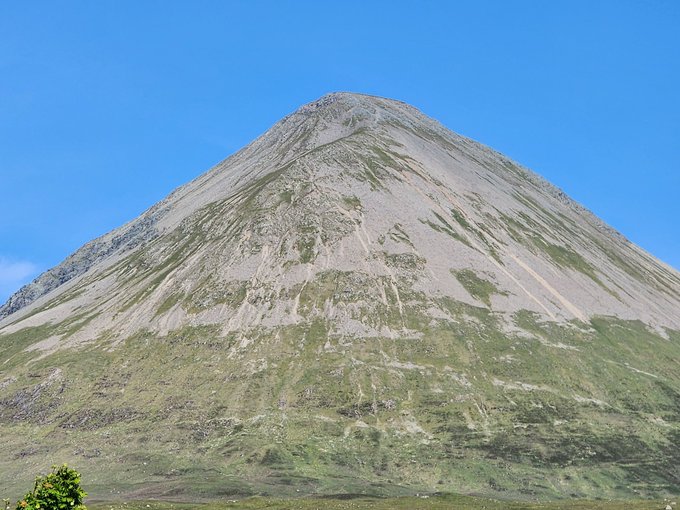
The Cuillins

Seeing the Highlands in the bright sunshine—as opposed to the mystique of clouds and mist—offers a surprisingly different insight into the view—you see all of the mountains, even to the very tops, and the sunlight brings out the details and relief of the mountain faces.  It’s a curious experience—because for instance, last year when I saw the Three Sisters, I saw them wreathed in mist and there was something gently oppressive about them.  In the sunlight they glow—the green so rich and thick upon them contrasting to the true azure of the sky.  It’s breathtaking.  It was warm, though the wind does blow fiercely through the glen.

Getting to the Isle of Skye (“Skye” means mist), you pass a few castles, including Eilean Donan (“the most beautiful castle in Scotland,” according to their guidebook), and go over a huge white bridge that was designed for the Royal Yacht Britannia to sail underneath.  Apparently, it only went underneath once, in 1995, and has since been retired as a tourist attraction in northeast Edinburgh. And once you’re actually on the island itself, you find the roads tend to be two-way, single lane roads, which is a bit hairy when your tour bus keeps pulling off at the “passing places” to let other cars go by, and there are huge drop-offs on either side of the roadways.  Our first stop on the island was to this bridge where we could stretch our legs and look at the Cuillins.

Black Cuillin

Red Cuillin

These mountains are Red or Black, depending on the kind of ash and lava the volcanos spewed millions of years ago. I liked the Red Cuillin because it looks really red (well, kind of rust red), but the Black Cuillin is dark and pointy and seems mysterious.  Both of these mountains are Munros, which means they’re Scottish mountains greater than 3,000 feet high.  (There are 282 such Munros in Scotland, and they get their name from the famous Scottish mountaineer, Sir Hugh Munro, who catalogued and climbed them. People who climb these Munros and “collect” them are called Munro-baggers.)  These Cuillins probably have an official name (Ben Something or Other), but I don’t know it, and a sign just referred to the Red Cuillin as Red Cuillin, and the Black Cuillin as The Cuillin.

We finally stopped for the night and I stayed at the Pier Hotel (a B&B) in the harbor, then got Fish and Chips at a chippy close-by.  I didn’t want to stink up my room with my dinner, so I sat out on a stone overlooking the harbor, feeding the gulls and a very annoying crow some chips, which they snagged in their beaks and flew off as if I were going to try to take them back.  I could have walked around the town of Portree but really I just wanted to get in bed and read.  So that’s what I did.

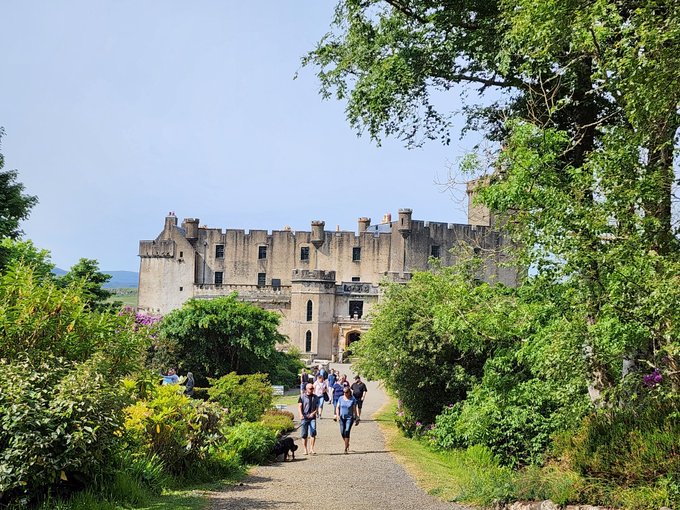
Dunvegan Castle

The next day we did a lot of driving around Skye on these tiny roads that jot across the glens and Highlands.  Some of us, including me, went to Dunvegan castle and gardens, whiles others went on a “difficult” hike.  Dunvegan is the clan seat of Clan MacLeod.  It dates from the 13th century but has been renovated and updated in the intervening years.  What we could walk through was limited—a bedroom, a parlor, a dining room, a library—but we weren’t allowed to take pictures of the inside.  There were lovely paintings on the wall of the various MacLeod families, as well as a painting of Samuel Johnson, the poet and playwright, who visited the castle at some point in his life.  The halls were crowded so I didn’t get as close to some things as I would have liked (for instance, the dinner ware and silver service), but what I saw of it was beautiful and tasteful.  Belowstairs, there were servants areas, like a sewing room, and a room where a video was running, telling about the history of the place, especially the Fairy Flag, which is this scrap of fabric said to be imbued with fairy magic.

The Fairy Flag, a prized possession of Clan MacLeod, with its lore centering on its being a gift to an infant clan chief, performed two miracles:  it saved the clan from starvation, making all the sick and thin cattle healthy and fat, and it helped during a military battle.  Apparently, the Fairy Flag has another miracle to perform, but Clan MacLeod has not needed to use it.  So instead it hangs proudly in place in the castle, though it’s not much to look at—a tattered thing of yellowed silk—that nevertheless is historic and interesting to see.

I wandered the gardens only a little—it was hot out and the midgies (irritating bugs, something like mosquitoes) were hungry.  But there were rhododendrons and irises aplenty and shaded walks throughout.  Mostly I wanted to look at the seals, but the seal boat wasn’t running.

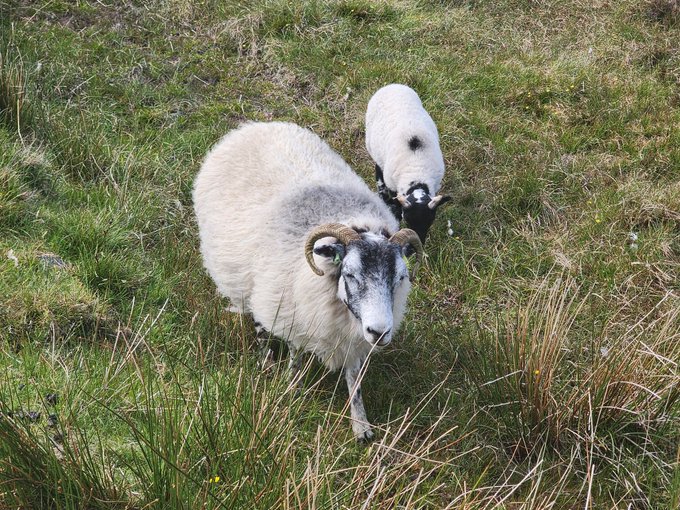
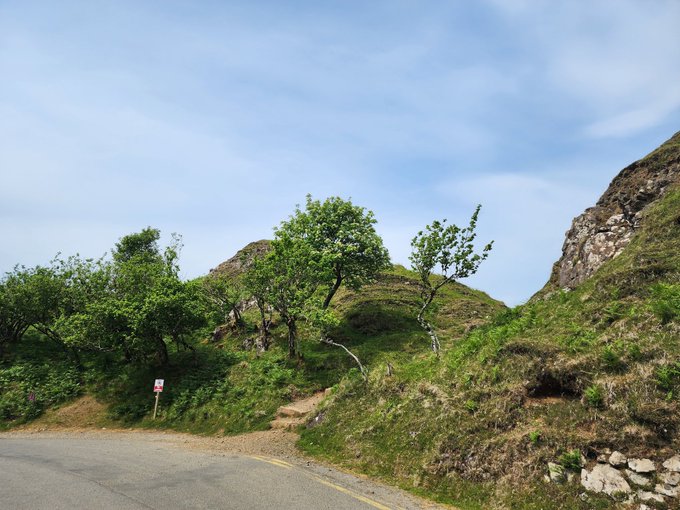
Later, we took a ride down to the Fairy Glen, but I couldn’t seem to take very good pictures there, almost as if the glen did not want to be photographed.  The Fair Folk must have been protecting their lair.  I did get some close encounters with sheep, and the land itself gently rolled, the bushes and trees curling in on themselves, but the little mounds where the fairies lived only came out blurry, so I tossed those pictures.  It was a nice walk through the glen, and I found a big rock to sit on for a bit.

View from Cuith-Raing

View from Cuith Raing

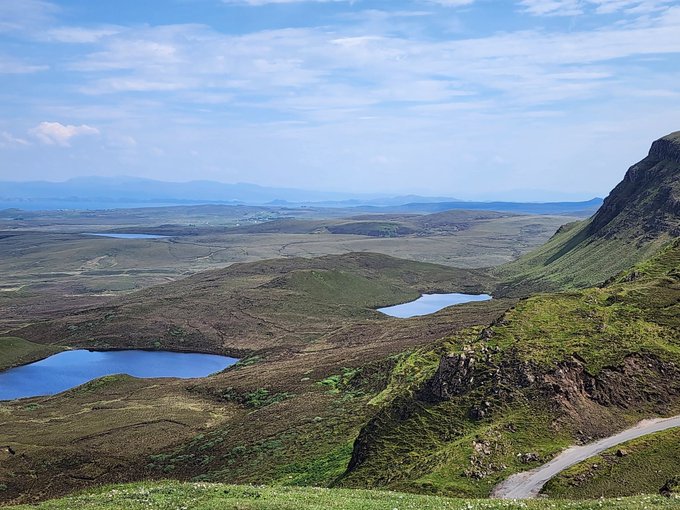
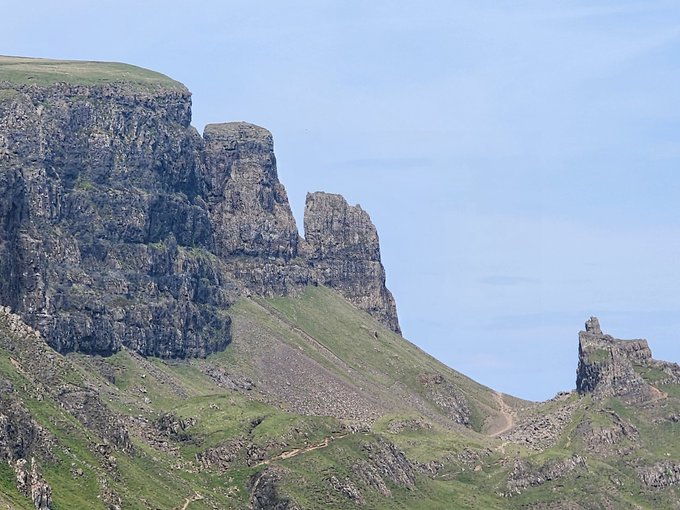
Then it was on to Cuith-Raing, up in the mountains, where you could look down on a town on the Isle of Skye from a great distance and the landscape is rocky and green, with fantastic views wherever you looked.  Of course, it was really high up, so I stayed well-away from the edges.  And I called Mom because I was getting good reception. I just wished she had WhatsApp so I could have shown her the view.  Afterward, we stopped at a beach at An Corran, famous for its 19 dinosaur fossils, and then we drove along to see the Old Man of Storr, a rock formation that can be seen for miles, on the Trotternish peninsula.  There is a walk to go up to it, but apparently it’s two hours long, and it was not on our itinerary.

Eilean Donan Castle

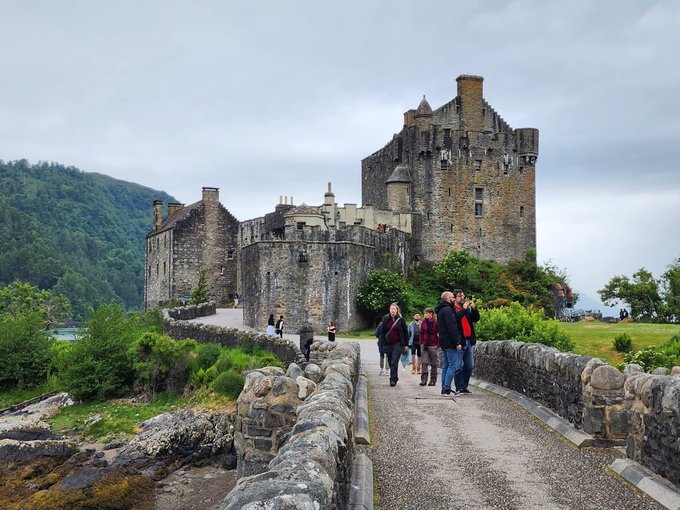
The last day was mostly dedicated tothe drive back to Edinburgh, but we did stop at Eilean Donan Castle, and you could cross to the island for £3, or you could go in for another £10 or so, so I just walked the grounds.  It was rainy and cold and gray—perfect weather in my opinion for poking around castle grounds and for imagining what it was like in its heyday. I suppose, that’s the kind of thing I—and everyone else—do whenever visiting Scottish castles—try to imagine what these behemoths were like when they first became inhabited.  And to wonder at the people who still own them and live there still. After a break for lunch in Loch Ness, and a stop to see some heilan coos at Taste of Perthshire, we made our way home.

Harbor at Portree, Isle of Skye

Harbor at Portree

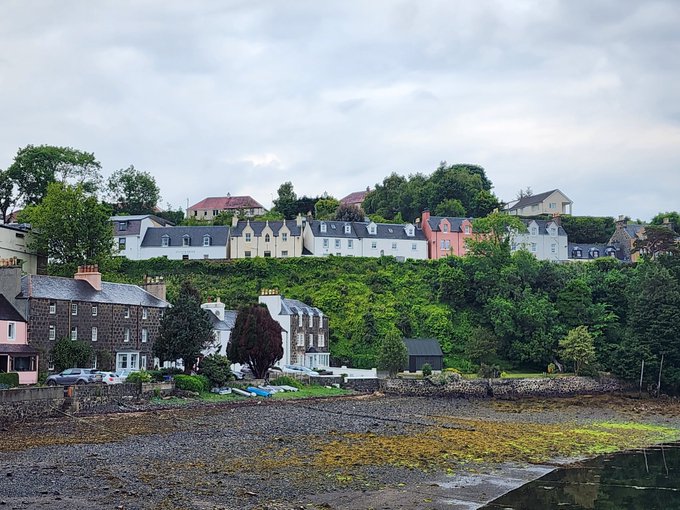
I liked the Isle of Skye but it’s fairly touristy and crowded—lots of shops which were closed by the time we got back to our respective hotels. The second night I stayed in Portree, I went to a different chippy shop for dinner (because I hadn’t made reservations anywhere and so there was no going to any of the fancy restaurants), and they were on a 40 minute wait (which I waited). But the town itself is pretty, with its brightly painted buildings surrounding the harbor, and lots of birds and boats wherever you look. I had always wanted to go to the Hebrides, and feel like the Isle of Skye is a good introduction to them.

Other photos

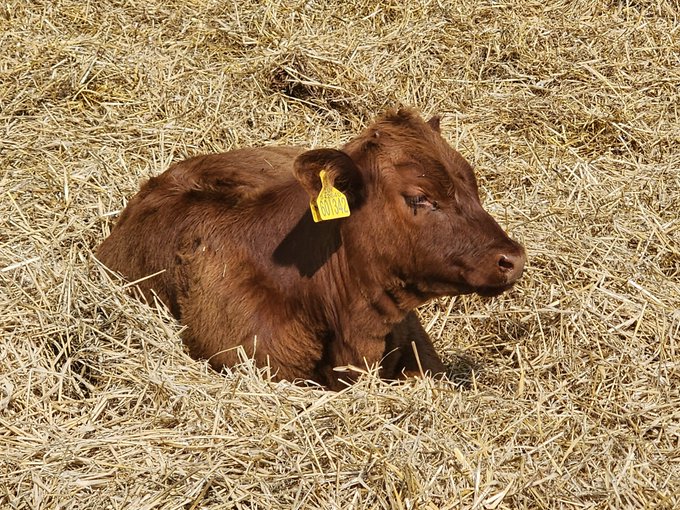
Baby Heilan coo

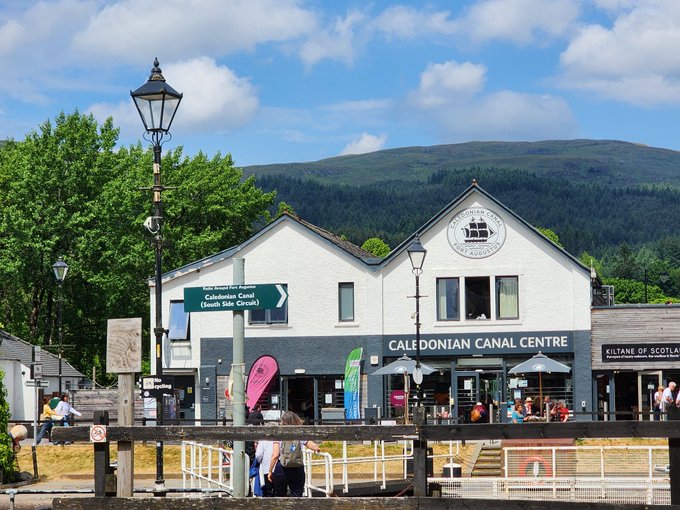
The canal that leads into Loch Ness

Heilin coo

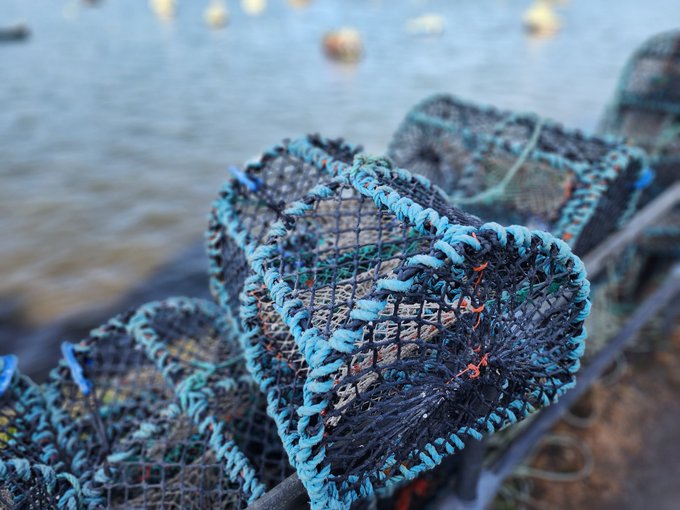
A lobster creel in Portree Harbor… I love the way the picture came out

A little bridge with Loch Ness in the background

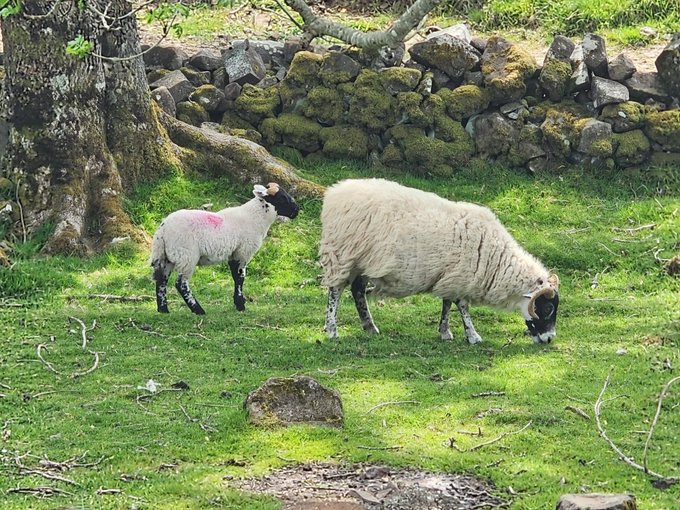
Some friendly sheep

The Fairy Glen

Eilean Donan

Flowers at Dunvegan

Eilean Donan Castle

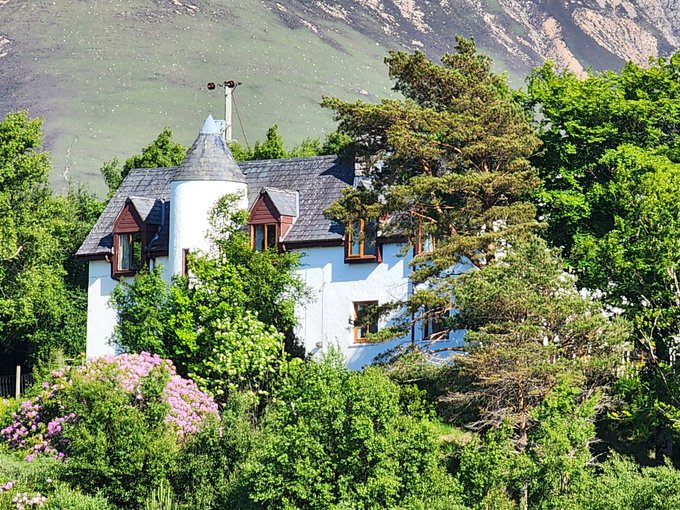
A house at Red Cuillin

Fairy Glen

Sheep at Fairy Glen

Loch Ness & the Highlands, 2.0

I thought taking a two-day tour to Loch Ness and the Highlands would prove to be twice as good as last week’s one-day tour, but I wasn’t as impressed with the tour this time.  Don’t mistake me, I loved seeing both sights again, but the tour itself was lacking.  For one thing the tour guide had the personality of a flaccid noodle; whereas the other tours I’ve taken the guides have been chock full of stories and history and chatter, this guy was sparing to the point of laconic in his speech.  For another he didn’t seem to have a real itinerary, which offended me.  He kept asking the tour group what we wanted to do.  (I was like, dude, this is your country—you show us what we should see.)

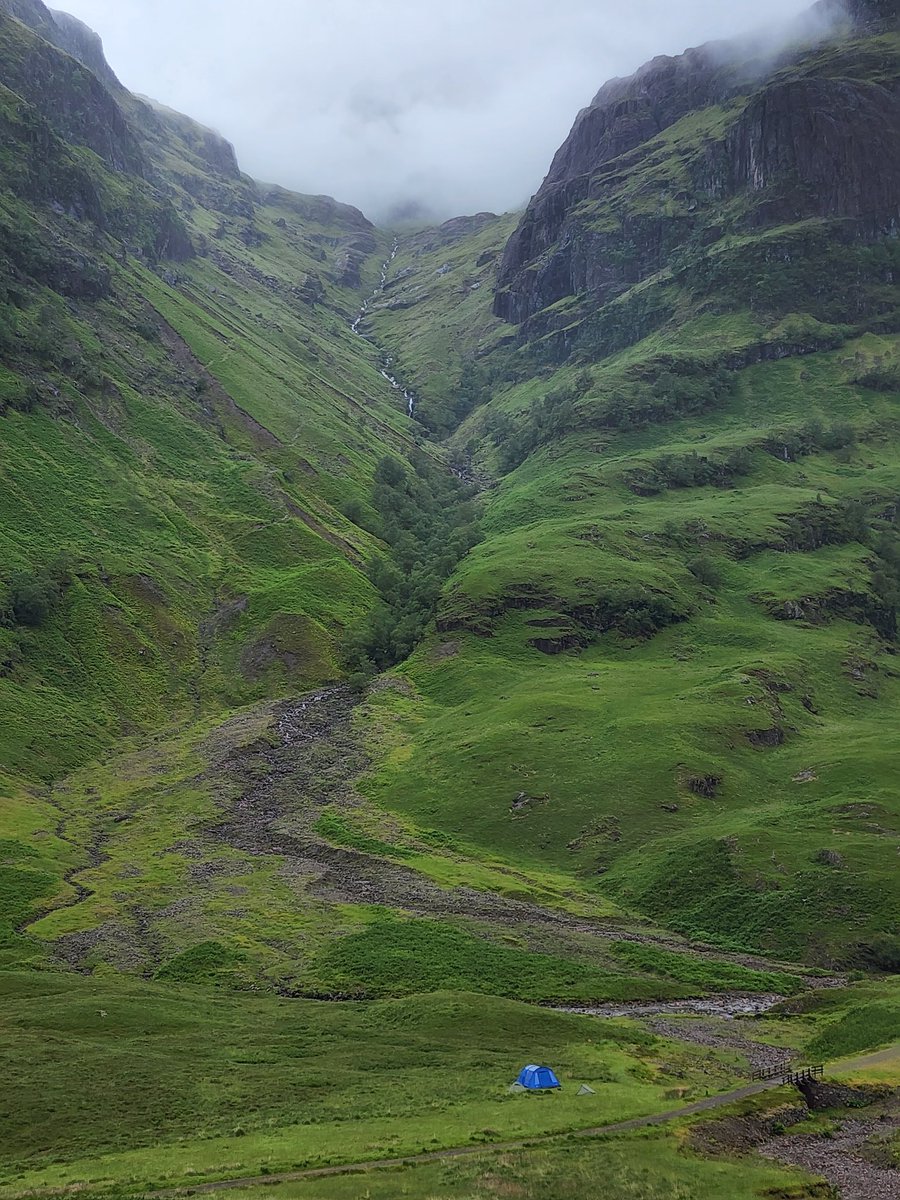
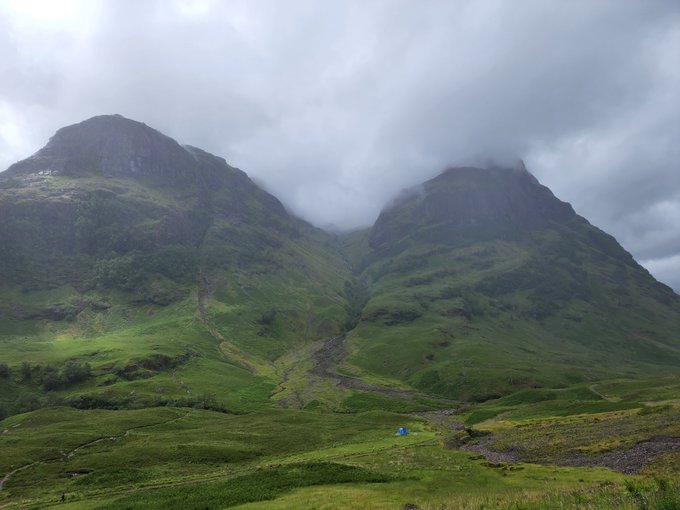
A burn (little creek) in the Three Sisters. That little blue thing at the bottom is a tent!


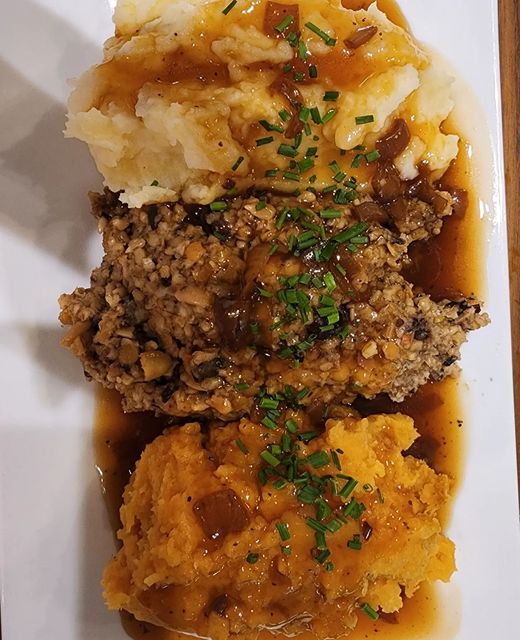
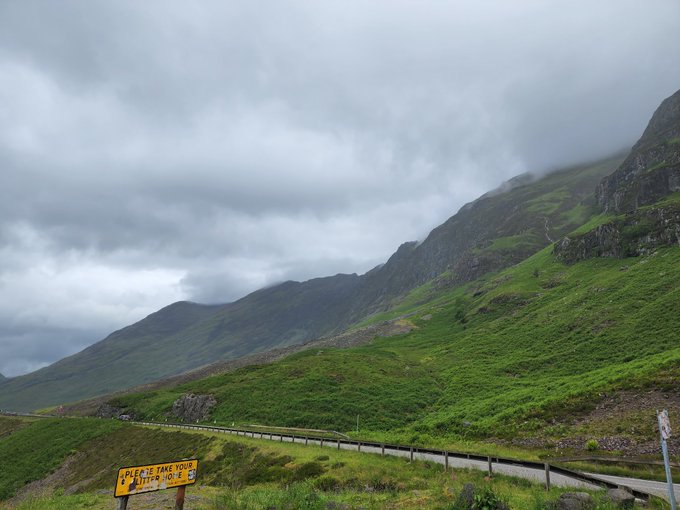
We hardly stopped our drive at all.  We did go to Loch Lubnaig and the Three Sisters in Glen Coe again, but there were other places we might have stopped even for just a few minutes to take pictures. We stopped in Ballachulish at the Clachaig Inn where I made a fine lunch of (vegetarian) haggis, tatties (potatoes), and neeps (turnips), but it was a surprisingly heavy meal that I couldn’t finish.

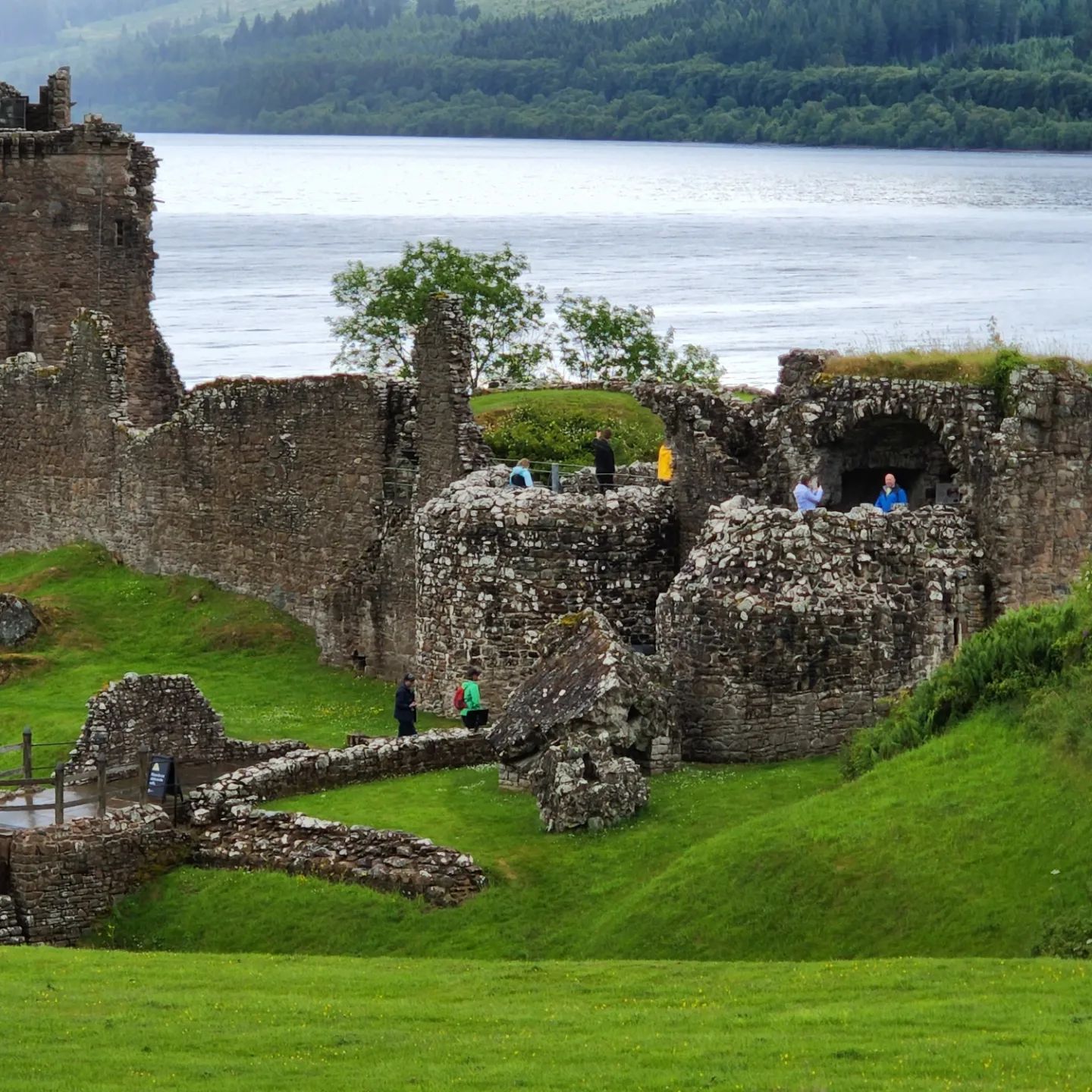
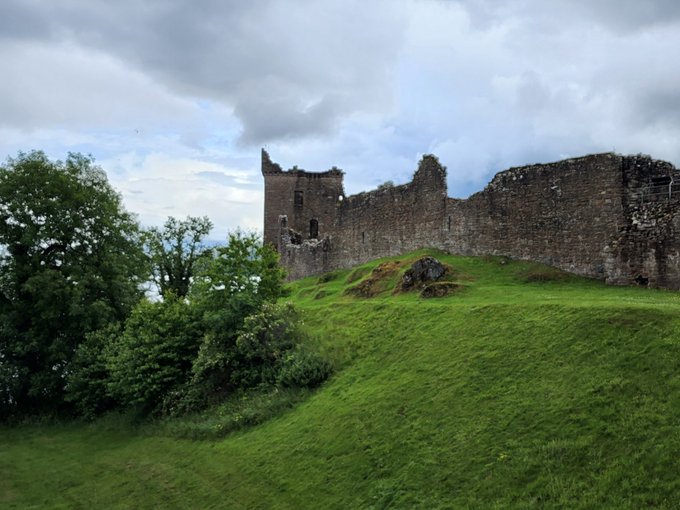
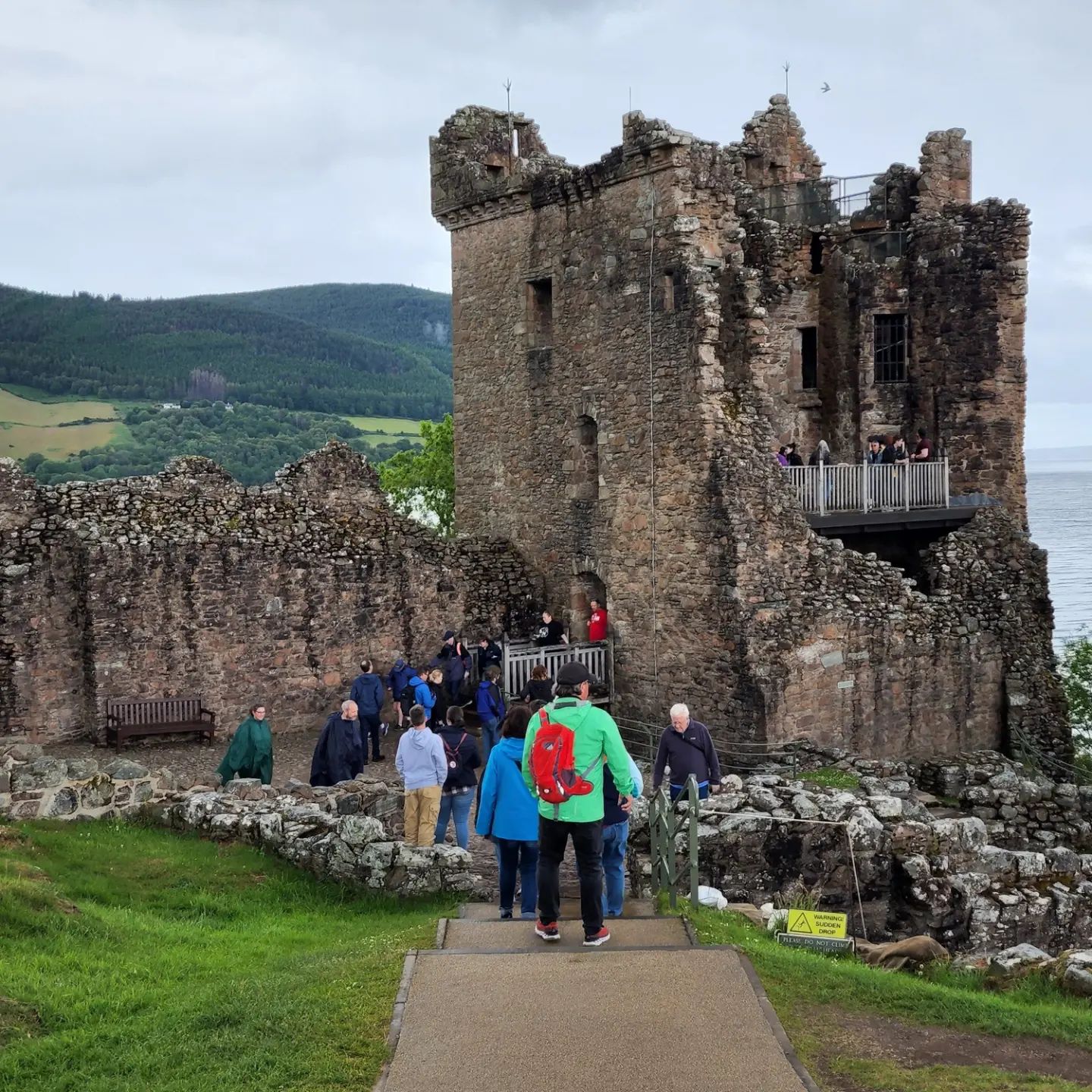
Urquhart Castle, with Loch Ness in the background

And then we drove to Urquhart Castle, a little south of Inverness.  I know I said, “Once you’ve seen one castle, you’ve seen them all,” and I kind of stand by that statement, but I love ruins, and this castle definitely qualified. There wasn’t much to see since it was half knocked down but ruins speak to me in a way that preserved castle buildings don’t.  And the setting, of course, was lovely, as the castle was on the banks of Loch Ness.

The other people in the tour decided to take a boat ride, but as I took a boat ride on Loch Ness last weekend, I didn’t want to repeat it.  And it was just as well.  It started pouring.  I felt so bad for the rest of them because they got soaked, while I enjoyed some extra time in the gift shop and café, perfectly dry.

“Lay on, Macduff, And damned be him that first cries ‘Hold! Enough!'” (Inverness Castle)


And then it was on to Inverness.  I didn’t see as much of Inverness as I wanted.  Once I got to my B-and-B, Eskdale Guest House, I was kind of super tired and just kind of conked out in my tiny single bed right next to the radiator.  In the morning, I saw a little bit more of the town, but I didn’t get to visit Inverness Castle.  I thought it was closed, because of the time we got to Inverness the night before (6 p.m.), but actually it’s not open to the public.  I was disappointed because I really wanted to see the castle where I thought MacBeth would have lived (although he was King from 1040-1057, and technically the first castle was put up in 1057, so he didn’t live there after all), but I still wanted to see it.  The current castle was put up in the 19th century, and it’s veneered with lovely red sandstone.  And it’s in great-looking condition, though there was orange plastic fence all around it because they are doing repairs.

Who dis? It me!

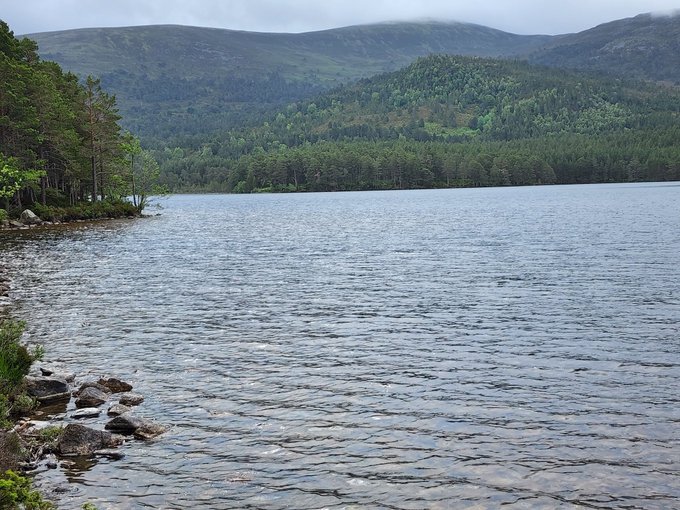
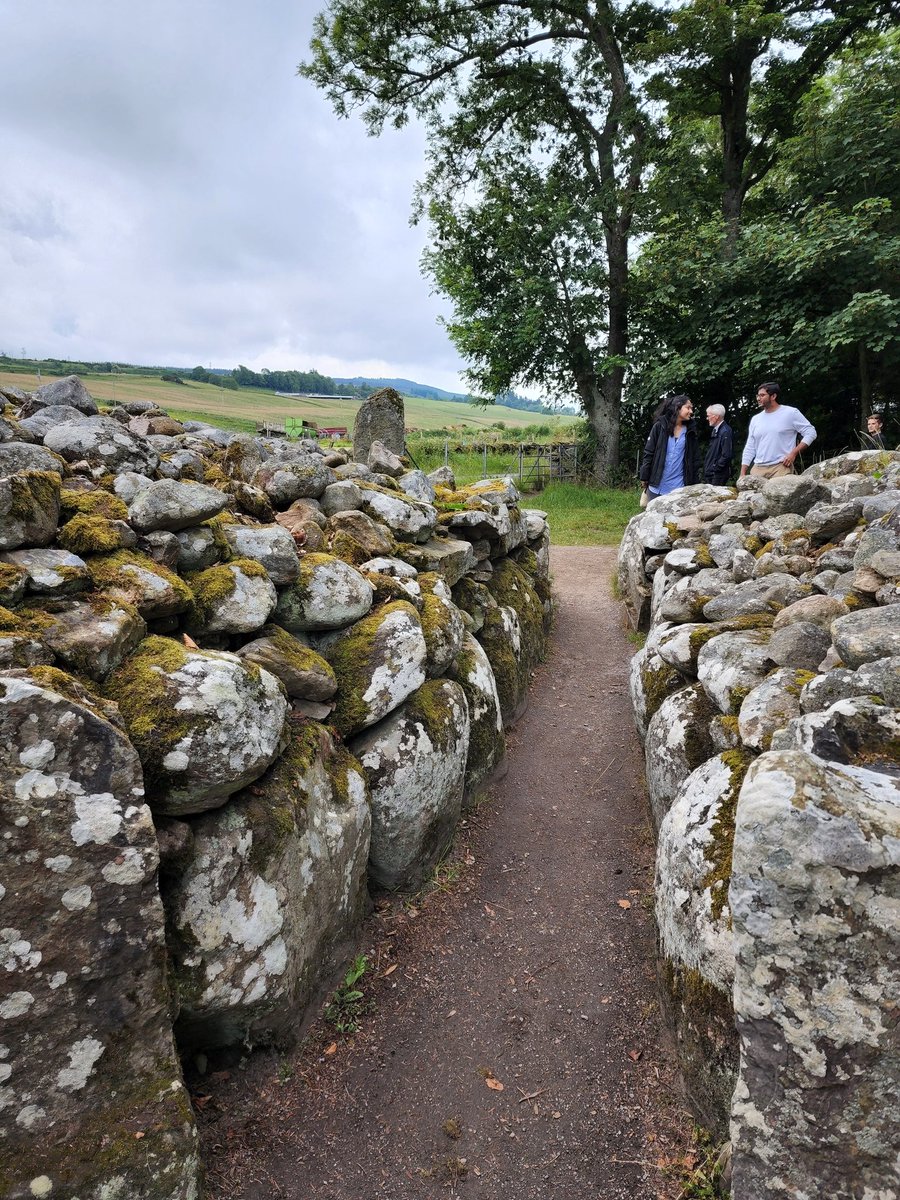
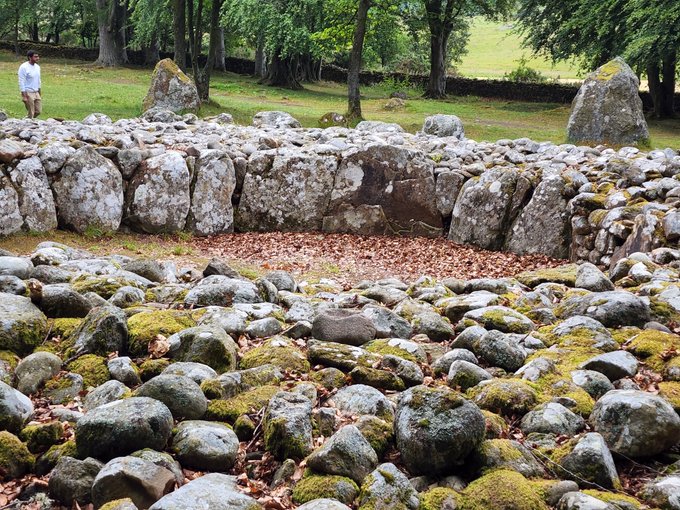
The trip home was not exciting.  We made several stops for walks-in-the woods, which, if you know me, wouldn’t be my first choice.  One stop was at Loch an Eilein, in  Rothiemurchus Woods, and this was a pretty little loch.  I took the path beside the loch, but wanted to get a good picture from a different vantage point than the pictures I took initially (which, let’s be honest, were mostly about the ducks), and of course, I stumbled over a root and went down like the proverbial ton of bricks, getting mud all over my jeans, tearing holes in my sneakers, and fouling up my knees and legs and arms something fierce.  It never fails. This is why I don’t go hiking.  (Because the woods always try to kill me.)  And then, to add insult to literal injury, in trying to get back up, I fell again.  I was disgusted and filthy, and was glad to get back on the bus.  Then we stopped at another walk by the Tay River (?) and the river was quite pretty, but I didn’t walk too far because my ankle was throbbing and I knew that I was tempting fate to go into the woods a second time. So I found a picnic bench and watched the water.  We also stopped at the scenic Cava Cairns, big piles of stones used for burial and other religious purposes.  Actually, I kind of dug them.  One of the other people on the tour took my picture at the center of one.

The best part of the trip back was stopping at Dalwhinnie distillery, where I tried a flight of whiskies which were paired with festive chocolate truffles.  I didn’t have my camera on me, or I would have taken a picture of the drinks, but of the three of them, the 15-year, the Winter something brew, and the Distiller’s choice, I was partial to the 15-year.  It was raining and cold then too, so the whisky poured a little fire into our bellies.  Of course, the last thing I needed was three “wee drams” on an empty stomach, but fortunately I wasn’t driving.  Or required to stand upright for any length of time. 😉

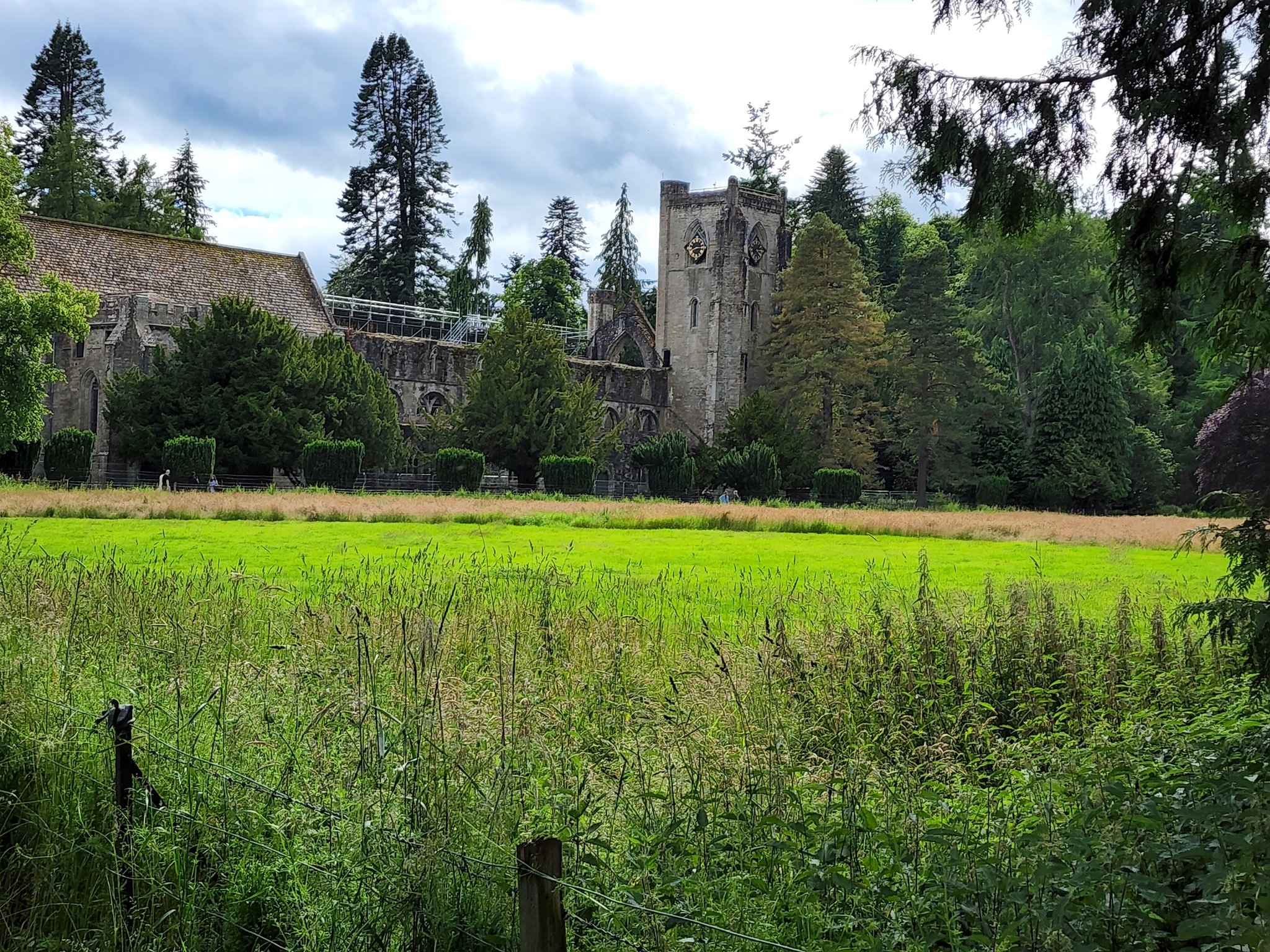
A church missing its roof in Dunkeld

Afterwards, we stopped for lunch at Pitlochry and I ate fish and chips at McKay’s Hotel. The haddock was perfectly fried and crispy though it needed salt. I wish we had longer than an hour because Pitlochry’s High Street was full of cute little shops I would have liked to look in.  I might have considered skipping lunch, but the whisky was strong with this one, and I needed to offset the booze.  And then we stopped in one more place (Dunkeld) for another walk, where I saw a lovely church in the process of being restored.

In writing this down, I guess we stopped a quite a few places after all, more than I initally remembered, but because the tour guide didn’t really bother telling us about anything, it seemed like kind of a wasted few days.  I guess I’d have liked fewer walks in the woods, and more actual stops at things to see.  But everyone else seemed to enjoy themselves so perhaps my attitude was crappy.  And maybe I expected too much—but after the last few tours, I guess I was a little bit spoiled.

I still have a few more weekend tours planned, so I’m hoping they will be a little more energizing and interesting than this weekend’s.  But it was good to get back to the Highlands.  I just kept thinking how great it would be to live there part of the year (winter). I could so see myself in a little semi-restored farm house, with a sheep out back and a cat at my feet, where all I would do is drink hot tea, eat fresh scones, and write, write, write my heart out.  Maybe some day.

Hope you enjoy this new batch of pics!

Urquhart Castle

Lunch at Clachaig Inn–tatties, haggis, and neeps covered in a tasty brown gravy

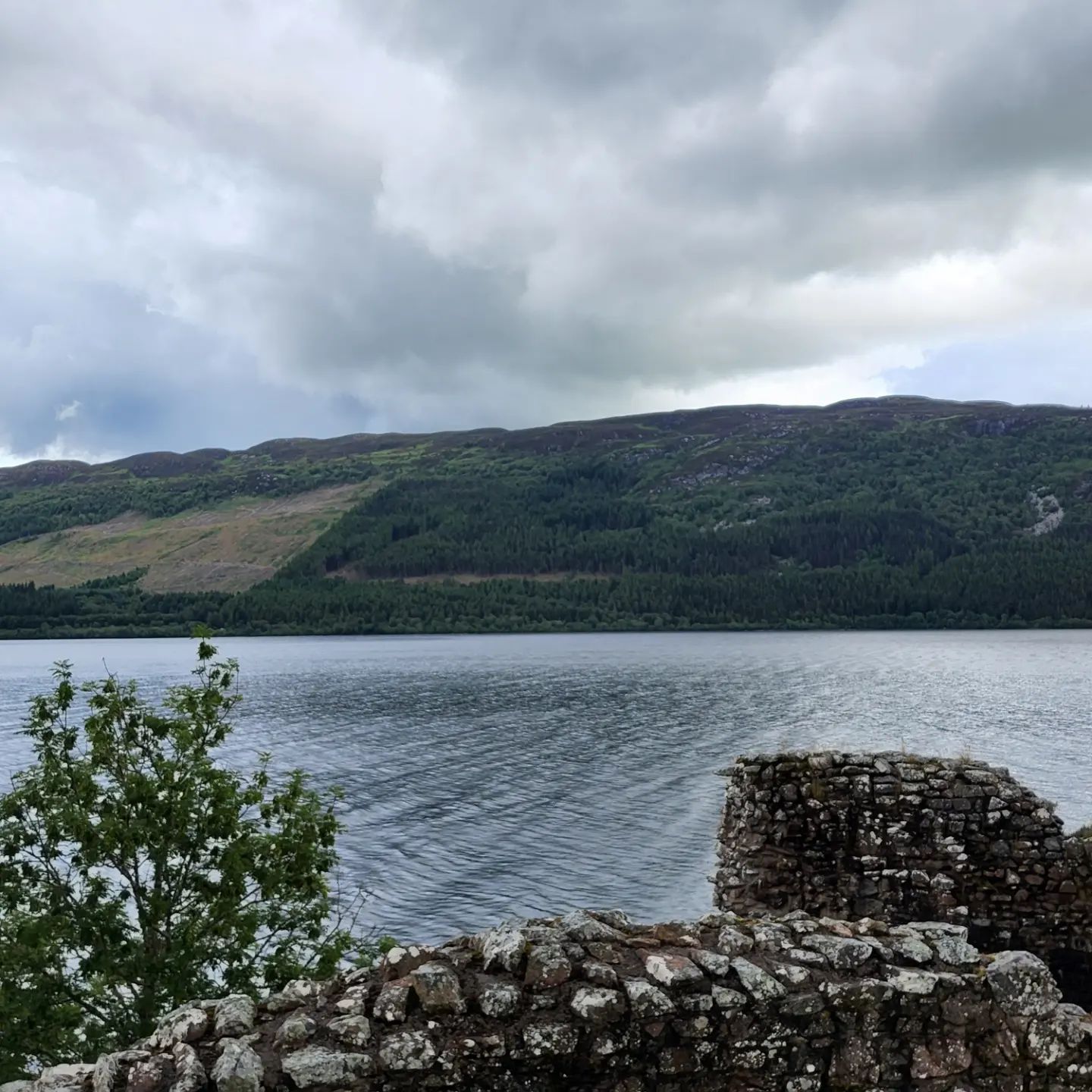
Loch Ness, from Urquhart Castle

Urquhart Castle

Urquhart Castle keep

A view of Loch Ness from Urquhart Castle. In the middle left, you can see signs of tree farming. For every tree cut, Scotland plants 2 more.

A friendly gull

A lovely field at Dunkeld

A train bridge at the Hermitage, near the Tay (?) river

The train bridge from a further vantage point

Loch an Eilein… For this view, I injured myself. You’re welcome.

Mama duck at Loch an Eilein (Rothiemurchus Woods)

As soon as I sat down, these ducks came out of the water to see if I had anything to feed them. Sadly, I did not. (Loch an Eilein)

View from the center of a cairn in Cava Cairns

Ring Cairn, at Cava Cairns

Another view of Urquhart Castle

Another burn in the Highlands

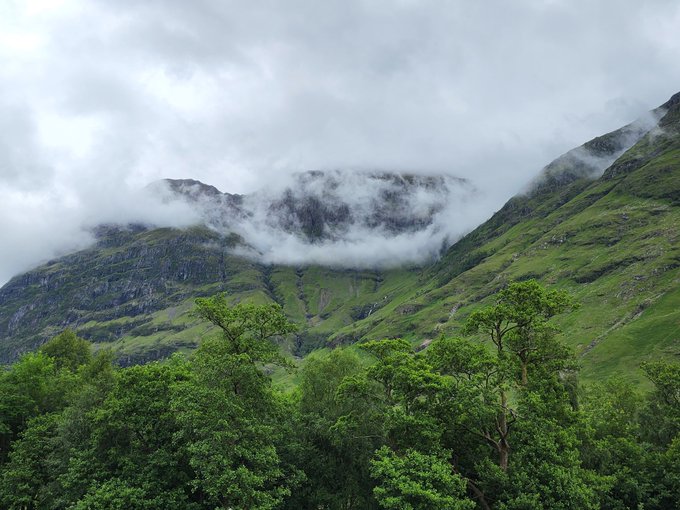
Low hanging clouds in the Highlands (Ballachulish)

Inside of the Clachaig Inn, where I tried veggie haggis

Three Sisters (well, two of them, at any rate)

Another two of Three Sisters

Glen Coe, looking north

A sunny day at Loch Lubnaig

Glen Coe Mountain (from the back)

Glen Coe Mountain, with even more clouds

A view of Edinburgh Castle from Princes Street on the ride out of town

The Highlands & Loch Ness

Loch Lubnaig

Loch Lubnaig

I felt the call of the Highlands this weekend—and suddenly I know why so many medieval romance novels are set there.  They are mystical and majestic, full of history, but more than that, they are primal.  They spoke to me on a profound level; as soon as I stepped foot in the mountains, I felt something—a pull from the Earth I’ve not felt before.  Of course they were already quite beautiful from what I saw on the drive, but once we stopped at Loch Lubnaig—and I touched the freezing water—some fairy magic was transferred. I got the Highlands.  I imagined stories I could tell; I saw characters coalesce in my mind almost instantly.  It felt like a writer’s high.

We stopped a number of places—Glen Coe (the “valley of tears”), where members of the Clan MacDonald defied the King and refused to pledge loyalty so they were all slain in their beds; the Three Sisters, a trinity of mountains also in Glen Coe (but a different part), that were wreathed in mist and rain; and of course Loch Ness.  I can’t be sure, but I saw a shadow which might have been Nessie.

Loch Ness

I loved Loch Ness.  I took a boat tour, and learned some fascinating facts about it, among which there is more fresh water in Loch Ness than all of the lakes in the Lake District in England, and the loch is so big you could fit all the people in the world in it.  (I don’t know how that would work, but I’ll take the tour guide’s word for it.)  Also, the loch is very deep and inky dark, so dark that you can’t see anything except by sonar after 25 meters, because there’s so much black peat in the water light can’t penetrate.  It’s basically like the loch version of a black hole. It was bracing and freezing to be on the water, and the wind actually buffeted people sideways on the top (open) deck of the ship.  I could have cheerfully stayed on the ship longer though, if that were an option, despite the wind and cold, because it felt right to be there—part of that magic I mentioned earlier.  Of all the things in Scotland I wanted to see, Loch Ness and the Highlands were the “Scotland-est.” (If you were to ask me before I left Atlanta what I think of when I think of Scotland, I’d answer “Loch Ness and the Highlands.”)  I’d always imagined going these places, and the reality did not disappoint.  I’m really glad I accidentally booked myself on another bus tour to see these places, because one time is not enough.

Entrance to Edinburgh Castle

Yesterday I finally dragged myself to Edinburgh Castle. I say dragged because I really didn’t want to go—if you’ve seen one castle, you’ve seen them all, right?—but also I had to literally drag myself up this huge stairway—Peter Somebody’s Staircase—because I took a wrong turn down Victoria Street and landed at the foot of the castle, instead of just walking the Royal Mile like I meant to from the bus stop.  Ah well.  My

calves are still sending me hate mail.

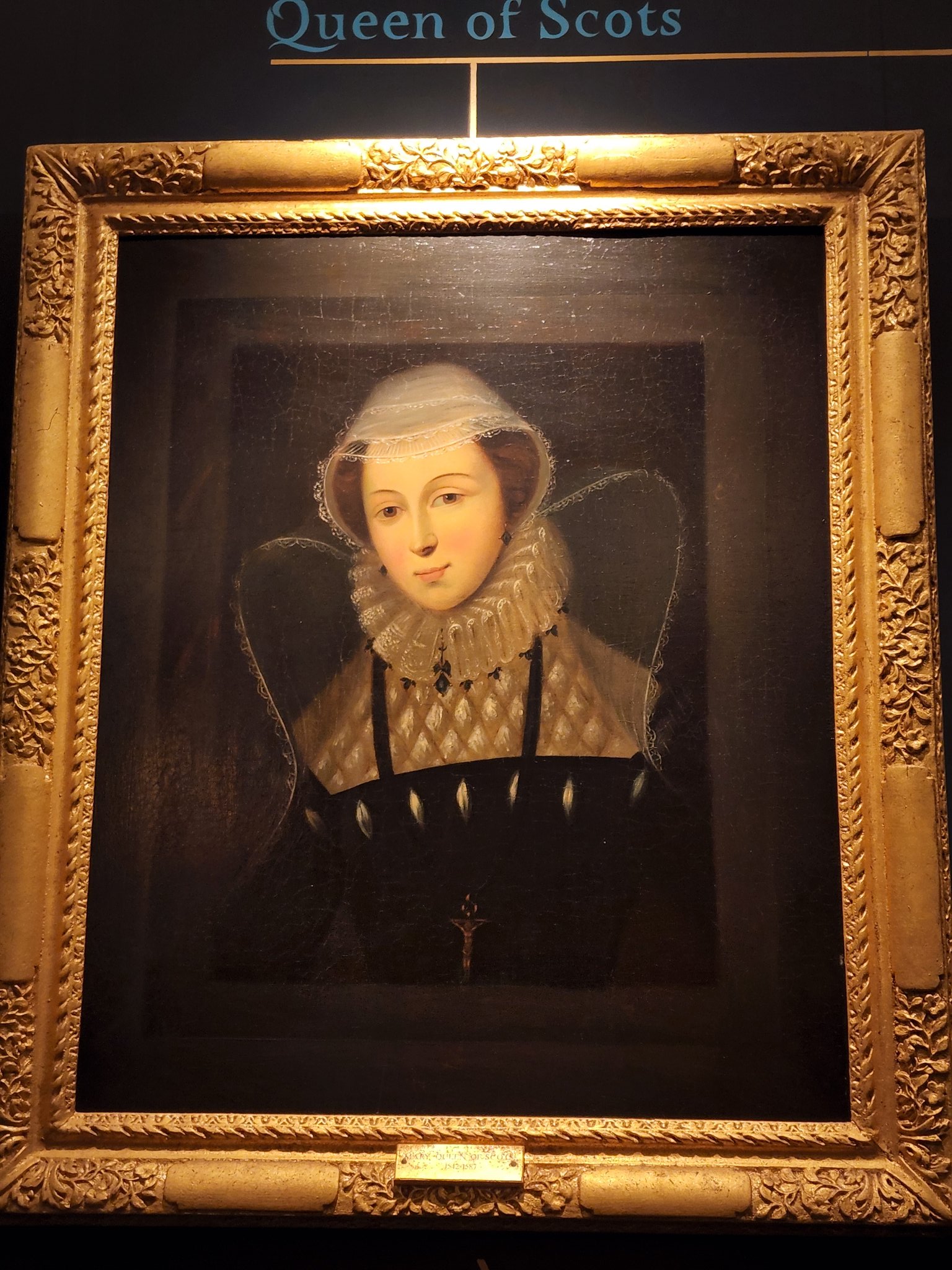
Mary Queen of Scotts

The castle was windy and cold—my favorite weather, especially in summer—and amazingly high above the city.  You could see all the way past the North Sea.  I liked seeing the Crown Jewels (a crown and a scepter, as well as the Stone of Scone [pronounced “skuun”] also known as the Stone of Destiny, the stone upon which monarchs are crowned which was stolen from Scotland by England’s King Edward in 1296).  Unfortunately, we weren’t allowed to take pictures of the jewels—I don’t know why—because they were kind of cool, though maybe not as ornate as I had expected.  Mary Queen of Scots was born at Edinburgh Castle, so after looking at the Crown Jewels, you got to walk through her rooms.  There was a room which had Mary’s family tree on it…it reminded me kind of like Sirius Black’s family tree mural from Harry Potter, adorned with beautiful and elegant portraits from her family.  You also could look into the birthing room, which frankly was literally the size of a closet.  There was also a lovely and ornate tapestry (and/or bedspread) she had made, but I didn’t get a picture of it because there were too many people in front of it and it was a dark room.  But the needlework impressed me.

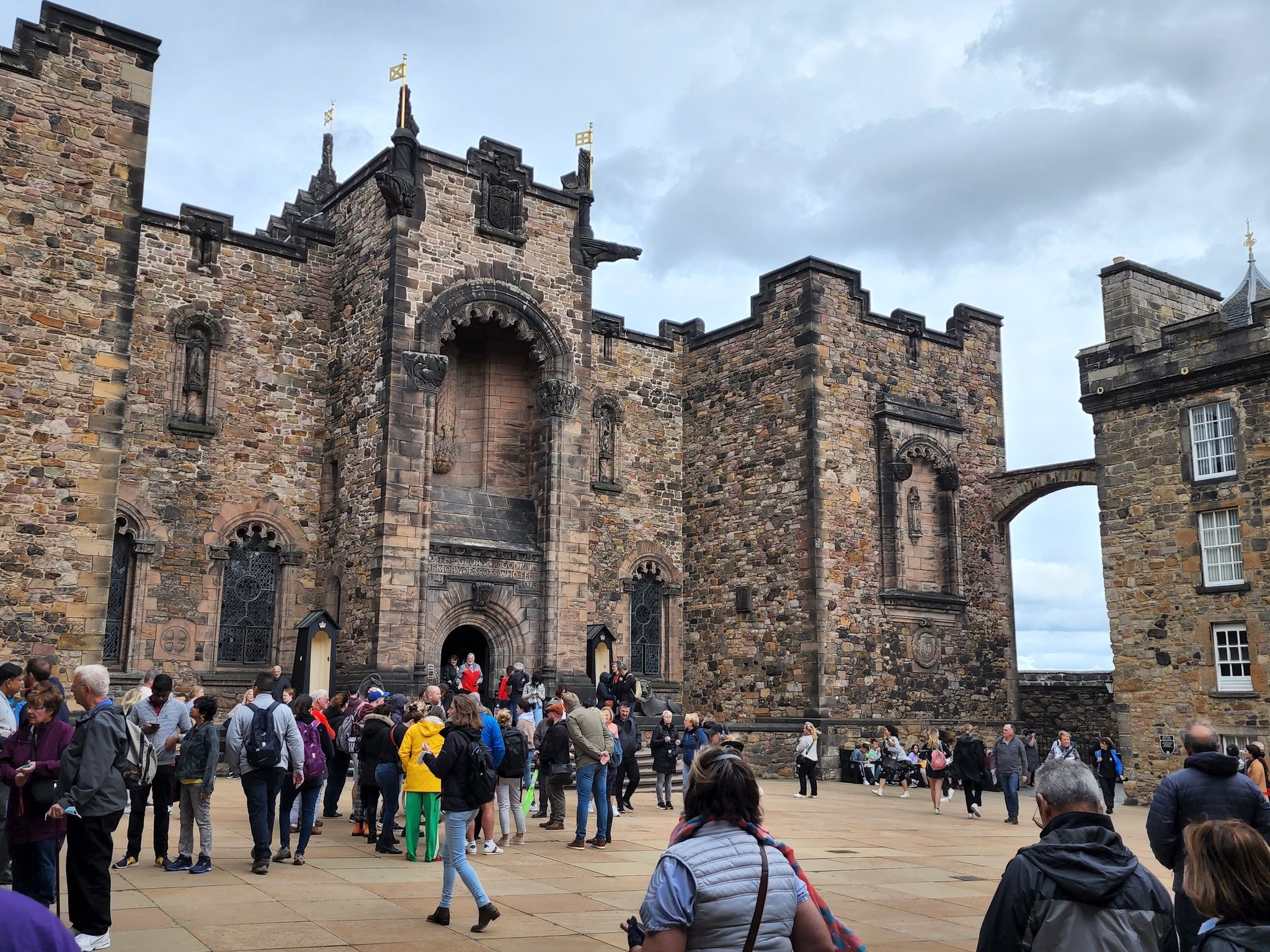
Scottish National War Memorial

I also scoped out the Scottish National War Memorial which was dedicated to the memory of the soldiers who died in WWI.  It looked like it should have been a chapel, not a war memorial.  Maybe it had been at some point?  But the sign said it was made in 1927 for the memorial’s purpose, which kind of amazes me because it looks like it was built part of the castle, if not originally, certainly more than 95 years ago.  I also peered in at the Great Hall, and perused the History of War Museum, and I can categorically state the only thing that interested me about the History of War was seeing the medals from the uniforms the men wore.  Some of it looks like jewelry.  And I love me some jewelry.  But the history of war leaves me cold—and with the exception of a brief nod to women as nurses, women’s role in the war(s) was ignored.  Overall, I’m not sorry I went to Edinburgh Castle, but between seeing it and Sterling Castle last week, I’m about castled out.  I appreciate their historical qualities, but they are surprisingly unromantic buildings (yes, yes, I know they are built for military purposes, not fairy tales), and seeing them in real life demystifies them in a sad kind of way.
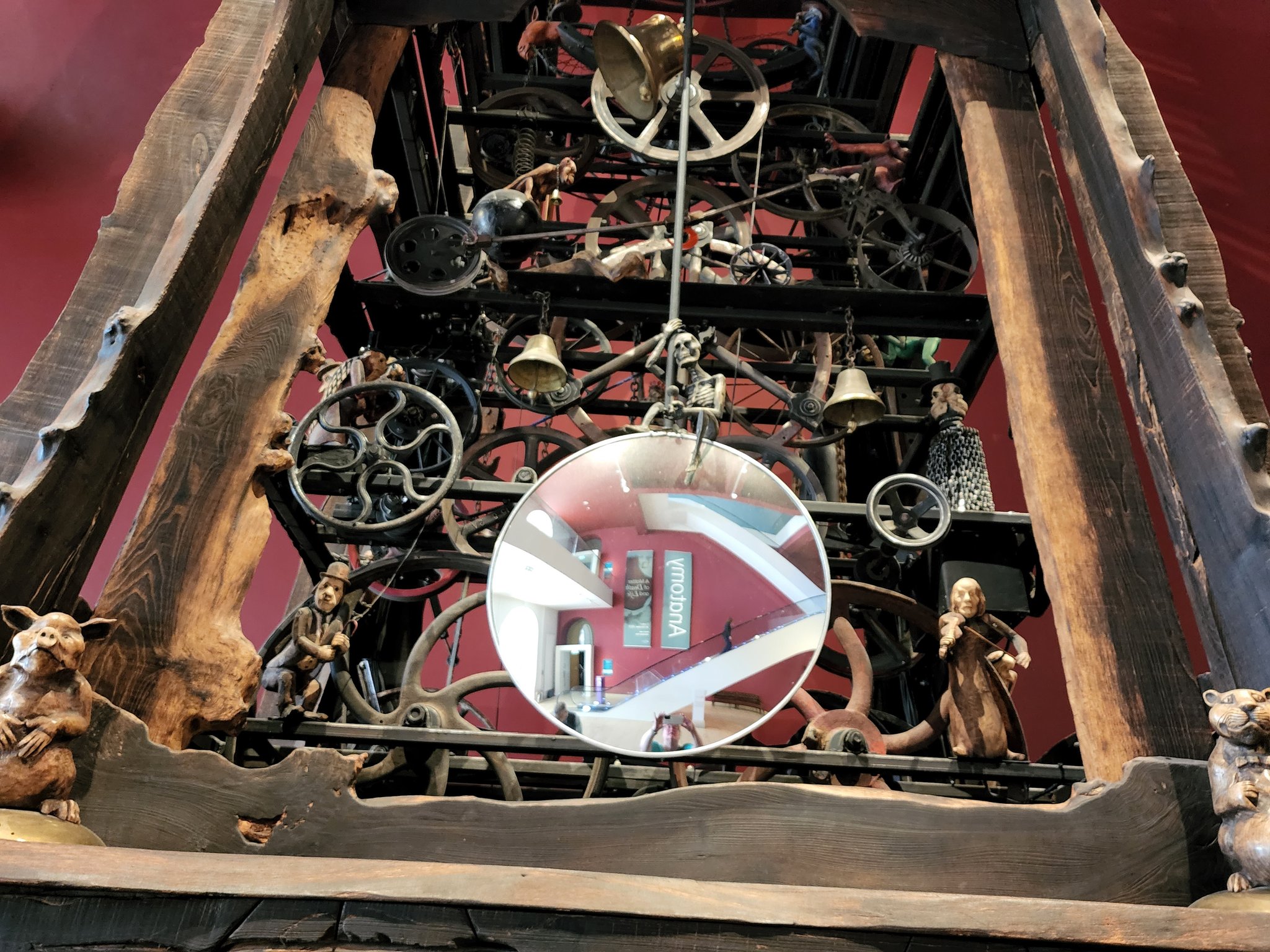
Millennium Clock Tower, National Museum

Backtracking a little bit, Friday I went back to the National Museum of Scotland.  I had intended on going to the Royal Scottish Academy of Art and Architecture instead, but when I got there, the guard told me it was closed because it wouldn’t have an exhibit until the end of July.  I was glad I went back to the National Museum—I got to see things I missed and enjoyed my leisurely walk through the collections.  Something I hadn’t seen the previous time I visited was the two-story Millennium Clock Tower.  If I had been on the first floor, I think I would have filmed it going through its various songs and chimes at 1 p.m., but I missed some of it and wasn’t at a good spot to film anyway.  It’s a wonderful clock though, with four levels—a Crypt, a Nave, a Belfry, and a Spire, to correspond to the way a medieval cathedral is constructed.  Apparently, it was built in 1999—but just like the War Memorial, it looks older than it is.  I really enjoyed looking at it, and seeing various parts lighting up as it rang.
Another thing I saw that was very interesting was their extinction/climate change exhibit.  You would never see such a indictment of things like oil and pollution in a governmentally-supported museum in the States.  Oh, it was critical of human destruction of the planet—and so bald about it.  I mean the exhibit just points out all over the place how human selfishness causes animal extinction events and how we are probably going to end up with a planet that is beyond saving.  Can you imagine if this were the Smithsonian?  Republicans would go bananas.  But I loved it.  It’s a devastating exhibit, of course, but I really appreciated its in-your-face predictions of climate doom. We need truth like that.

One thing doing so much on the weekends helps with is keeping my loneliness issues at bay—you can’t be too lonely when you’re tramping all over the wilds of Scotland as well as the less-wilds of the city of Edinburgh.  So I think I’m doing a little bit better with feeling disconnected and discouraged than I was earlier, which is a good thing, especially since I still have several more weeks to go before I return home.  I still miss folks, and the days are still too long.  But I’m coping.

Hope you like this latest batch of pictures.

A church in front of Edinburgh Castle. At the lower right you can just see a Fish and Chips seller.

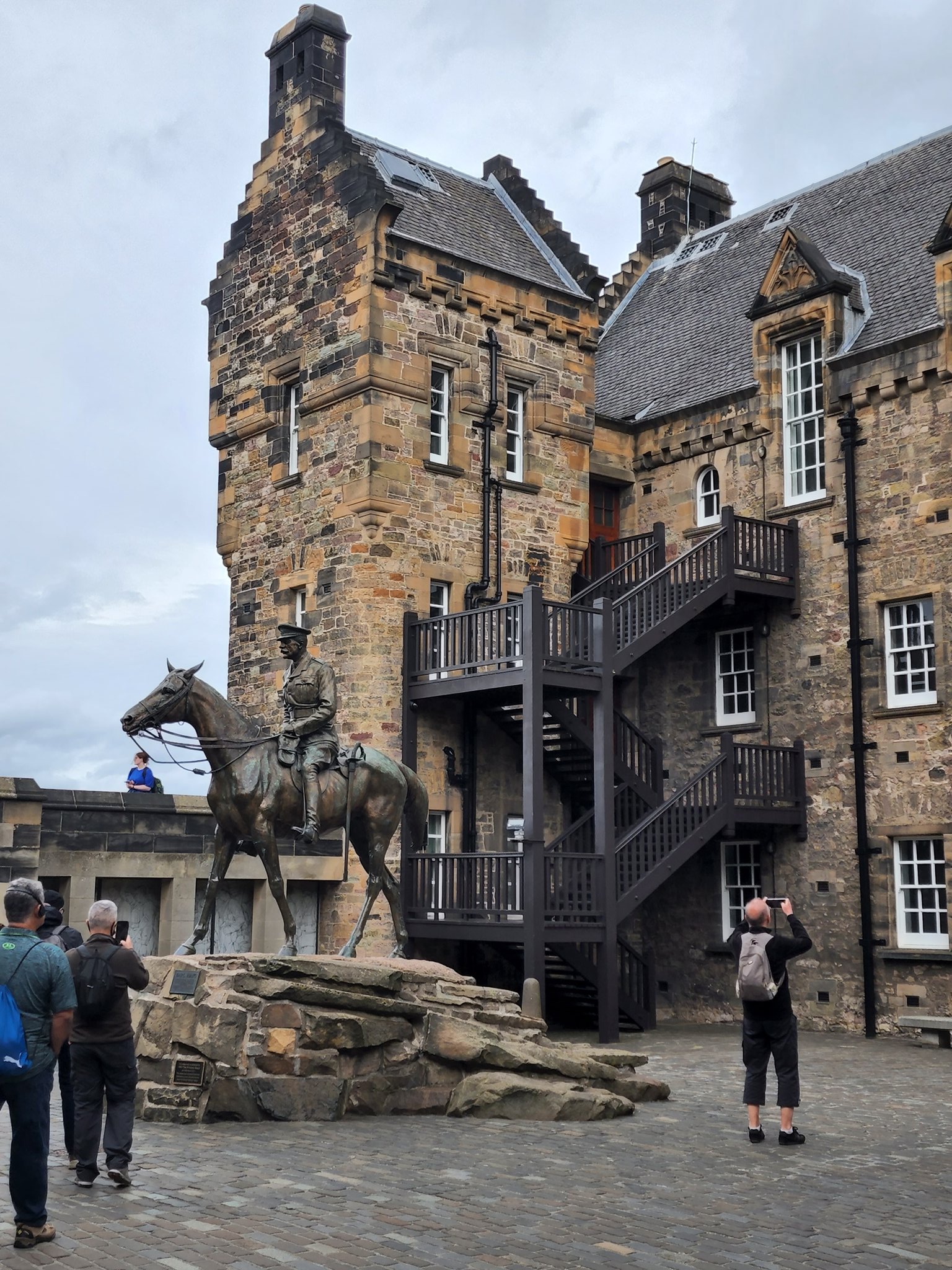
Field Marshal Earl Haig statue

View from the castle

I love the clouds in this picture. What you can’t see is just how steep this incline is.

The royal palace with clock tower

Upper ward courtyard

A handsome horse statue on the left side of the War Memorial

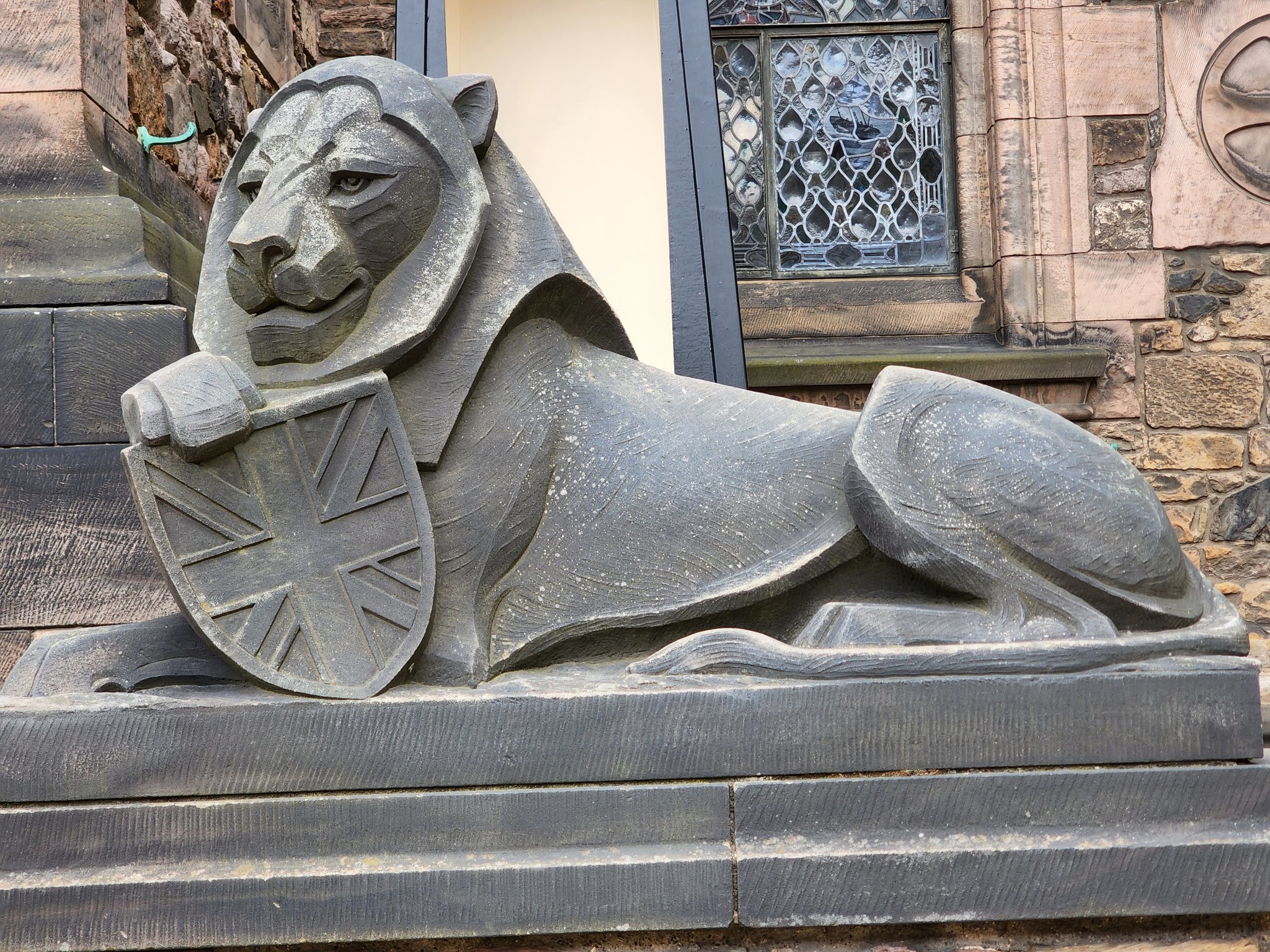
A debonair lion on the right side of the War Memorial

Ben Nevis, the highest point in Great Britain, with snow

The beautiful Highlands

This scratched off part of the hill is where Nessie apparently tried to escape the Loch but unfortunatly slipped back into the water because the hill is so steep.

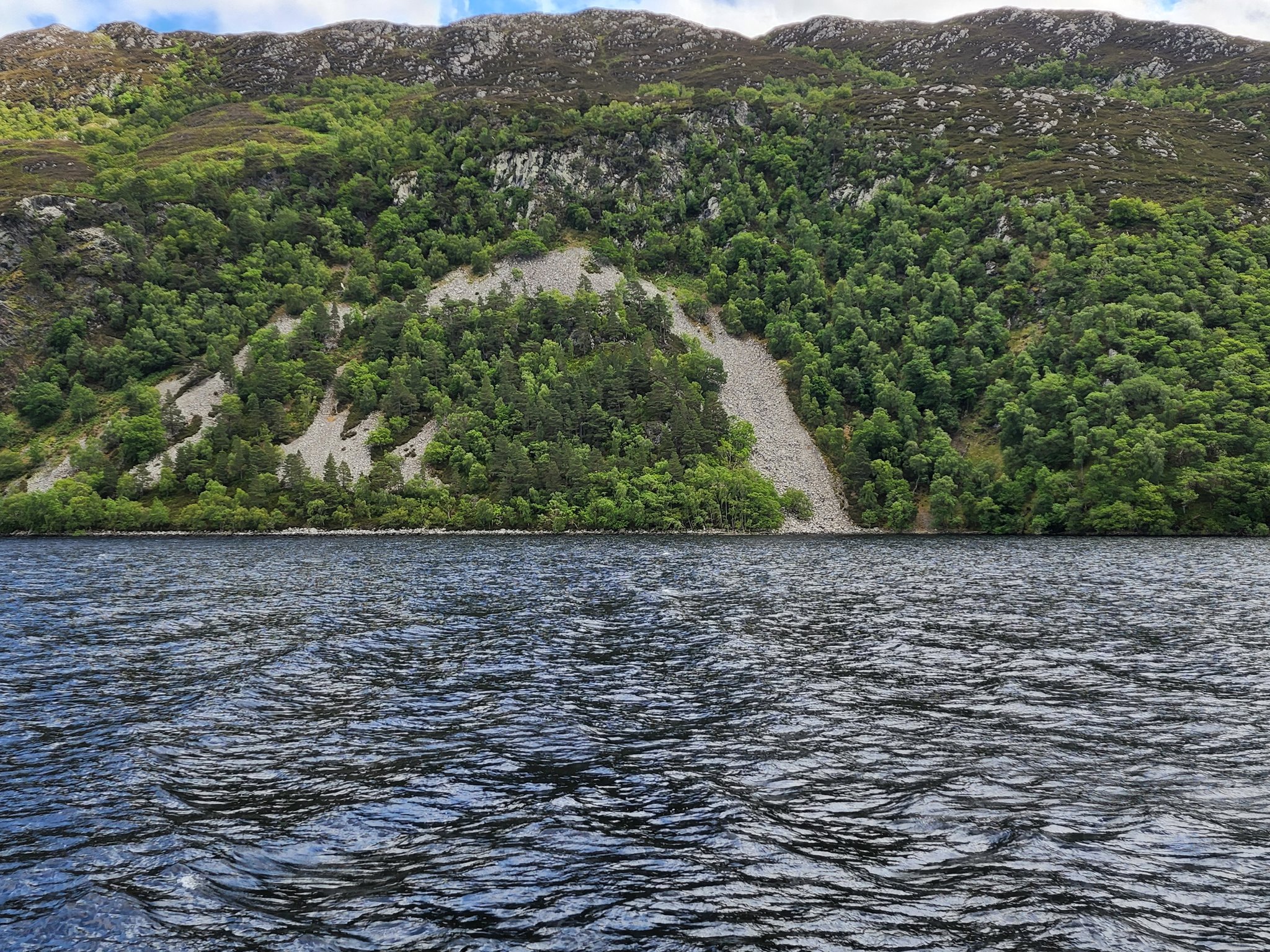
Loch Ness

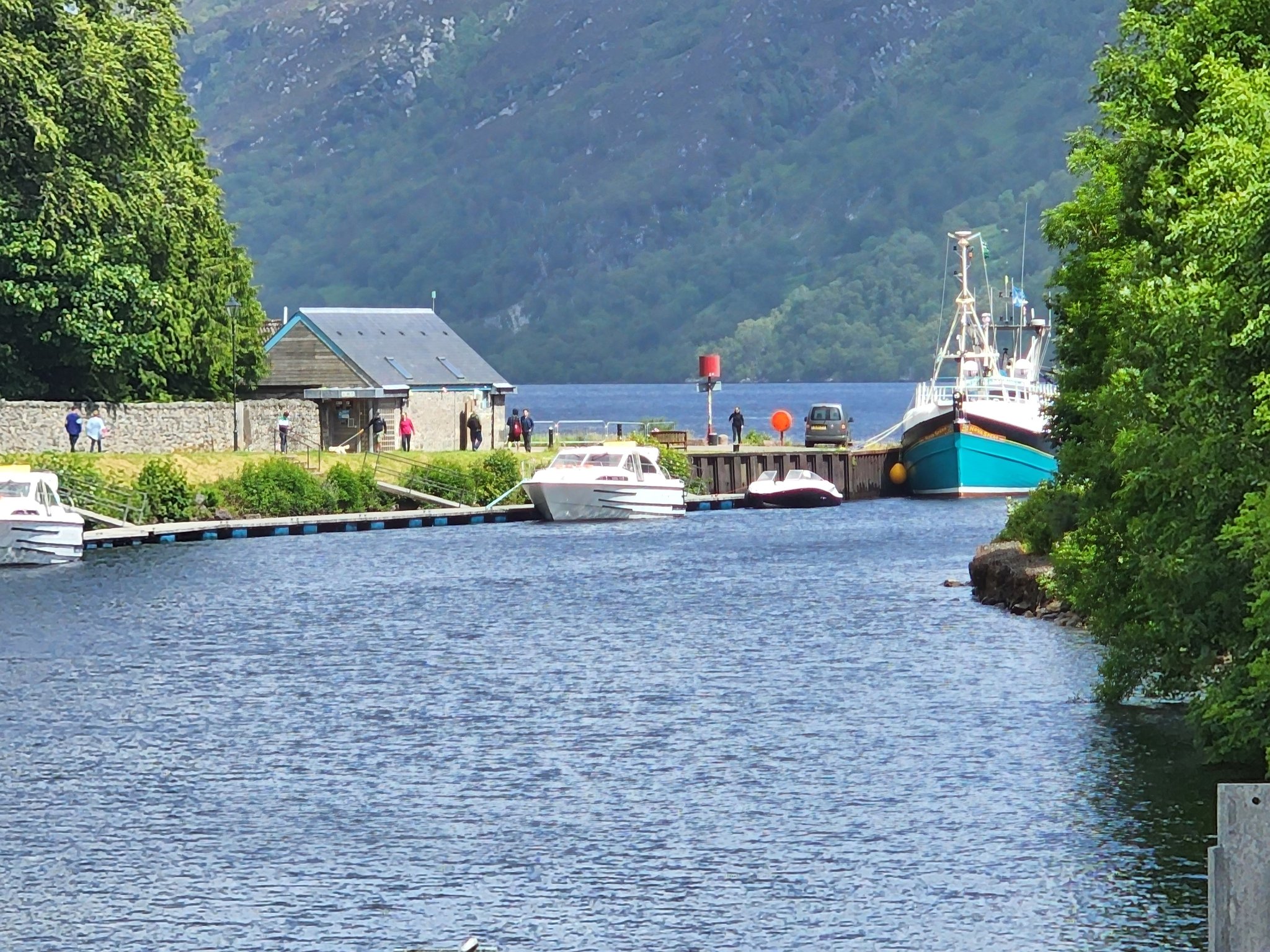
Loch Ness canal

Loch Ness (I think)

The Three Sisters, Glen Coe

Mountain in Glen Coe… the tour guide said “Geroff, and getcher Instagram pic.”

More Edinburgh Castle

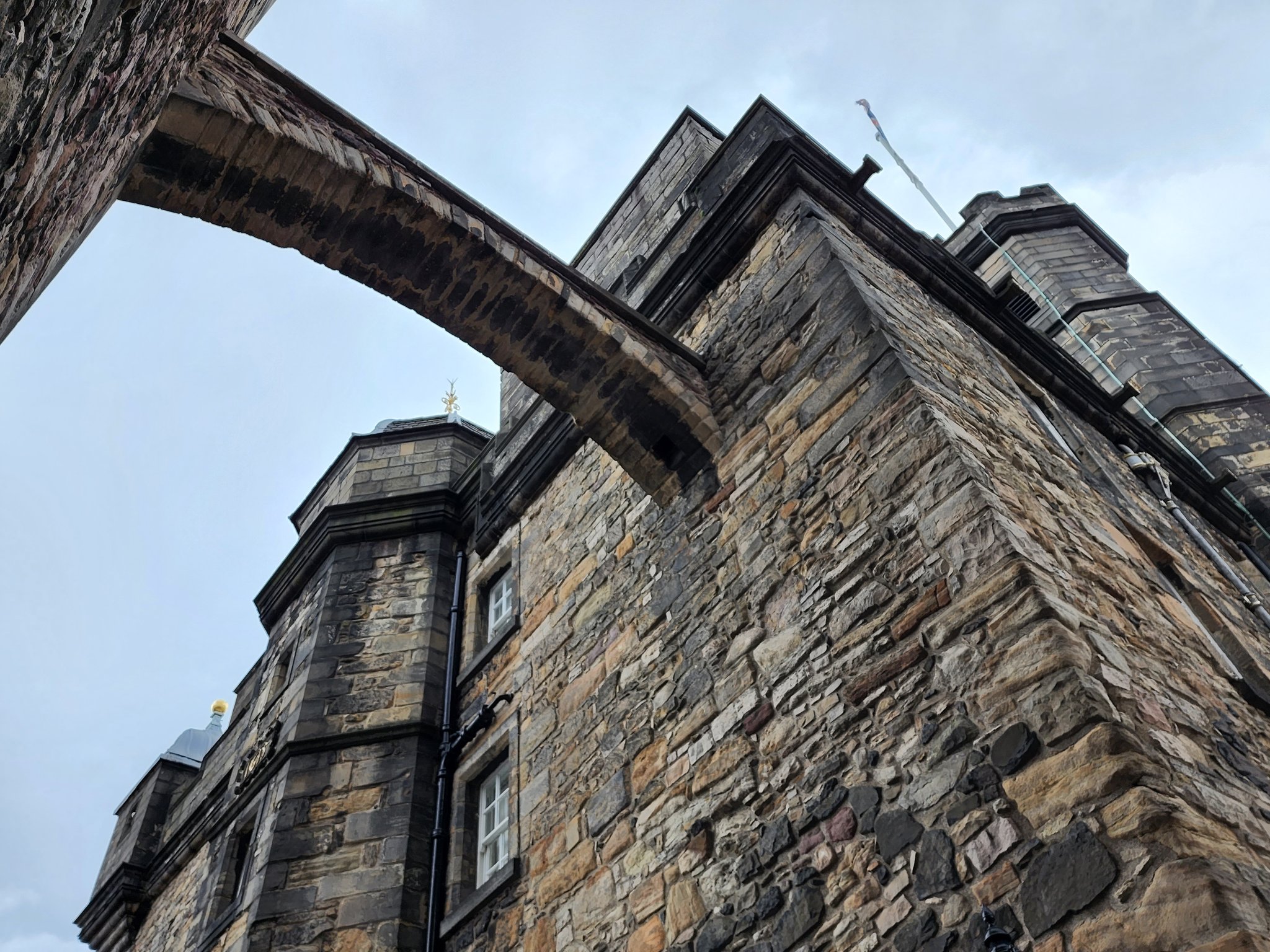
I like the angle I took this pic of the arch.

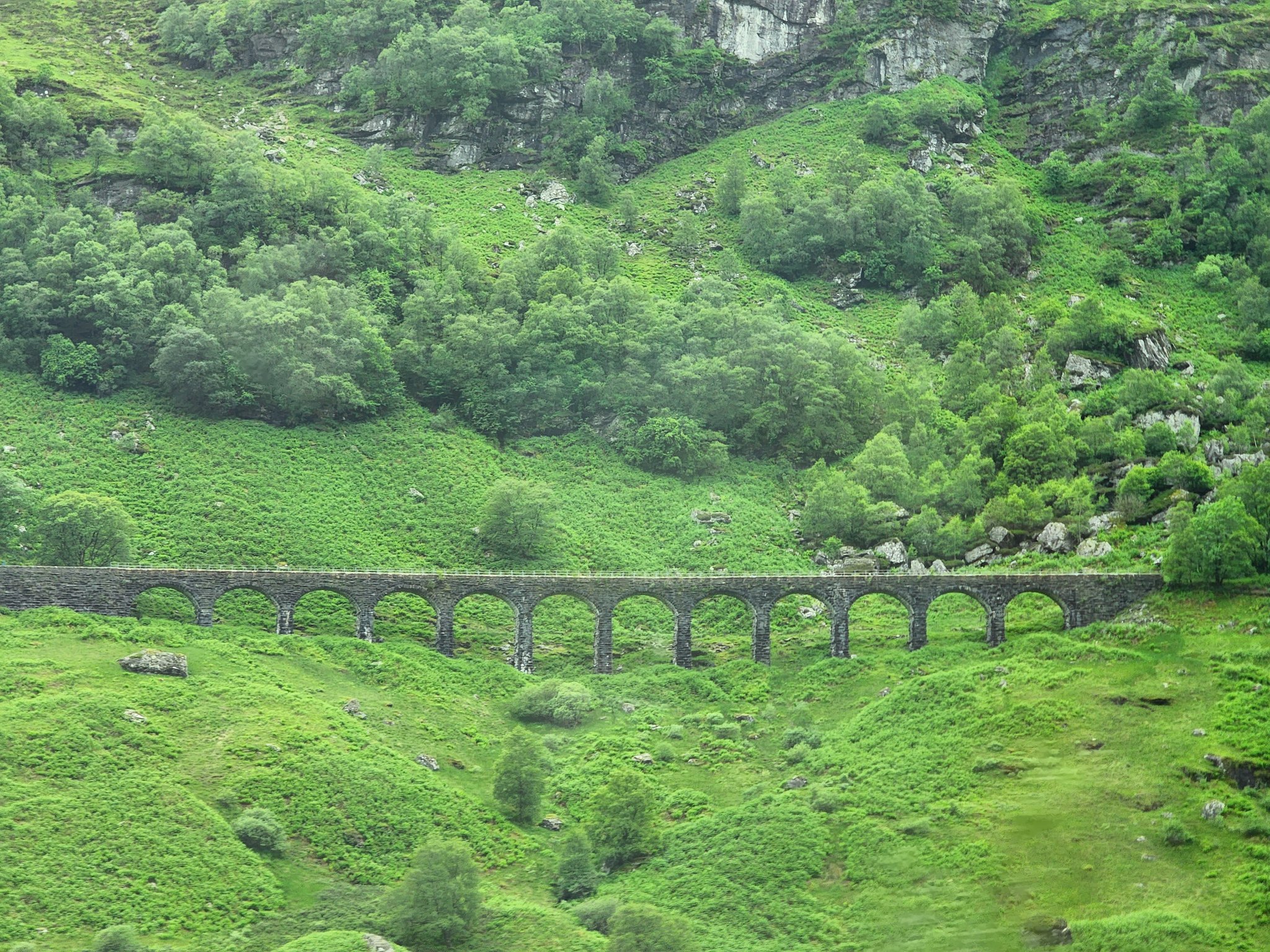
A Highland bridge, no longer used for trains

Edinburgh Castle

Edinburgh Castle

Loch Ness

Loch Ness

Loch Ness

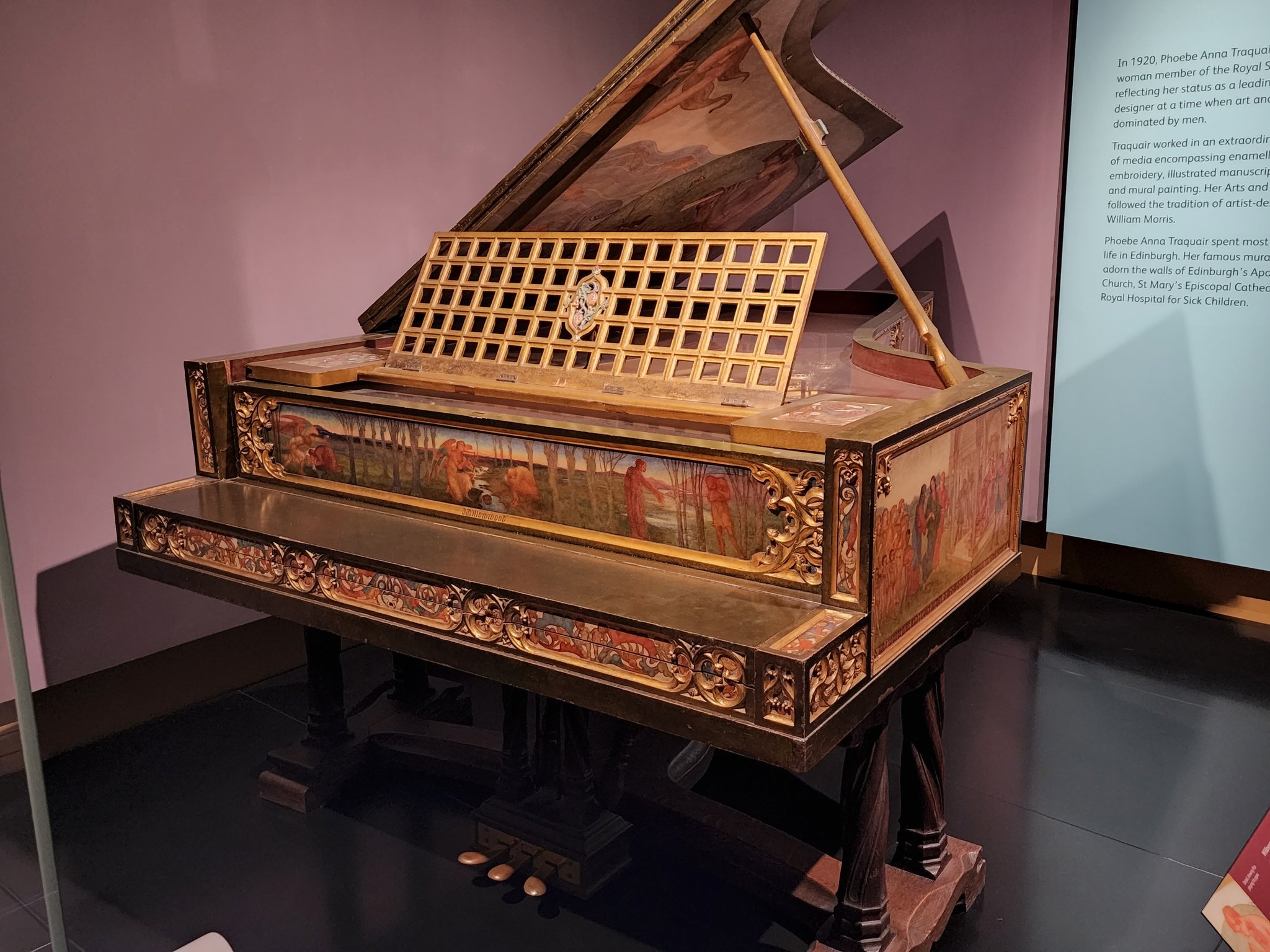
Piano painted by Phoebe Anna Traquair, National Museum of Scotland

Embroidered triptych by Phoebe Anna Traquair

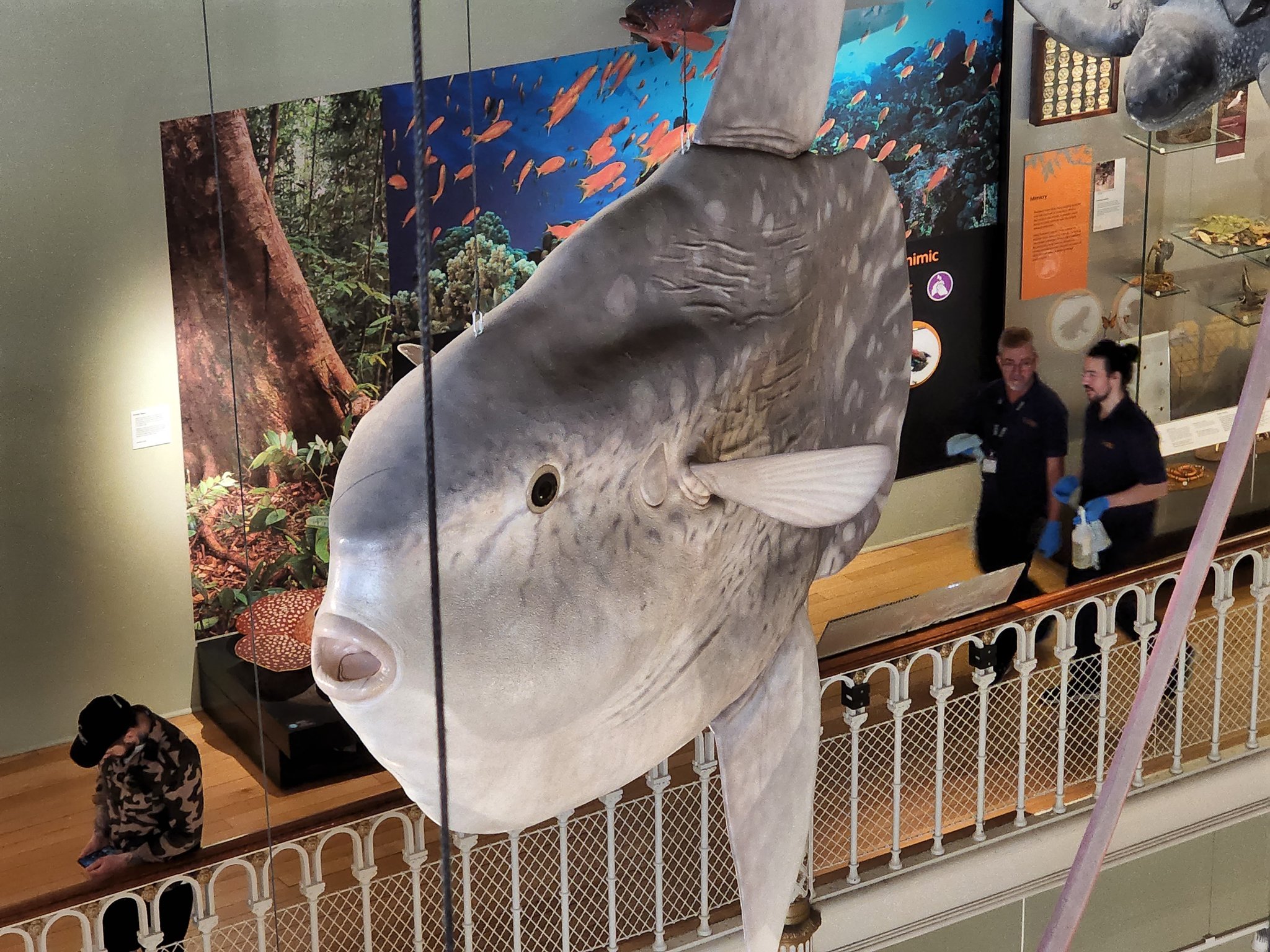
Big Ass Fish (Kirsten, it tried to bite me!), National Museum

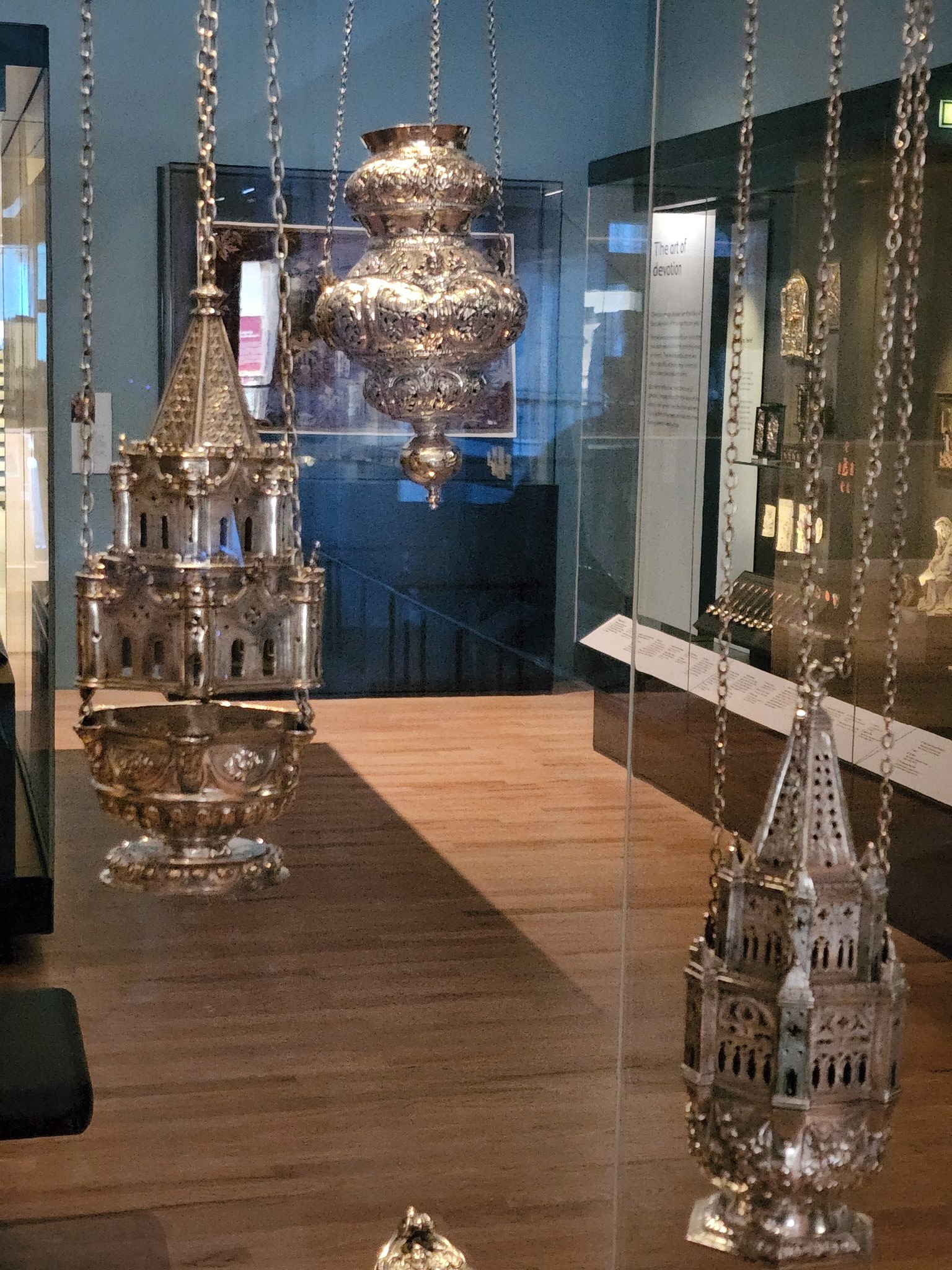
Mass censers, National Museum

Detail of Millennium Clocktower, with a tiny JC in the reflection, National Museum

Detail of the Millenium Clocktower, National Museum

Helen and Kate Storey dress, with X-ray of lung, 1997, National Museum

L: Plaque, the Virgin & Child, Italian,late 15th C., National Museum R: Plaque, the Virgin & Child, Italian, 17th C.

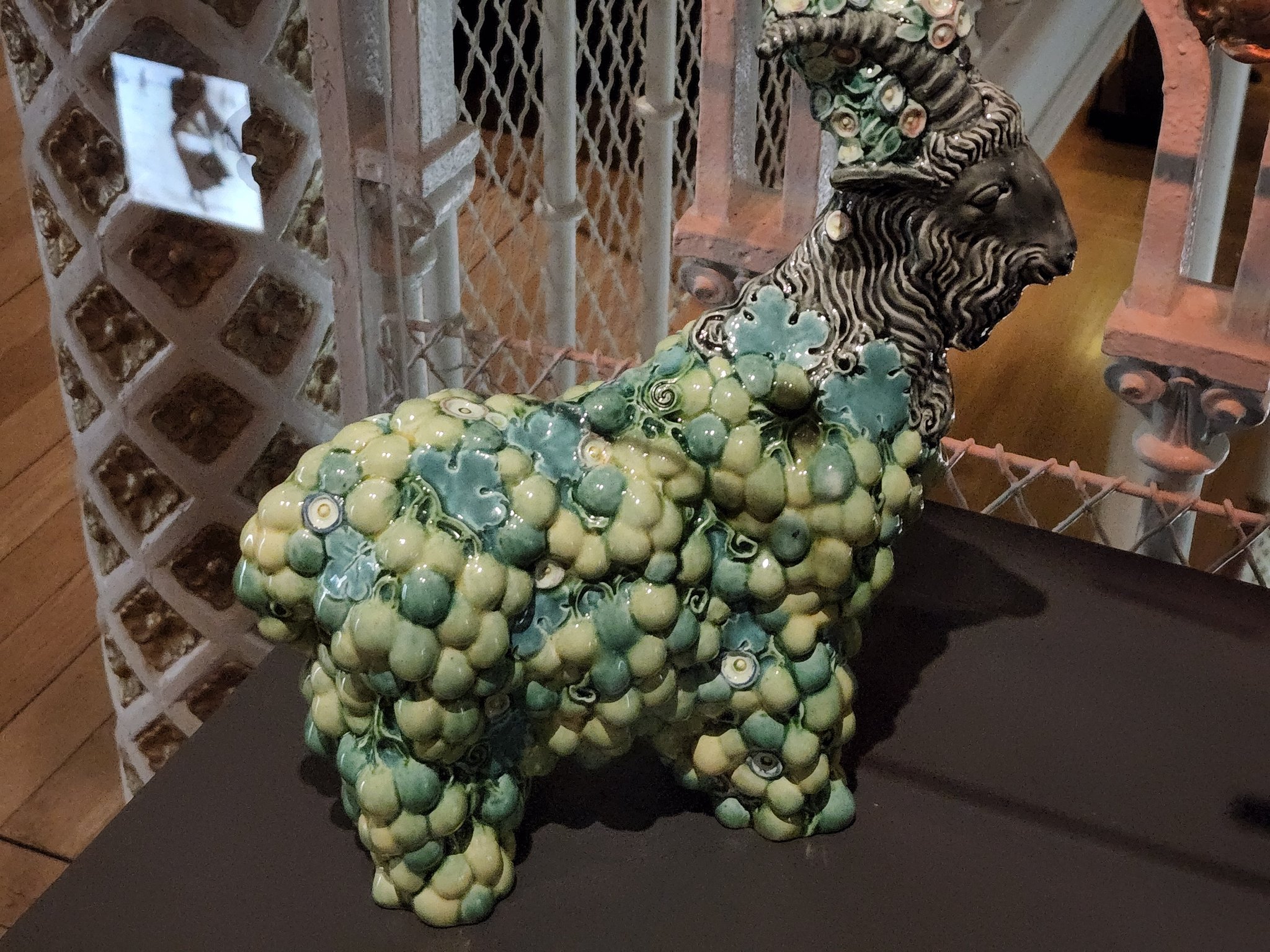
Grape goat, Michael Powolny, ca. 1907-1910, National Museum

The hall of animals, mostly extinct, National Museum

Giraffe head. I think he’s grinning.

Busts, National Museum. But I mostly like the atrium design apparent here.

Airplane in the Hall of Technology, National Museum

Another view of the atrium, National Museum

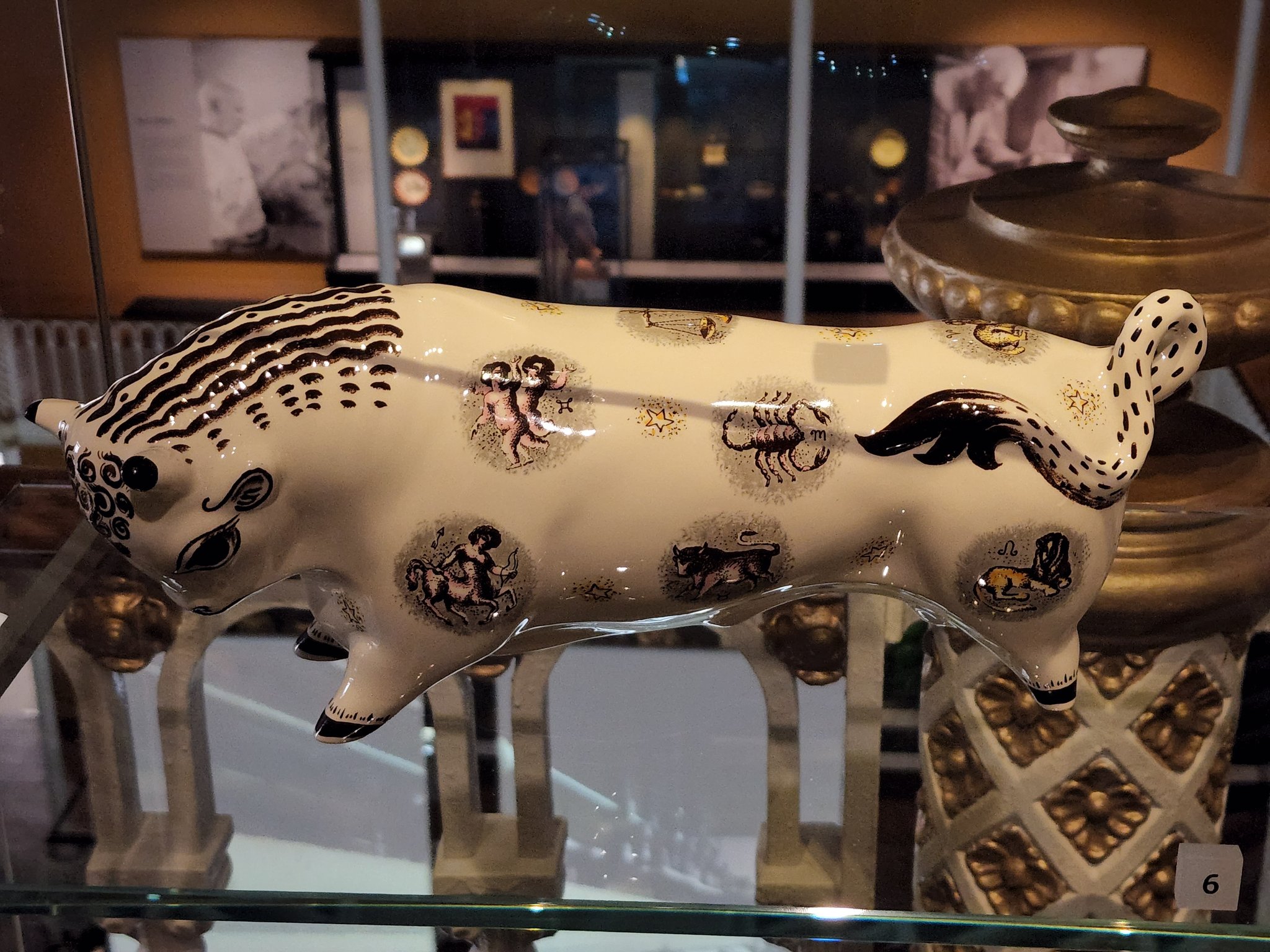
Bull figurine, National Museum

Cat figurine, National Museum