Leopard Aesthetics

I’ve been reading more poetry lately.  For a while it I read all Regencies, all the time, because I want to write more Regency novels, but the last one I read was really bad.  Like, I’ve been half-way through it for two months and am wondering if I—gasp—dare not finish.  Life is too short to read bad books, I believe, but I also hate to leave a book behind.  So instead of tossing it out altogether and starting a new one which will hopefully be more engaging, I’m reading poetry. It’s good to have a break anyway because even when poetry is “bad,” there’s always something to be learned from it—some new connections with language and thought and creativity to be made.

Last December I ran Atlanta Review’s first ever chapbook contest, and we received 115 chapbook submissions, all of which I read.  Some of the poems were wonderful, some were dreck, and some weren’t poems at all (at least, not what I’d call poems), but reading 115 chapbooks was quite the enterprise and it often entertained or moved me.  It certainly reinvigorated me as far as reading poetry goes—even though it was just part of my job.  And it reminded me that writing books of poetry really is something lots of people do—it’s not just the few of us living in our ivory towers, but it’s insurance salesmen, and accountants, machinists, nurses, software engineers, fast food workers, and teachers.  It’s not just MFA-ers trying to publish their theses, and that’s beautiful that the poetry community is so broad these days.

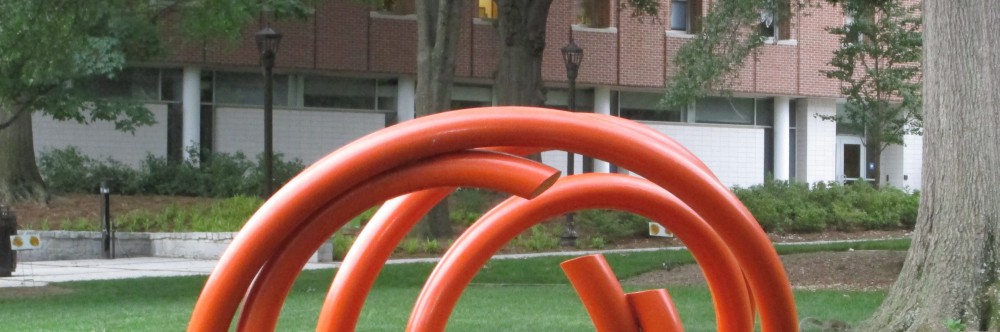
I don’t remember if I mentioned my friend Ed before, whom I met last year at the Tinker Mountain Writer’s Workshop, but he and I started a book club—Leopard Aesthetics Book Club to be exact—with the goal of reading contemporary books of poetry and spending 3 hours on a Saturday morning discussing it.  So far we’ve read We Contain Landscapes, by Patrycja Humienik, The Parachutist by Jose Hernandez Diaz, Happy Everything by Caitlyn Cowan, Nocturne in Joy by Tatiana Johnson-Boria, and Slaughterhouse for Old Wive’s Tales by Hannah V. Warren.  We may have read one or two others, but those are the ones that I’m remembering right offhand.  We meet at Marietta Coffee Company on Roswell Road and we just hang out and dish poetry. MCC has great iced caramel macchiatos which I syphon down in a snap as Ed and I go through the poems of the book, make incisive (or inane) comments about what we’ve read, and generally spend a lot of time laughing and talking. 

We get together about once a month and I become so energized by our discussion that it makes me hungry for the next time we visit.  I realize I don’t have a “poetry friend” group, not anymore, and so I feel really lucky to have met Ed and to have formed a great friendship with him.  He’s a neat person—generous, funny, and interesting—and we text  and share poems too.  It would be wonderful if Leopard Aesthetics would grow a community of poets and poetry readers around it, but so far neither Ed nor I have branched out like that. There’s still time, but for now, Leopard Aesthetics is just the two of us.

And if you’re wondering why “Leopard Aesthetics,” it has to do with a conversation we had where we were discussing different writing “schools” and the different aesthetics they espouse.  We couldn’t think what our aesthetic was, so we each came up with a list of names for our book club that somehow represented what we thought our aesthetic should be. Ed chose my top suggestion and we became Leopard Aesthetics.  We haven’t determined what that is exactly, but it’s becoming clearer the longer we hang out.

Anyway, our next book club selection is Real Phonies and Genuine Fakes by Nicky Beer. Dolly Parton graces the cover which I’m taking as a good sign.  I’m hoping Ed and I can meet soon.  I think this book is going to be great.

I know I took a year off from writing my blogs, but I promise it won’t be that long before I write again.  After all, I’m going to Scotland again this summer—and you know I’ll have plenty to say about that!

Solstice

Long beach postcard 1910

Image from NYPL Public Domain Digital Collection

It’s the summer solstice, the longest day of the year.  Sunset tonight is technically 8:51 p.m., but of course it will still be light out closer to 10 (for a total of 14 hours and 24 minutes of sunshine).  It’s the kind of day I could imagine myself being out by the ocean for as long as possible—you know, if Atlanta was on the coast.  Which alas, it is not.

I simultaneously love and hate this day—I love it because it’s high summer and there’s something interesting about the sun being out as I’m (supposed to be) readying myself for sleep.  But I also hate it because it means the days will now get progressively shorter, creeping as they do towards the fall and a new school term.  (I’ve had this love-hate thing with the day since I was little.)

Anyway, here is a poem I wrote several years ago commemorating the summer solstice.  Initially I planned to write something New Agey and mystical—but then I defaulted to funny.  This poem has always been one of my favorites, and it always makes me laugh.

Solstice

Tonight is the shortest of the year,
not enough time to break into Mr. Next Door’s
shed and rearrange his tools,
hide the scotch he keeps on a ledge
beside the coiled snake of orange power cord,
let the air out of the tires of his ’87 Impala,
fray his collection of ropes,
steal the front wheel of his Schwinn
and replace it with a stale doughnut,
spill turpentine into his jug of marbles,
stuff his sleeping bag with twigs and old leaves,
or tangle his fishing wire into knots
not even the navy knows about.
Tomorrow, the night is two minutes longer.


If you like this poem, you might like the others in my collection, La Petite Mort.

New Poem Up at Picaroon Poetry

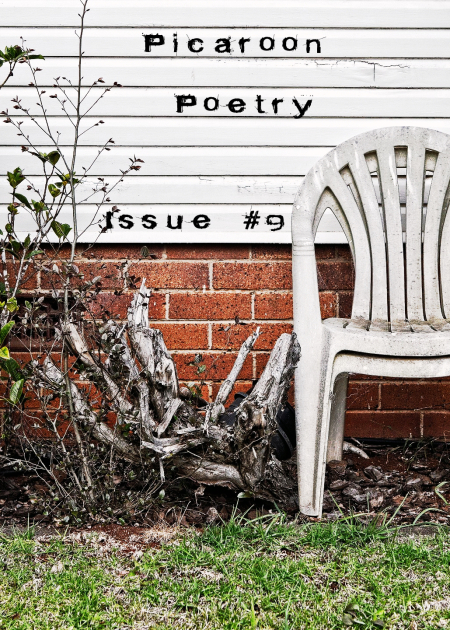
picaroon-poetry-issue-9“Canali” is another one of my Venice poems, and I was so happy when Picaroon Poetry took it.  (You have to scroll through to page 35 to read it.) This brings my published Venice poem total up to 13 out of 22, or a 59% published rating.

You may wonder why I offer that metric—who cares?  But I share it because collections these days seem to list so many previously published poems on their respective acknowledgments pages—and manuscripts with multiply “vetted” poems seem to have a better chance of becoming books.  I know for a fact that some book publishers say that writers shouldn’t even submit a book to them for consideration unless 25% of the poems in the collection have been published already.  So my hope is, that with a 59% (or more) published rating, my chapbook will someday find a home. (I still have the rest of the poems from the chapbook out circulating, and hope that a few more will “land.”)

Of course, my full collection is 23% published, and it’s still homeless.  Which just goes to prove publishing will always be a crapshoot. *sob*

New Poem Up at Amaryllis

amaryllisRecently, I received a smack-down from a Brand Name Poet (who evaluated a packet of my poems for a fee) because one of the poems I’d given her was a narrative ghazal—that’s right, in other words, I’d employed the ghazal form to tell a story—and I was told “no way, you can’t do it, it’s wrong.”  It was, I thought, a harsh rebuke—I mean, calling a poem “wrong”?  Just because I had used the spirit of a form to organize the poem?  What if I had replaced the word “Poem” instead of “Ghazal” in the title, I wondered?  Would that have made the other poet happier?
I know what a traditional ghazal looks like.  I’ve written (and published) them before.   I’m a firm believer in the adage, “Follow writing rules until you have enough maturity and experience to break them.”  Because sometimes playing with a form is a good thing—it shows that form can be flexible.  Form is like a corset—it restricts the shape of a poem, but there should always be breathing room.

Result:  “Ghazal for My Father,” published a few days ago in Amaryllis.  I hope you like it.

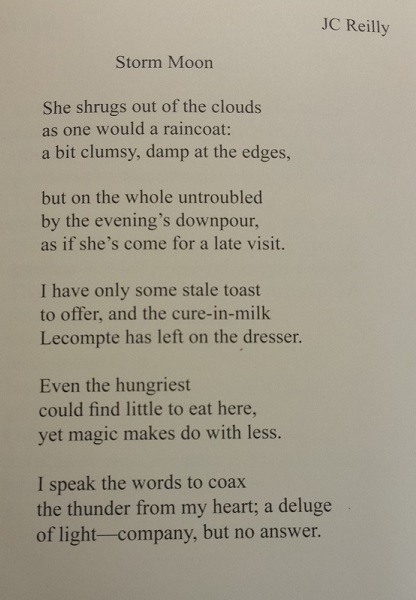
How the Moon Became a Poem

Storm Moon photo

In Tuesday’s mail came the May 2017 issue of POEM.  POEM is a journal of the Huntsville Literary Association, and has been continuously published since 1967—fifty years. They publish perfect little poems—the journal itself is not quite 5”x7”—and I had submitted a pack of poems to them just to say I tried.

So when I got the acceptance last year, I was thrilled—especially because it was one of the Moon Poems from my narrative manuscript (you know, the one I’ve submitted like 50 places).  The Moon Poems, with maybe two exceptions, are “perfect little” 15-line lyrics, that appear throughout the manuscript and (at least in my mind anyway), represent the poetic output of one of the main characters, thought the voice in this particular poem is Vidalia’s, not Tallulah’s.

I’ve been trying to remember what initiated my interest in writing the Moon Poems.  While it may be true that I wanted to demonstrate a range of my writing ability (that I can write something other than narrative), it seemed important to incorporate the moon almost as a character in the manuscript, especially as it is about witches and women who harness energy and strength from the moon in order to enact their spells.

The poems each take as their title one of the (many) colloquial/ northern Algonquin names for each month’s full moon—though the February full moon is technically the “Snow Moon”—but of course, there’s no such thing as snow storms in February in Louisiana, but there is rain, so I fudged a little, and made the poem “Storm.” (Actually, this poem could also represent July—which is the month of  the “Thunder Moon” as well as “Buck Moon” but I believe I meant it for February.  But the word “thunder” appears in the poem itself…maybe the connection to February is wrong?)  As I think about it, February actually has two poems in the manuscript, this one and “Hunger Moon.” Anyway, writing about the moon felt authentic to me, and authentic to the experience of all the women characters in the manuscript.  (Not surprising—as Marge Piercy reminds us, “The Moon Is Always Female.”)

With this publication, the total number of poems in the manuscript that have been published in journals comes to 11—when the manuscript is 83 poems, my publication rate looks feeble, a mere 13%.  But it has been difficult to publish poems from this collection because it’s narrative (the Moon Poems not withstanding), and they are interdependent, and how do you take individual poems which all contribute to a story out of their milieu and make them make sense as stand-alones?

I’d very much like to have at least 20 poems from this collection published—that seems like a reasonable goal—then I would feel like maybe the manuscript would finally have a chance.  And getting the rest of the Moon Poems published might be the way to accomplish that goal.

On the other hand, there is still the other idea I have been kicking around in my head…taking out the line breaks in nearly all of the manuscript poems (except the Moon Poems), and trying to get it published as a hybrid flash fiction/poetry work.  So far I’m not that desperate—I mean, I conceived the book as poetry, and would hate to lose the beauty of well-wrought-lines, so I’m going to hold out the hope until I get the next batch of manuscript rejections that it will get published as the verse novel it is.

But the line break removal thing is still a possibility… because it has worked for me before, transforming what I thought were poems into flash fiction and flash nonfiction—or rather, perhaps the conversion process only revealed what their true form meant them to be.  And in many cases, these erstwhile poems found homes in journals like right away.

Anyway, I hope you enjoy “Storm Moon.”  Let me know what you think.

Lost Poem

Last night, between my husband’s buzzsaw snoring and my cats’ demonic games of tag, I couldn’t sleep.  As I was lying there, a poem was coming to me that I thought I could use for the August Poetry Postcard Fest, and, while it wasn’t terrific, it certainly had potential.

I said to myself, Self, you need to get up, find a piece of paper, and write that draft down.  But the sleepy, cranky side of me said, No, no, I’ll remember it.  Honestly, sometimes I’m an idiot.  That never works.

And the even more aggravating this is, that clearly I was awake enough at 2 a.m. to compose the poem in my head, and could have turned on the light and written it down.  How hard would that have been?

And now, I have no memory of the poem at all, and have nothing to show for my insomnia last night, except a rather dreary attitude and dark black circles under my eyes.  Oy.