
Three years ago, I went on a Speyside whisky tour—it was the first time I had ever tasted whisky, and I was a total n00b about it. But after the tour, I realized that I liked whisky and could see drinking it on occasion—especially on a cold, dreary night that would remind me of Scotland. I realized too that I didn’t like peated whisky, because the smoky flavor reminded me too much of lapsang souchon tea which to my mind, is an abomination in the tea world. So I knew going on a tour to Islay (pronounced EYE-lah) and the whisky coast would be problematic—because all of the distilleries over there produce peated whiskies. I was prepared not to like anything. But that’s not what happened, fortunately.
We started our tour by driving west and a bit north, through the Trossachs and past Loch Lomond. We stopped in Callender, which is little more than a high street but is known to be the “Gateway to the Highlands” since it is just south of the dividing line between the Lowlands and the Highlands. I bought an airy loaf of cheddar jalapeño bread at Mohr, a local bakery, for a snack, but then we were off again. The West Highlands are are not nearly as dramatic as the eastern Highlands, but they are still quite beautiful, and while I had traveled the roads through them before, I was still glad to be able to see them again.

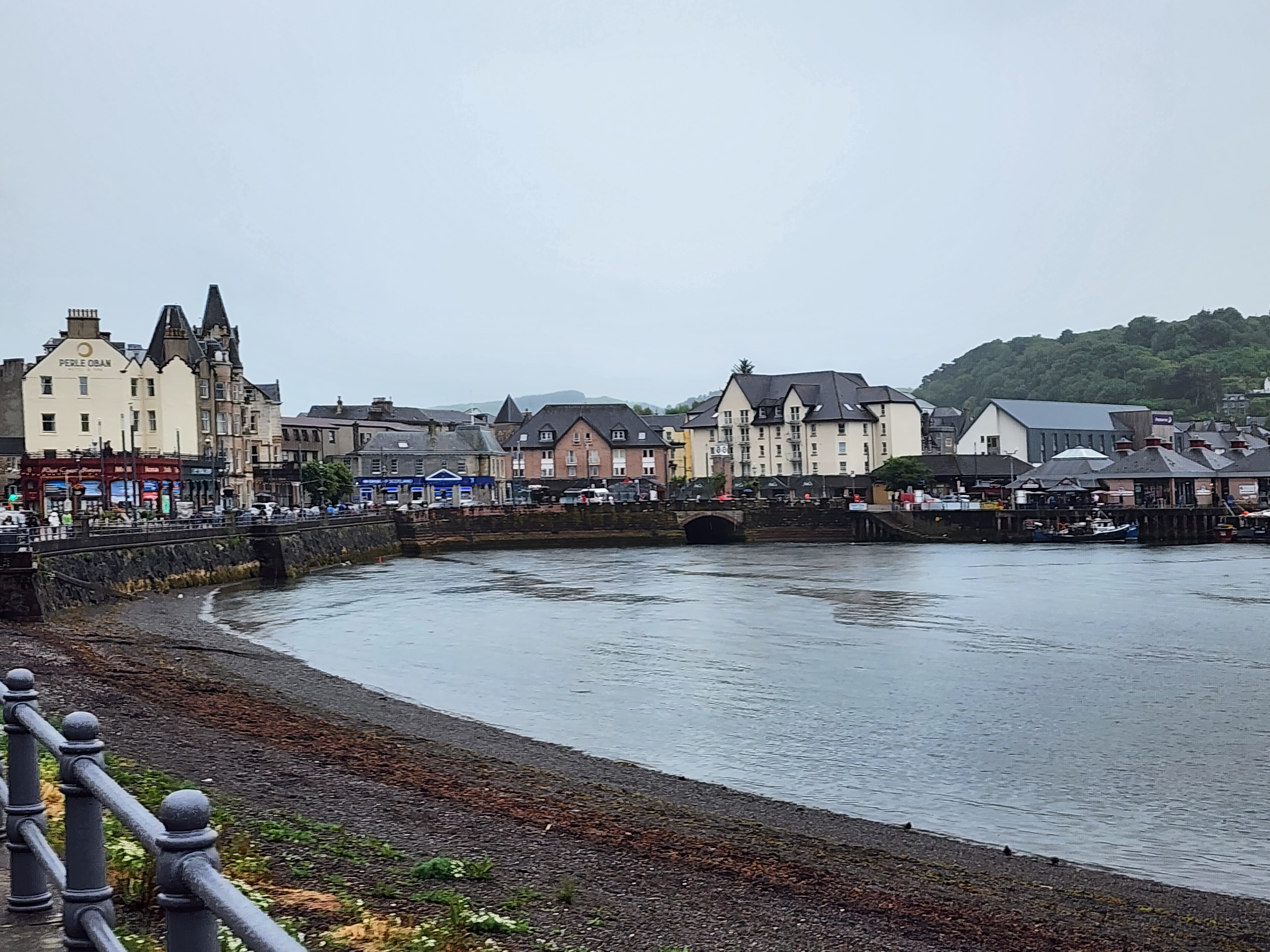
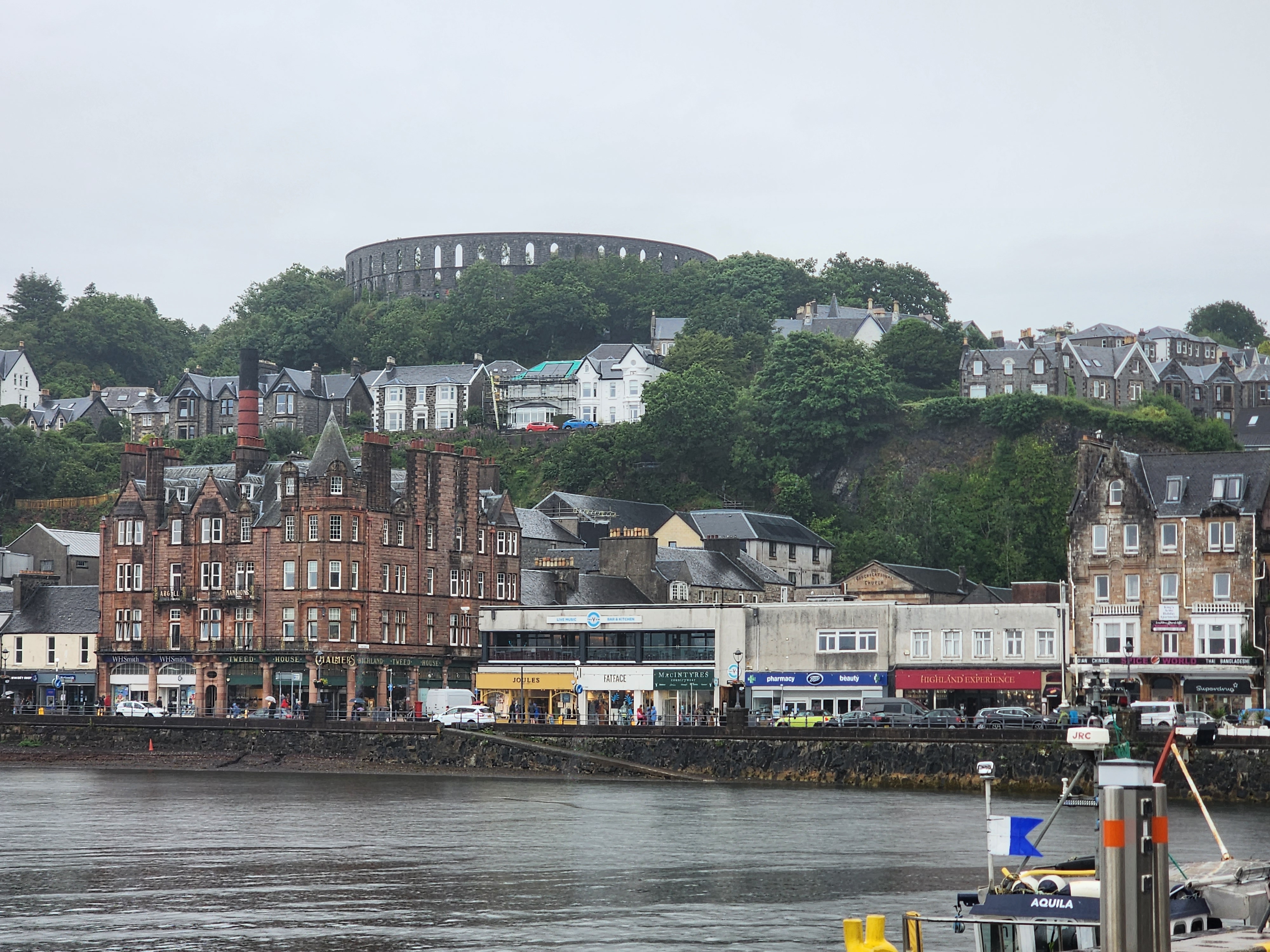
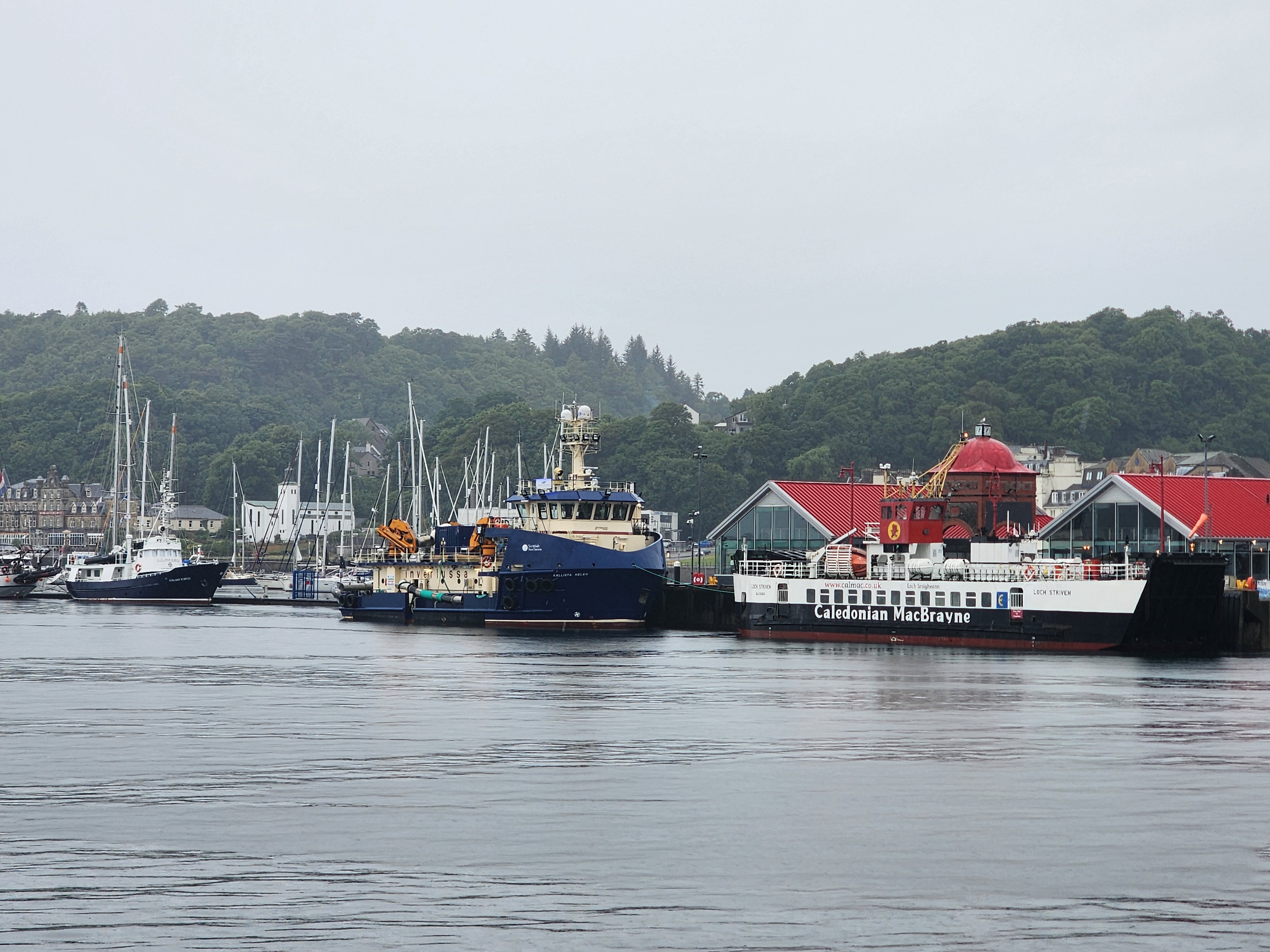
View from Oban harbor

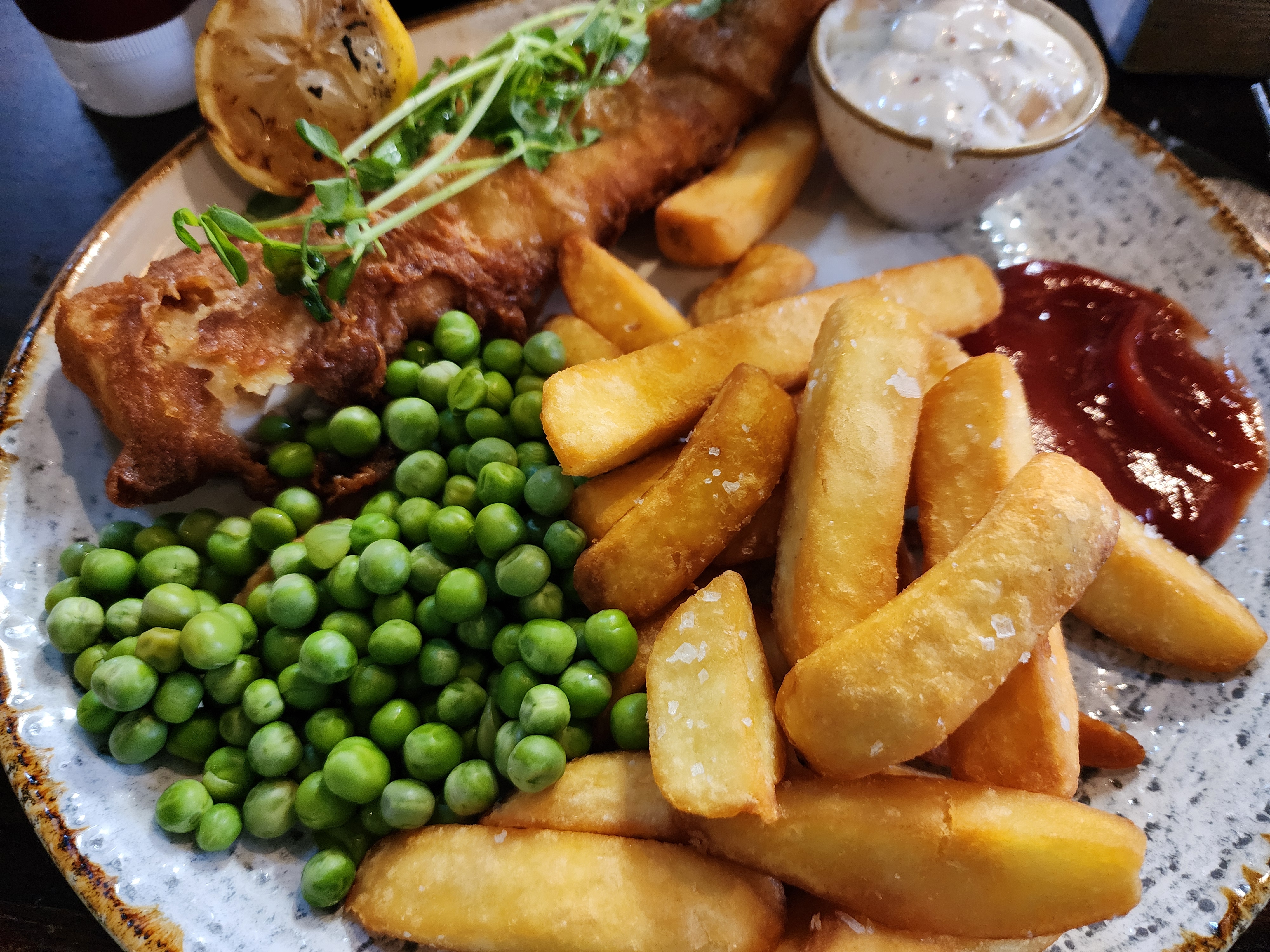
Norries fish and chips…mmm
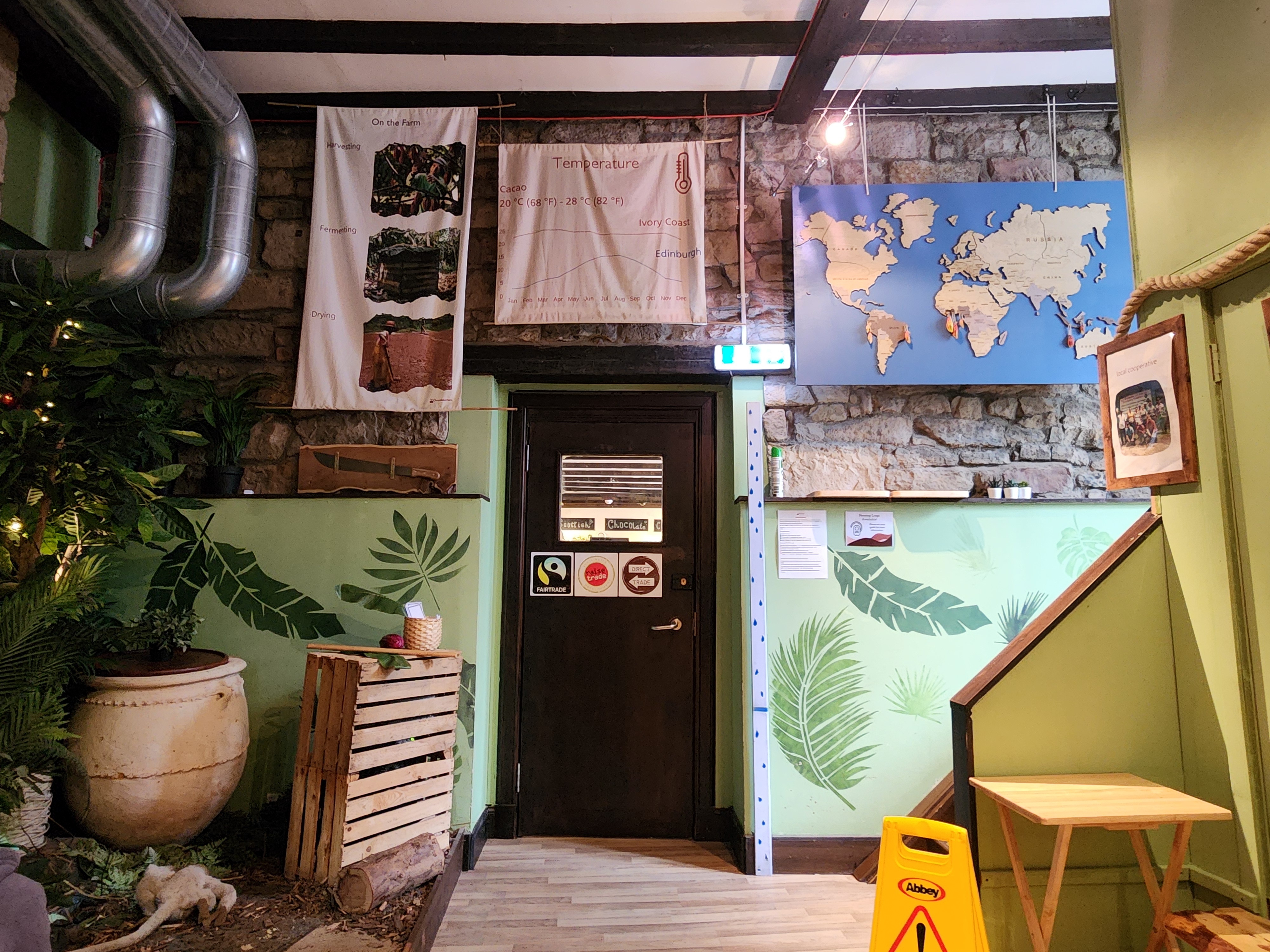
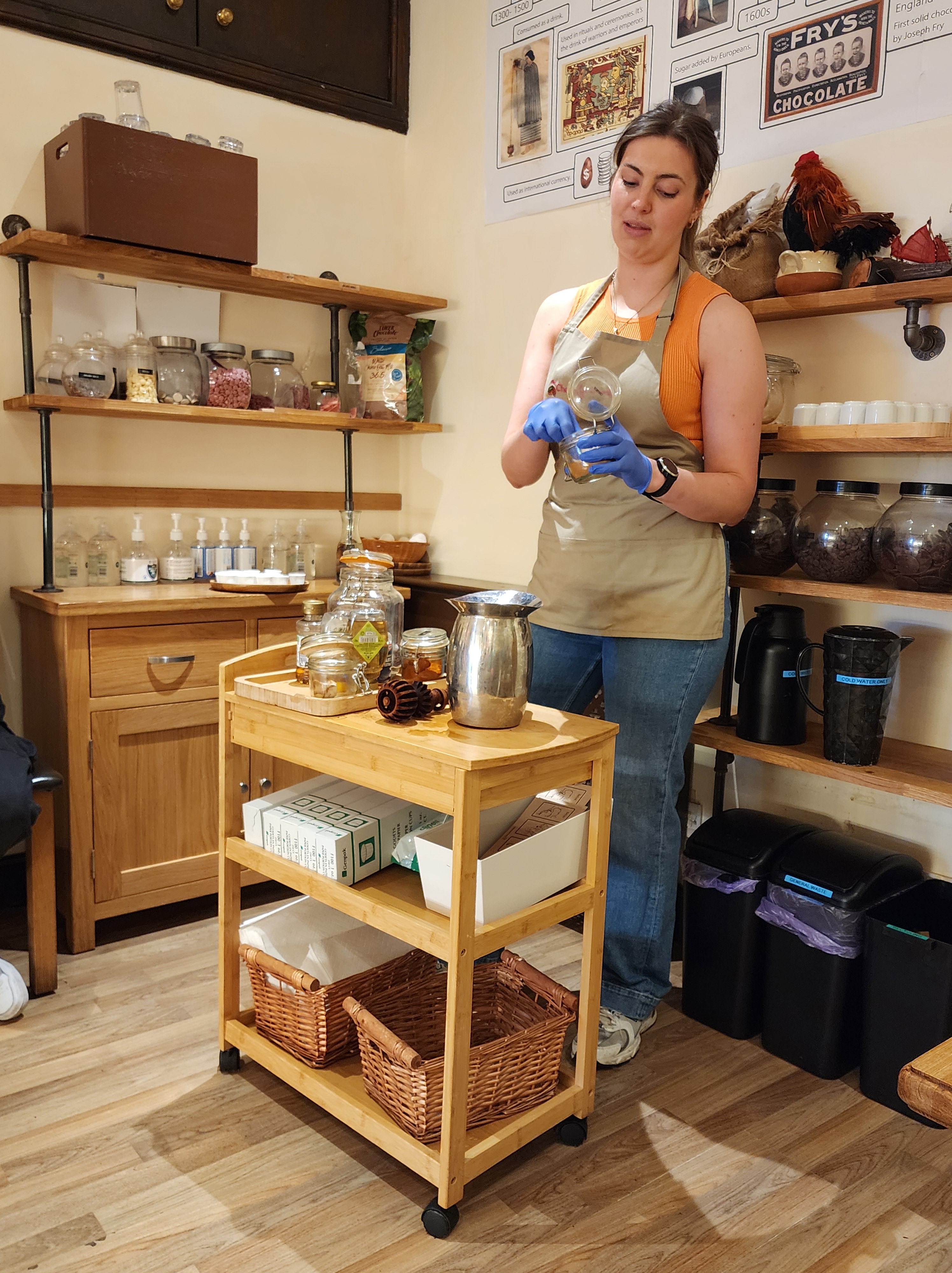
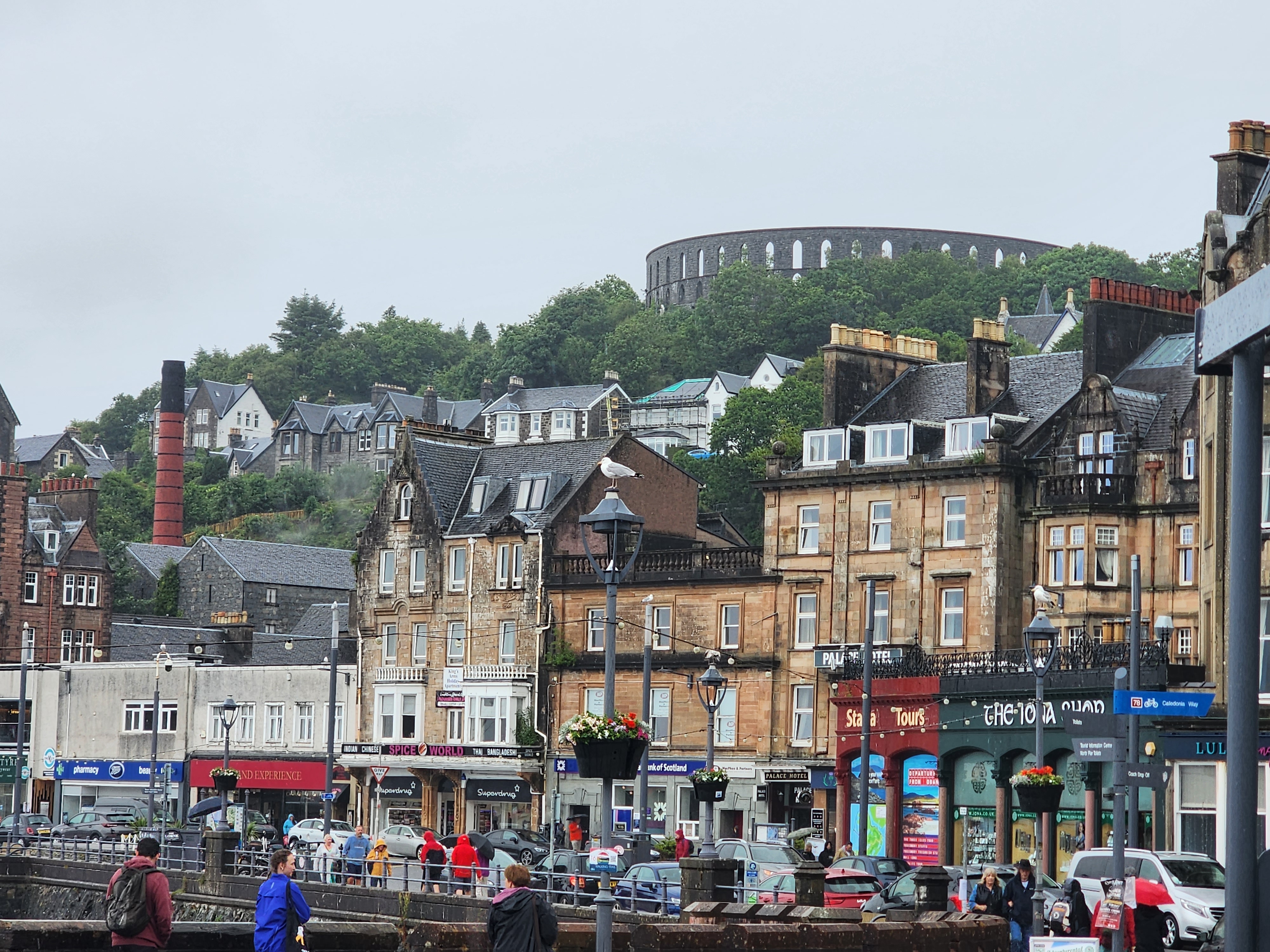
We stopped for lunch in Oban (“Gateway to the Isles”), which is a little sea resort town I’ve been to before, back when I went to the Isle of Mull (I think). Anyway, I went to Nories for fish and chips and then walked along the streets to visit the Oban Chocolate Company, which I remembered from the last time I was in Oban—it was packed with people getting coffees and hot chocolates and candy bars. I picked out a few truffles including a dark passionfruit crème, a chili “chuffle,” a ginger ganache cup, a whisky truffle, and a toffee orange truffle, which I saved for later. Then I walked to the harbor and took some pictures. There were people playing with their dogs on the beach, but it was rather cold to my mind and I wondered what is it about dogs that they love to go into water—especially freezing water!

Kilmartin grave stone
The bus picked us back up and then we continued on to Kilmartin Glen to look at some standing stones and to take a rather long walk to see some cairns. Somehow I don’t have any pictures of this; I’m not sure why—it’s not like me. Maybe something happened with the camera. But they were fine, as far as standing stones go—they were sort of in the middle of a field so I had to be careful of sheep pellets. But I enjoyed the walk, even though my foot was hurting. Still I was glad to get back on the bus. Later we stopped at a little church in Kilmartin with gravestones from the 1300s-1500s, whose carvings were faint now, but still cool. And then we headed down to Kennacraig so we could board the ferry. It was a long ferry ride (and damp, so damp)—maybe two hours—but as always I remained outside to take in the air, hoping to see some whales or dolphins. (I saw neither.)
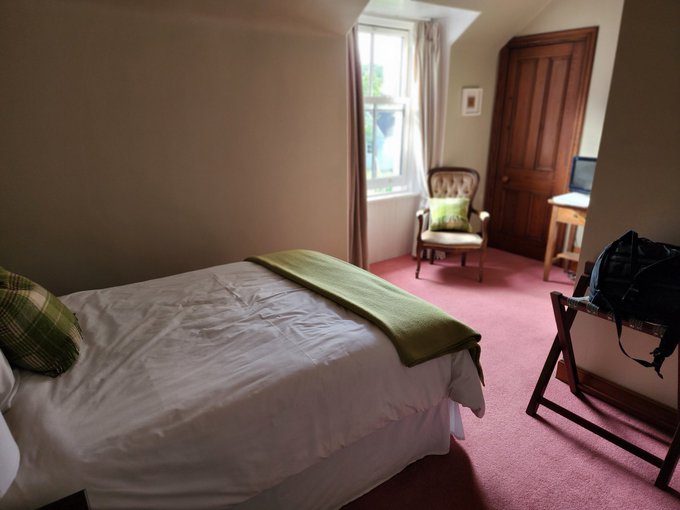
When we arrived in Bowmore, I was ready to get to our residence—it turned out to be a kind of cottage attached to the Bowmore distillery (est. 1779) called the Old Bakery. Everyone else (I didn’t get their names)—the Norwegians, the Brazillian, the the New Yorkers, the very friendly Japanese couple, and the father and son from Maine—gathered in the dining room to chat after dinner, but I was ready to get into bed, even though it was pretty early. Still, I went over to the Co-Op to get some cheese and crackers for dinner (since I hadn’t made any dinner reservations), and a two-liter of Coke Zero to make sure I got my caffeine over the next few days. Then I settled in for the night, enjoying my black-out curtains (which I don’t have at my place in Edinburgh), and I slept well, even though I was in a tiny twin bed.
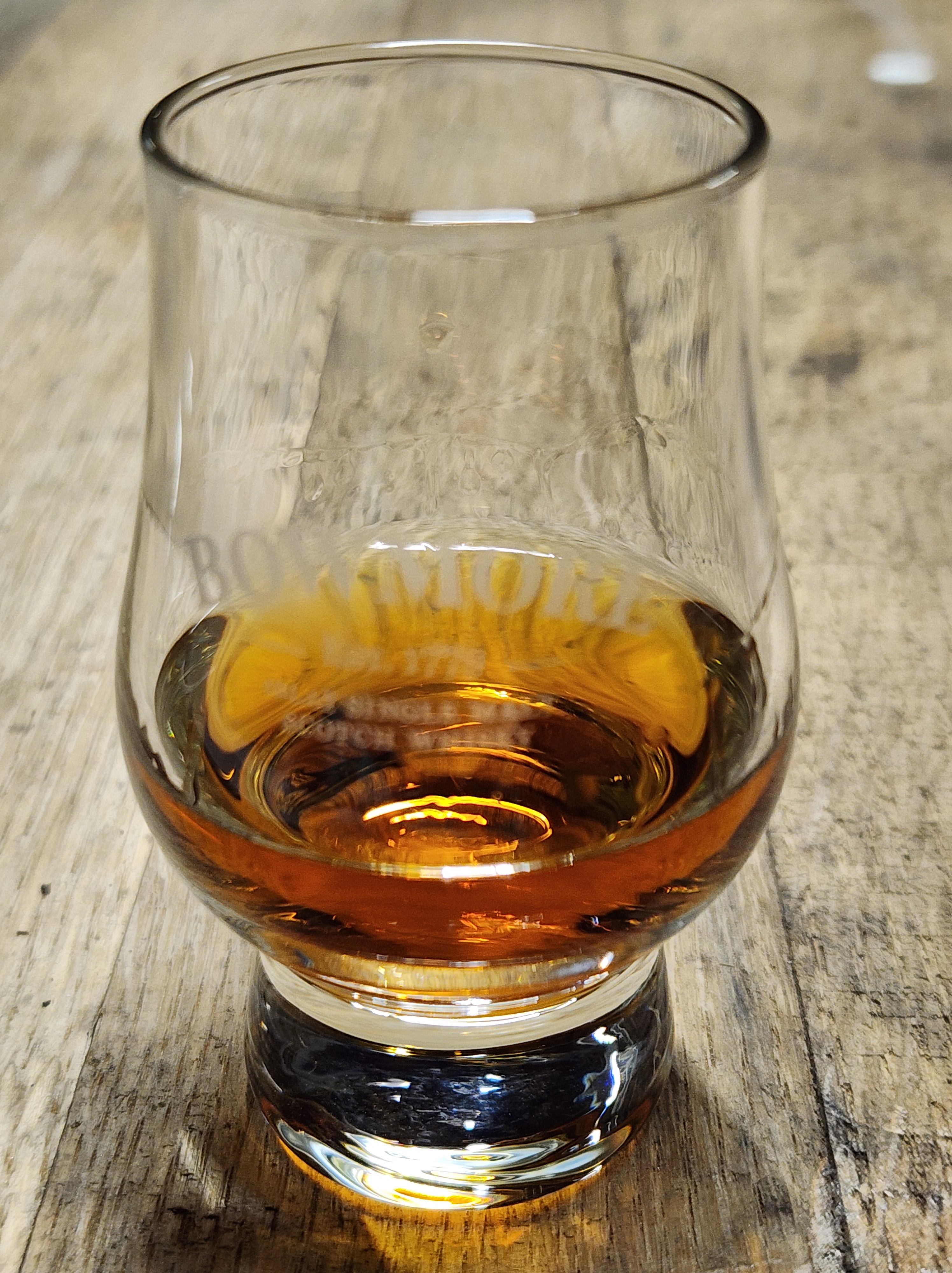
A Bowmore dram, bourbon cask
After breakfast the next day, we all walked over to the Bowmore distillery for our tour. I knew what to expect, because I’d been to distilleries before obviously, but it was interesting because we actually got to see the barley on the malting floor (where the barley begins to germinate). That was new to me. The tour guide encouraged us to touch it, and he didn’t seem to mind walking on the barley (which I did not do—because, hello, shoes aren’t clean!). He took us to see the wash backs, the mash tun, and the stills, and then to a room where the casks were stored where we enjoyed a taste of whiskies. We tried the 2012 Bourbon Cask whisky first, with a 53.5% alcohol content, and it was dark amber and pretty peaty. Next we tried the 2010 Oloroso Sherry Cask, with a 54.6% alcohol content. Then we went into the bar where they gave us another whisky (although I didn’t see the bottle), as well as pairing chocolate, and a tiny dram of Bowmore 18 year to take with us.

Kilchoman spirit
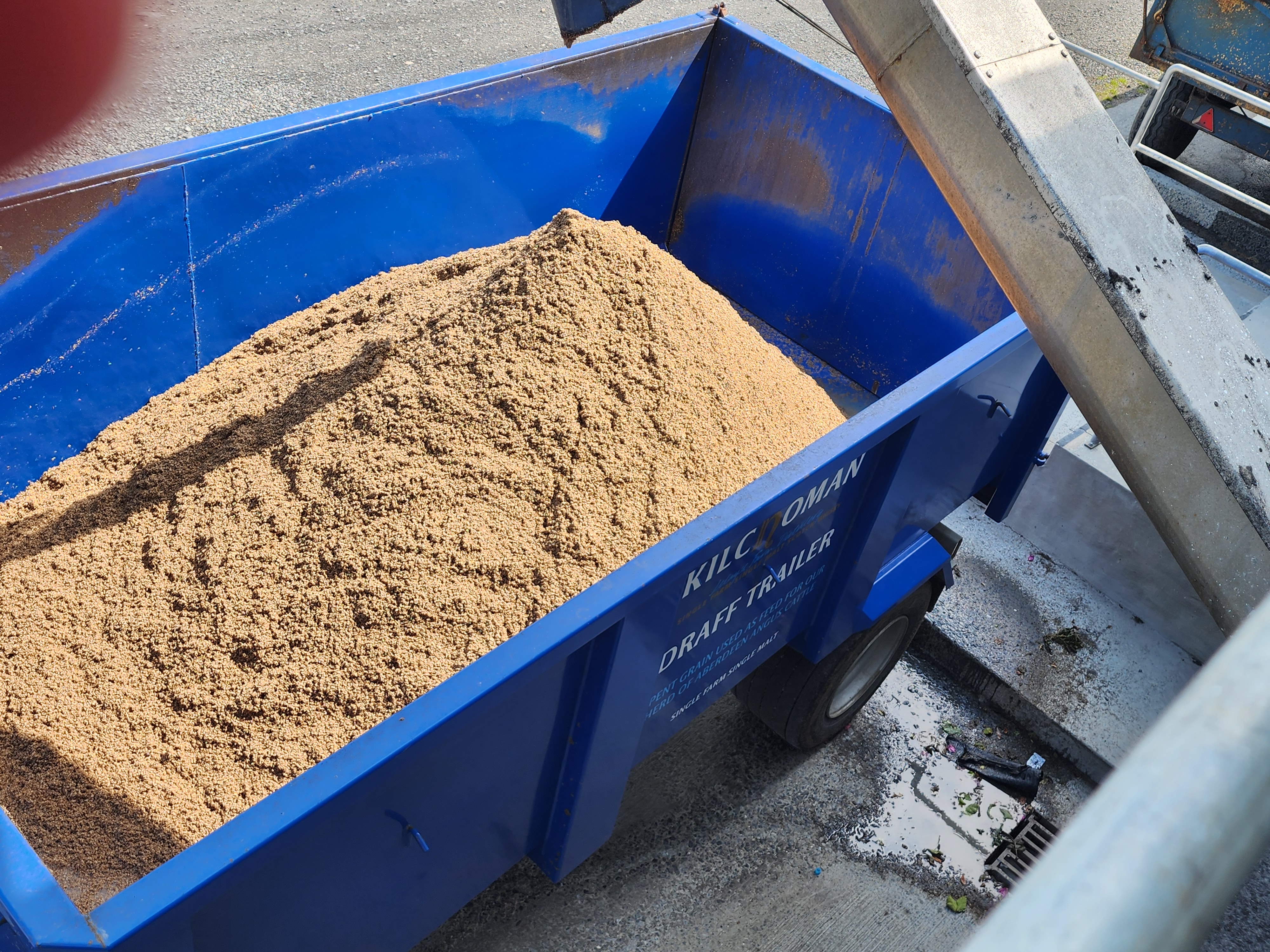
Draff cart
Our next distillery was Kilchoman, which has only been in operation for 20 years because the proprietor just apparently decided he was going to start a distillery. We got to see the same kind of operation, but it was cool that the proprietor himself gave us the tour, and we had whisky tastings at various stops throughout. We even had a nosing glass on a lanyard to drink from, which was very convenient. One of the things we got to try was “spirit”—that is, un-aged liquor right from the still. And it was delicious—super sweet, basically it was alcoholic sugar water (63.5%). It’s the aging that makes it whisky. But it was definitely interesting to drink. And one of the things we learned there is that nothing goes to waste. After the barley is used for the whisky, it’s still usable; it still has proteins and nutrition, so there’s a conveyor belt which moves the barley into a large cart, and then the barley, called “draff,” is sold as animal feed. I don’t believe they charge a lot for the draff—in a way, it’s a chance for the distillery to give back to the farmers who live on Islay and who help raise the barley.
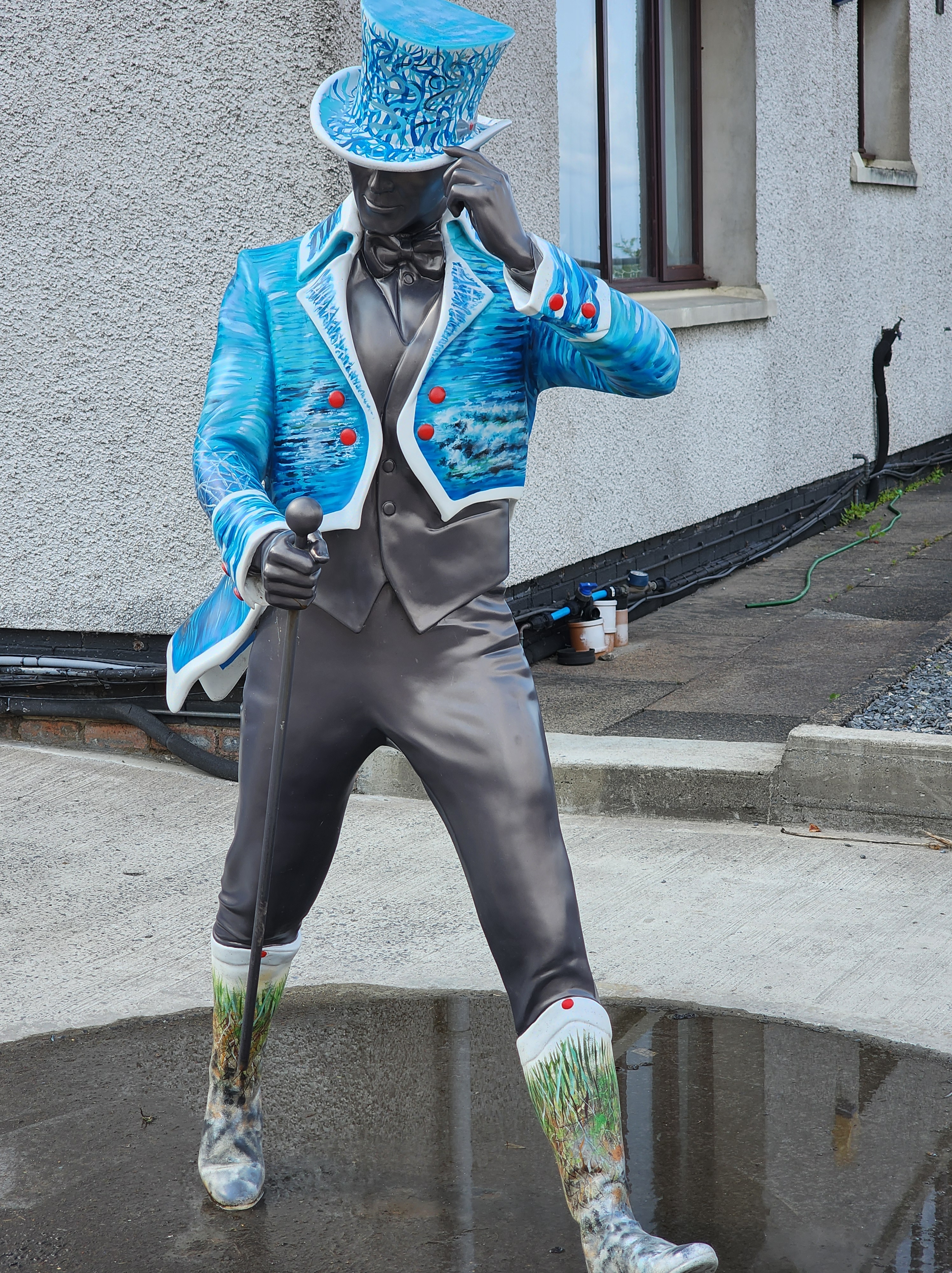
The Johnny Walker dude
After Kilchoman, we went to Caol Ila (pronounced Cull-EE-lah), on the east coast of Islay, owned by Johnny Walker (like Cardhu in Moray, Scotland, is a Johnny Walker distillery) which was just a whisky stop (I just got a Diet Coke because after five or six drams, I was pretty pickled already). The driver, Robbie, was very kind and because I was walking with my cane, he said he’d meet us down below in the disabled parking area to get us after our visit to the distillery. Everyone except the Brazillian met up there. Apparently, he hadn’t heard that we were going to meet there. We saw him walking on the long path upward, so Robbie said we’ll just get him at the top of the path. But in the interim, the Brazillian thought, I’ll go down and meet them. So we were up at the top waiting for him, and he was down at the bottom waiting for us. So we drove back down to the bottom but the Brazilian walked back up to the top. It was some Keystone Cops hilarity happening. We must have done this dance a couple more times, and I said to the tour group, we’d lost him to the Angel’s Share, which made everyone laugh. (The Angel’s Share is how much whisky evaporates each year that a whisky is in the cask.) Finally, Robbie walked down by himself and got the Brazilian. It was pretty funny, this back-and-forthing—although I suppose it loses something in the translation.
 Then we went to Bunnahabhain (pronounced Bunna-HAY-ven) for a whisky tasting—these were unpeated whiskies (2022 Abhain Araig, 2012 Olorosso Bott, and something that looks like Toiteach a Dila; it’s handwritten, not very clearly, although the 46.3% notation was clear), and they were very nice. I took a taste, but I didn’t drink them up because I would have collapsed on the floor. I wanted to buy a bottle for C, but then I remembered two things: 1) he wanted a peated whisky and 2) how the hell would I get a bottle home? Anyway, I didn’t buy one—and they were crazy expensive anyway—like £79 for a tiny bottle.

Seriously, they look like boobs. (Jura island)
Across from the distillery was the isolated island of Jura (only 300 inhabitants), which, in my mind looked like a couple of boobs (what can I say, maybe I’m a 12-year old boy) instead of mountains. It was a lovely day, especially compared to the day before which was so wet and dreich. I found myself after the tasting just looking out on the water and the beach and enjoying the fresh sea air.

Kildalton High Cross
The next day, we hit up three more distilleries. But before we did that, we stopped at the Kildalton High Cross, which was carved in the 700’s, and according to the sign is “one of the finest and most complete early Christian crosses in Scotland.” It’s a tall Celtic cross, maybe twice as tall as a person, and it’s next to the roofless ruins of a church. It’s beautiful, and the carvings are in great shape, not worn smooth at all. There was a little donation box asking for money so I dropped in a pound, and a sign saying to leave the gate shut to keep out the sheep. But obviously someone had left it open recently, due to all the fresh sheep pellets in the grass.
 After that little diversion, we were off to Ardbeg distillery, on the south coast of Islay. Our tour guide was this snarky Gen-Z-er who was very knowledgeable about the whisky process, and her name was Jura, after the island. Taking guests on tours was her summer job, she told me, as she was attending a university on the mainland (I think). The whisky was good, but I thought Kilchoman was better. There was a walk to some old ruins, but my foot was killing me, so I just sat in the peaty grass for a while and took a little walk towards the cliffs. Next door was Lagavulin distillery, and we stopped in for a bar visit. I was parched, and got both a sparkling water and a pink fancy passionfruit whisky cocktail that was delicious but maybe not worth £8. The Norwegian men got a flight to share—it was like a top tier flight because it wound up being over £120, and they didn’t blink an eye. Granted they got some snacks too and cocktails for their wives, but still it was an impressive amount of money to drop for five drams of whisky.

Laphroaig sea sign–it’s big so ships delivering barley can see it in the mist.
The last stop was Laphroaig (pronounced La-FROYG); the New Yorkers were looking especially forward to going there, as it’s the husband’s favorite whisky brand. Laphroaig began in 1815 when the sons of a farmer decided to make whisky on the Campbell estate. What was interesting was that one of the brothers emigrated to Australia, and the other brother drowned in a vat of burnt ale. (I’m not sure how you burn ale, but that’s what the sign said.) His son inherited the distillery at age 11, but since he was underage, the manager of the Lagavulin distillery ran it. But when the son had grown, he ran it until his death. Thus was the early history of Laphroaig. But another cool fact about the whisky was that during American Prohibition, the Feds were persuaded that Laphroaig was medicinal, so people could totally buy it and drink it.

The Laphroaig flagship whisky–the one to try!
After our tour, the guide let us choose 3 among 7 different whiskies to try. My choices included the 10 year Cask Strength, the 10 year Sherry Oak Finish, and the quintessential 10 year aged in ex-bourbon barrels, the Laphroaig flagship whisky. The regular 10 year was pretty good; I didn’t care for the Sherry finish, which is surprising, since I usually appreciate the sweetness of sherry cask whiskies.
Islay is lovely, like all of Scotland, but there’s not much here besides sheep and distilleries. I was glad I went, and glad I could try so many different drams, but I think I was a little disappointed overall. I really had hoped that somehow, Stewart, the tour guide on the Speyside trail a couple of years ago, could have been our guide this time—that would have been magic. He really enjoyed whisky, and I didn’t get the feeling that Robbie cared one way or the other. I also felt like for Robbie, this was just a tour, whereas for Stewart, whisky was a passion, and making people love whisky was also a passion. But you can’t pick your tour guides, and it was nice to see a new part of Scotland. And it was nice to find out that peated whiskies are good too; I guess they are an acquired taste. Which I acquired.

The Kilmartin church

Kilmartin church
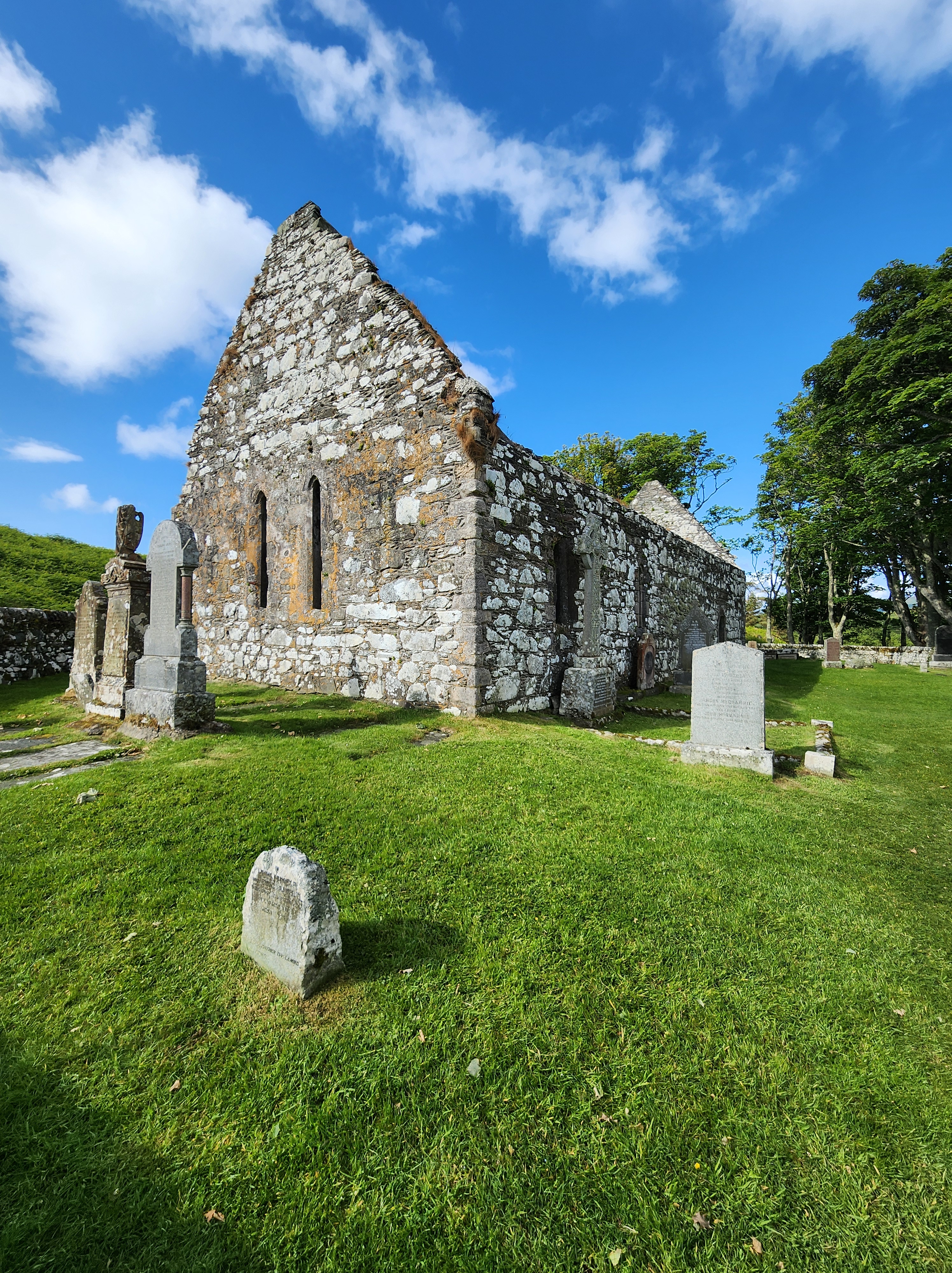
Kildalton church–I really like the composition here.
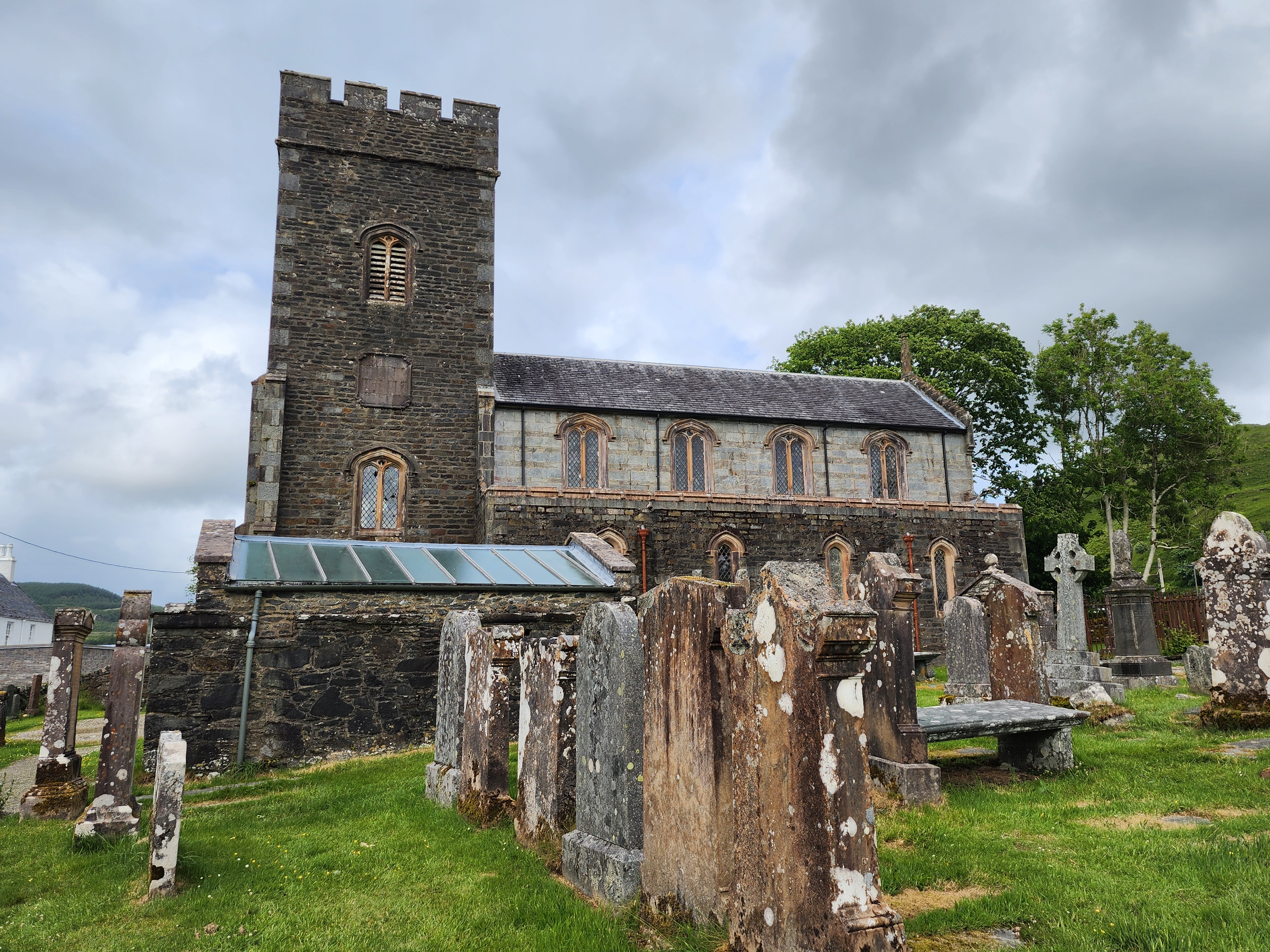
Kilmartin church

Kildalton church

Old gravestones at Kilmartin church

Lagavulin distillery
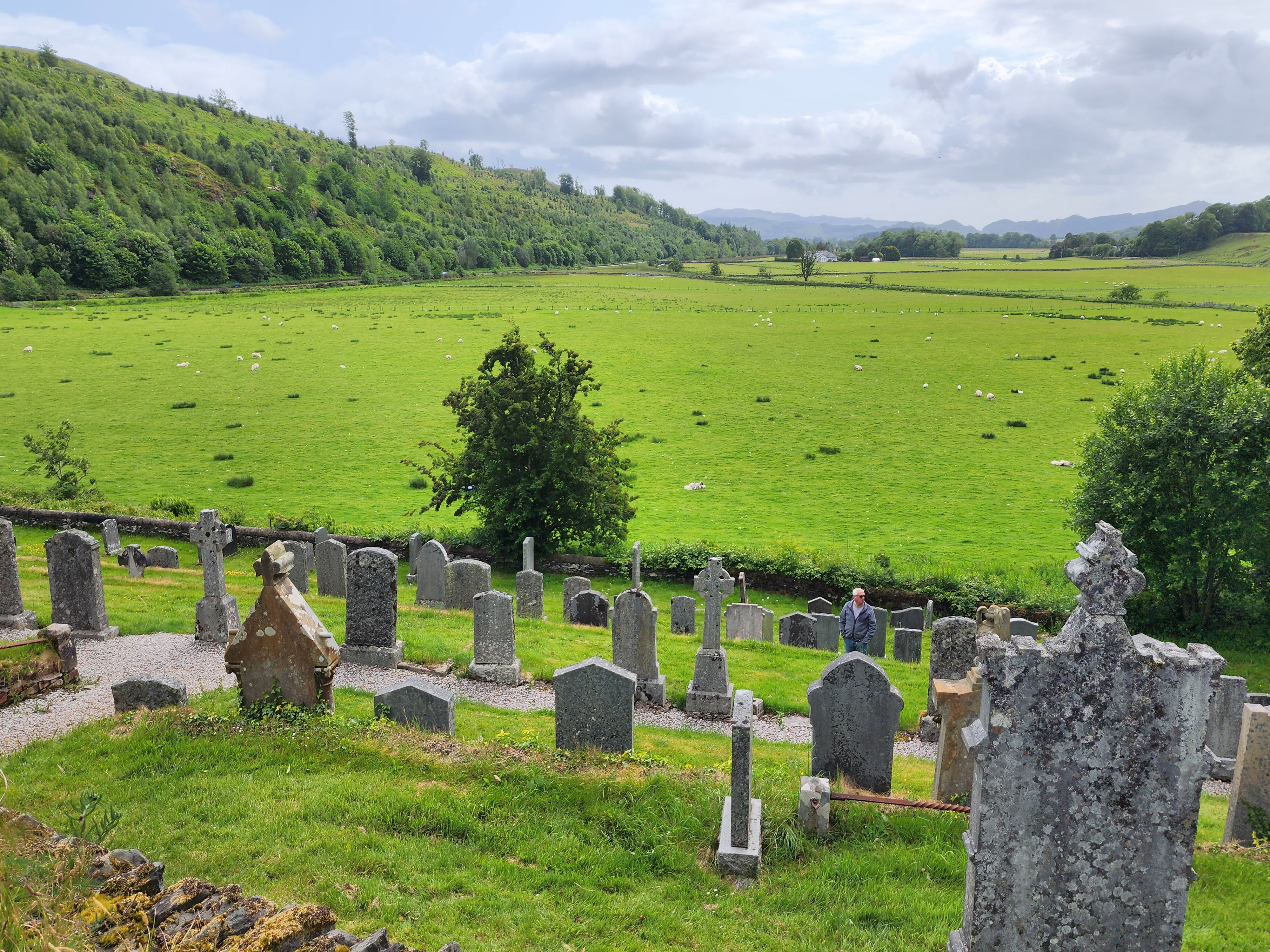
More old graves at Kilmartin
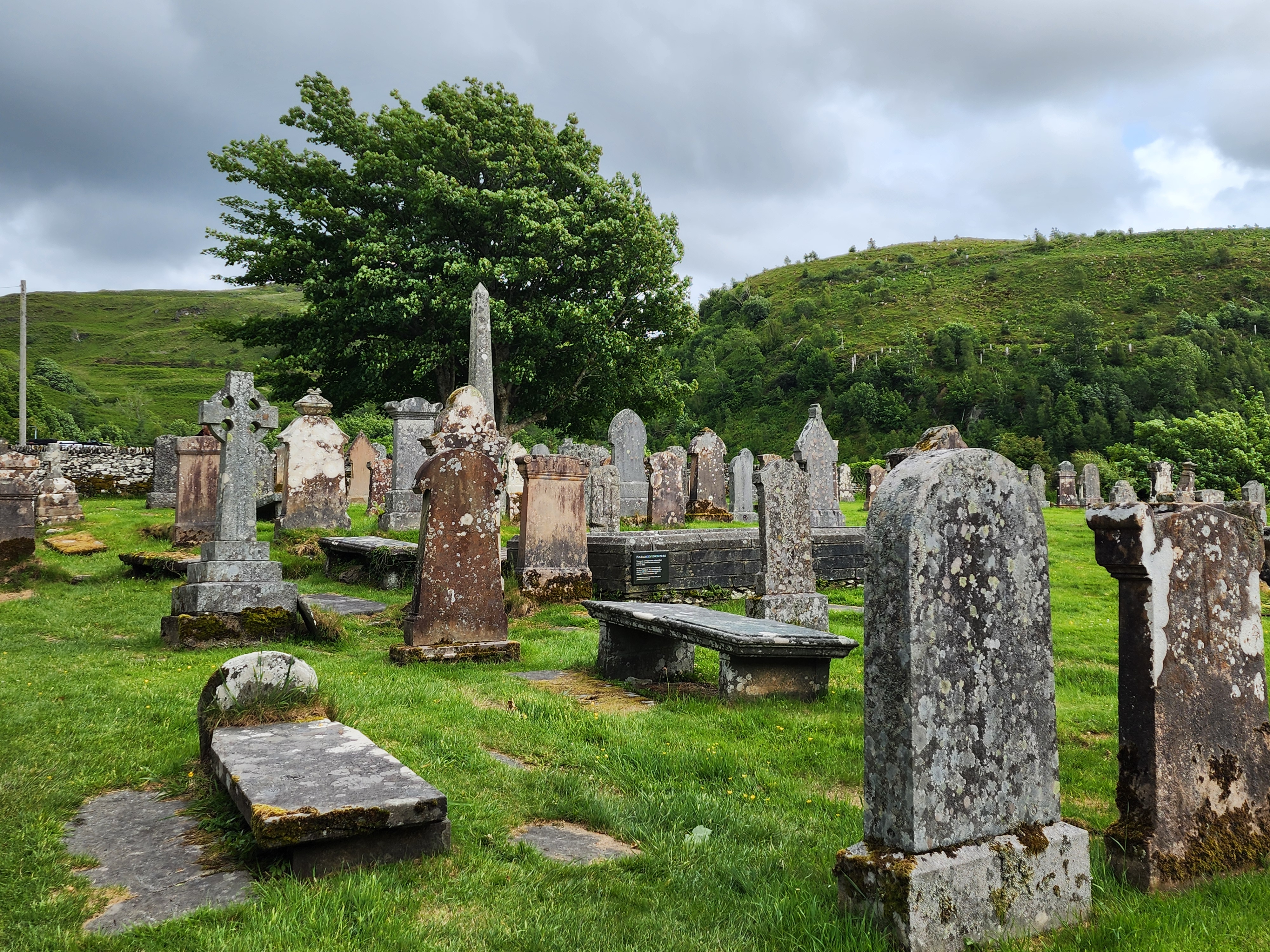
More graves at Kilmartin. I don’t know why I took so many pics of them.

These really old graves from the 1300s were in a protected shed.
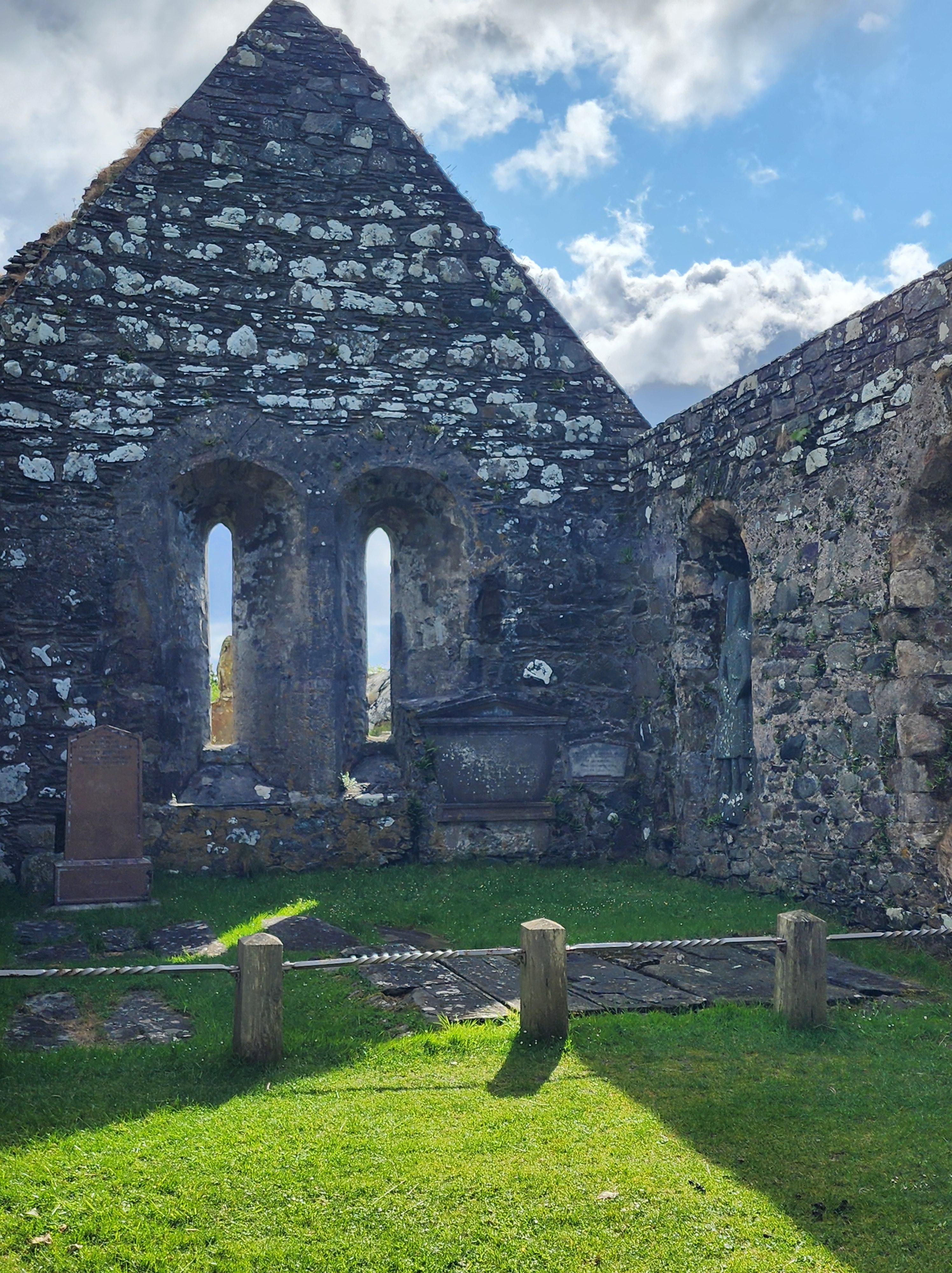
Kildalton church
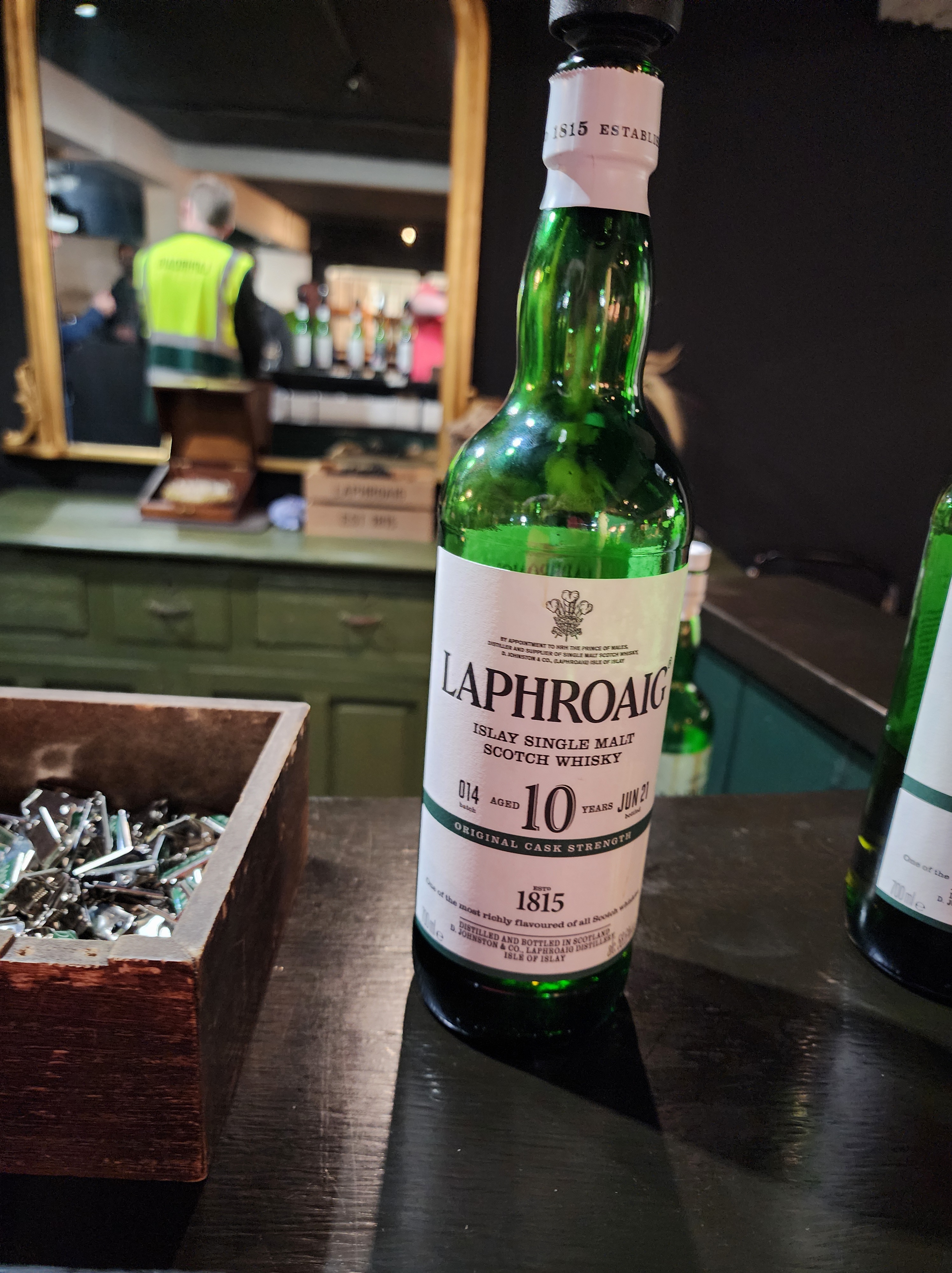
Laphroaig cask strength–it was pretty strong.
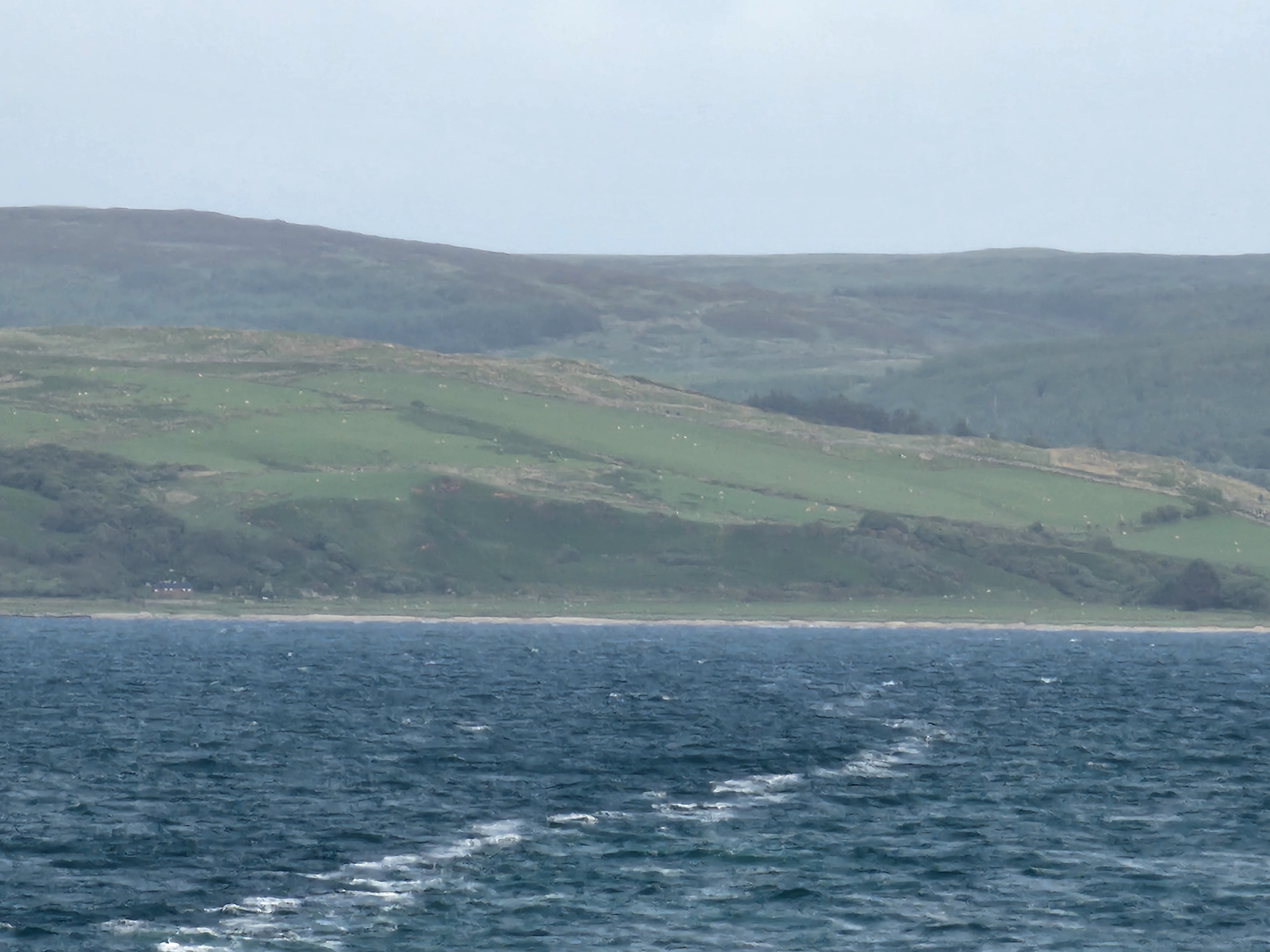
On the ferry

Caol Ila whiskies. I stayed away because I would have been drunk off my ass.

Kildalton High Cross… with people for scale.

Kildalton Cross with the Norwegians

The malting floor at Laphroaig
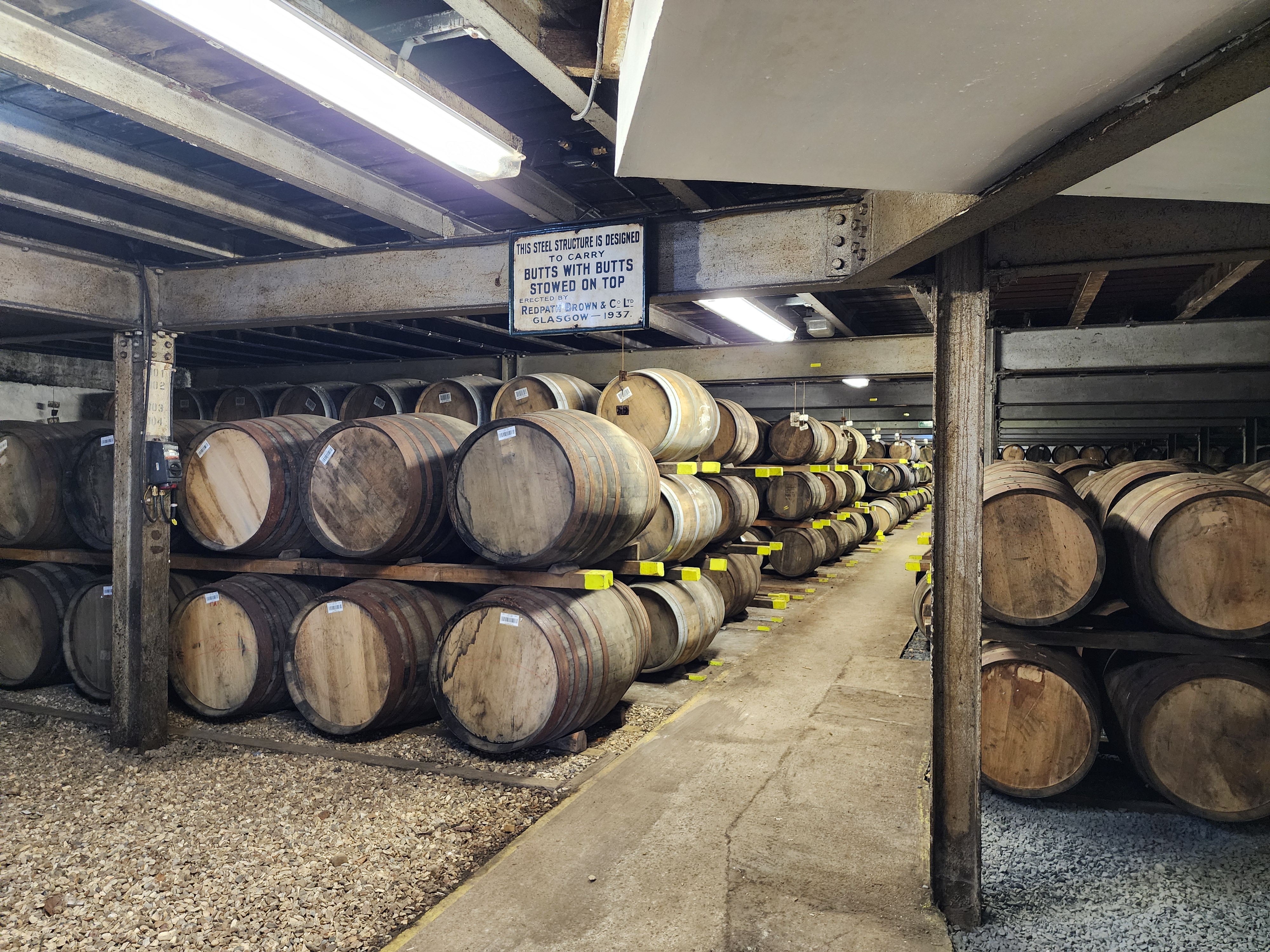
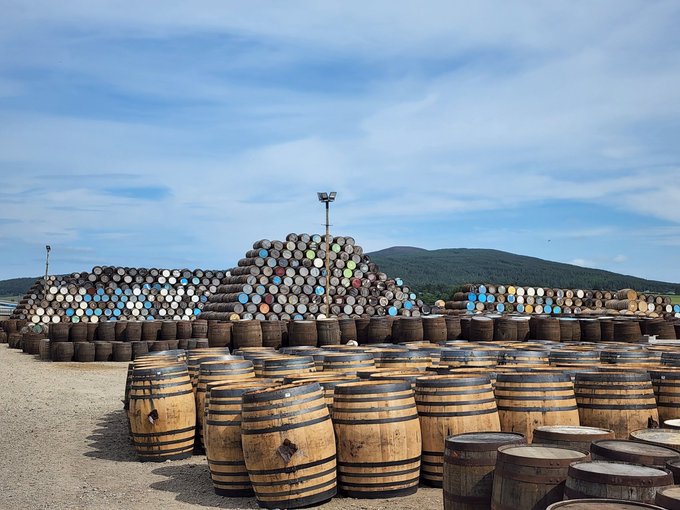
This pic reminds me of the end of Indiana Jones, where the Ark gets put in with thousands of other boxes. There were 100s of barrels here.

Me on the CalMac ferry
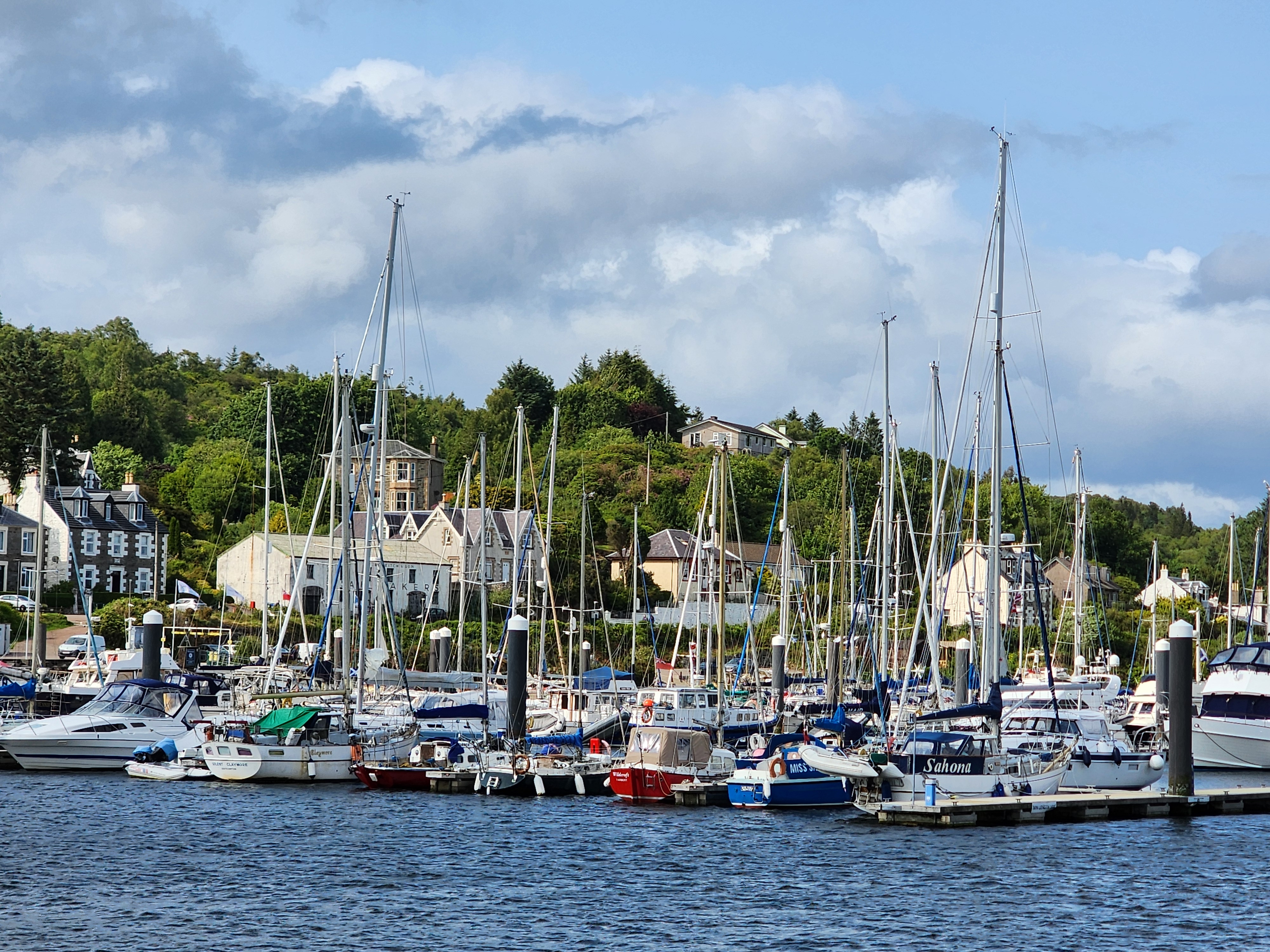
Oban harbor

Oban harbor

I feel like my Dad would like this pic of the Oban harbor. That dark sky meant some serious rain.
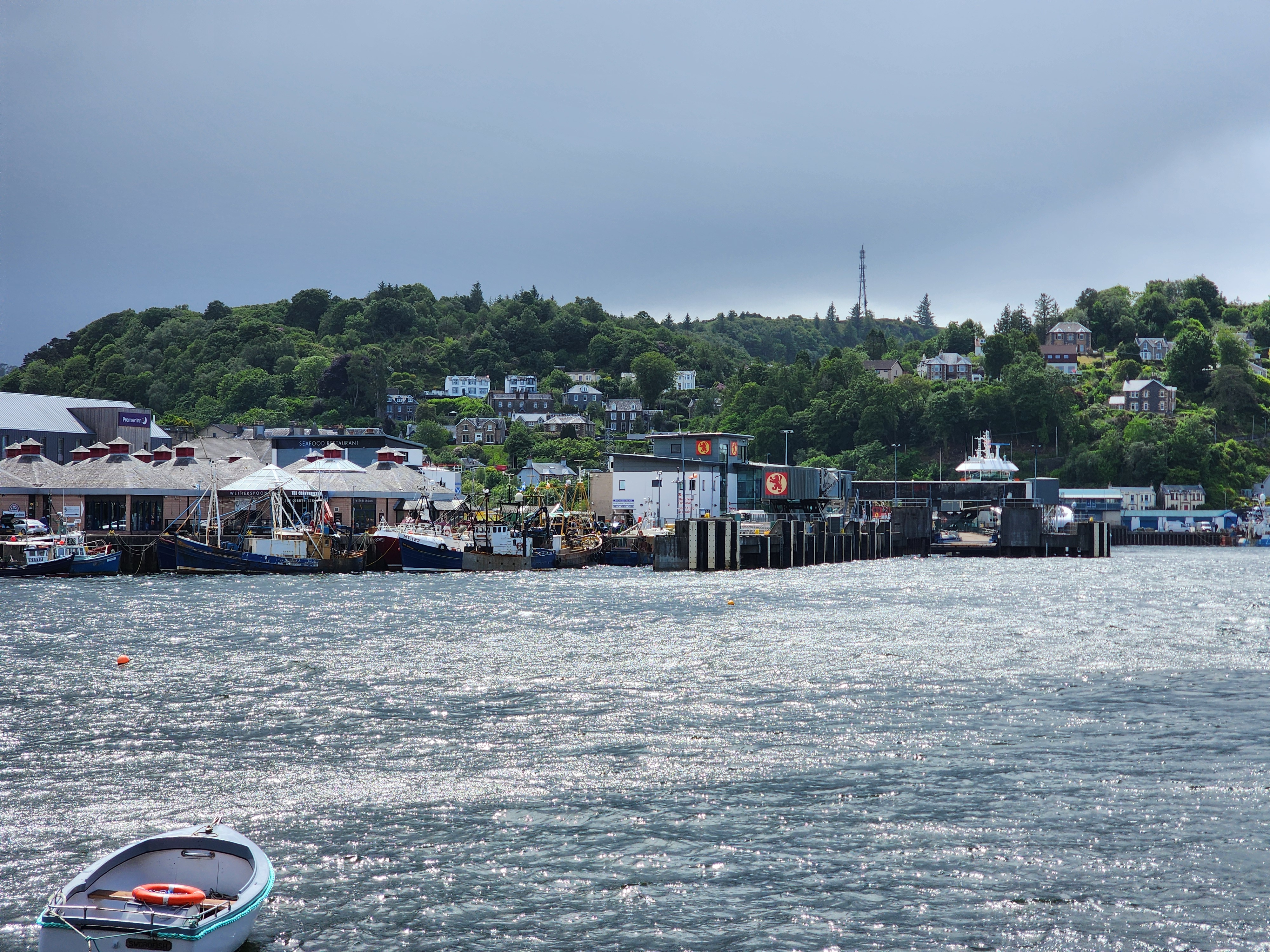
Oban harbor

Oban harbor
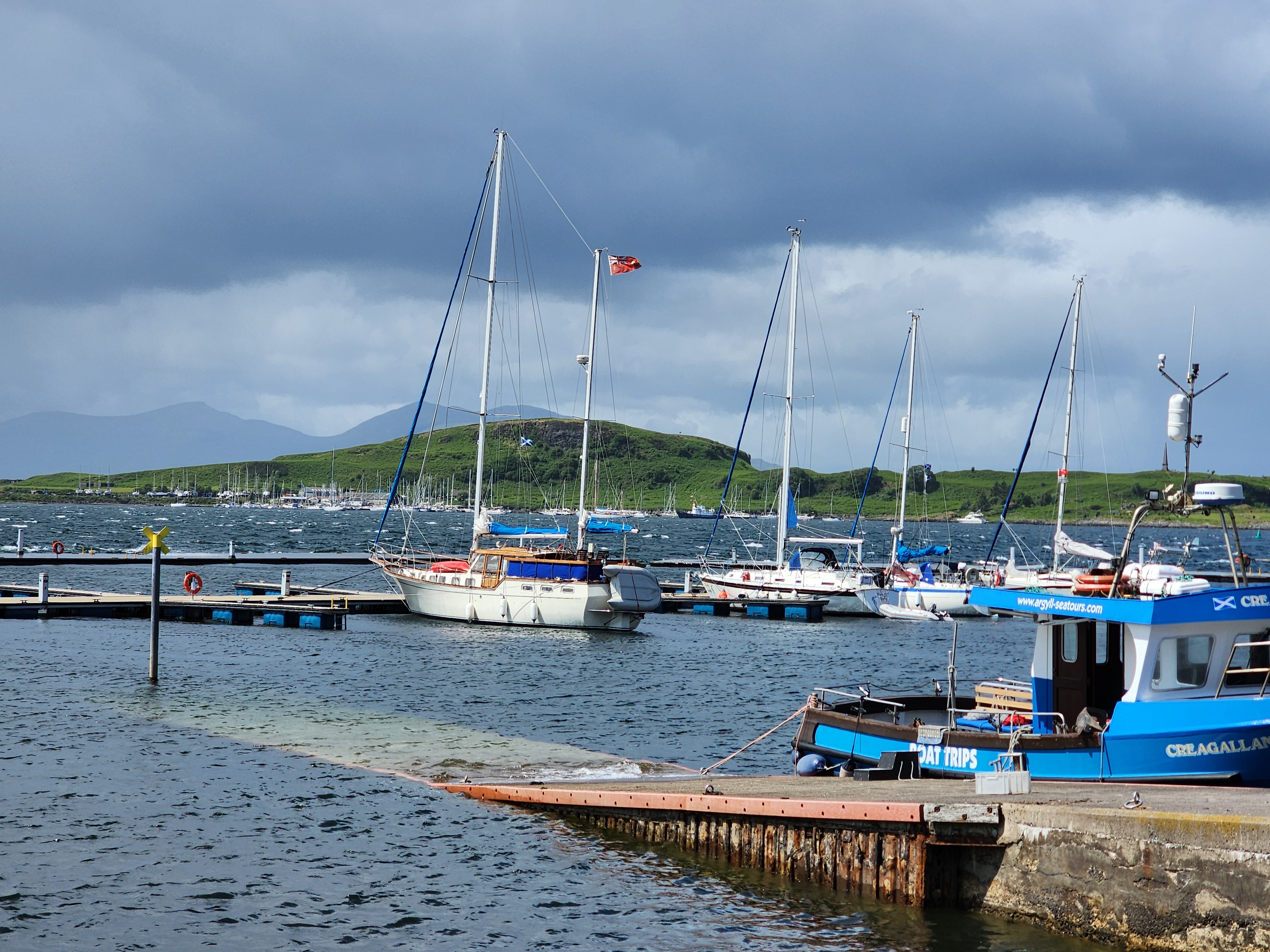
Oban harbor ramp

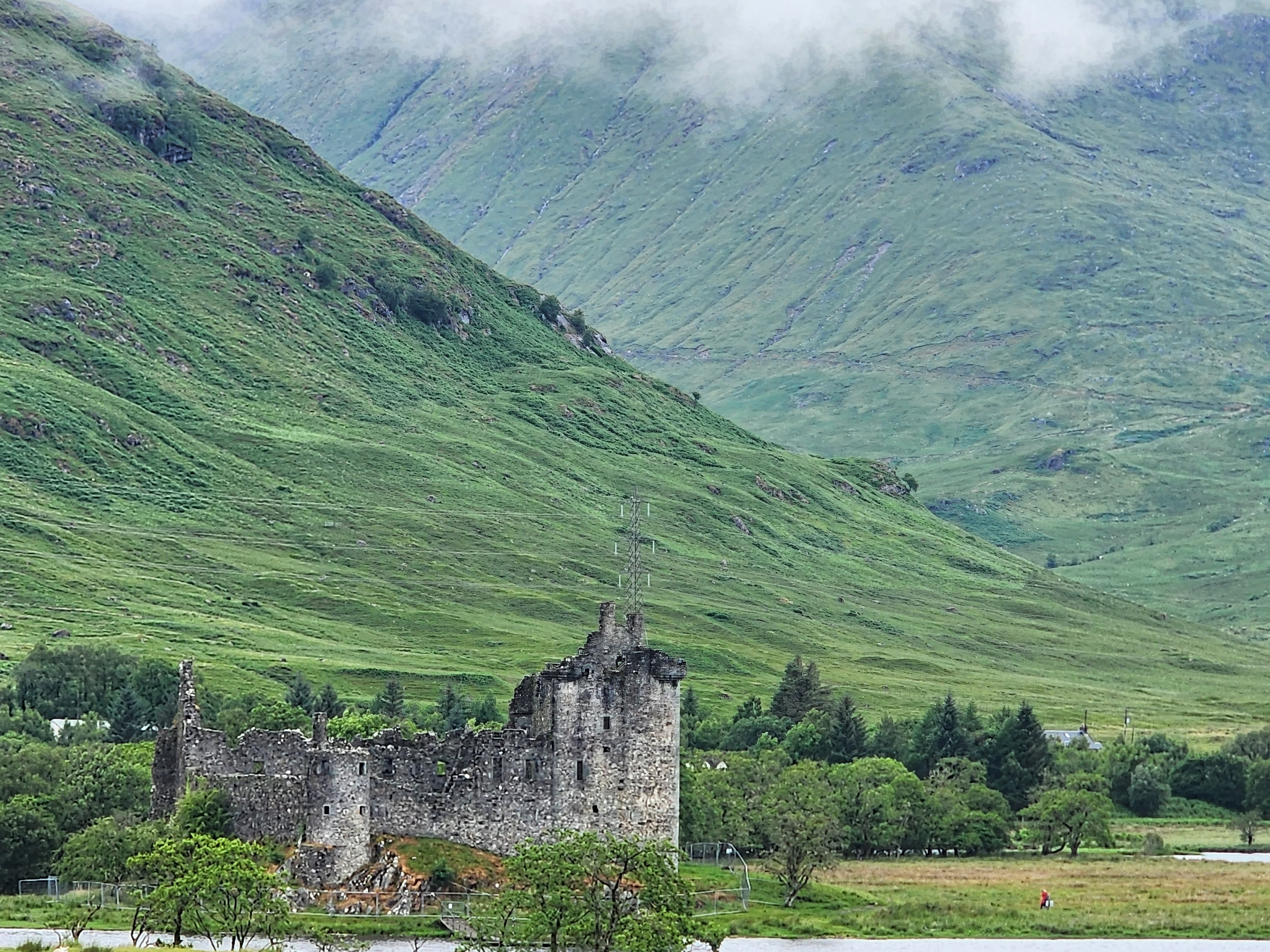
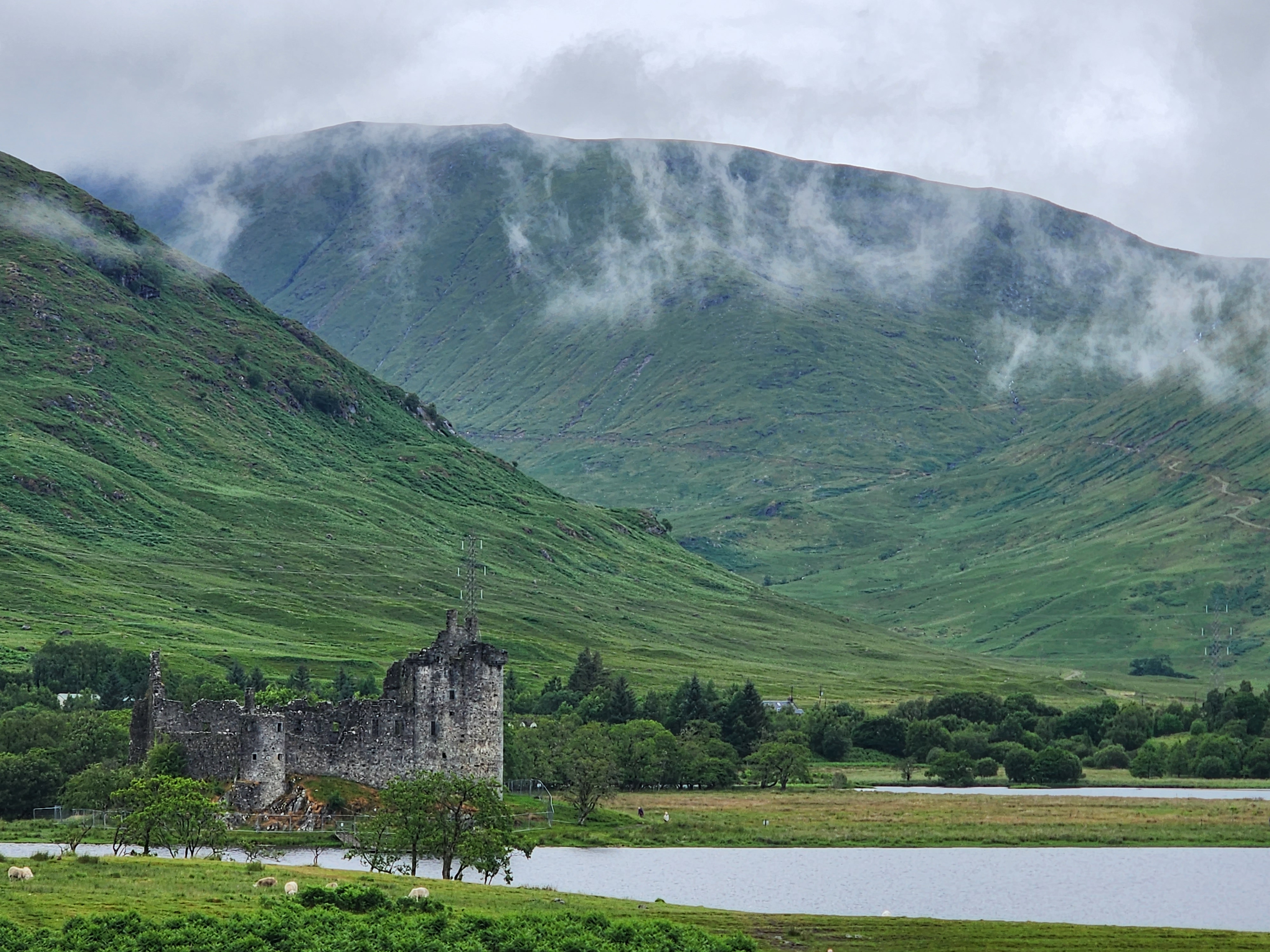
Old castle ruins near Lagavulin distillery

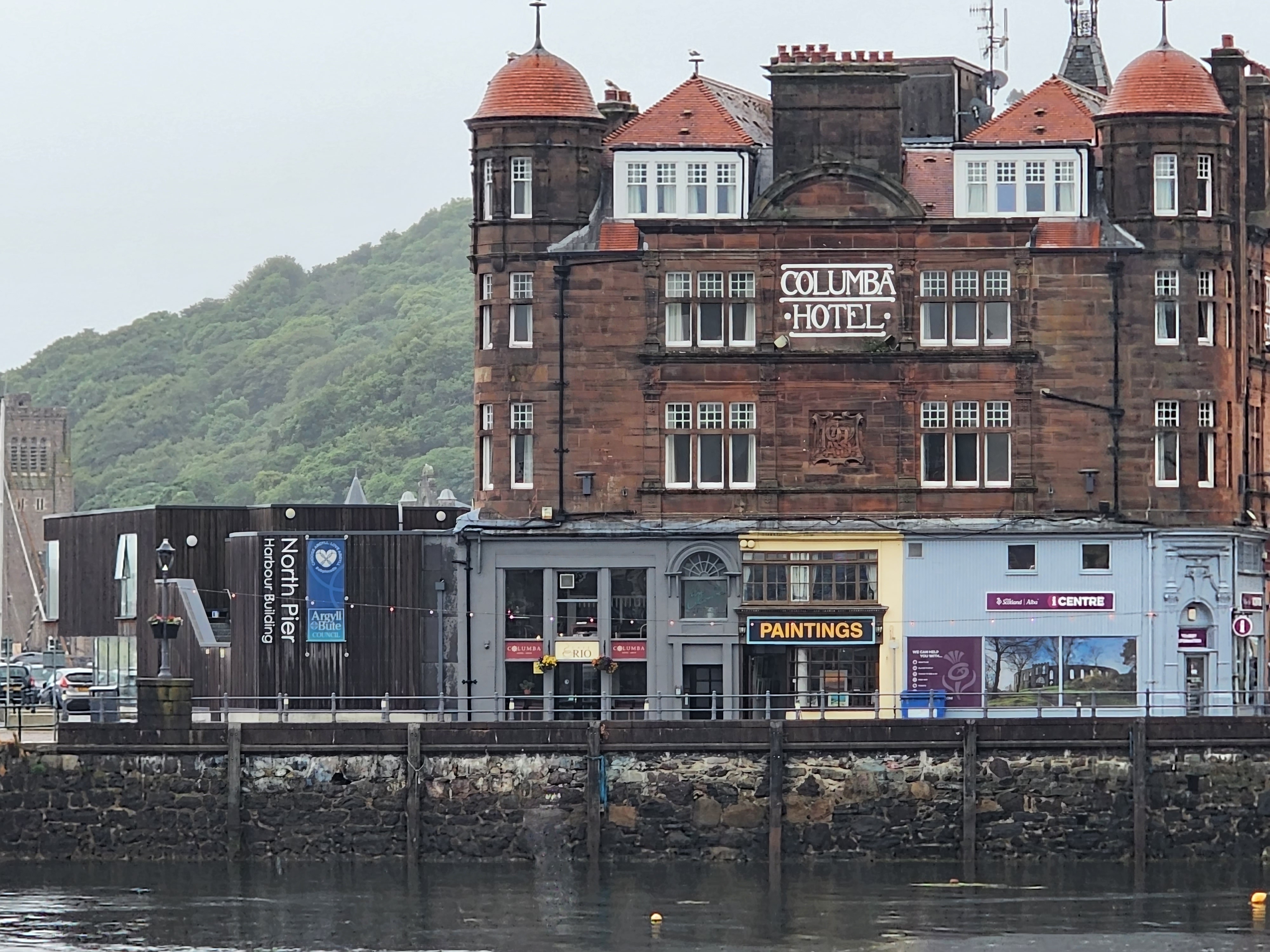
Hotel on the Oban harbor high street

Laphroaig peat oven–it was surprisingly small.
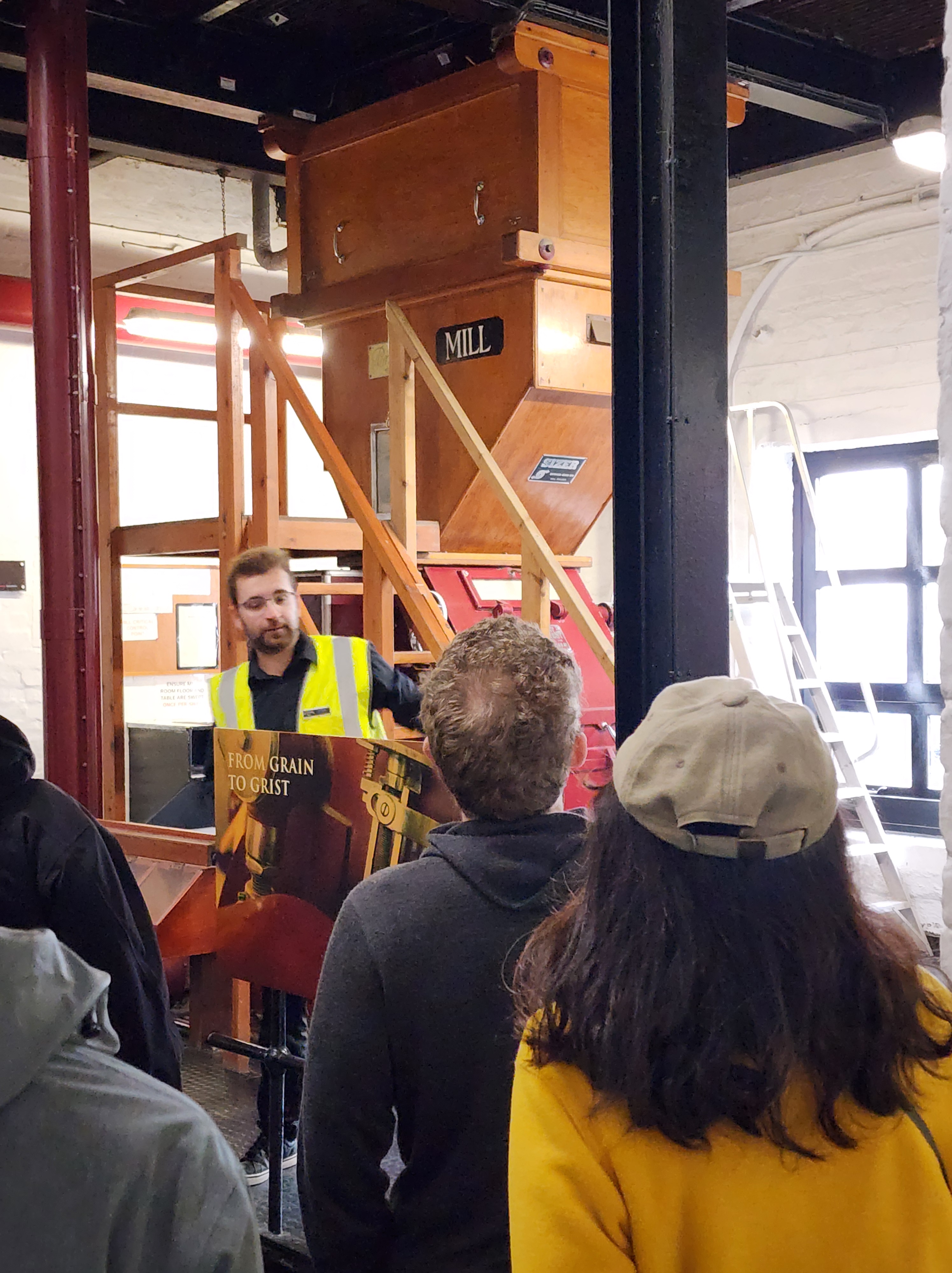
Bowmore mill–the mills across Islay were all made by the same manufacturer, and so hardy that they’ve lasted over 150 years. They never break down, and the company went out of business because they never had to repair the mills!
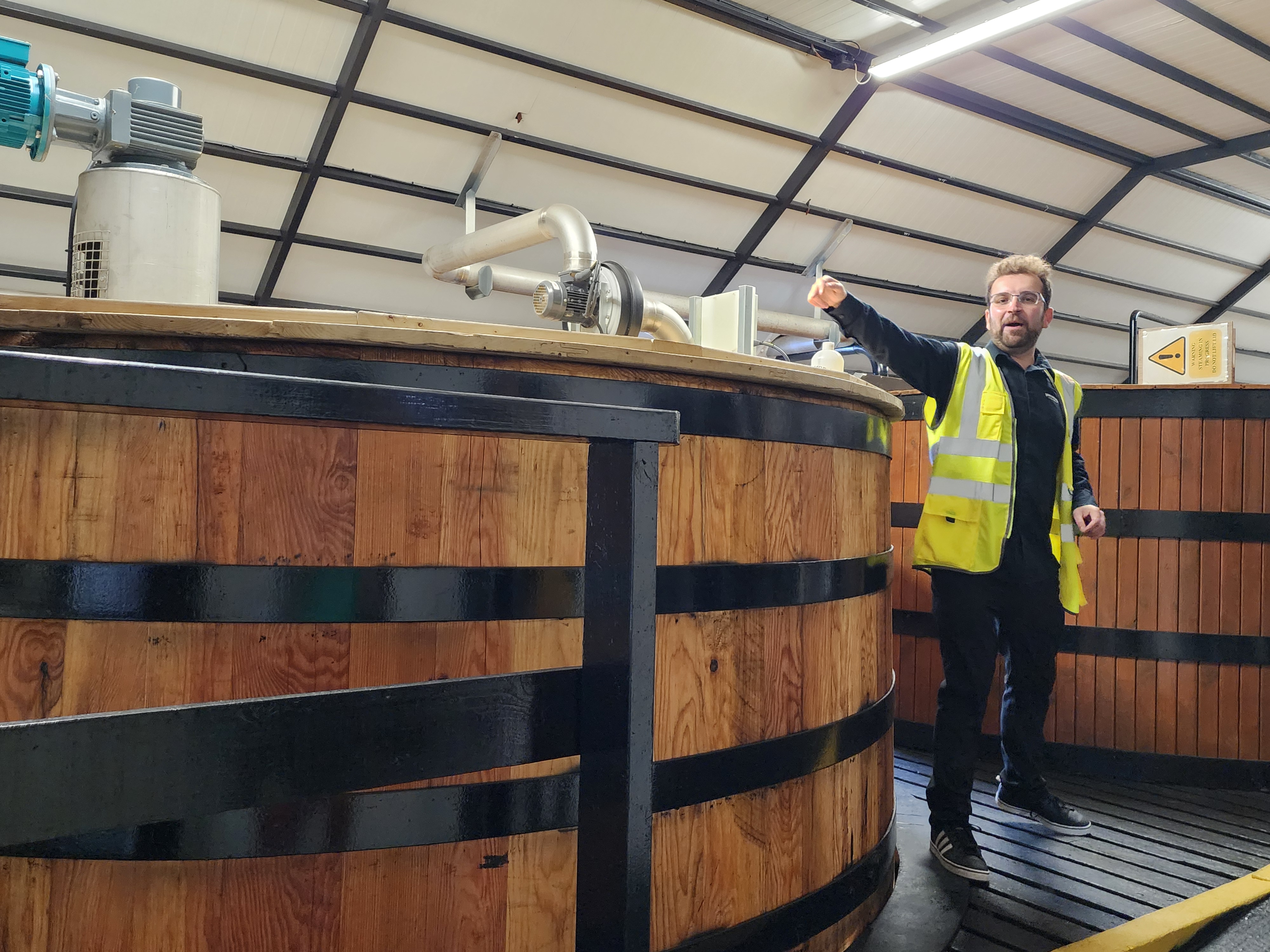
Bowmore wash back (where the barley water ferments)

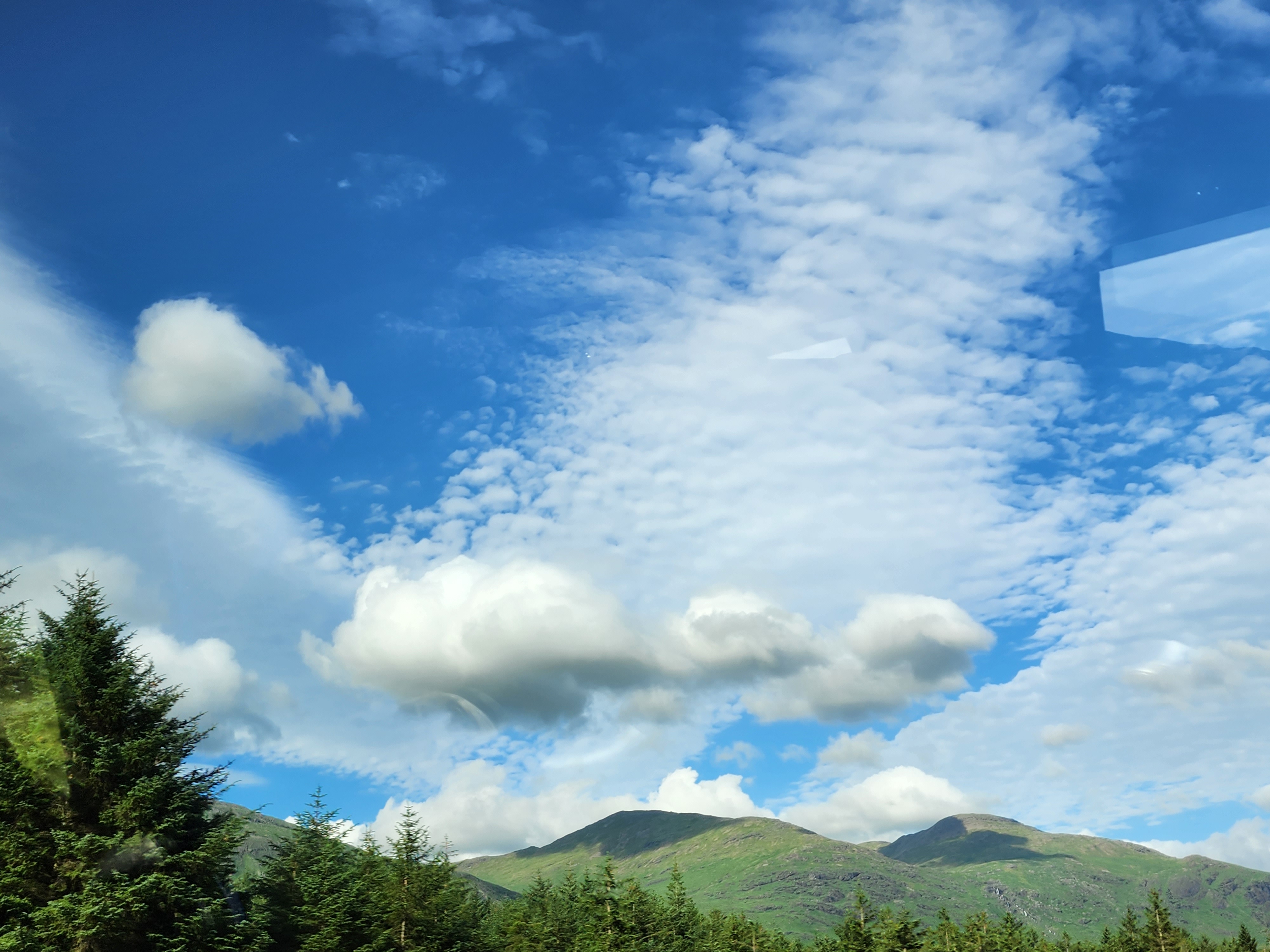
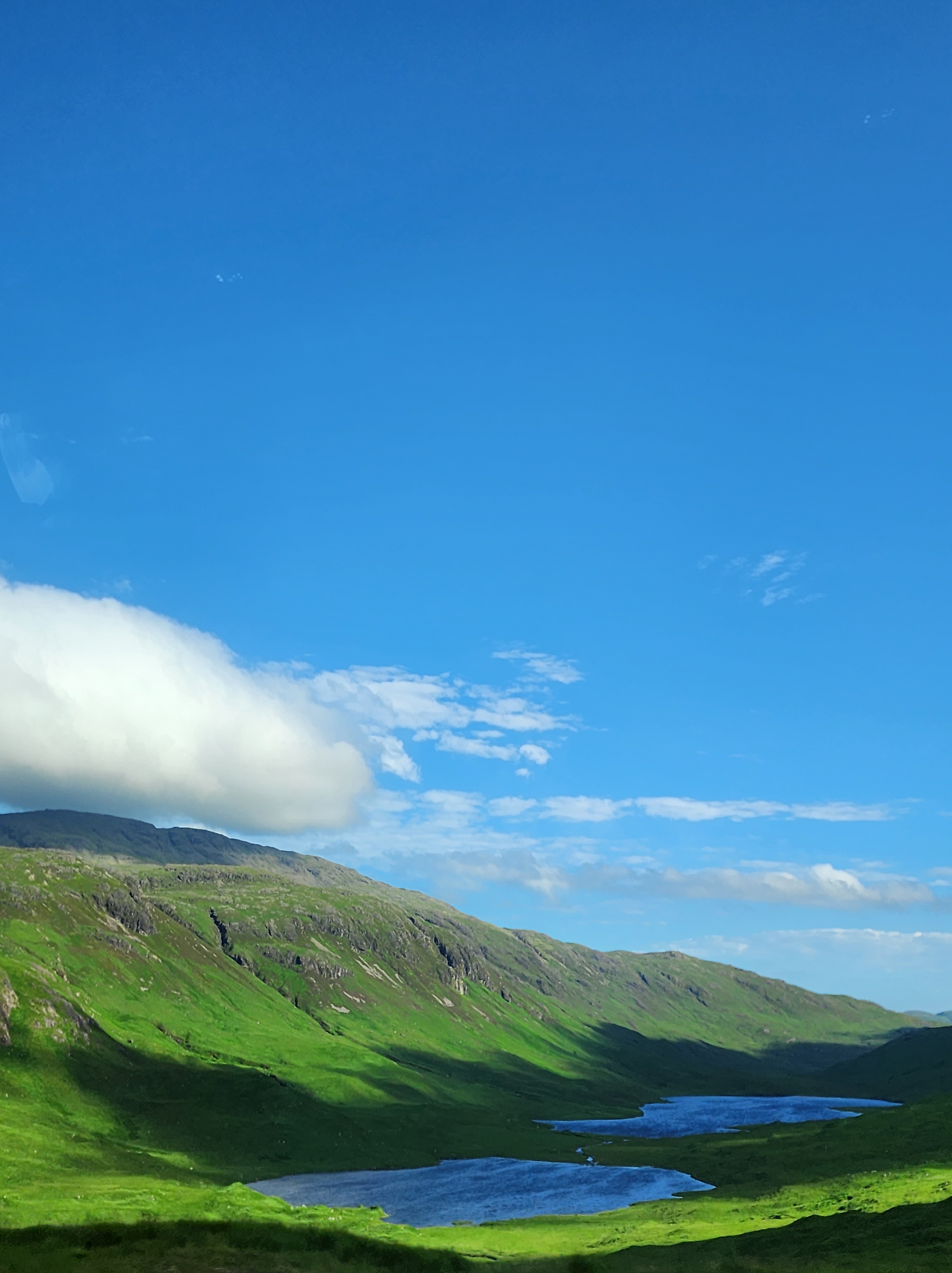
Get these mountains a bra, for heaven’s sake.
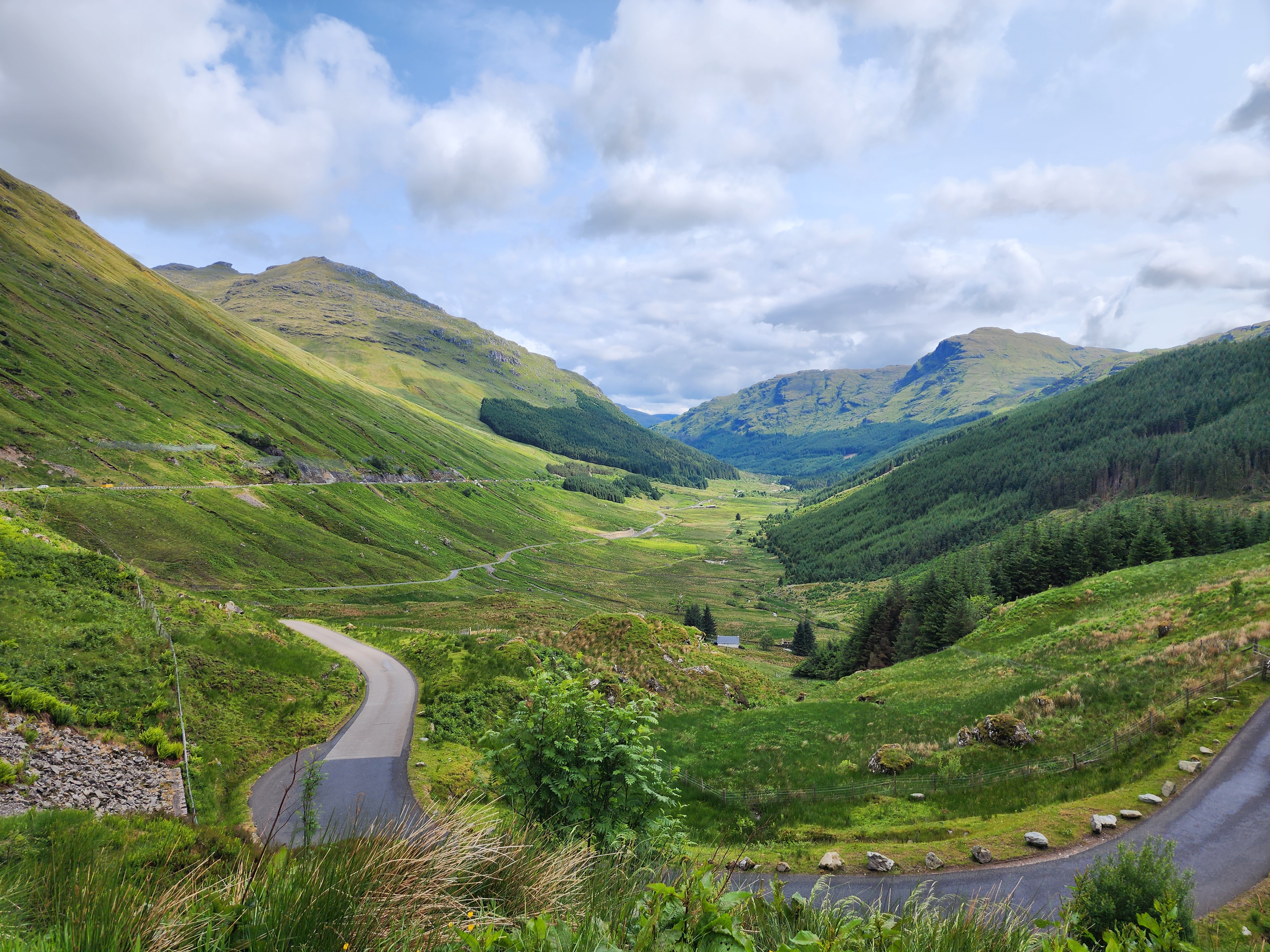
On the way home we stopped at the “Rest and Be Well” glen.

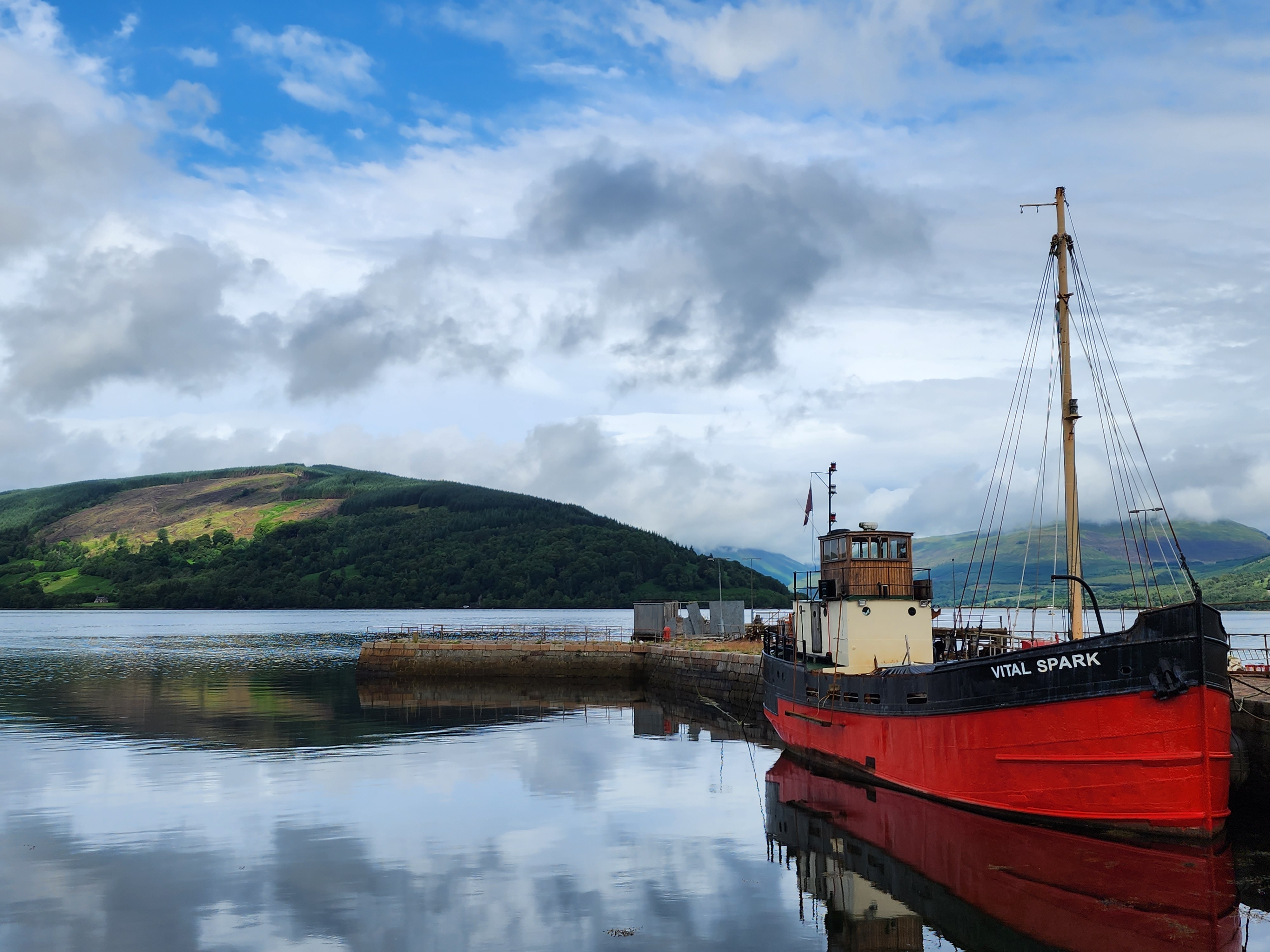
In Inverary, on the way home, I had lunch at the George Hotel. It was mediocre.

The 3 flags flying over Laphroaig–yes, Japan has a big interest in the distillery.

The different grain sizes once they go through the mill
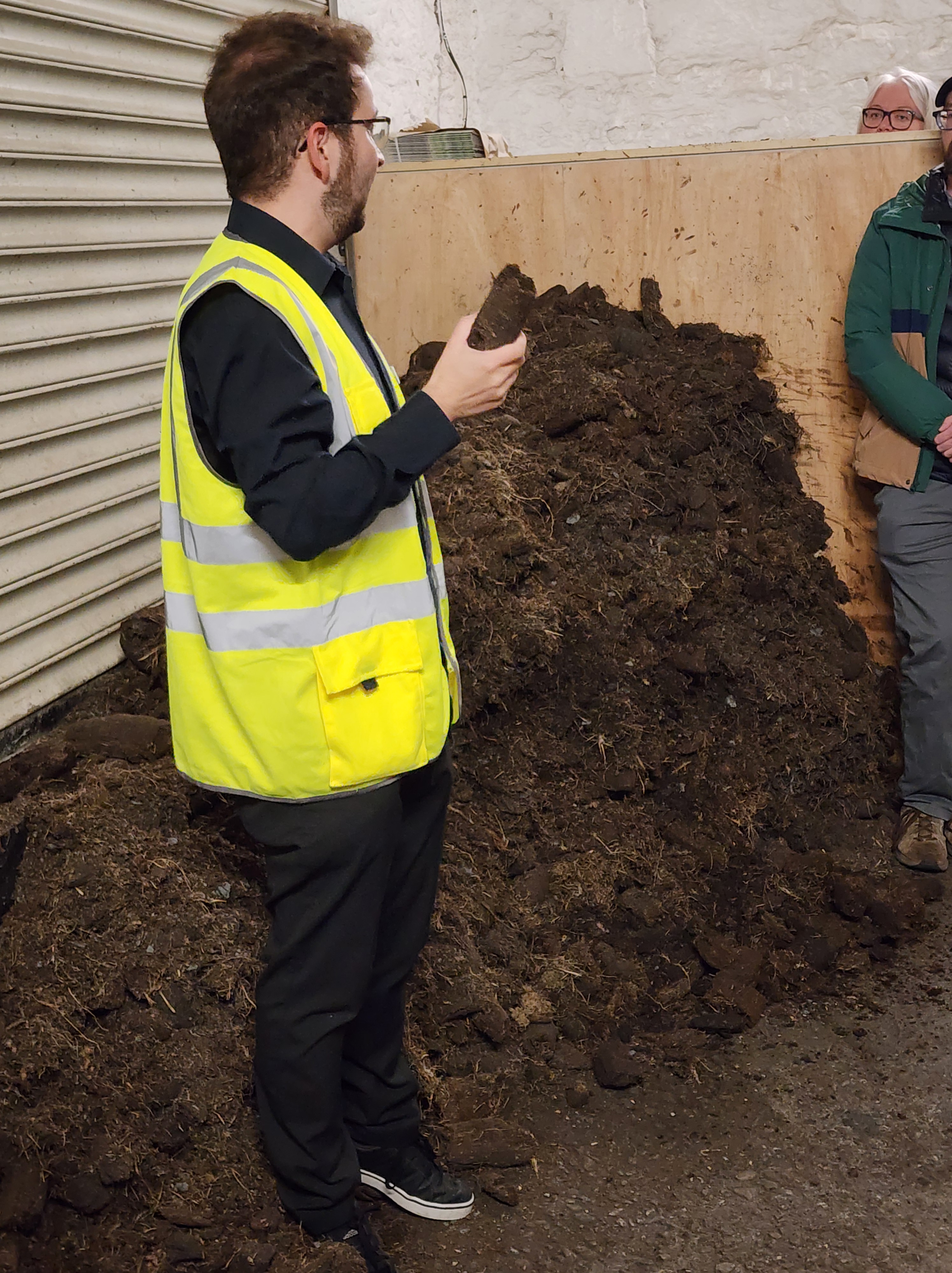
Bowmore guide next to a peat pile
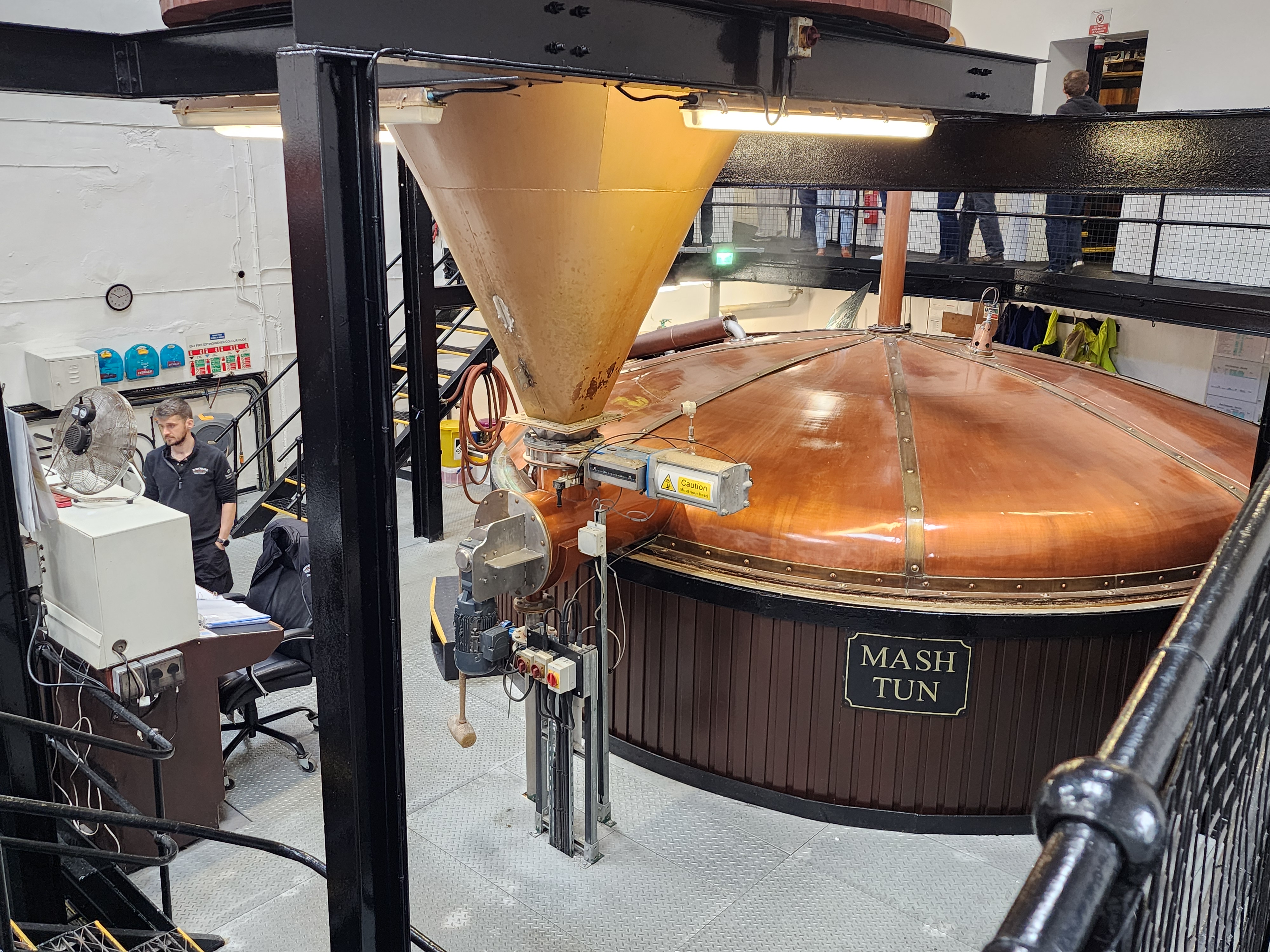
Bowmore mash tun (where the malt gets mashed)
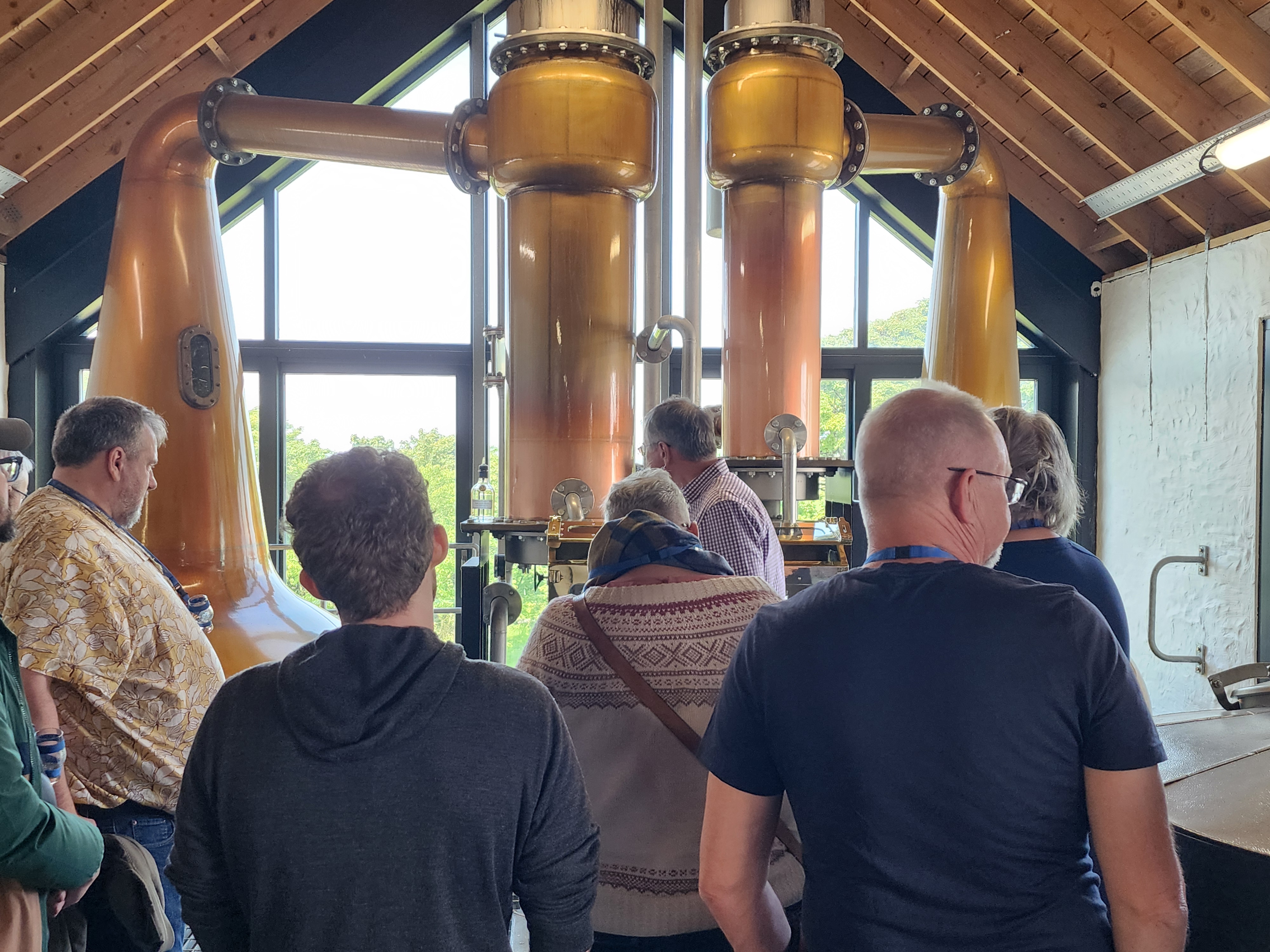
Kilchoman stills






















































 JC Reilly: Poeta Venum