

Fishing village in Fife
The trip up the northeast coast of Scotland was a new experience for me. I’ve seen the west and the Highlands quite a bit, but the east hasn’t been on my itinerary. That is, until I took a tour into the fishing village at Anstruther Harbour and then walked around the ruins of St. Andrews.

The sea wall
The fishing village was lovely, although I didn’t get a chance to wander it much because I wanted to walk the sea wall. It reminded me so much of the way sea walls have figured in British television shows (like my favorite Vera) or any of a few Austen adaptations—their timelessness appeals me, as if I could be walking through the centuries as I walk the wall, the coast and waters unchanged.

The lighthouse at Anstruther Harbour
As I made my way back from the point across from the lighthouse, I passed a man with a very squat bulldog who tramped through a large puddle in the cobblestones and I laughed because the dog seemed so surprised and happy by the happenstance. I said to the man, “A fine braw dog you have there!”
He said, “That’s no’ a Sco’ish accent. Where are yeh from?”
“Well, my family home is in Louisiana,” I answered, figuring to tell him I live in Atlanta would sound needlessly generic and uninteresting.
“Louisiana! The States!” He claps his hands in delight, and the bulldog barks. “ I’ve no’ been there, but I hear Louisiana’s quite bonny.”
“Oh, yes,” I enthuse, “very bonny.”
“I shuid like to go there some day.”
“You would love New Orleans,” I told him, because that’s the only city anyone cares about in Louisiana. (Or possibly, the only city that anybody knows about.) “Everyone does.”
“Well, guid day to you, lass.”
“And you.”
He walked in the opposite direction with his dog, and I headed back to the village, stopping once in a while to see if I can see any fish in the harbor, the water being a beautiful clear emerald color even at the mouth of the harbor that leads out into the sea. (Spoiler alert: I saw no fish.)
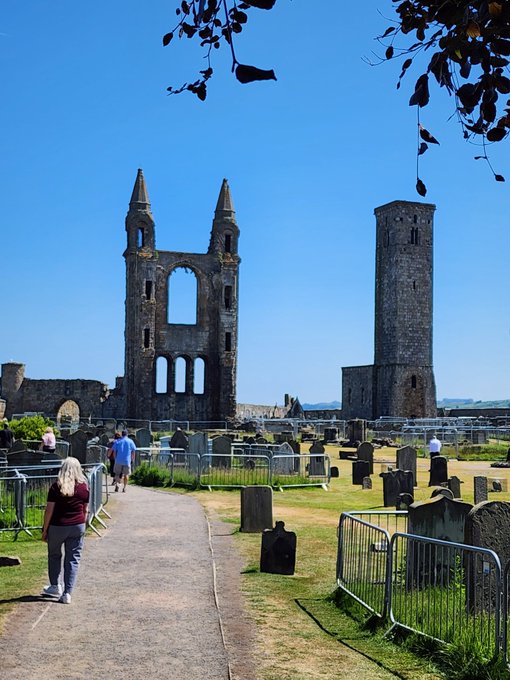
St. Andrews and St. Rule Tower
Back on the bus, we drove a while longer to the town of St. Andrews which was celebrating graduation day. Everyone was wearing regalia (if they were graduates) or big smiles (if they were parents). The professors were wearing regalia too, which reminded me a little of my own Ph.D. regalia, mouldering in my chest of drawers back home (in Shreveport). I never got to wear it because when I graduated with my Ph.D., I blew off graduation and hooding so that Kirsten and I could go to the British Virgin Islands because she had won a trip there on the radio. A fair trade, I have to be honest. But I digress.
I wanted to go somewhere good to eat for lunch, having mostly eaten banal sandwiches in all the places I’ve visited, but with so many graduates and their families around, it was hard to find a place that wasn’t jam-packed. Close to the ruins, though, there was a little café that I stopped in—I got the only table available. My cheese and chutney sandwich was pretty nondescript, but the butternut squash soup was more or less tasty, though it clearly had too much chicken bullion in it. I also drank a bottle of fizzy, and enjoyed a “lemon ice tea” which I think was from a mix. So when I say I enjoyed it, I mean quite the opposite. It was weird-tasting.
 After lunch, I continued my walk to St. Andrews Cathedral which, like so many of the medieval buildings in Scotland, is undergoing perpetual construction, so parts were walled off. What a grand cathedral it must have been in the 13th and 14th centuries, with its sweeping arches and its many-stoned kirkyard! The welcome sign says “Join the pilgrimage to the largest and most important church in medieval Scotland,” and this is true, since it was the seat of the medieval Catholic Church. It fell into disrepair during the Reformation, and was burnt down a couple of times. What is interesting about this too, is that when parts of the wall fell down, they were used for building purposes elsewhere in Fife. Unfortunately, the church was abandoned until the 1800s, and by then it was crumbling mess. But since then, the ruins have been granted protection and are cared for, available for everyone to enjoy (for free!).
After I poked around the ruins for a while (and bought a guidebook, of course—I’ve accumulated quite a number of these National Trust for Scotland books at this point), I found a nice spot to sit with the sea in the background. The sun was beating down, though the sky was blue as topaz. An elderly couple were sitting on a bench nearby, ruminating on their grandson’s extremely busy graduation itinerary, and complaining it was too hot to walk. (It was warm, for sure, but a breeze blew.) I thought about going for a walk out to a promontory overlooking the sea, but I couldn’t remember when we were supposed to be back at the bus rendezvous, so I got up and walked back to where I thought I had been dropped off.
But the thing is, I couldn’t remember where that was. This is very unlike me; I usually take careful account of my location especially when the possibility I could be left behind exists. I thought the rendezvous was by the World Golf Museum (which was situated across from an open public golf course where it only costs £1 (!) to play), but it looked different from what I remembered. To be honest, I got kind of panicky and worried that I was going to miss the bus, thinking I was in the wrong place altogether, and omg, what would I do if I were left alone in Fife? How would I get back? So I dug out a phone number for the Rabbie’s tour people and called them. The lady assured me I was waiting in the right place, which took a huge burden off my mind. And when the bus showed up, I got a chance to chat with the driver and we commiserated over the weather of the previous summer, and exclaimed how un-Scottishly-nice the weather was being for the trip today.
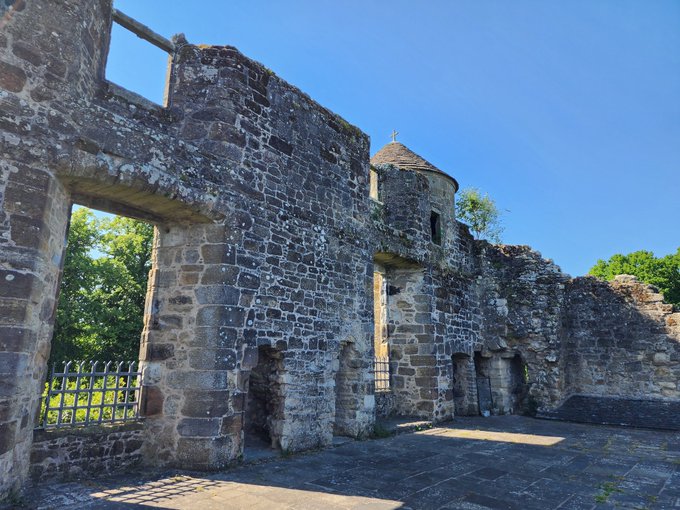
Inner wall of the King’s and Queen’s quarters, Falkland Palace
The last stop of the day was Falkland Palace, which was lovely and inexpensive (only £6 to enter), but unfortunately, we weren’t allowed to take pictures inside—and there were watching eyes. Falkland Palace was the “deer cottage,” where James V and his wife Marie de Guise (mother of Mary Queen of Scots) honeymooned during the construction of the palace, and was the place where James and his fellow courtiers would go hunting in the fall, especially once construction was completed. What I liked about the palace was that it was relatively small, with a few rooms tastefully reproduced as they might have looked in earlier centuries. What I was less keen on was the circular stairways with small, shallow steps that my foot didn’t even quite fit on. At the end of the palace walk-through, we ended up in Falkland’s lovely gardens, which were peaceful, floral, and full of bees. A nice way to end the day.
I liked this trip overall because it was low-key. Some of the trips I’ve taken have been go-go-go, but this was more leisurely (my panic attack not withstanding), and I enjoyed it.
More photos:

St. Andrews

Anstruther Harbour boats
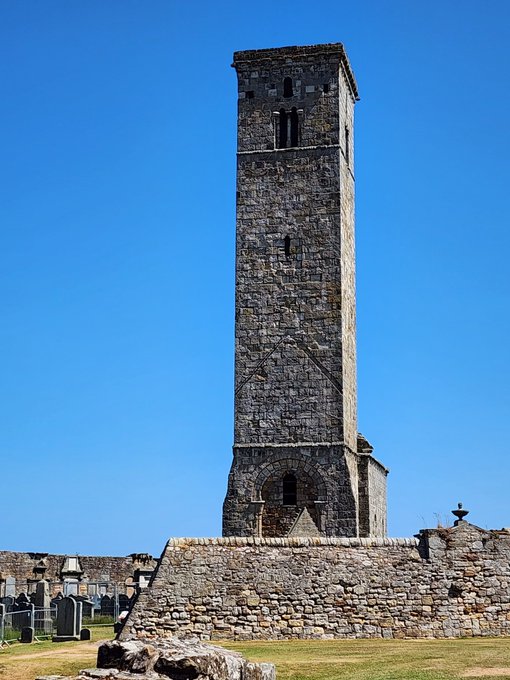
St. Rule Tower
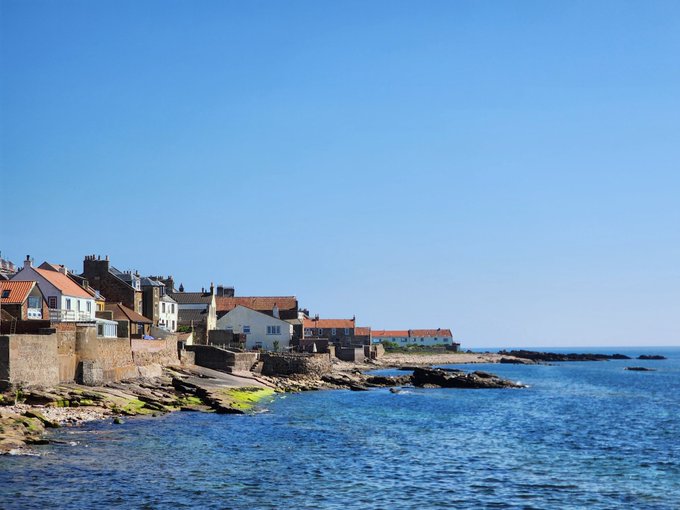
Fishing village view
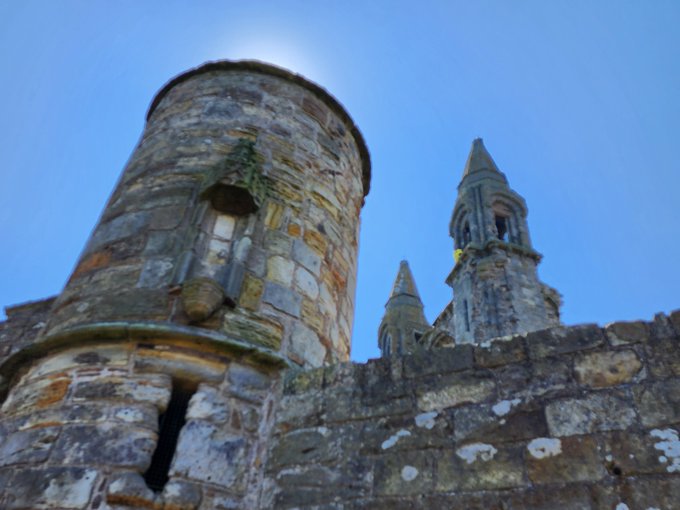
Outside St. Andrews’ walls…I really like the composition on this one.
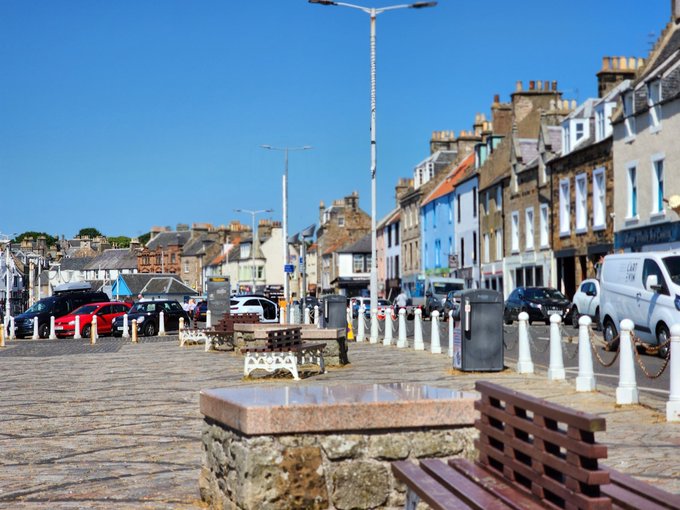
Fishing village at Fife
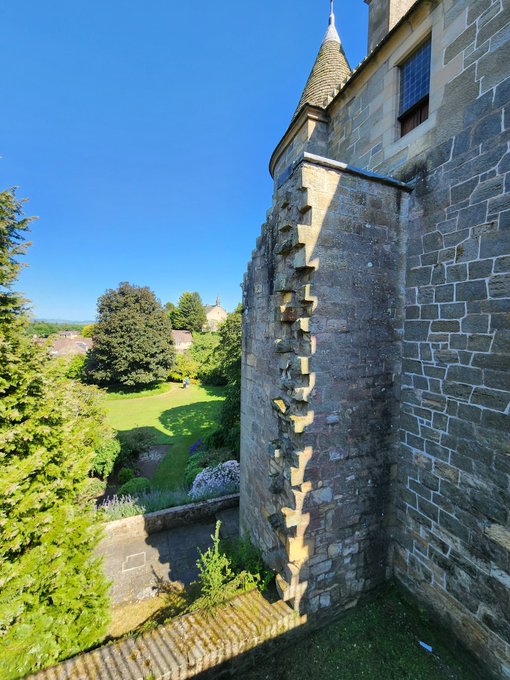
Falkland Palace outer wall

Arches at St. Andrews

Roses in the garden of Falkland palace
 JC Reilly: Poeta Venum